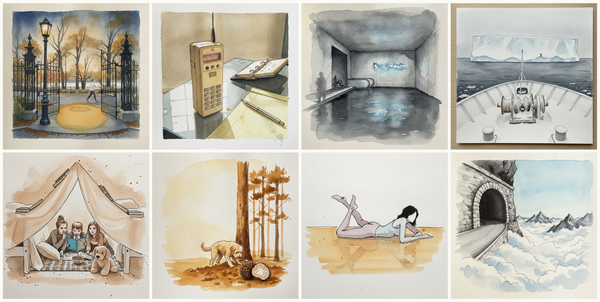
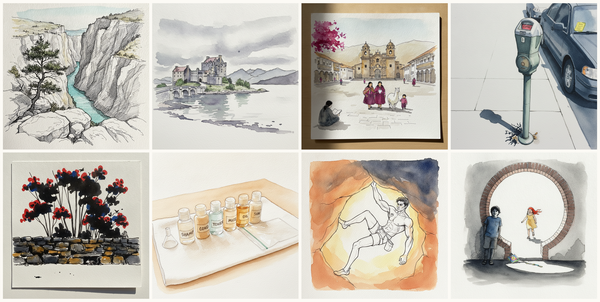
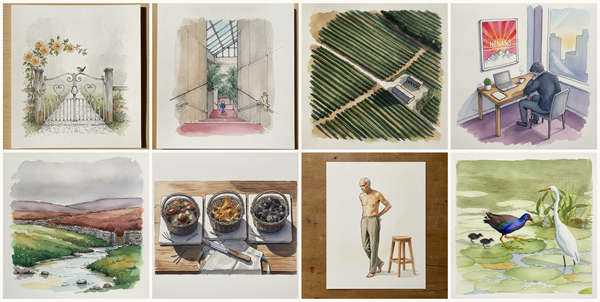
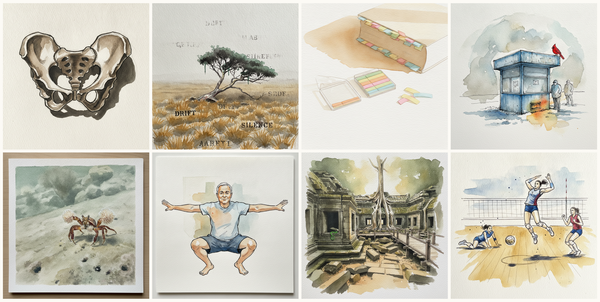
Father with baby on chest, Vintage Rolex on leather, Meridian Gate (Wumen), Forbidden City, Beijing, China, Double-breasted wool peacoat laid flat, and more — pen + watercolor for November 24, 2026
AI-generated daily art-practice references for pen and watercolor: Father with baby on chest, Vintage Rolex on leather, Meridian Gate (Wumen), Forbidden City, Beijing, China, Double-breasted wool peacoat laid flat, Bridge silhouette at sunset over Sydney Harbour, Australia, Greater white-fronted…
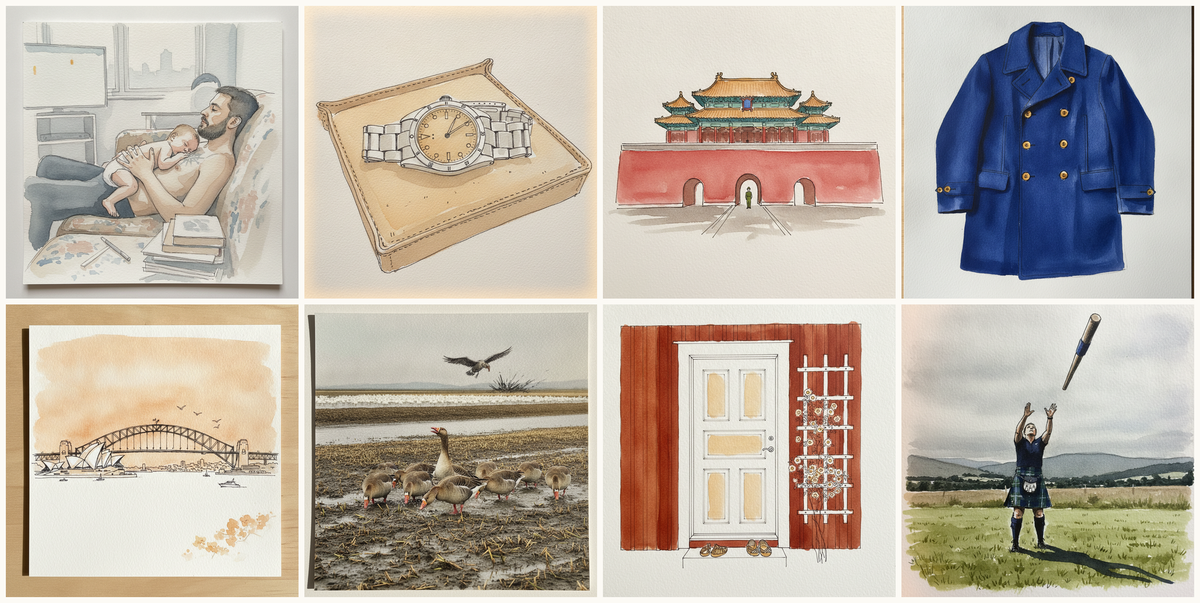
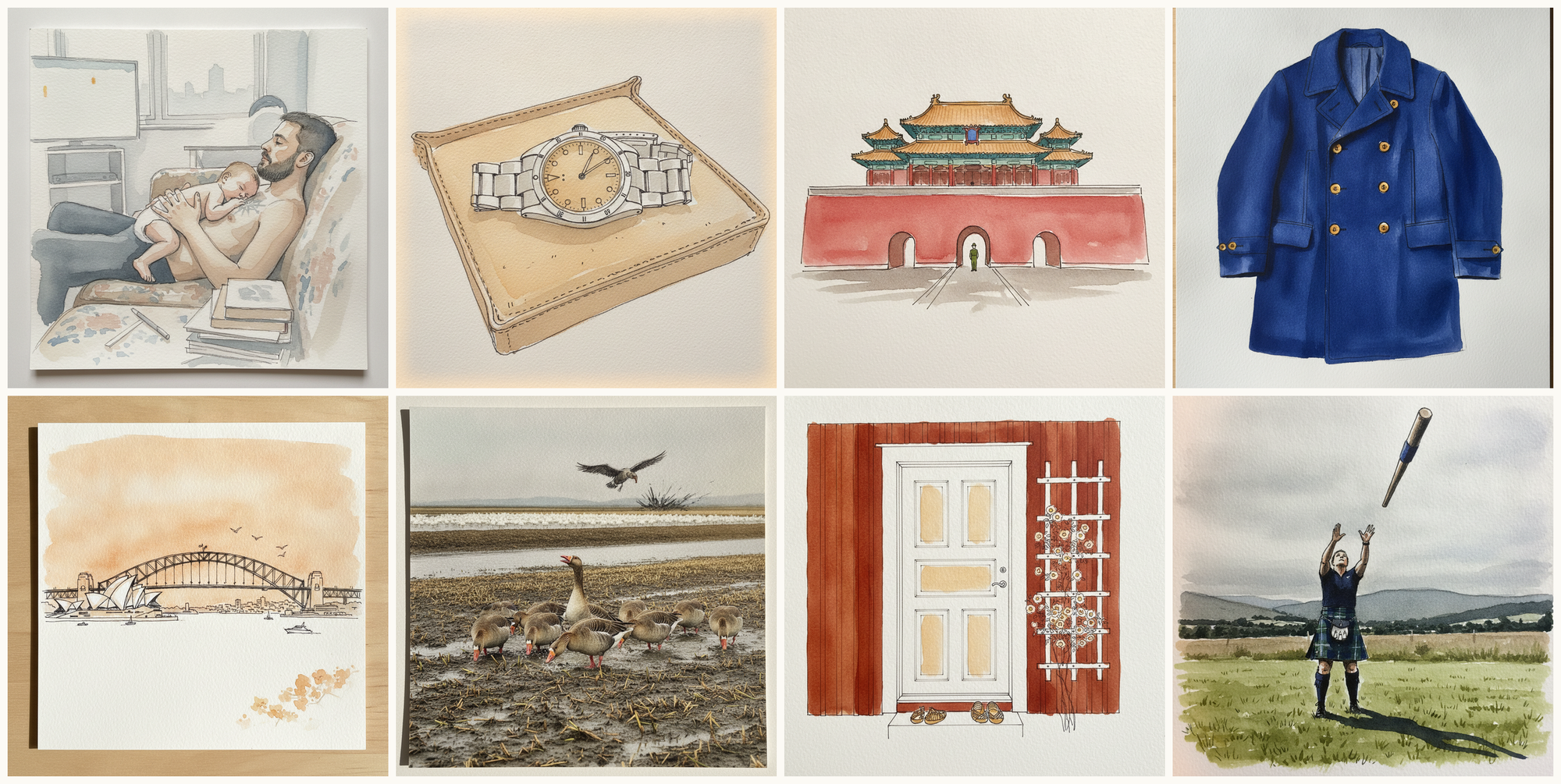
Today's 8 pen-and-watercolor pieces: Father with baby on chest, Vintage Rolex on leather, Meridian Gate (Wumen), Forbidden City, Beijing, China, Double-breasted wool peacoat laid flat, Bridge silhouette at sunset over Sydney Harbour, Australia, Greater white-fronted goose, Scandinavian falu-red cottage with a white door and climbing wild rose, Caber toss release, highland field. Each piece comes with an AI-generated photoreal reference, three AI-generated example artworks in different treatments, and a short focus paragraph naming what to study in this one.
Why these references use AI
This daily series uses AI-generated images as practice prompts, not as finished artwork to copy. Each subject starts with a synthetic photoreal reference generated with Gemini/Nano Banana, then moves into three pen-and-watercolor interpretations of the same subject.
I use AI here because daily art practice needs variety and low friction. Real life can get repetitive, busy, or visually narrow. These generated reference sets make it easier to study bodies, buildings, animals, landscapes, objects, gestures, light, palettes, and compositions that might not show up in an ordinary day.
The goal is not to reproduce any image directly. Treat each set as a starting point for observation and study: choose what interests you, change the framing, simplify the subject, alter the palette, and make your own version.
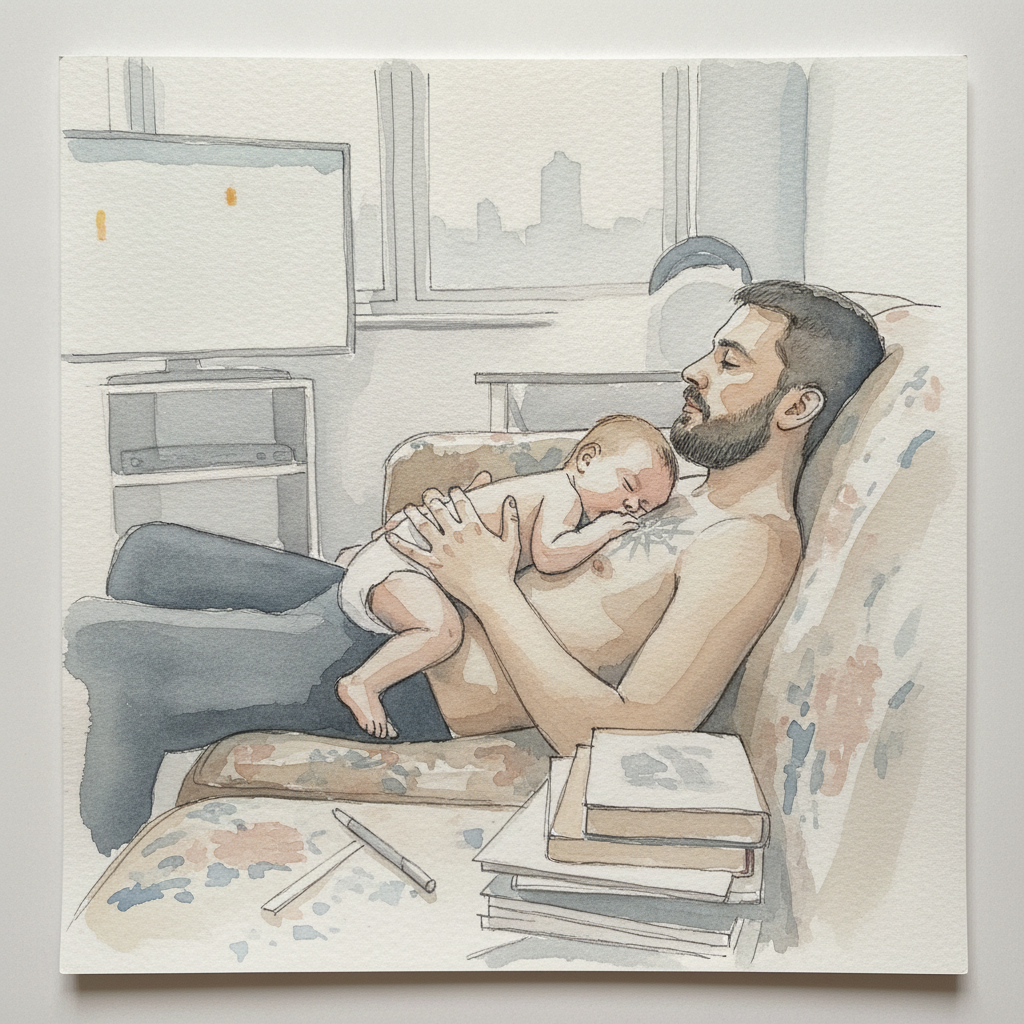
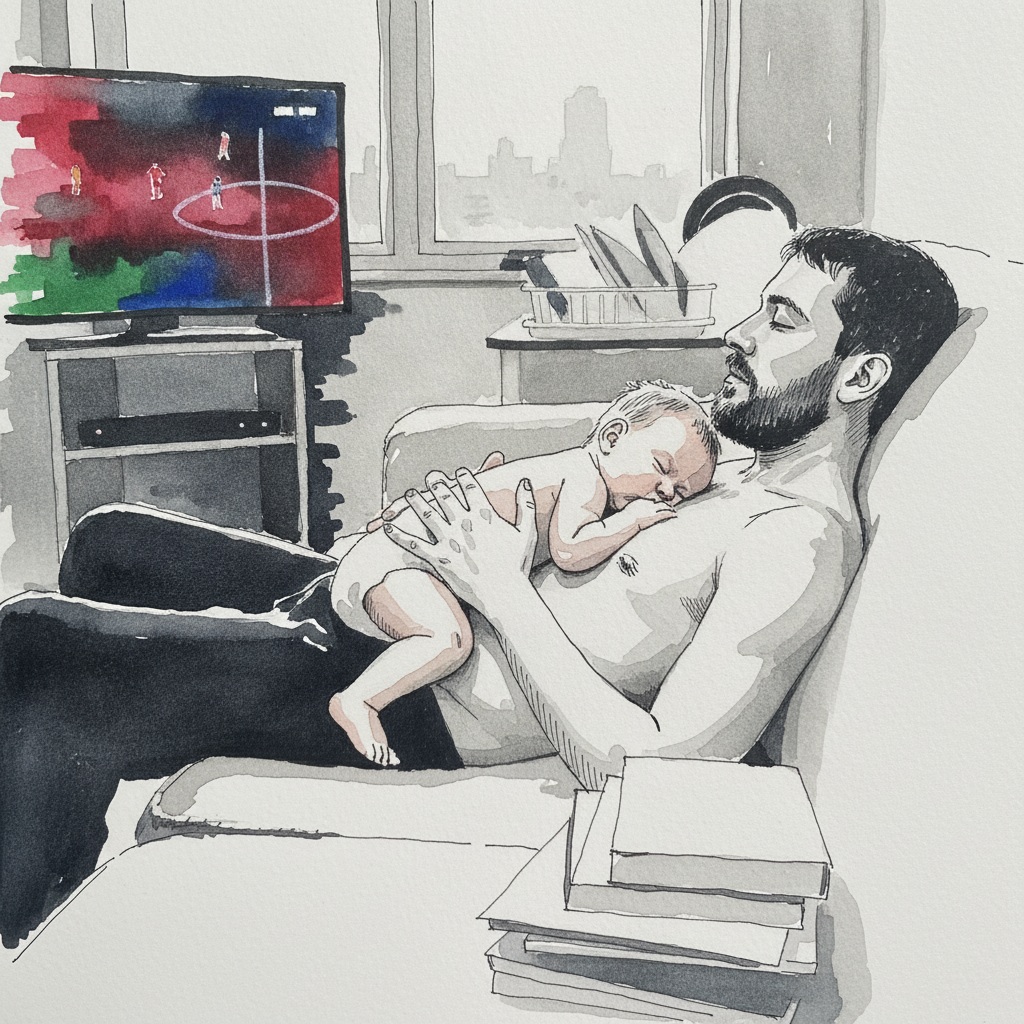
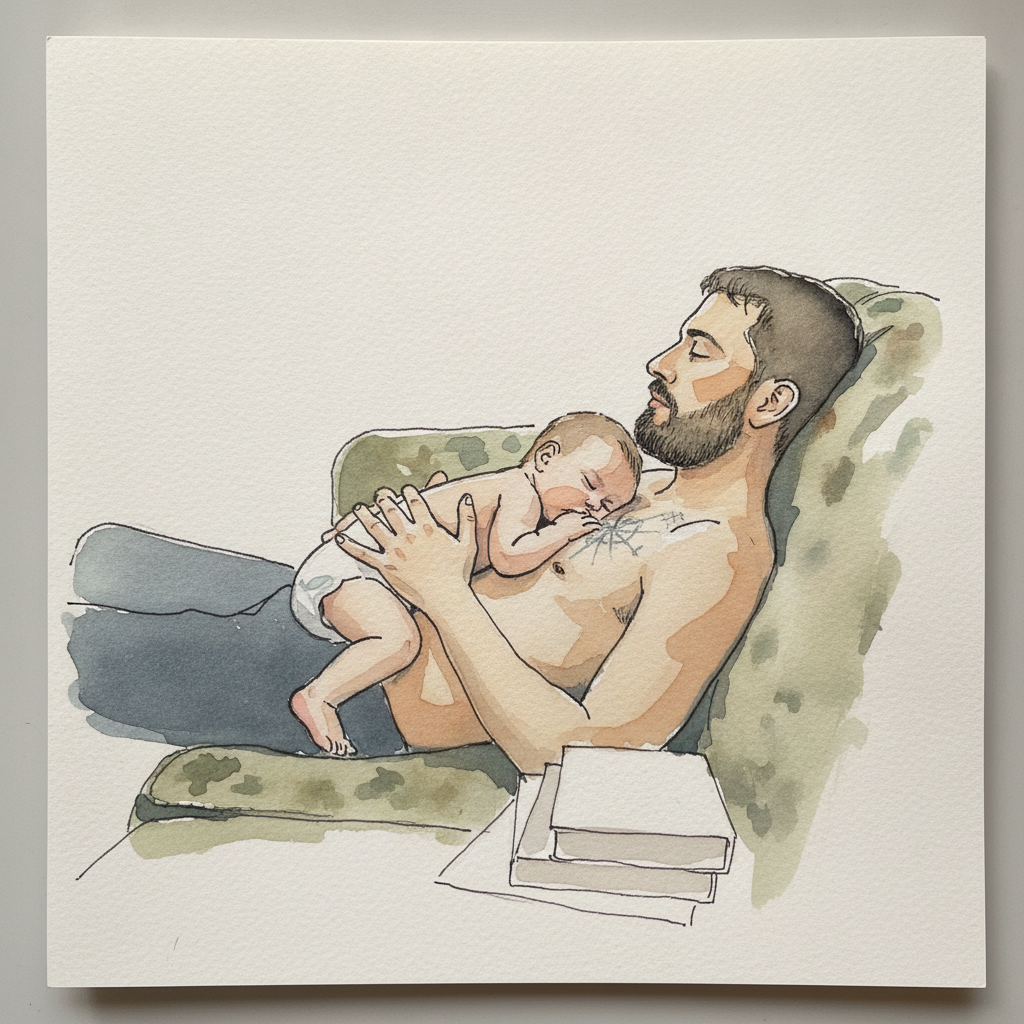
Piece 1 — Father with baby on chest
Pen + Watercolor · Loose pen and watercolor line-and-wash

Three takes
Focus for this piece
This intimate scene offers a prime opportunity to study conveying soft, organic forms and a sense of quiet depth. Focus on building volume through gentle, layered washes in a limited, warm palette for the skin and sagging couch, letting watercolor create subtle transitions. Use varied, delicate pen lines—lighter for the baby's skin, a bit more defined for the father's hand—to suggest contours and textures without stiffness, allowing the ink to articulate form where the washes are most atmospheric.
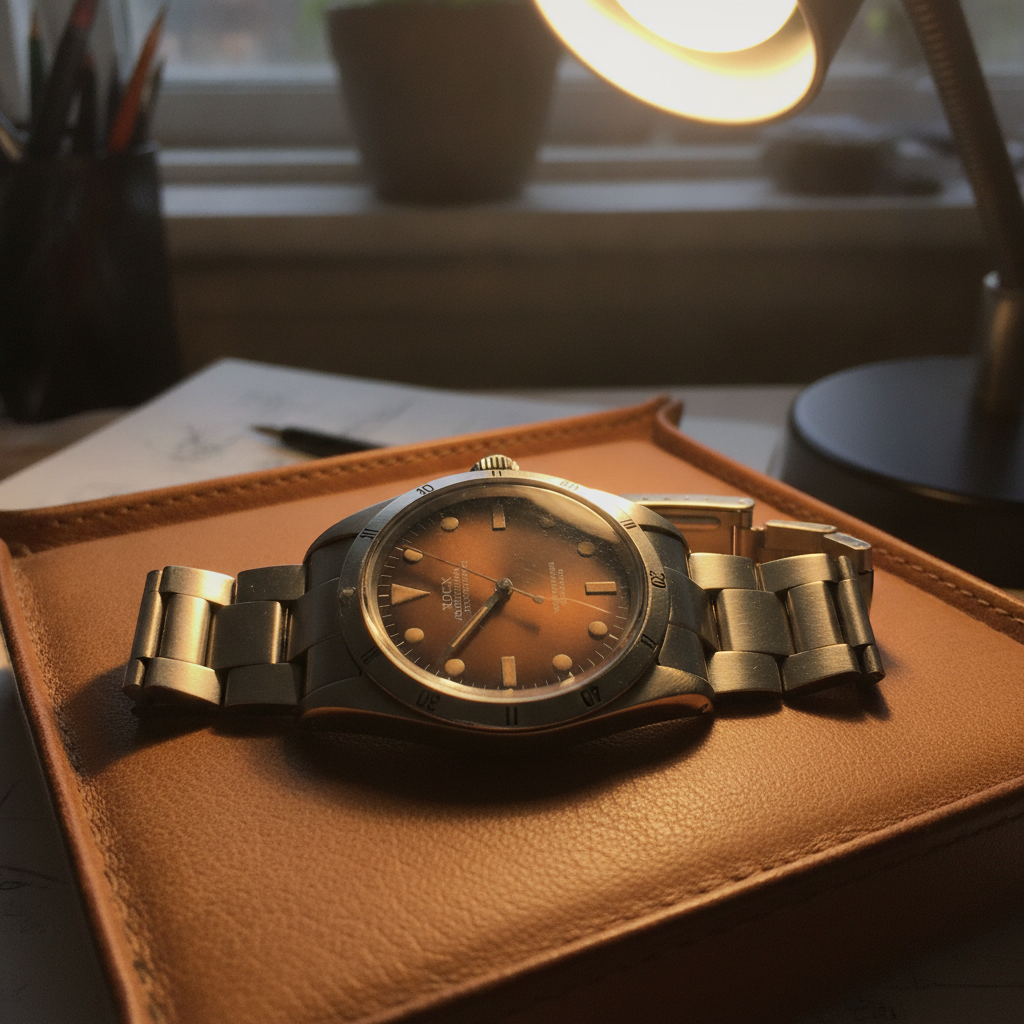
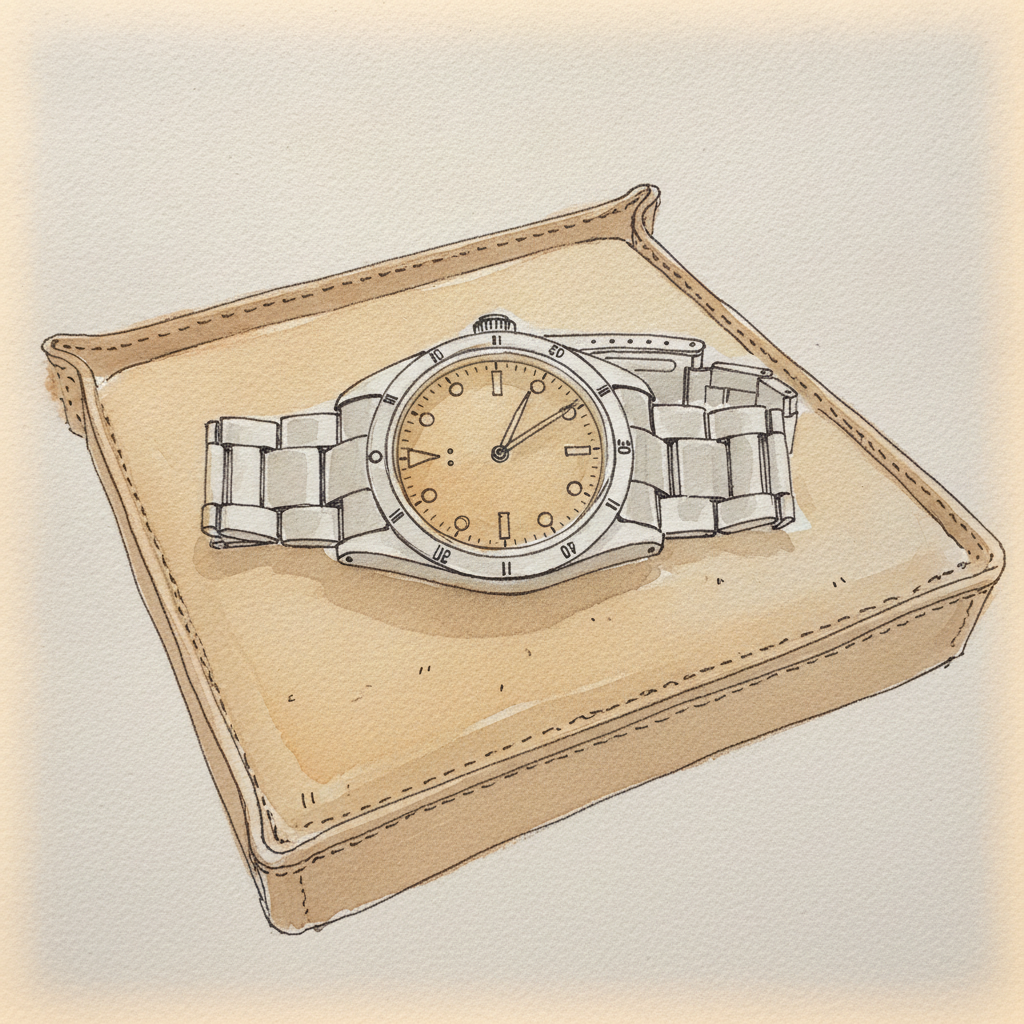
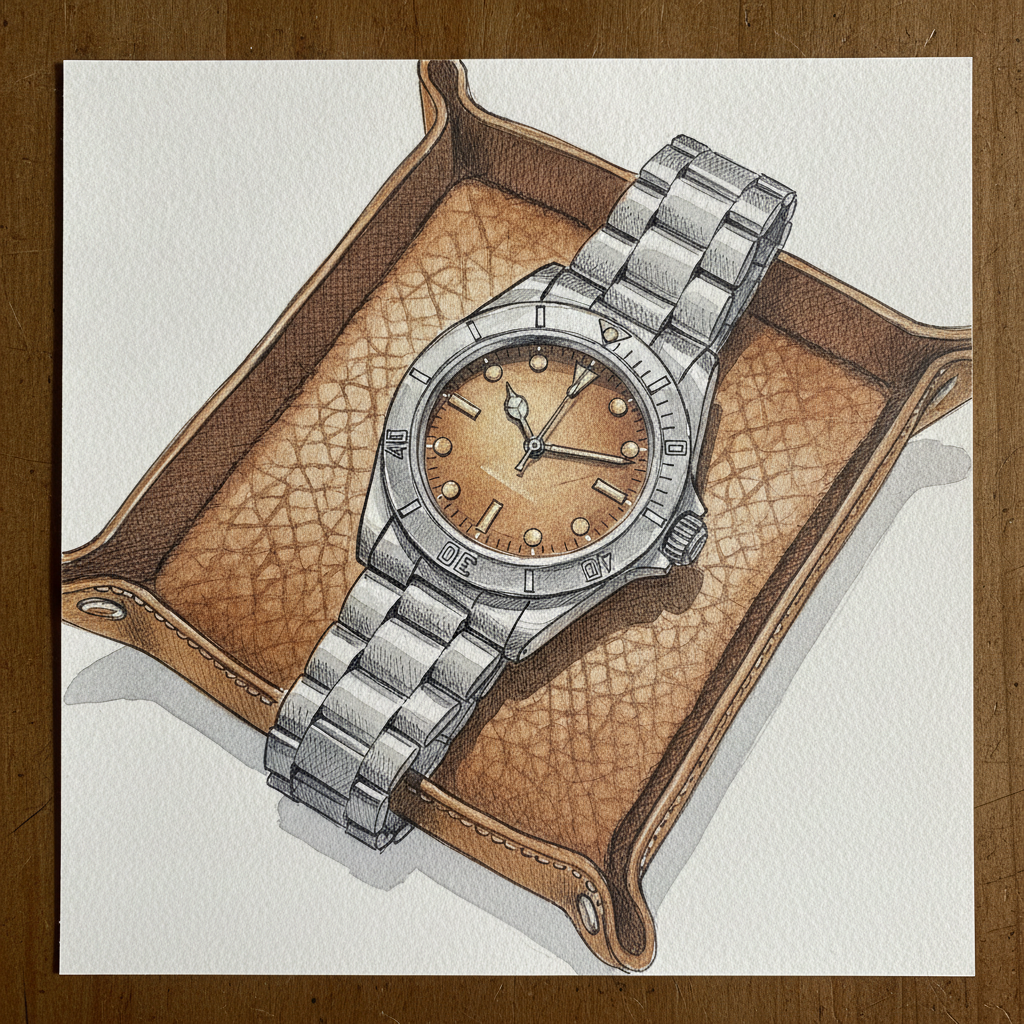
Piece 2 — Vintage Rolex on leather
Pen + Watercolor · Loose pen and watercolor line-and-wash
Three takes
Focus for this piece
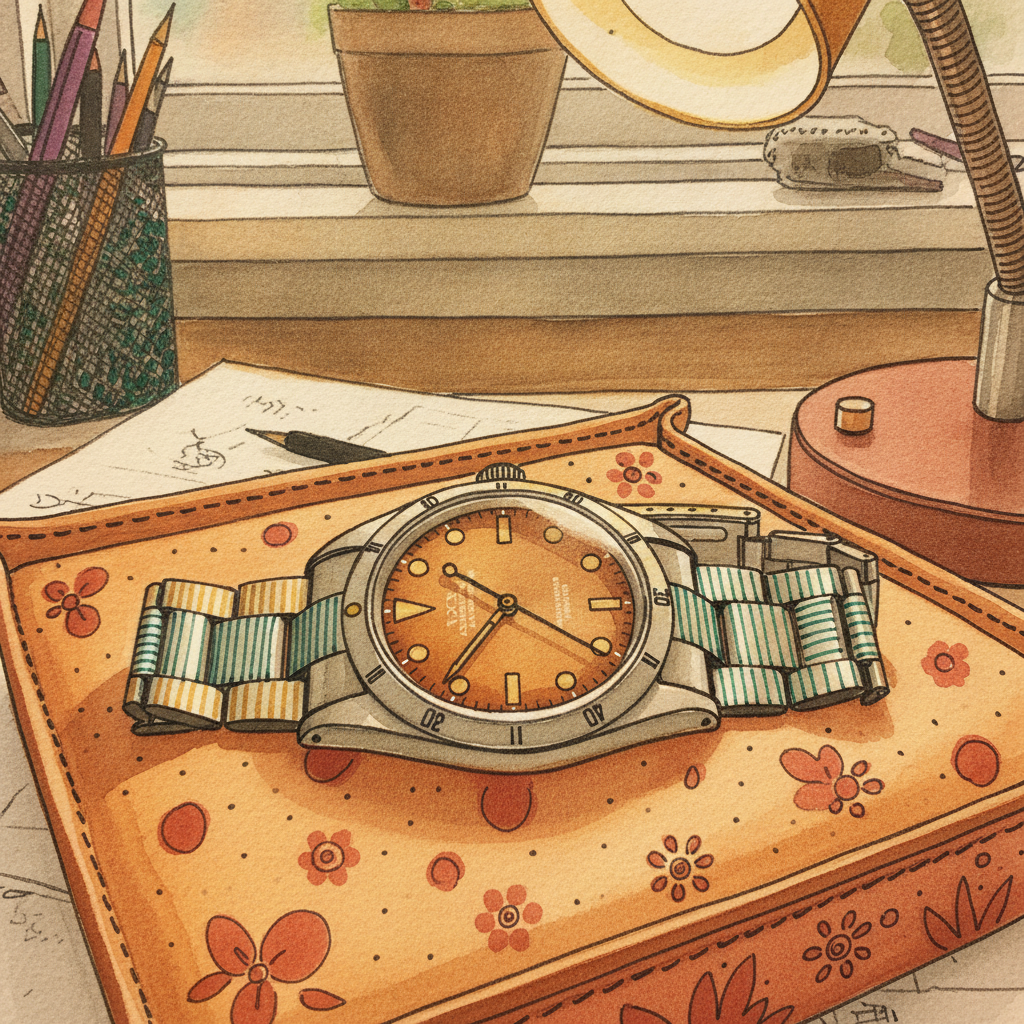
This piece is an excellent study in distinguishing diverse material textures and reflective qualities using pen and wash. Employ delicate, broken ink lines and soft, wet-on-wet watercolor washes to capture the subtle gleam and secondary glow of the polished steel case. Contrast this with the brushed bezel, using slightly drier, more controlled washes and consistent line weights to articulate its matte finish, and reserve your finest pen for the crisp details of the scratch and bracelet links. Pay close attention to how a limited palette of cool grays and warm browns can enhance the tactile difference between metal and aged leather.
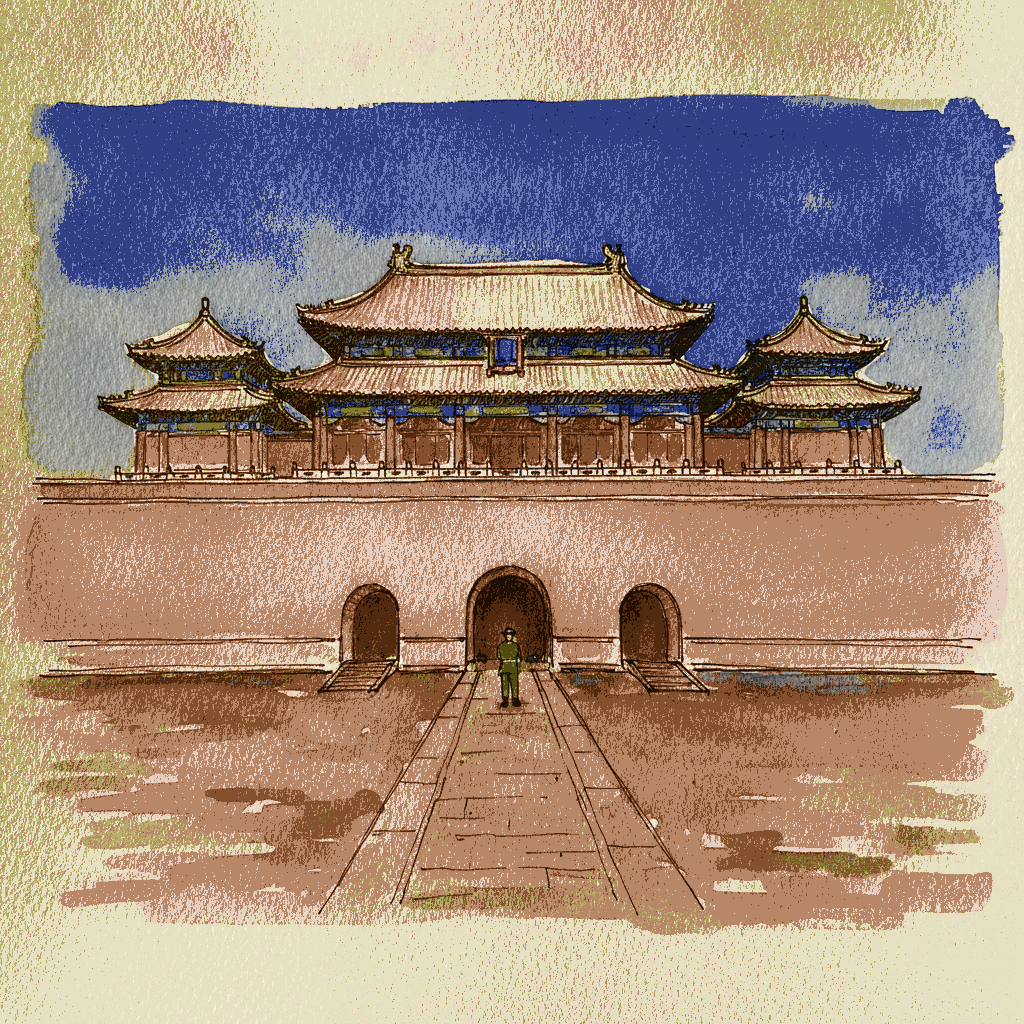
Piece 3 — Meridian Gate (Wumen), Forbidden City, Beijing, China
Pen + Watercolor · Loose pen and watercolor line-and-wash
Three takes

Focus for this piece
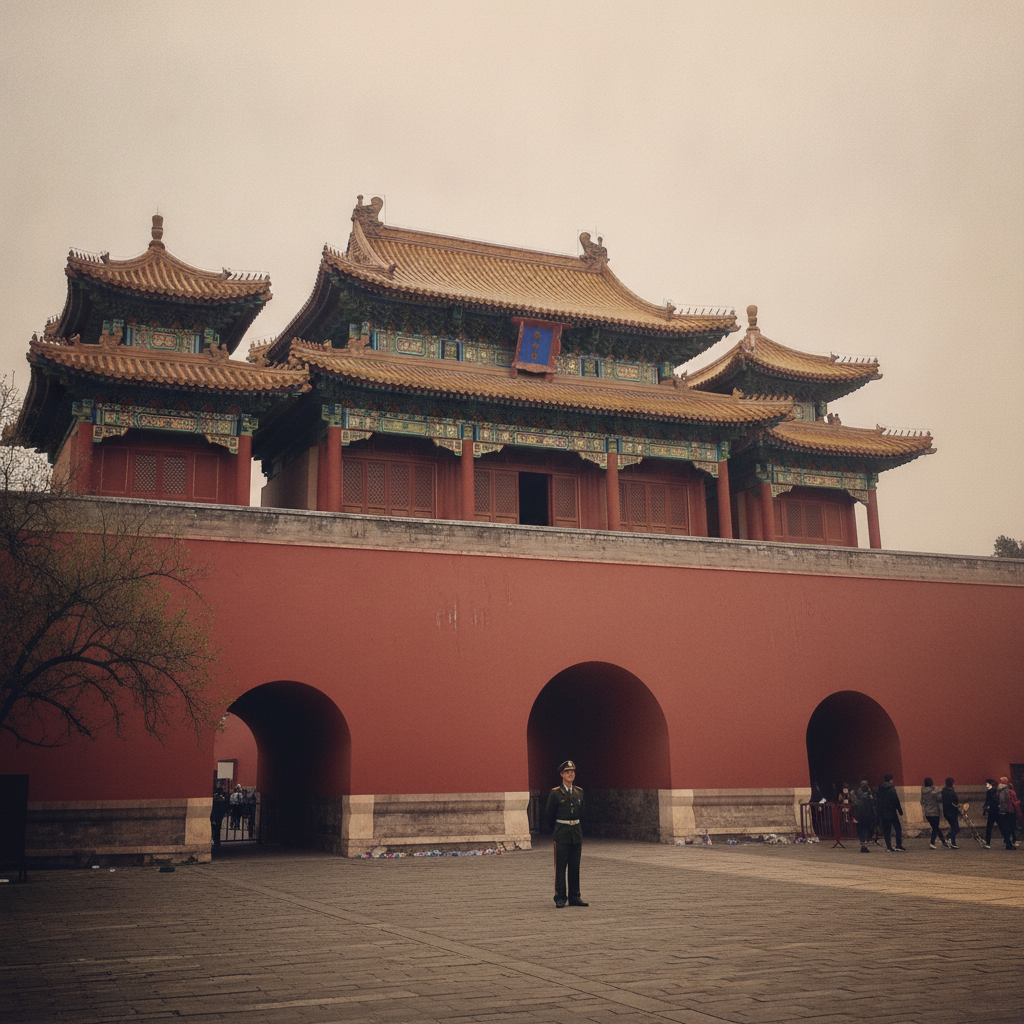
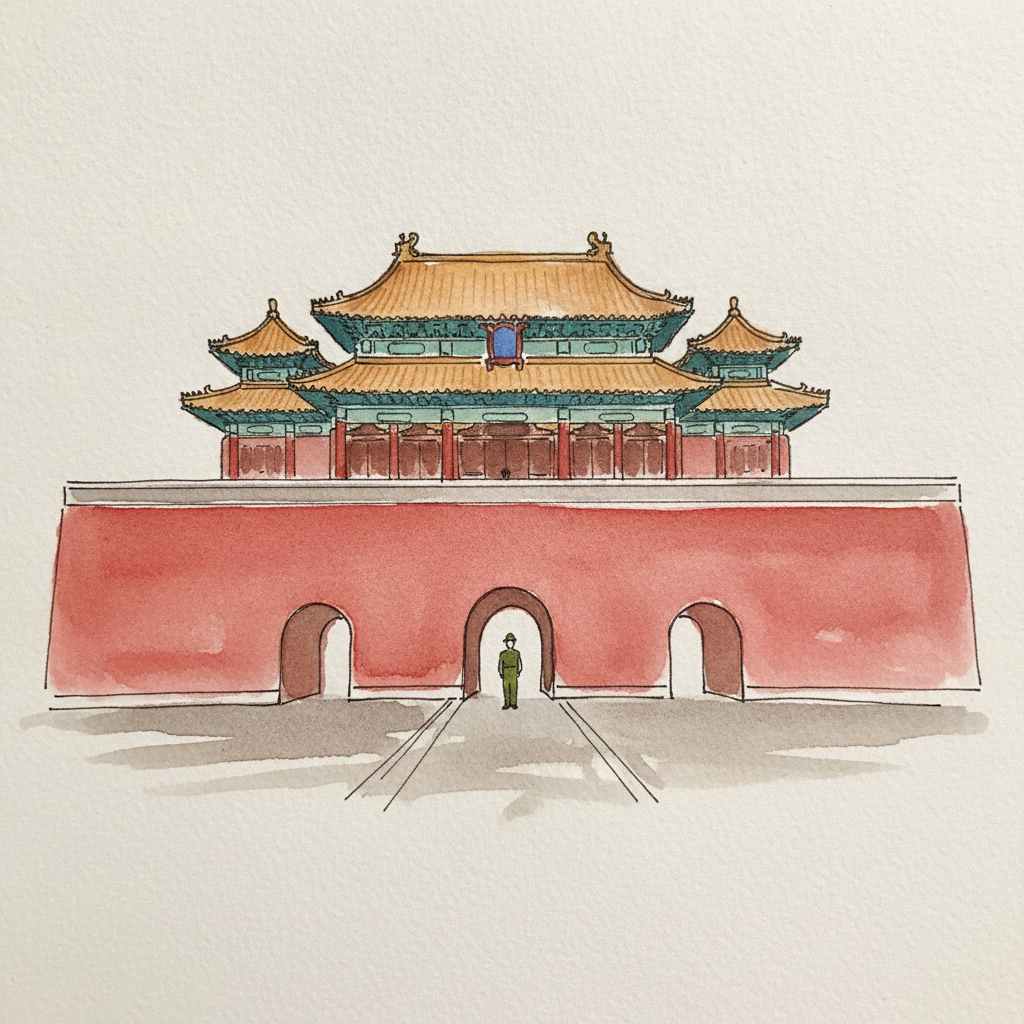
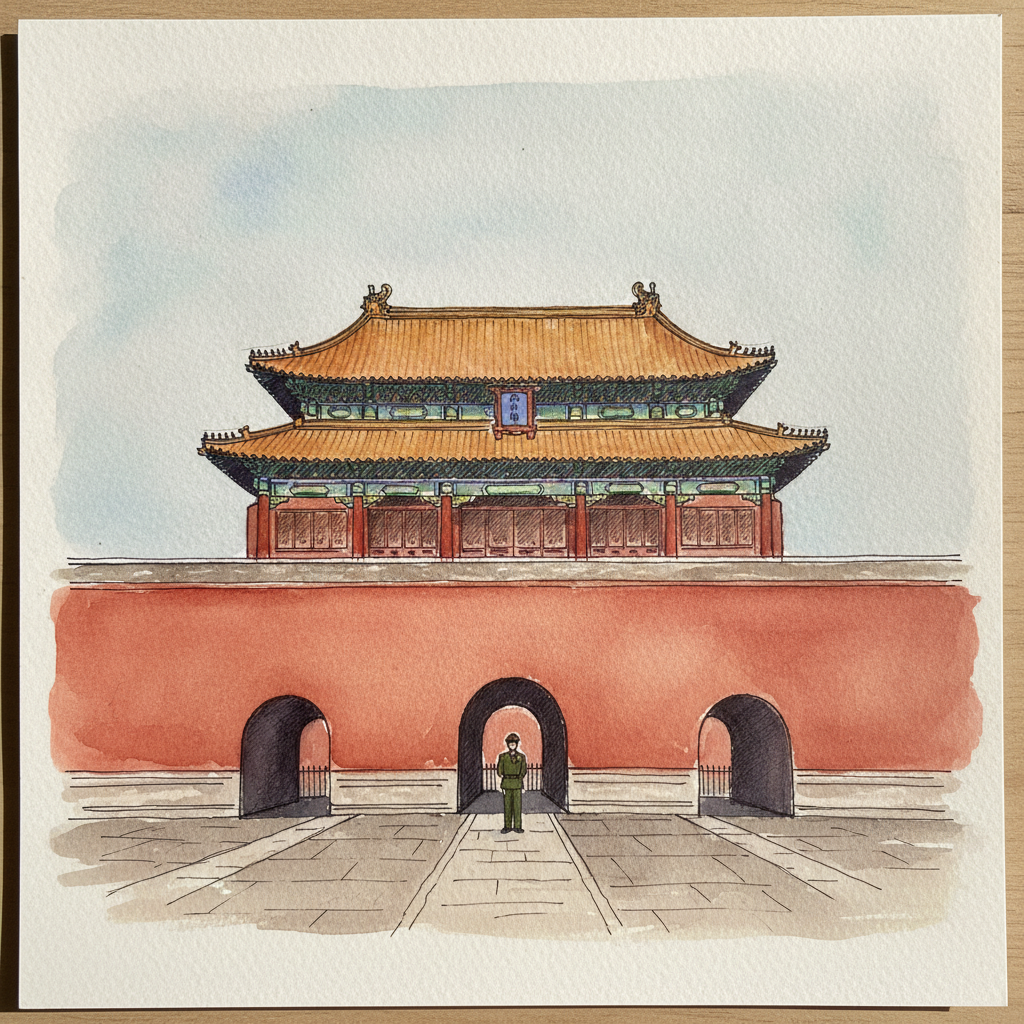
This monumental structure is ideal for practicing how line weight dictates visual hierarchy: use bold, confident lines for the immense wall and its strong rectangular forms, while employing finer, more delicate strokes for the intricate eaves and roofline details. Focus on achieving a deep, even wash for the cinnabar plaster, allowing it to define the vast planes before carefully layering the green-and-blue polychromy and beam-end medallions with smaller, controlled brush applications.
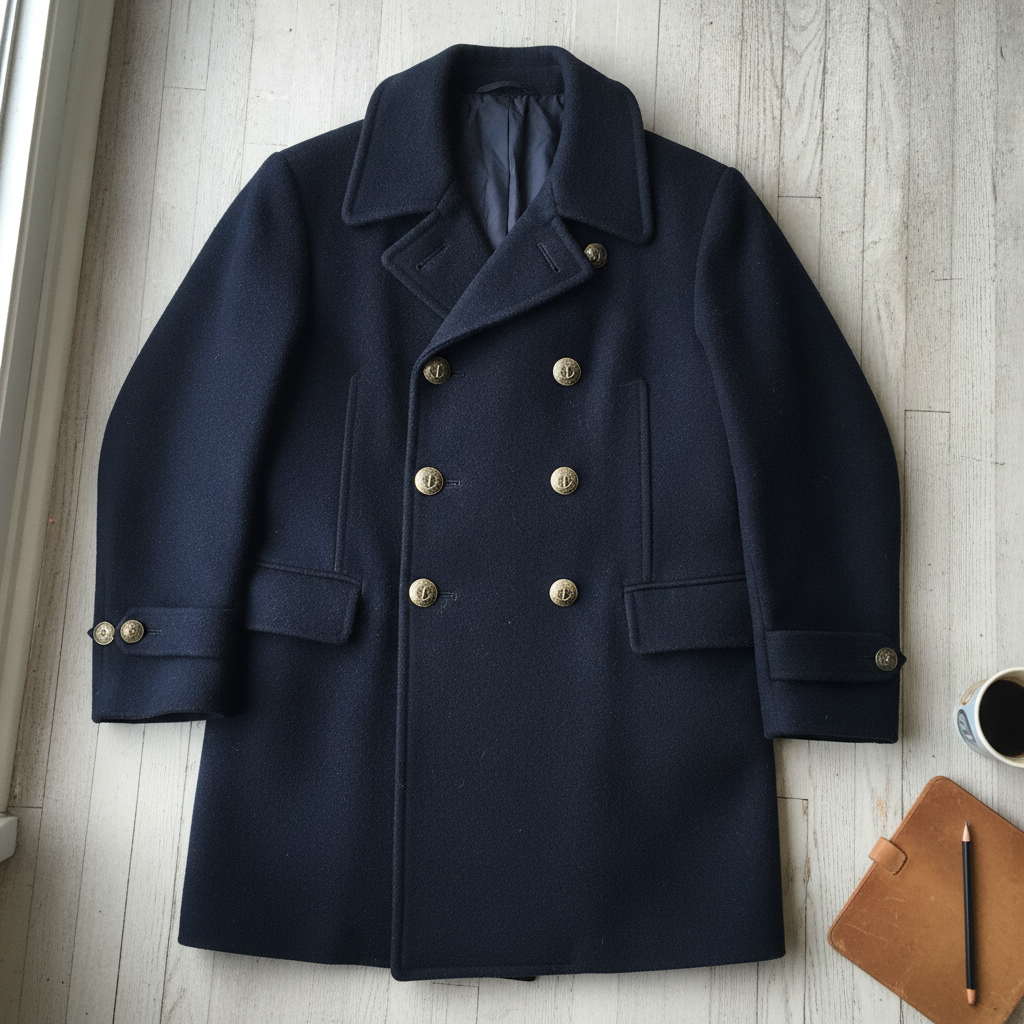
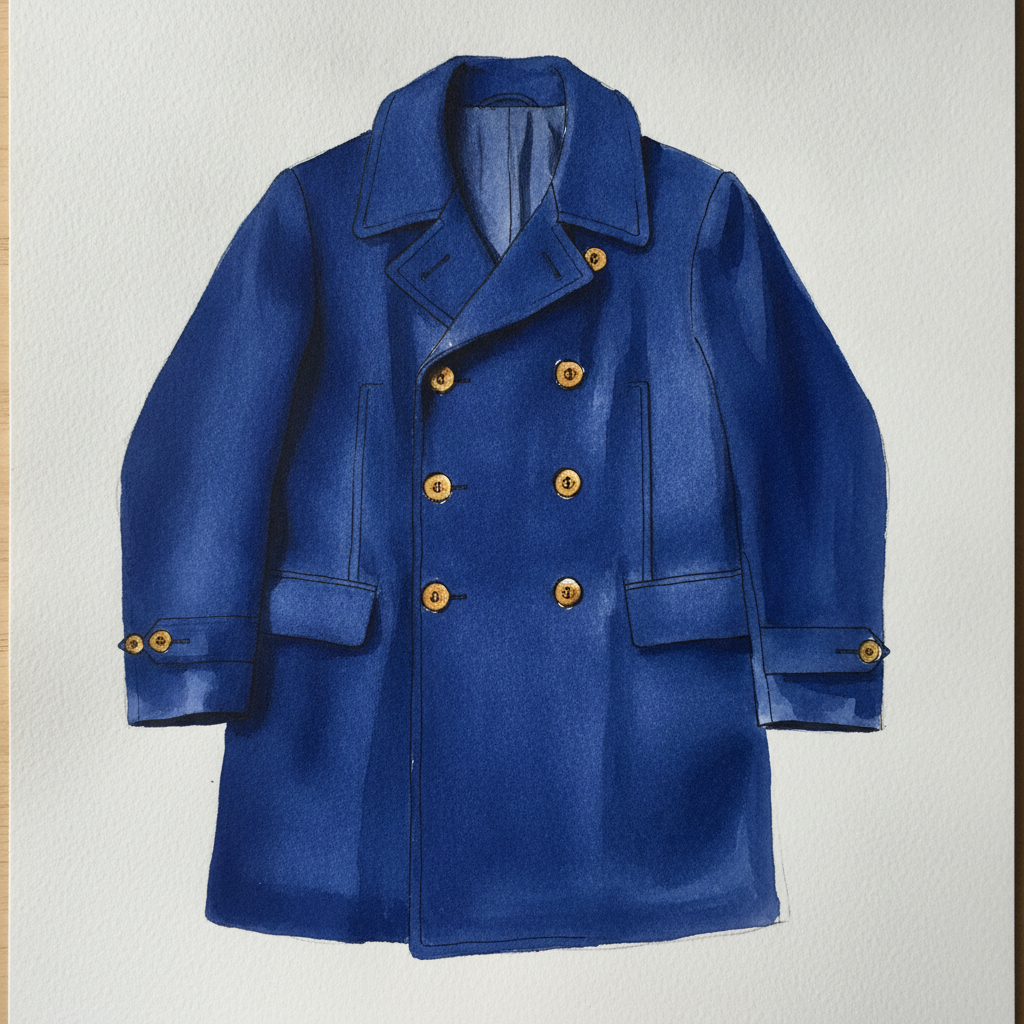
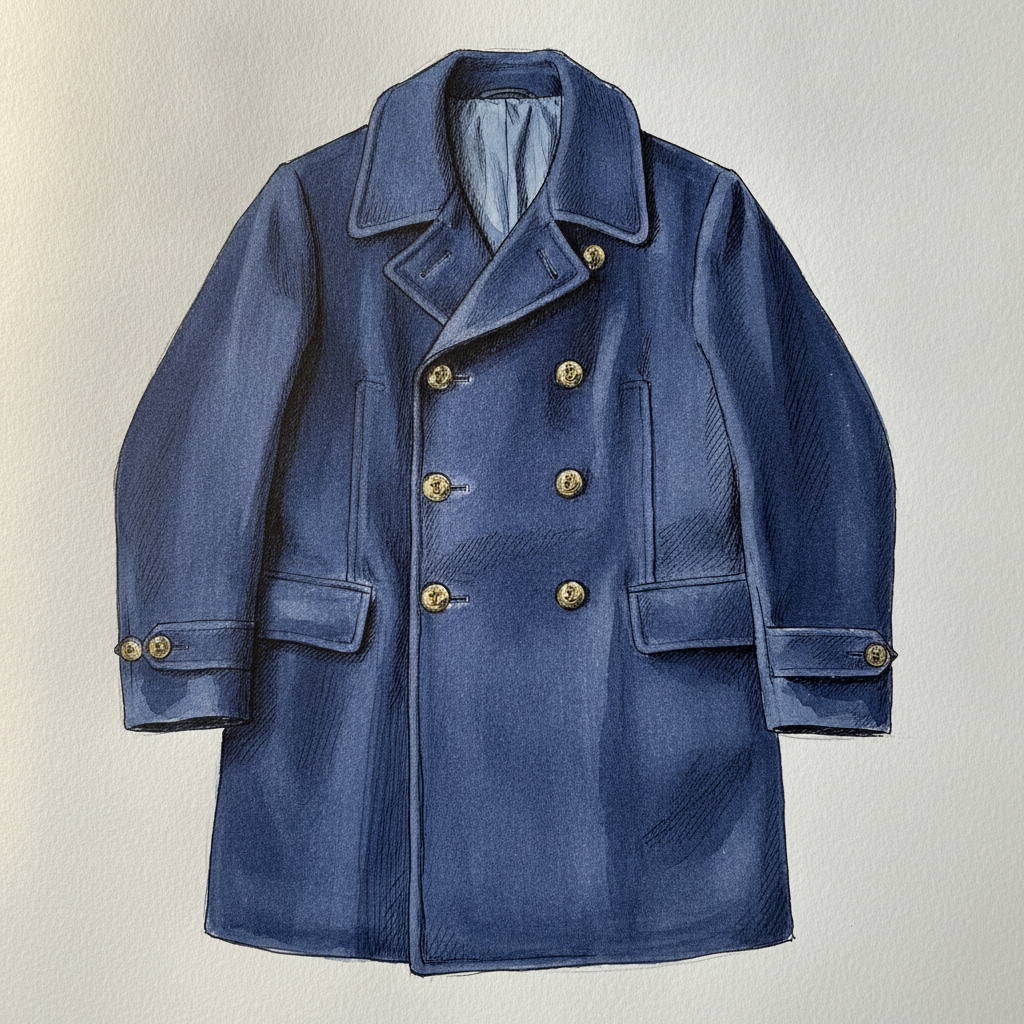
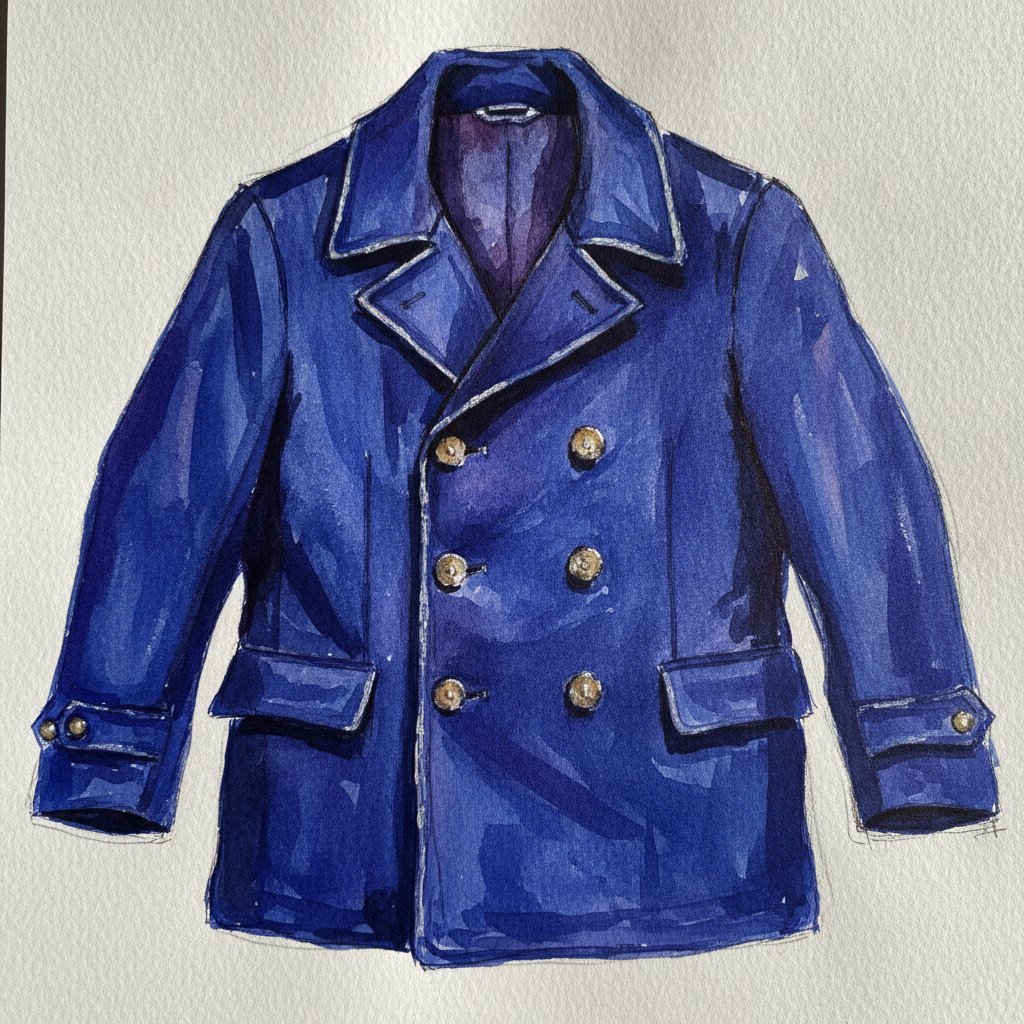
Piece 4 — Double-breasted wool peacoat laid flat
Pen + Watercolor · Loose pen and watercolor line-and-wash
Three takes
Focus for this piece
This piece is an excellent study in using varied line weights to convey both precise structure and the softness of fabric. Use your crispest, thinnest pen lines to define the precise button rows, angular pocket edges, and the sharp creases of the lapels. Then, introduce a dominant deep navy wash with subtle tonal shifts to render the heavy melton's volume and the gentle undulations of the coat laid flat, allowing the watercolor to soften the impact of slightly thicker ink lines used for general fabric seams. Focus on letting the wash do the work of creating depth and the illusion of wool texture around your defined framework.
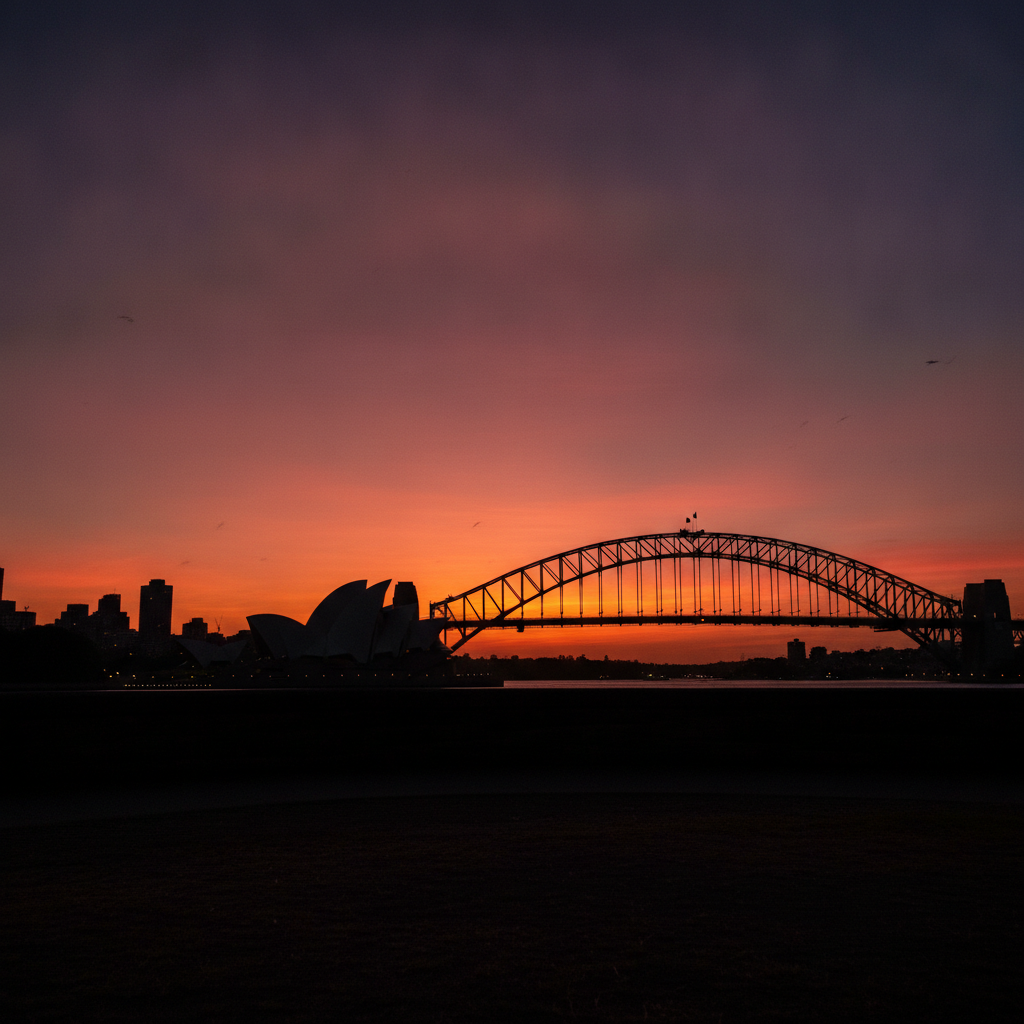
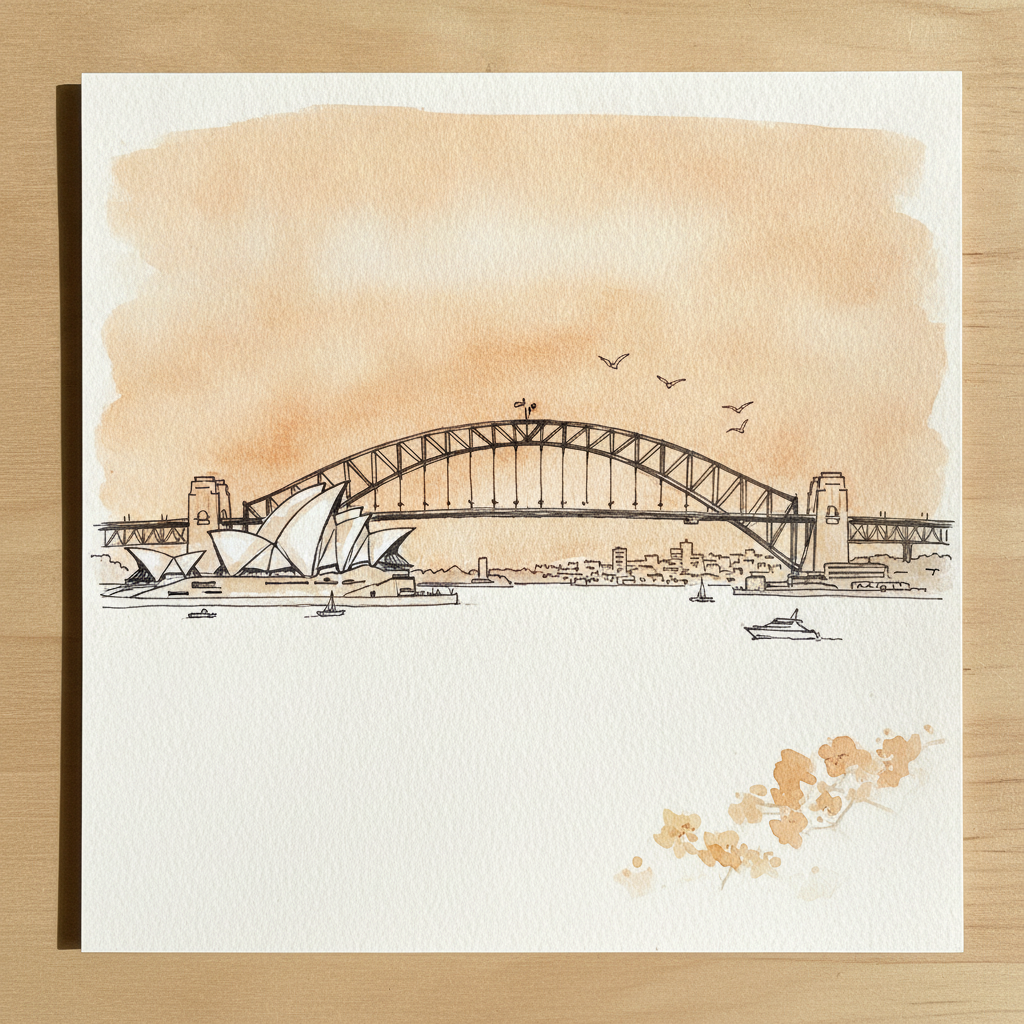
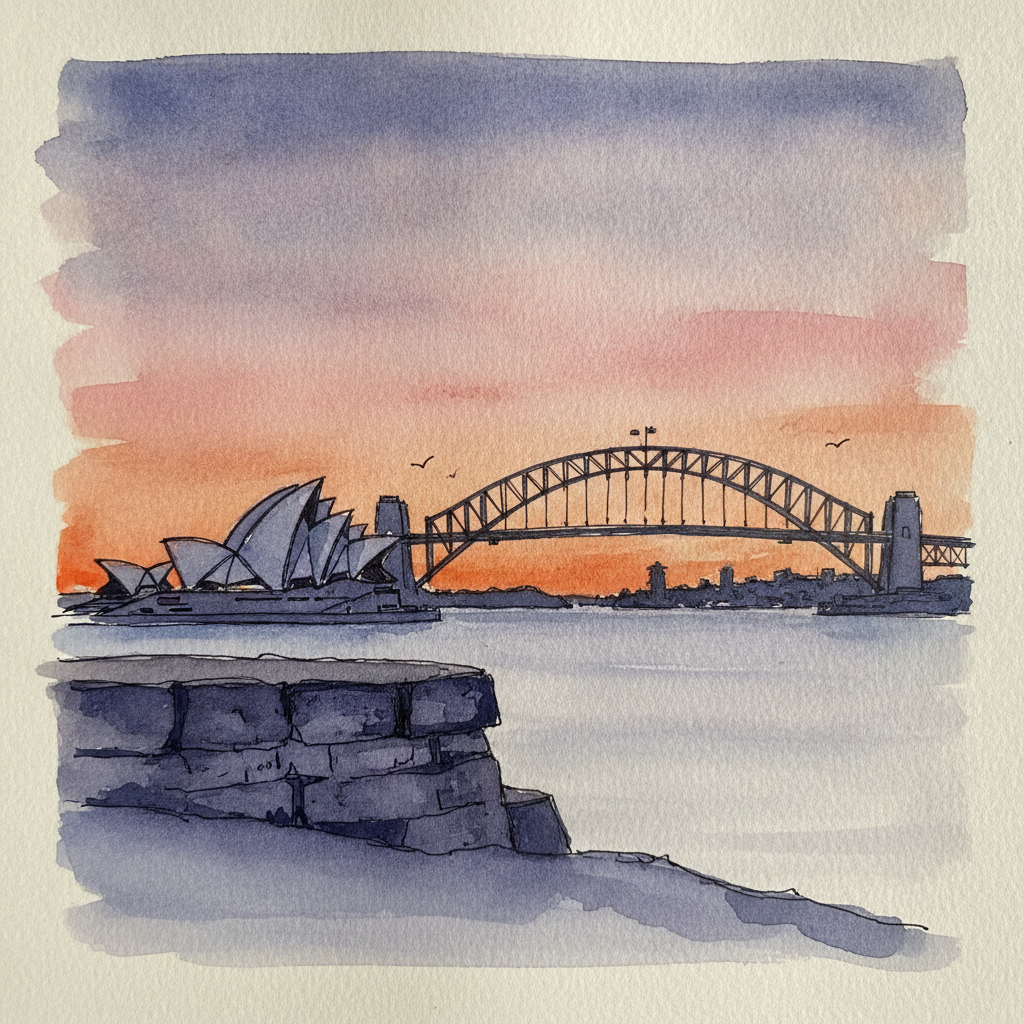
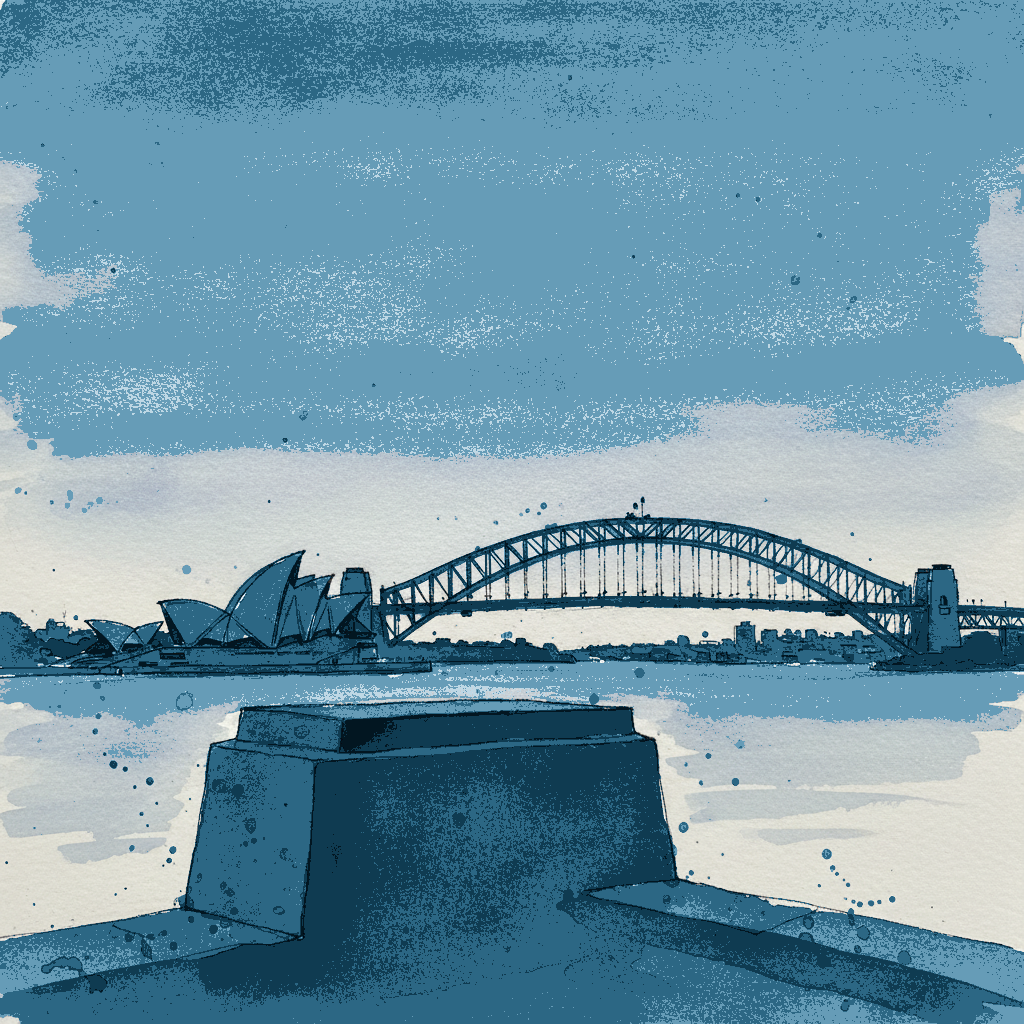
Piece 5 — Bridge silhouette at sunset over Sydney Harbour, Australia
Pen + Watercolor · Loose pen and watercolor line-and-wash
Three takes

Focus for this piece
This piece is an excellent study in rendering dramatic silhouettes with precise ink lines against a vibrant, atmospheric wash. Focus on applying a smooth, gradated wet-on-wet wash for the sunset sky, transitioning from warm orange at the horizon to cool indigo at the zenith. Once dry, use a medium-fine waterproof ink line for the bridge's diagonal trusses and a delicate, thinner line for the road deck to achieve a stark contrast, allowing these dark geometric forms to truly pop against the luminous background.
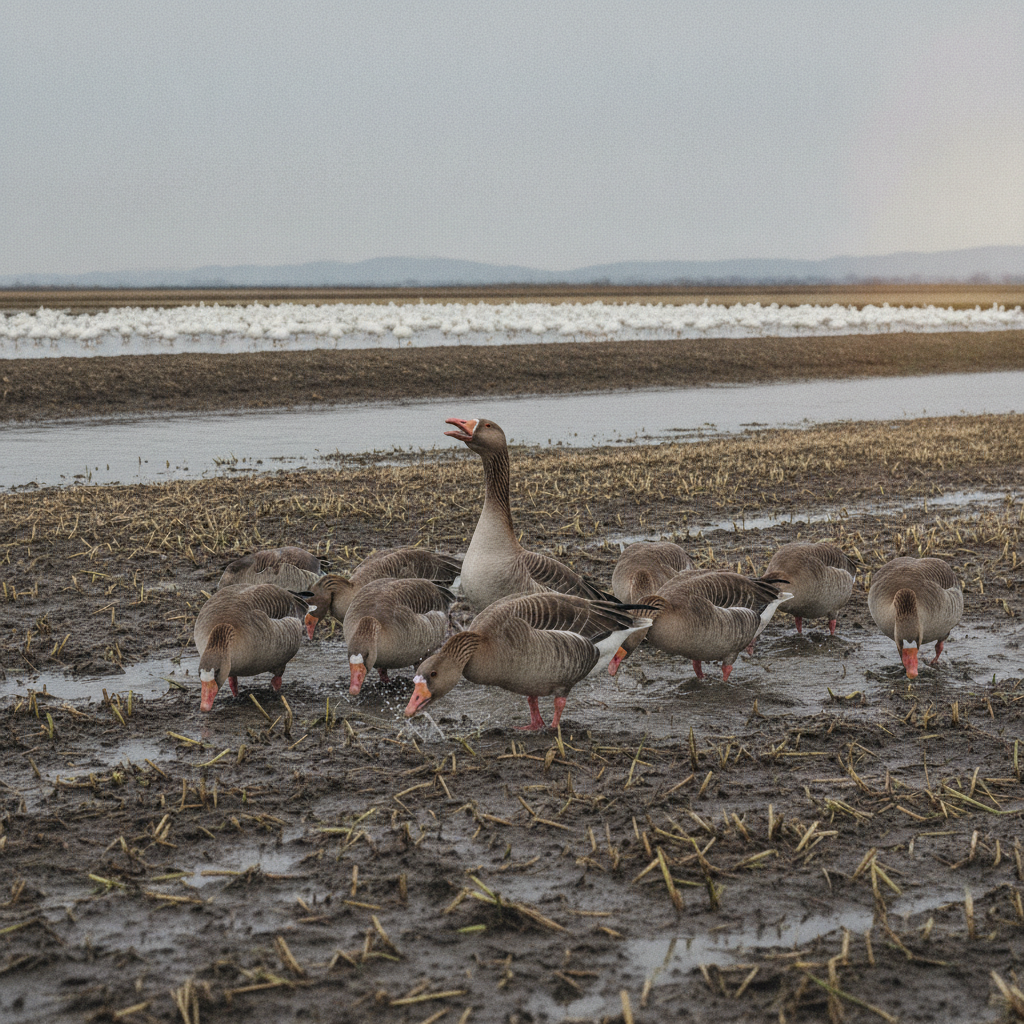
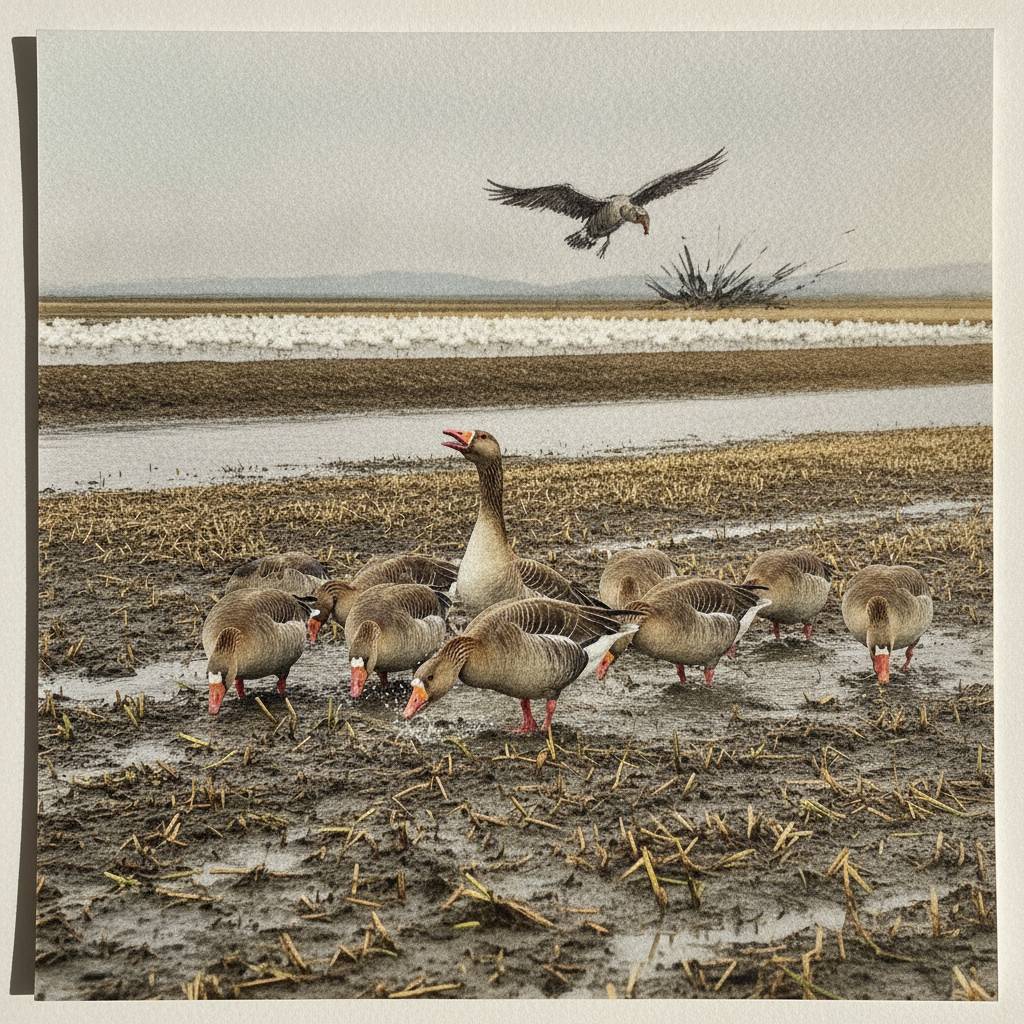
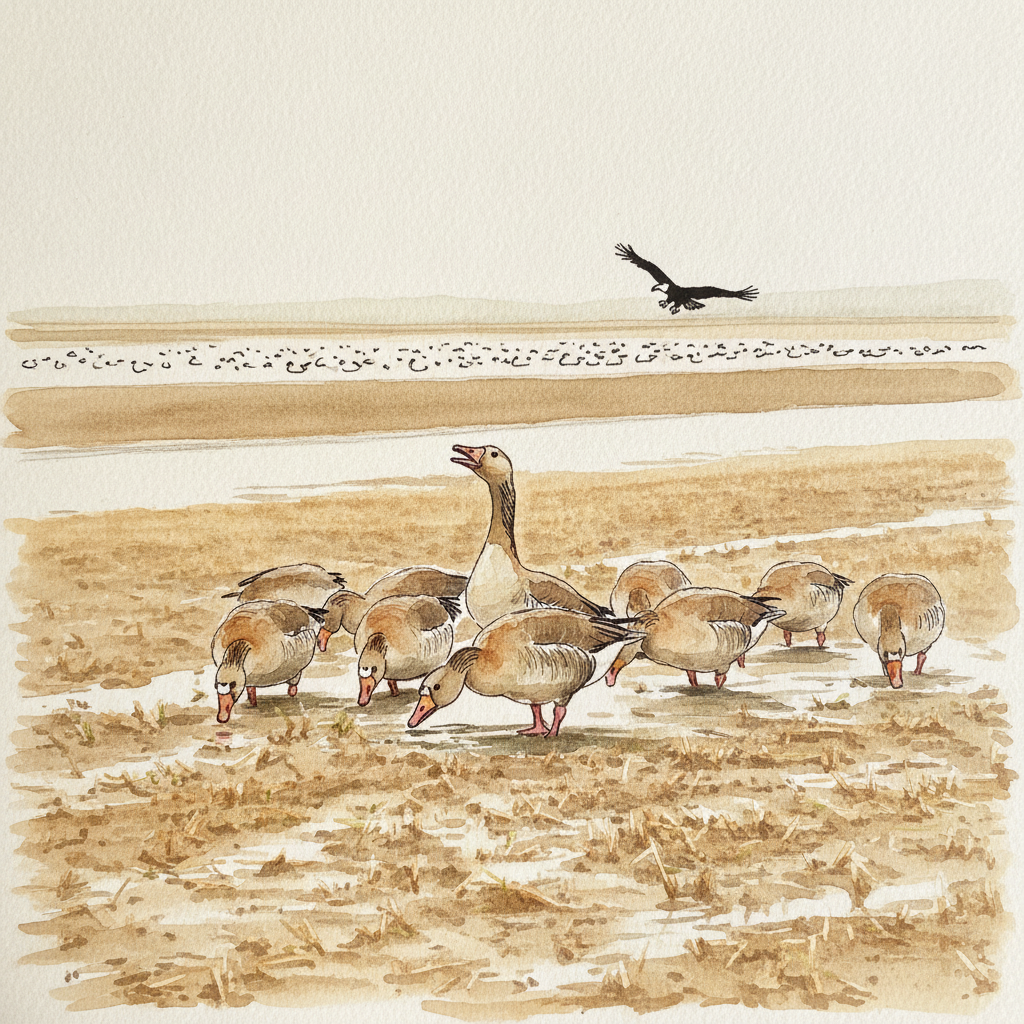
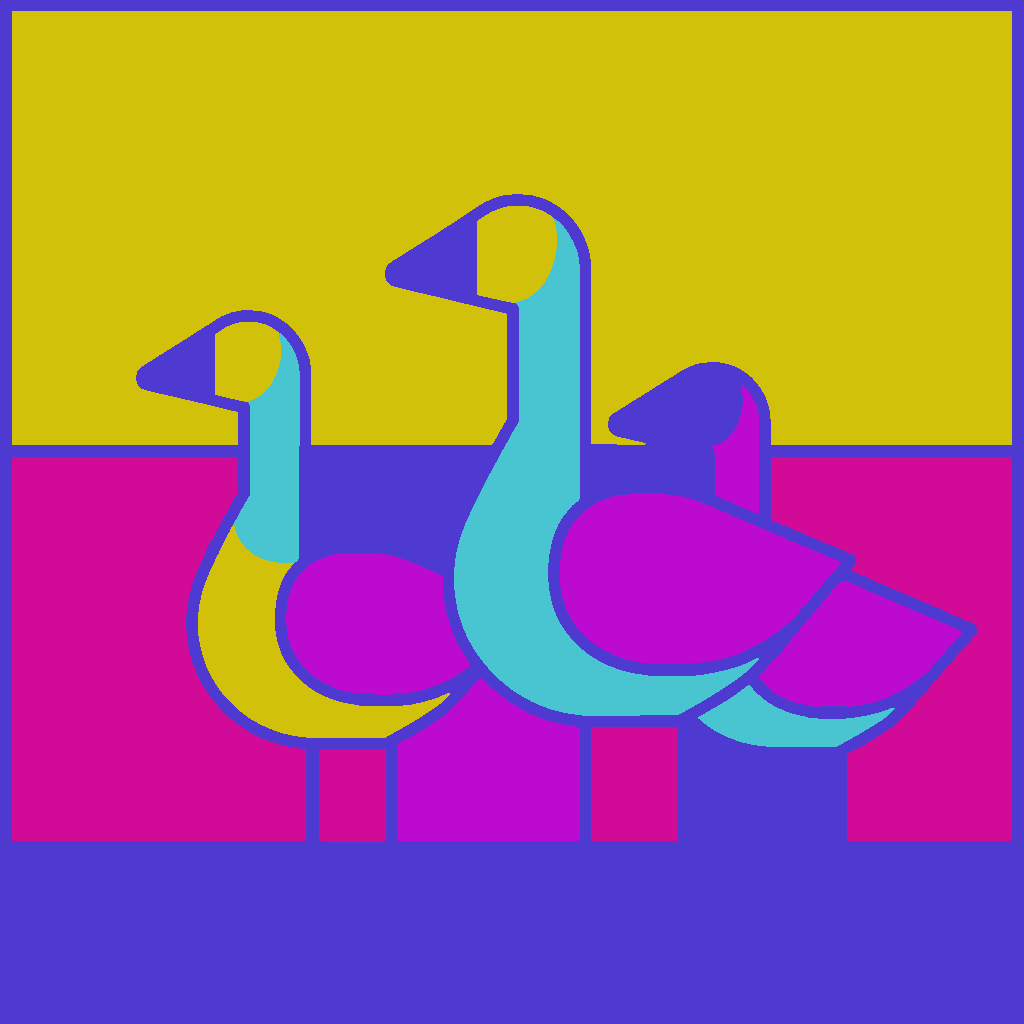
Piece 6 — Greater white-fronted goose
Pen + Watercolor · Loose pen and watercolor line-and-wash
Three takes
Focus for this piece
This piece is an excellent study in leveraging the inherent strengths of pen and wash to create striking contrast and implied texture. Use crisp, deliberate pen lines to define the geese's bright white face patches and pink bills, letting these details pop against broad, soft wet-on-wet washes that capture the wet sheen of the rice stubble. Vary your line weight, making the foreground birds more distinct with a slightly heavier touch, while allowing looser, drier brushstrokes to suggest the distant flock and atmospheric depth. Focus on how these different applications combine to convey both sharp focus and a humid, spacious environment.
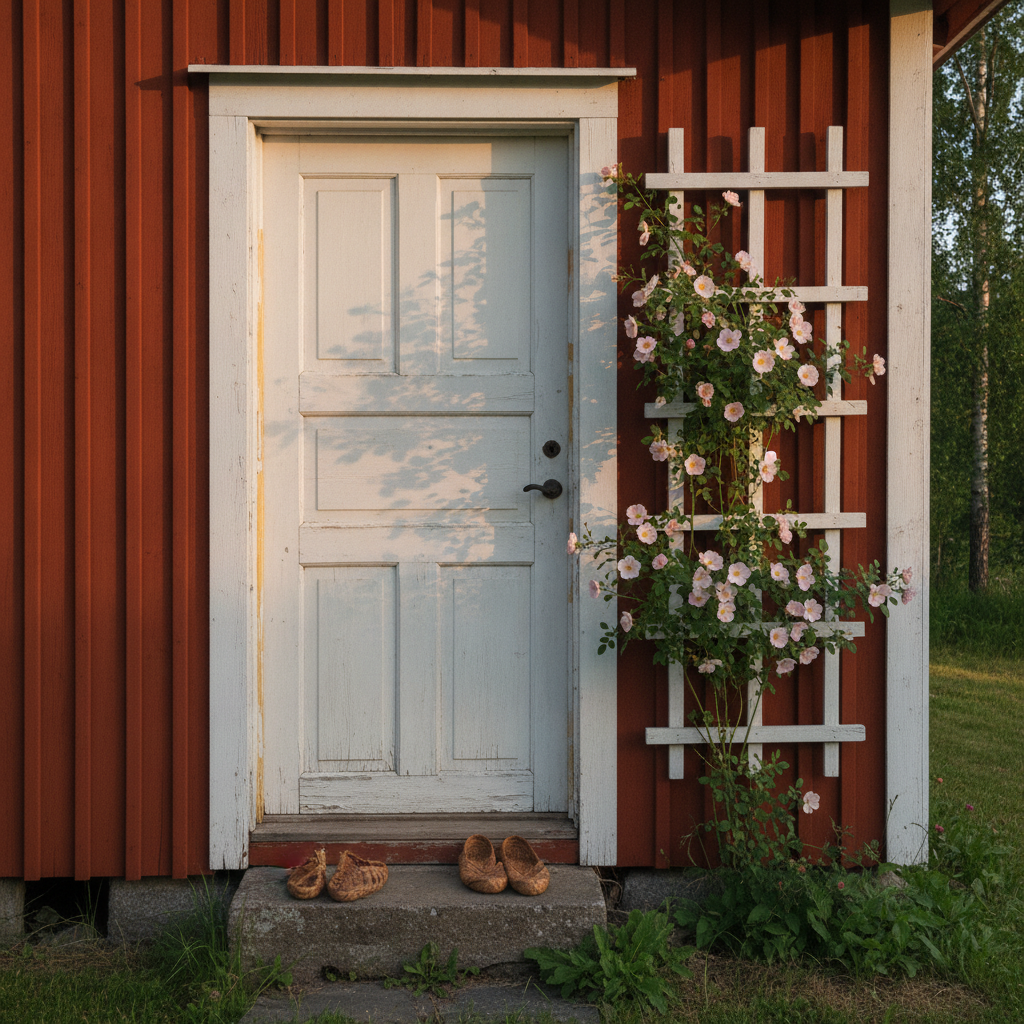
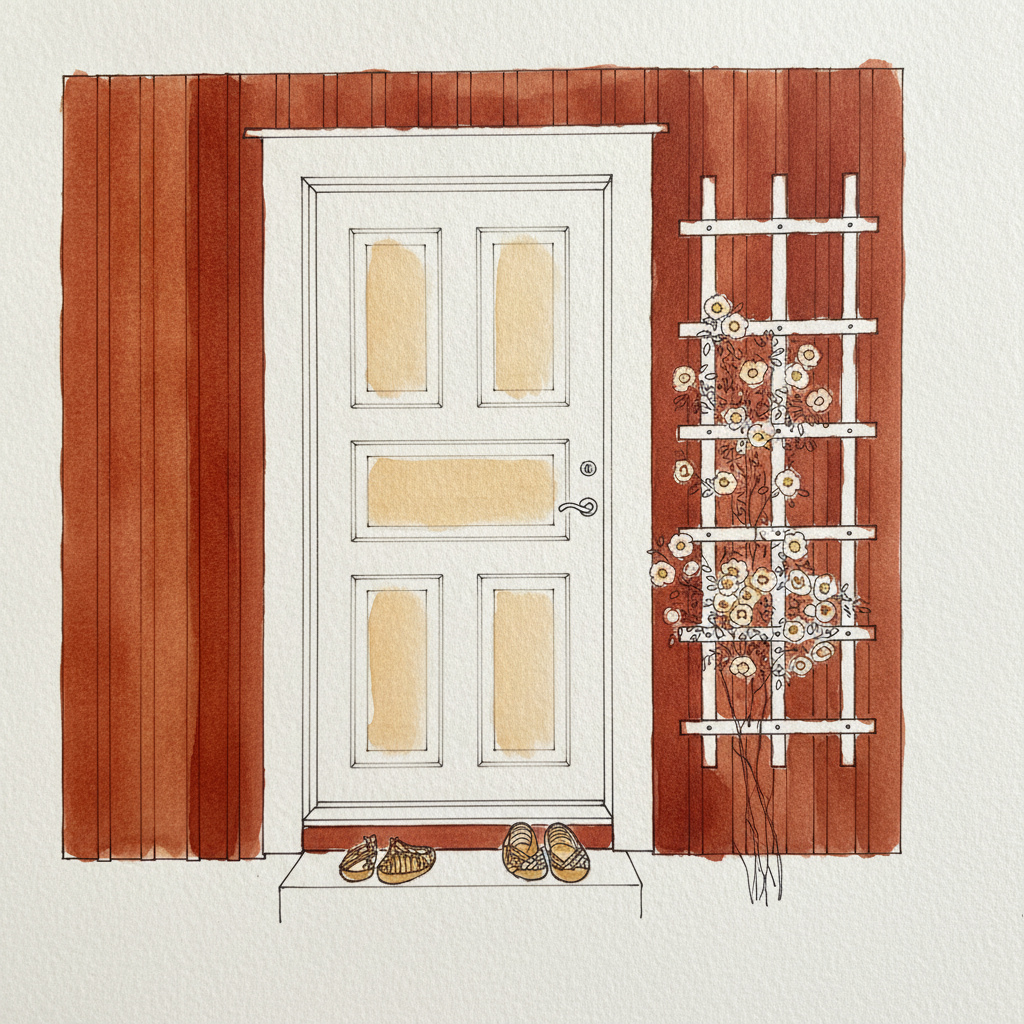
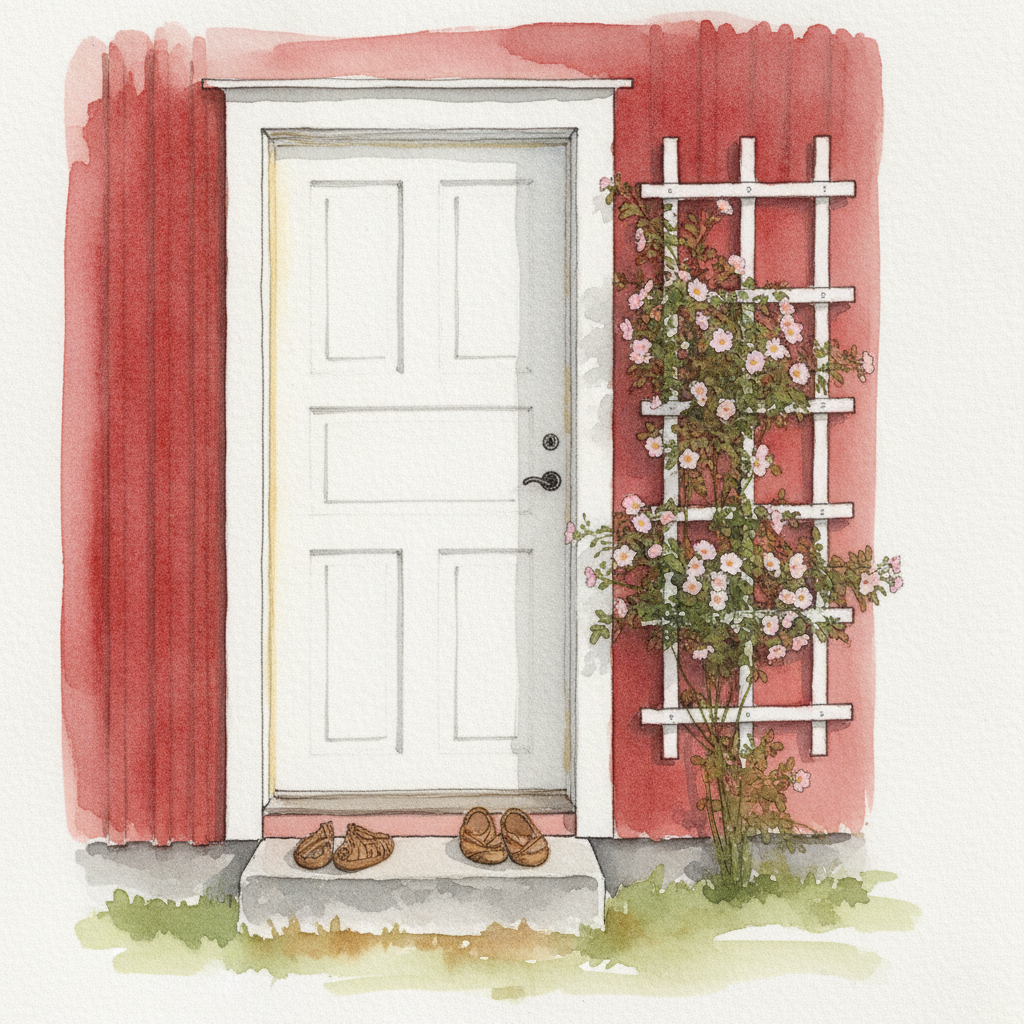
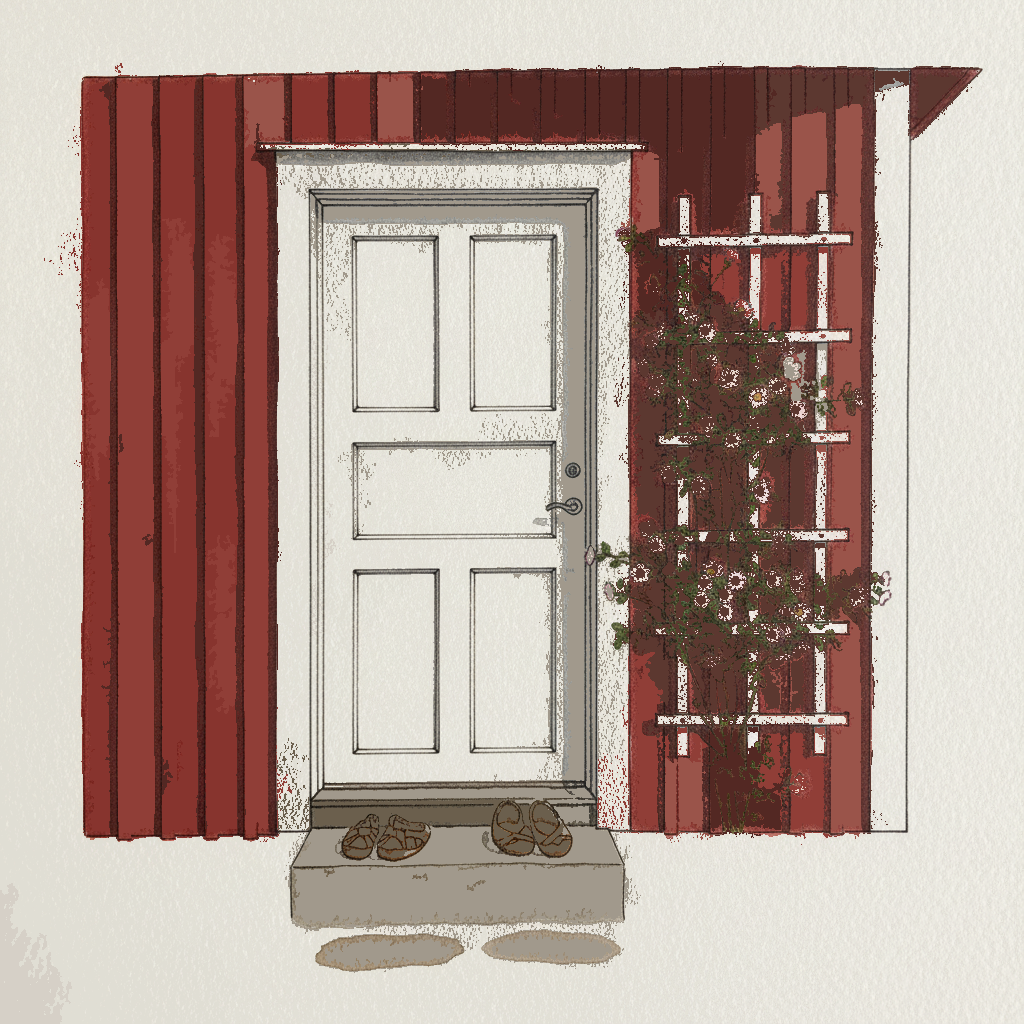
Piece 7 — Scandinavian falu-red cottage with a white door and climbing wild rose
Pen + Watercolor · Loose pen and watercolor line-and-wash
Three takes
Focus for this piece
This piece offers an excellent study in contrasting crisp architectural definition with the fluid spontaneity of natural forms. Use firm, consistent line weights for the cottage's falu-red planks and white door panels to establish clear structure and depth. For the climbing wild rose, employ delicate, varied line weights and soft, wet-on-wet washes to capture its organic shapes and pale pink blooms. Finally, pay close attention to how the long evening light transforms the red walls into glowing orange, building this effect with layered, warm washes.
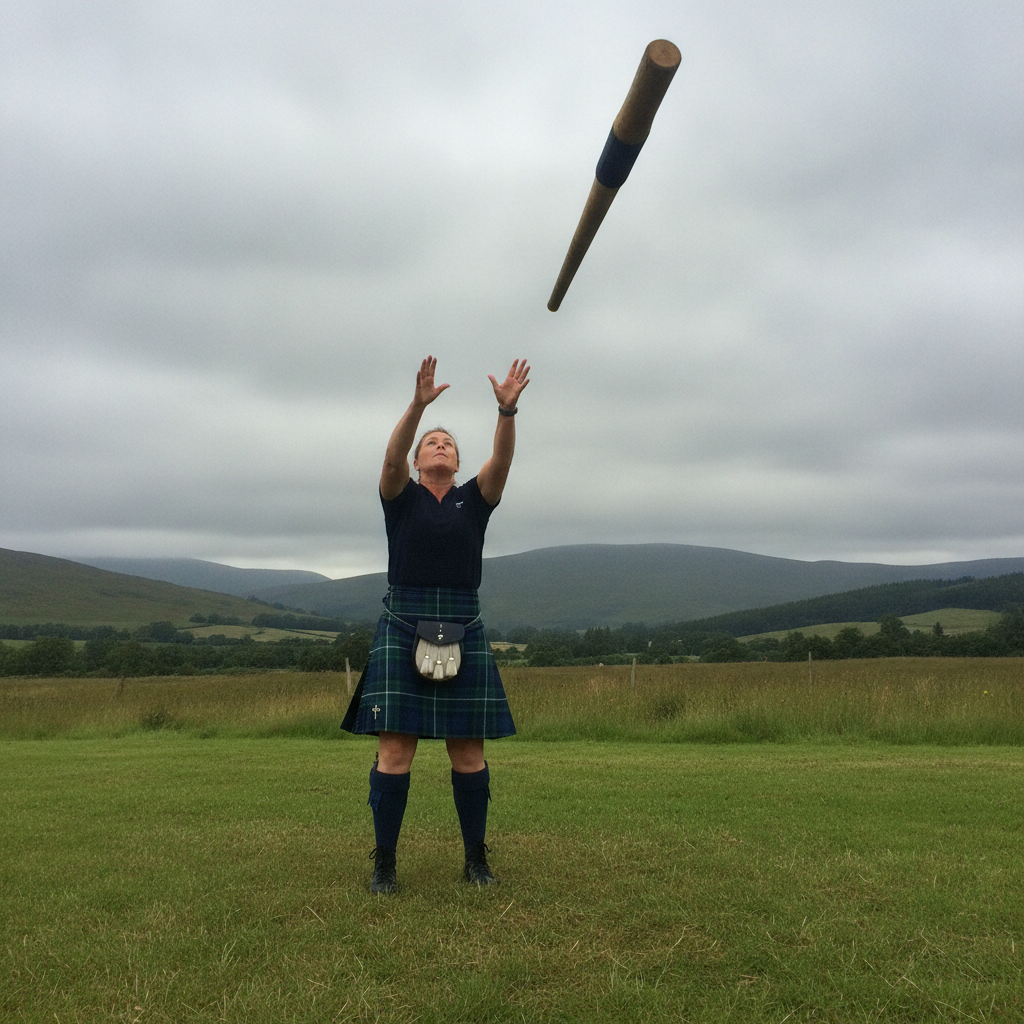
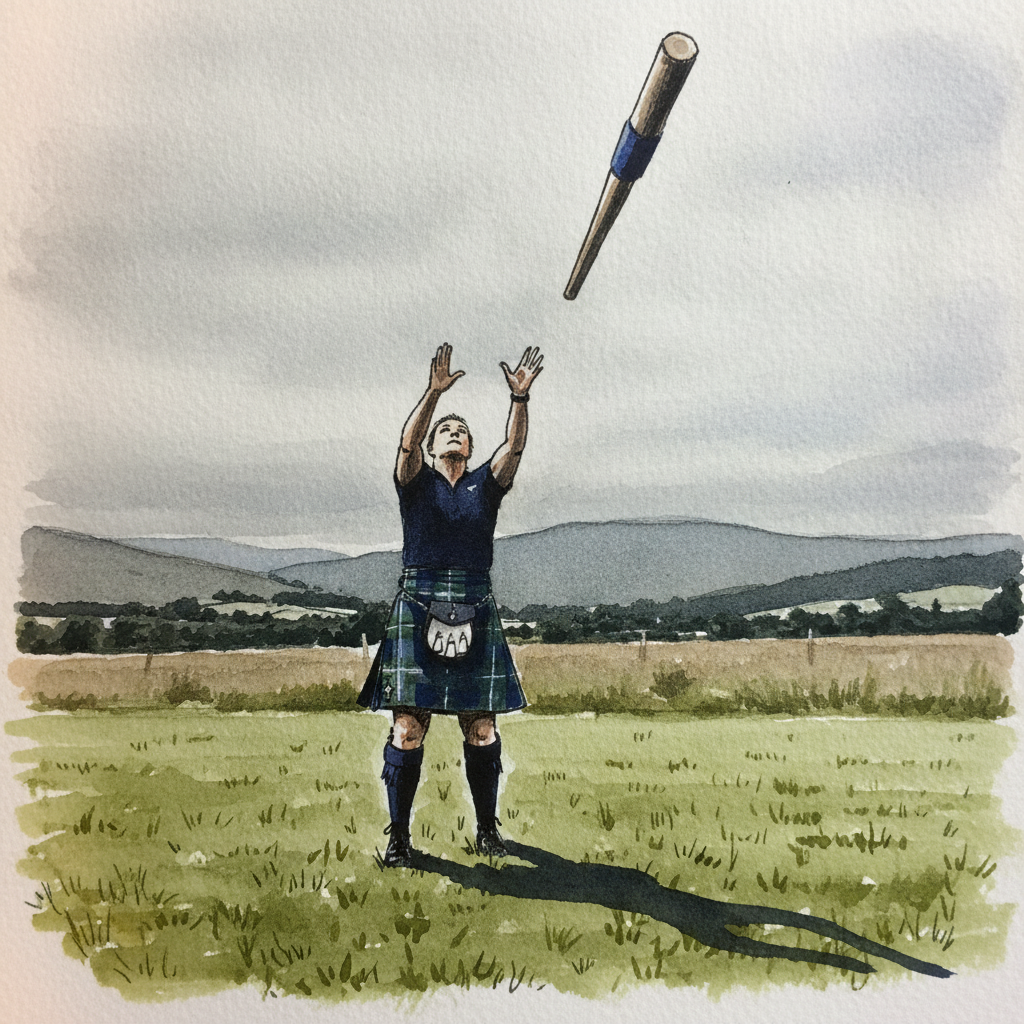
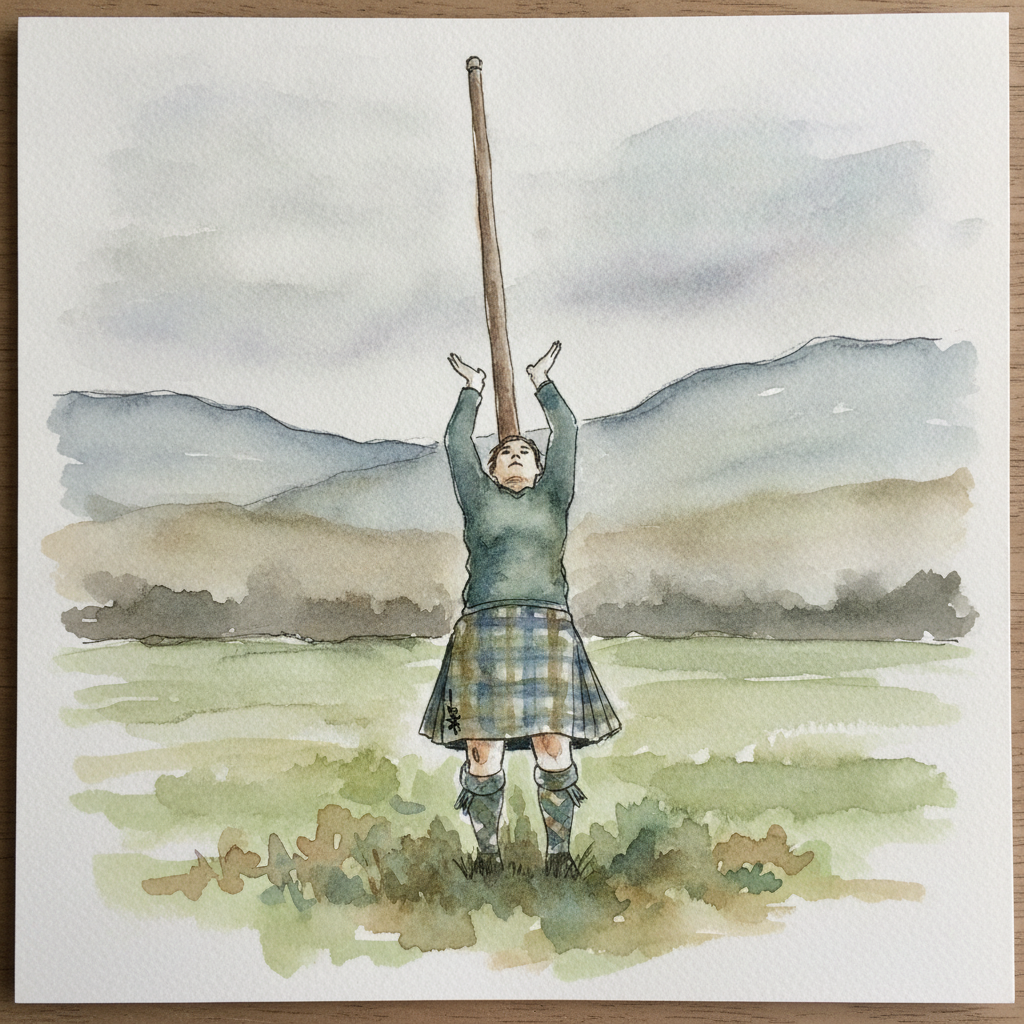
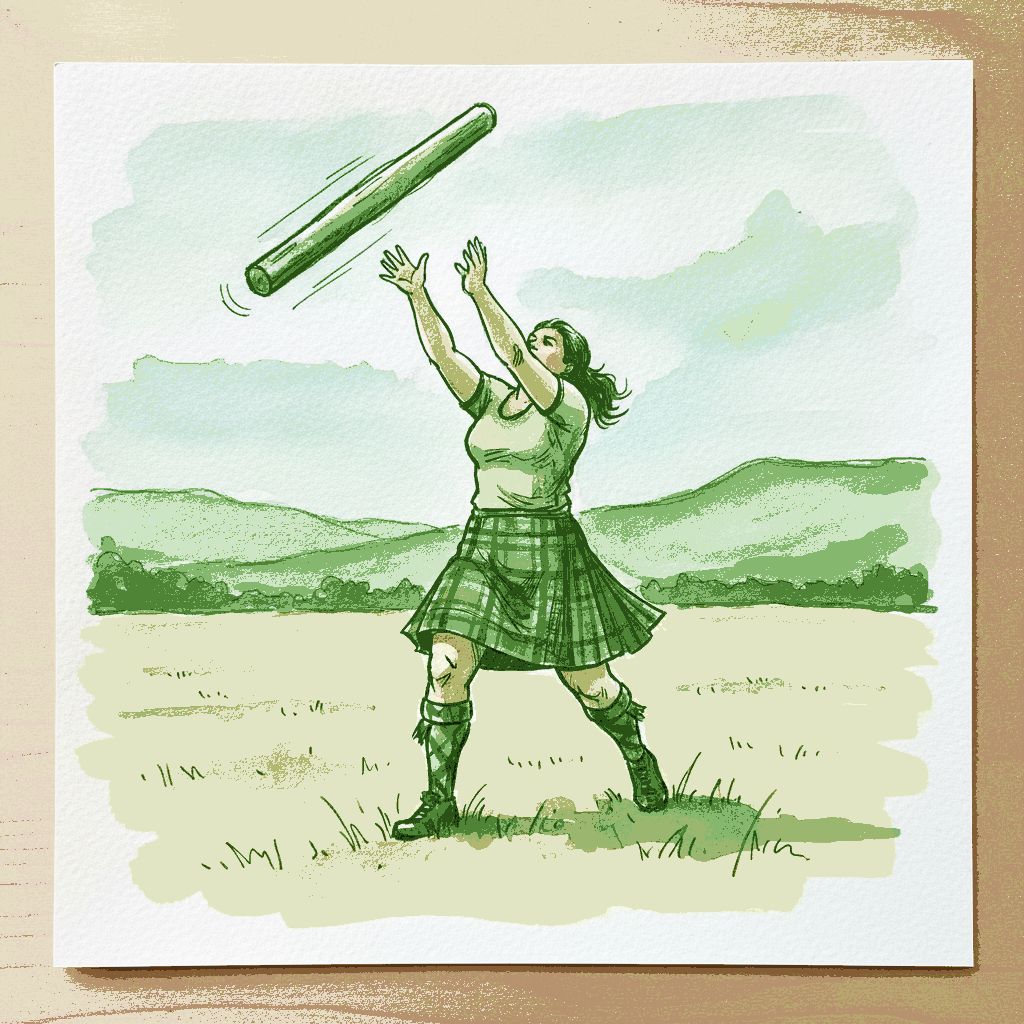
Piece 8 — Caber toss release, highland field
Pen + Watercolor · Loose pen and watercolor line-and-wash
Three takes

Focus for this piece
This piece is ideal for practicing how to convey powerful, upward kinetic energy through your marks. Focus on establishing the figure's "single launching column" with firm, deliberately vertical ink strokes that emphasize the body's central axis and the caber's ascent. Then, complement these lines with directional washes, lighter and cooler towards the top, to enhance the sense of lift and capture the diffused Highland light.