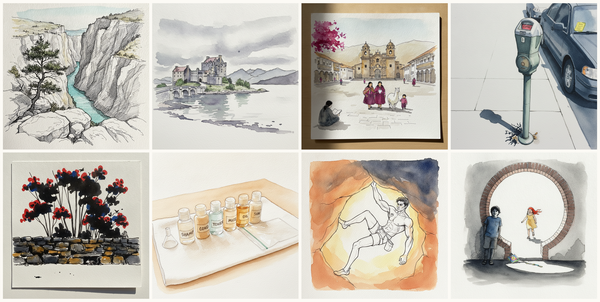
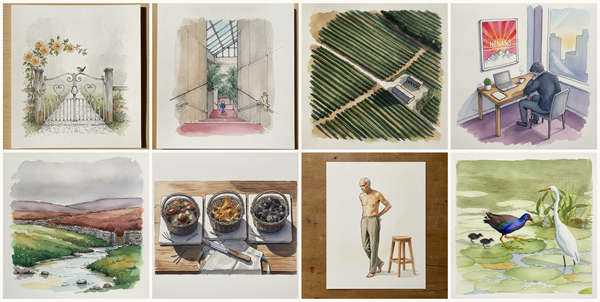
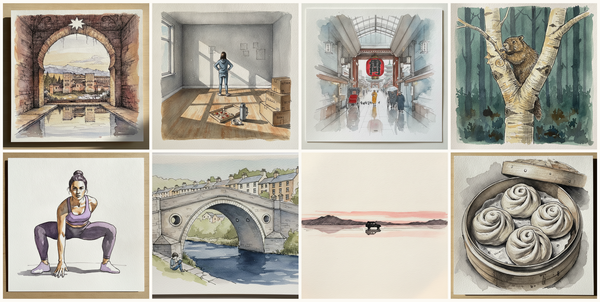
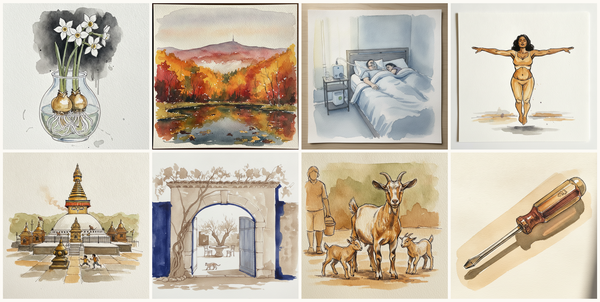
Pelvis Lateral View Side, Snow Gum in Fog, Cradle Plateau TAS, Sticky tabs in dispensers, Detroit corner stand in winter wind, and more — pen + watercolor for November 20, 2026
AI-generated daily art-practice references for pen and watercolor: Pelvis Lateral View Side, Snow Gum in Fog, Cradle Plateau TAS, Sticky tabs in dispensers, Detroit corner stand in winter wind, Pom-pom (boxer) crab, Crouch with arms out and palms up, man 50s, white, average dad-bod, Beng Mealea…
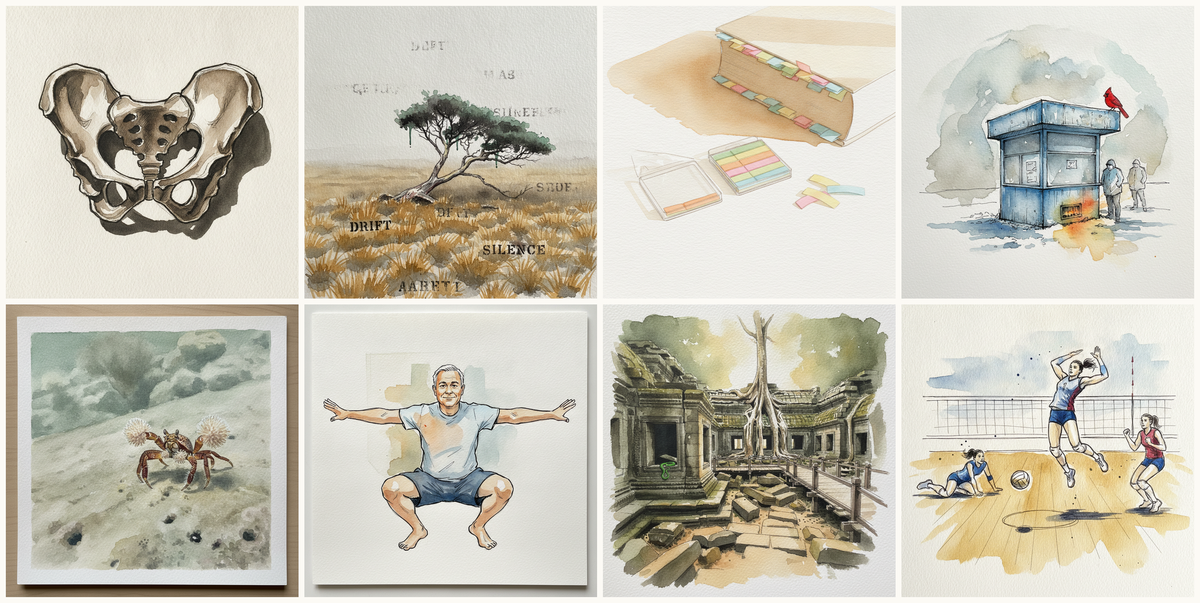
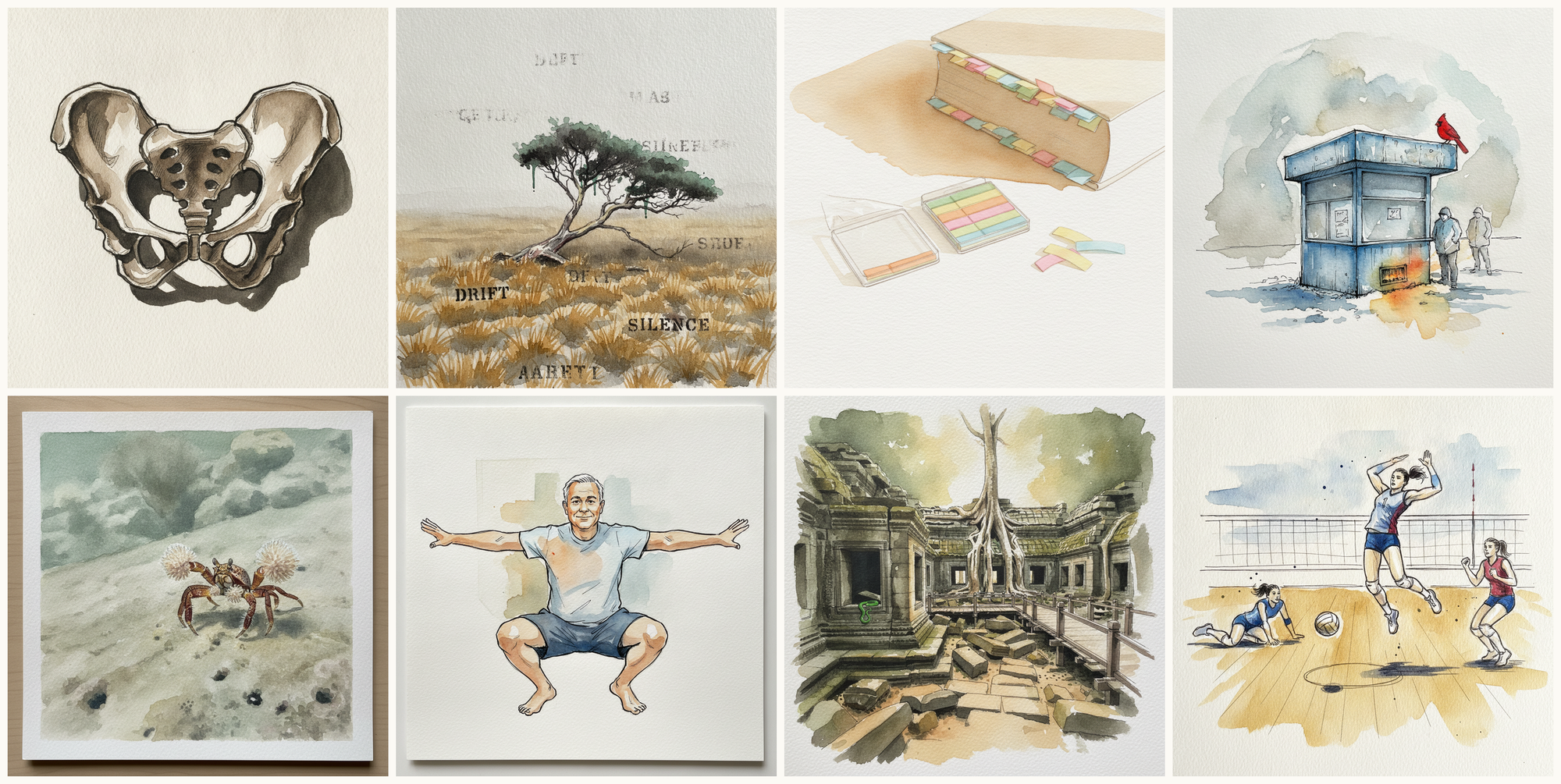
Today's 8 pen-and-watercolor pieces: Pelvis Lateral View Side, Snow Gum in Fog, Cradle Plateau TAS, Sticky tabs in dispensers, Detroit corner stand in winter wind, Pom-pom (boxer) crab, Crouch with arms out and palms up, man 50s, white, average dad-bod, Beng Mealea, Siem Reap Province, Cambodia, Volleyball spike at net. Each piece comes with an AI-generated photoreal reference, three AI-generated example artworks in different treatments, and a short focus paragraph naming what to study in this one.
Why these references use AI
This daily series uses AI-generated images as practice prompts, not as finished artwork to copy. Each subject starts with a synthetic photoreal reference generated with Gemini/Nano Banana, then moves into three pen-and-watercolor interpretations of the same subject.
I use AI here because daily art practice needs variety and low friction. Real life can get repetitive, busy, or visually narrow. These generated reference sets make it easier to study bodies, buildings, animals, landscapes, objects, gestures, light, palettes, and compositions that might not show up in an ordinary day.
The goal is not to reproduce any image directly. Treat each set as a starting point for observation and study: choose what interests you, change the framing, simplify the subject, alter the palette, and make your own version.
Piece 1 — Pelvis Lateral View Side
Pen + Watercolor · Loose pen and watercolor line-and-wash
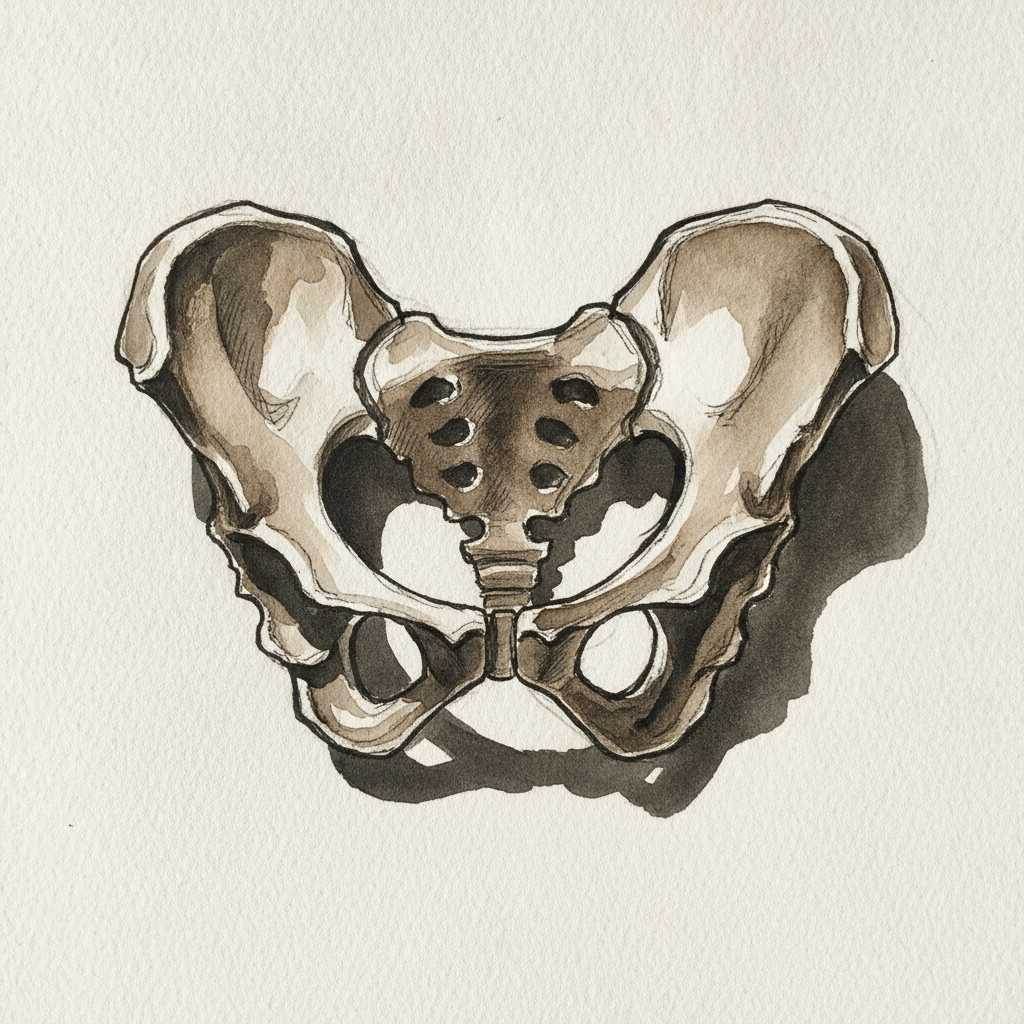
Three takes

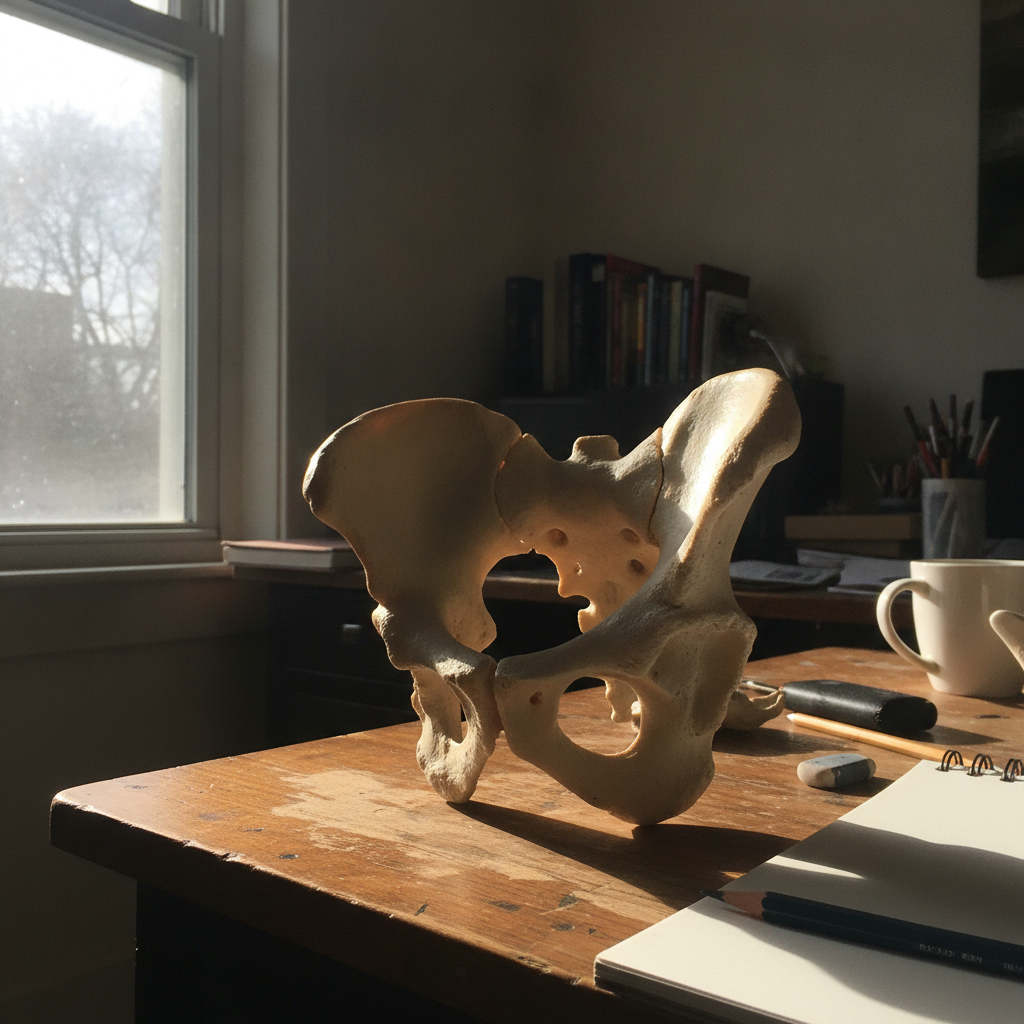
Focus for this piece
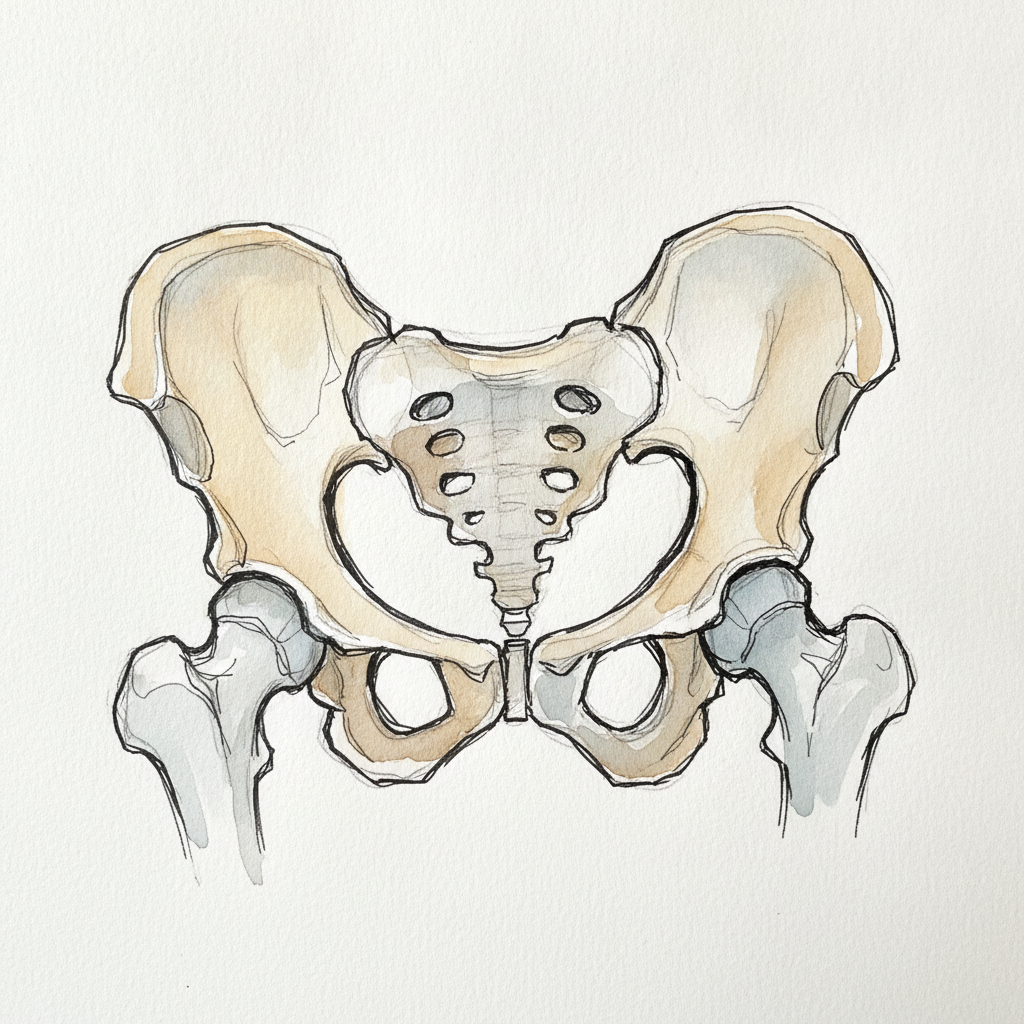
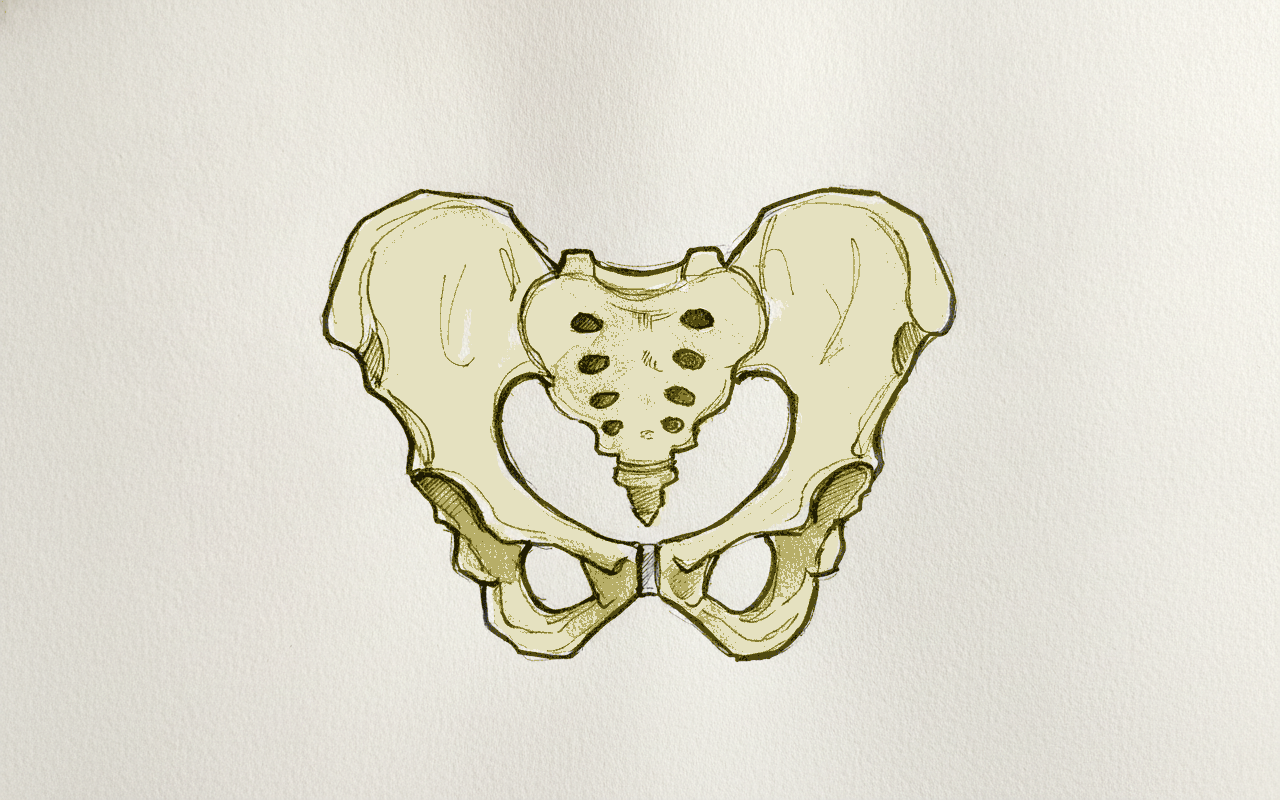
This pelvis study, with its raking light, is ideal for practicing how to define complex volumes through light and shadow. Pay close attention to the dramatic negative shapes of the greater sciatic notch and the deep acetabular socket, using a fine-tipped pen to capture crisp, highlighted edges. Then, build form and depth using layered washes of a limited, cool-toned palette to articulate the bone's planes and cast deep shadows.
Piece 2 — Snow Gum in Fog, Cradle Plateau TAS
Pen + Watercolor · Loose pen and watercolor line-and-wash
Three takes
Focus for this piece
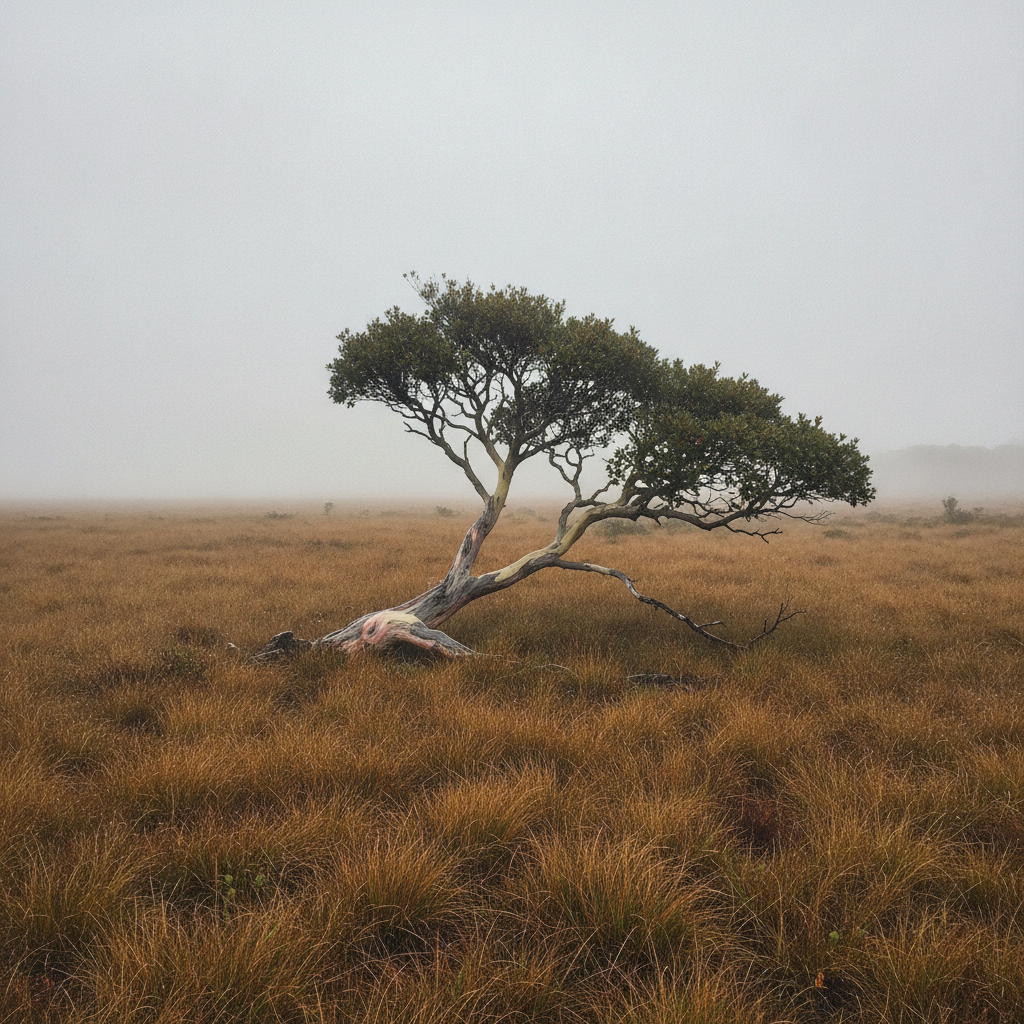
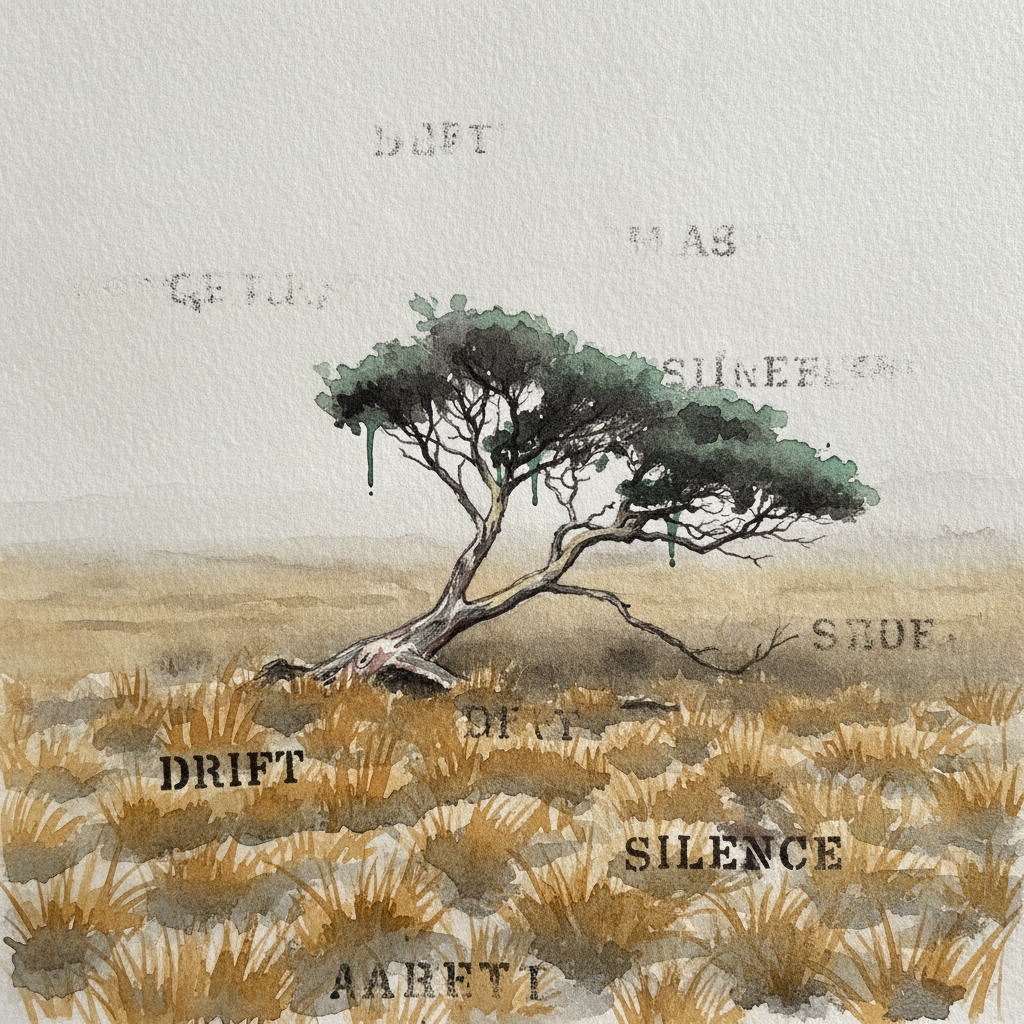
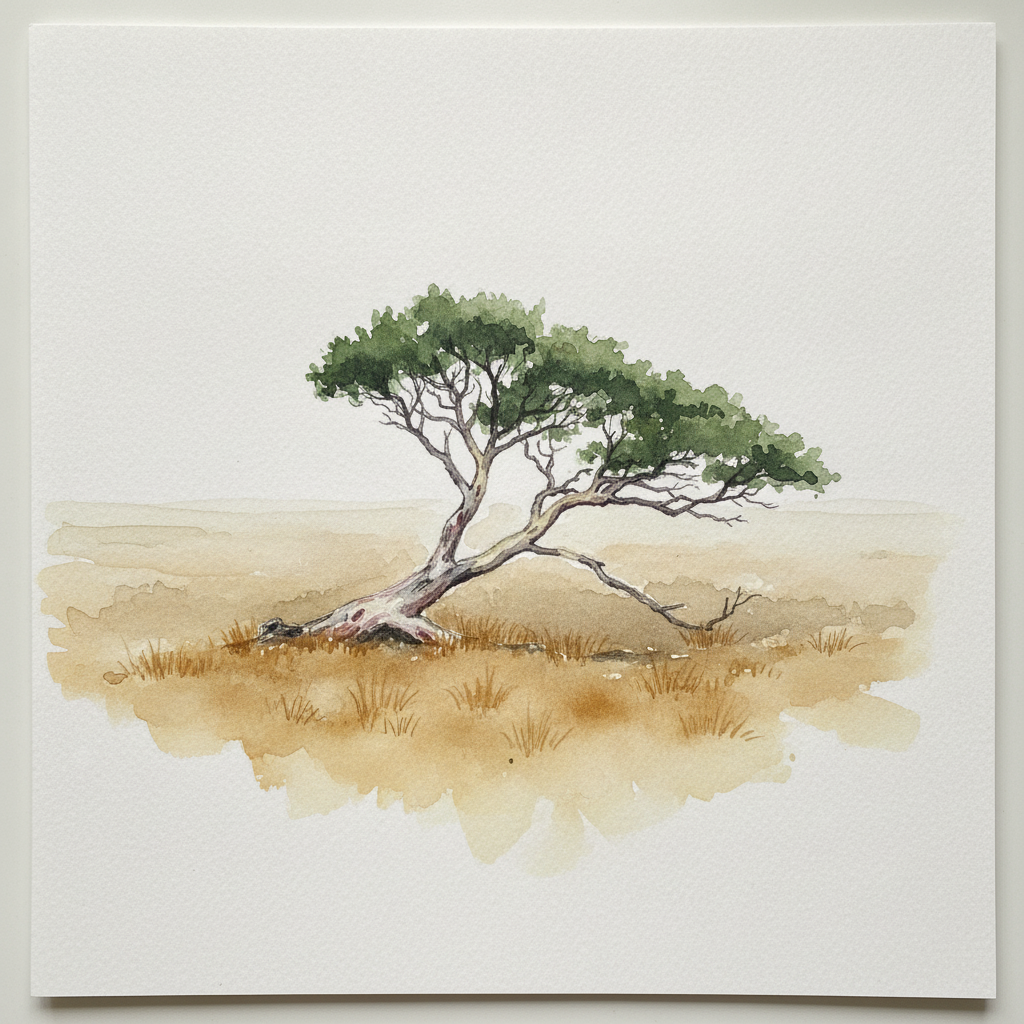
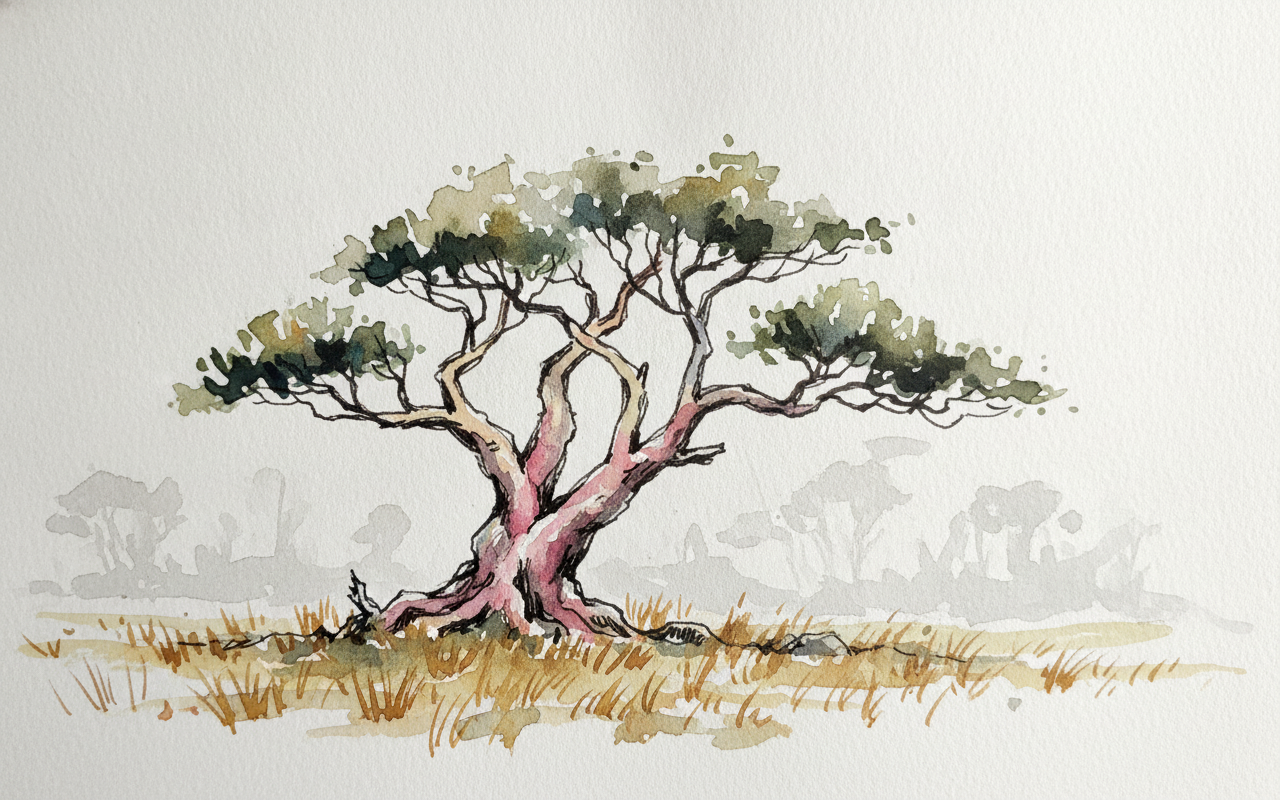
This piece offers an excellent opportunity to study creating a strong focal point through the interplay of sharp definition and expansive softness. Focus on using varied pen line weights and gestural brushstrokes to describe the snow gum's sculptural trunk and leaf clusters, allowing their crisp detail to emerge from the soft, expansive white of the fog. Employ wet-on-wet washes in muted golds, greys, and greens for the soaked button grass foreground and the tree's bark, emphasizing subtle value shifts and atmospheric blending to contrast with the precise ink lines.
Piece 3 — Sticky tabs in dispensers
Pen + Watercolor · Loose pen and watercolor line-and-wash
Three takes

Focus for this piece
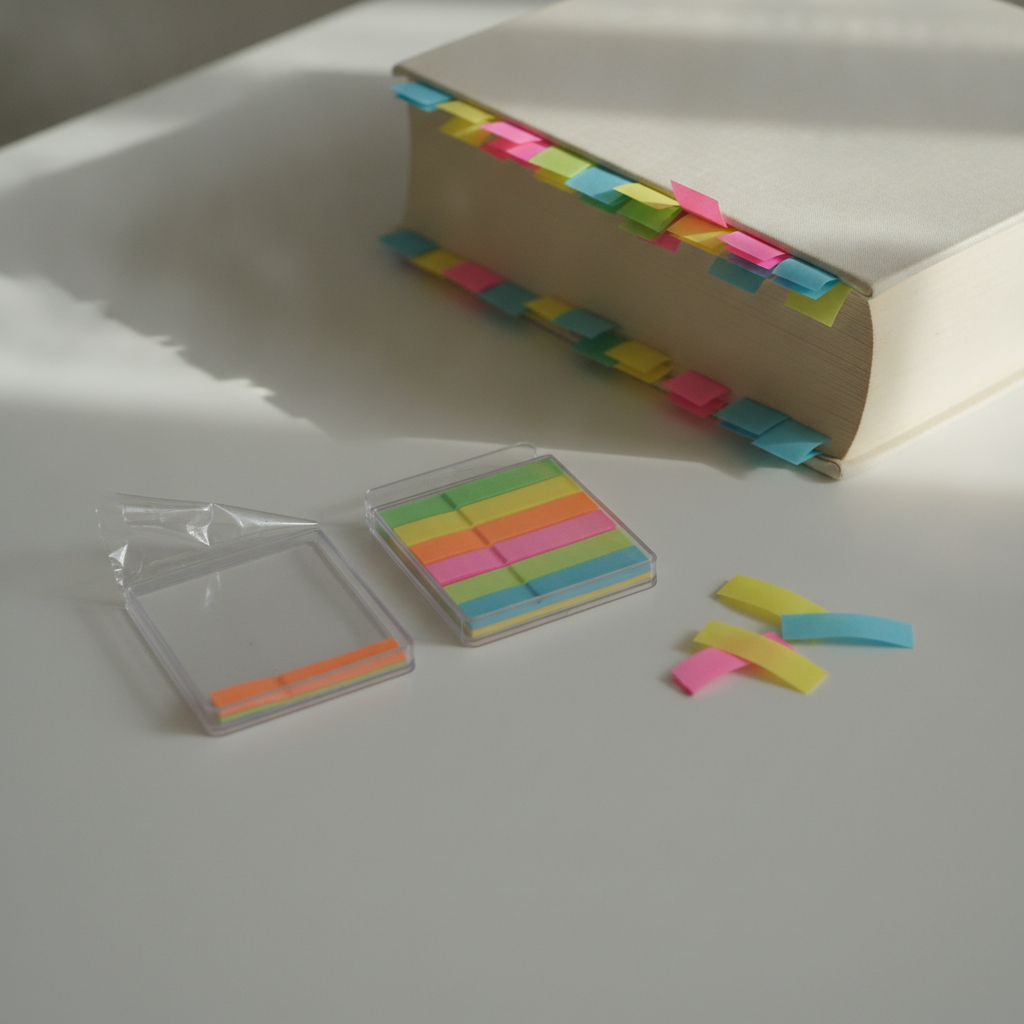
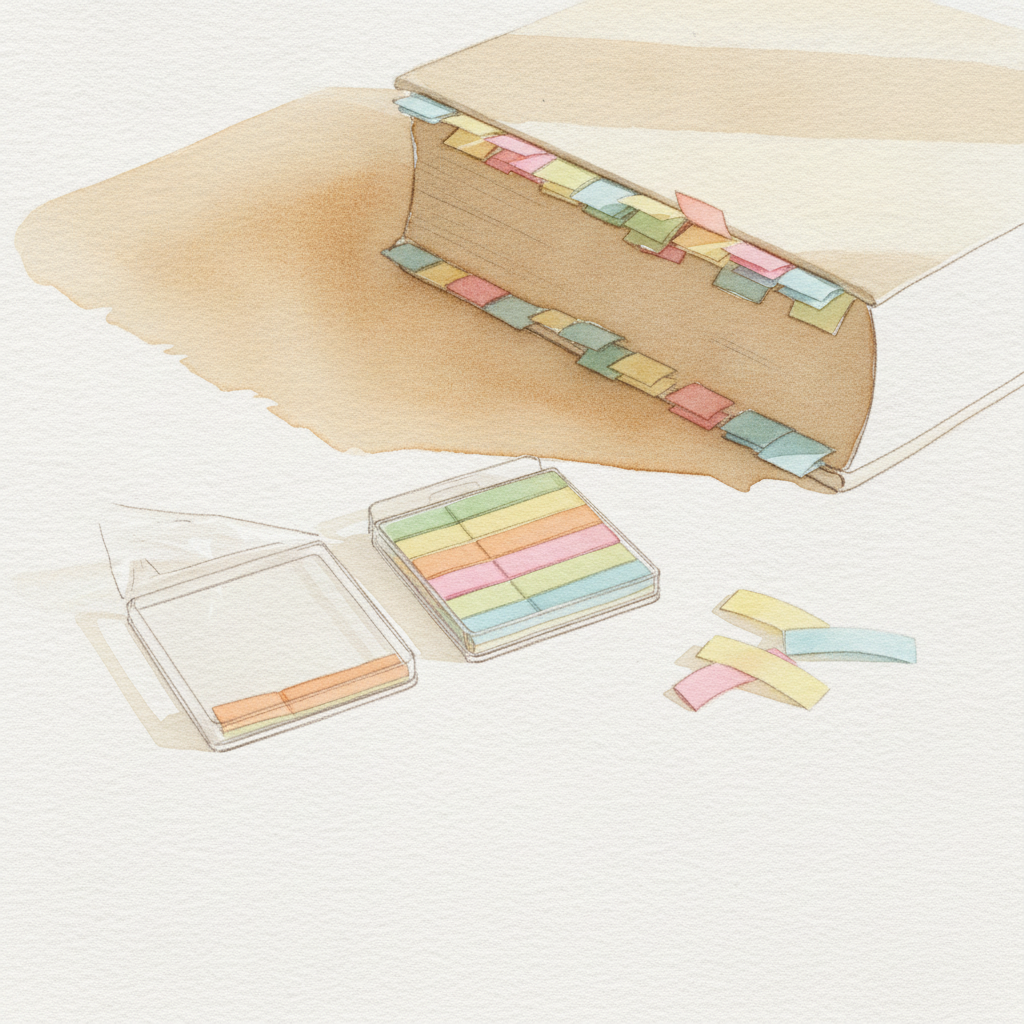
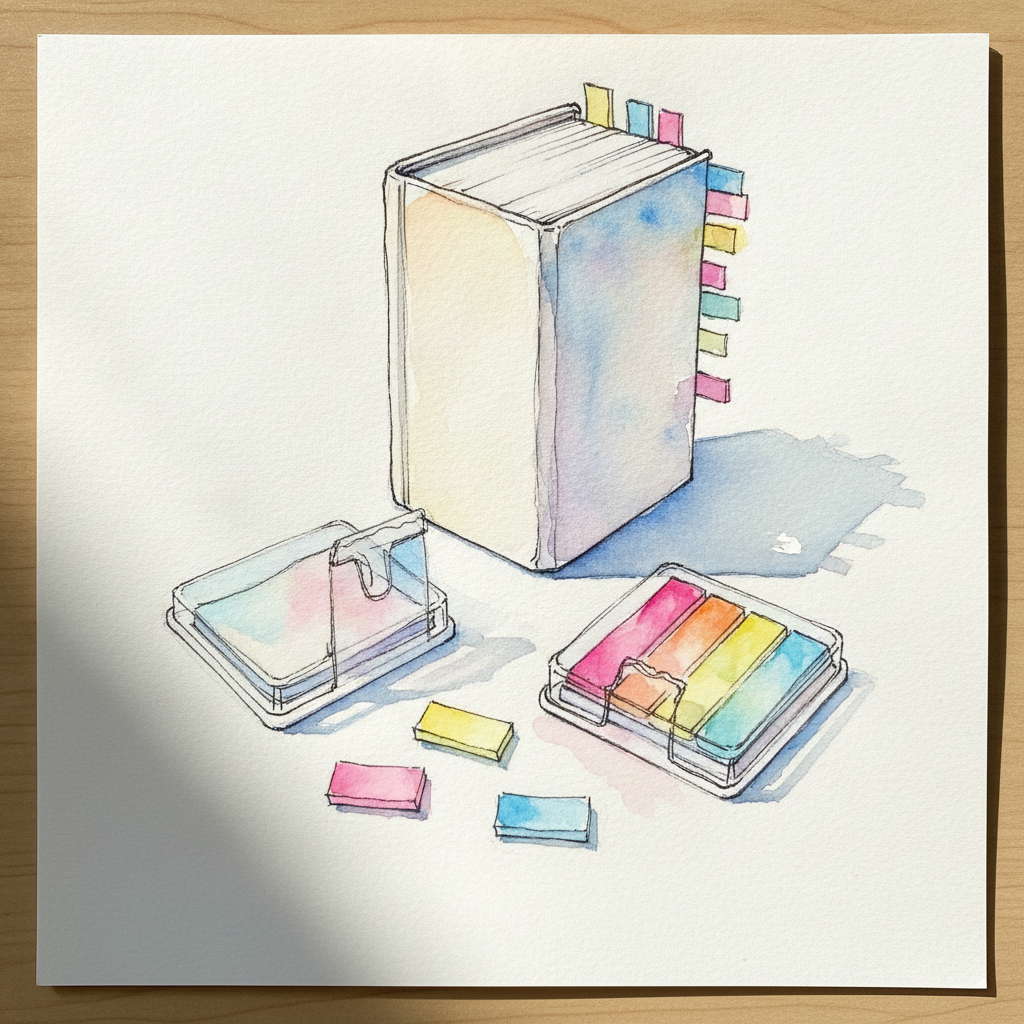
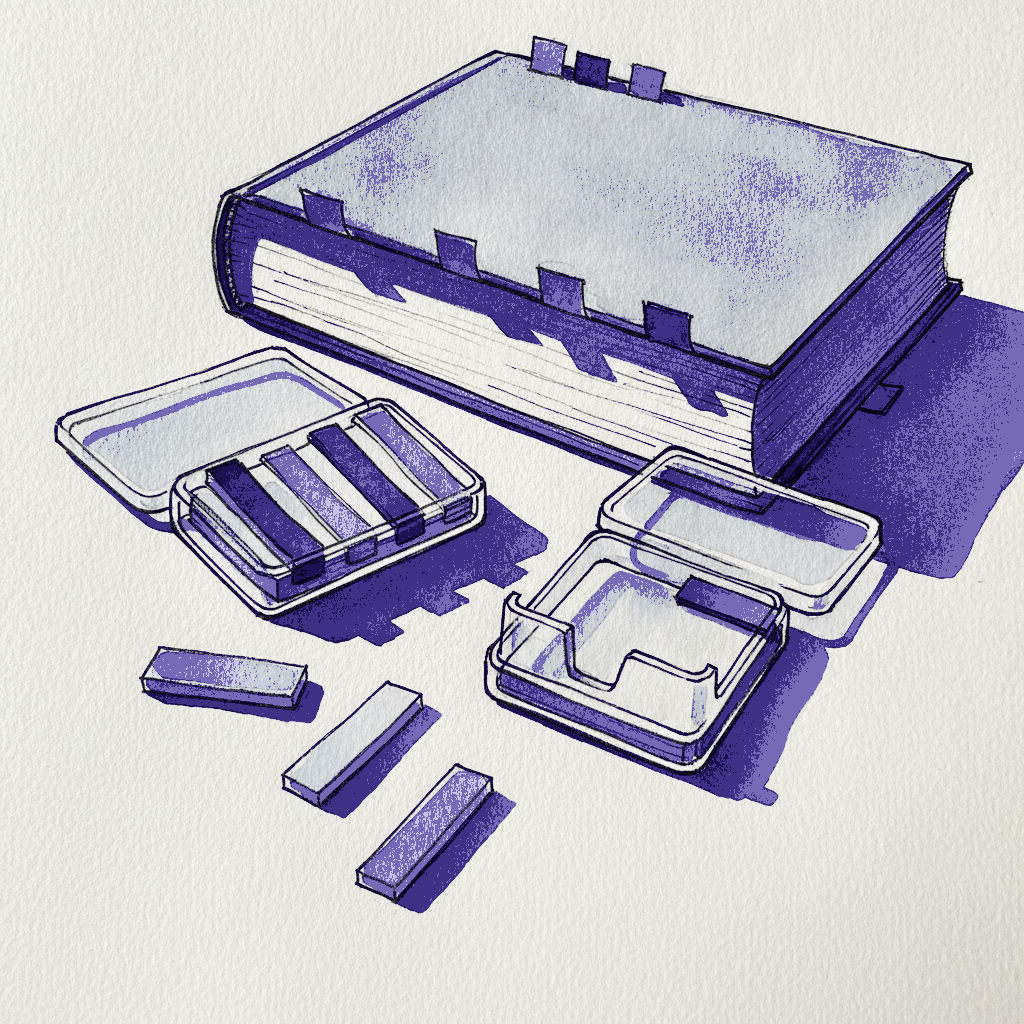
This piece offers an excellent opportunity to practice rendering translucency and subtle layered color, especially with the individual and overlapping sticky tabs. Build up their vibrant hues using very dilute washes, allowing the paper white to provide luminosity, and keep your ink lines delicate (e.g., a 0.05 pen) to maintain their ethereal quality. Notice the strong contrast these soft elements create against the sharp, serrated cast shadows, which you can define with a slightly more concentrated wash and a precise brush stroke. Use a heavier line (e.g., a 0.3 pen) to anchor the hard plastic edges of the dispensers, distinguishing them from the flexible film and paper tabs.
Piece 4 — Detroit corner stand in winter wind
Pen + Watercolor · Loose pen and watercolor line-and-wash
Three takes

Focus for this piece
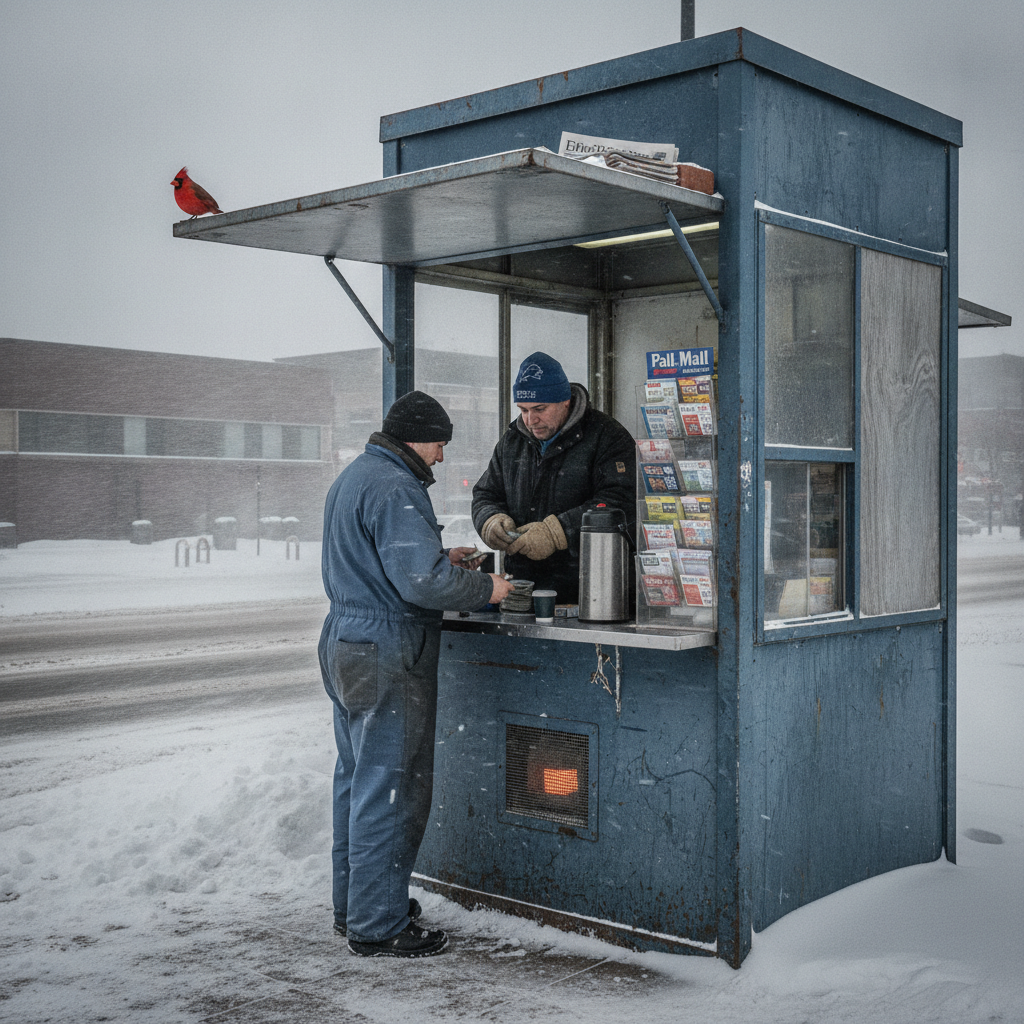
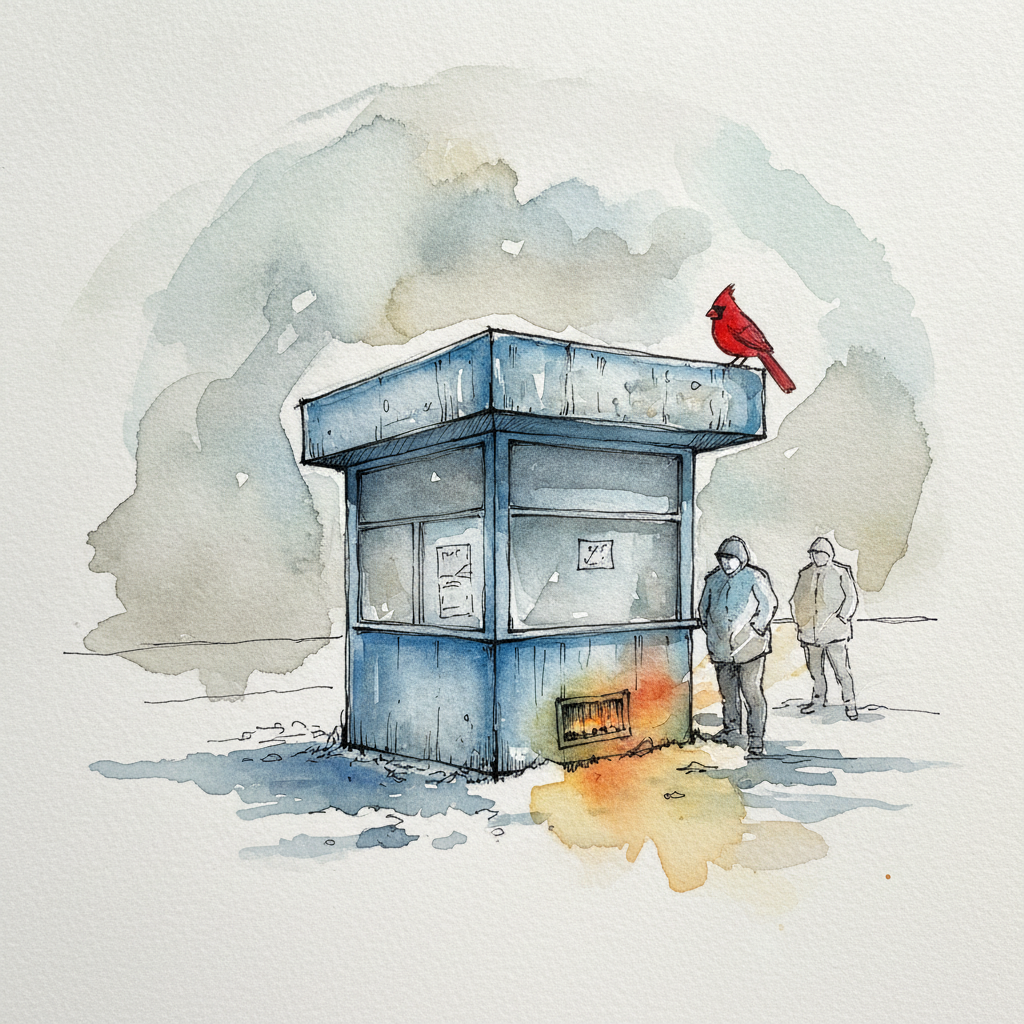
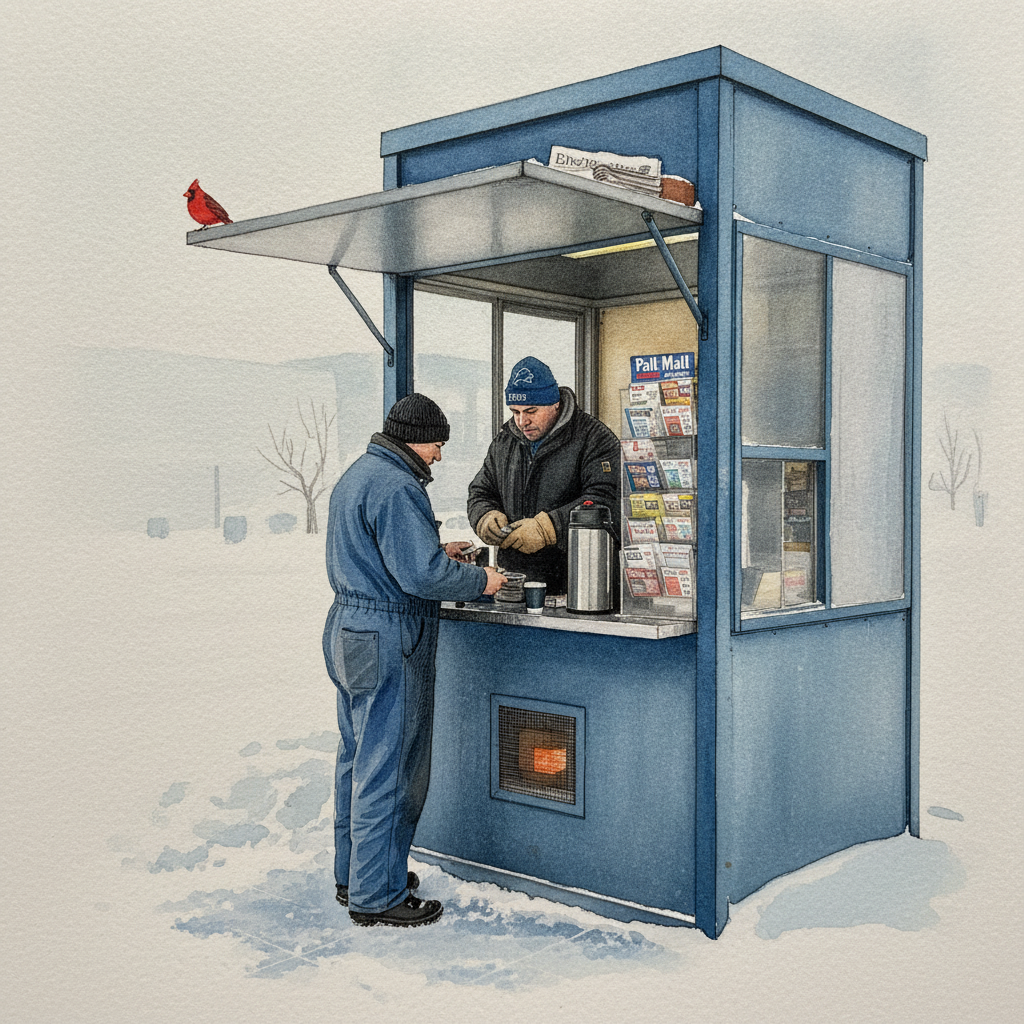
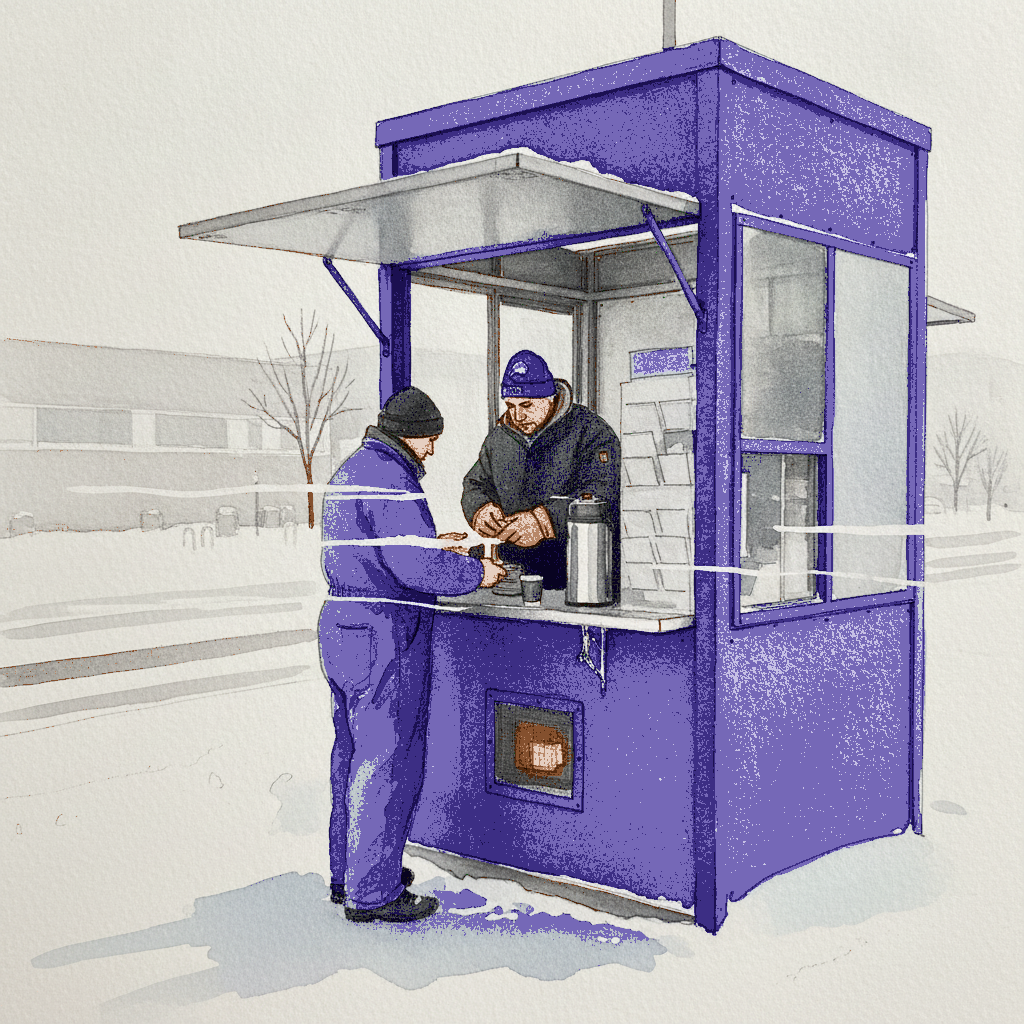
This piece is an excellent study in contrasting defined structure with atmospheric effects. Use crisp, deliberate pen lines to delineate the kiosk's sharp angles and static elements like the newspaper stacks, allowing thinner, broken lines to suggest the vendor's bundled form. Then, employ soft, directional watercolor washes to depict the horizontal sweep of the wind and piled snow, keeping your palette predominantly cool and muted. Reserve concentrated, vibrant hues for precise focal points, such as the glowing heater or the cardinal, to create compelling visual anchors.
Piece 5 — Pom-pom (boxer) crab
Pen + Watercolor · Loose pen and watercolor line-and-wash
Three takes
Focus for this piece
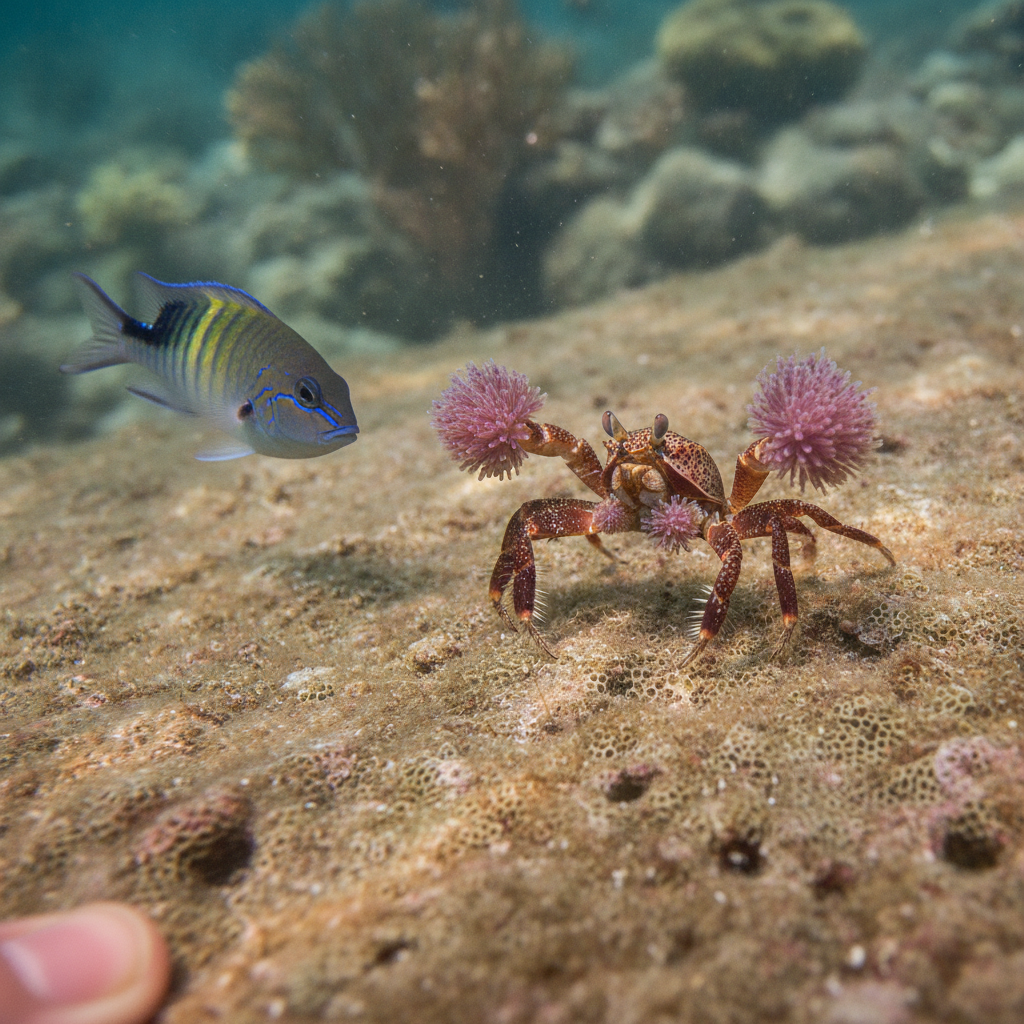
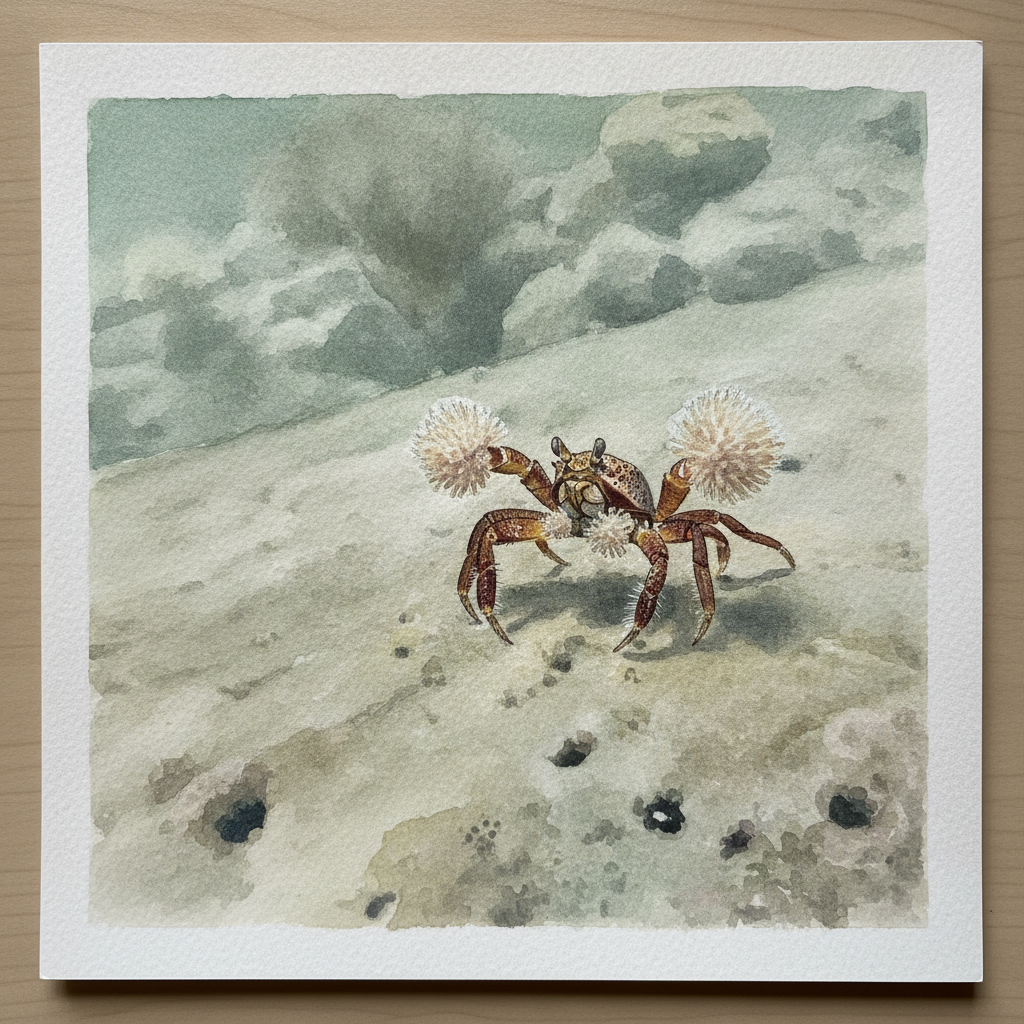
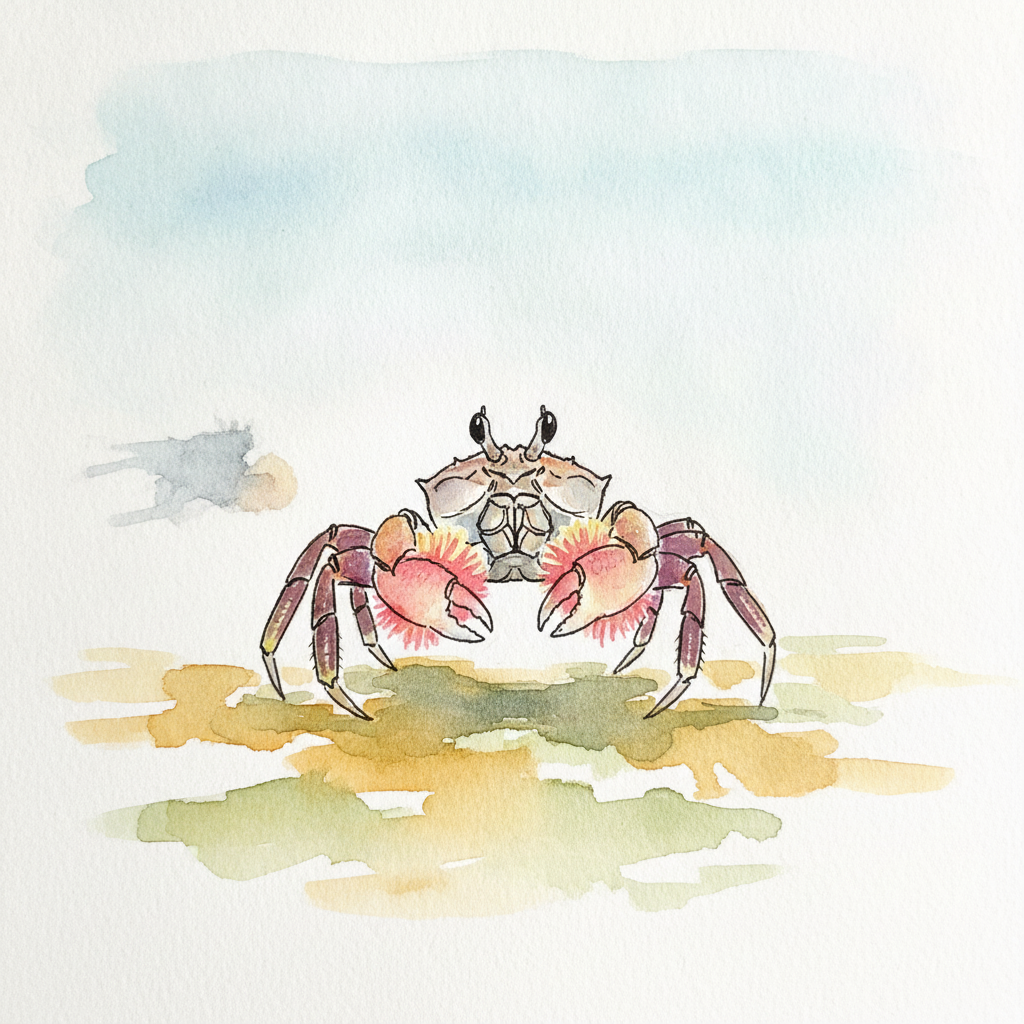
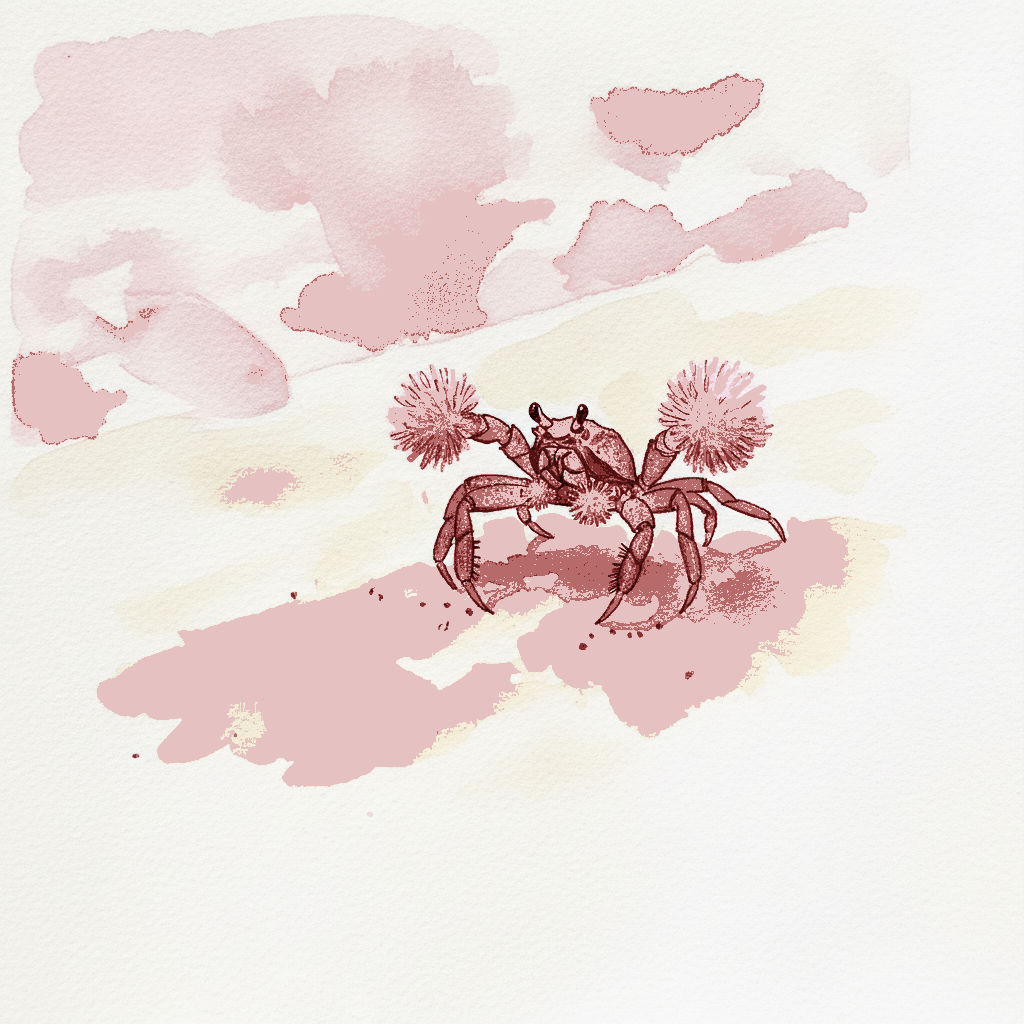
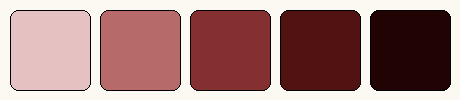
This piece offers an excellent study in juxtaposing the absolute clarity of ink with the suggestive fluidity of watercolor to convey both form and texture. Use crisp, varied line weights to articulate the crab's hard carapace and legs, defining its sturdy structure. In contrast, employ soft, wet-on-wet washes and delicate, broken lines to capture the organic, ephemeral nature of the anemones and the surrounding shallow water, letting the light filter through. This approach will highlight the dramatic difference between the crab's rigid defense and its living, waving "pom-poms."
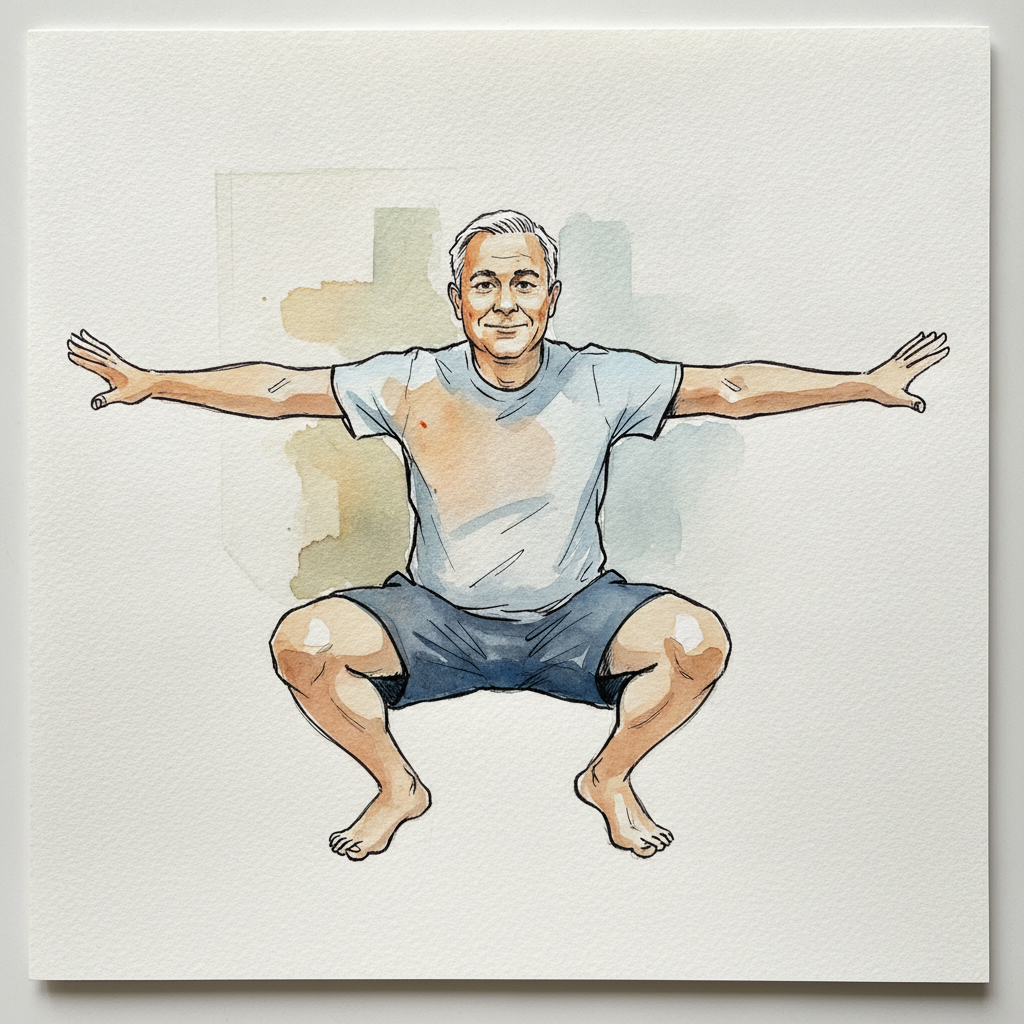
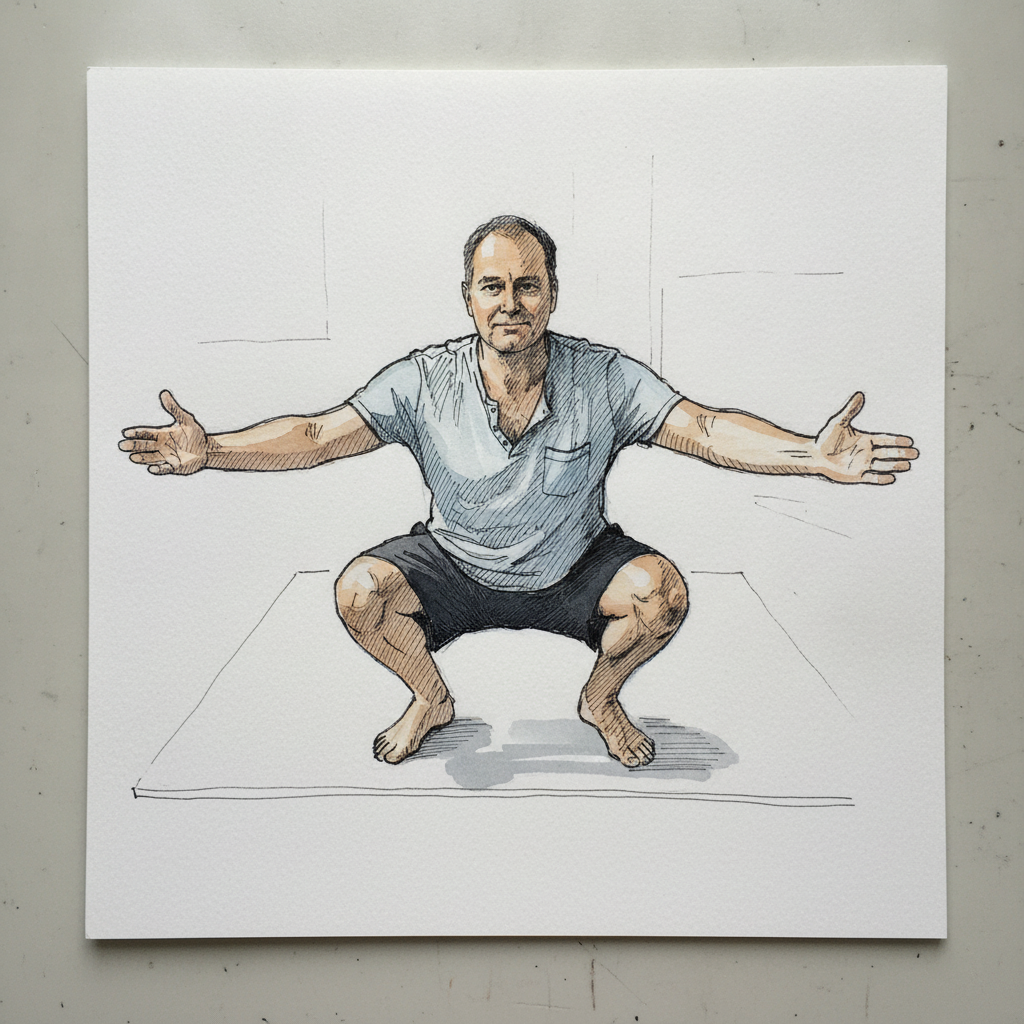
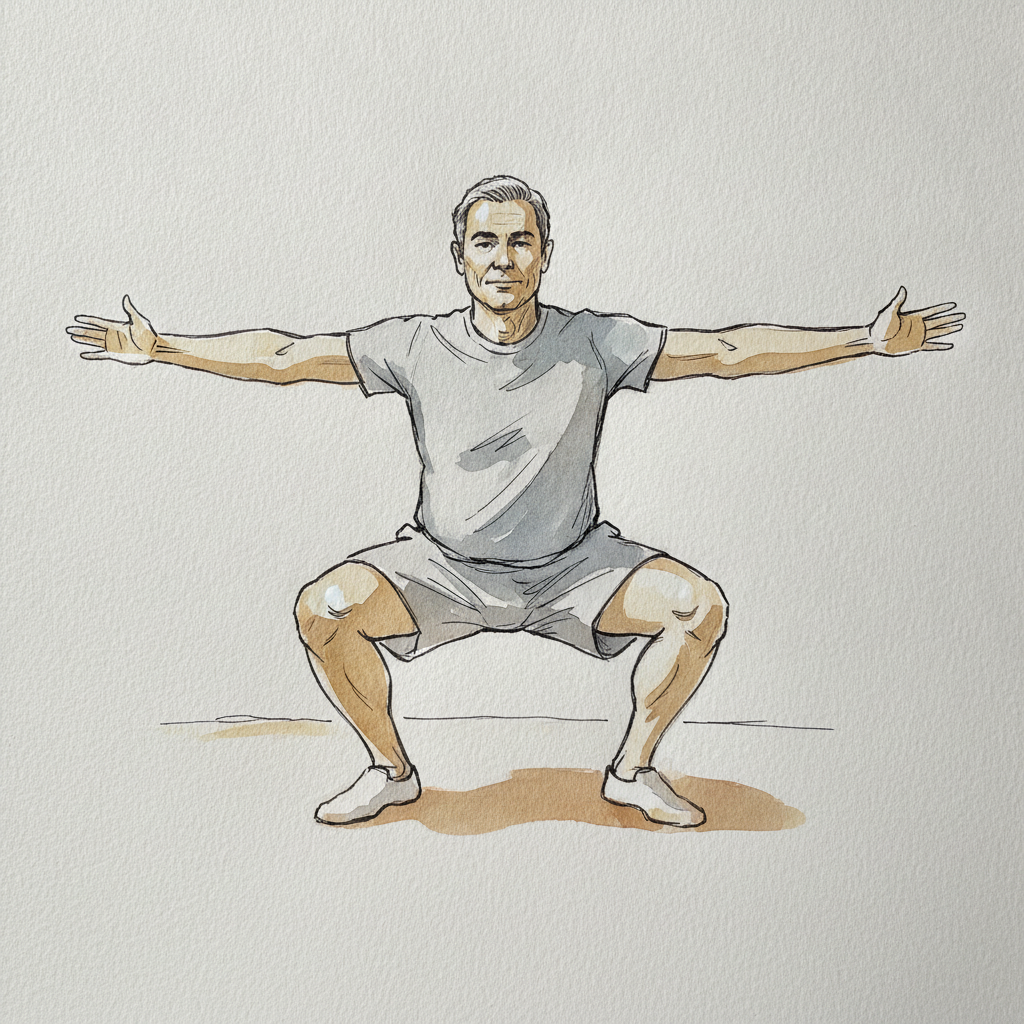
Piece 6 — Crouch with arms out and palms up, man 50s, white, average dad-bod
Pen + Watercolor · Loose pen and watercolor line-and-wash
Three takes
Focus for this piece
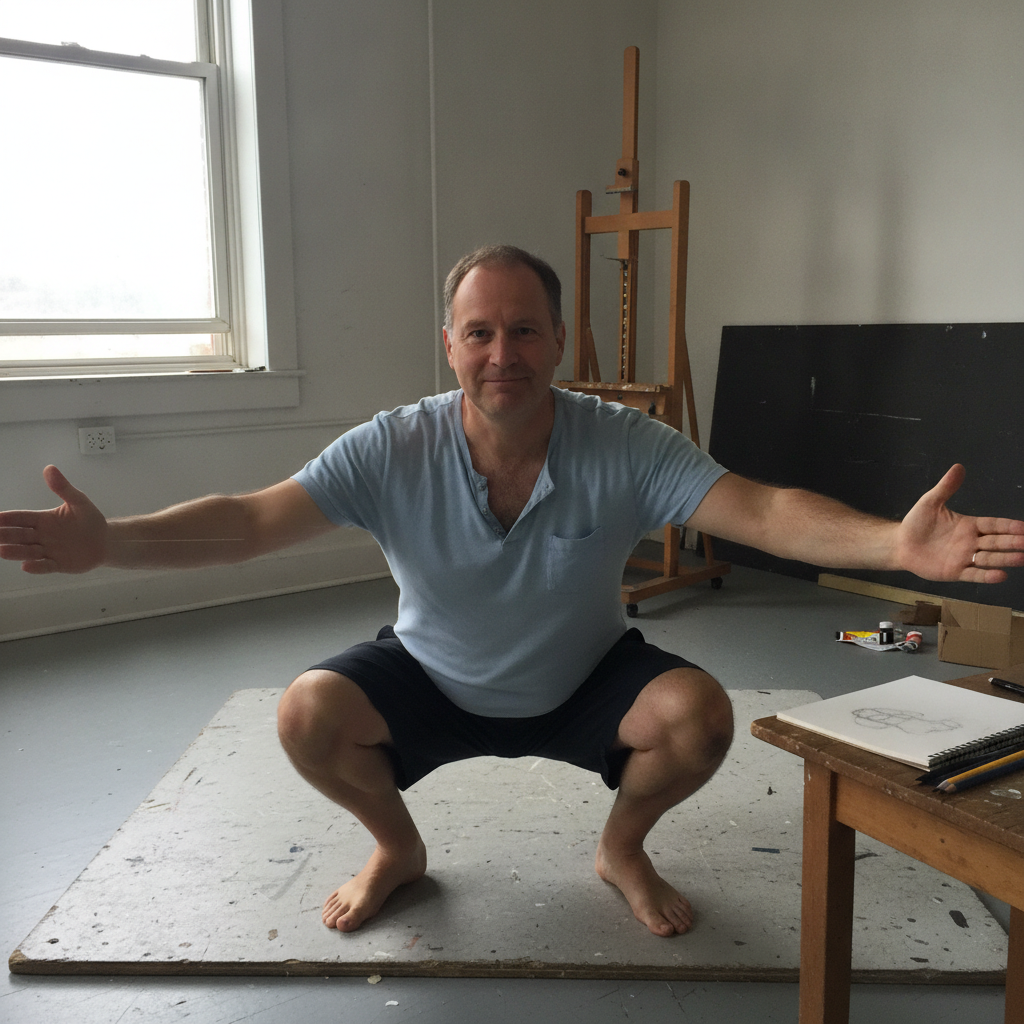
This piece offers a great opportunity to practice modeling subtle, rounded volumes using soft, layered watercolor washes, especially for the dad-bod's contours and the gentle musculature of the supinated forearms. Define form selectively with varied pen line weights: use lighter, broken lines to suggest areas catching the warm overhead light, and stronger, more continuous lines to anchor shadowed edges. Focus on creating a balanced "sensory line" across the upturned palms, letting washes connect these forms fluidly while avoiding stiff outlines.
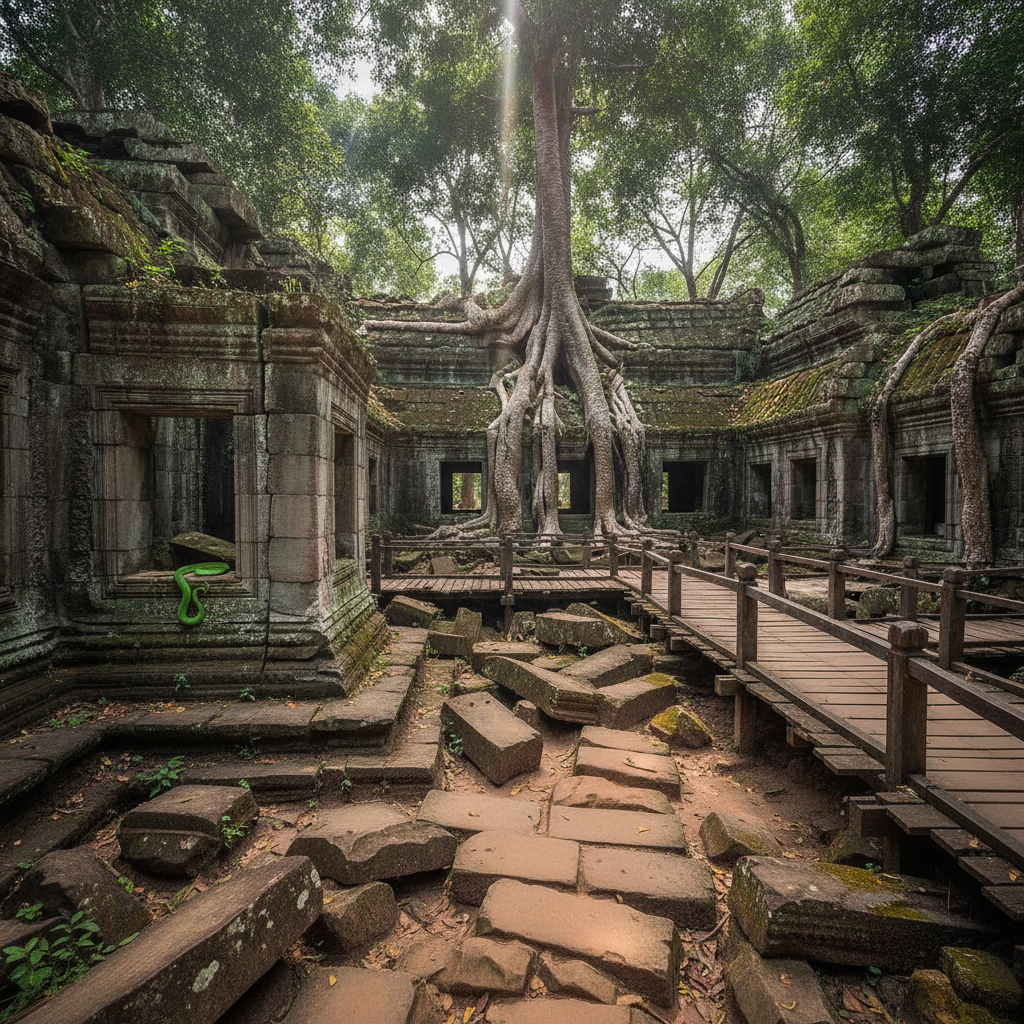
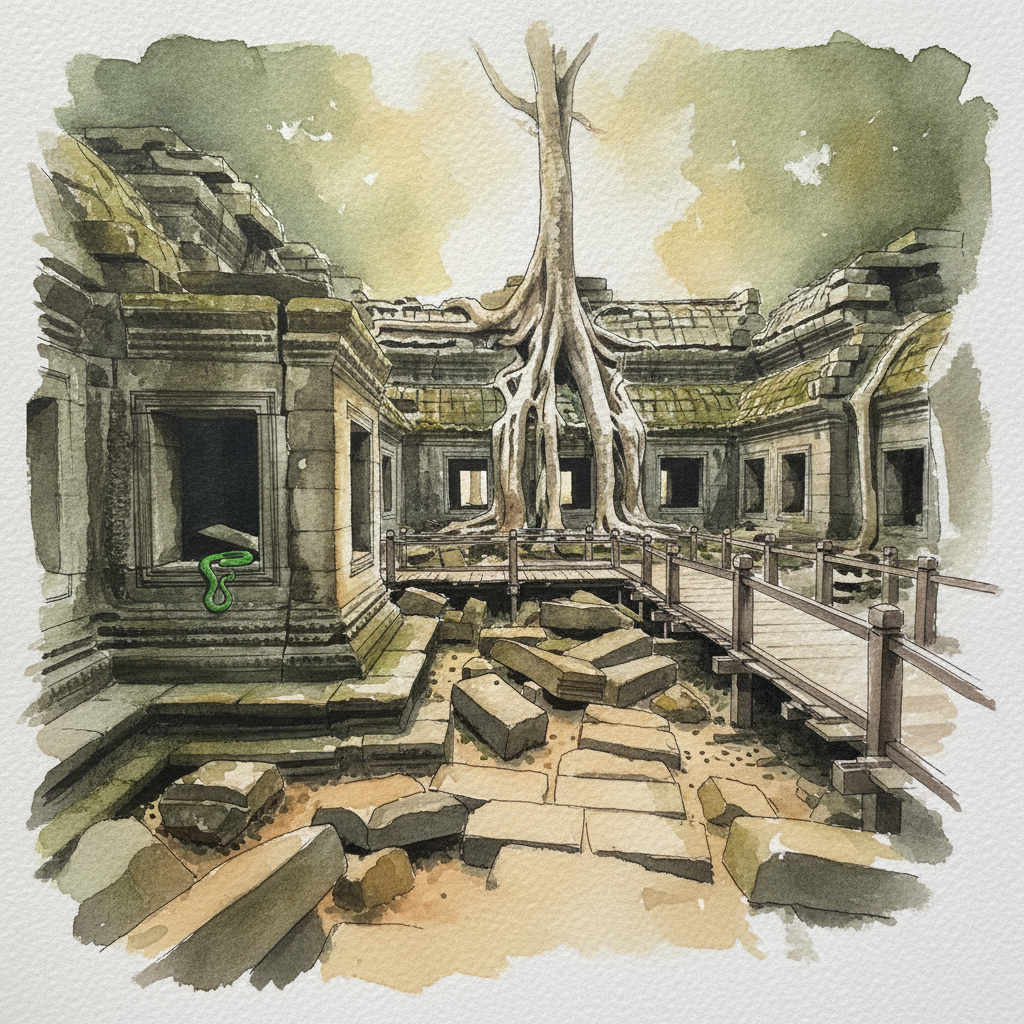
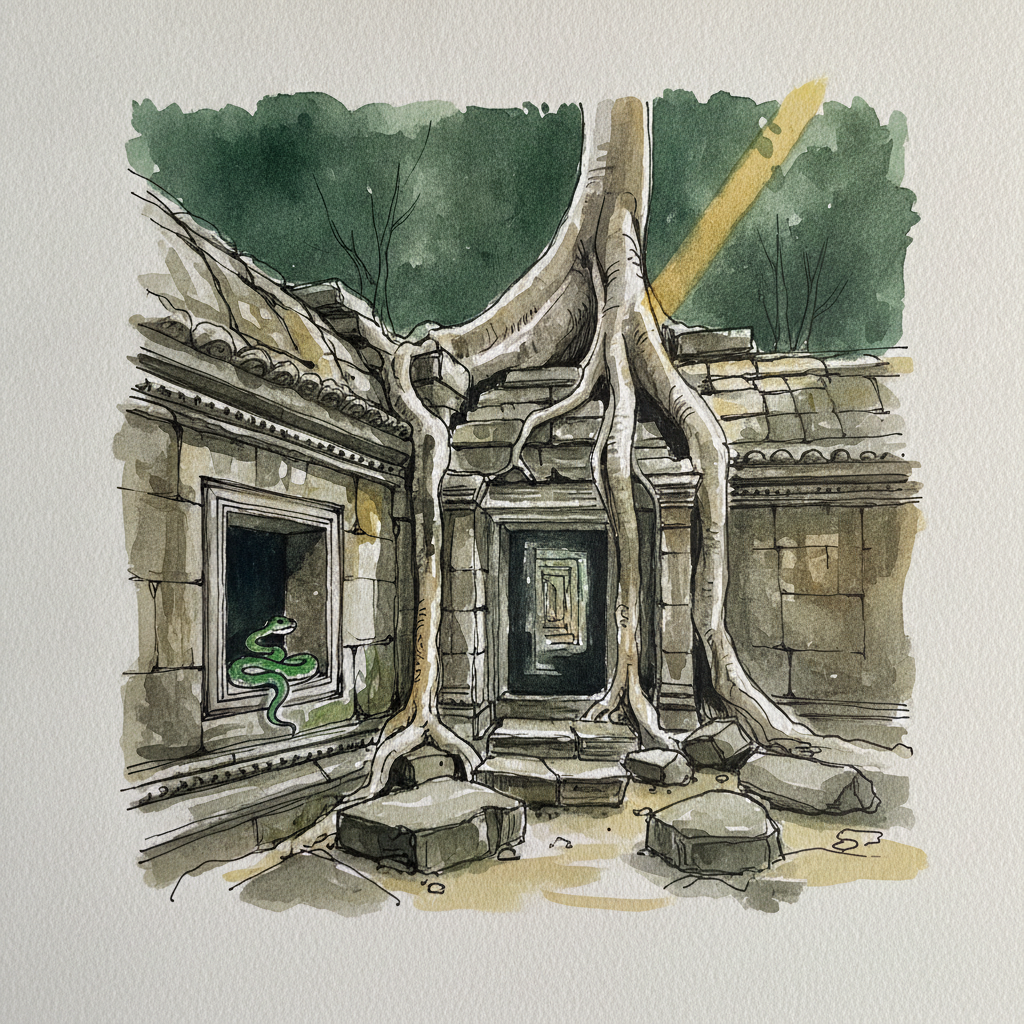
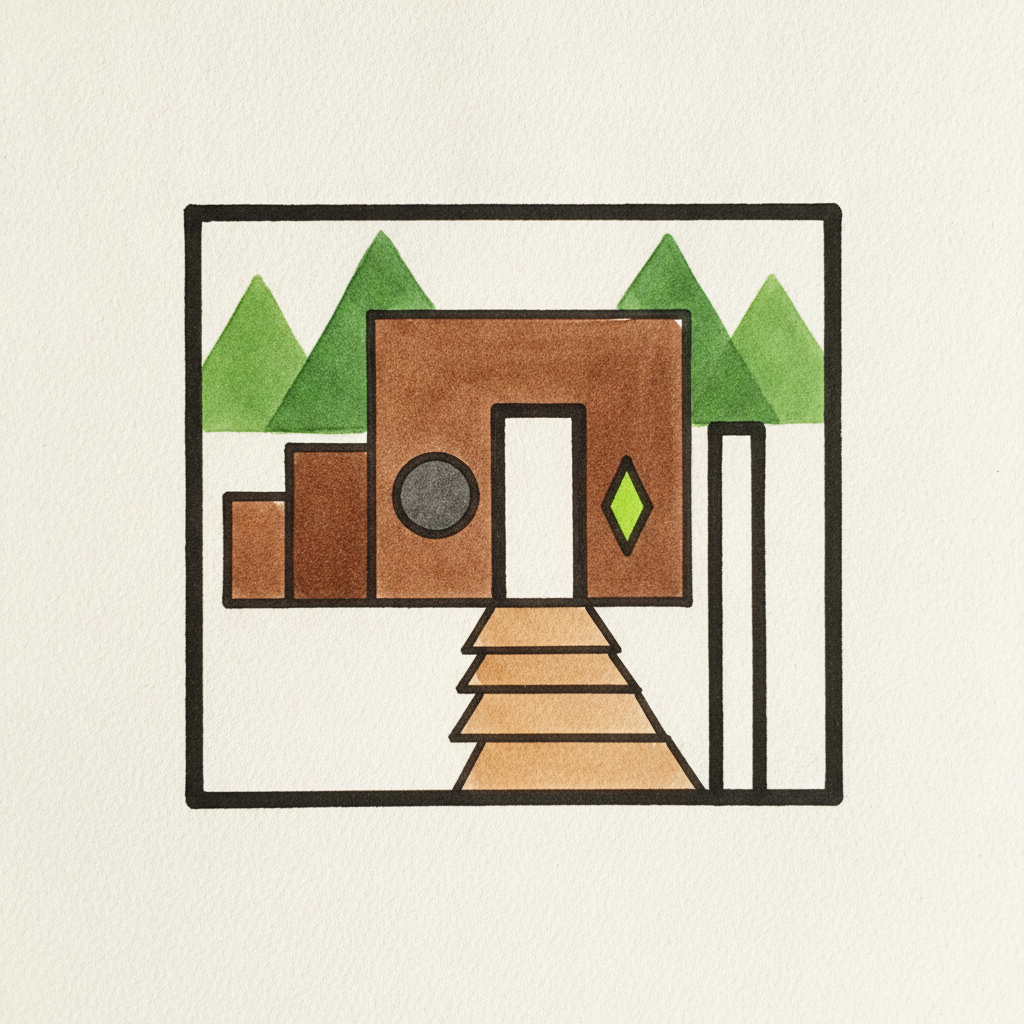
Piece 7 — Beng Mealea, Siem Reap Province, Cambodia
Pen + Watercolor · Loose pen and watercolor line-and-wash
Three takes
Focus for this piece
This piece is an excellent study in contrasting organic and geometric forms: focus on differentiating the linear structure of the temple blocks from the wild, encroaching jungle. Vary your line weights significantly, using bold, broken lines for the massive tree roots and vines, while reserving finer lines for distant architectural details. Employ fluid, wet-on-wet washes to suggest the lush foliage, allowing it to soften and bleed into the edges of the underlying stone structures, emphasizing the temple's slow surrender to nature.
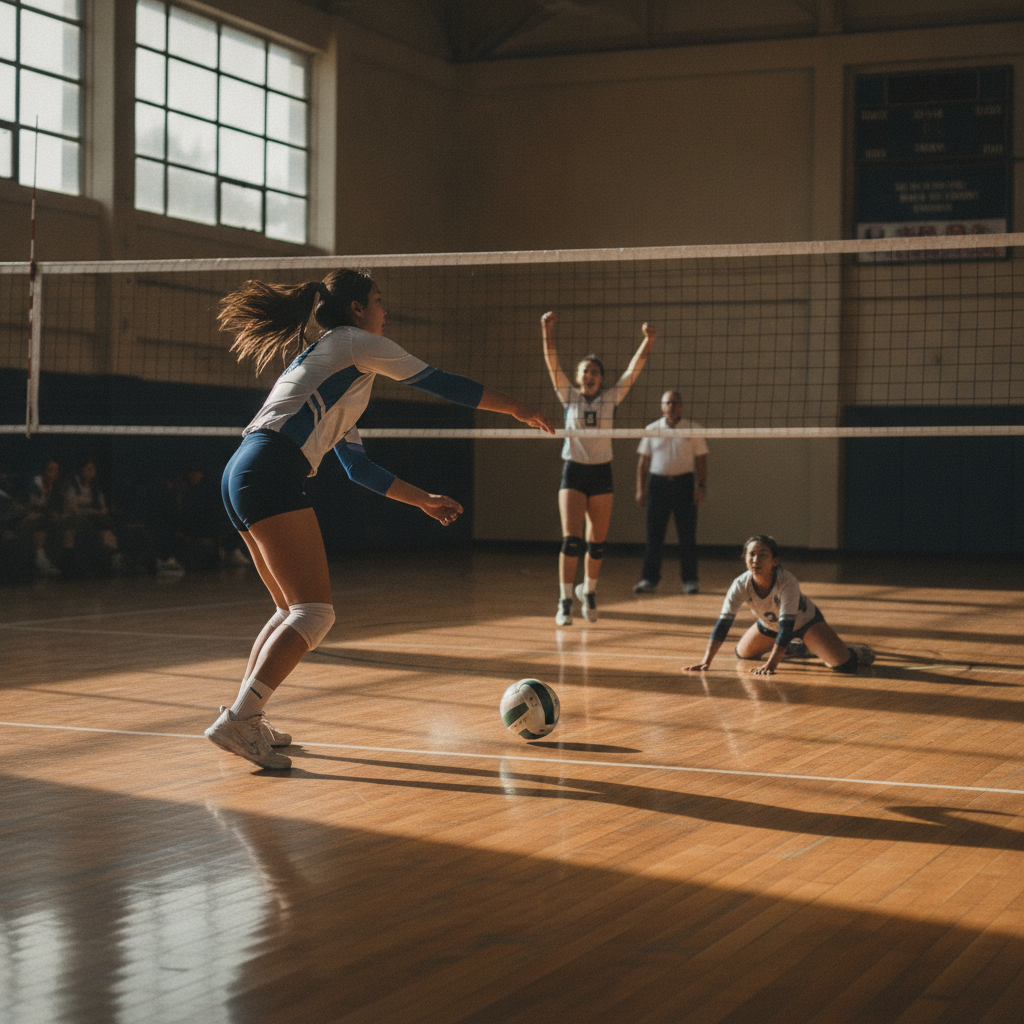
Piece 8 — Volleyball spike at net
Pen + Watercolor · Loose pen and watercolor line-and-wash
Three takes
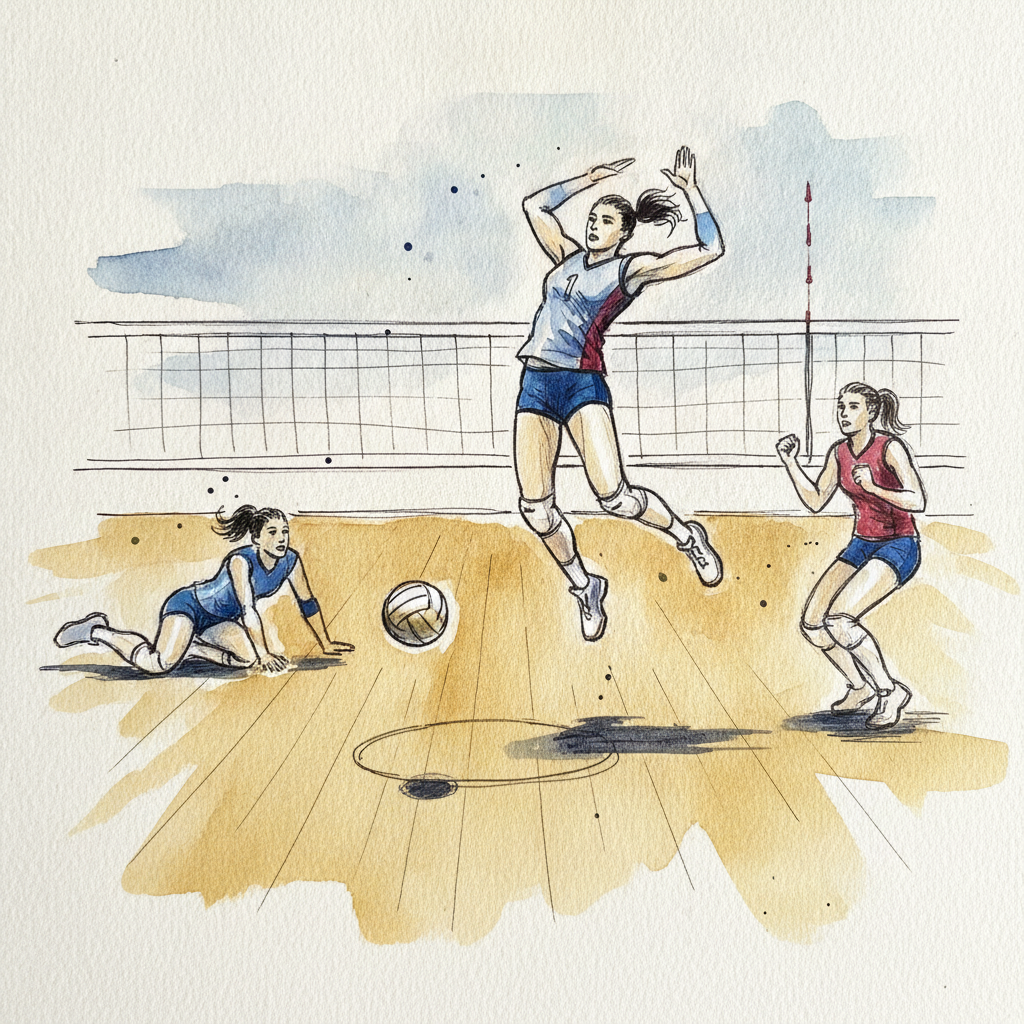
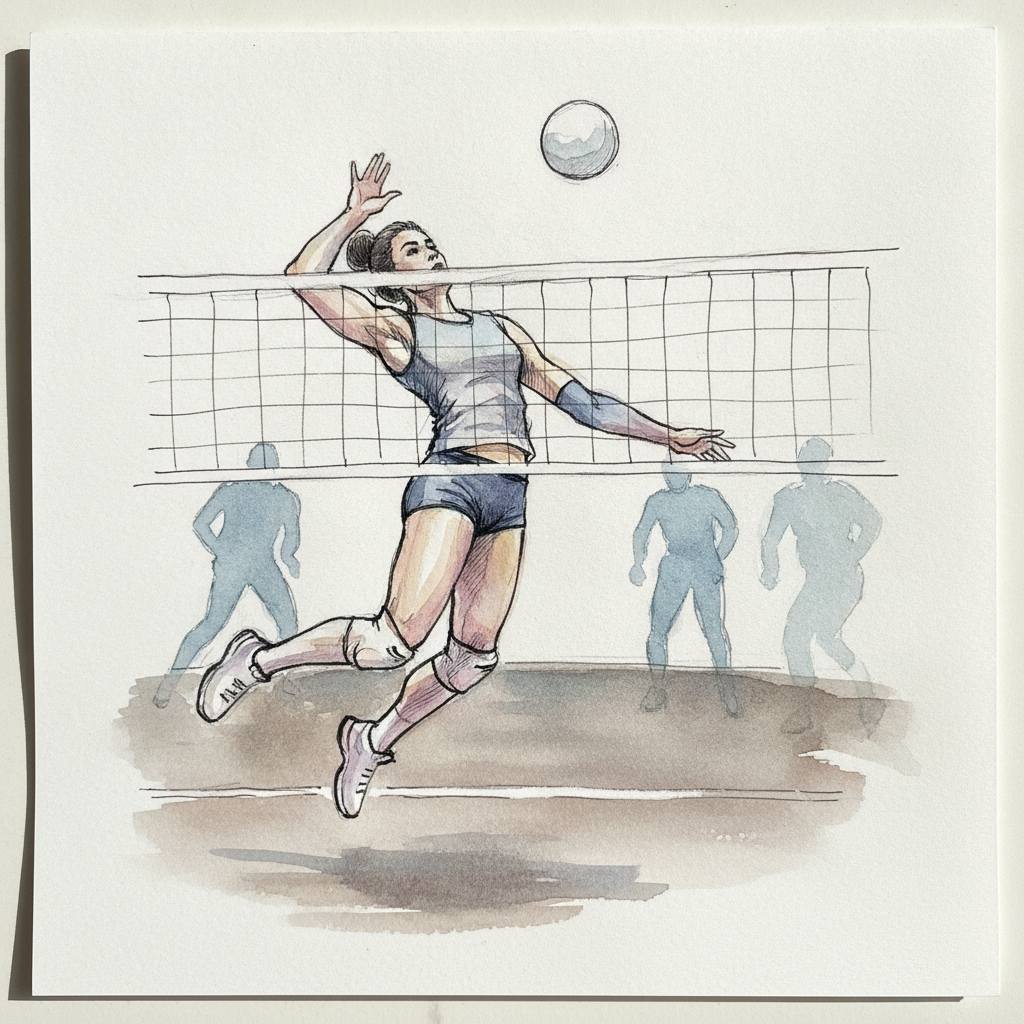
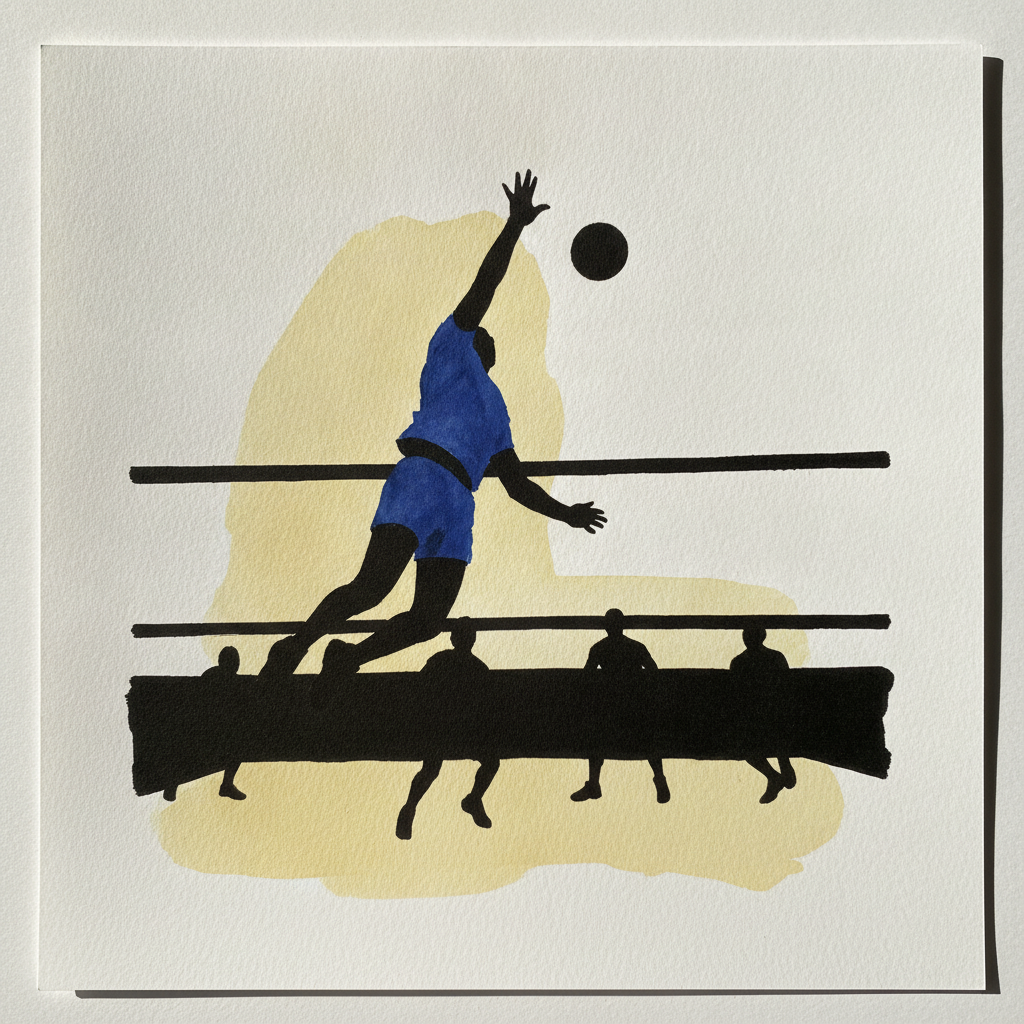
Focus for this piece
This piece offers a fantastic opportunity to study how line and wash together convey dynamic action and create compelling depth within a limited palette. Use varied pen line weights to emphasize the powerful arc of the spike and the figures' energetic poses—thicker, more confident lines for the impactful foreground elements, tapering to lighter, looser strokes for the receding figures. Apply quick, intentional washes using cool grays and blues to evoke the gym atmosphere, building saturation and contrast primarily on the main spiker to pull her forward. Let background details soften with more diluted color and feathered edges, focusing on how overlapping shapes and strong perspective lines draw the viewer into the immediate moment of impact.