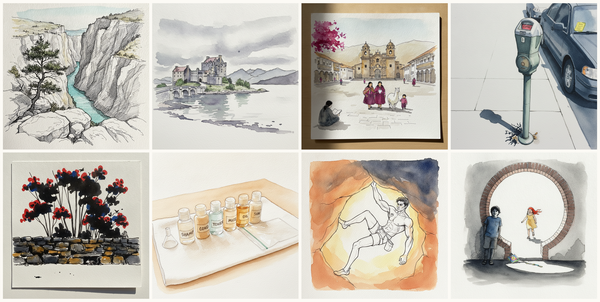
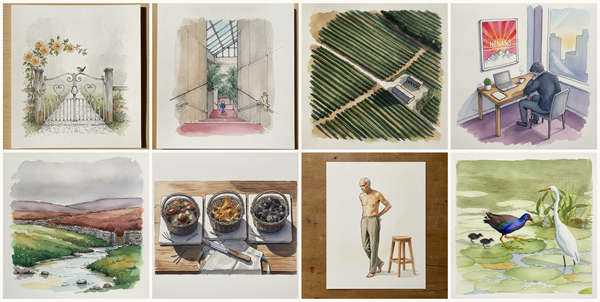
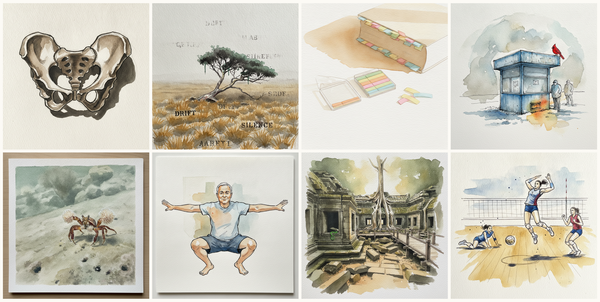
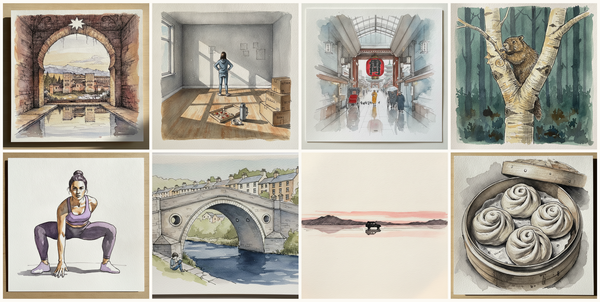
Spanish mackerel, Avenue of the Stars in Causeway Bay, Hong Kong Crowd Crush, Steam room with foggy door, Quadratus lumborum + lower back hollow — side bend, hand on hip, and more — pen + watercolor for November 6, 2026
AI-generated daily art-practice references for pen and watercolor: Spanish mackerel, Avenue of the Stars in Causeway Bay, Hong Kong Crowd Crush, Steam room with foggy door, Quadratus lumborum + lower back hollow — side bend, hand on hip, Praying mantis in a tall jar, Borough Market, London, Engla…
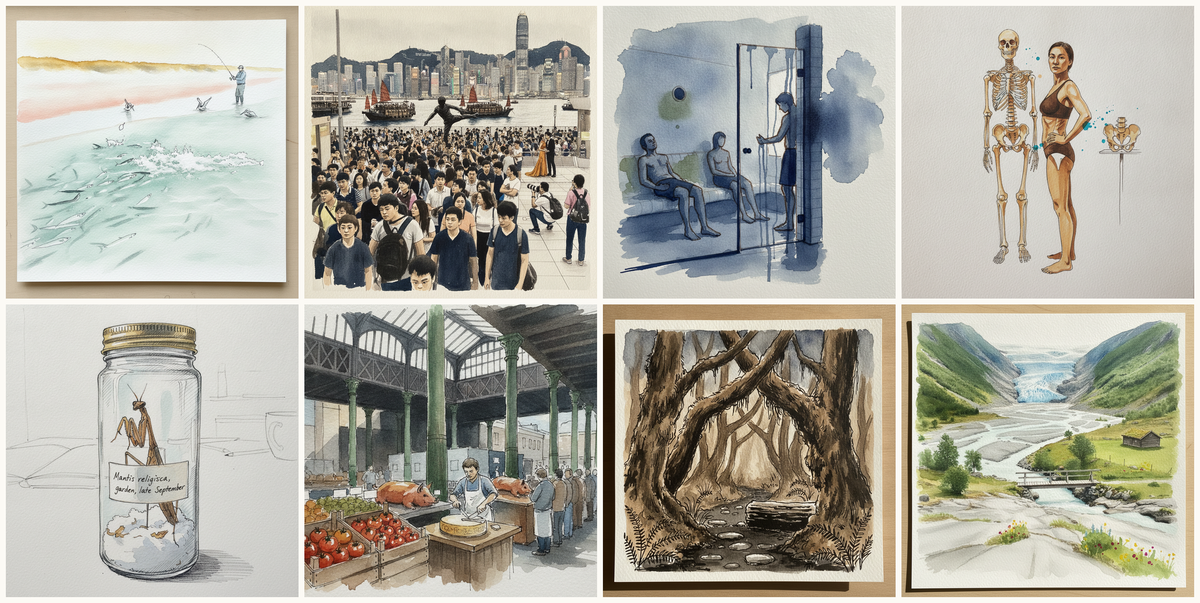
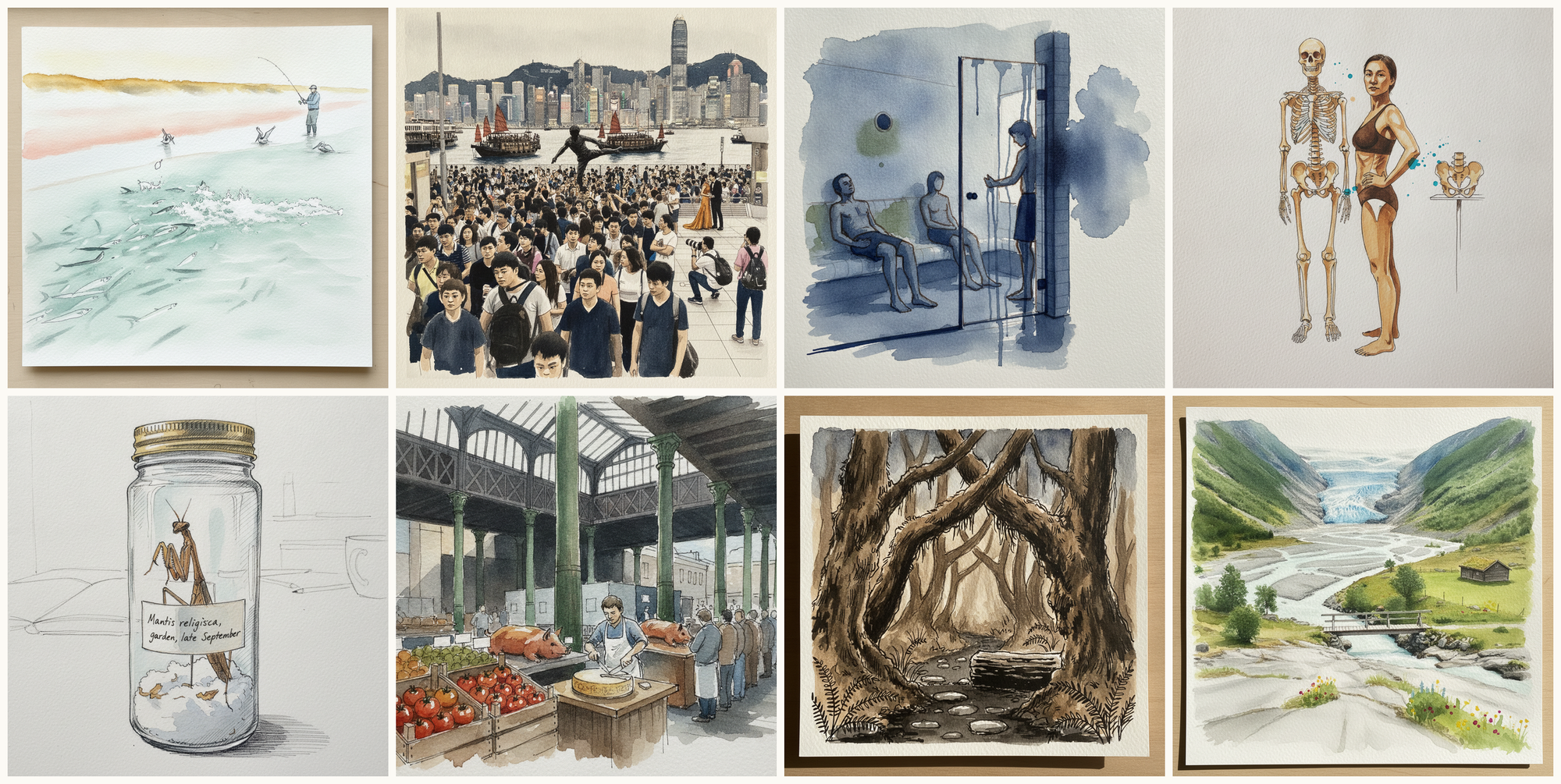
Today's 8 pen-and-watercolor pieces: Spanish mackerel, Avenue of the Stars in Causeway Bay, Hong Kong Crowd Crush, Steam room with foggy door, Quadratus lumborum + lower back hollow — side bend, hand on hip, Praying mantis in a tall jar, Borough Market, London, England, Olympic Peninsula Rainforest, Moss Roof, Briksdal Glacier valley, Jostedalsbreen, Norway. Each piece comes with an AI-generated photoreal reference, three AI-generated example artworks in different treatments, and a short focus paragraph naming what to study in this one.
Why these references use AI
This daily series uses AI-generated images as practice prompts, not as finished artwork to copy. Each subject starts with a synthetic photoreal reference generated with Gemini/Nano Banana, then moves into three pen-and-watercolor interpretations of the same subject.
I use AI here because daily art practice needs variety and low friction. Real life can get repetitive, busy, or visually narrow. These generated reference sets make it easier to study bodies, buildings, animals, landscapes, objects, gestures, light, palettes, and compositions that might not show up in an ordinary day.
The goal is not to reproduce any image directly. Treat each set as a starting point for observation and study: choose what interests you, change the framing, simplify the subject, alter the palette, and make your own version.
Piece 1 — Spanish mackerel
Pen + Watercolor · Loose pen and watercolor line-and-wash
Three takes

Focus for this piece
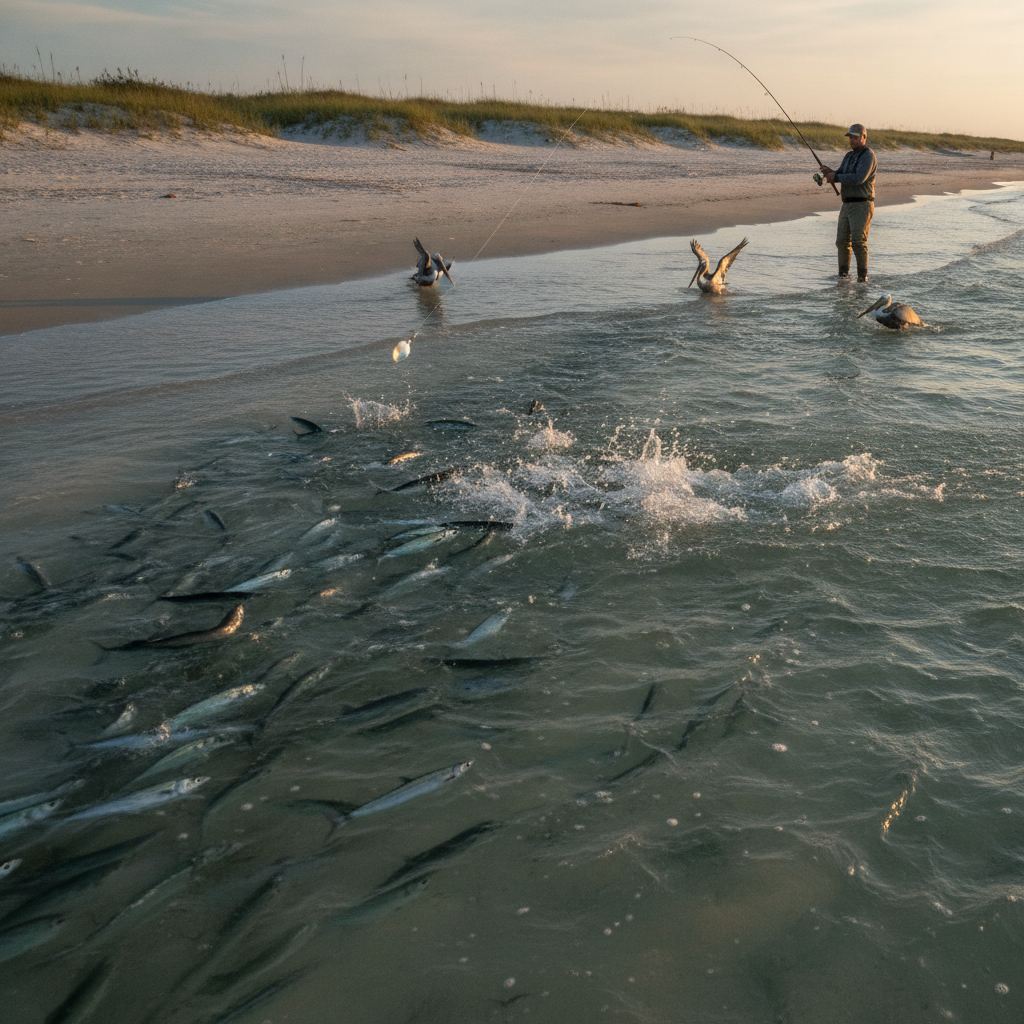
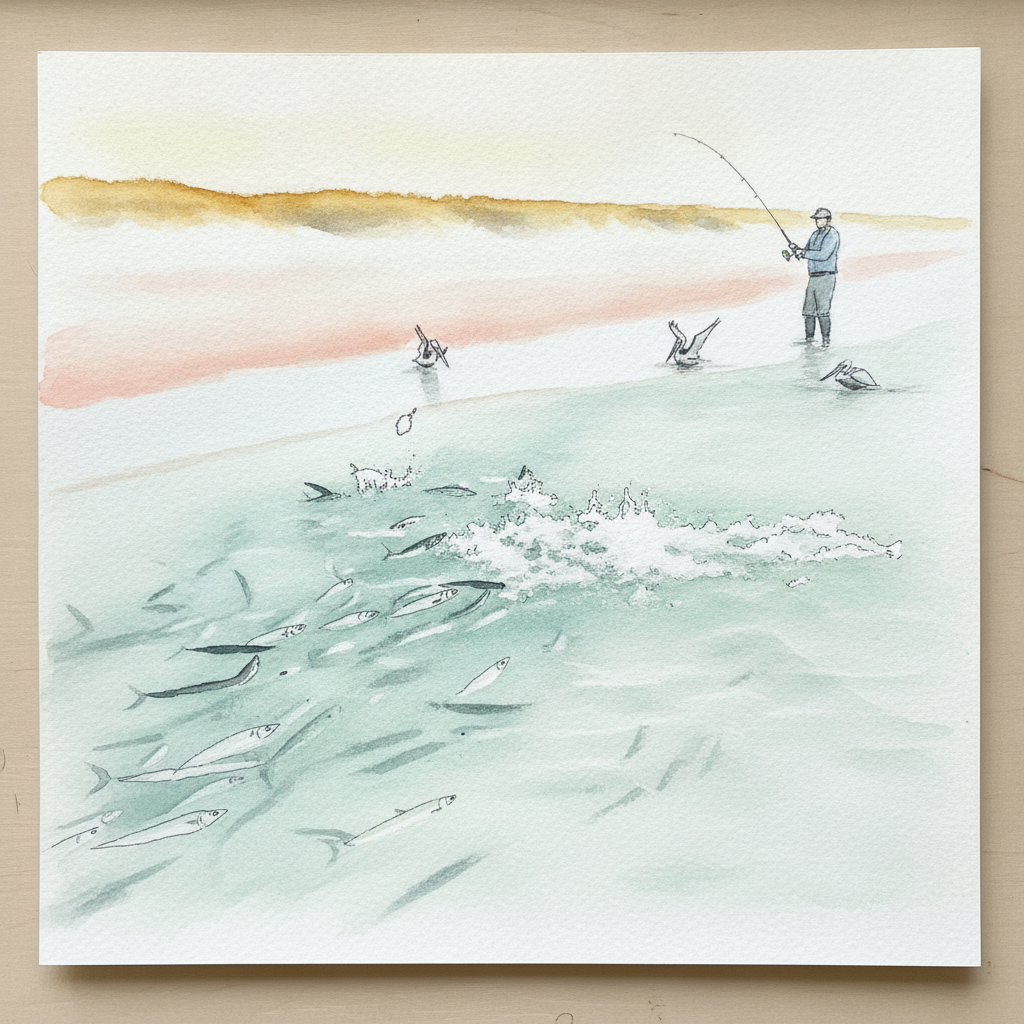
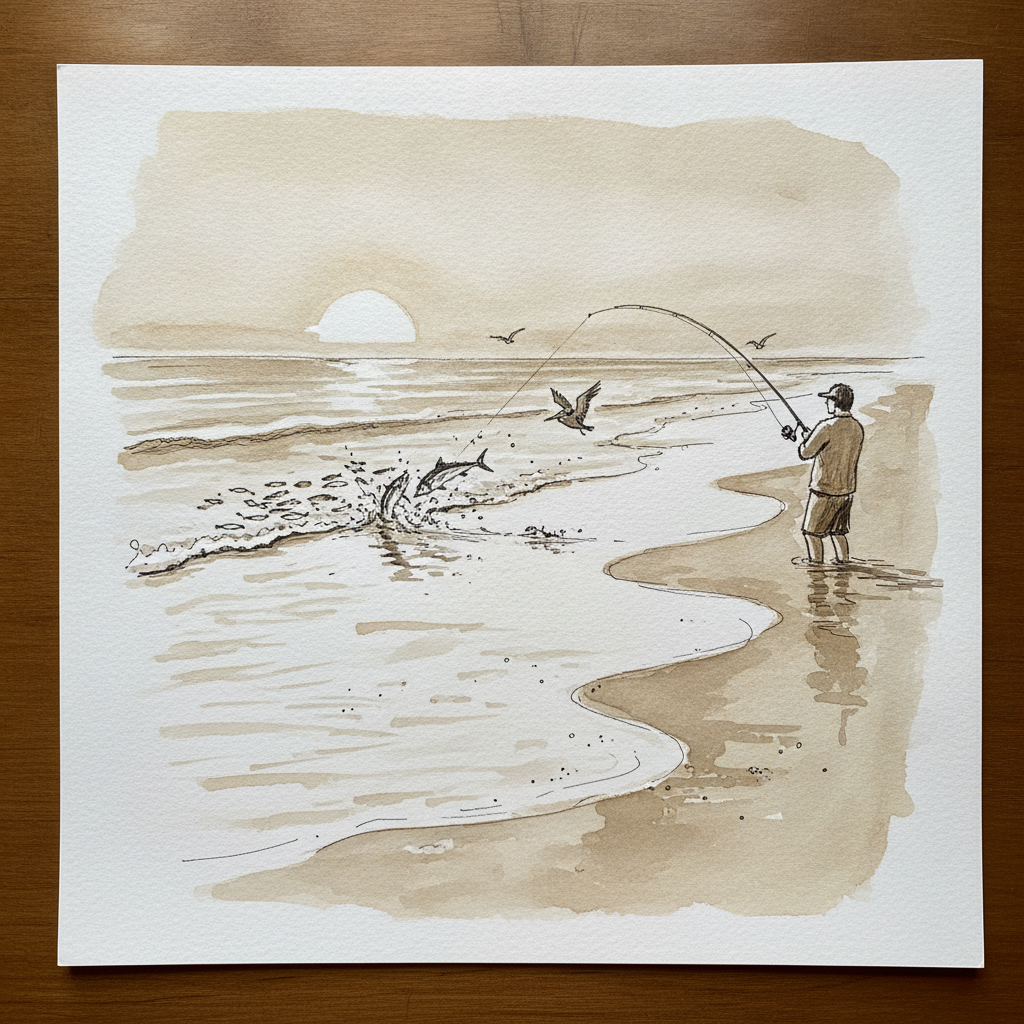
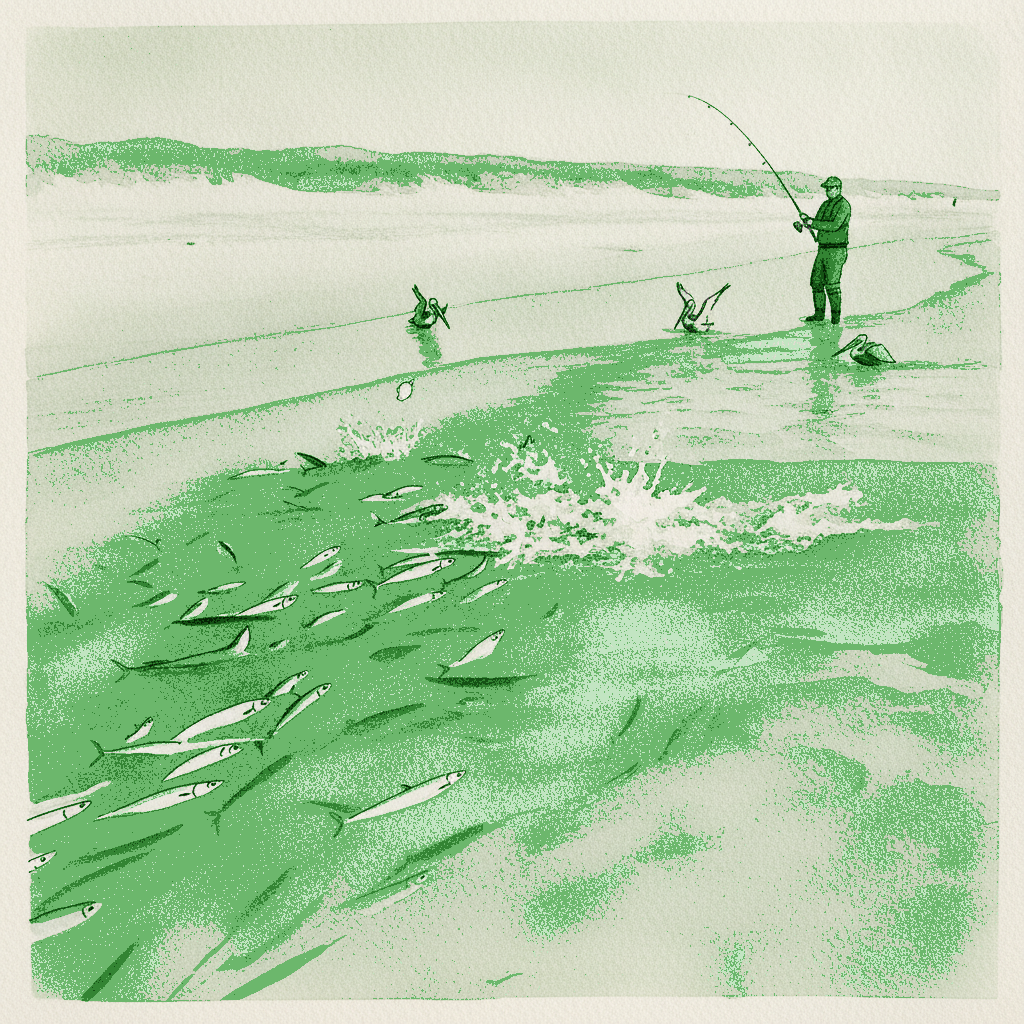
This study is ideal for practicing how to convey dynamic action and the subtle play of first light on shallow water. Use brisk, varied line weights for the slashing mackerel and leaping minnows to create a sense of frantic movement, complementing these with soft, wet-on-wet washes of muted blues and greens to suggest the clear, active water. Reserve your sharpest ink lines and brightest whites for the immediate chaos around the bait ball. Allow the background to recede with lighter washes and sparser linework.
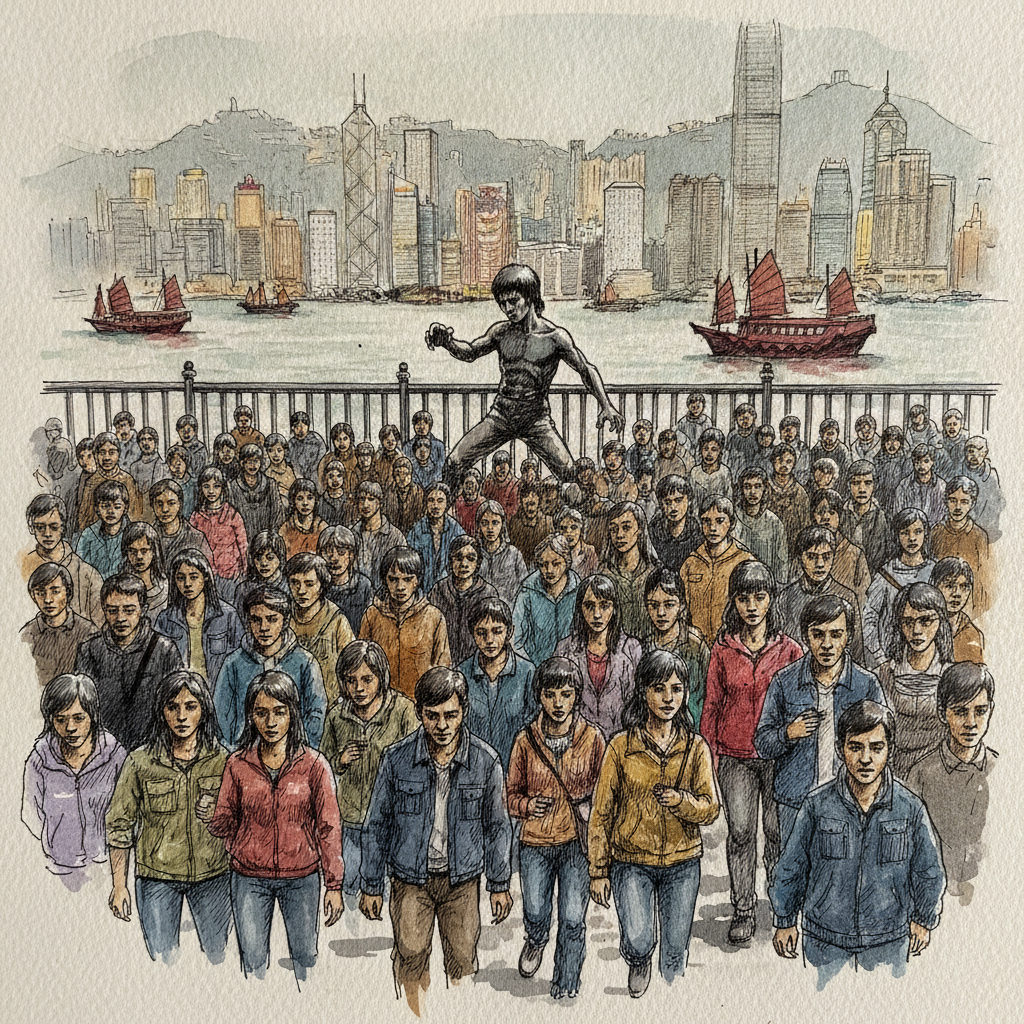
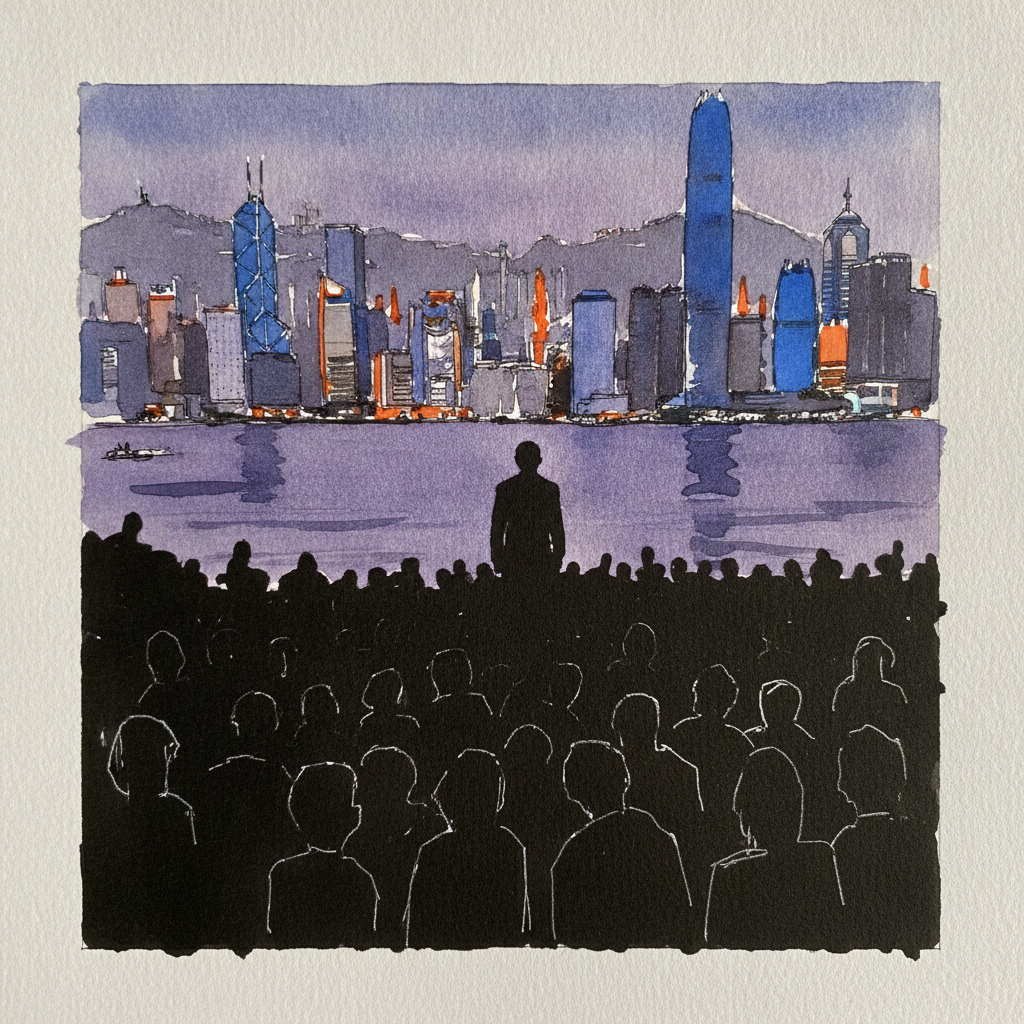
Piece 2 — Avenue of the Stars in Causeway Bay, Hong Kong Crowd Crush
Pen + Watercolor · Loose pen and watercolor line-and-wash
Three takes
Focus for this piece
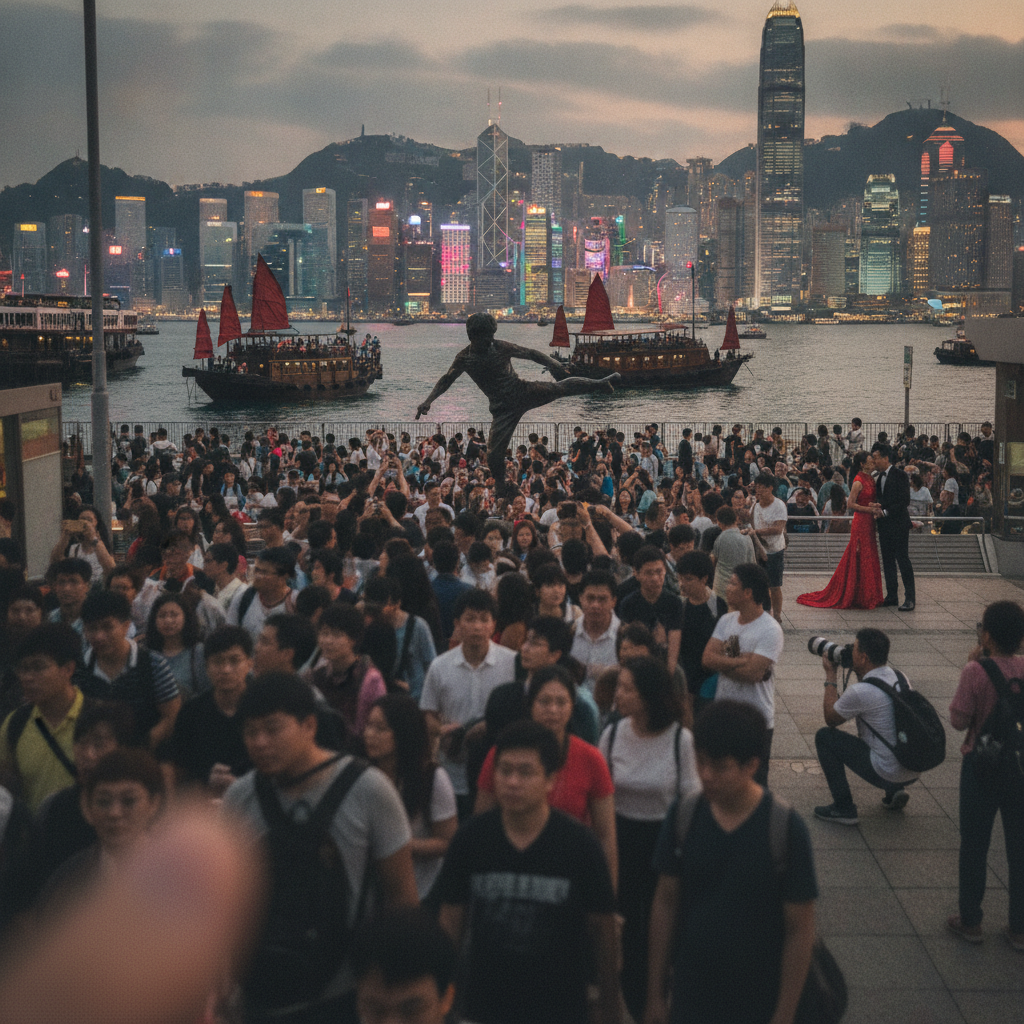
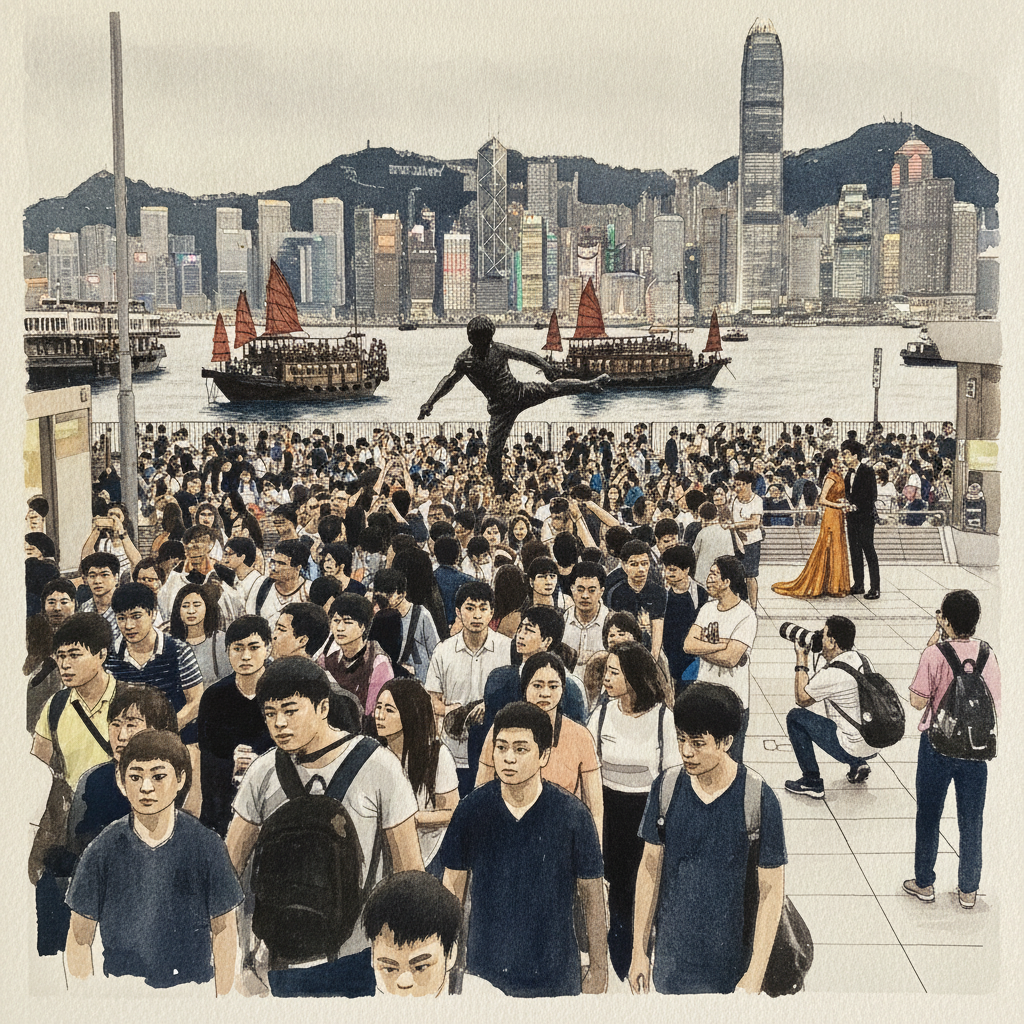
This piece offers a great opportunity to practice rendering a dense urban crowd while maintaining clear focal points and depth. Challenge yourself to simplify distant figures into indistinct shapes using light, broken ink lines and muted, wet-on-wet watercolor washes, letting them blend into the atmosphere. Reserve your crisper, heavier line weights and more saturated color blocks for the foreground elements like Bruce Lee and the engaged couple, using a restricted palette for the background masses to enhance this visual hierarchy.
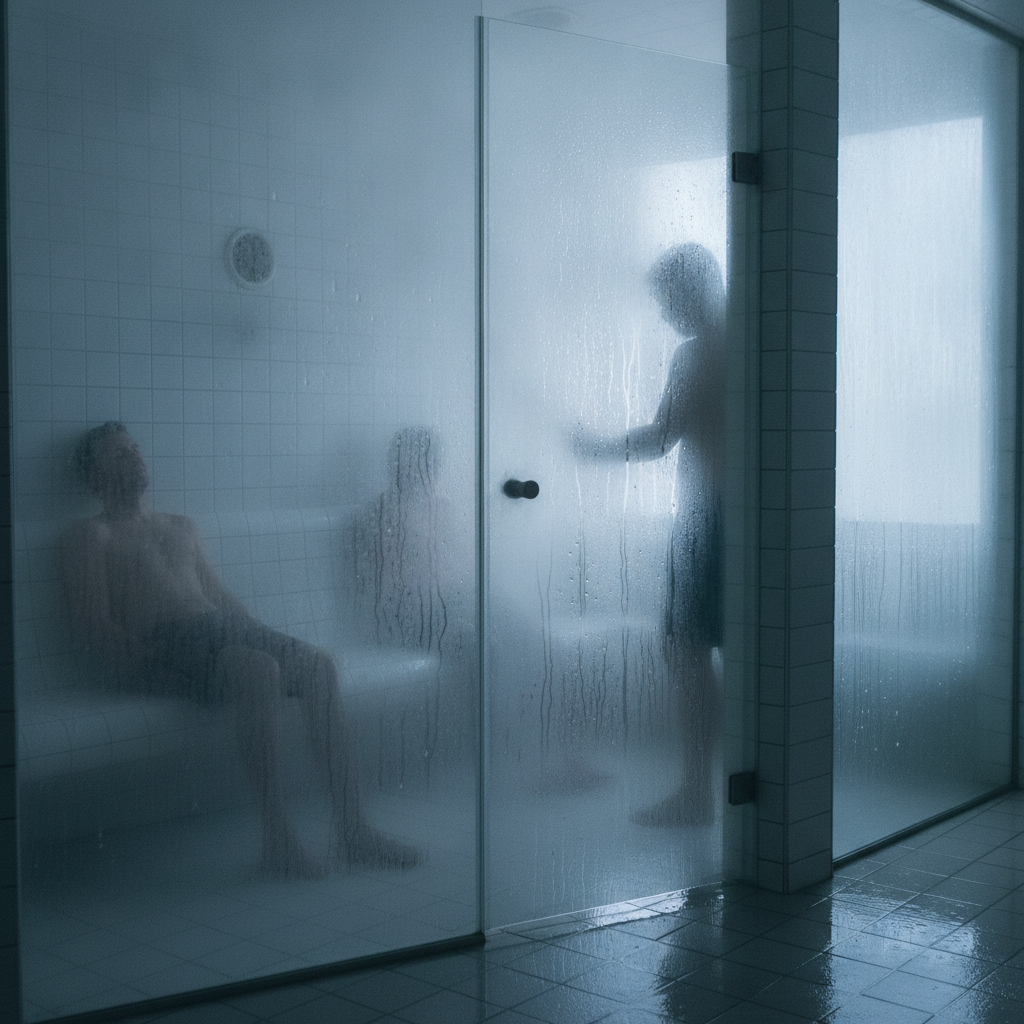
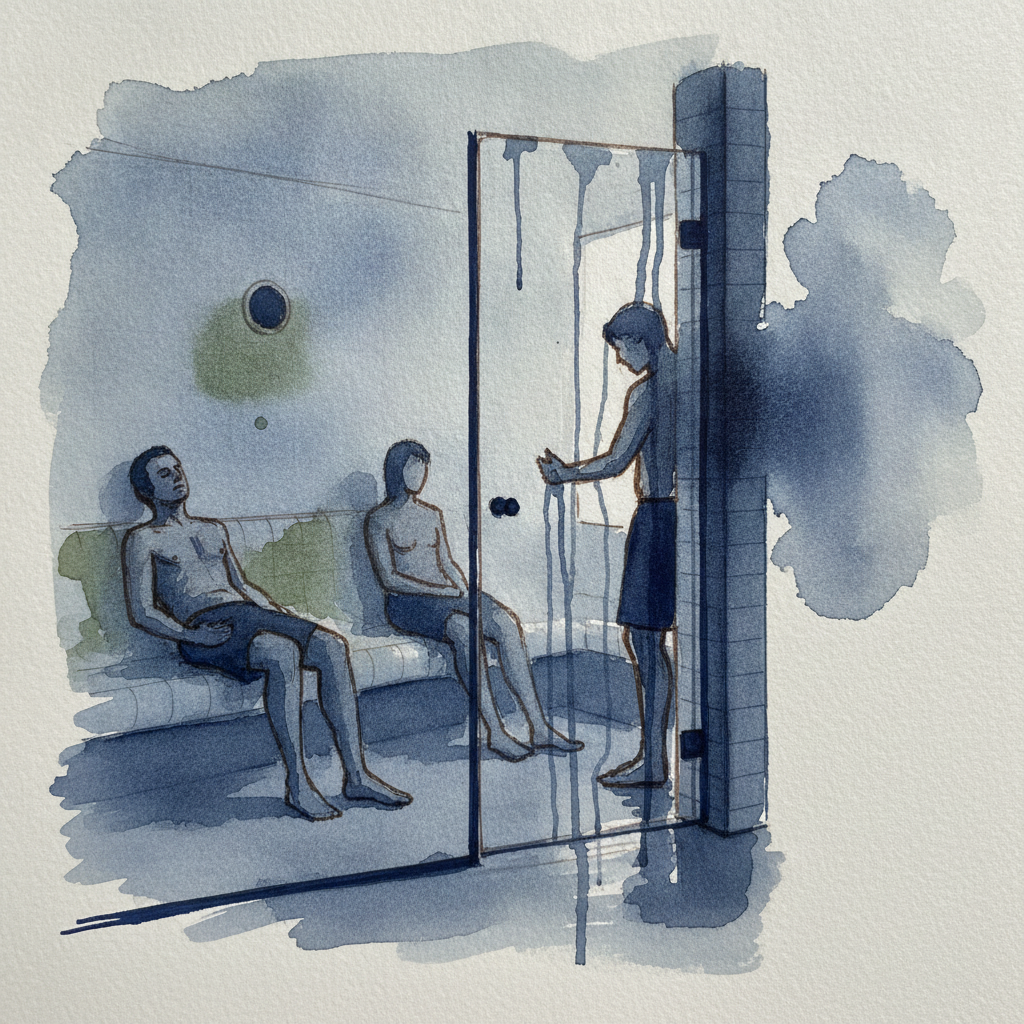
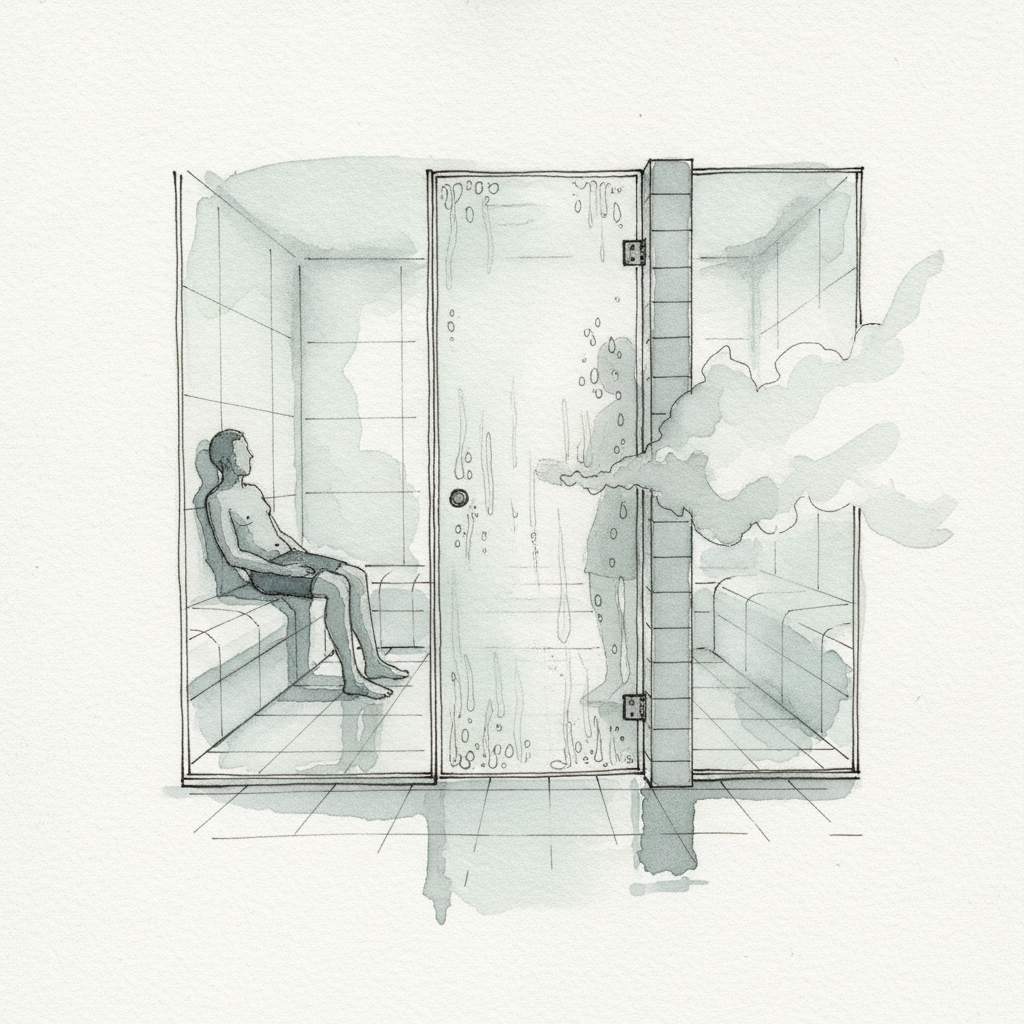
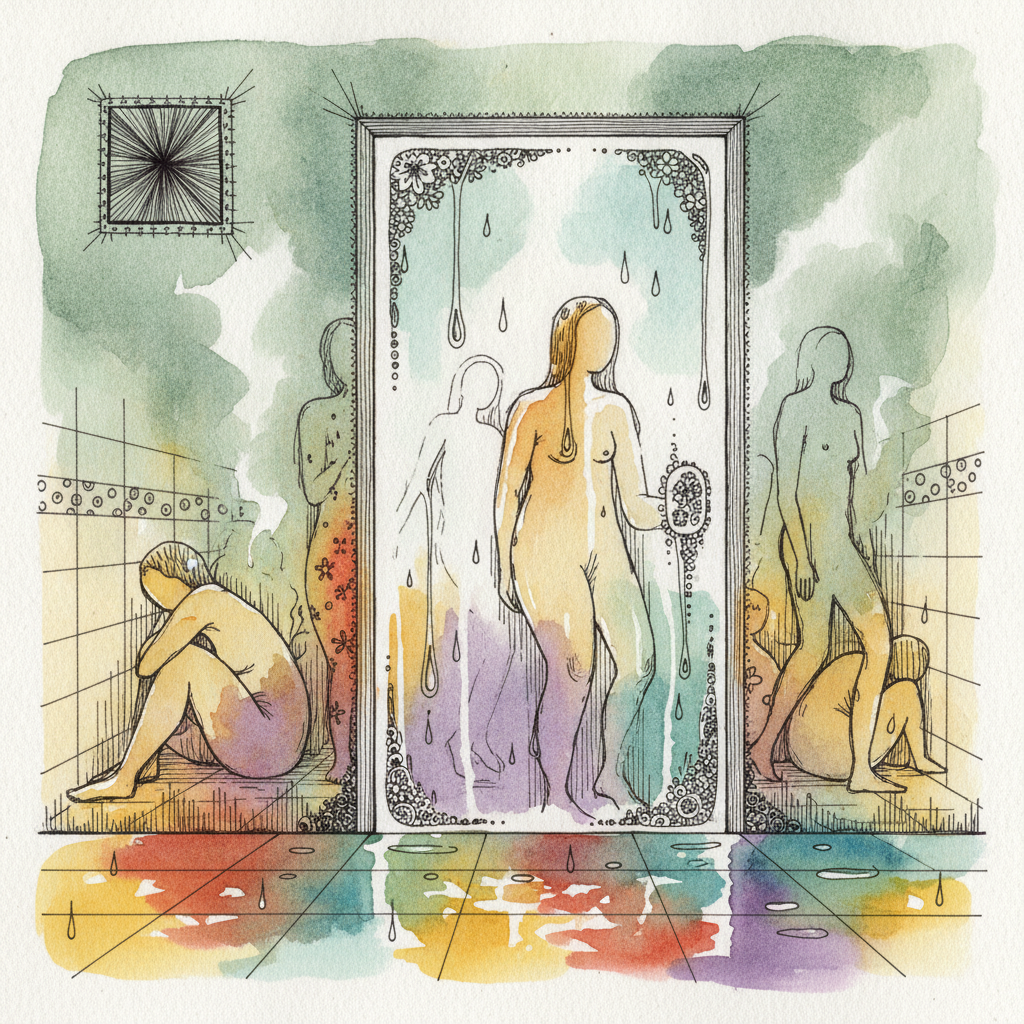
Piece 3 — Steam room with foggy door
Pen + Watercolor · Loose pen and watercolor line-and-wash
Three takes
Focus for this piece
This piece offers a great study in juxtaposing precise structural lines with soft atmospheric washes. Use consistent, medium-weight waterproof ink lines to define the door frame and tile grid, establishing the room's underlying geometry. Then, employ broad wet-on-wet washes of a desaturated palette for the luminous fog on the door and hazy figures inside, allowing water to run naturally for the droplet tracks. The interplay of these distinct approaches will capture both the rigid architecture and the ephemeral, steamy atmosphere.
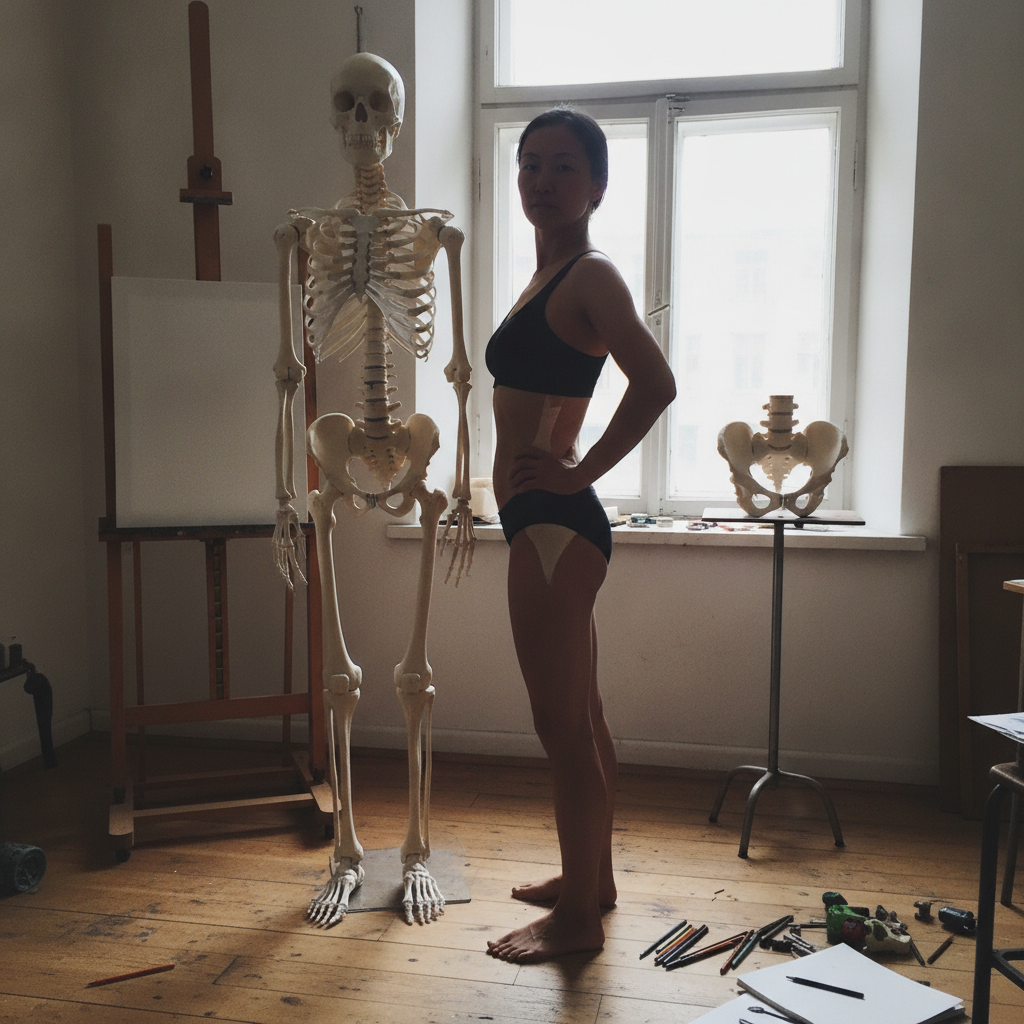
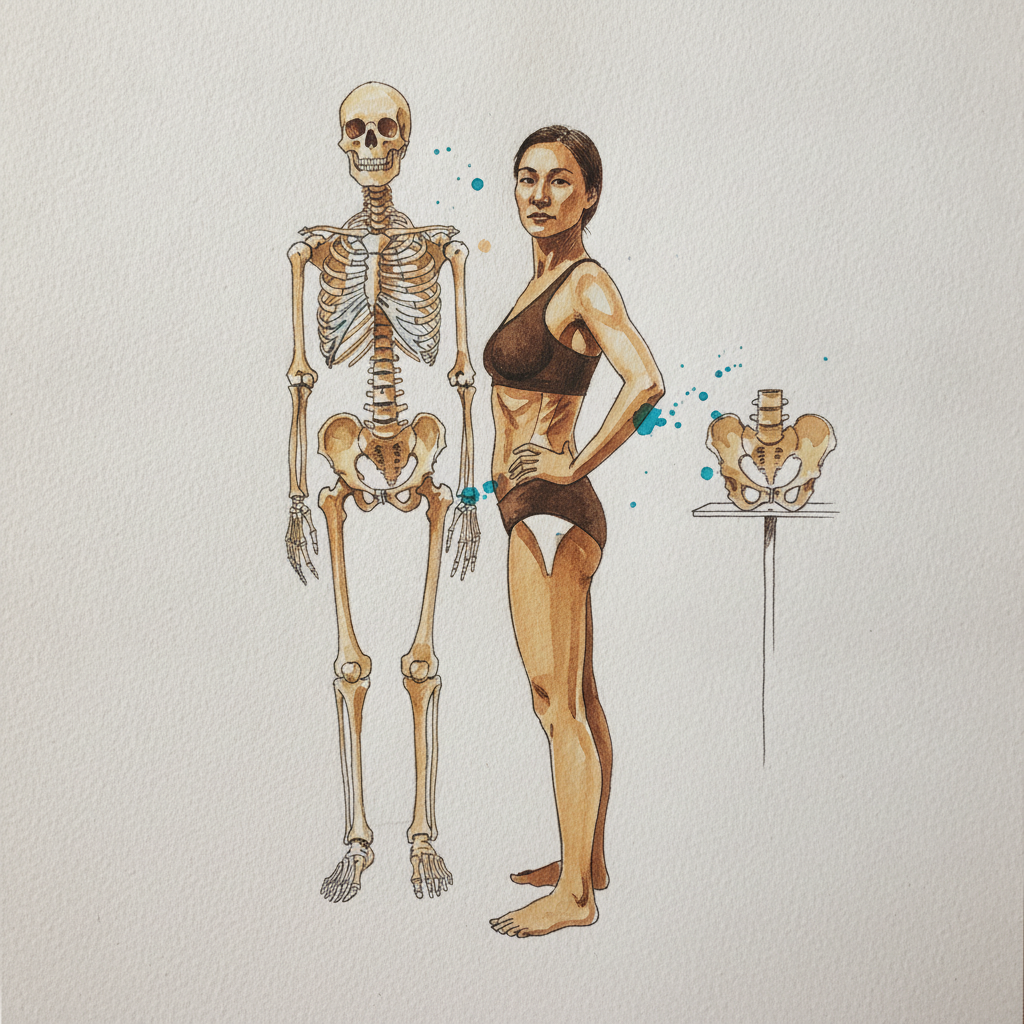
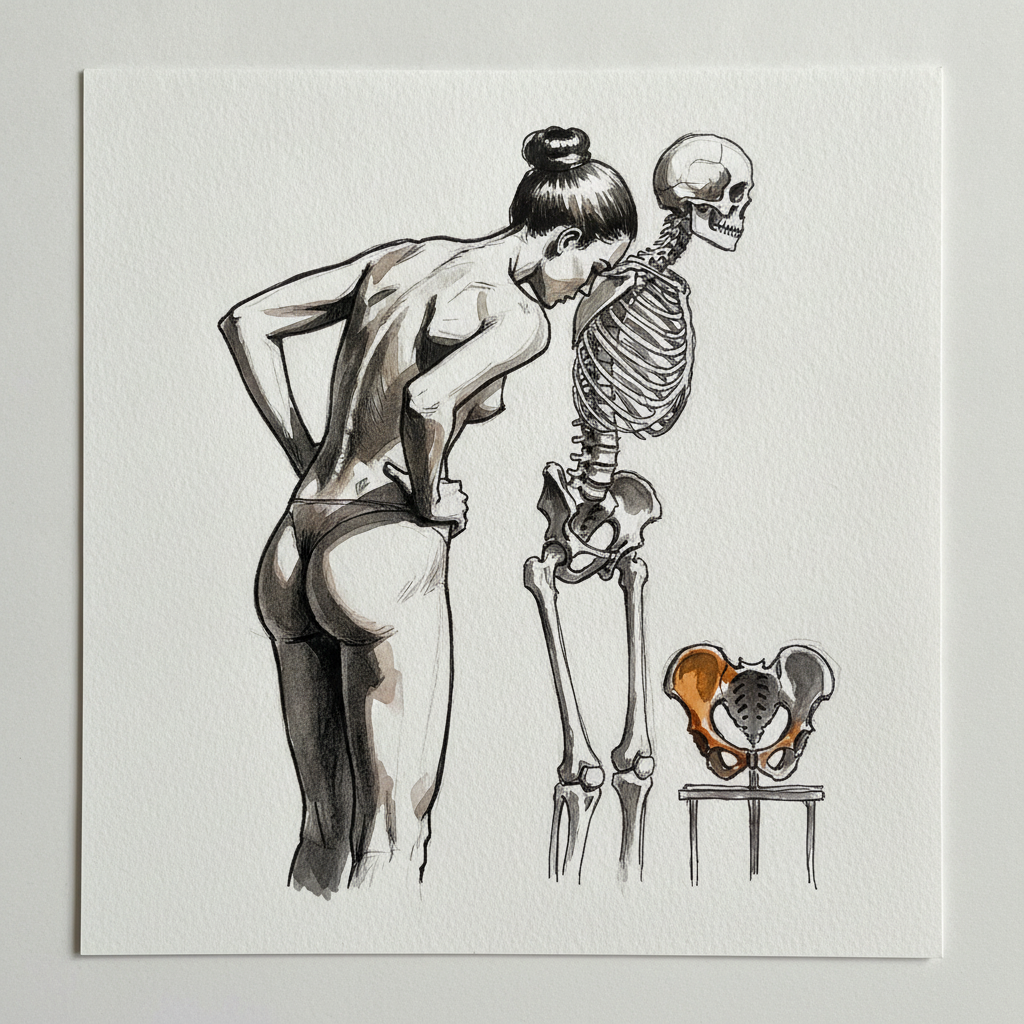
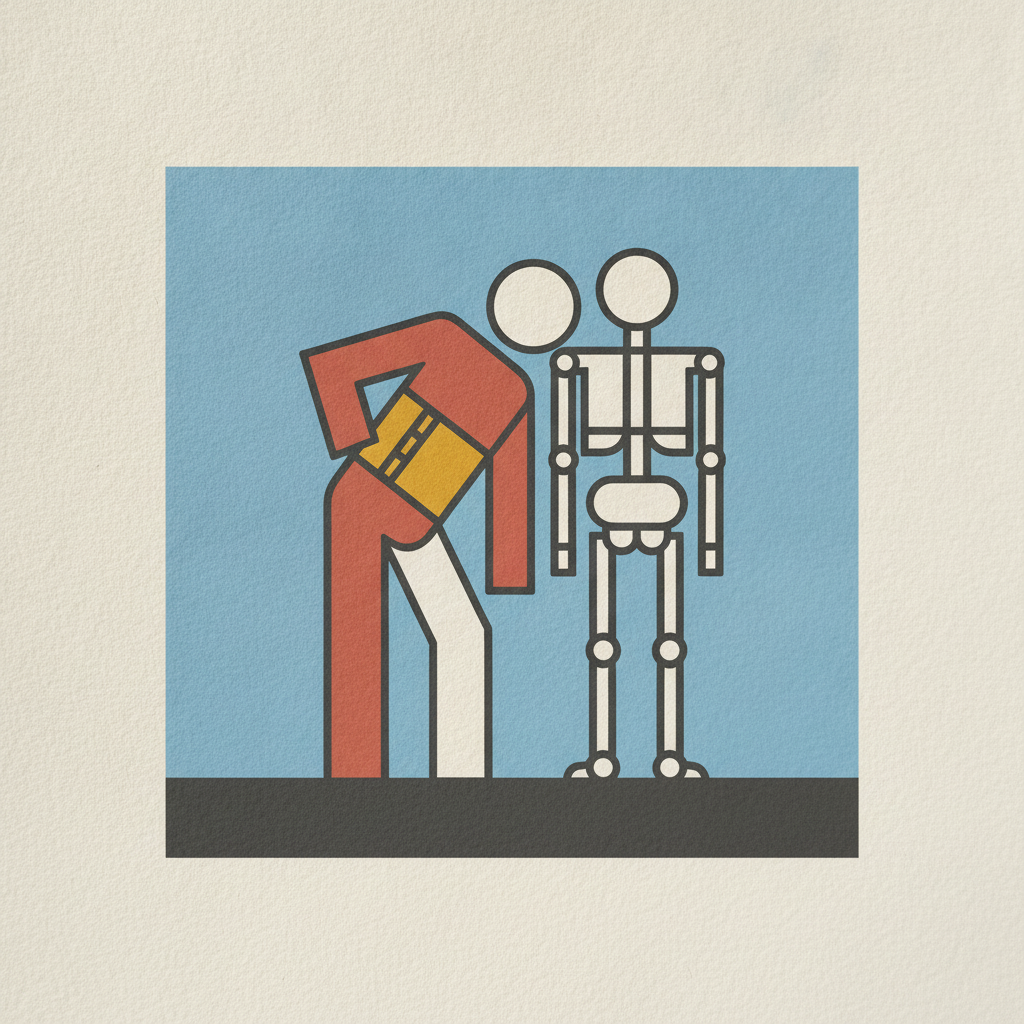
Piece 4 — Quadratus lumborum + lower back hollow — side bend, hand on hip
Pen + Watercolor · Loose pen and watercolor line-and-wash
Three takes
Focus for this piece
This piece offers an excellent study in articulating underlying anatomy through line and wash. Use precise, varied line weights to delineate the sharp iliac crest and the quadratus lumborum's contour, particularly where raking light catches its definition. Then, employ soft, layered washes to build the deep volumetric hollow of the lower back, allowing the watercolor to model the form and light without obscuring the linear structure. Focus on this interplay to reveal both skeletal landmarks and muscular volume.
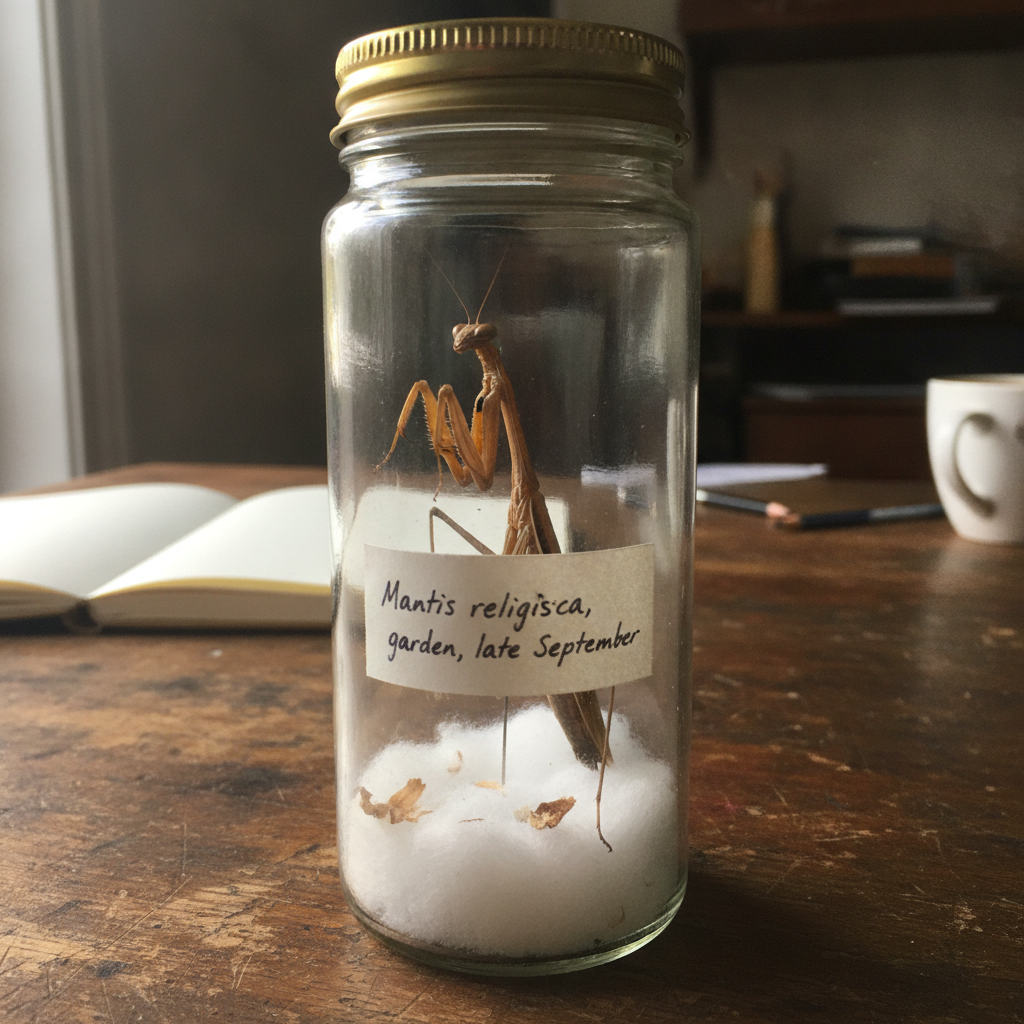
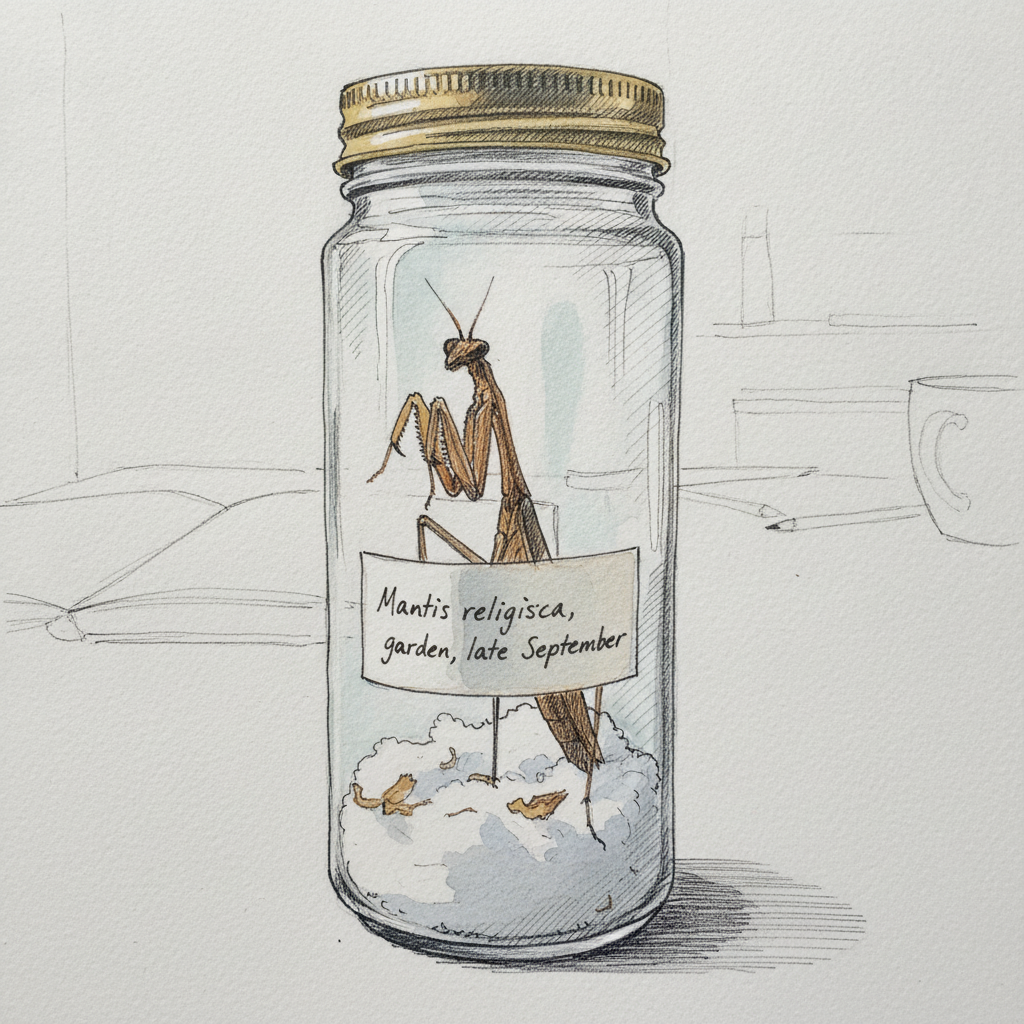
Piece 5 — Praying mantis in a tall jar
Pen + Watercolor · Loose pen and watercolor line-and-wash
Three takes

Focus for this piece
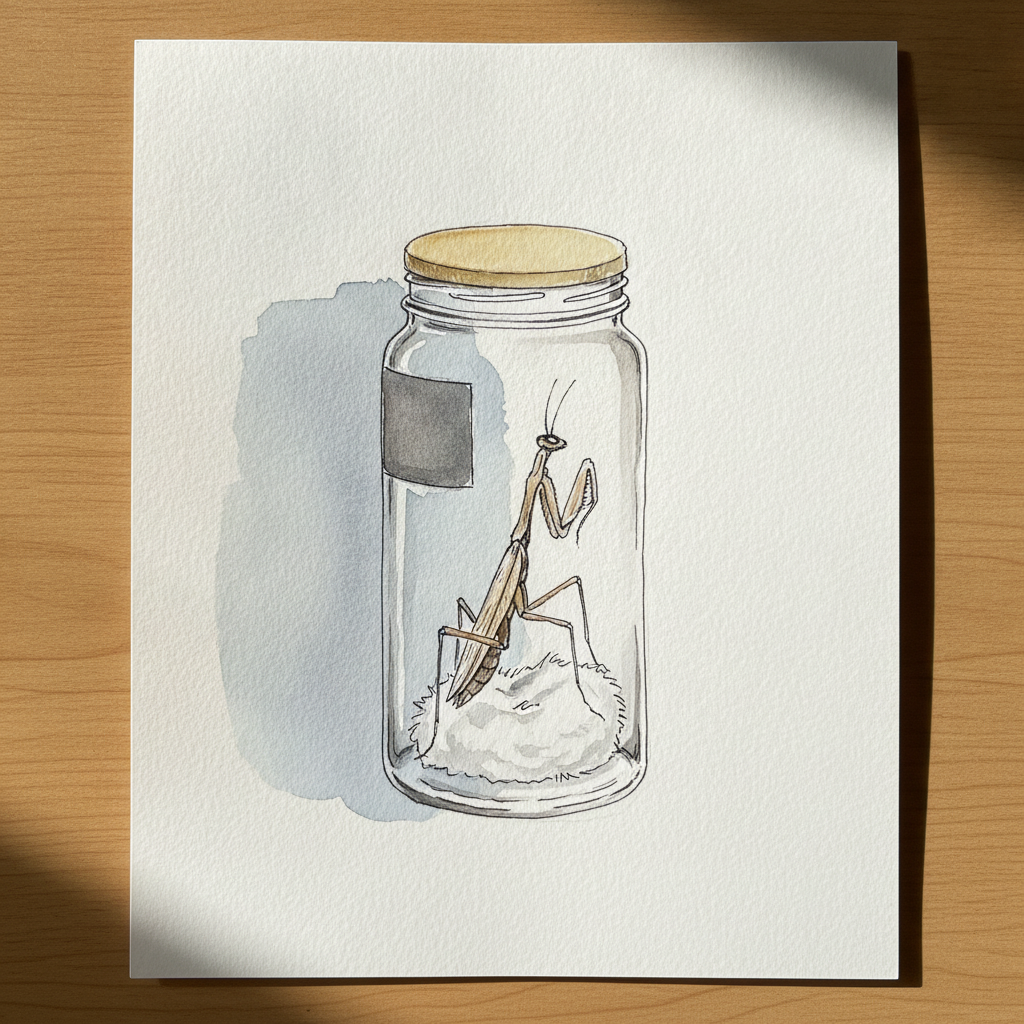
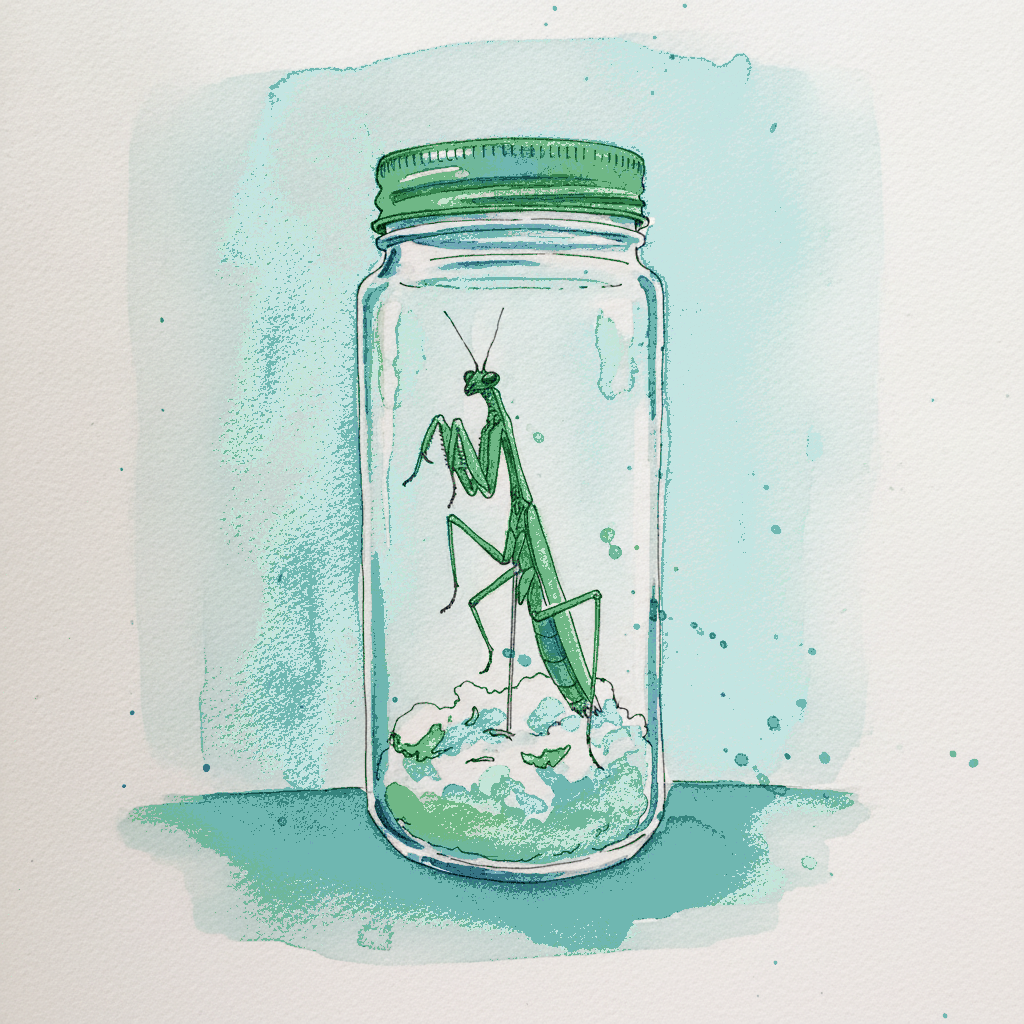
This piece is ideal for practicing the interplay of transparency and focused detail. Concentrate on defining the tall cylindrical jar with precise, varied ink lines and very faint, cool washes to suggest its form and reflections without losing the mantis's intricate detail. Experiment with contrasting the smooth, clear glass—highlighted by untouched whites—against the brittle, desiccated texture of the mantis, which you can render with short, broken lines and subtle drybrush passages.
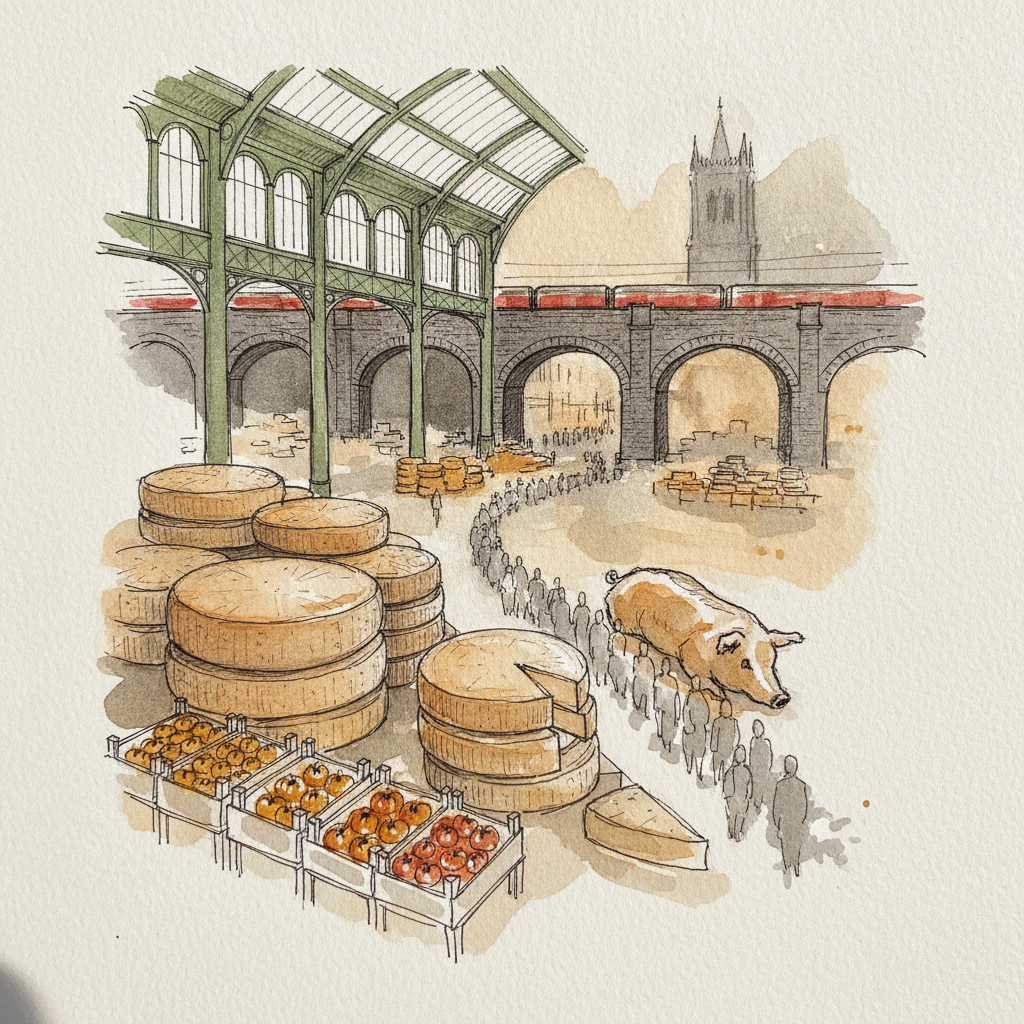
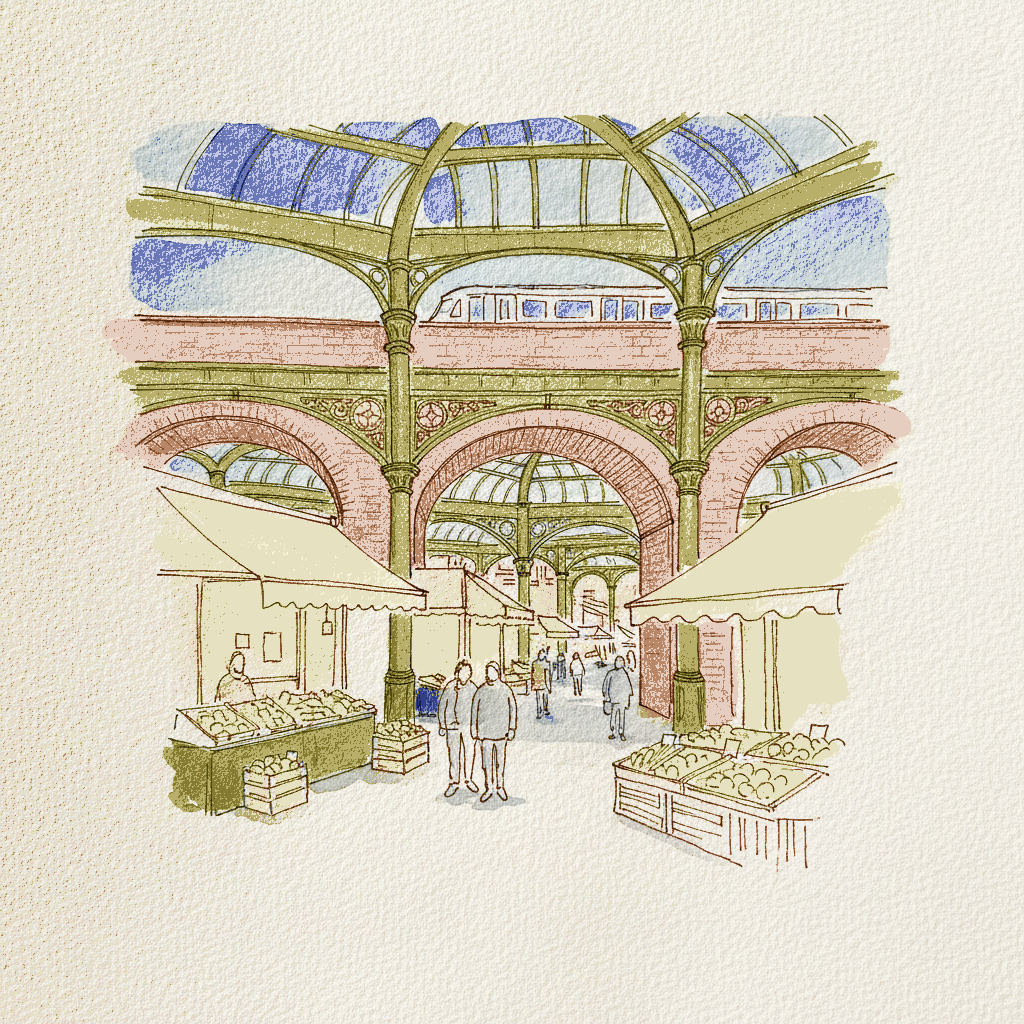
Piece 6 — Borough Market, London, England
Pen + Watercolor · Loose pen and watercolor line-and-wash
Three takes

Focus for this piece
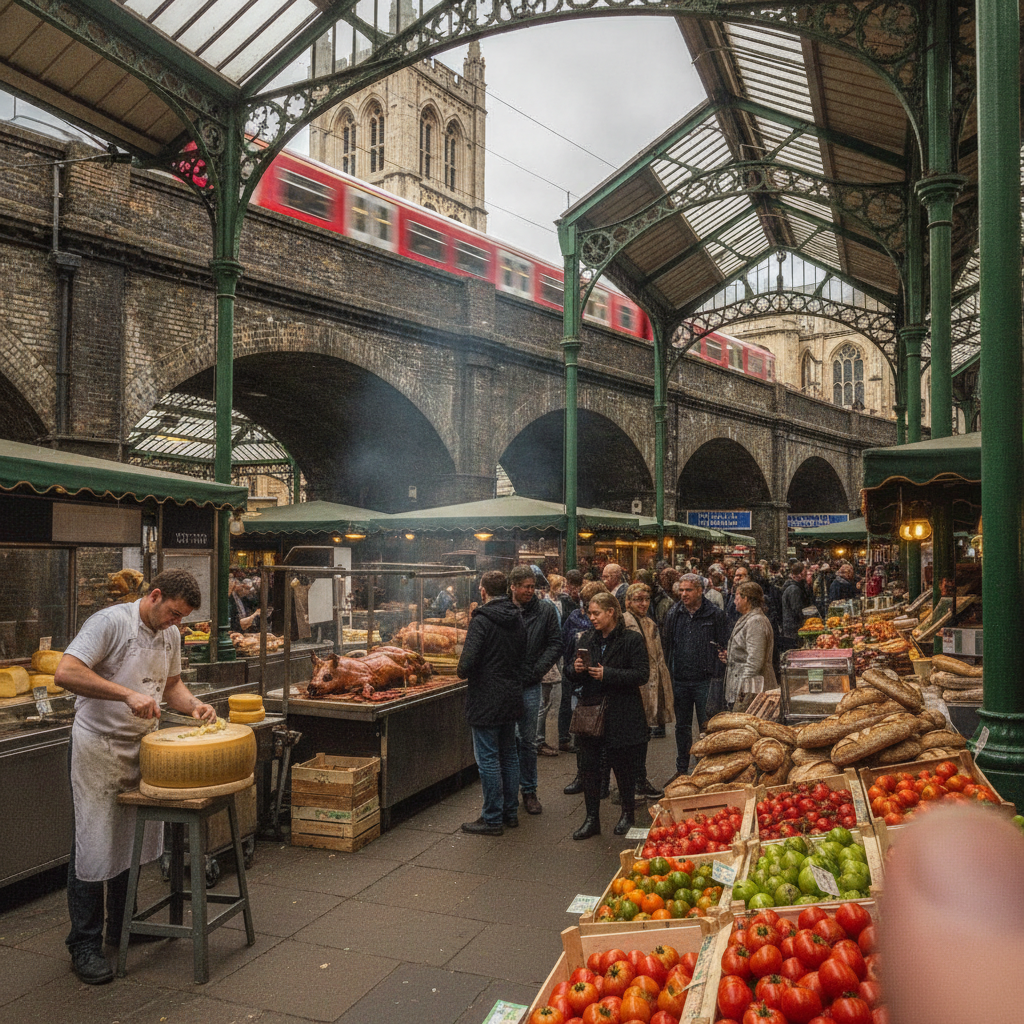
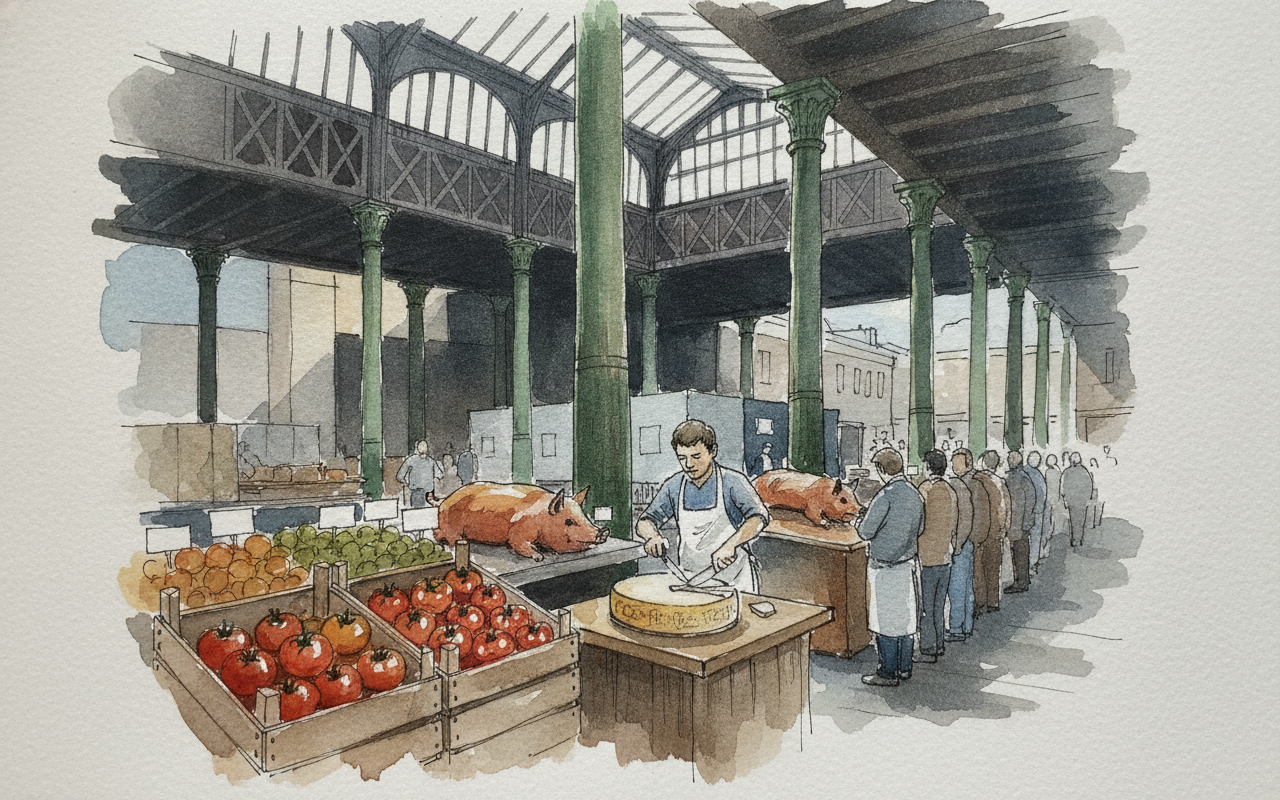
For this piece of Borough Market, focus on using varied ink line weights to define the intricate, repetitive geometry of the wrought-iron columns and overhead railway viaduct, establishing a strong sense of architectural depth. Then, apply layered, controlled washes to capture the luminous quality of light filtering through the glass clerestory and the vibrant, shifting atmosphere of the market activity below, letting the watercolor soften and add life without obscuring the structural integrity of your pen work.
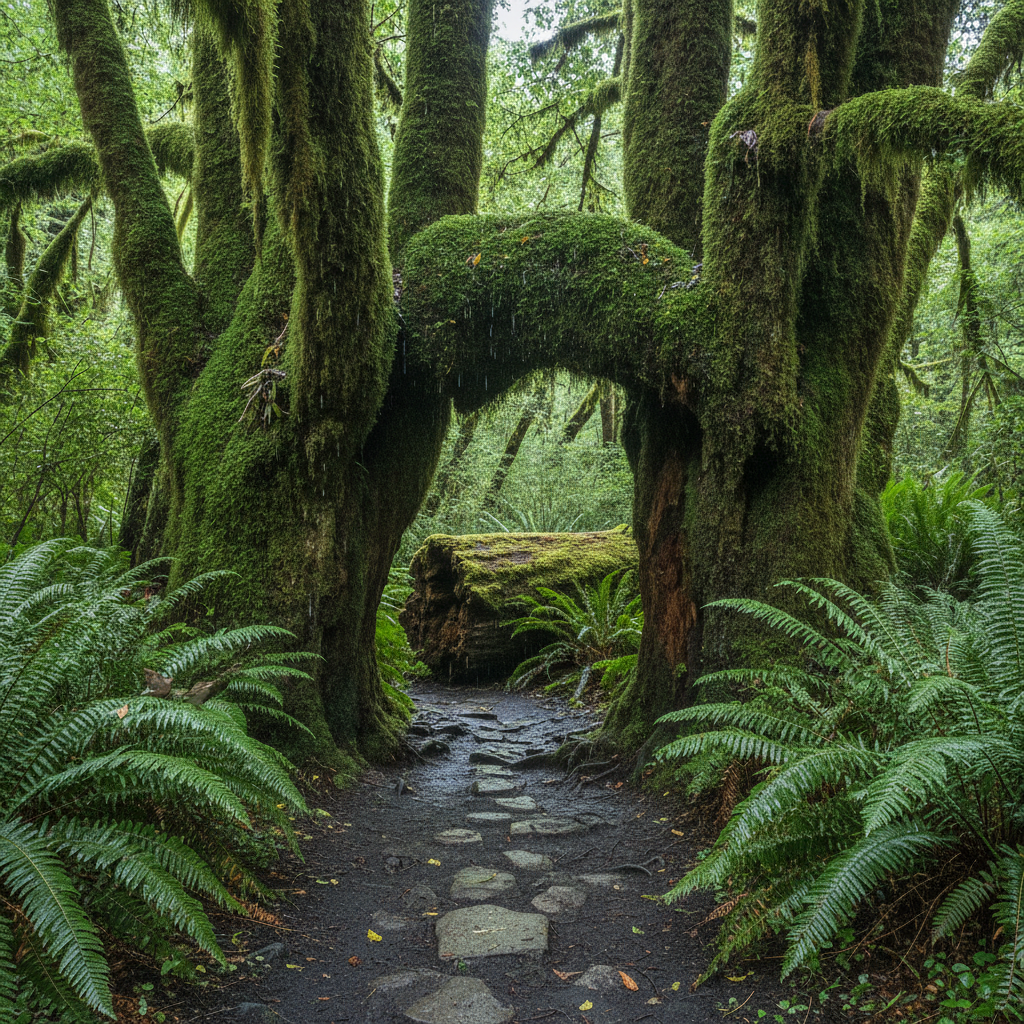
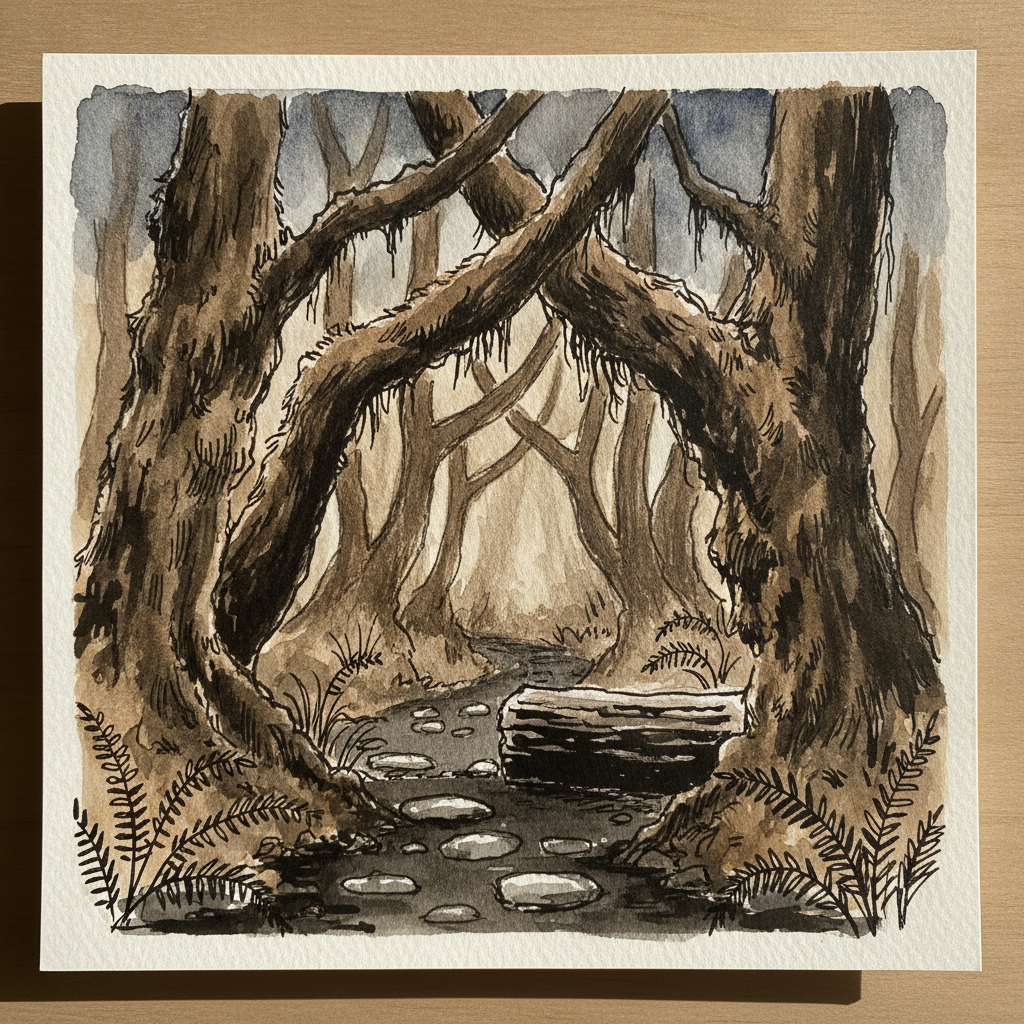
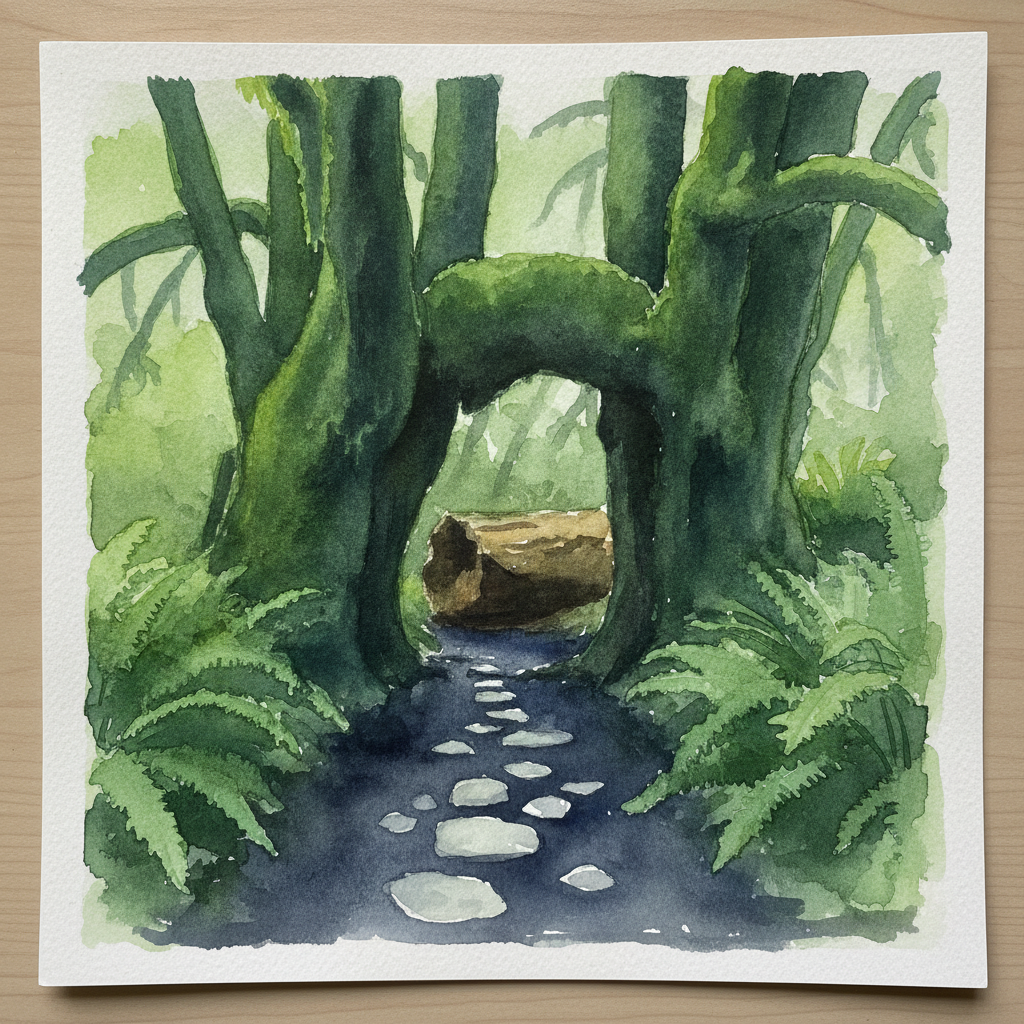
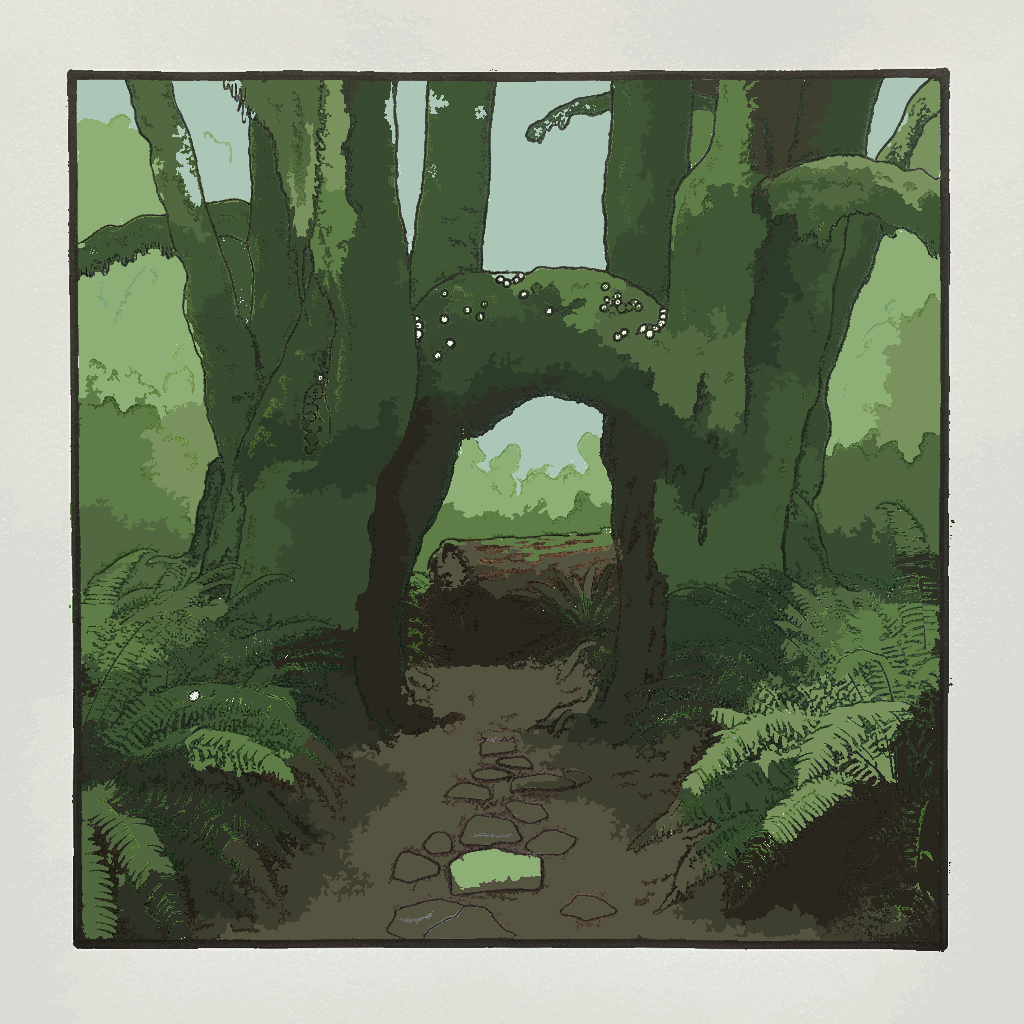
Piece 7 — Olympic Peninsula Rainforest, Moss Roof
Pen + Watercolor · Loose pen and watercolor line-and-wash
Three takes
Focus for this piece
This piece offers a superb study in rendering varied organic texture and depth within a limited, atmospheric palette. Begin by establishing the massive, shaggy forms of the moss-draped arch with layered, wet-on-wet watercolor washes in muted greens, letting soft edges suggest the dim, diffused light. Then, use varied pen line weights—fine and broken for delicate moss strands, firmer for the sword ferns, and crisp for the stepping stones—to articulate detail and differentiate surfaces. This approach allows the watercolor to build volume and atmosphere, while the ink defines texture and structure.
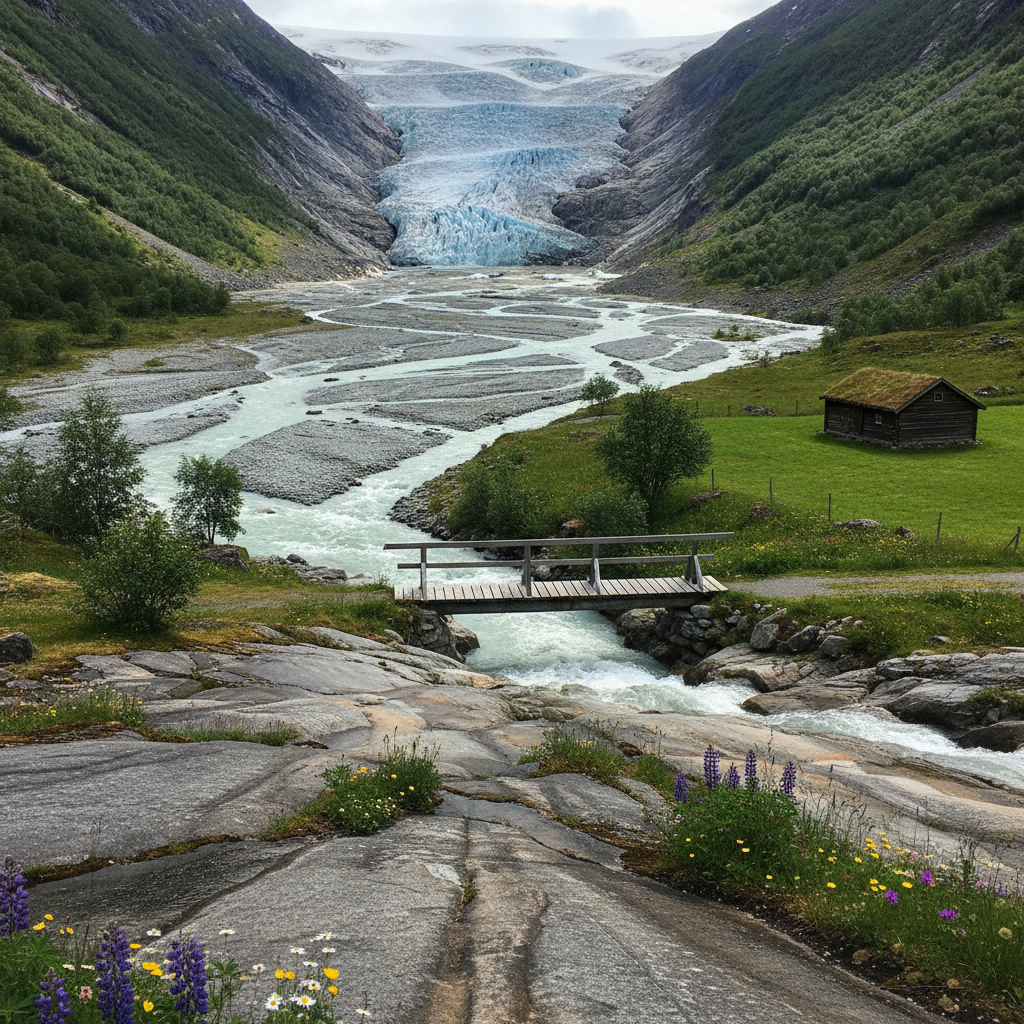
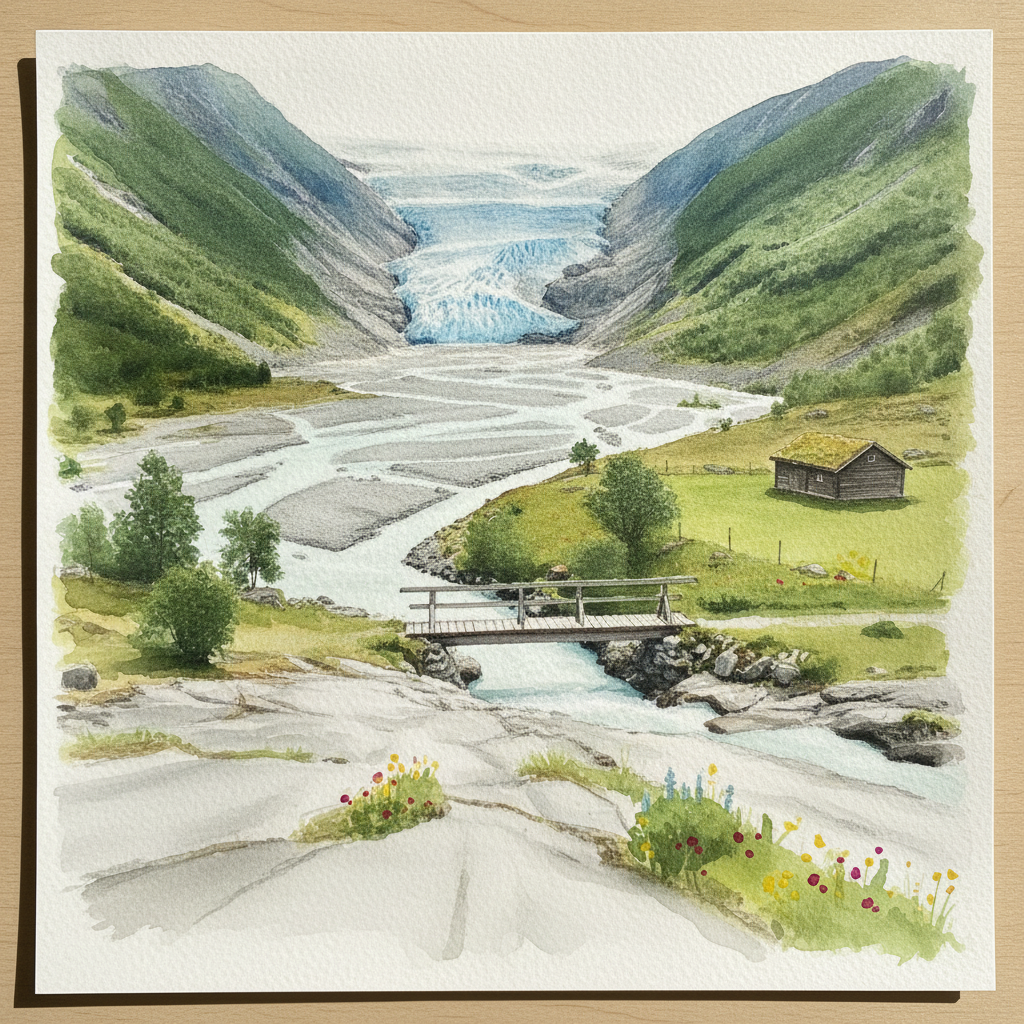
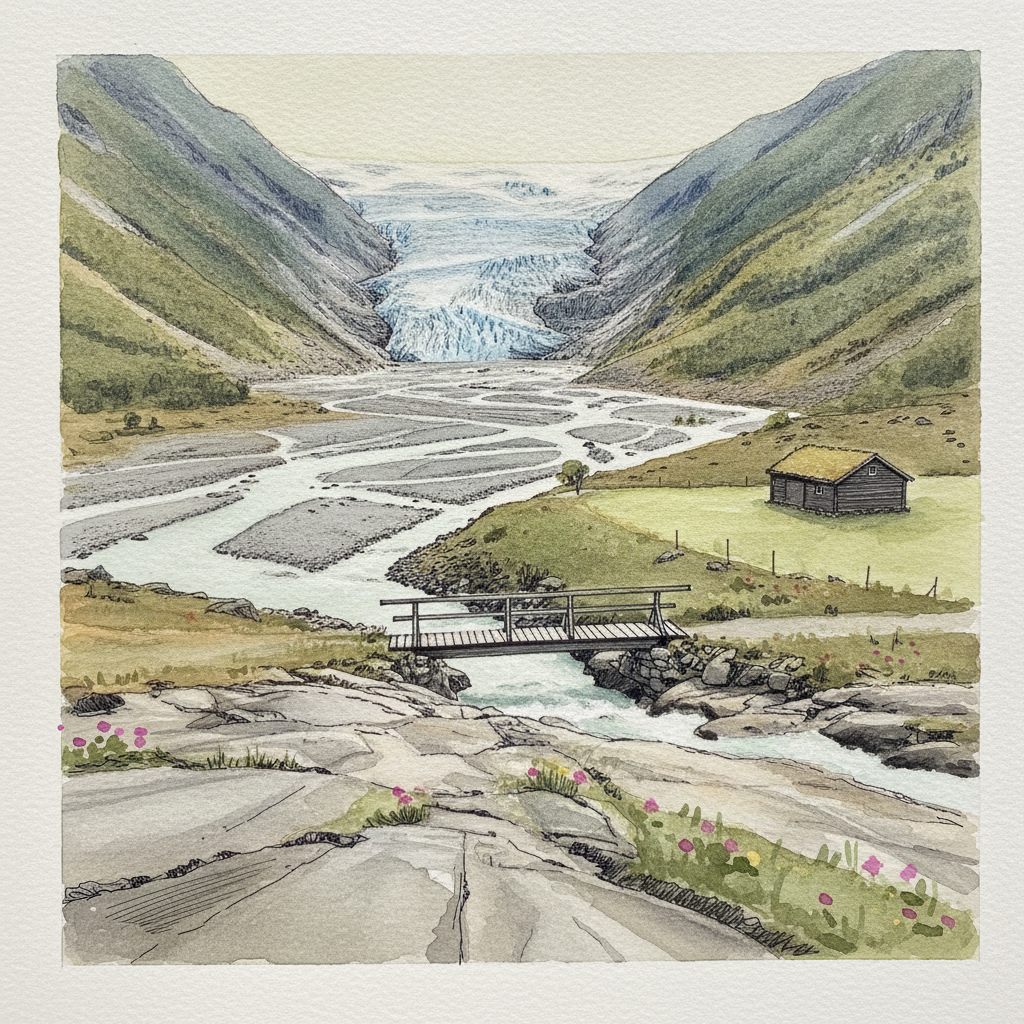
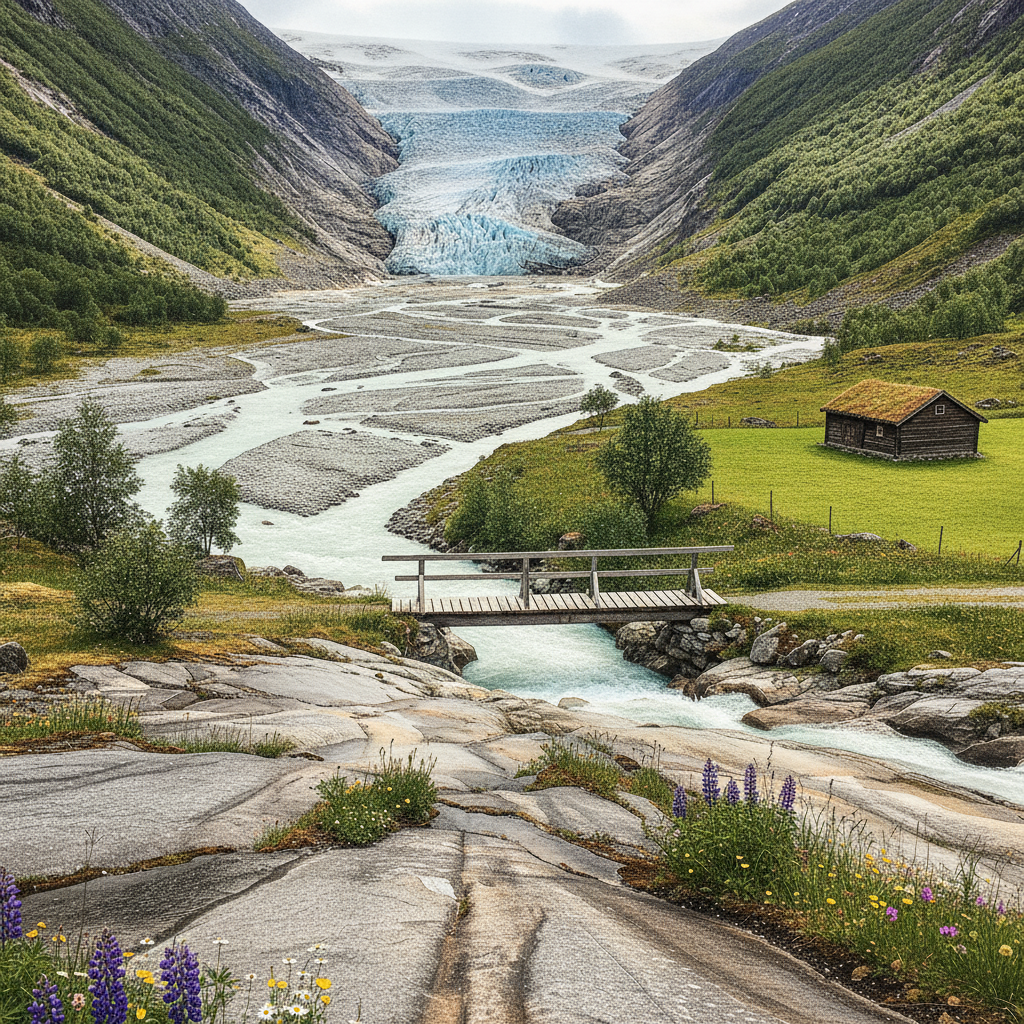
Piece 8 — Briksdal Glacier valley, Jostedalsbreen, Norway
Pen + Watercolor · Loose pen and watercolor line-and-wash
Three takes
Focus for this piece
This piece offers a great opportunity to explore the interplay between solid structure and fluid atmosphere. Focus on using strong, varied line weights for the foreground's glacially polished bedrock and the sturdy footbridge to convey their permanence and texture. Conversely, employ light, broken lines and atmospheric wet-on-wet washes for the distant blue ice of the glacier and the milky river to capture their cold, ephemeral nature. Observe how a controlled cool palette for the glacial elements can effectively contrast with warmer greens of the sunlit valley walls and meadows.