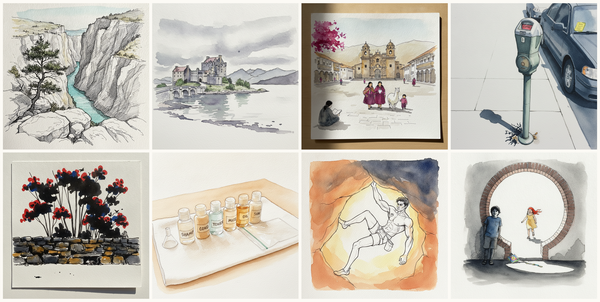
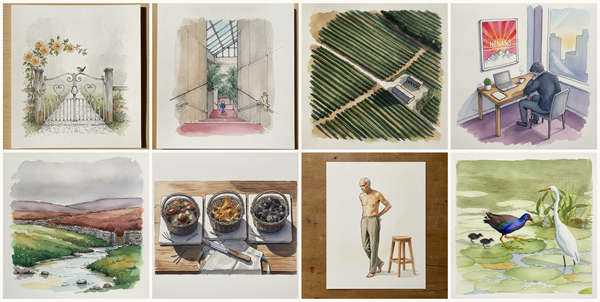
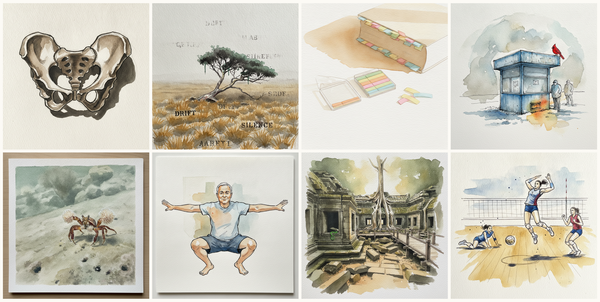
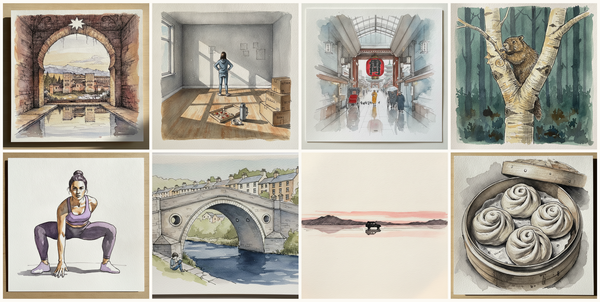
Stock (gillyflower), Person shaving armpits, Highlighters with caps off, Glass-blowing studio, and more — pen + watercolor for November 4, 2026
AI-generated daily art-practice references for pen and watercolor: Stock (gillyflower), Person shaving armpits, Highlighters with caps off, Glass-blowing studio, Burano, Veneto, Italy, Bath's Pulteney Bridge, Blue ice landing strip at Patriot Hills, Burmese Seat, Hands Folded in Lap.
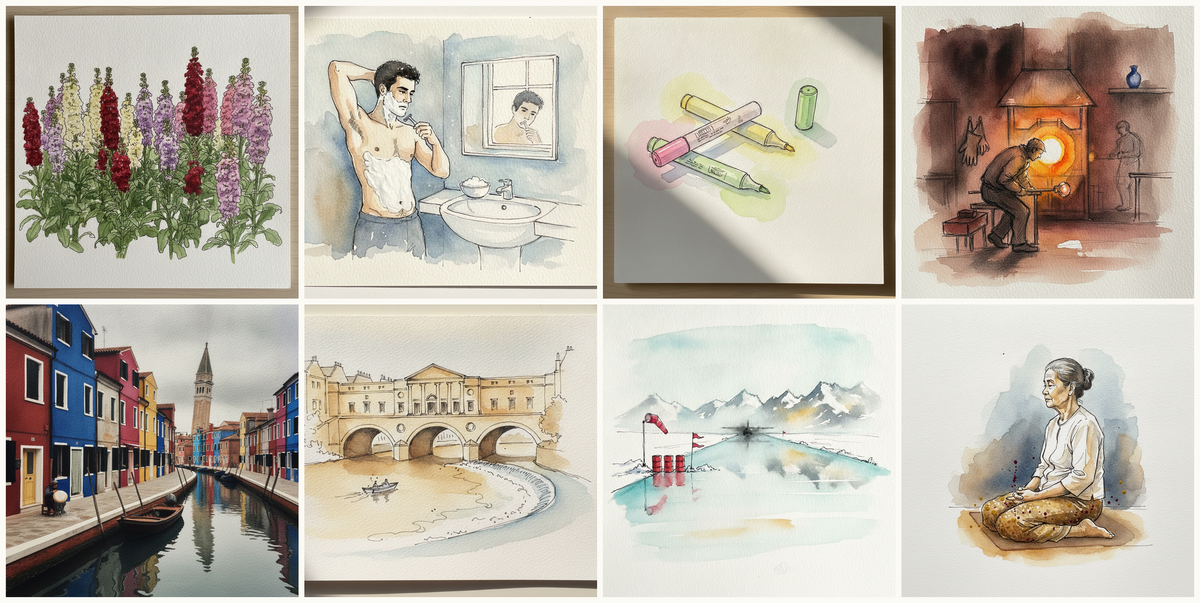
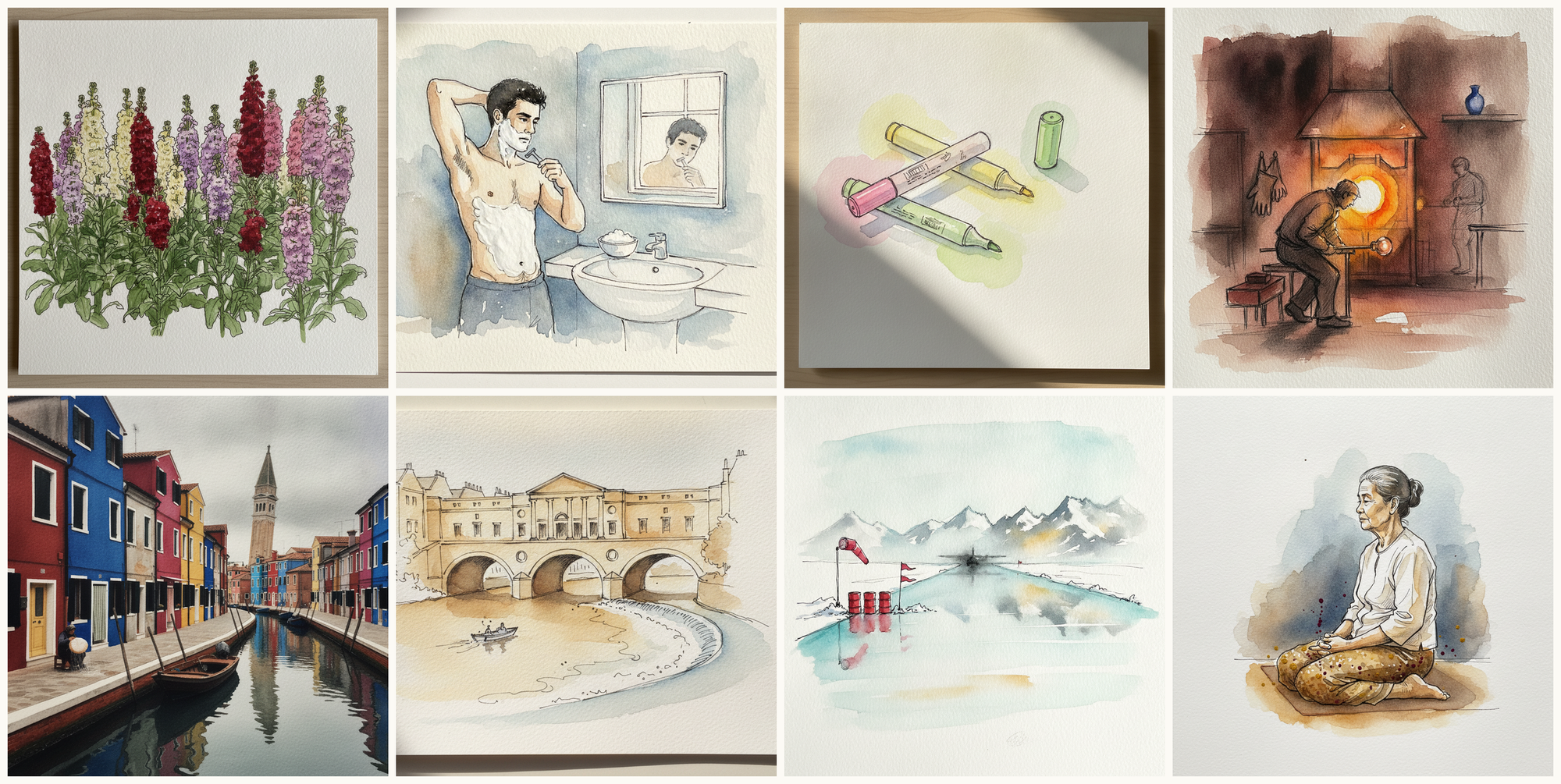
Today's 8 pen-and-watercolor pieces: Stock (gillyflower), Person shaving armpits, Highlighters with caps off, Glass-blowing studio, Burano, Veneto, Italy, Bath's Pulteney Bridge, Blue ice landing strip at Patriot Hills, Burmese Seat, Hands Folded in Lap. Each piece comes with an AI-generated photoreal reference, three AI-generated example artworks in different treatments, and a short focus paragraph naming what to study in this one.
Why these references use AI
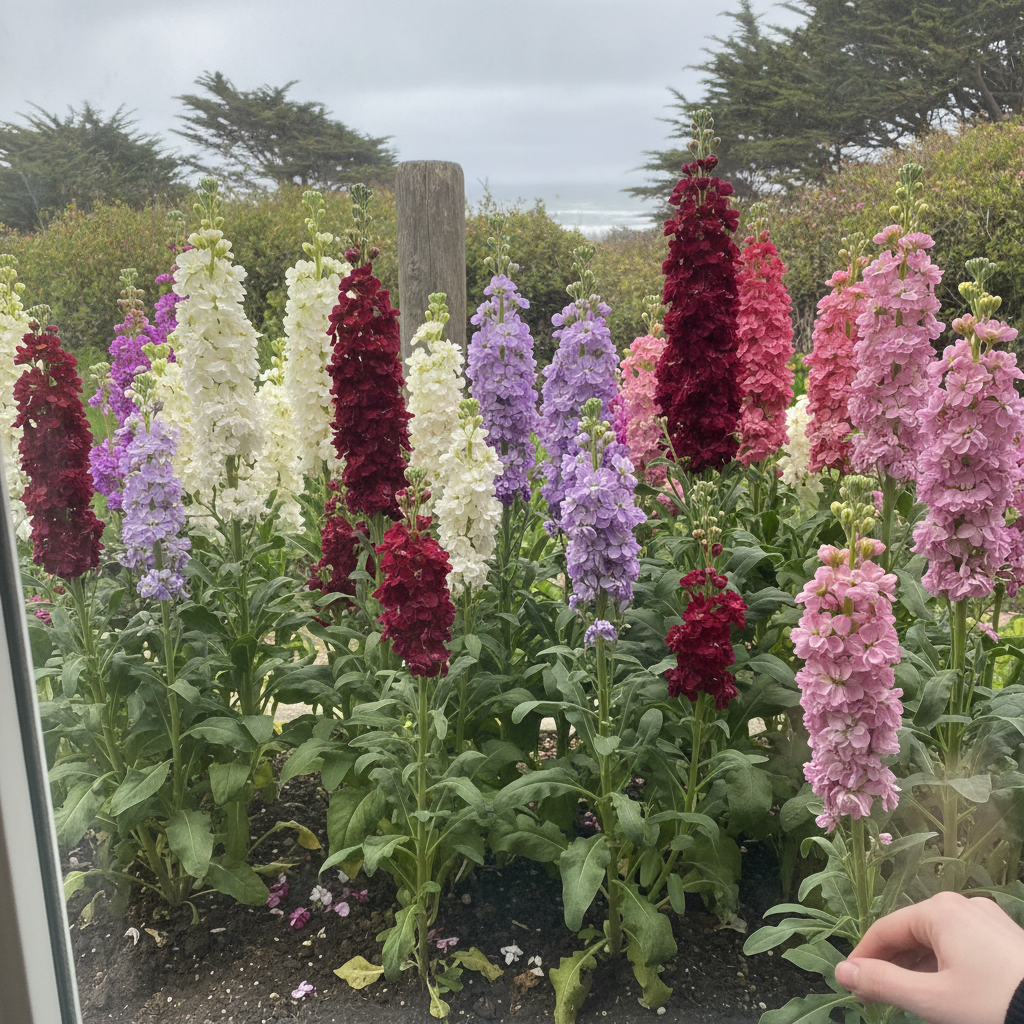
This daily series uses AI-generated images as practice prompts, not as finished artwork to copy. Each subject starts with a synthetic photoreal reference generated with Gemini/Nano Banana, then moves into three pen-and-watercolor interpretations of the same subject.
I use AI here because daily art practice needs variety and low friction. Real life can get repetitive, busy, or visually narrow. These generated reference sets make it easier to study bodies, buildings, animals, landscapes, objects, gestures, light, palettes, and compositions that might not show up in an ordinary day.
The goal is not to reproduce any image directly. Treat each set as a starting point for observation and study: choose what interests you, change the framing, simplify the subject, alter the palette, and make your own version.
Piece 1 — Stock (gillyflower)
Pen + Watercolor · Loose pen and watercolor line-and-wash
Three takes

Focus for this piece
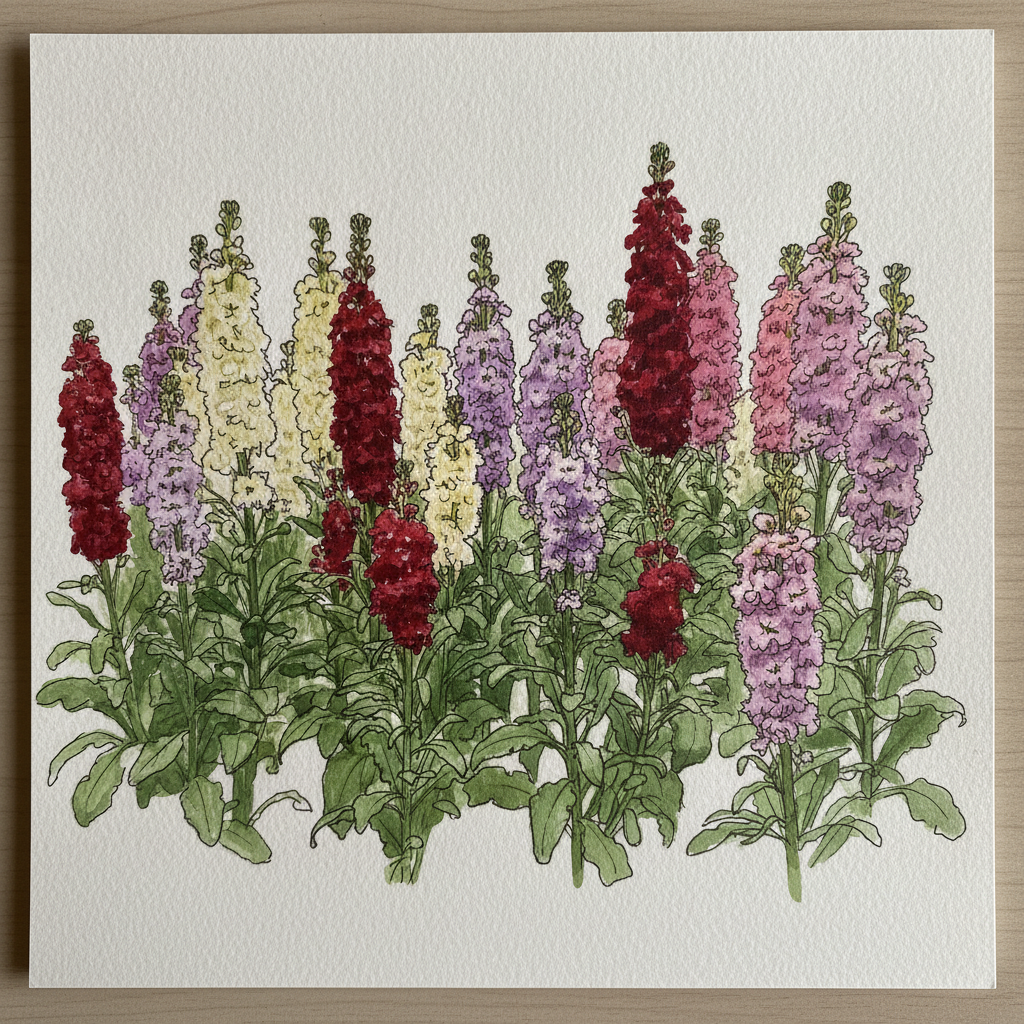
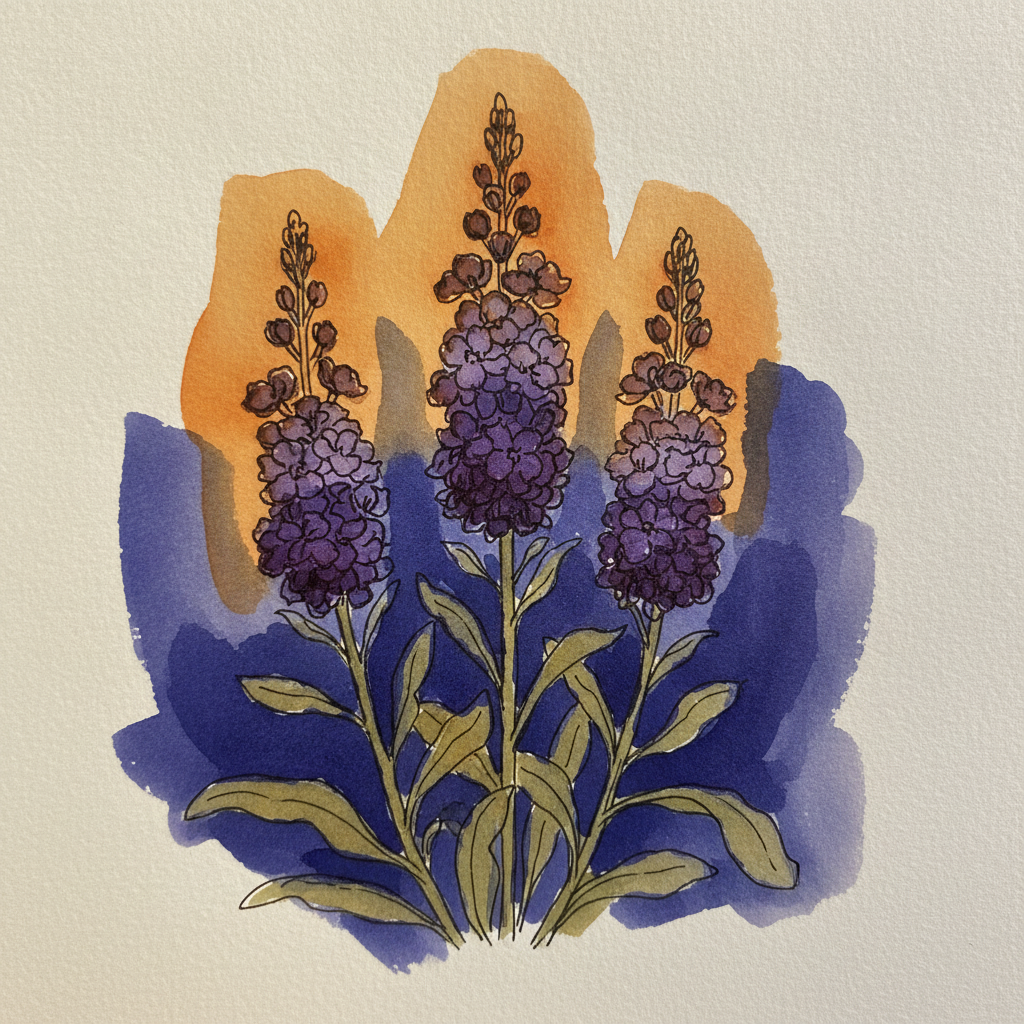
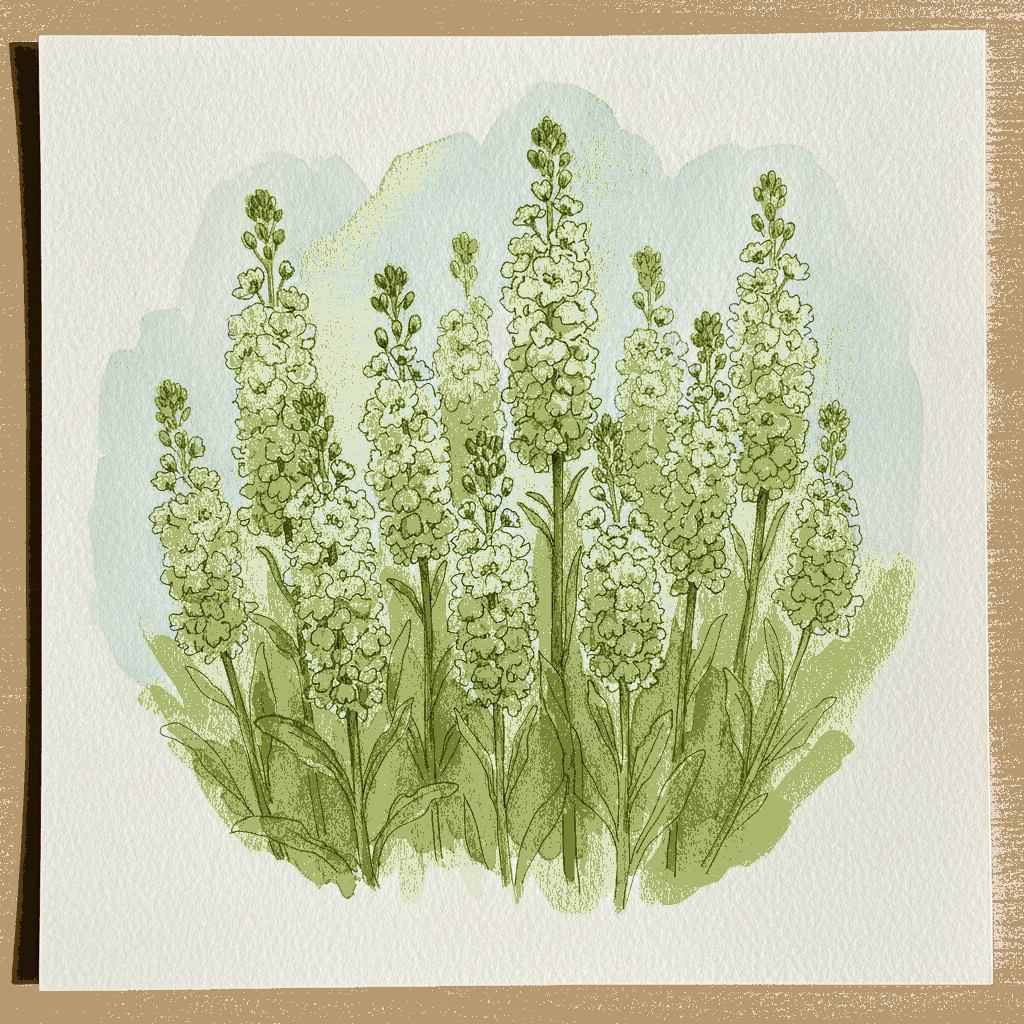
For these Stock flowers, concentrate on using expressive, varied pen lines to define the upright spikes, letting the density of the flower heads be suggested rather than strictly outlined. Practice building volumetric form within the clusters by layering controlled wet-on-wet washes in cream, lavender, and crimson, allowing soft color transitions to depict individual blooms without over-detailing. Consider how a few bolder lines in the foreground can anchor the composition amidst the softer background washes.
Piece 2 — Person shaving armpits
Pen + Watercolor · Loose pen and watercolor line-and-wash
Three takes
Focus for this piece
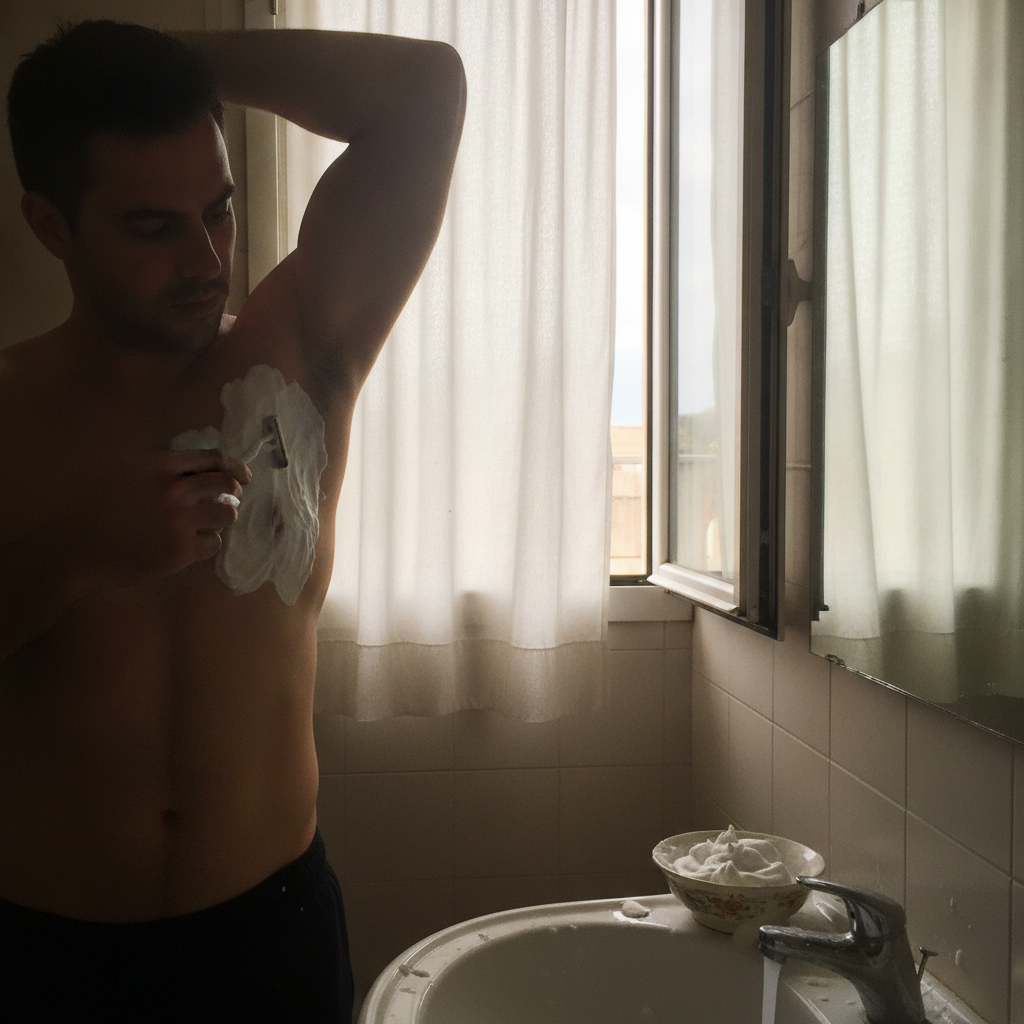
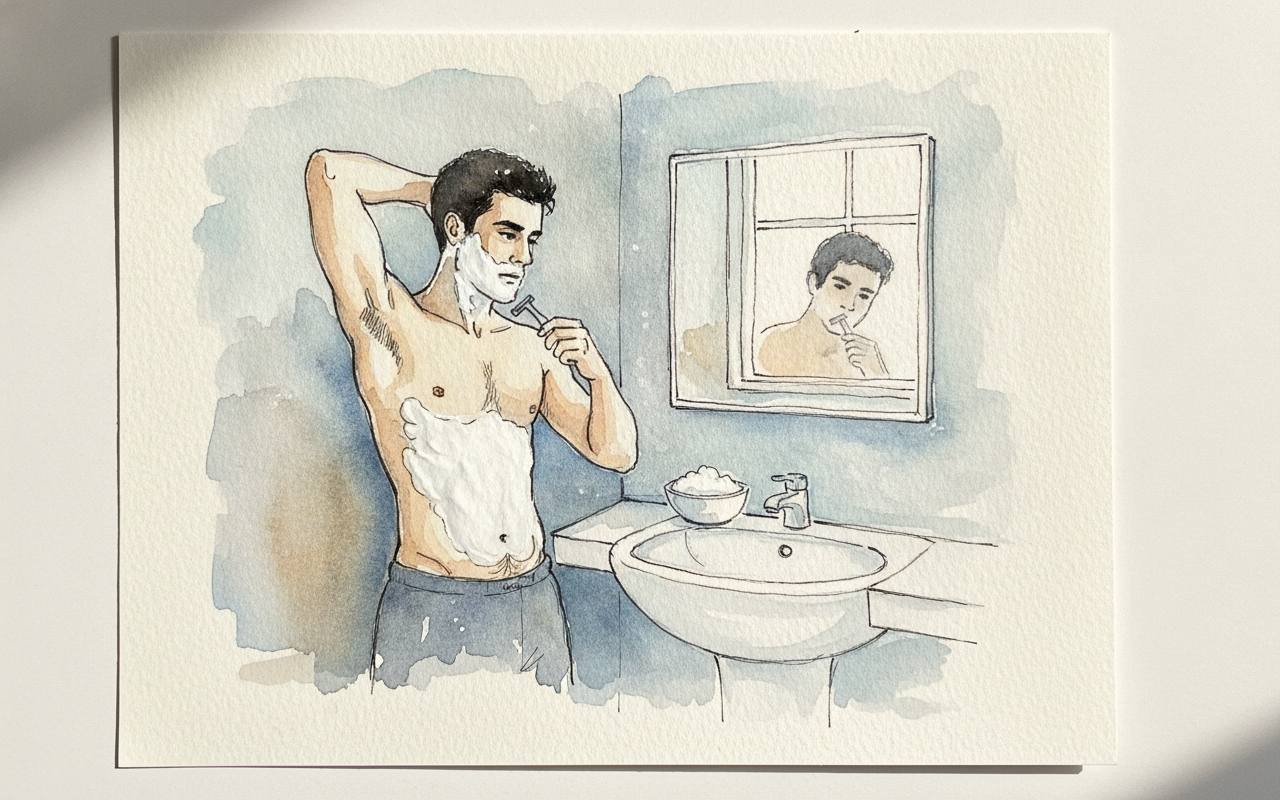
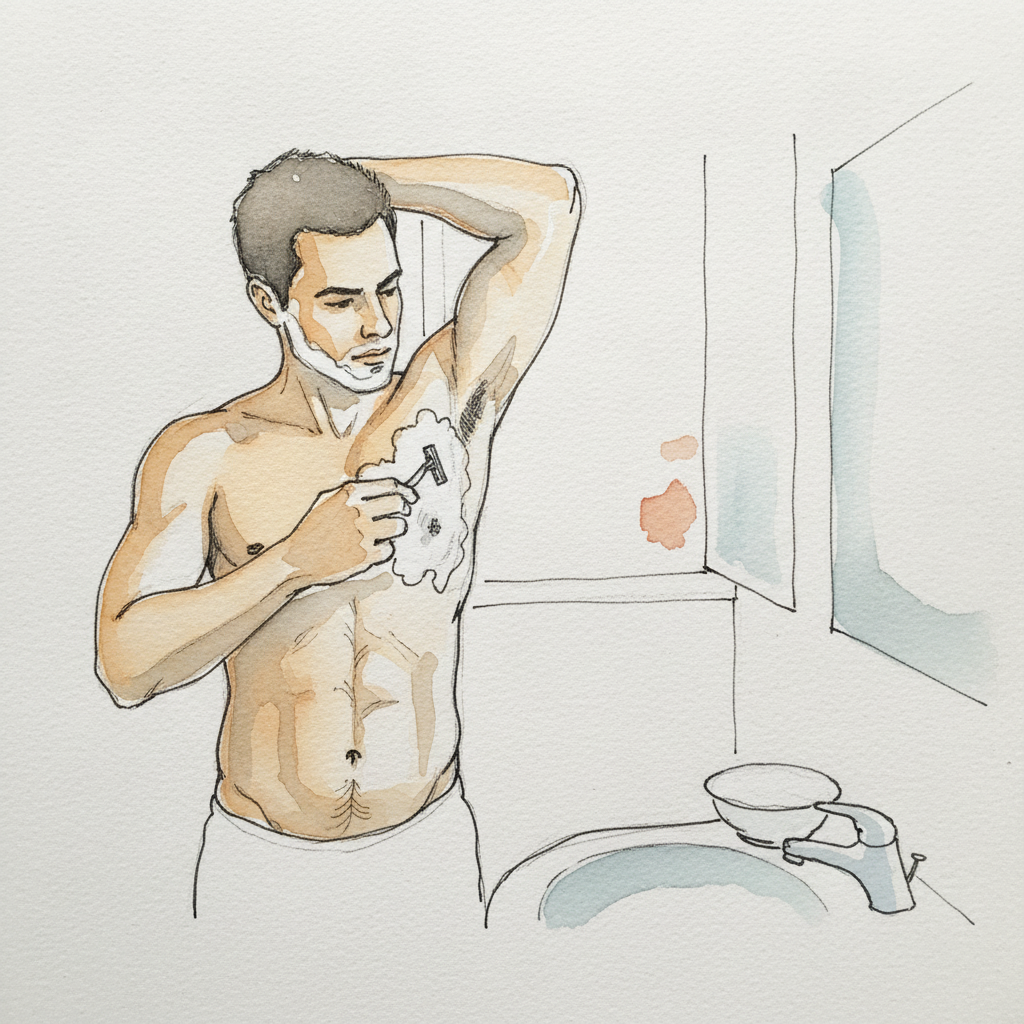
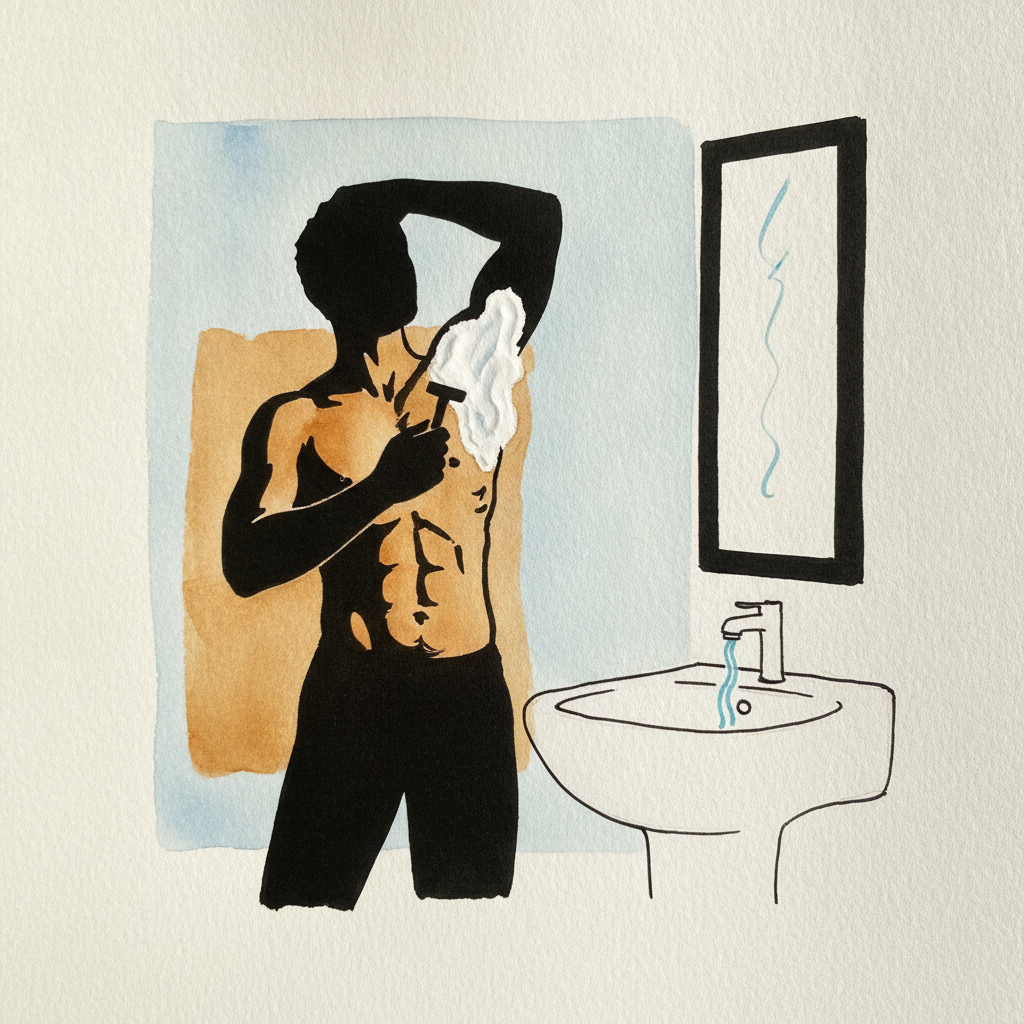
This piece offers a compelling study in capturing varied textures and implied reflections. Focus on rendering the subtle, blurred form in the bathroom mirror using extremely diluted washes and minimal contour lines, allowing watercolor's transparency to create depth. For the shaving foam, employ a wet-into-wet approach with opaque white gouache or a lifting technique, sharply contrasting its soft texture against precise, heavier pen lines defining the crisp edges of the razor and sink.
Piece 3 — Highlighters with caps off
Pen + Watercolor · Loose pen and watercolor line-and-wash
Three takes

Focus for this piece
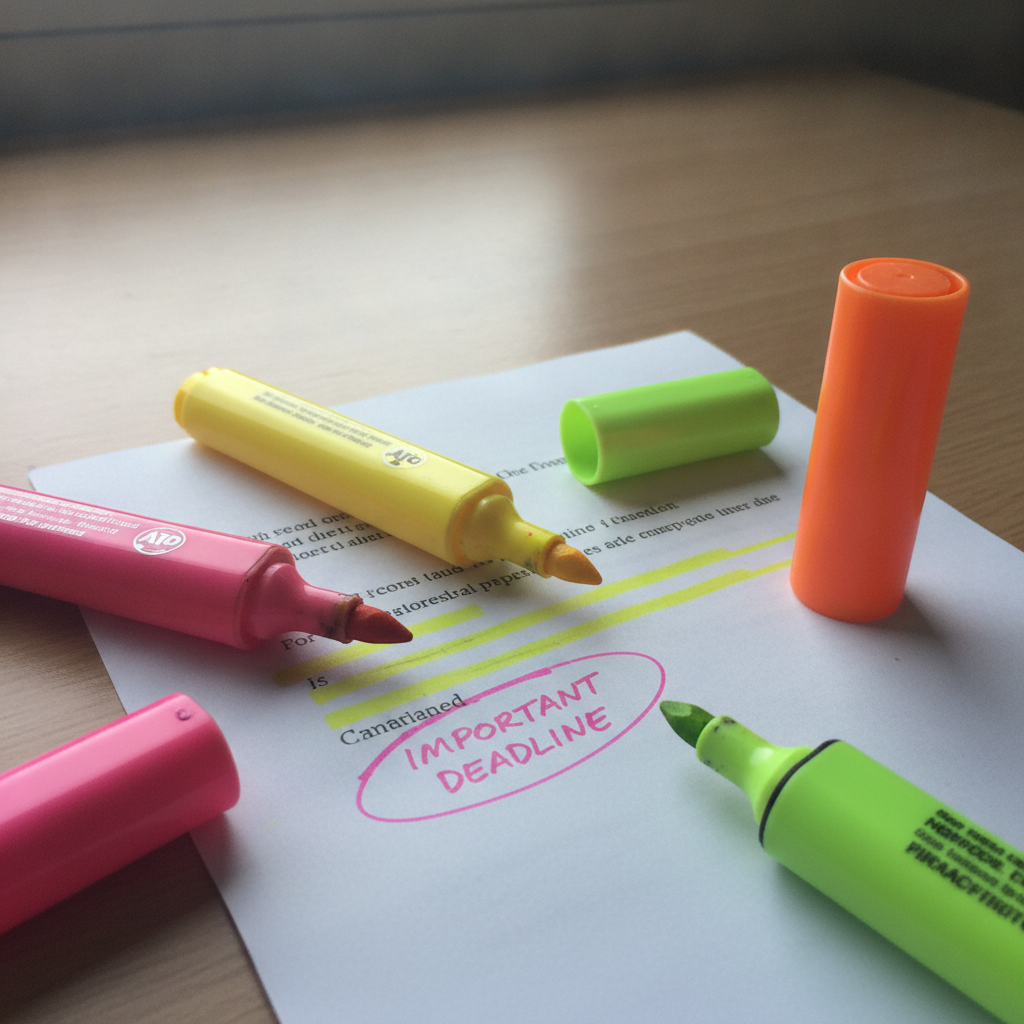
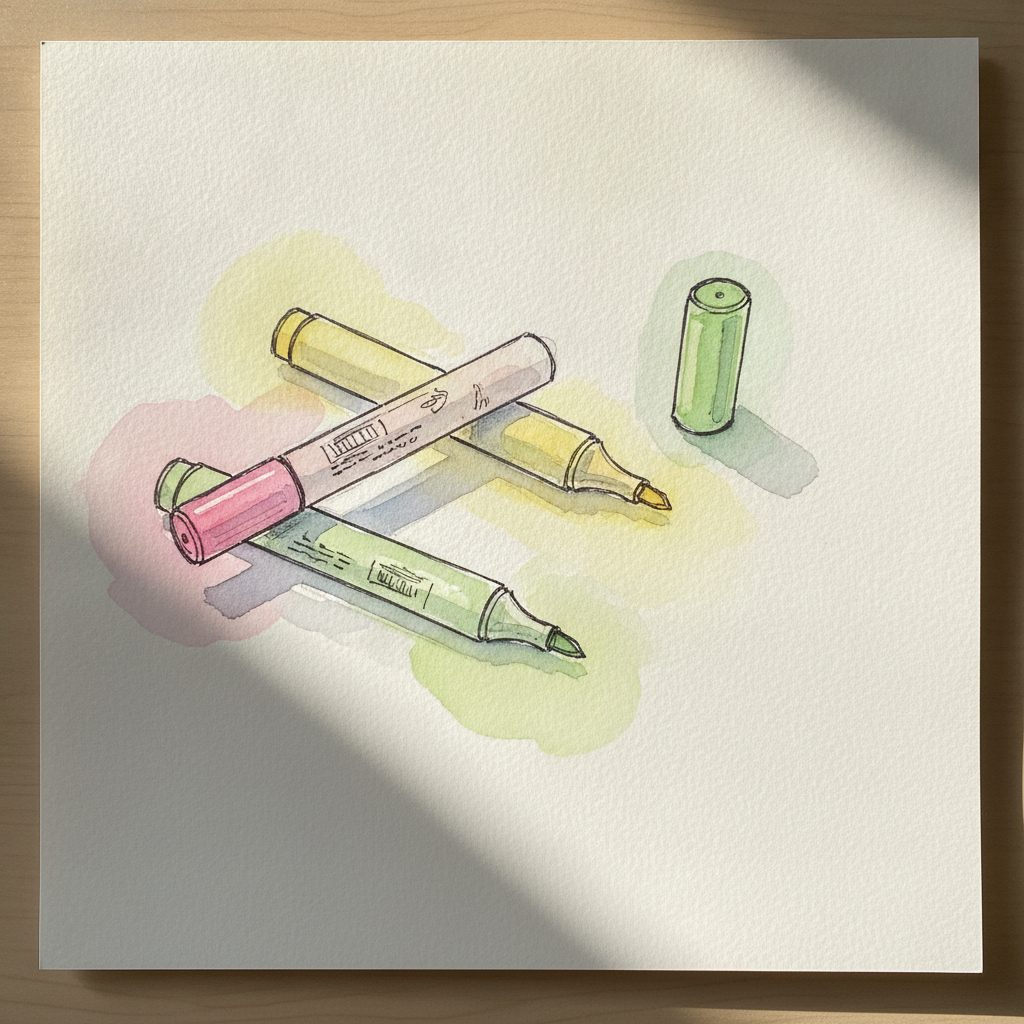
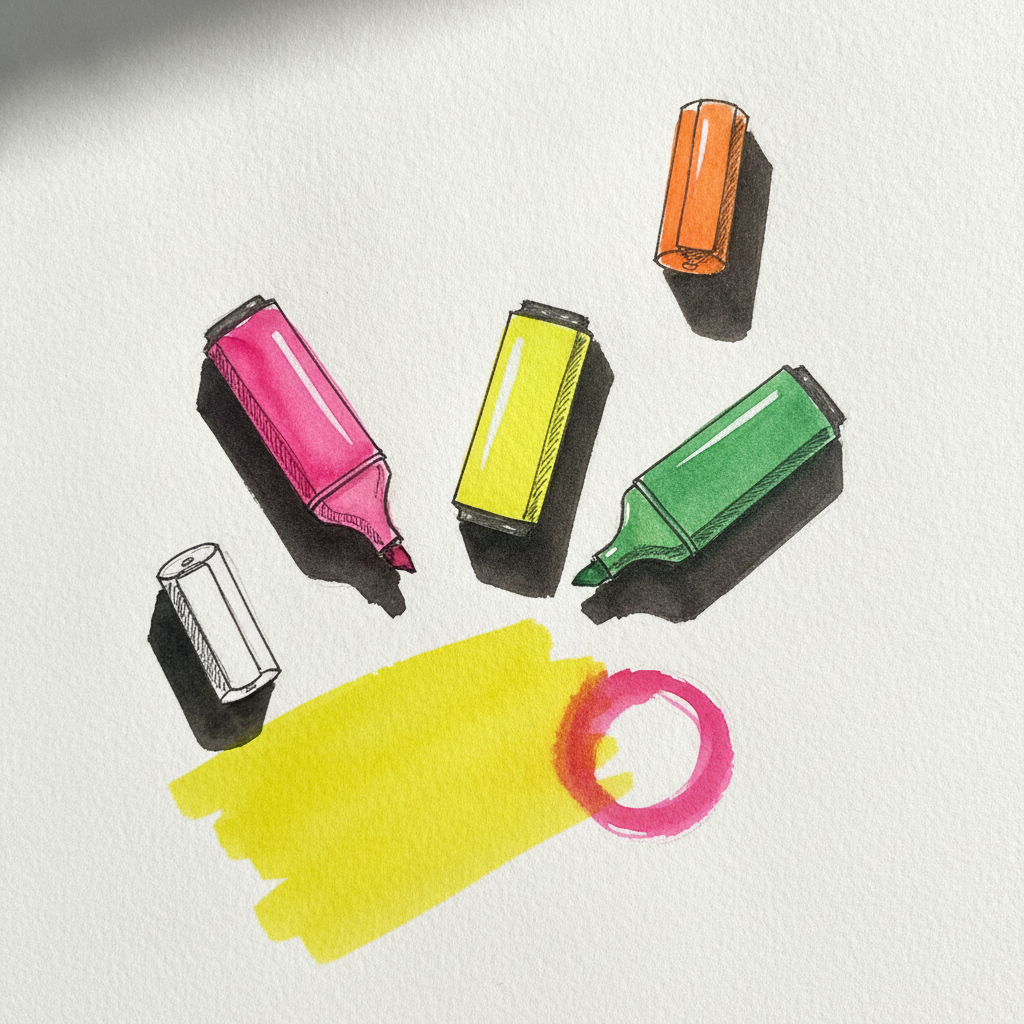
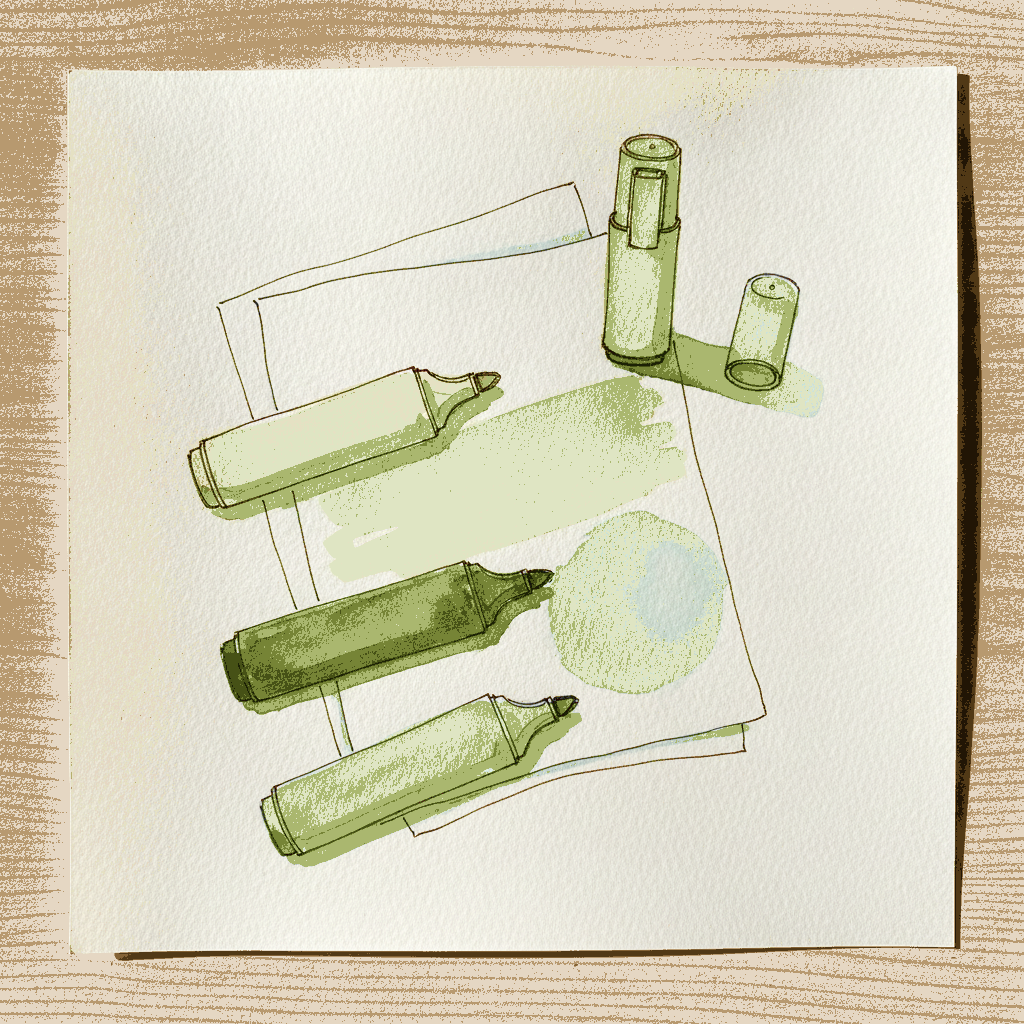
This piece is an excellent exercise in rendering both vivid local color and subtle textural detail. Vary your pen's line weight to define the highlighters' cylindrical forms and depict the wear on the felt tips and creased labels, then layer vibrant washes to make the fluorescent ink glow against the white of the page, using sharp contrast to enhance their chroma.
Piece 4 — Glass-blowing studio
Pen + Watercolor · Loose pen and watercolor line-and-wash
Three takes
Focus for this piece
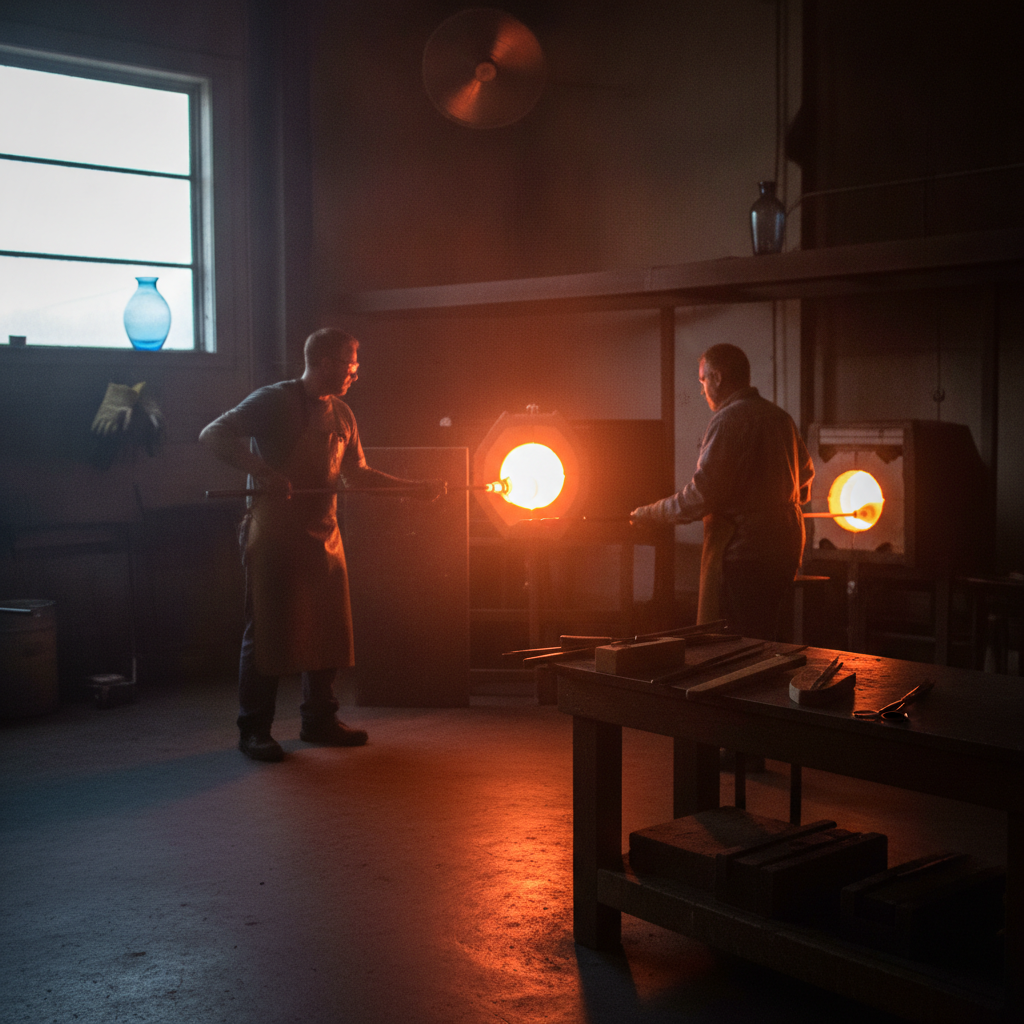
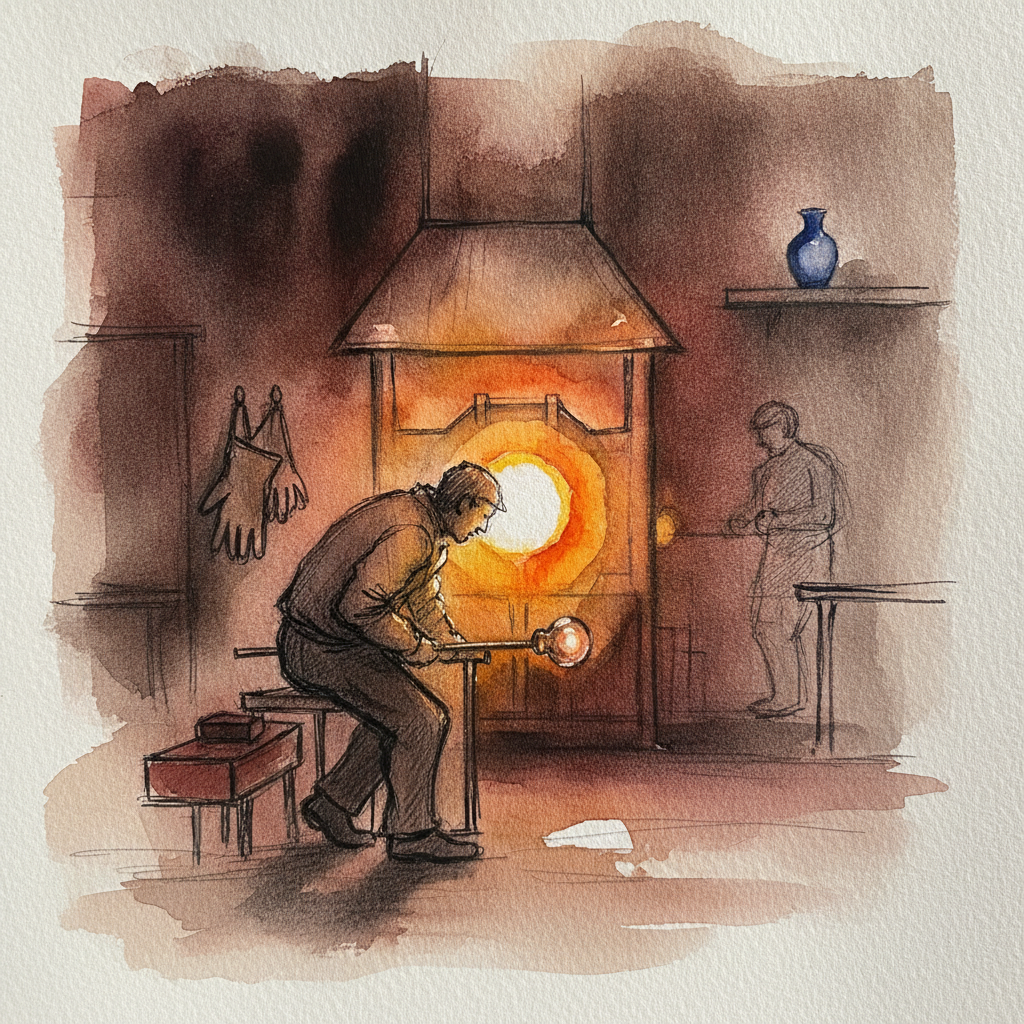
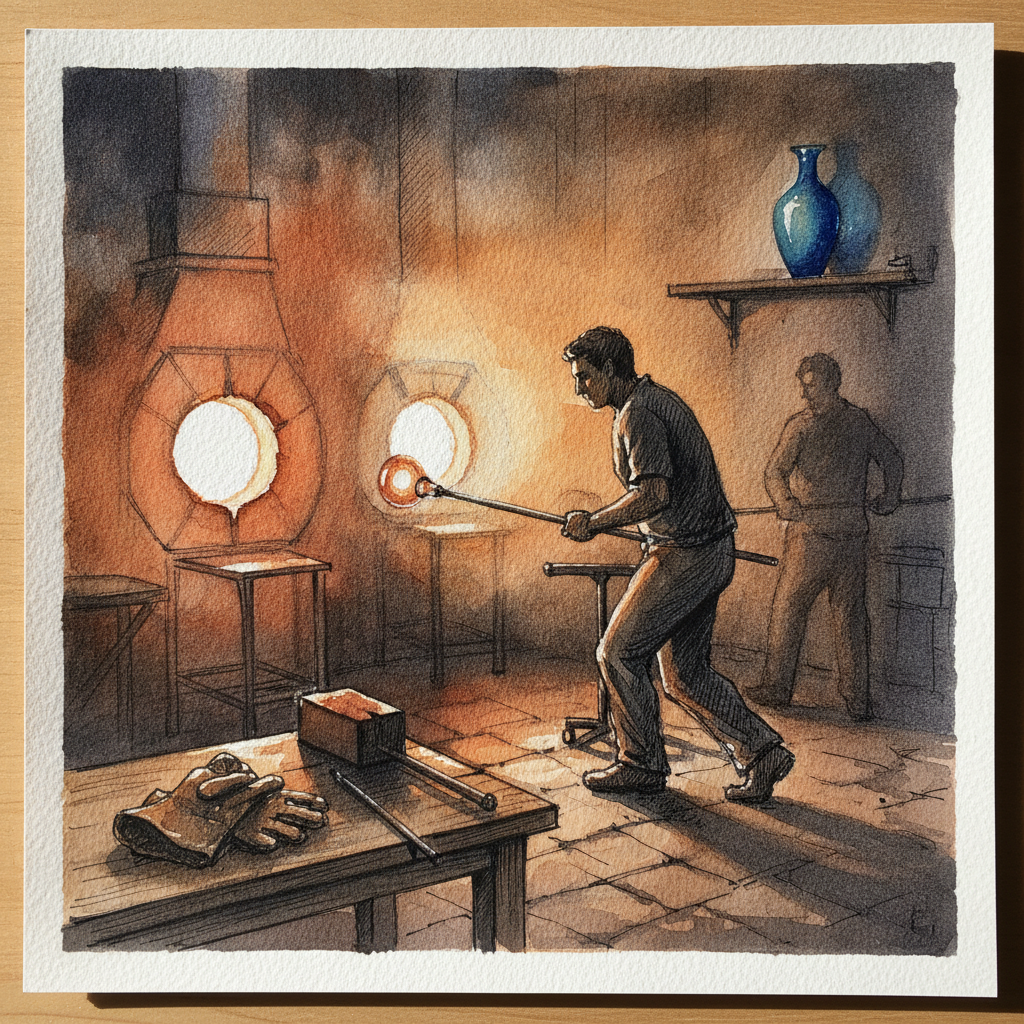
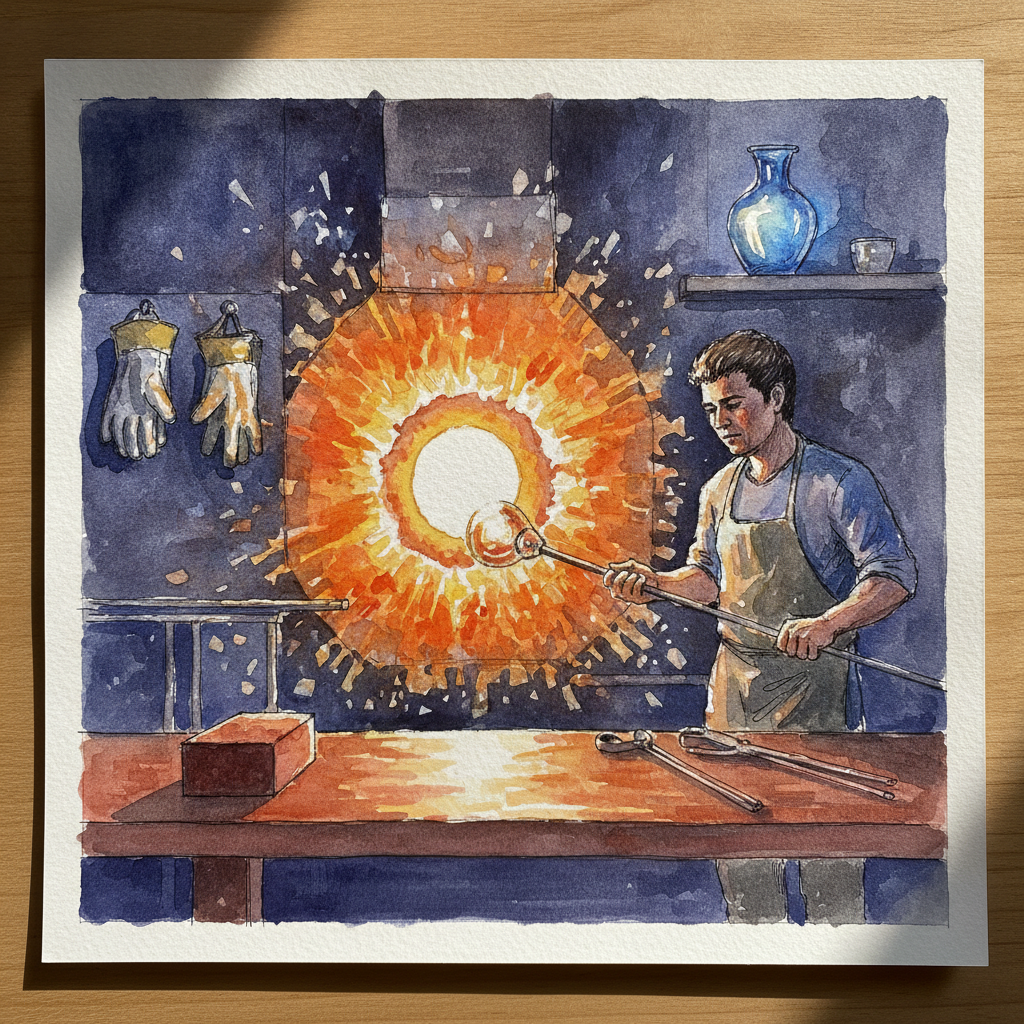
This piece offers a compelling study in capturing dramatic lighting and atmosphere with strong value contrast and a focused palette. Concentrate on building the intense, warm glow of the furnace using wet-on-wet techniques with cadmium yellows and oranges, allowing these vibrant areas to bleed into cooler, deeper washes of indigo or Payne's Gray for the surrounding dimness. Practice varying your pen line weights: use fine, precise lines to define the reflective surfaces of the molten glass and finished vase, while employing bolder, structural lines for the heavy tools and architectural elements emerging from shadow. This approach will allow the light to truly define the forms within the low-lit studio.
Piece 5 — Burano, Veneto, Italy
Pen + Watercolor · Loose pen and watercolor line-and-wash
Three takes
Focus for this piece
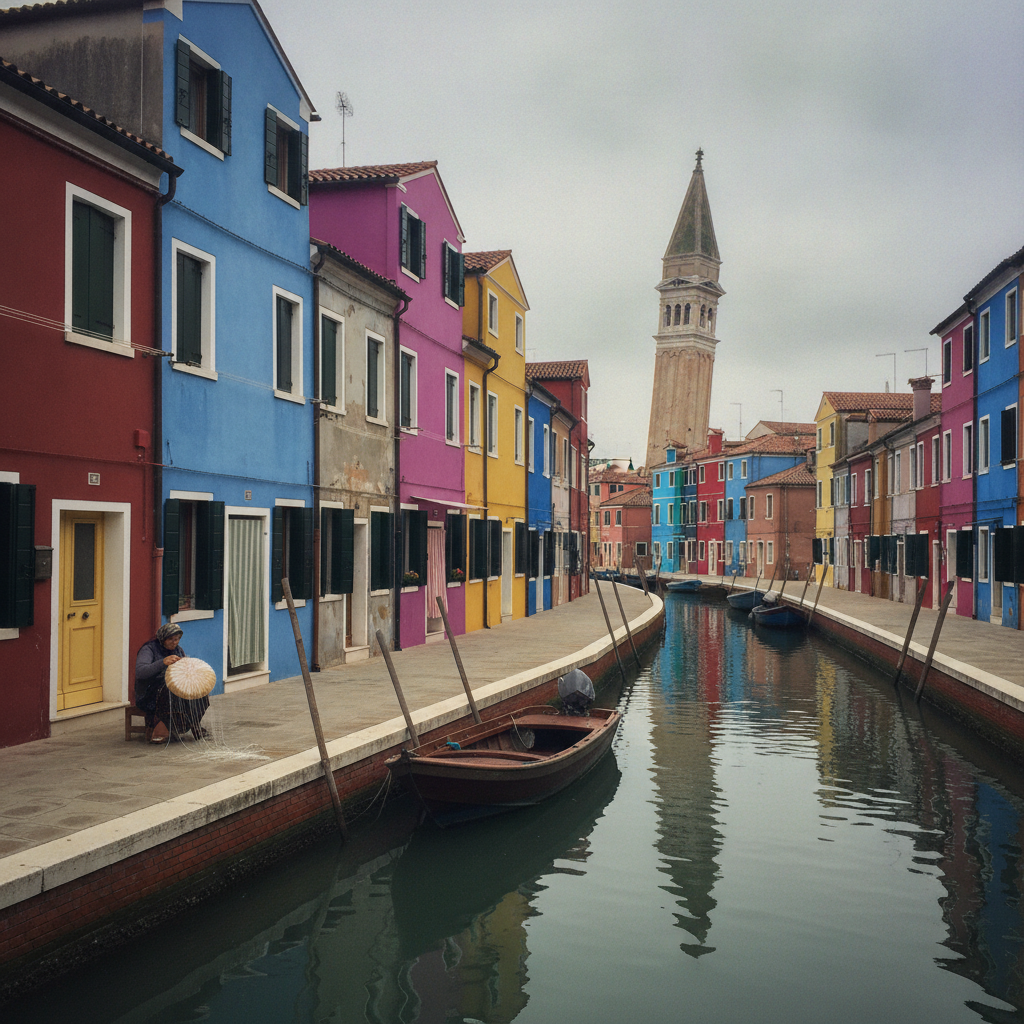
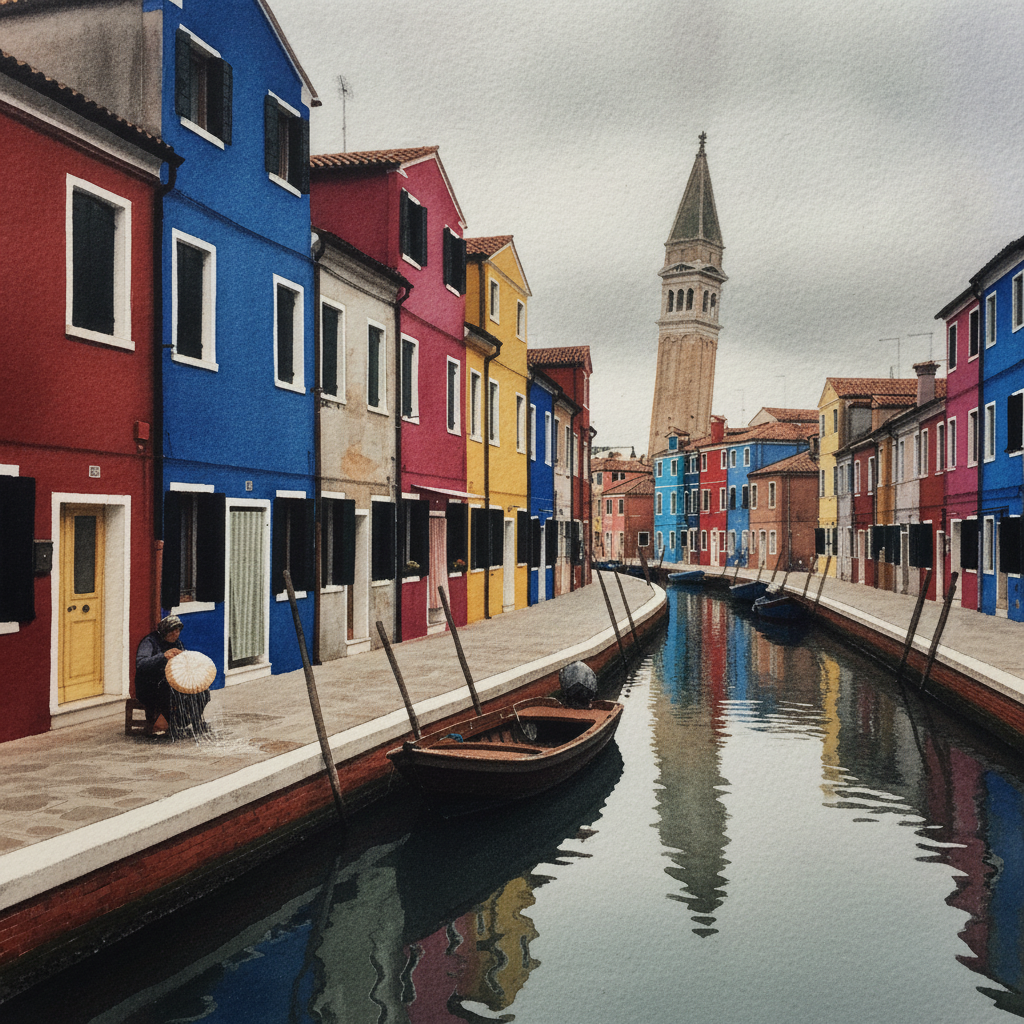
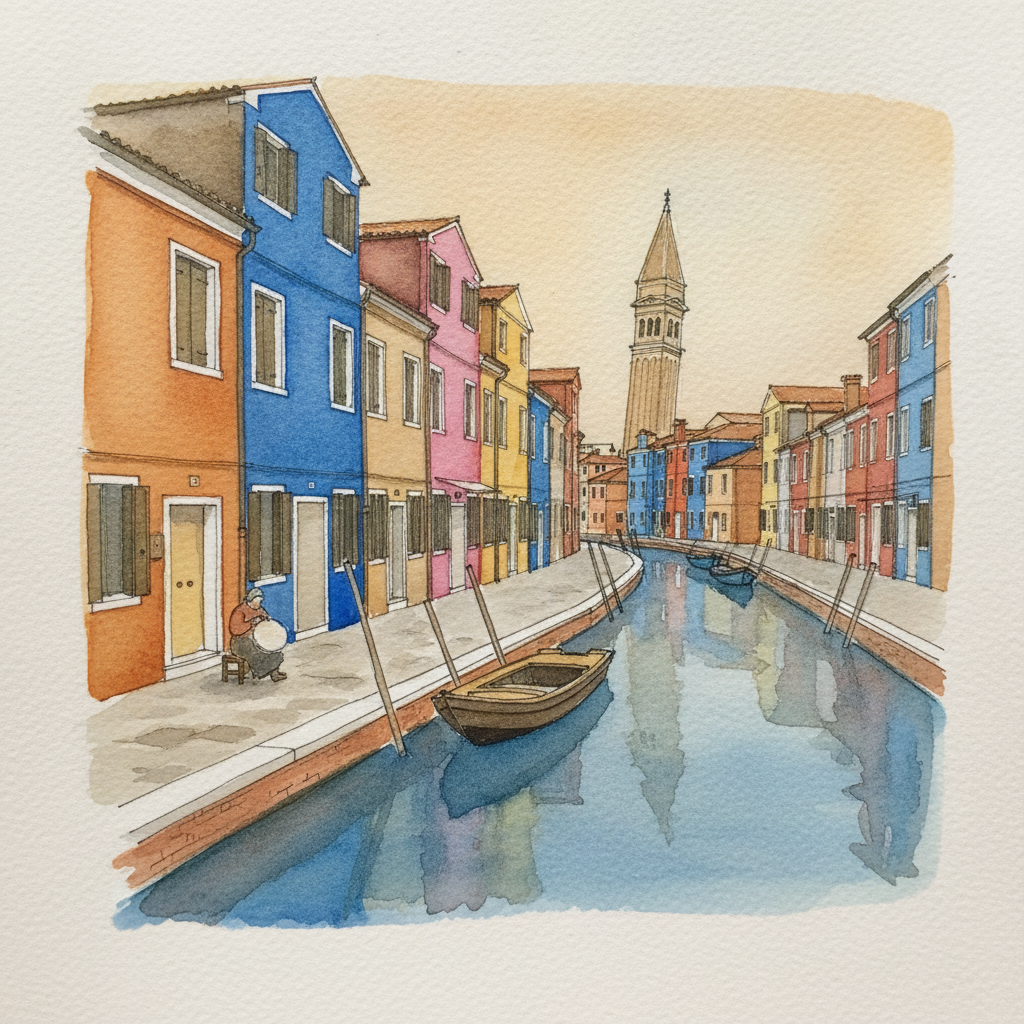
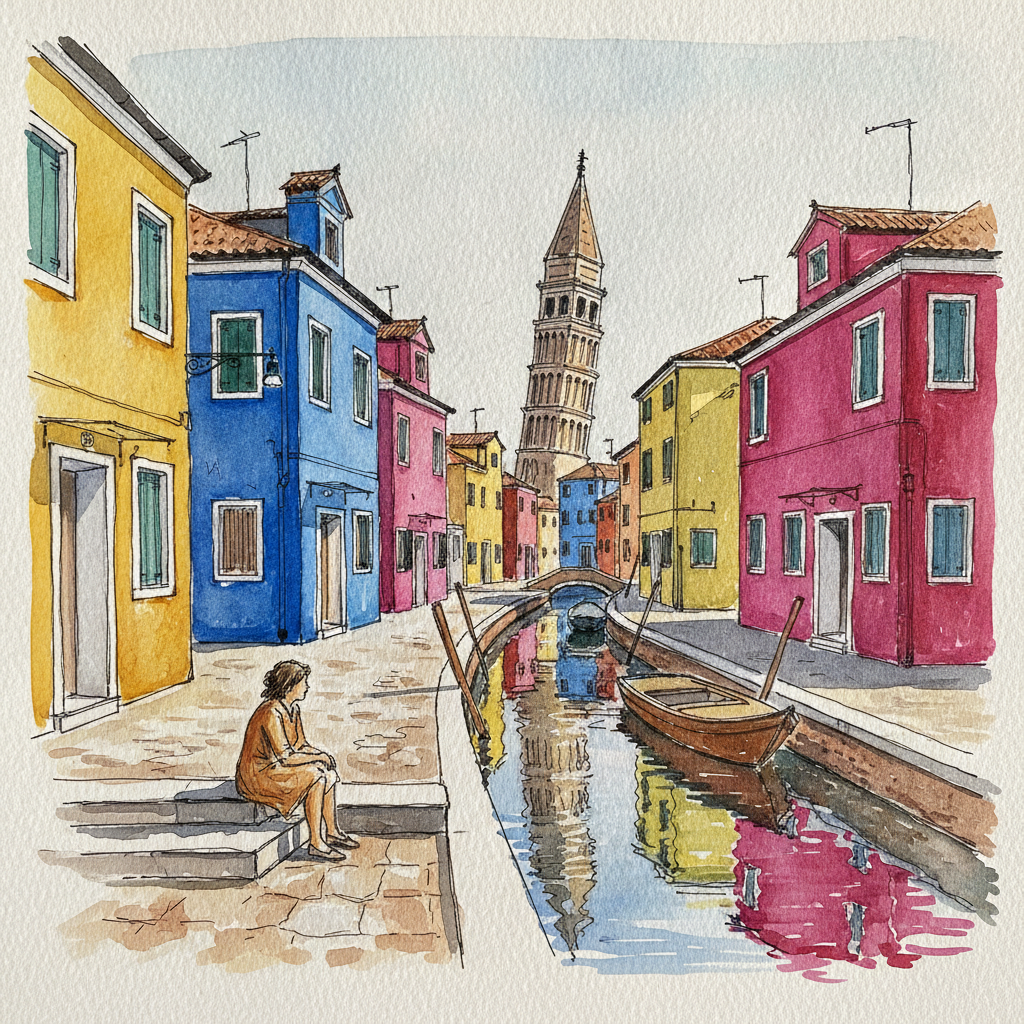
Today, focus on creating vibrant, distinct color fields for the polychrome houses using strong, unmixed pigments like lemon and oxblood. Practice applying light, sweeping washes to suggest the complex ripple-shadows cast by the canal water, letting the underlying saturated hues shine through. Complement this by defining the architectural structure with clear, medium-weight ink lines, while allowing a lighter hand for background details to create depth.
Piece 6 — Bath's Pulteney Bridge
Pen + Watercolor · Loose pen and watercolor line-and-wash
Three takes
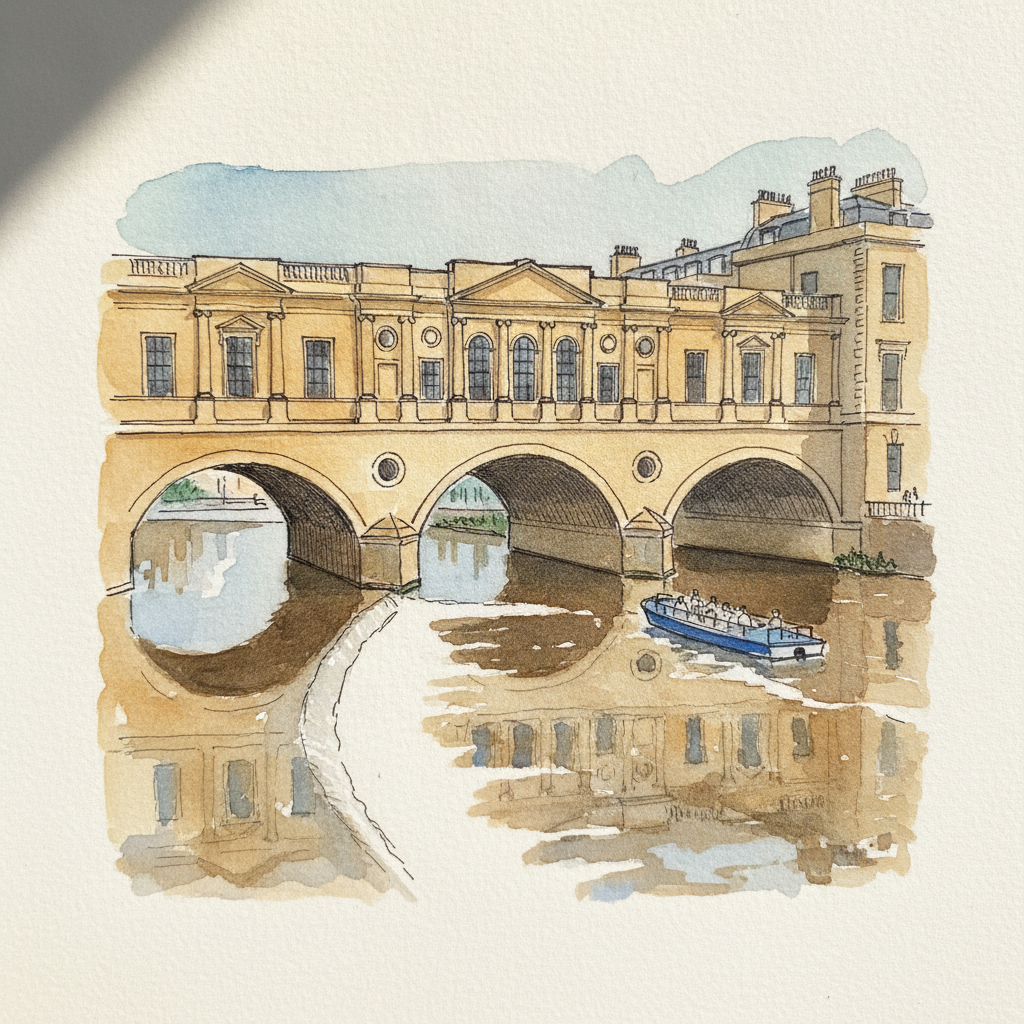
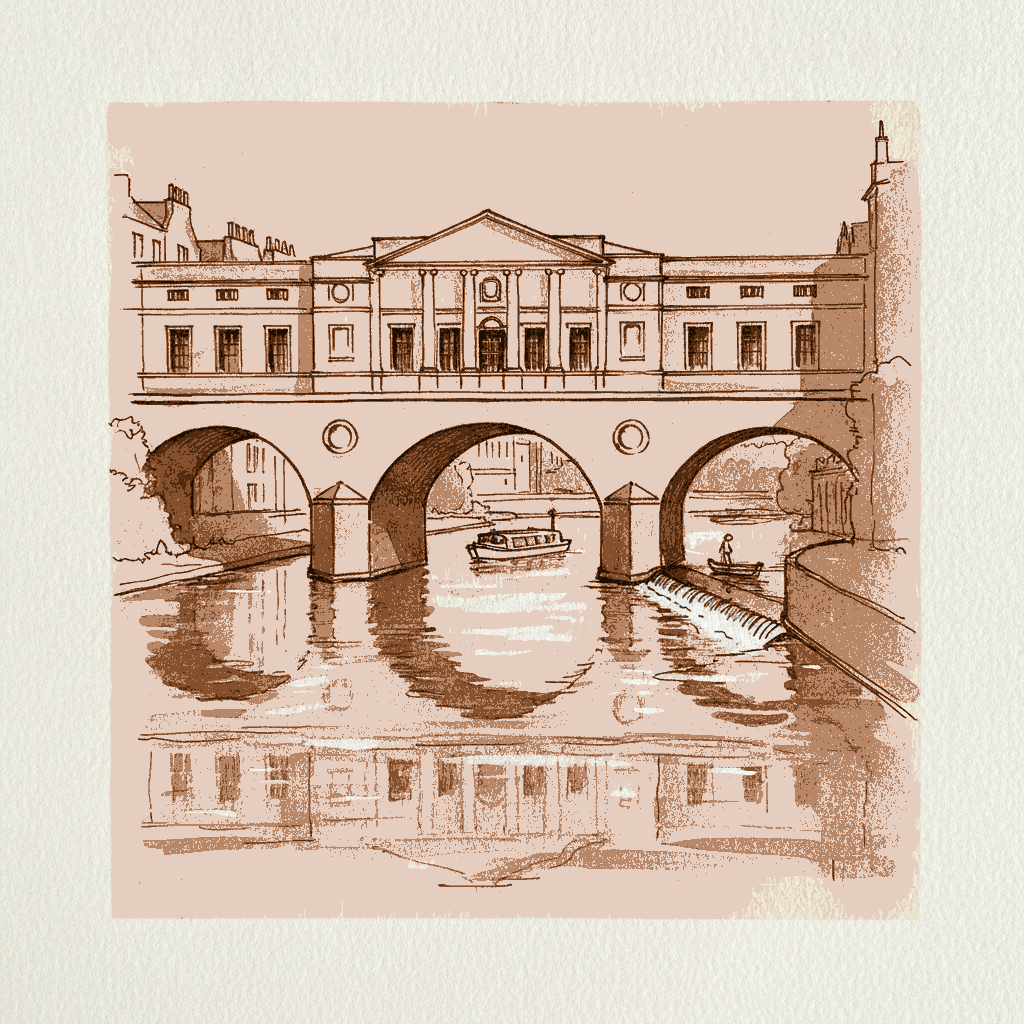

Focus for this piece
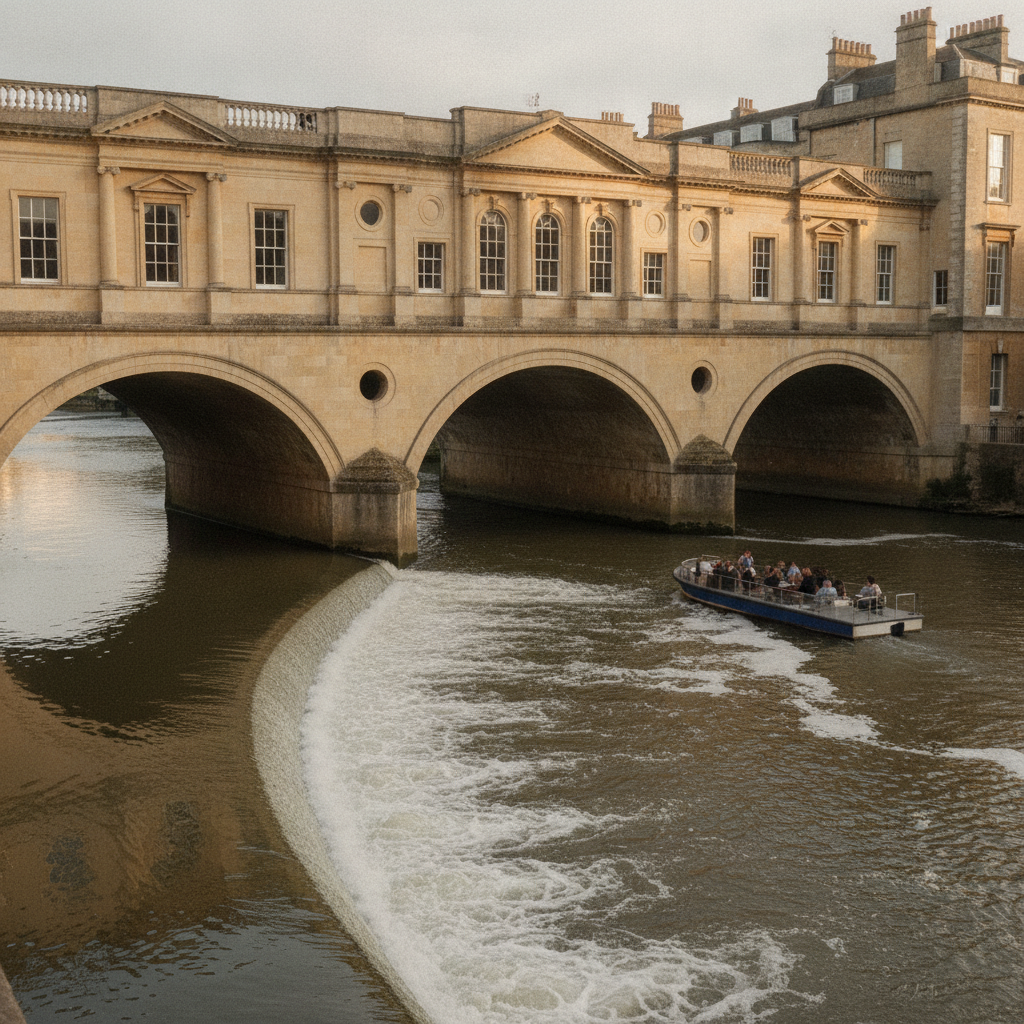
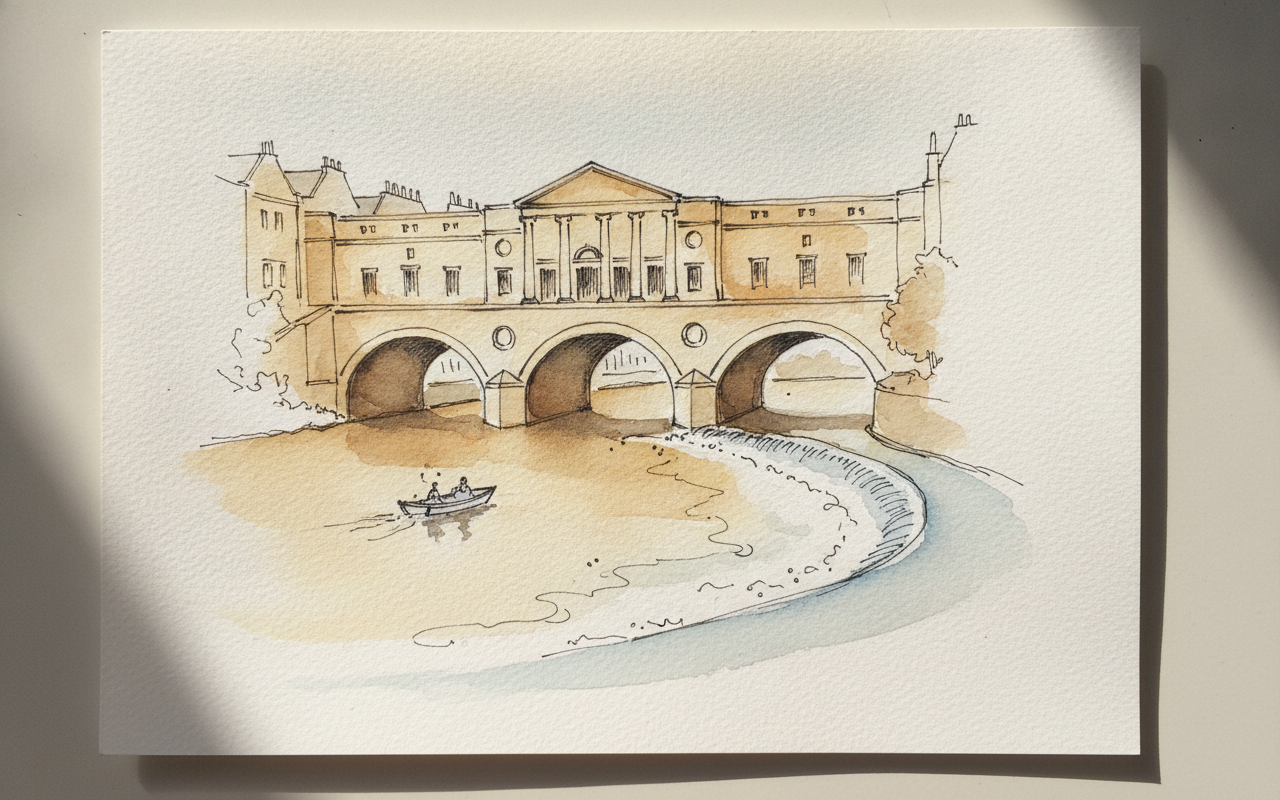
This piece is an excellent study in balancing precise architectural structure with atmospheric fluidity, a hallmark of line-and-wash. Use crisp pen lines to define the Pulteney Bridge's Palladian arches and ashlar stone, establishing the strong geometry. Then, apply soft, wet-on-wet washes for the glowing Bath stone and the rippling reflections in the Avon, leaving the paper untouched to represent the foaming white crescent weir. Pay close attention to the dramatic value contrast between the sunlit stone and the deep umber undersides of the arches.
Piece 7 — Blue ice landing strip at Patriot Hills
Pen + Watercolor · Loose pen and watercolor line-and-wash
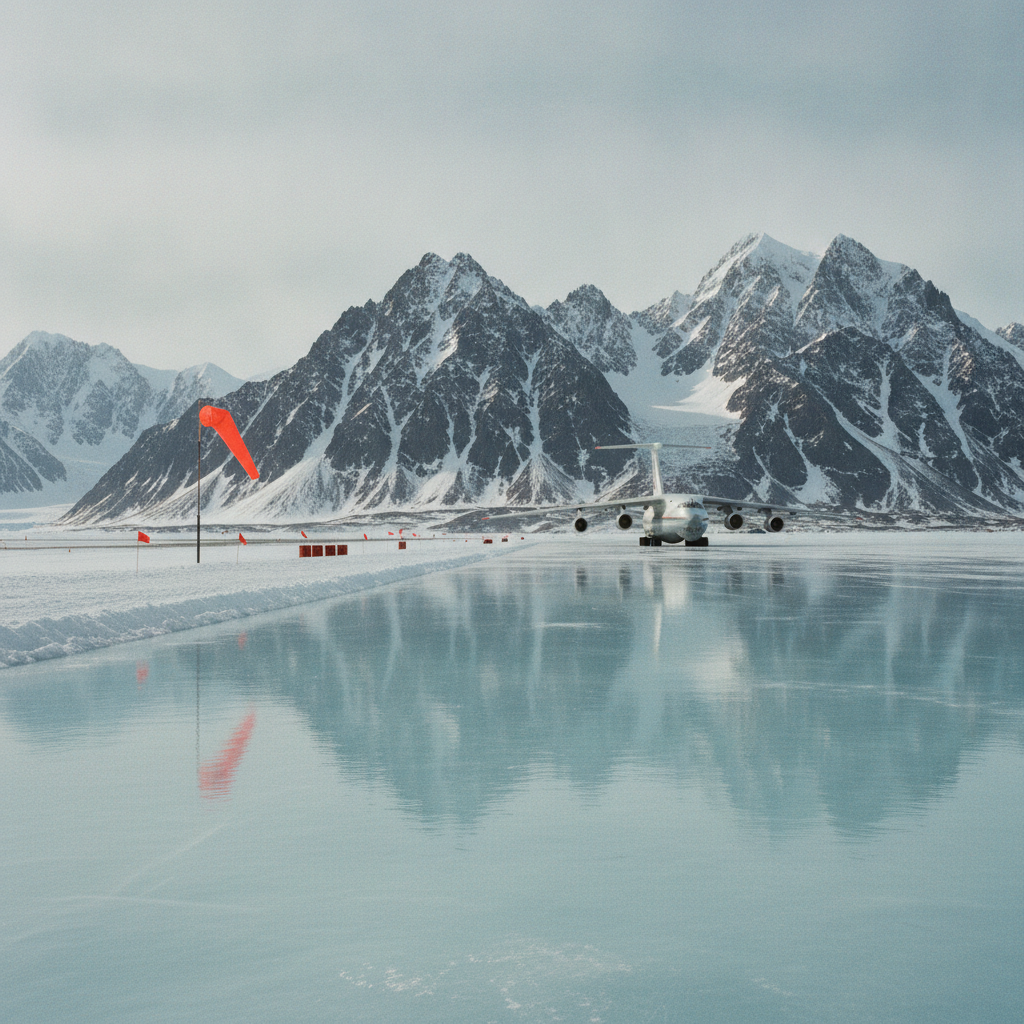
Three takes
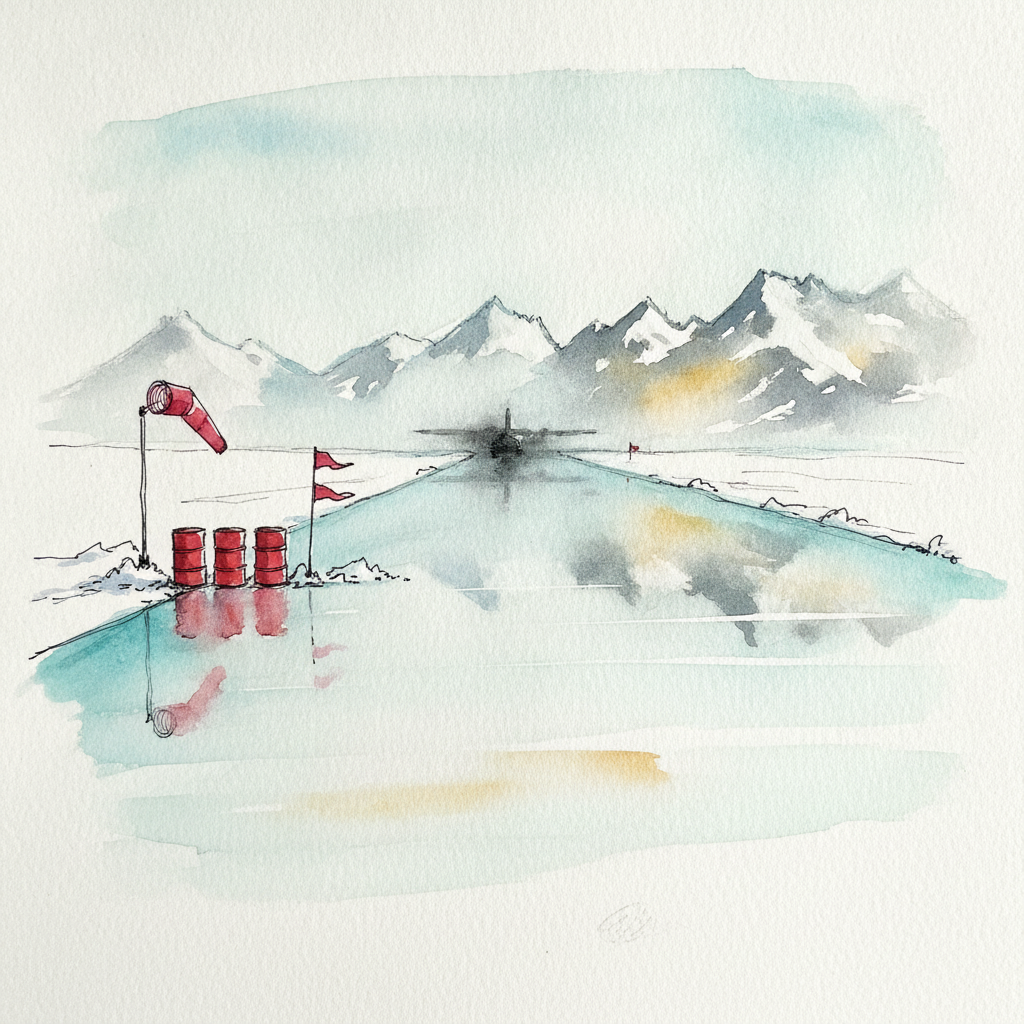

Focus for this piece
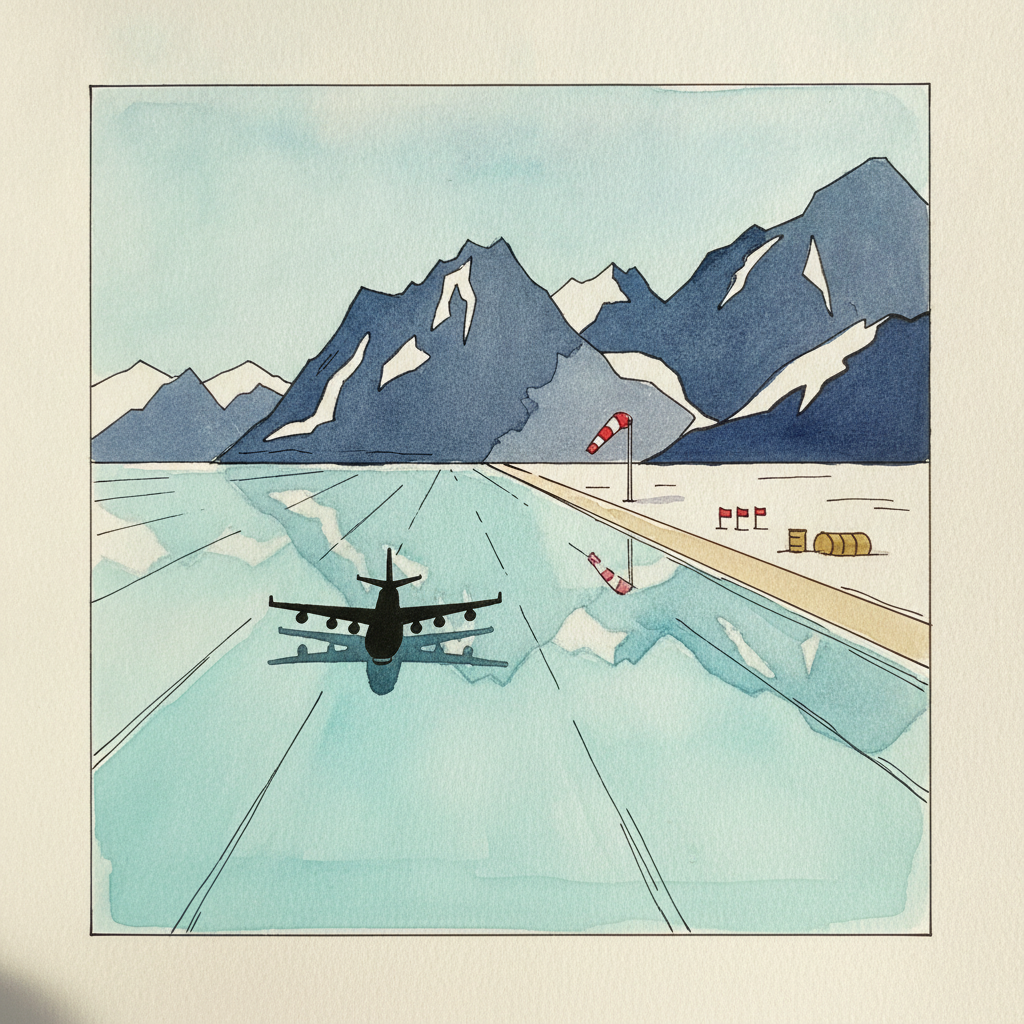
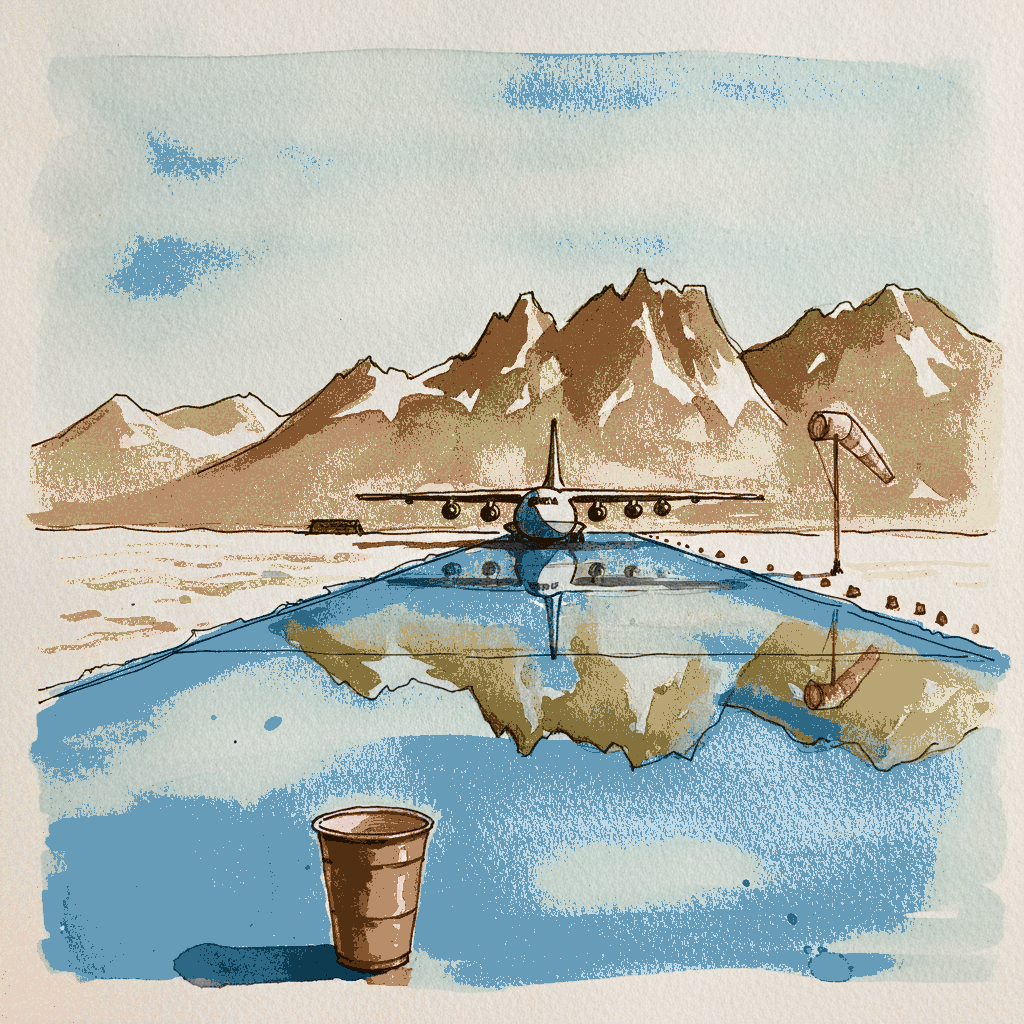
This scene is an excellent study in rendering diverse textures and the power of reflection. Focus on capturing the mirror-like quality of the deep reflection of the Ilyushin-76 on the smooth, pale turquoise ice, using broad, even washes. Contrast this slick surface with the sharp, varied line weights for the distant, jagged mountain peaks and the delicate, dry-brush textures used for the subtle sastrugi shadows on the snow.
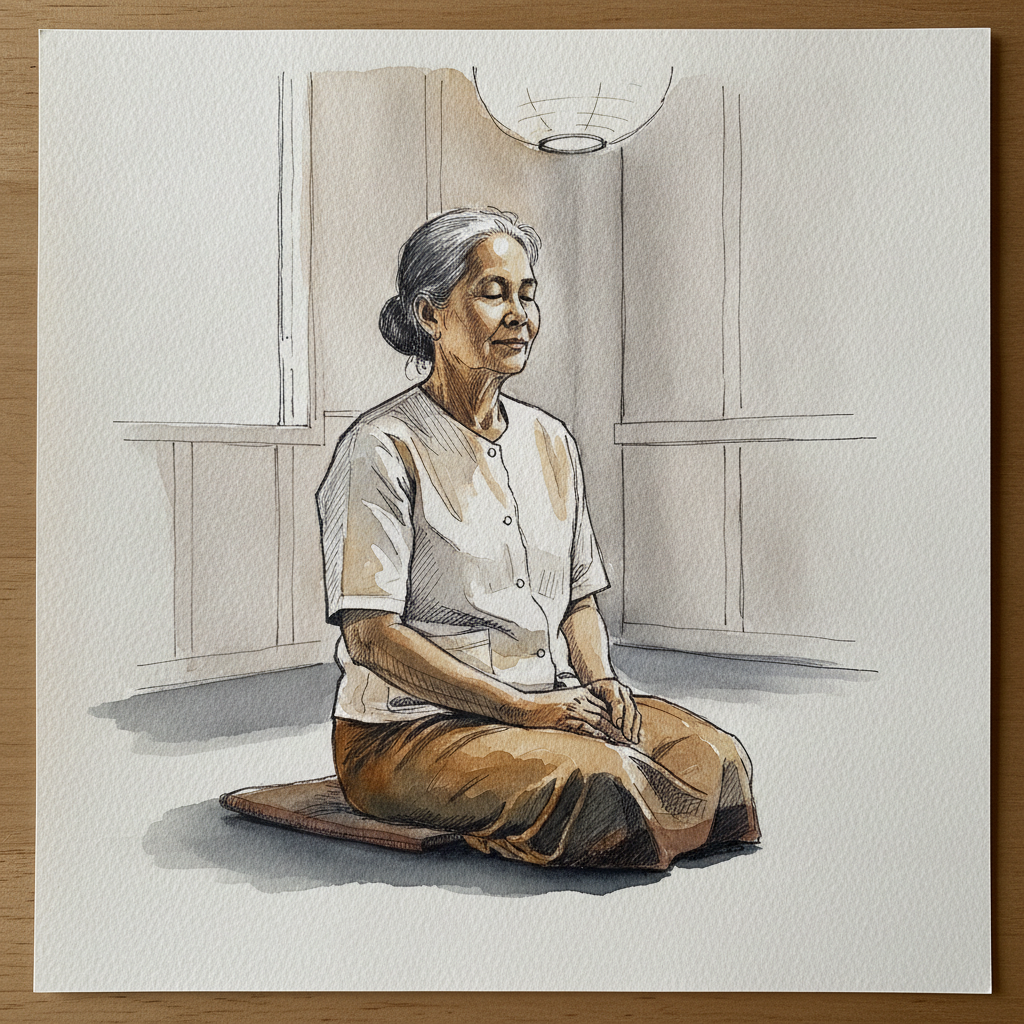
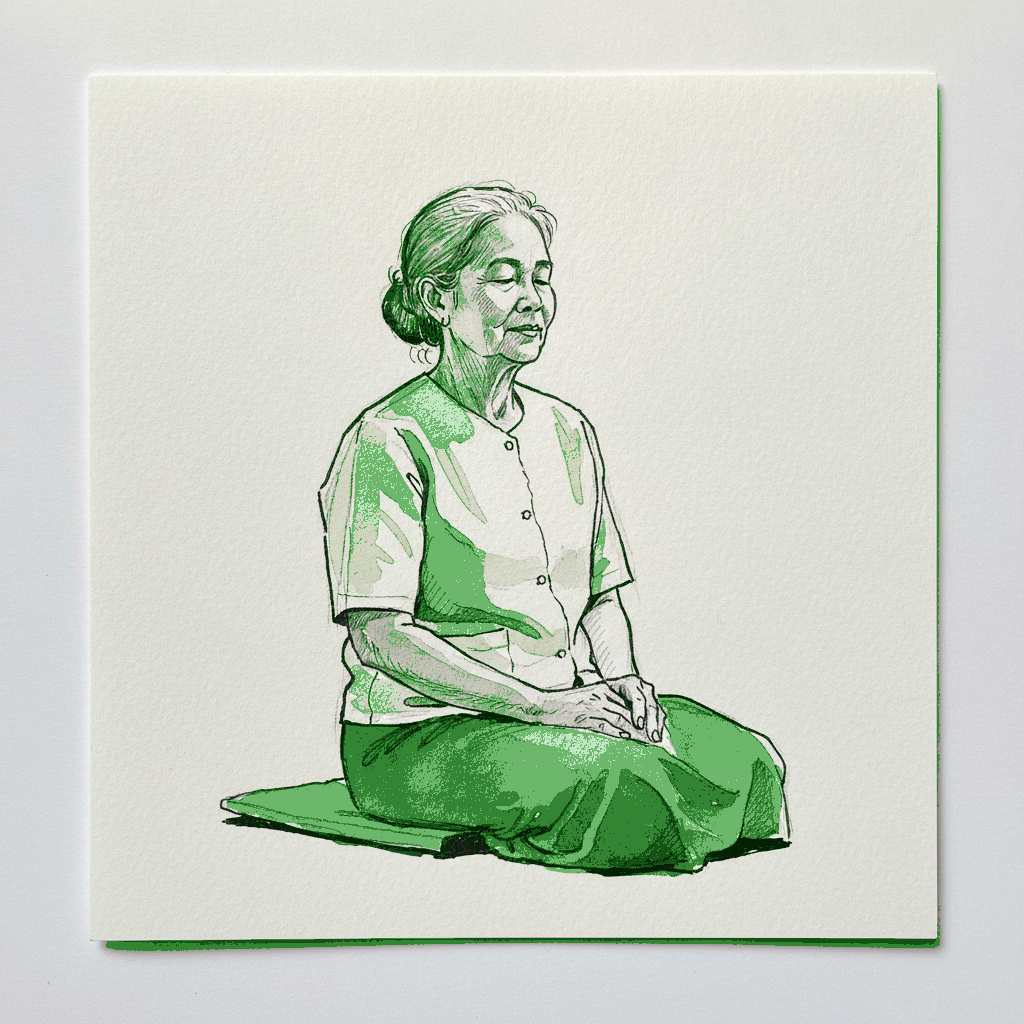
Piece 8 — Burmese Seat, Hands Folded in Lap
Pen + Watercolor · Loose pen and watercolor line-and-wash
Three takes

Focus for this piece
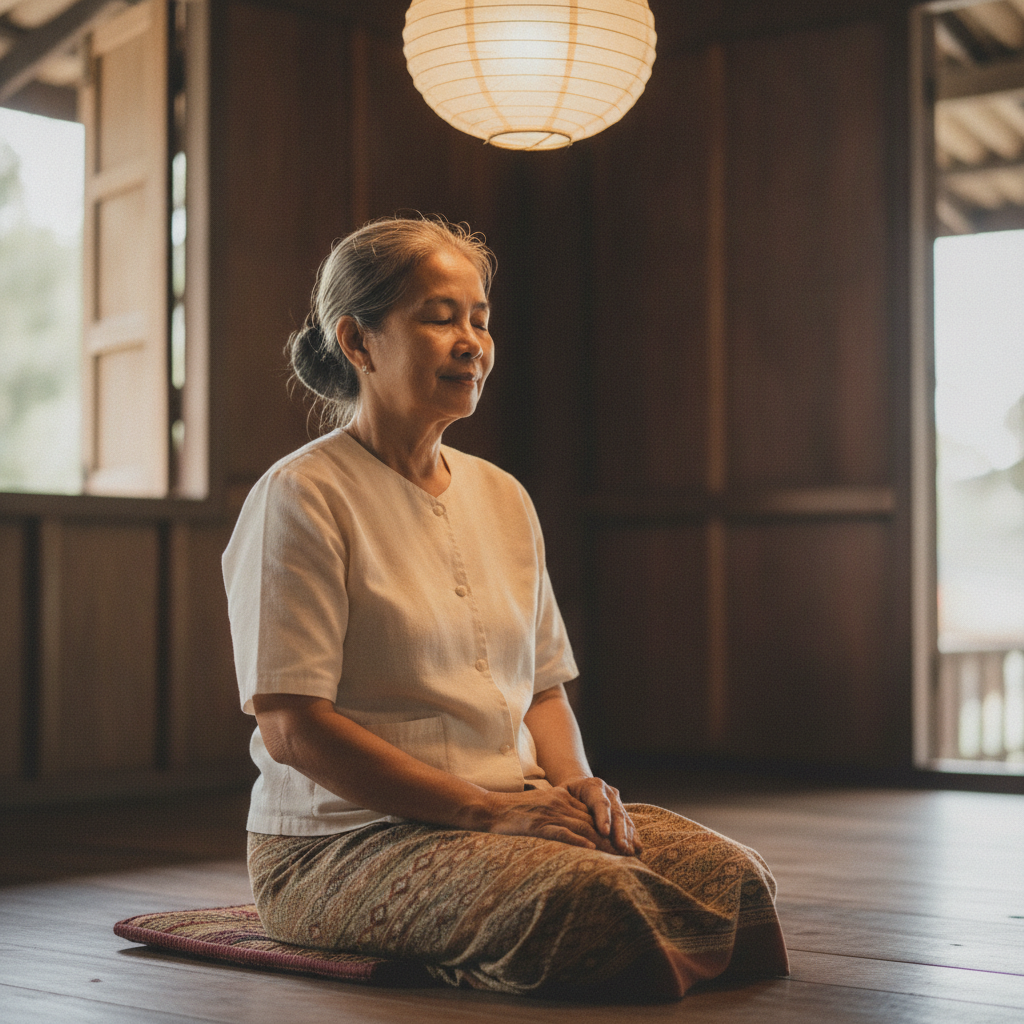
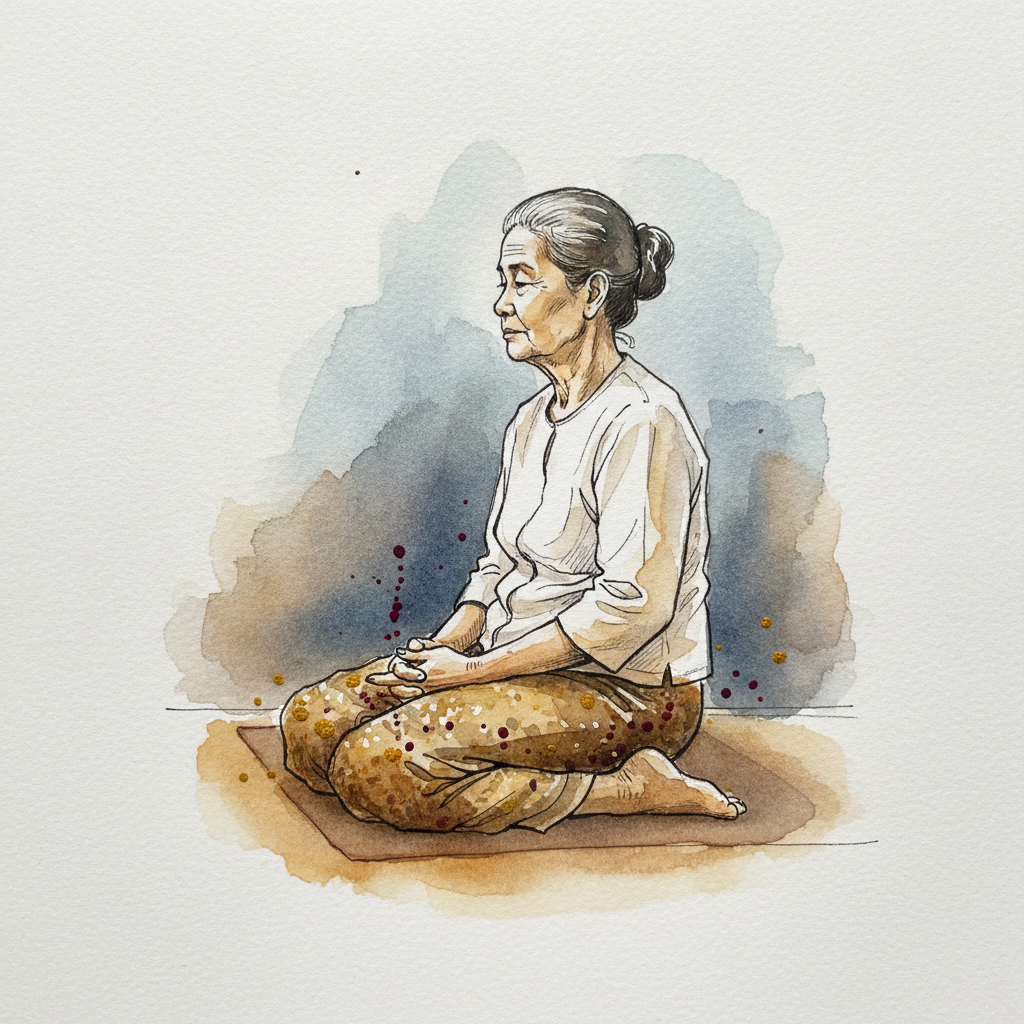
This piece is an ideal study for building form through subtle watercolor washes, focusing on the "quiet tonal study" suggested by the low-contrast light. Aim for soft, overlapping layers using a limited warm palette and generous wet-on-wet applications to create gentle transitions across the figure and drapery. Reserve your pen for delicate, minimal lines that subtly define major planes and crucial details like the hands, ensuring they complement the atmospheric washes without creating harsh outlines.