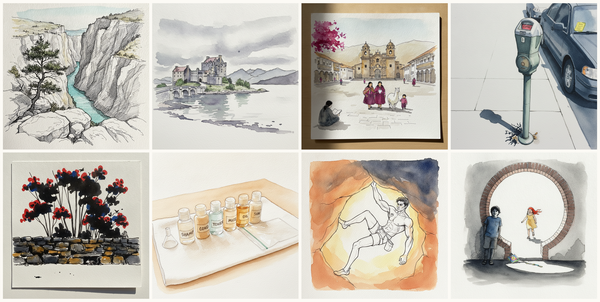
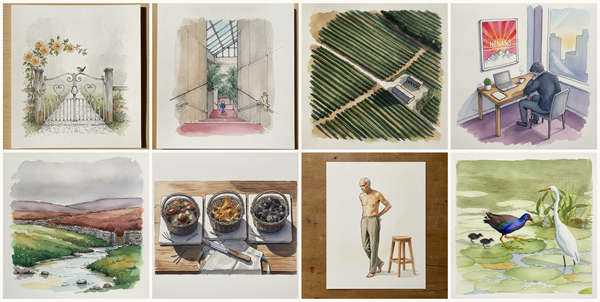
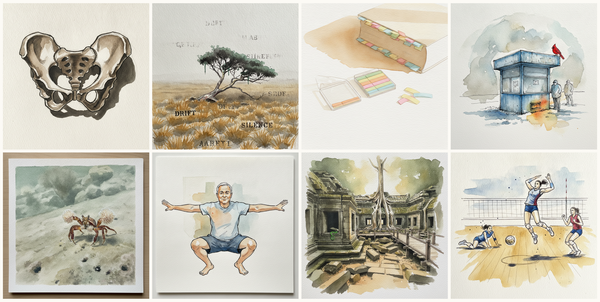
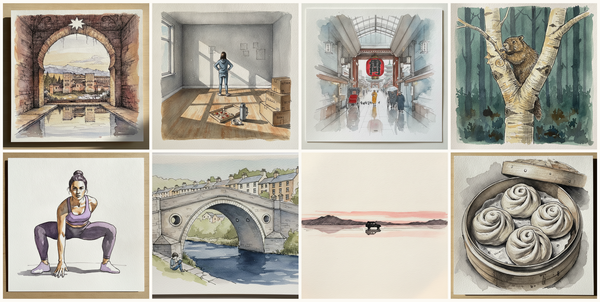
Korean streetwear K-pop influenced, Red-eared slider, The Iron-Lace Pier at Llandudno, Sphinx with head down between forearms, and more — pen + watercolor for November 2, 2026
AI-generated daily art-practice references for pen and watercolor: Korean streetwear K-pop influenced, Red-eared slider, The Iron-Lace Pier at Llandudno, Sphinx with head down between forearms, Carlsbad Caverns Big Room, New Mexico, Bagels stacked four high, Palácio Nacional de Sintra, Sintra, Po…
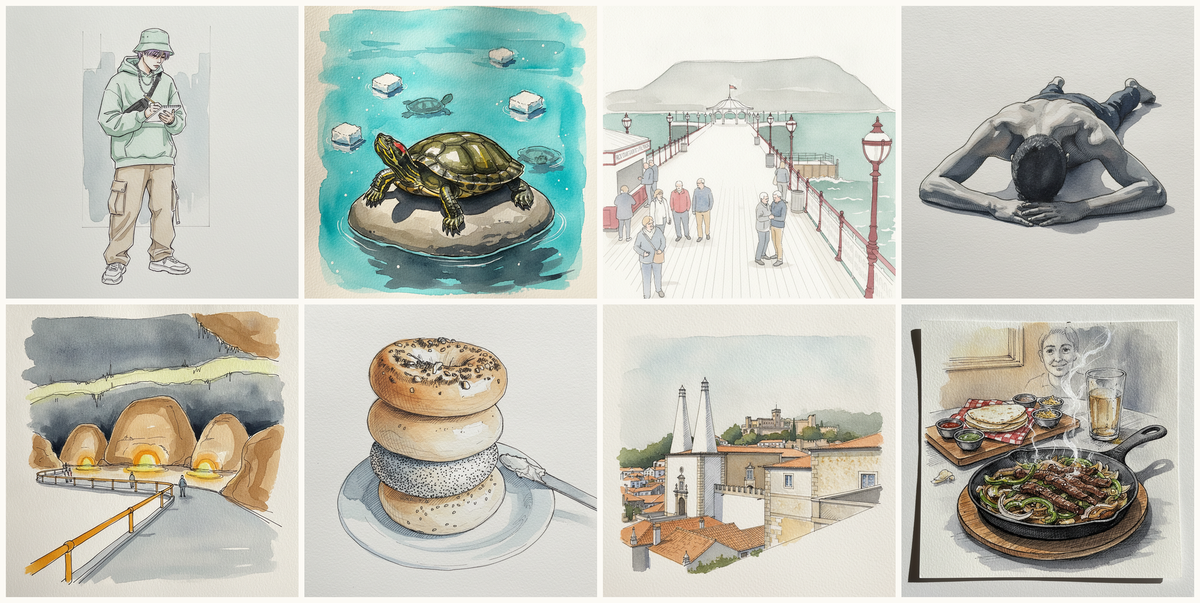
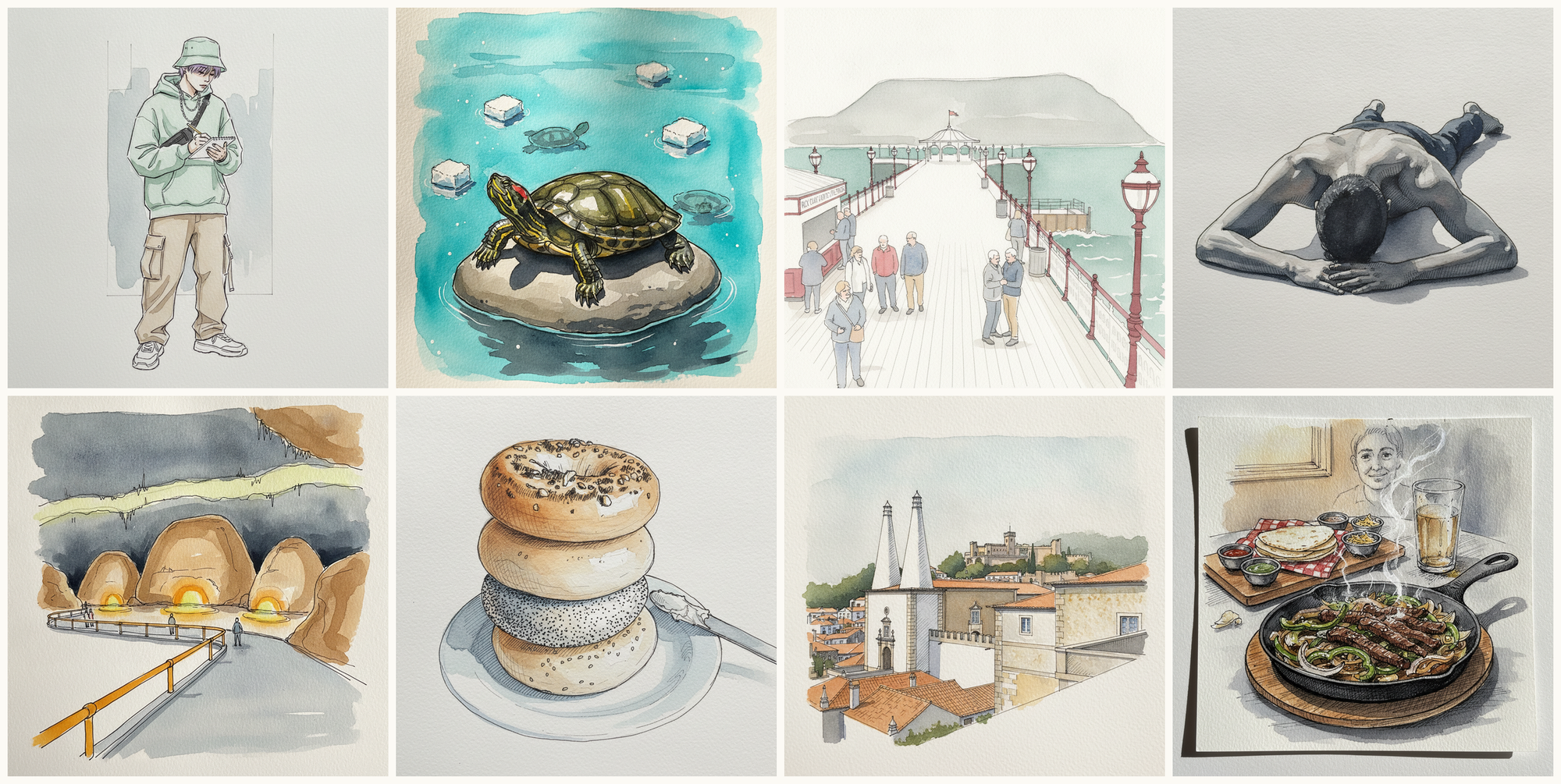
Today's 8 pen-and-watercolor pieces: Korean streetwear K-pop influenced, Red-eared slider, The Iron-Lace Pier at Llandudno, Sphinx with head down between forearms, Carlsbad Caverns Big Room, New Mexico, Bagels stacked four high, Palácio Nacional de Sintra, Sintra, Portugal, Mexican fajitas sizzling. Each piece comes with an AI-generated photoreal reference, three AI-generated example artworks in different treatments, and a short focus paragraph naming what to study in this one.
Why these references use AI
This daily series uses AI-generated images as practice prompts, not as finished artwork to copy. Each subject starts with a synthetic photoreal reference generated with Gemini/Nano Banana, then moves into three pen-and-watercolor interpretations of the same subject.
I use AI here because daily art practice needs variety and low friction. Real life can get repetitive, busy, or visually narrow. These generated reference sets make it easier to study bodies, buildings, animals, landscapes, objects, gestures, light, palettes, and compositions that might not show up in an ordinary day.
The goal is not to reproduce any image directly. Treat each set as a starting point for observation and study: choose what interests you, change the framing, simplify the subject, alter the palette, and make your own version.
Piece 1 — Korean streetwear K-pop influenced
Pen + Watercolor · Loose pen and watercolor line-and-wash
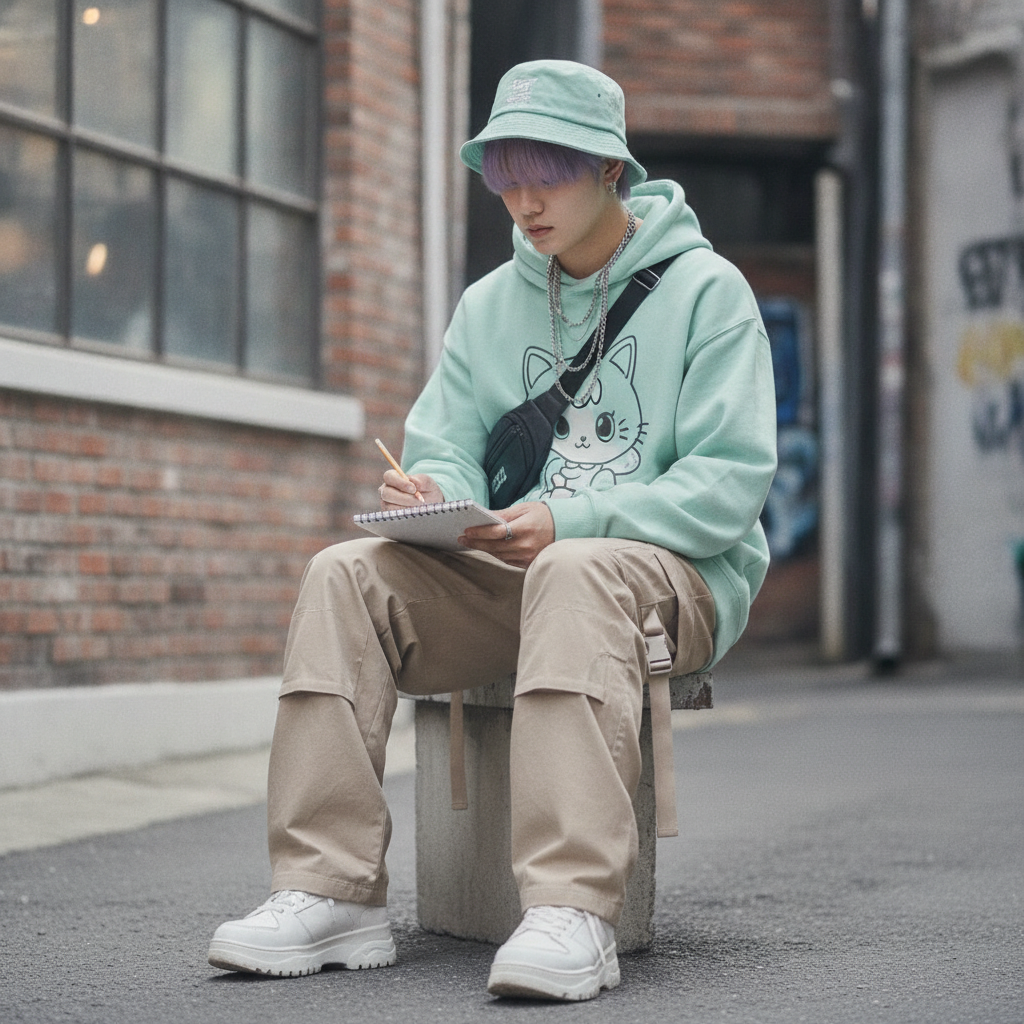
Three takes
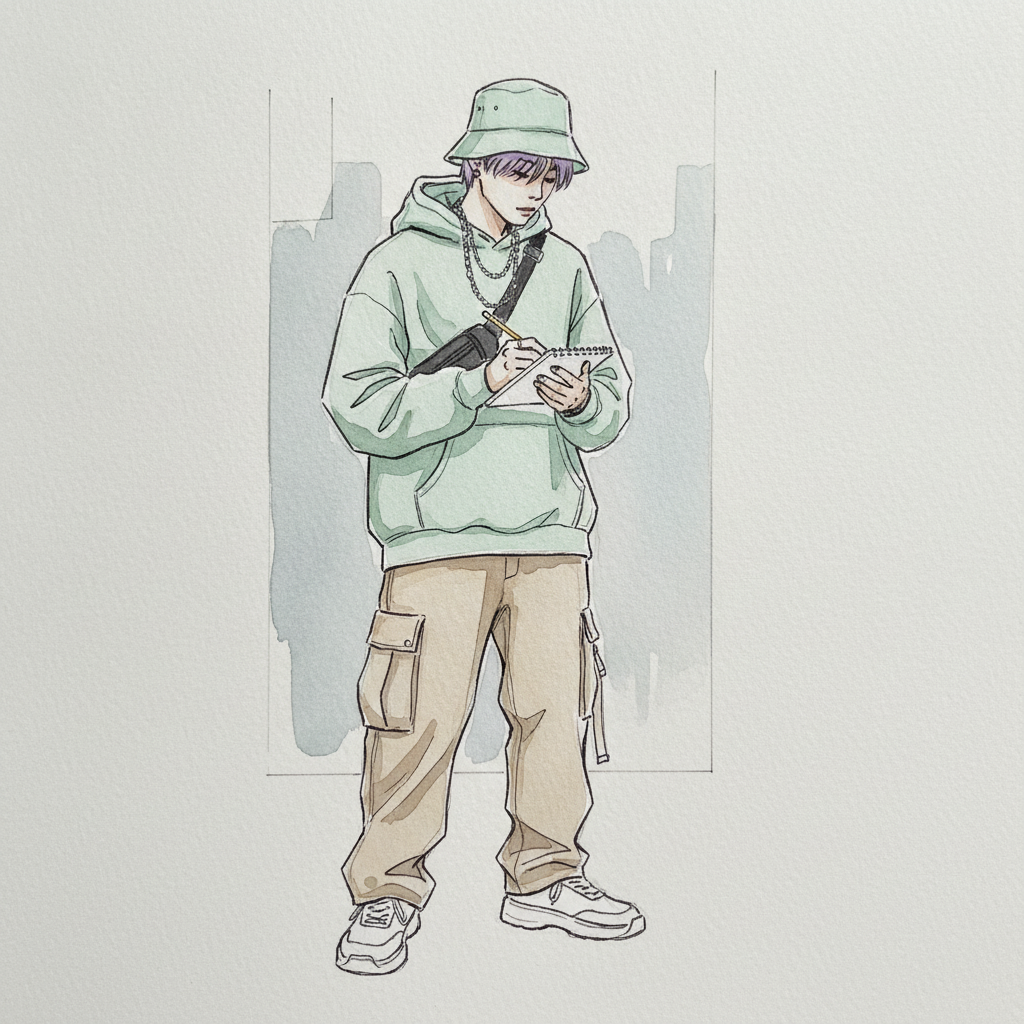
Focus for this piece
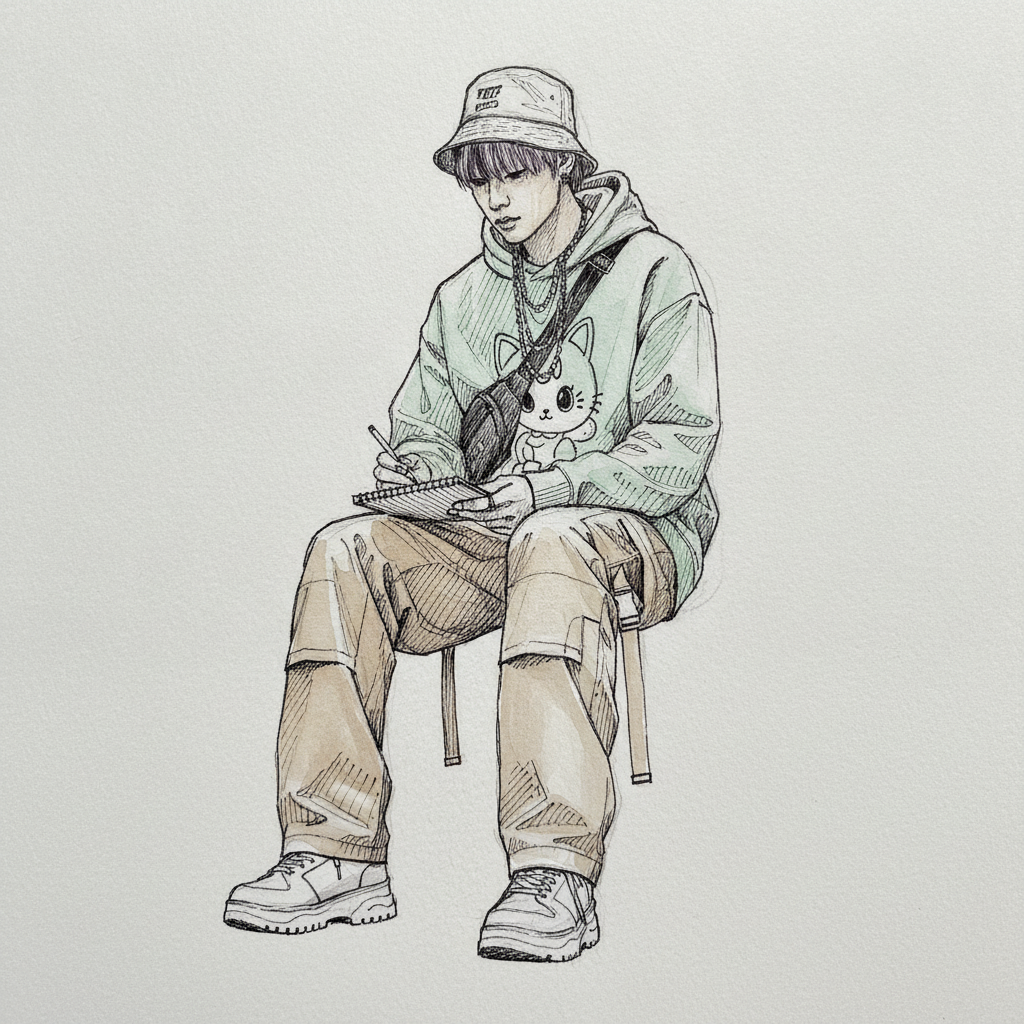
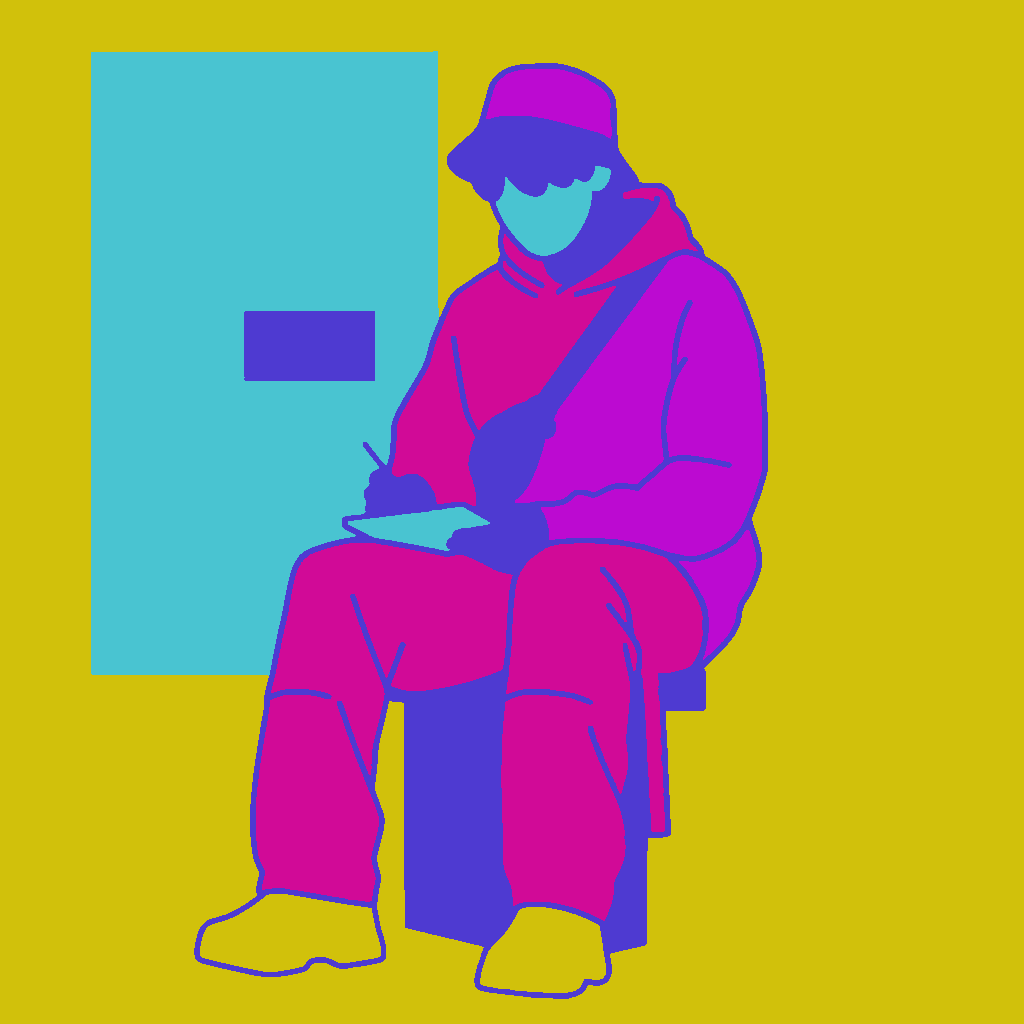
This piece is an excellent study in contrasting line weights and building volume through light washes. Practice using light, broken lines to suggest the soft drape and generous silhouettes of the oversized hoodie and baggy cargo pants, while reserving crisp, consistent lines for the intricate details like buckles, layered chains, and the character graphic. Carefully build dimension in the pastel mint and beige garments using successive, transparent watercolor washes, allowing the fluid color to define form rather than relying on heavy outlines. Focus on how this interplay of delicate lines and subtle washes conveys both the fluidity and the meticulous coordination of the streetwear aesthetic.
Piece 2 — Red-eared slider
Pen + Watercolor · Loose pen and watercolor line-and-wash
Three takes
Focus for this piece
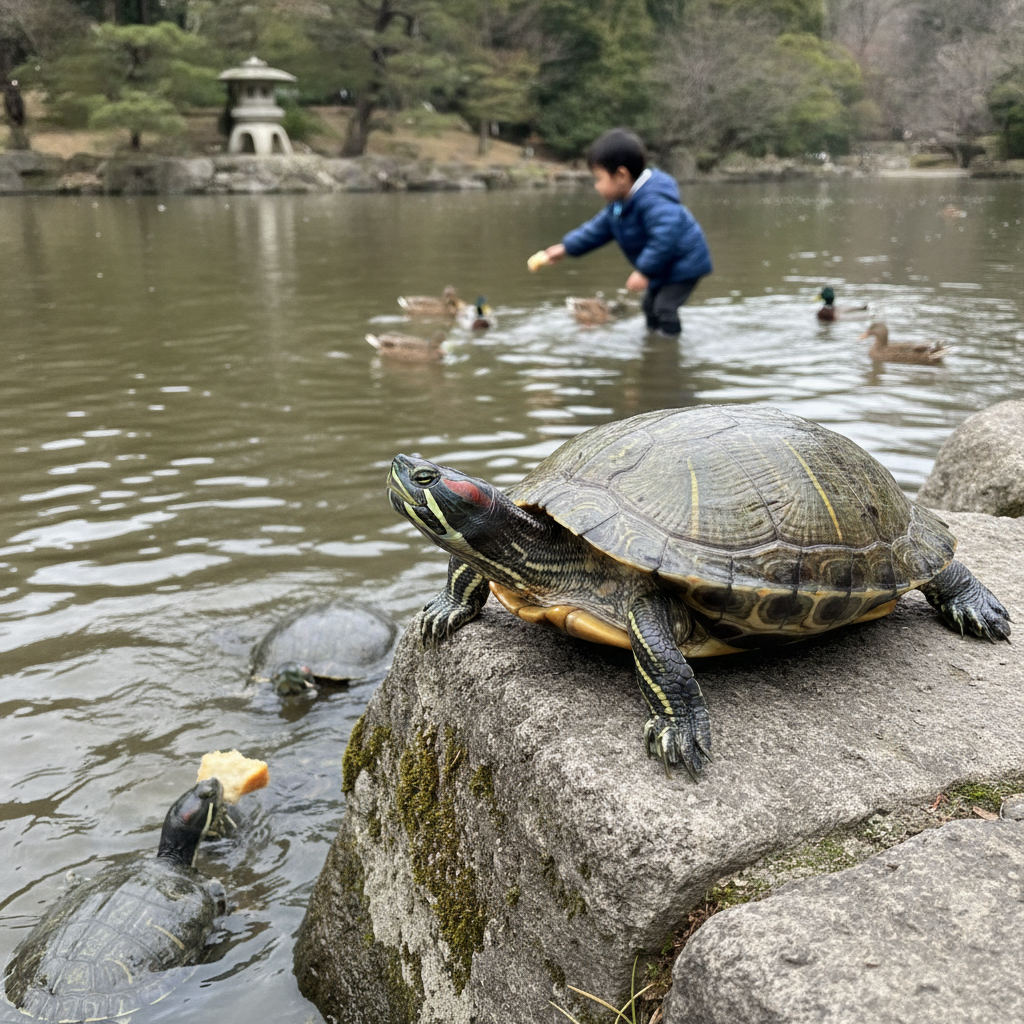
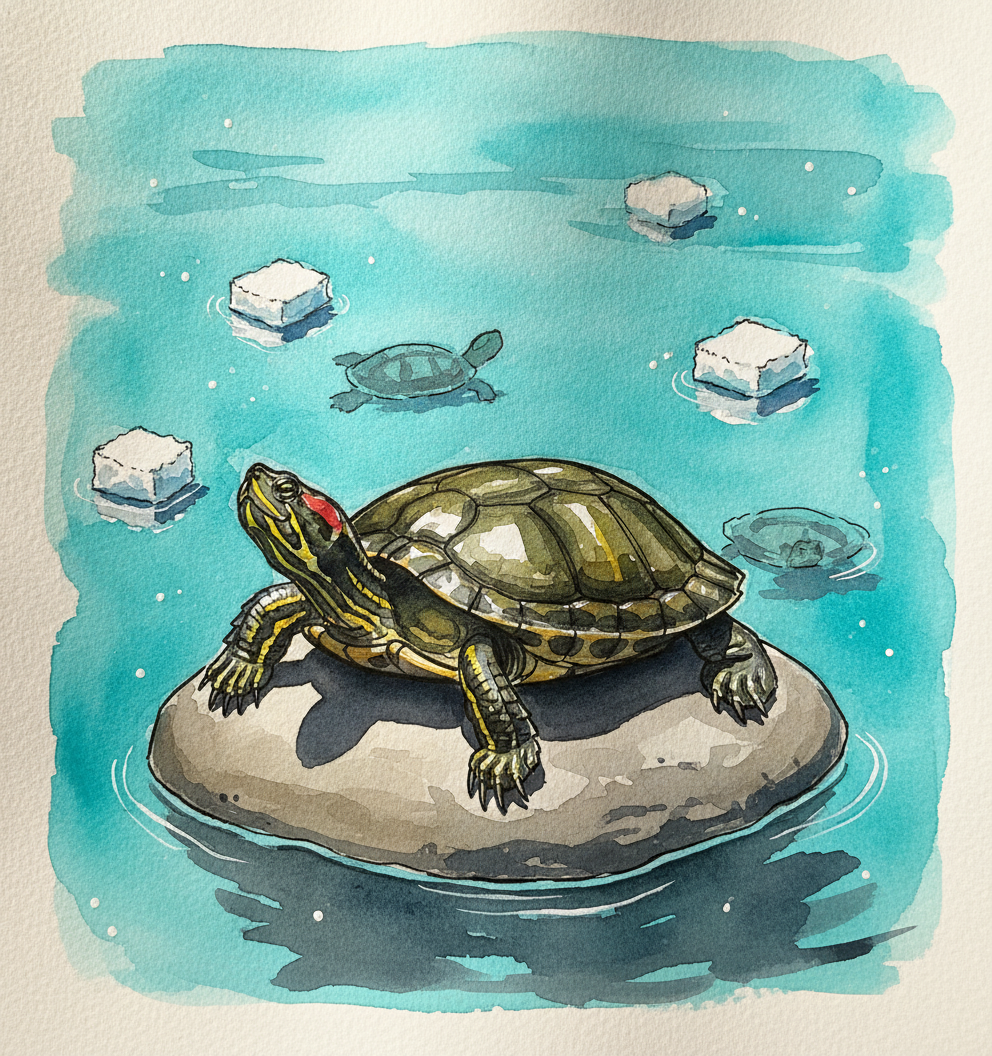
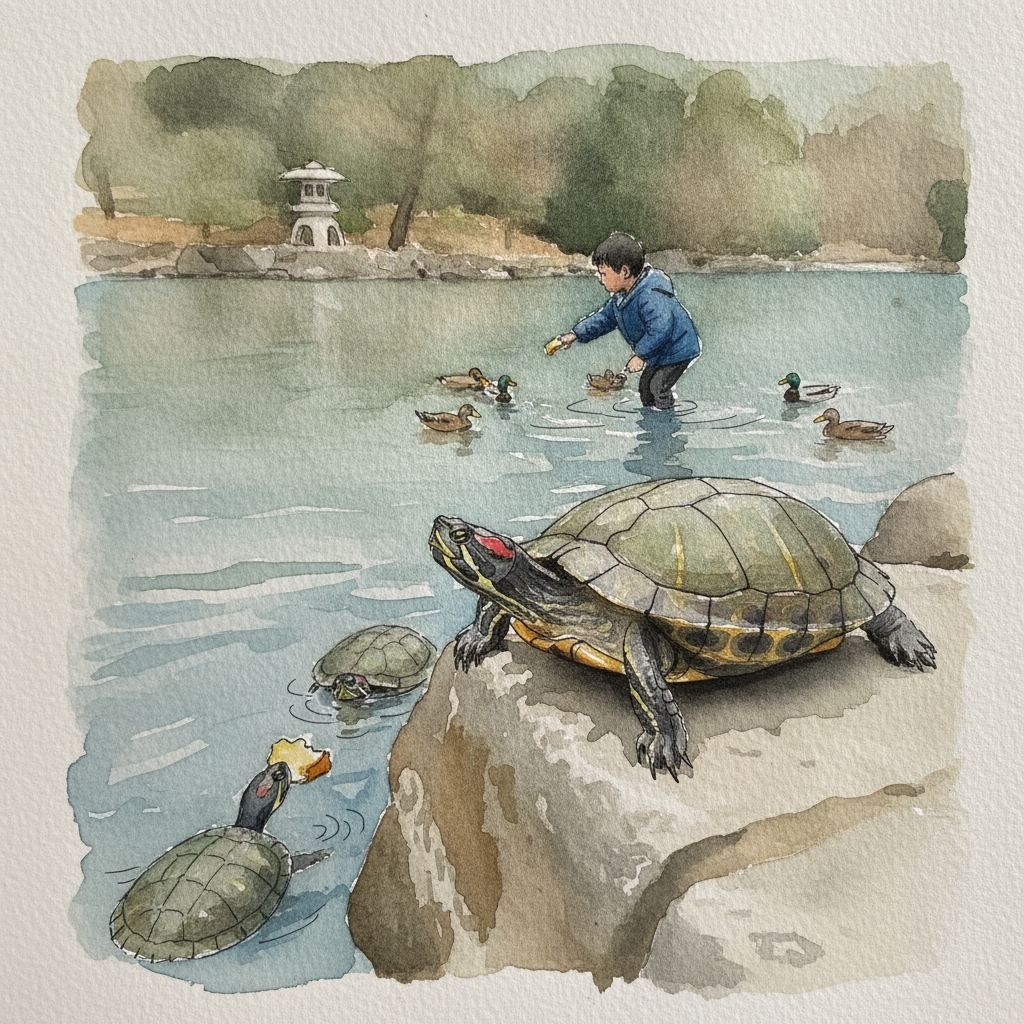
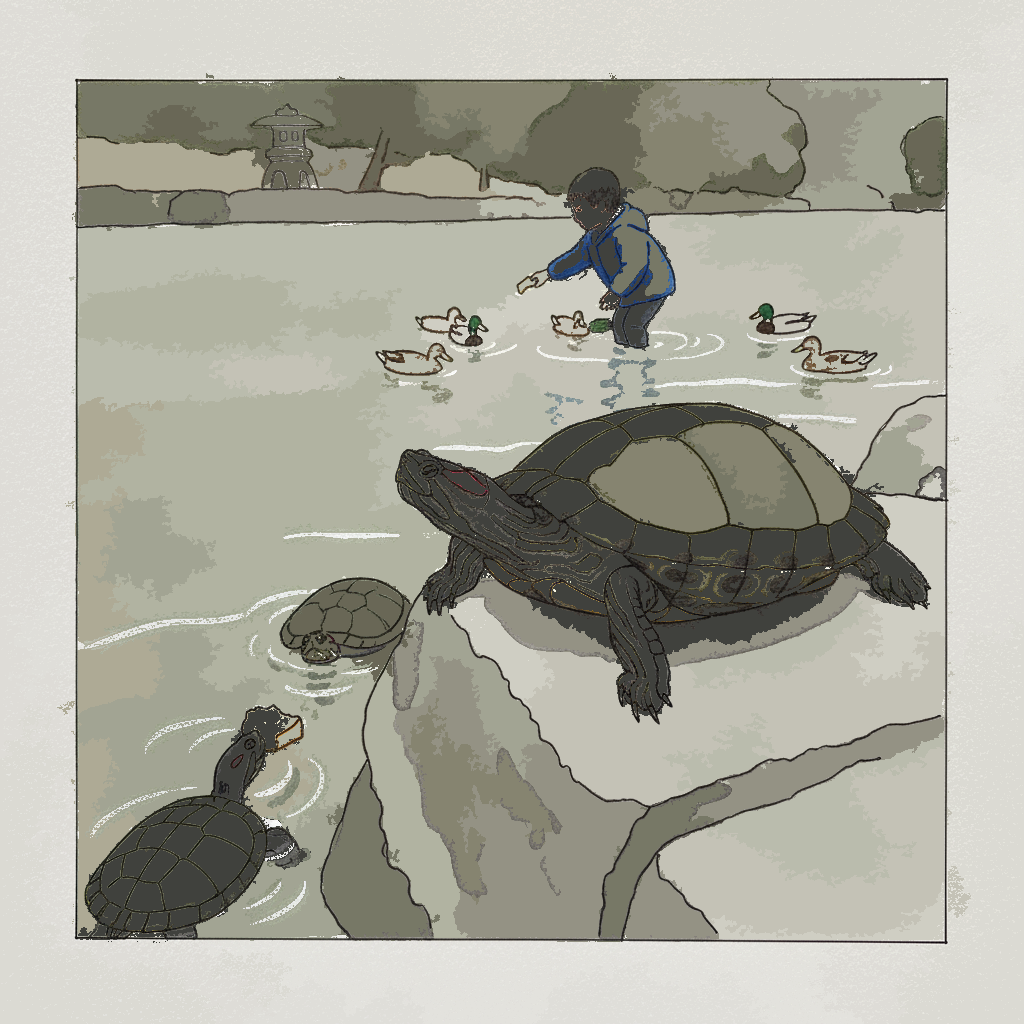
This piece presents an excellent opportunity to practice contrasting textures and form. Use varied line weight to articulate the turtle's rounded shell, employing soft, wet-on-wet washes of dark olive and sepia to suggest its smooth, reflective surface. Contrast this with dryer brushwork and lighter washes for the rougher rock texture. Emphasize the distinctive bright red mark with a crisp, saturated wash as your primary focal point.
Piece 3 — The Iron-Lace Pier at Llandudno
Pen + Watercolor · Loose pen and watercolor line-and-wash
Three takes

Focus for this piece
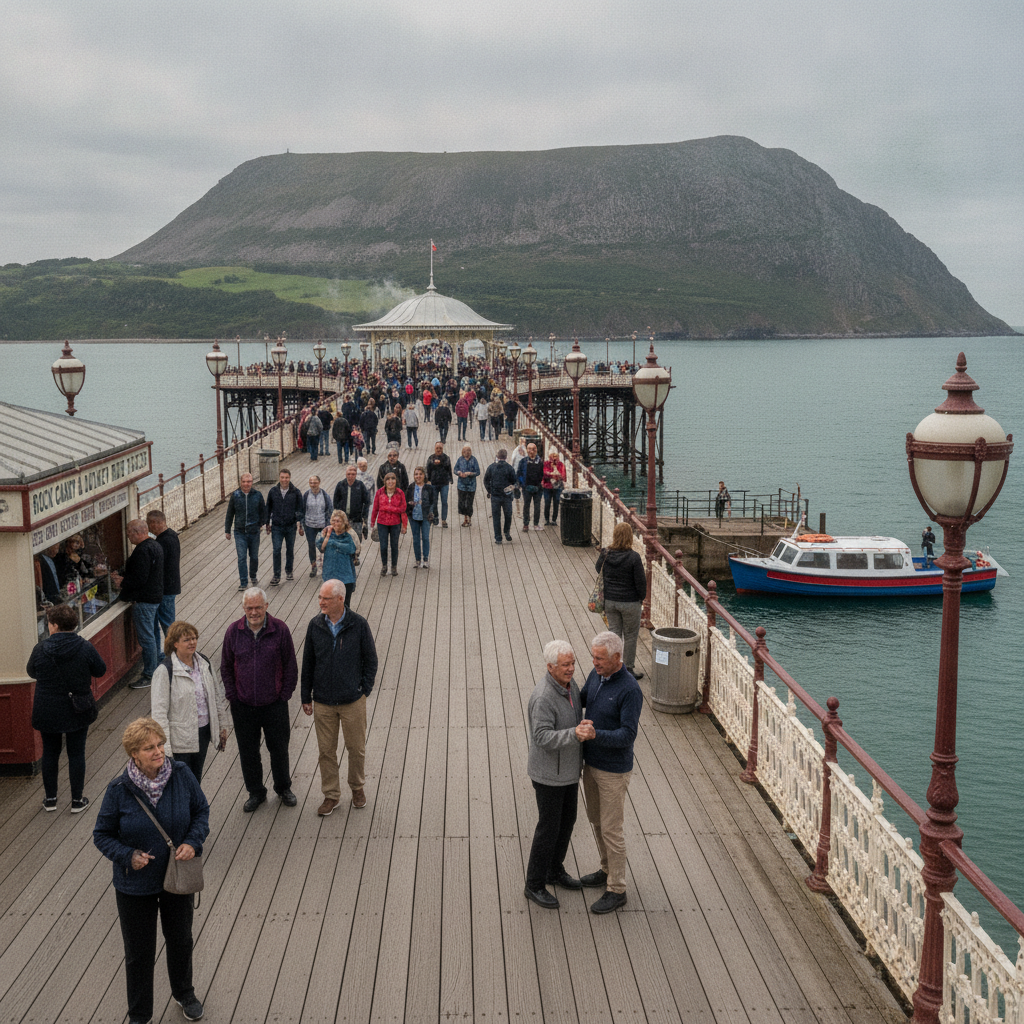
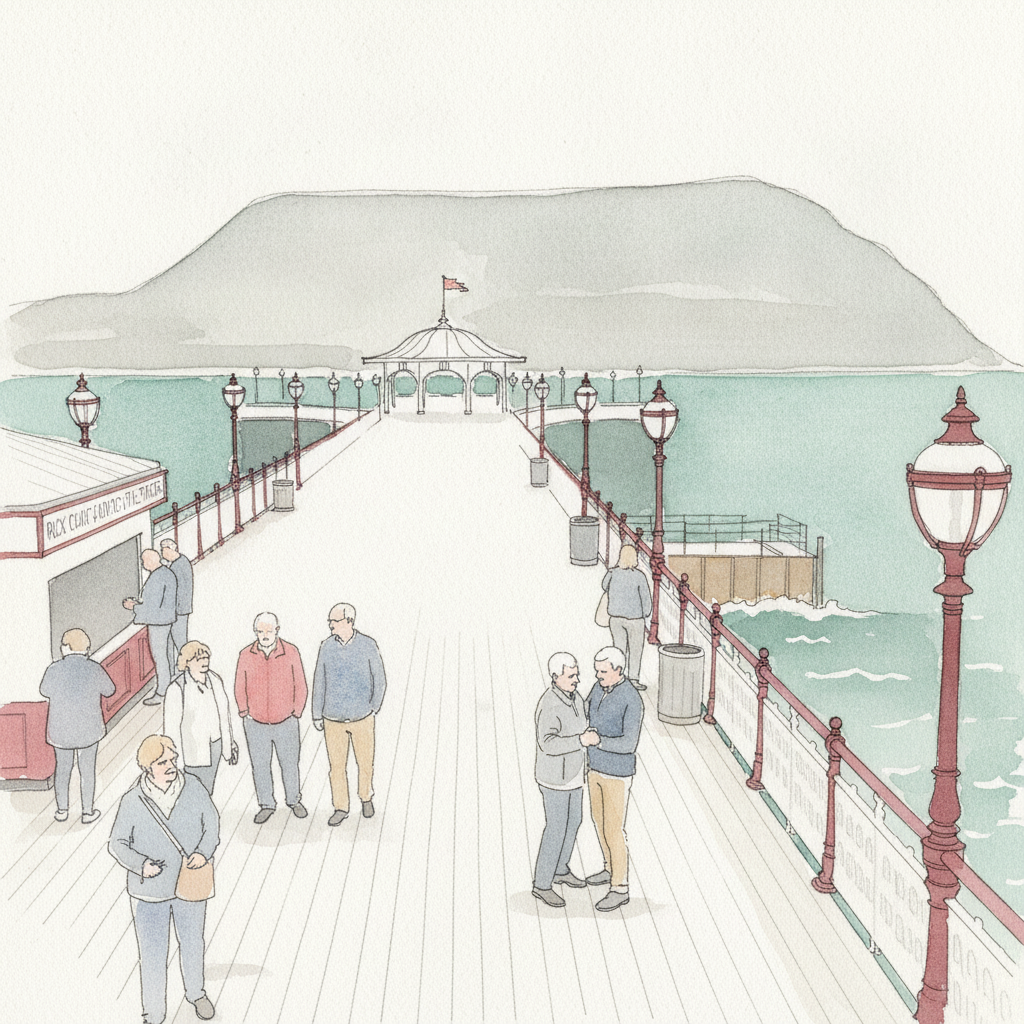
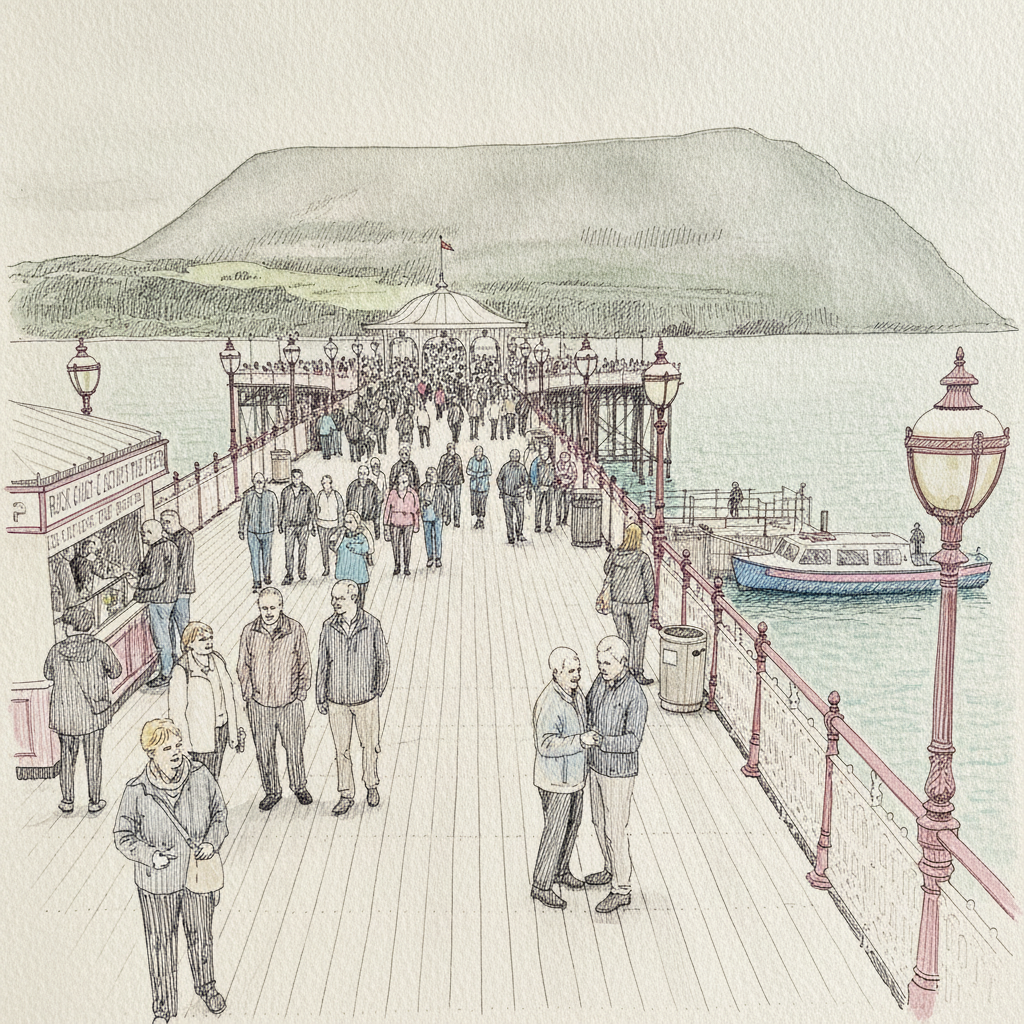
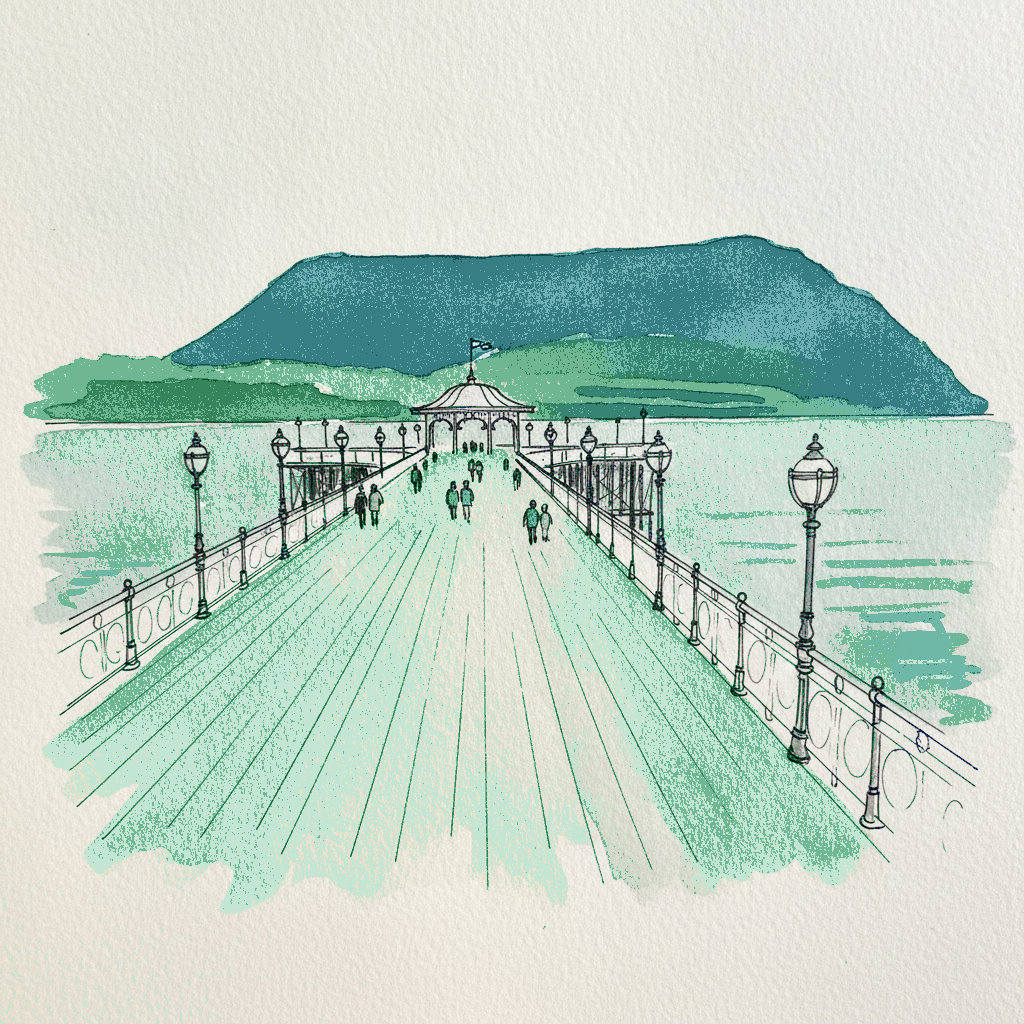
For this study, concentrate on establishing a clear hierarchy of detail by varying your pen line weights: use very fine, controlled lines to suggest the intricate filigree ironwork, but employ a slightly bolder line for the pier's main structural elements and the nearby kiosks. Contrast this crisp detail with broad, wet-into-wet washes for the distant Great Orme and the milky teal sea, allowing the watercolor to define those larger, softer forms. This approach will emphasize the delicate 'iron-lace' against the bulk of the landscape, creating a strong sense of depth and focus.
Piece 4 — Sphinx with head down between forearms
Pen + Watercolor · Loose pen and watercolor line-and-wash
Three takes
Focus for this piece
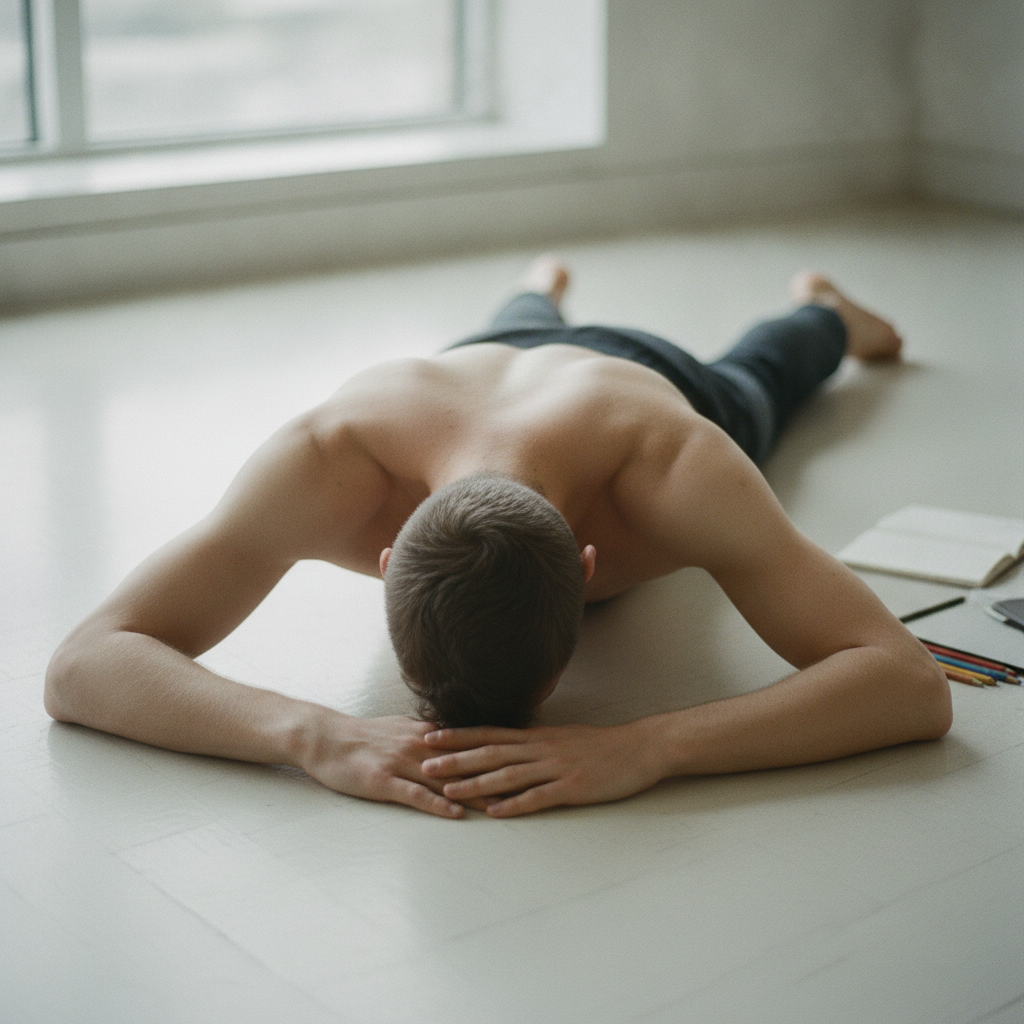
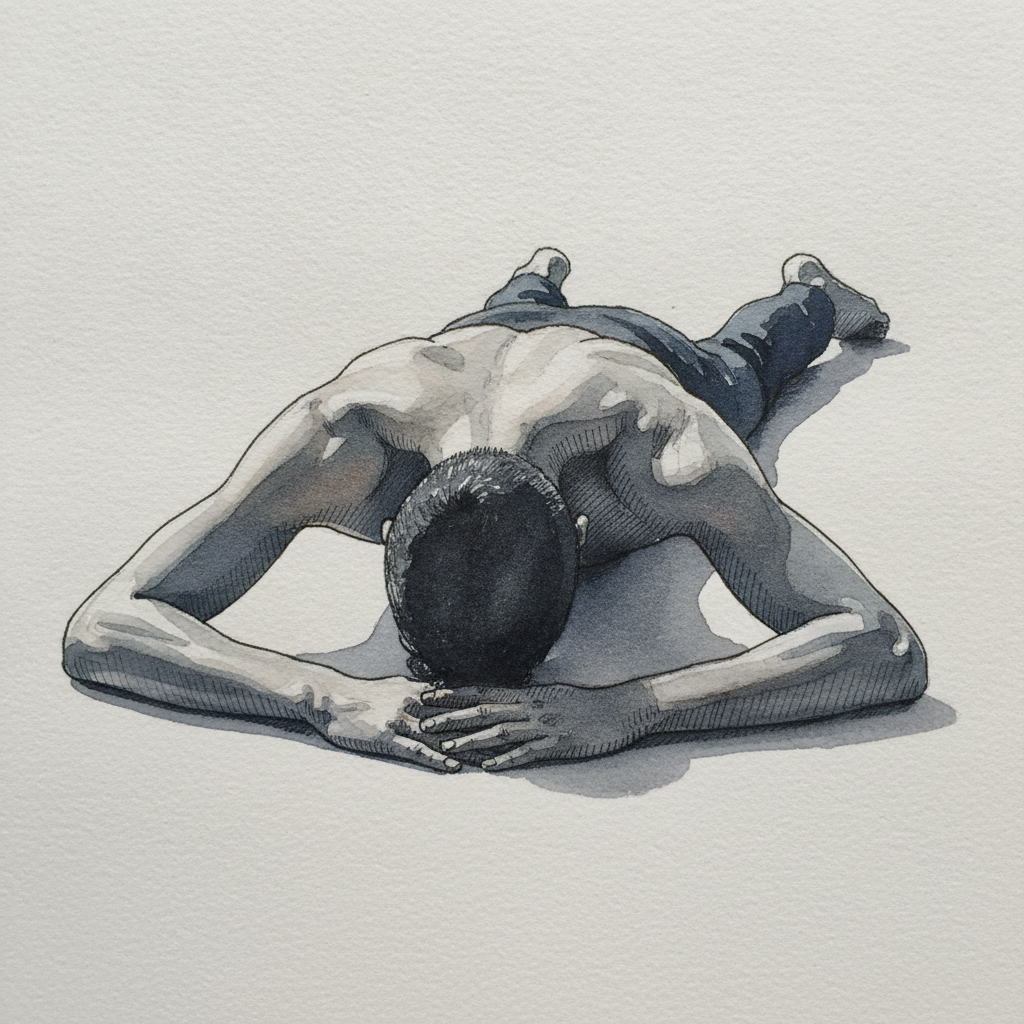
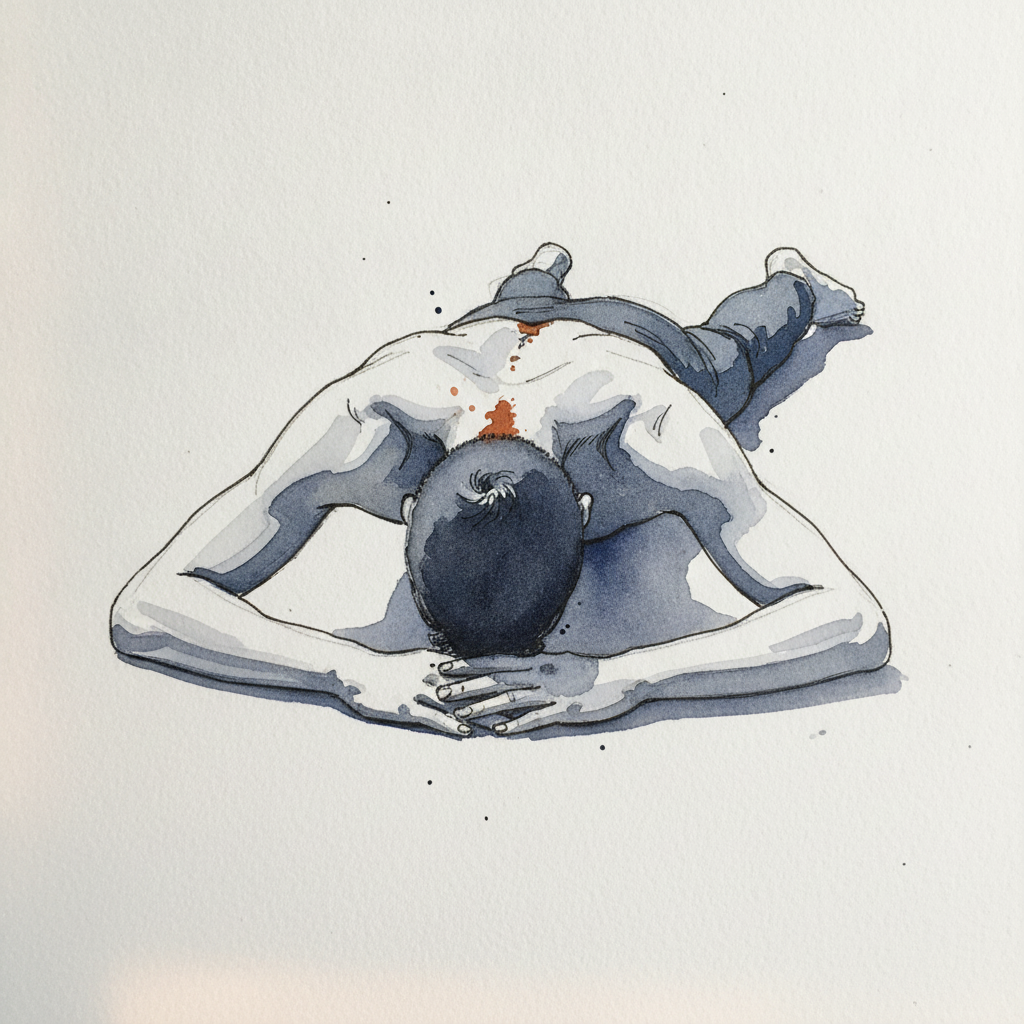
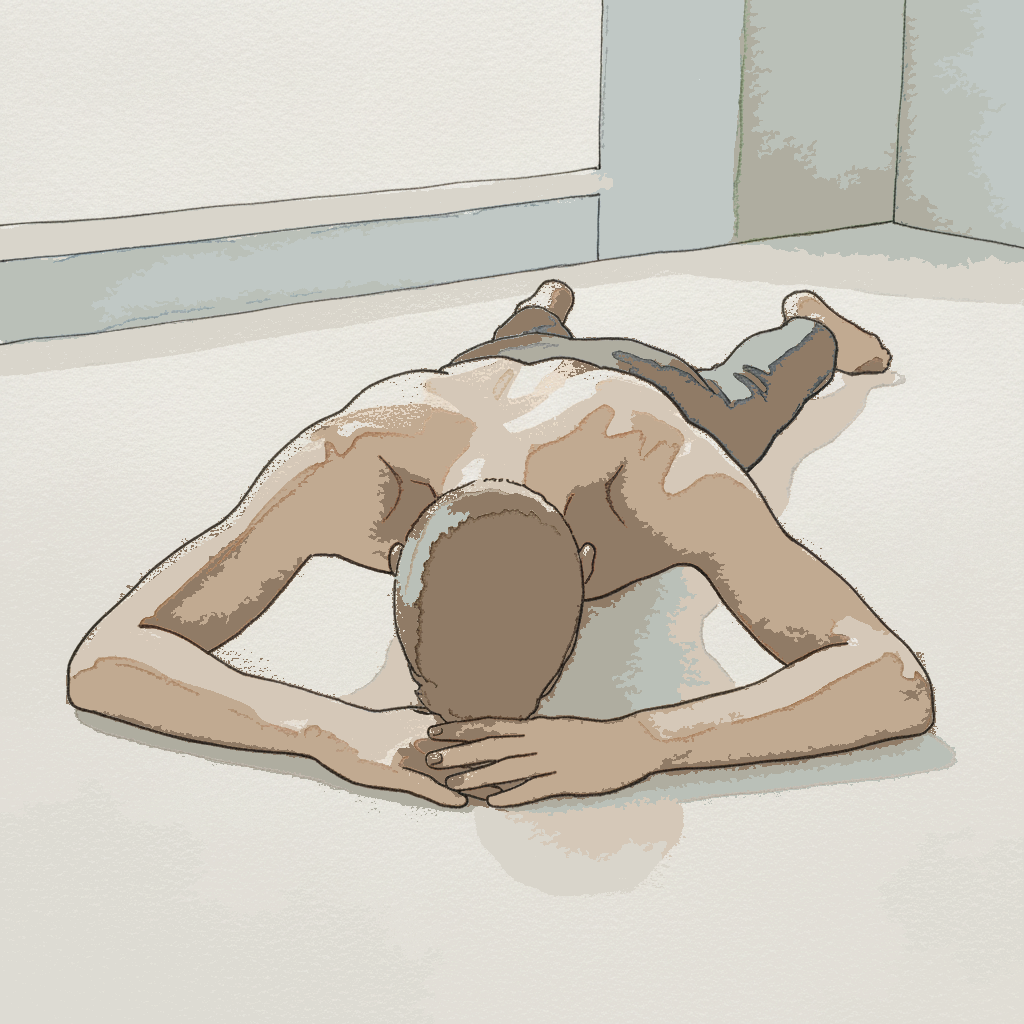
This Sphinx pose offers a focused study in articulating subtle human anatomy through precise line and layered wash. Use a fine-tipped pen to capture the delicate "sensory line" running from the lowered crown along the spine to the toes, varying line weight to suggest points of contact and underlying bone structure. Then, sculpt the "long ridge of his spine" and the symmetrical planes of the shoulder blades with controlled, cool-toned wet-on-dry washes, allowing gradual value shifts to convey form without harsh edges.
Piece 5 — Carlsbad Caverns Big Room, New Mexico
Pen + Watercolor · Loose pen and watercolor line-and-wash
Three takes
Focus for this piece
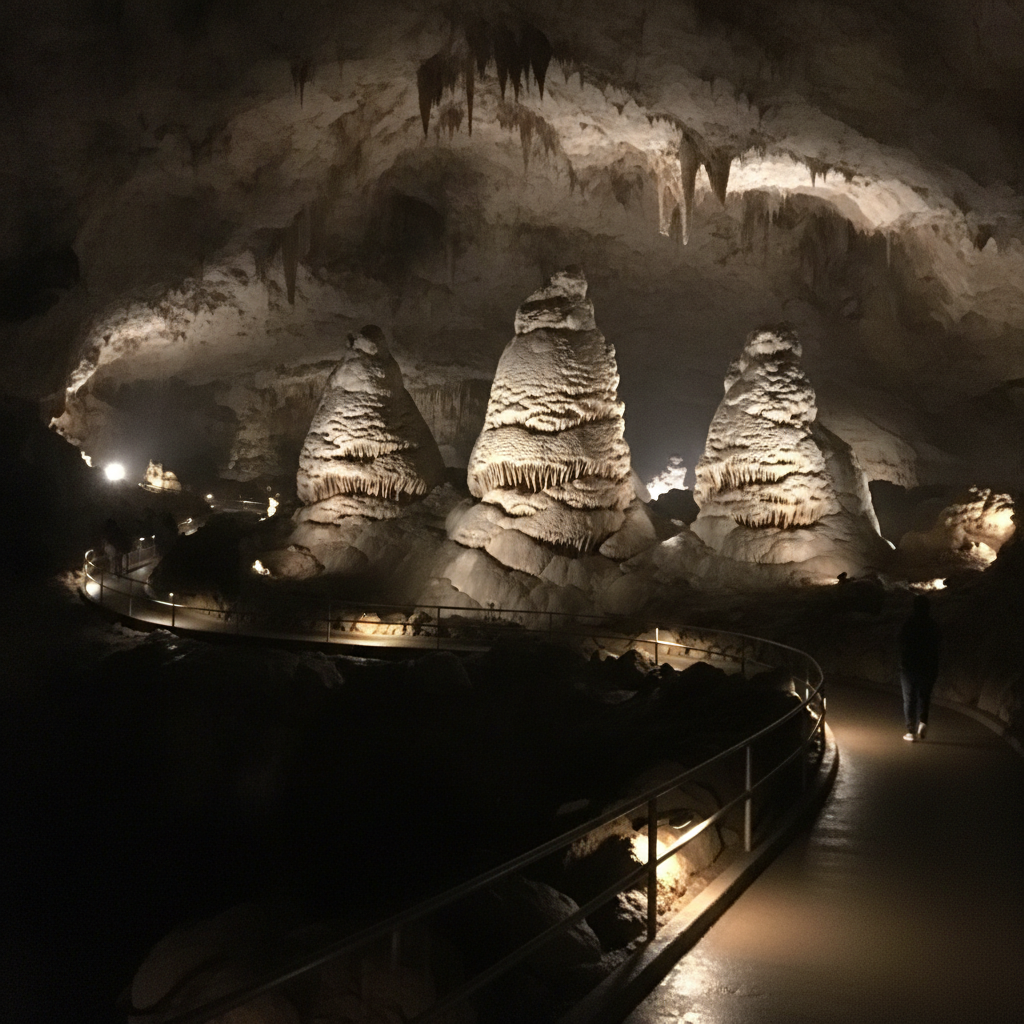
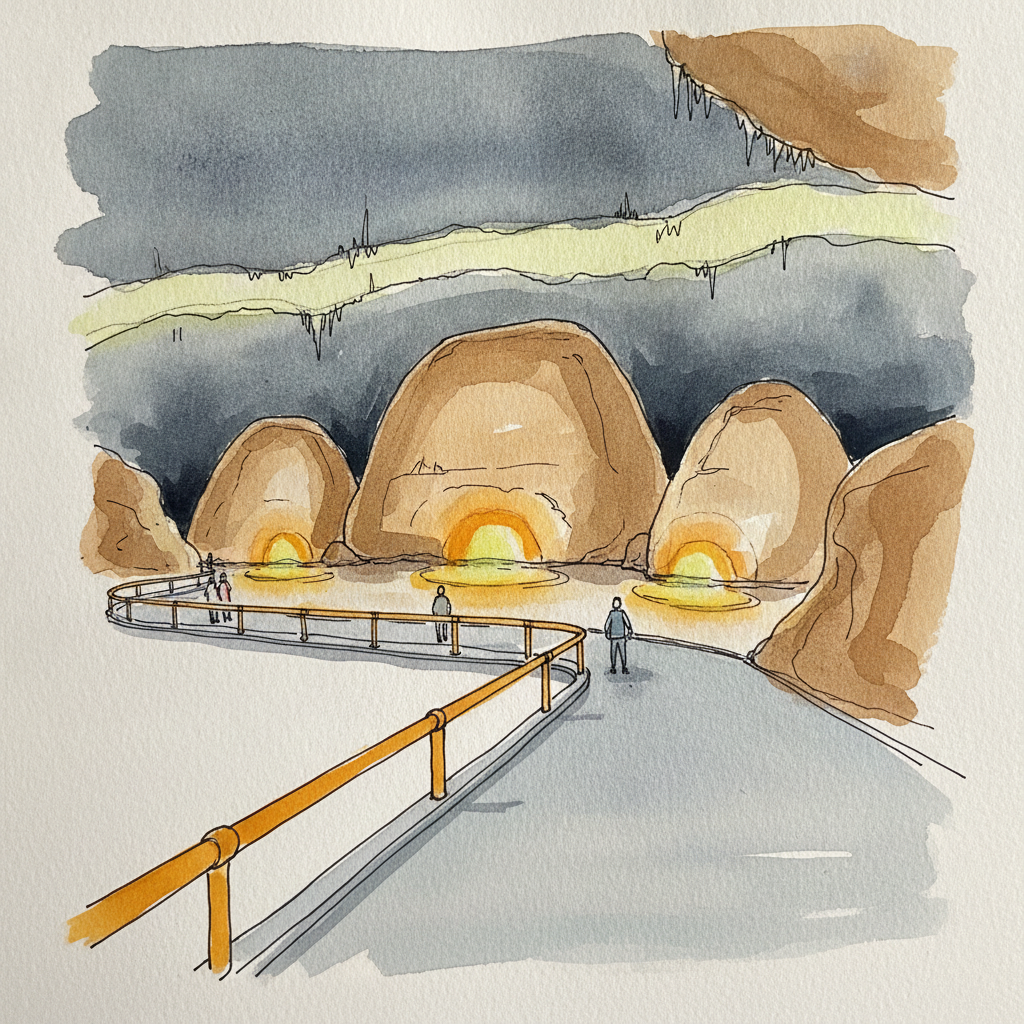
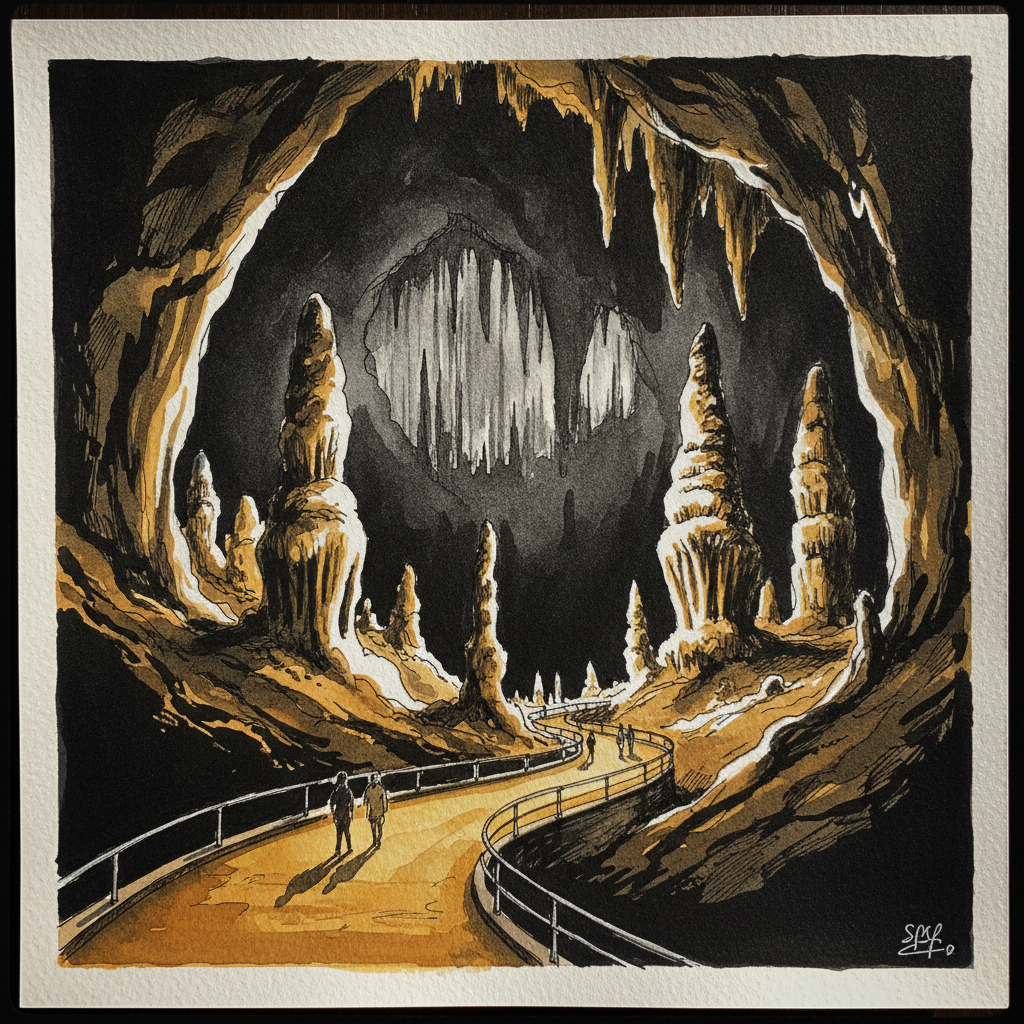
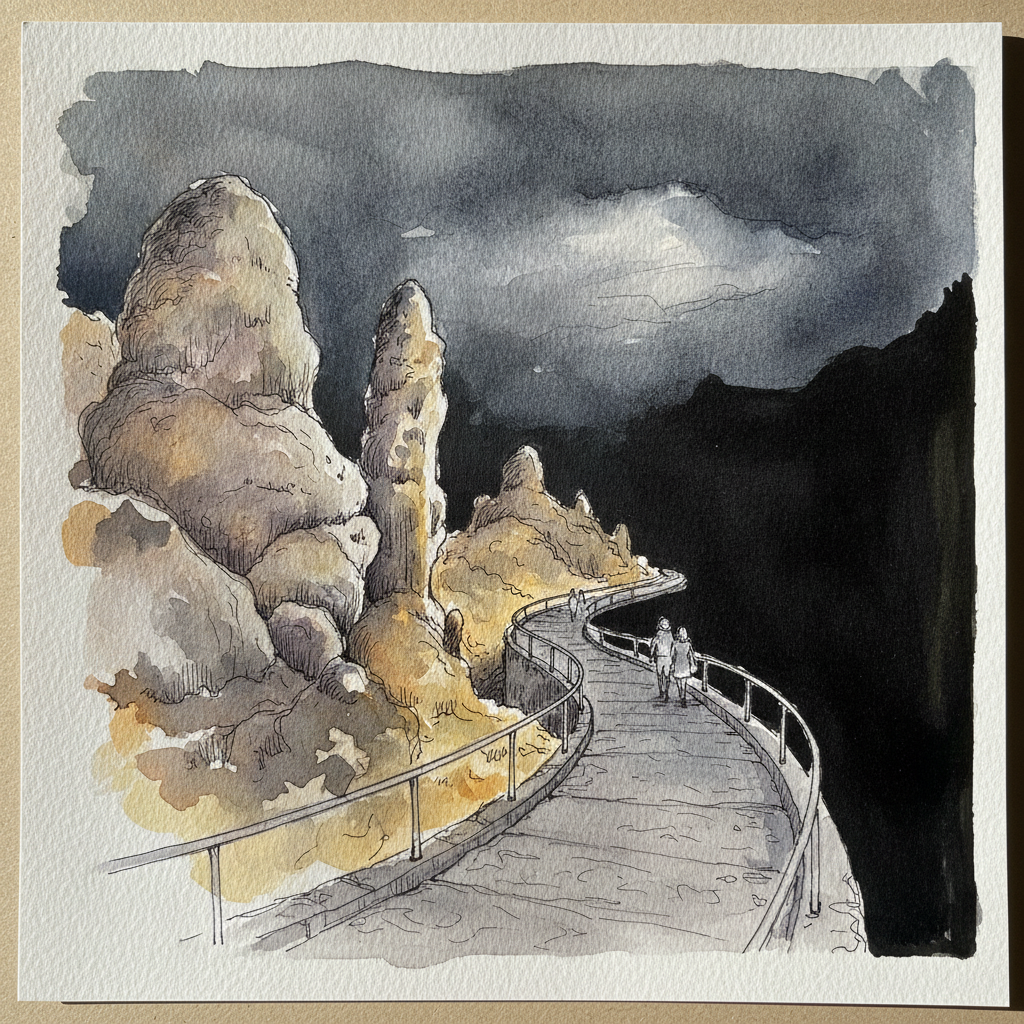
This piece provides an excellent study in capturing dramatic uplighting on the cavern's massive, organic forms. Focus on using broad, warm washes to sculpt the stalagmites from below, letting them transition into deep, cool shadows that imply cavernous depth. Employing varied line weights—sharp for the foreground rail and fine, textural marks for the flowstone folds—will allow your ink to reinforce both scale and geological detail.
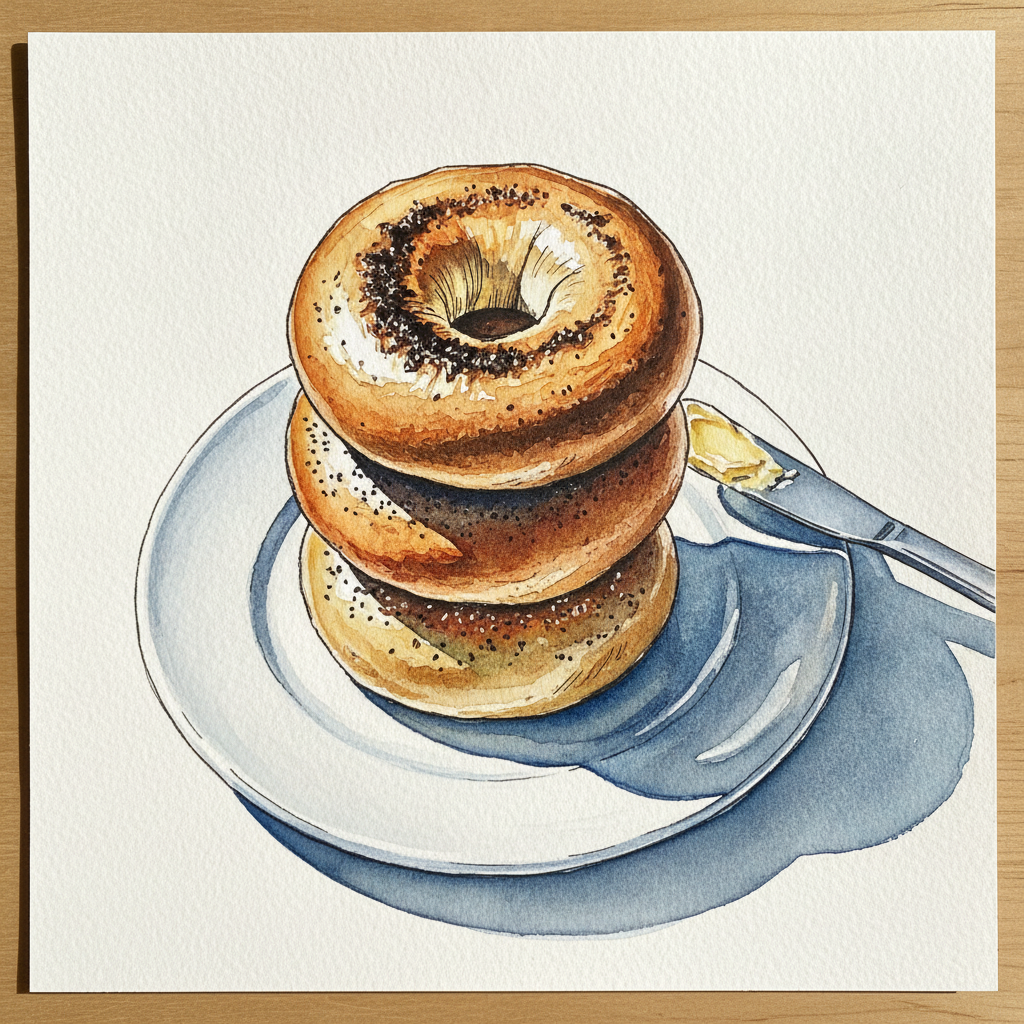
Piece 6 — Bagels stacked four high
Pen + Watercolor · Loose pen and watercolor line-and-wash
Three takes

Focus for this piece
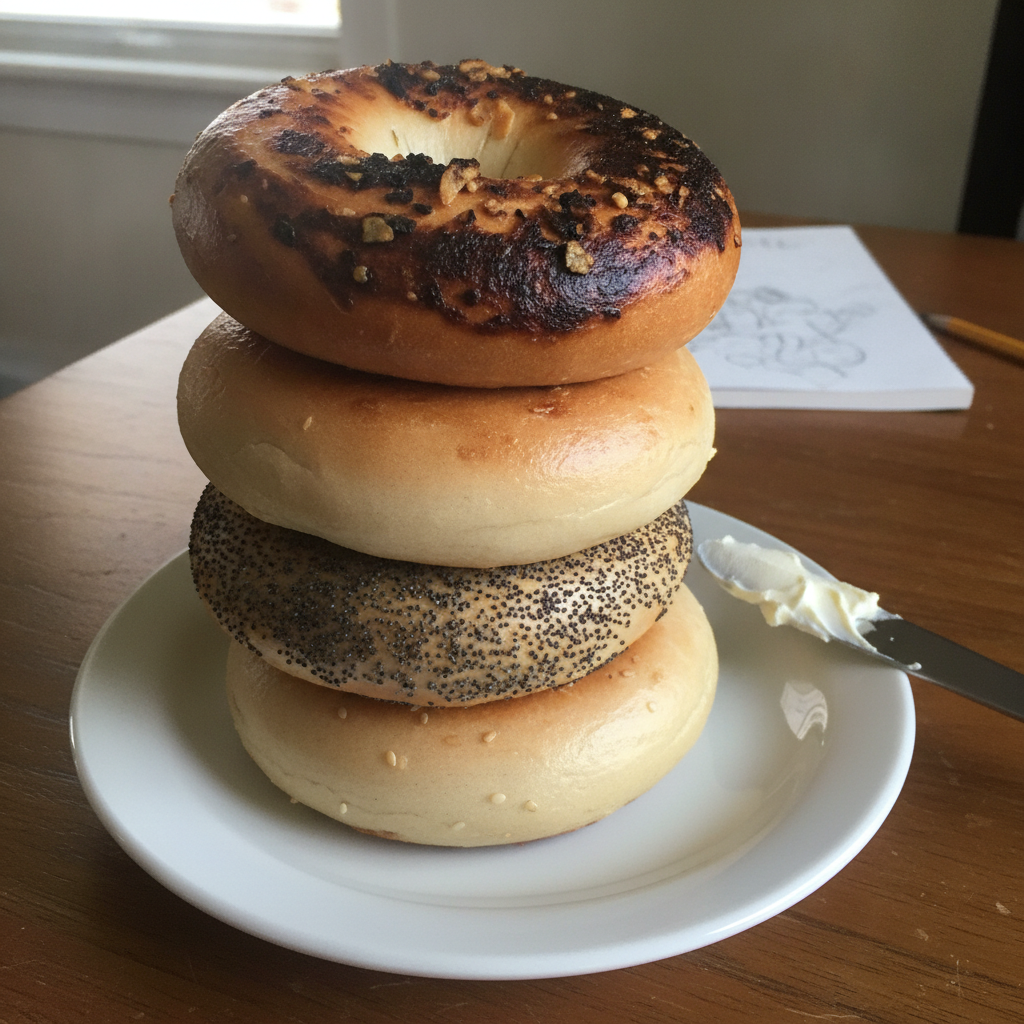
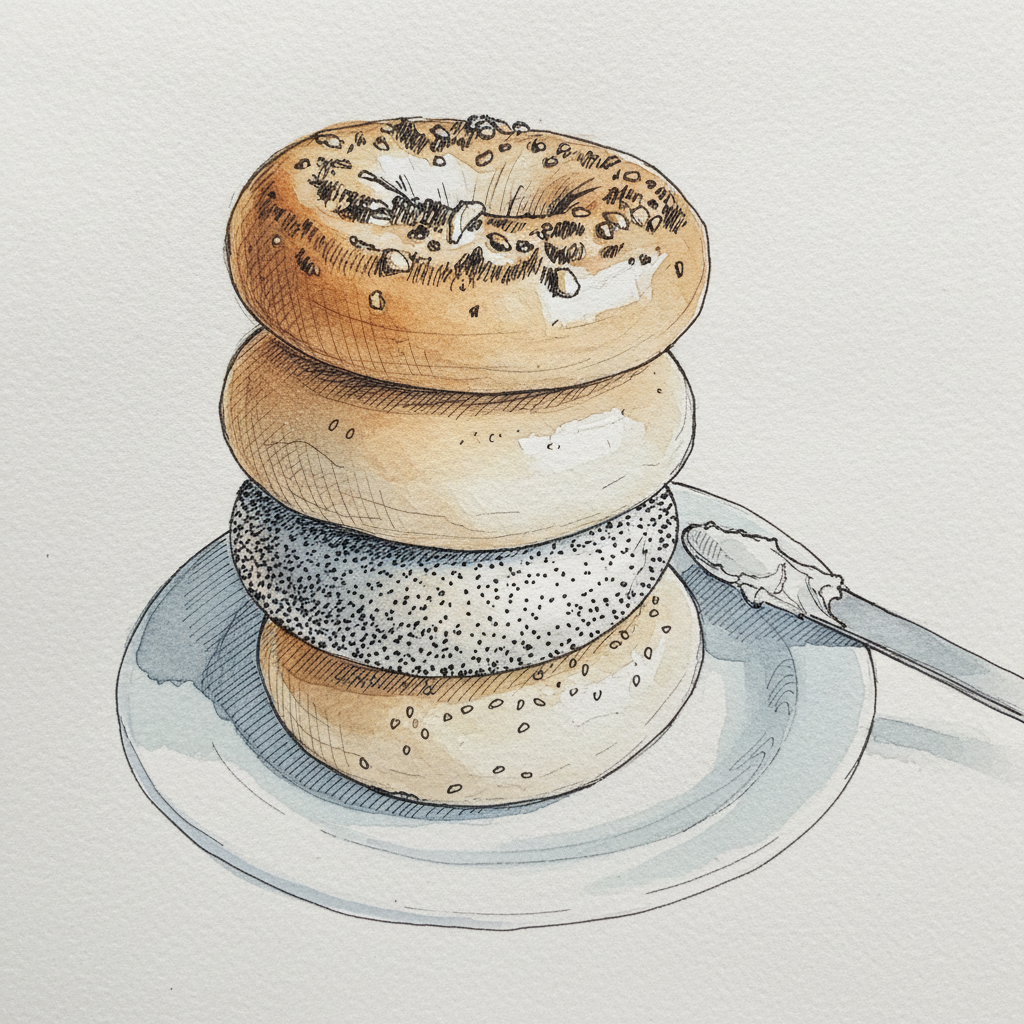
Today’s study is ideal for practicing consistent ellipses and varying line weight to create convincing cylindrical forms and distinct surface textures. Use light, broken contour lines for the general bagel shapes, reserving heavier, concentrated pen work for the distinct toppings like the scorched garlic flakes and the sharp edge of the cream cheese. Focus on how a cool, thin wash of Ultramarine or Cerulean beneath the stack can transform the white plate into a shadowed form, contrasting with the warm, dry brush strokes used to suggest the bagels’ crust and gleam.
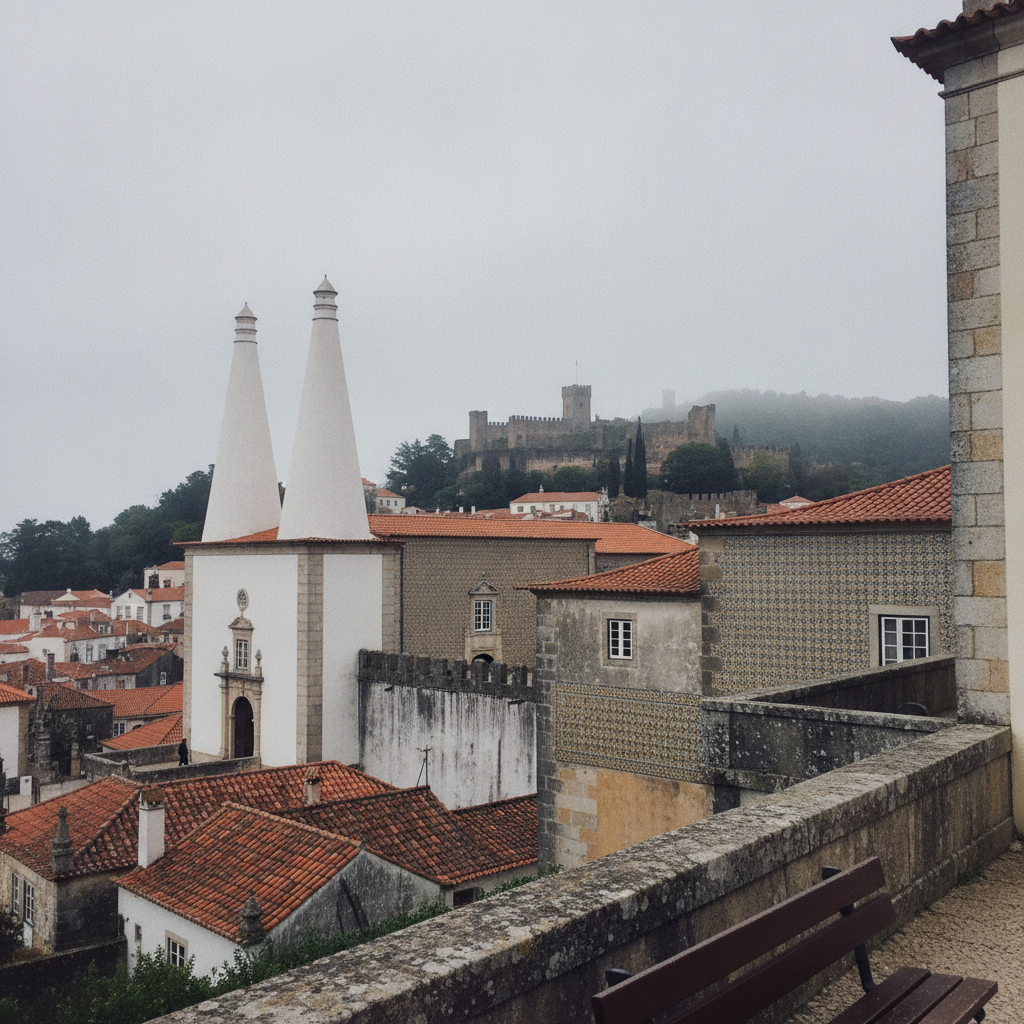
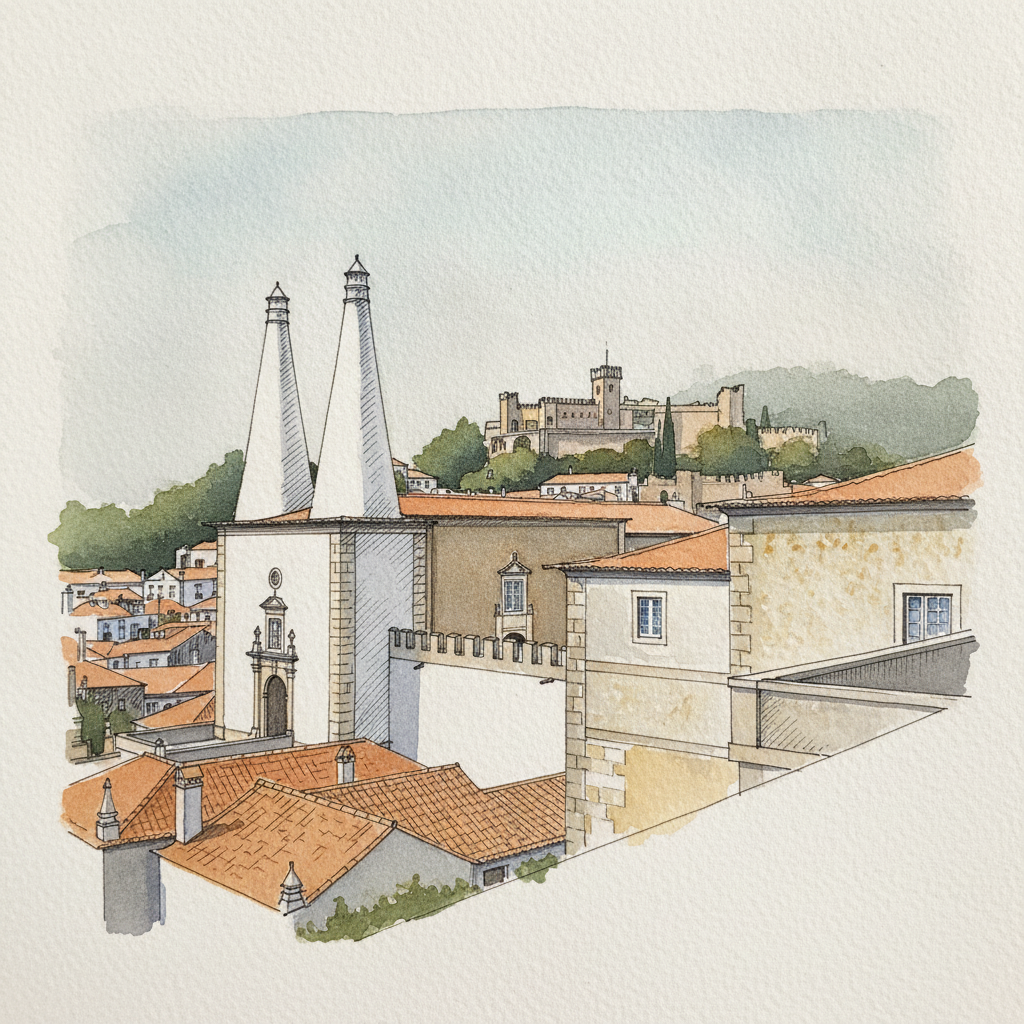
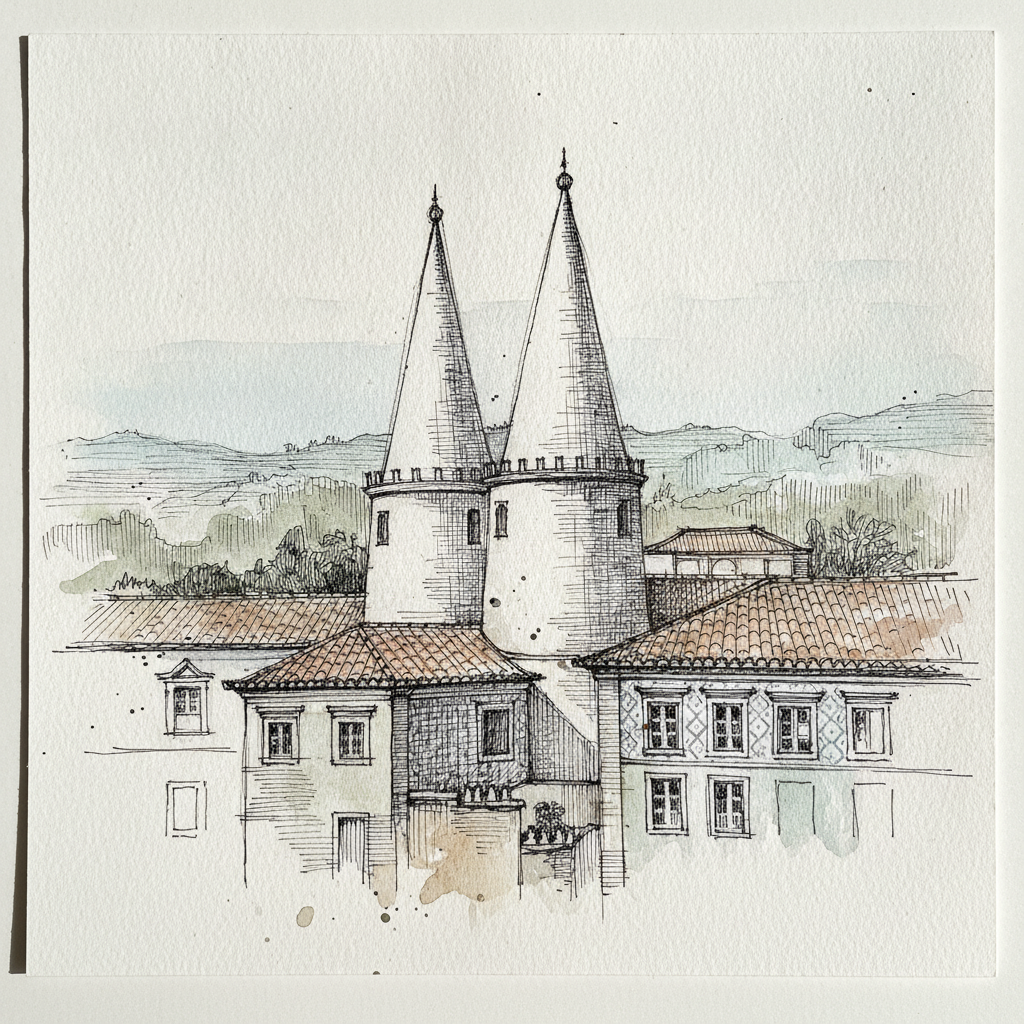
Piece 7 — Palácio Nacional de Sintra, Sintra, Portugal
Pen + Watercolor · Loose pen and watercolor line-and-wash
Three takes

Focus for this piece
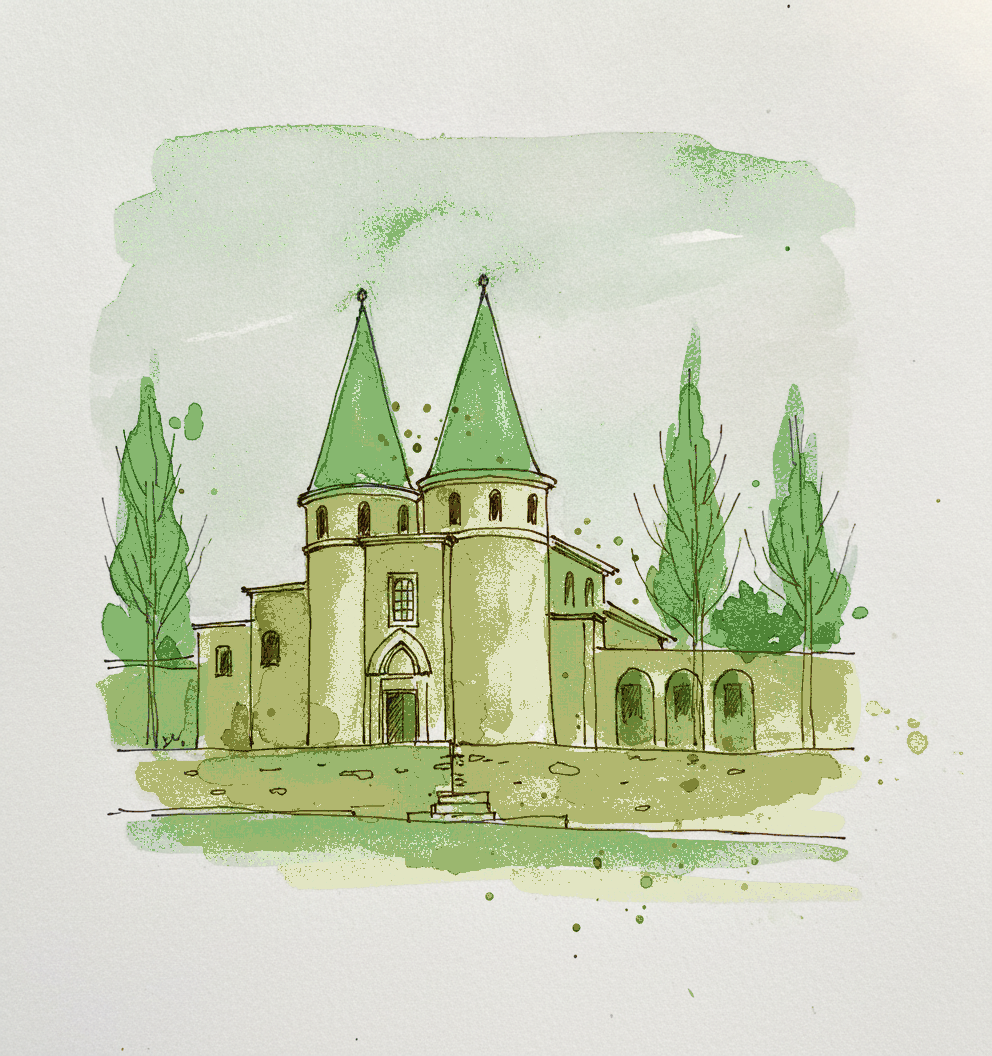
This piece provides an ideal study in rendering prominent architectural features, specifically the Palácio's distinctive conical chimneys. Practice establishing their solid, curved geometry with confident, varied line weights before using pale, cool washes to model their white-rendered surfaces. Pay close attention to how light reveals their three-dimensional form through subtle value shifts, creating a sense of volume without heavy color.
Piece 8 — Mexican fajitas sizzling
Pen + Watercolor · Loose pen and watercolor line-and-wash
Three takes

Focus for this piece
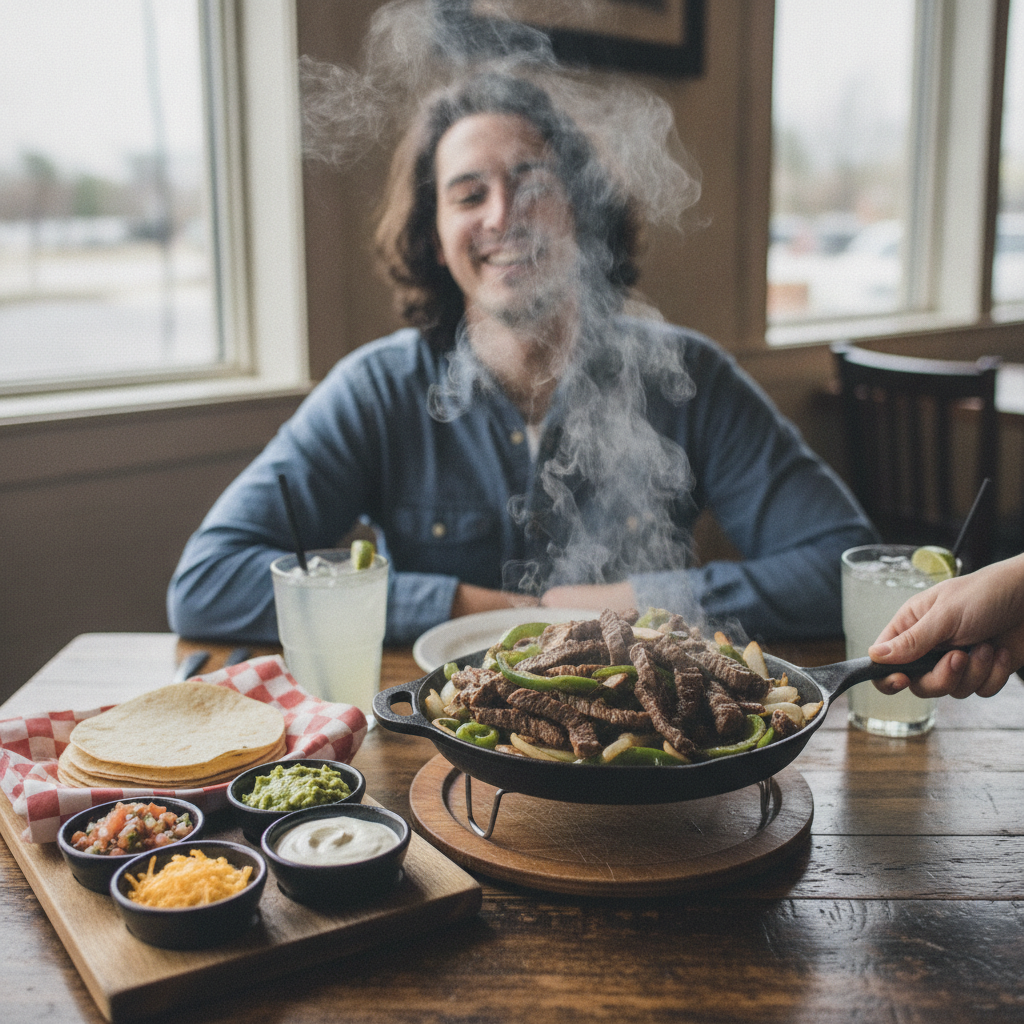
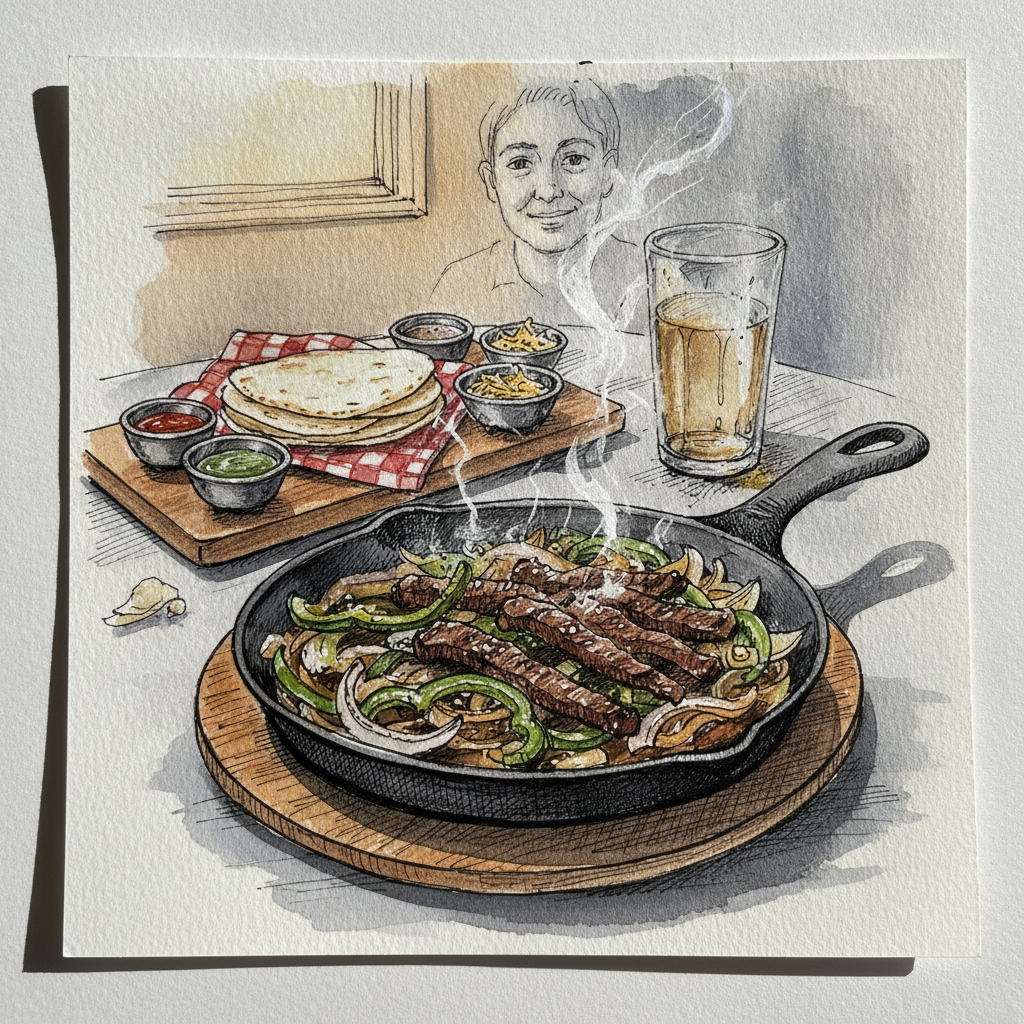
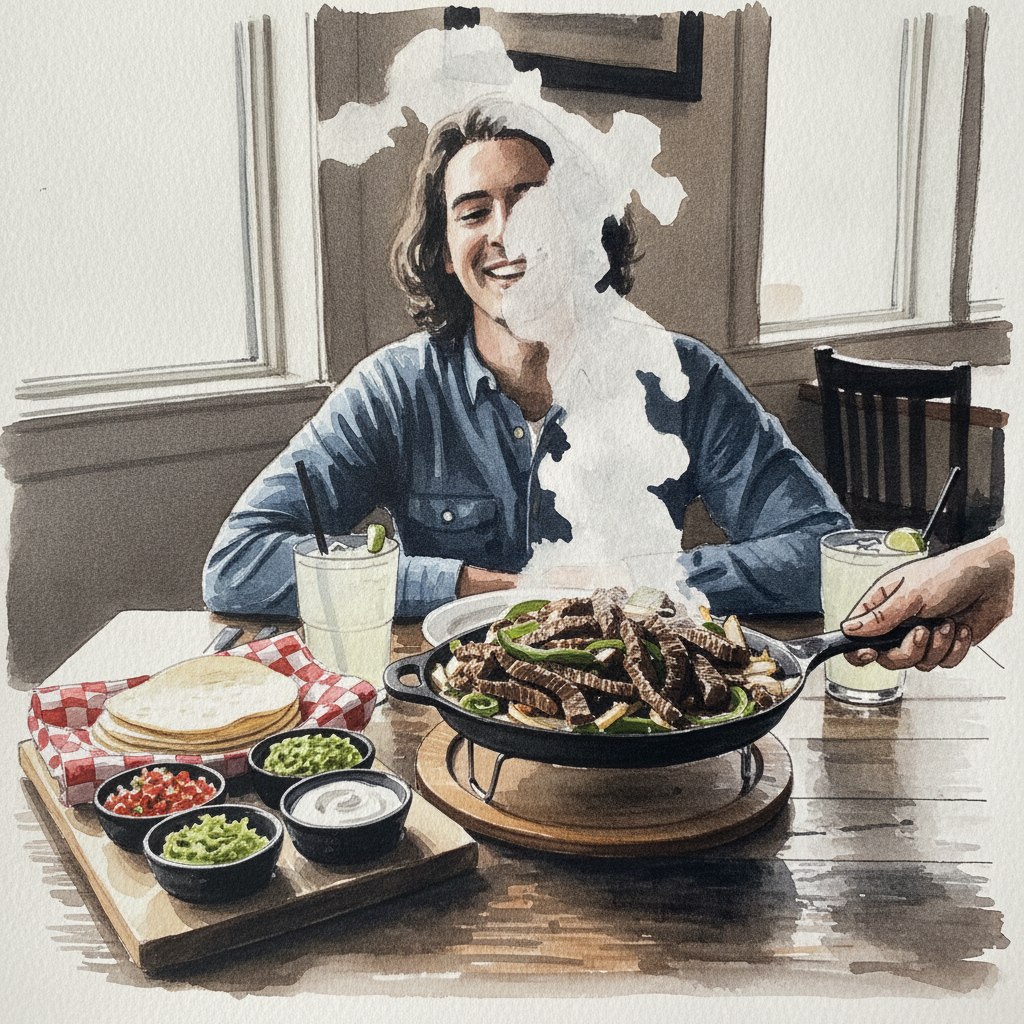
This piece is ideal for studying how to capture the dynamic contrast between solid forms and ephemeral atmosphere. Use confident, varied line weights to define the hard edges of the black cast-iron skillet and the distinct textures of the charred food and various side dishes. Then, employ light, wet-on-wet watercolor washes with strategic lifting to render the three-foot column of fragrant, sizzling steam, allowing its soft edges to convey transparency and movement.