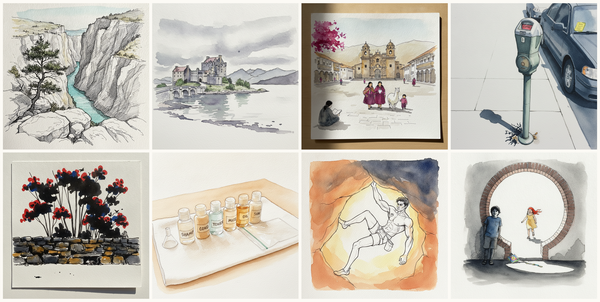
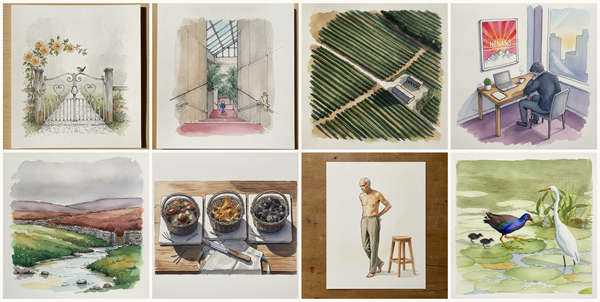
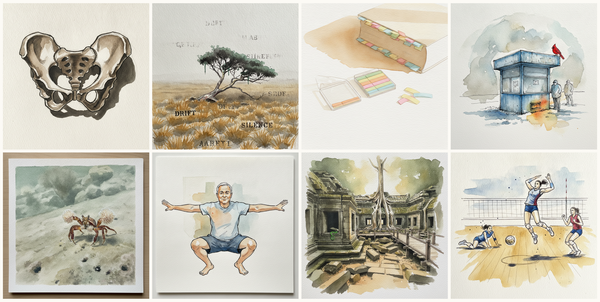
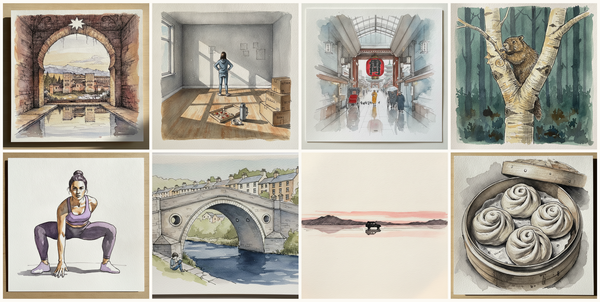
Yarlung Tsangpo Great Bend, Tibet, China, Petunia, Back Écorché Pull-Up Hang, Asymmetric Arms, Legs Spread, Older Black Man on Mat, and more — pen + watercolor for October 27, 2026
AI-generated daily art-practice references for pen and watercolor: Yarlung Tsangpo Great Bend, Tibet, China, Petunia, Back Écorché Pull-Up Hang, Asymmetric Arms, Legs Spread, Older Black Man on Mat, Ethiopian platter with injera, Dog at the Edge, Zippo lighter on map, Junagarh Fort, Bikaner, Raja…
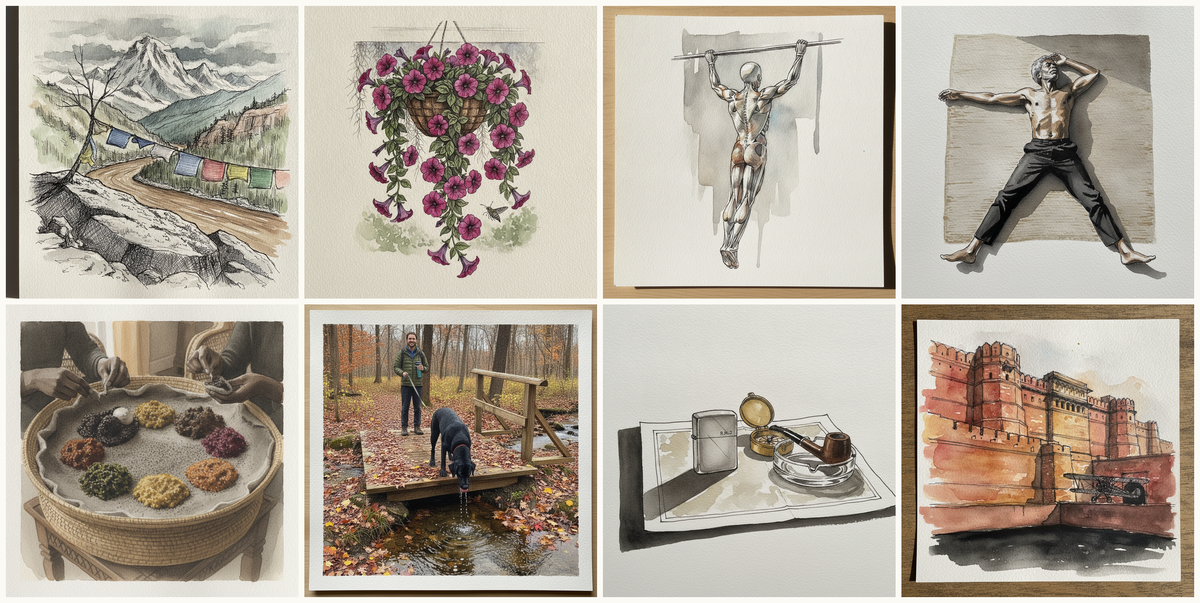
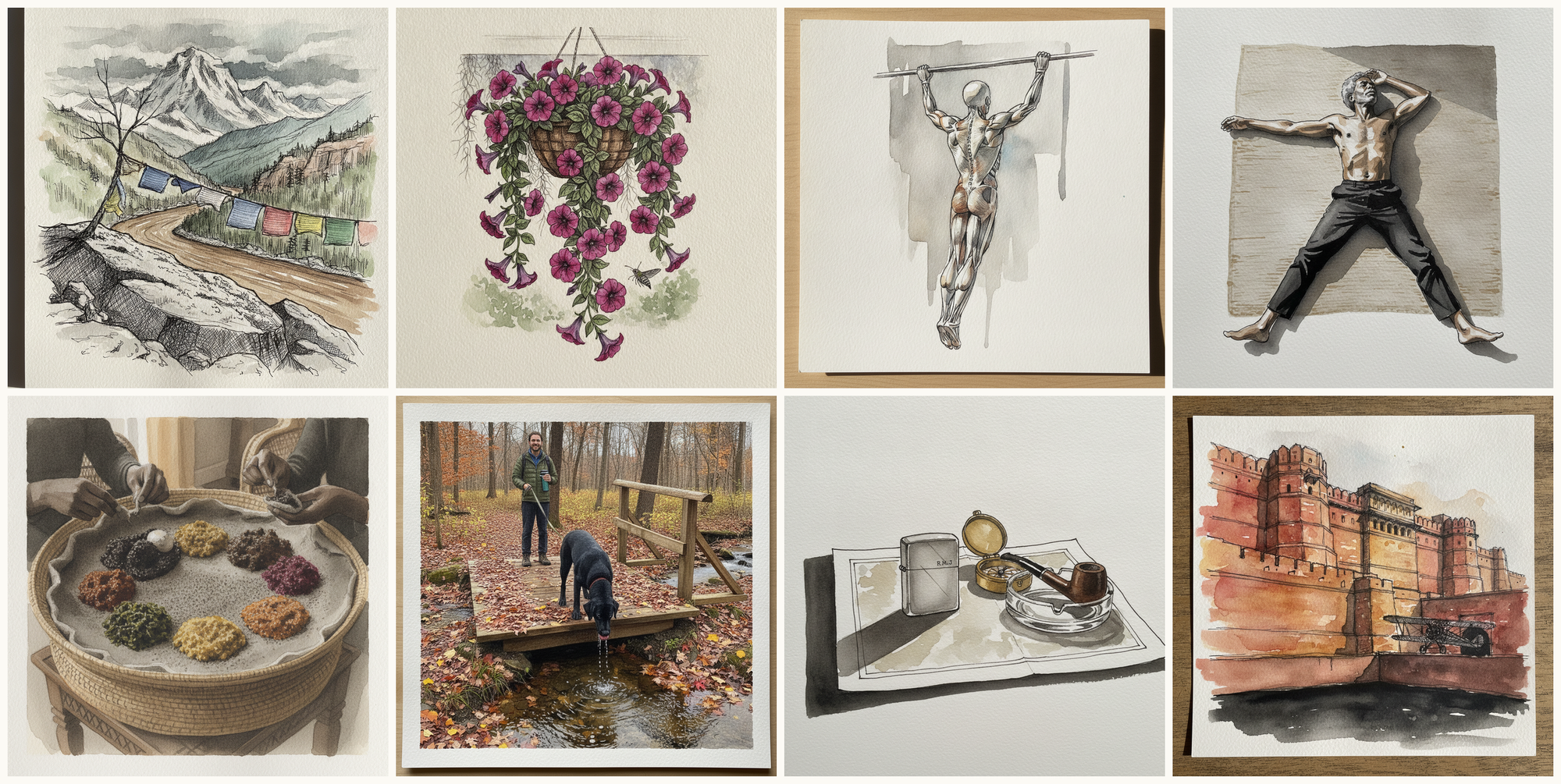
Today's 8 pen-and-watercolor pieces: Yarlung Tsangpo Great Bend, Tibet, China, Petunia, Back Écorché Pull-Up Hang, Asymmetric Arms, Legs Spread, Older Black Man on Mat, Ethiopian platter with injera, Dog at the Edge, Zippo lighter on map, Junagarh Fort, Bikaner, Rajasthan, India. Each piece comes with an AI-generated photoreal reference, three AI-generated example artworks in different treatments, and a short focus paragraph naming what to study in this one.
Why these references use AI
This daily series uses AI-generated images as practice prompts, not as finished artwork to copy. Each subject starts with a synthetic photoreal reference generated with Gemini/Nano Banana, then moves into three pen-and-watercolor interpretations of the same subject.
I use AI here because daily art practice needs variety and low friction. Real life can get repetitive, busy, or visually narrow. These generated reference sets make it easier to study bodies, buildings, animals, landscapes, objects, gestures, light, palettes, and compositions that might not show up in an ordinary day.
The goal is not to reproduce any image directly. Treat each set as a starting point for observation and study: choose what interests you, change the framing, simplify the subject, alter the palette, and make your own version.
Piece 1 — Yarlung Tsangpo Great Bend, Tibet, China
Pen + Watercolor · Loose pen and watercolor line-and-wash
Three takes
Focus for this piece
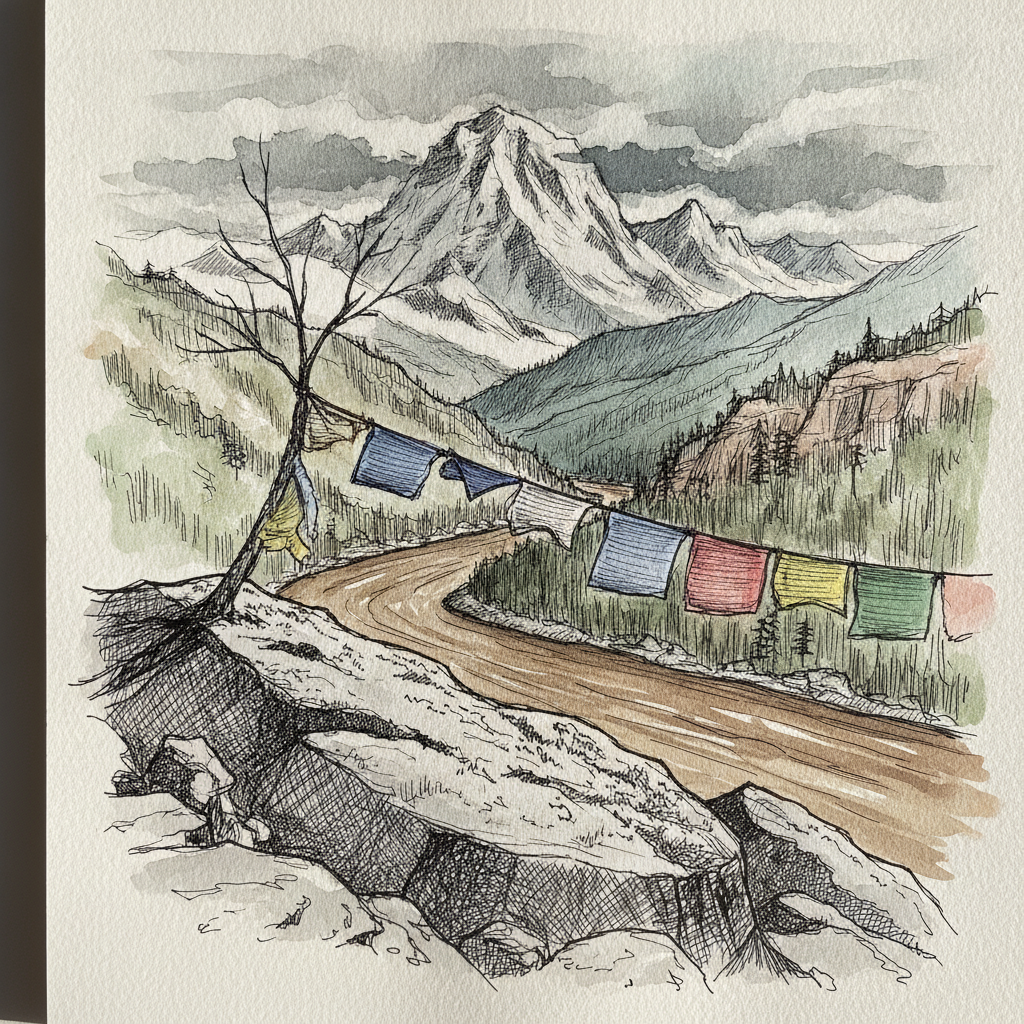
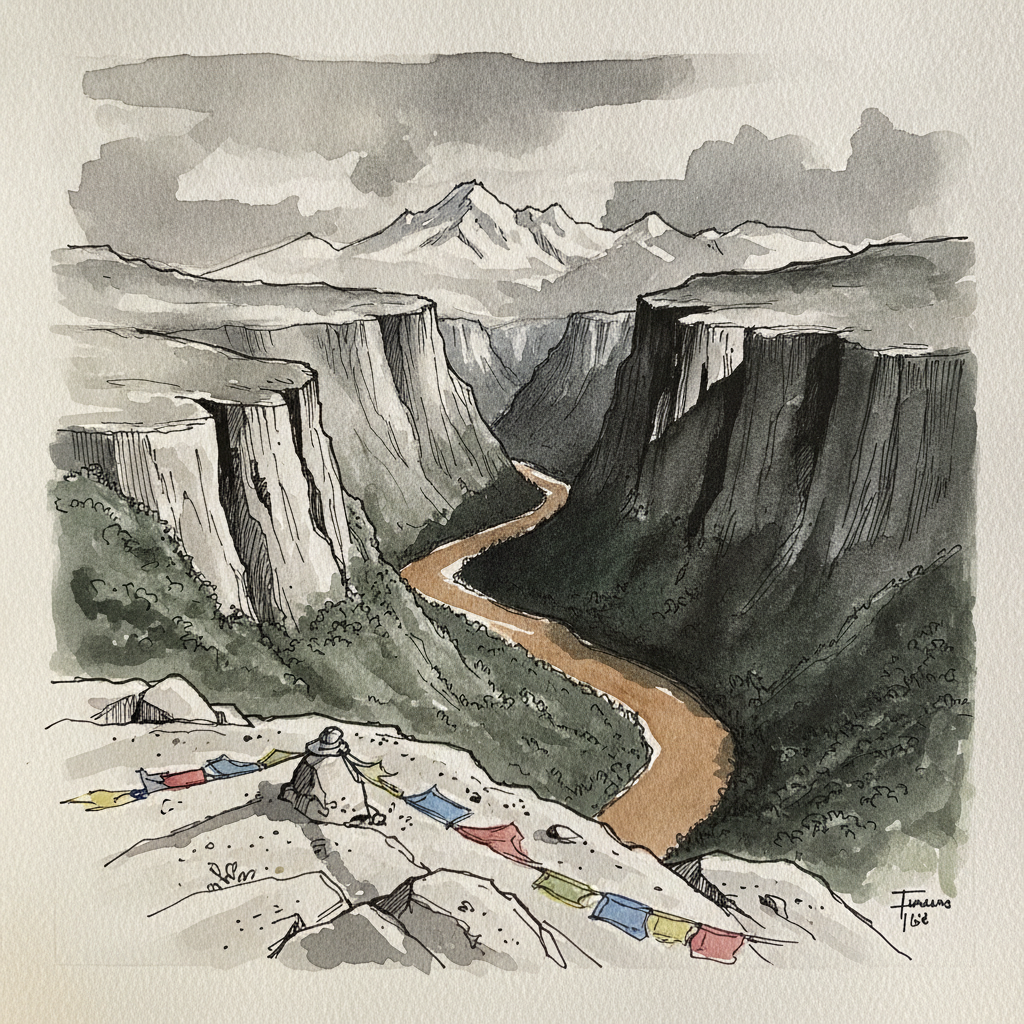
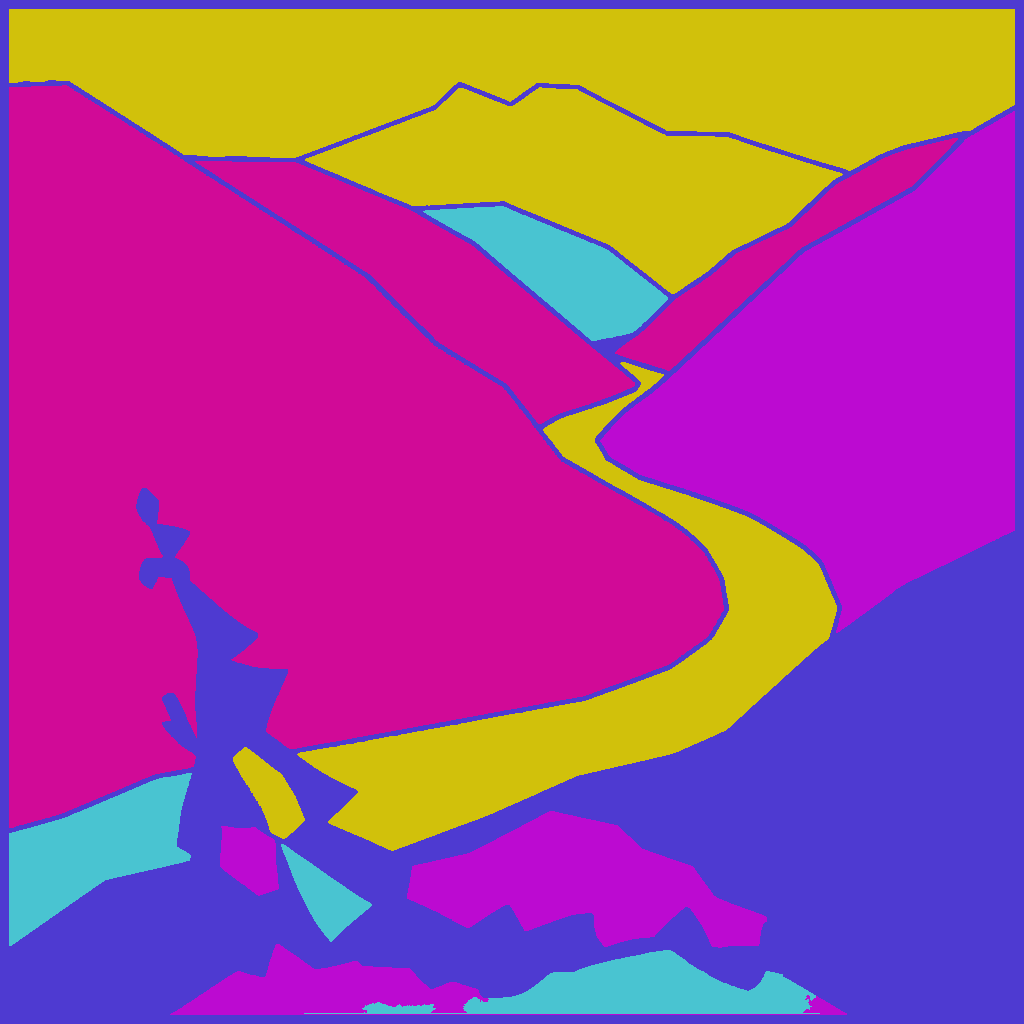
This piece is ideal for studying atmospheric perspective through the strategic interplay of pen line and watercolor washes to convey immense scale. Use strong, varied line weights, from crisp, darker marks on the foreground granite and prayer flags, to progressively lighter and more broken lines for the mid-ground jungle, and barely suggested forms of the distant massif. Contrast sharp, more saturated washes for the close-up river and flag details with soft, dilute wet-on-wet applications for the cloud-shrouded peak, allowing edges to dissolve to convey vast distance and aerial haze. A cool-dominant palette, anchored by the earthy river, will further enhance the feeling of receding depth.
Piece 2 — Petunia
Pen + Watercolor · Loose pen and watercolor line-and-wash
Three takes
Focus for this piece
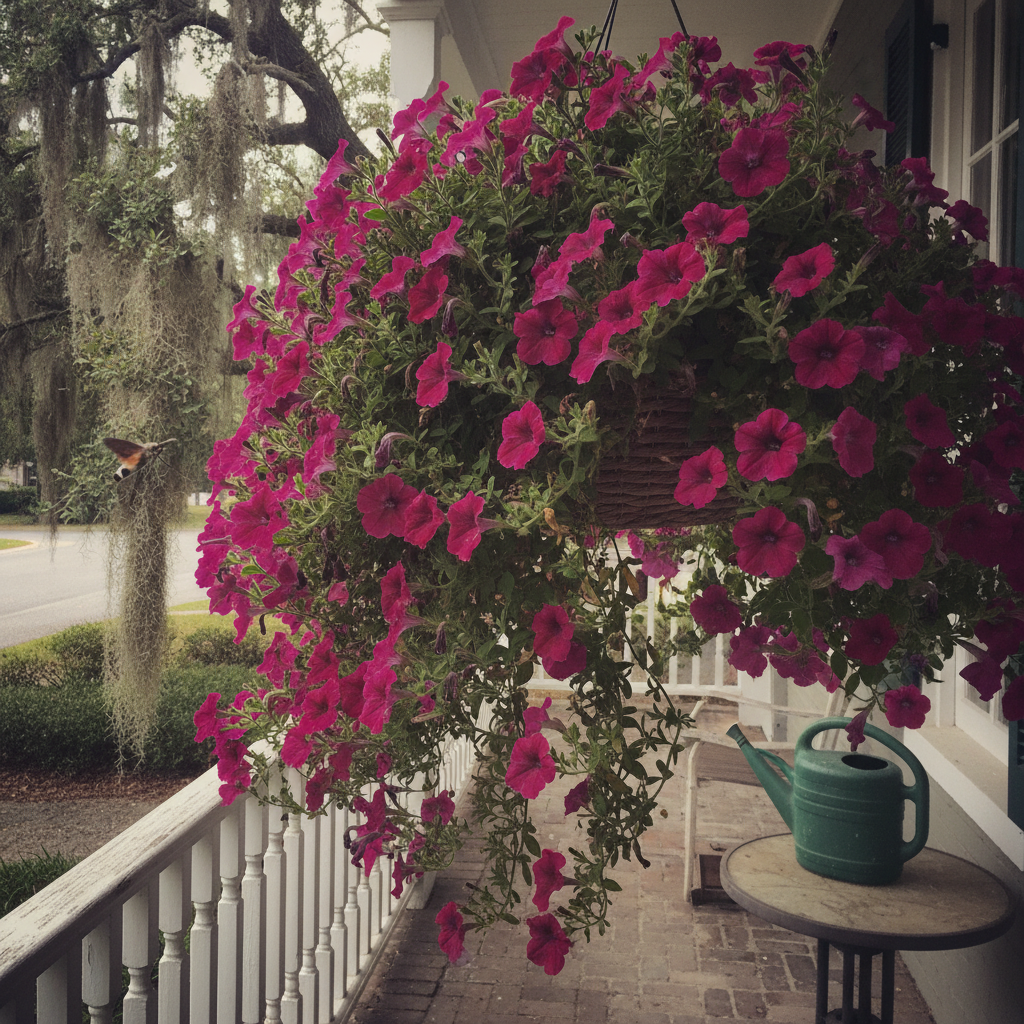
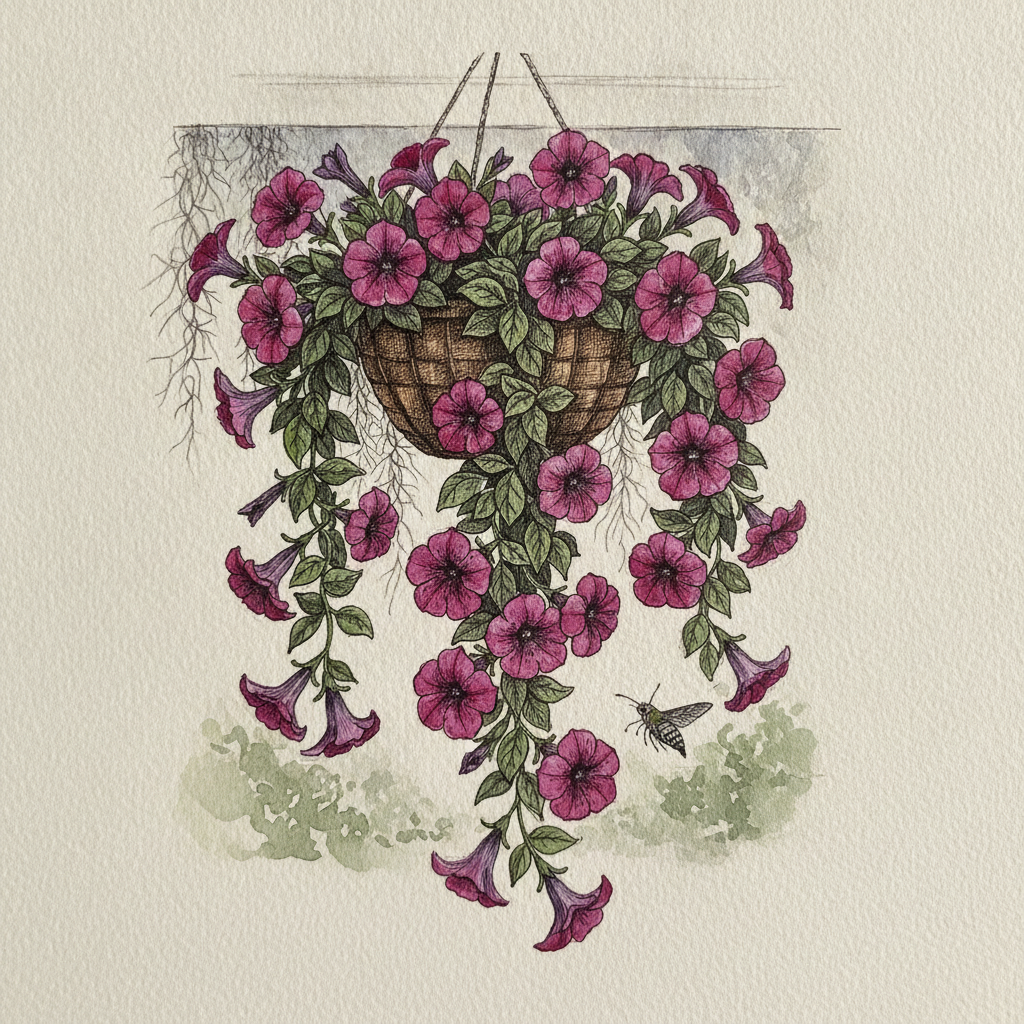
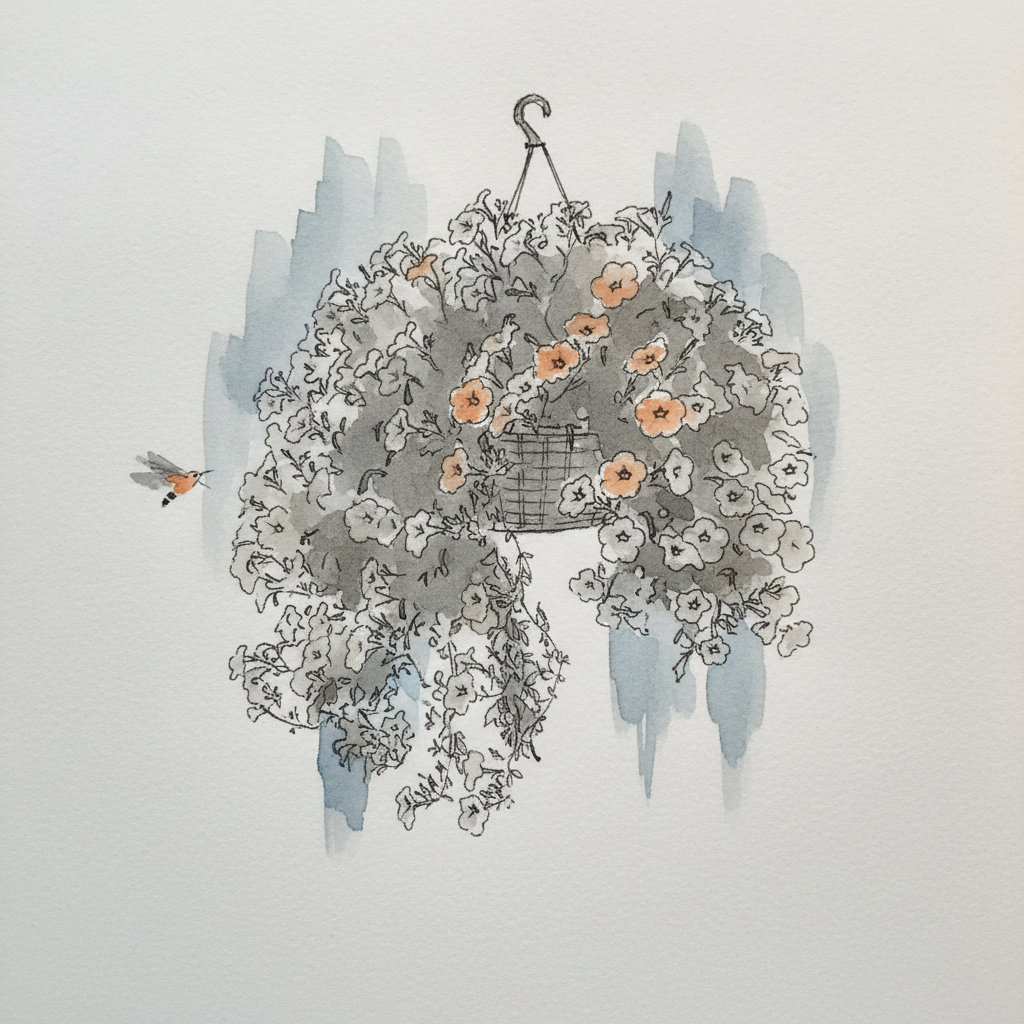
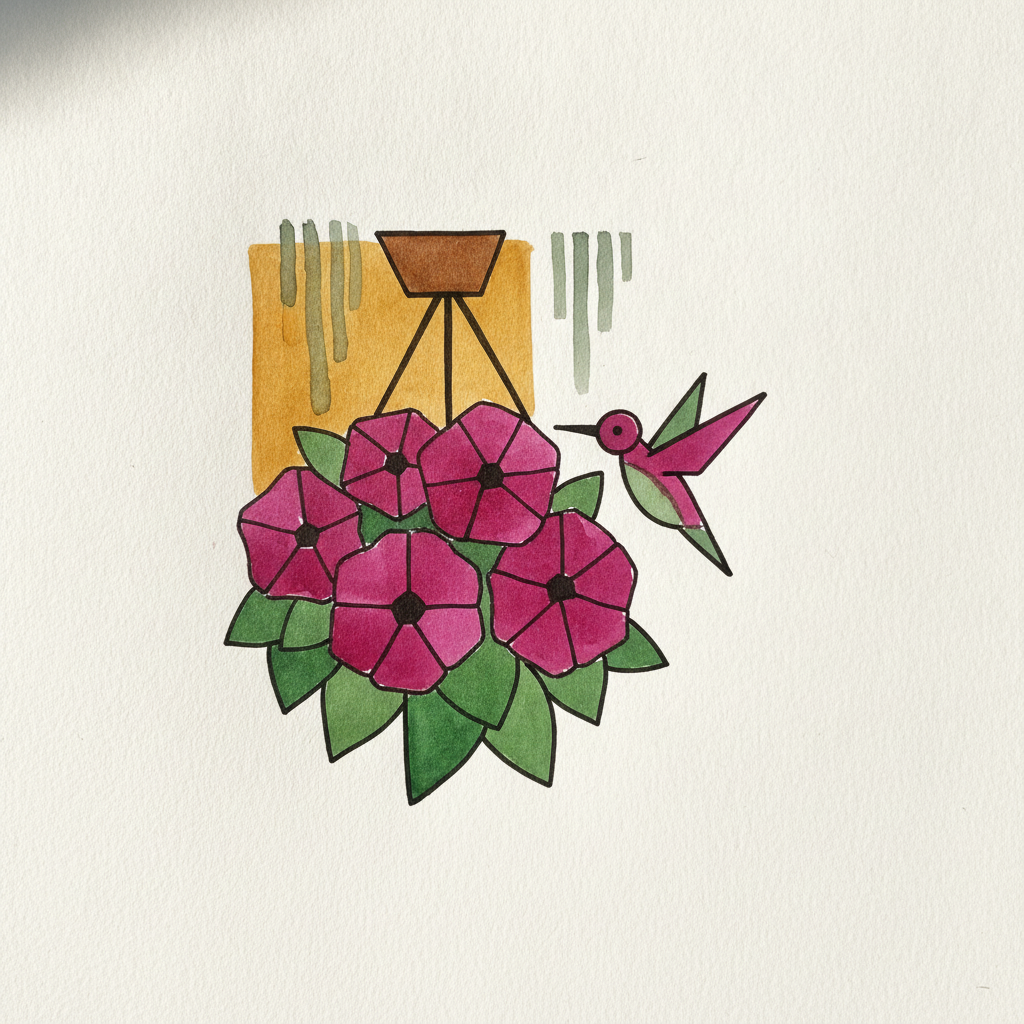
This piece is ideal for studying how to build lush, cascading organic forms. Vary your pen line weights to define the layered, funnel-shaped blossoms and trailing stems, allowing some lines to be lost and found within the dense growth. Then, use wet-on-wet magenta washes to build up the voluminous flower mass, letting values deepen in overlapped areas to suggest three-dimensional form. Reserve crisp detail and a finer line for the hovering hummingbird hawk-moth to create a focal point against the softer floral cascade.
Piece 3 — Back Écorché Pull-Up Hang
Pen + Watercolor · Loose pen and watercolor line-and-wash
Three takes
Focus for this piece
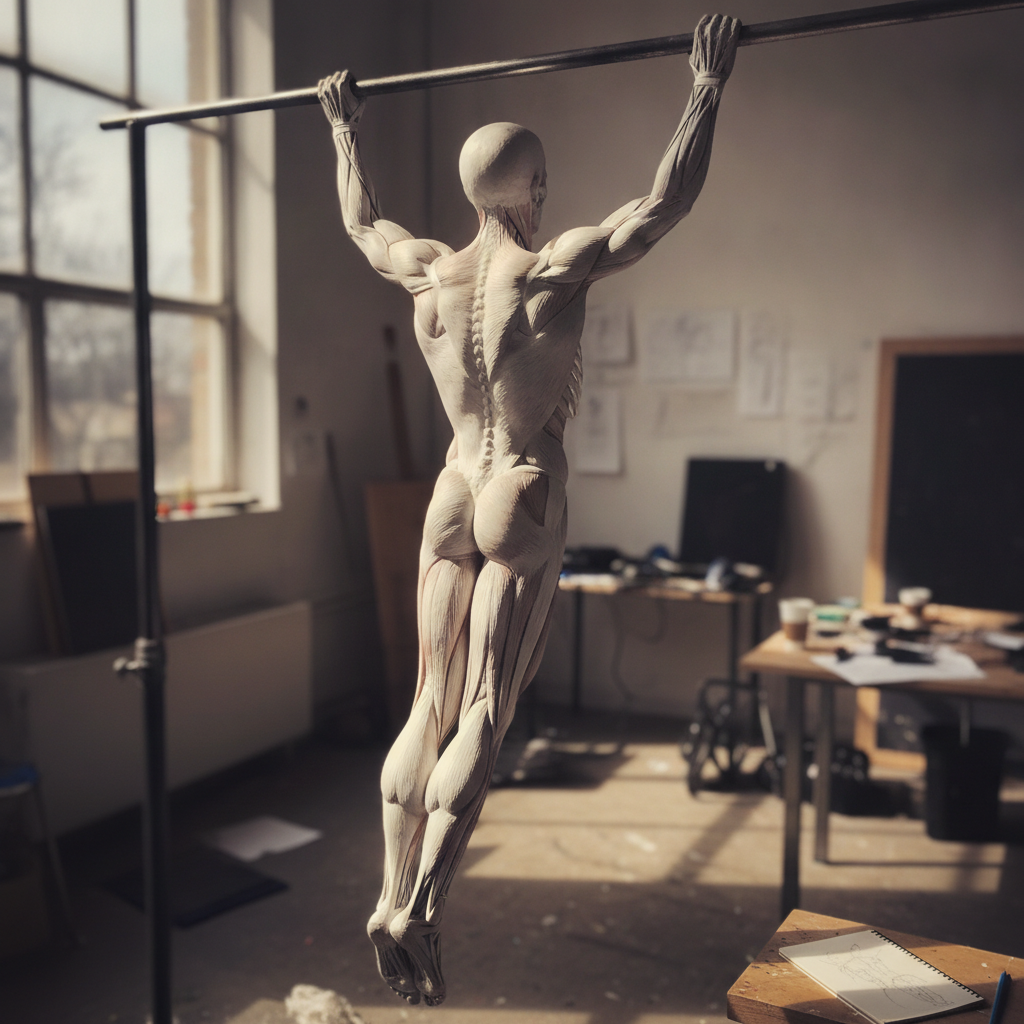
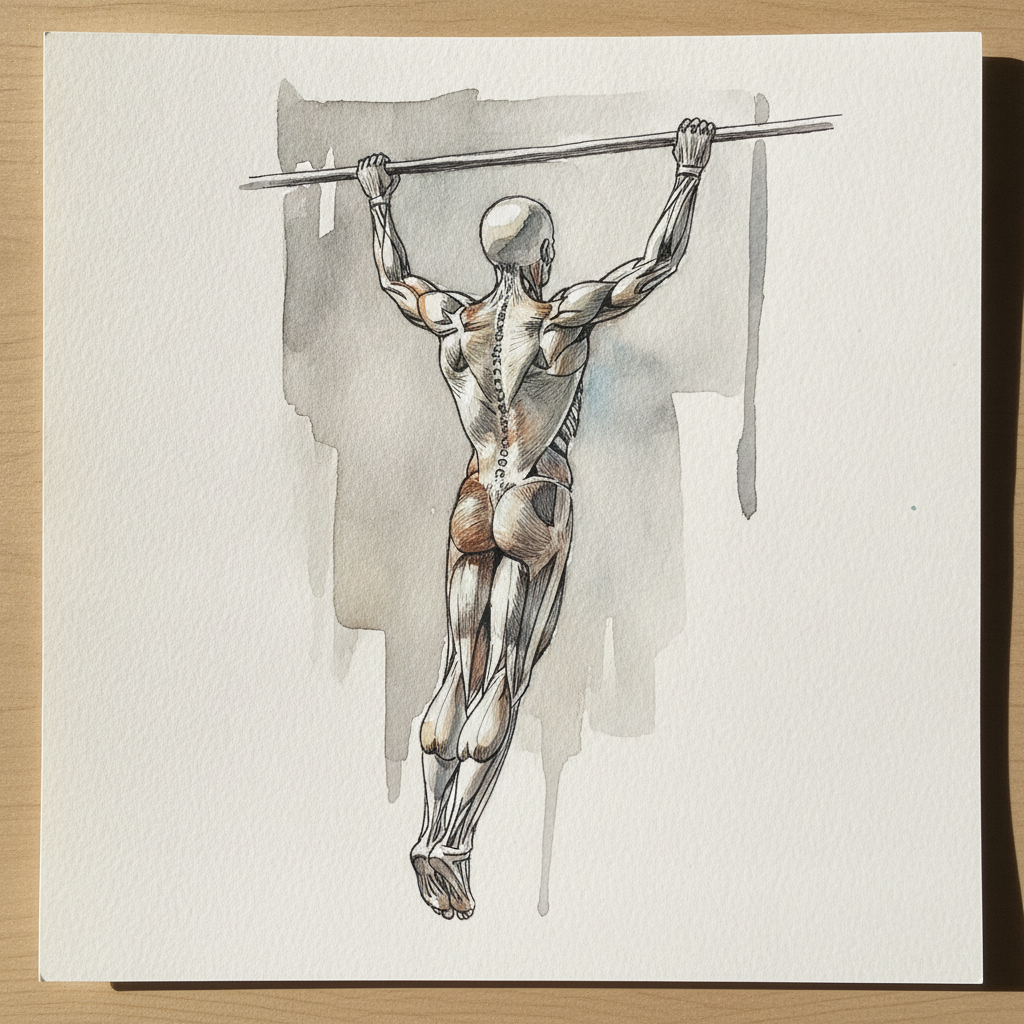
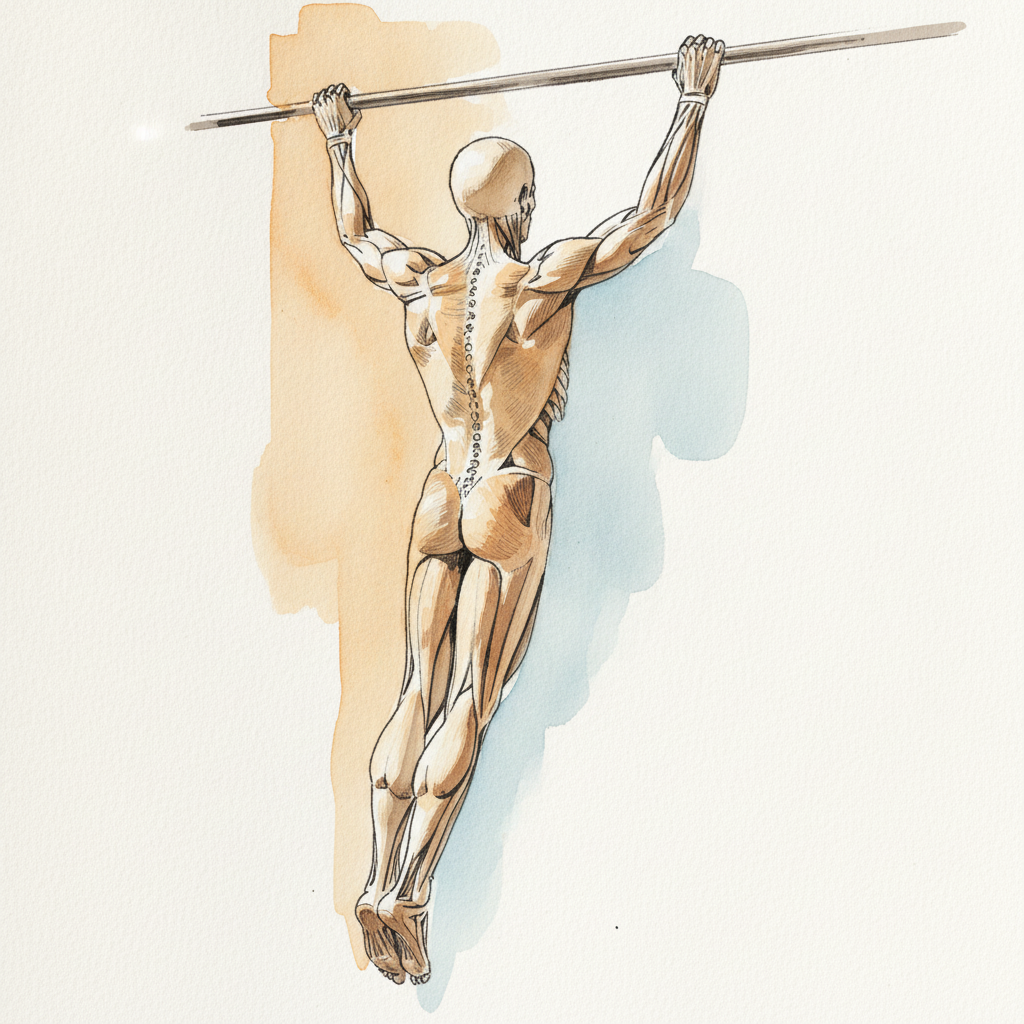
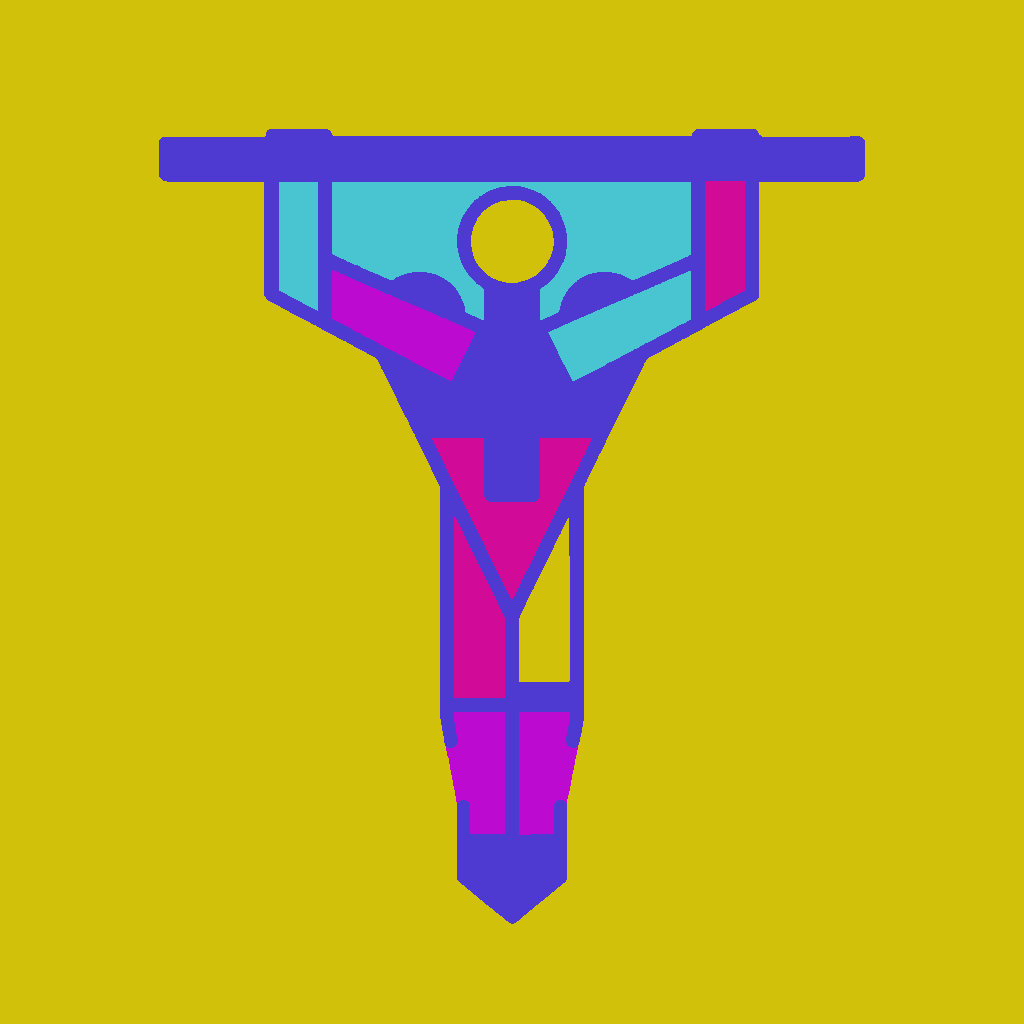
This écorché study offers a superb opportunity to practice using varied, confident line weights to delineate the extreme V-taper and prominent musculature, particularly the stretched latissimus dorsi. Complement this with direct, directional washes, allowing a single mid-tone pigment to sculpt the form by emphasizing the strong light and shadow created by the side raking illumination.
Piece 4 — Asymmetric Arms, Legs Spread, Older Black Man on Mat
Pen + Watercolor · Loose pen and watercolor line-and-wash
Three takes
Focus for this piece
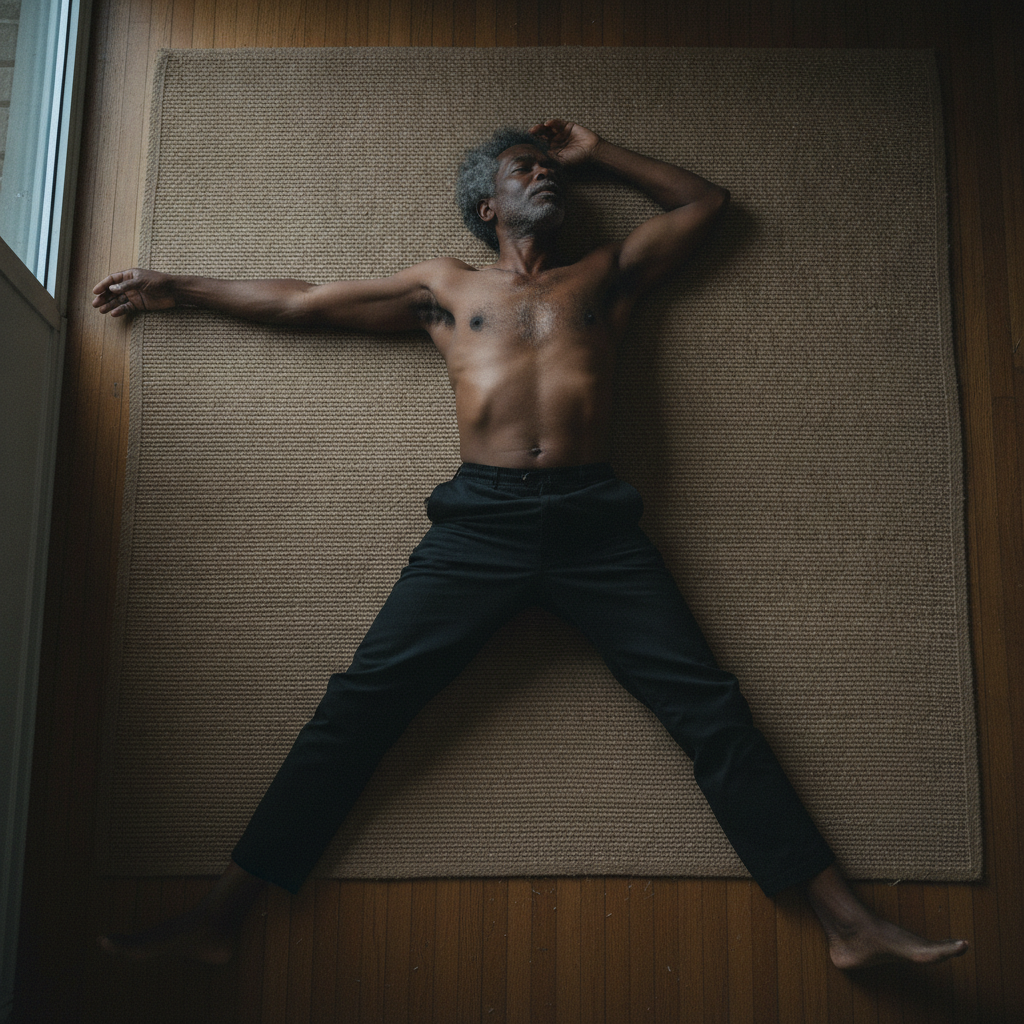
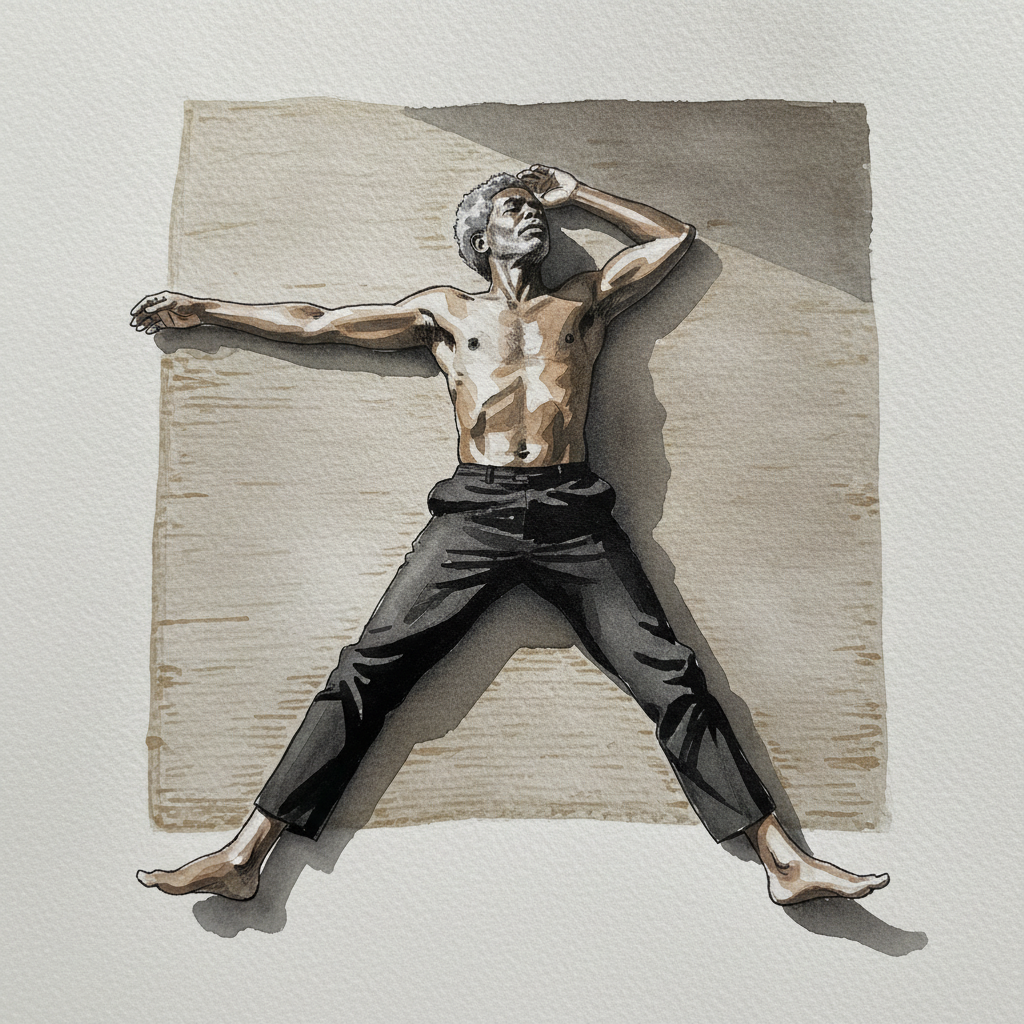
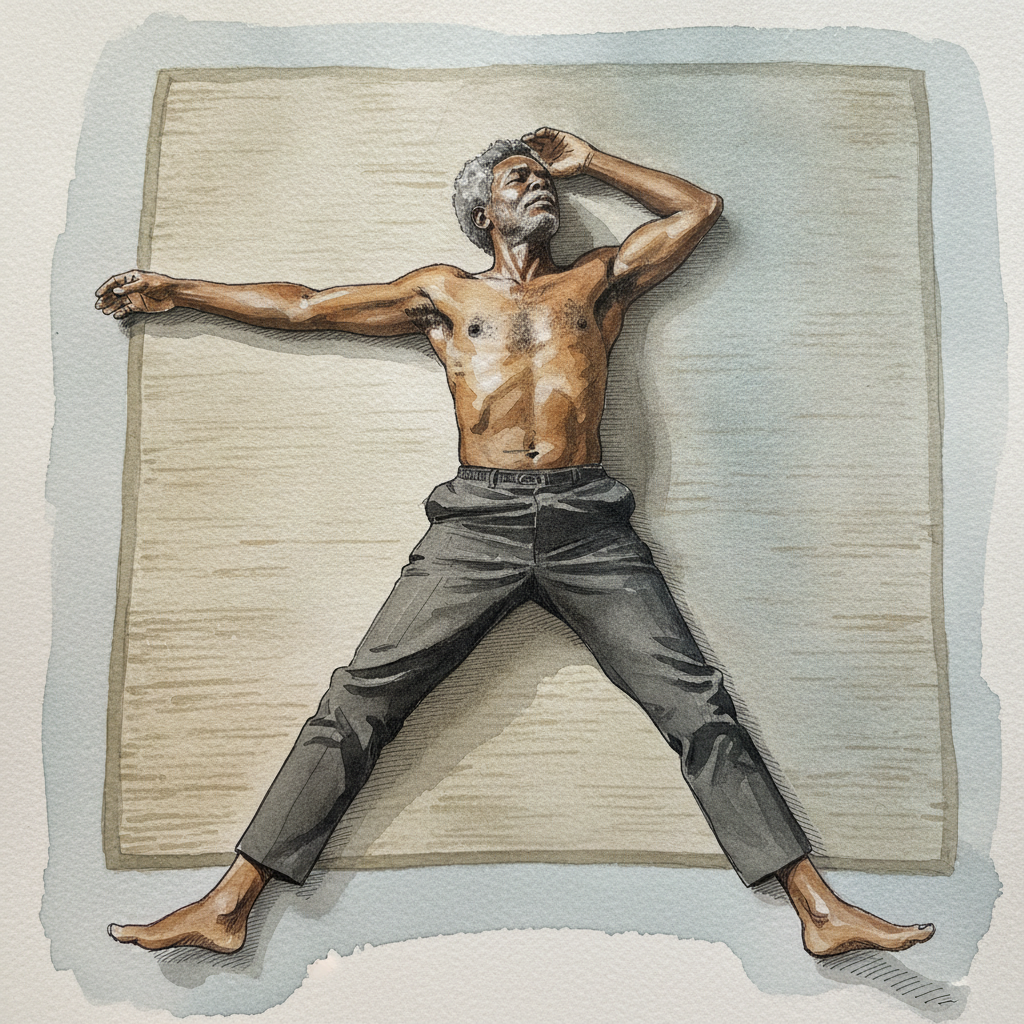
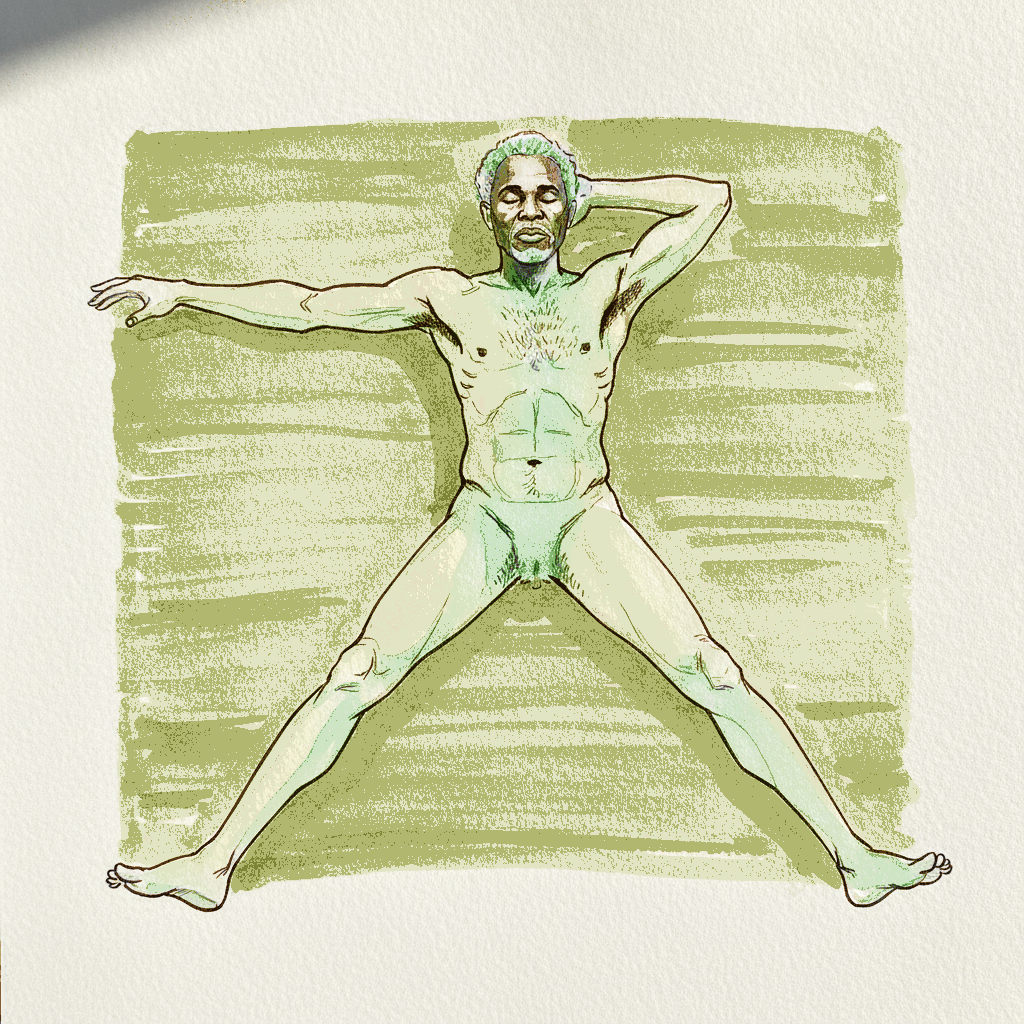
This piece offers an excellent study in conveying geometric contrast through line and wash. Employ crisp, continuous pen lines to define the grounded symmetry of the legs' V-shape, then switch to more broken, varied line weights for the upper body's asymmetric twist. Use careful wet-on-dry watercolor layering to model the subtle volume of the torso and emphasize the cool overhead light, allowing washes to soften contours where the figure meets the mat. This approach lets the ink provide structural clarity while watercolor articulates the light and form.
Piece 5 — Ethiopian platter with injera
Pen + Watercolor · Loose pen and watercolor line-and-wash
Three takes
Focus for this piece
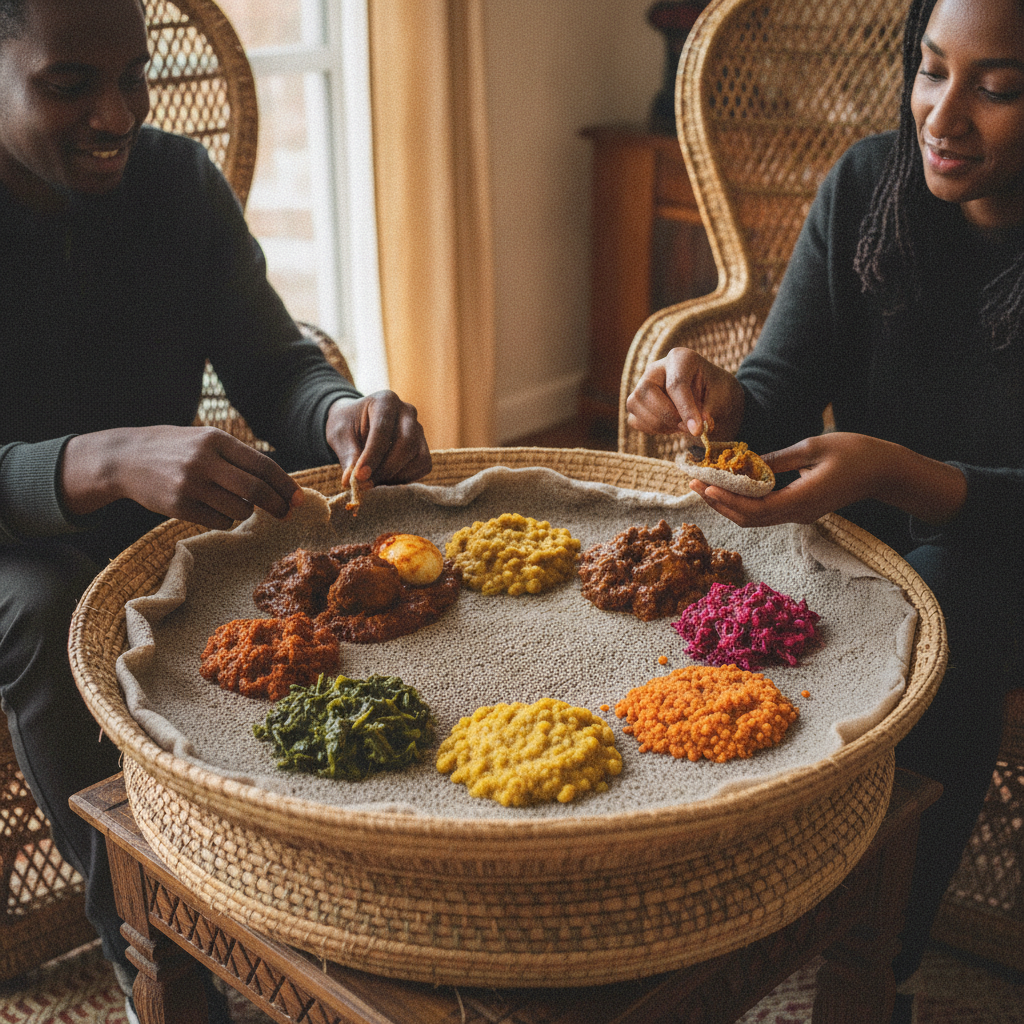
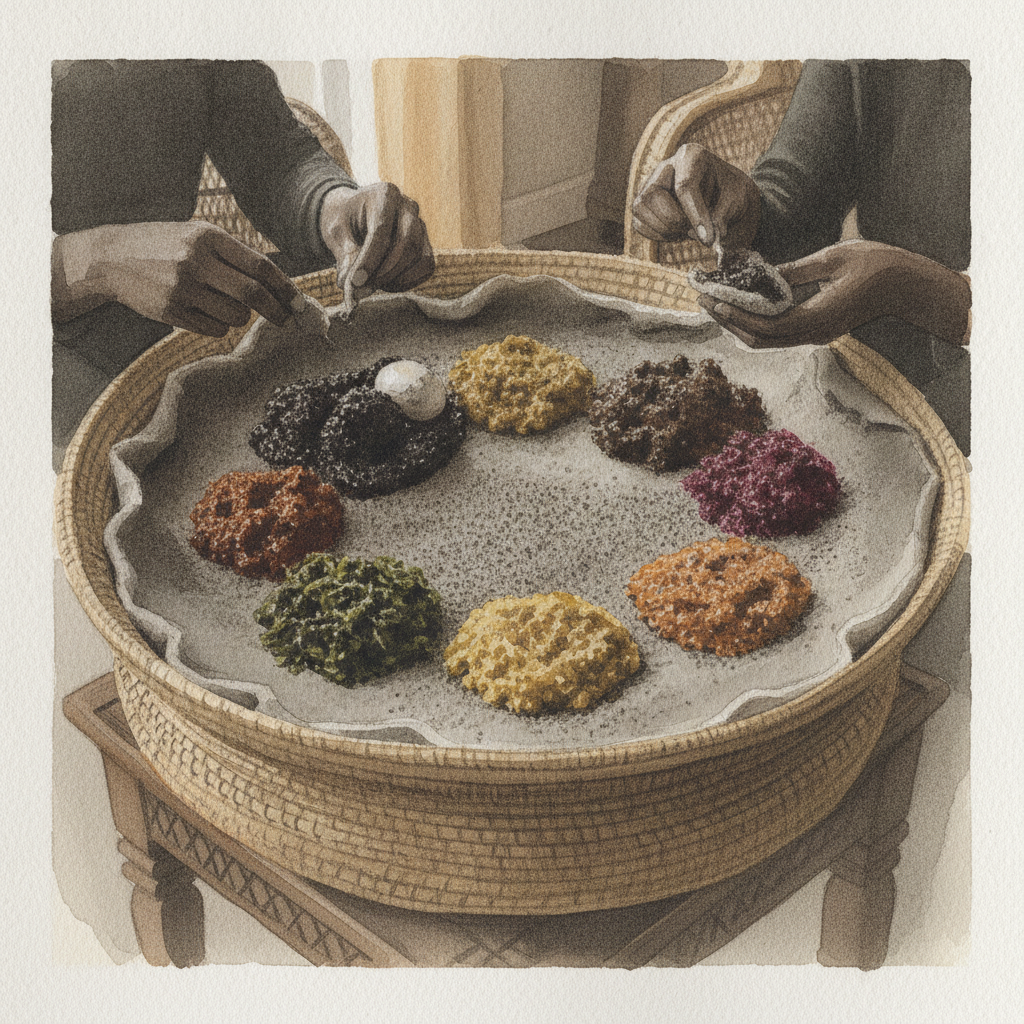
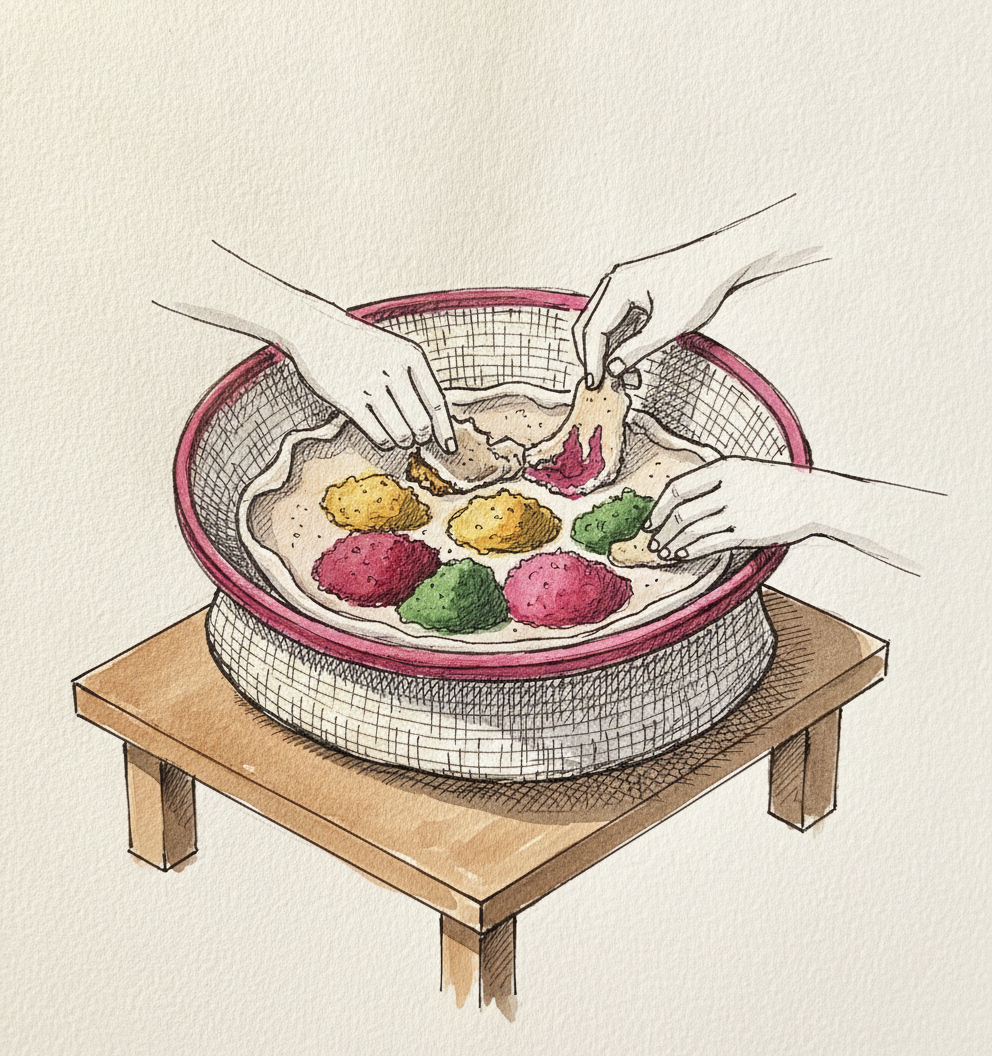
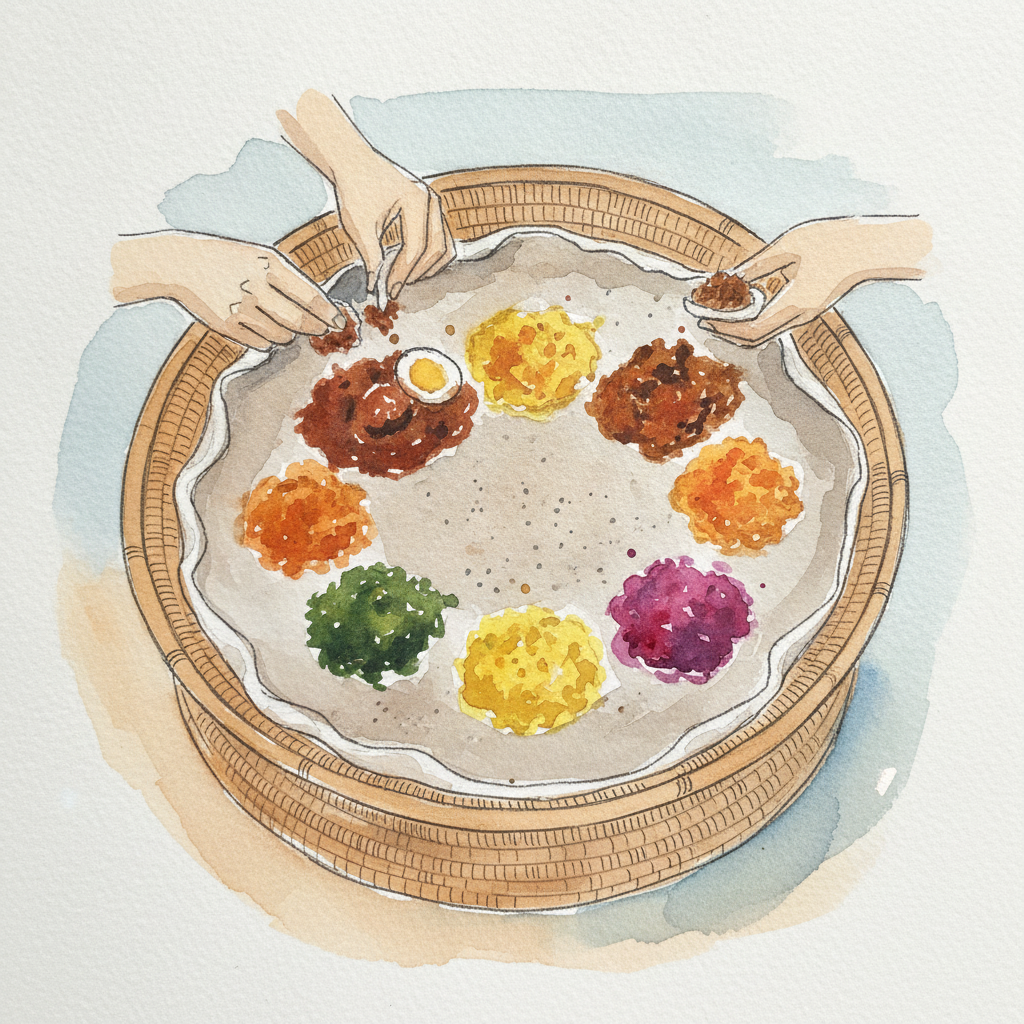
This piece is an excellent study in rendering diverse organic textures and forms. Focus on differentiating the 'spongy' injera, the 'woven' mesob, and the distinct 'mounds' of stew: use varied line weights to define structure versus softness. Experiment with delicate dry-brush techniques for the injera’s texture, contrasting these with wetter, more fluid washes for the rich, layered stews to emphasize their unique consistencies.
Piece 6 — Dog at the Edge
Pen + Watercolor · Loose pen and watercolor line-and-wash
Three takes
Focus for this piece
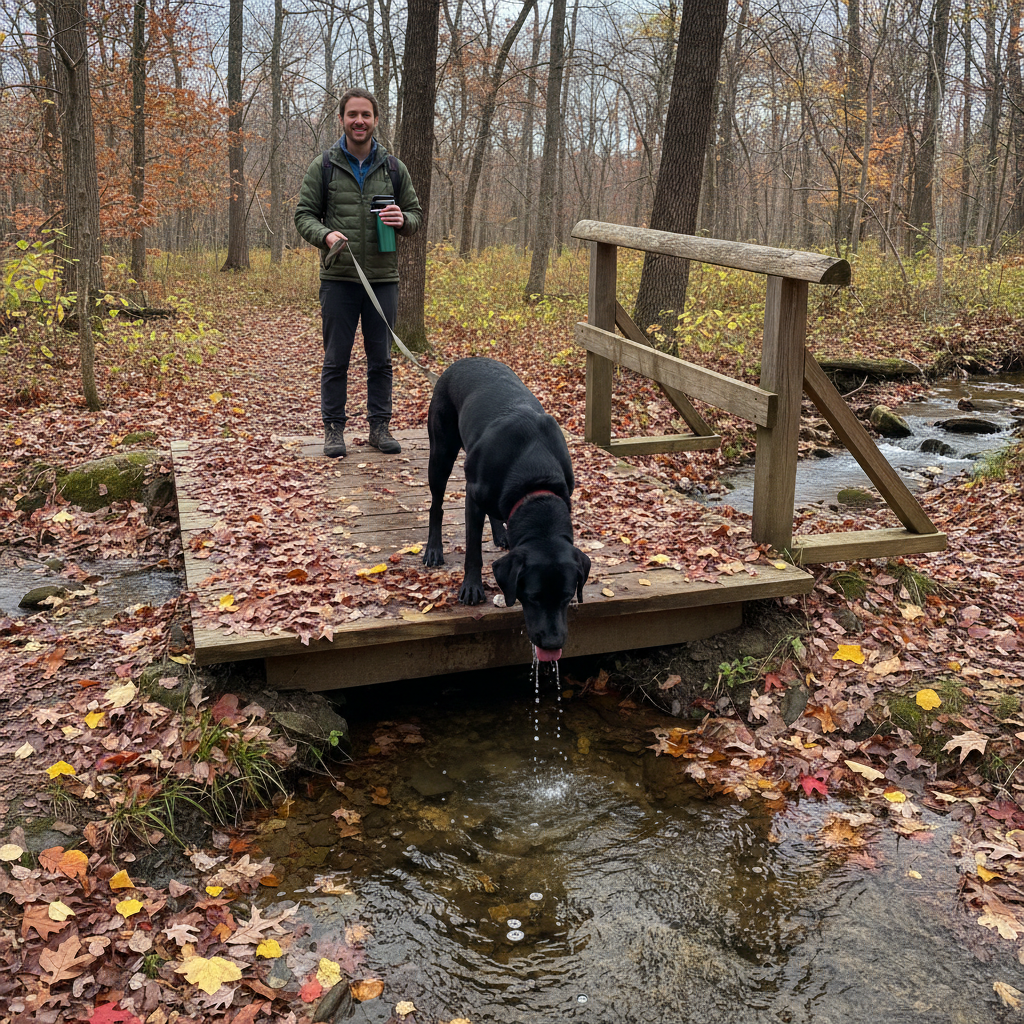
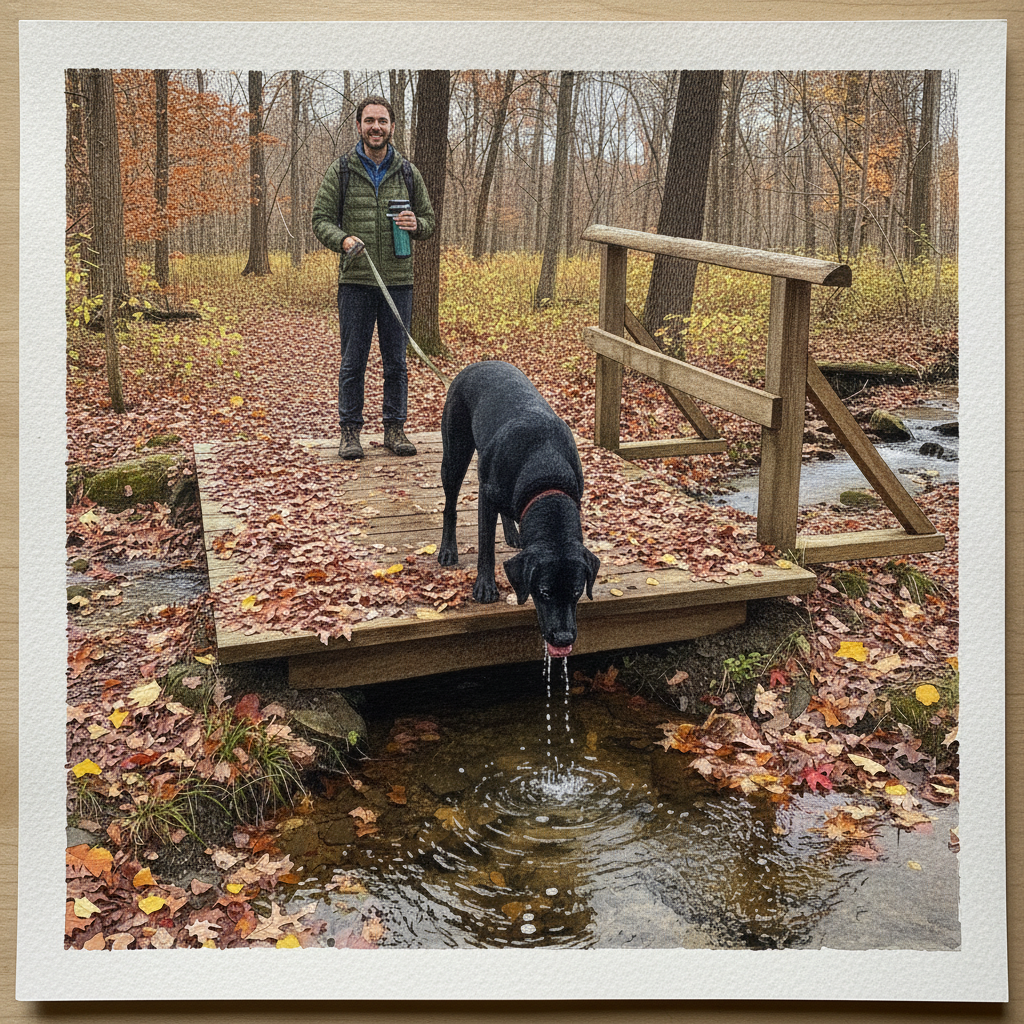
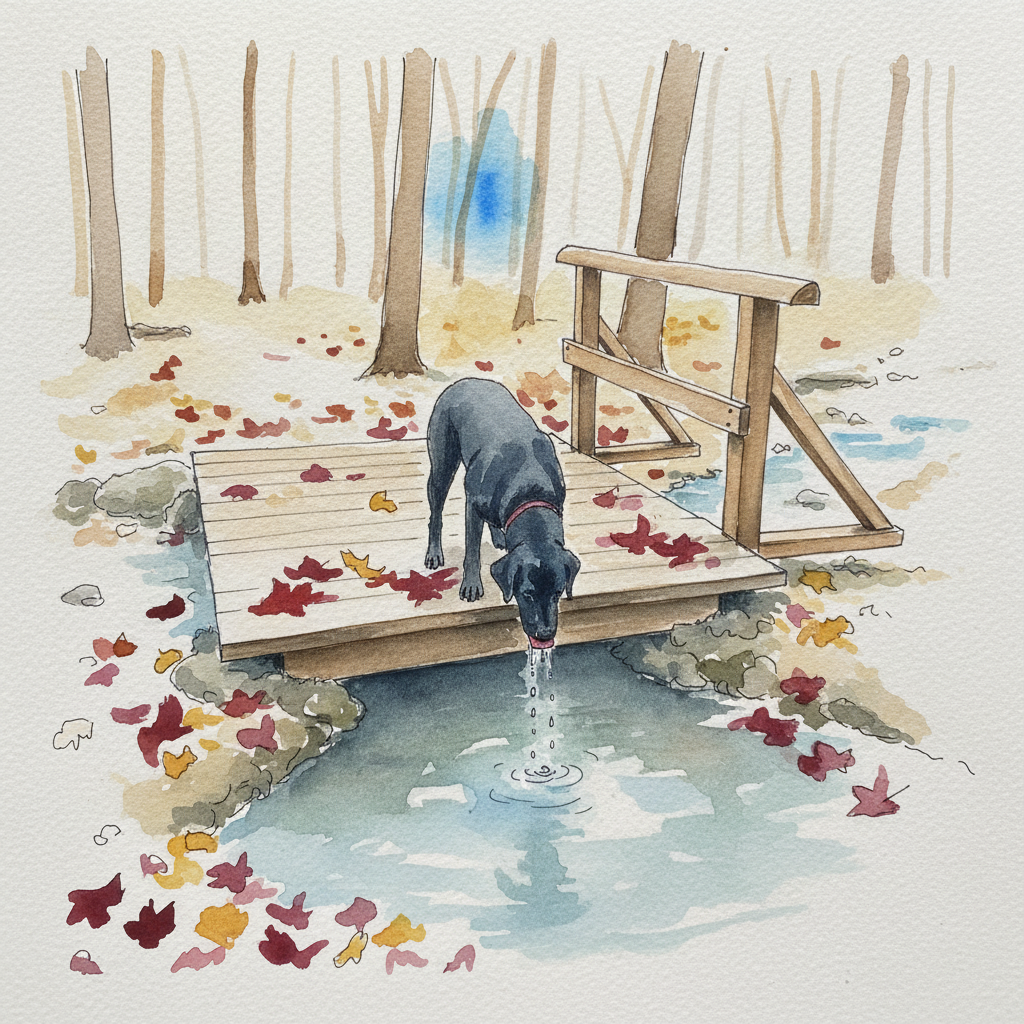
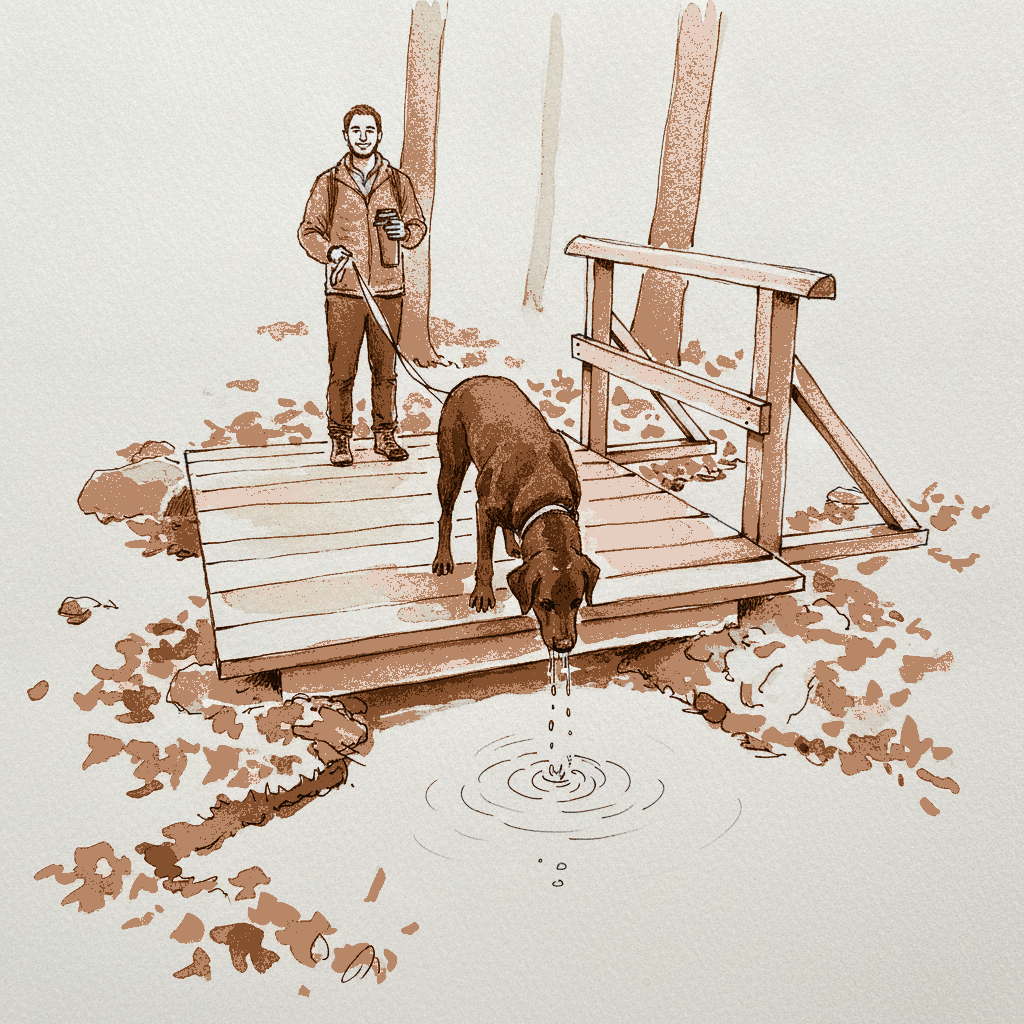
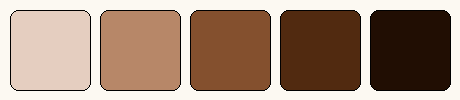
This piece offers an excellent study in rendering contrasting textures and managing a complex, vibrant autumn palette. Practice varying your ink line weight to differentiate the rough planks of the bridge from the soft wetness of the dog's fur, using light, broken lines to suggest the brook's surface. Layer thin, luminous washes of scarlet, burgundy, and butter yellow for the fallen leaves, while applying richer, more opaque pigment for the dog's dark coat and the cool, transparent water over the flat stones.
Piece 7 — Zippo lighter on map
Pen + Watercolor · Loose pen and watercolor line-and-wash
Three takes
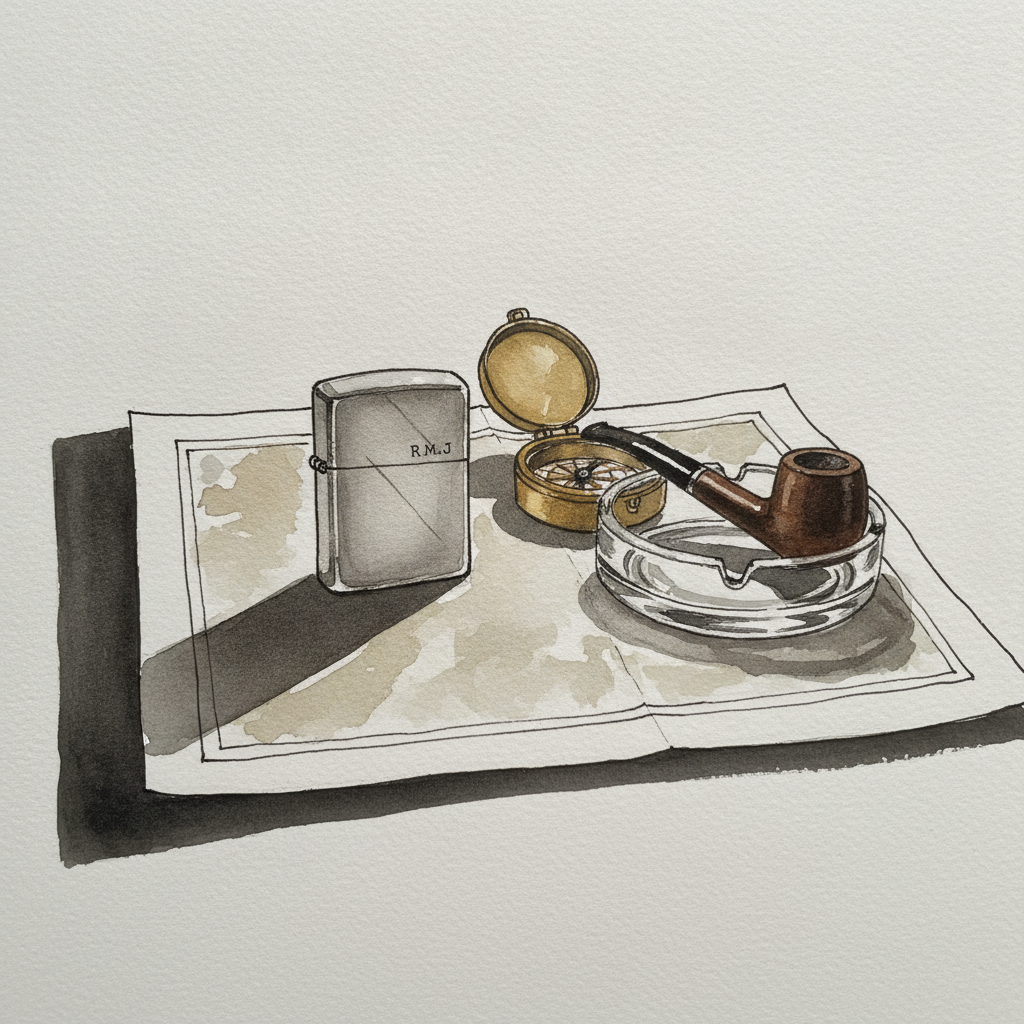
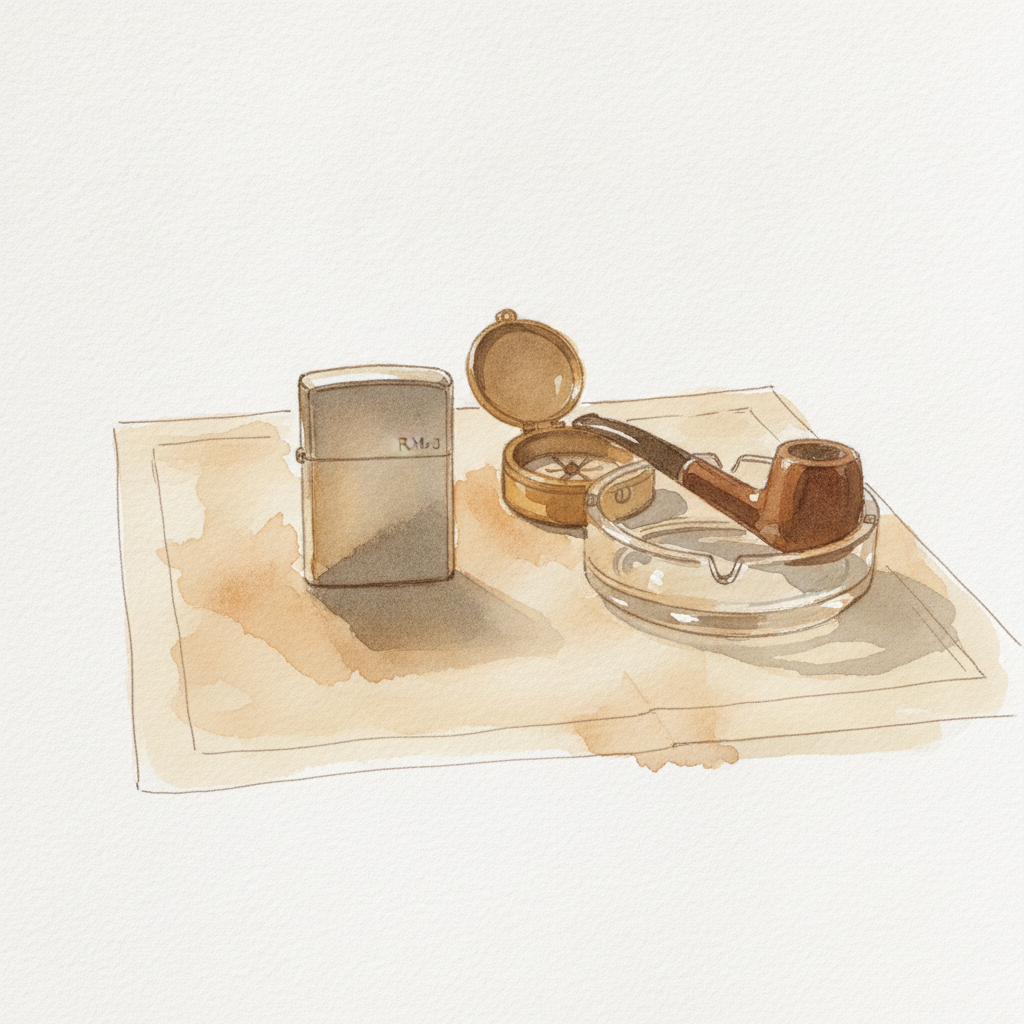
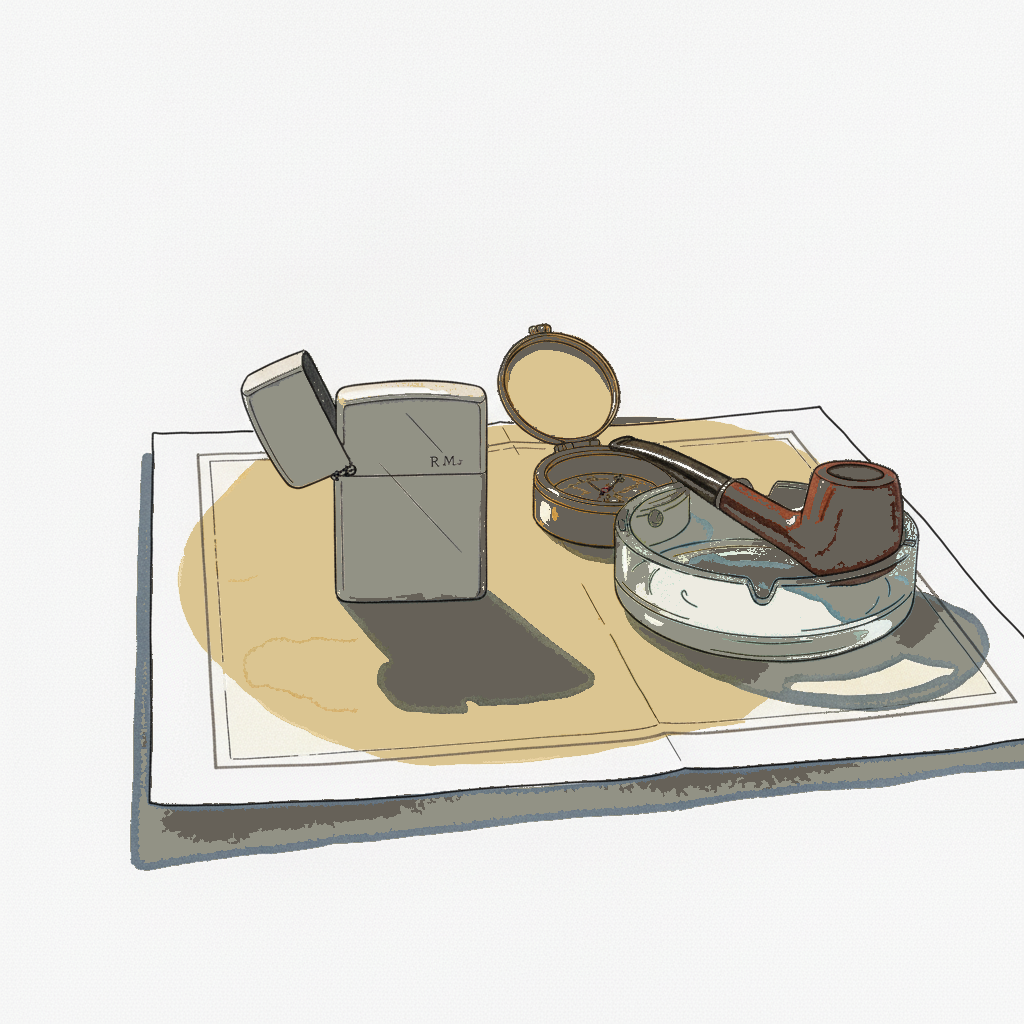
Focus for this piece
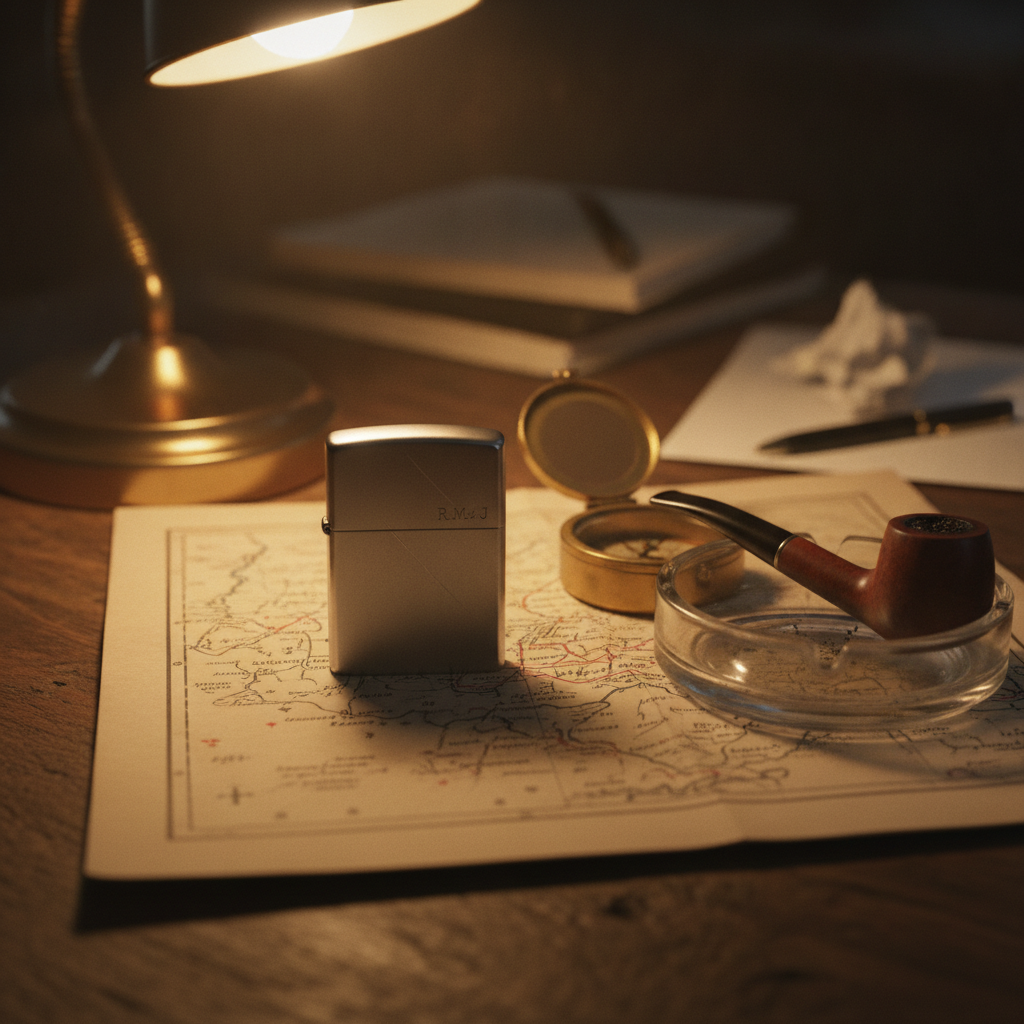
This piece is perfect for studying the interplay of contrasting textures and the impact of focused lighting on various surfaces. Employ precise, fine-point lines and careful dry-brush strokes to define the Zippo's industrial steel, including its dented corner and faint engraving, letting these details pop. In contrast, utilize softer, more varied line weights and broad, wet-on-wet washes to render the map's yielding paper folds and the warm, diffused shadows it casts. Focus on how the desk-lamp's direct light sculpts each material, from the Zippo's metallic gleam to the map's absorbent texture.
Piece 8 — Junagarh Fort, Bikaner, Rajasthan, India
Pen + Watercolor · Loose pen and watercolor line-and-wash
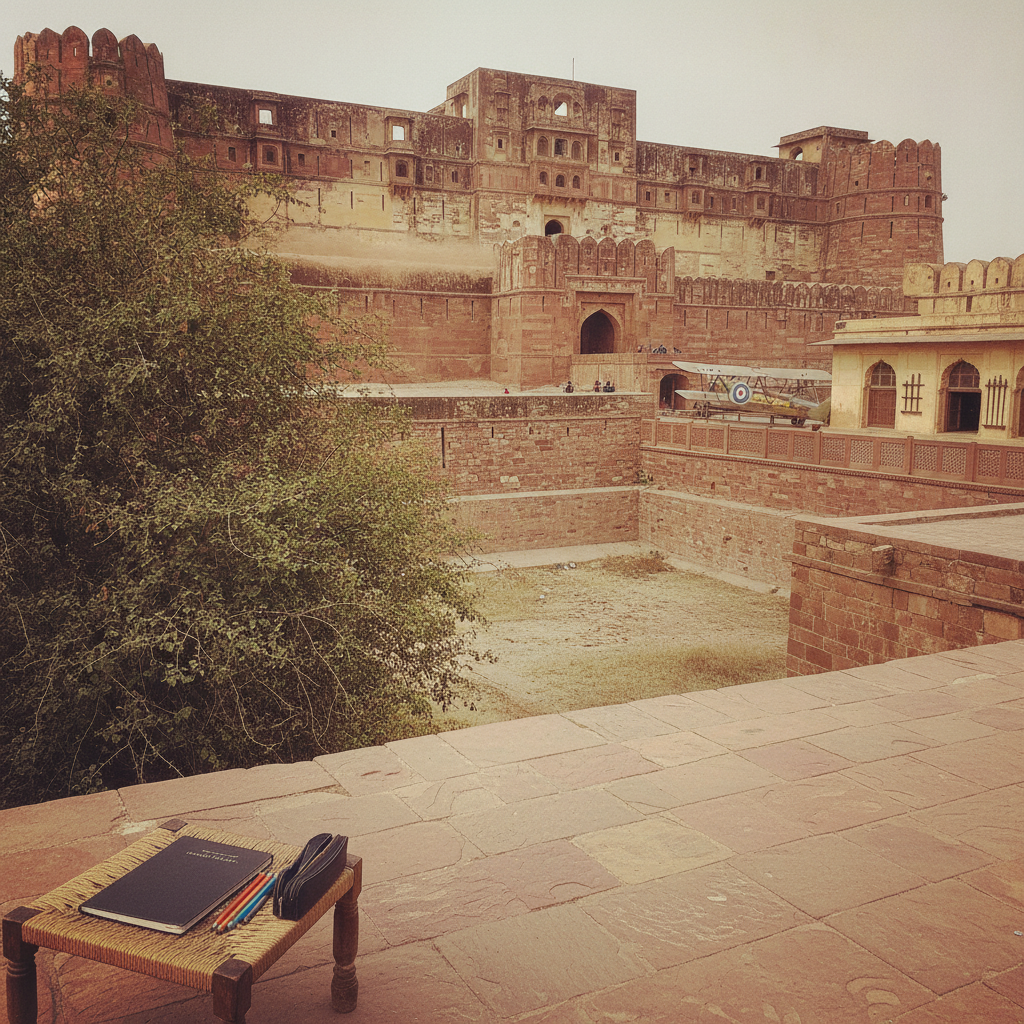
Three takes
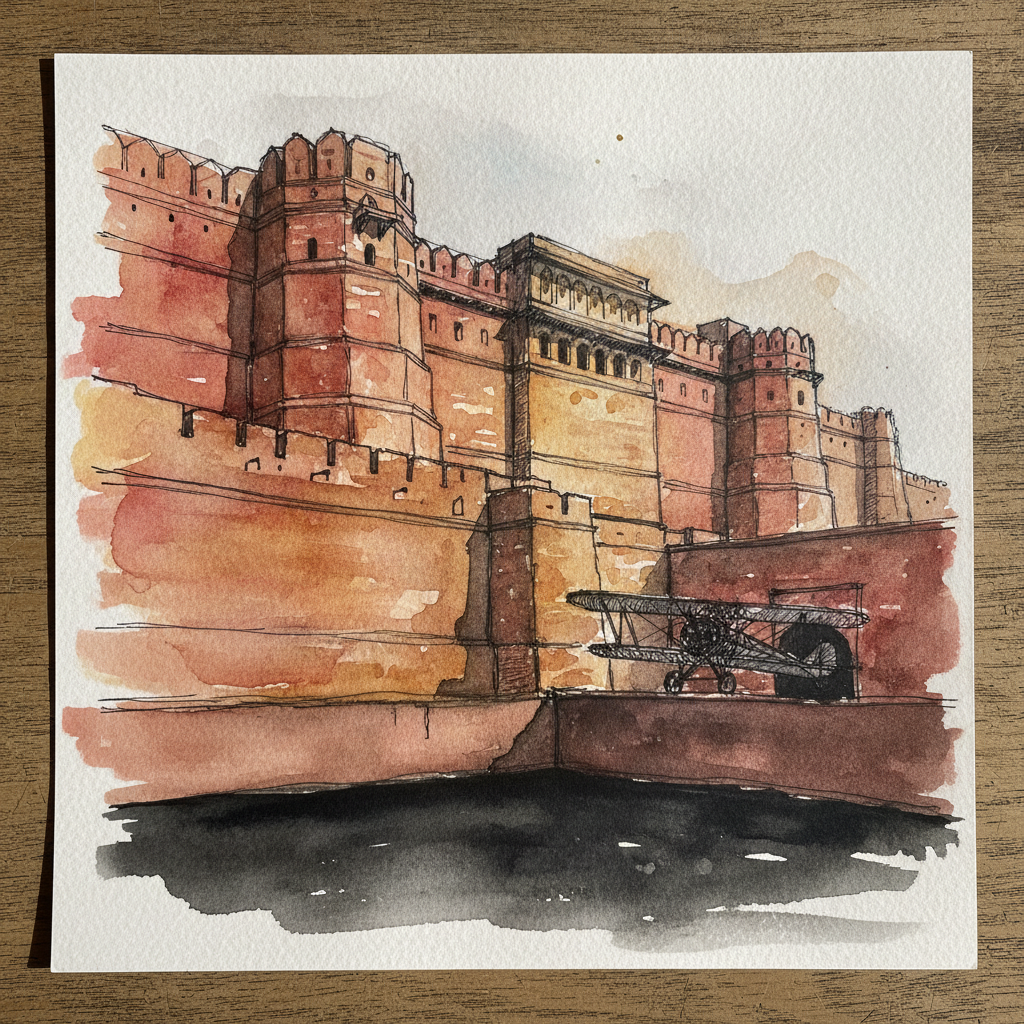
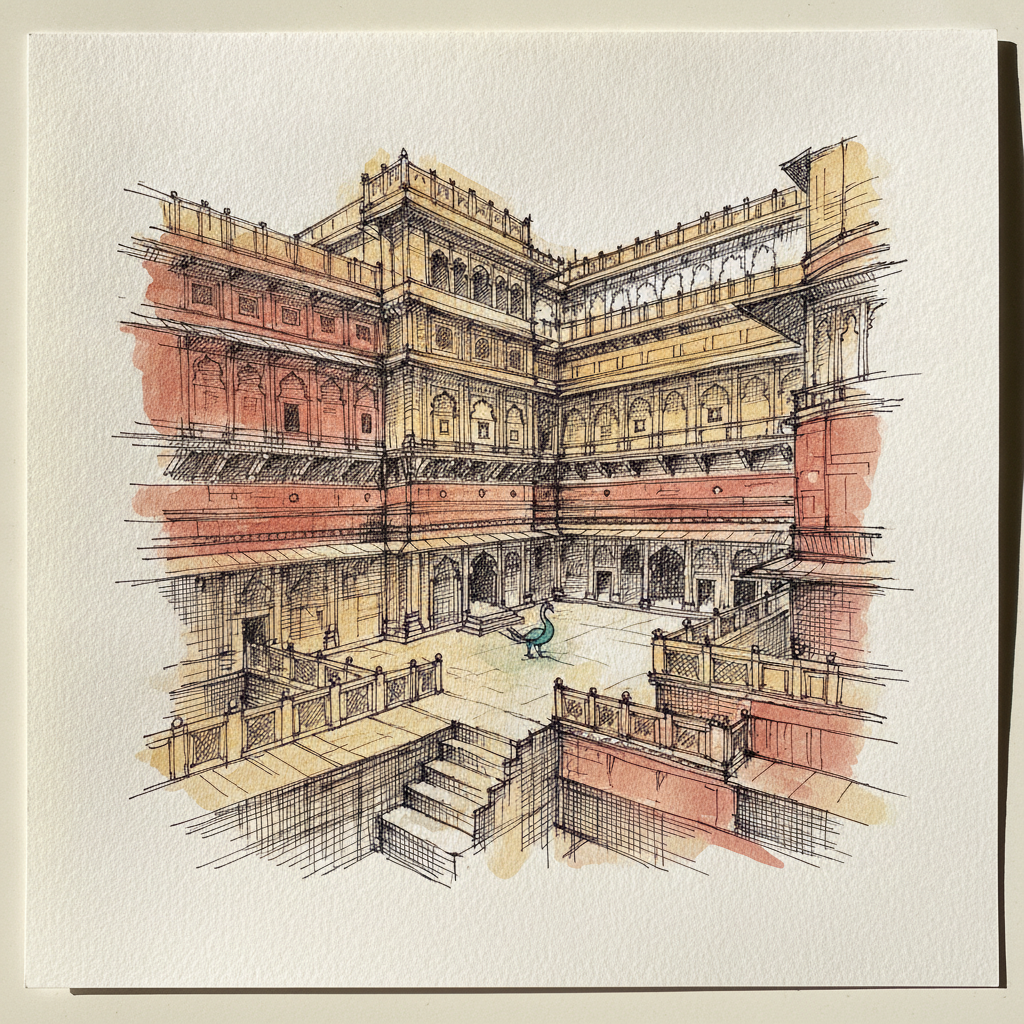
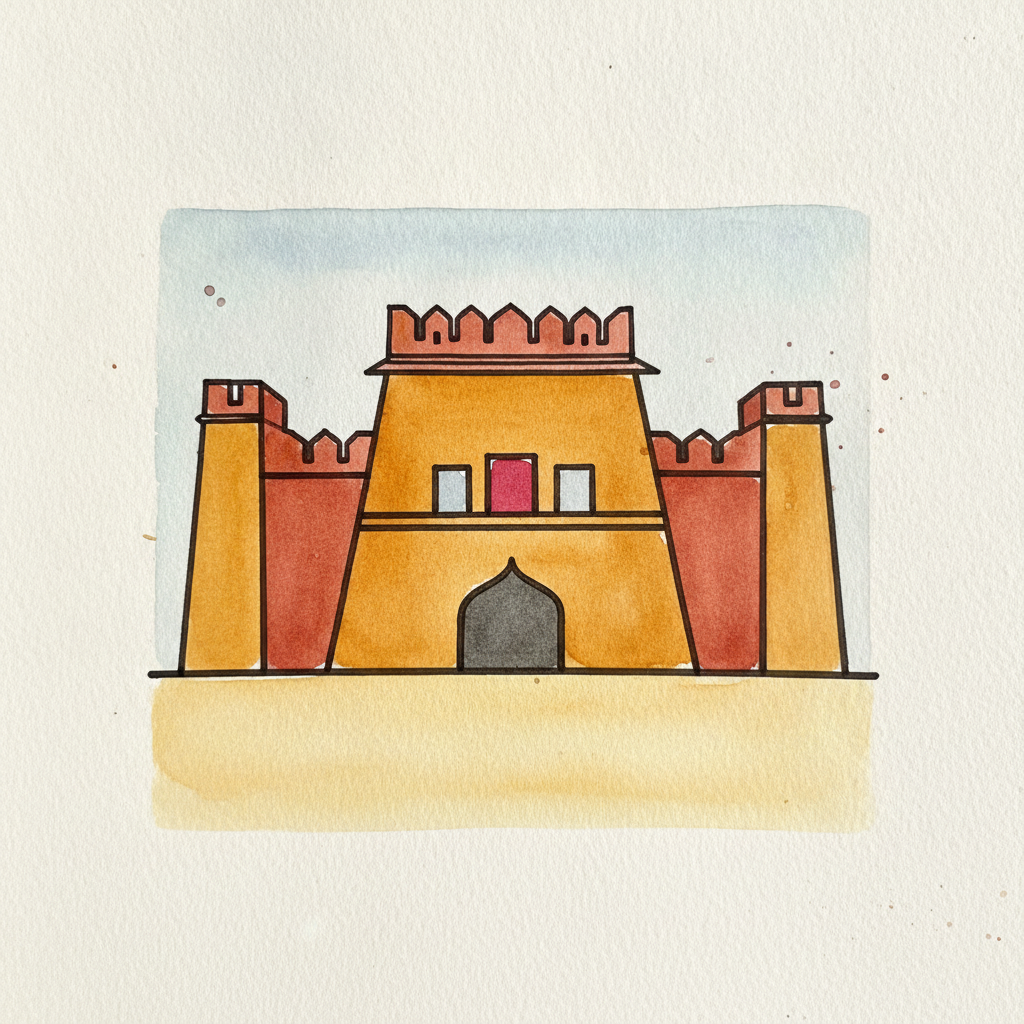
Focus for this piece
This piece is ideal for practicing how to render intricate architectural detail within a strong, simplified structural framework. Use varied line weights, applying crisp, waterproof ink for the fort's imposing outer bastions and delicate dry brush for the ornate internal features. Focus your washes on a warm, desert-inspired palette of reds and ochres, allowing subtle layering to capture the sandstone texture and the atmospheric dust across the parapets.