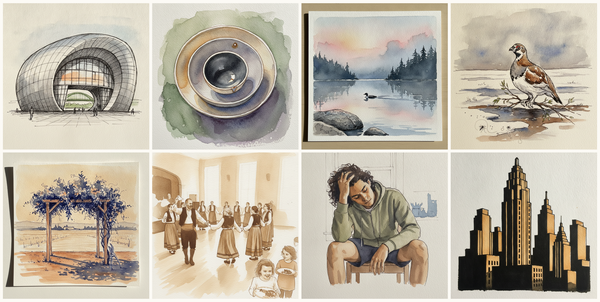
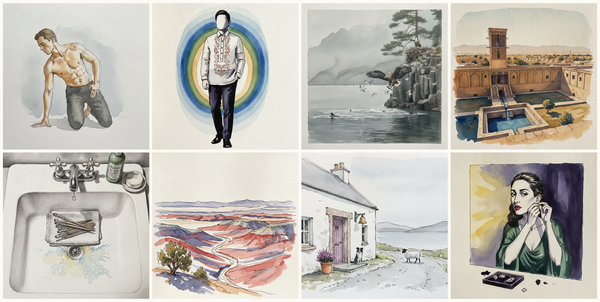
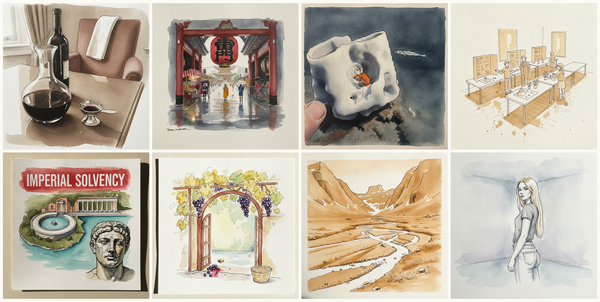
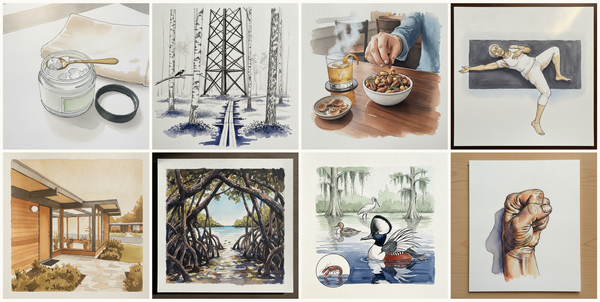
Fetal on rumpled bedsheets, single overhead spot, Gray field slug, Arch over a Bayswater London townhouse side path, Lover's Kiss Silhouette, and more — pen + watercolor for June 23, 2026
AI-generated daily art-practice references for pen and watercolor: Fetal on rumpled bedsheets, single overhead spot, Gray field slug, Arch over a Bayswater London townhouse side path, Lover's Kiss Silhouette, Bryce Canyon hoodoos at sunrise, Utah, USA, Person with cat on keyboard, Japanese shokup…
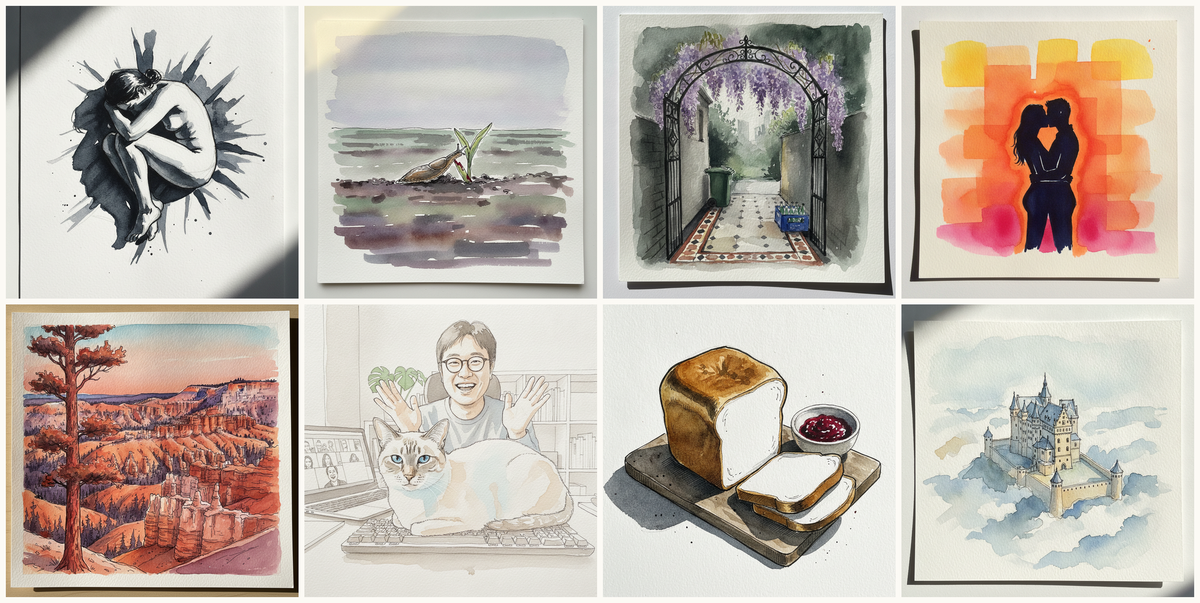
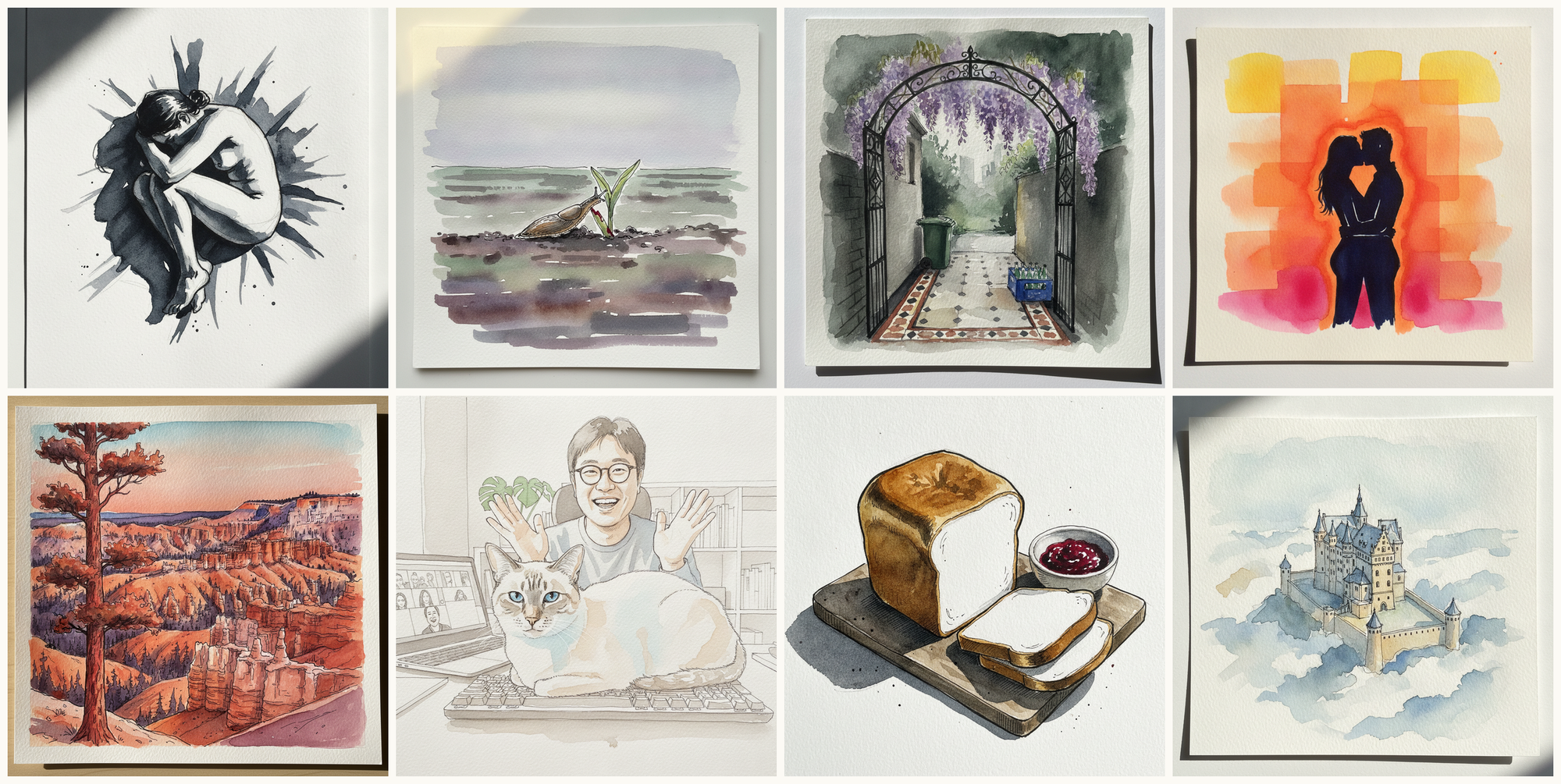
Today's 8 pen-and-watercolor pieces: Fetal on rumpled bedsheets, single overhead spot, Gray field slug, Arch over a Bayswater London townhouse side path, Lover's Kiss Silhouette, Bryce Canyon hoodoos at sunrise, Utah, USA, Person with cat on keyboard, Japanese shokupan with its square pillow shape, Burg Hohenzollern, Baden-Württemberg, Germany. Each piece comes with an AI-generated photoreal reference, three AI-generated example artworks in different treatments, and a short focus paragraph naming what to study in this one.
Why these references use AI
This daily series uses AI-generated images as practice prompts, not as finished artwork to copy. Each subject starts with a synthetic photoreal reference generated with Gemini/Nano Banana, then moves into three pen-and-watercolor interpretations of the same subject.
I use AI here because daily art practice needs variety and low friction. Real life can get repetitive, busy, or visually narrow. These generated reference sets make it easier to study bodies, buildings, animals, landscapes, objects, gestures, light, palettes, and compositions that might not show up in an ordinary day.
The goal is not to reproduce any image directly. Treat each set as a starting point for observation and study: choose what interests you, change the framing, simplify the subject, alter the palette, and make your own version.
Piece 1 — Fetal on rumpled bedsheets, single overhead spot
Pen + Watercolor · Loose pen and watercolor line-and-wash
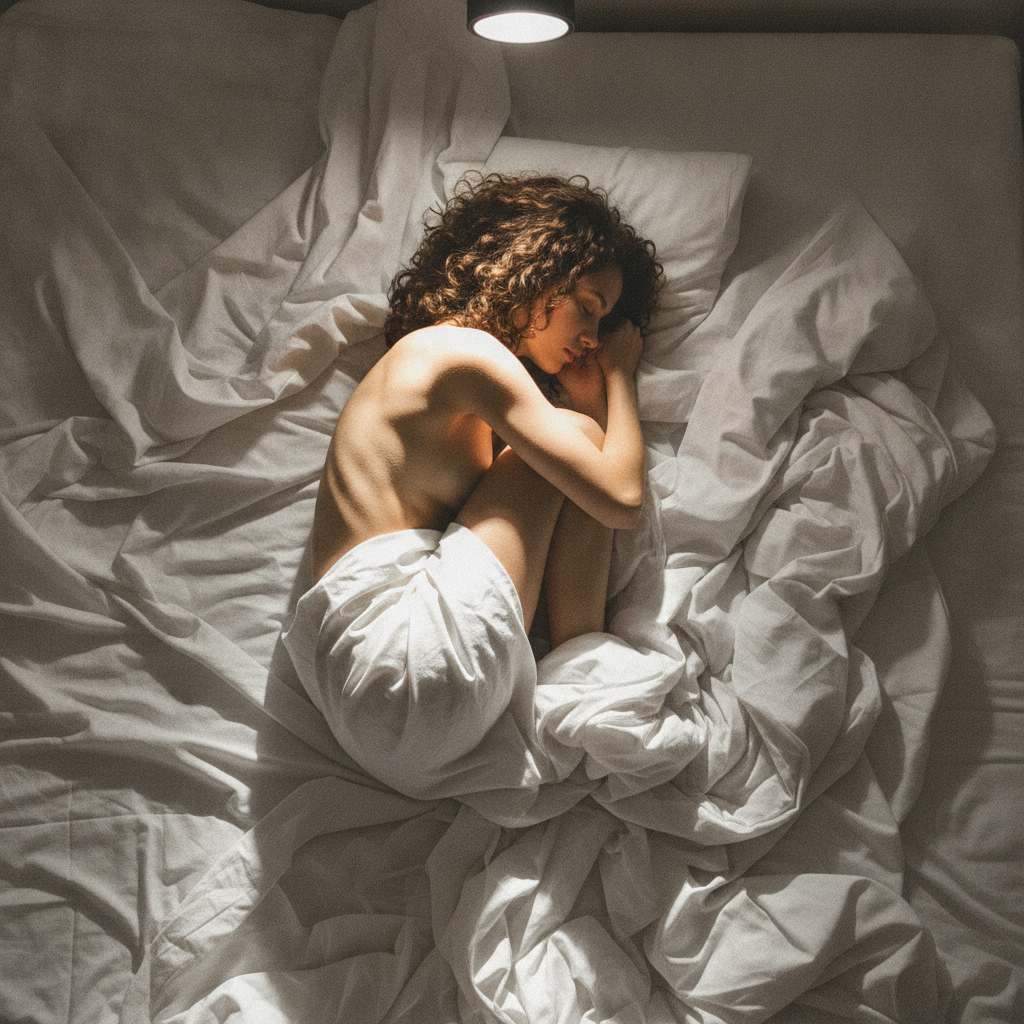
Three takes
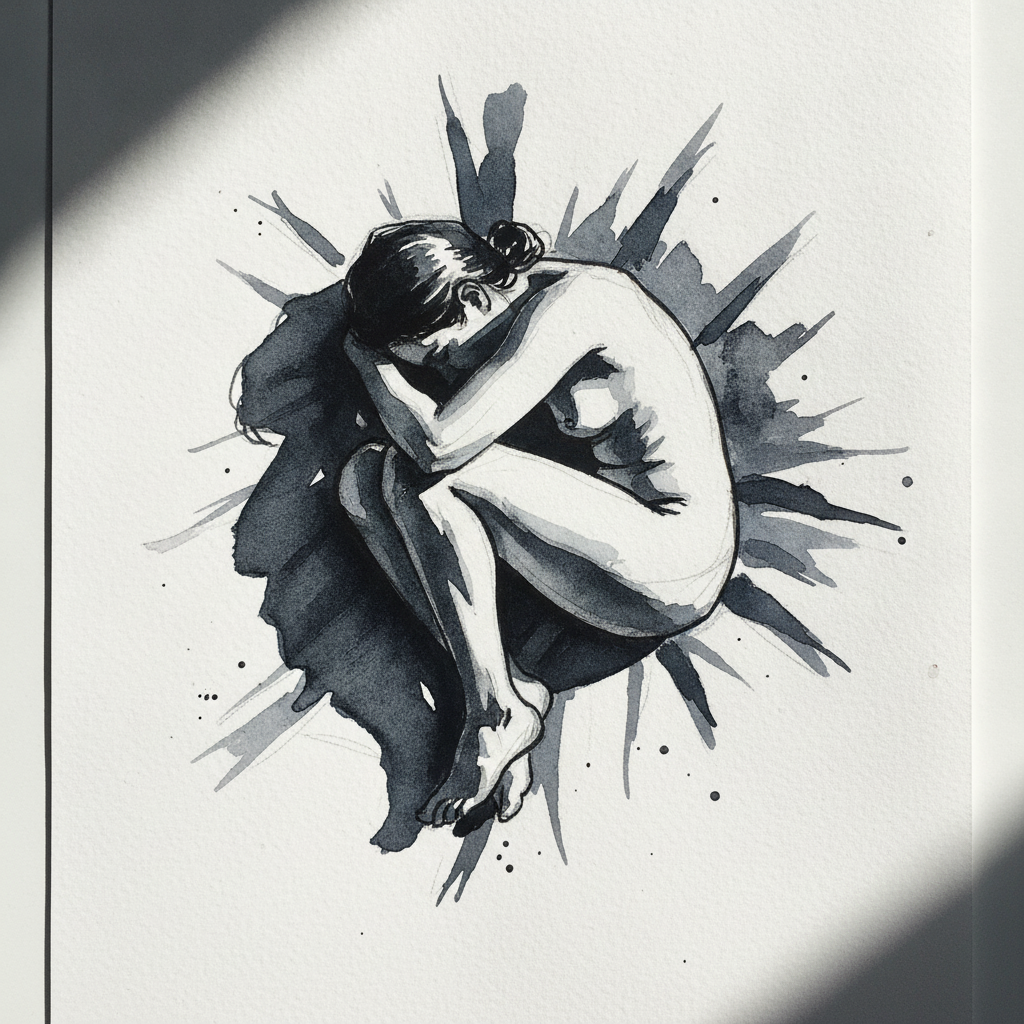
Focus for this piece
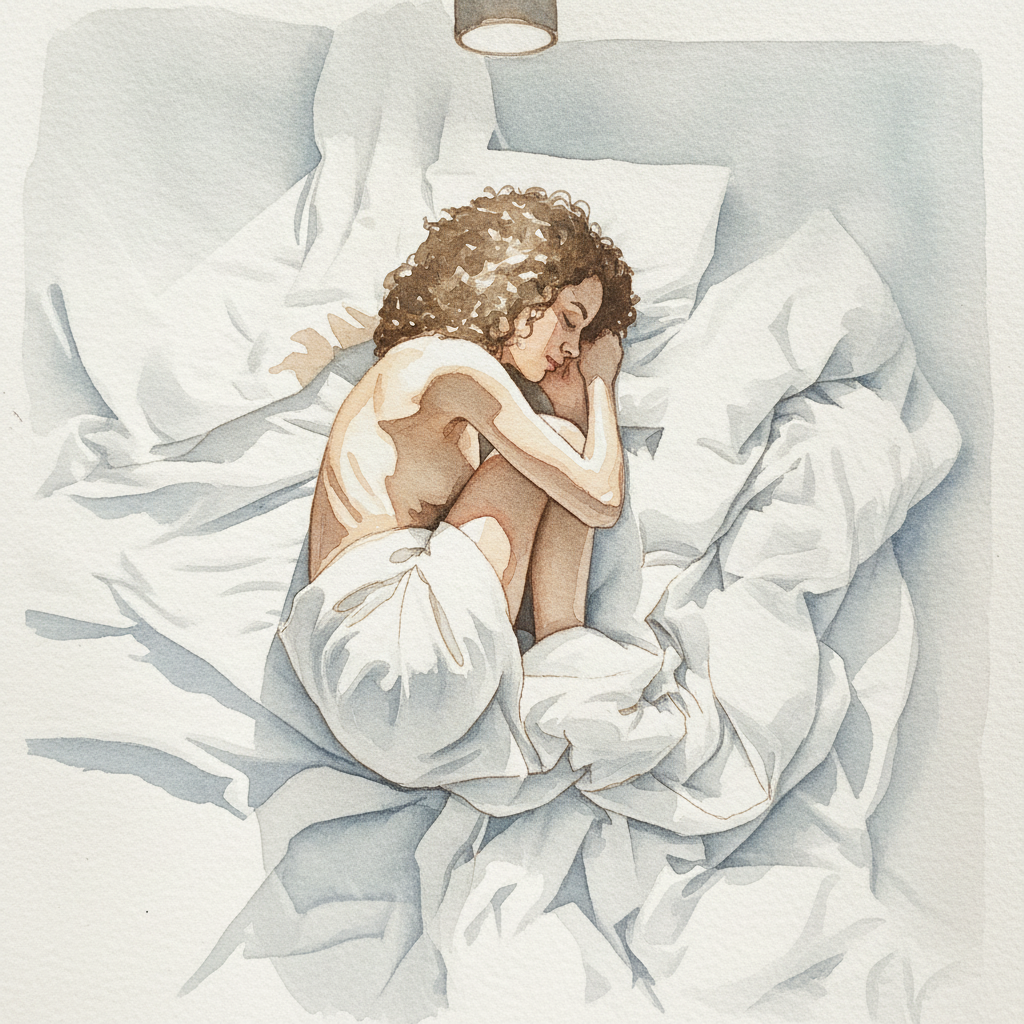
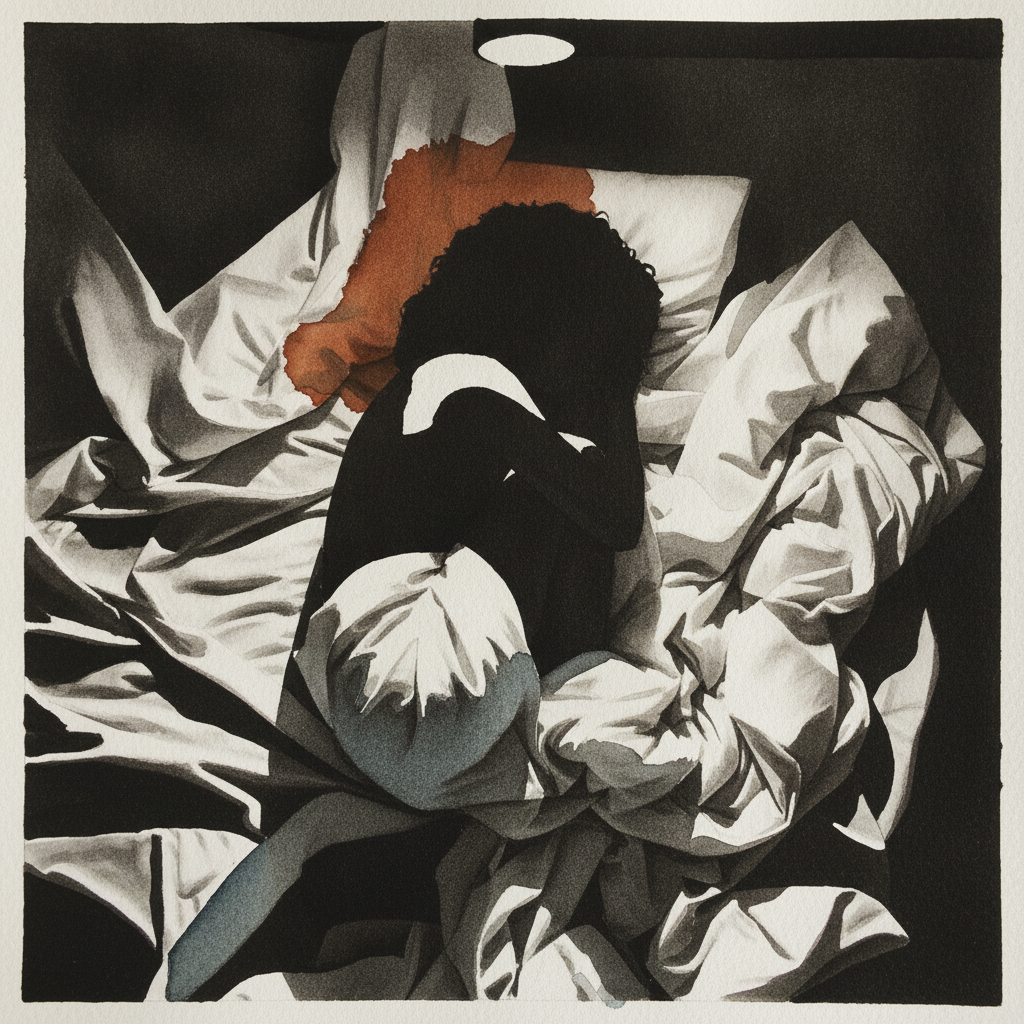
Today’s piece focuses on using line and wash to articulate the stark contrast between smooth, contained form and chaotic texture. Employ varied line weights to define the figure's soft curves and the crisp edges of the overhead spotlight's shadows, while using looser, broken lines and layered cool grey washes to build the complex, overlapping planes of the rumpled white sheets. Pay particular attention to the visual dialogue between order and disorder where the body meets the bedding, letting the ink provide definition and the watercolor create depth and atmosphere.
Piece 2 — Gray field slug
Pen + Watercolor · Loose pen and watercolor line-and-wash
Three takes

Focus for this piece
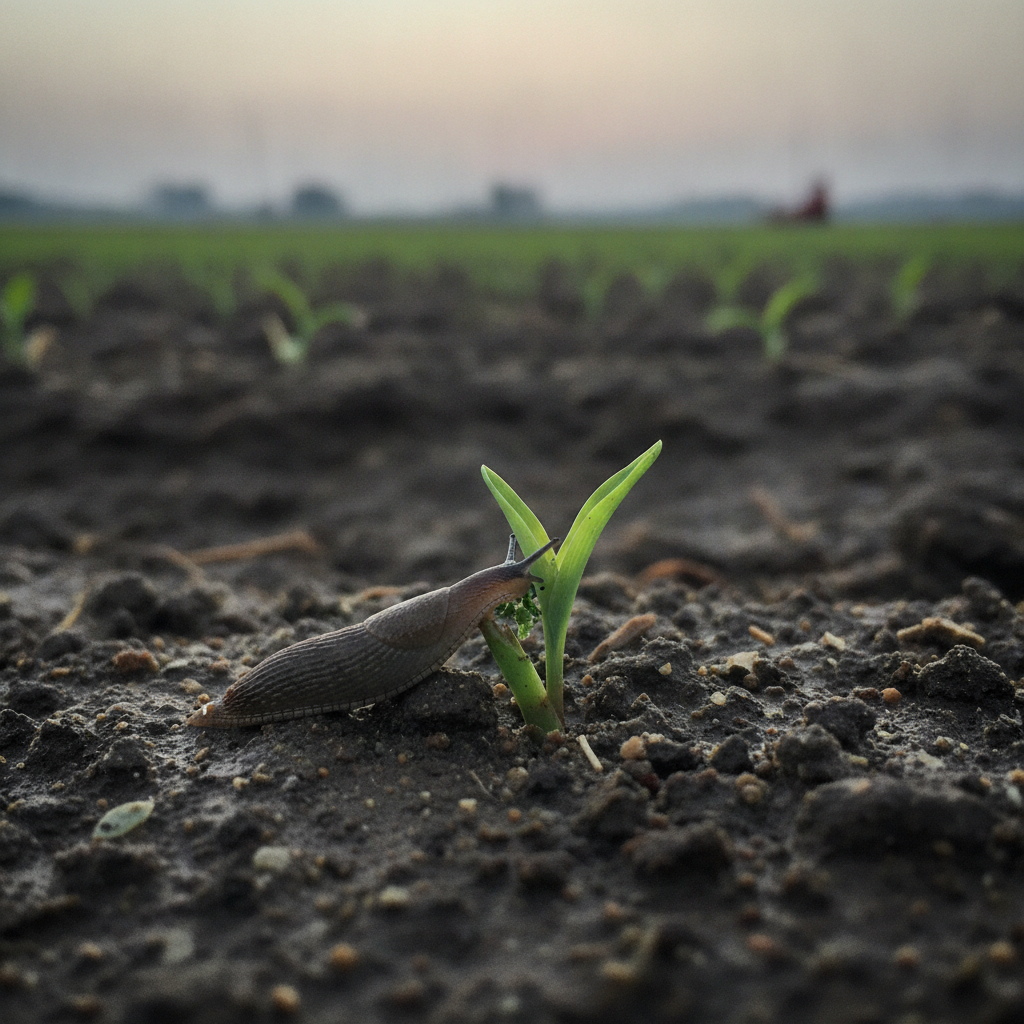
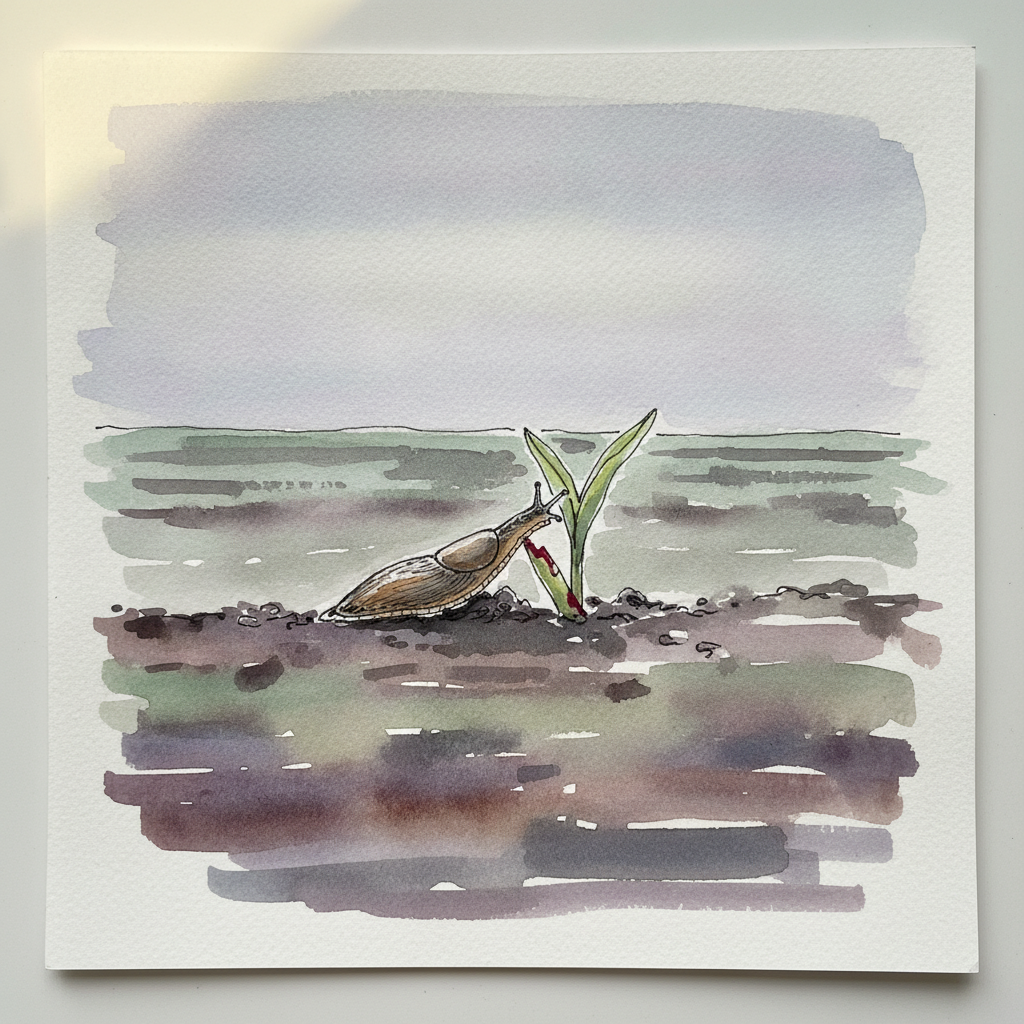
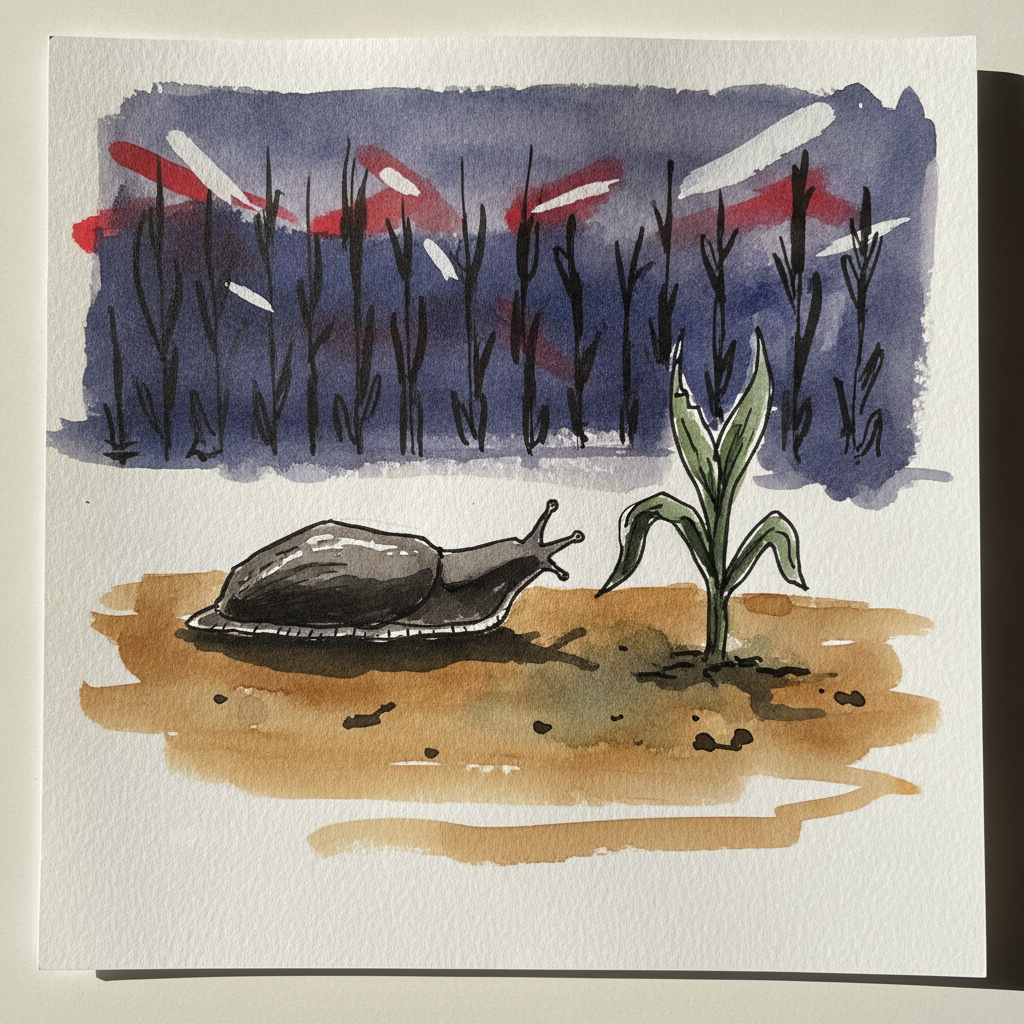
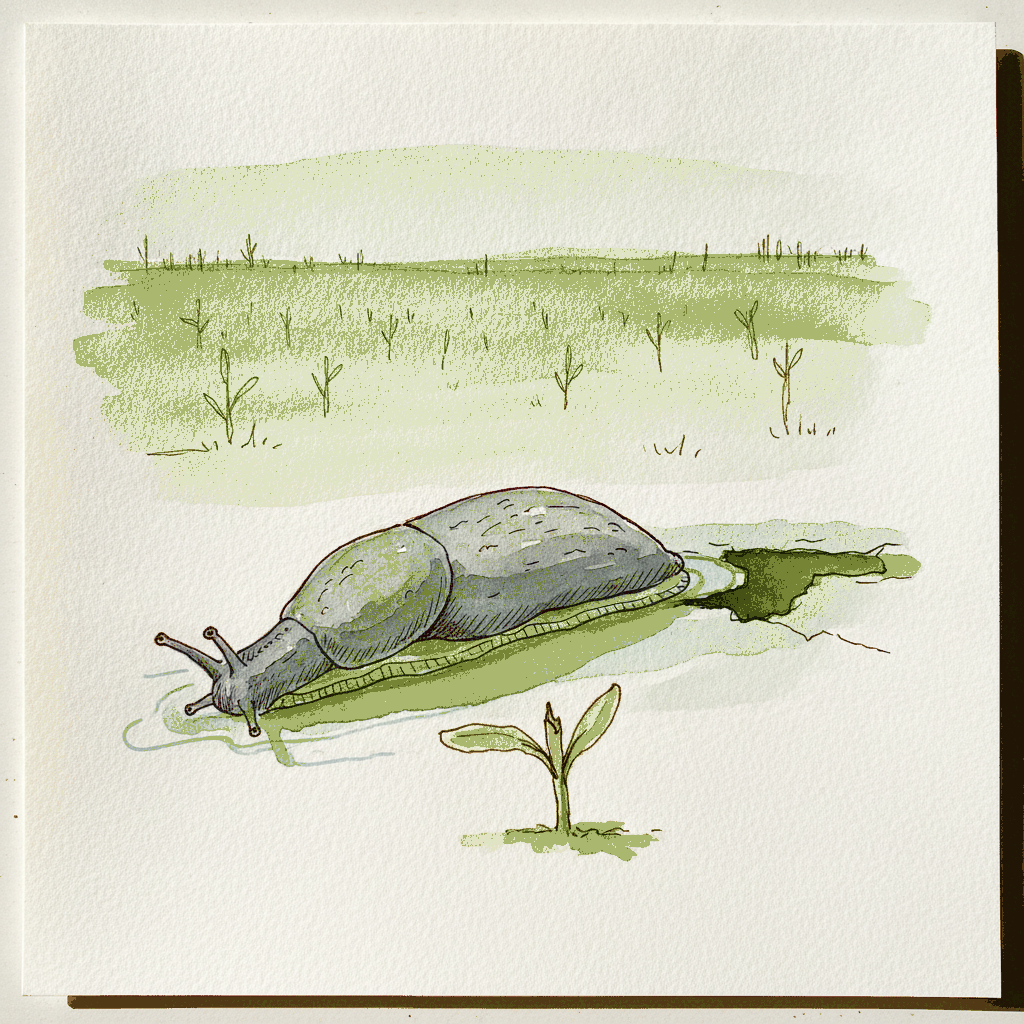
This piece offers an excellent opportunity to practice building form and atmosphere using a very limited, desaturated palette. Focus on rendering the slug's cylindrical volume through subtle value shifts in wash, letting pen lines primarily define its soft edges and key textural details. Experiment with wet-on-wet washes for the moist soil, reserving a crisp, fine line for the delicate corn seedling to emphasize its fragility against the indistinct background.
Piece 3 — Arch over a Bayswater London townhouse side path
Pen + Watercolor · Loose pen and watercolor line-and-wash
Three takes

Focus for this piece
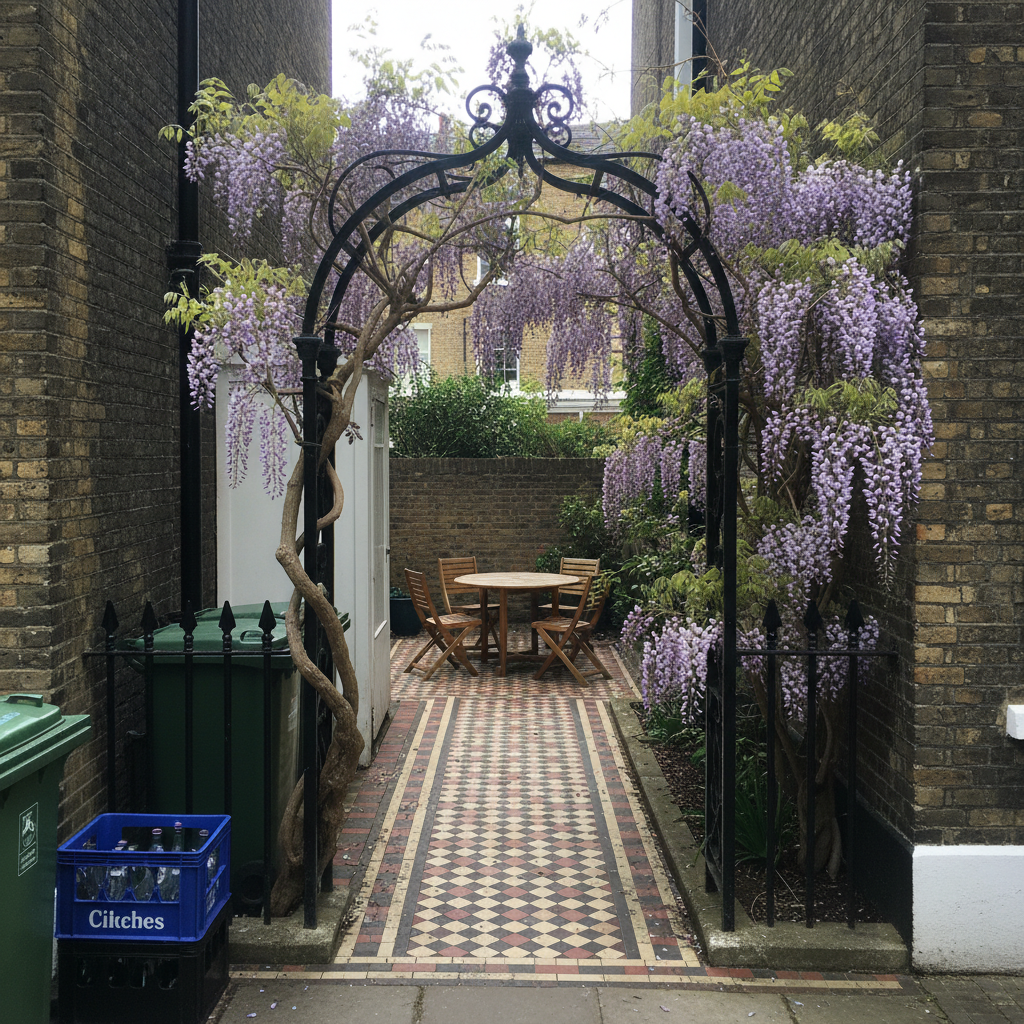
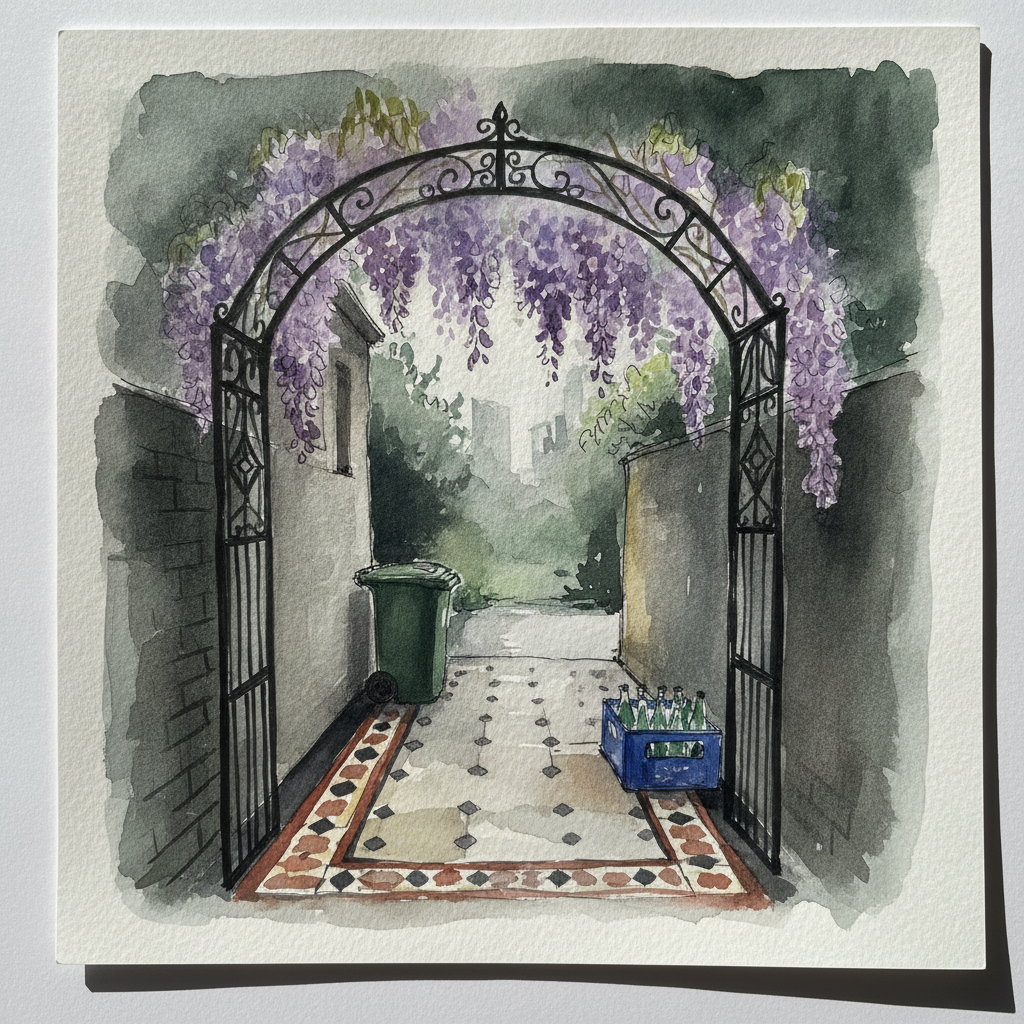
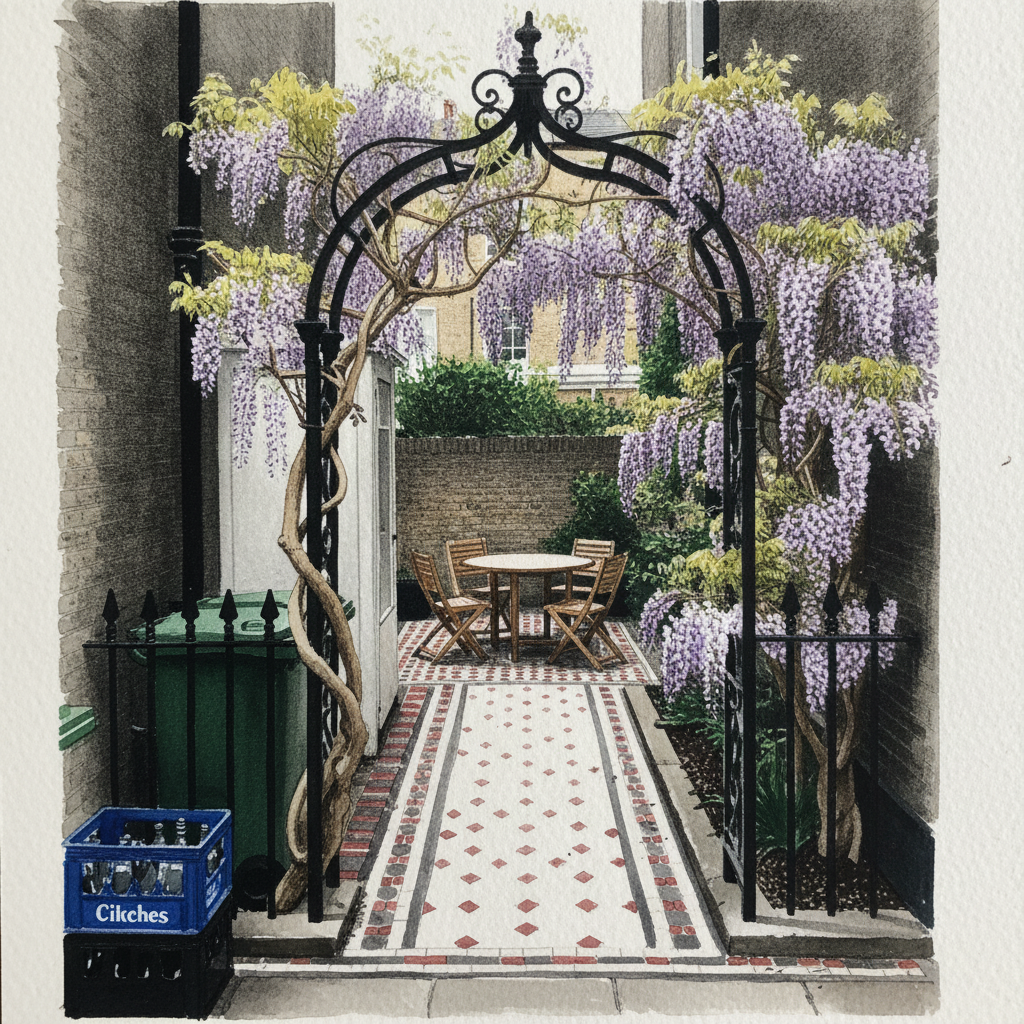
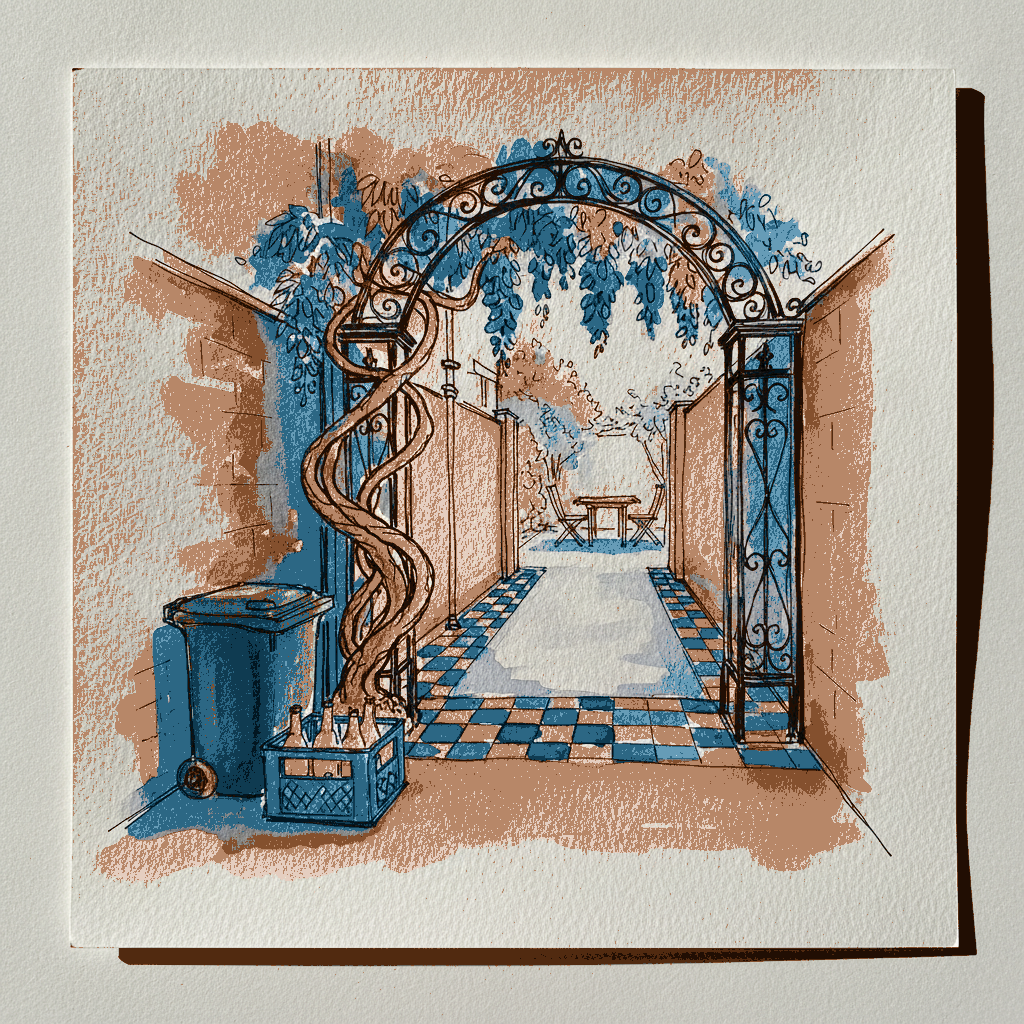
This study is ideal for contrasting firm architectural lines with flowing organic forms; use bold, clean pen strokes to define the glossy wrought-iron arch and geometric path tiles, reserving lighter, more fluid lines for the winding wisteria. Focus your watercolor on capturing the luminous quality of the wisteria racemes against the dark wall, building soft gradations with pale, cool washes rather than relying on heavy outlines. Pay particular attention to how the cool spring light renders the textures of both the metal and foliage.
Piece 4 — Lover's Kiss Silhouette
Pen + Watercolor · Loose pen and watercolor line-and-wash

Three takes
Focus for this piece
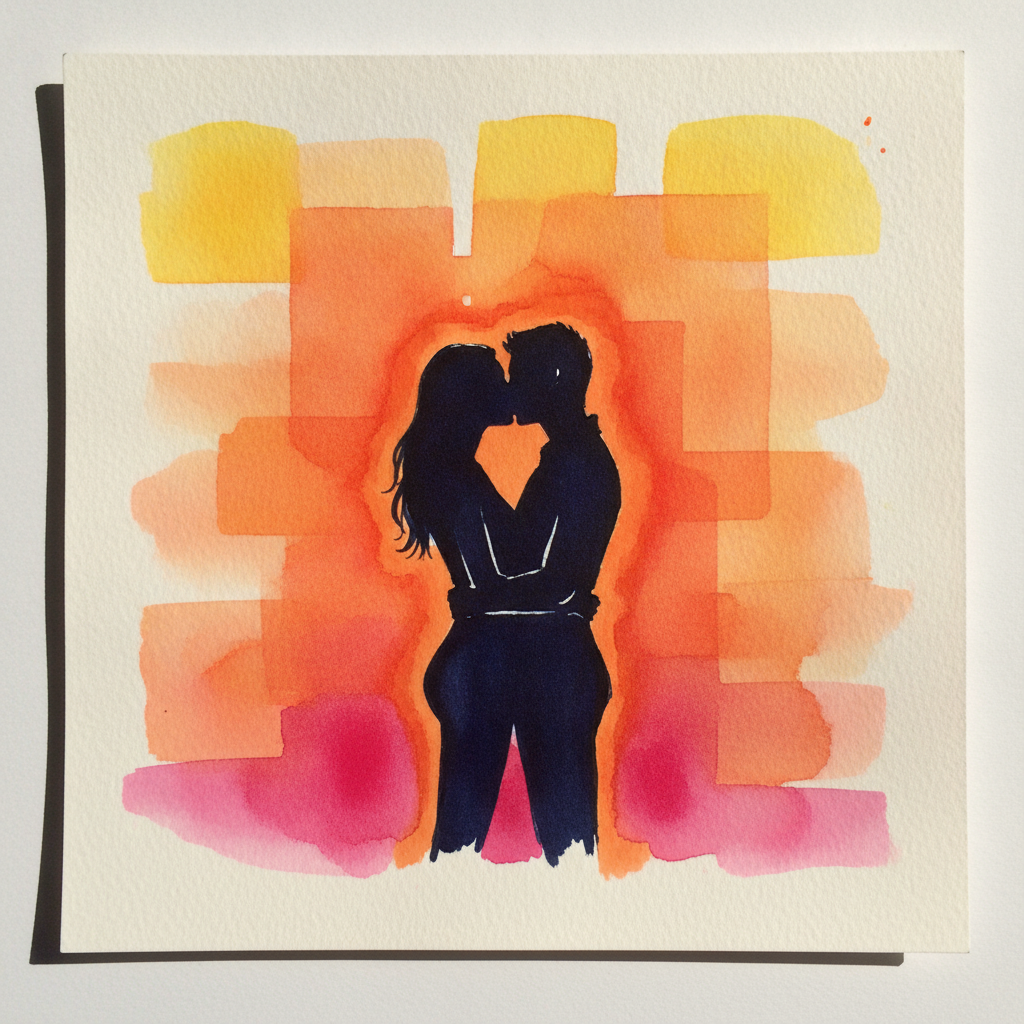
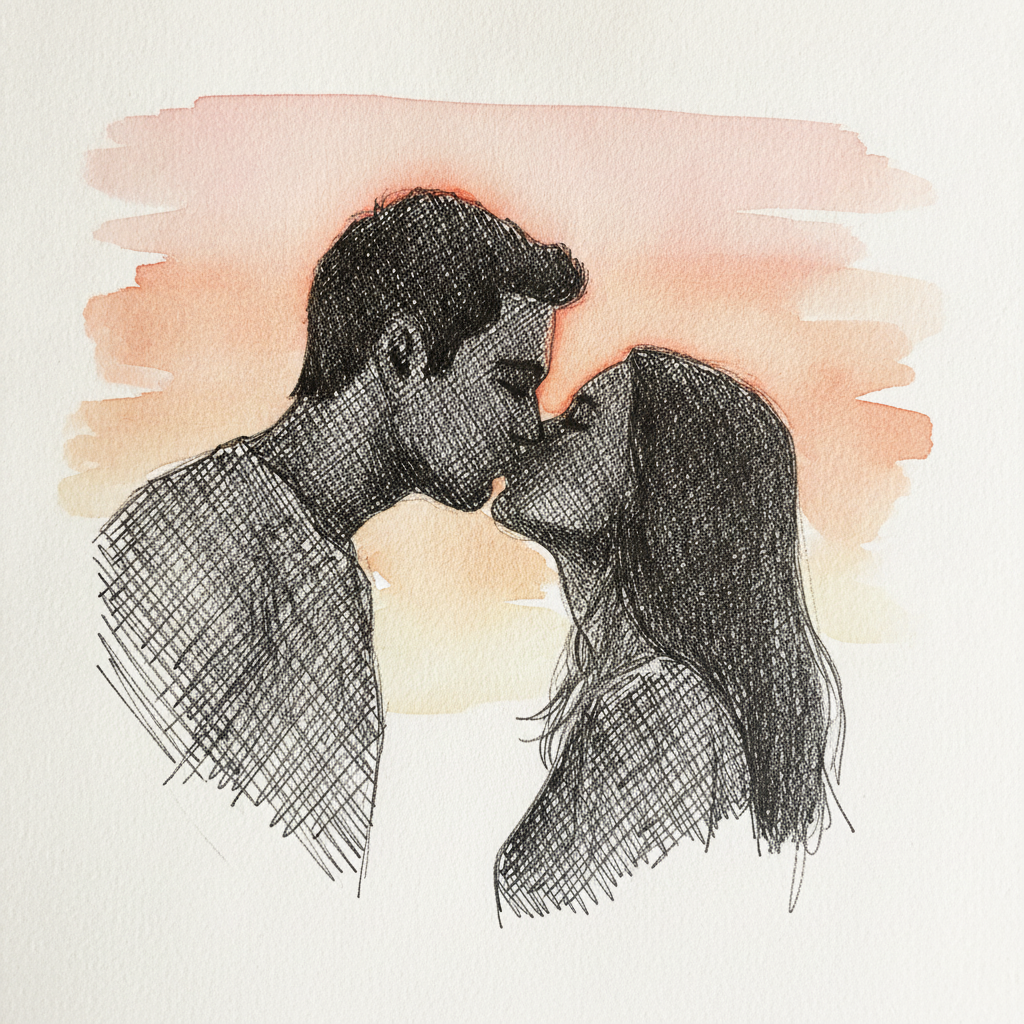
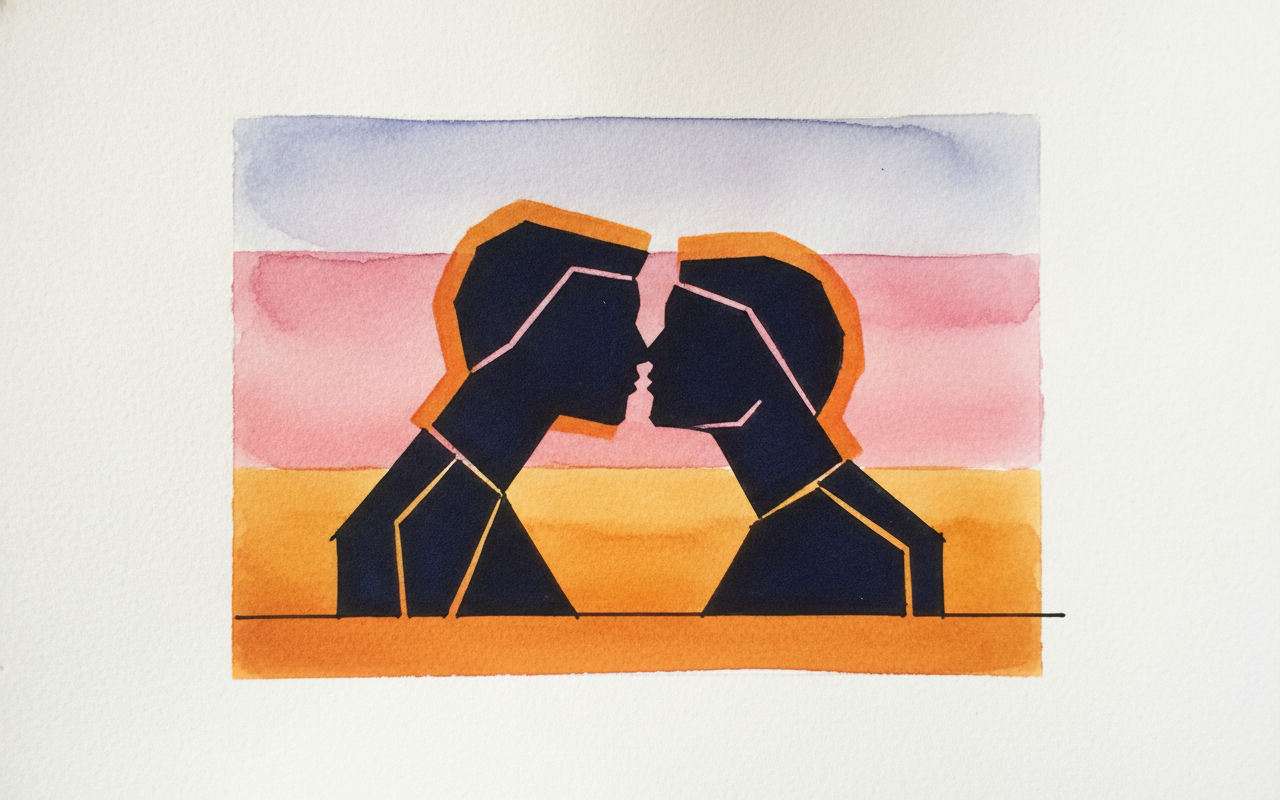
Today's piece offers a great study in defining a powerful, unified silhouette using a consistent pen line and then filling it with a deep, even wash. Focus on the negative space created by the figures' profiles, ensuring their connected shape is universally readable against the background. For the sunset, use a limited, warm palette and soft wet-on-wet blending to create luminosity, carefully leaving a clean edge for the vibrant orange-pink rim light. This contrast between crisp line and soft wash, dark shape and glowing color, is key to the piece's impact.
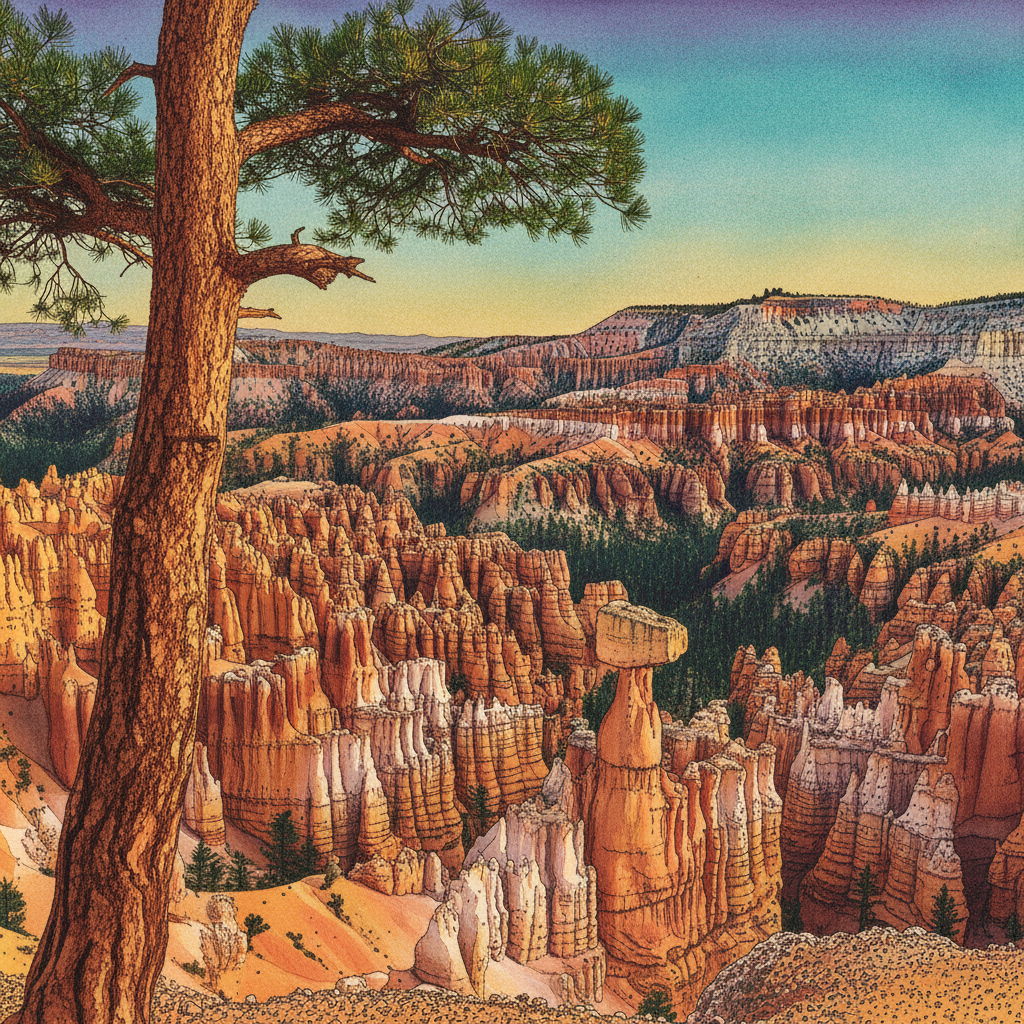
Piece 5 — Bryce Canyon hoodoos at sunrise, Utah, USA
Pen + Watercolor · Loose pen and watercolor line-and-wash
Three takes
Focus for this piece
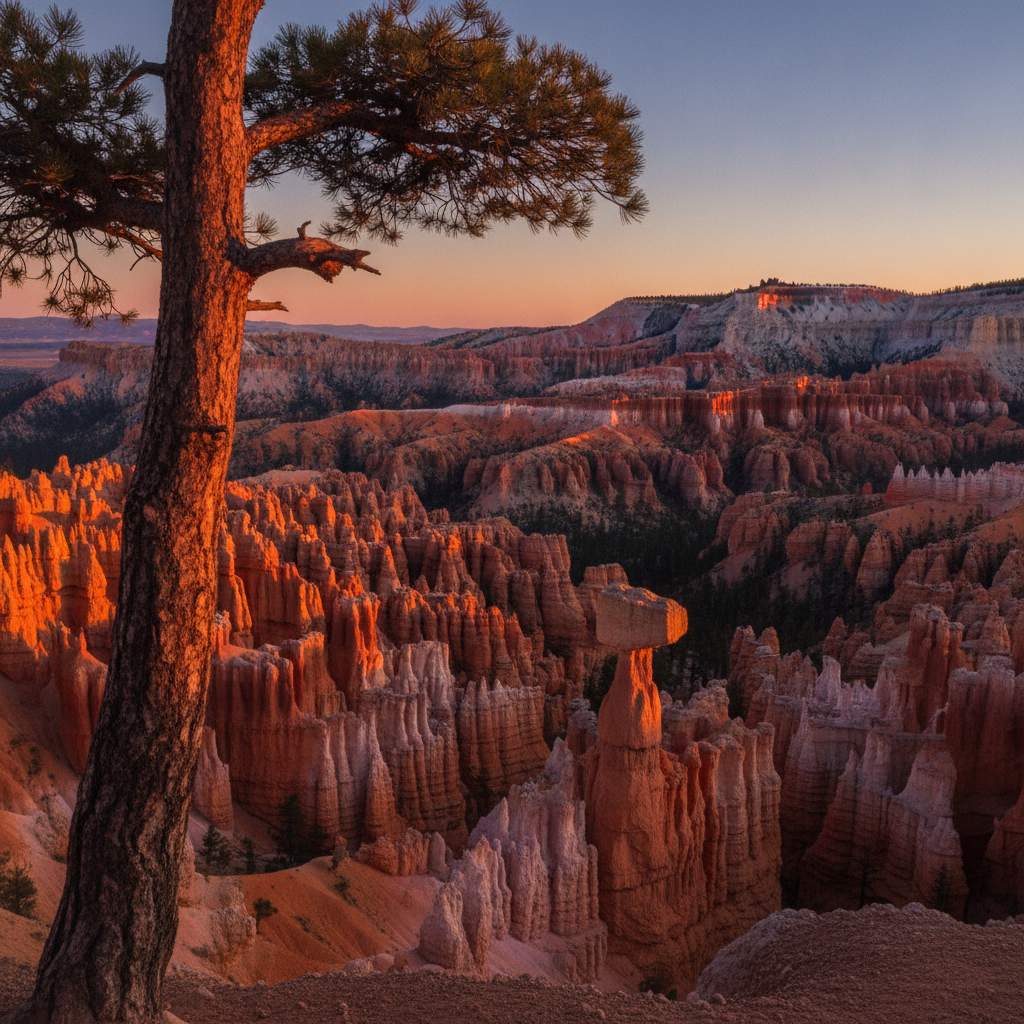
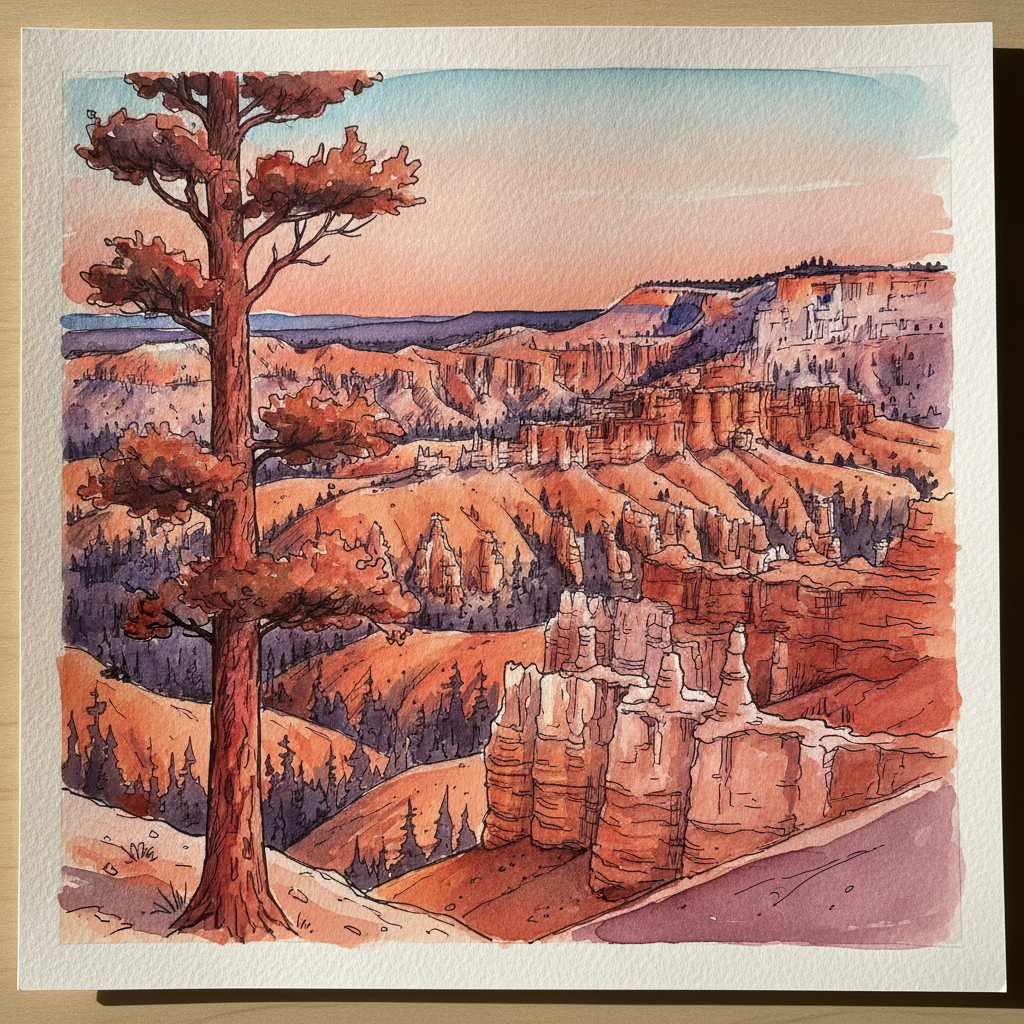
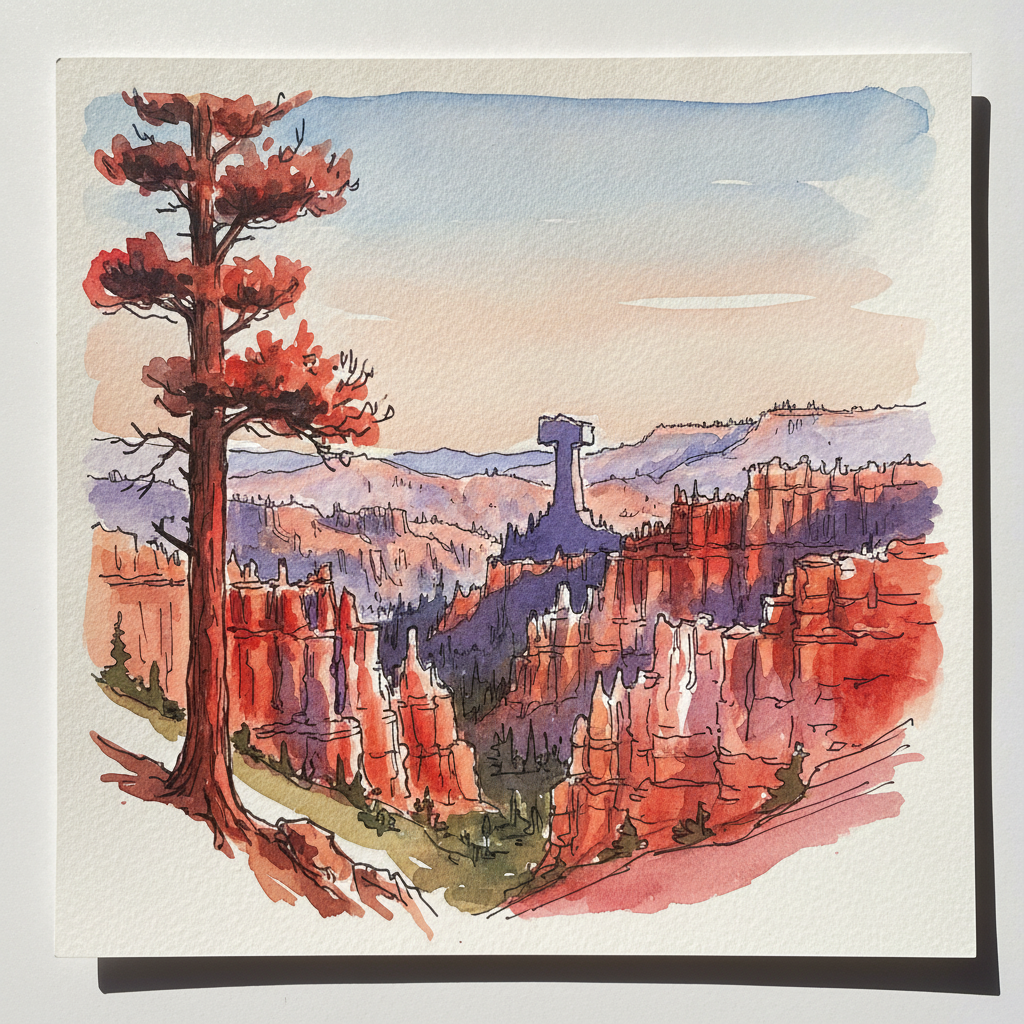
This piece offers a compelling study in capturing dramatic light and complex geological forms through the synergistic use of pen and watercolor. Focus your pen work on establishing strong, varied line weights for the distinct forms like Thor's Hammer and the foreground ponderosa, using crisper, drier lines for sun-struck edges. Then, employ luminous wet-on-wet washes of saturated orange-red and purple directly against those lines to build the hoodoos' glowing volume and the strong value shifts from sun to shadow, letting the color do the heavy lifting for depth.
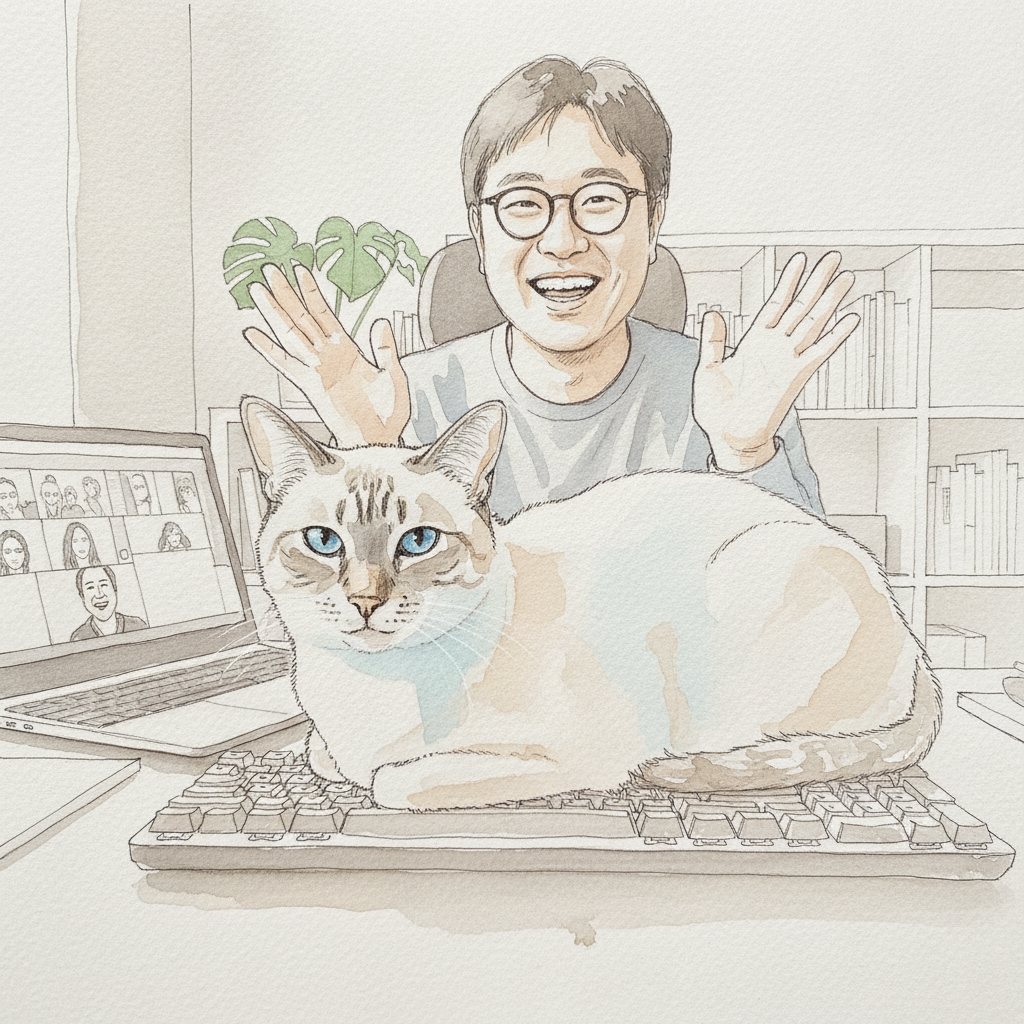
Piece 6 — Person with cat on keyboard
Pen + Watercolor · Loose pen and watercolor line-and-wash

Three takes


Focus for this piece
This piece offers a great opportunity to explore the interplay between organic and geometric forms, such as the cat's rounded "meatloaf" shape against the keyboard's grid-like structure. Focus on using varied line weights—crisper, darker lines for the immediate foreground and softer, lighter lines for the background elements—to pull the viewer's eye to the main interaction. Experiment with dry brush techniques for the cat's sleek fur to capture its texture, contrasted with looser, wetter washes for the man's clothing and the office background. Pay attention to how minimal pen work in the background can suggest a full bookshelf and plant without distracting from the central figures.
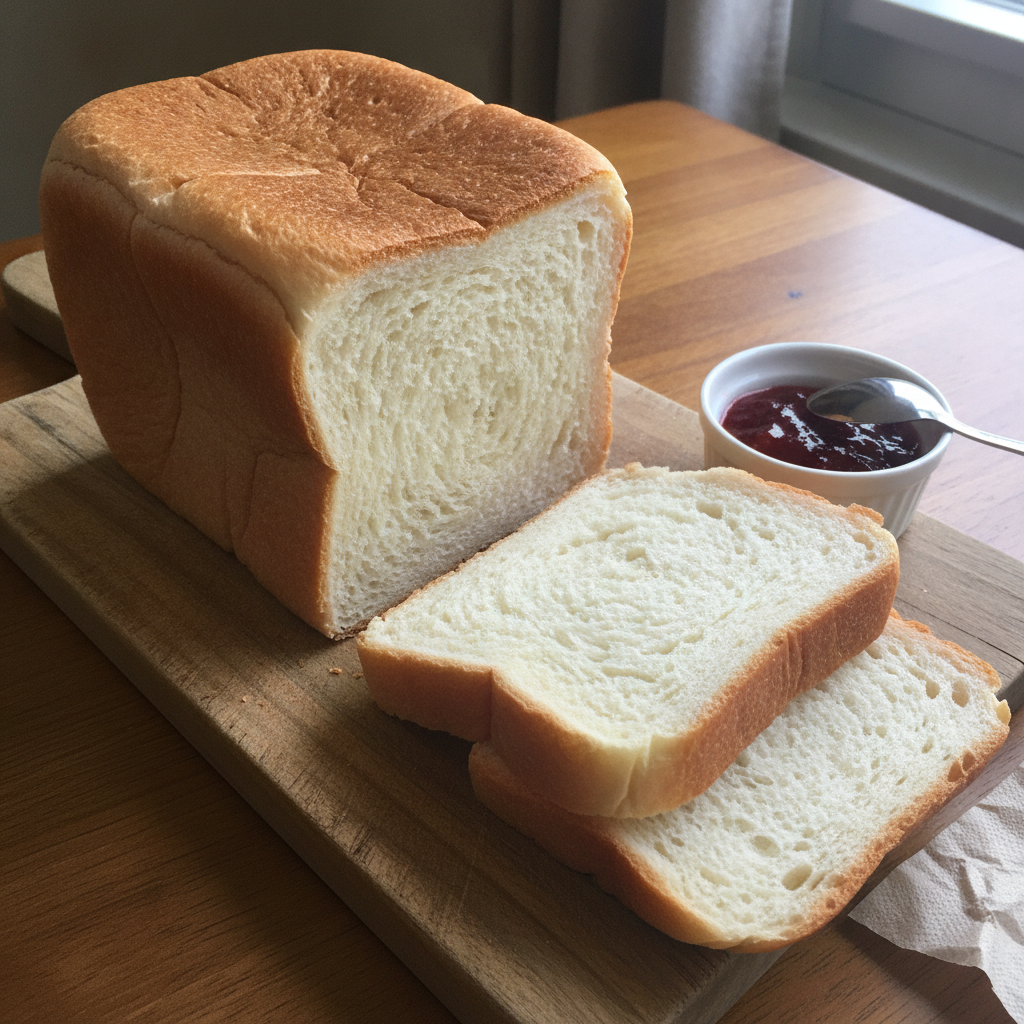
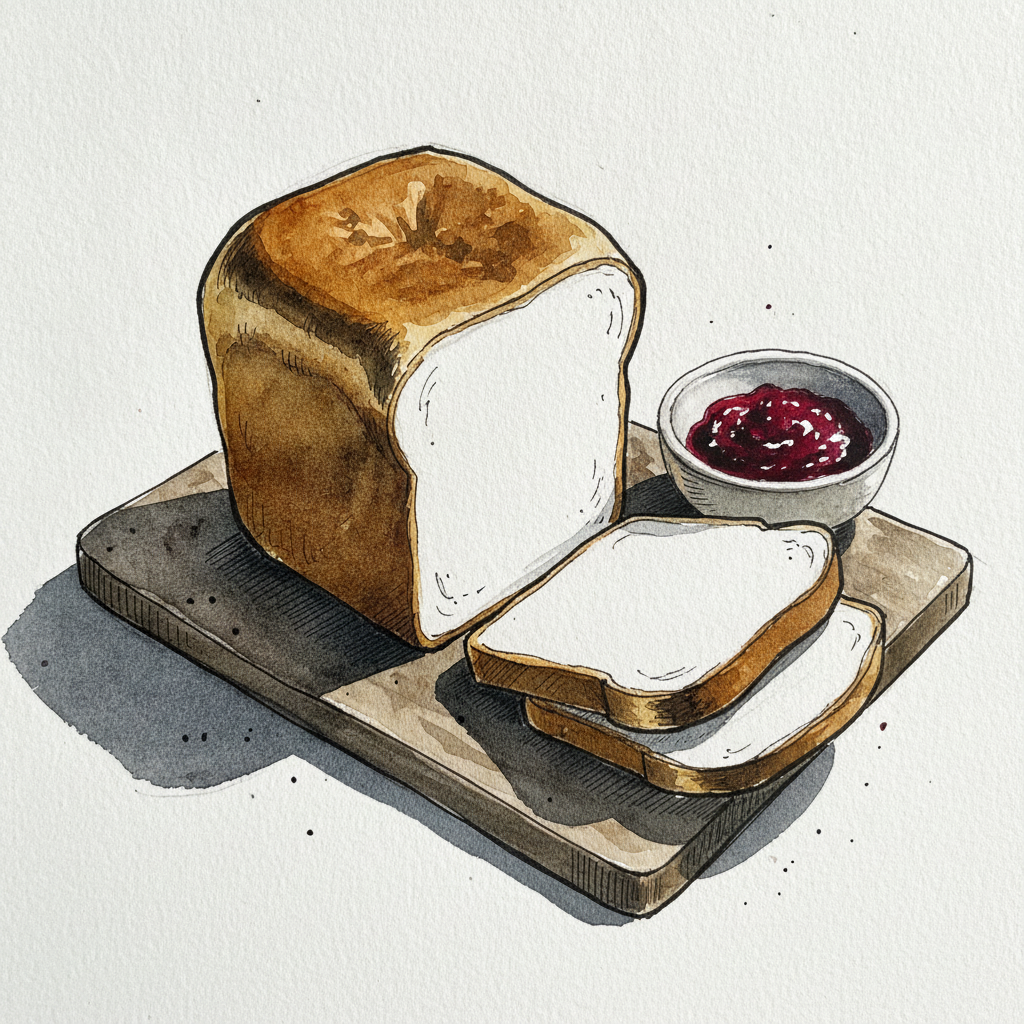
Piece 7 — Japanese shokupan with its square pillow shape
Pen + Watercolor · Loose pen and watercolor line-and-wash
Three takes

Focus for this piece
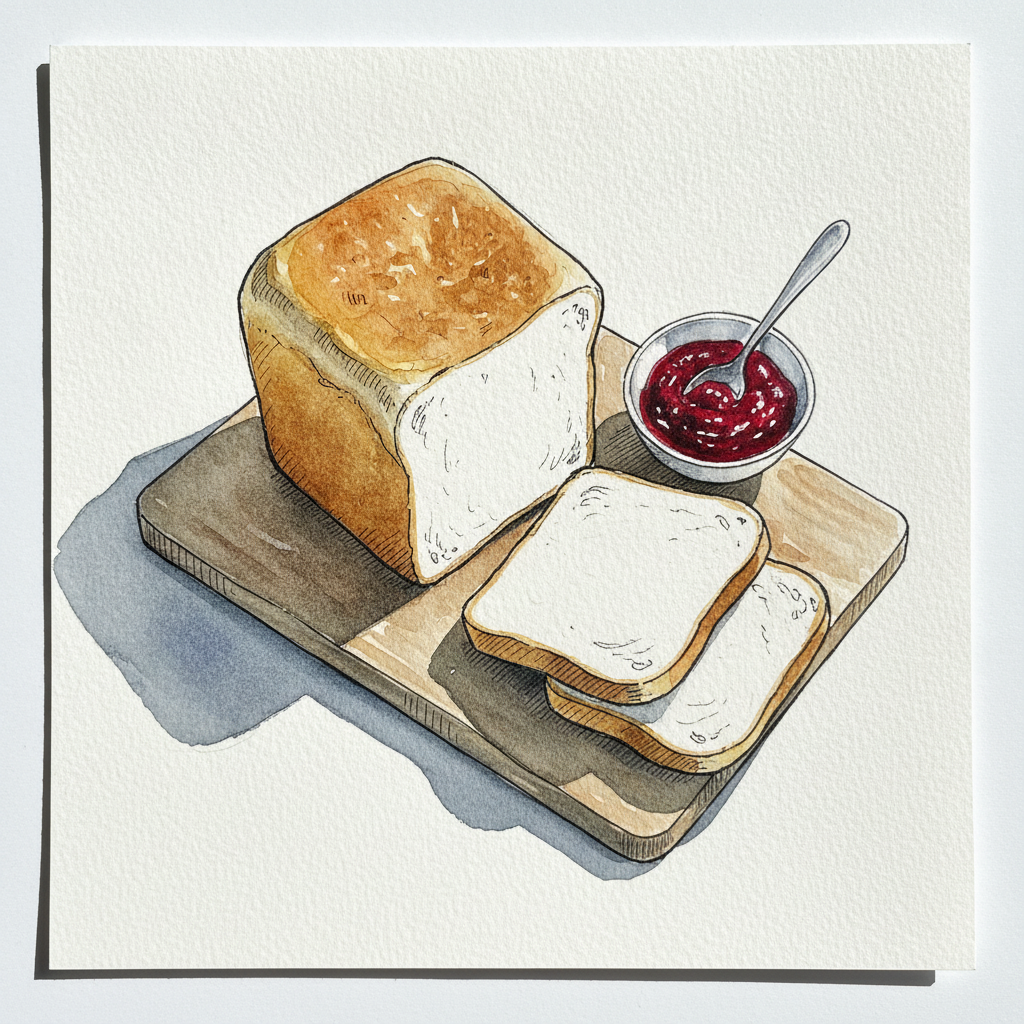
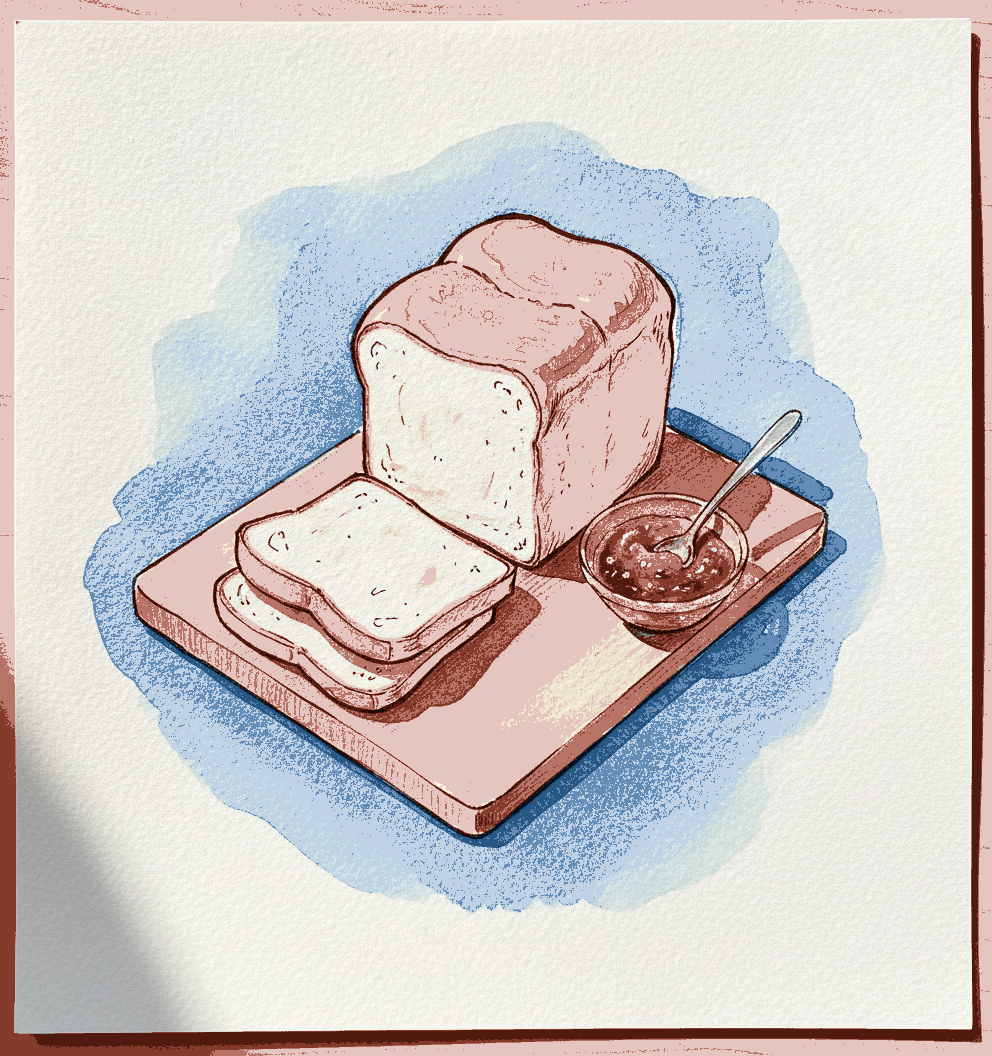
Today's subject, shokupan, offers an excellent opportunity to study how soft, rounded rectangular forms can be rendered using the interplay of delicate line and transparent wash. Practice establishing the bread's 'pillow shape' with a very light, continuous ink line, then build its 'pale gold' volume and 'translucent' crust with multiple, barely-there wet-on-wet washes. Critically, aim to preserve the untouched white of the paper for the 'impossibly white' interior crumb of the fanned slices, allowing the washes to define form through subtle value shifts rather than strong outlines.
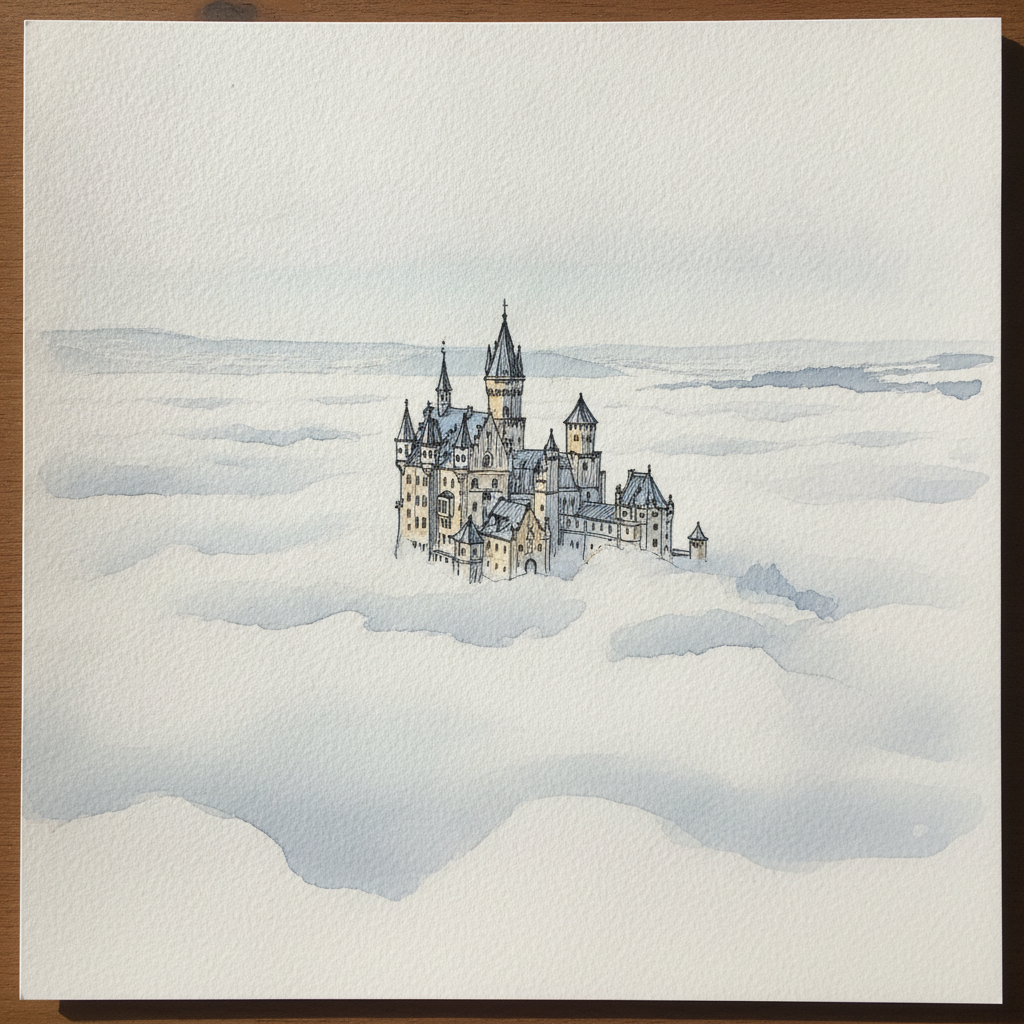
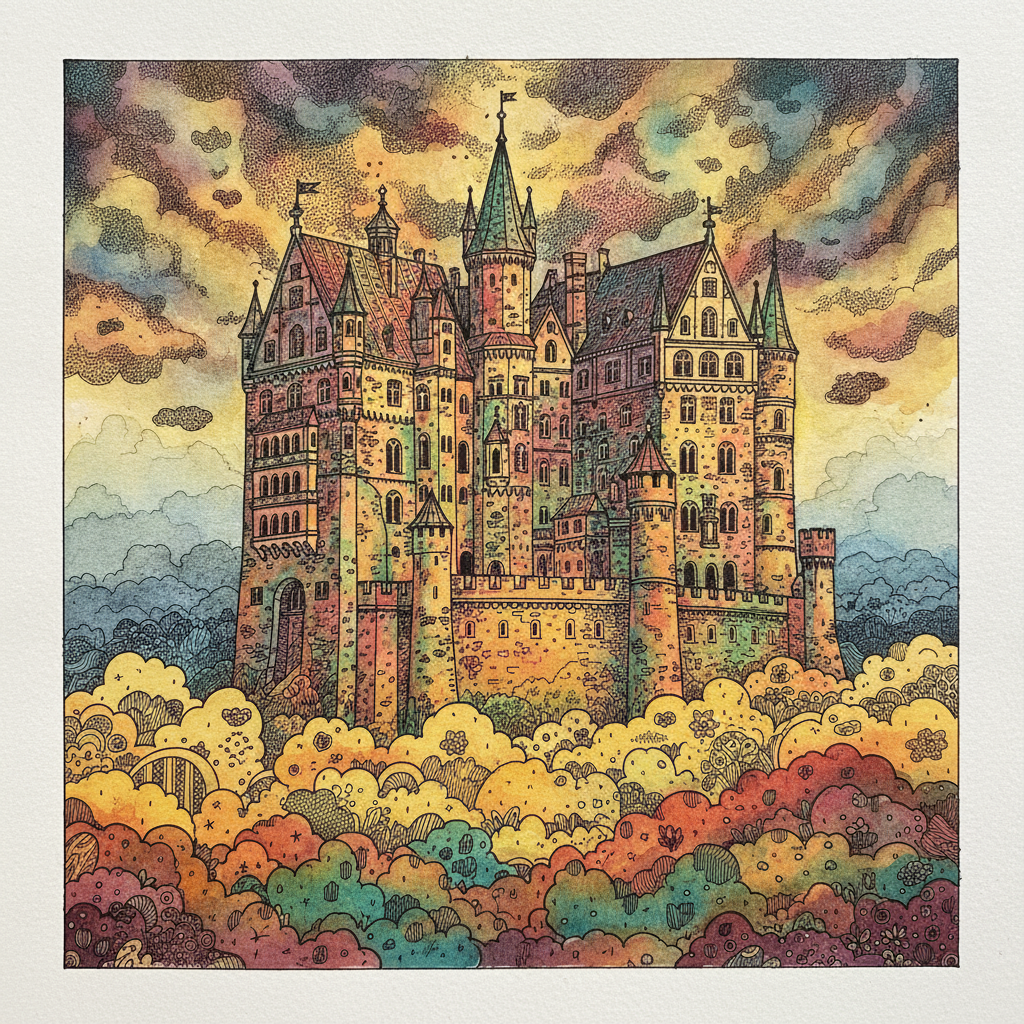
Piece 8 — Burg Hohenzollern, Baden-Württemberg, Germany
Pen + Watercolor · Loose pen and watercolor line-and-wash
Three takes
Focus for this piece
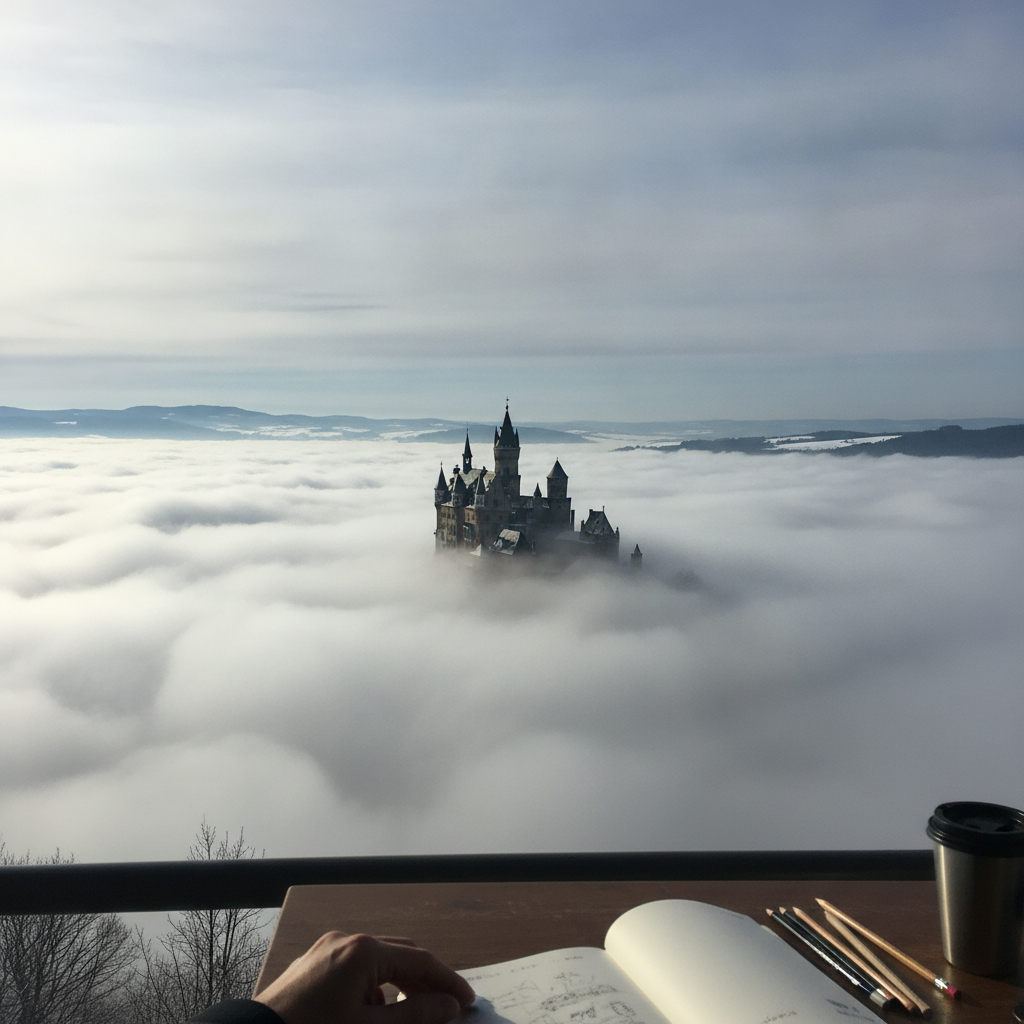
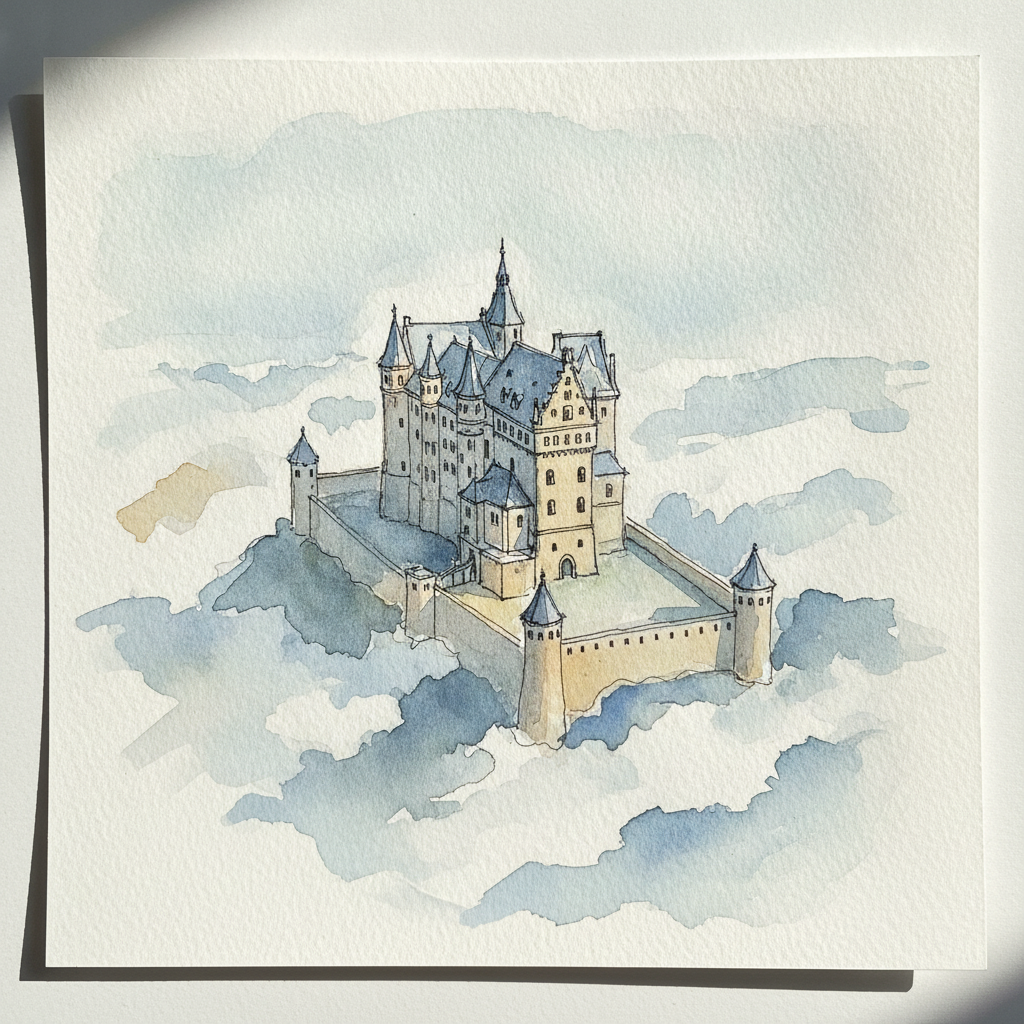
This piece offers an excellent study in establishing dramatic scale through the interplay of precise detail and atmospheric washes. Use crisp, varied ink lines to define the intricate Neo-Gothic architecture, ensuring the castle's verticality and complex forms are clearly articulated. Then, employ soft, layered washes of cool blues and grays for the conical mountain and valley clouds, letting the watercolor gradient establish depth. This contrast will make the castle appear to 'float' above the landscape, capturing its Inselberg view.