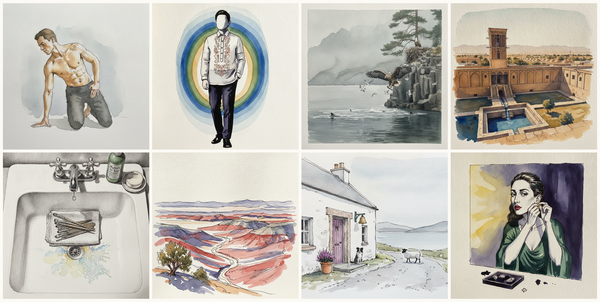
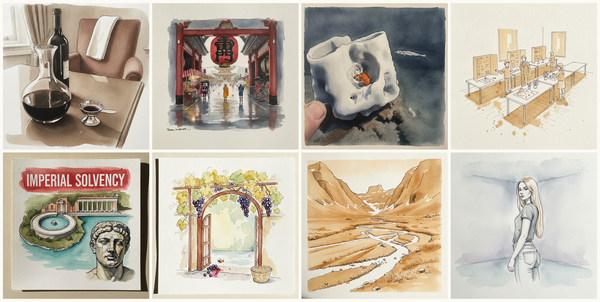
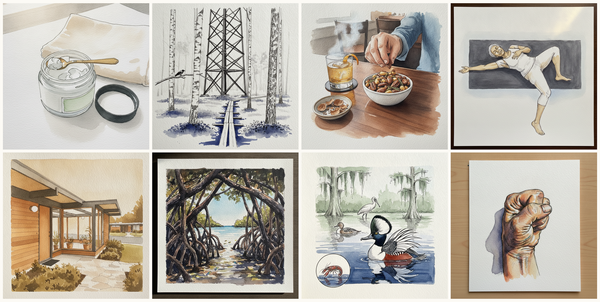
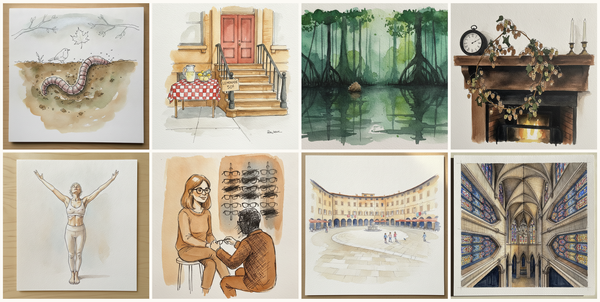
Sage Gateshead, Gateshead, England, Nested set of three studio bowls, Maine pond fog at dawn, USA, Willow ptarmigan, and more — pen + watercolor for October 24, 2026
AI-generated daily art-practice references for pen and watercolor: Sage Gateshead, Gateshead, England, Nested set of three studio bowls, Maine pond fog at dawn, USA, Willow ptarmigan, Wisteria arch at the edge of a vineyard in Napa, Folk dancers in circle, Knees Apart, Hand Through Hair, Art Deco…
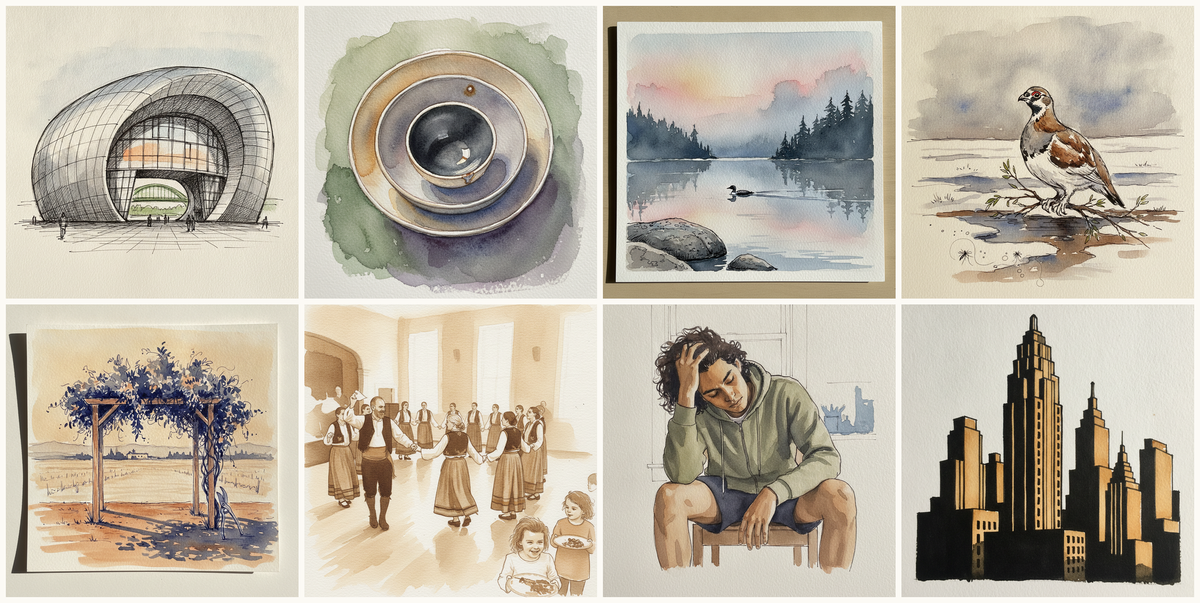
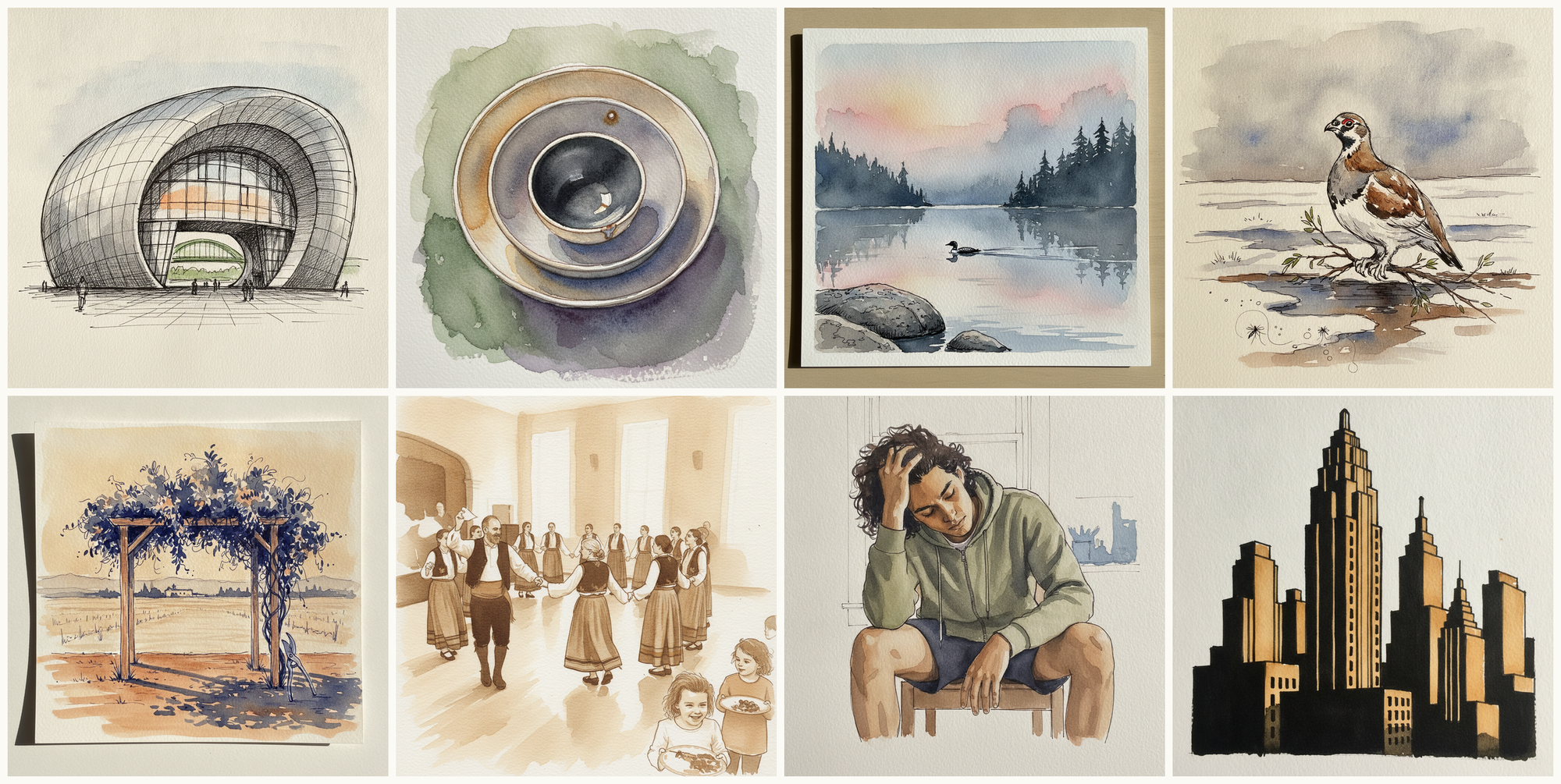
Today's 8 pen-and-watercolor pieces: Sage Gateshead, Gateshead, England, Nested set of three studio bowls, Maine pond fog at dawn, USA, Willow ptarmigan, Wisteria arch at the edge of a vineyard in Napa, Folk dancers in circle, Knees Apart, Hand Through Hair, Art Deco Skyscraper. Each piece comes with an AI-generated photoreal reference, three AI-generated example artworks in different treatments, and a short focus paragraph naming what to study in this one.
Why these references use AI
This daily series uses AI-generated images as practice prompts, not as finished artwork to copy. Each subject starts with a synthetic photoreal reference generated with Gemini/Nano Banana, then moves into three pen-and-watercolor interpretations of the same subject.
I use AI here because daily art practice needs variety and low friction. Real life can get repetitive, busy, or visually narrow. These generated reference sets make it easier to study bodies, buildings, animals, landscapes, objects, gestures, light, palettes, and compositions that might not show up in an ordinary day.
The goal is not to reproduce any image directly. Treat each set as a starting point for observation and study: choose what interests you, change the framing, simplify the subject, alter the palette, and make your own version.
Piece 1 — Sage Gateshead, Gateshead, England
Pen + Watercolor · Loose pen and watercolor line-and-wash
Three takes
Focus for this piece
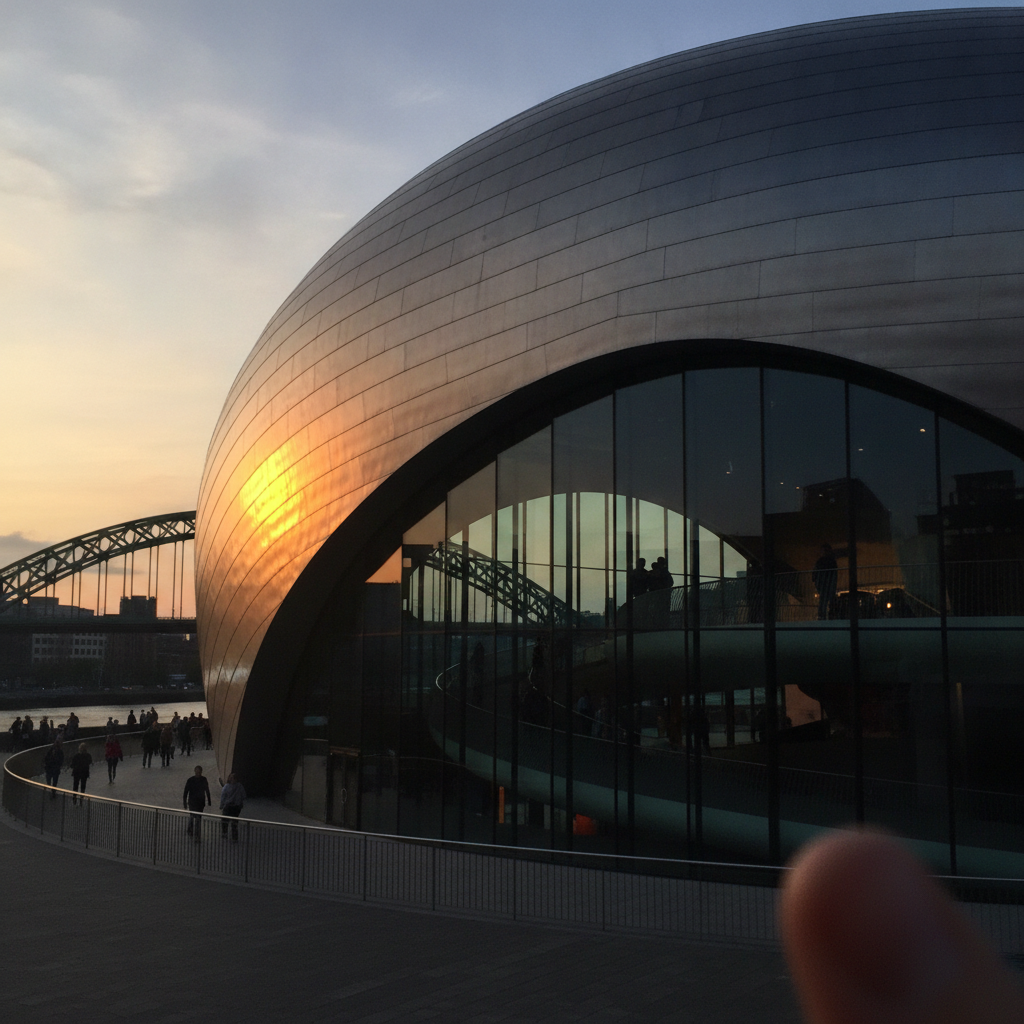
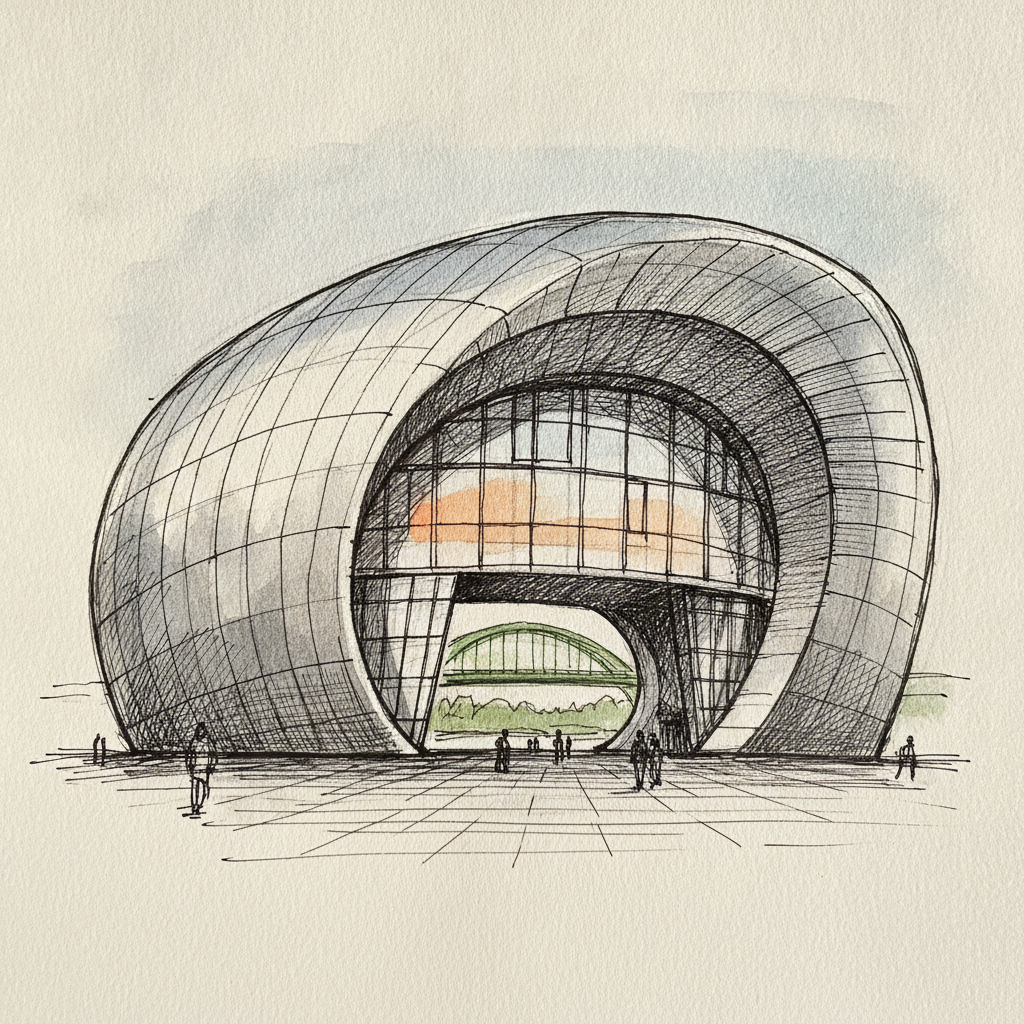
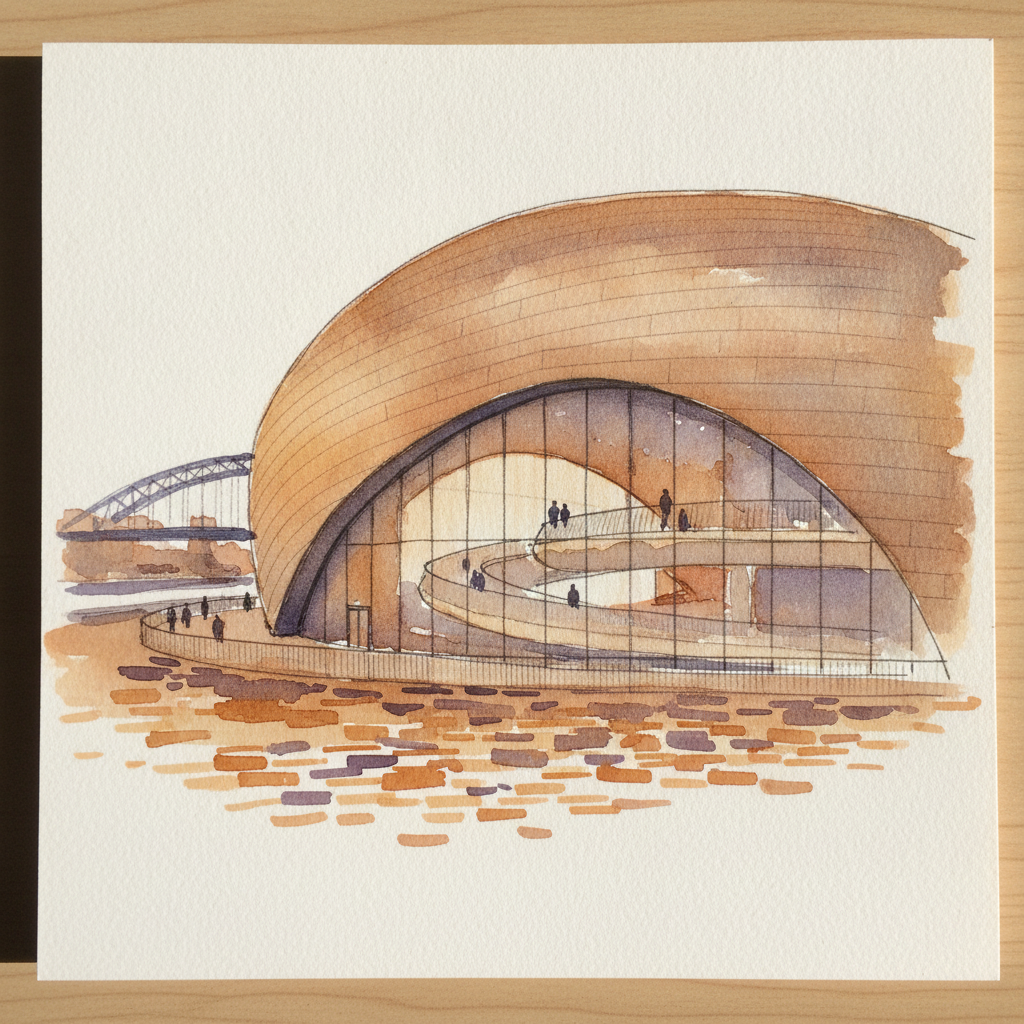
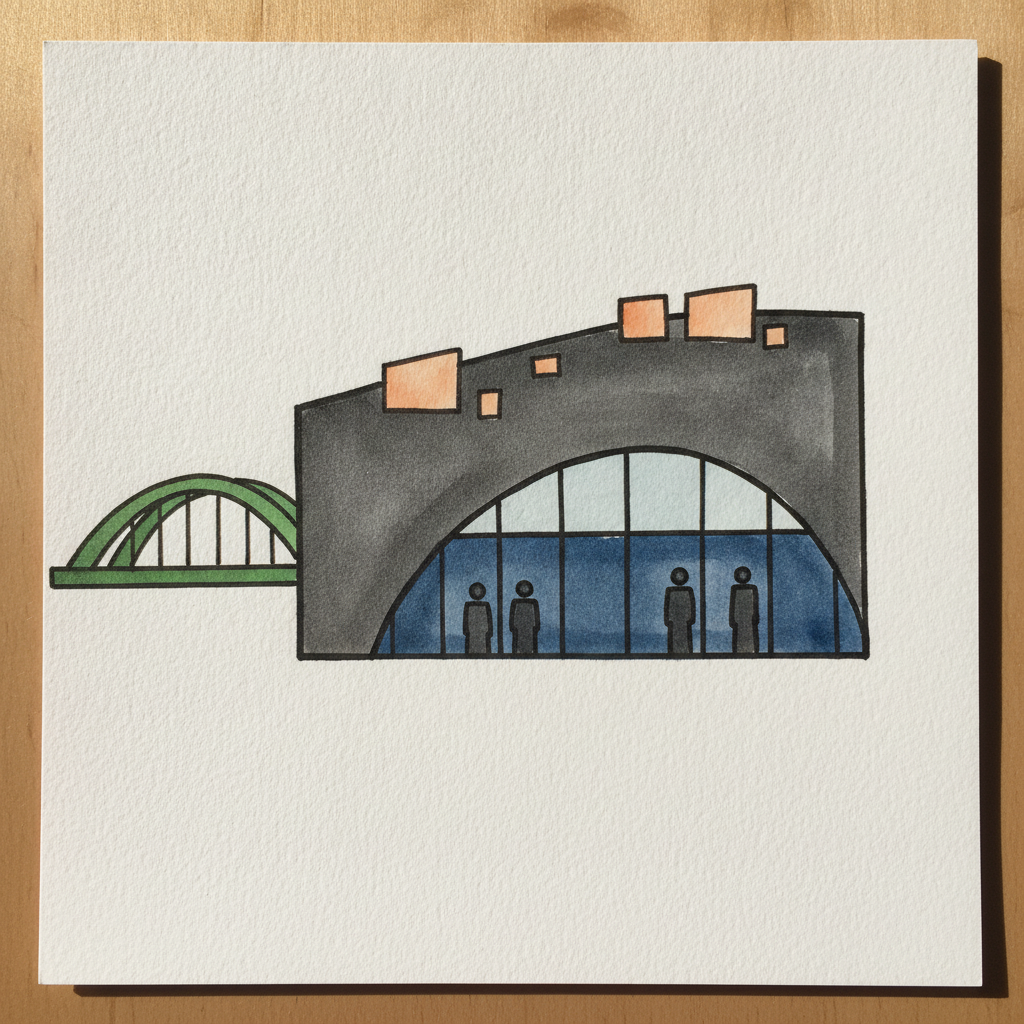
This piece is an excellent study in rendering voluminous, curving architectural forms and their reflective surfaces. Concentrate on using broad, wet-on-wet washes with a large round brush to build seamless, subtle color gradients that suggest the building's chrome shell catching the sunset. Employ varied pen line weights to define the strong, overarching silhouette, while using lighter, broken lines or omitting them entirely to imply the subtle shifts of light and reflection across its complex curves.
Piece 2 — Nested set of three studio bowls
Pen + Watercolor · Loose pen and watercolor line-and-wash
Three takes
Focus for this piece
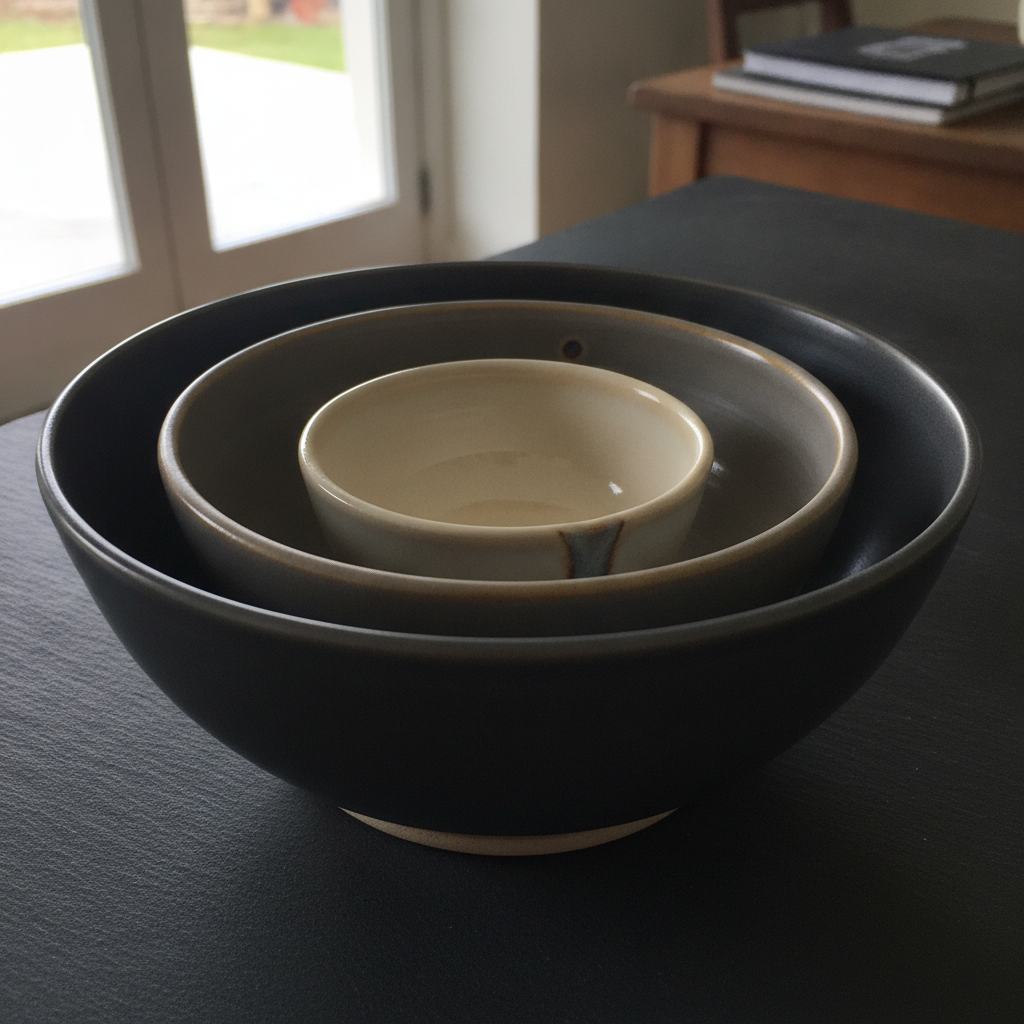
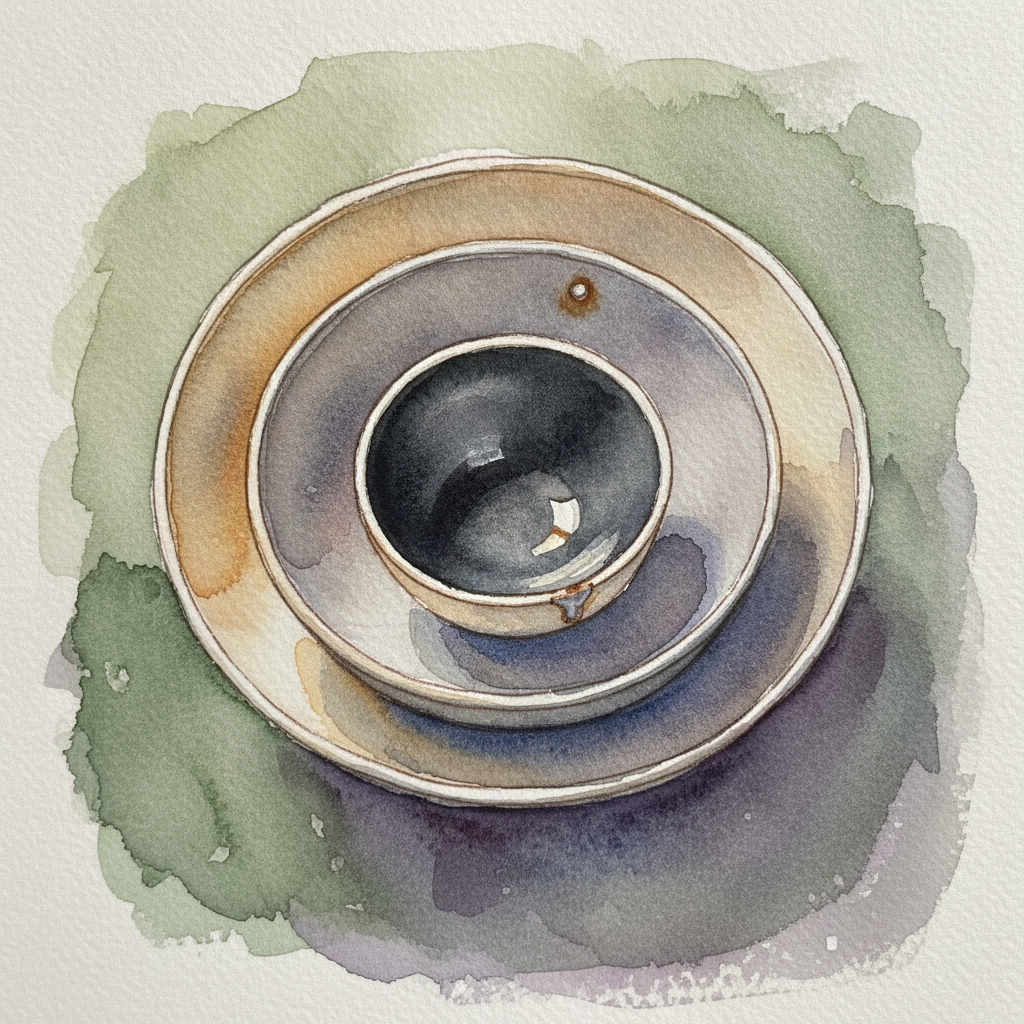
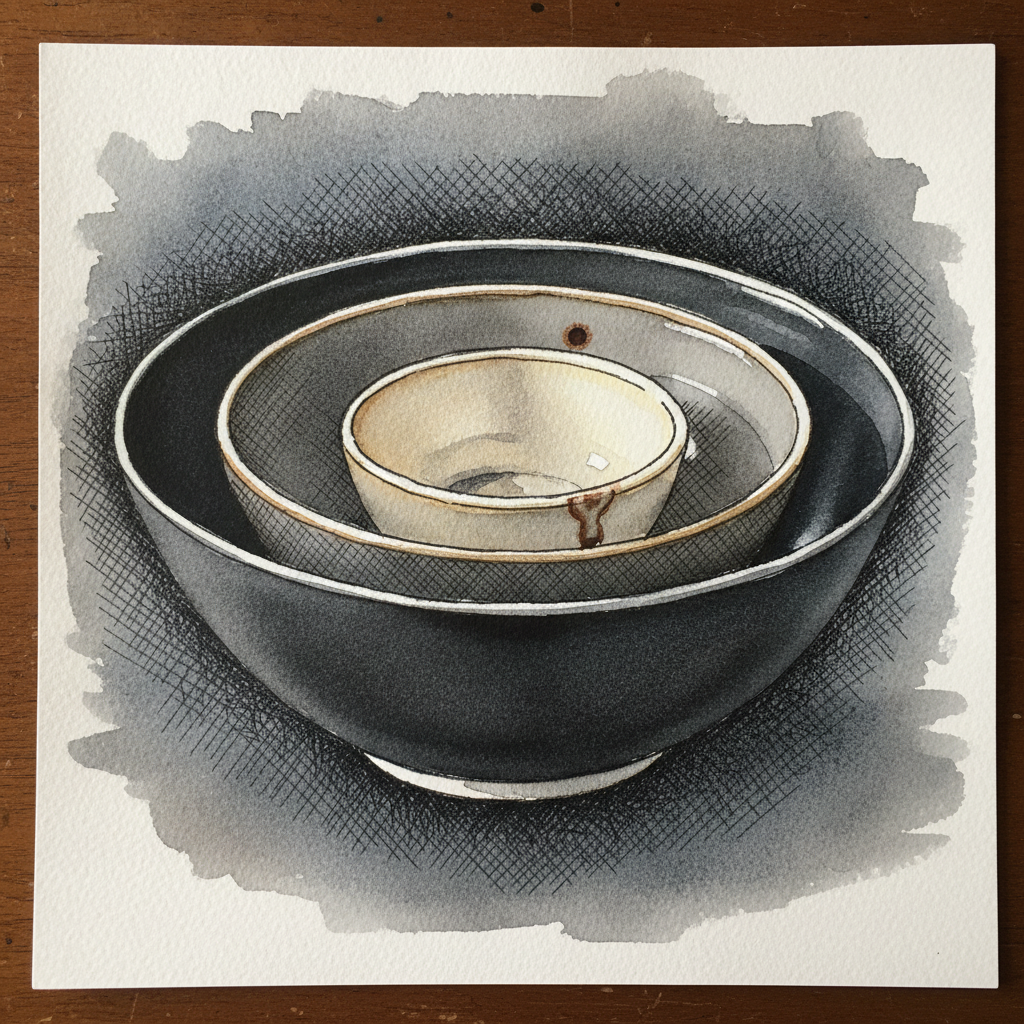
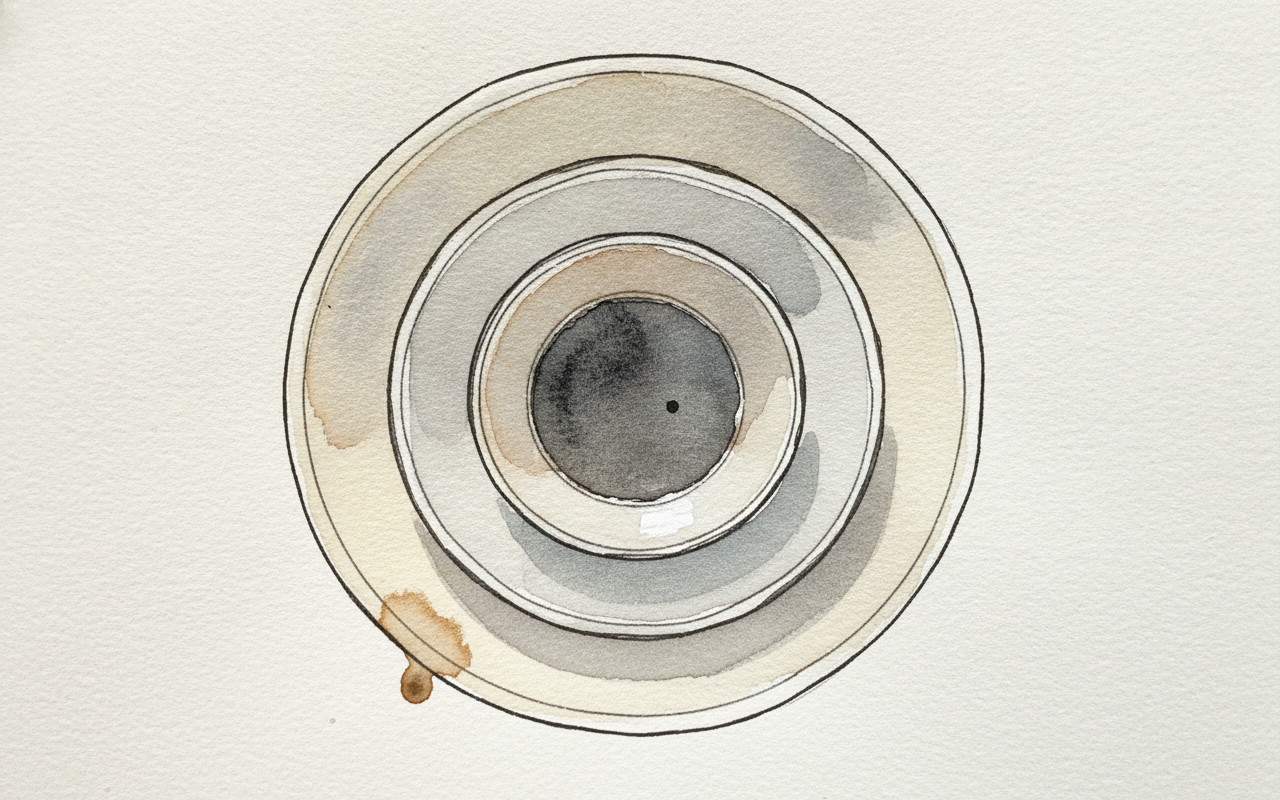
This piece offers a focused study on the interplay between precise line work and subtle value building. Use confident, varied ink line weights to define the concentric ellipses of the bowl rims and to capture the distinct character of each imperfection, such as the cream bowl's drip. Then, practice creating a smooth value gradient from cream to charcoal with layered, dilute washes of a cool neutral pigment, letting the watercolor convey volume and the quiet glazes while your pen work anchors the structure.
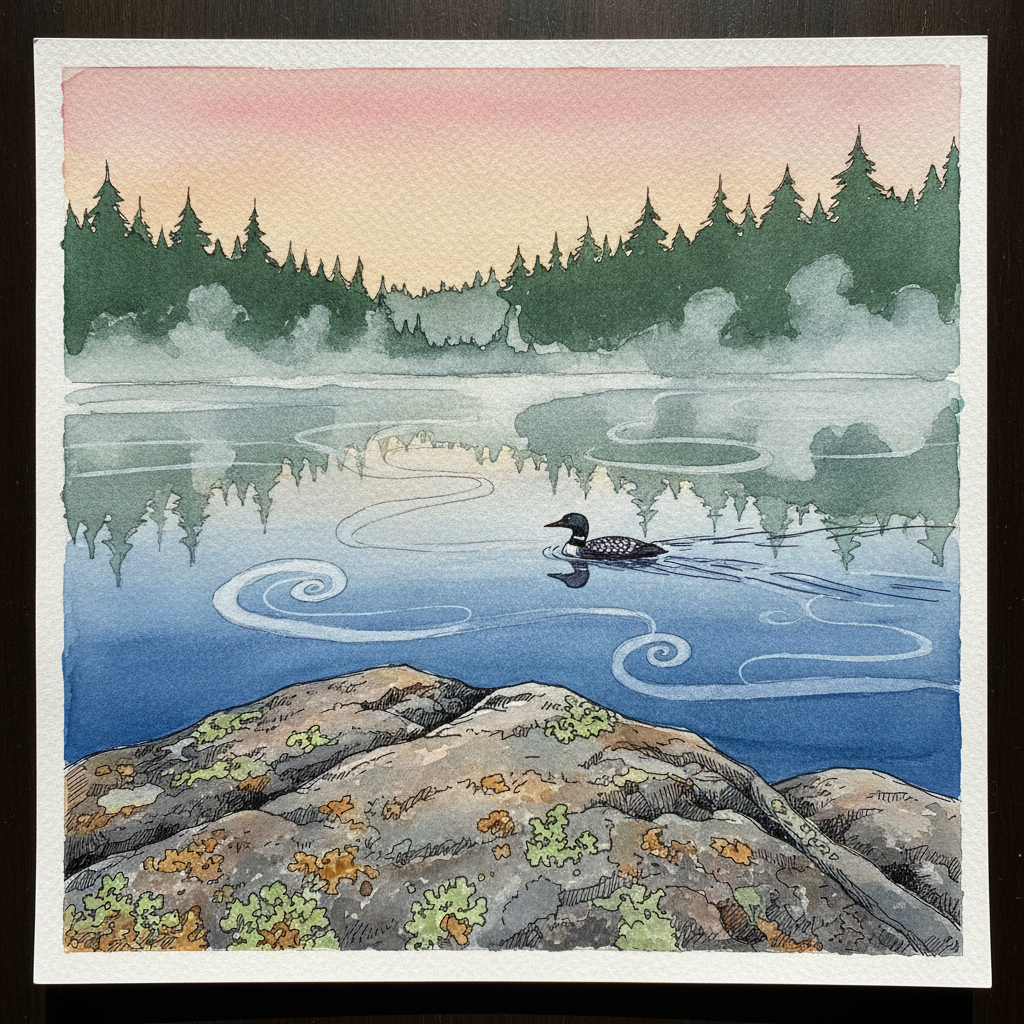
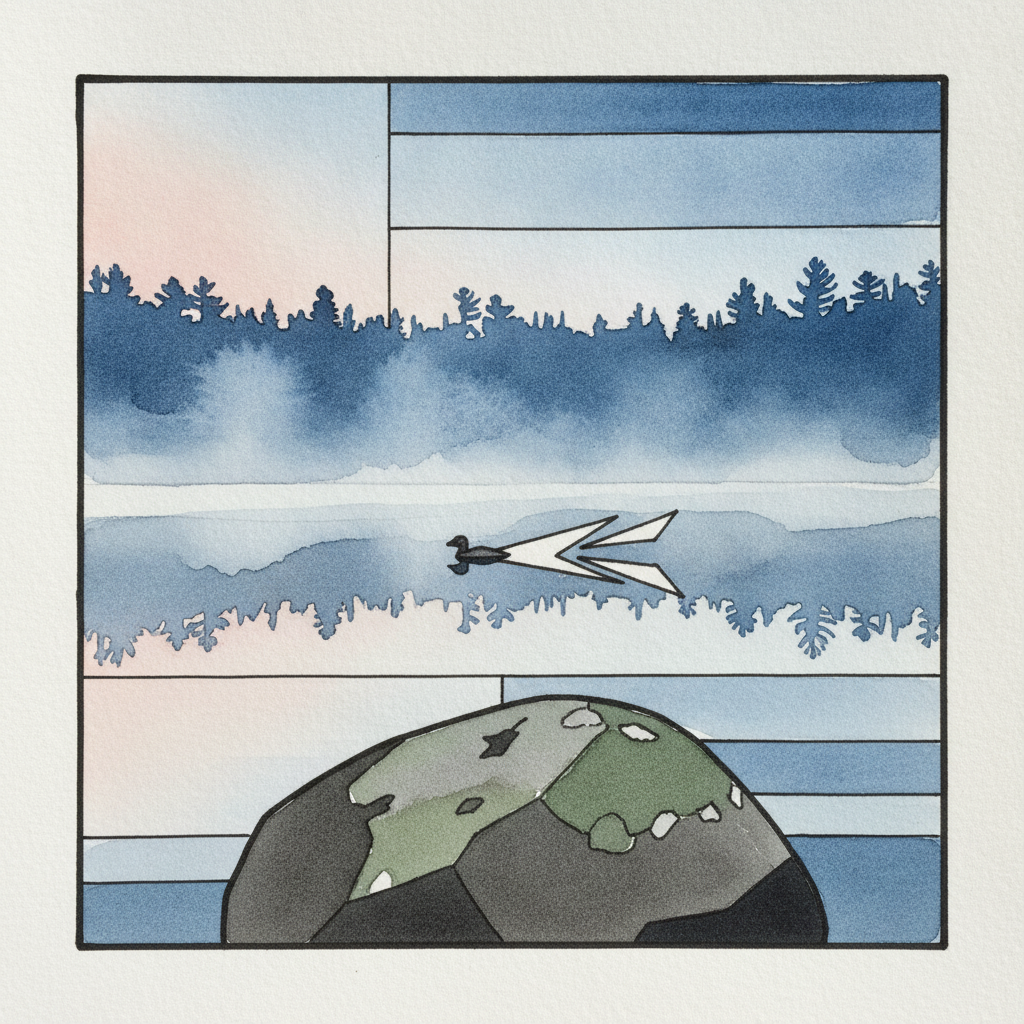
Piece 3 — Maine pond fog at dawn, USA
Pen + Watercolor · Loose pen and watercolor line-and-wash
Three takes
Focus for this piece
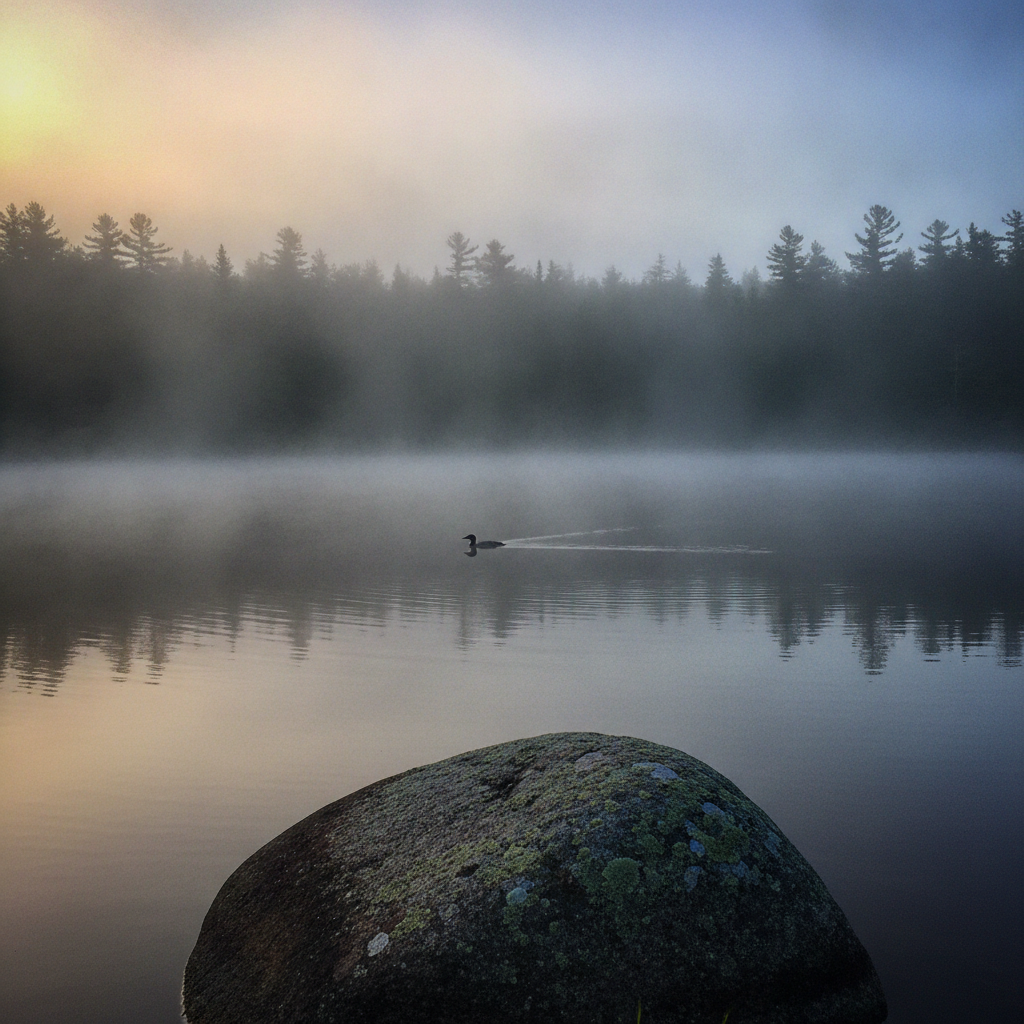
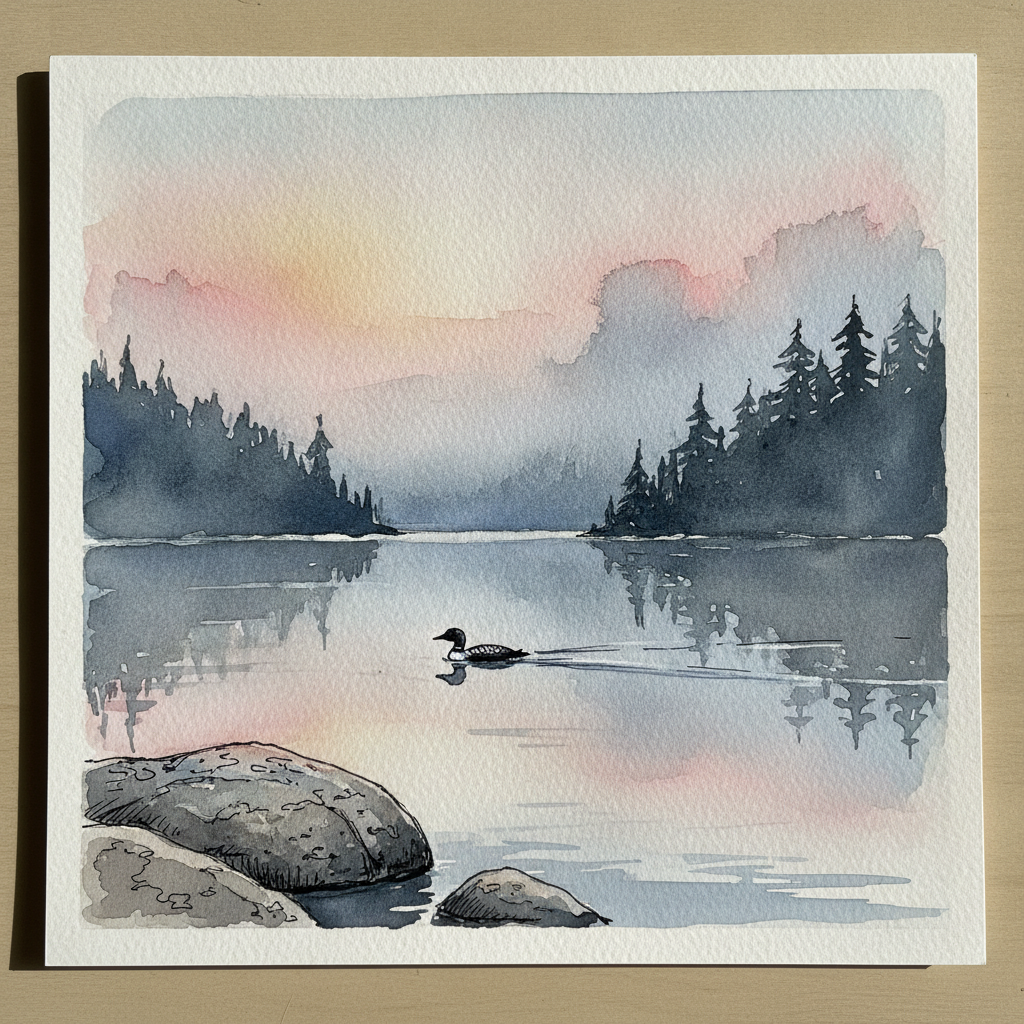
This piece is ideal for practicing atmospheric depth, using the stark contrast between precise pen work and fluid watercolor to define space. Create the soft, rising fog and distant spruce silhouettes entirely with delicate wet-on-wet watercolor washes in cool blues and dawn pinks, employing *no* ink lines in these receding areas. Reserve your sharpest, heaviest pen strokes for the foreground granite boulder and the loon's wake, allowing these crisp details to anchor the misty scene.
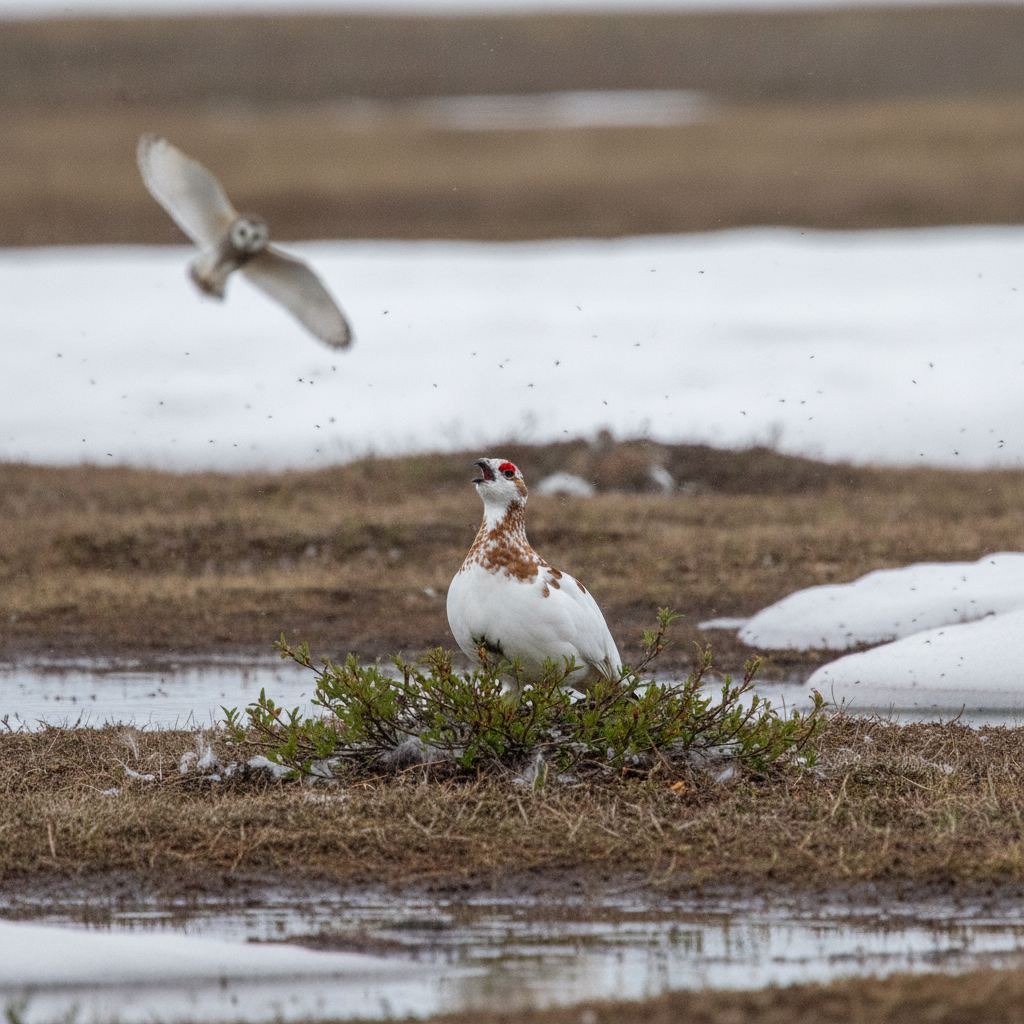
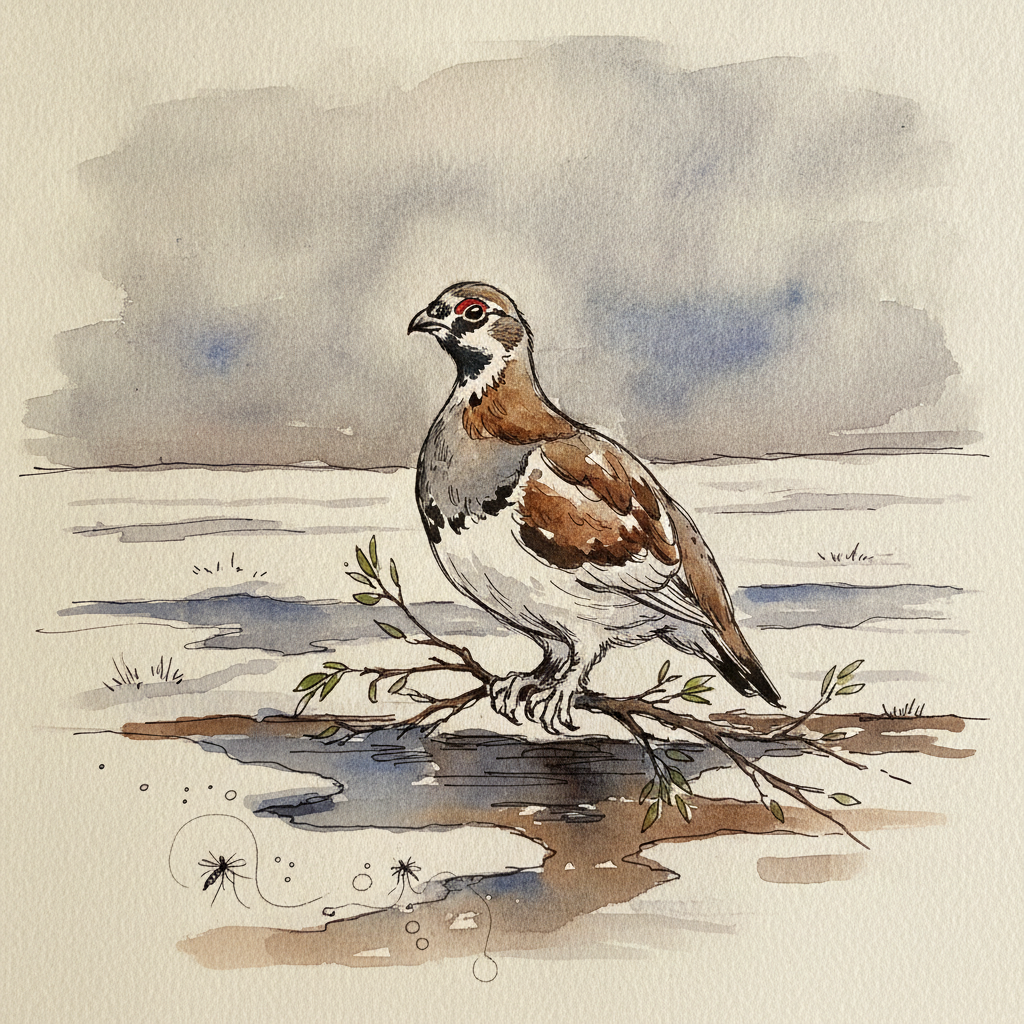
Piece 4 — Willow ptarmigan
Pen + Watercolor · Loose pen and watercolor line-and-wash
Three takes

Focus for this piece
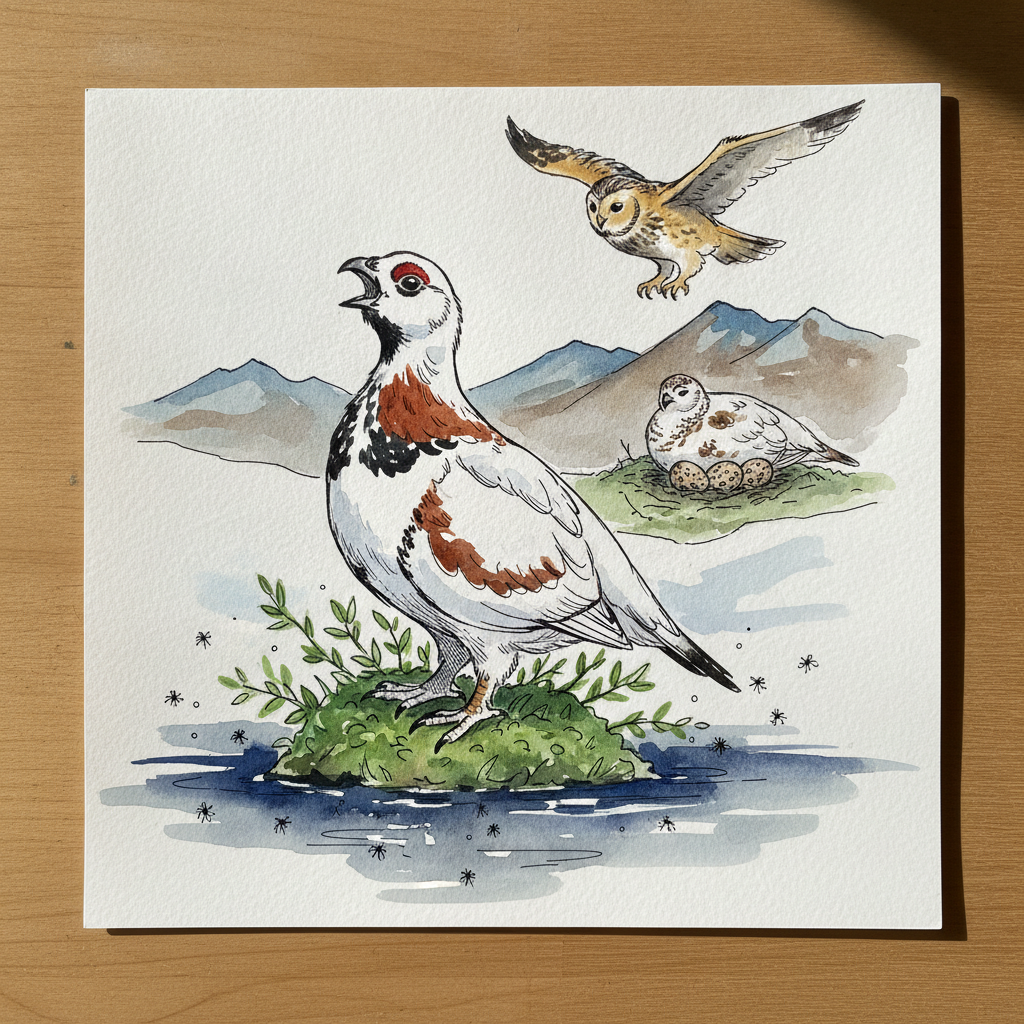
This piece challenges you to depict subtle variations in white, perfect for practicing how to make a subject disappear and reappear with minimal contrast. Begin with very pale, warm or cool grey washes for the snow and the bird's white plumage, carefully layering wet-on-dry with a flat brush to build soft contours. Reserve your finest waterproof pen (like a 005 or 01) for suggesting feather texture and crucial edges, allowing the emerging rufous feathers and striking red eye-combs to provide your key focal points and color contrast. Focus on implied lines and values rather than outlining the entire form.
Piece 5 — Wisteria arch at the edge of a vineyard in Napa
Pen + Watercolor · Loose pen and watercolor line-and-wash
Three takes

Focus for this piece
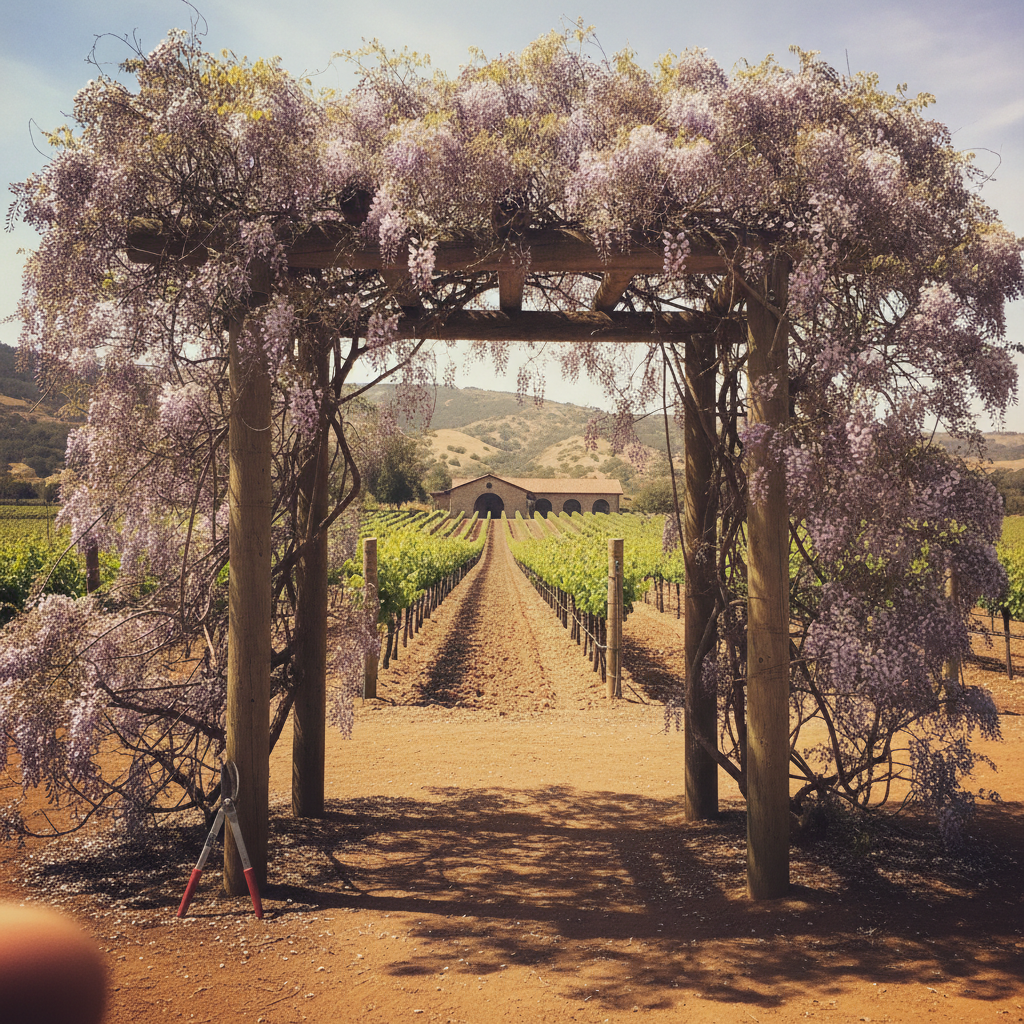
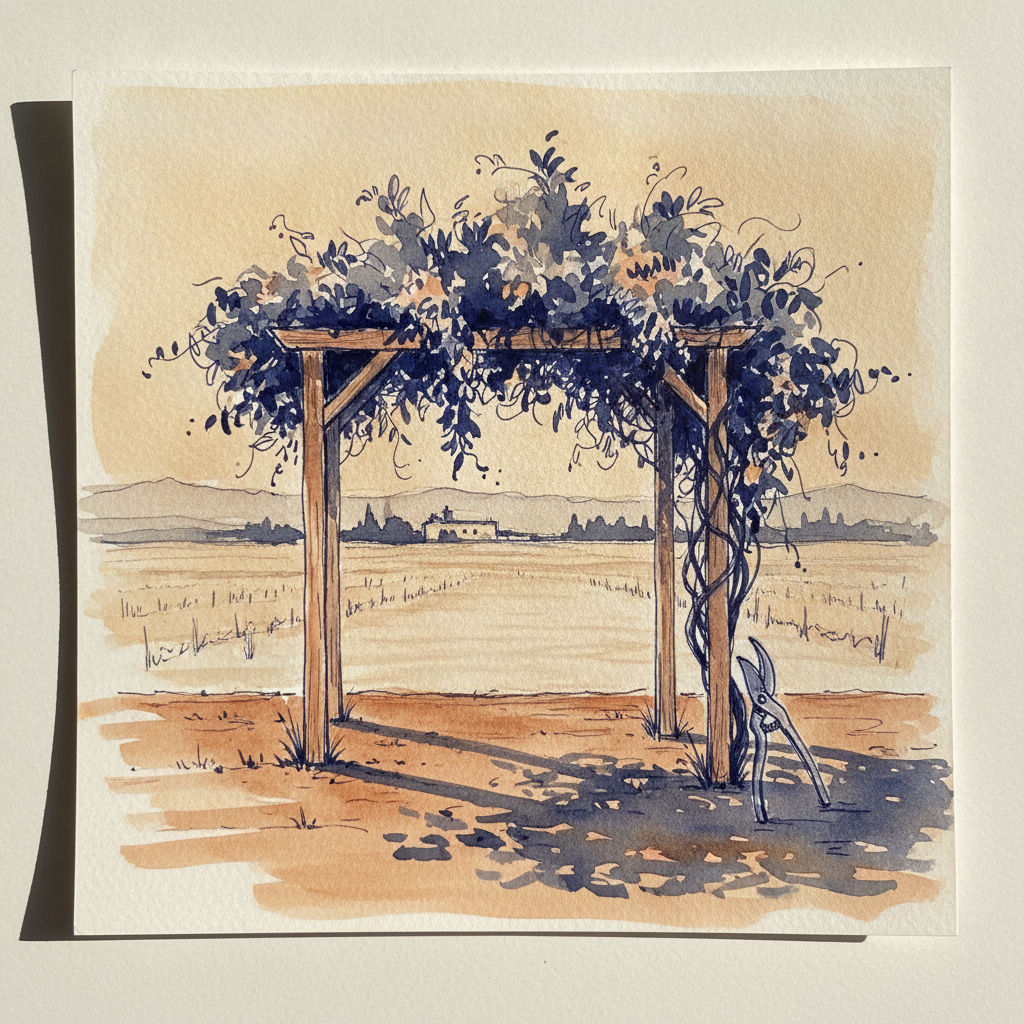
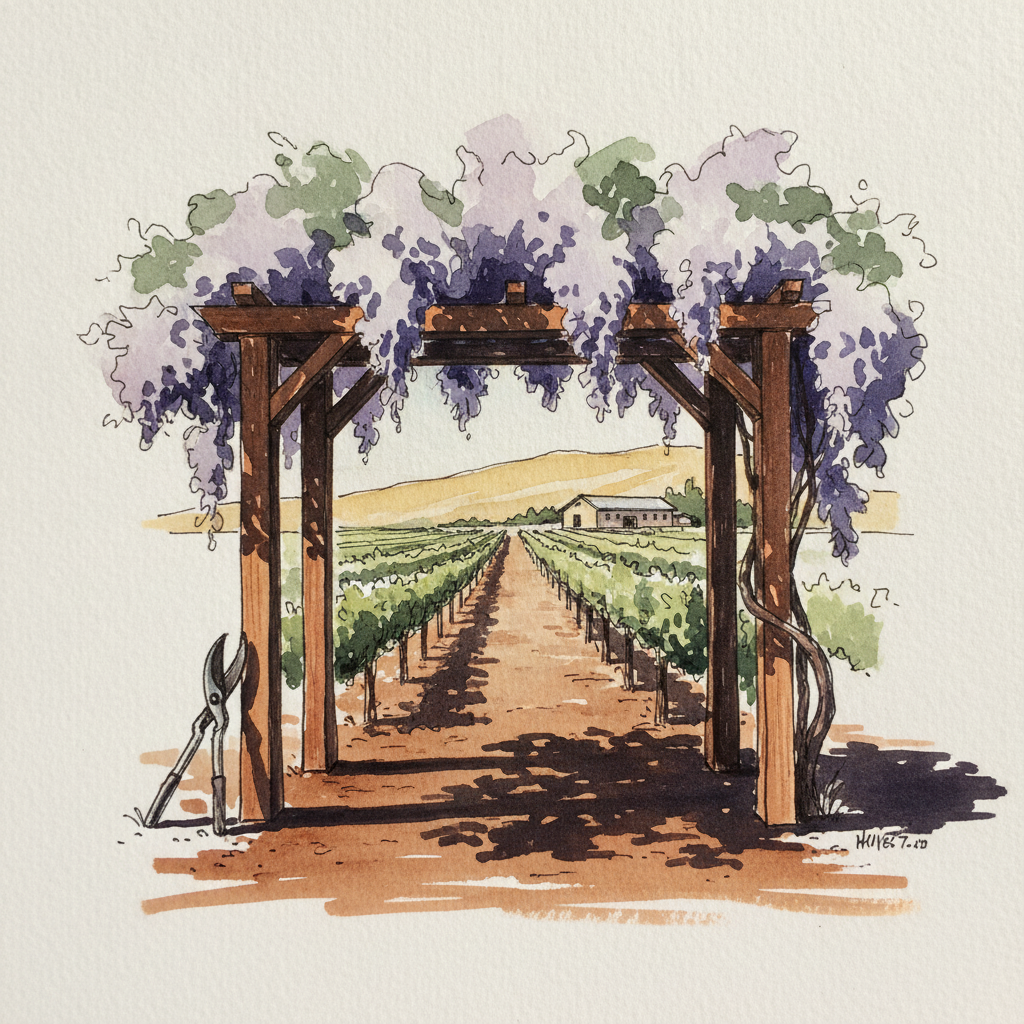
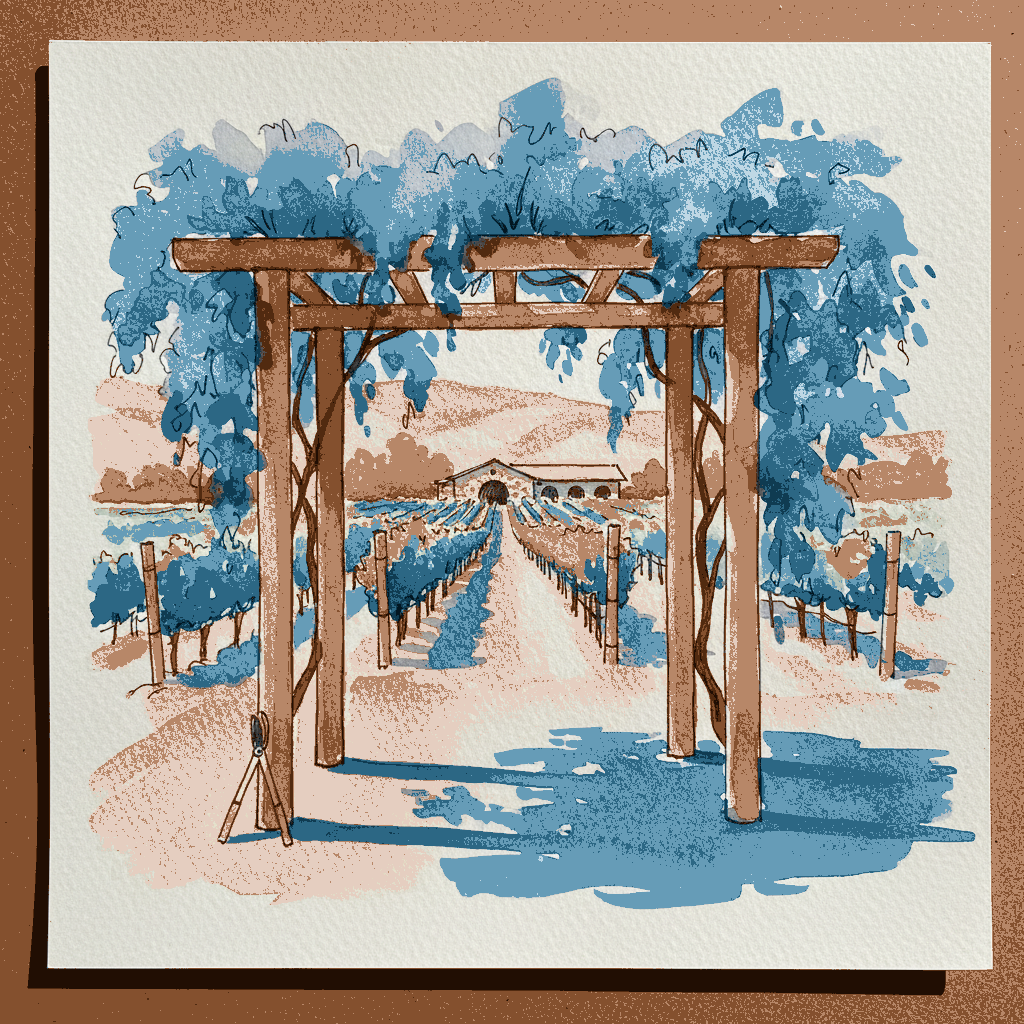
This piece is excellent for practicing how to contrast rigid structure with organic form, specifically focusing on how strong, direct light reveals both. Use precise, committed lines for the cedar arch, building, and pruning loppers, reserving lighter, broken marks for the unruly wisteria's mass and distant vineyard haze. Pay careful attention to defining the sharp, detailed shadow cast by the wisteria on the earth, using a rich, dark wash with a distinct edge, contrasting it with the soft, lost edges elsewhere.
Piece 6 — Folk dancers in circle
Pen + Watercolor · Loose pen and watercolor line-and-wash

Three takes

Focus for this piece
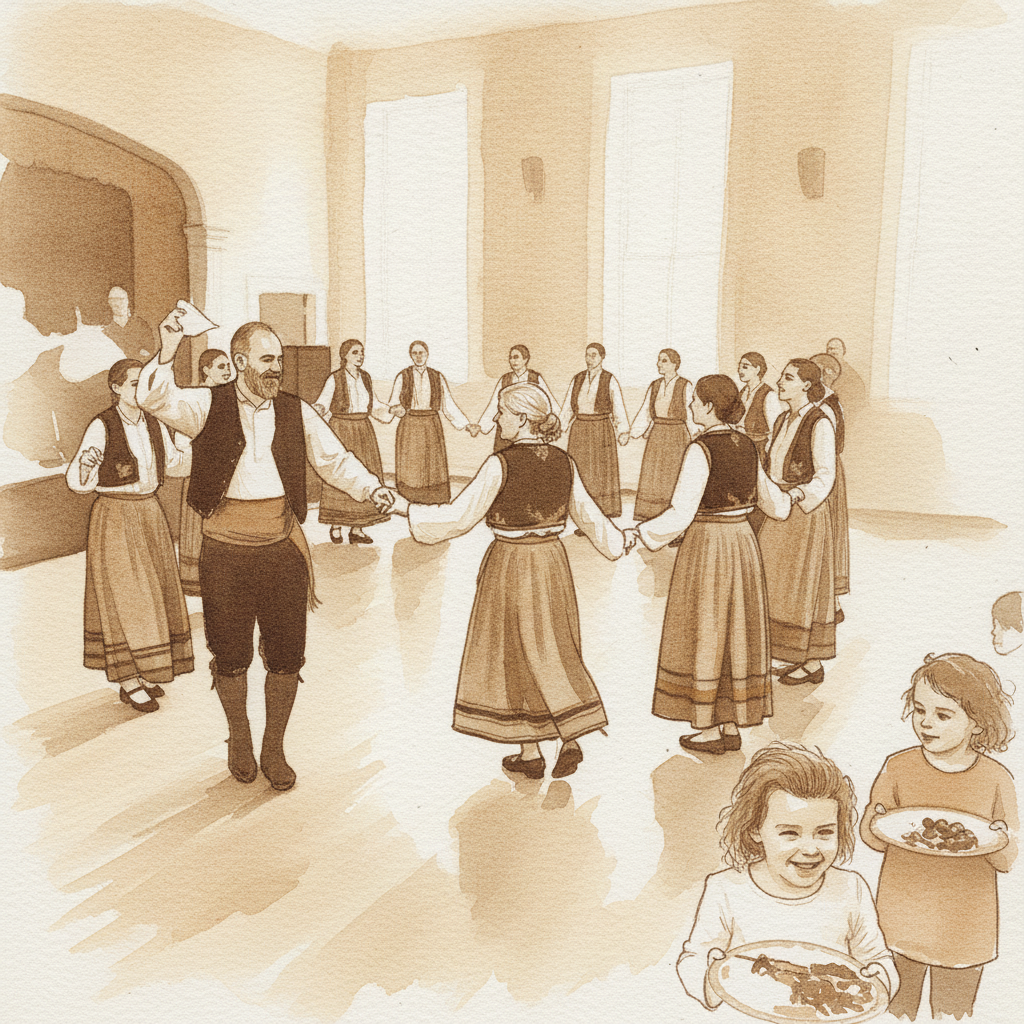
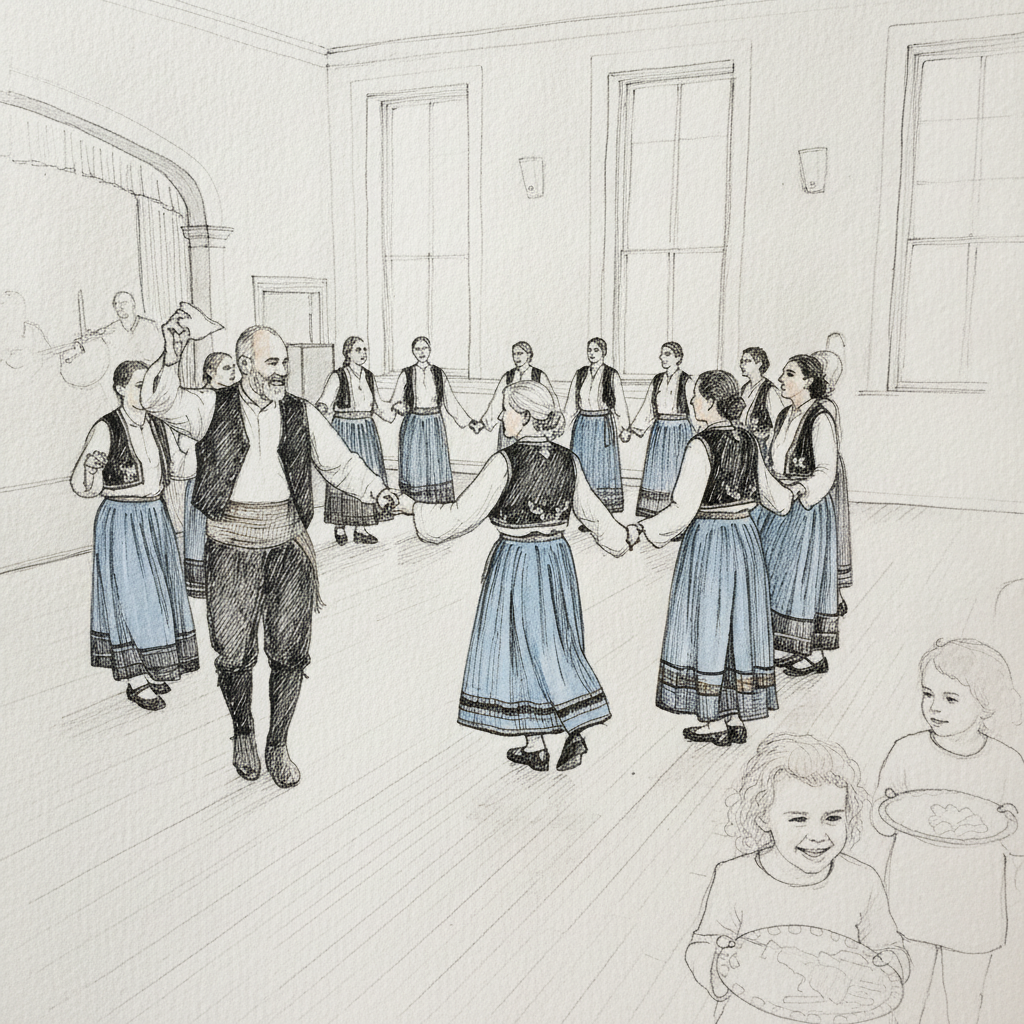
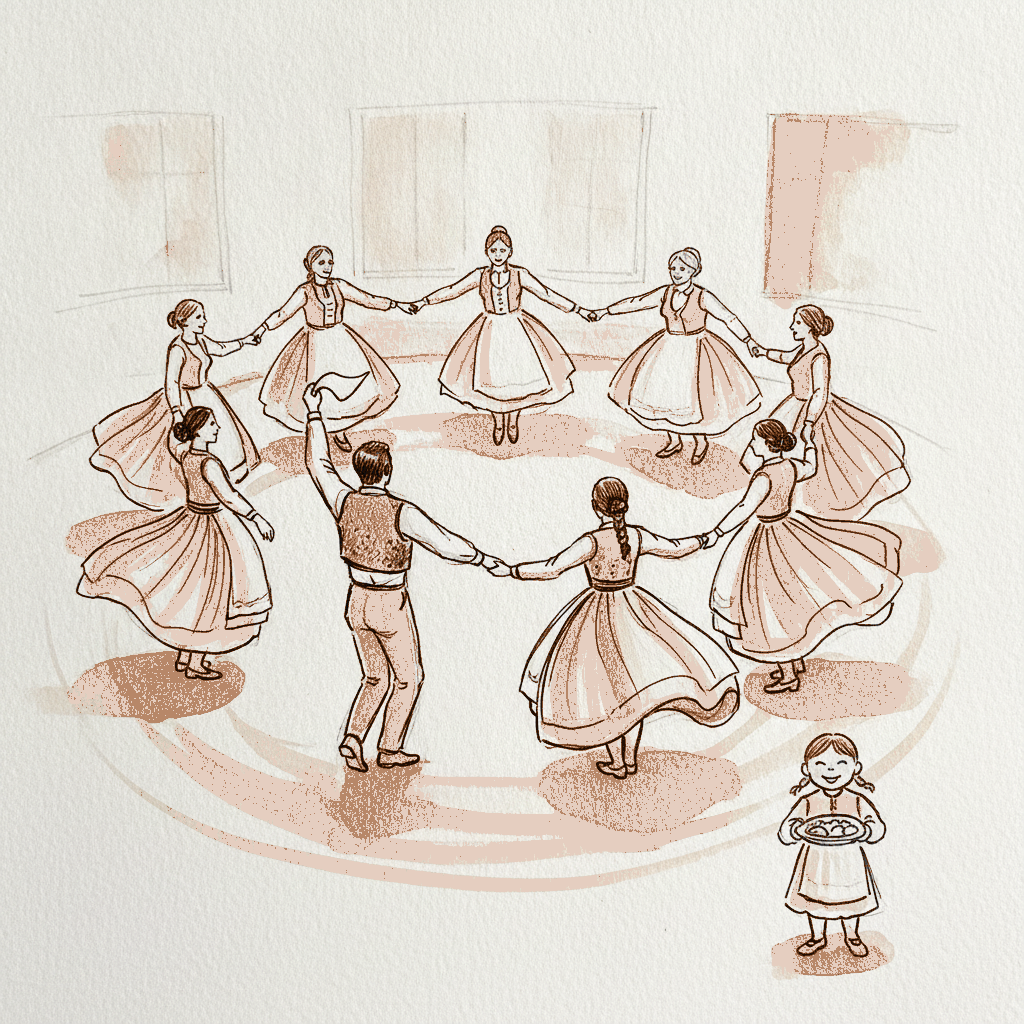
This piece is an excellent study in balancing detailed elements, like the embroidered vests and the faces of the winking woman, with more gestural suggestions for the larger, moving group. Pay close attention to timing your washes, allowing wet-on-wet applications to create soft transitions for the general movement of the circle, then adding drier, more controlled brushstrokes for crisp costume details once underlying layers have set. Vary your pen lines, using sharper, darker marks for focal points and looser, lighter strokes for secondary figures, letting the watercolor unify the scene with fluid color.
Piece 7 — Knees Apart, Hand Through Hair
Pen + Watercolor · Loose pen and watercolor line-and-wash

Three takes

Focus for this piece
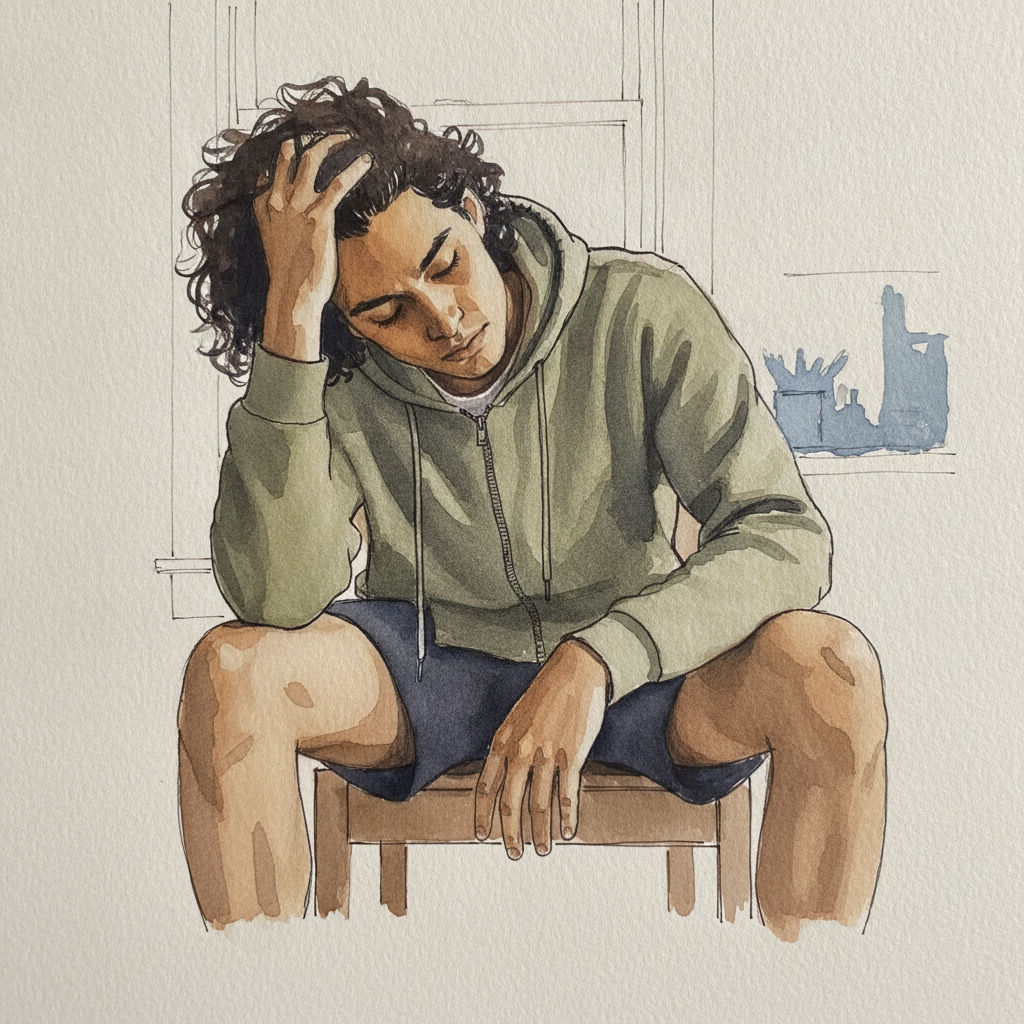
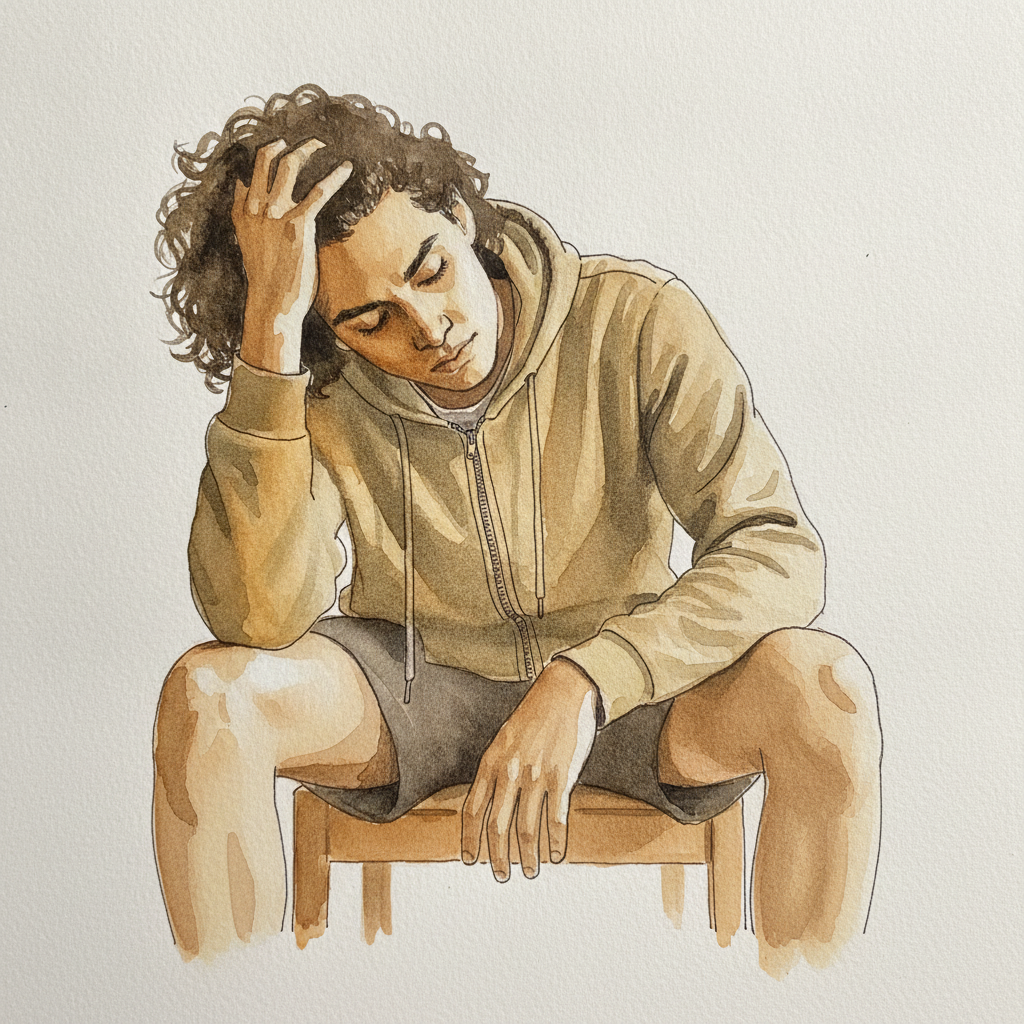
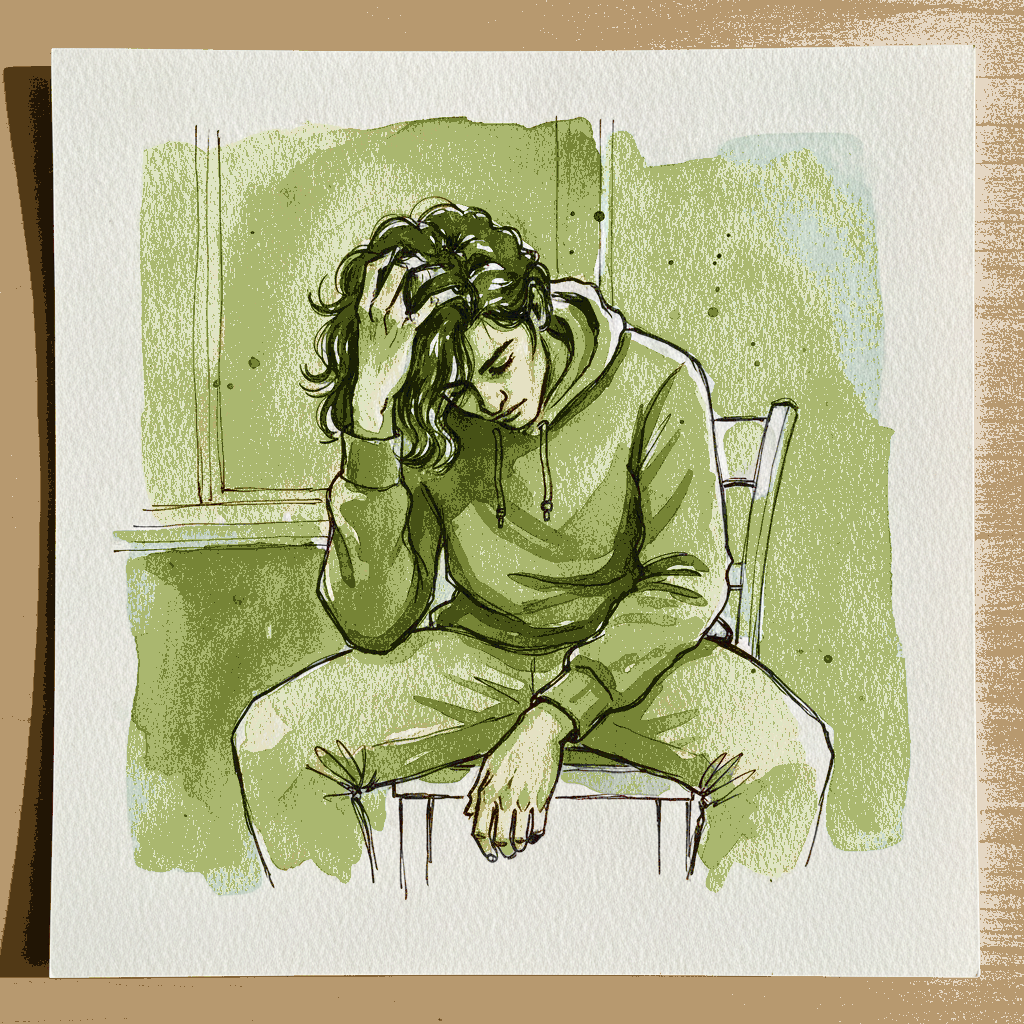
This piece is ideal for practicing how warm, directional light defines volumetric form. Focus on building strong value contrasts with layered watercolor washes, especially where the tungsten side light carves the planes of the face and body. Use varied, expressive pen lines—from light, broken strokes for the hair and fabric texture to more confident marks for the underlying structure—to capture both the figure's grounded pose and thoughtful expression.
Piece 8 — Art Deco Skyscraper
Pen + Watercolor · Loose pen and watercolor line-and-wash
Three takes
Focus for this piece
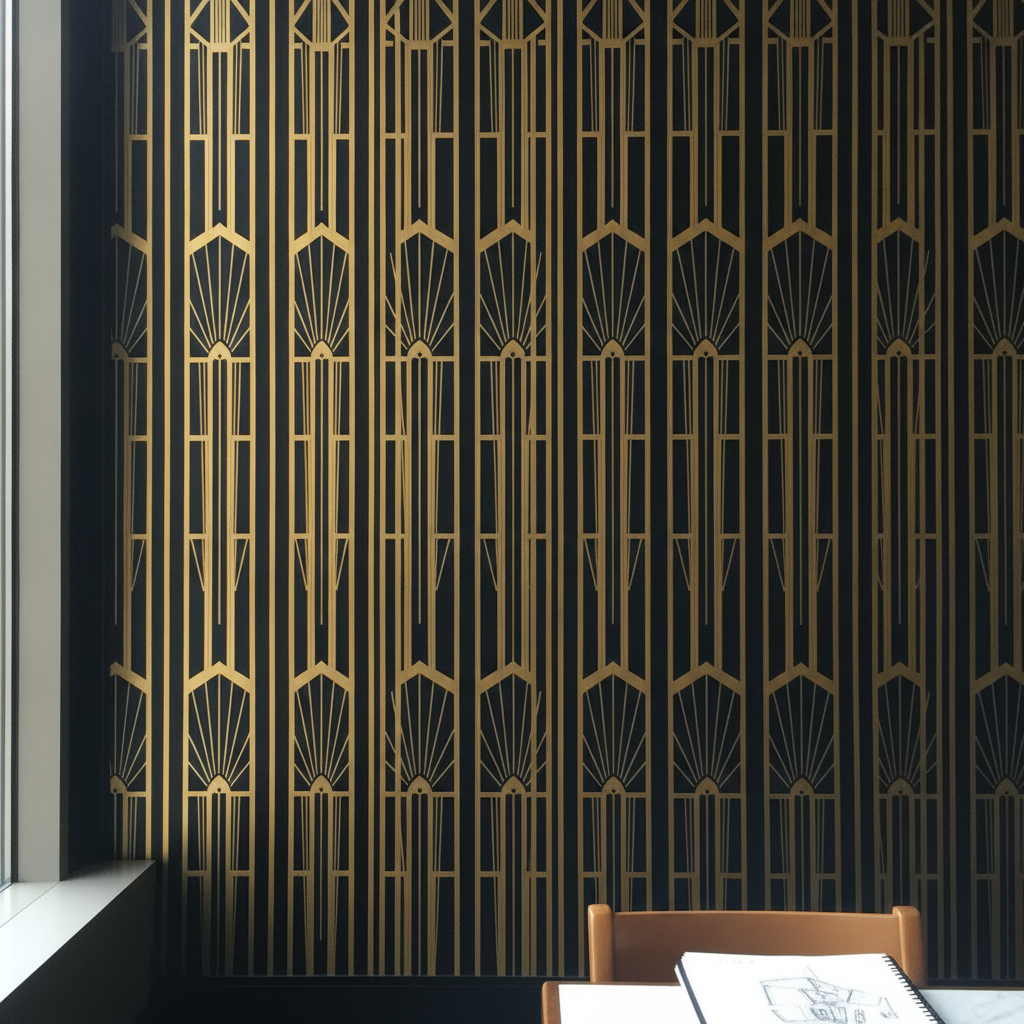
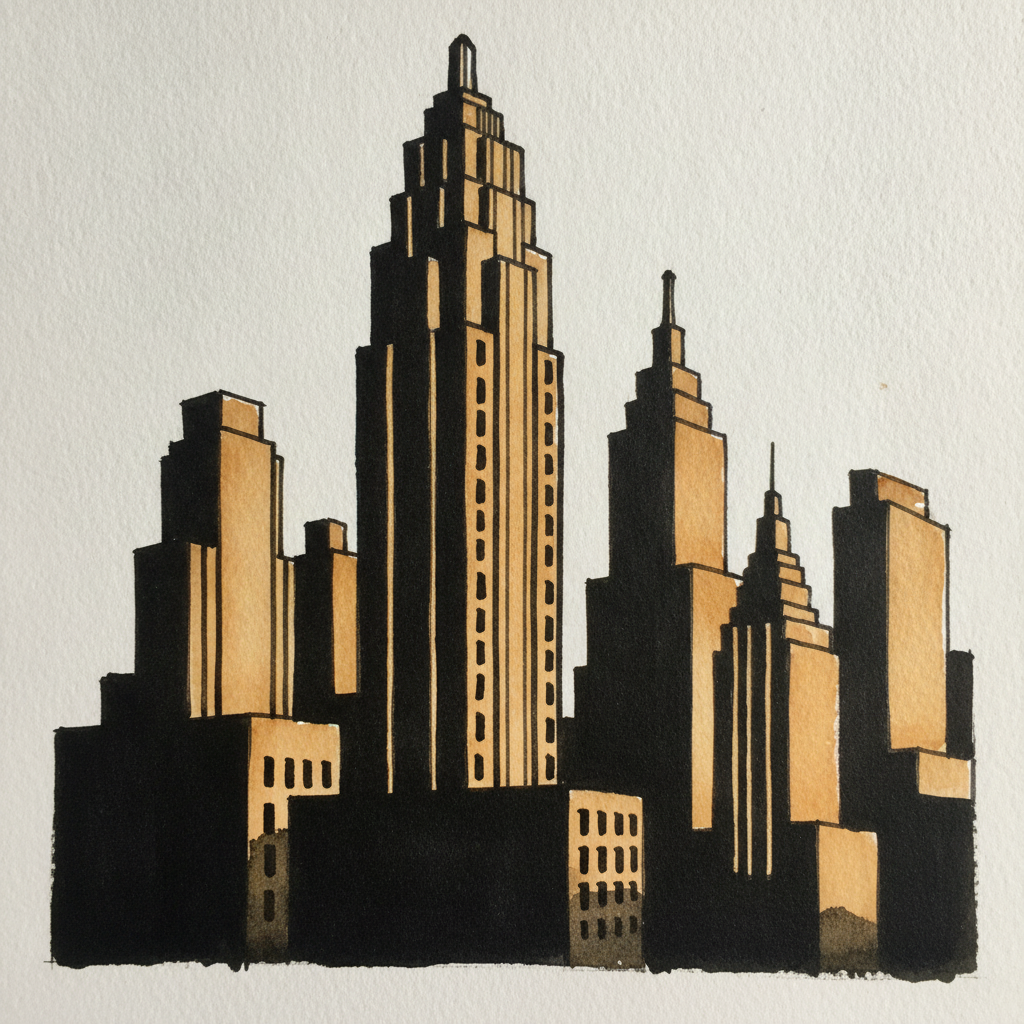
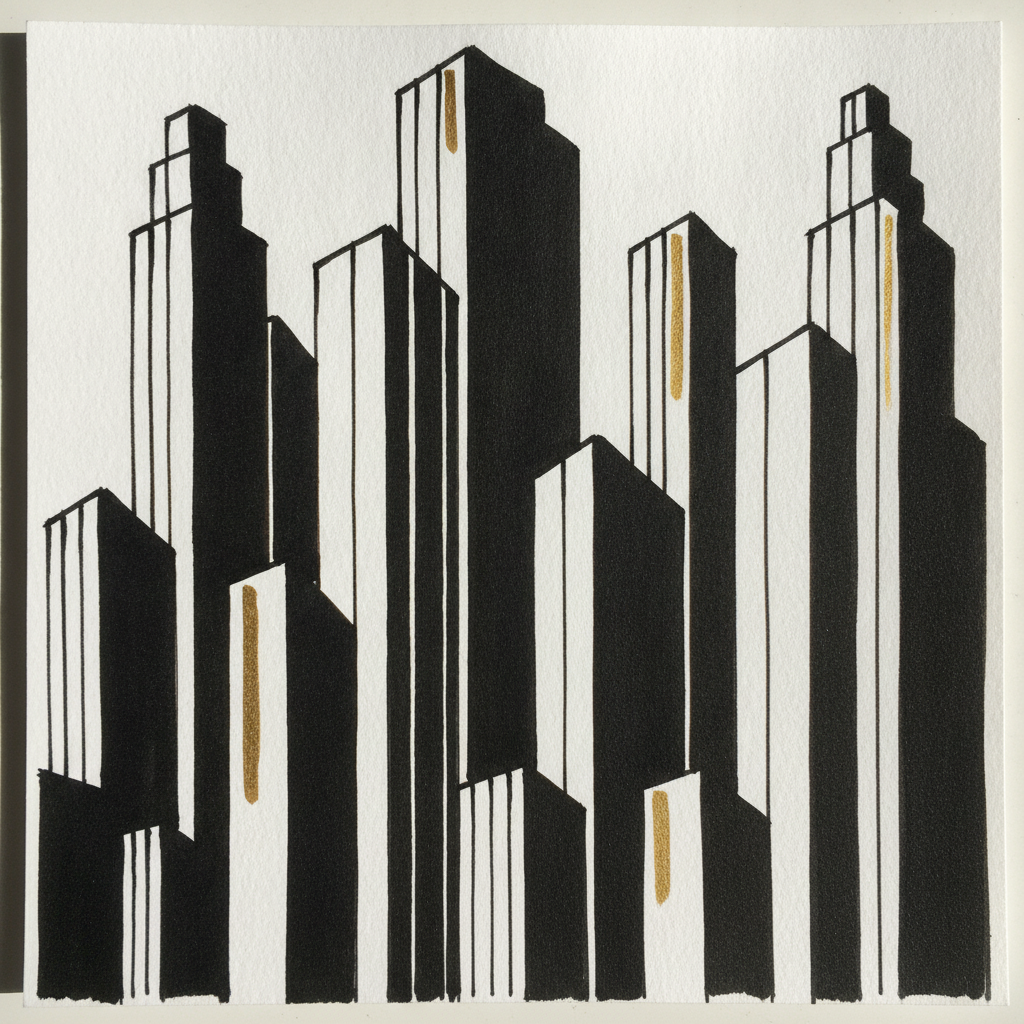
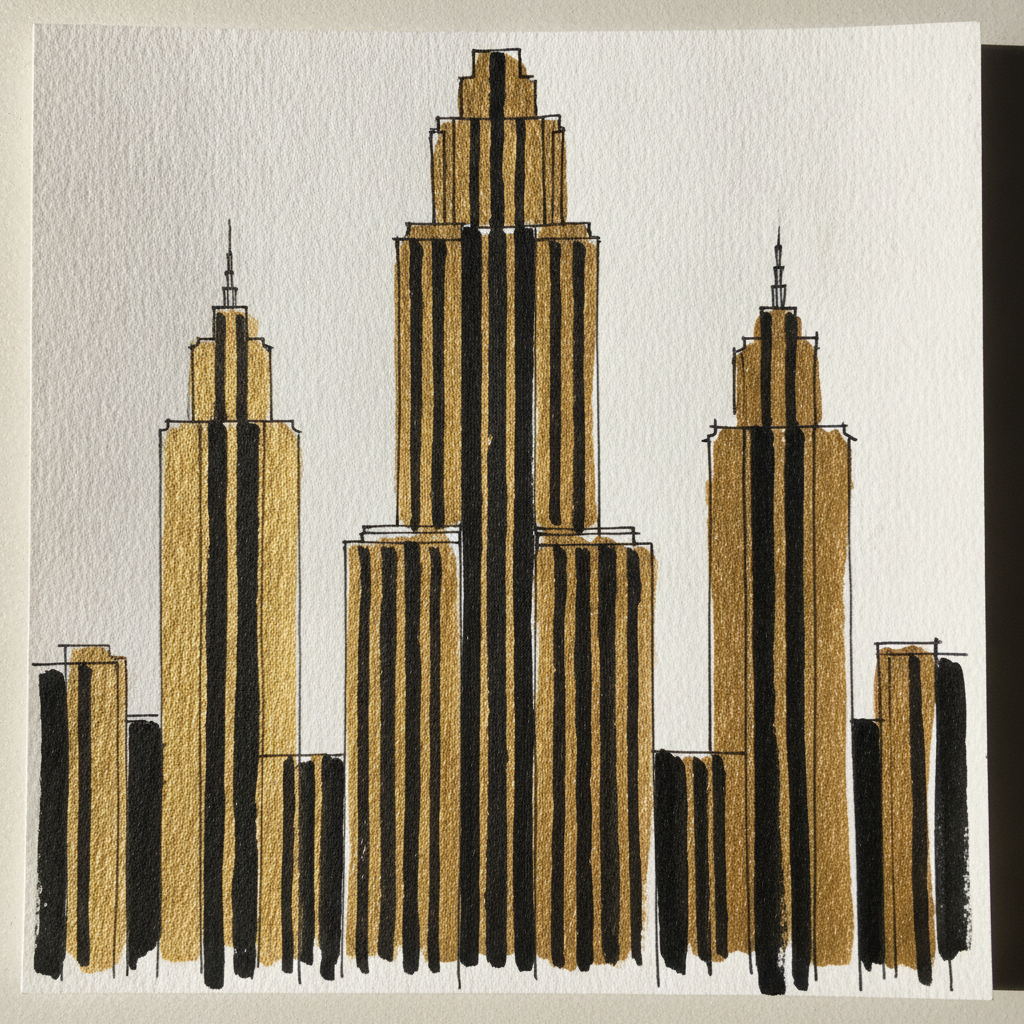
This Art Deco skyscraper piece is an excellent study in achieving sharp, architectural precision using both pen and watercolor. Practice maintaining an unwavering line weight with waterproof ink for the structural elements, then apply controlled, flat washes of gold and black with a square or flat brush. Focus on perfectly clean, hard edges to define the stylized silhouettes, making every brushstroke count for geometric accuracy and high-contrast impact.