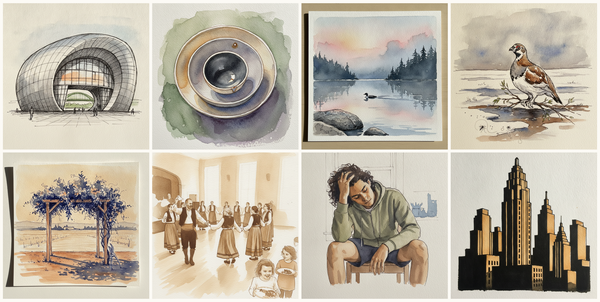
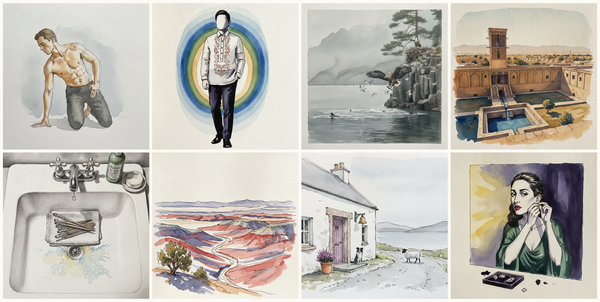
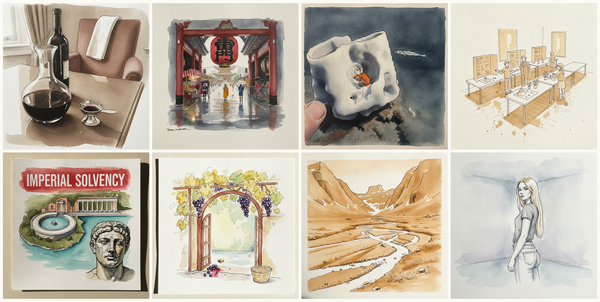
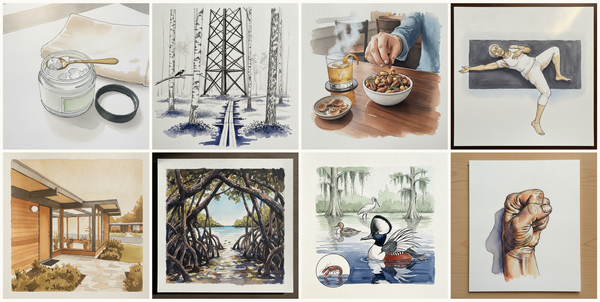
T-Pose, Knees Bent, White Man on Platform, Naples drinking fountain in narrow alley, Animator at tablet, Howgill Fells from Sedbergh, and more — pen + watercolor for June 19, 2026
AI-generated daily art-practice references for pen and watercolor: T-Pose, Knees Bent, White Man on Platform, Naples drinking fountain in narrow alley, Animator at tablet, Howgill Fells from Sedbergh, Velvet drape in Dutch Golden Age still life, Puffball and tape measure, Chain pickerel, Karauli…
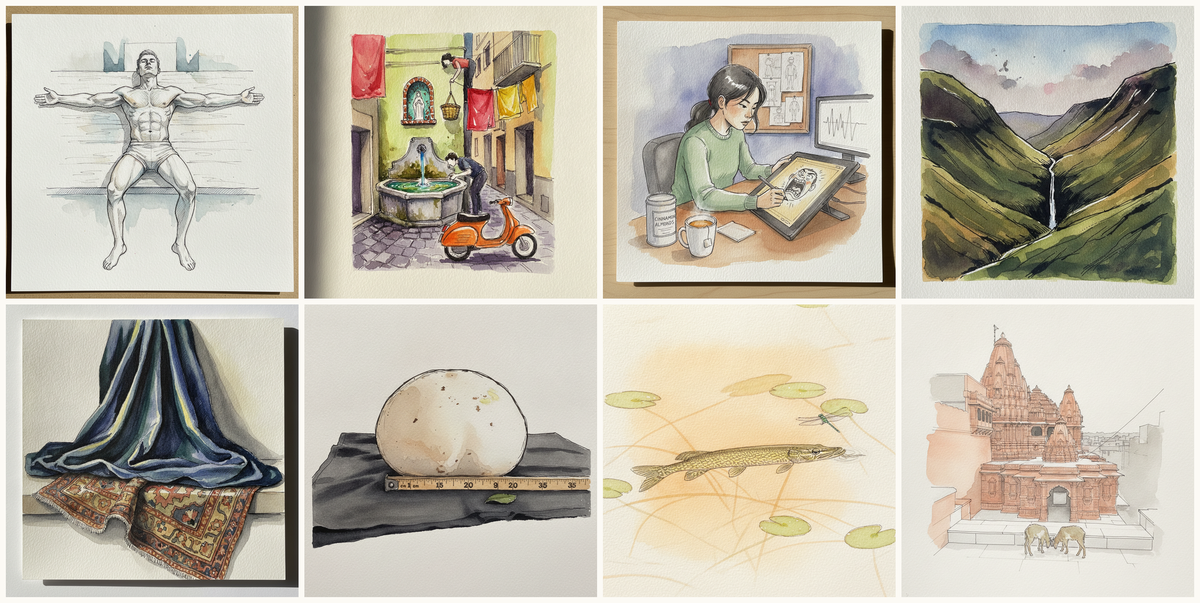
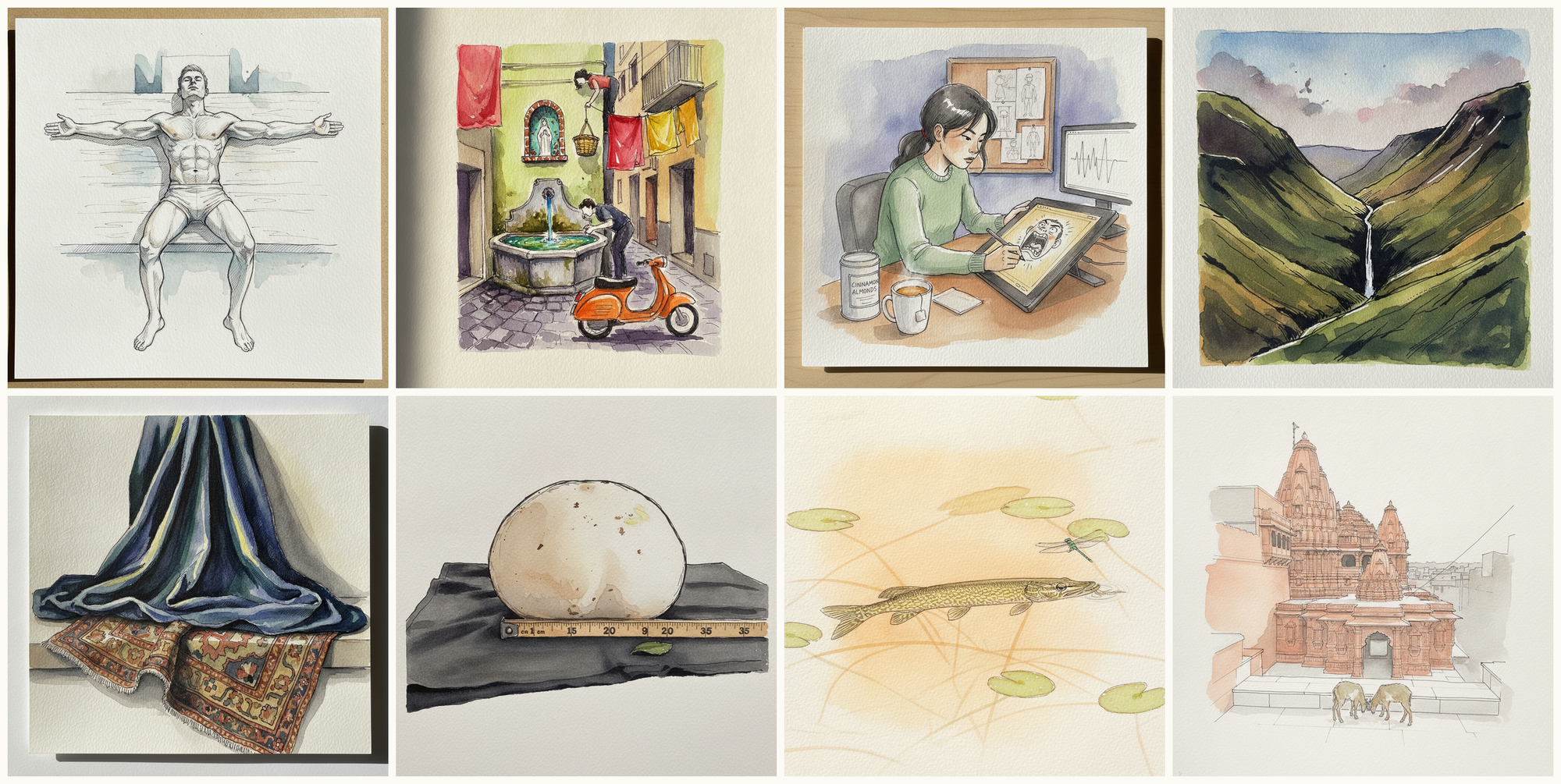
Today's 8 pen-and-watercolor pieces: T-Pose, Knees Bent, White Man on Platform, Naples drinking fountain in narrow alley, Animator at tablet, Howgill Fells from Sedbergh, Velvet drape in Dutch Golden Age still life, Puffball and tape measure, Chain pickerel, Karauli Jain Temples, Karauli, Rajasthan, India. Each piece comes with an AI-generated photoreal reference, three AI-generated example artworks in different treatments, and a short focus paragraph naming what to study in this one.
Why these references use AI
This daily series uses AI-generated images as practice prompts, not as finished artwork to copy. Each subject starts with a synthetic photoreal reference generated with Gemini/Nano Banana, then moves into three pen-and-watercolor interpretations of the same subject.
I use AI here because daily art practice needs variety and low friction. Real life can get repetitive, busy, or visually narrow. These generated reference sets make it easier to study bodies, buildings, animals, landscapes, objects, gestures, light, palettes, and compositions that might not show up in an ordinary day.
The goal is not to reproduce any image directly. Treat each set as a starting point for observation and study: choose what interests you, change the framing, simplify the subject, alter the palette, and make your own version.
Piece 1 — T-Pose, Knees Bent, White Man on Platform
Pen + Watercolor · Loose pen and watercolor line-and-wash
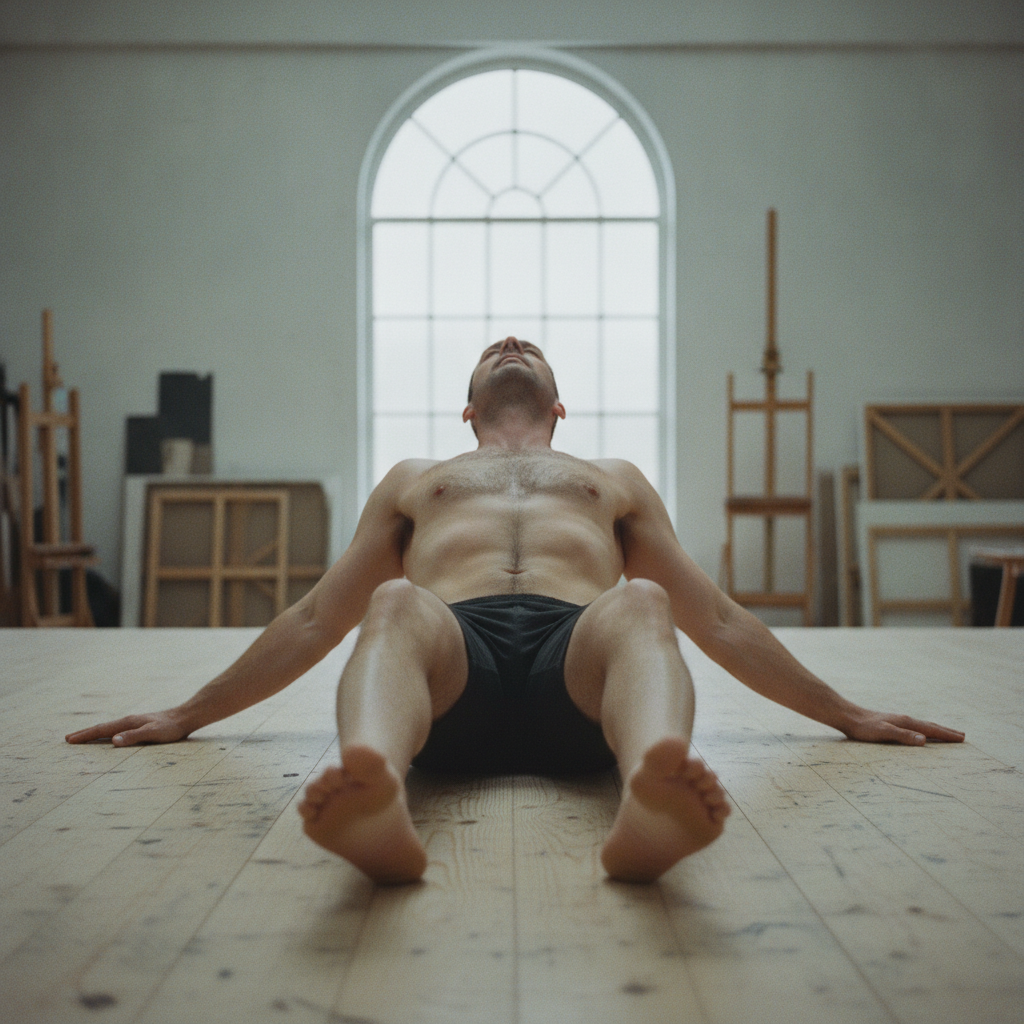
Three takes
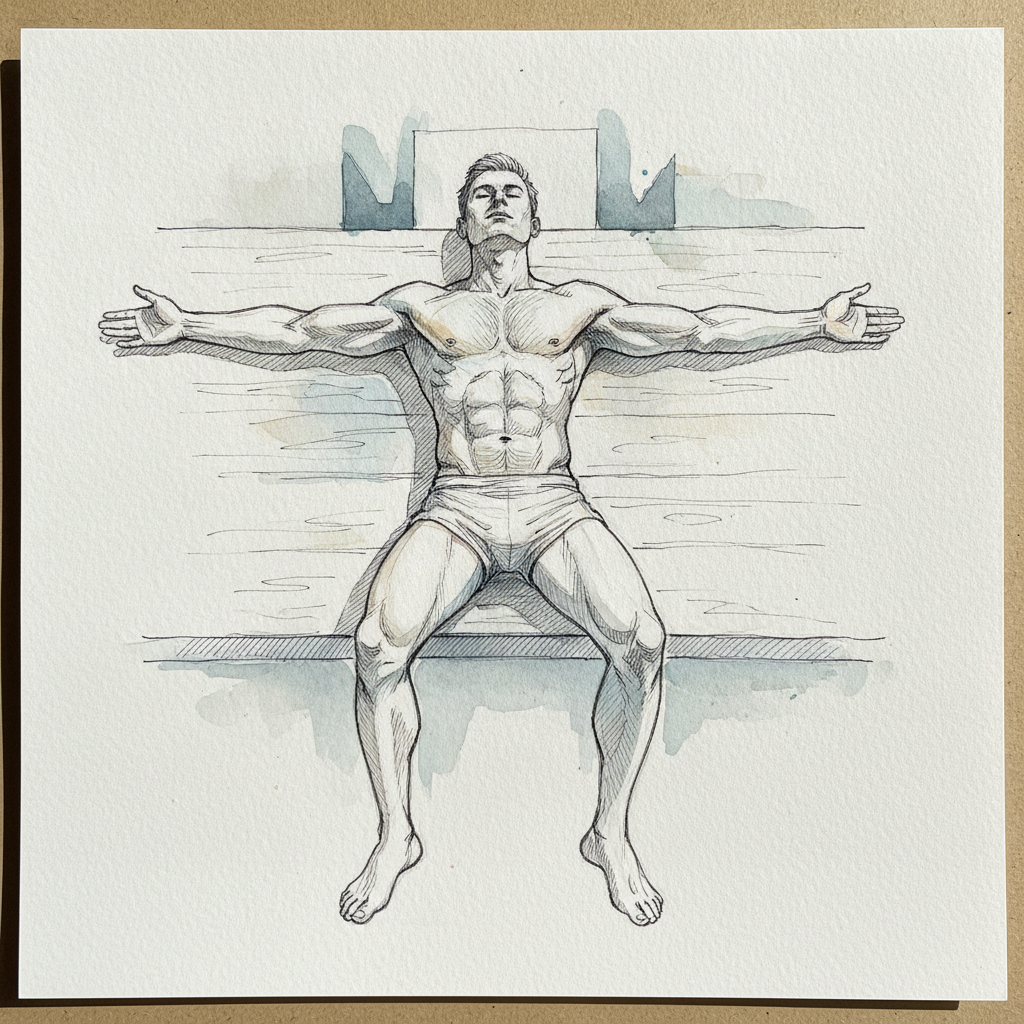

Focus for this piece
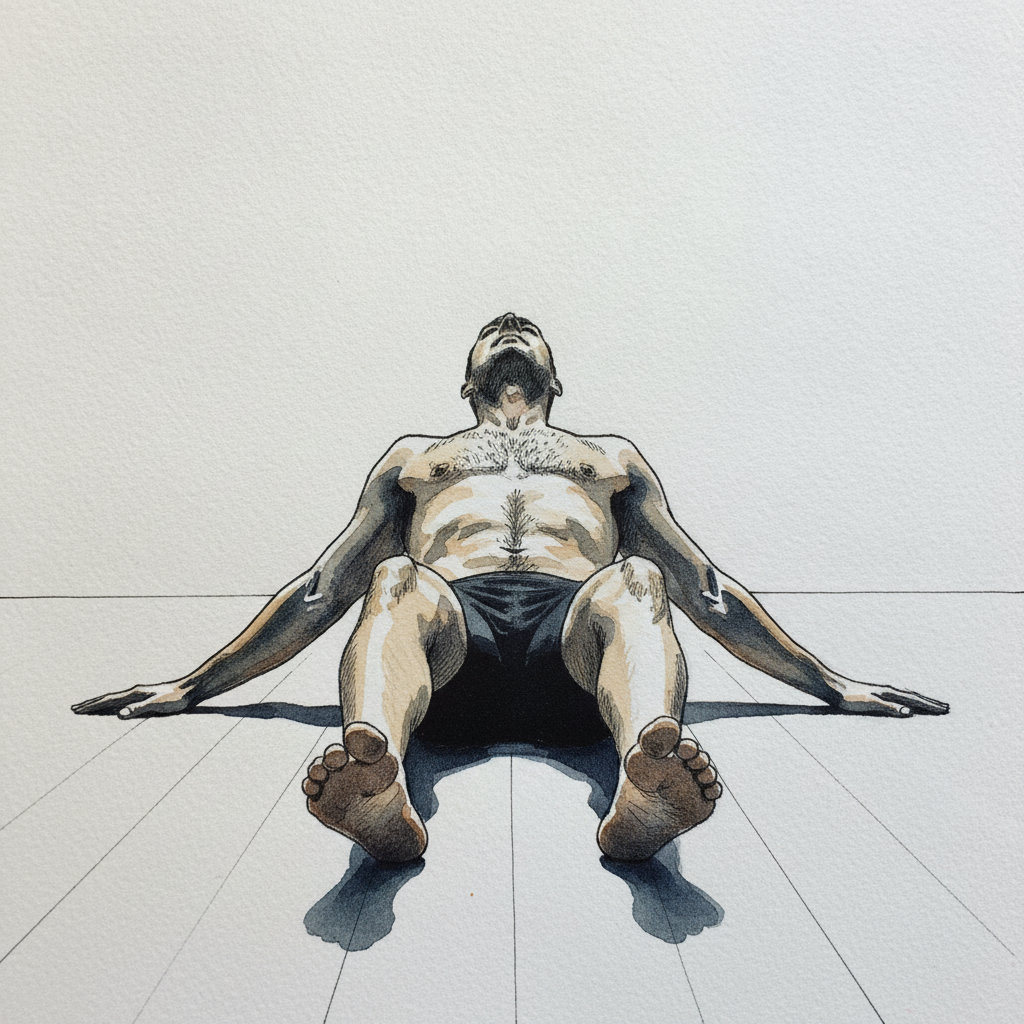
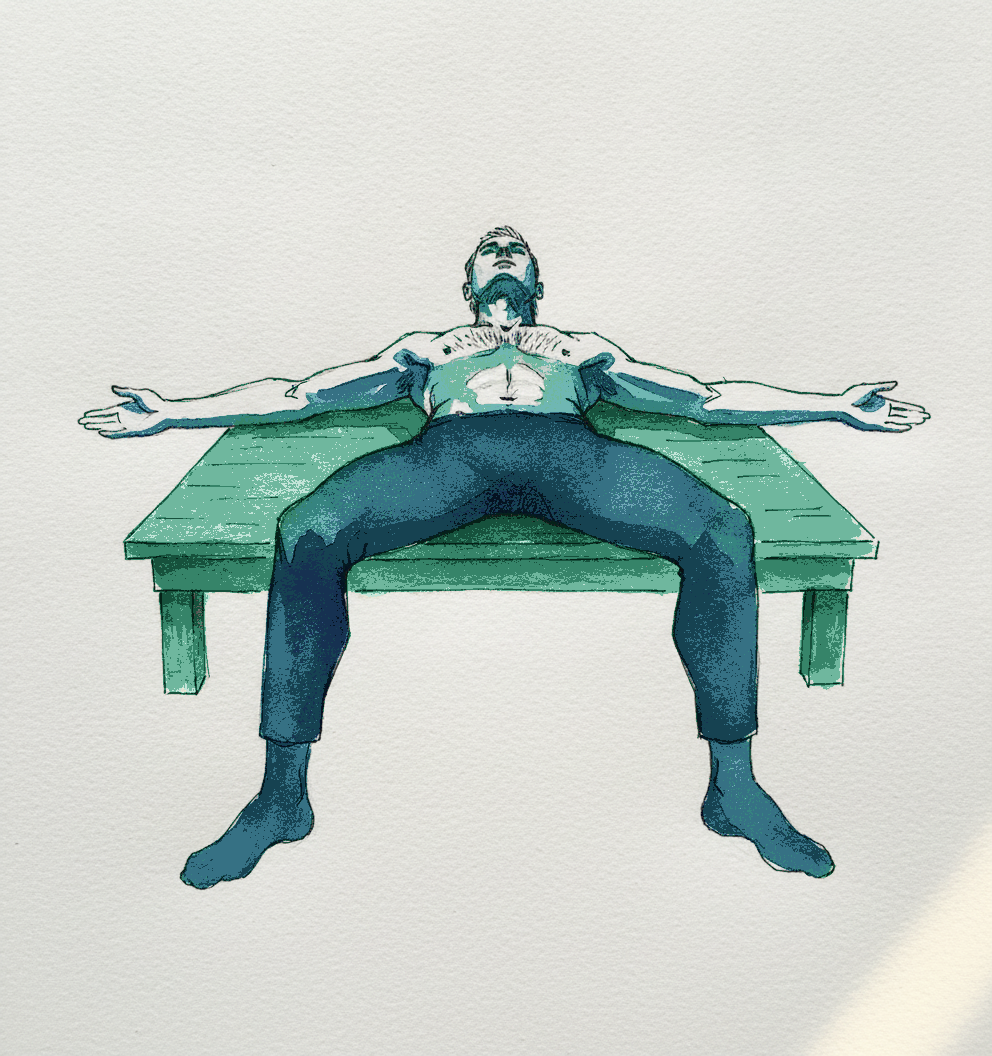
This pose is an excellent study in contrasting forms, specifically the dynamic "bridge" created by the tented knees against the broad, flat planes of the upper body. Use a limited cool palette and soft, layered watercolor washes to sculpt the figure's subtle volume under the diffuse skylight, focusing on gradual value shifts rather than hard edges. Reserve crisp pen lines and heavier weights for the architectural elements of the wooden platform, using this difference in line quality to distinguish structure from organic form. Pay close attention to how the light gently reveals the musculature and the soft folds of the skin.
Piece 2 — Naples drinking fountain in narrow alley
Pen + Watercolor · Loose pen and watercolor line-and-wash
Three takes
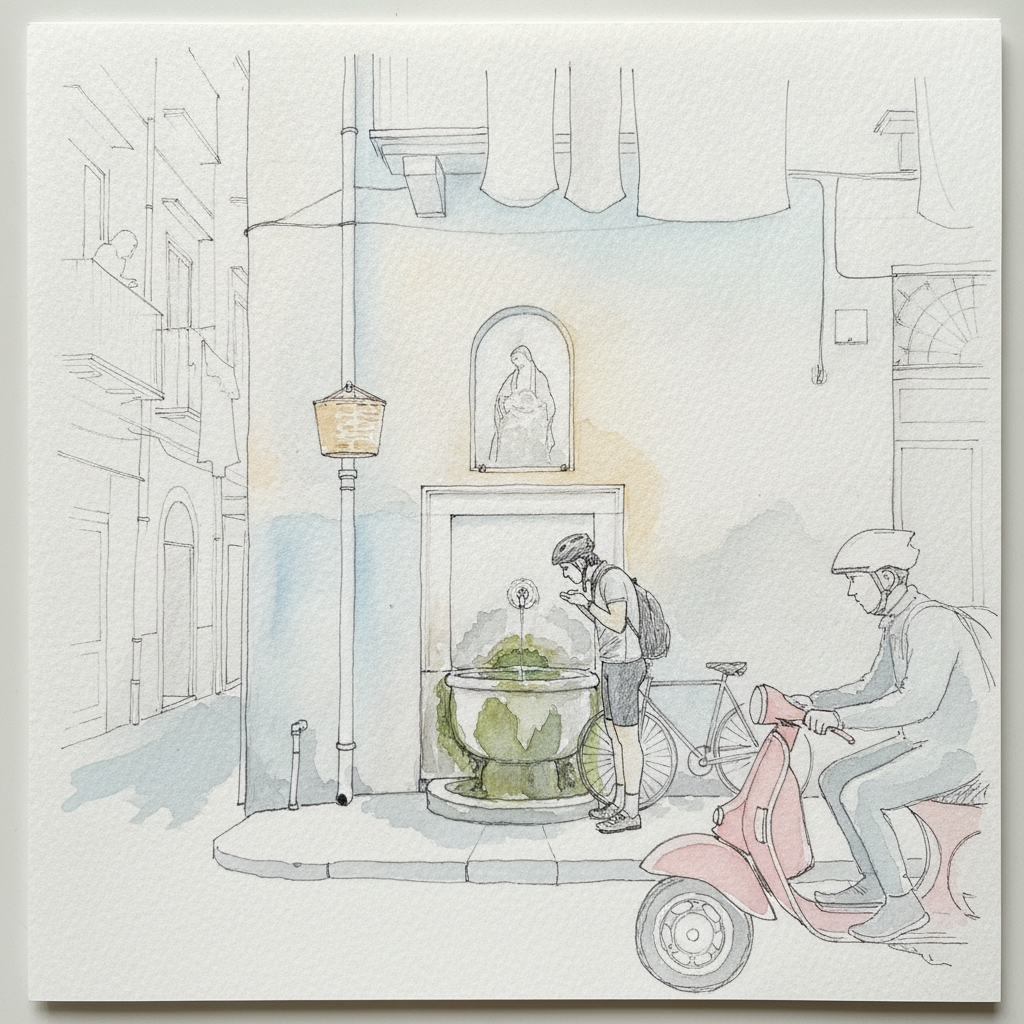
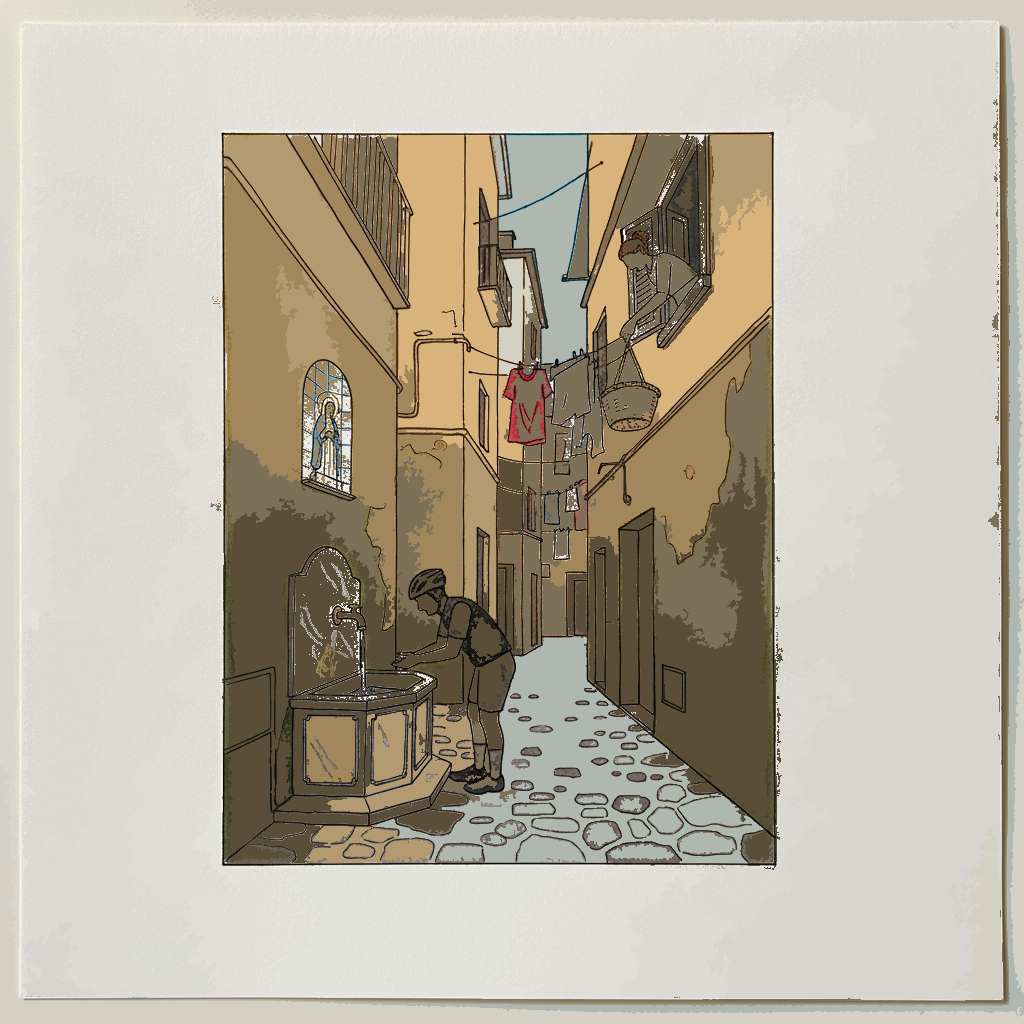
Focus for this piece
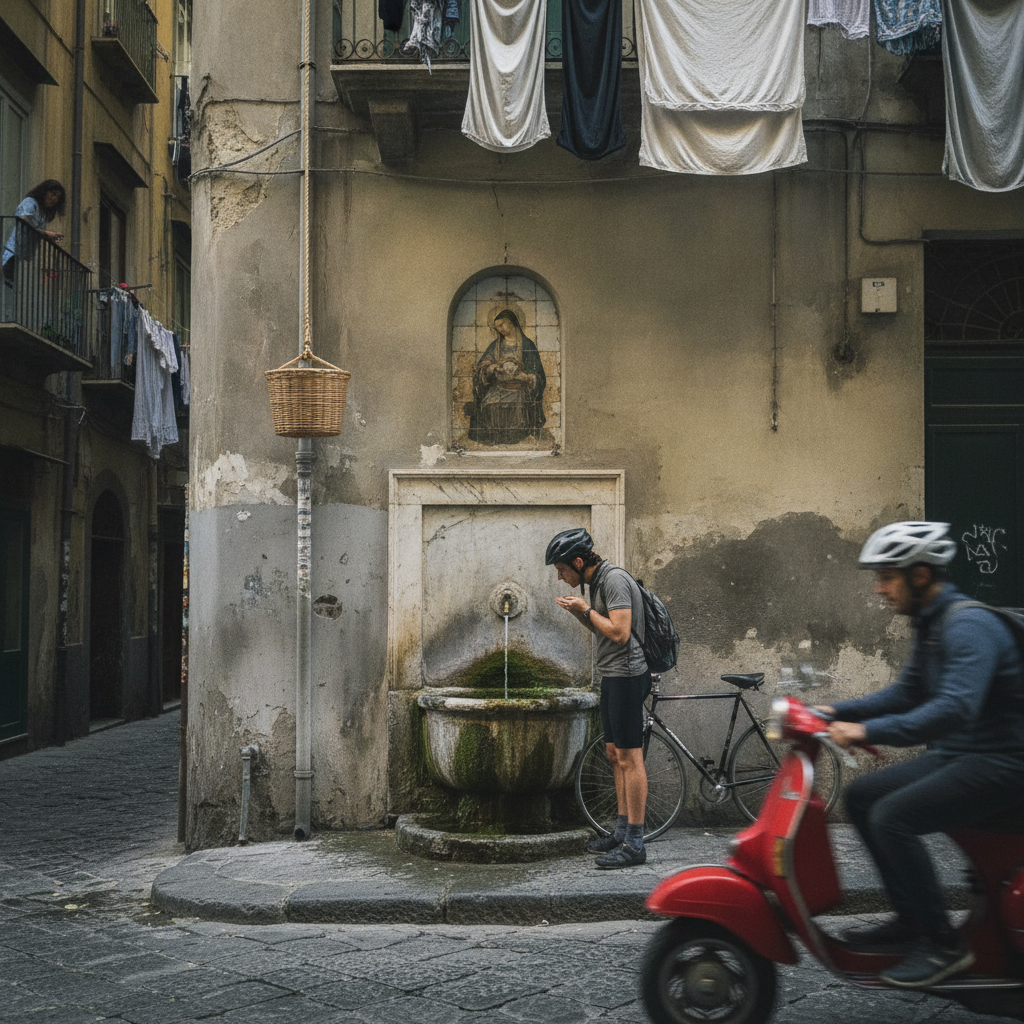
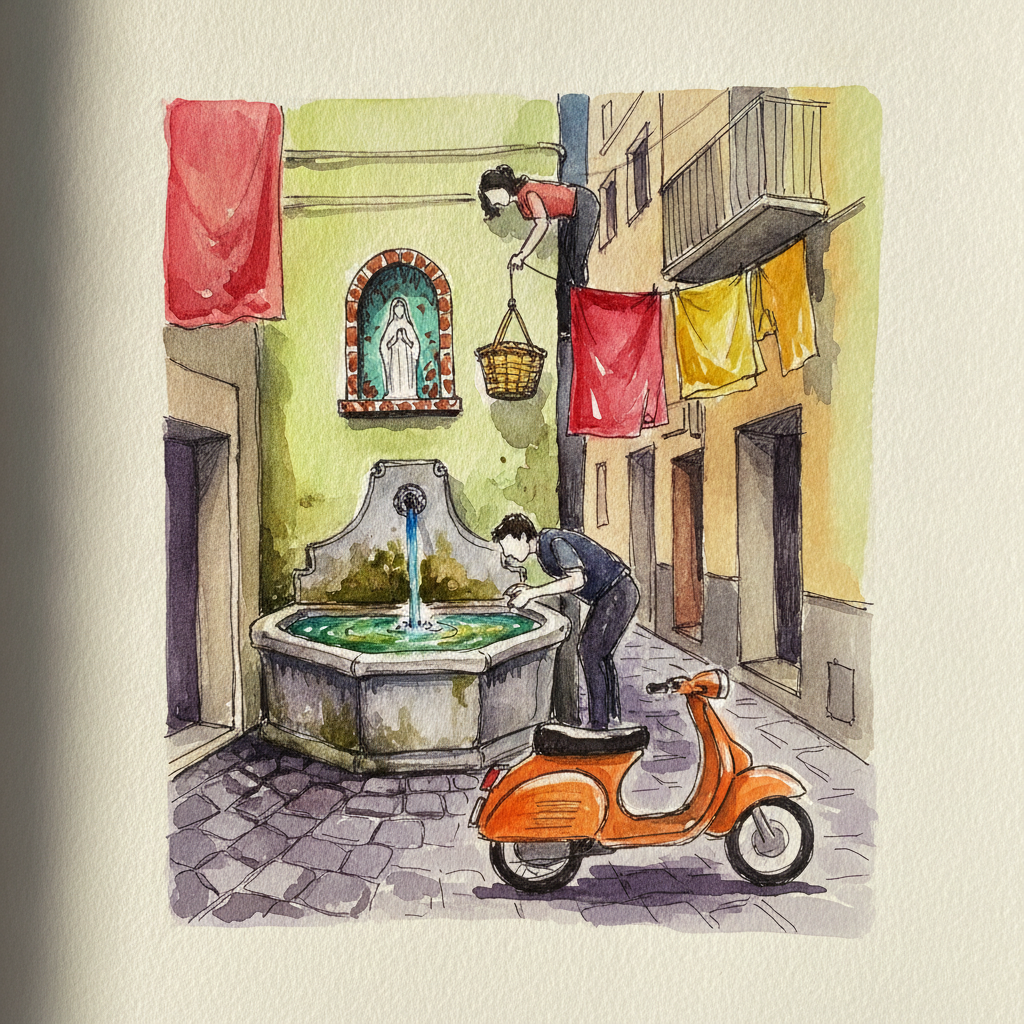
This piece is a fantastic study in creating atmospheric depth using a constrained palette. Focus on building the illusion of soft, greenish-gold light and deep shadows with graded washes, allowing forms to emerge from or recede into the half-shadowed alley walls. Use distinct, heavier lines only for the immediate foreground details like the fountain's spigot and the cyclist, letting lighter, lost-and-found edges define the background laundry and architecture.
Piece 3 — Animator at tablet
Pen + Watercolor · Loose pen and watercolor line-and-wash
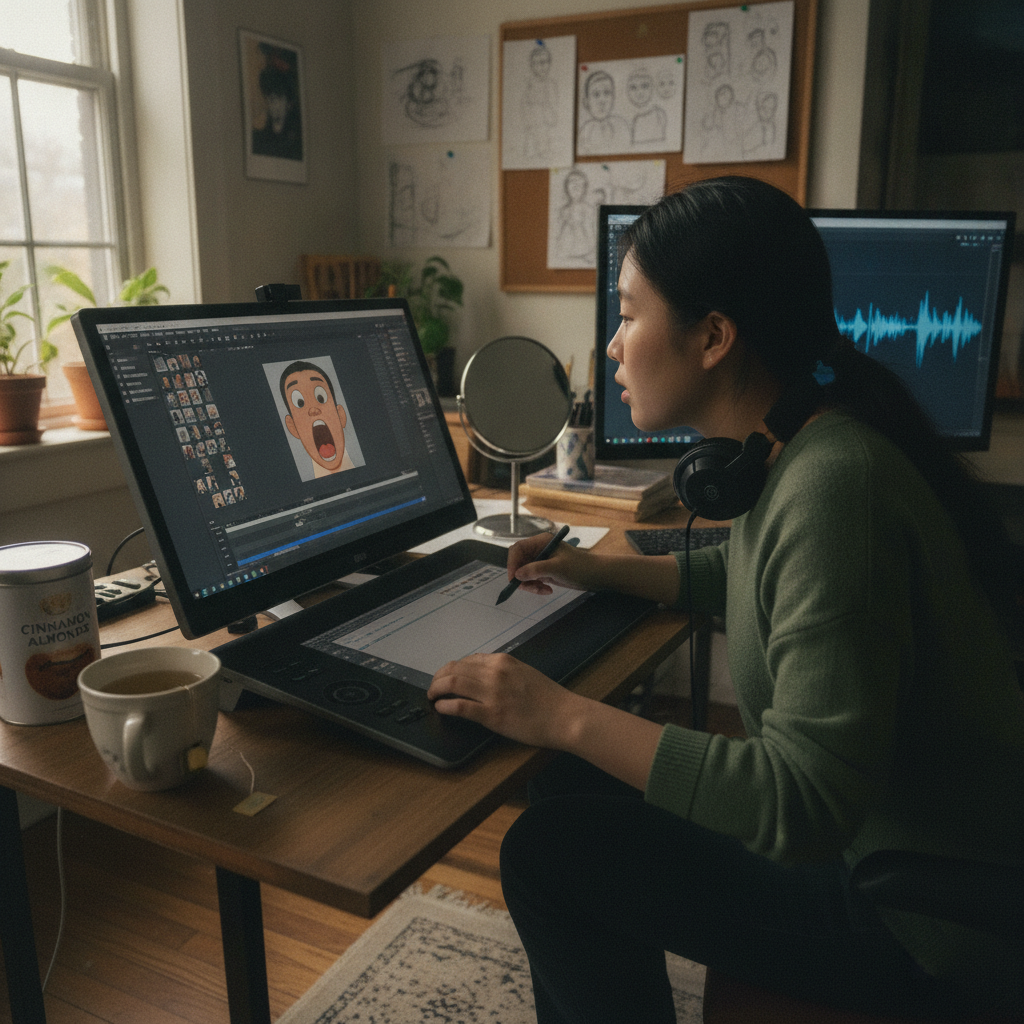
Three takes
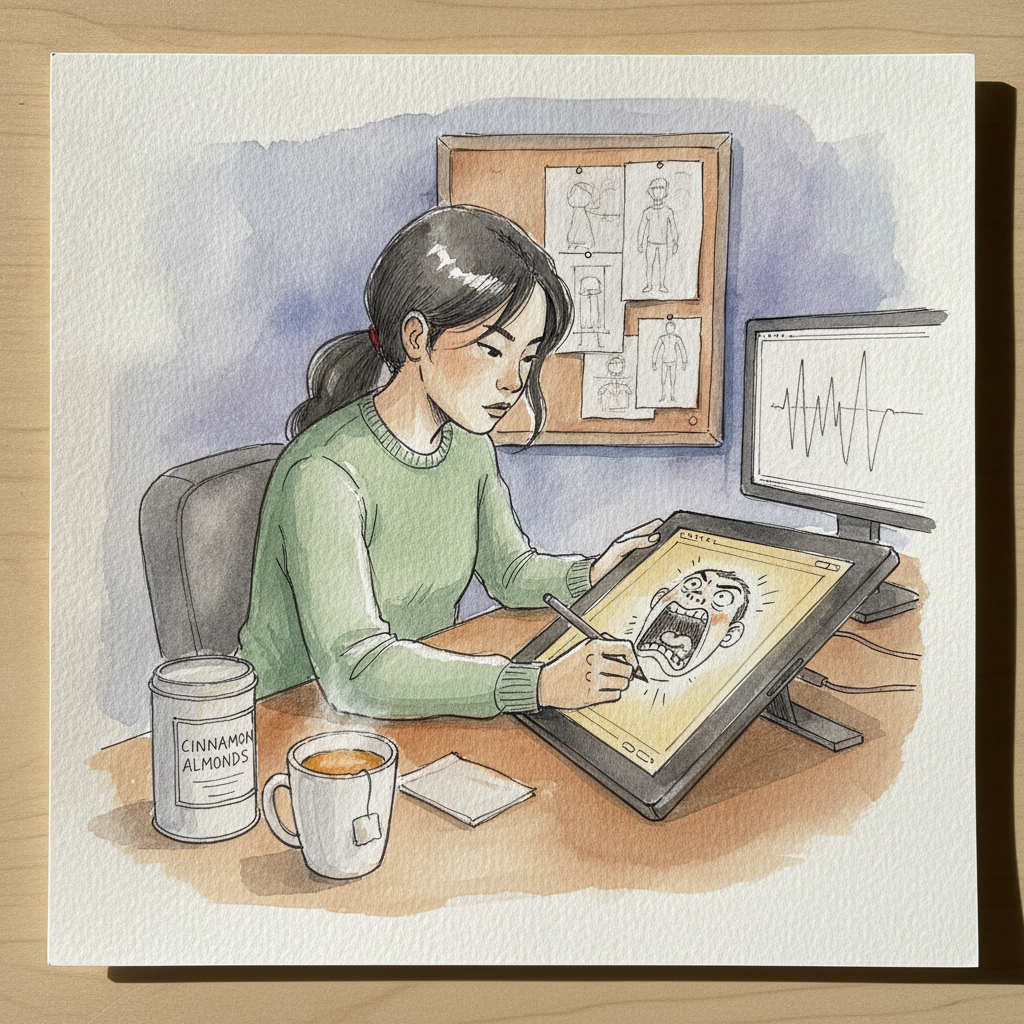
Focus for this piece
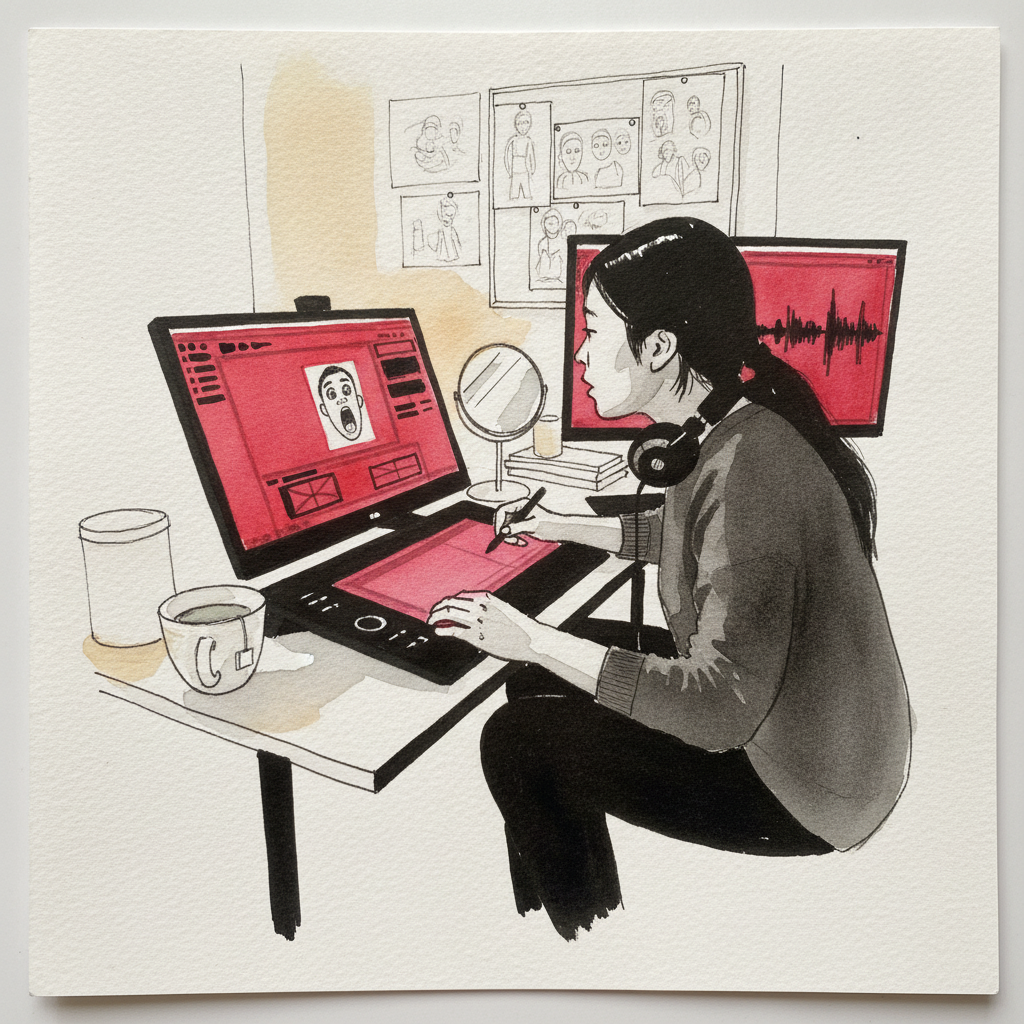
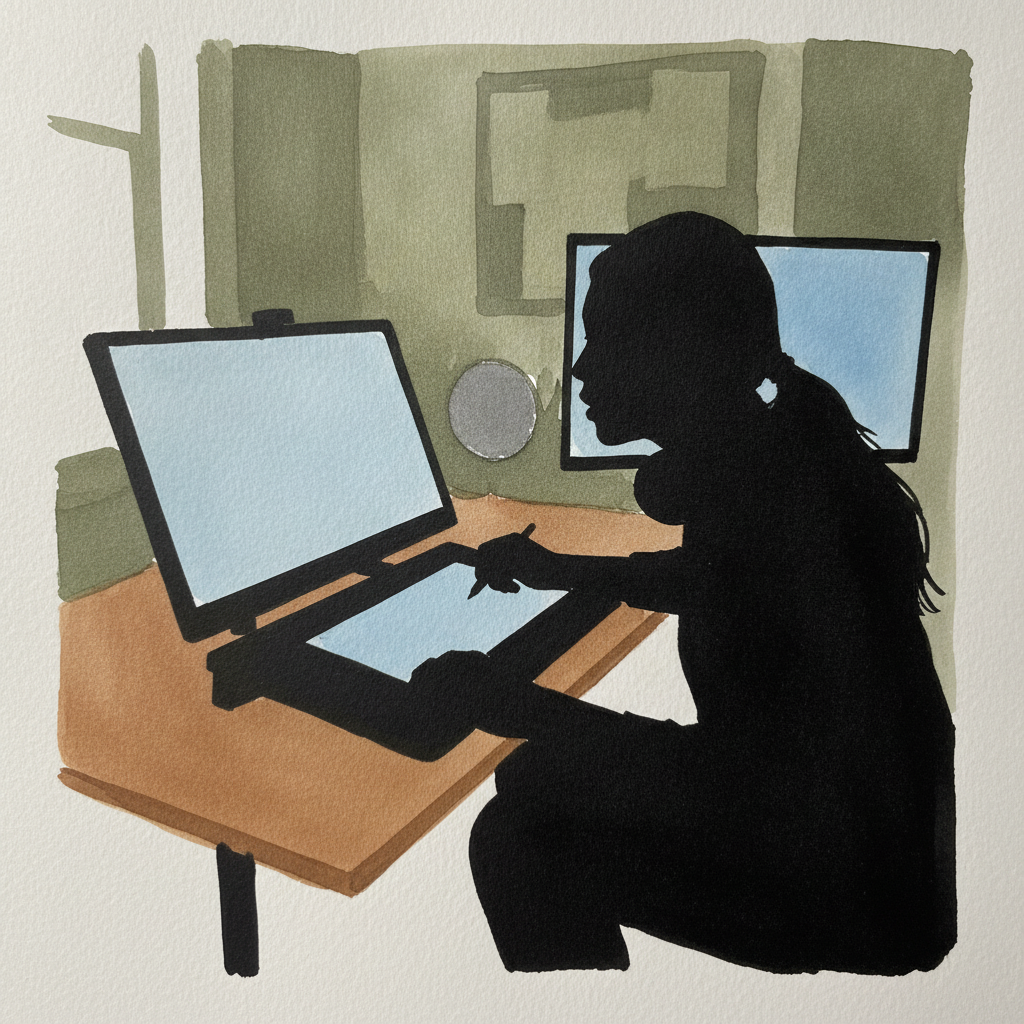
This piece is an excellent study in distinguishing multiple light sources—the soft studio light versus the direct glow of the screens—using both line and wash. Employ precise, delicate ink lines for intricate details like the timeline, waveform, and the animator's reflection in the mirror, allowing them to remain crisp even against soft washes. Use wet-on-wet watercolor techniques to render the luminous screen effects and the subtle ambient light, letting the fluidity of the paint create volume and atmosphere around the more structured pen work.
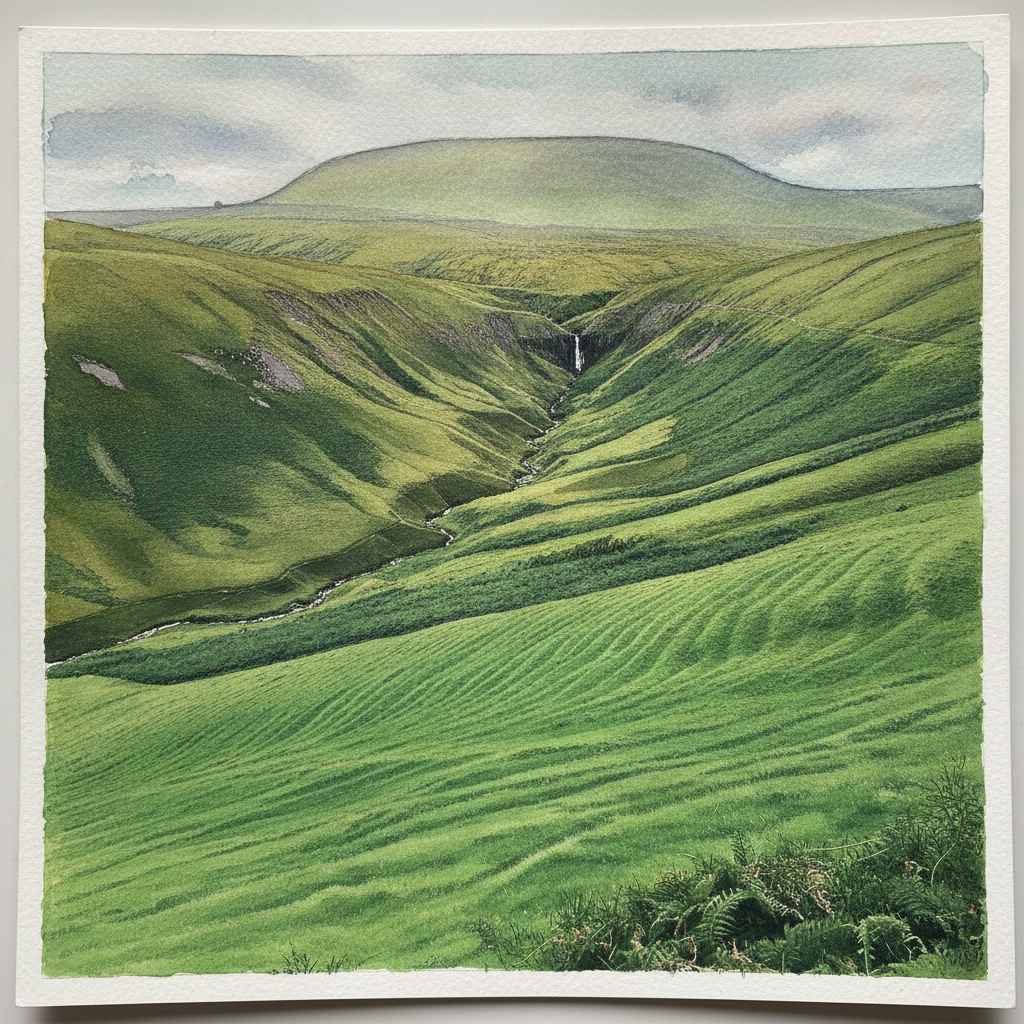
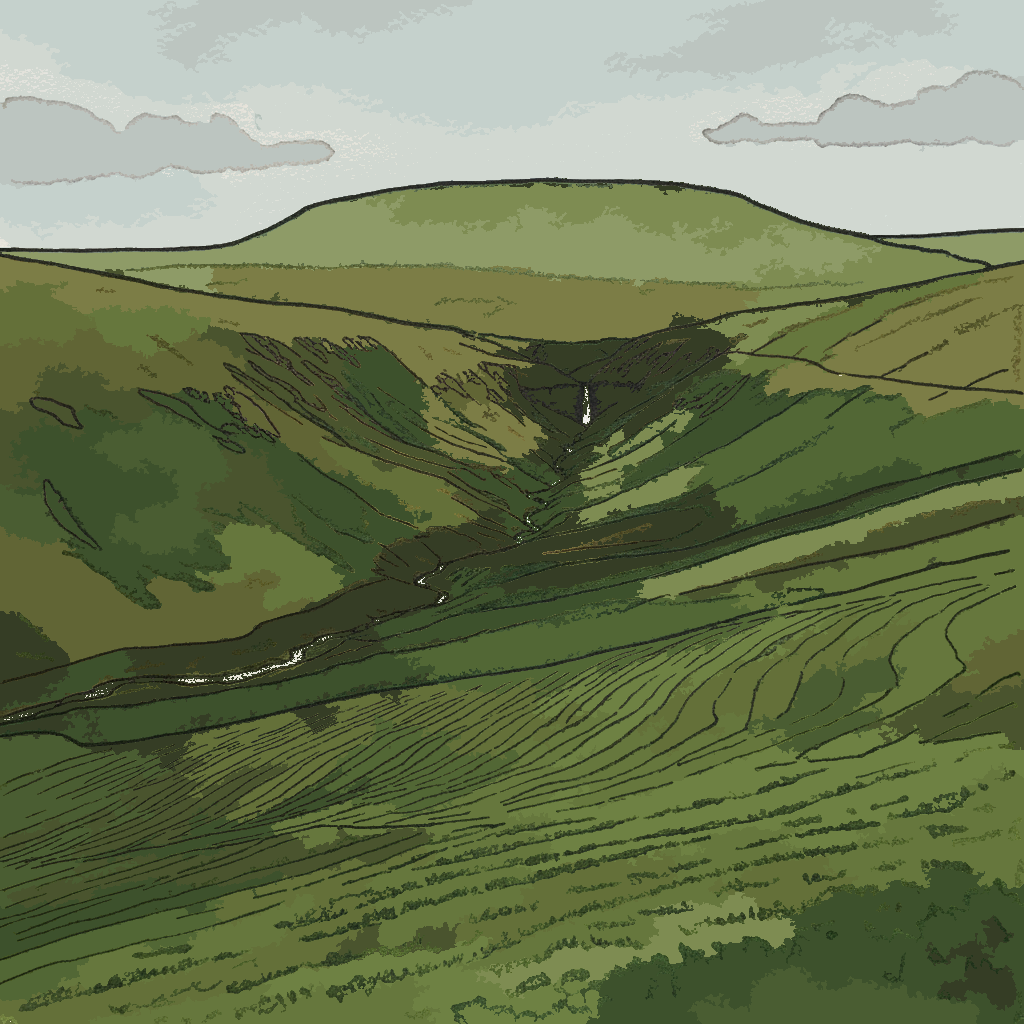
Piece 4 — Howgill Fells from Sedbergh
Pen + Watercolor · Loose pen and watercolor line-and-wash
Three takes
Focus for this piece
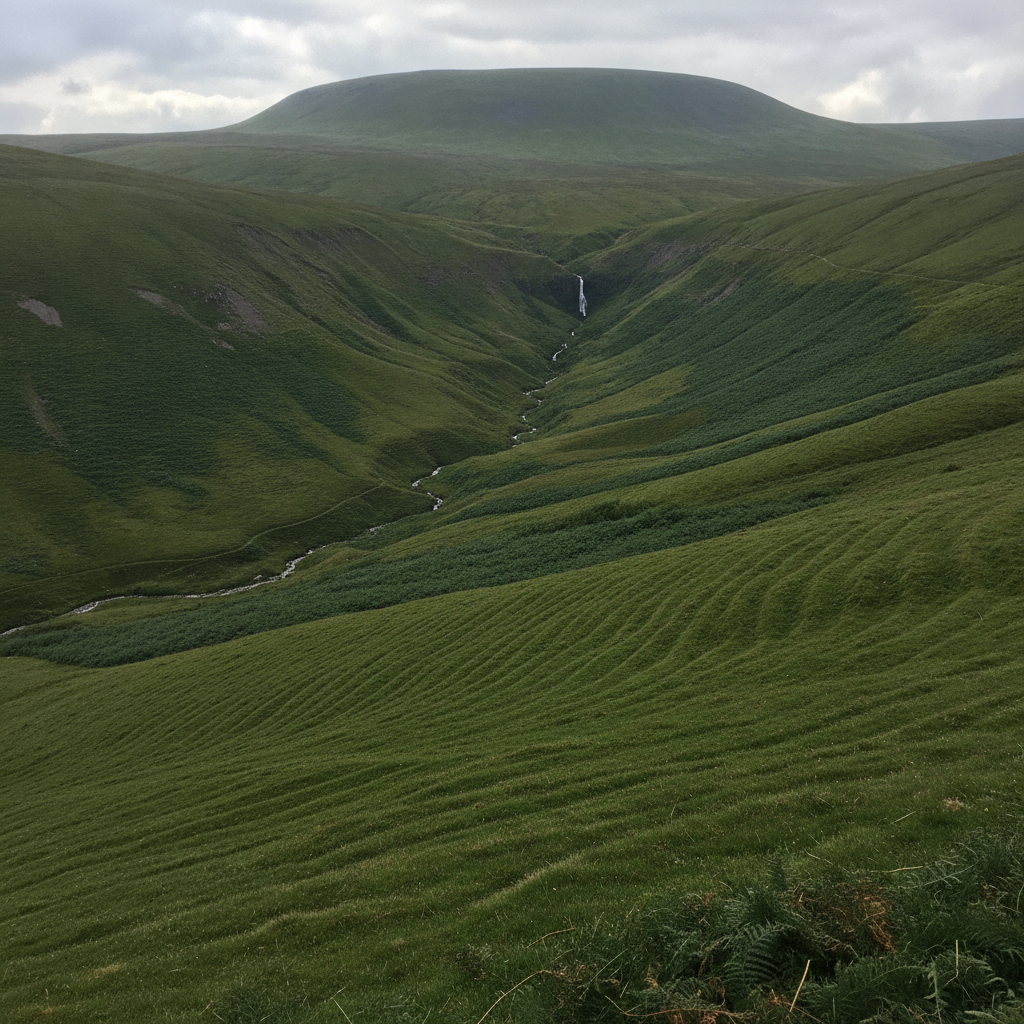
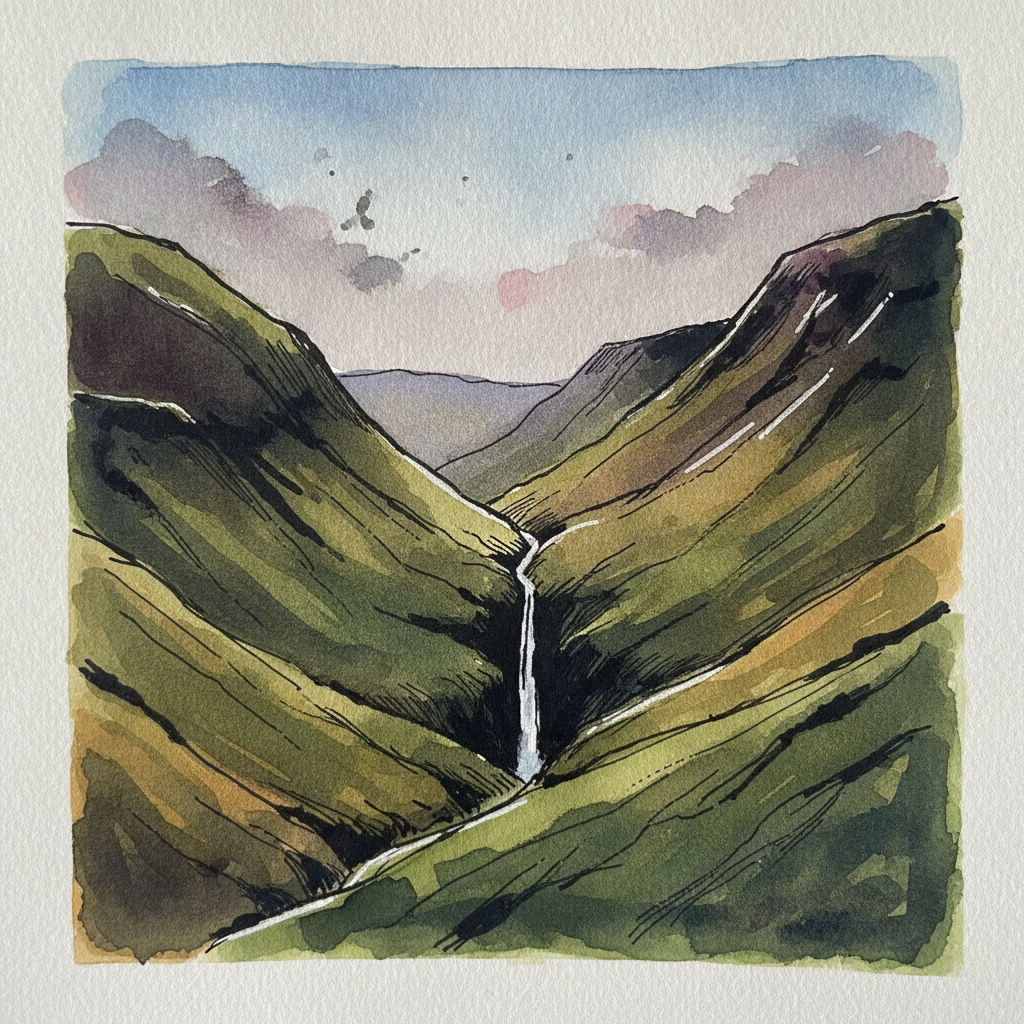
This piece offers an excellent study in using varied line weight to articulate form and distance. Notice how the pen defines the precise, contouring sheep paths, becoming lighter and thinner as they recede into the smooth, rounded forms of the fells. Complement these lines with soft, wet-on-wet washes of muted greens and greys to capture the "green velvet" texture and the atmospheric depth of the distant peaks, using a large round brush for seamless transitions.
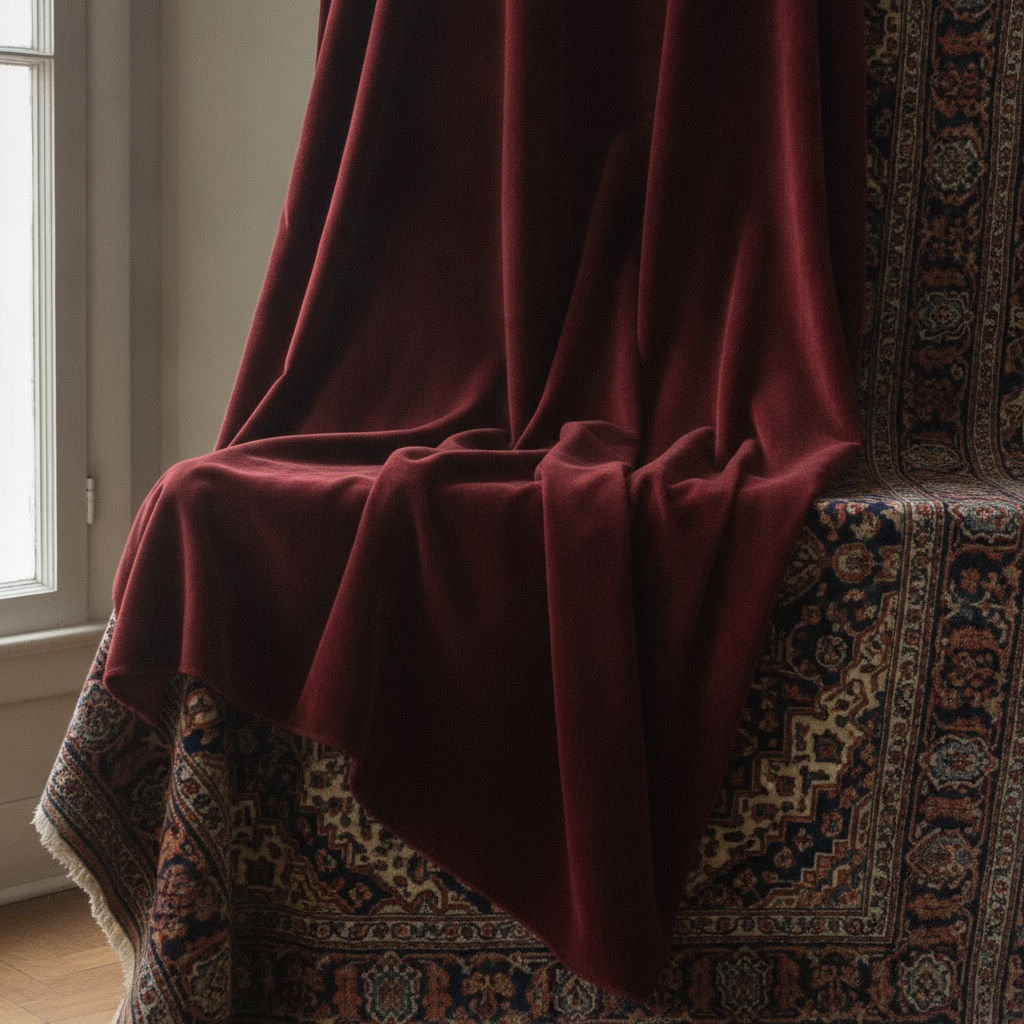
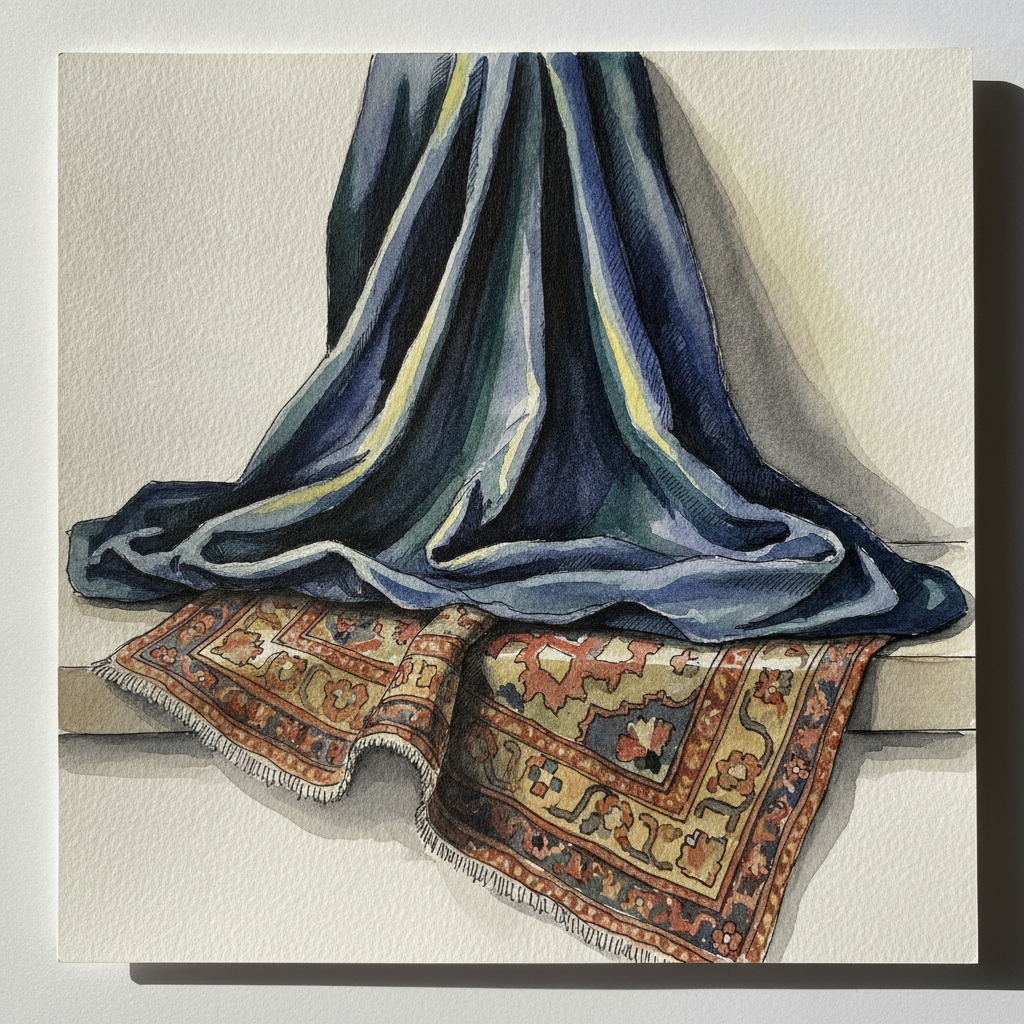
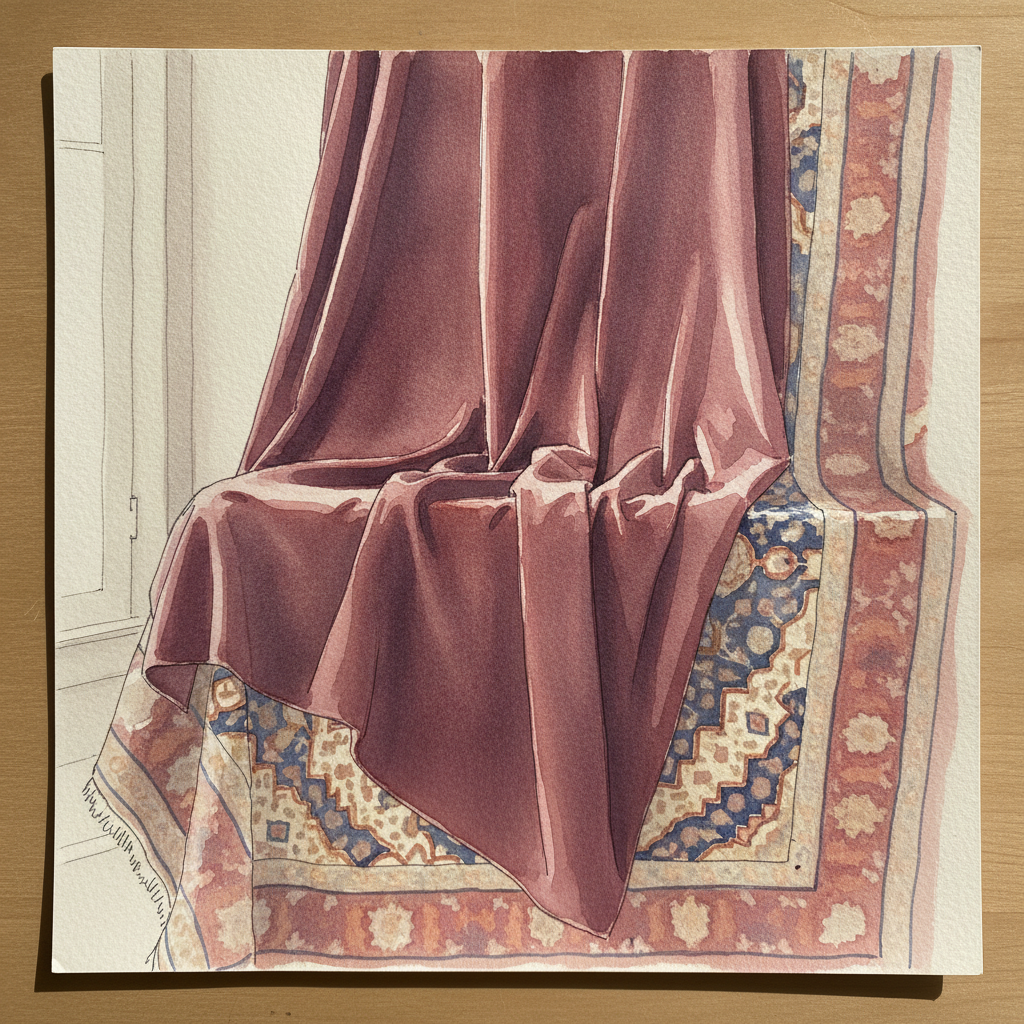
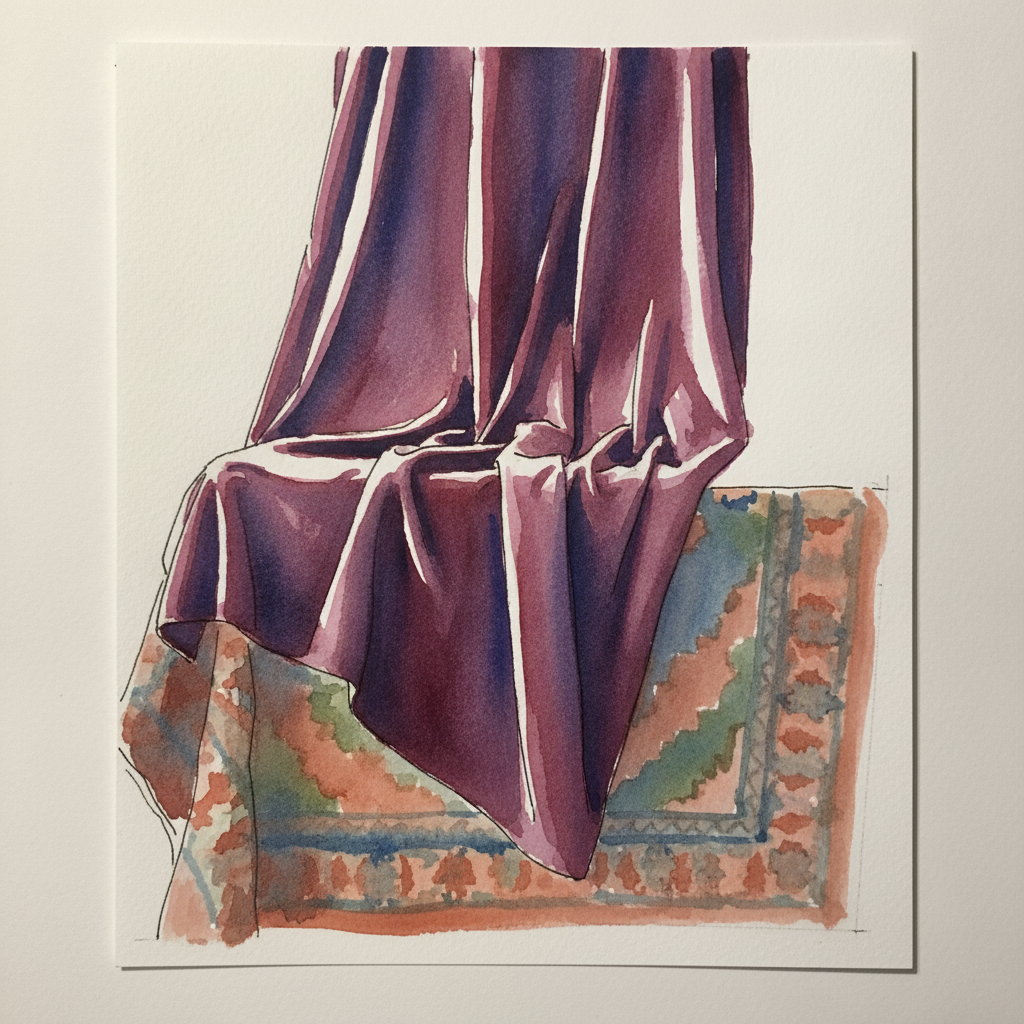
Piece 5 — Velvet drape in Dutch Golden Age still life
Pen + Watercolor · Loose pen and watercolor line-and-wash
Three takes
Focus for this piece
This piece challenges you to depict the extreme value contrast of velvet by building deep, light-absorbing shadows with multiple layers of a rich, dark wash. Focus on using minimal, crisp pen lines to define the brightest ridges where light dramatically catches, making these highlights pop against the surrounding darks. Experiment with varying wash intensity and line weight to sculpt the complex, layered fold geometry of both the velvet and the Persian carpet, enhancing the sense of dramatic depth.
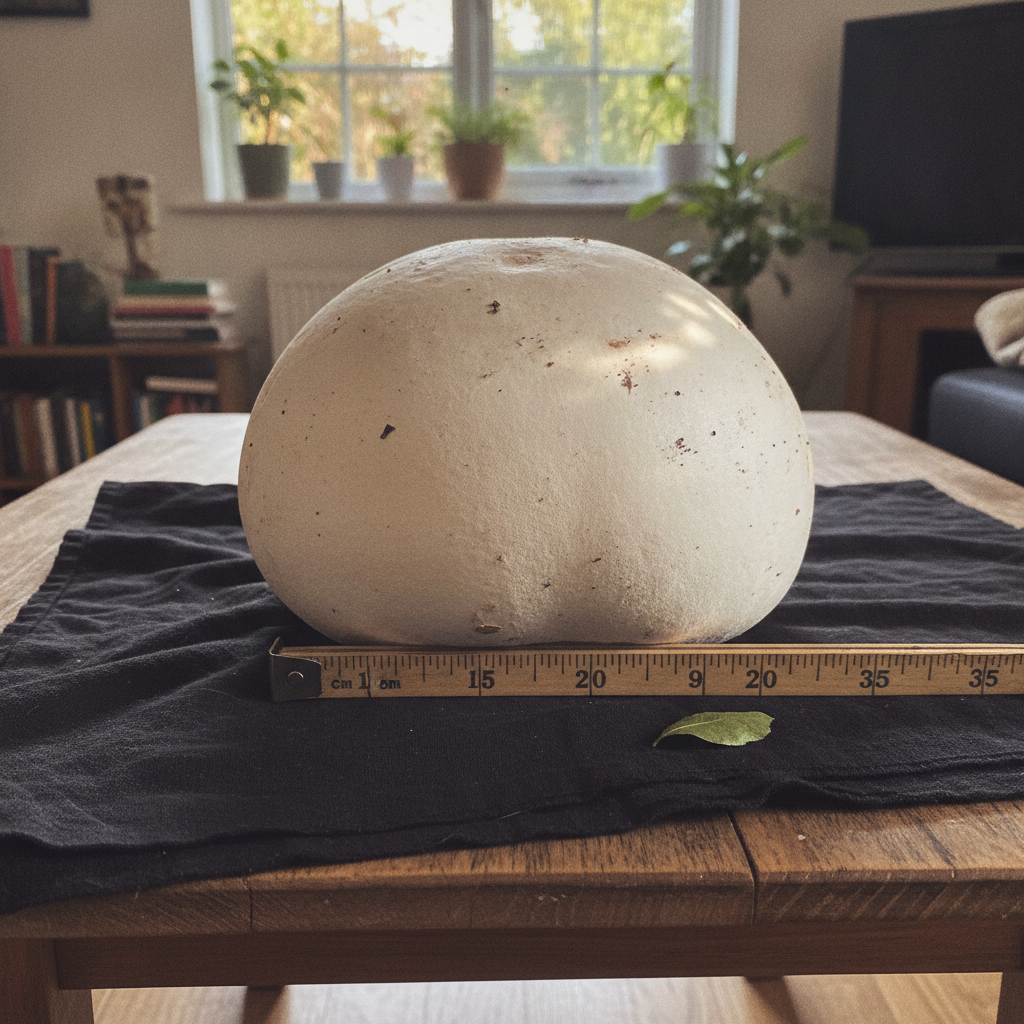
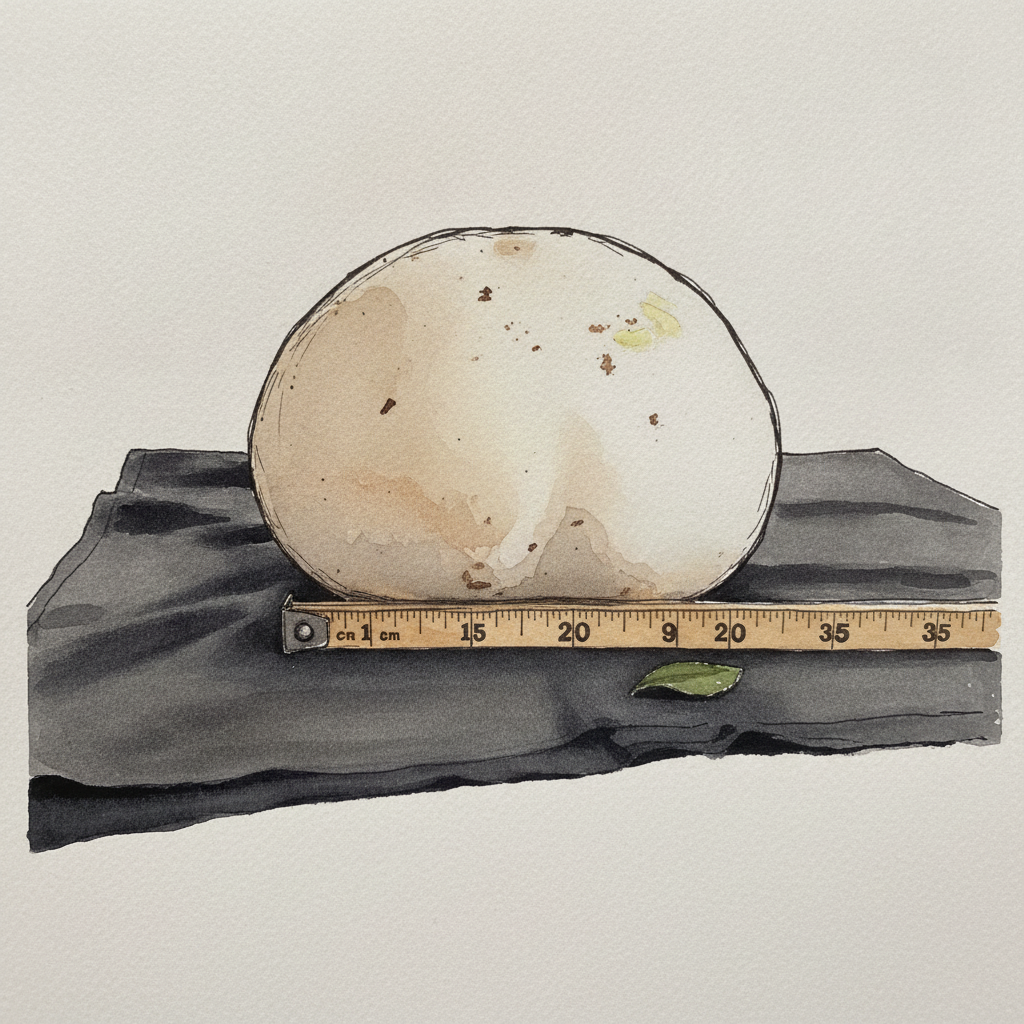
Piece 6 — Puffball and tape measure
Pen + Watercolor · Loose pen and watercolor line-and-wash
Three takes
Focus for this piece
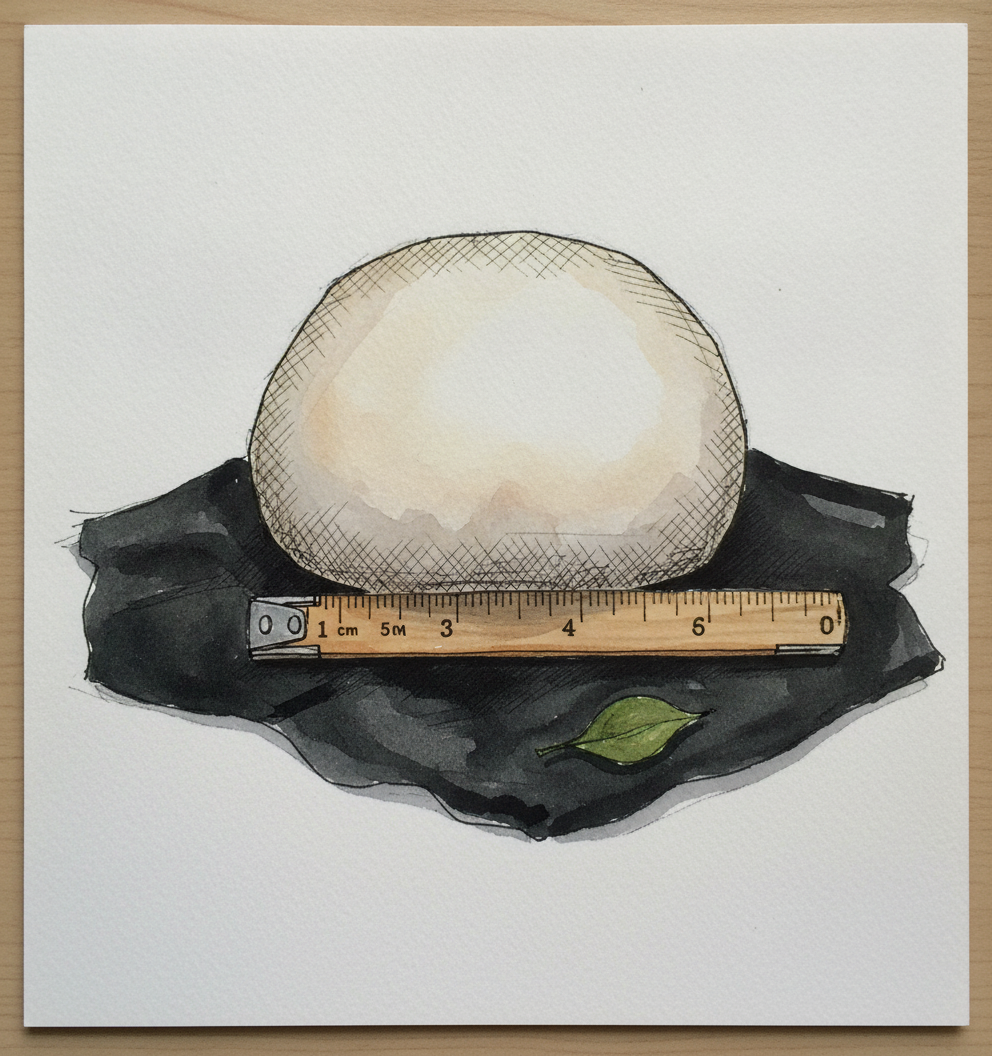
This piece offers a fantastic study in modeling a simple spherical form, where slow, layered watercolor gradients will be key to capturing the puffball's roundness and the nuanced dappled light from the upper left. Use delicate, minimal pen lines to suggest the smooth, faintly velvety surface and for the precise numerals of the tape measure, allowing the ink to provide structural contrast without dominating the form. Concentrate on building rich, dark washes for the black cloth to frame the luminous puffball and emphasize its volume through stark value differences.
Piece 7 — Chain pickerel
Pen + Watercolor · Loose pen and watercolor line-and-wash
Three takes
Focus for this piece
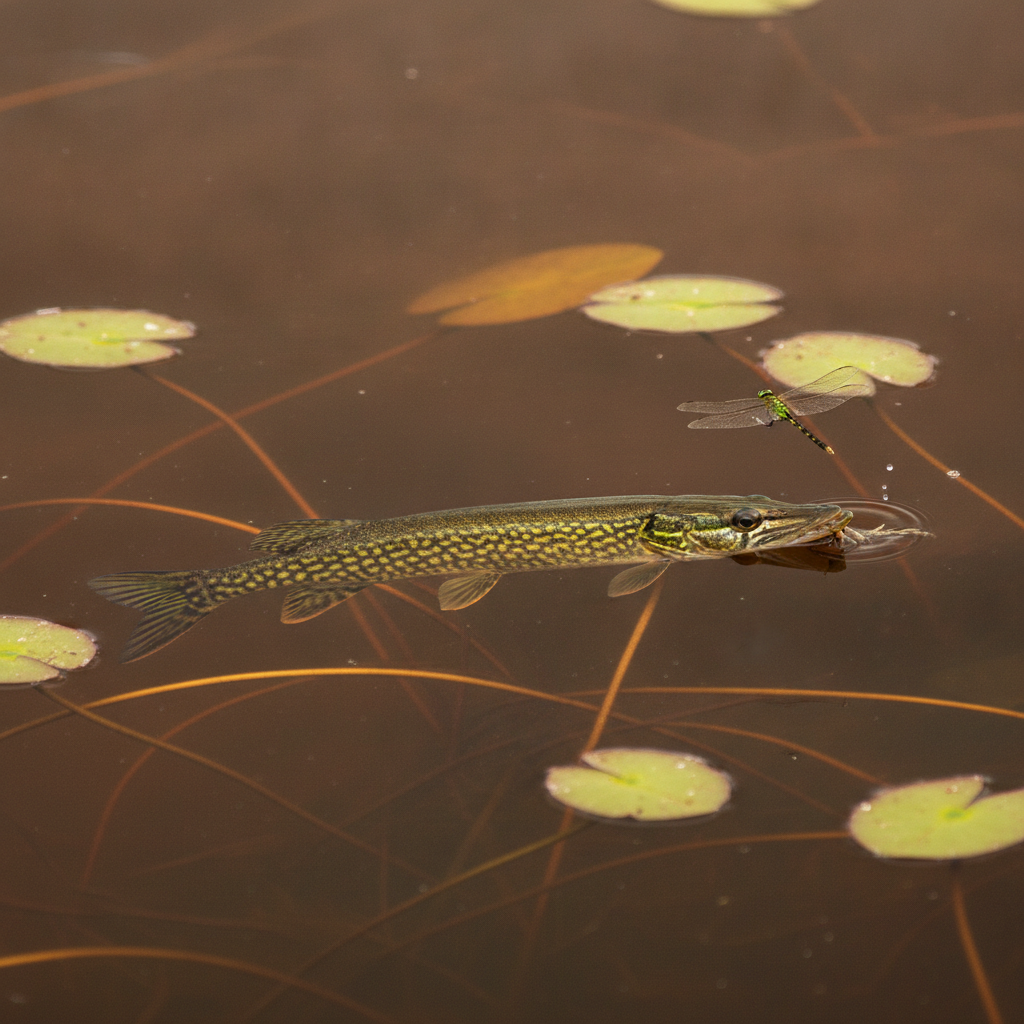
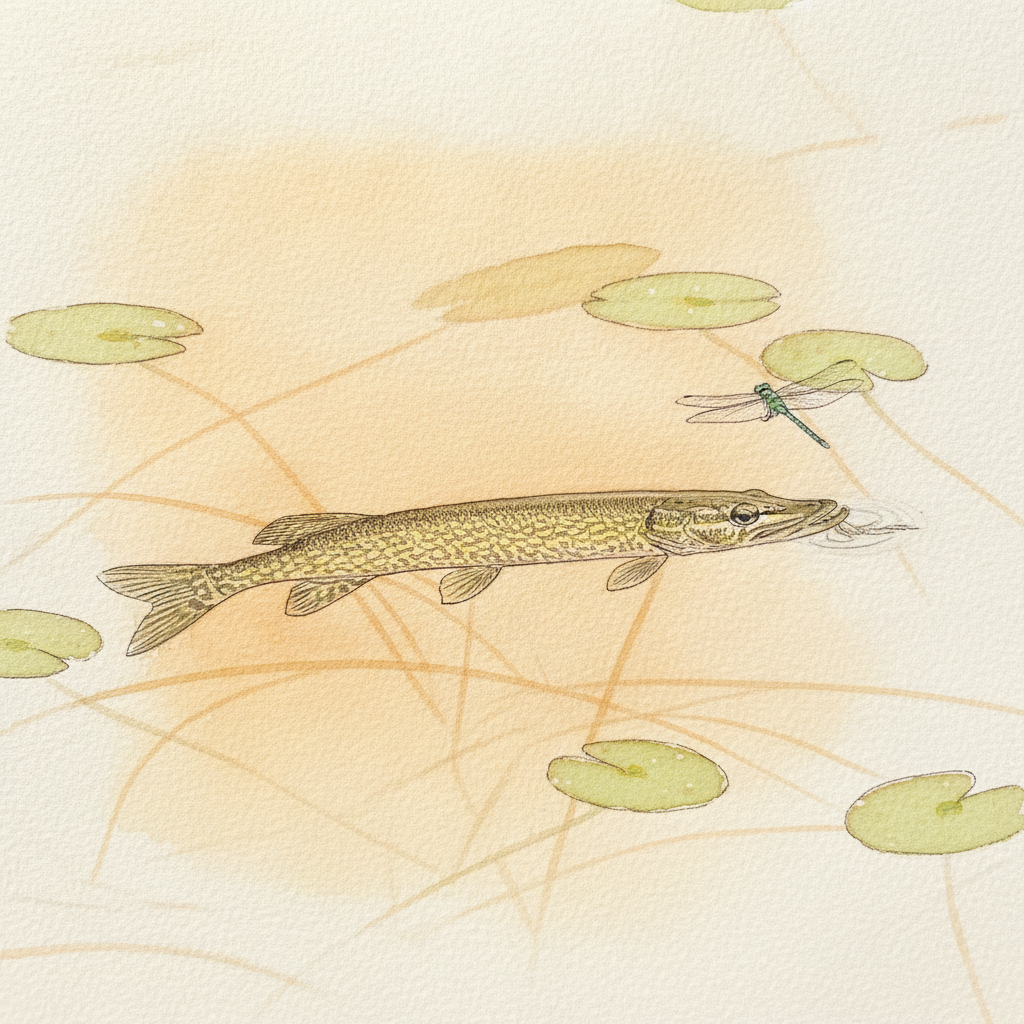
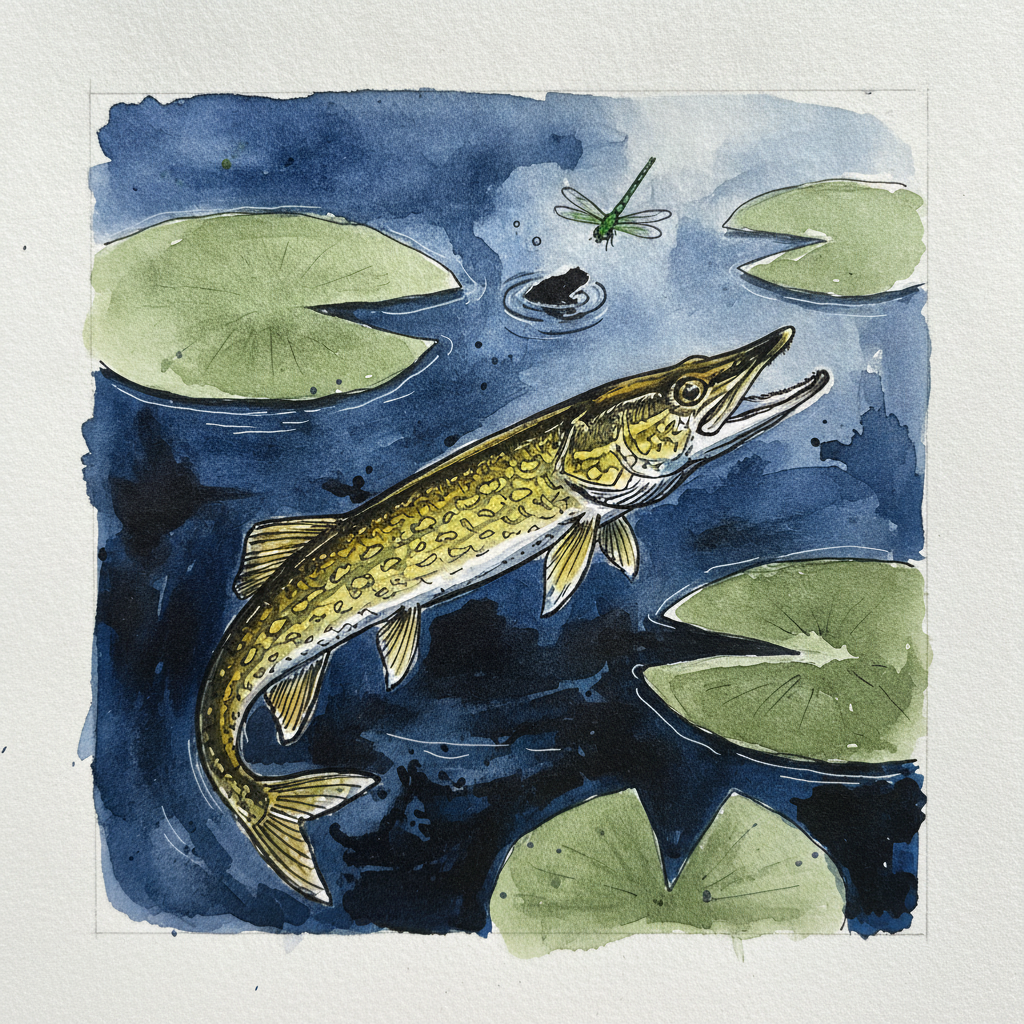
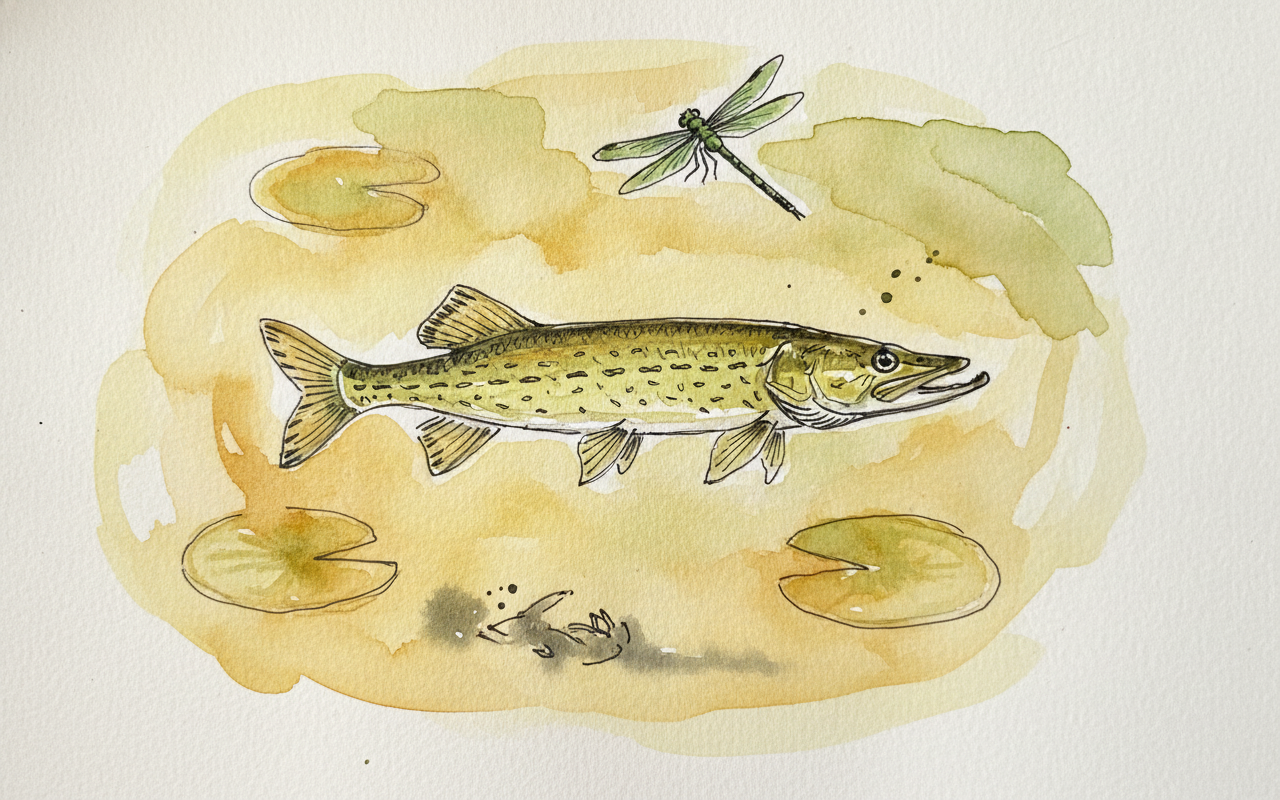
This piece offers an excellent study in creating depth through layers of transparent watercolor and varied line work. Begin with light, warm washes for the tannin-stained water, allowing it to glow, then introduce stronger value shifts to imply the submerged fish and stems. Reserve your crispest, finest ink lines for the pickerel's distinctive chain pattern and the precise details of surface elements like the dragonfly, using slightly softer lines or implied edges for the deeper, more diffuse forms.
Piece 8 — Karauli Jain Temples, Karauli, Rajasthan, India
Pen + Watercolor · Loose pen and watercolor line-and-wash
Three takes
Focus for this piece
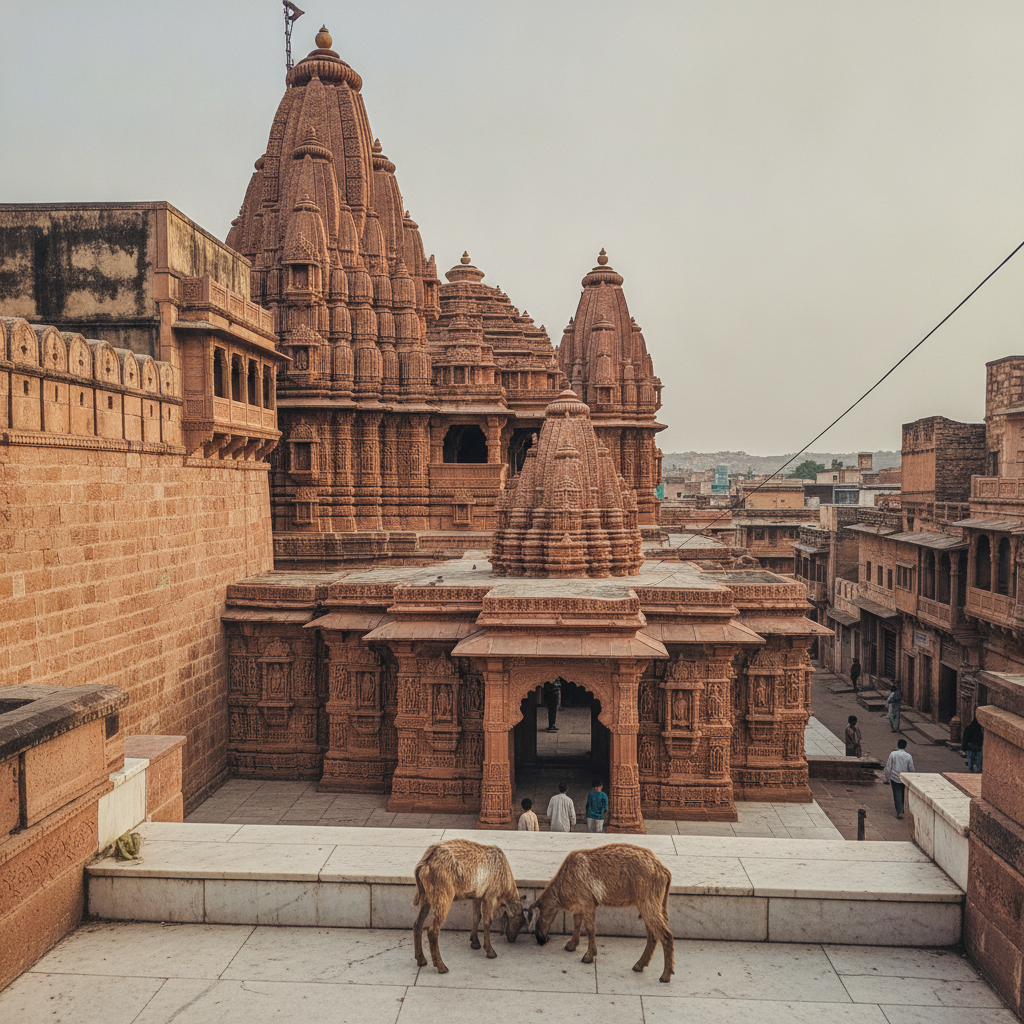
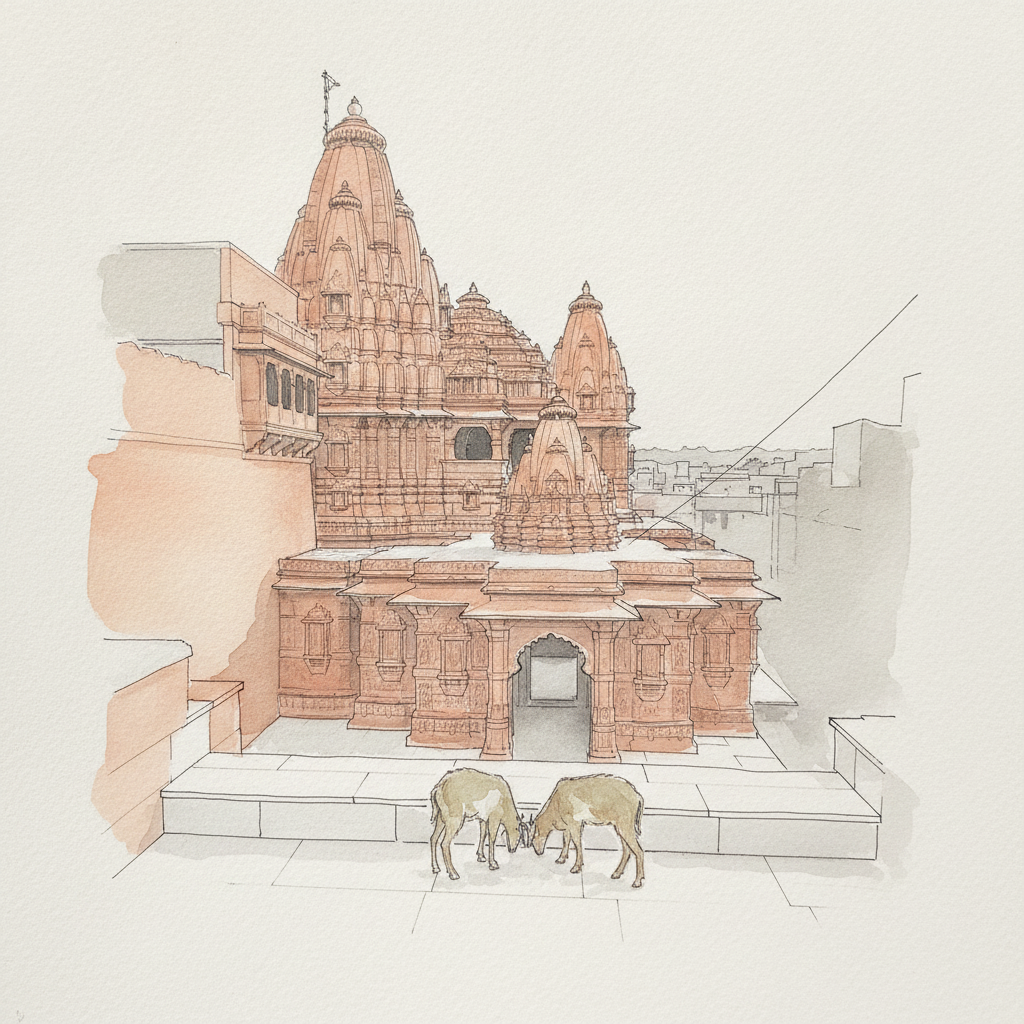
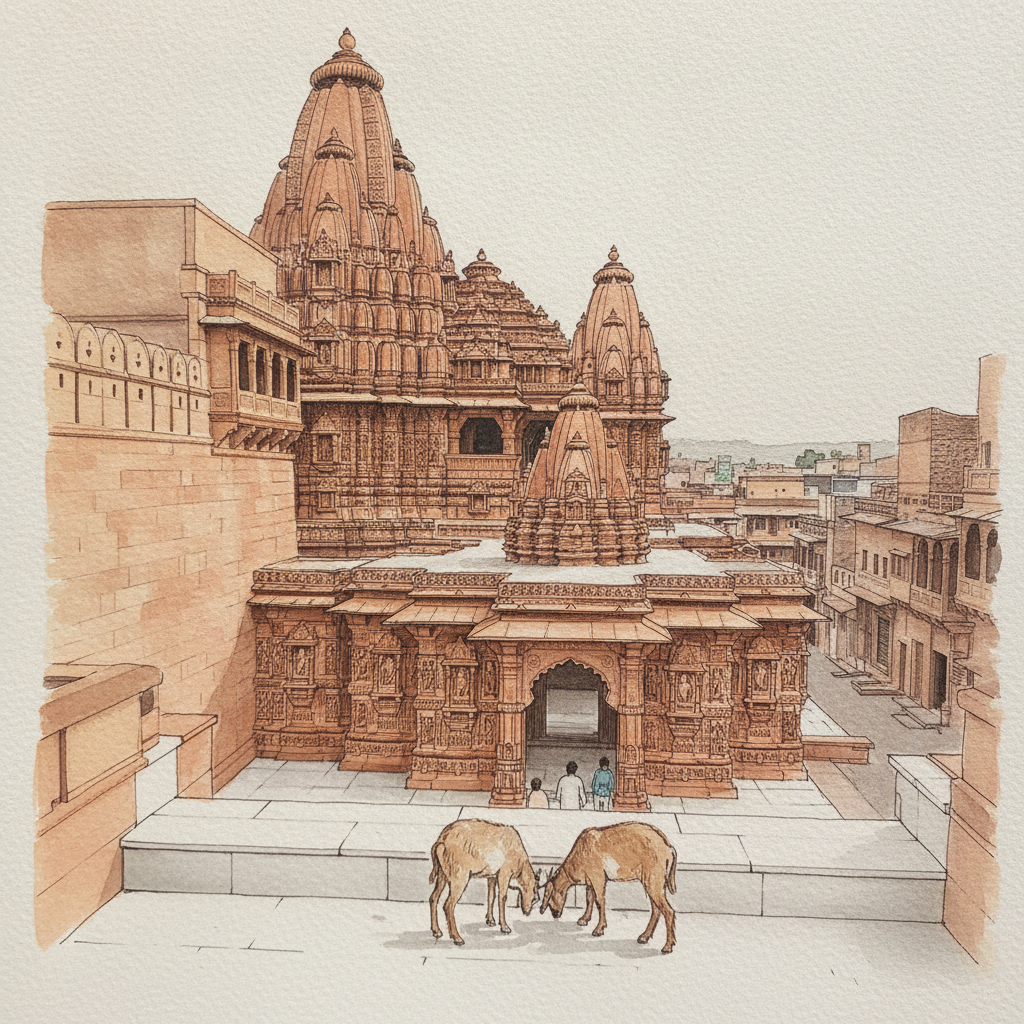
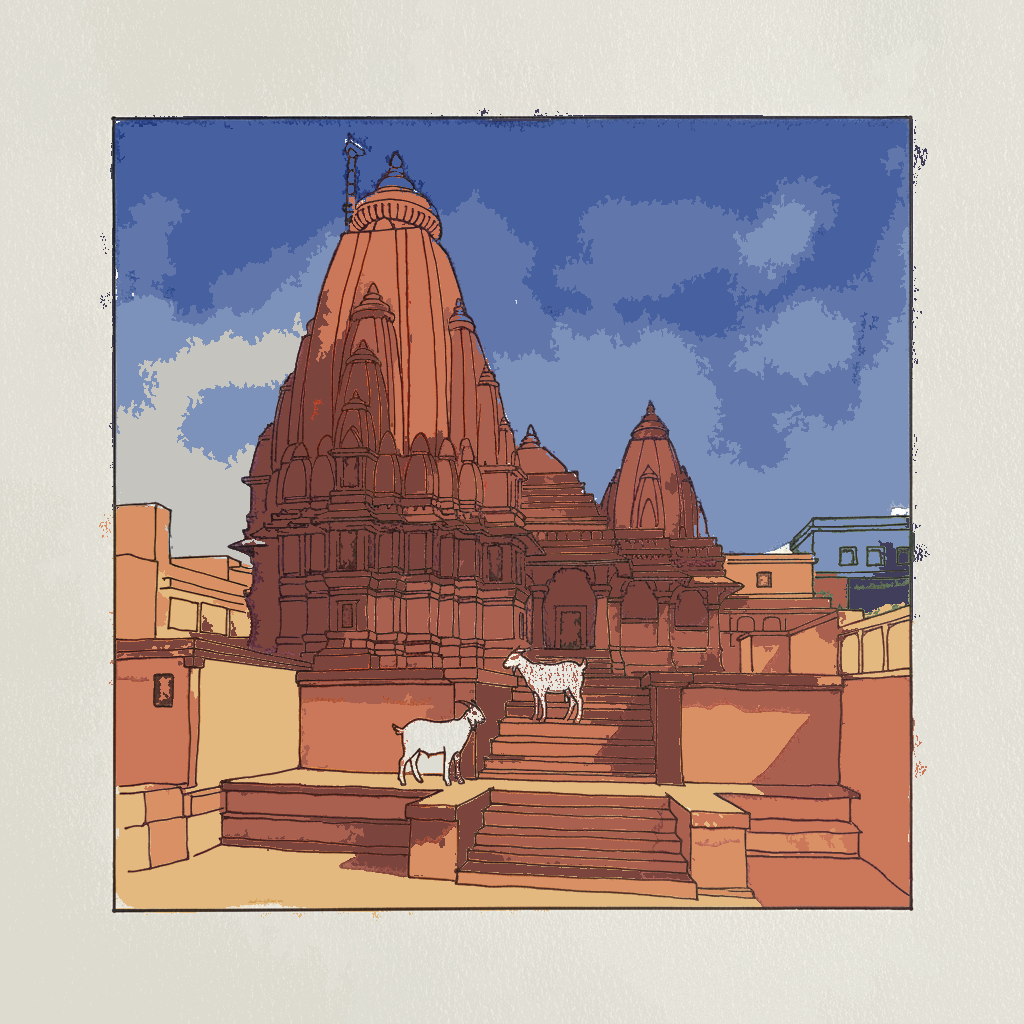
This piece offers a strong study in distinguishing architectural structure from intricate detail using varied line weights with waterproof ink. Use heavier, continuous lines to define the tiered shikharas and major building forms, while suggesting the dense carving of figural panels with lighter, broken linework. Follow with warm, layered washes of a limited palette—ochres, burnt sienna, and hints of permanent rose—to capture the late afternoon glow and atmospheric depth without obscuring your linework. Pay particular attention to how wet-on-wet application in the shadows can enhance the glowing effect of the sandstone.