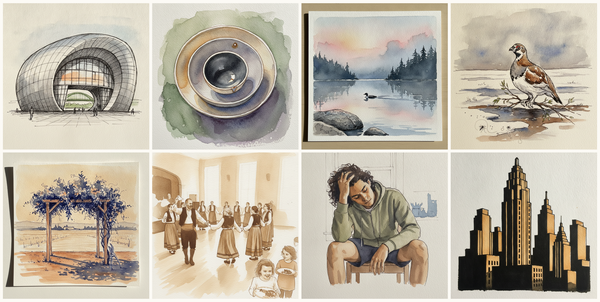
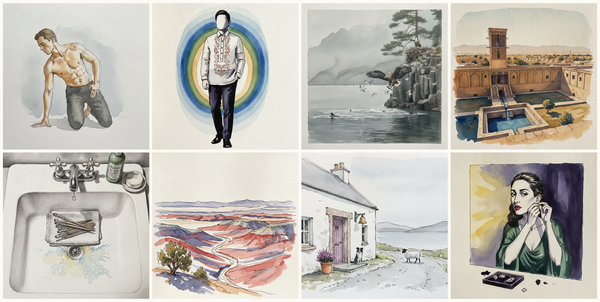
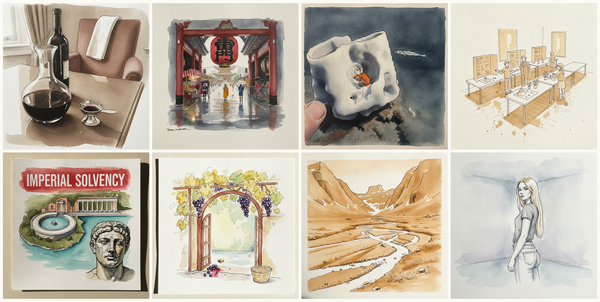
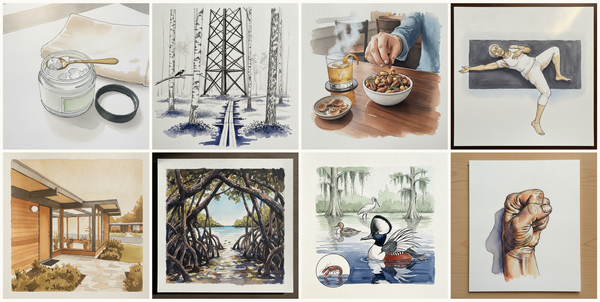
Aldabra giant tortoise, Sauerkraut in a stoneware crock with weight, Deep Squat, Pottery Studio, Cruise Ship Engine Room, and more — pen + watercolor for June 14, 2026
AI-generated daily art-practice references for pen and watercolor: Aldabra giant tortoise, Sauerkraut in a stoneware crock with weight, Deep Squat, Pottery Studio, Cruise Ship Engine Room, Mid-summer afternoon, the gate as a black silhouette, Star Fort, Matara, Sri Lanka, Valencia orange grove, S…
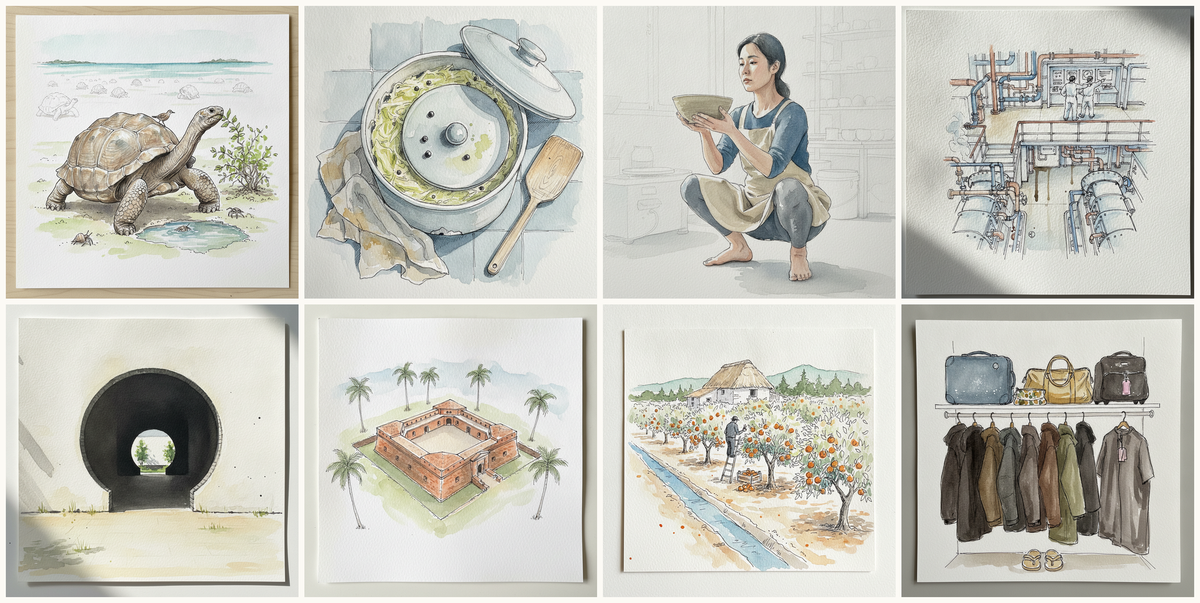
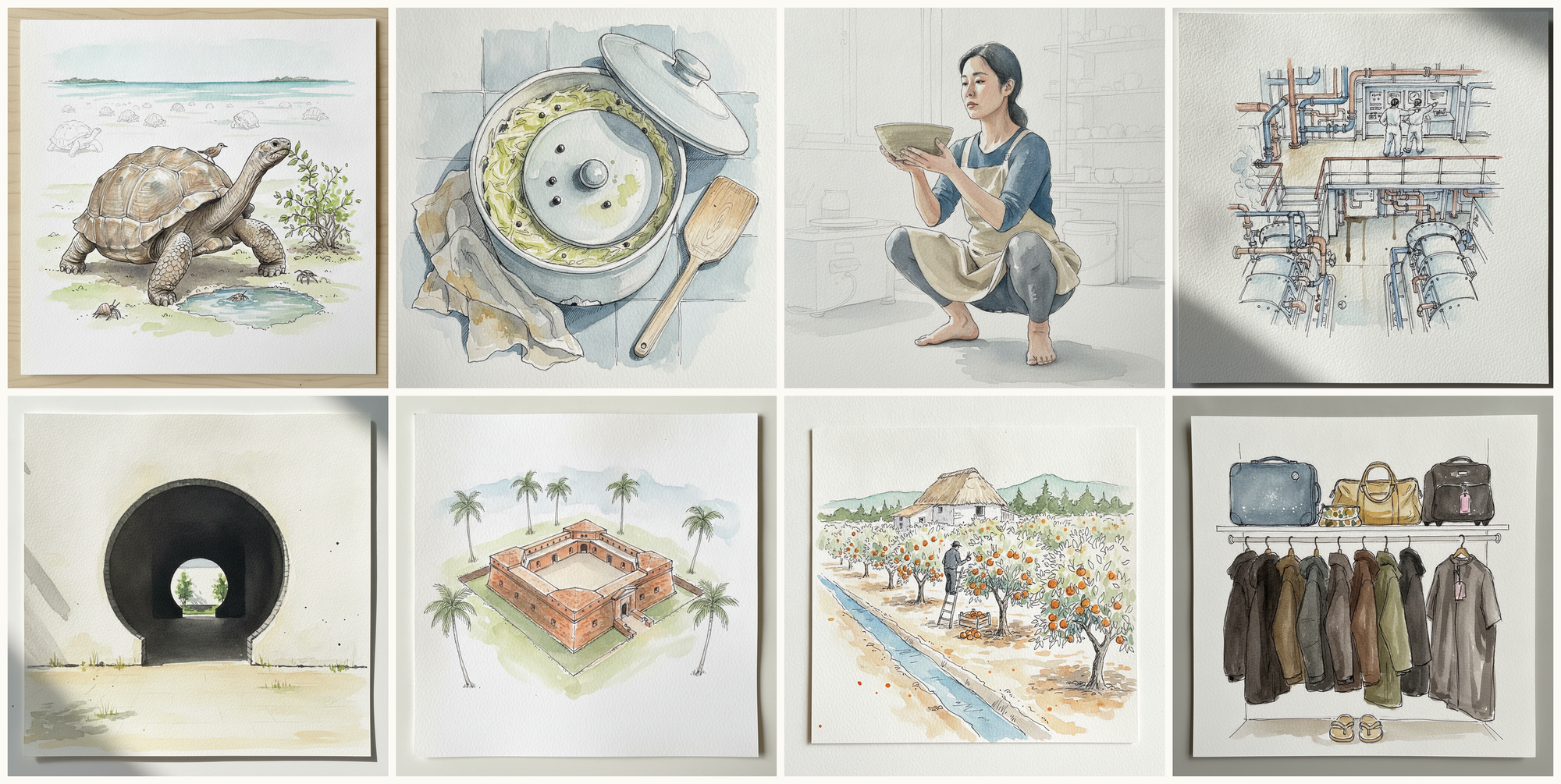
Today's 8 pen-and-watercolor pieces: Aldabra giant tortoise, Sauerkraut in a stoneware crock with weight, Deep Squat, Pottery Studio, Cruise Ship Engine Room, Mid-summer afternoon, the gate as a black silhouette, Star Fort, Matara, Sri Lanka, Valencia orange grove, Spain, Closet with luggage on shelf. Each piece comes with an AI-generated photoreal reference, three AI-generated example artworks in different treatments, and a short focus paragraph naming what to study in this one.
Why these references use AI
This daily series uses AI-generated images as practice prompts, not as finished artwork to copy. Each subject starts with a synthetic photoreal reference generated with Gemini/Nano Banana, then moves into three pen-and-watercolor interpretations of the same subject.
I use AI here because daily art practice needs variety and low friction. Real life can get repetitive, busy, or visually narrow. These generated reference sets make it easier to study bodies, buildings, animals, landscapes, objects, gestures, light, palettes, and compositions that might not show up in an ordinary day.
The goal is not to reproduce any image directly. Treat each set as a starting point for observation and study: choose what interests you, change the framing, simplify the subject, alter the palette, and make your own version.
Piece 1 — Aldabra giant tortoise
Pen + Watercolor · Loose pen and watercolor line-and-wash
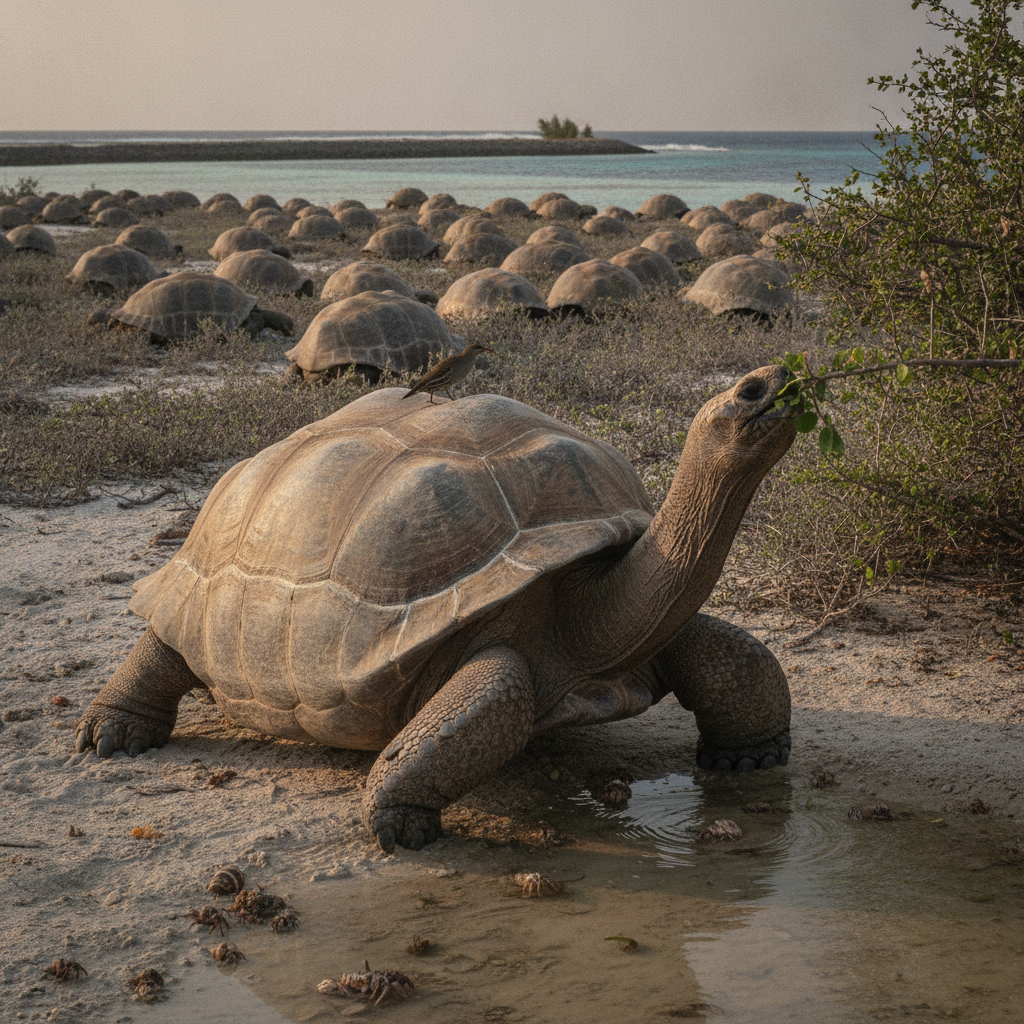
Three takes
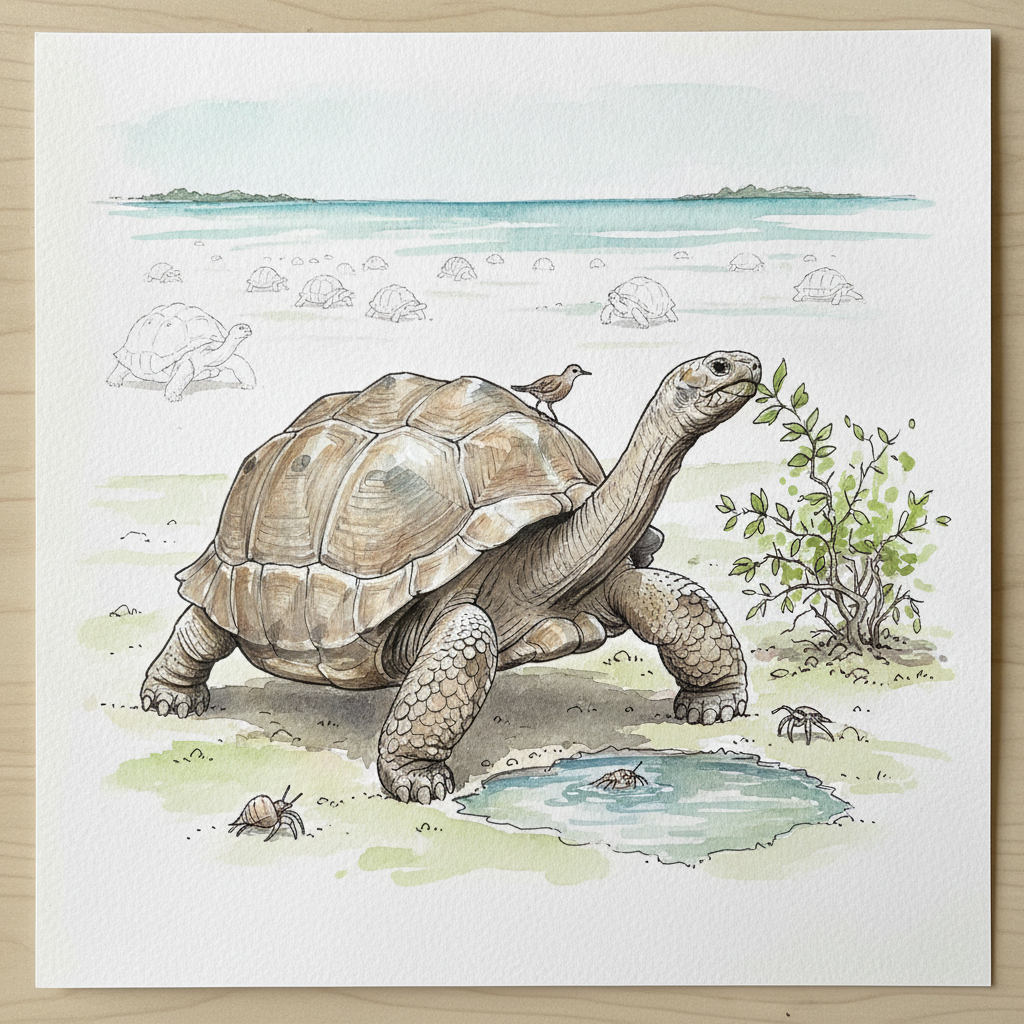
Focus for this piece
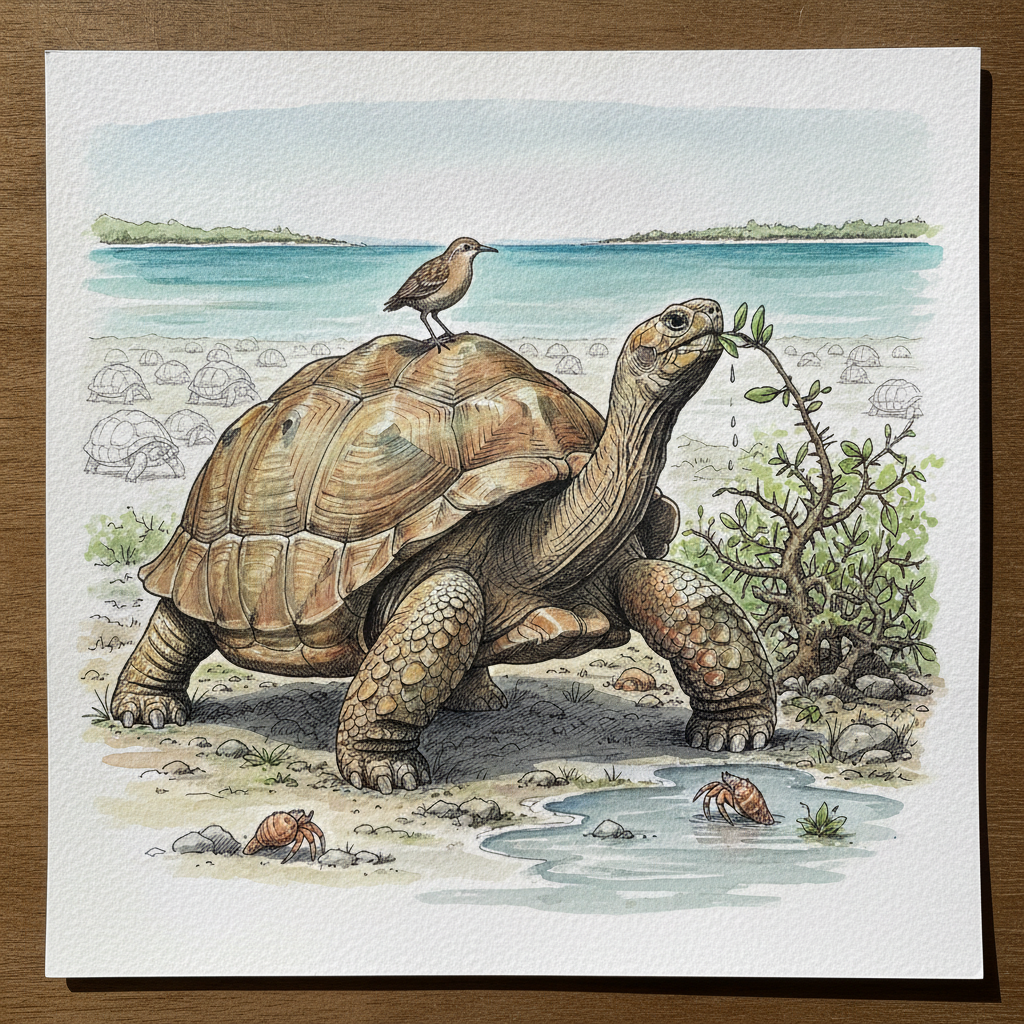
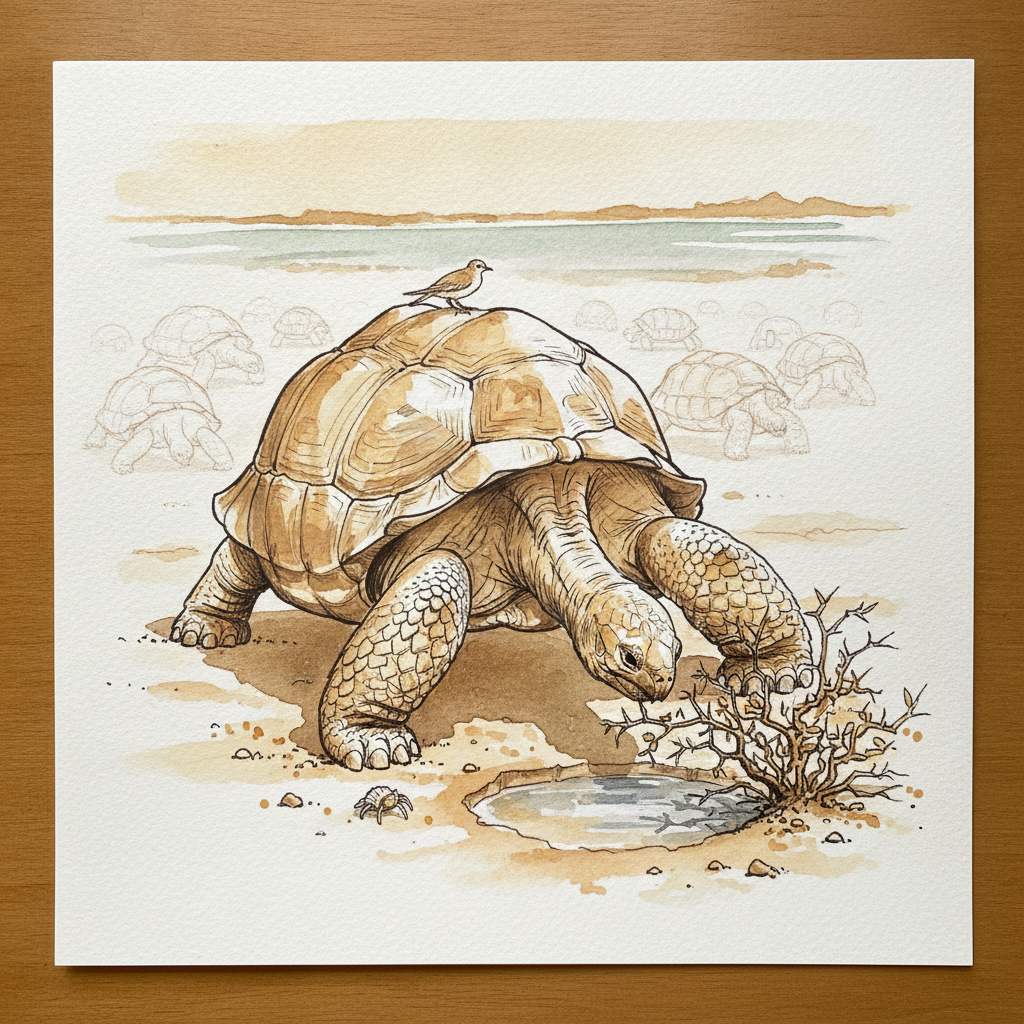
For this Aldabra tortoise, concentrate on conveying its immense weight and the rugged texture of its shell. Use varied line weights in your pen work to define the heavy, saddle-backed curve of the shell and the leathery folds of the neck. Follow with layered washes, letting them build the volume and suggest the subtle color variations and rough surface of the carapace.
Piece 2 — Sauerkraut in a stoneware crock with weight
Pen + Watercolor · Loose pen and watercolor line-and-wash
Three takes
Focus for this piece
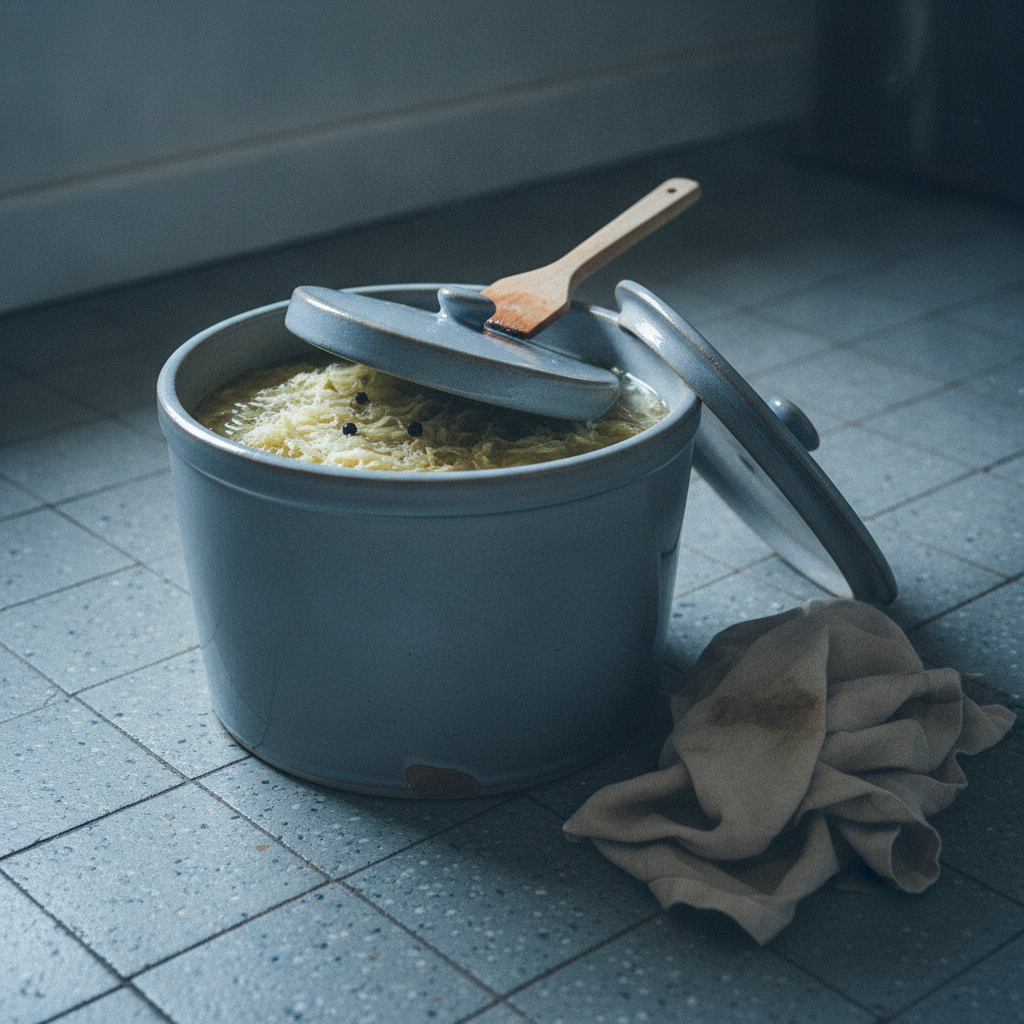
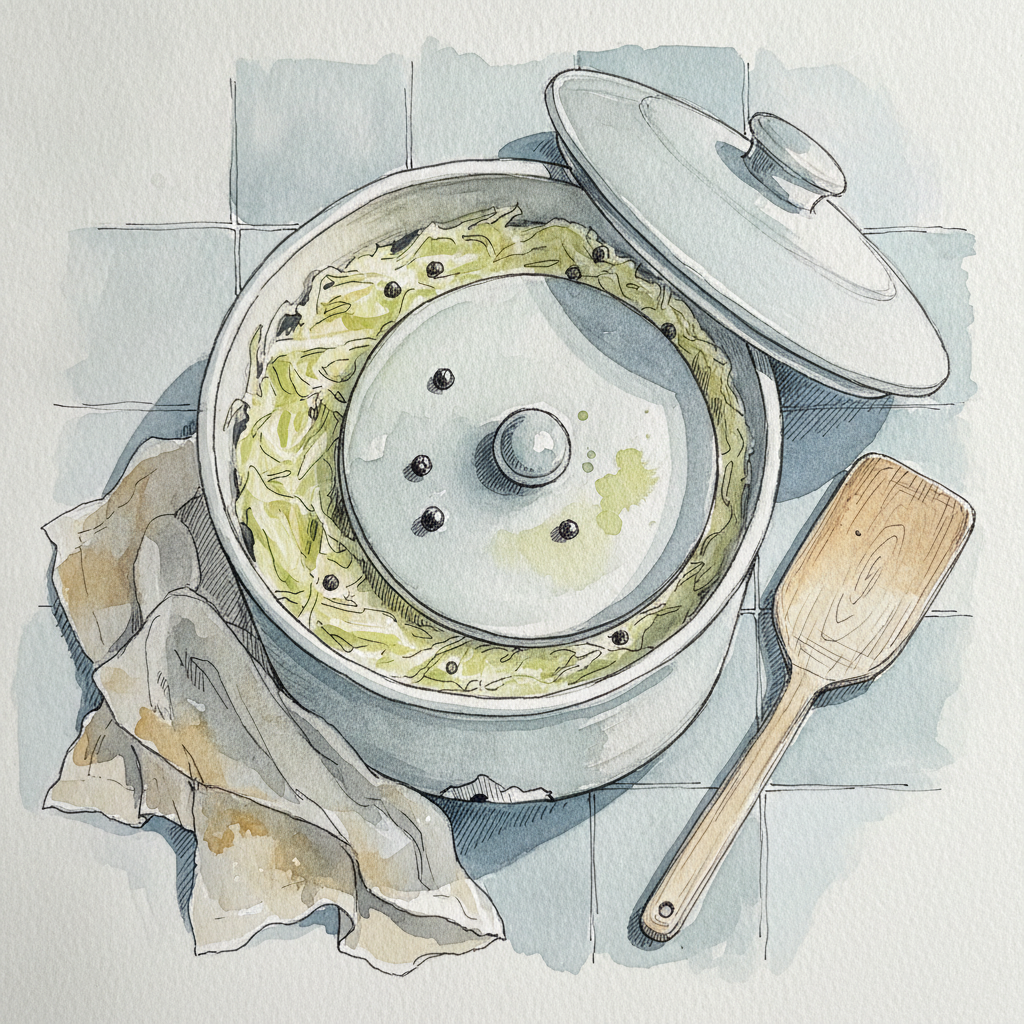
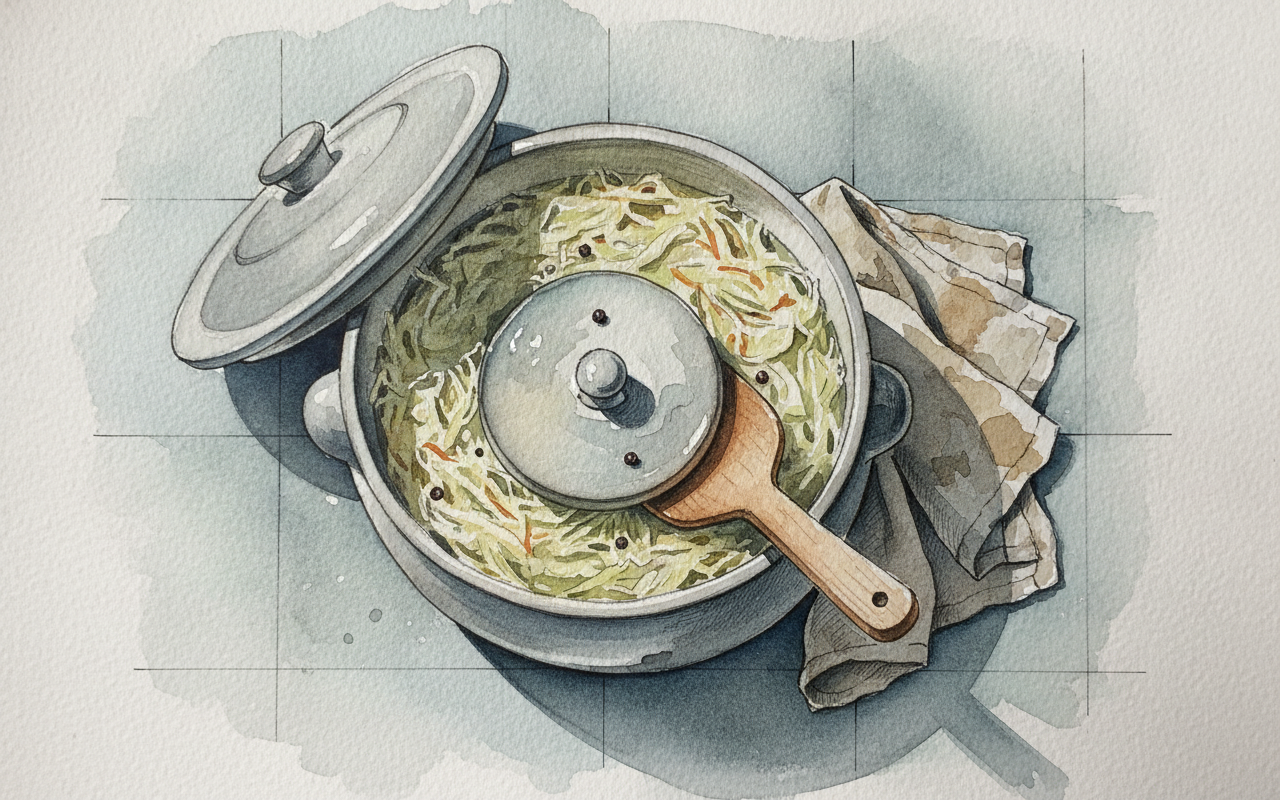
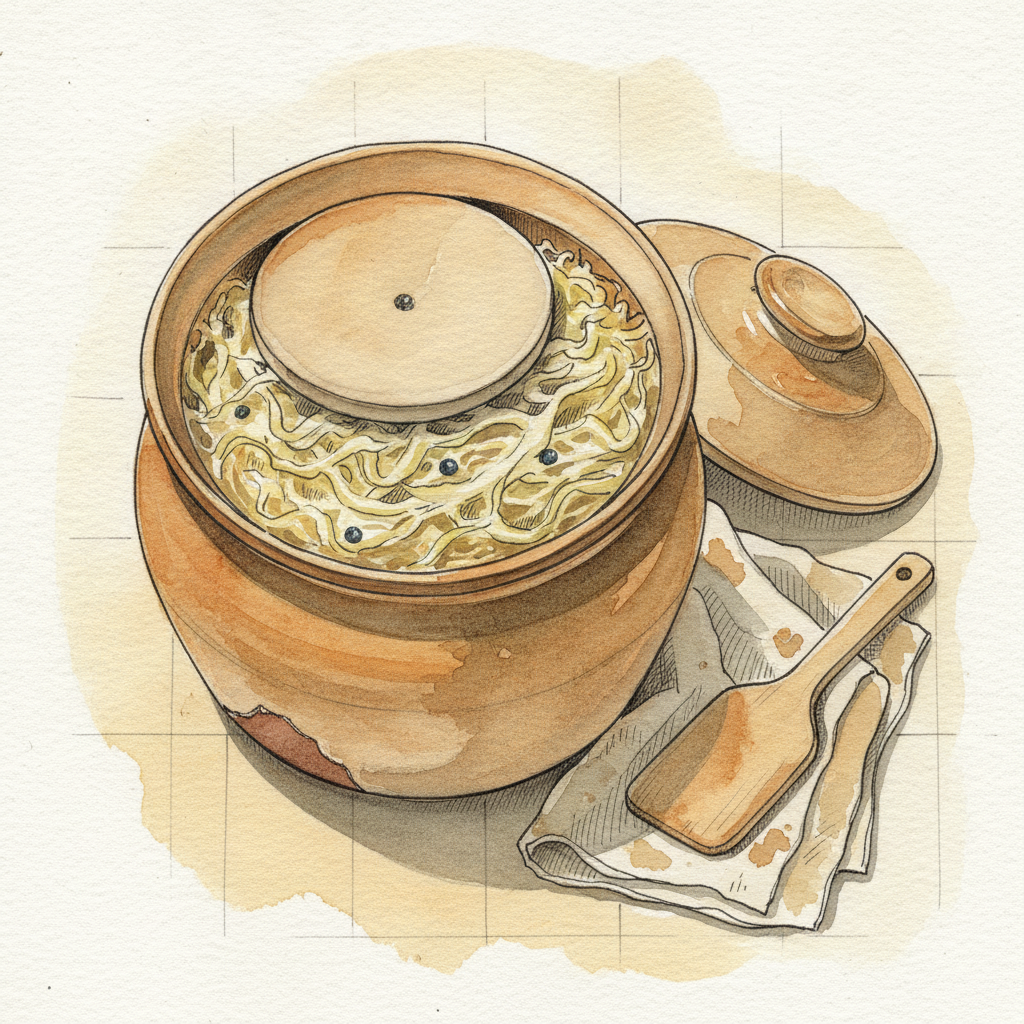
For this piece, focus on conveying the substantial weight and cool ceramic texture of the crock. Use varied line weights, employing heavier, deliberate lines to define its cylindrical form and emphasize its grounding presence. Layer cool grey-blue washes with firm, controlled strokes to build its opaque volume, contrasting this solidity with the delicate, submerged translucence of the pale sauerkraut, which you can suggest with light washes and fine, sparse lines.
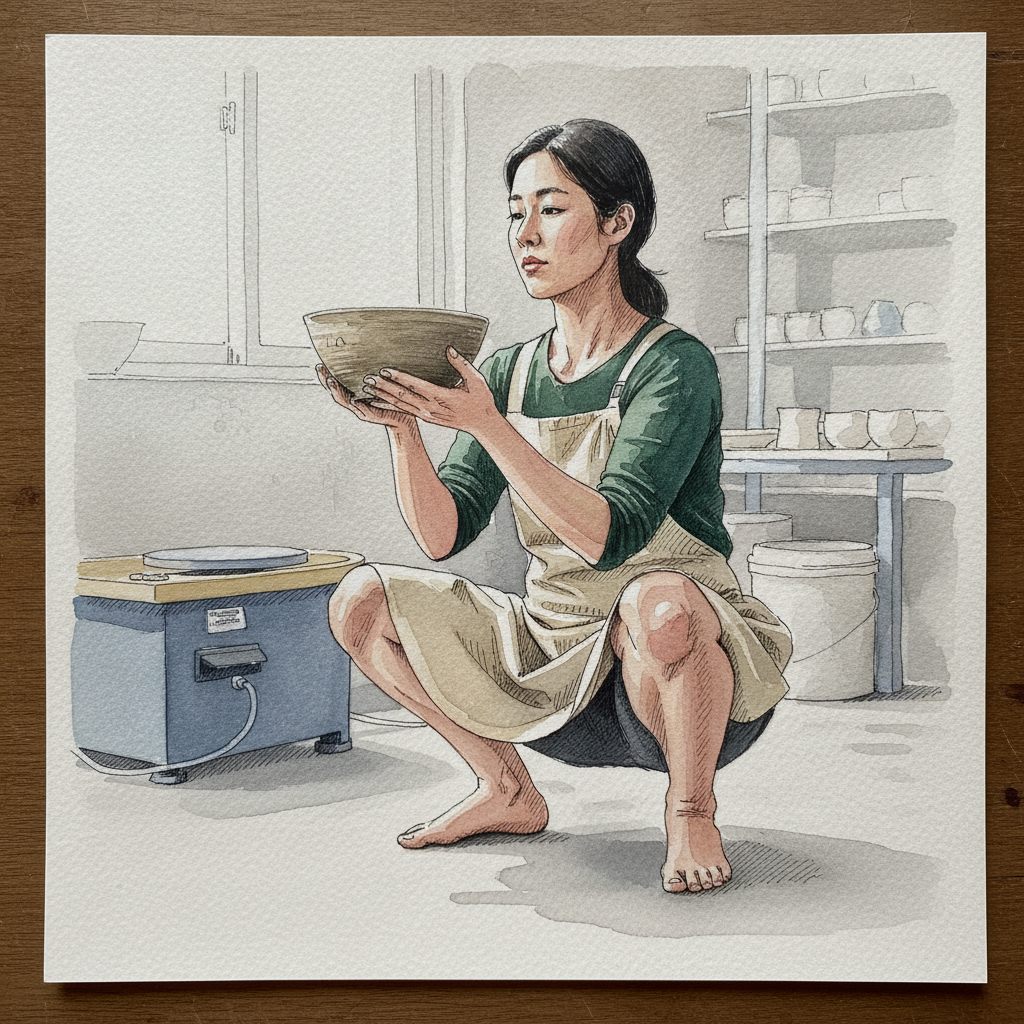
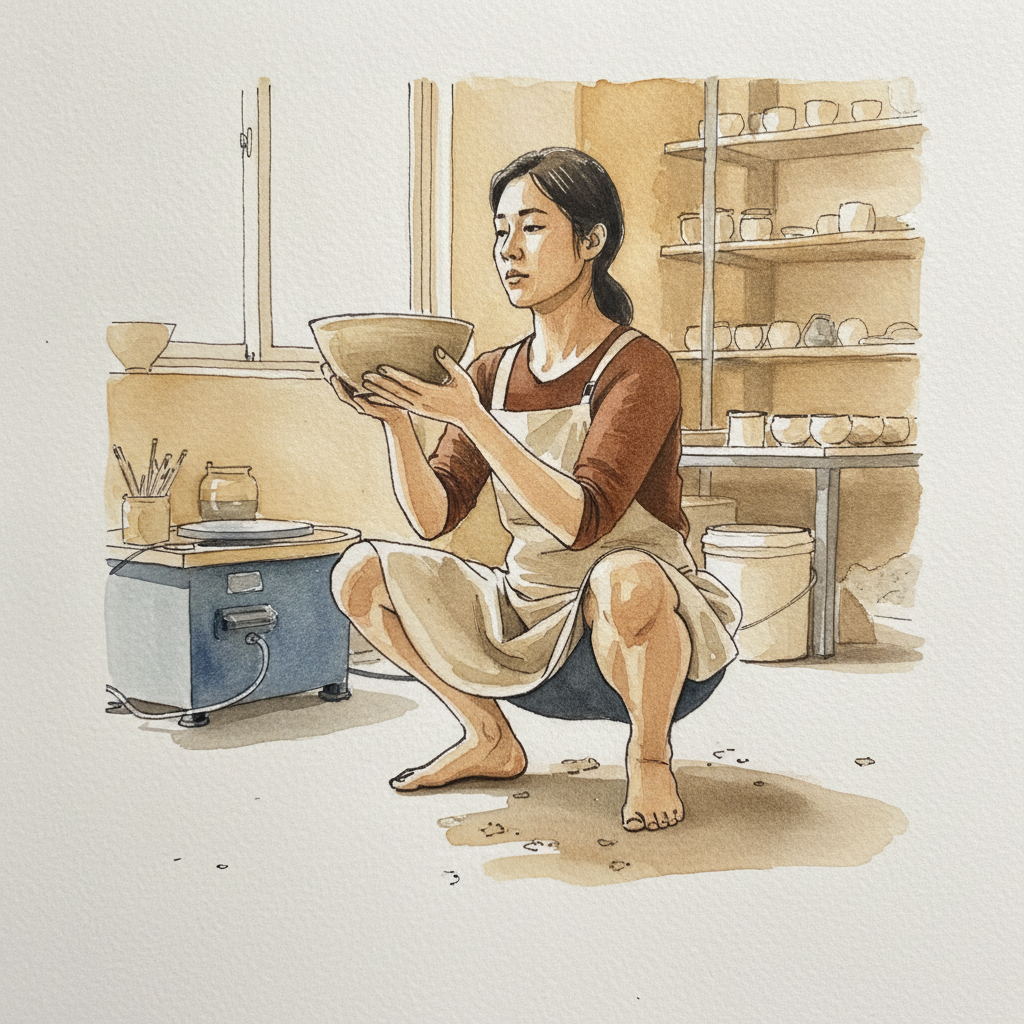
Piece 3 — Deep Squat, Pottery Studio
Pen + Watercolor · Loose pen and watercolor line-and-wash
Three takes
Focus for this piece
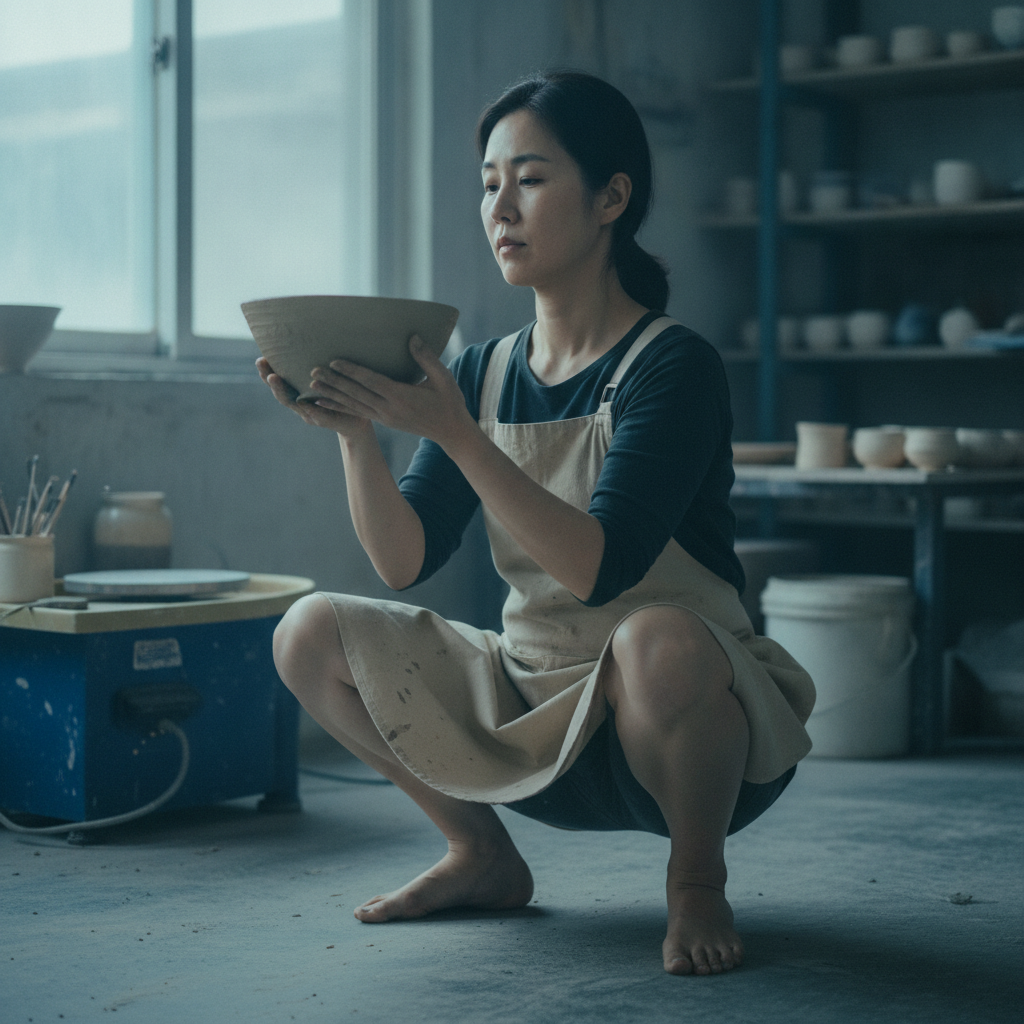
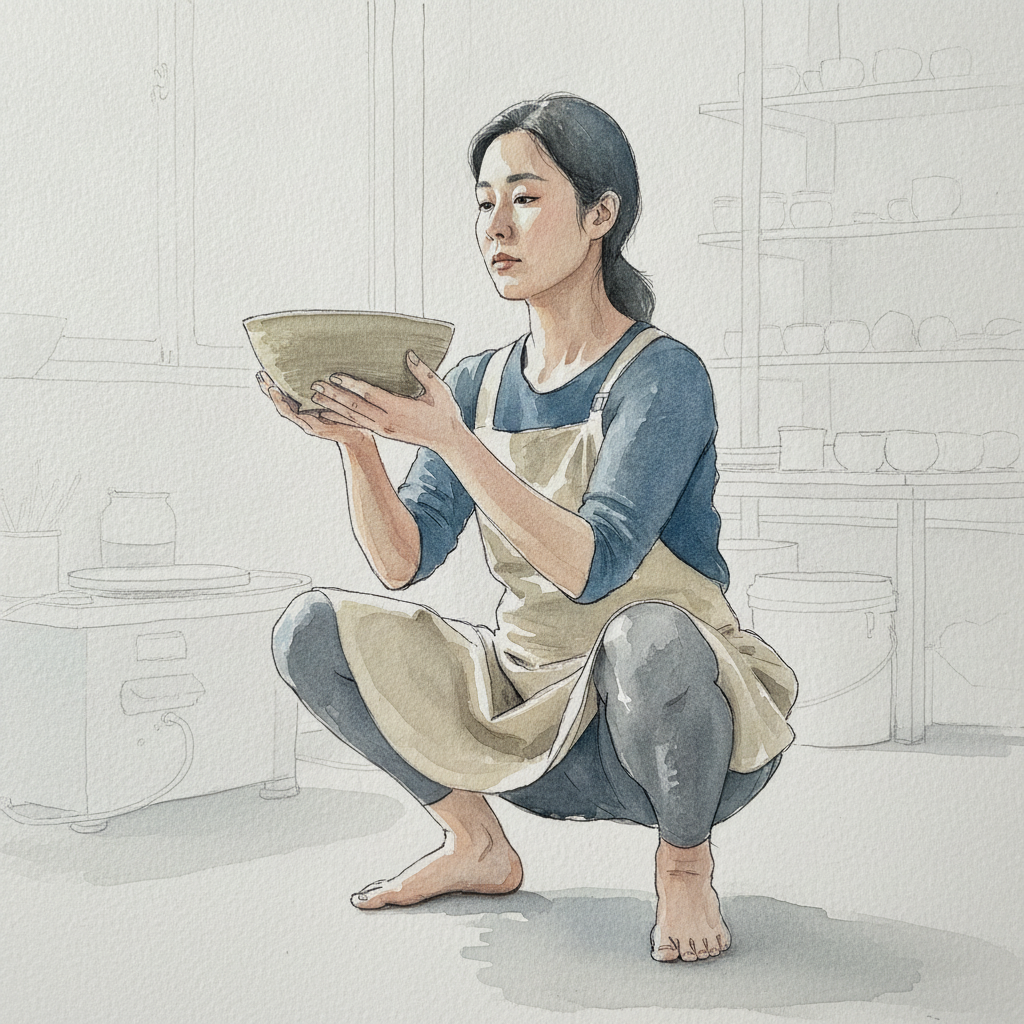
This piece offers an excellent study in establishing the underlying structural geometry of the human form with pen, particularly navigating the strong foreshortening of her deeply bent legs and the distinct planes of her upright torso. Then, apply watercolor washes to build robust volume, utilizing soft cool tones to model the damp clay of the bowl and even washes across her apron, letting your varied line weights define the pose's grounded stability and the spine's long curve.
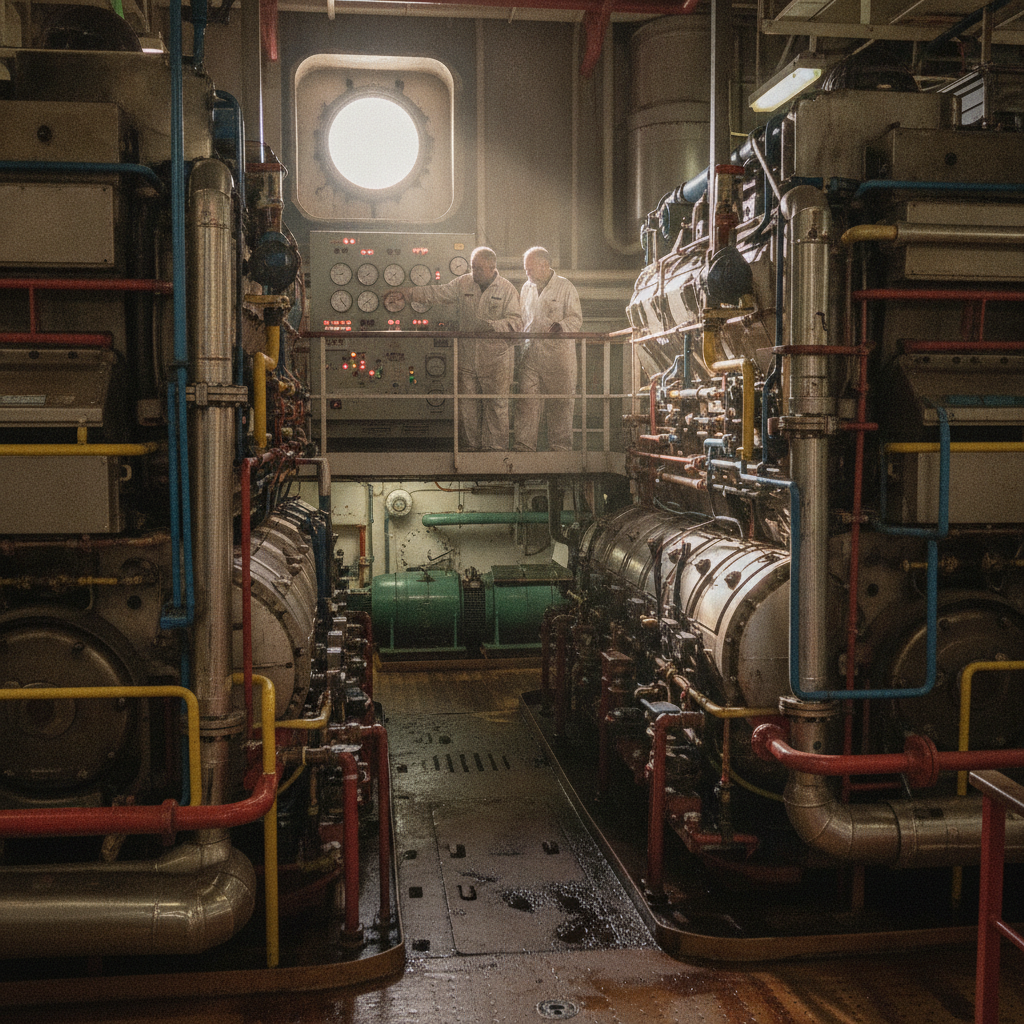
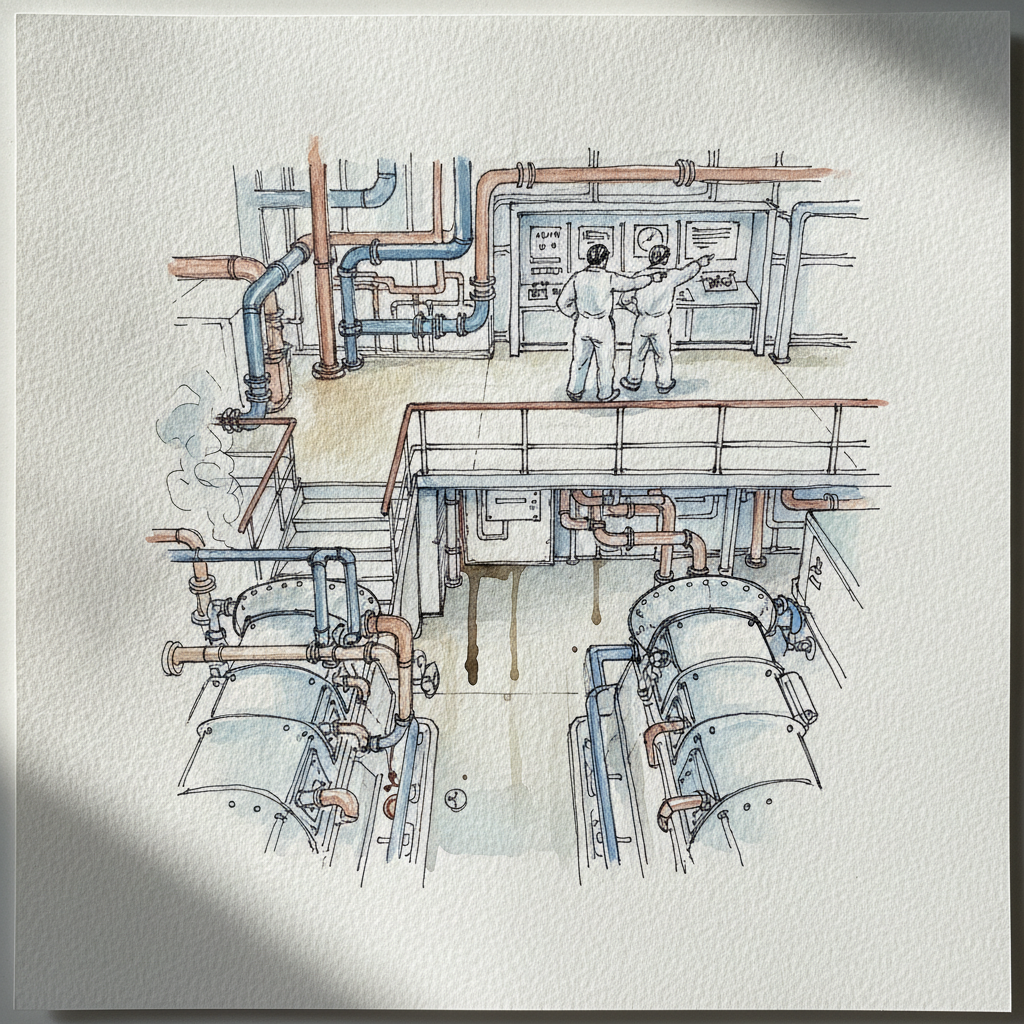
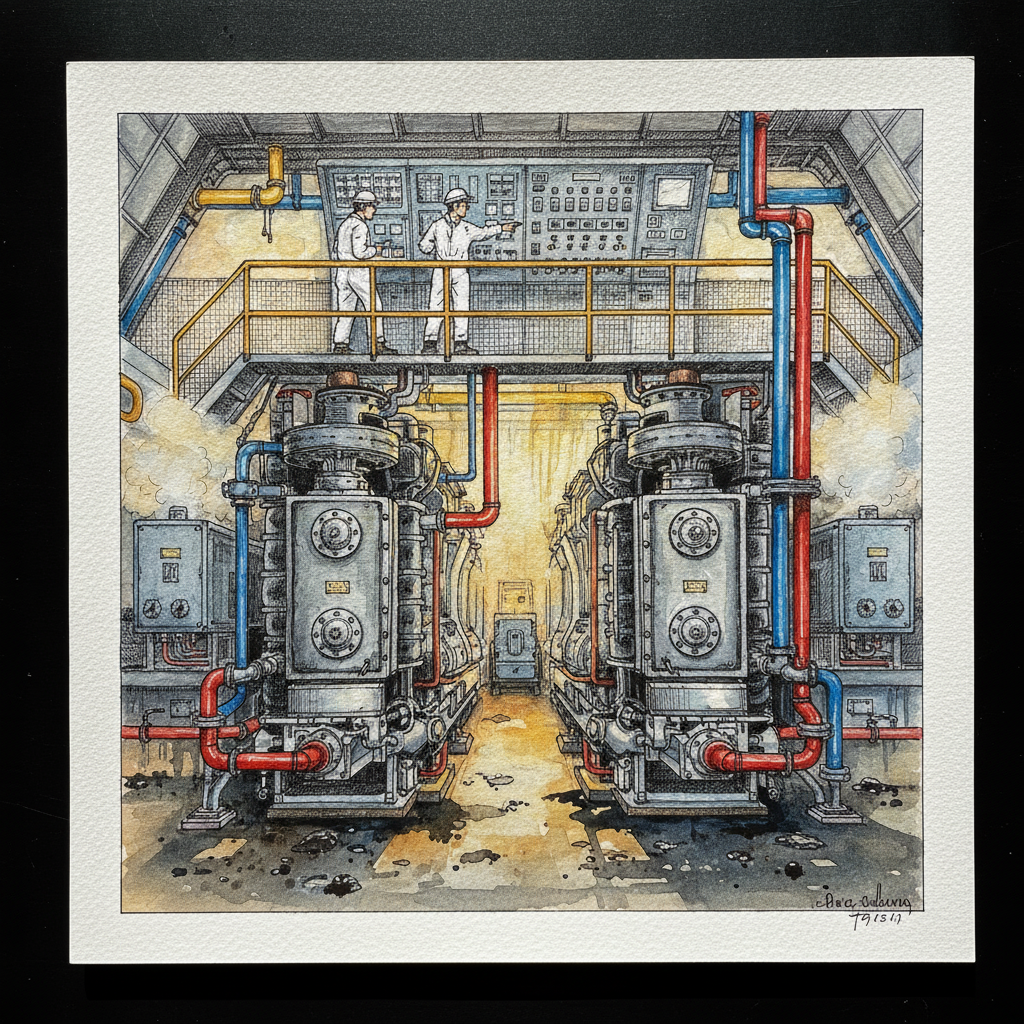
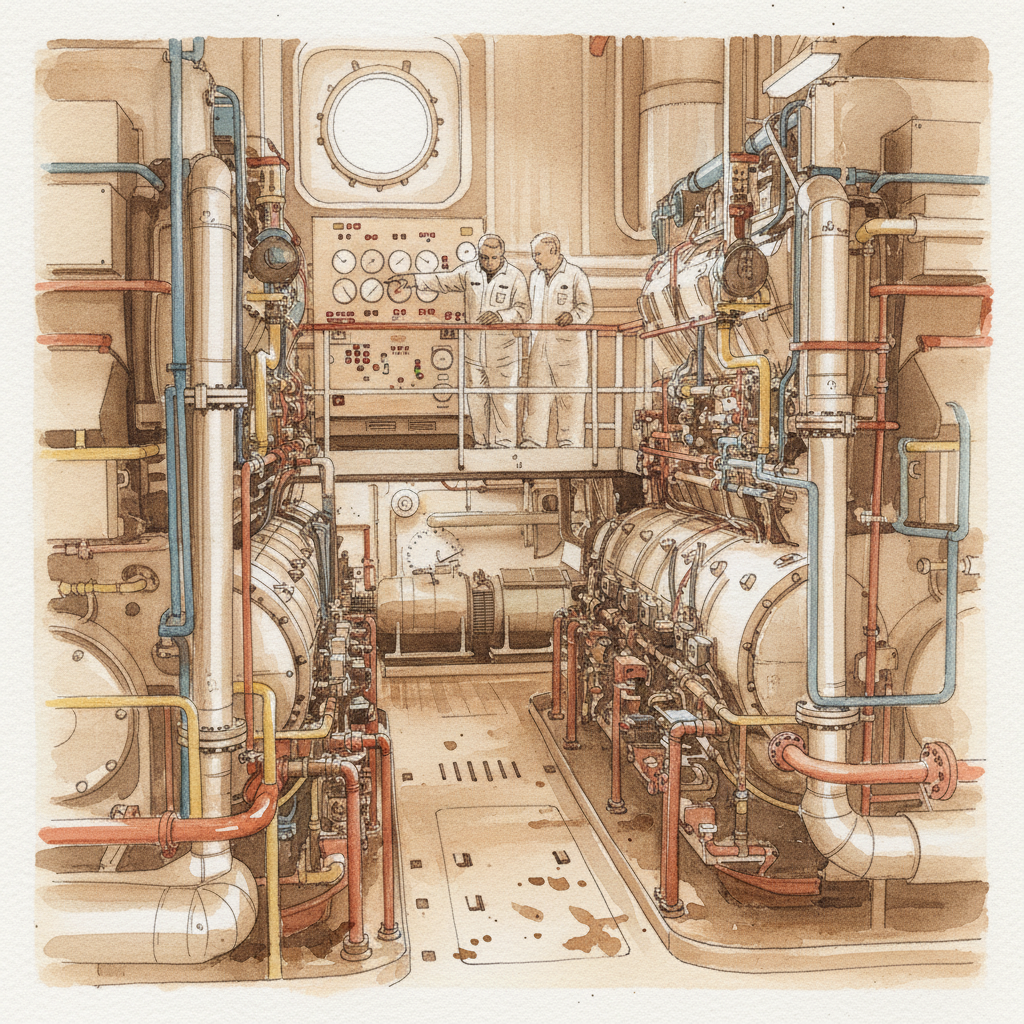
Piece 4 — Cruise Ship Engine Room
Pen + Watercolor · Loose pen and watercolor line-and-wash
Three takes
Focus for this piece
Today's subject is perfect for practicing how to manage extreme visual complexity using varied line weight and strategic washes for depth. Use strong, firm lines for the immediate 'massive diesel engines' and 'catwalks', while suggesting the 'hundreds of gauges and screens' with lighter, broken pen strokes. Experiment with how subtle shifts in wash temperature, like a hint of warm ochre in the background, can suggest the engine room's palpable heat against the cool 'stainless steel'.
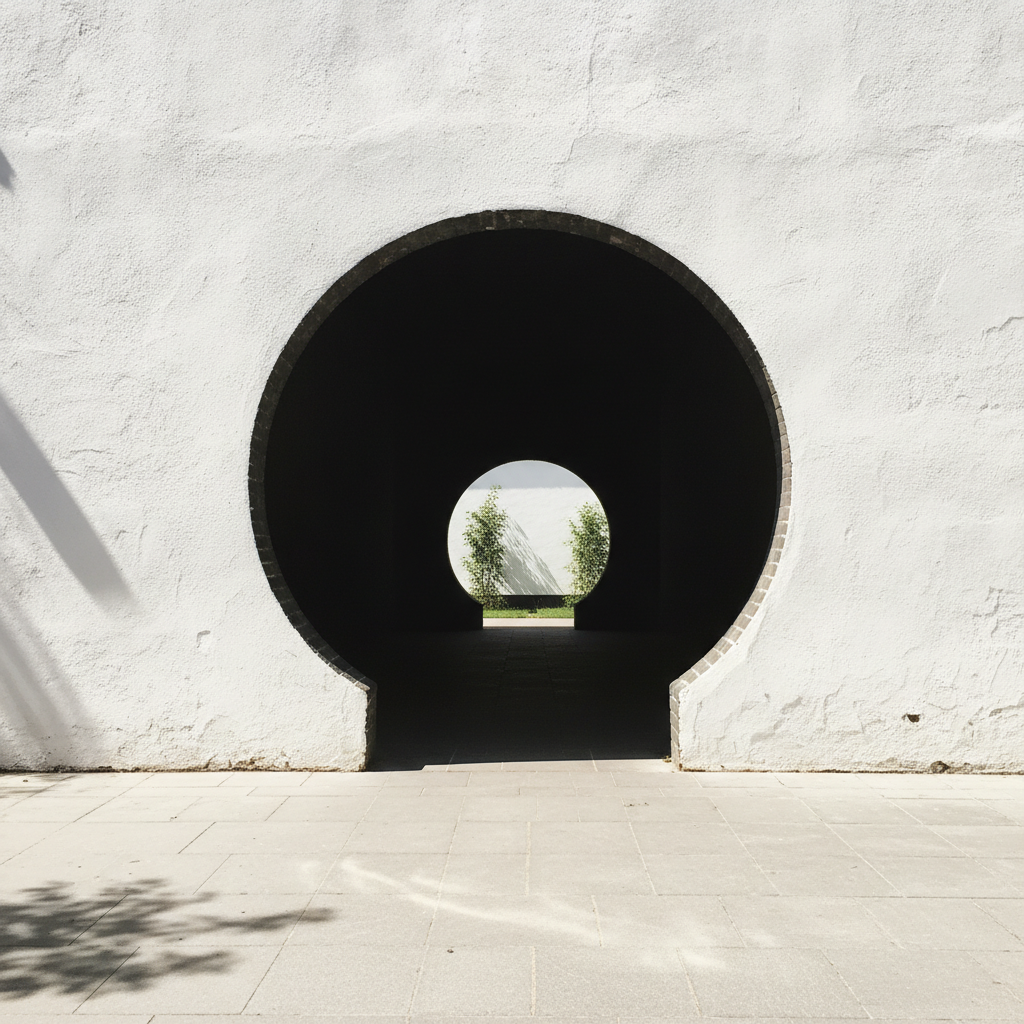
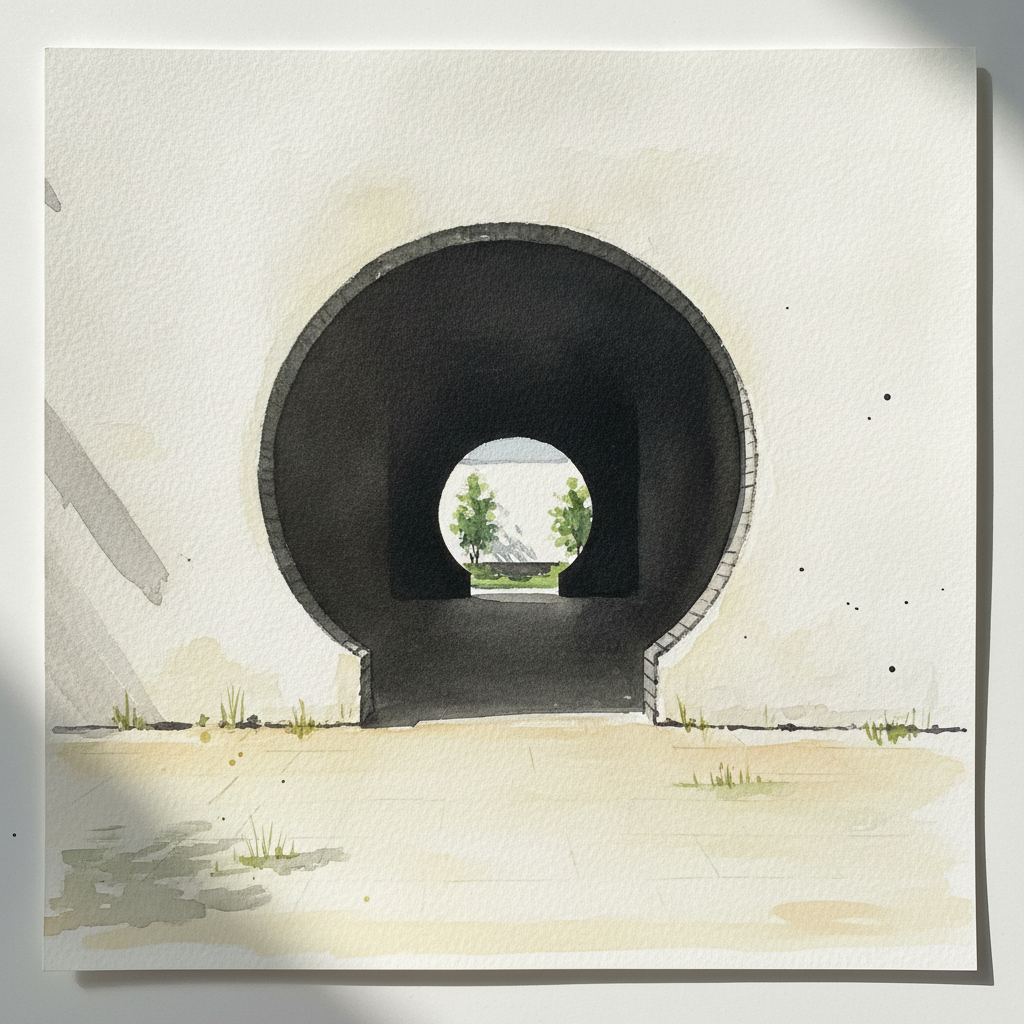
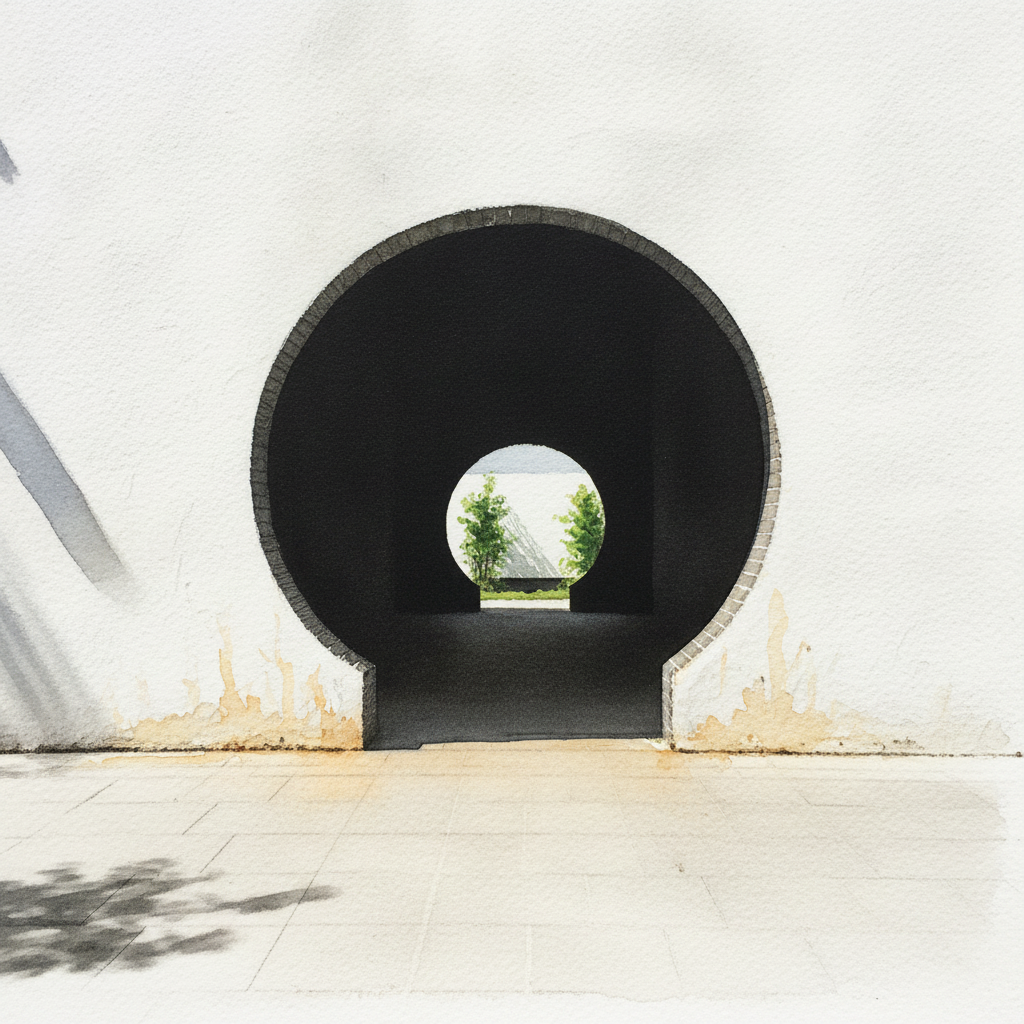
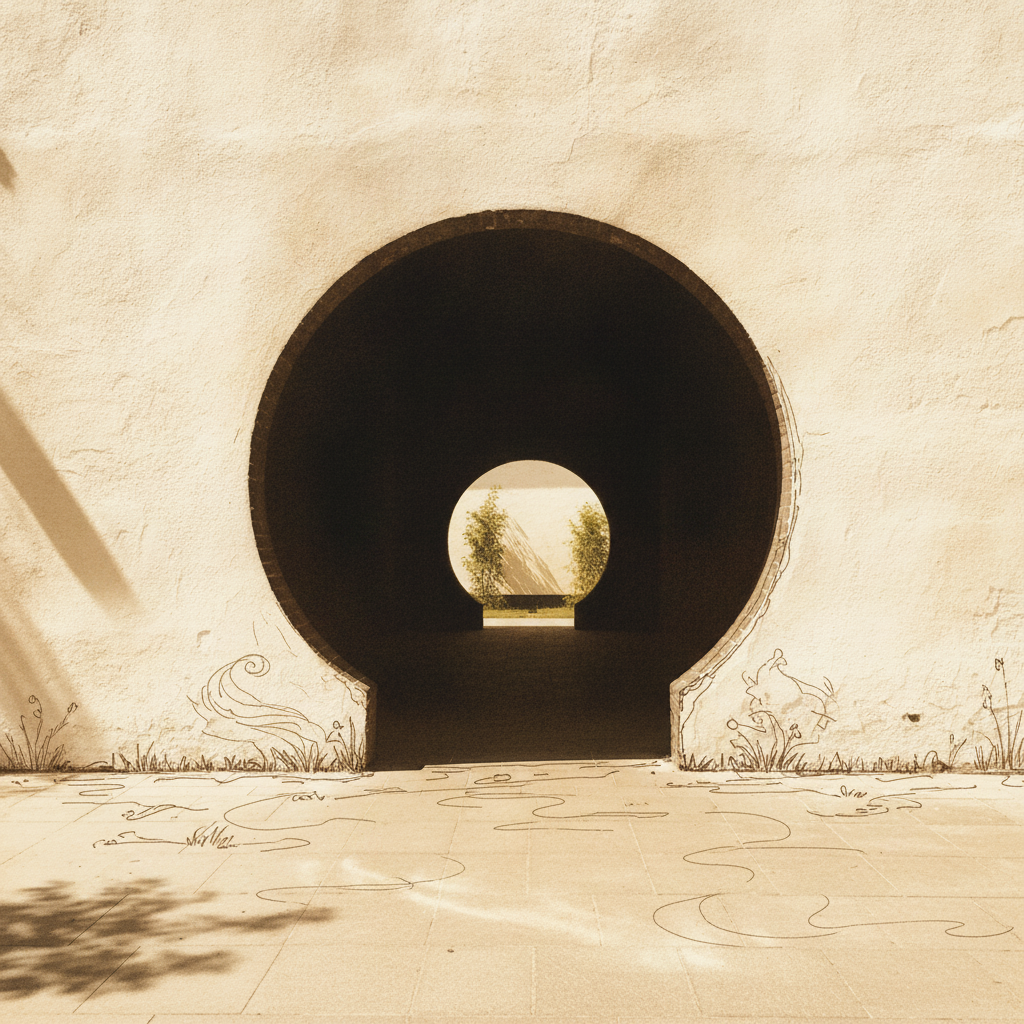
Piece 5 — Mid-summer afternoon, the gate as a black silhouette
Pen + Watercolor · Loose pen and watercolor line-and-wash
Three takes
Focus for this piece
This piece offers an excellent opportunity to study **extreme value contrast** and **suggesting subtle detail within deep shadow**. Focus on defining the moon gate's **circular silhouette** with a **crisp, medium-weight pen line**, then filling its interior with a **rich, layered wash** of your darkest pigment (e.g., Indigo or Payne's Gray mixed with Burnt Sienna) applied with a **full, soft brush** to achieve a velvety, near-absolute black. Against this, practice **preserving the paper's brilliant white** for the sun-bleached outer wall, using only a very **light, dry-brush wash** of Yellow Ochre to suggest its vibrating texture and heat. Aim to subtly hint at the brick rim or distant greenery through the dark gate, without losing the intensity of the silhouette.
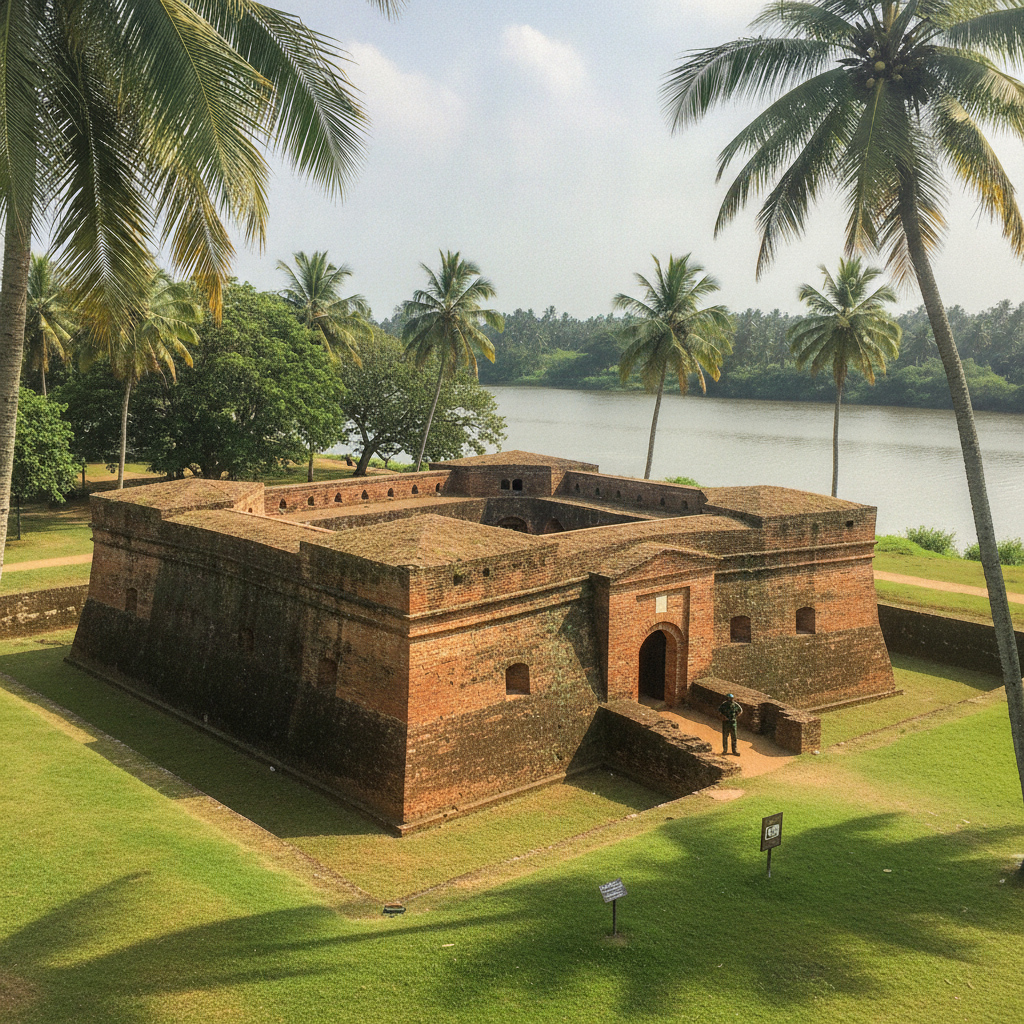
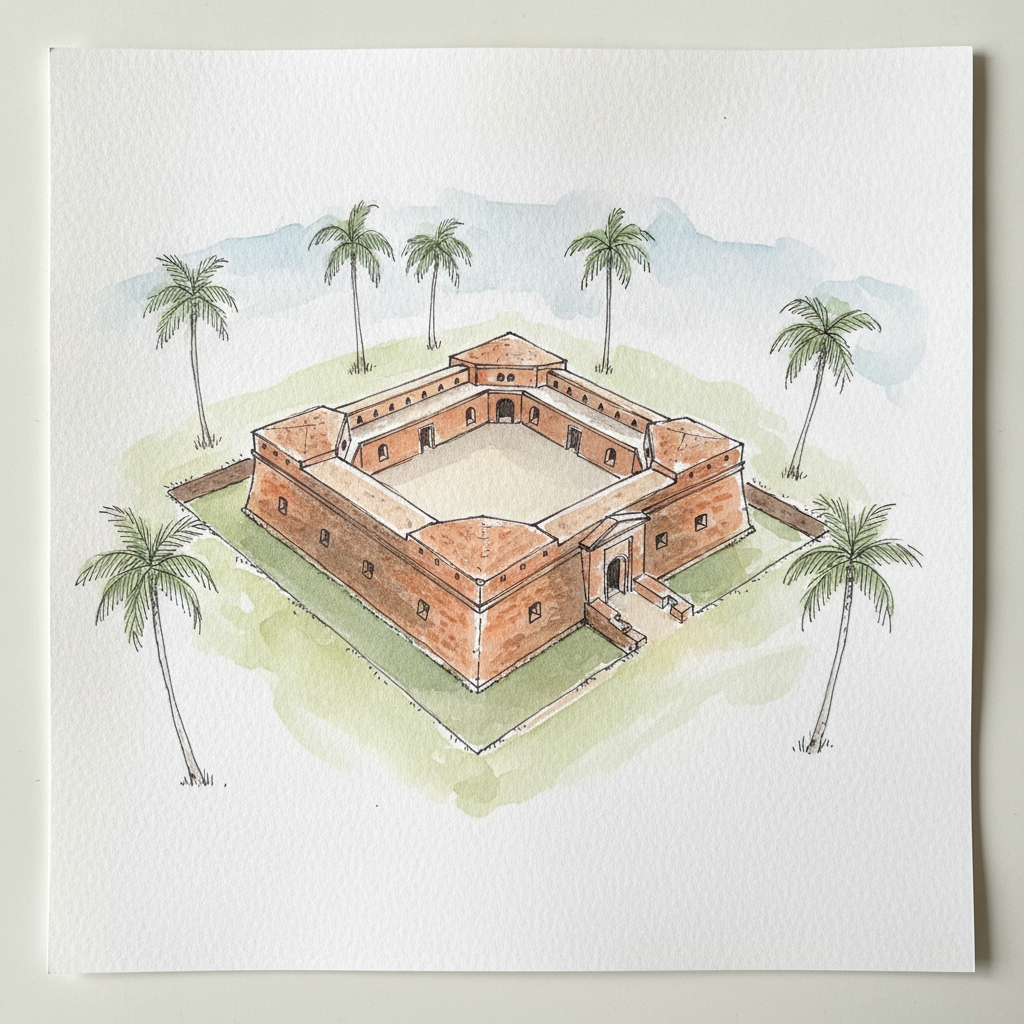
Piece 6 — Star Fort, Matara, Sri Lanka
Pen + Watercolor · Loose pen and watercolor line-and-wash
Three takes
Focus for this piece
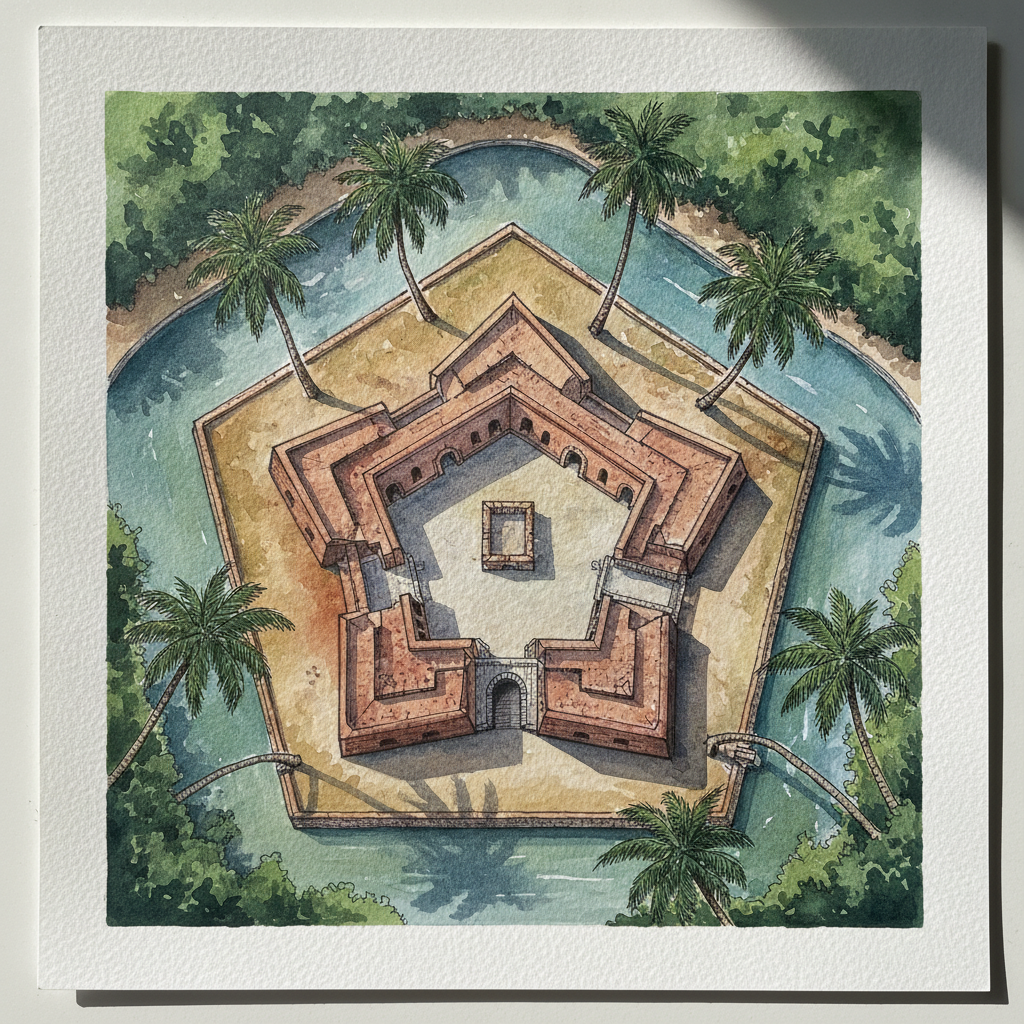
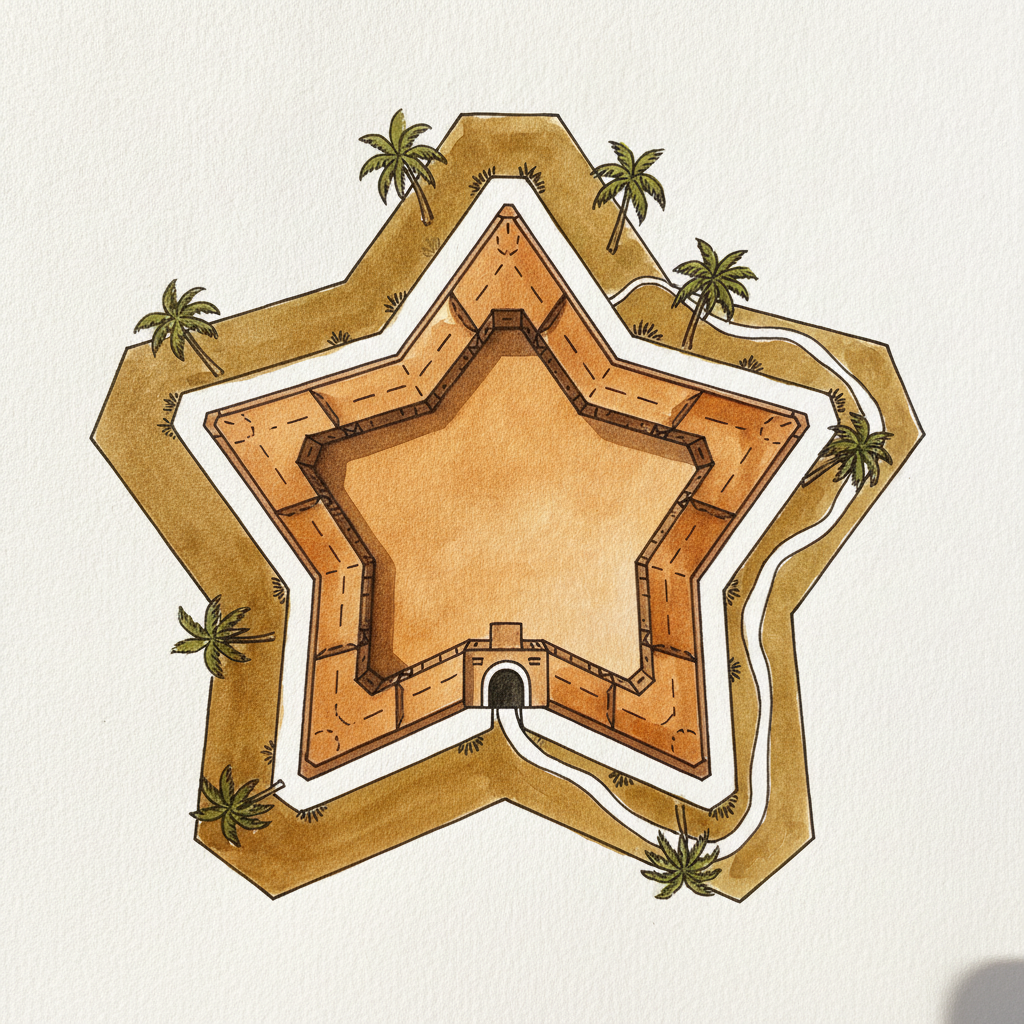
This piece offers a compelling study in contrasting rigid architectural geometry with organic elements. Focus on using precise, varied line weights to articulate the fort's distinct six bastions and ravelin, emphasizing the hard edges and specific textures of the brick and coral walls. Then, leverage the fluidity of watercolor with loose, expressive washes for the surrounding coconut palms and river, allowing soft edges and atmospheric color to frame the fort and create depth.
Piece 7 — Valencia orange grove, Spain
Pen + Watercolor · Loose pen and watercolor line-and-wash
Three takes
Focus for this piece
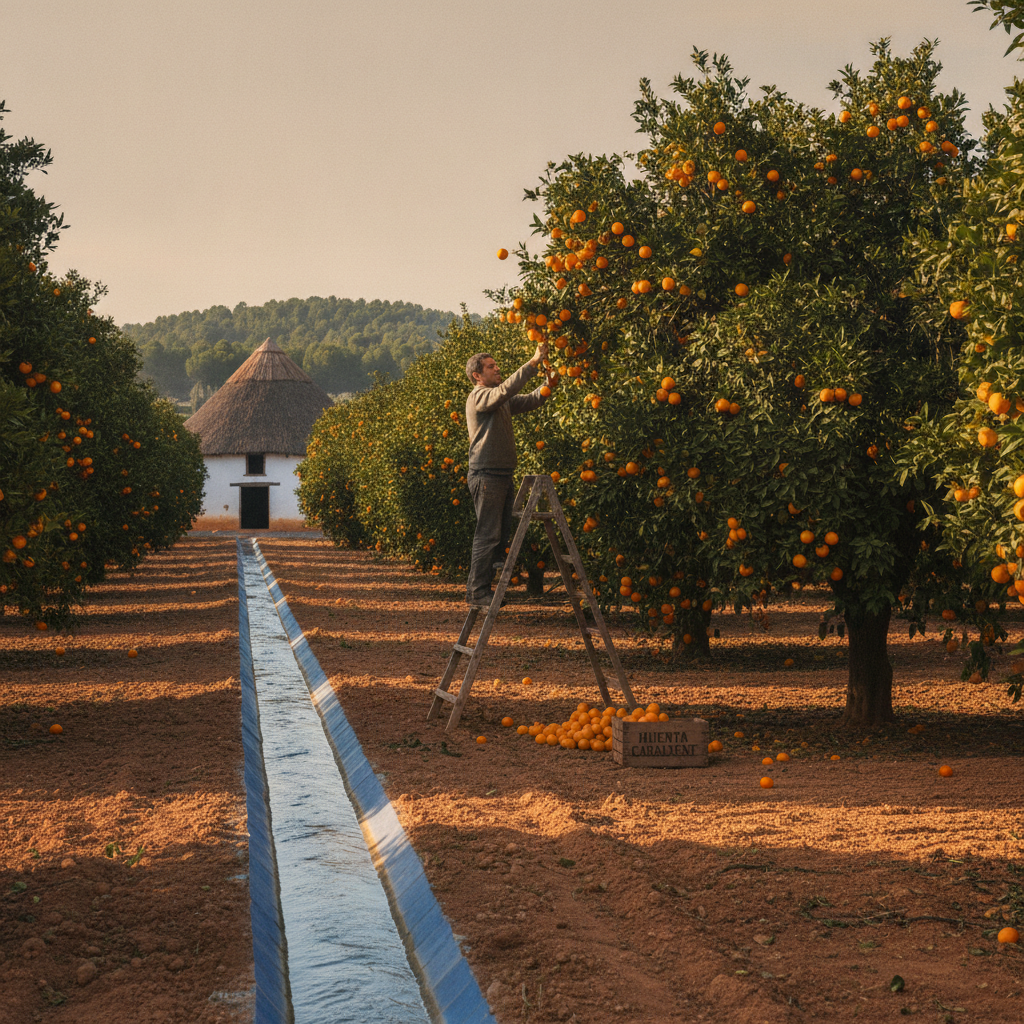
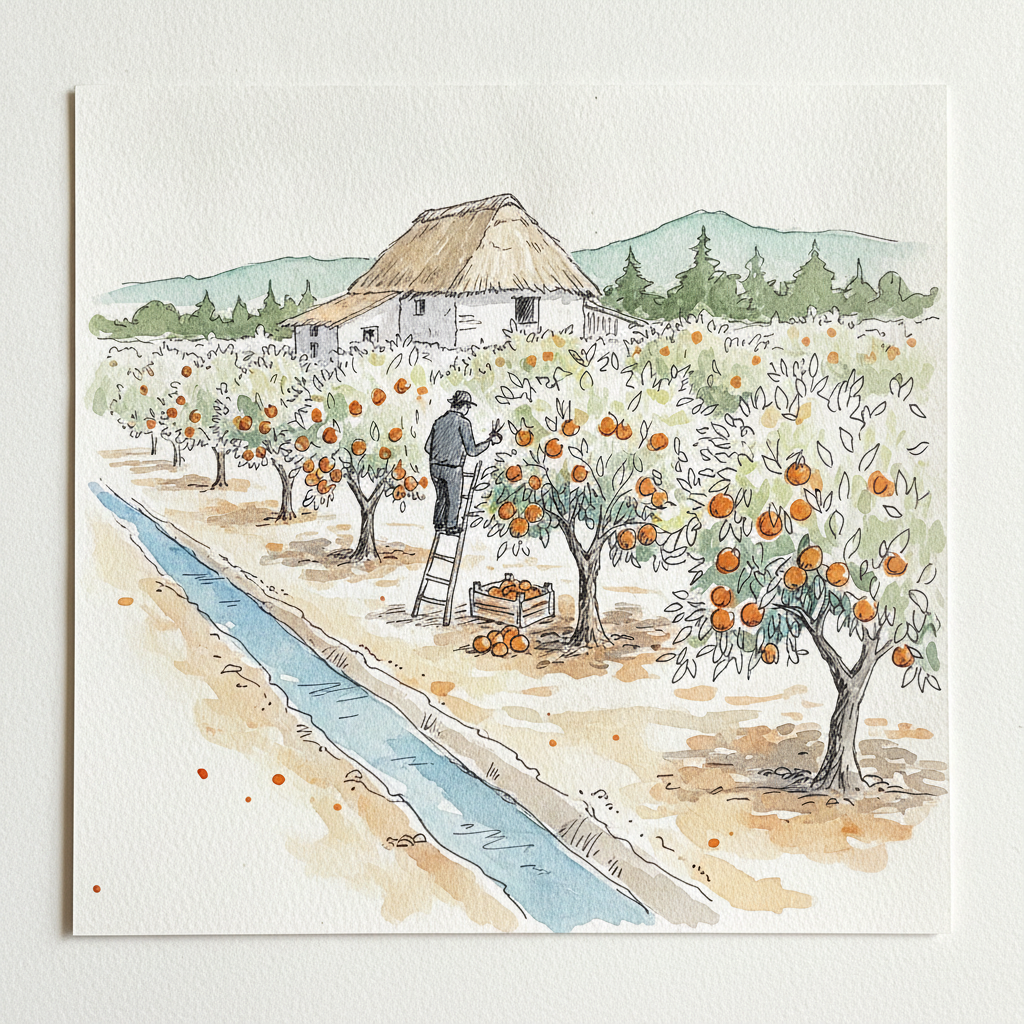
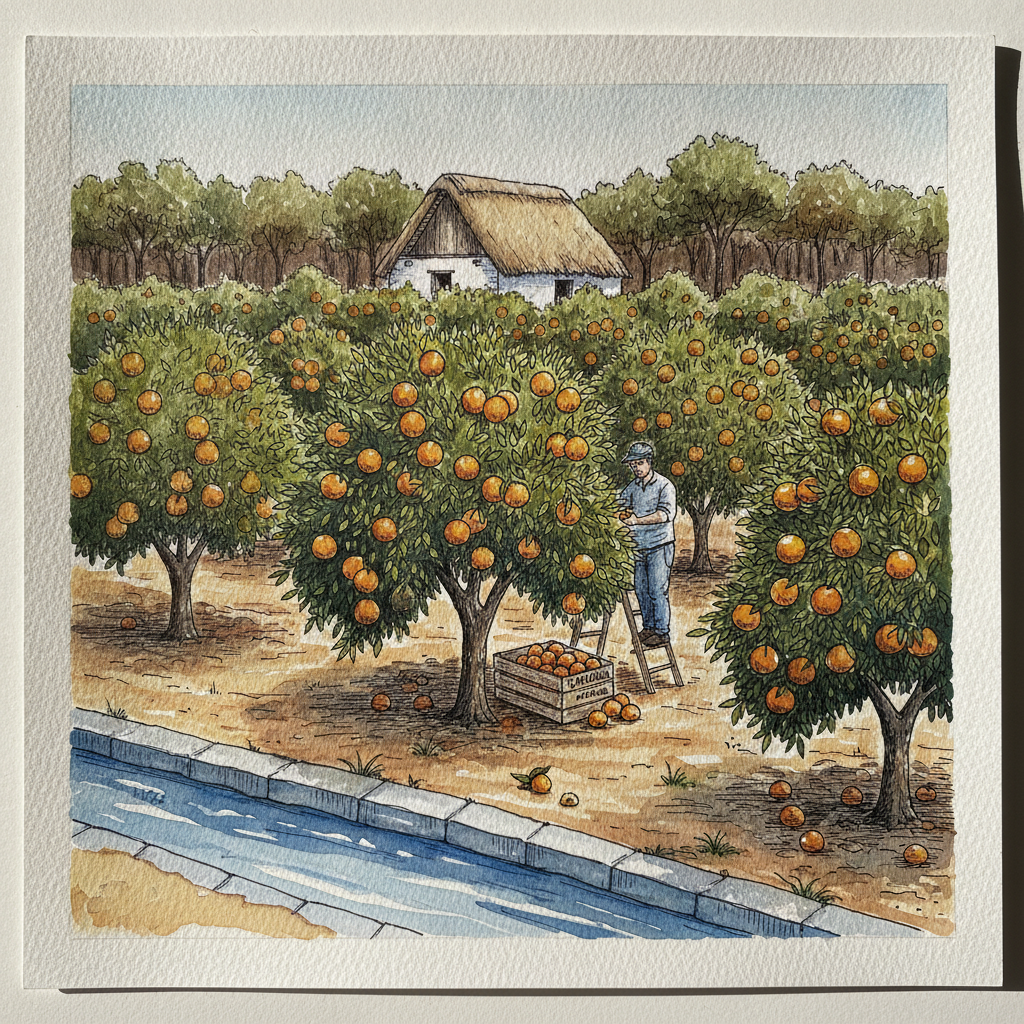
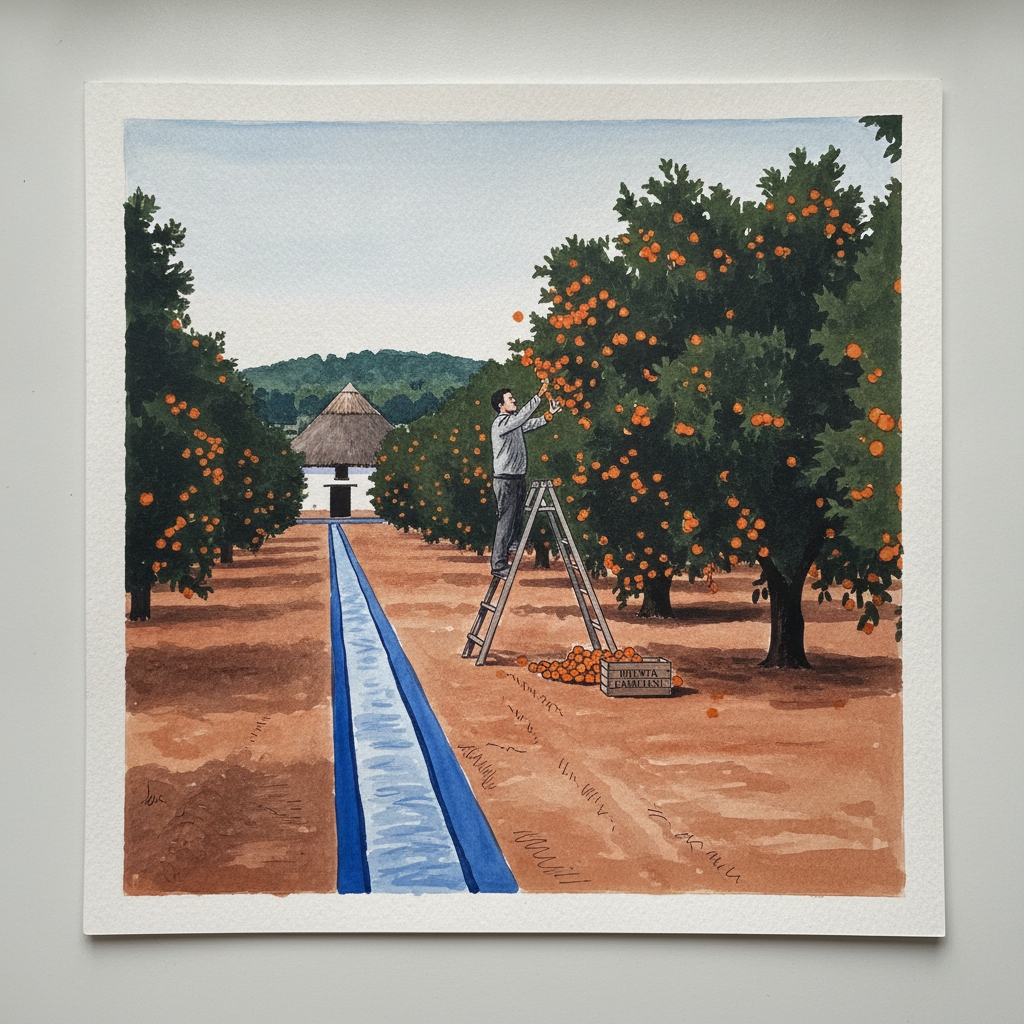
This piece offers a great study in using complementary colors and varying ink-to-wash relationships to create depth. Use strong, varied ink lines to delineate the crisp azulejo channel and the distant barraca, employing vibrant blue and warm orange washes in the foreground for contrast. For the orange trees, focus on layering rich green washes over lighter pen work, allowing the juicy oranges to pop, while using softer, muted washes and less detail for the background ridge to enhance atmospheric perspective. Pay attention to how the late afternoon light rakes across the forms, creating strong tonal variations.
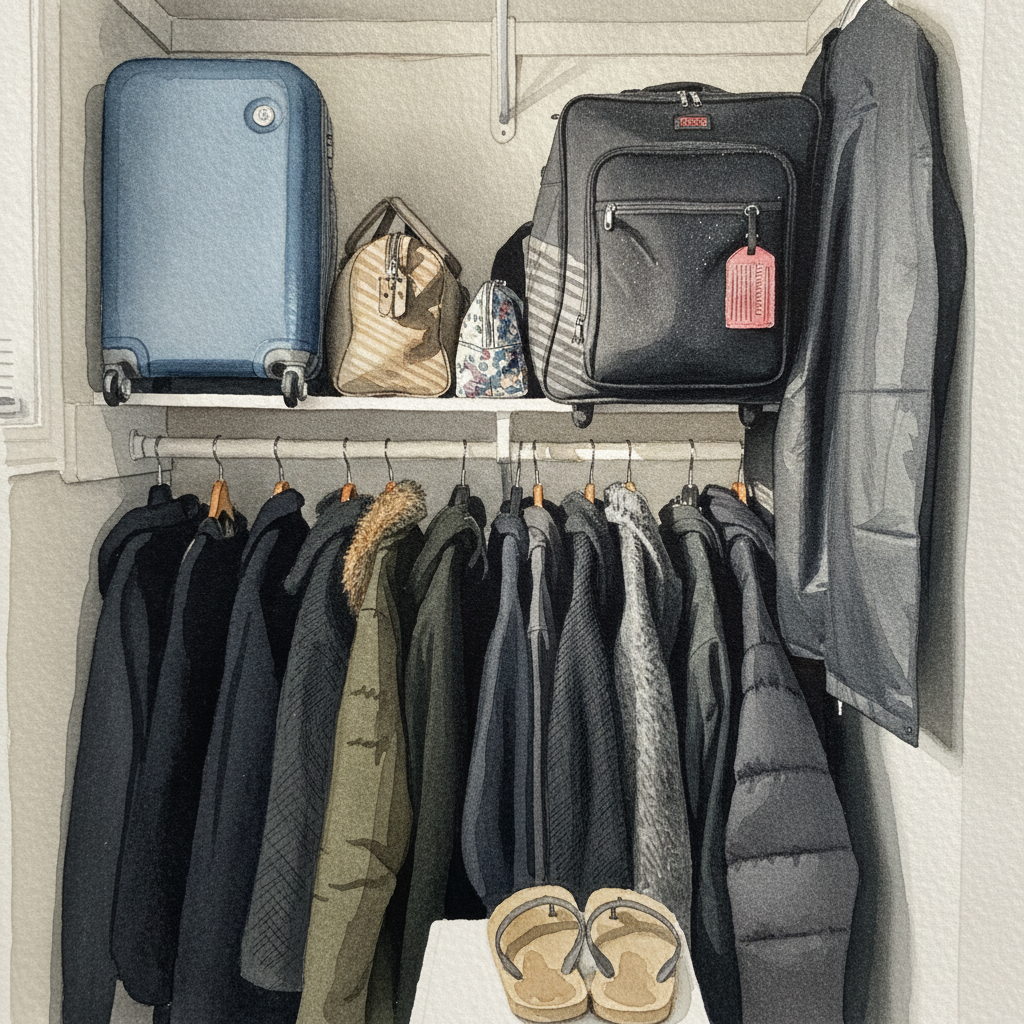
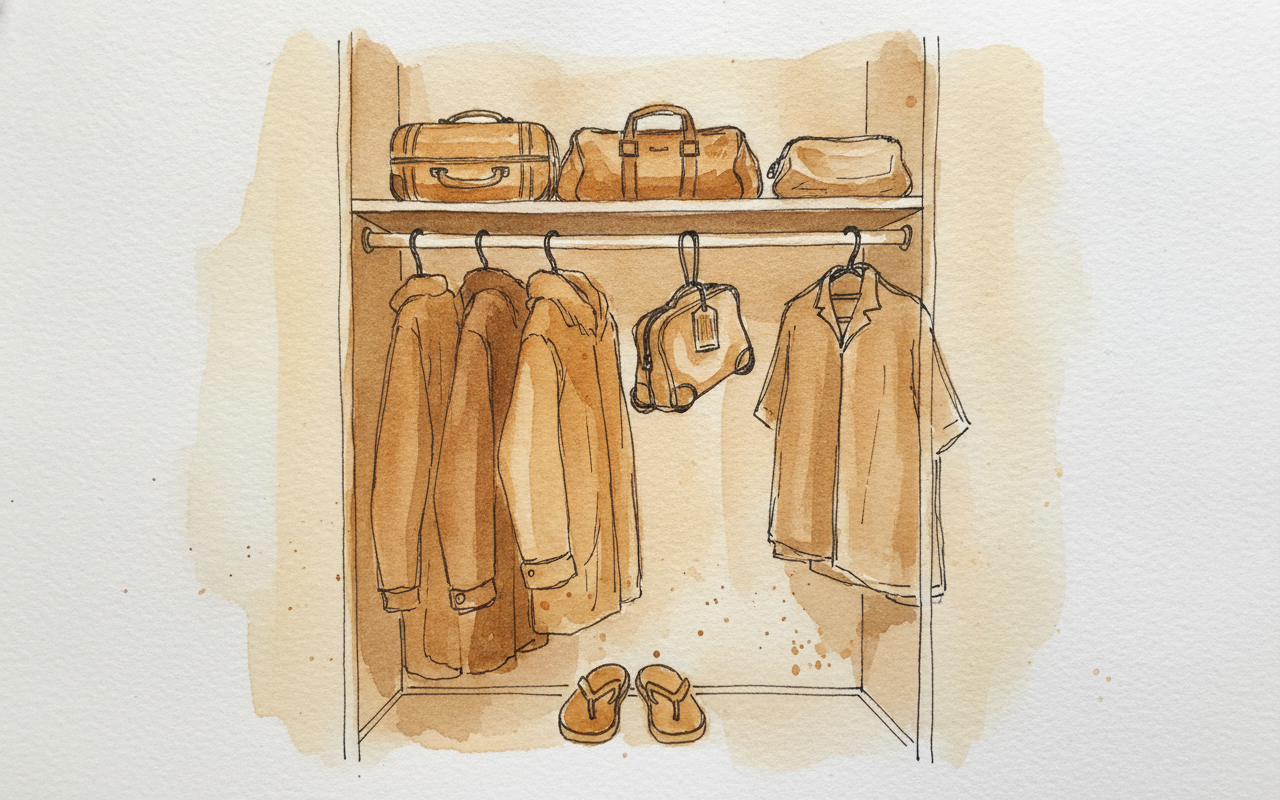
Piece 8 — Closet with luggage on shelf
Pen + Watercolor · Loose pen and watercolor line-and-wash
Three takes
Focus for this piece
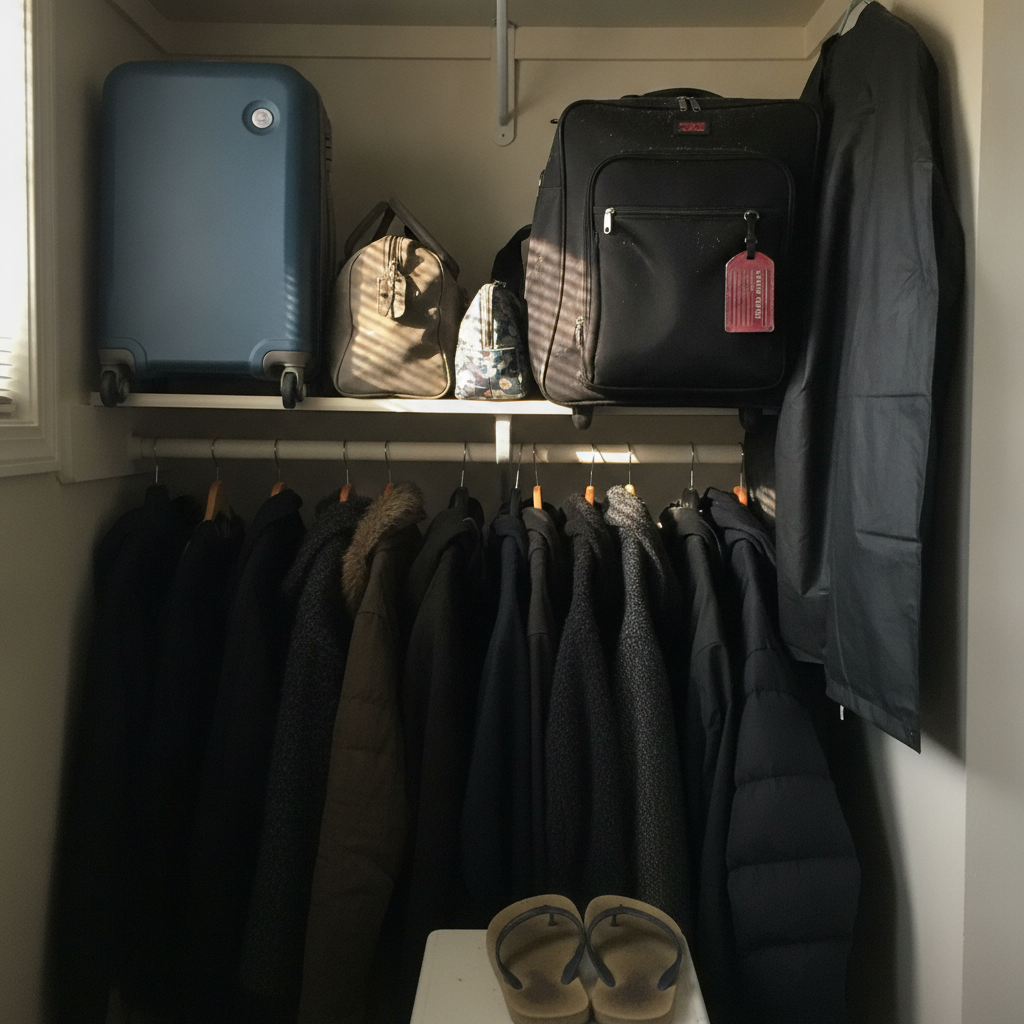
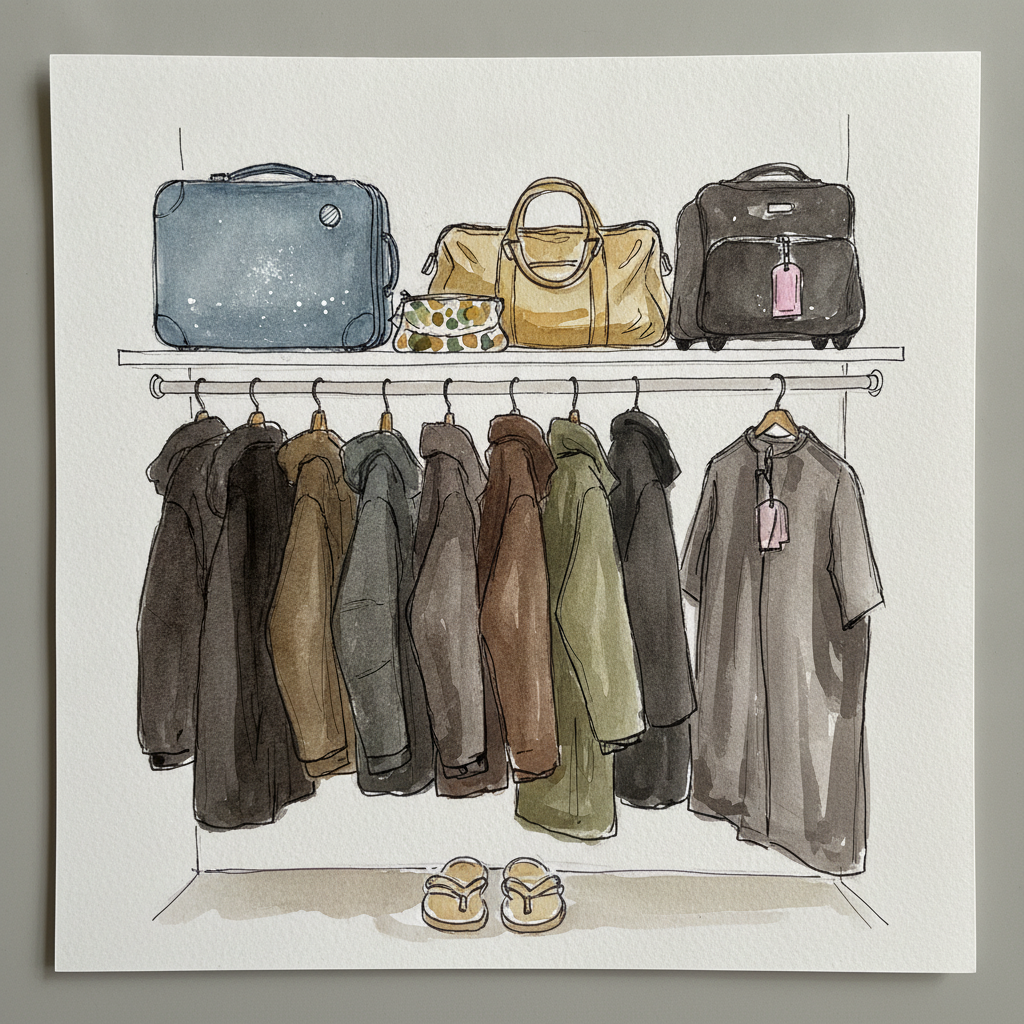
This piece offers an excellent opportunity to practice differentiating varied textures and materials through deliberate line work and watercolor washes. Use crisp, firm lines and precise washes for the hardshell carry-on and hard edges of the roller bag, contrasting with lighter, broken lines and soft, diffused wet-on-wet washes for the duffel bag and draping garment bag. Pay close attention to how the closet light illuminates the forms, especially how a thin dry-brush application of light wash can suggest the dust film on the largest case, enhancing its volume and surface quality.