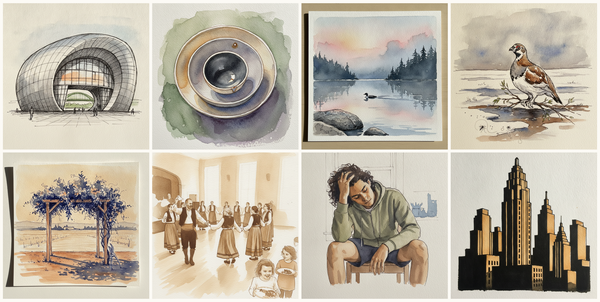
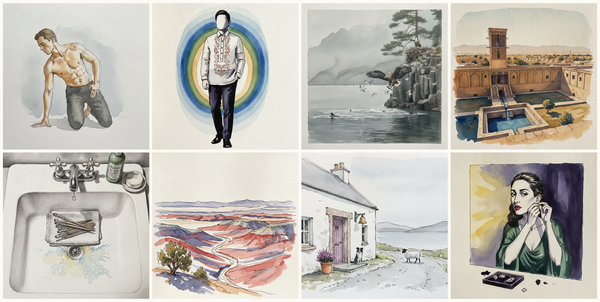
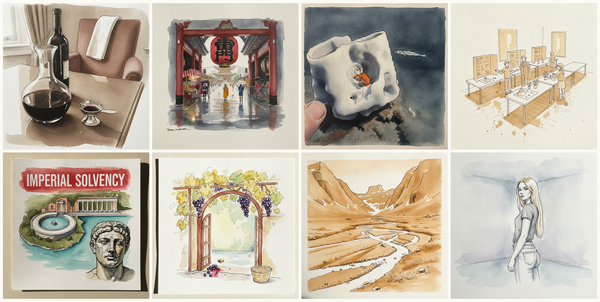
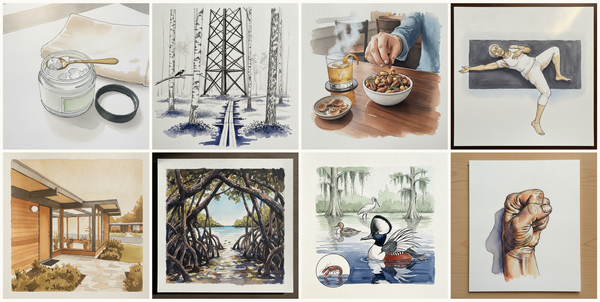
Kizhi Pogost Bell Tower, Kizhi Island, Russia, Skeleton clock under dome, Wildlife biologist with tags, Studio floor, butterfly knees, arms wide, and more — pen + watercolor for June 10, 2026
Today's pen-and-watercolor pieces: Kizhi Pogost Bell Tower, Kizhi Island, Russia, Skeleton clock under dome, Wildlife biologist with tags, Studio floor, butterfly knees, arms wide, Western jack-o-lantern, American Falls and Maid of the Mist at boat level, Wisteria arch in a town park with passing…
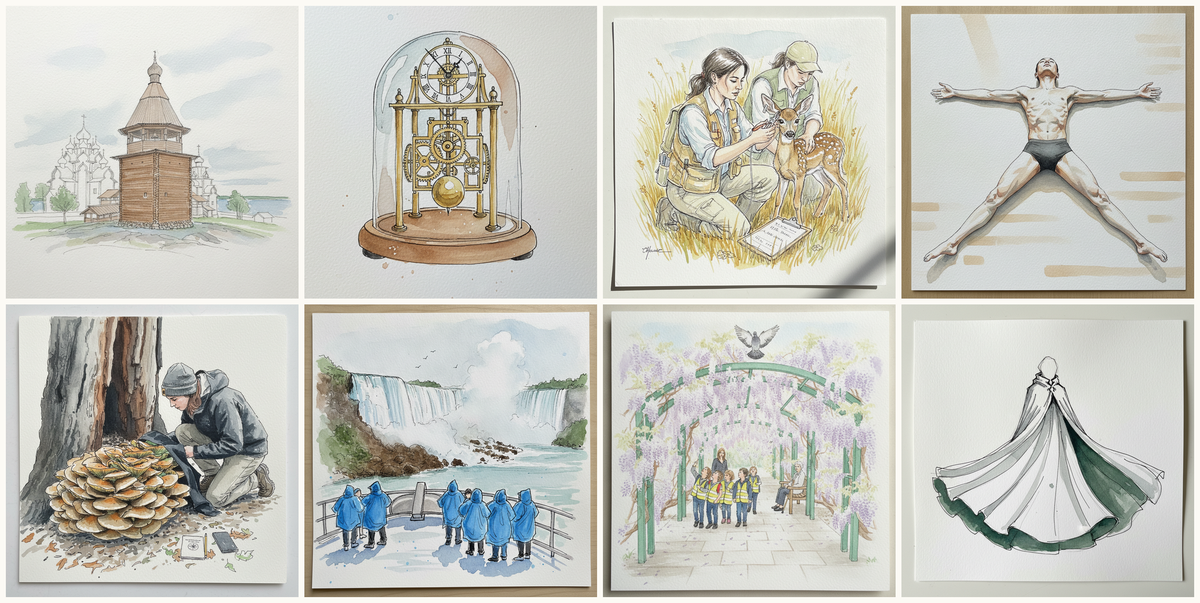
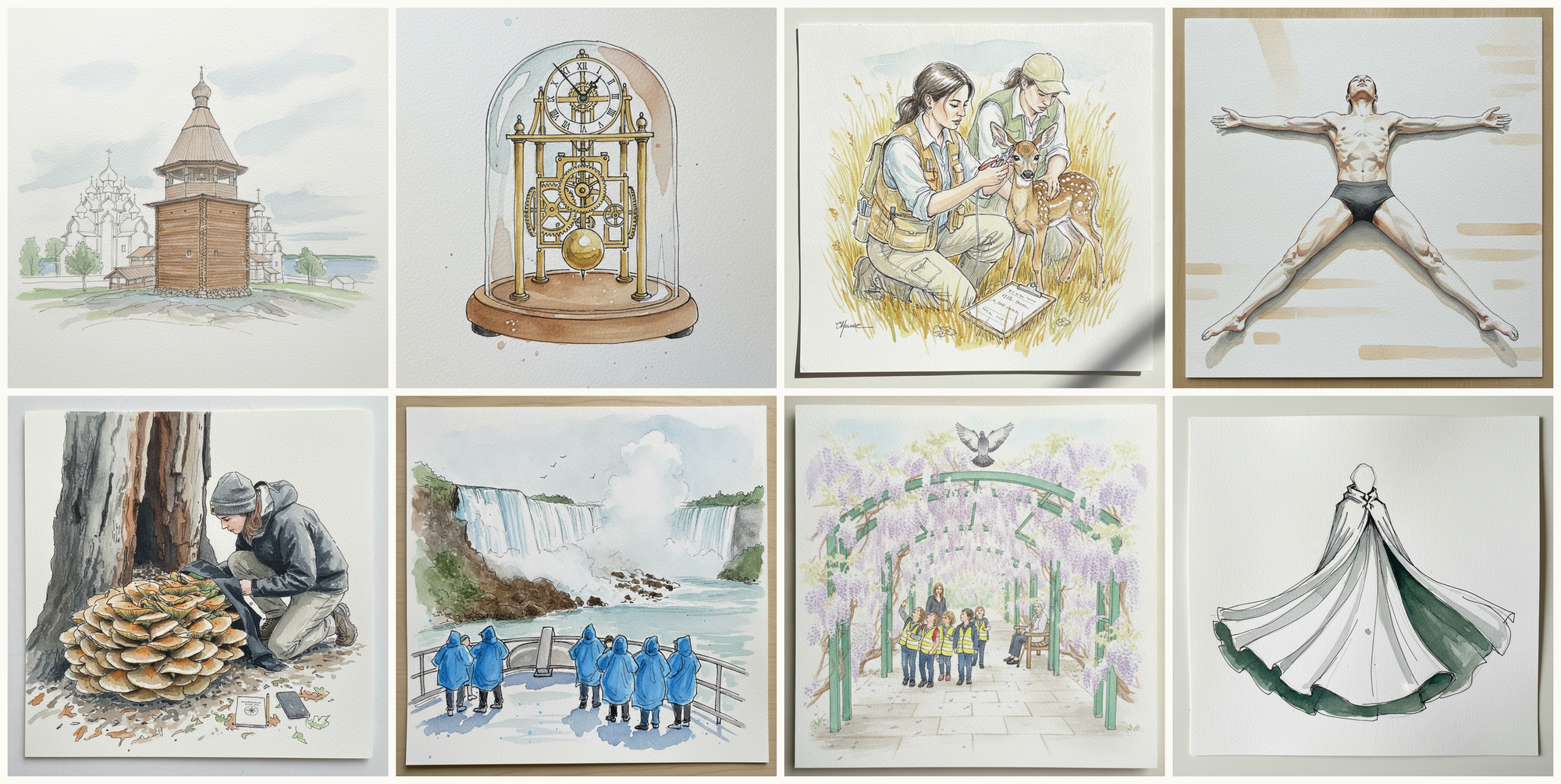
Today's 8 pen-and-watercolor pieces: Kizhi Pogost Bell Tower, Kizhi Island, Russia, Skeleton clock under dome, Wildlife biologist with tags, Studio floor, butterfly knees, arms wide, Western jack-o-lantern, American Falls and Maid of the Mist at boat level, Wisteria arch in a town park with passing schoolchildren, Cloak swirling around a figure. Each piece comes with a photo reference, three example artworks in different treatments, and a short focus paragraph naming what to study in this one.
Piece 1 — Kizhi Pogost Bell Tower, Kizhi Island, Russia
Pen + Watercolor · Loose pen and watercolor line-and-wash
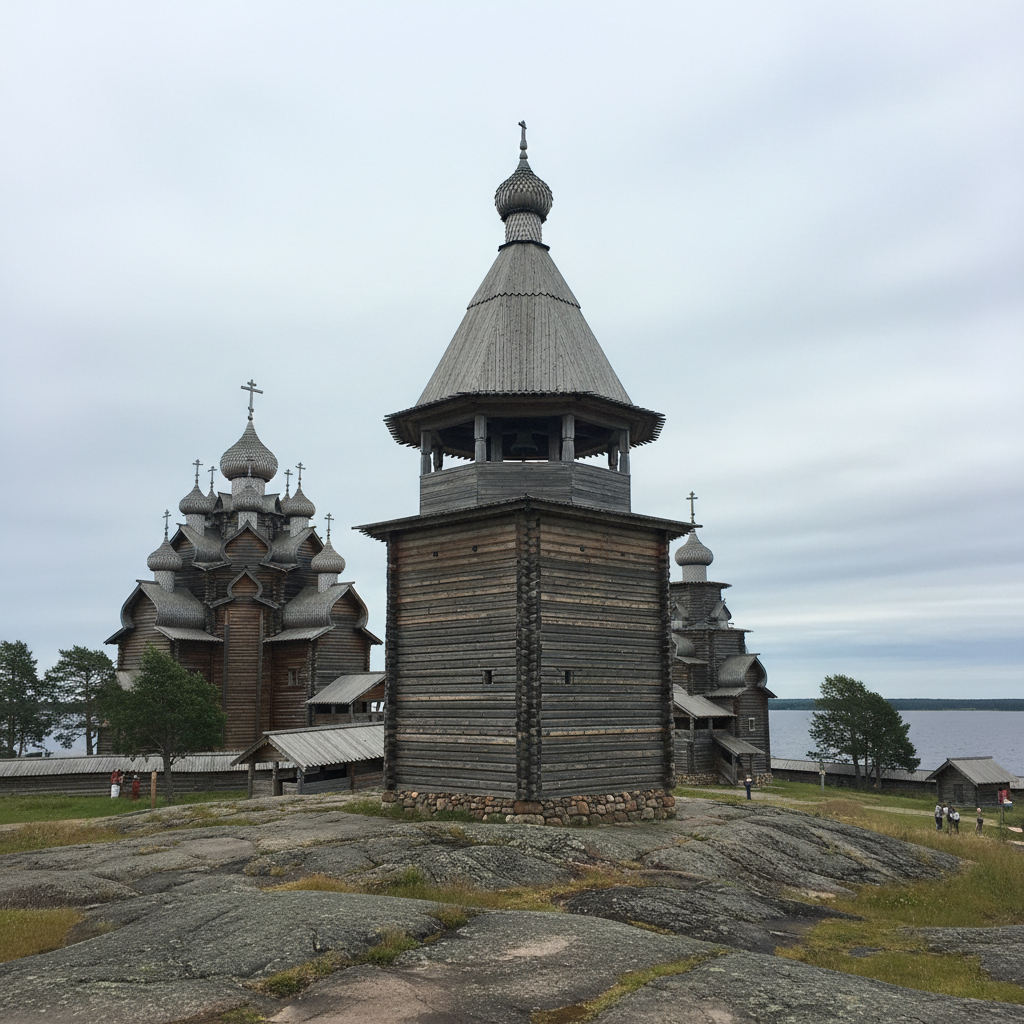
Three takes
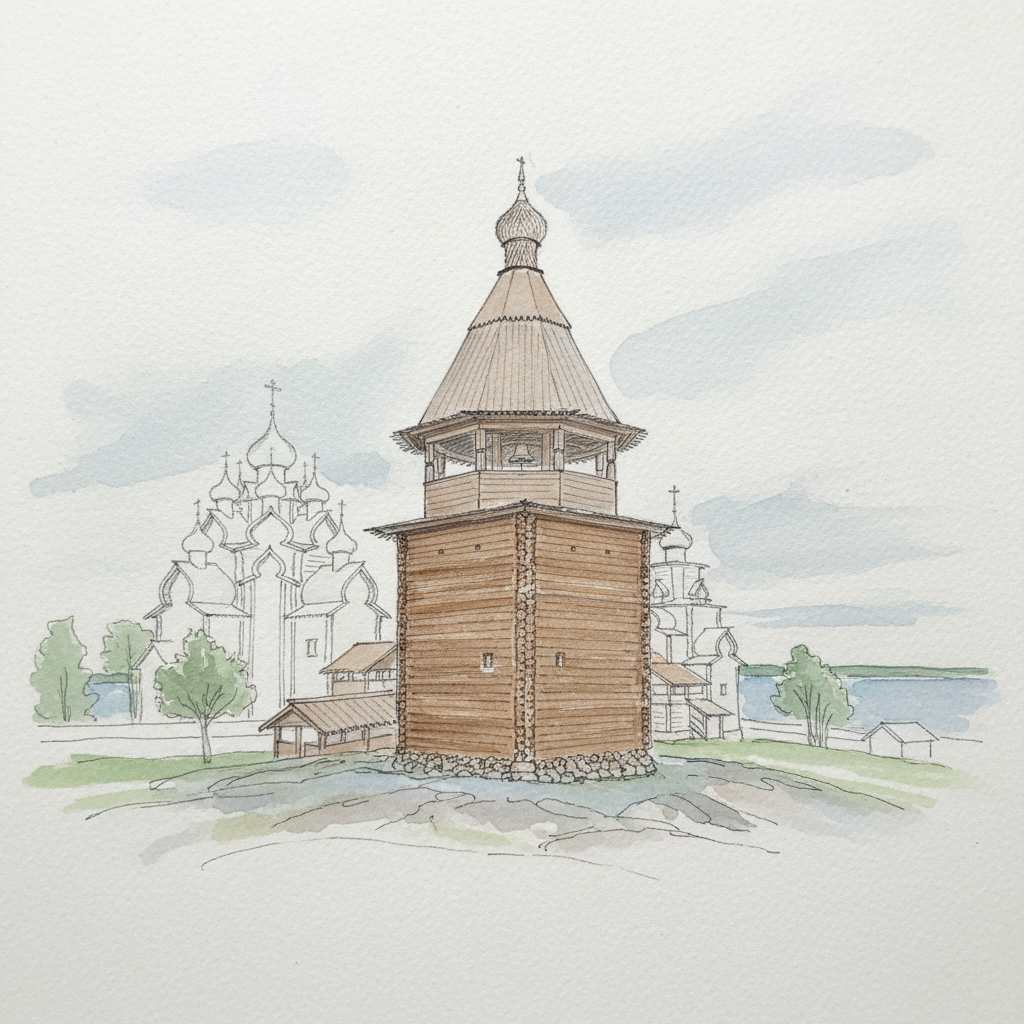
Focus for this piece
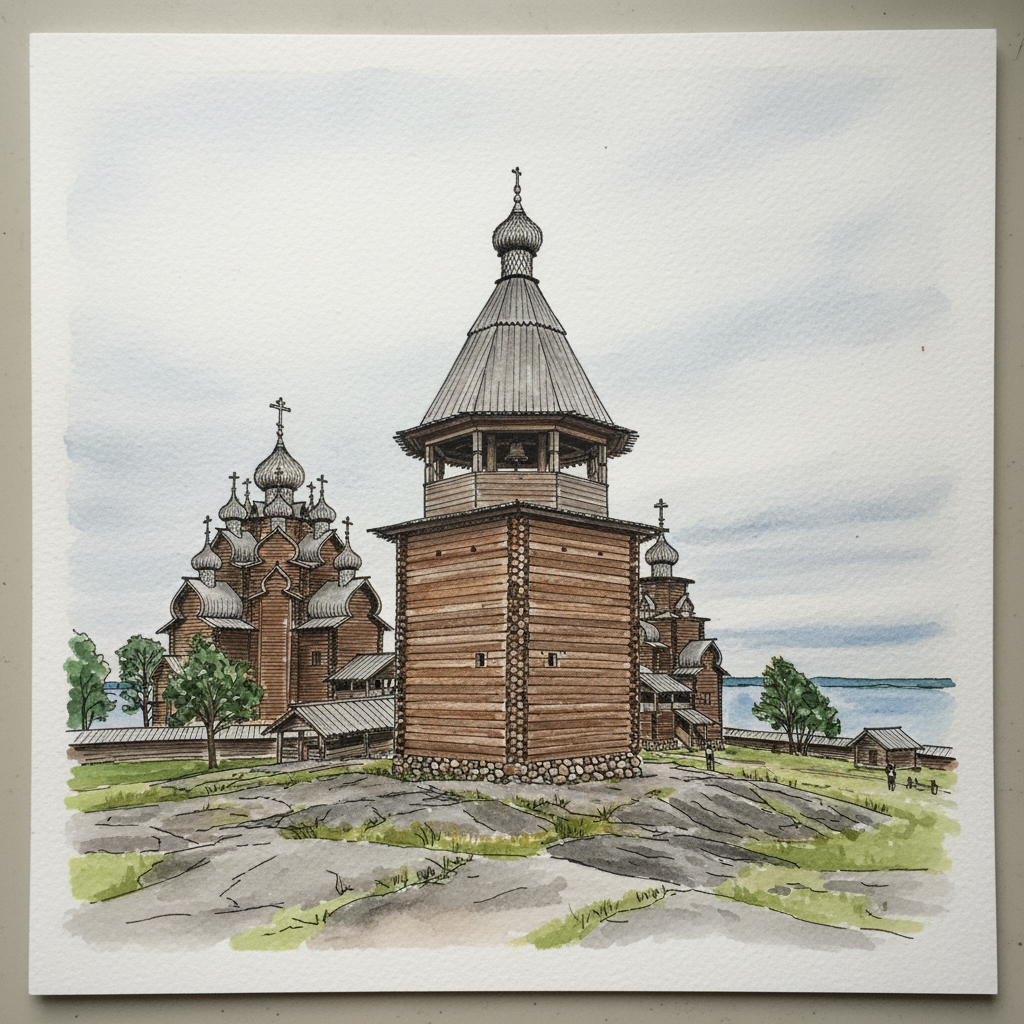
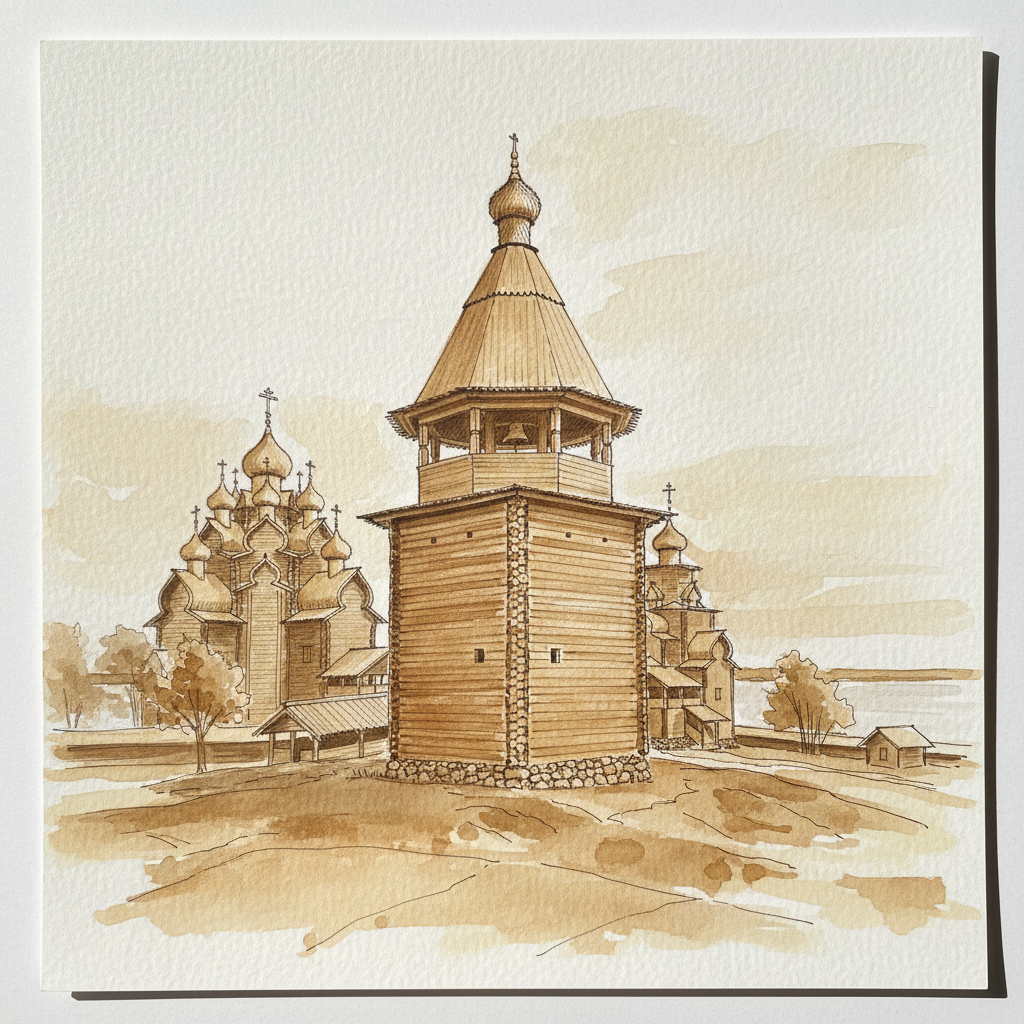
The Kizhi Bell Tower is an excellent study in rendering complex **geometric forms** and their transitions using varied pen pressure and line weight. Focus on delineating the tower's square base and octagonal upper stage with distinct, clean ink lines, employing heavier weights for primary structural edges and lighter, broken lines to suggest the wooden log texture and corner-notched joinery. Complement this linear precision with minimal, cool-toned washes to establish volume and shadow, ensuring the washes enhance rather than obscure the intricate ink work. This approach will highlight both the tower's architectural integrity and its rustic wooden character.
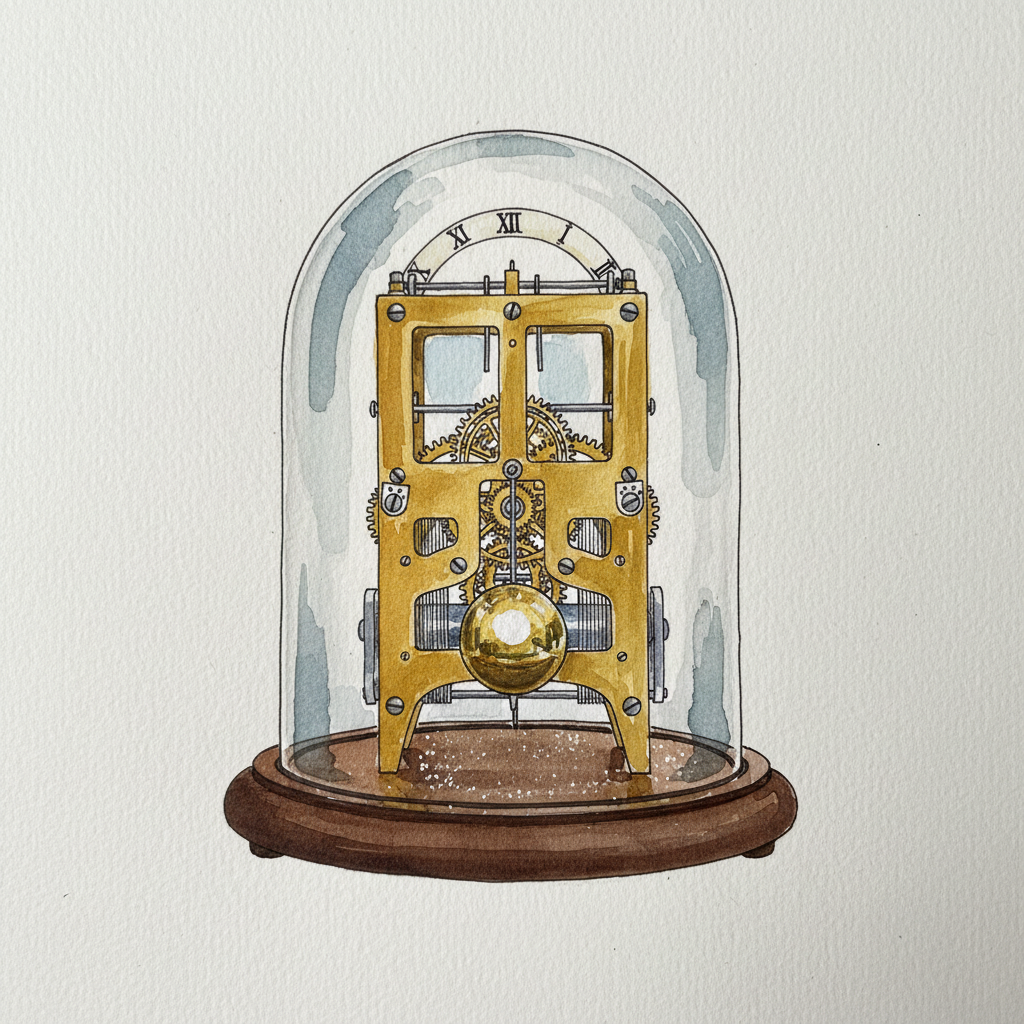
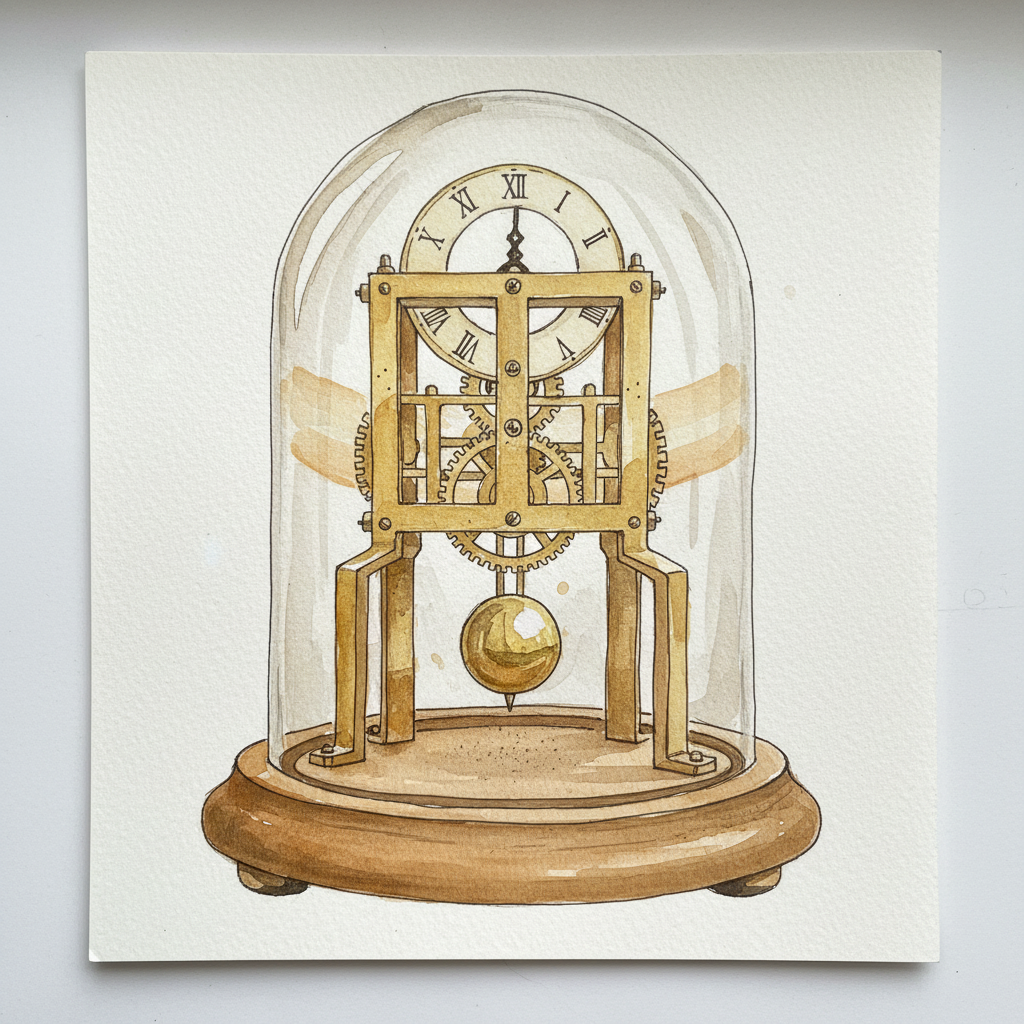
Piece 2 — Skeleton clock under dome
Pen + Watercolor · Loose pen and watercolor line-and-wash
Three takes
Focus for this piece
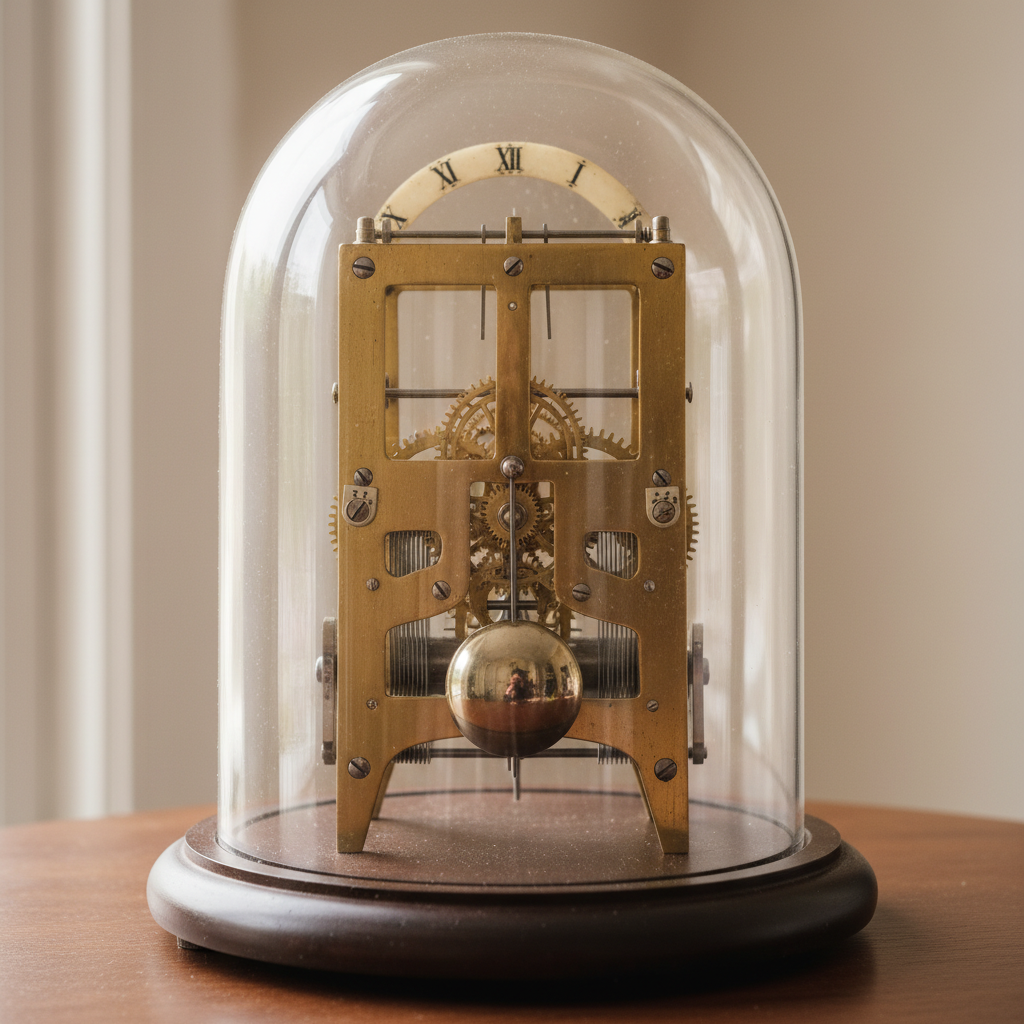
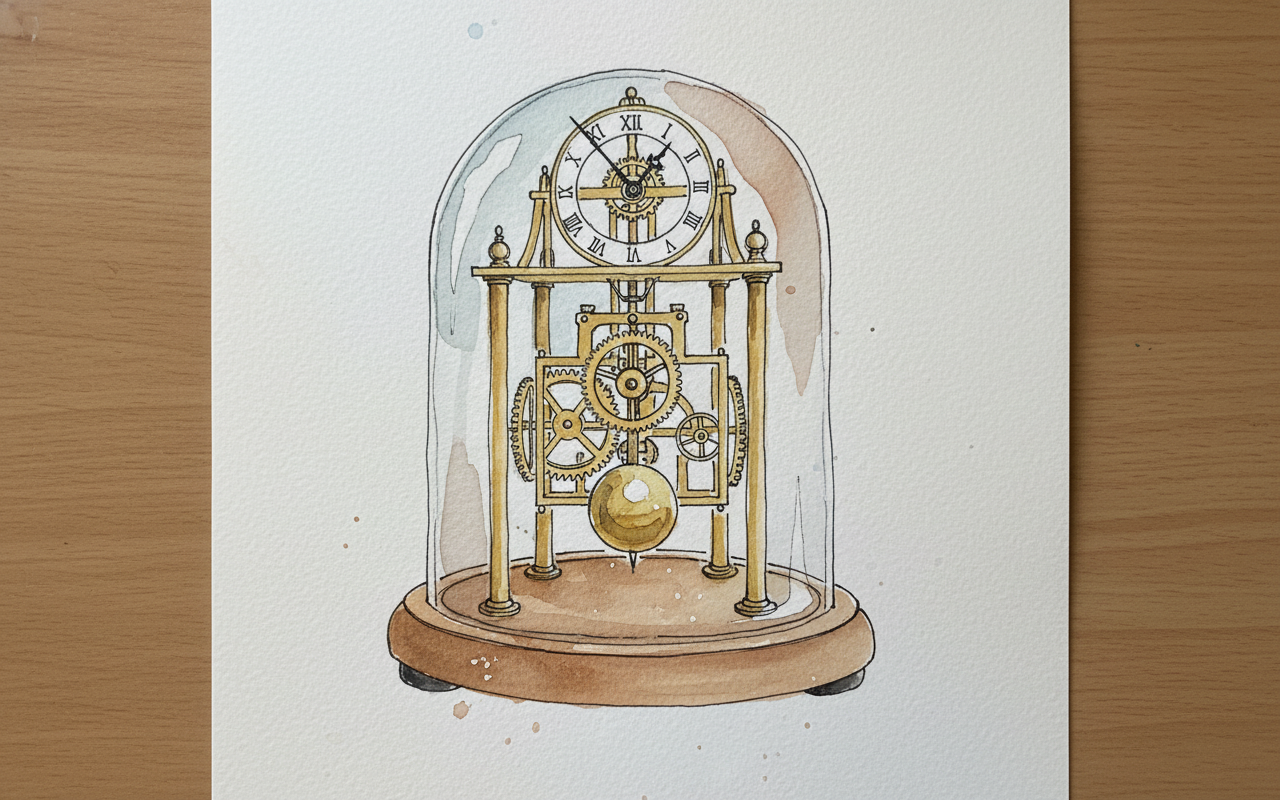
Today's piece offers an excellent study in rendering transparency and reflectivity. Focus on using varied line weights for the tall, curved glass dome: define its outer edge with a crisp, fine line, but suggest the interior's wavering, distorted reflections with minimal or implied lines. Use very dilute, cool washes—perhaps a mix of Payne's Grey and a touch of Cerulean—applied in careful layers to build the subtle values of the glass, leaving clean white paper for the spotlight's sharpest glare. This approach allows the intricate pen details of the clock mechanism to remain clear beneath the dome's atmospheric suggestion.
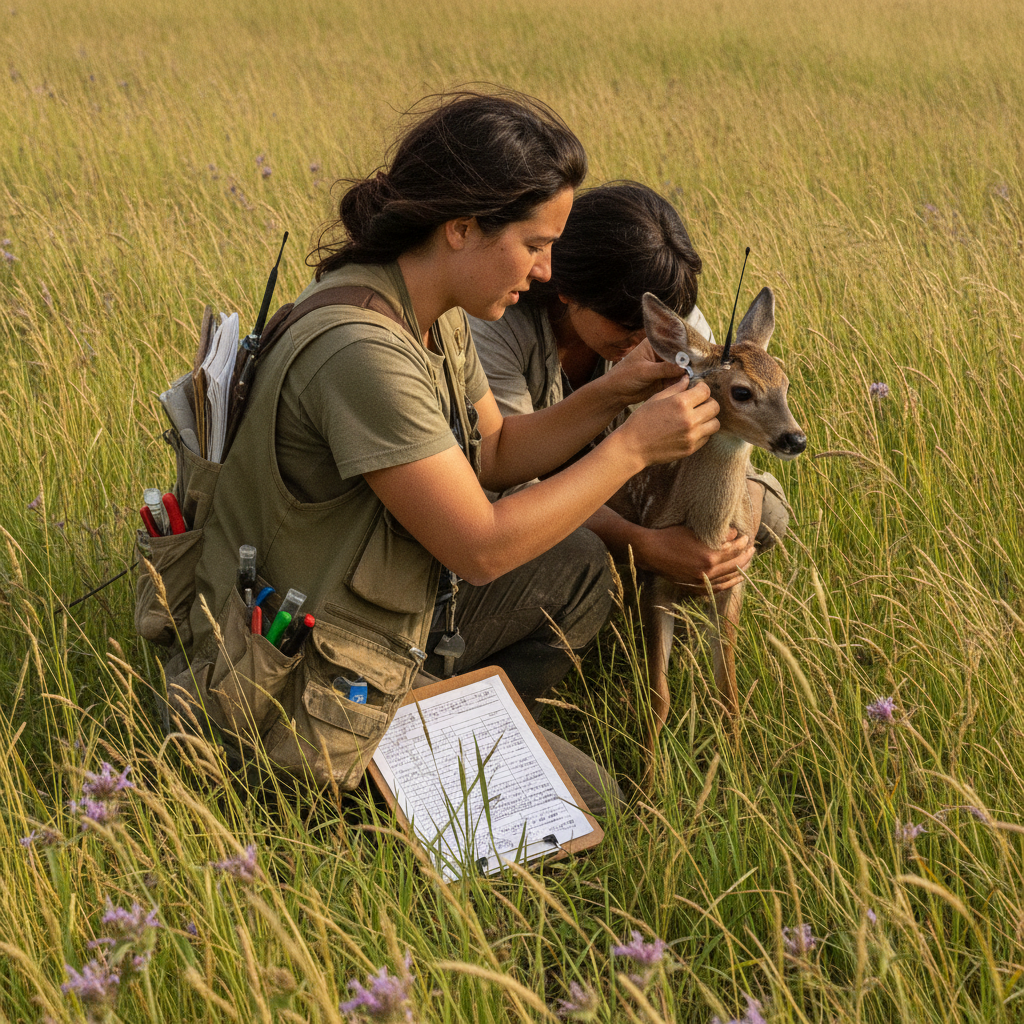
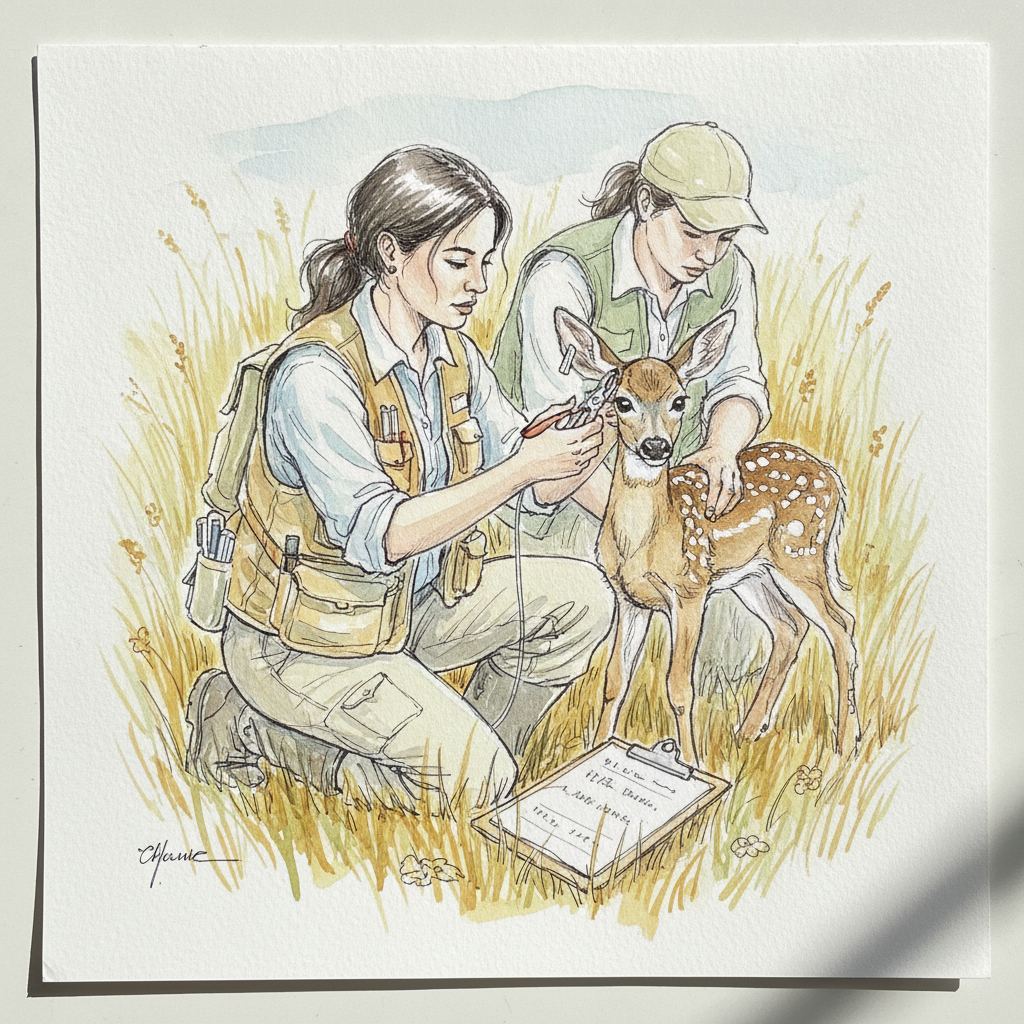
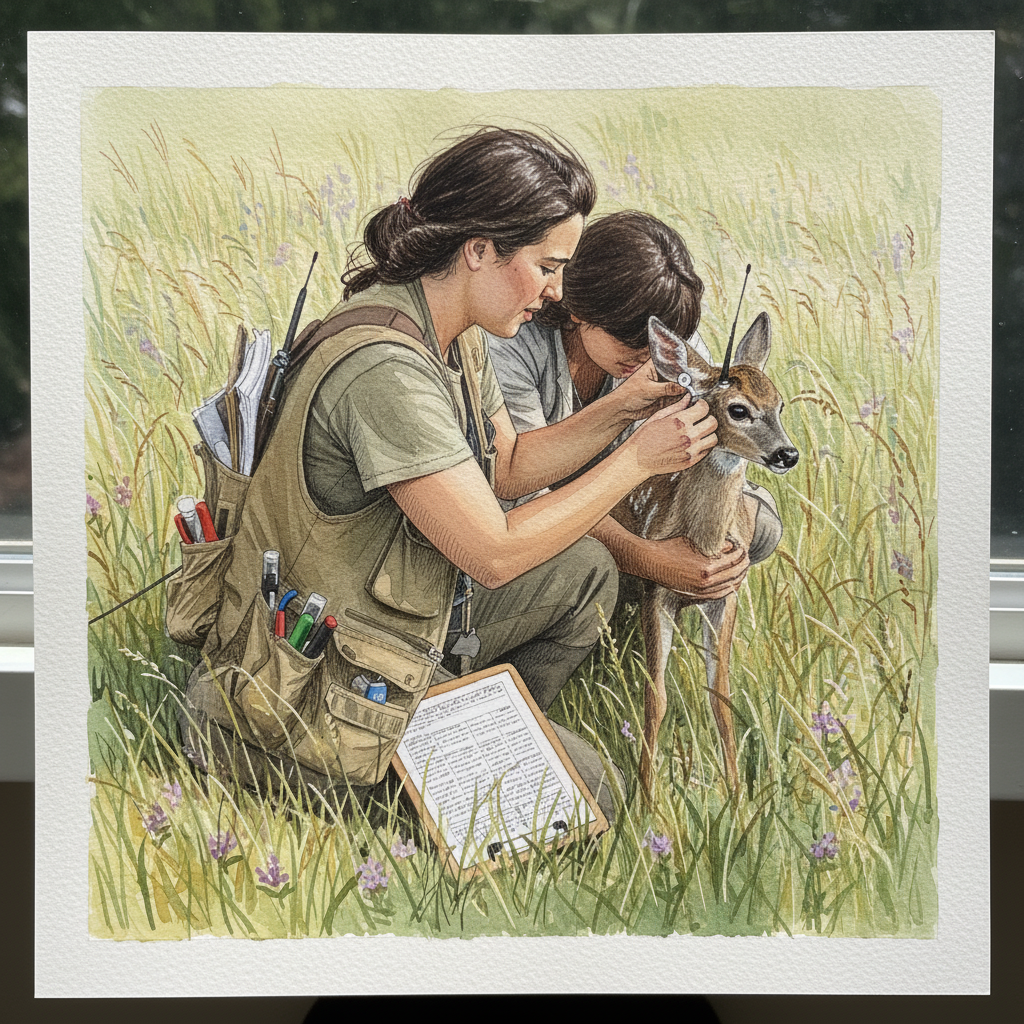
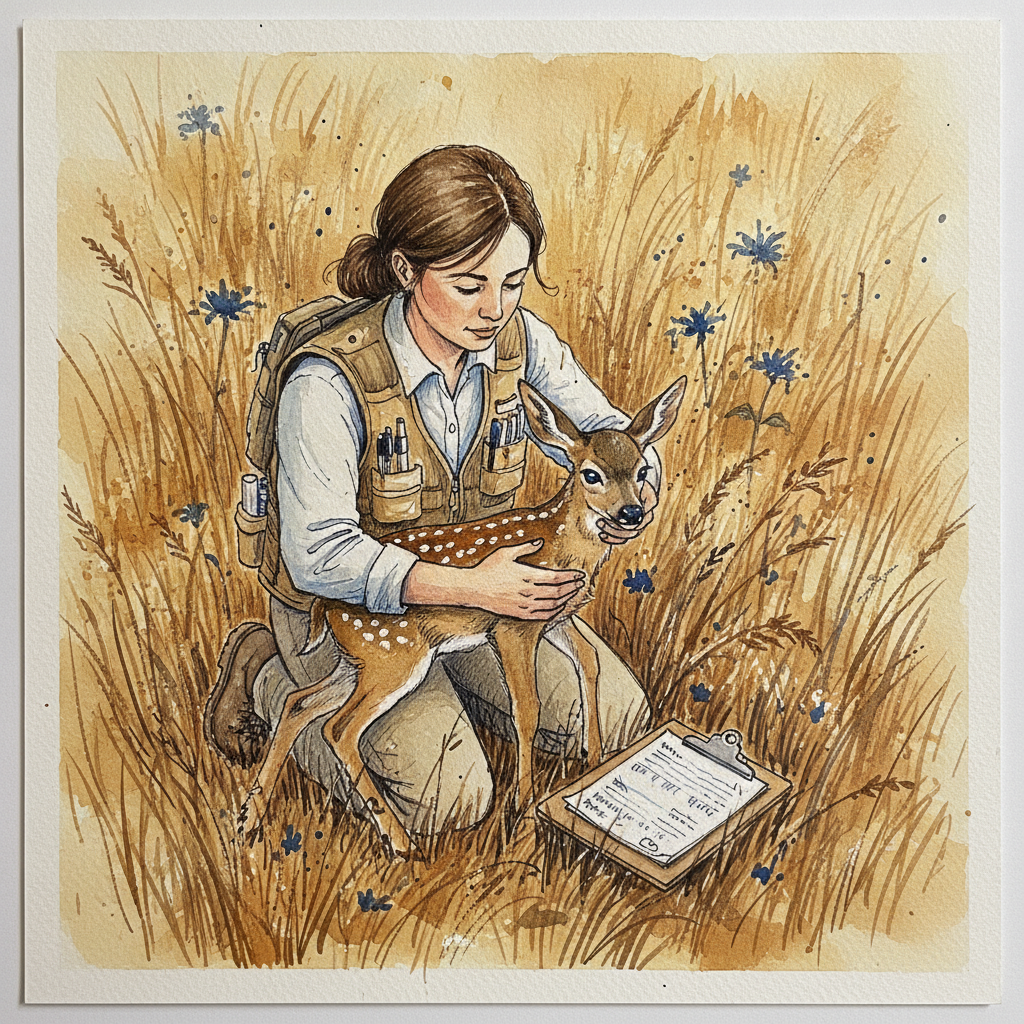
Piece 3 — Wildlife biologist with tags
Pen + Watercolor · Loose pen and watercolor line-and-wash
Three takes
Focus for this piece
This piece is an excellent opportunity to practice contrasting precise, structural ink lines with soft, atmospheric watercolor washes. Use crisp, decisive lines to define the intricate details of the biologist's field vest, clipboard data, and the tiny radio tag, providing clear focal points. In contrast, employ broad, wet-on-wet washes for the surrounding tall meadow grass and the fawn's soft fur, allowing the watercolor to suggest texture, light, and the overall natural environment. This approach will highlight the interplay between ink's certainty and watercolor's fluidity.
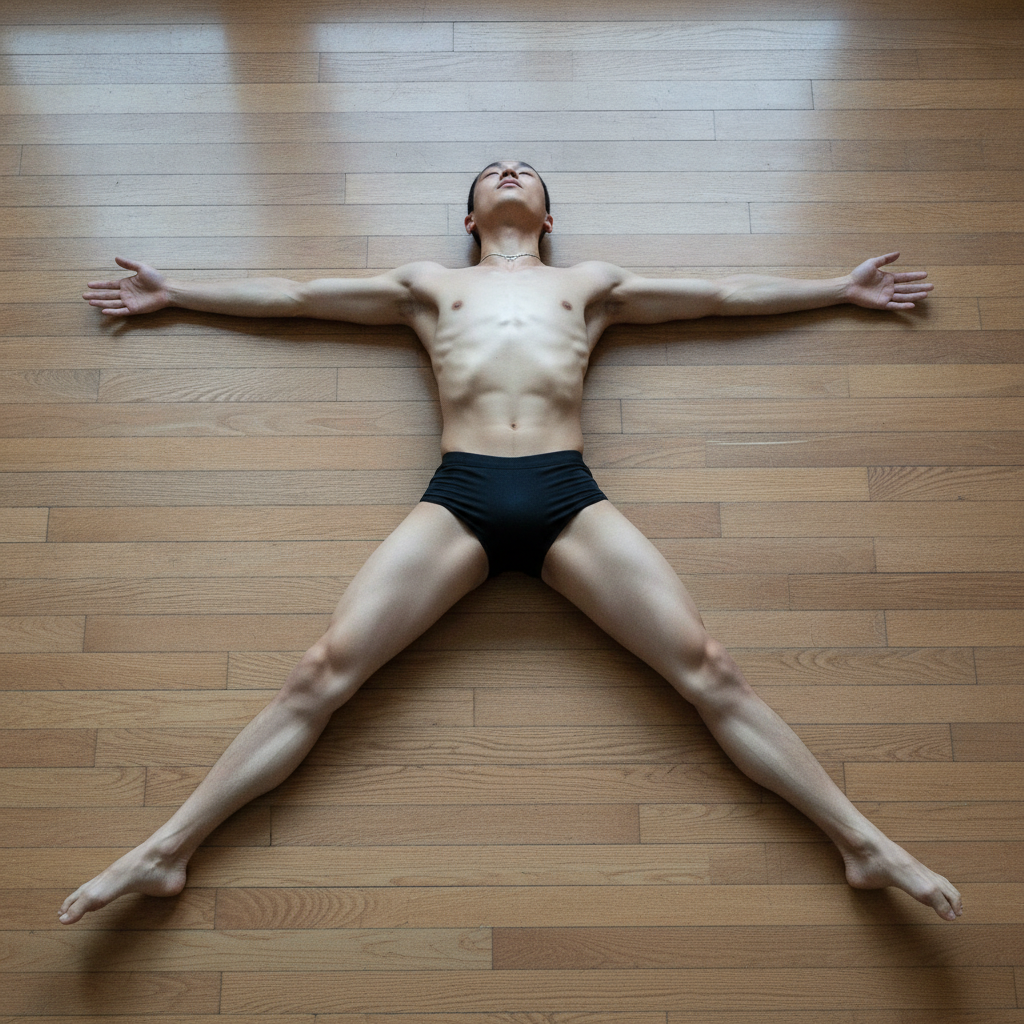
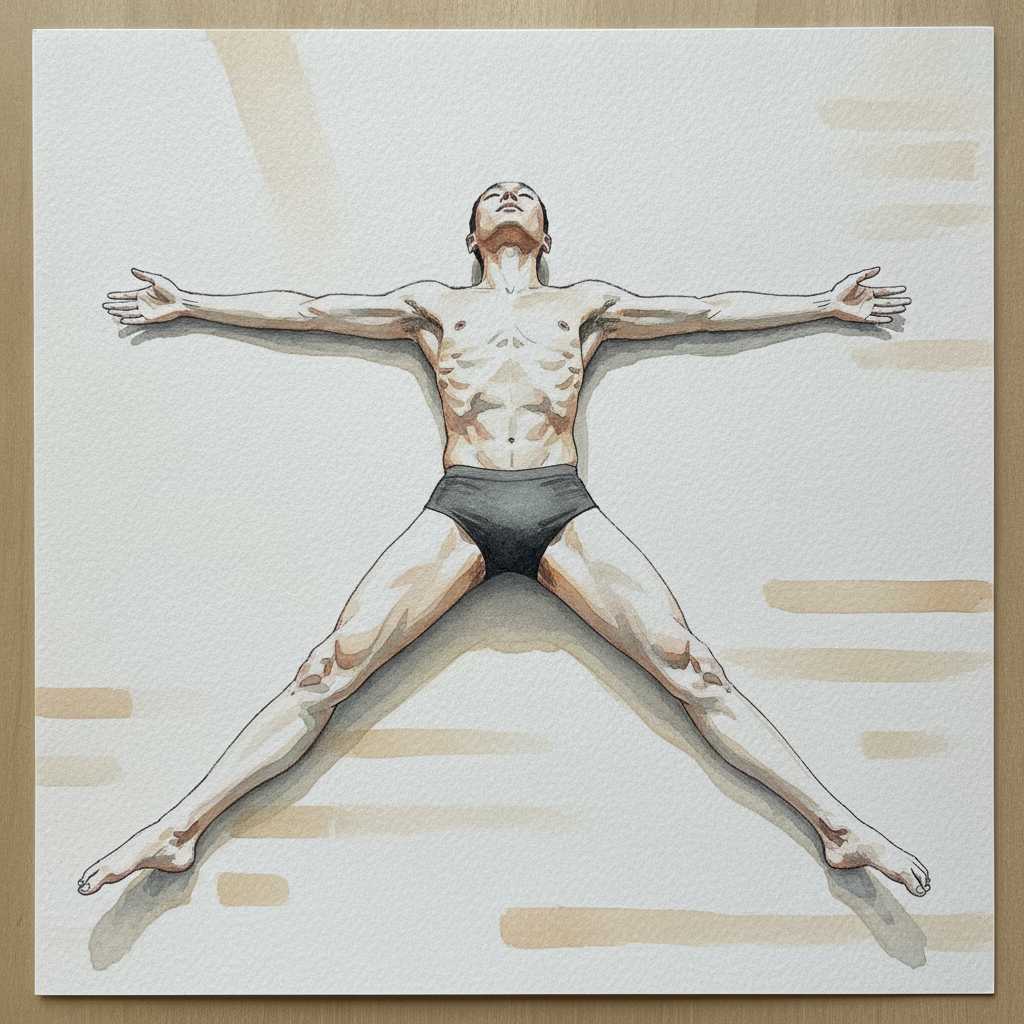
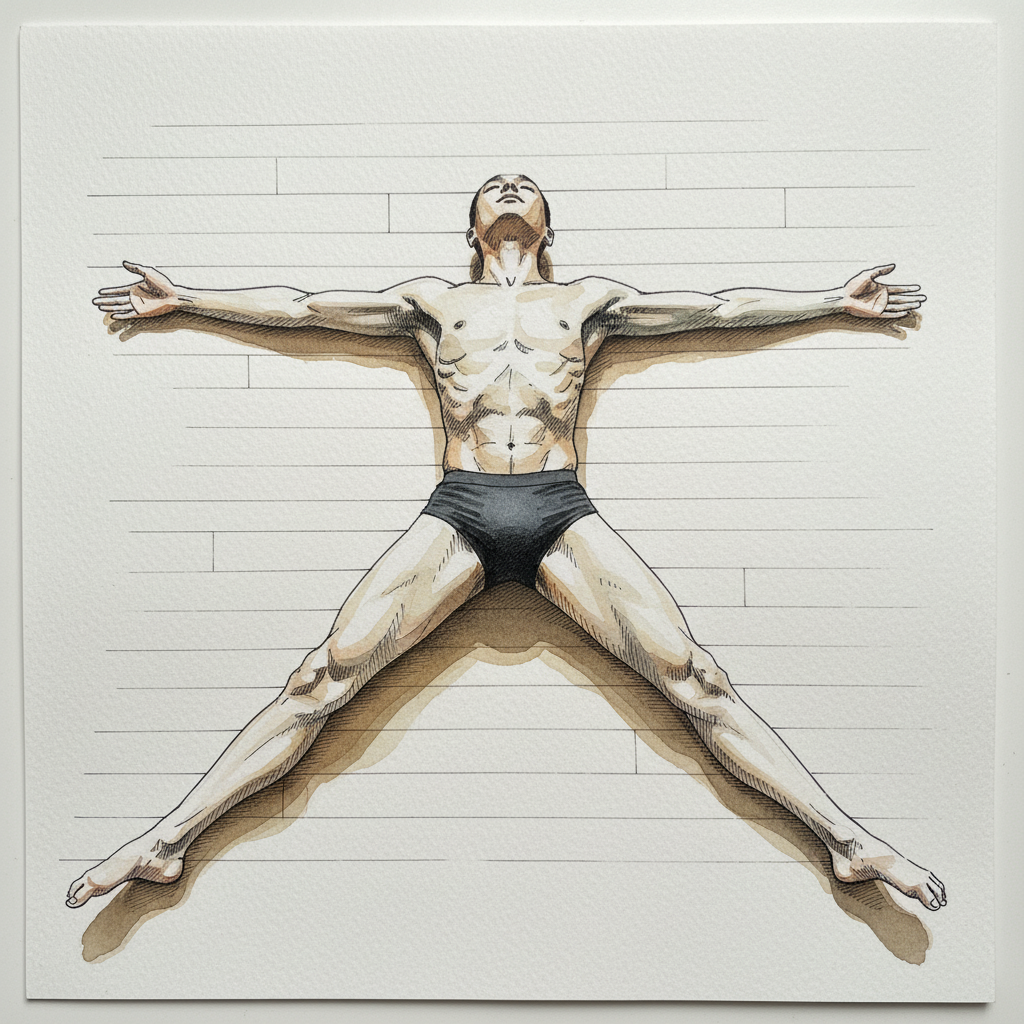
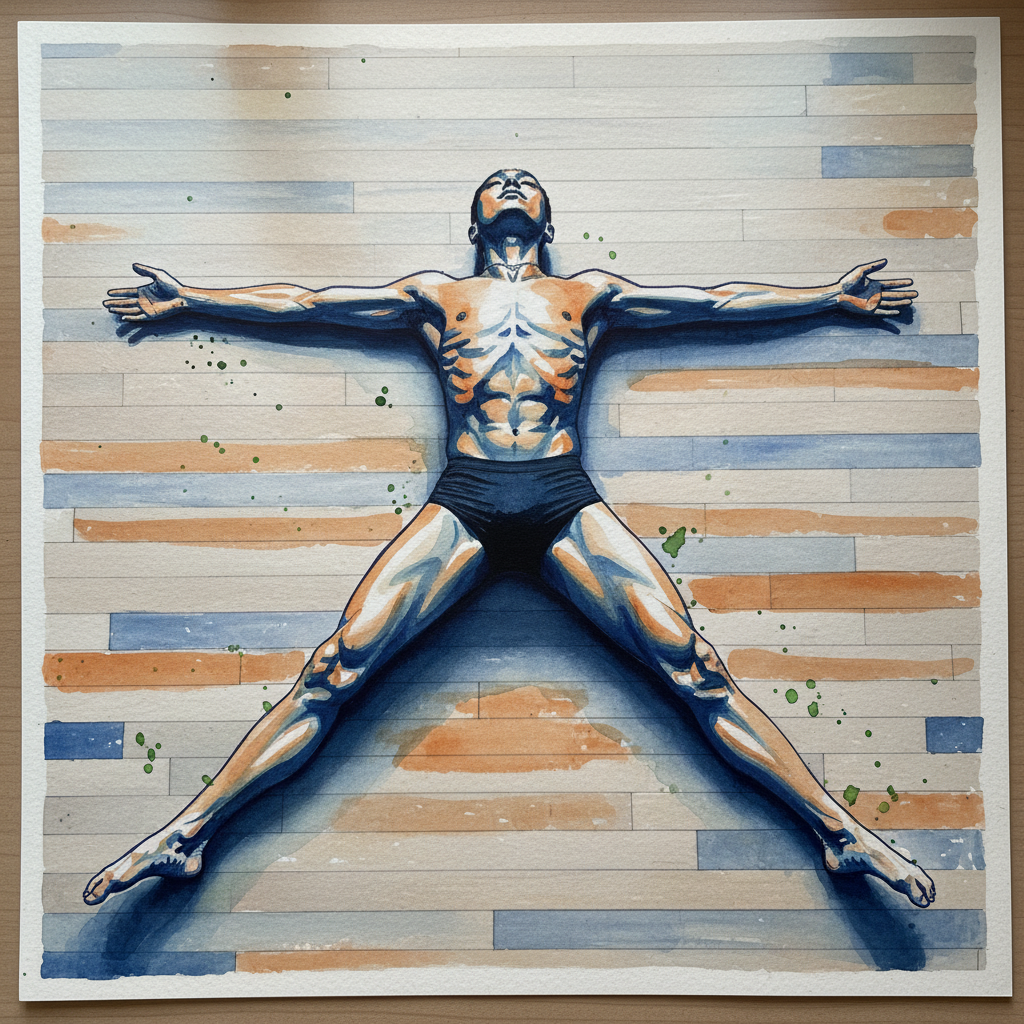
Piece 4 — Studio floor, butterfly knees, arms wide
Pen + Watercolor · Loose pen and watercolor line-and-wash
Three takes
Focus for this piece
This view from directly above offers a strong study in simplifying the figure into bold geometric shapes; let the "open star" of the body and "diamond" of the legs guide your initial structural pen lines. Practice using subtle, cool-toned washes to model the form of the ribs and inner thighs, allowing reflected light to suggest dimension with gentle value shifts rather than strong shadows.
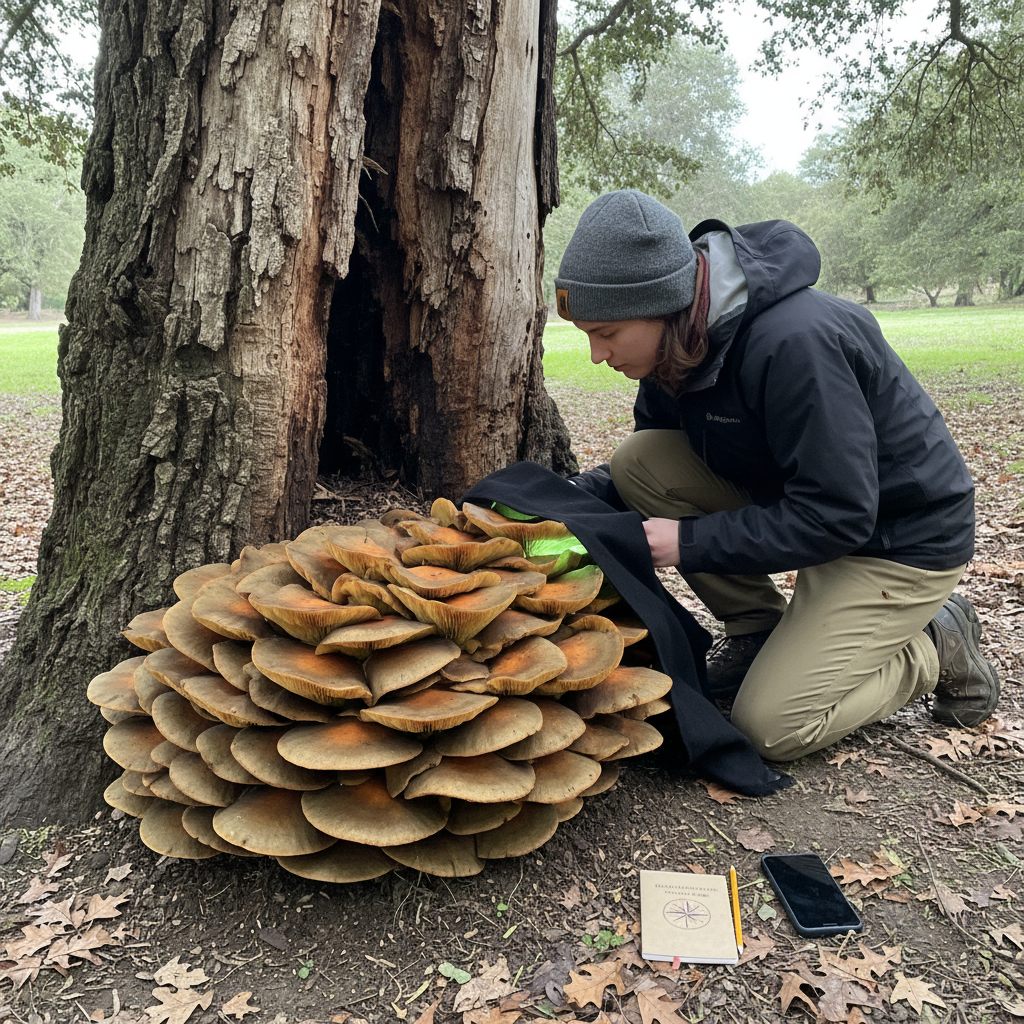
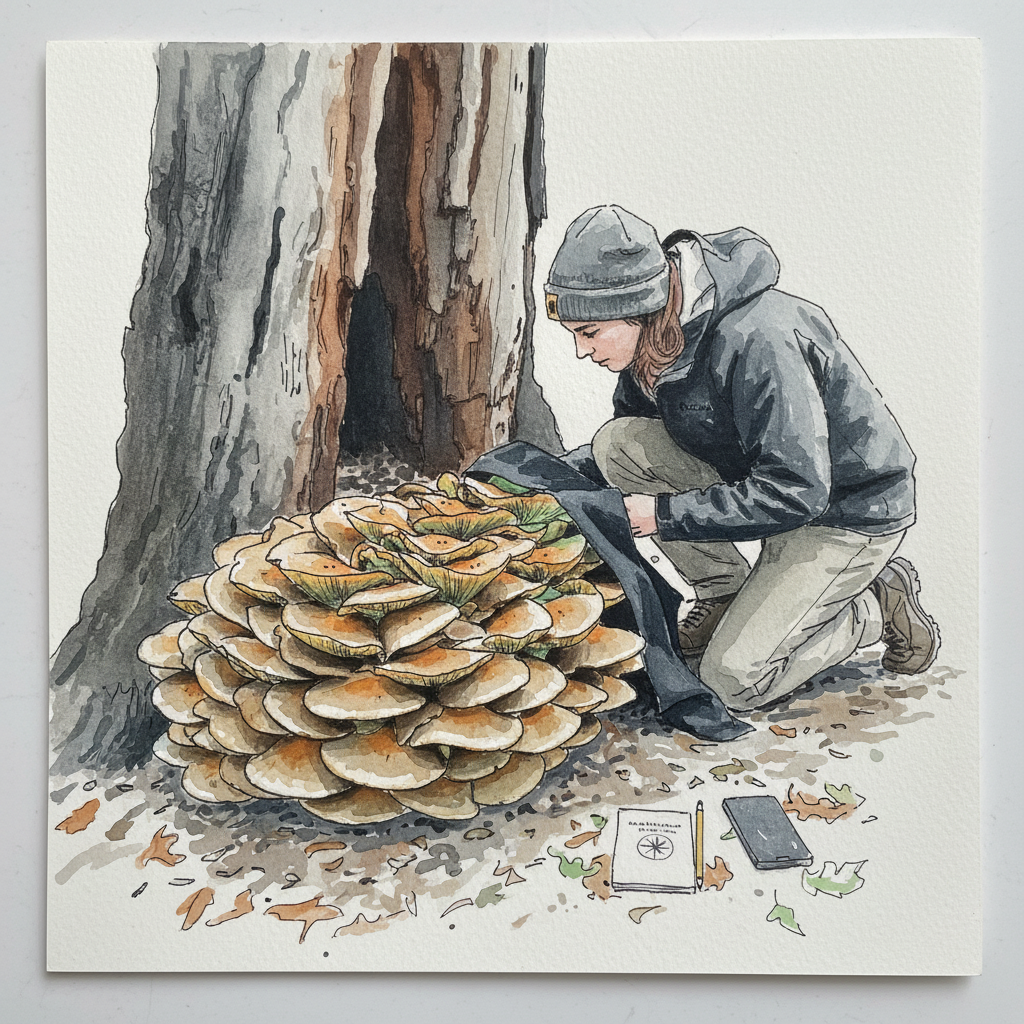
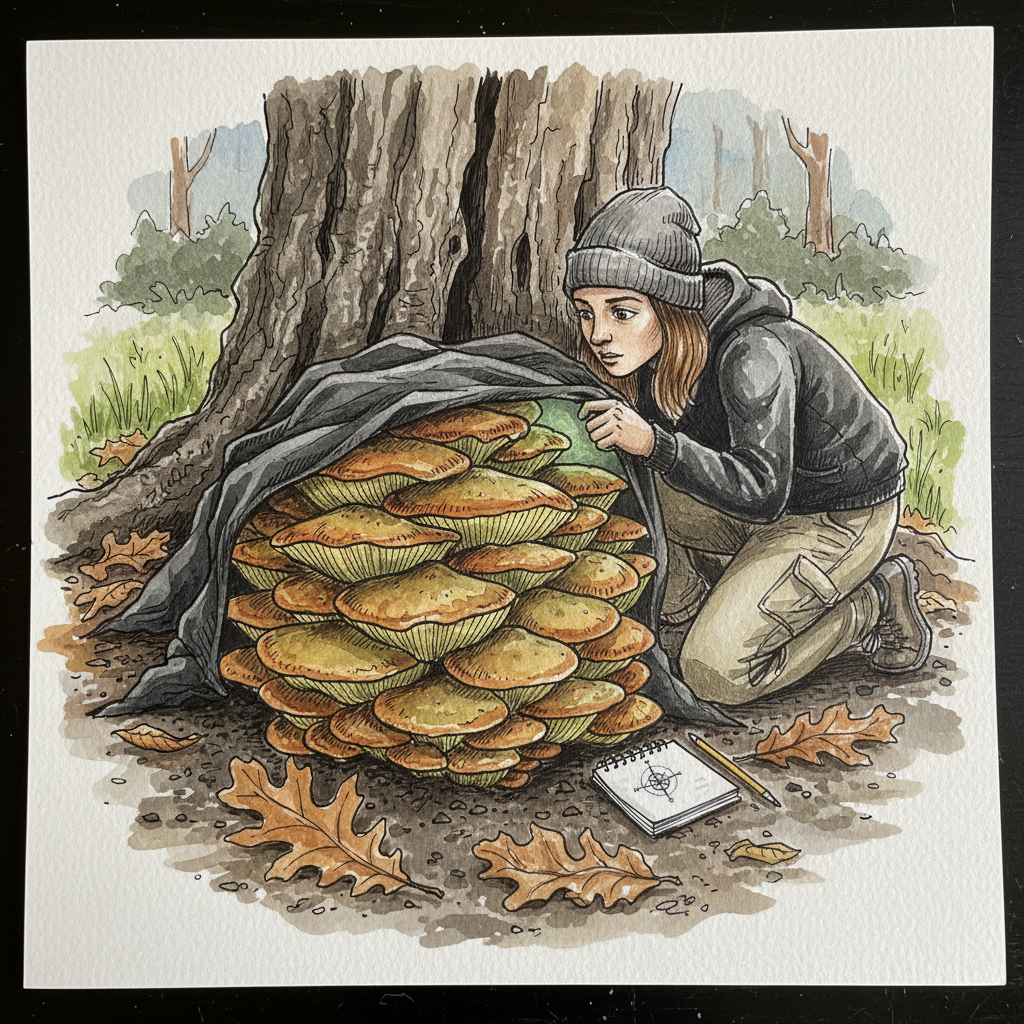
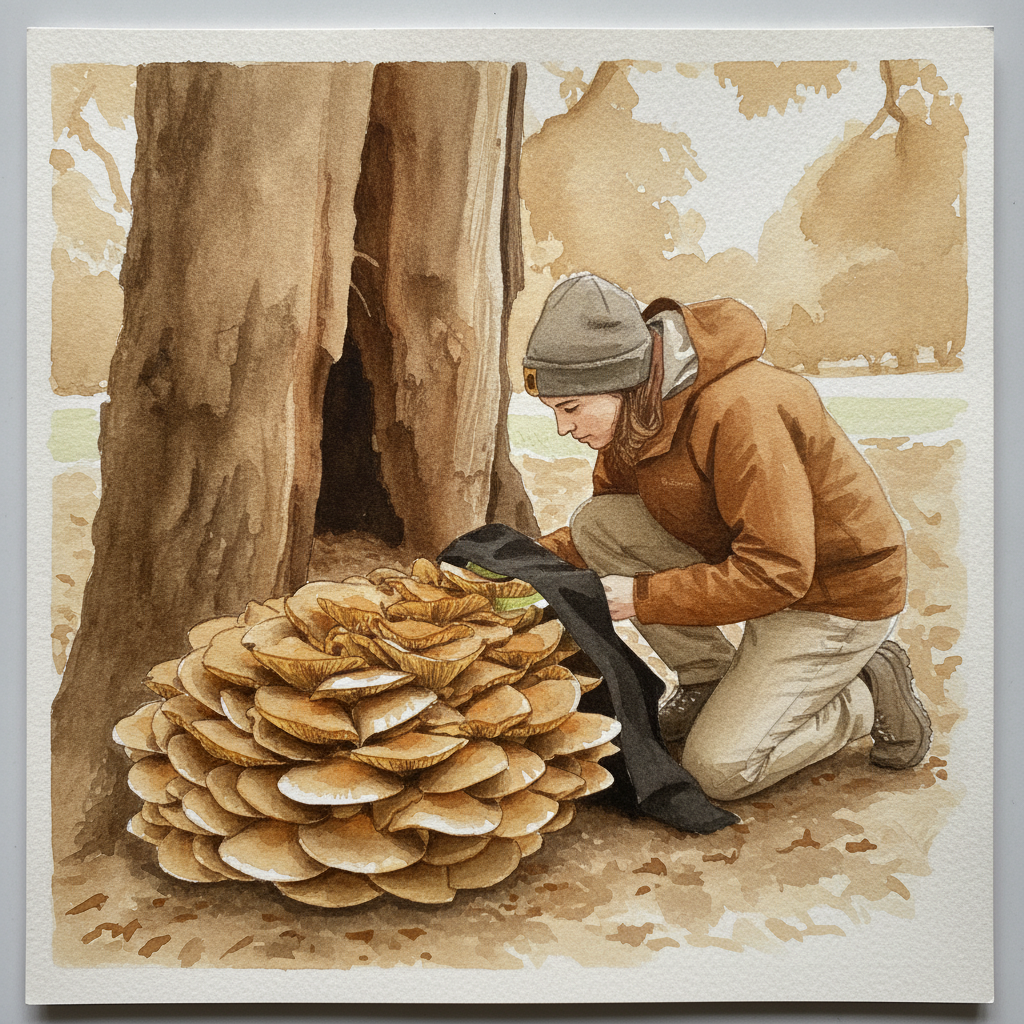
Piece 5 — Western jack-o-lantern
Pen + Watercolor · Loose pen and watercolor line-and-wash
Three takes
Focus for this piece
Your focus for this piece is the complex interplay of organic forms and ambient light. Practice building the clustered, fused caps of the Omphalotus olivascens with varied wet-on-wet washes, establishing their rounded volume before defining key edges with a confident, deliberate line weight. Pay particular attention to how subtle color shifts and careful lifting can suggest the faint greenish bioluminescence emanating from within the mushroom forms.
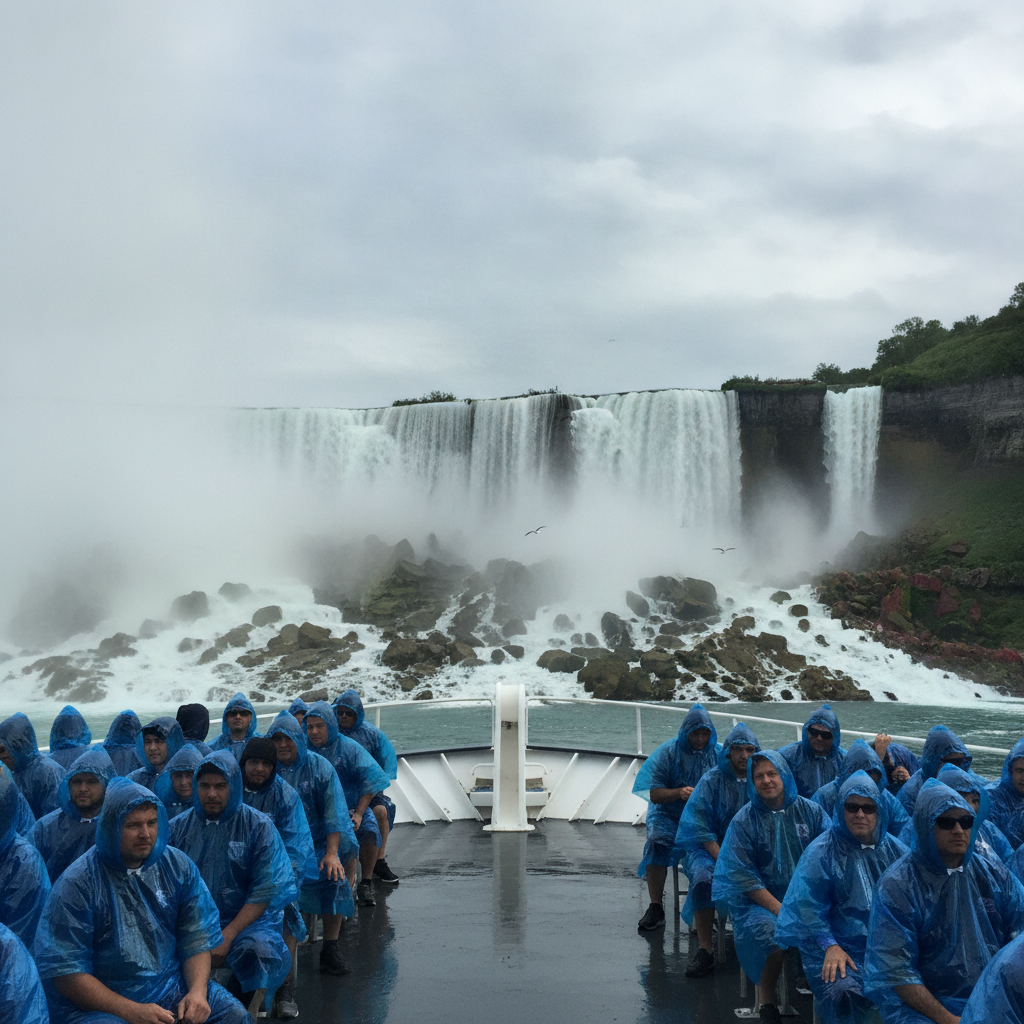
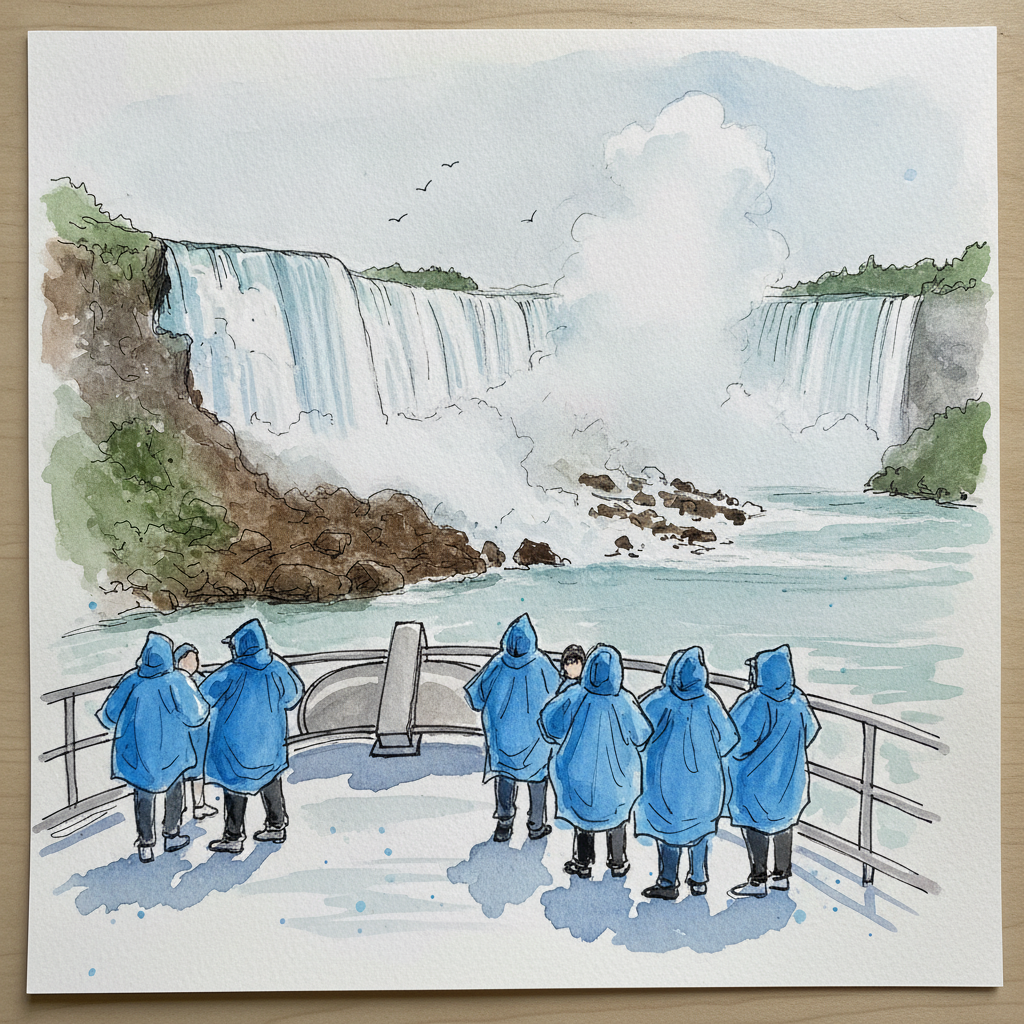
Piece 6 — American Falls and Maid of the Mist at boat level
Pen + Watercolor · Loose pen and watercolor line-and-wash
Three takes
Focus for this piece
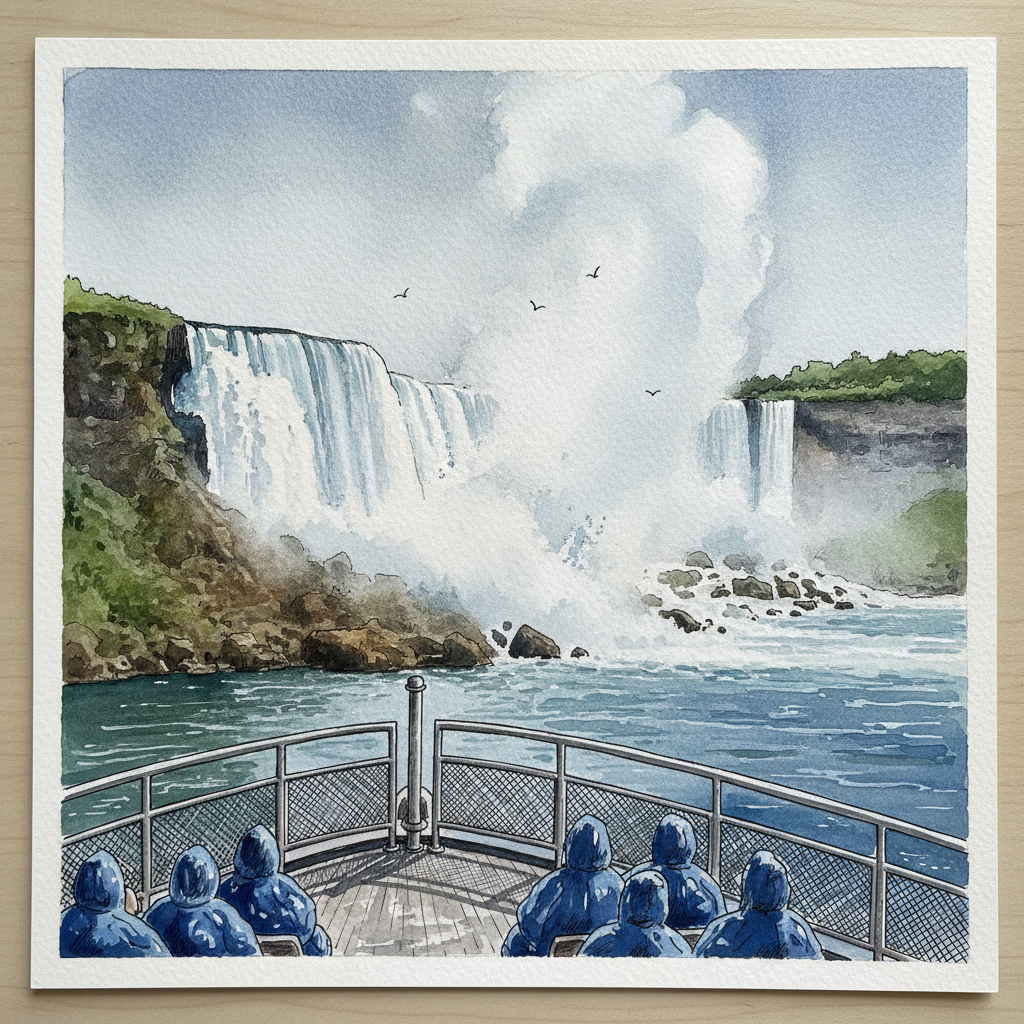
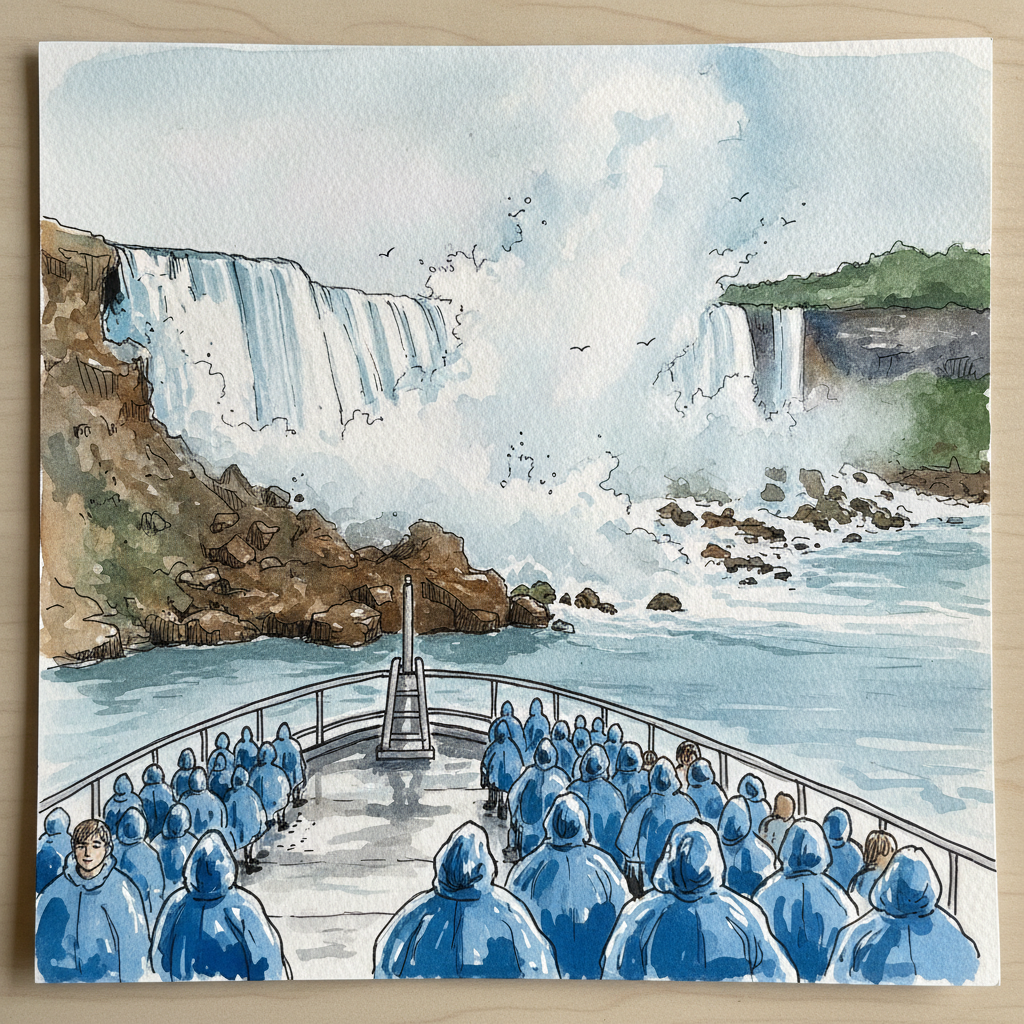
This piece offers an excellent study in capturing dynamic water and atmospheric depth using both media intentionally. Focus on preserving the white of your paper to depict the explosion of spray against the dark, wet talus slope with layered washes, letting watercolor define the volume of the falls. Use confident, varied line weights for the sharp forms of the foreground ponchos and deck, but allow the lines to become more broken and suggestive for the middle ground and background, melting into soft, wet-on-wet washes for the rising mist column and distant Horseshoe Falls. This interplay will convey the immersive, deafening experience without over-detailing.
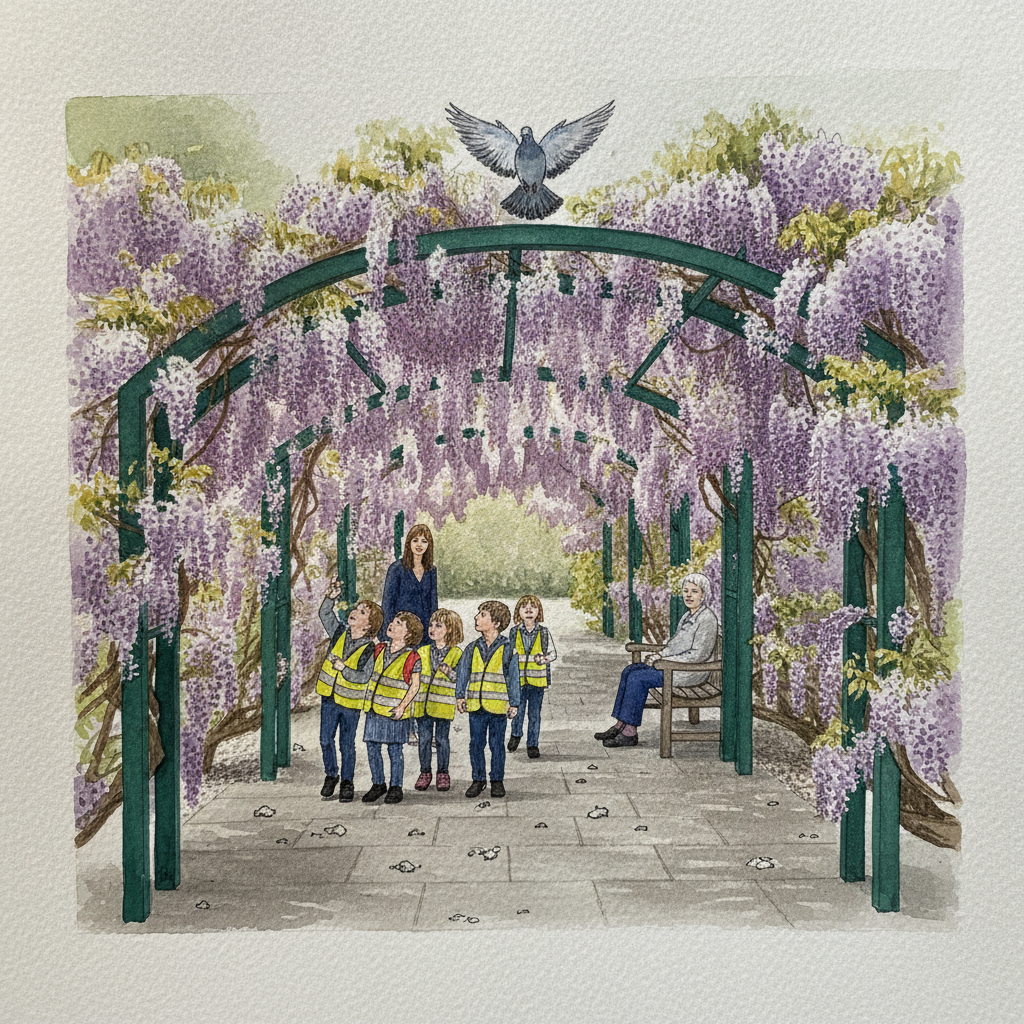
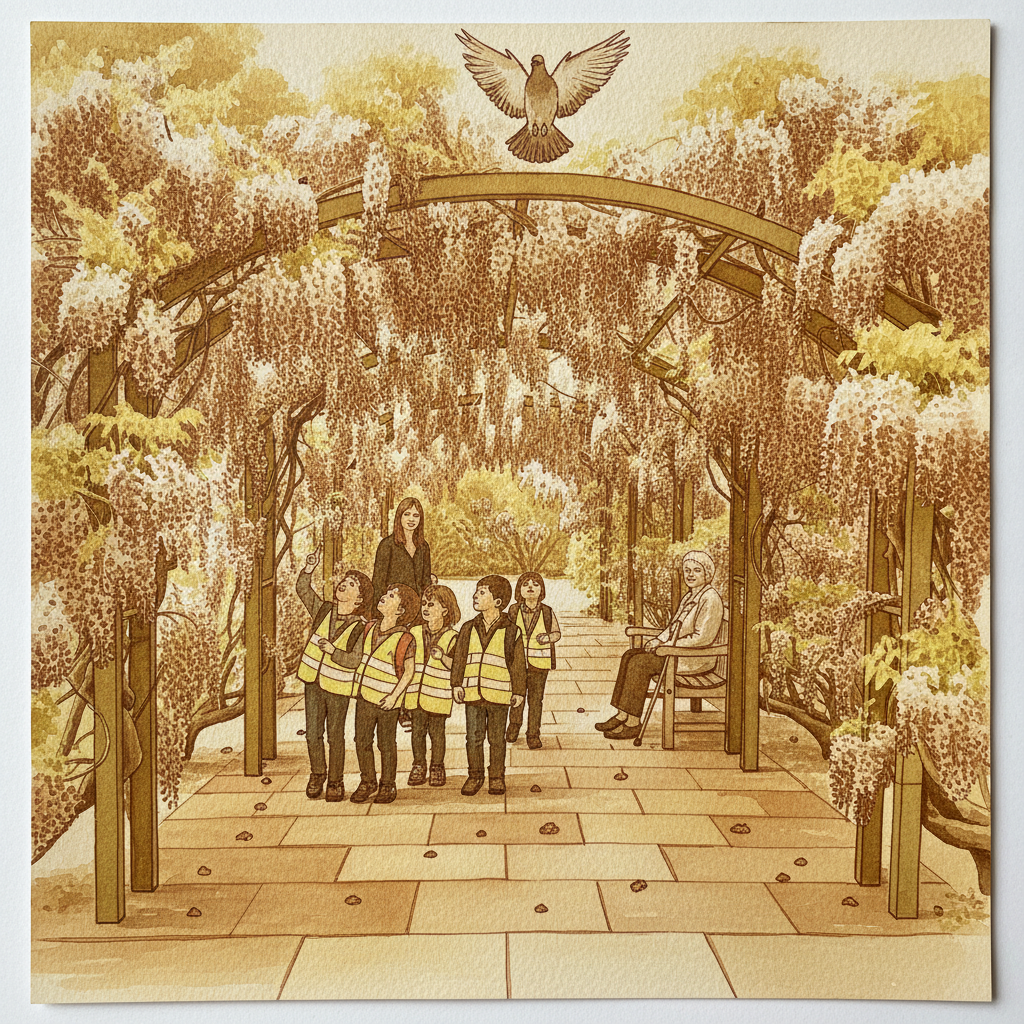
Piece 7 — Wisteria arch in a town park with passing schoolchildren
Pen + Watercolor · Loose pen and watercolor line-and-wash
Three takes
Focus for this piece
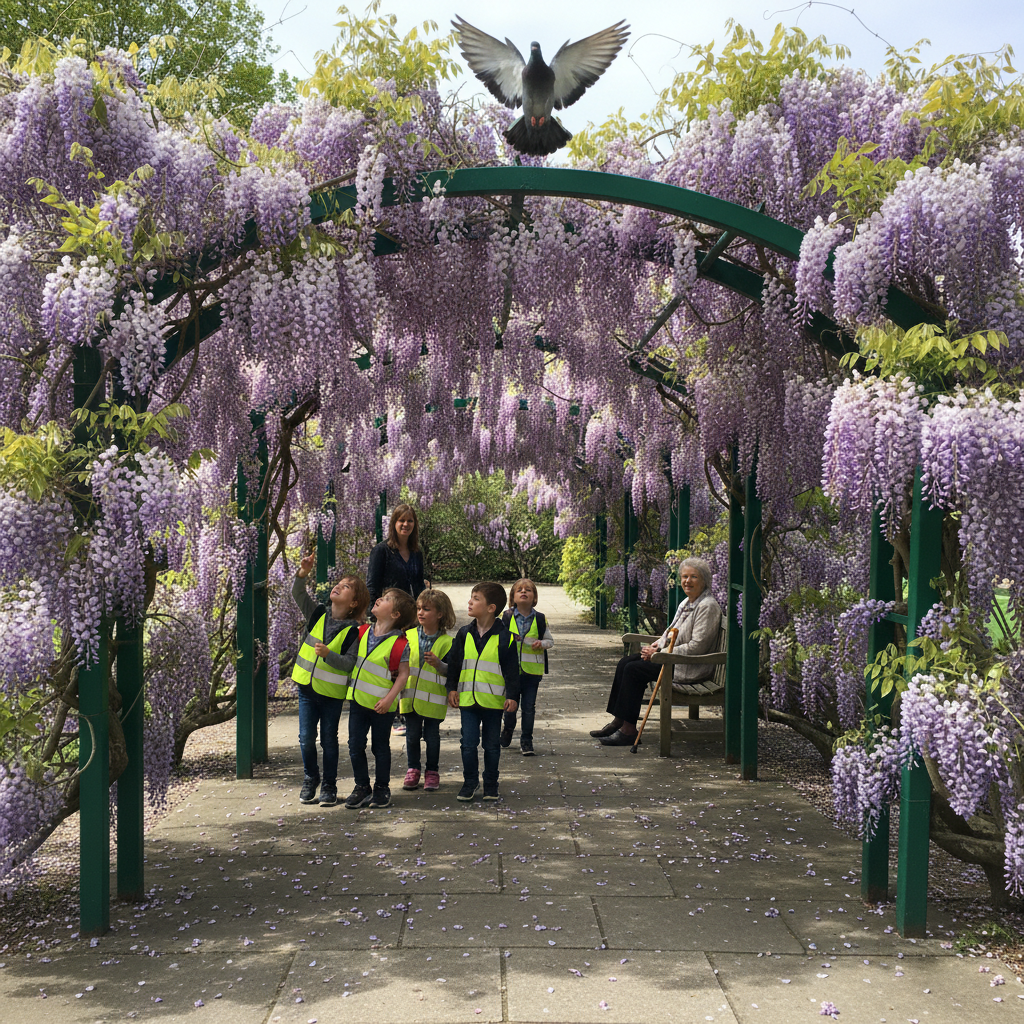
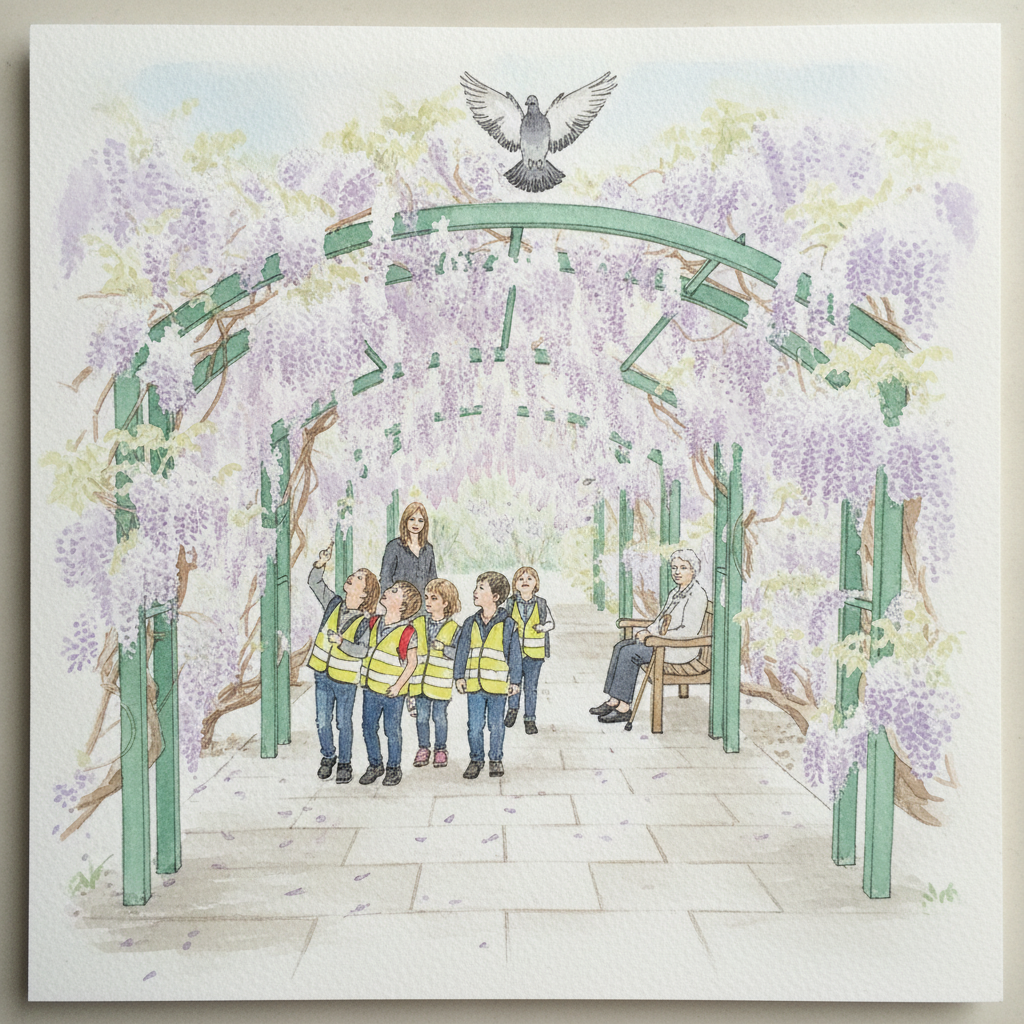
This piece offers an excellent study in contrasting static elements with fleeting motion using varying line weights and wash applications. Emphasize the heavy wisteria swags and solid iron arch with deliberate, firmer ink lines and layered, slightly drier watercolor washes to build their dense volume. In contrast, capture the schoolchildren's small movement and the scattering pigeon with lighter, broken ink lines and quick, more dilute washes, allowing their bright yellow vests to pop with vibrant, singular color. This approach highlights the scene's core tension between stillness and momentary action.
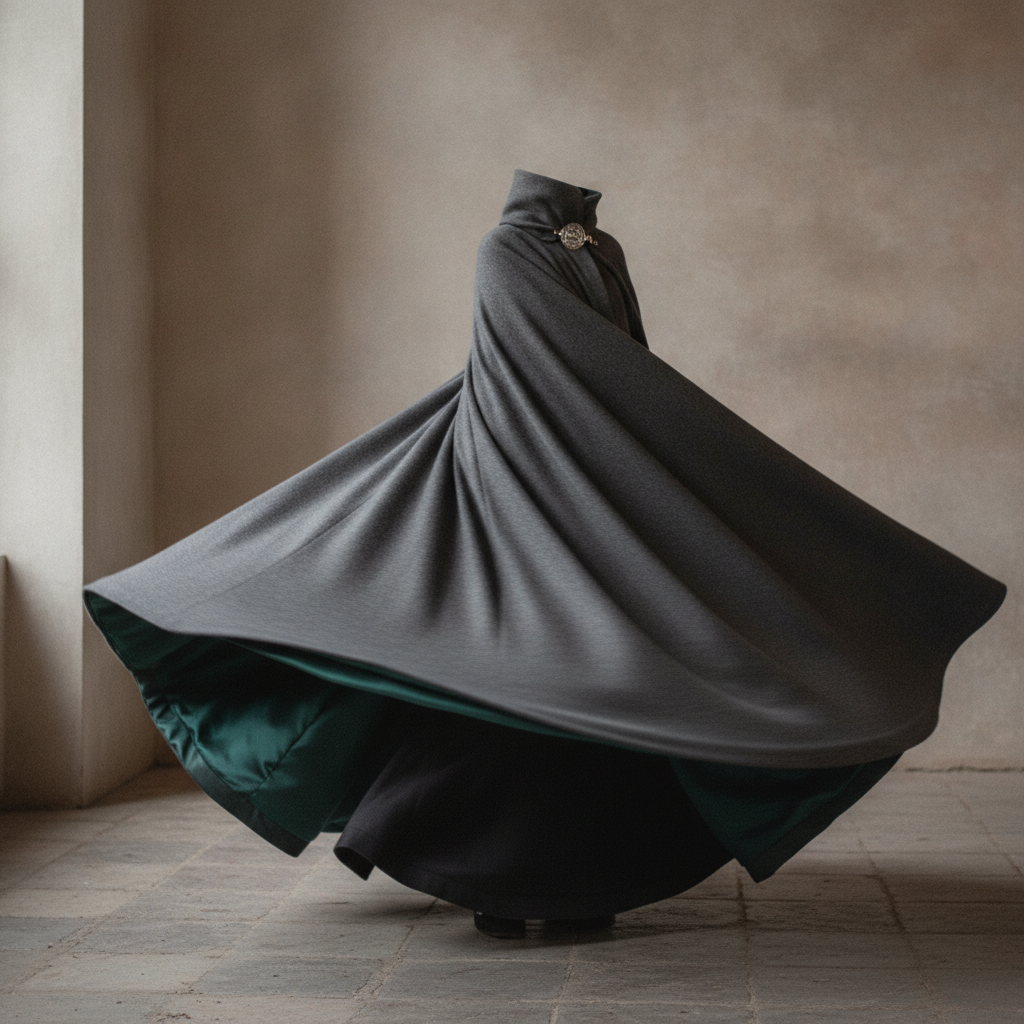
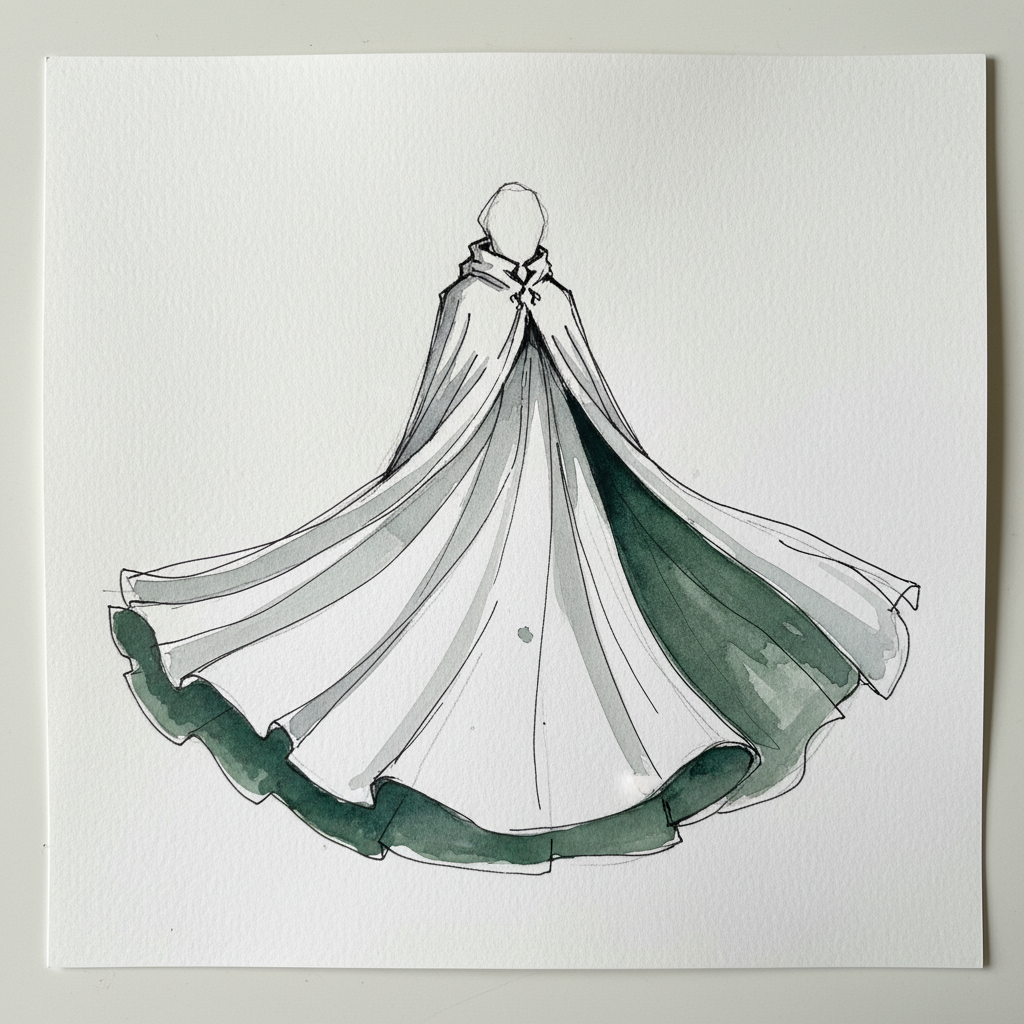
Piece 8 — Cloak swirling around a figure
Pen + Watercolor · Loose pen and watercolor line-and-wash
Three takes
Focus for this piece
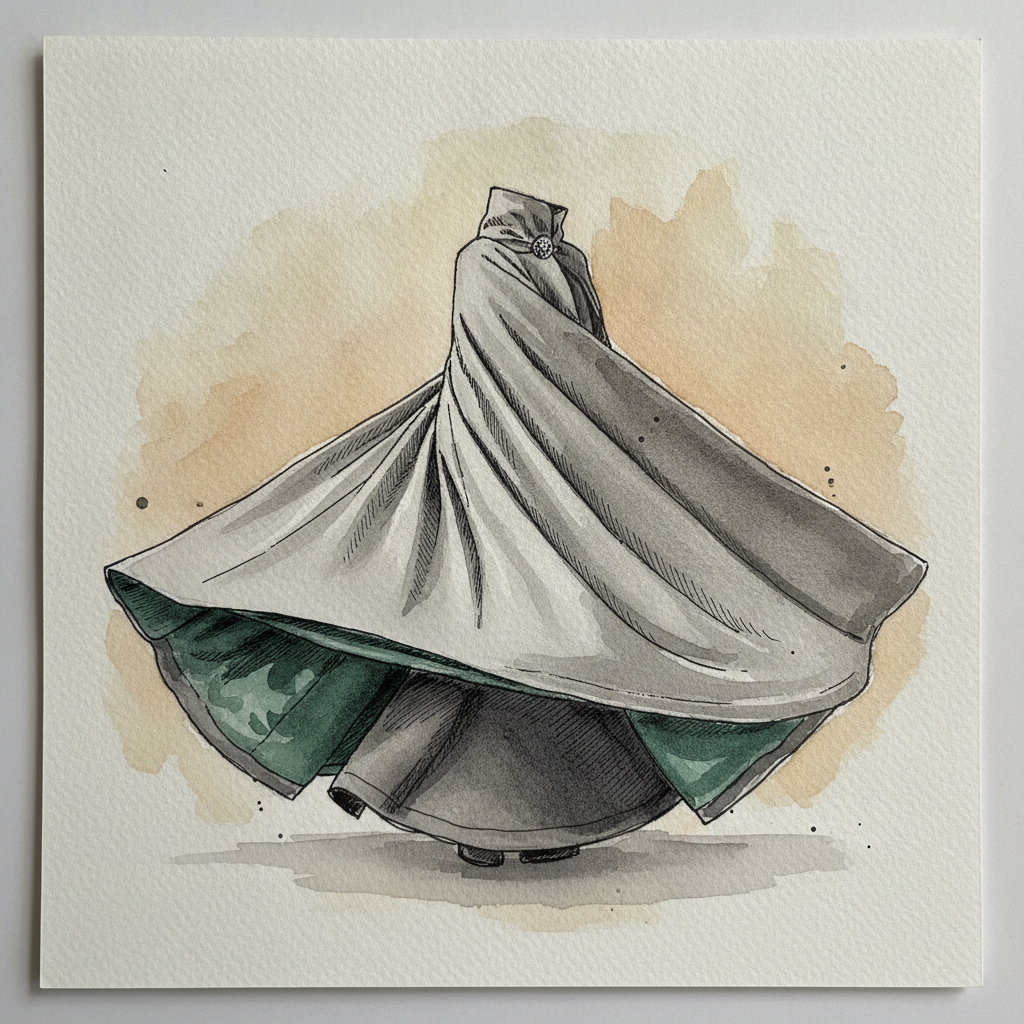
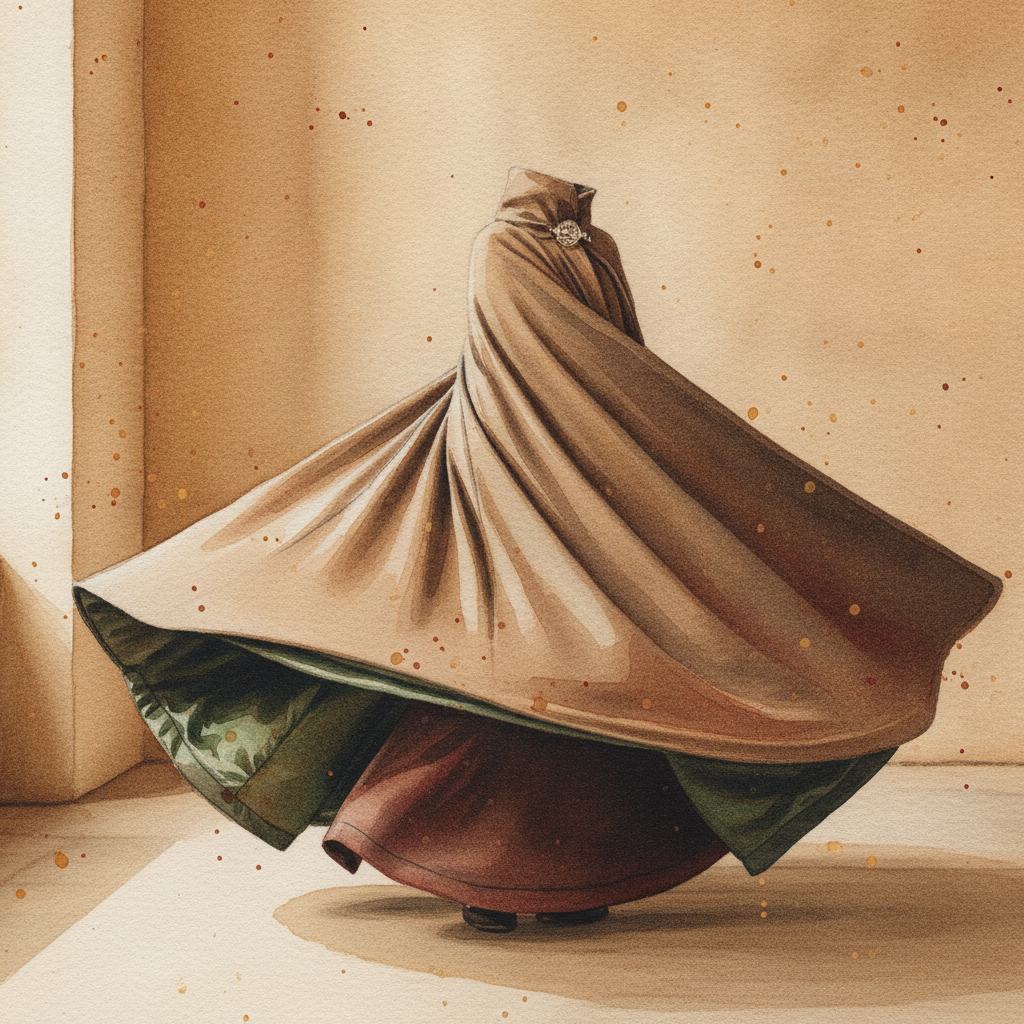
This piece is an excellent study in using line and wash to render dynamic volume and motion in heavy fabric, particularly under dramatic cinematic side lighting. Employ a thoughtful range of line weights to define the major curves and tension points of the swirling cloak, using firmer lines to anchor the throat fastening and lighter, more fluid strokes for the wide, swept hem. Build the strong lighting with layered, high-contrast washes, letting soft, wet-on-wet blends suggest the weight and movement of the outer folds, while using a deliberate wet-on-dry technique for the peeking lining to maintain its crisp distinction. Focus on how the decisive ink lines provide the core structure for the watercolor to sculpt the full three-dimensional turn of the figure.