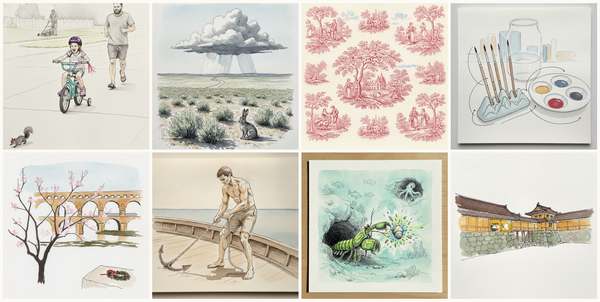
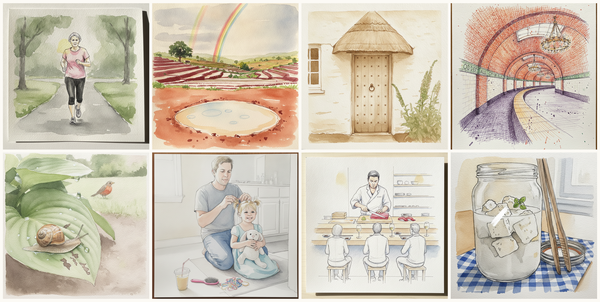
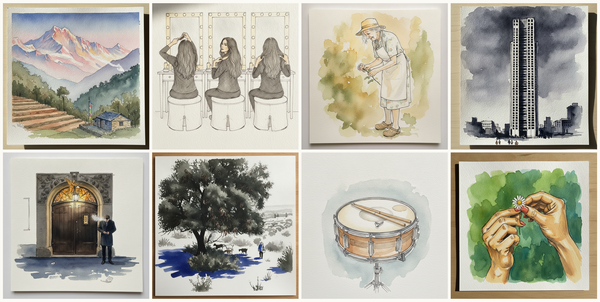
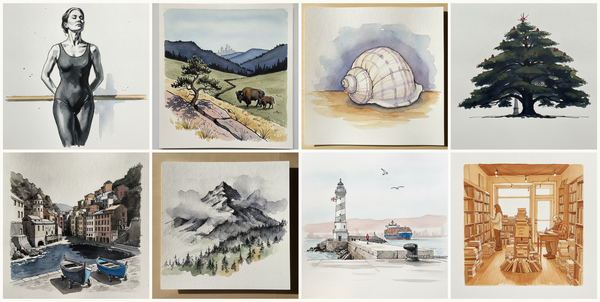
Chromodoris (sea goddess), Maine bog with spruce, Down East Maine, USA, Texas Hill Country Low-Water Crossing, Couple with first dog, and more — pen + watercolor for June 6, 2026
Today's pen-and-watercolor pieces: Chromodoris (sea goddess), Maine bog with spruce, Down East Maine, USA, Texas Hill Country Low-Water Crossing, Couple with first dog, Bottom of a Well Looking Up, Sweeping Backhand Swing, NRG Stadium, Houston, Texas, USA, Antique celestial globe by candlelight.
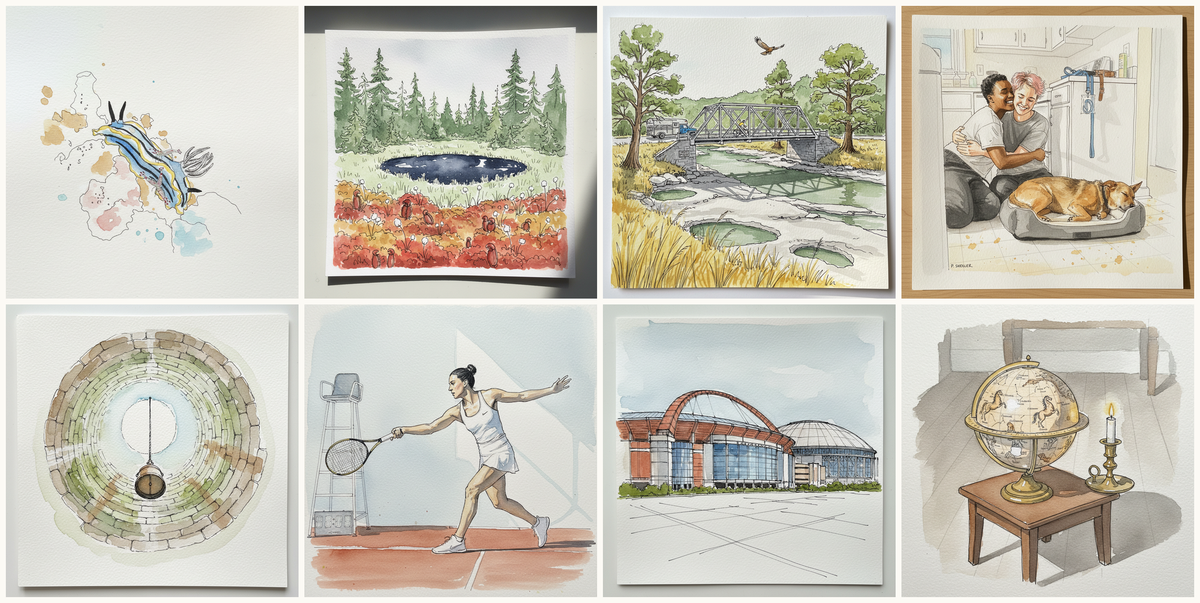
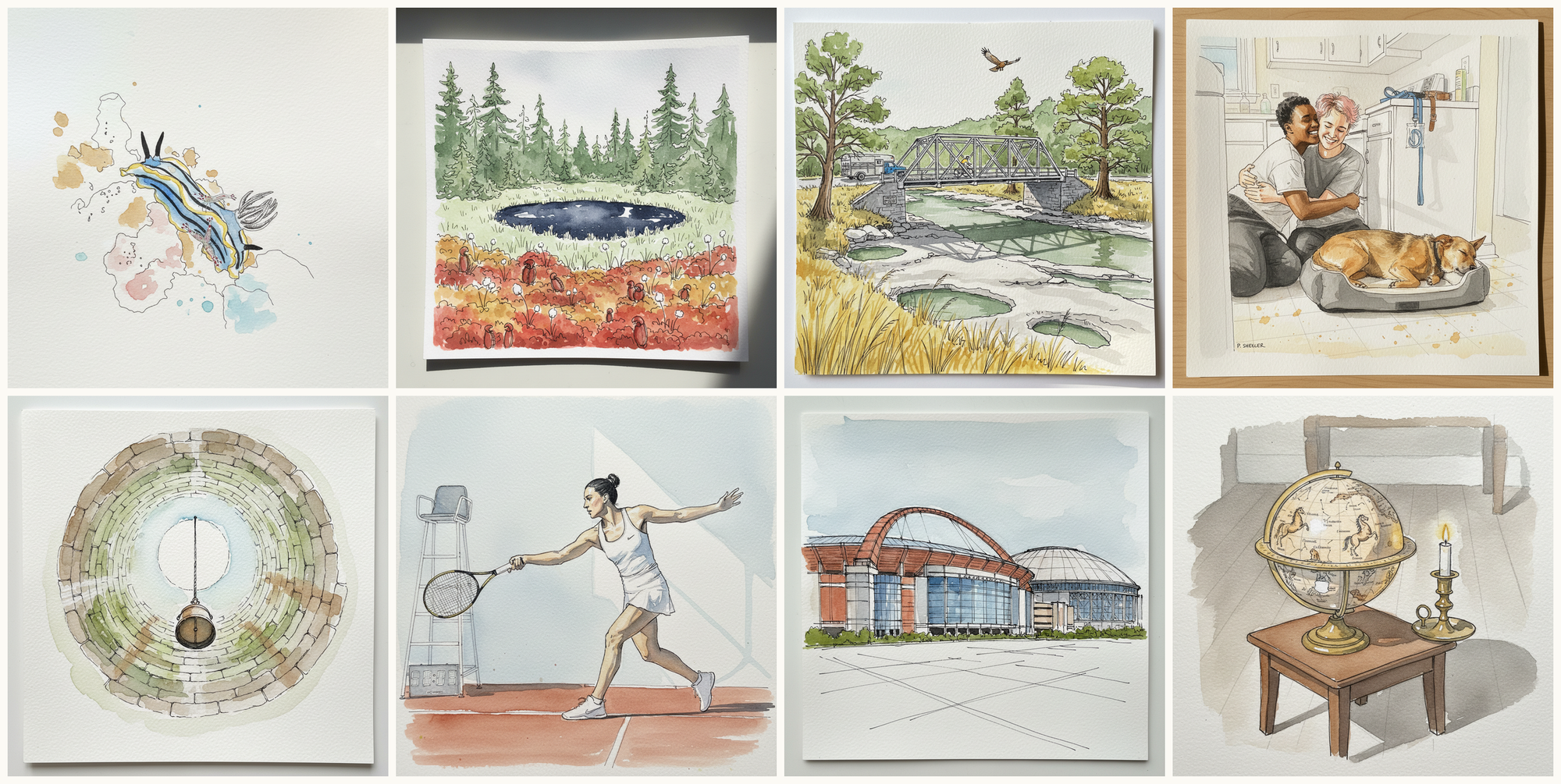
Today's 8 pen-and-watercolor pieces: Chromodoris (sea goddess), Maine bog with spruce, Down East Maine, USA, Texas Hill Country Low-Water Crossing, Couple with first dog, Bottom of a Well Looking Up, Sweeping Backhand Swing, NRG Stadium, Houston, Texas, USA, Antique celestial globe by candlelight. Each piece comes with a photo reference, three example artworks in different treatments, and a short focus paragraph naming what to study in this one.
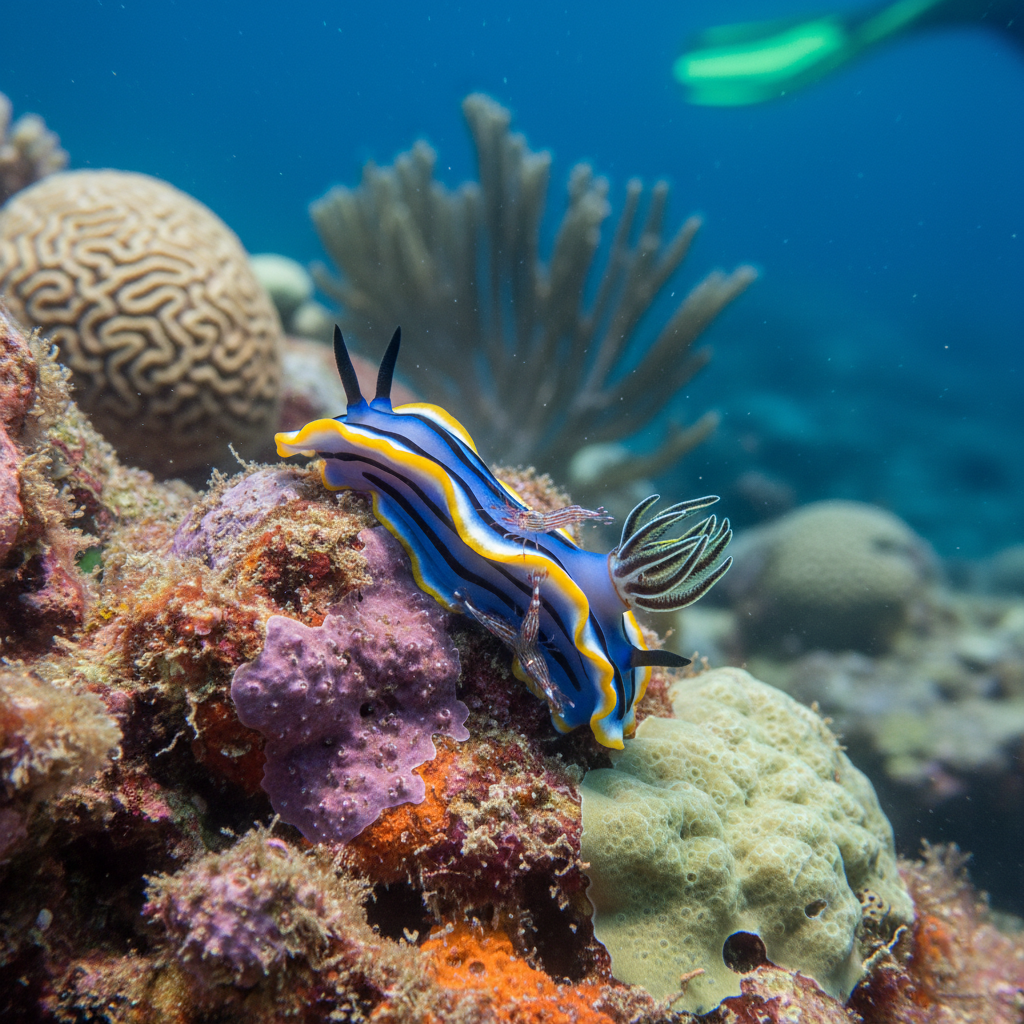
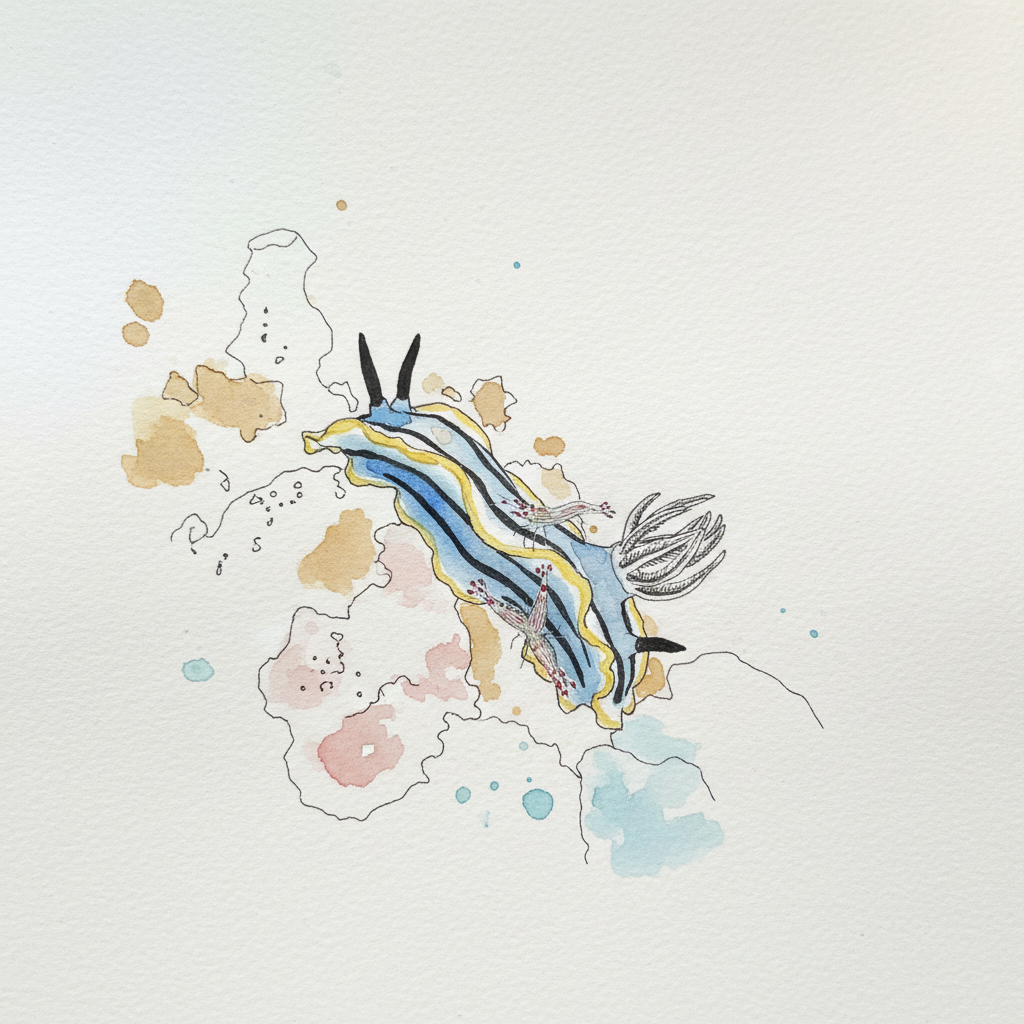
Piece 1 — Chromodoris (sea goddess)
Pen + Watercolor · Loose pen and watercolor line-and-wash
Three takes
Focus for this piece
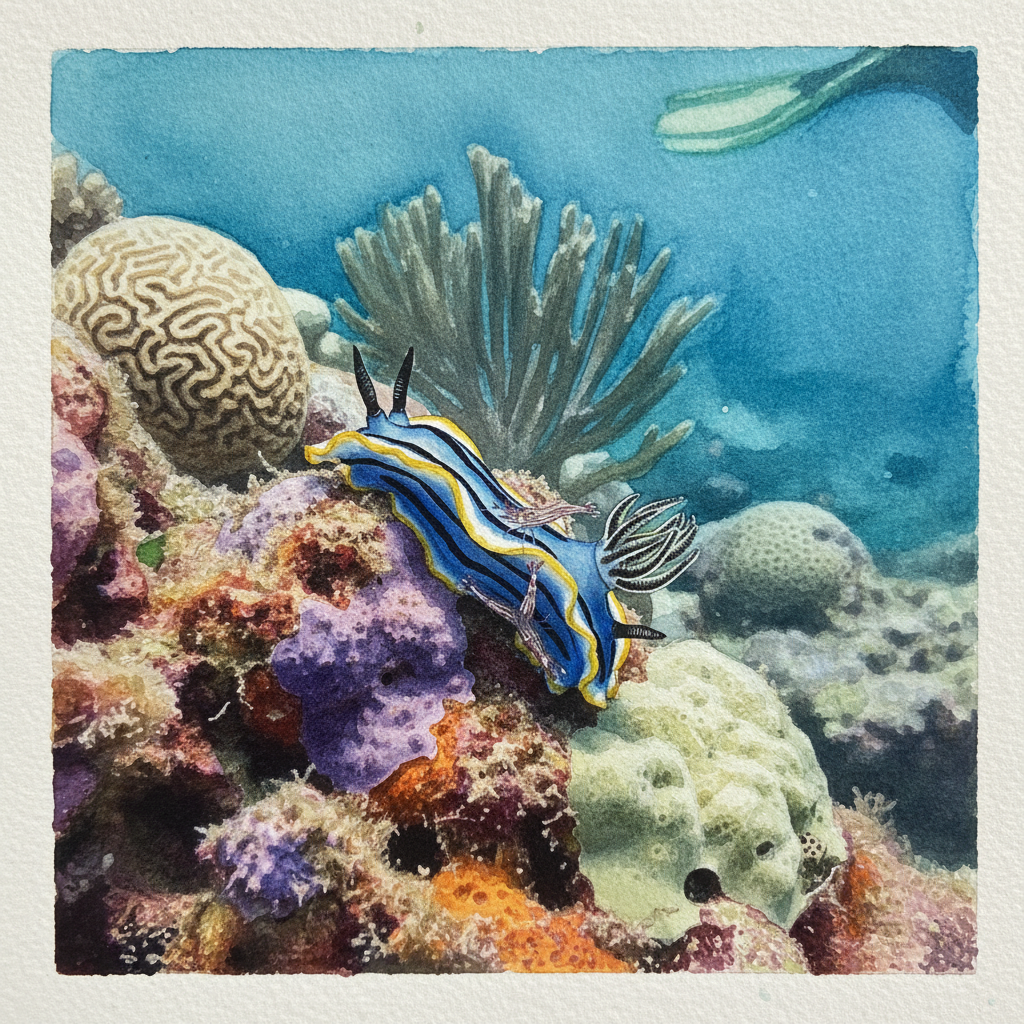
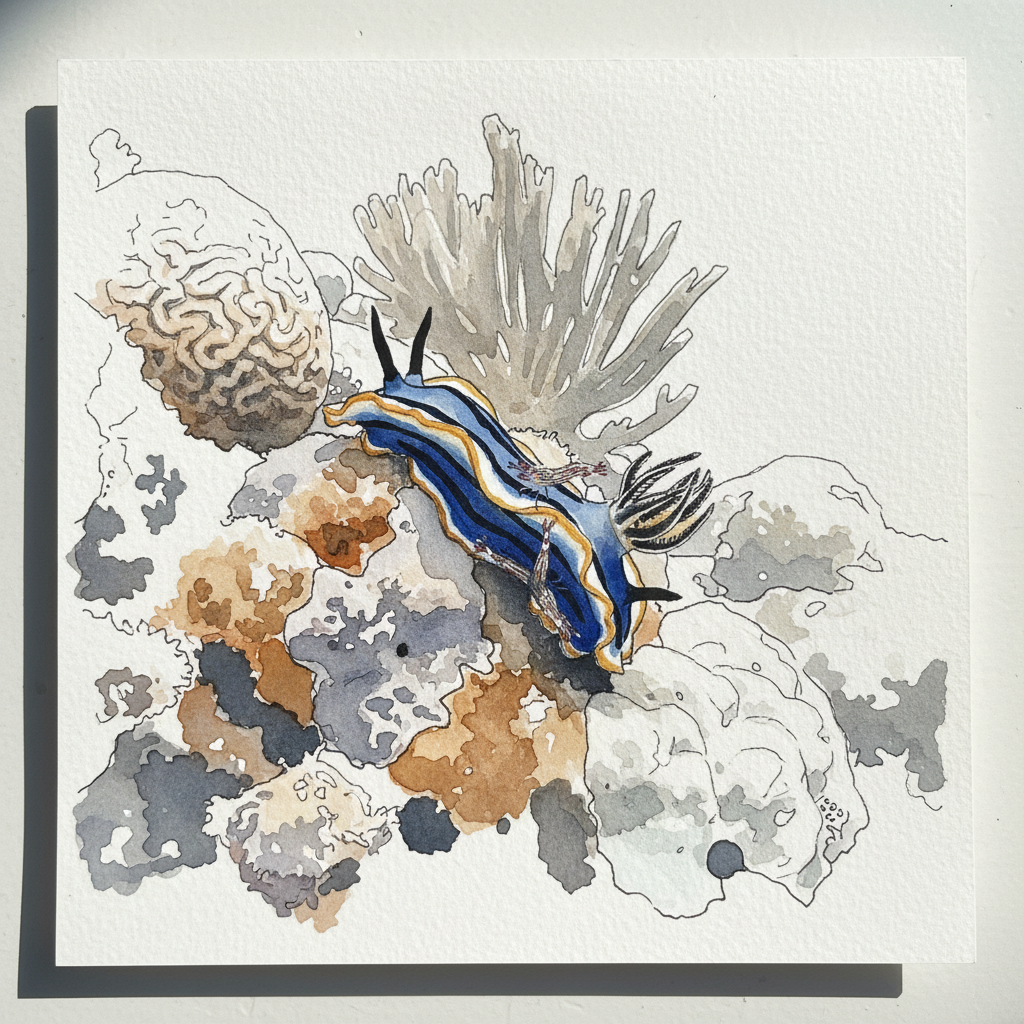
For this piece, concentrate on rendering the nudibranch's vivid, distinct color bands, using precise washes and allowing careful drying time between blue, yellow, and black zones to maintain crisp edges. Practice varying your line weight to define the delicate details of the gill plume and cleaner shrimp, contrasting them with the broader, smoother lines outlining the main body. Pay attention to how subtle value shifts in the blue wash create a sense of three-dimensionality on its small, rounded form.
Piece 2 — Maine bog with spruce, Down East Maine, USA
Pen + Watercolor · Loose pen and watercolor line-and-wash
Three takes
Focus for this piece
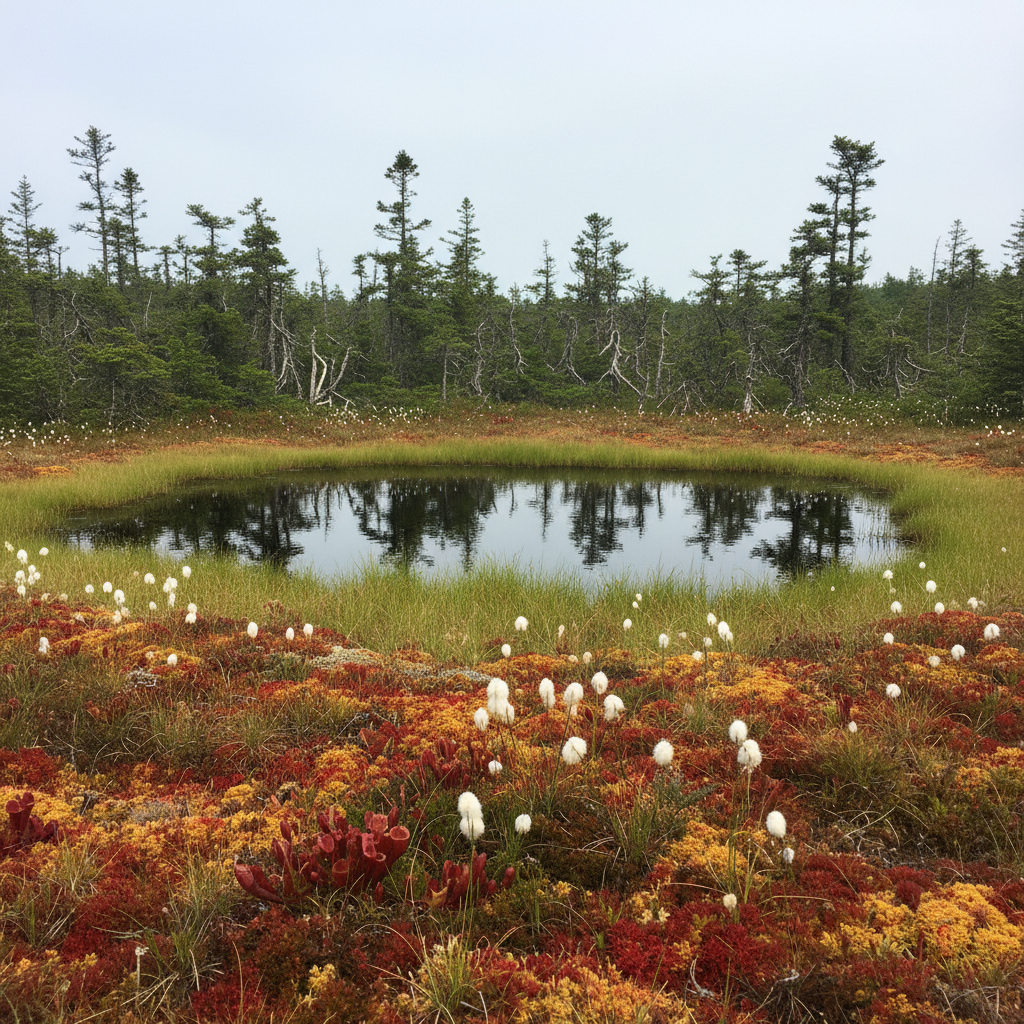
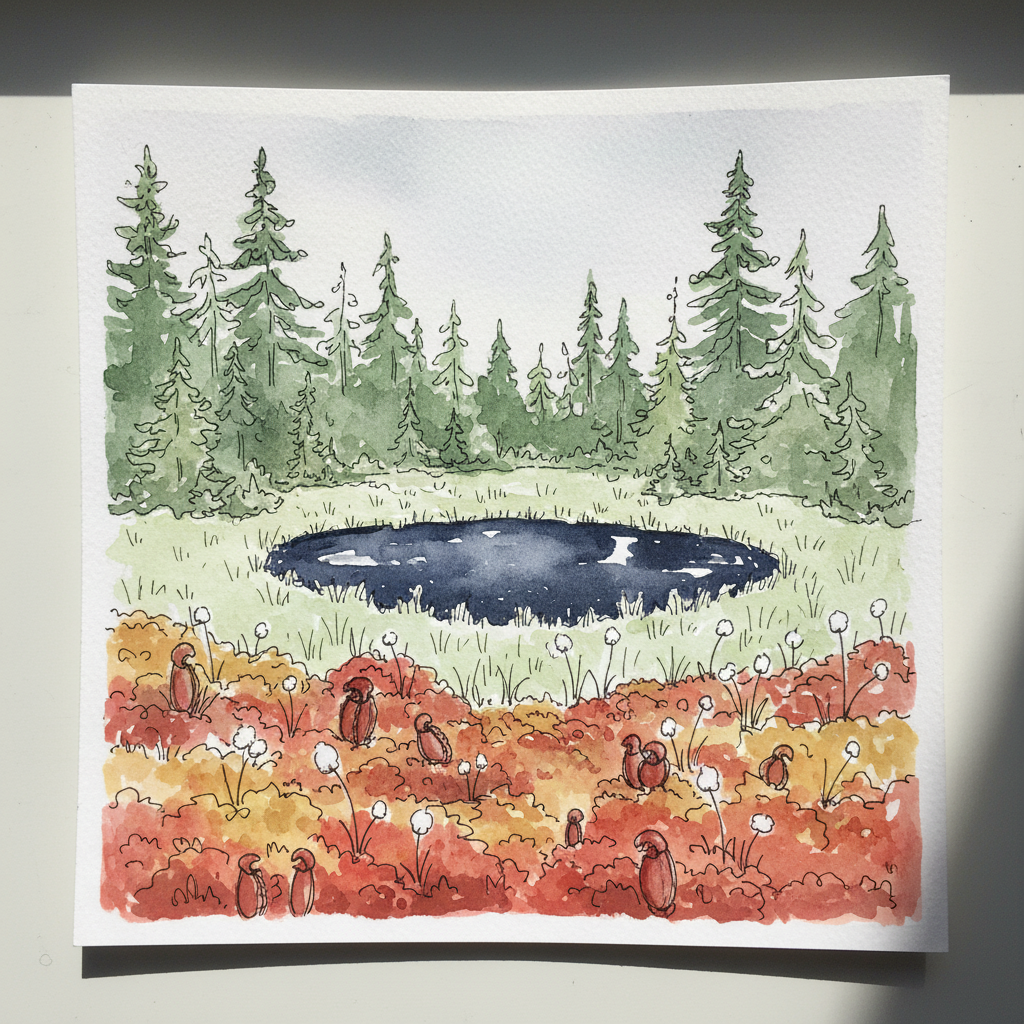
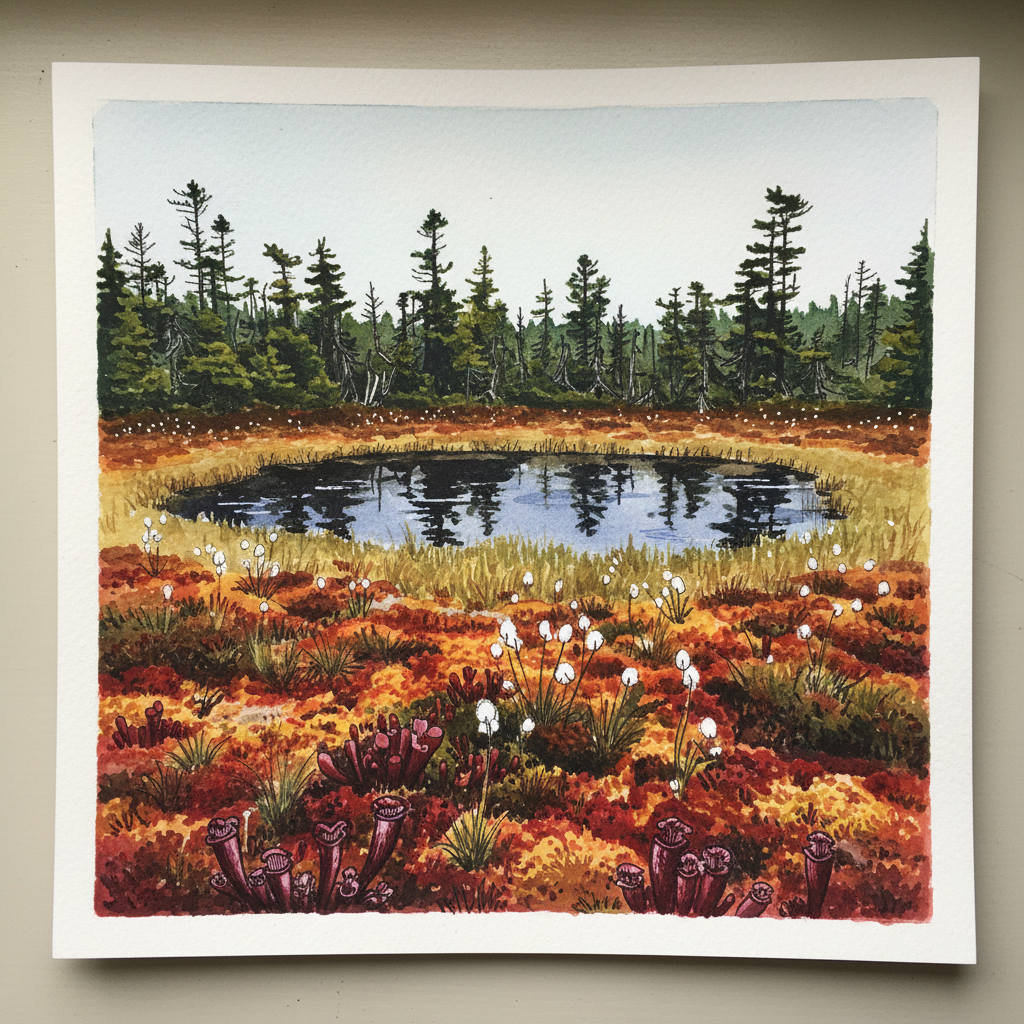
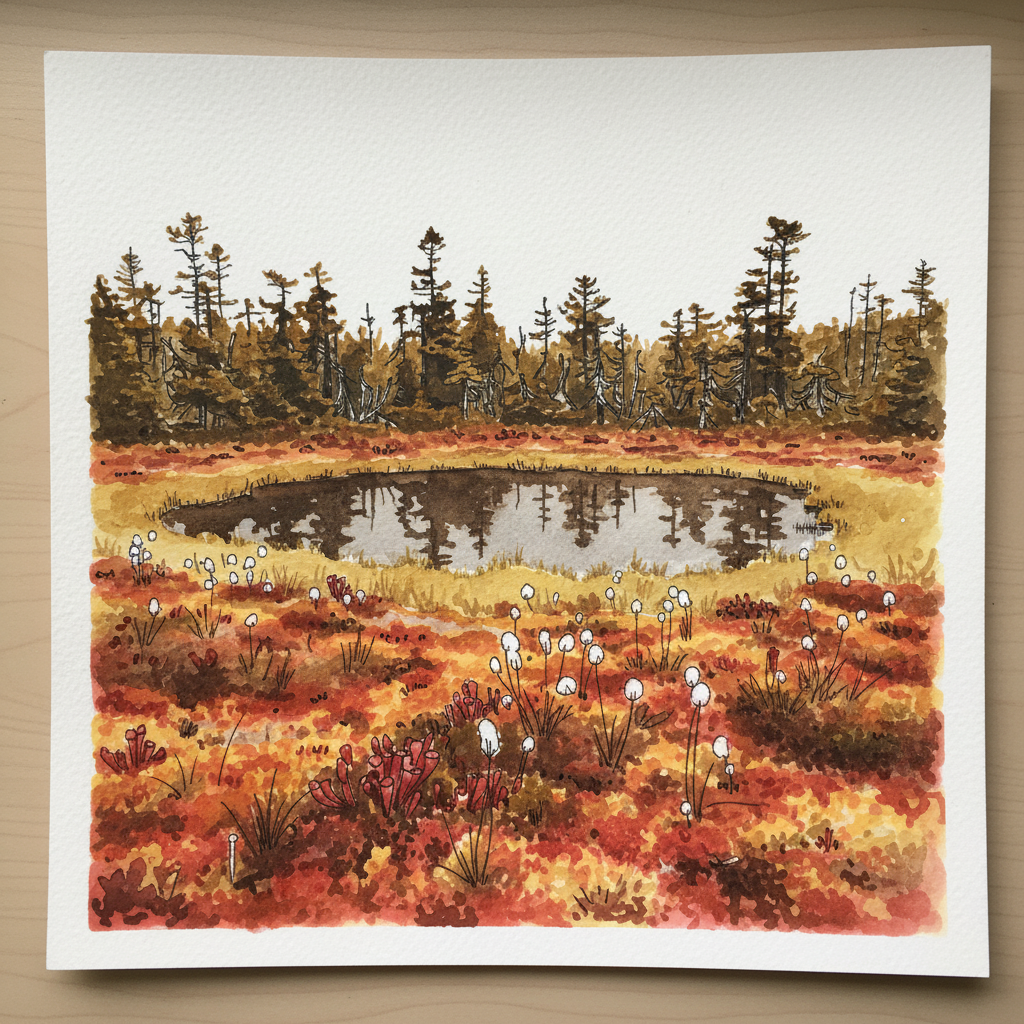
This Maine bog study is ideal for exploring textural contrast and atmospheric depth using both media. Define the foreground hummocks with varied, broken pen lines and let wet-on-wet washes create the soft texture of sphagnum moss and cotton grass. For the perfectly black bog pool, aim for a crisp, clean ink edge and a single deep, flat wash, then shift to looser, gestural lines and cooler, layered washes to suggest the receding, stunted spruce-fir margin.
Piece 3 — Texas Hill Country Low-Water Crossing
Pen + Watercolor · Loose pen and watercolor line-and-wash
Three takes
Focus for this piece
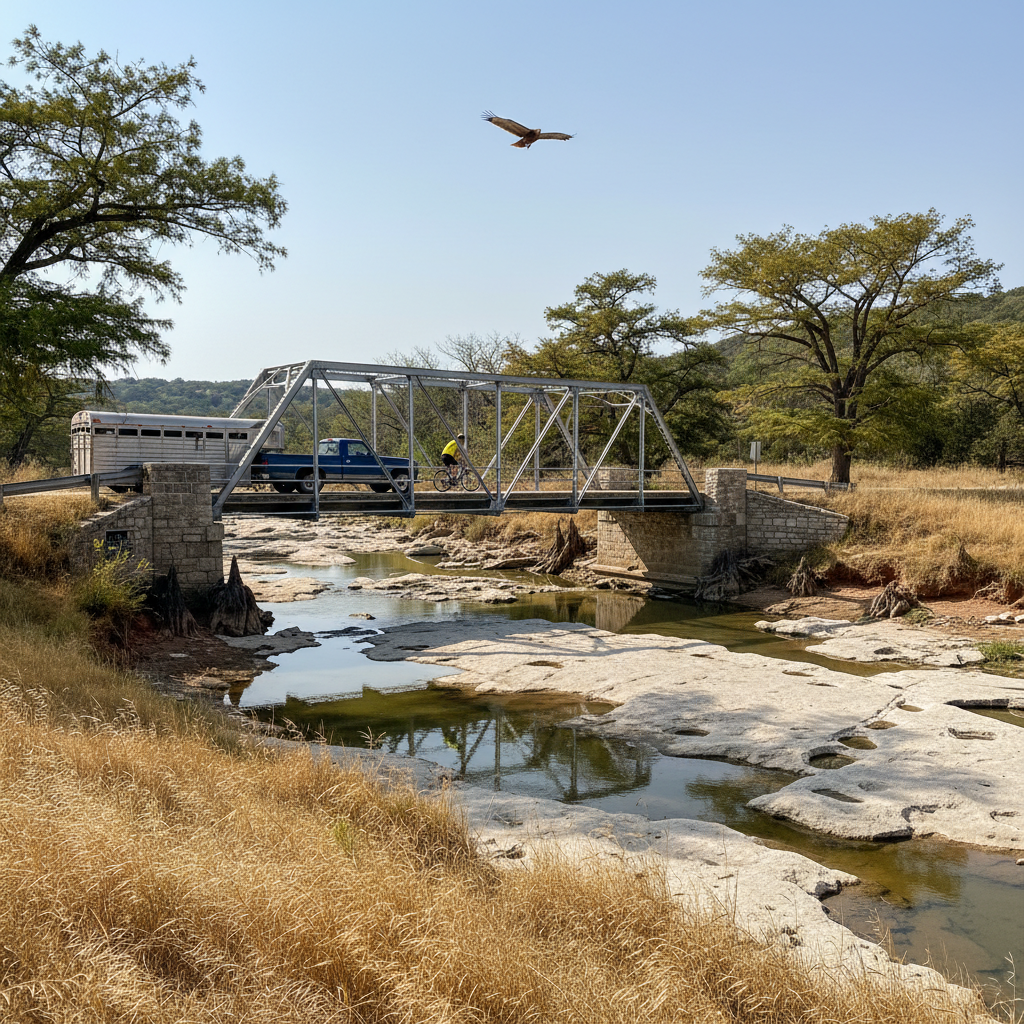
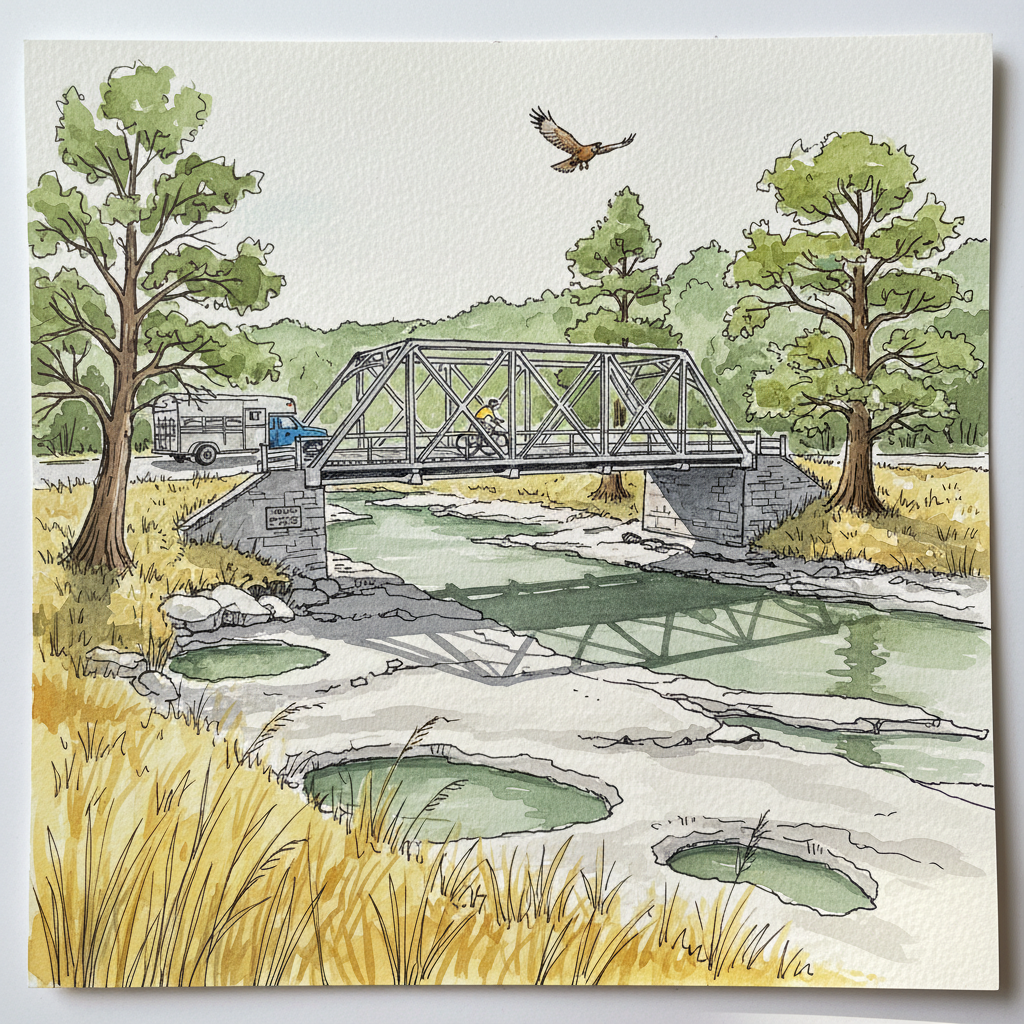
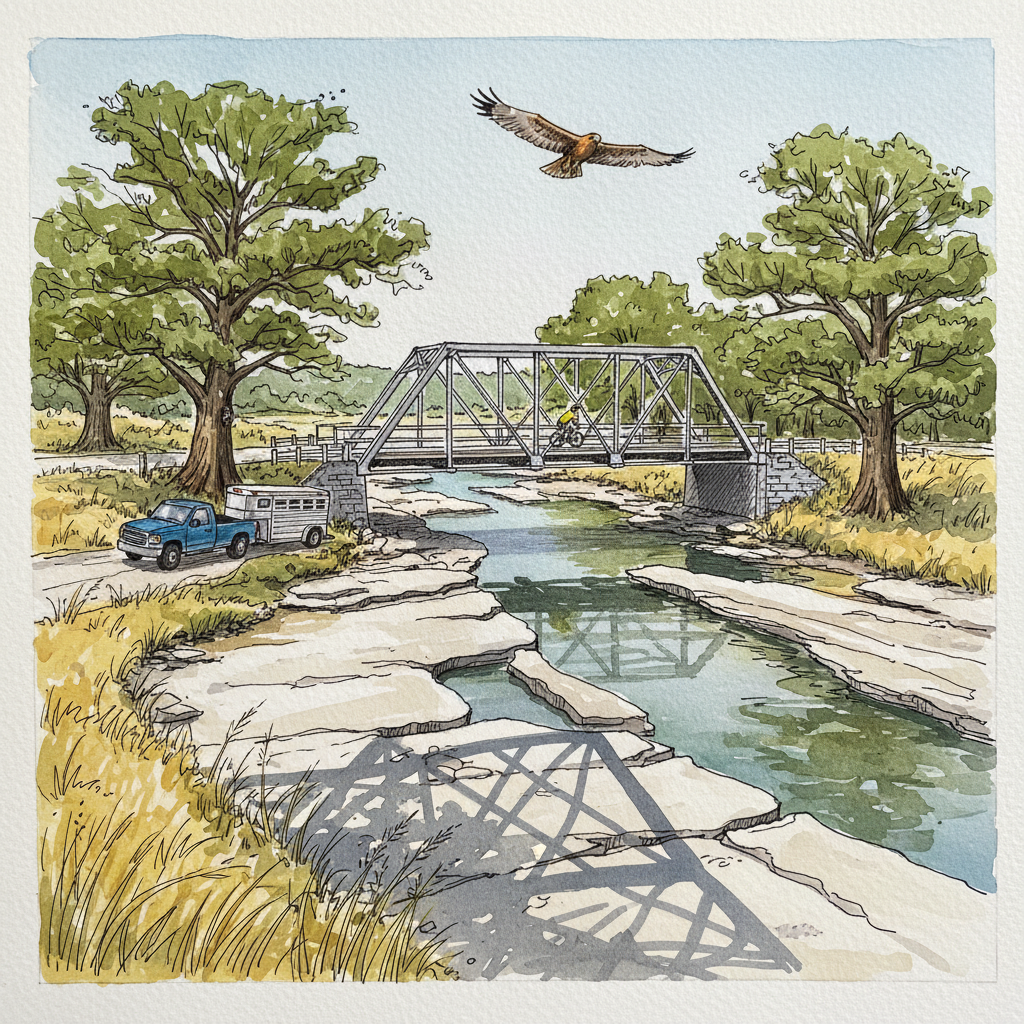
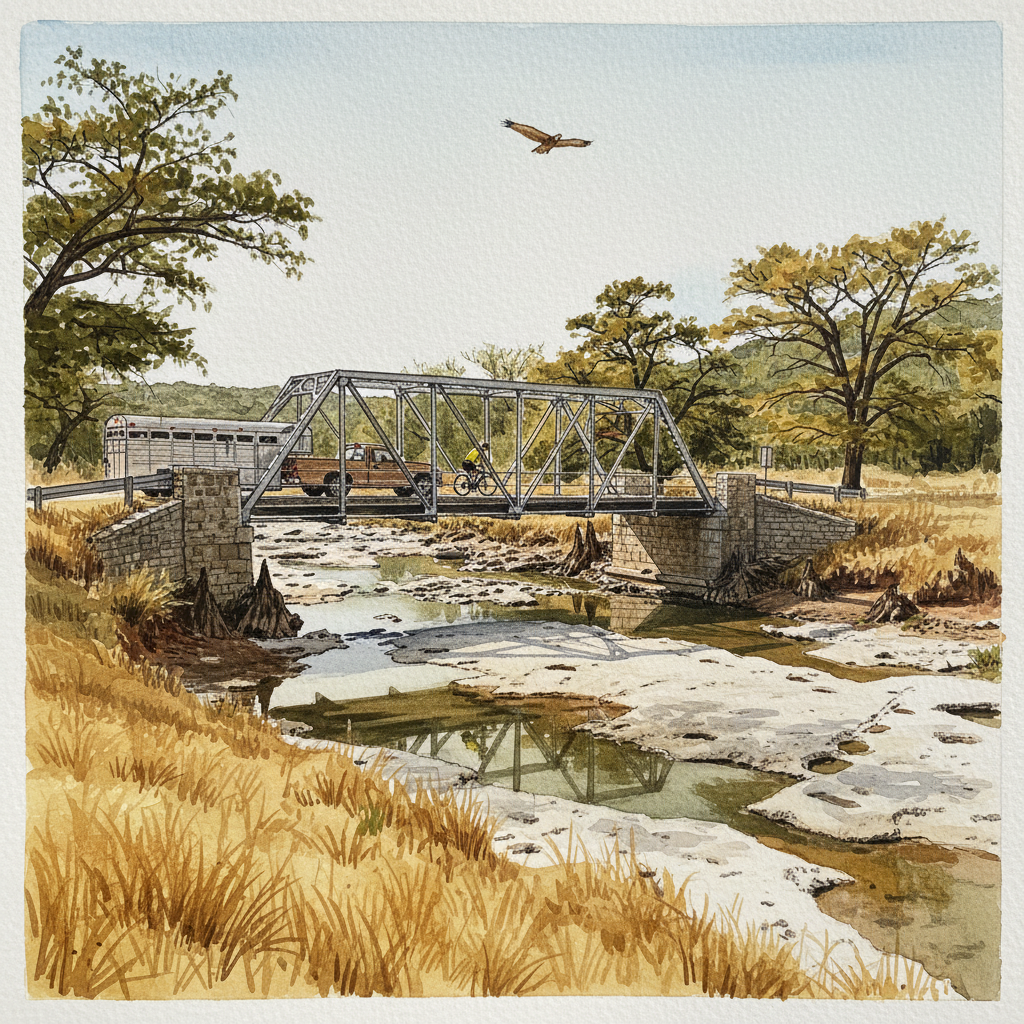
This piece offers a superb opportunity to explore the interplay between precise, architectural ink lines and soft, atmospheric watercolor washes. Focus on rendering the dusty silver Pratt truss and its "crisp lattice shadow" on the limestone with decisive, thin-to-medium ink lines, perhaps varying weight to suggest depth. Contrast this rigidity by using wet-into-wet washes for the river's green pools and the textured yellow grasses, allowing their edges to soften and blend. Your challenge is to let the ink define the structure while the watercolor provides the light, volume, and ambient heat of the Texas Hill Country.
Piece 4 — Couple with first dog
Pen + Watercolor · Loose pen and watercolor line-and-wash

Three takes
Focus for this piece
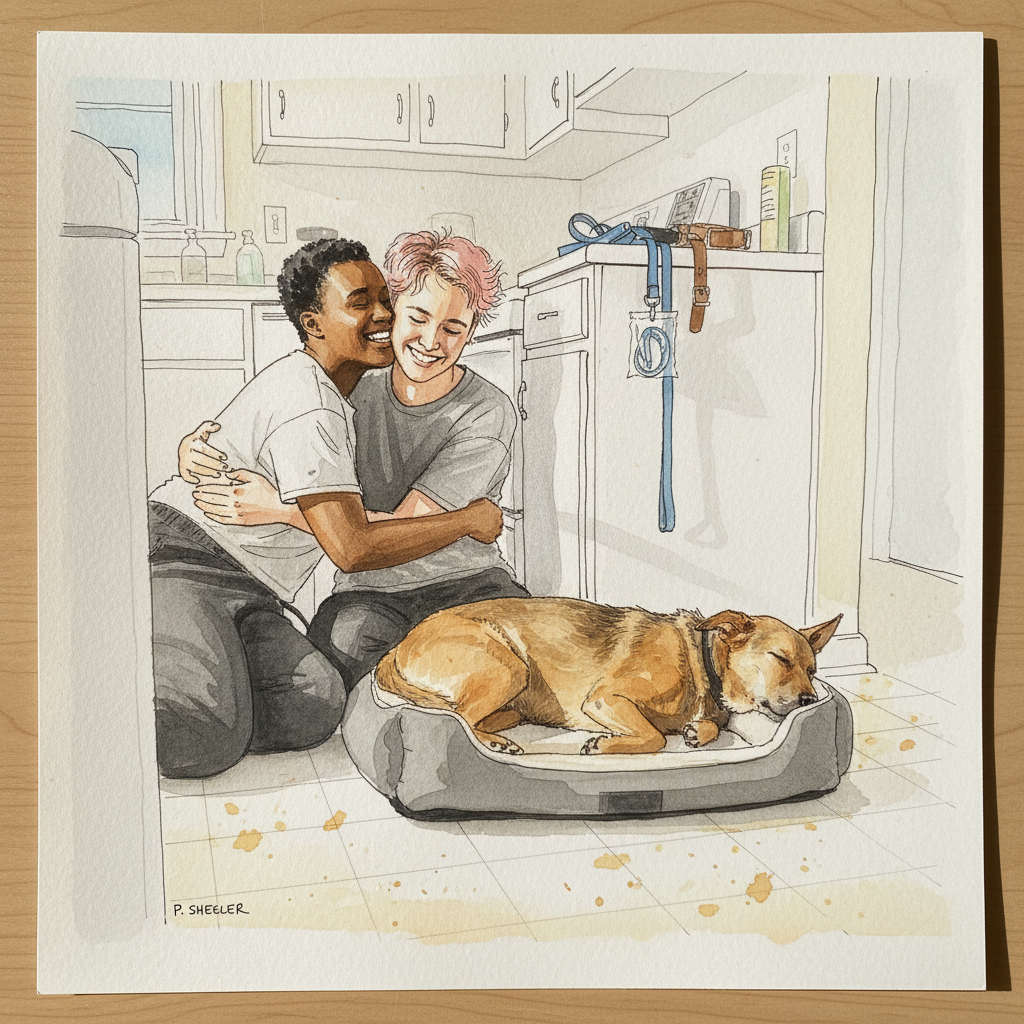
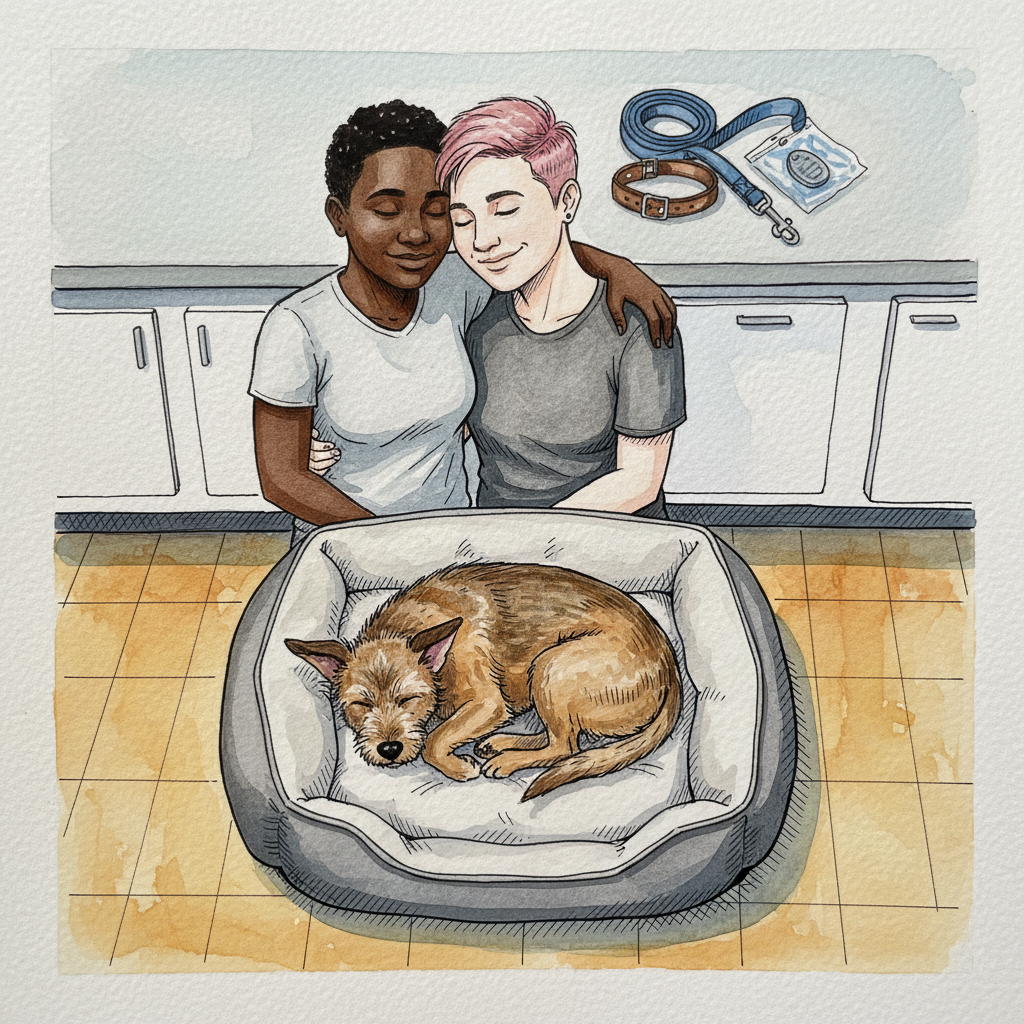
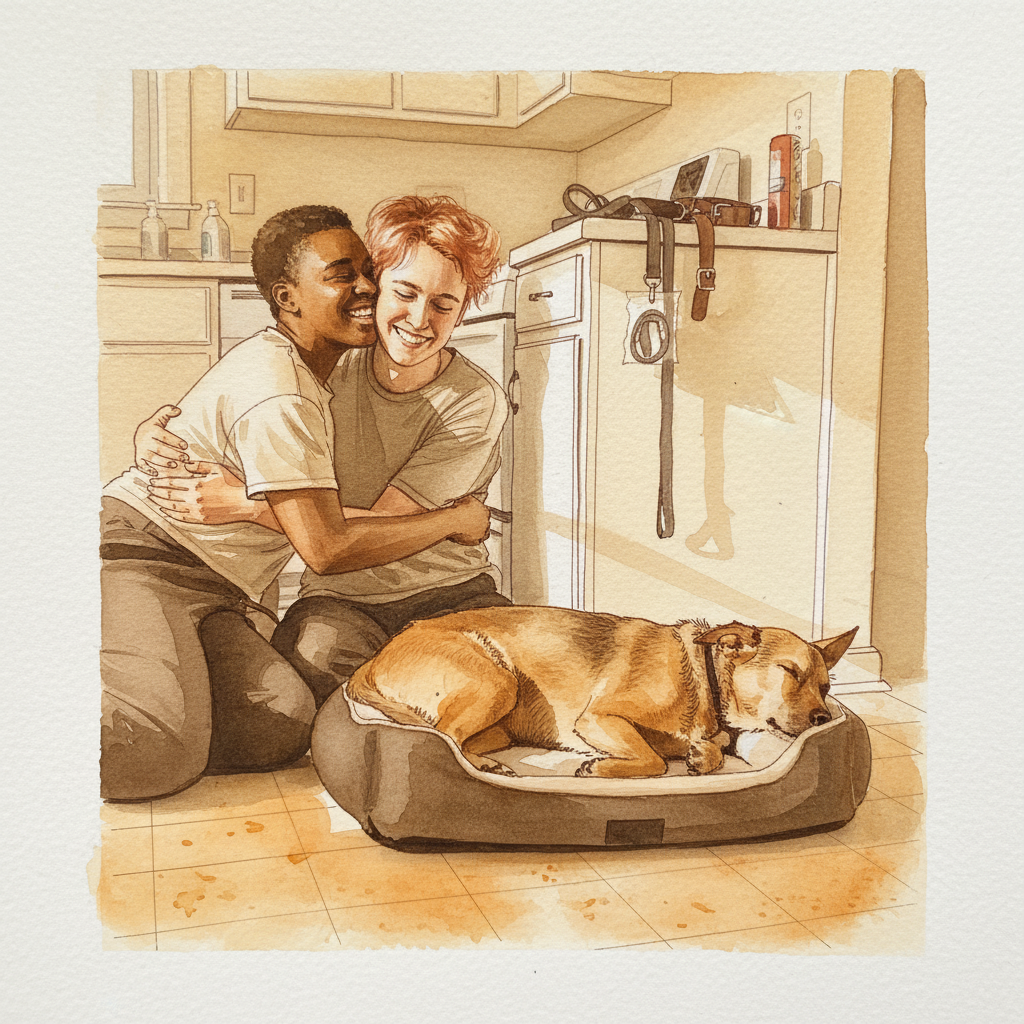
This piece offers a great opportunity to practice contrasting line weights and deliberate wet-on-wet washes to convey a warm, intimate mood. Use a slightly heavier, more consistent line to define the couple and the dog, drawing attention to their tender expressions and embrace. Then, employ soft, fluid washes with a warm, restricted palette to establish the glowing late afternoon light on the linoleum and the cozy textures of the dog bed, allowing the watercolor to blend softly around your ink details.
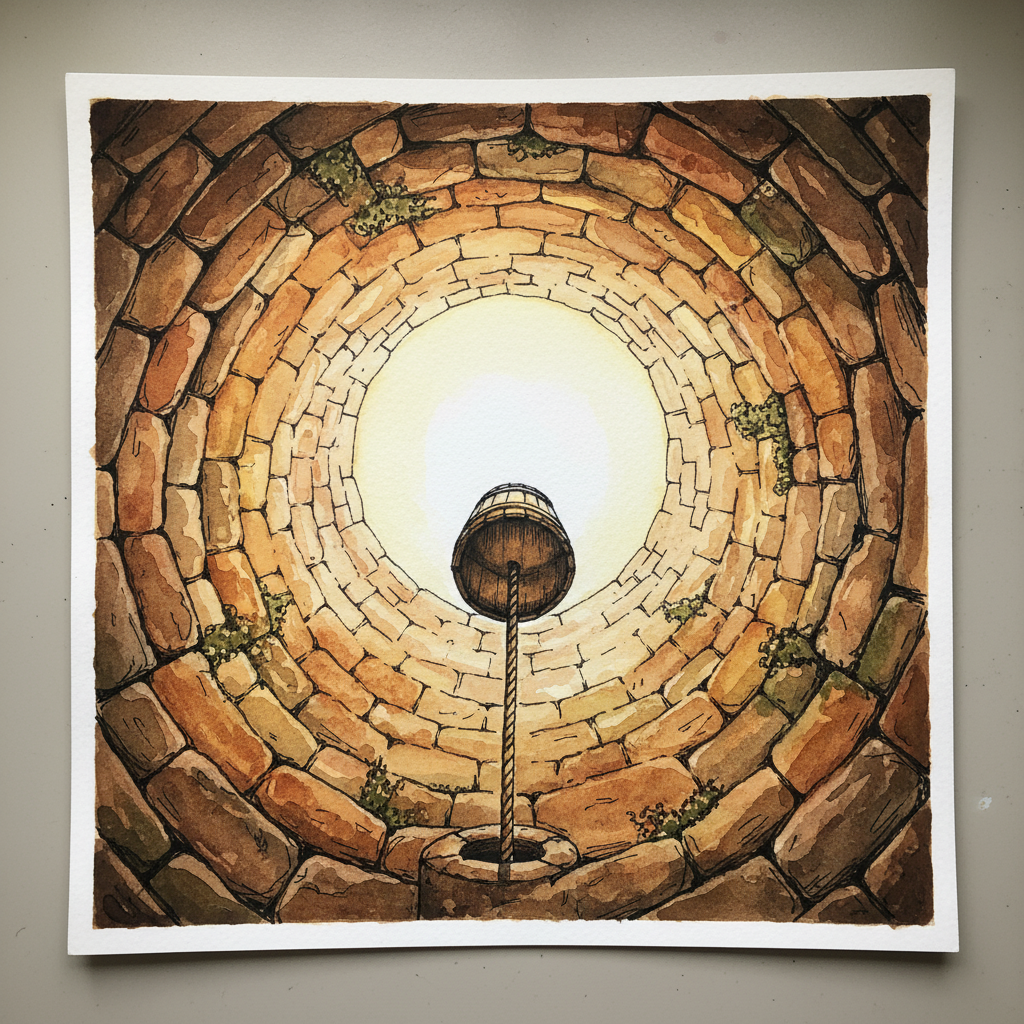
Piece 5 — Bottom of a Well Looking Up
Pen + Watercolor · Loose pen and watercolor line-and-wash
Three takes
Focus for this piece
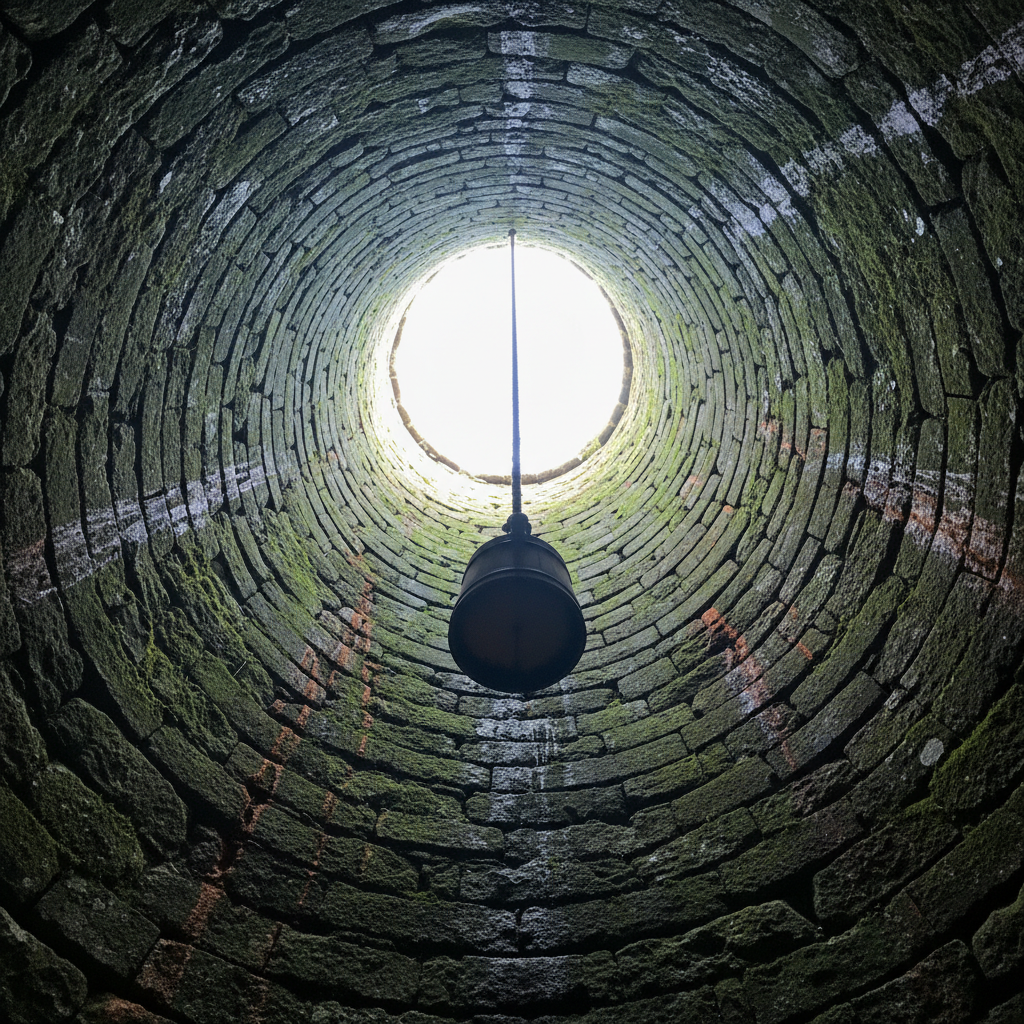
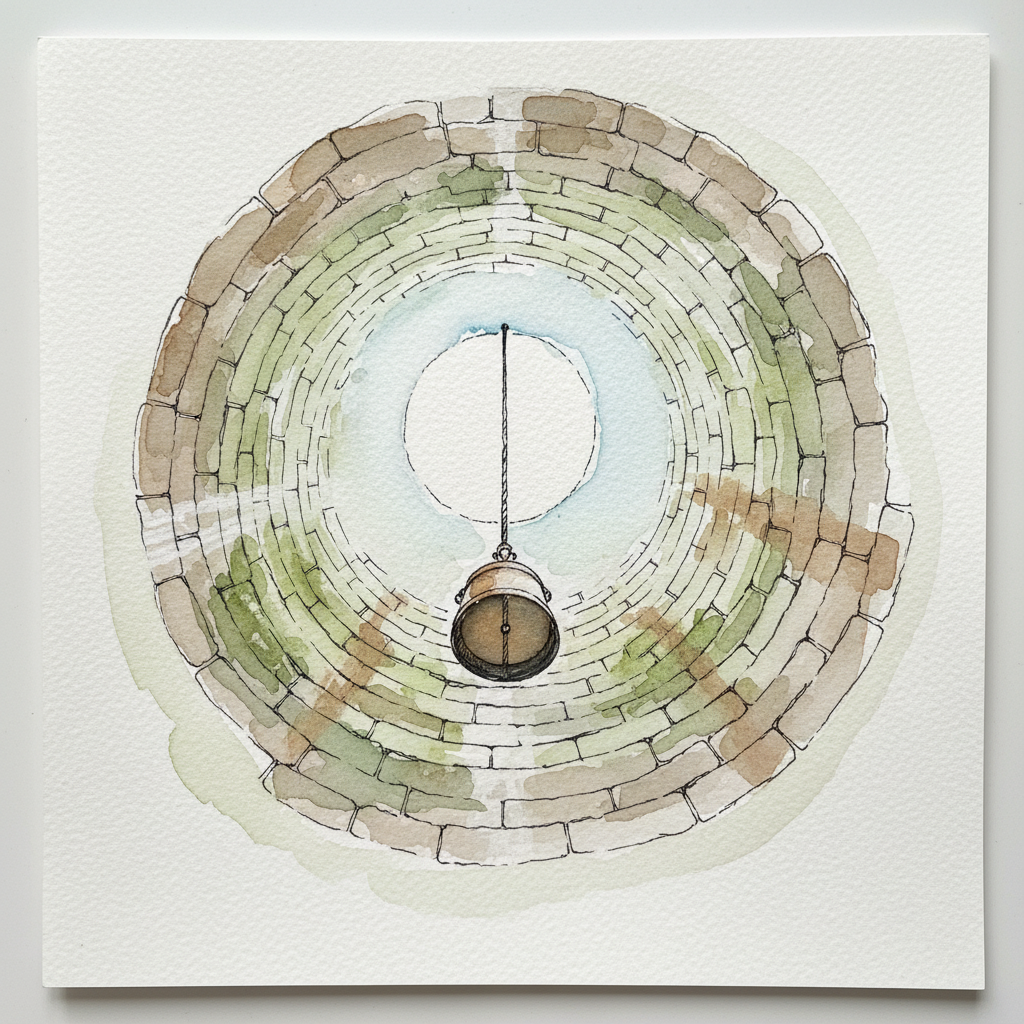
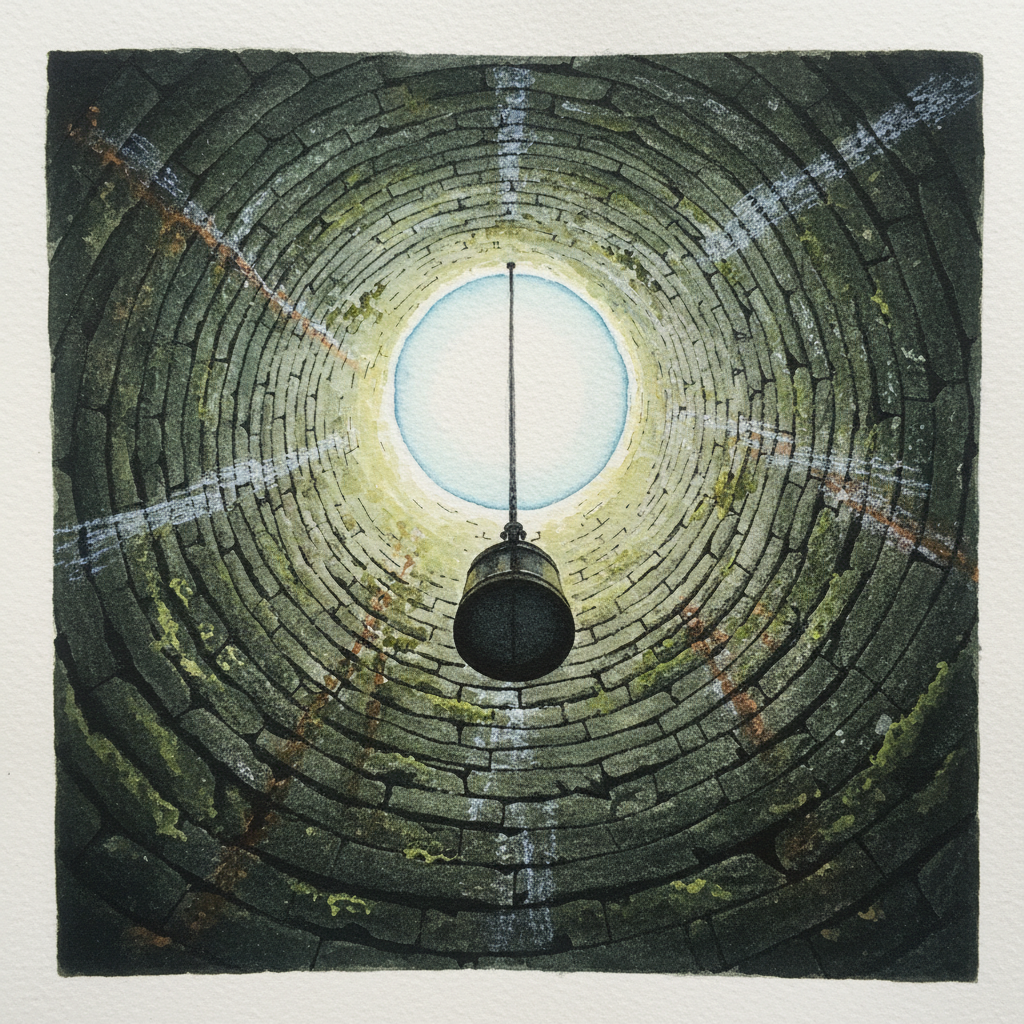
This piece is an excellent study in dramatic perspective, specifically the upward-facing third vanishing point, which you'll emphasize through converging line weights on the stone walls. Concentrate on the interplay of media to render texture and light: use crisp, varied ink lines to define the rough stone and the foreshortened circular forms, like the bucket. Then, employ soft, luminous wet-in-wet washes to create the glowing, atmospheric light of the sky opening. Finally, suggest the climbing moss and stains with subtle, layered watercolor textures that hint at their form without overpowering your initial pen work.
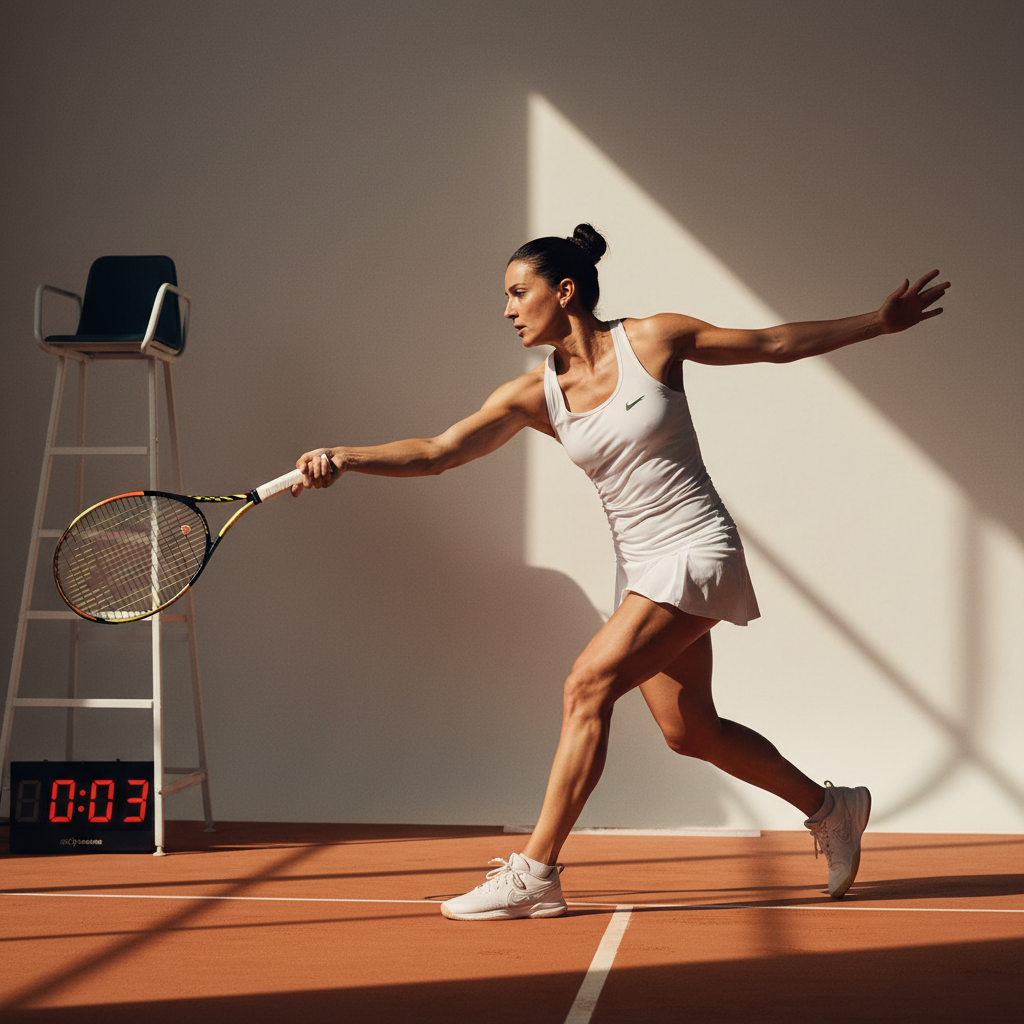
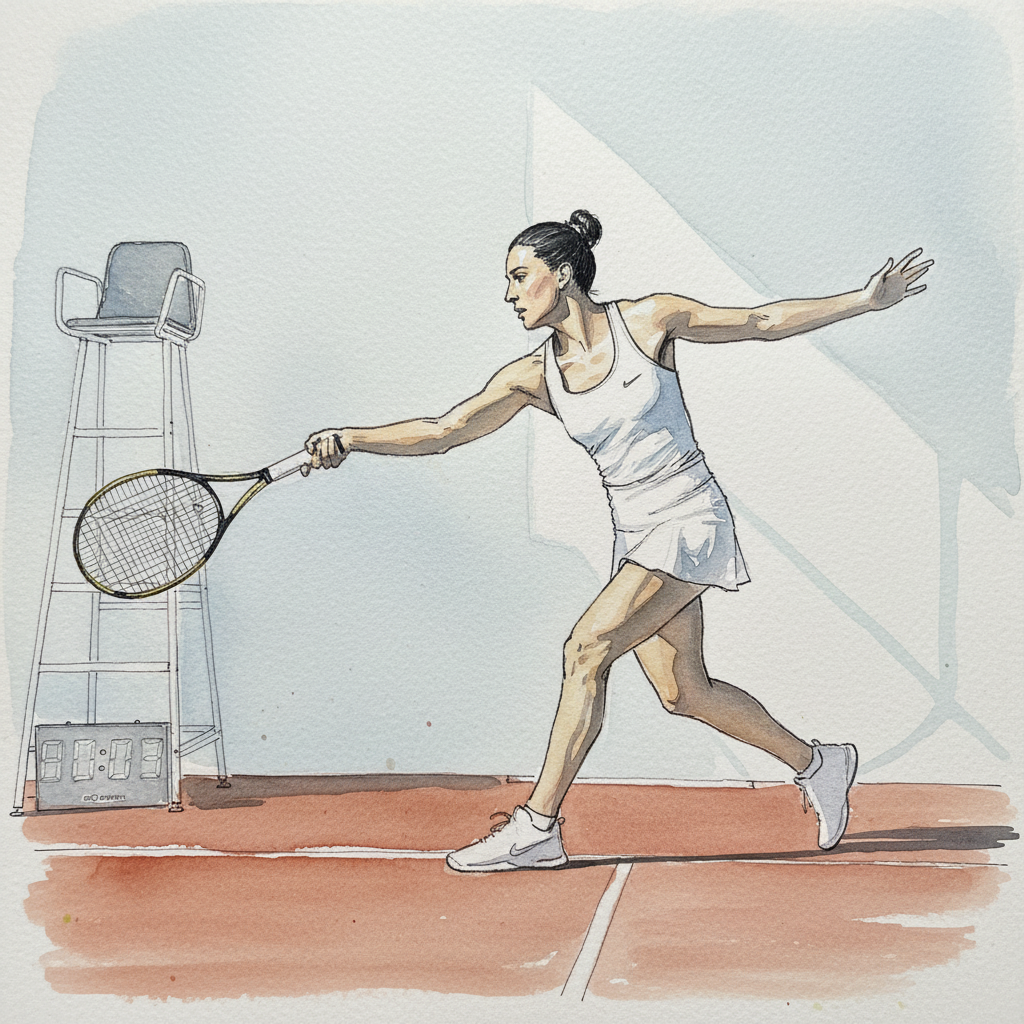
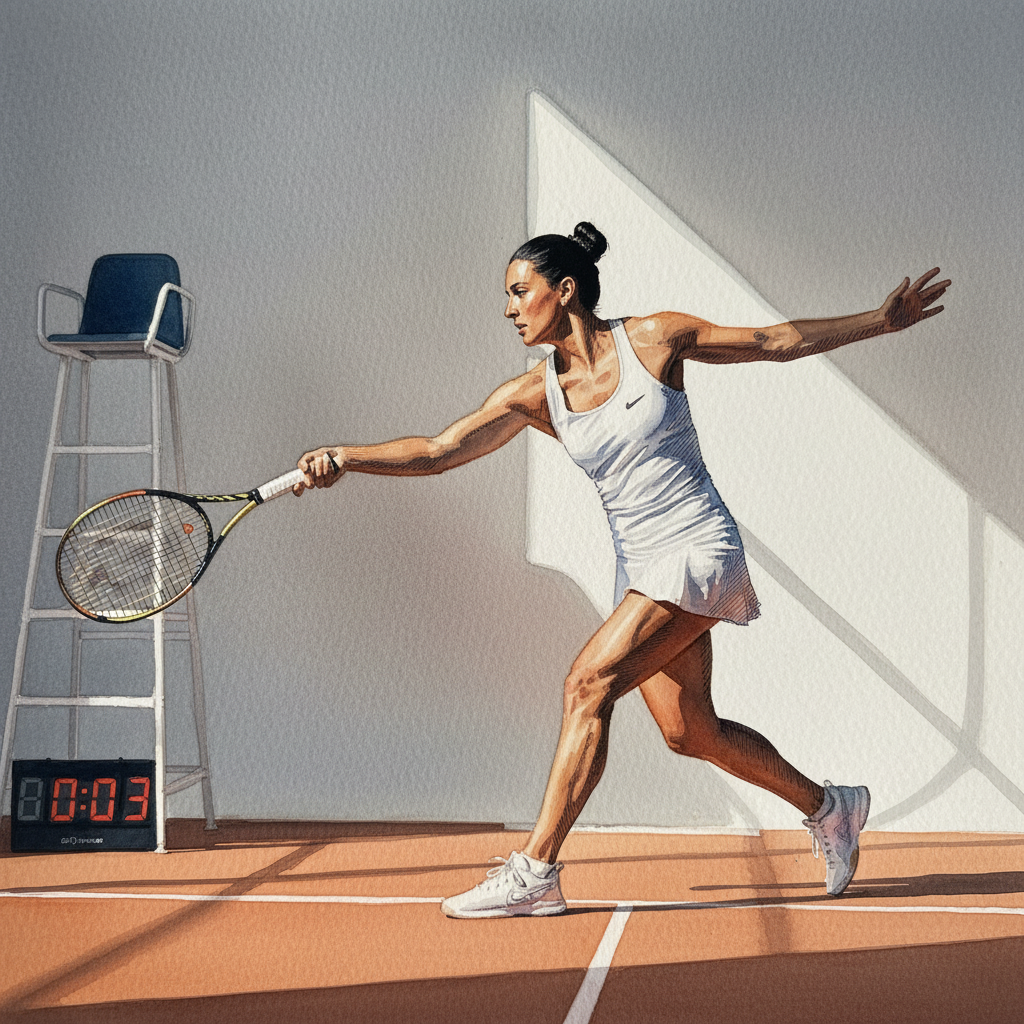
Piece 6 — Sweeping Backhand Swing
Pen + Watercolor · Loose pen and watercolor line-and-wash
Three takes
Focus for this piece
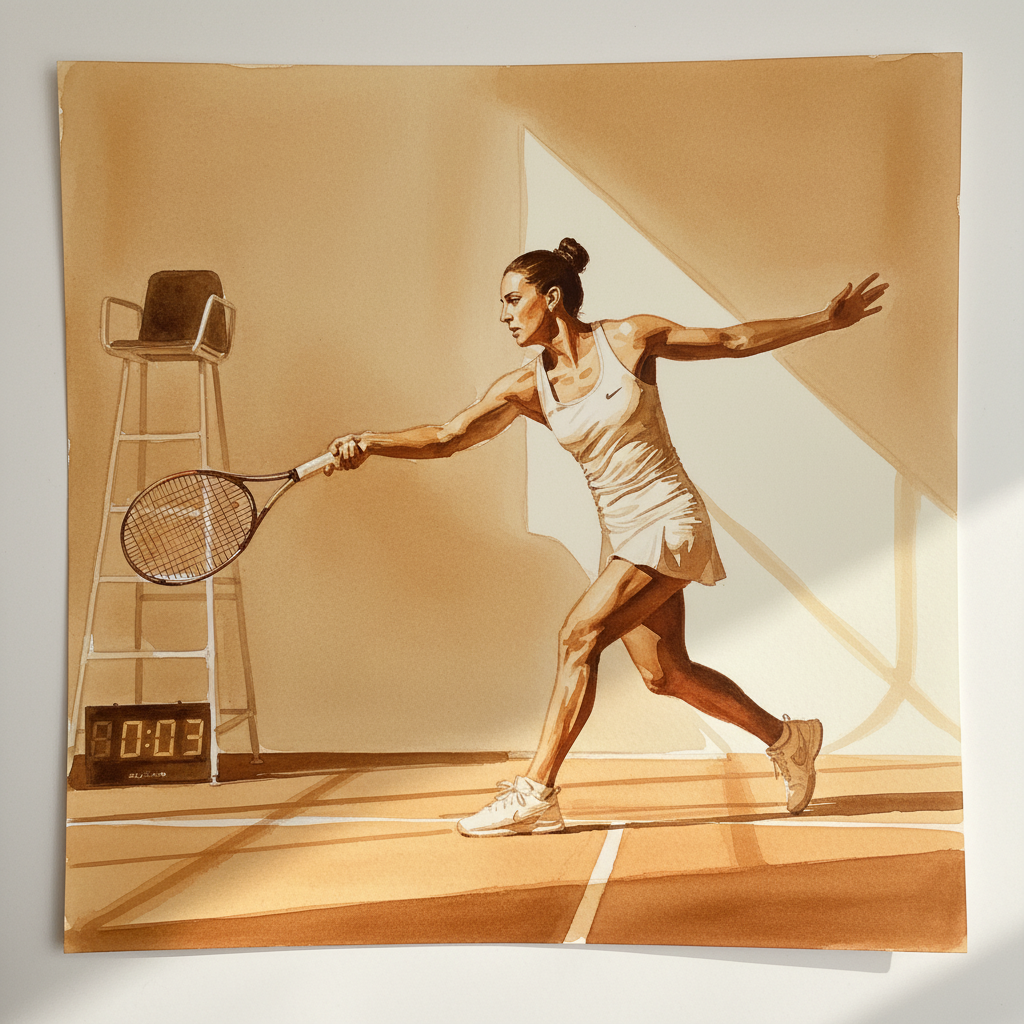
This piece is an excellent study in capturing dynamic movement and strong form against a static setting. Use deliberate, flowing pen lines to emphasize the wide horizontal arc of the backhand swing, conveying the tension in the dominant arm through varied line weights. Then, build volume and depth on the figure with confident watercolor washes, paying close attention to how the bright key light from the right reveals her anatomy and musculature. Allow these vibrant, flowing elements to contrast with the precise, static geometry of the baseline and umpire's stool.
Piece 7 — NRG Stadium, Houston, Texas, USA
Pen + Watercolor · Loose pen and watercolor line-and-wash
Three takes
Focus for this piece
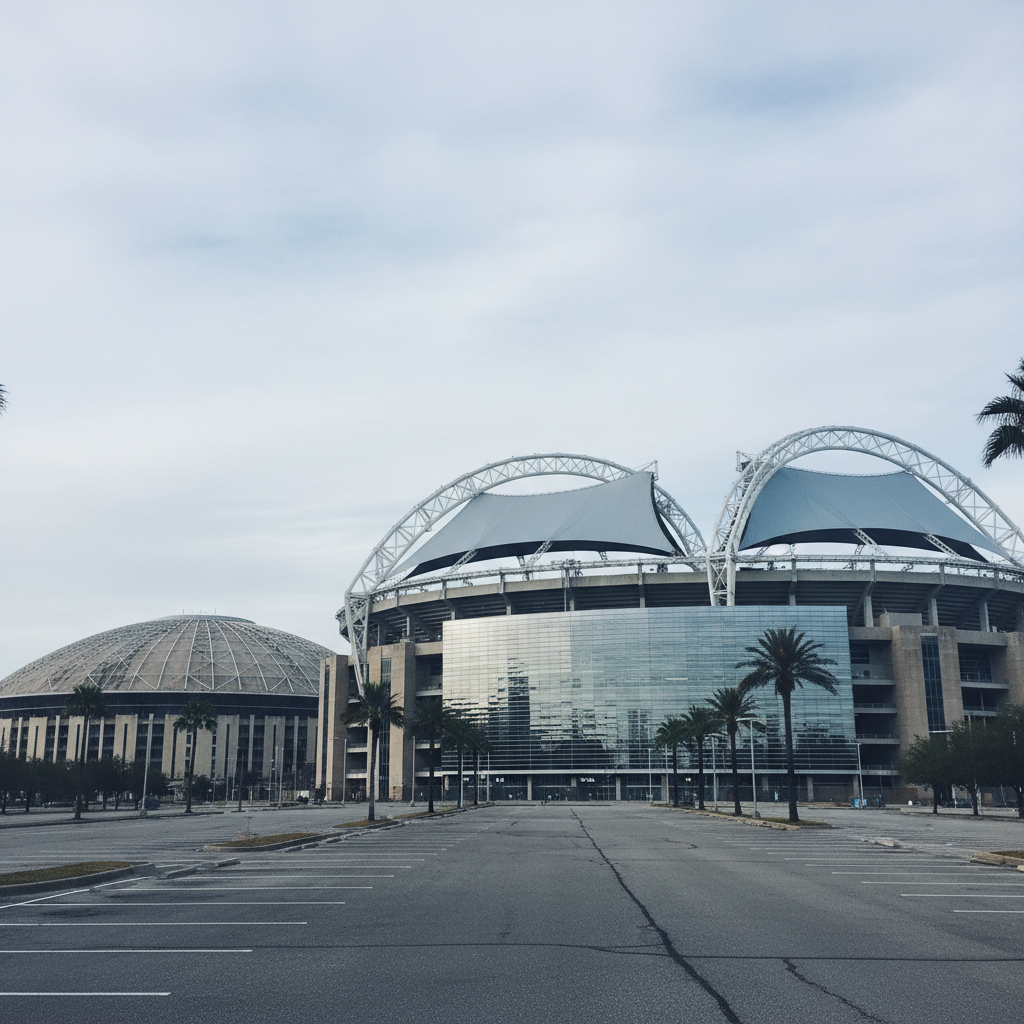
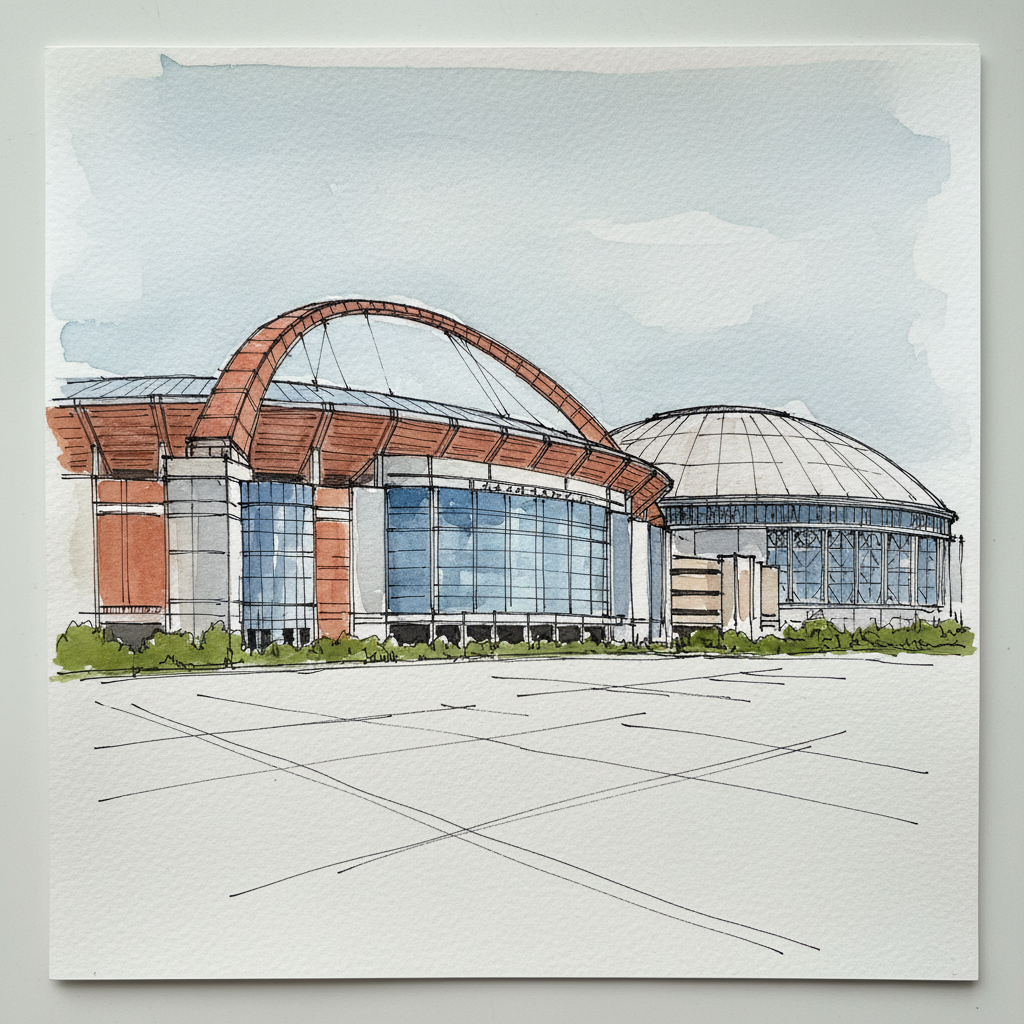
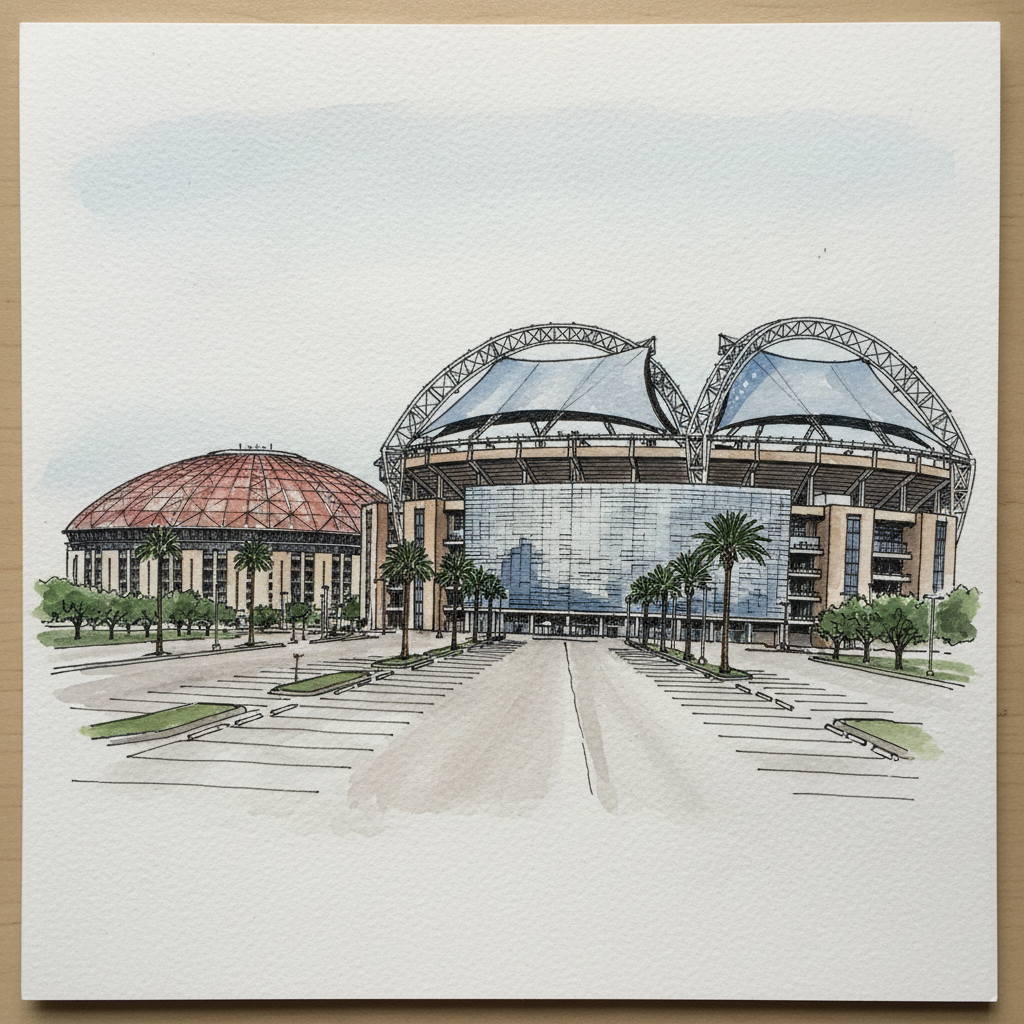
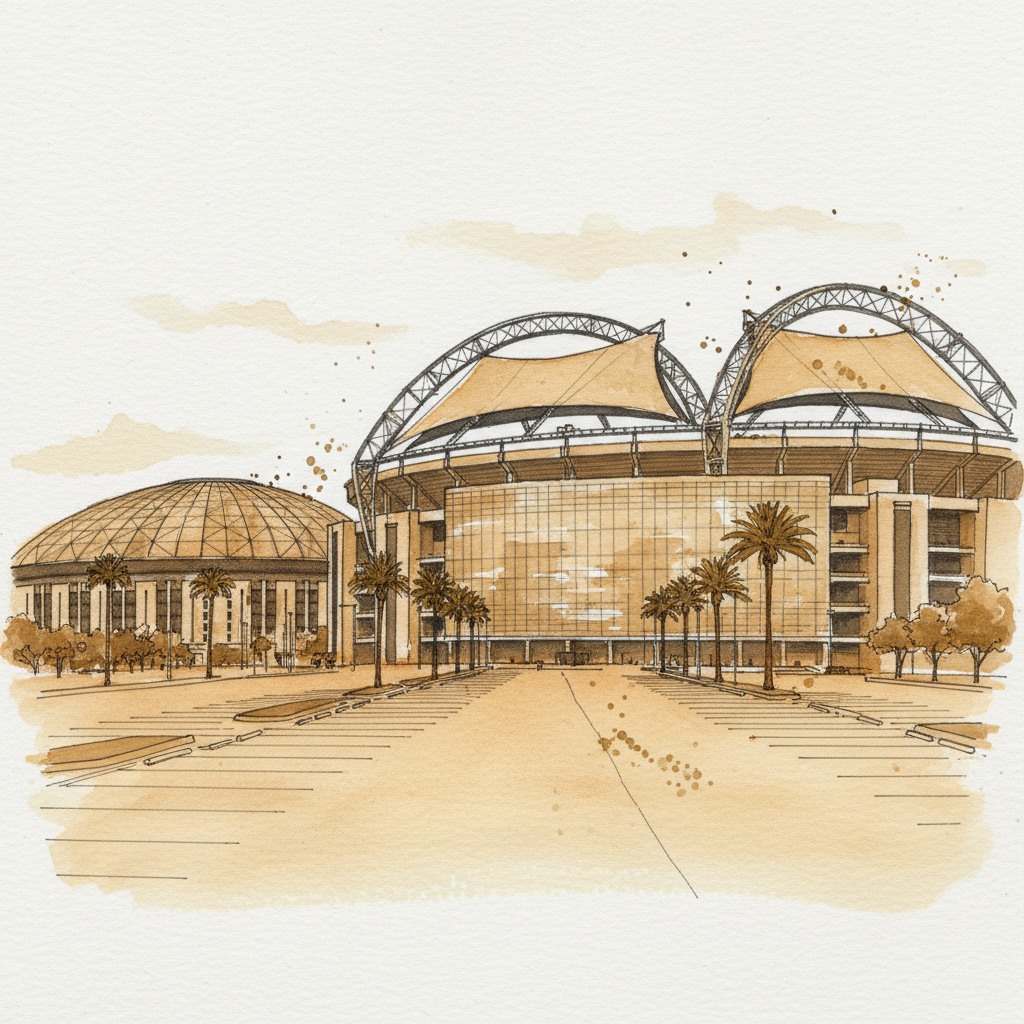
This piece offers an excellent study in using contrasting line weights and watercolor washes to articulate distinct architectural characters. For the modern NRG Stadium, apply firm, confident ink lines to define its sharp geometric structure and use crisp, cool-toned washes to capture the reflective metallic curtain walls. In contrast, employ lighter, broken ink lines and softer, atmospheric washes for the derelict Astrodome, allowing the watercolor to suggest its age and faded grandeur against the sharp newness of its neighbor. This will help you practice making intentional choices about *when* ink defines and *when* watercolor suggests.
Piece 8 — Antique celestial globe by candlelight
Pen + Watercolor · Loose pen and watercolor line-and-wash
Three takes
Focus for this piece
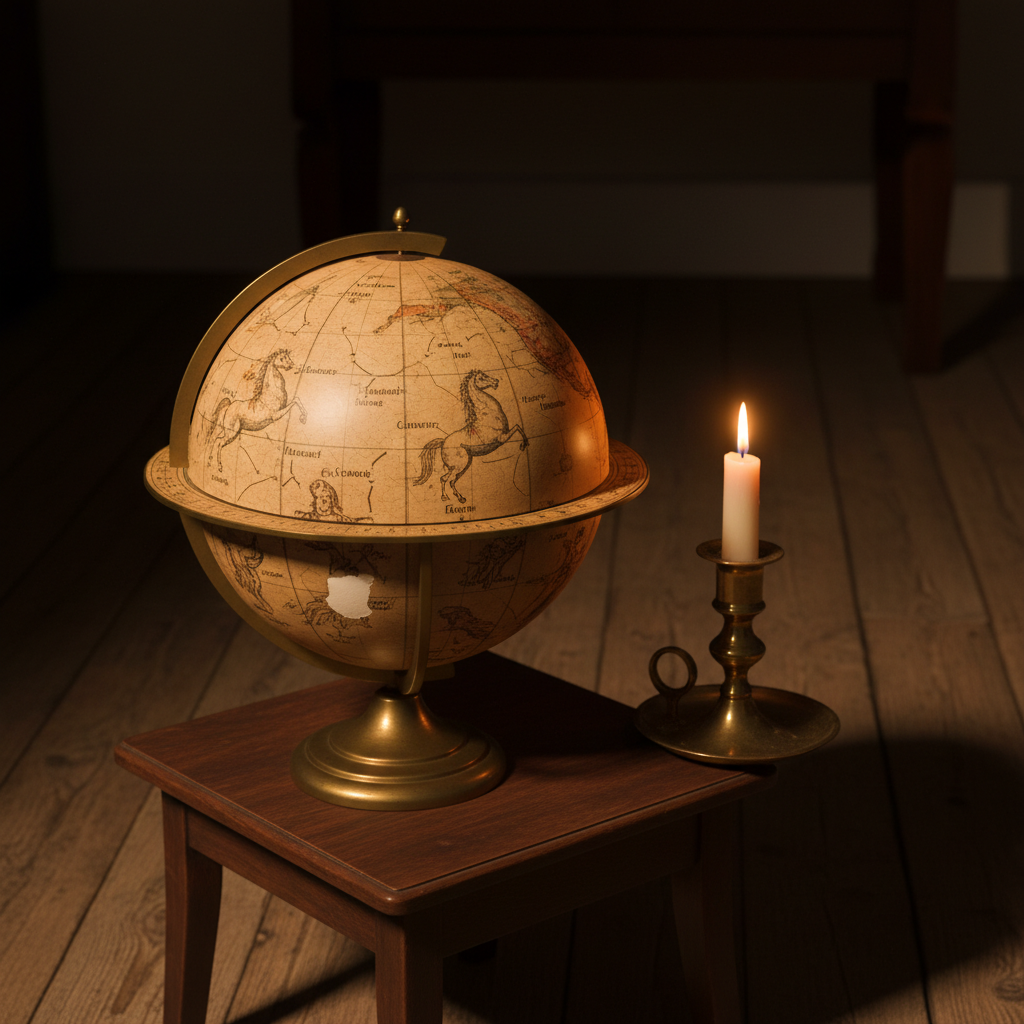
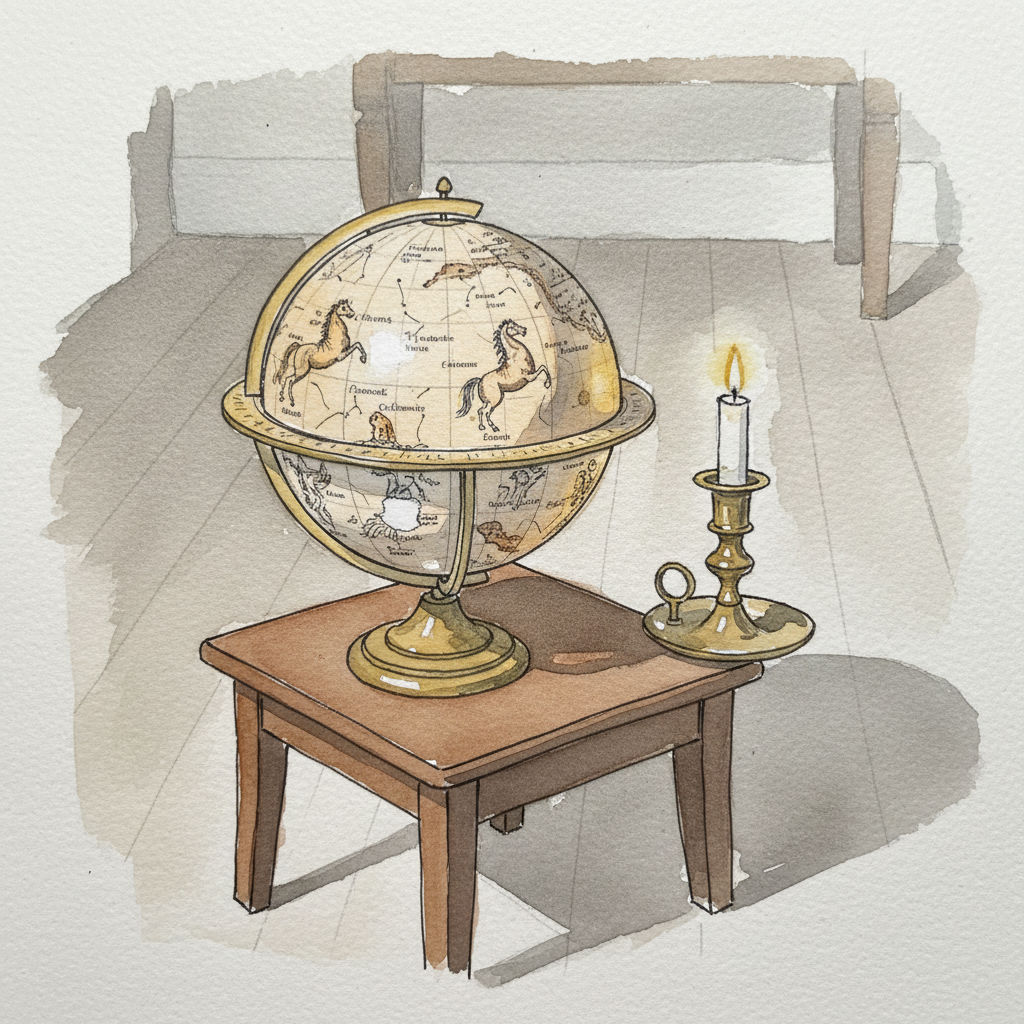
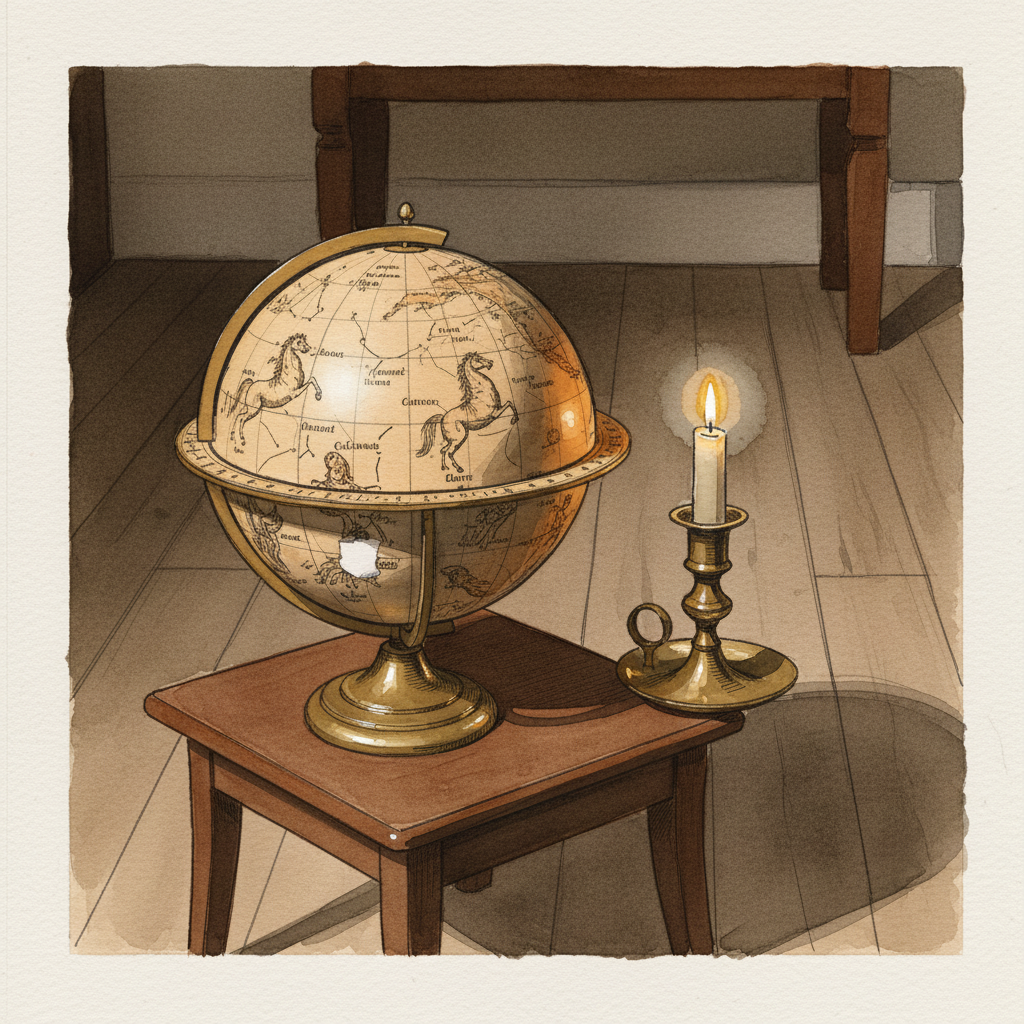
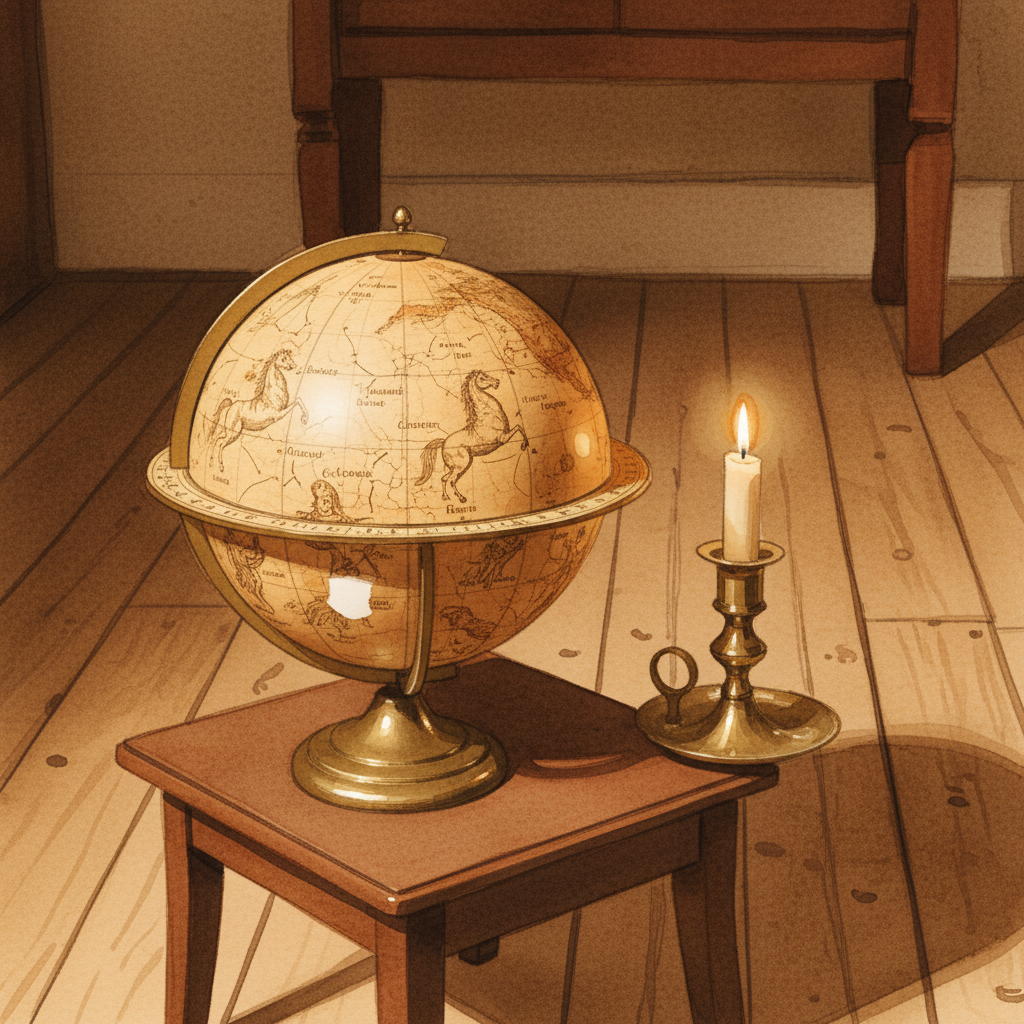
This piece offers an excellent study in rendering a spherical form under a single light source, building volume with a focused, warm palette that transitions into deep, cool shadows. Practice using broad, wet washes for the globe's overall shape and atmospheric gloom, allowing them to dry before adding varied ink line weights for the constellations and surface craquelure. Pay close attention to crisp highlights on the brass ring and the tiny reflected flame, which will make the candlelight truly glow against the dark room.