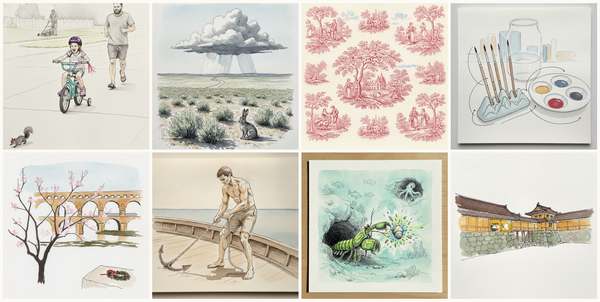
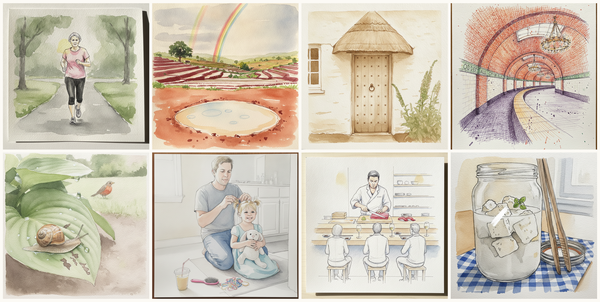
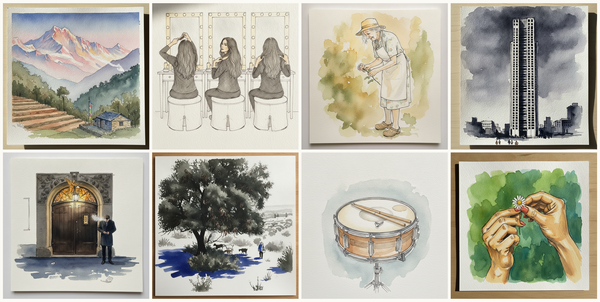
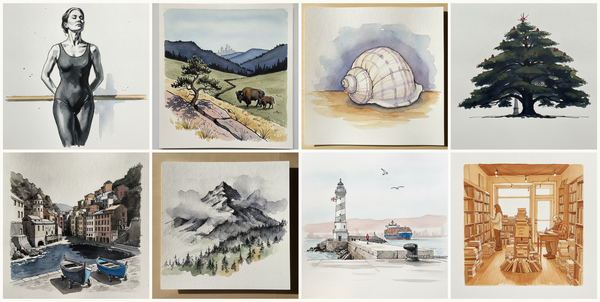
Wide-knees, full collapse, sunset window light, Aqua Claudia in Summer Wheat, Inversion with Cumulus Building Through, Silver flute disassembled on cloth, and more — pen + watercolor for May 28, 2026
Today's pen-and-watercolor pieces: Wide-knees, full collapse, sunset window light, Aqua Claudia in Summer Wheat, Inversion with Cumulus Building Through, Silver flute disassembled on cloth, Body with prosthetic arm, Pond cypress, Changdeokgung Huwon Secret Garden, Seoul, South Korea, Tan Cuong Te…
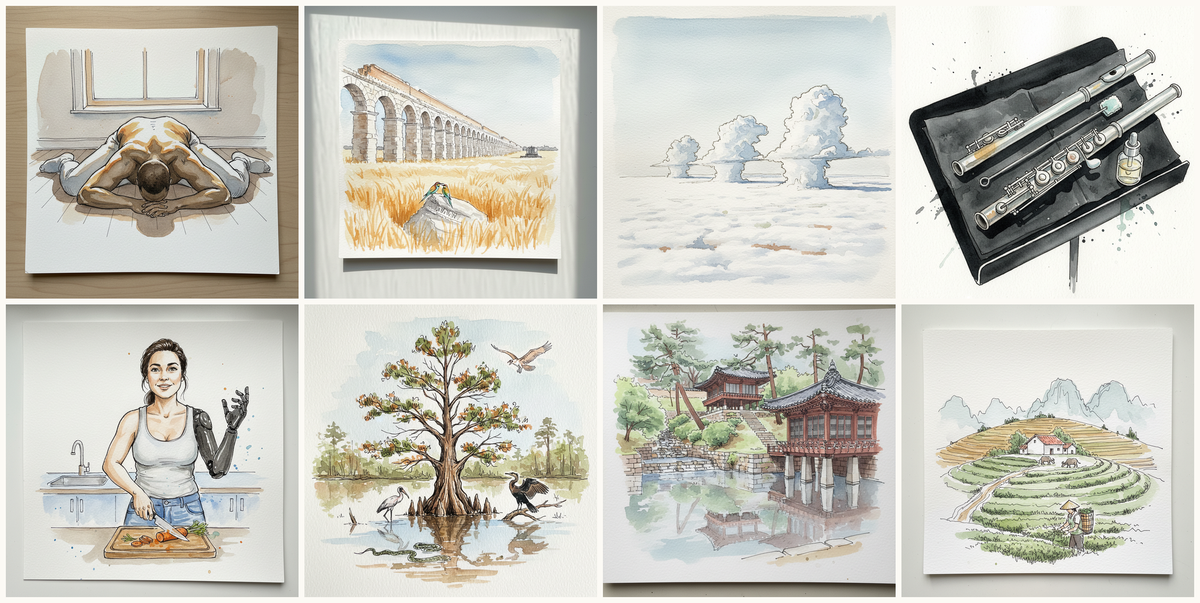
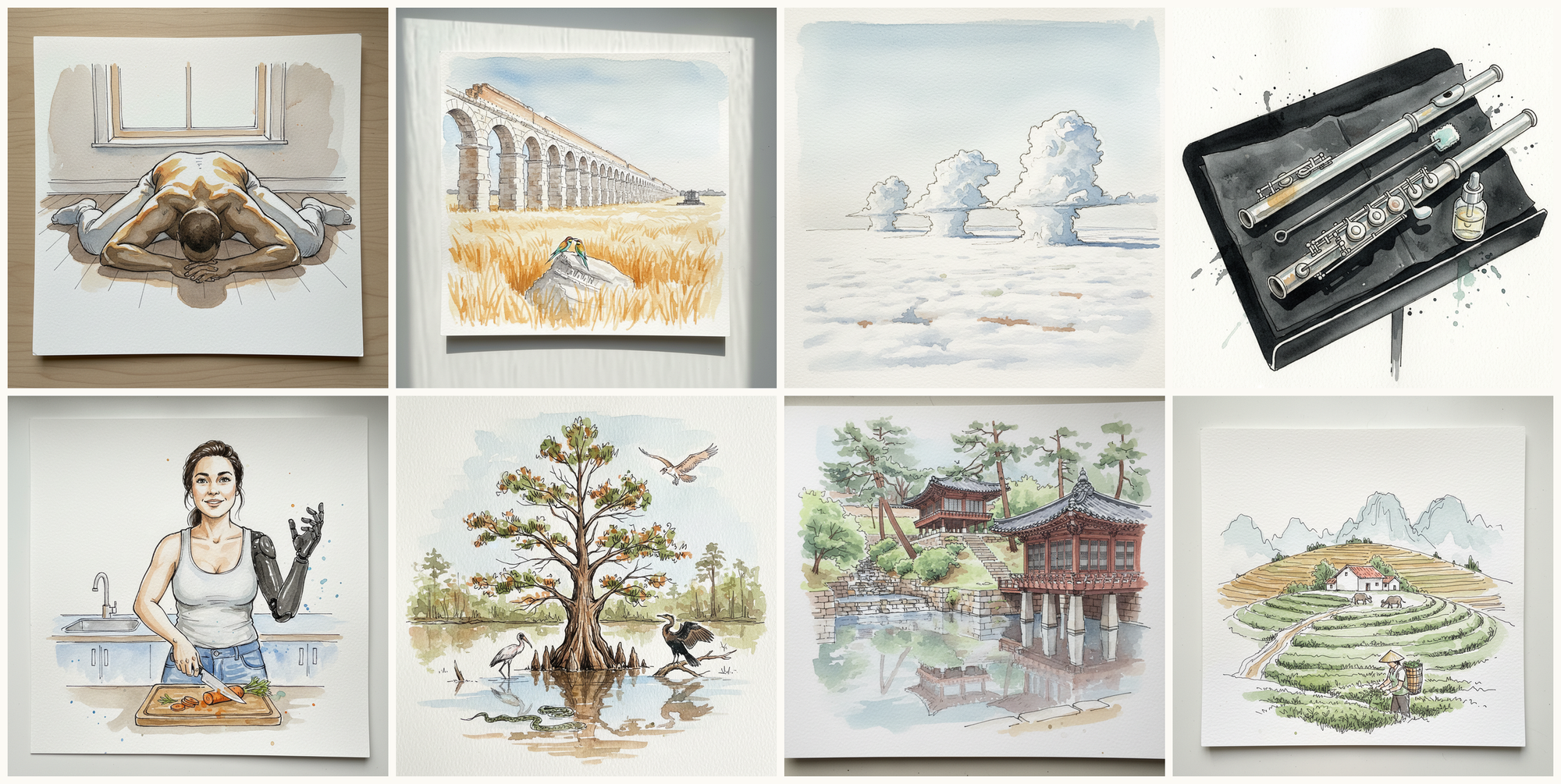
Today's 8 pen-and-watercolor pieces: Wide-knees, full collapse, sunset window light, Aqua Claudia in Summer Wheat, Inversion with Cumulus Building Through, Silver flute disassembled on cloth, Body with prosthetic arm, Pond cypress, Changdeokgung Huwon Secret Garden, Seoul, South Korea, Tan Cuong Tea Hills, Thai Nguyen, Vietnam. Each piece comes with a photo reference, three example artworks in different treatments, and a short focus paragraph naming what to study in this one.
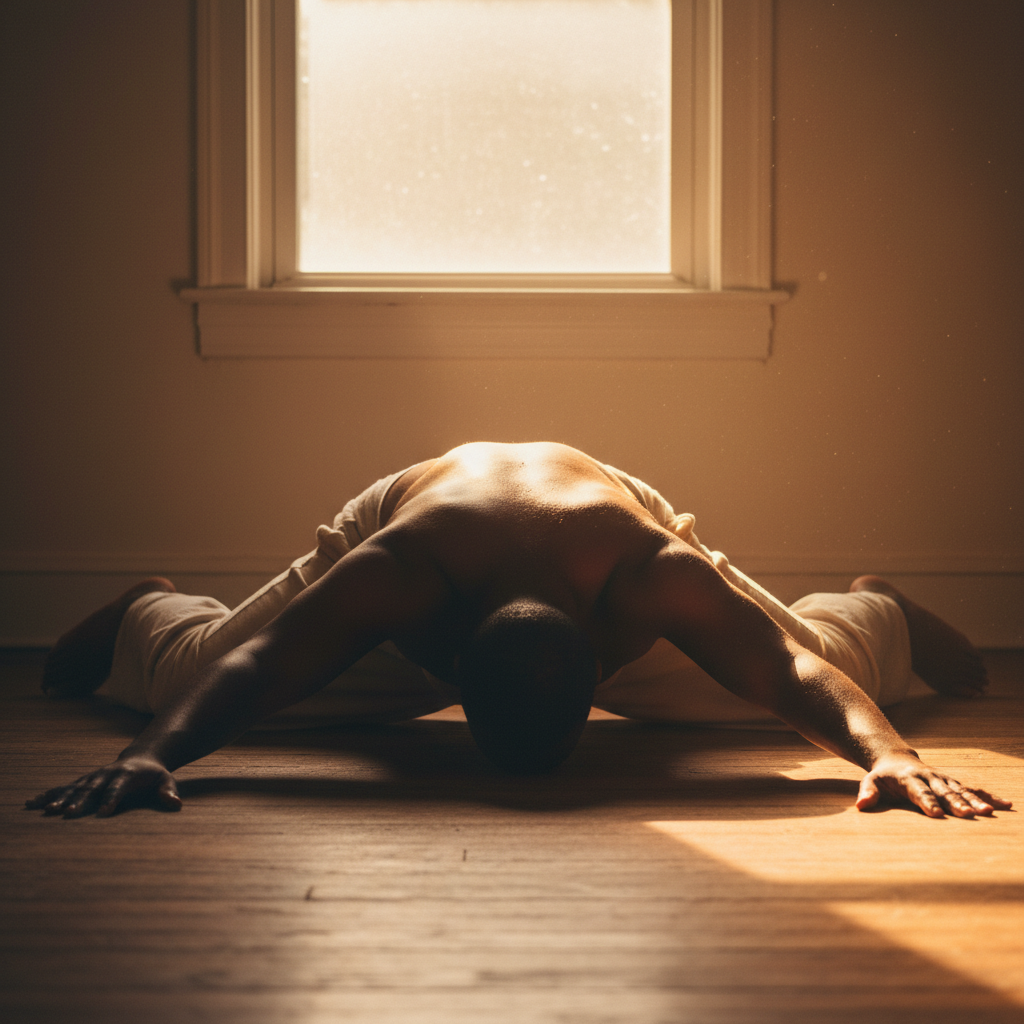
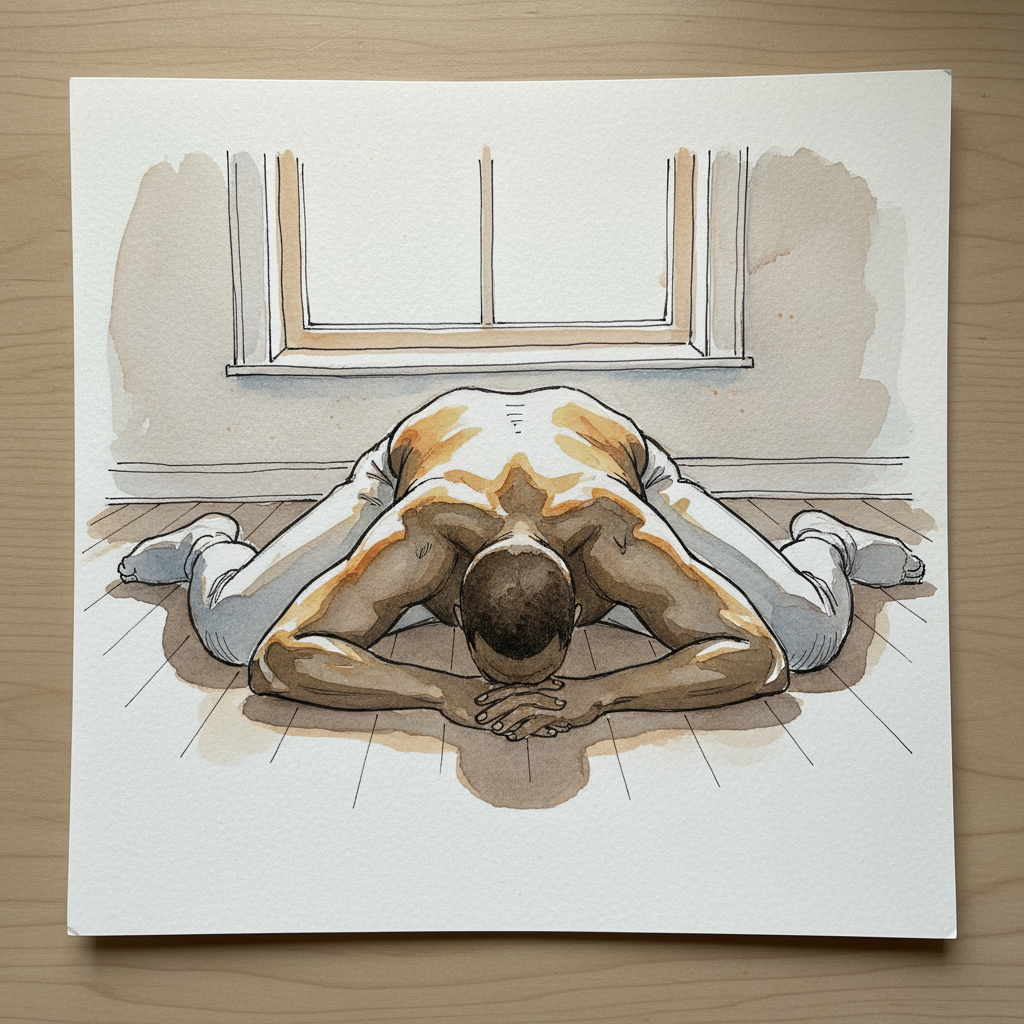
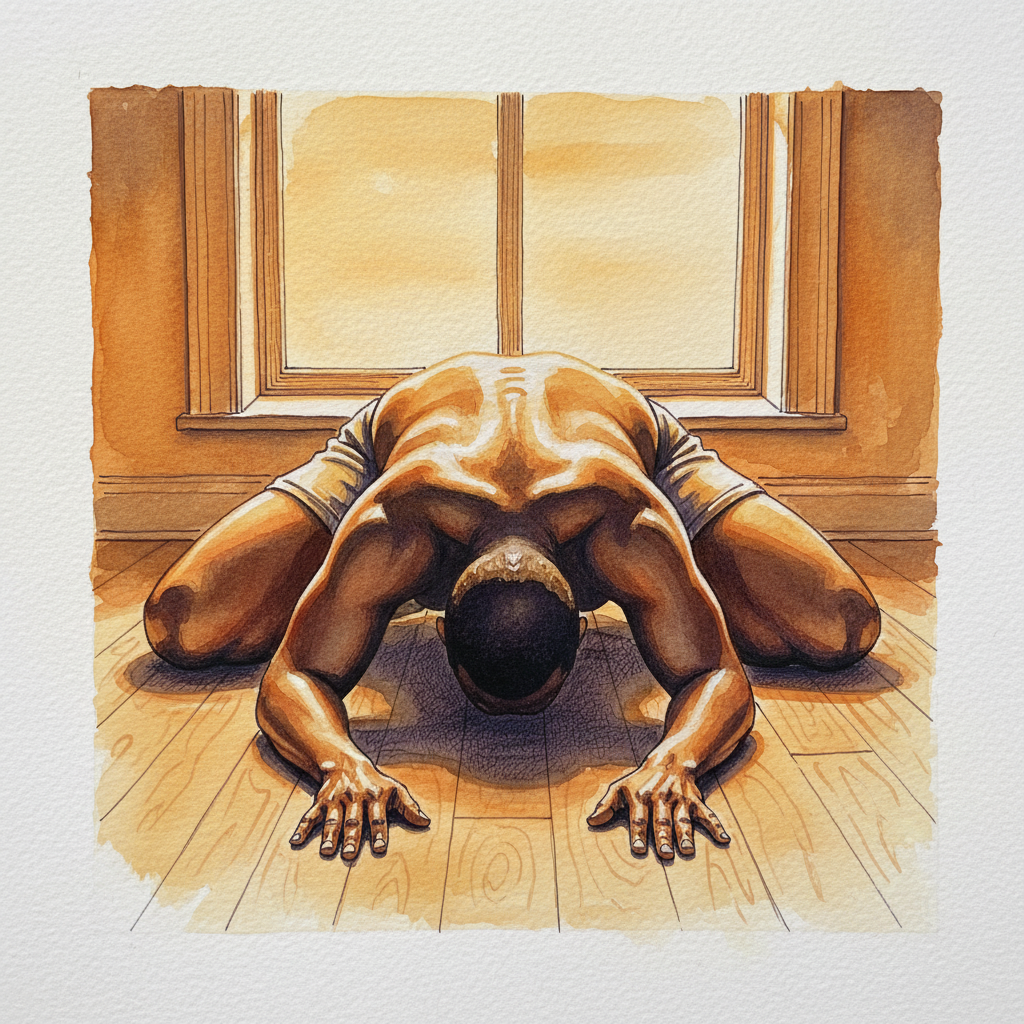
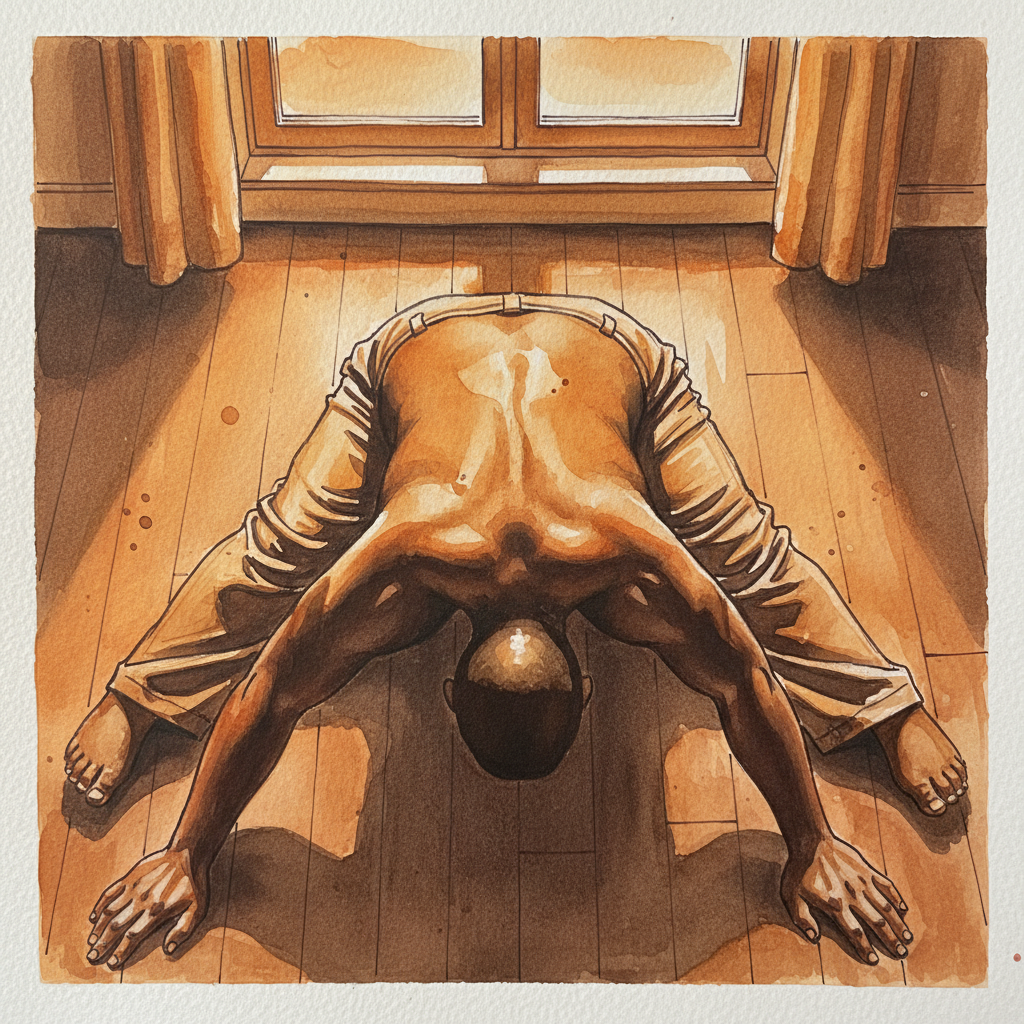
Piece 1 — Wide-knees, full collapse, sunset window light
Pen + Watercolor · Loose pen and watercolor line-and-wash
Three takes
Focus for this piece
This piece is an excellent study in how sensitive line weight and deliberate wash application convey both form and mood. Use a lighter, broken pen line to suggest the soft edges of the collapsed figure, allowing the rich orange-gold watercolor washes to carry the primary work of defining volume and the dramatic sunset light. Focus particularly on building the broad, curved planes of the back and splayed knees with luminous, layered washes, reserving darker, cooler tones and minimal pen work for the deeply shadowed areas that anchor his surrendered posture.
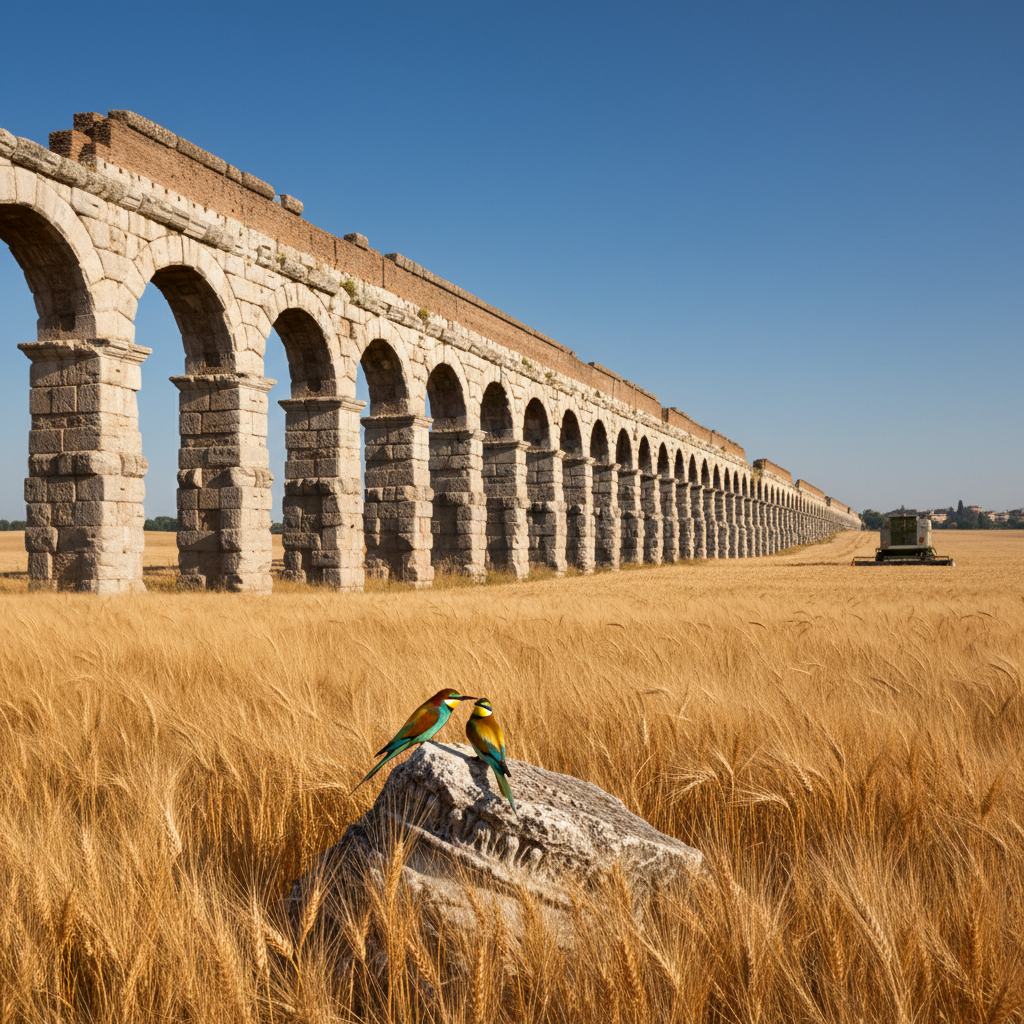
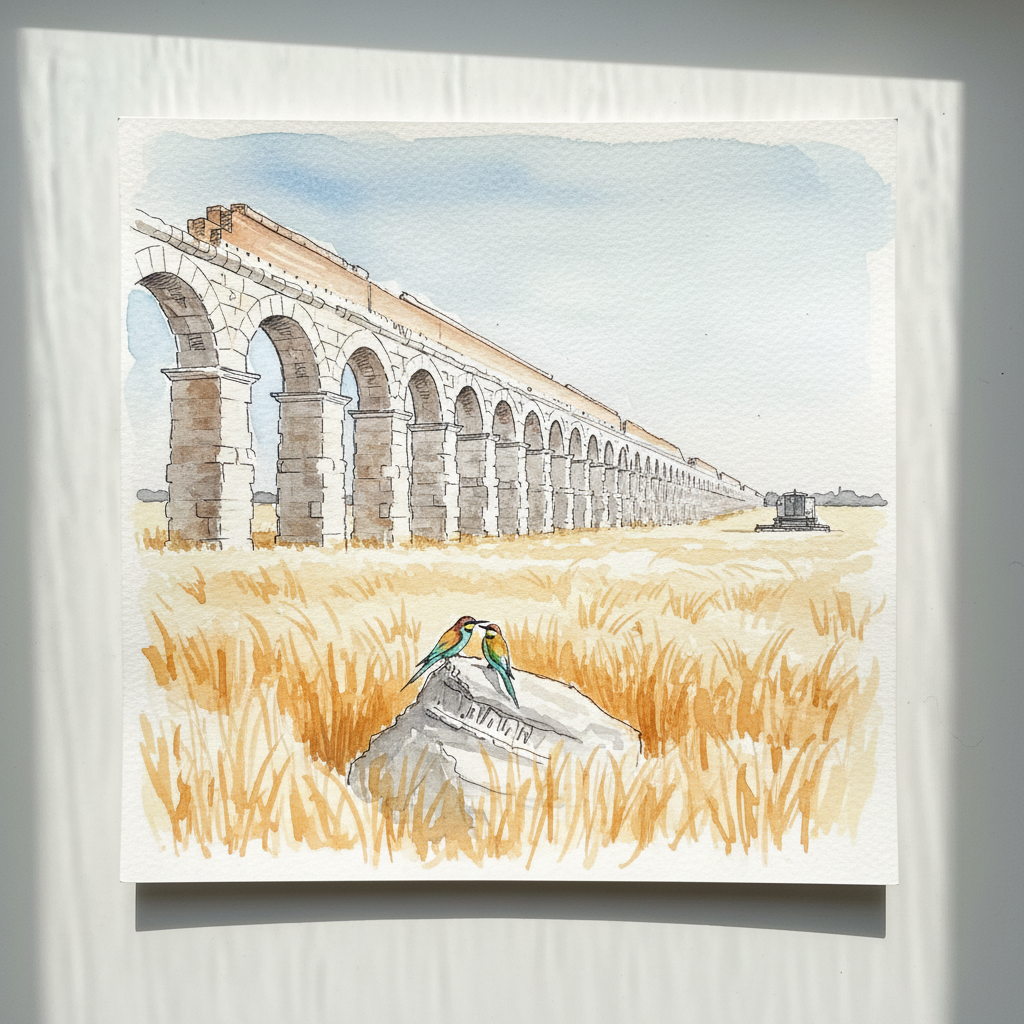
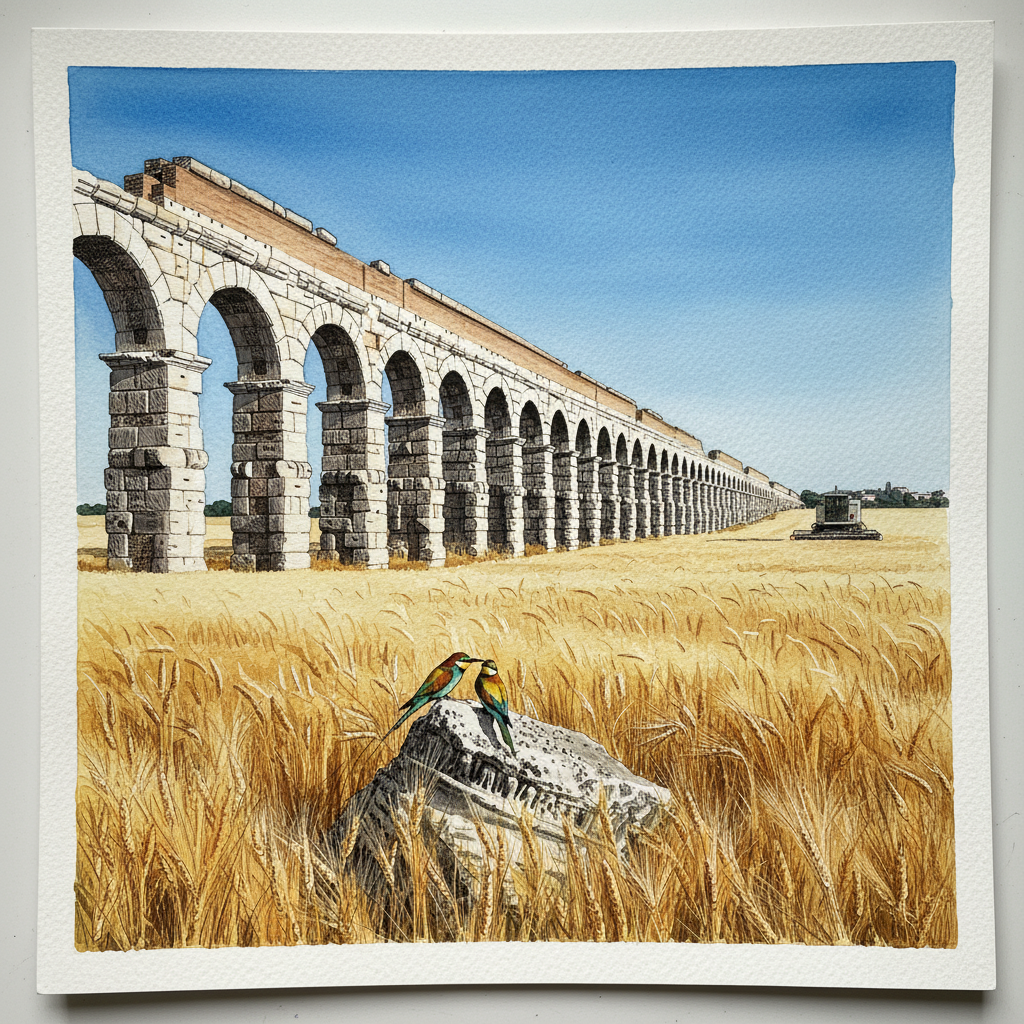
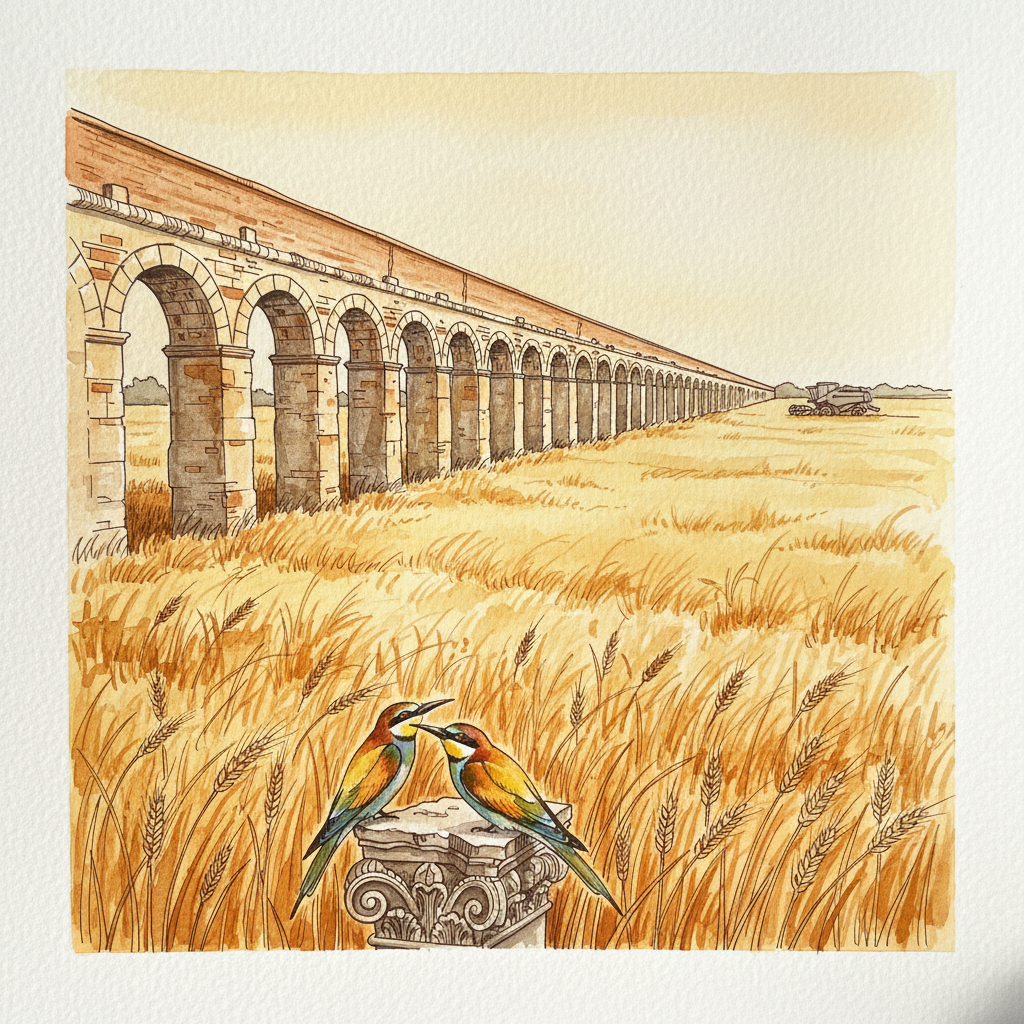
Piece 2 — Aqua Claudia in Summer Wheat
Pen + Watercolor · Loose pen and watercolor line-and-wash
Three takes
Focus for this piece
This piece offers a strong study in contrasting the geometric *arches* of the aqueduct with the organic flow of the *wheat field*. Use varied line weights—heavier for foreground *piers* and finer as they recede—to establish depth, while employing a wet-into-wet approach for the *golden wheat* to suggest its soft, undulating texture. Pay attention to how the crisp lines of the structures meet the atmospheric softness of the landscape under a hot, clear sky.
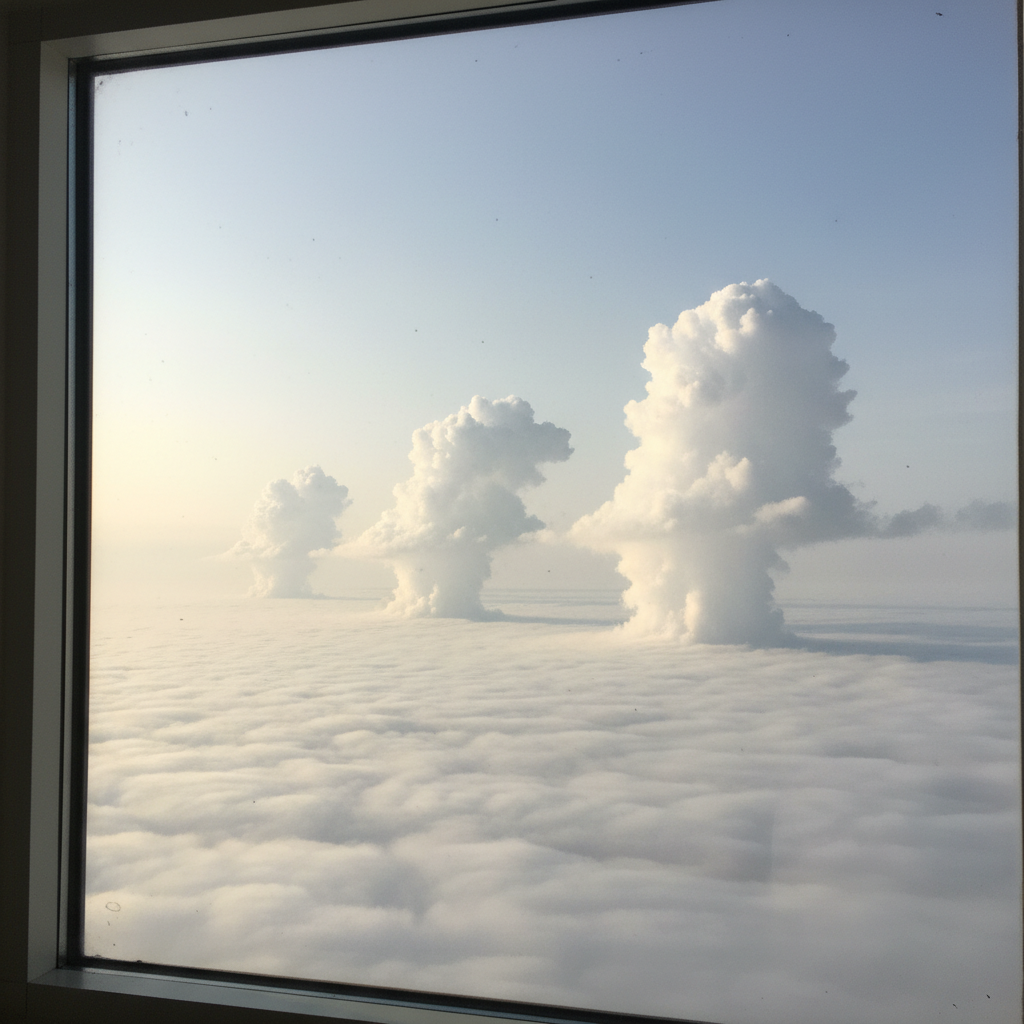
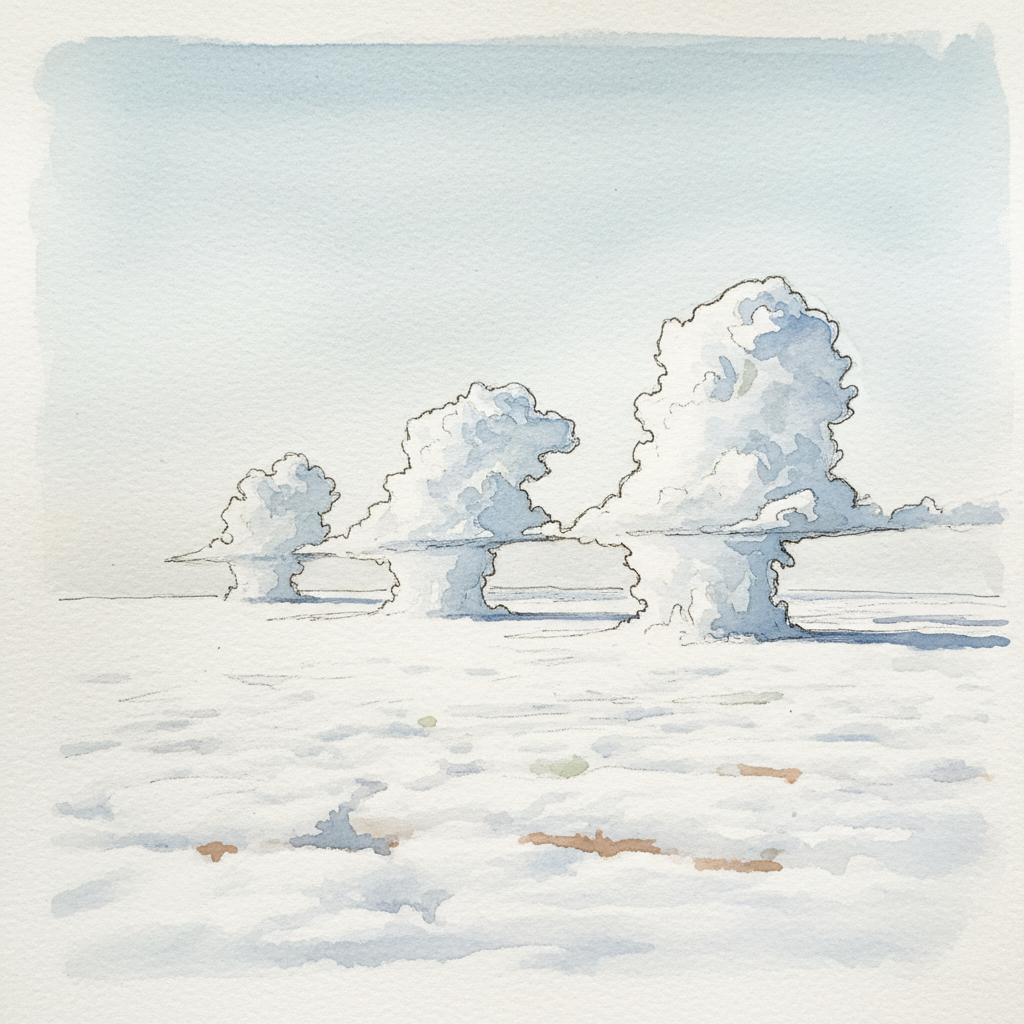
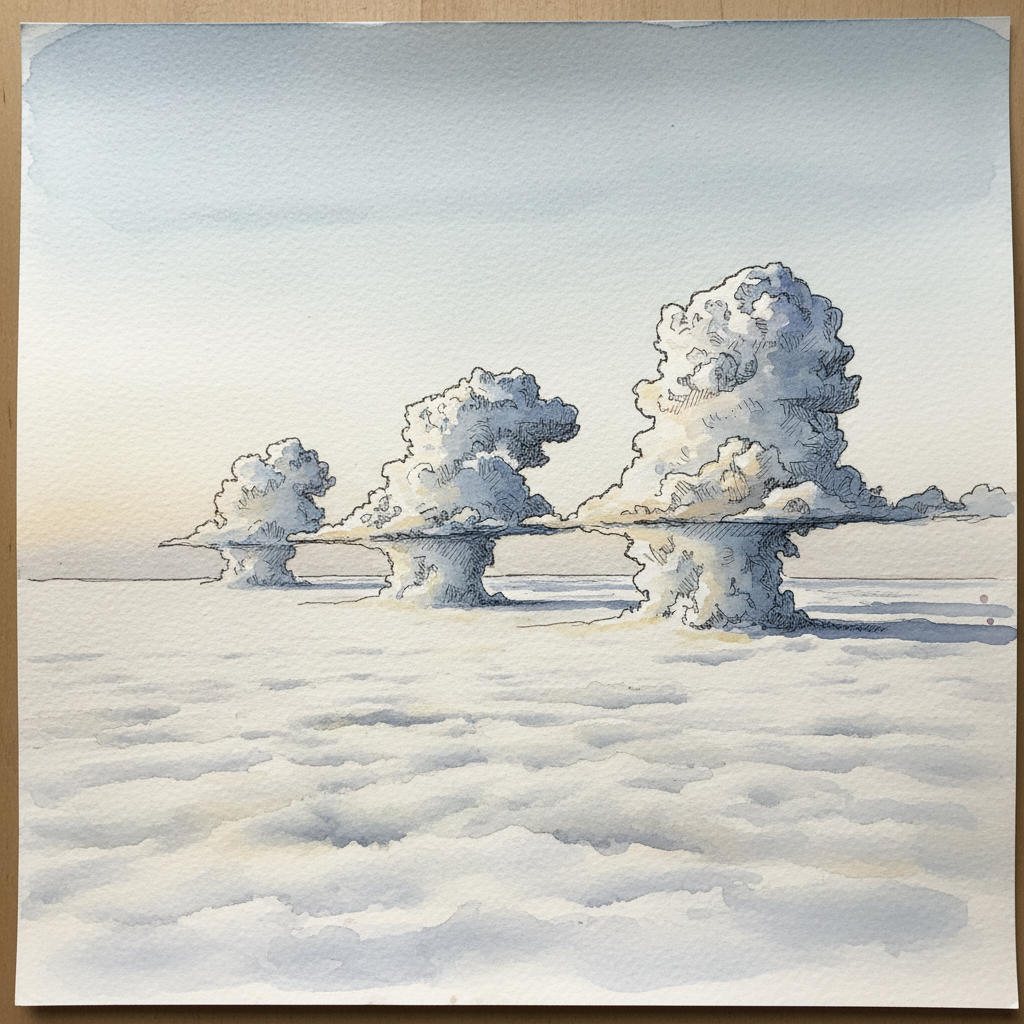
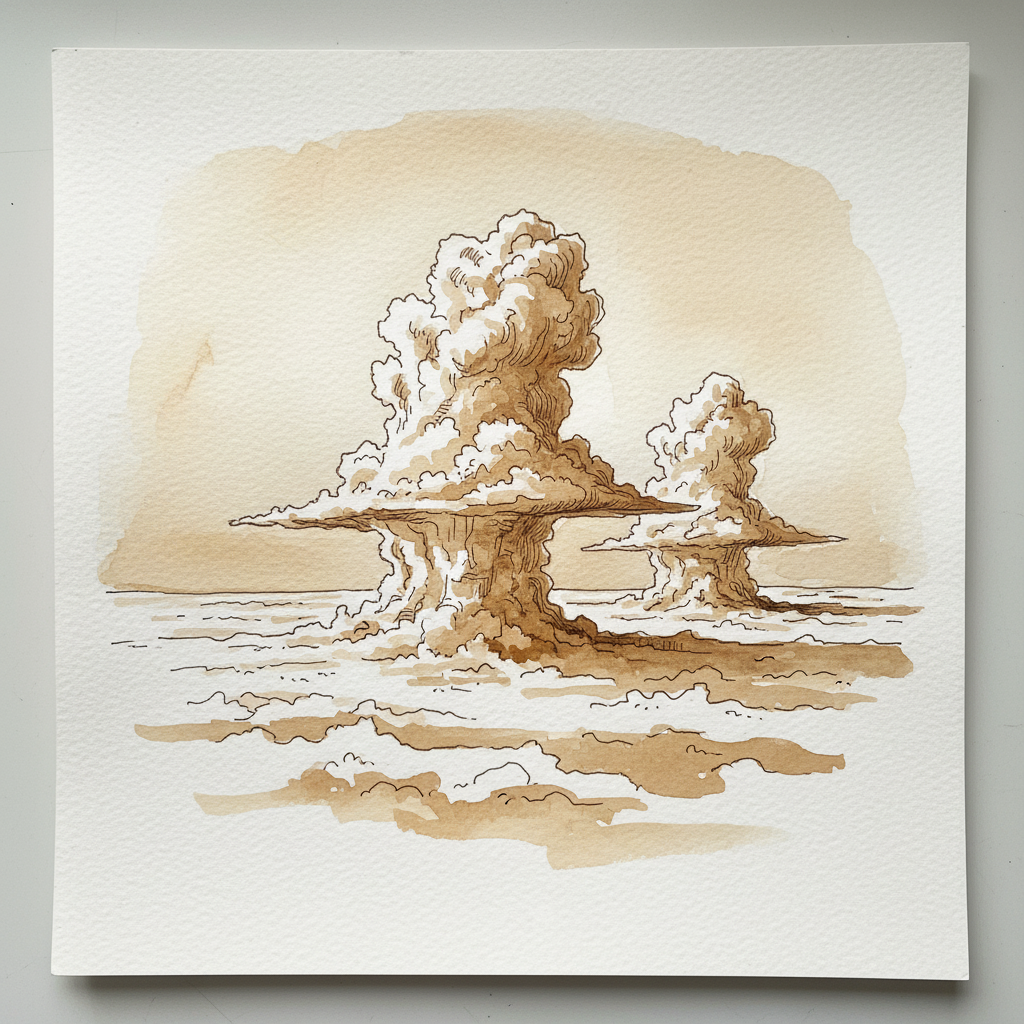
Piece 3 — Inversion with Cumulus Building Through
Pen + Watercolor · Loose pen and watercolor line-and-wash
Three takes
Focus for this piece
This inversion scene offers a superb opportunity to practice differentiating distinct forms using contrasting edge control and minimal line work. Focus on rendering the smooth lower cloud deck with soft, graded washes, allowing the rising cumulus towers to emerge through a combination of slightly sharper edges and careful retention of the paper's white. Use varied pen line weights sparingly to suggest the impressive vertical structure and volume, letting the watercolor do the heavy lifting of atmospheric modeling.
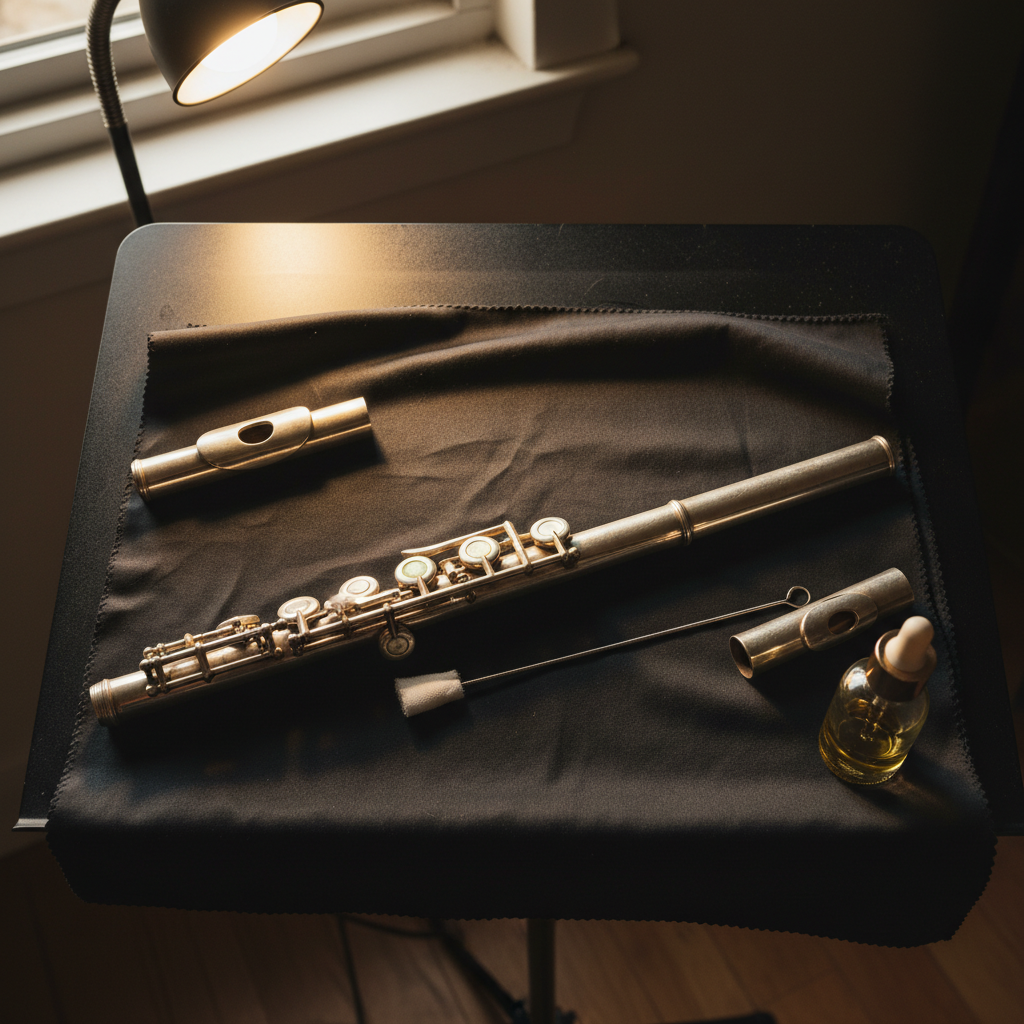
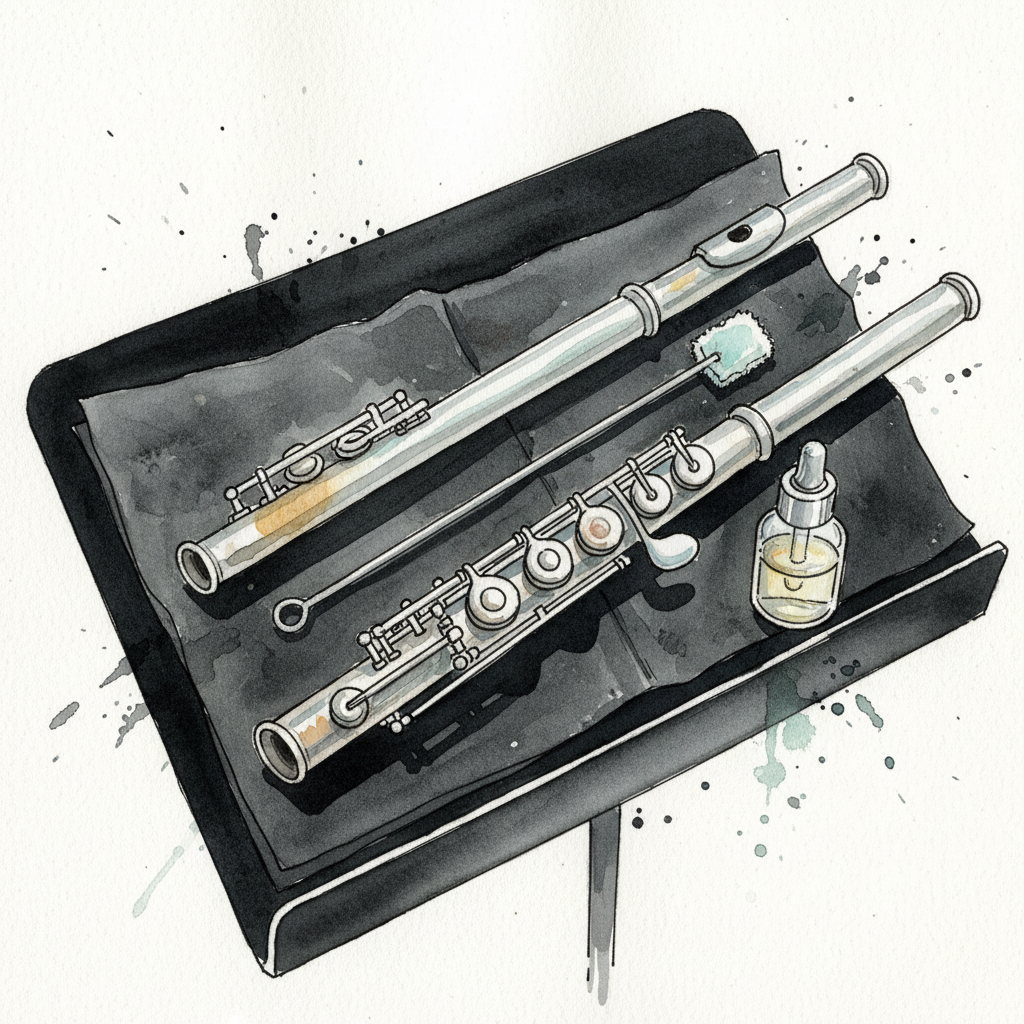
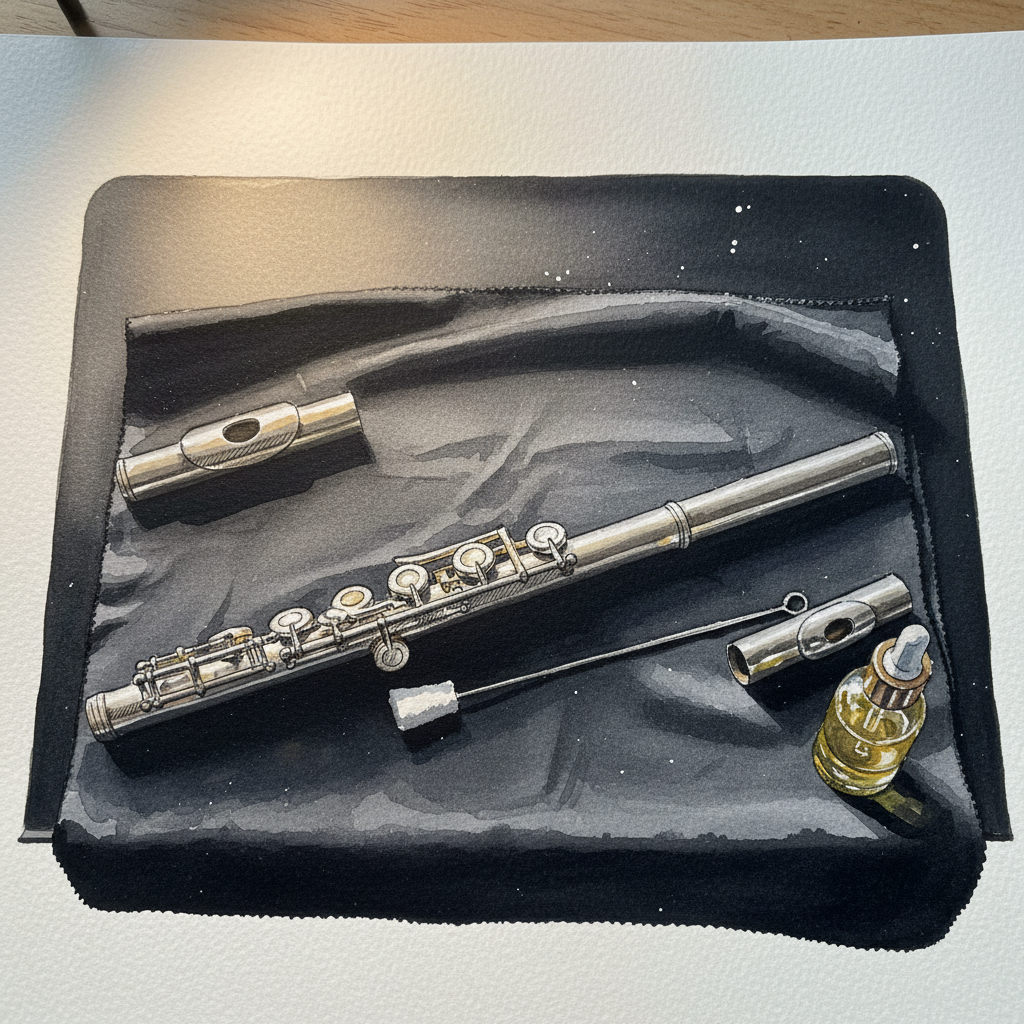
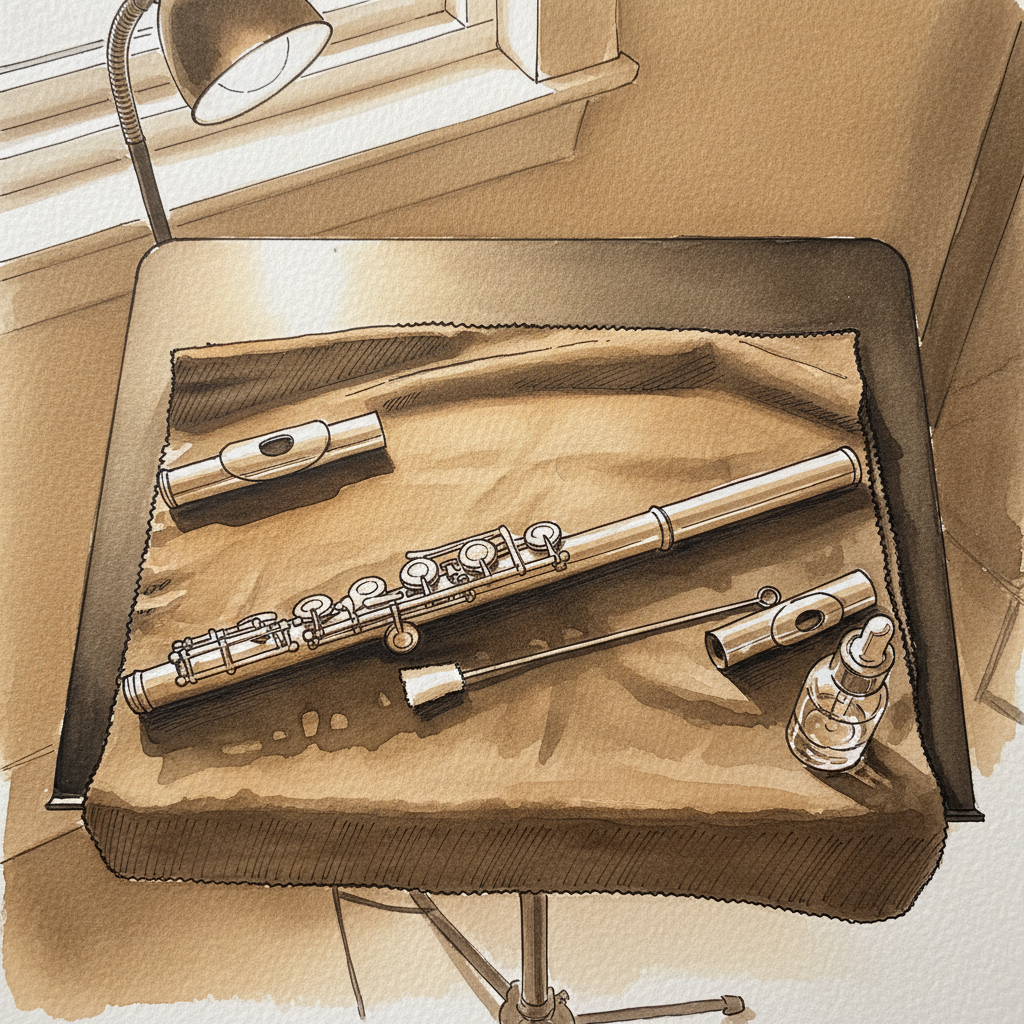
Piece 4 — Silver flute disassembled on cloth
Pen + Watercolor · Loose pen and watercolor line-and-wash
Three takes
Focus for this piece
This piece offers a superb opportunity to study rendering reflective metallic cylindrical forms and sharp cast shadows. Employ varying line weights to define the flute's edges and contours, then use controlled, crisp-edged washes to capture the dramatic highlights on the silver and the deep, definite values of the black cloth and lamp-lit shadows. Consider a limited, cooler palette, perhaps incorporating Payne's Gray or Indigo for the metal and shadows, to emphasize the stark value contrast and material textures.
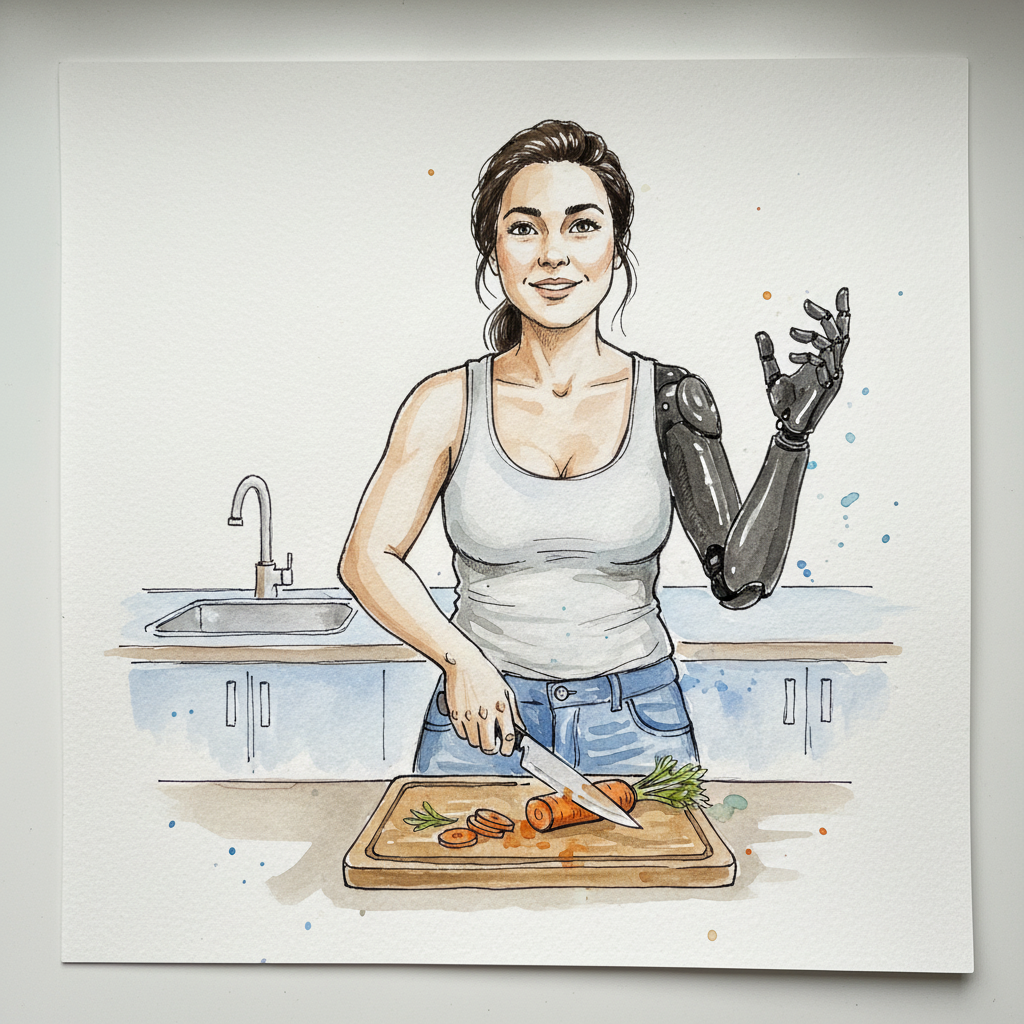
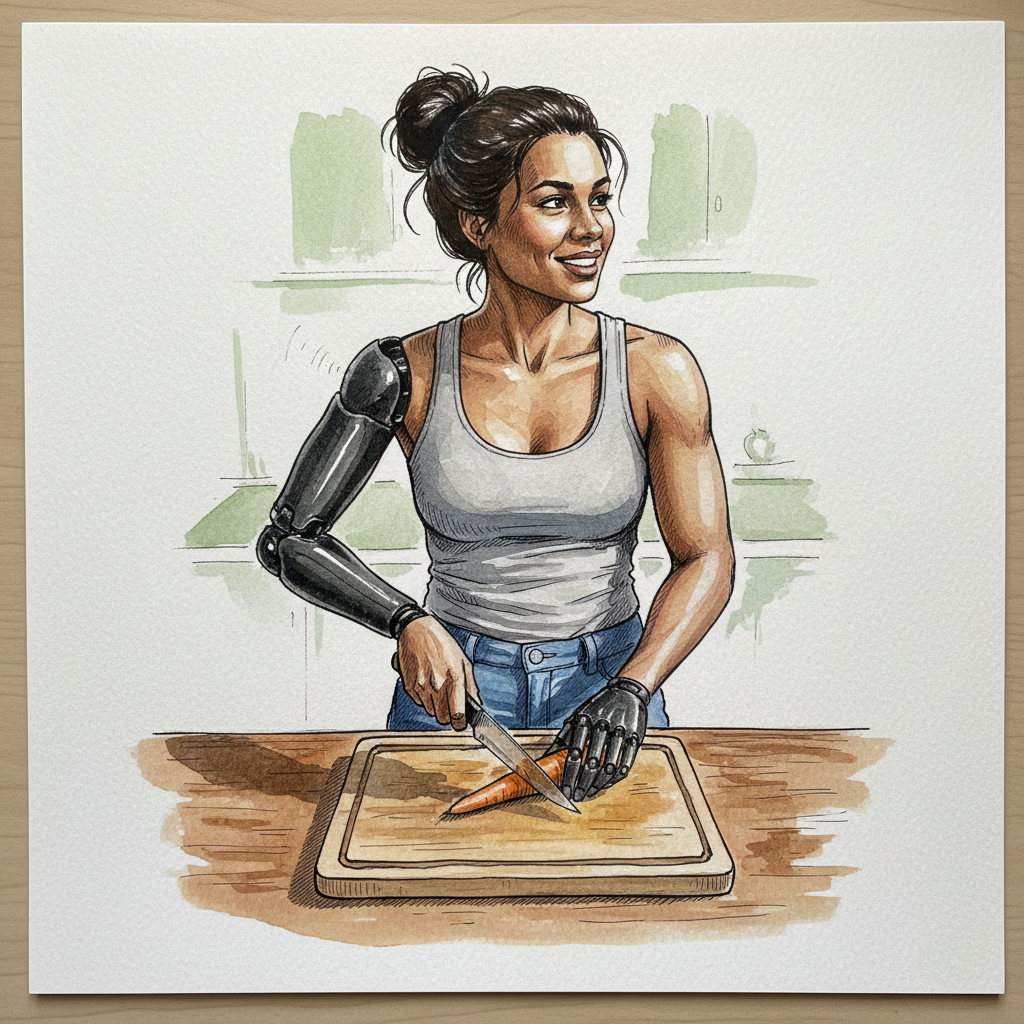
Piece 5 — Body with prosthetic arm
Pen + Watercolor · Loose pen and watercolor line-and-wash

Three takes
Focus for this piece
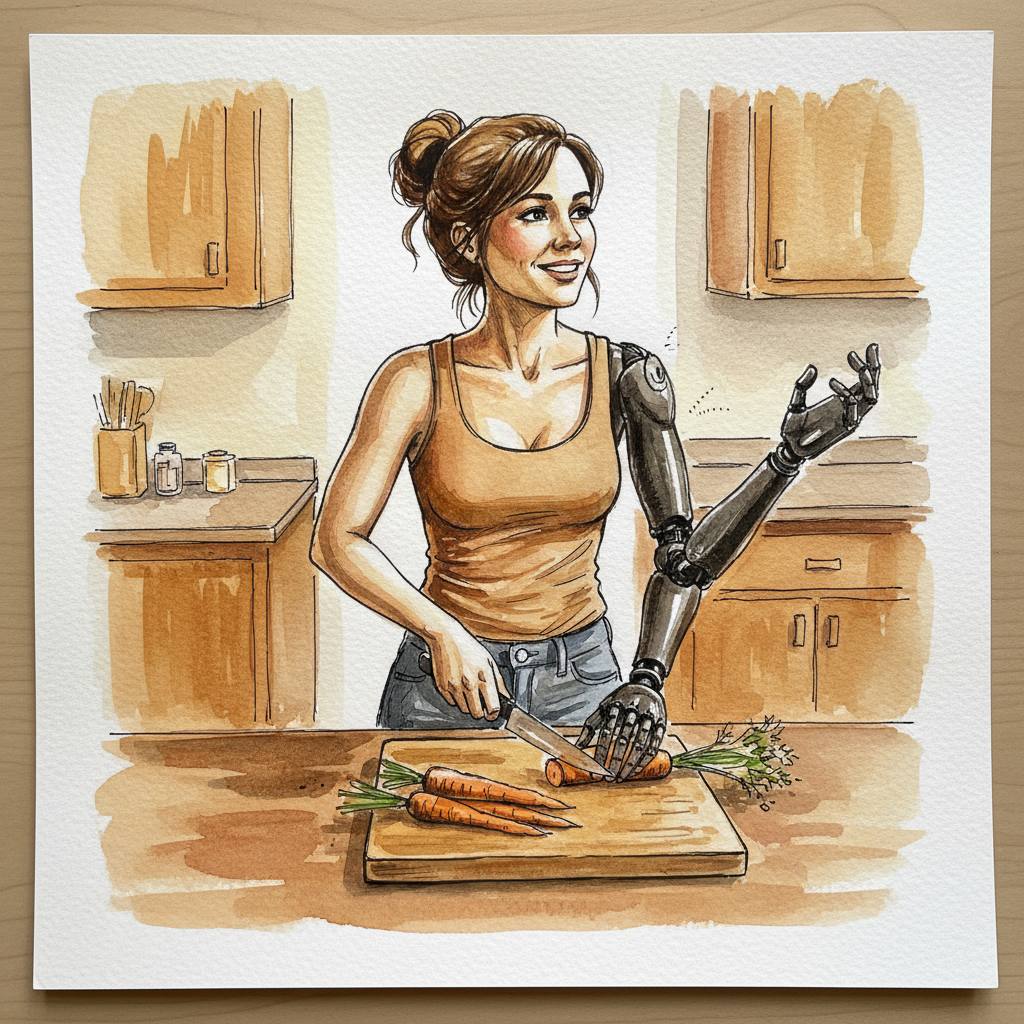
This piece is an excellent study in distinguishing different materials and textures through contrasting pen work and watercolor application. Practice rendering the precise, hard edges of the matte black prosthetic with firm, consistent ink lines, while allowing softer, varied pen strokes and more fluid wet-on-wet washes to describe the organic forms of her skin and the vegetables. Pay attention to how a cooler, muted watercolor wash for the prosthetic can emphasize its manufactured quality against the warmer, more vibrant tones of her active body. This contrast will help guide the viewer's eye to the central action and narrative.
Piece 6 — Pond cypress
Pen + Watercolor · Loose pen and watercolor line-and-wash
Three takes
Focus for this piece
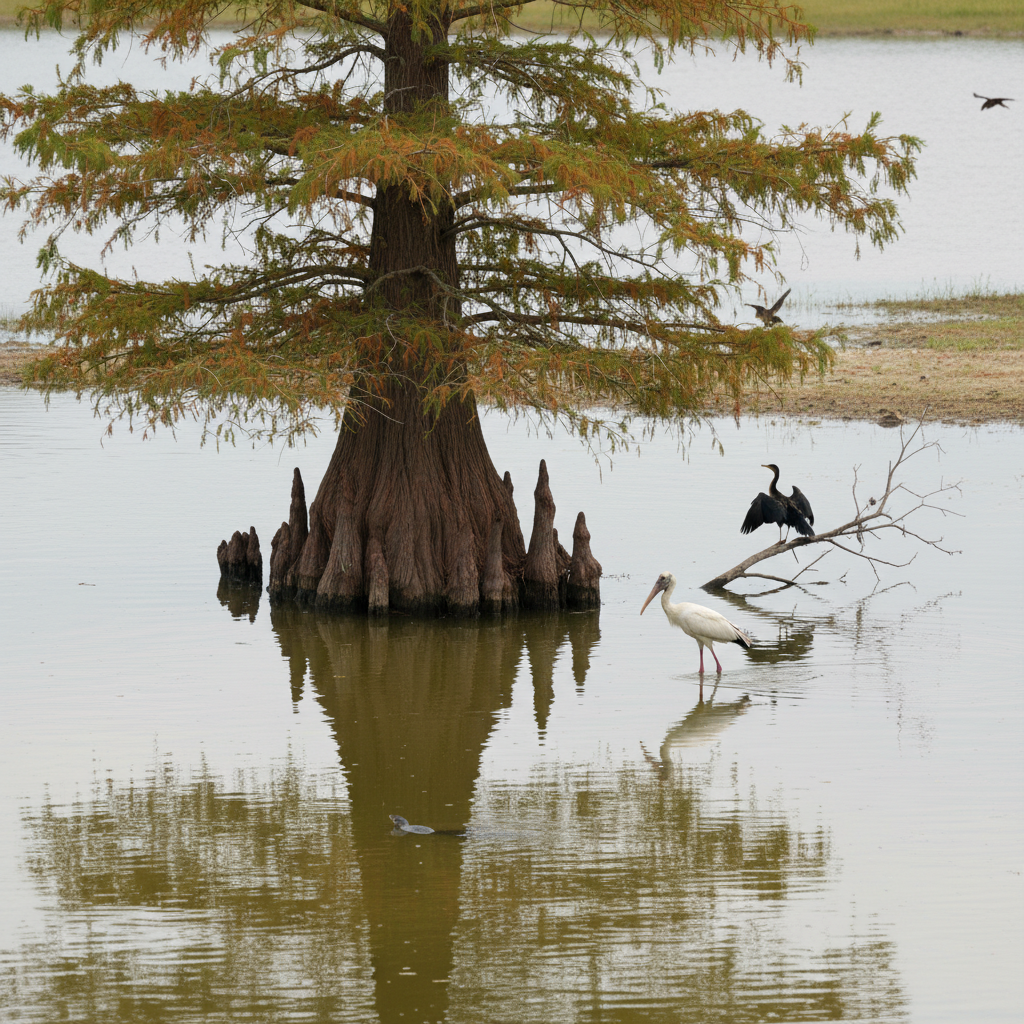
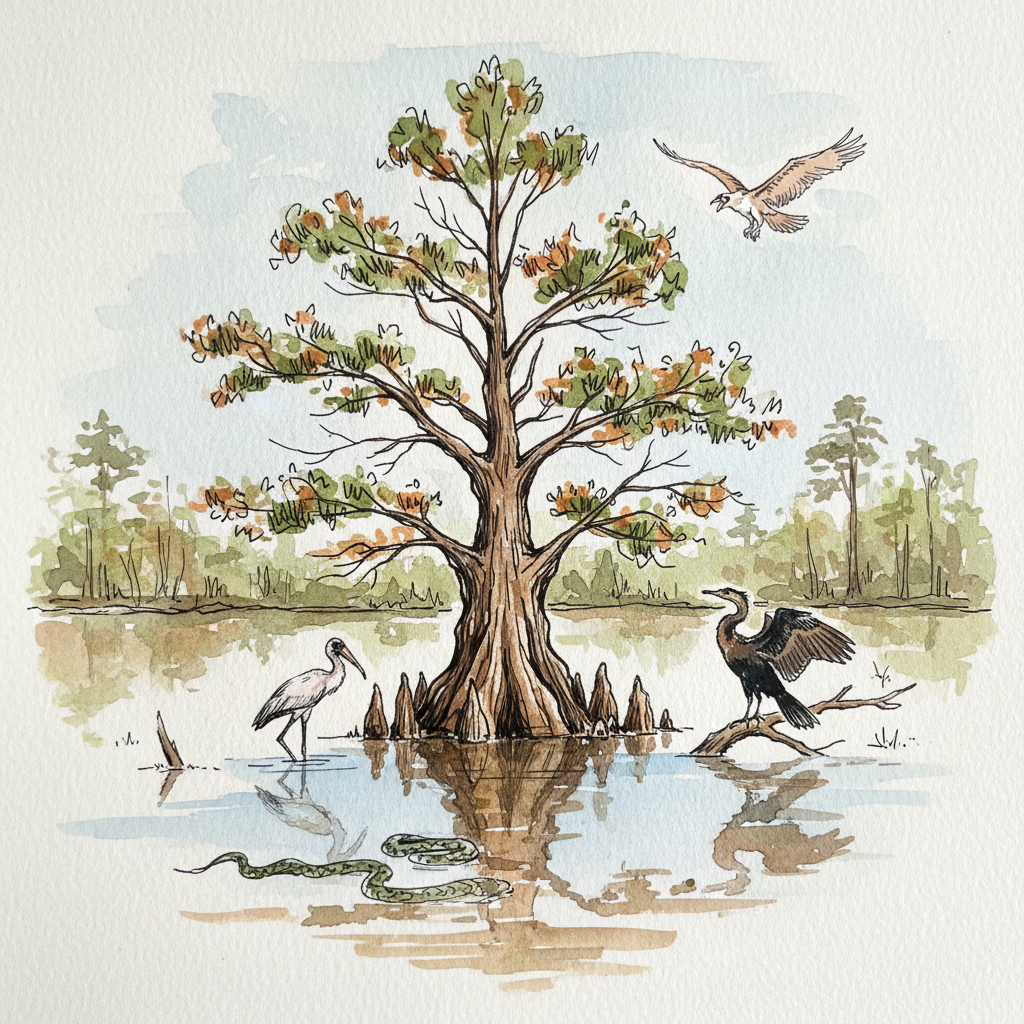
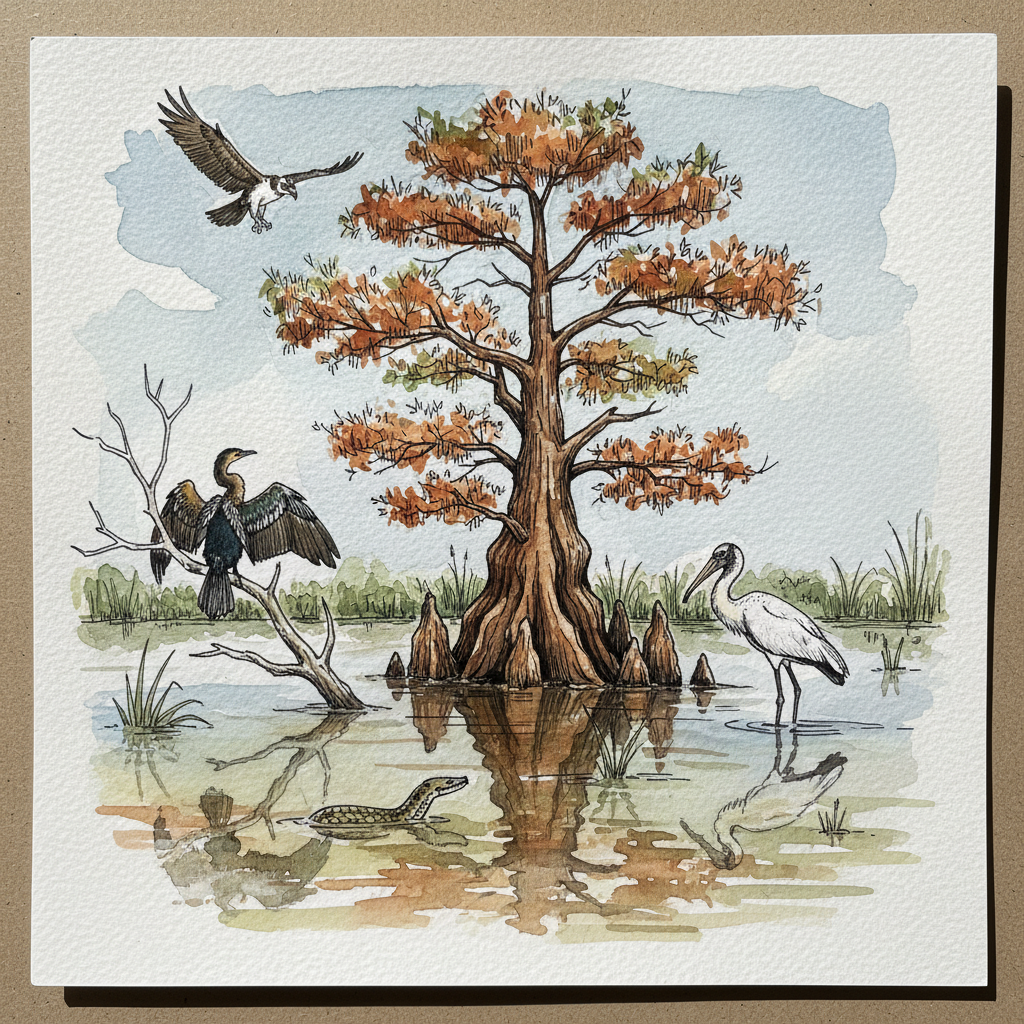
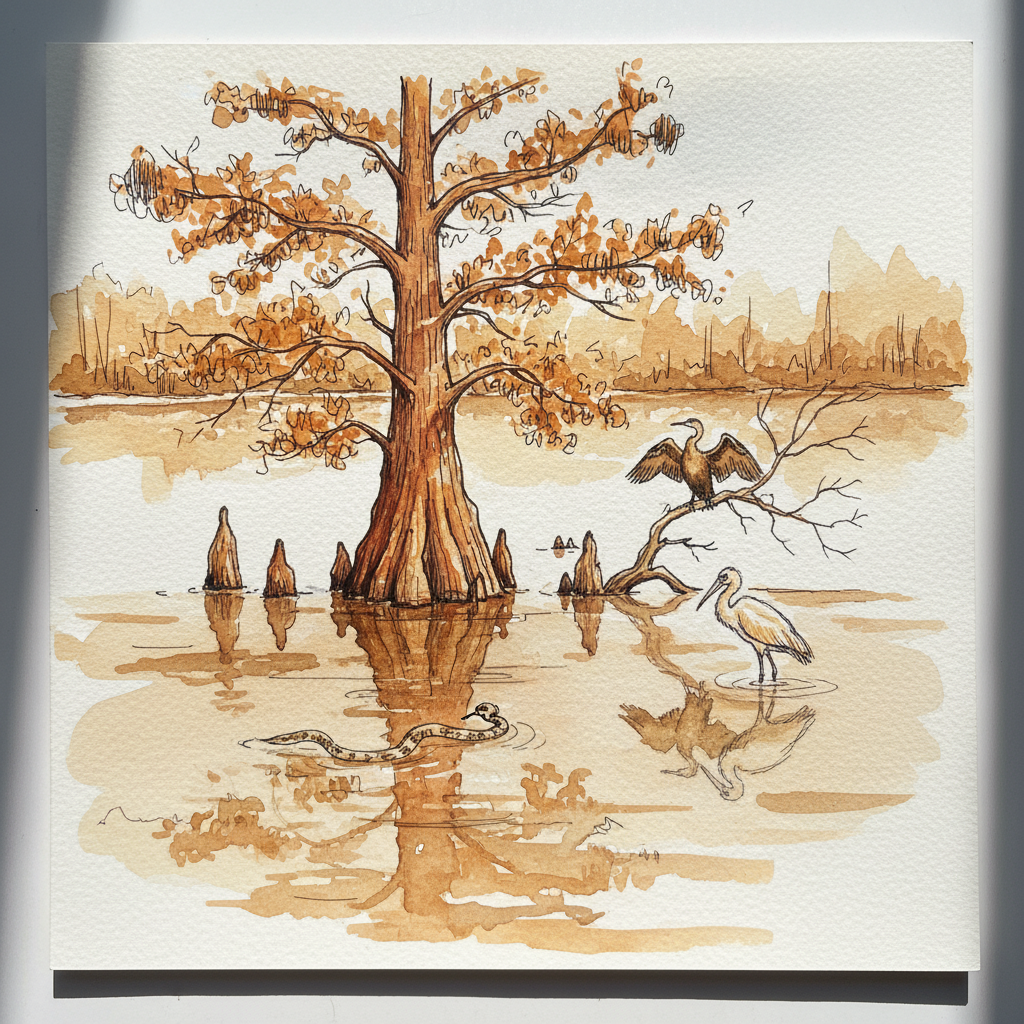
This piece offers a great study in rendering contrasting textures: use varied, confident pen lines to capture the cypress's deeply furrowed bark and the organic forms of the knees. Then, practice layering subtle, translucent washes in an earthy palette to depict the tea-colored water, focusing on how the color interacts with your ink to suggest reflections and the soft blur of submerged elements. This interplay will allow the strong ink structure to coexist with the atmospheric fluidity of the water and foliage.
Piece 7 — Changdeokgung Huwon Secret Garden, Seoul, South Korea
Pen + Watercolor · Loose pen and watercolor line-and-wash
Three takes
Focus for this piece
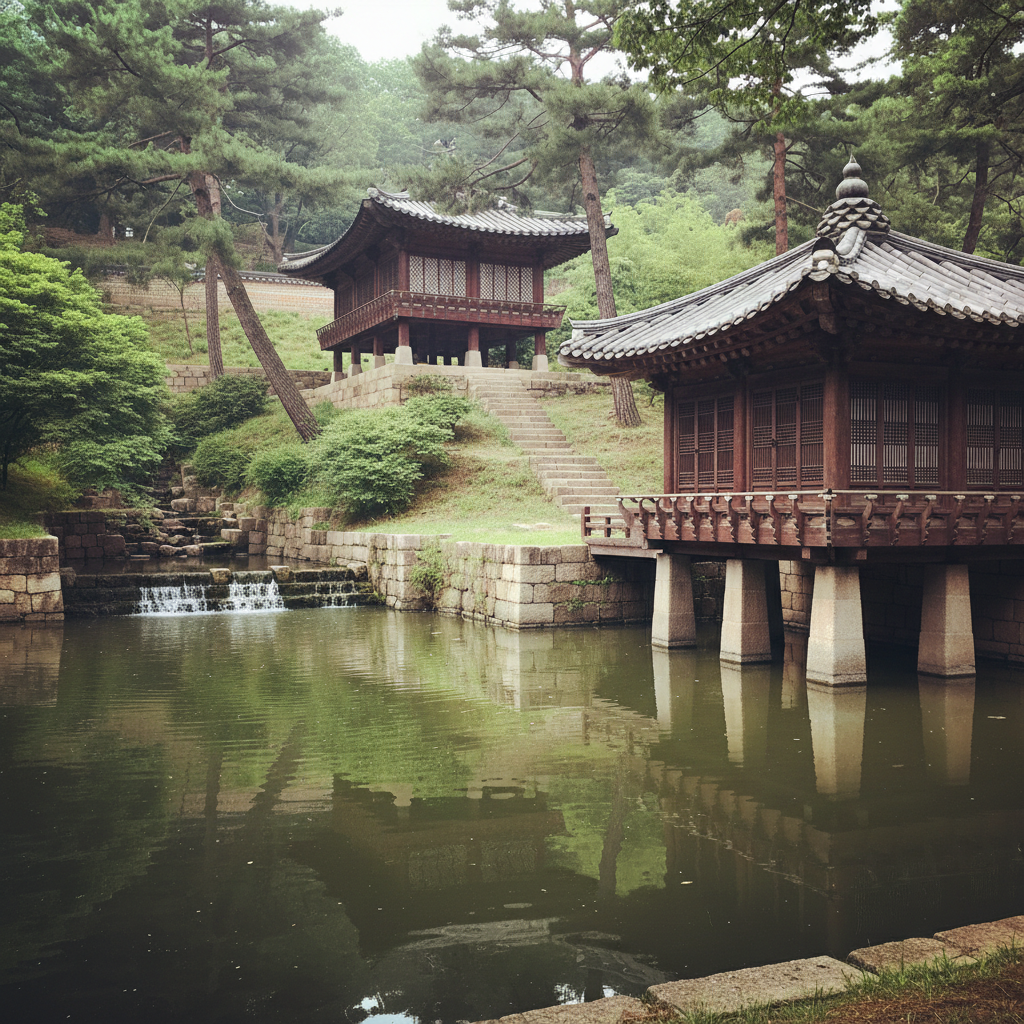
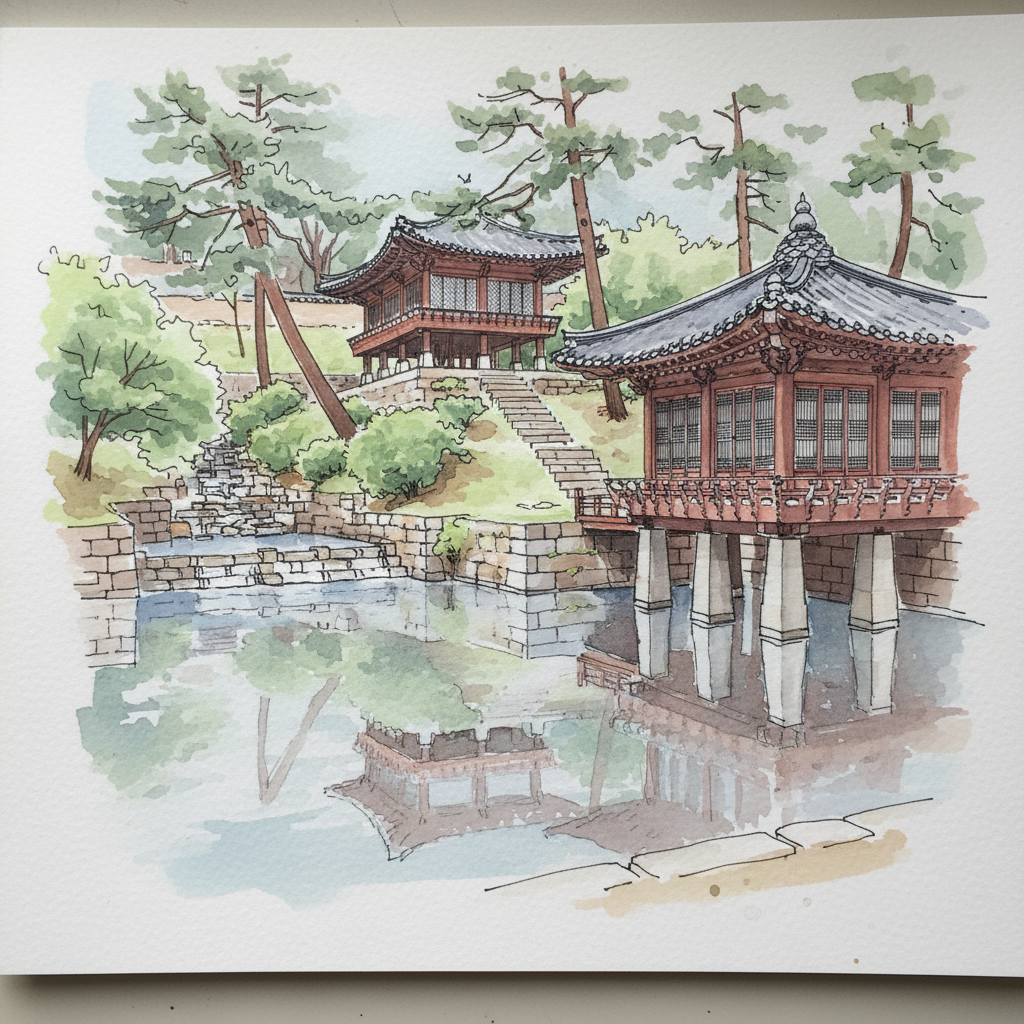
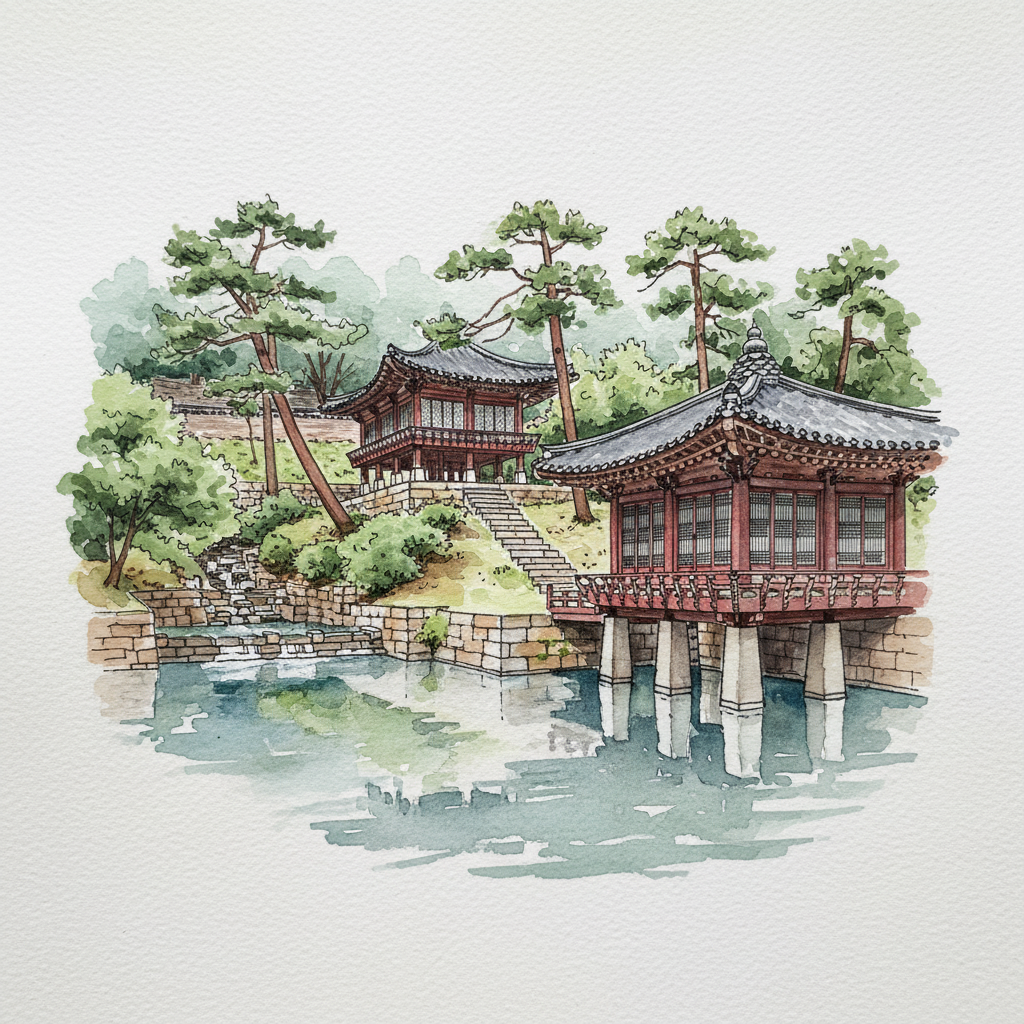
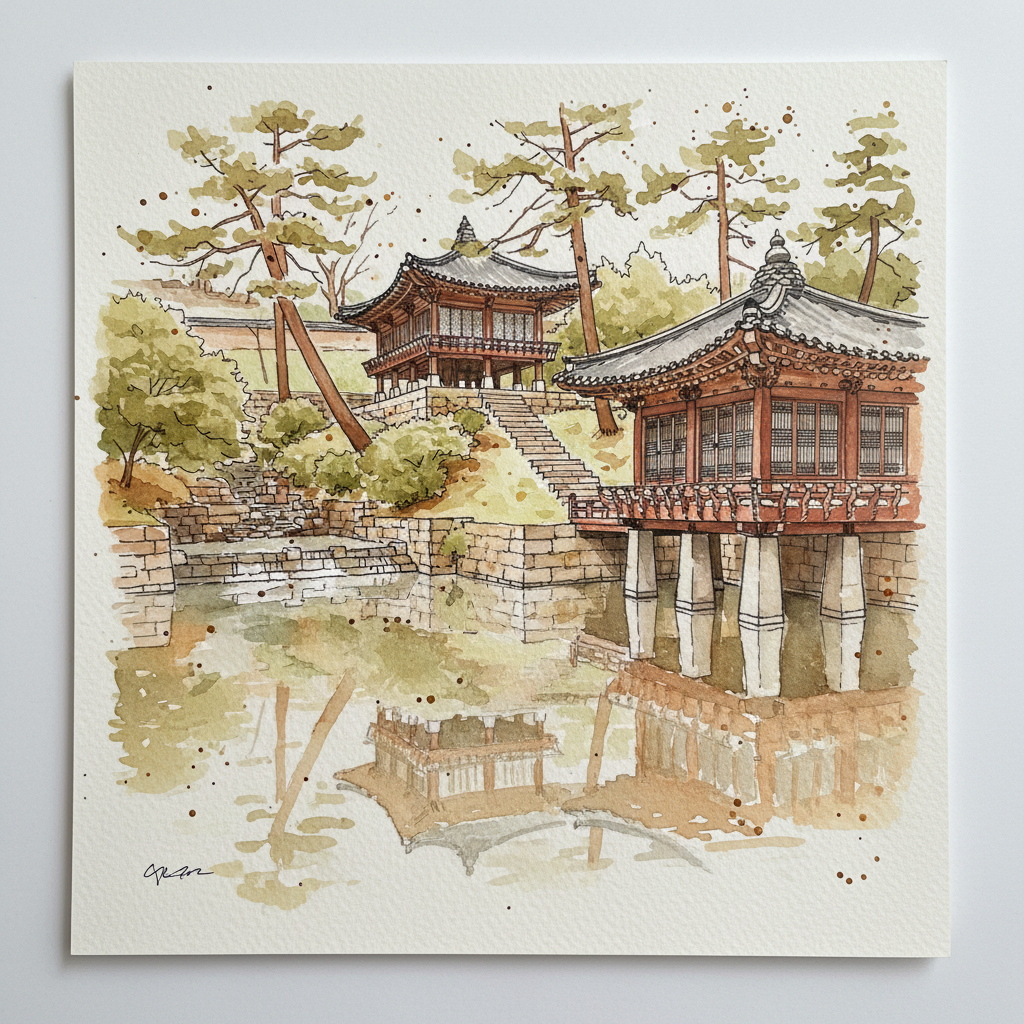
This subject offers an excellent opportunity to practice contrasting precise ink architecture with soft, atmospheric washes. Use varied line weights for the Buyongjeong pavilion, its stone piers, and the Juhamnu library's latticework, ensuring crisp definitions, especially in the foreground. Then, employ fluid, wet-on-wet watercolor washes for the pond and surrounding foliage, allowing soft edges to convey the garden's tranquil, wooded atmosphere.
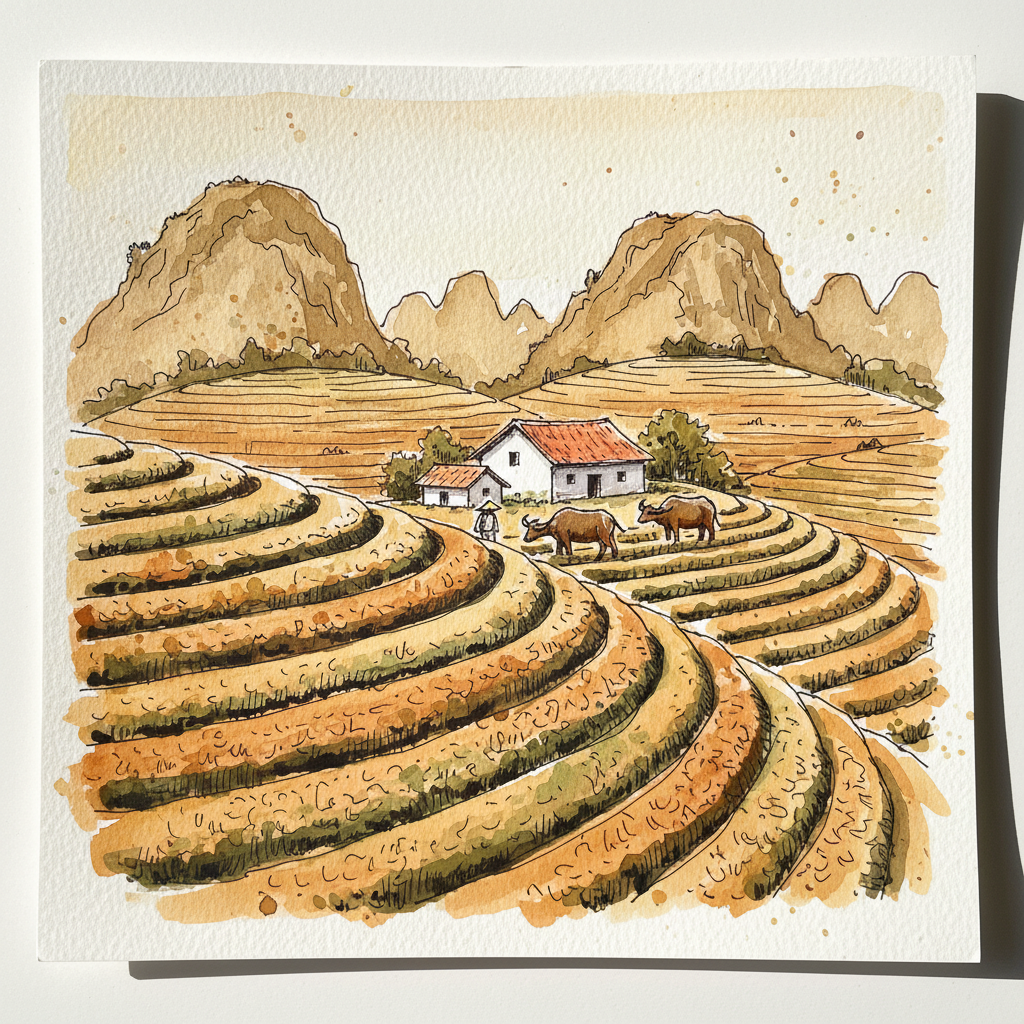
Piece 8 — Tan Cuong Tea Hills, Thai Nguyen, Vietnam
Pen + Watercolor · Loose pen and watercolor line-and-wash
Three takes
Focus for this piece
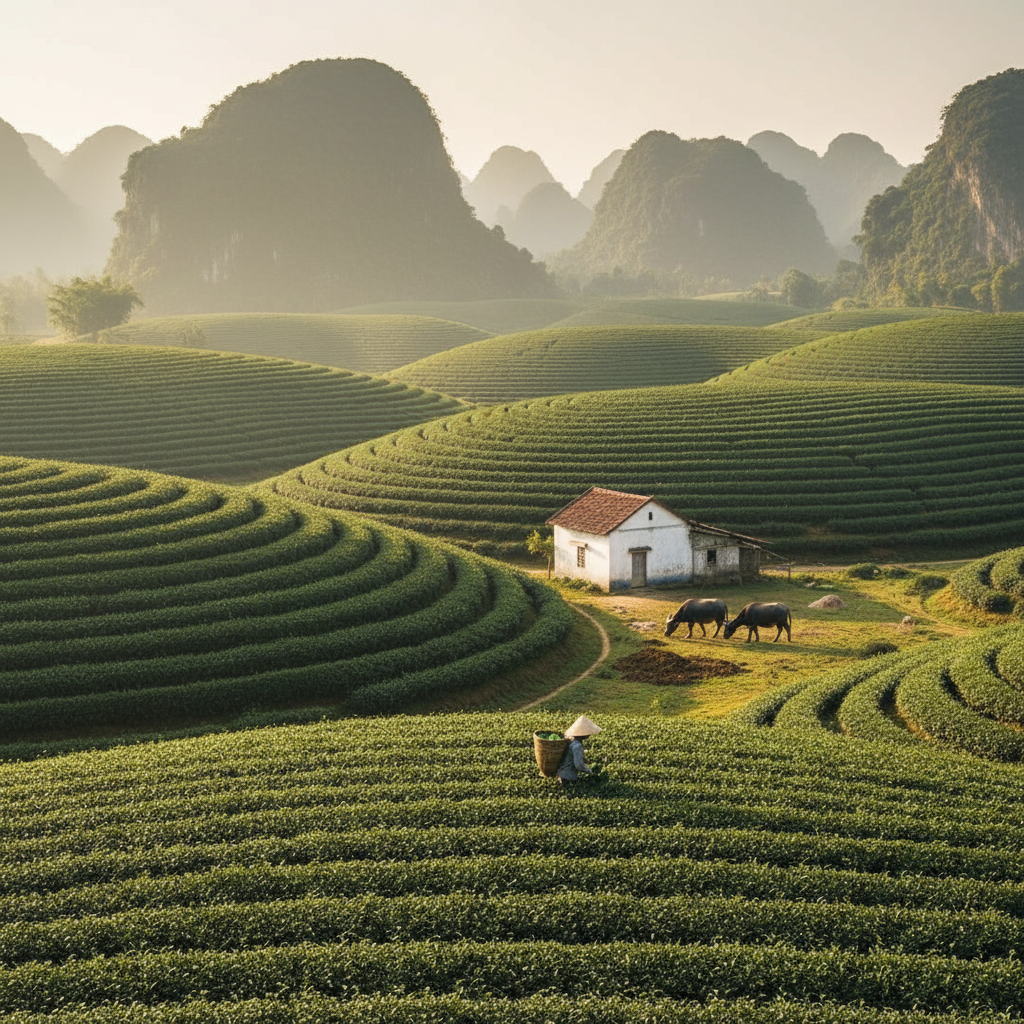
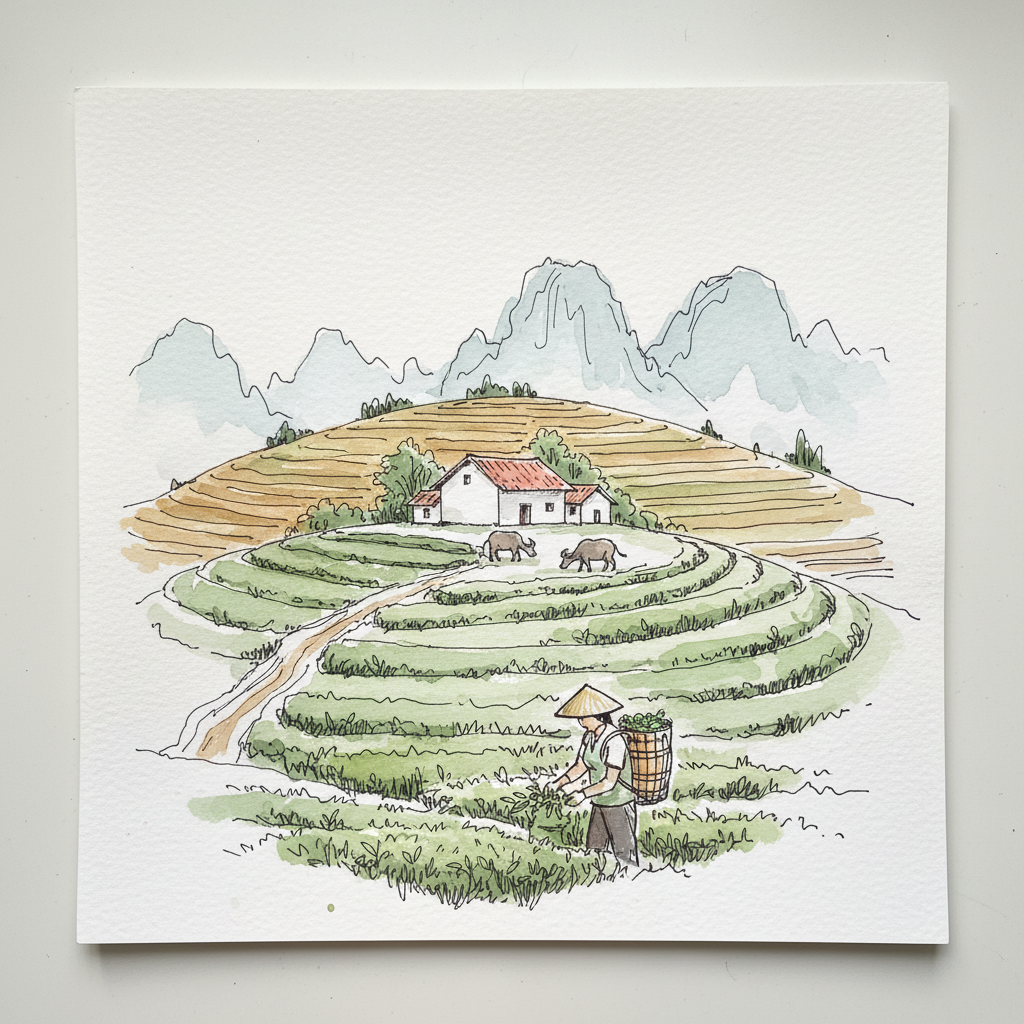
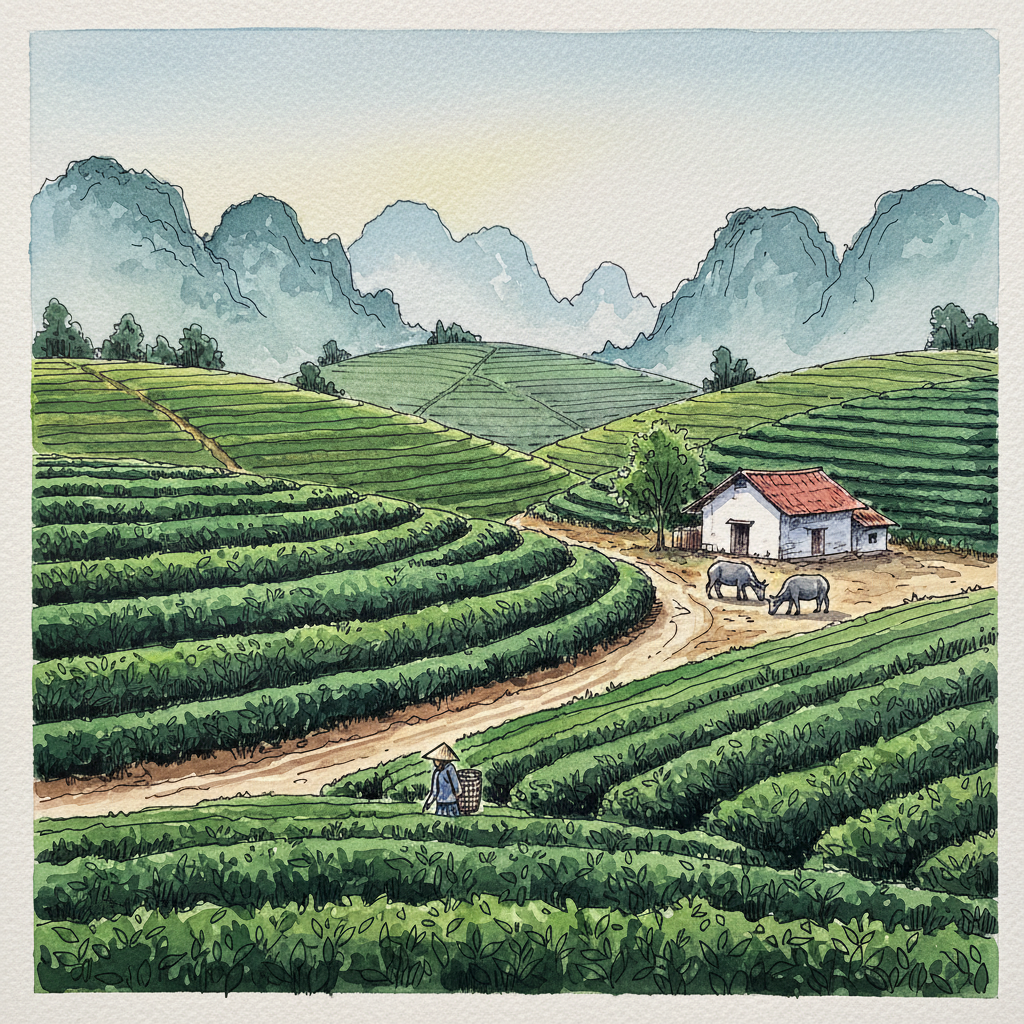
For this piece, concentrate on using varied pen lines to define the distinct forms of the landscape: employ precise, rhythmic contours for the foreground tea rows, and use broken, suggestive lines for the distant limestone karsts. Complement this with a warm, controlled wash palette to build the rounded volume of the hills and establish clear atmospheric perspective. Allow softer washes to recede into the distance, reserving crisper color and detail for the middle-ground farmhouse and picker to maintain a strong focal point.