Foot Skeleton Side View, Anatomical Model, Common crane, Mallard wing-feathers fanned, Devon Hill Farm Snowdrift, and more — pen + watercolor for May 27, 2026
Today's pen-and-watercolor pieces: Foot Skeleton Side View, Anatomical Model, Common crane, Mallard wing-feathers fanned, Devon Hill Farm Snowdrift, Serengeti kopjes, Tanzania — Moru Kopjes at midday, CITIC Tower (China Zun), Beijing, China, Vanity mirror with bulbs, Pregnant non-binary model, we…
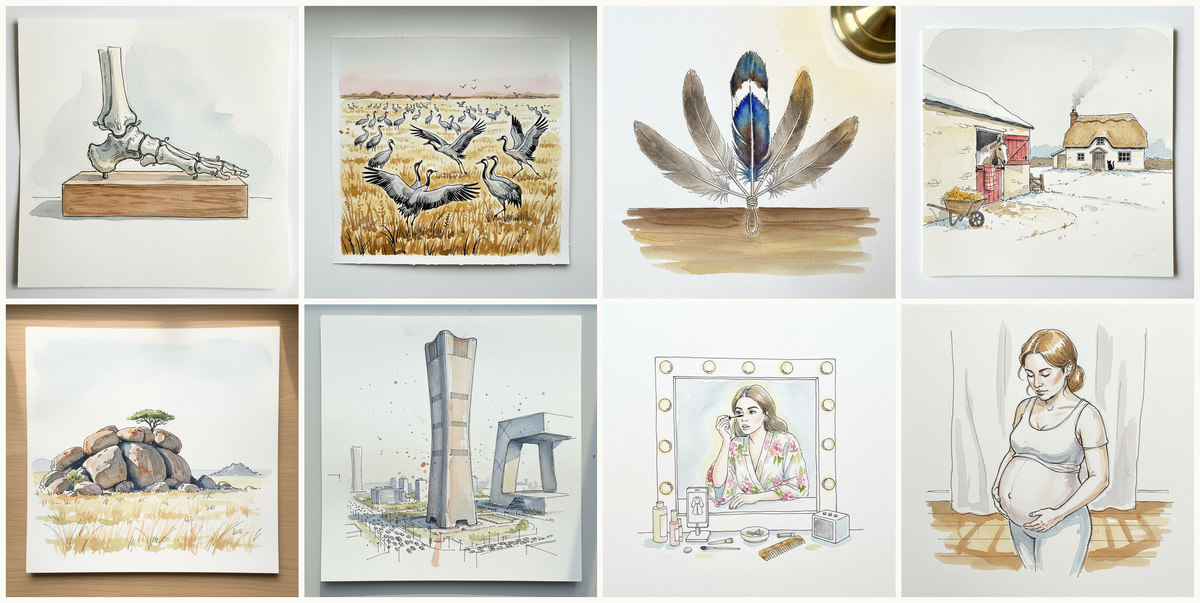
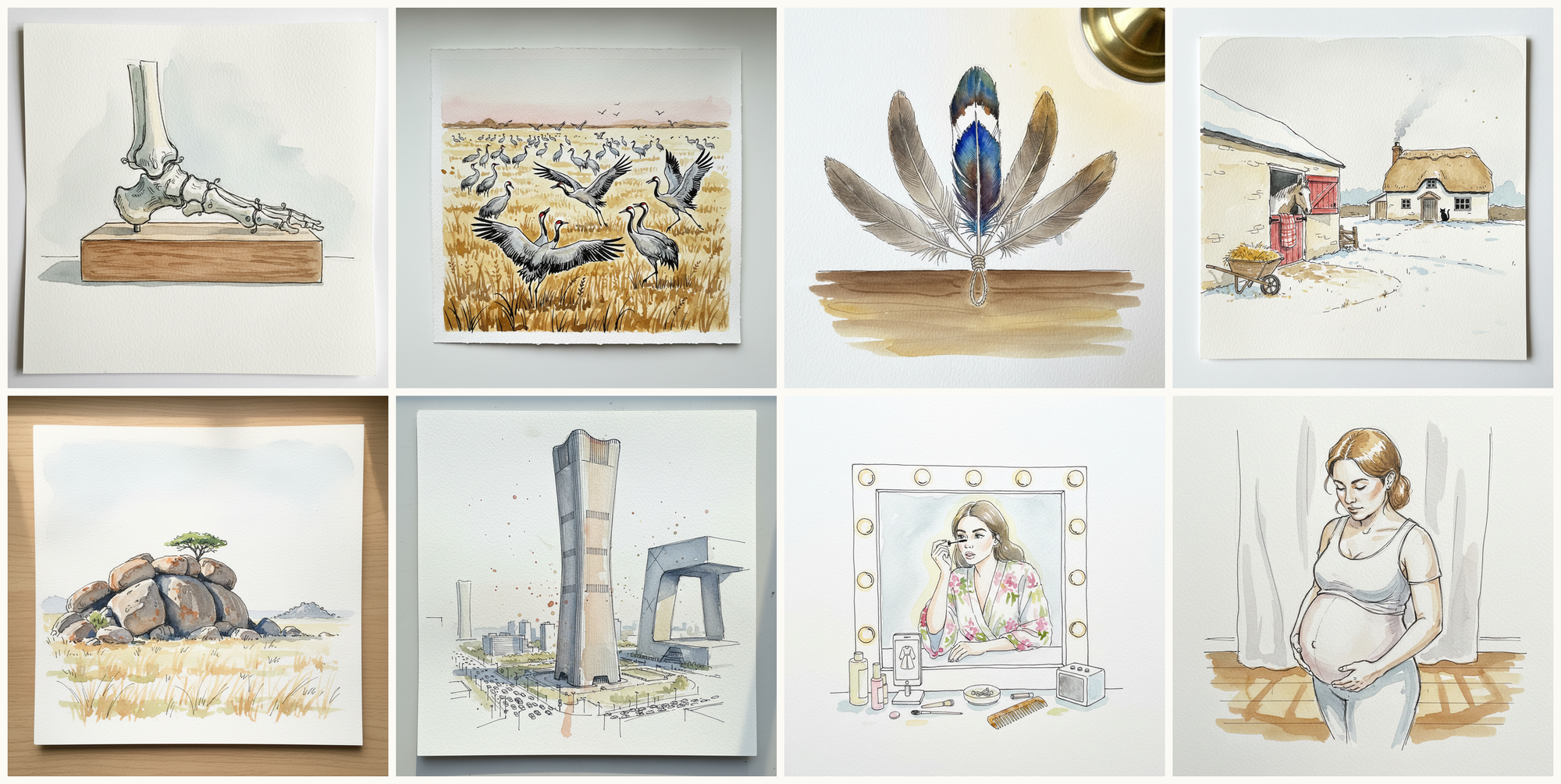
Today's 8 pen-and-watercolor pieces: Foot Skeleton Side View, Anatomical Model, Common crane, Mallard wing-feathers fanned, Devon Hill Farm Snowdrift, Serengeti kopjes, Tanzania — Moru Kopjes at midday, CITIC Tower (China Zun), Beijing, China, Vanity mirror with bulbs, Pregnant non-binary model, weight right, hands resting. Each piece comes with a photo reference, three example artworks in different treatments, and a short focus paragraph naming what to study in this one.
Piece 1 — Foot Skeleton Side View, Anatomical Model
Pen + Watercolor · Loose pen and watercolor line-and-wash
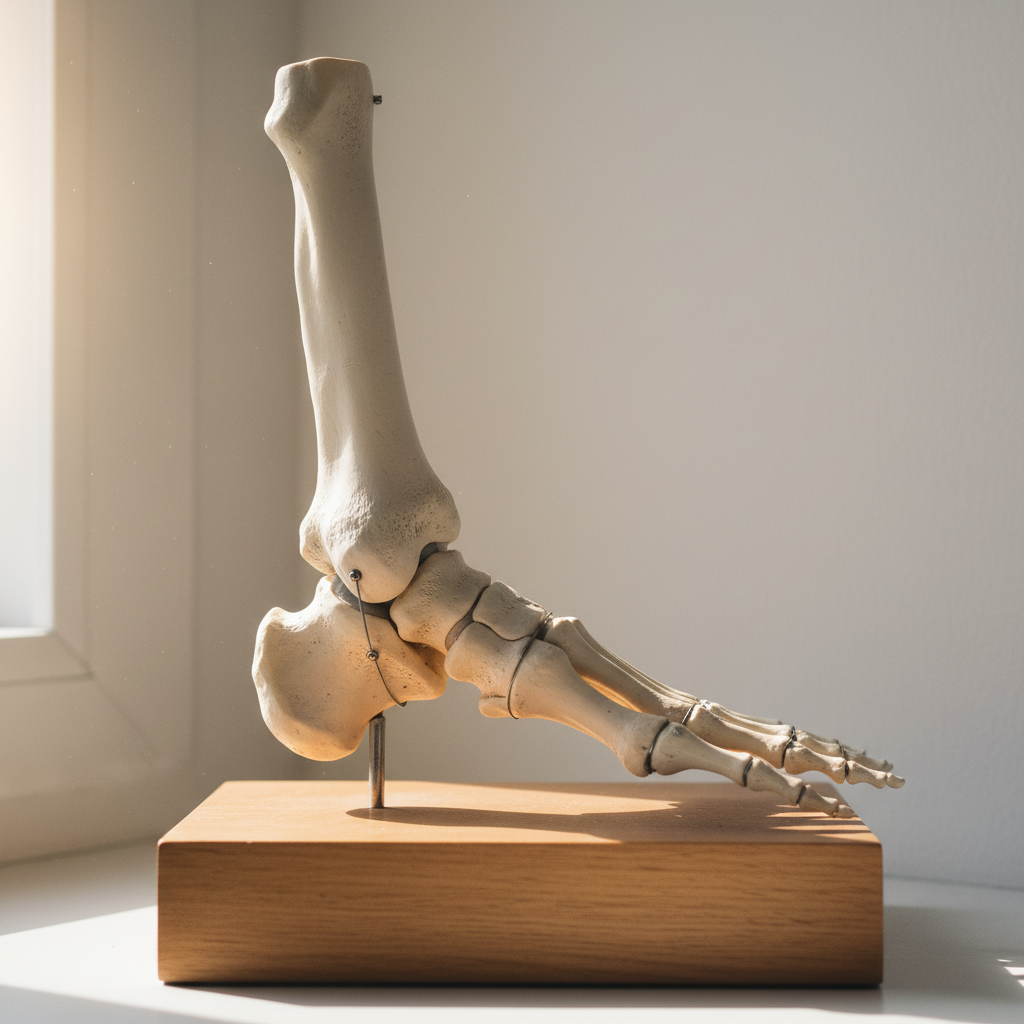
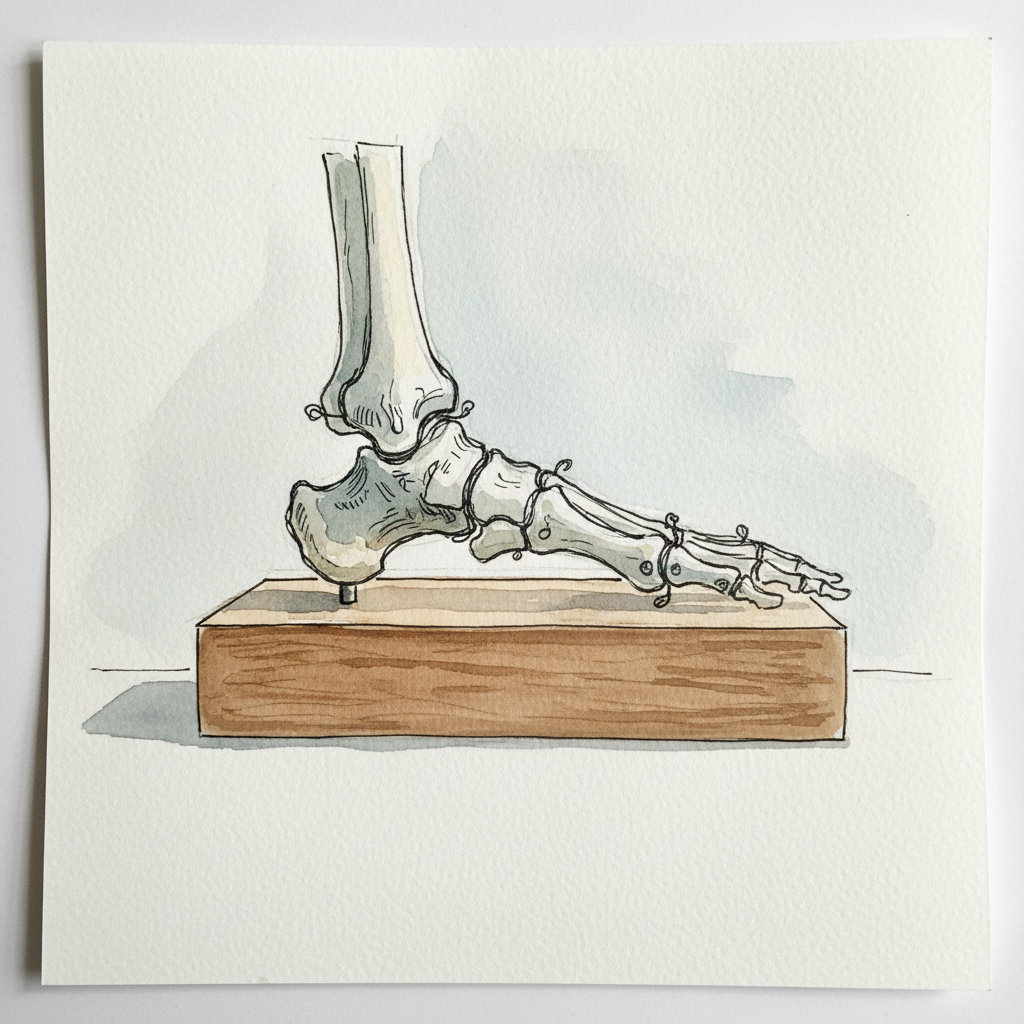
Three takes
Focus for this piece
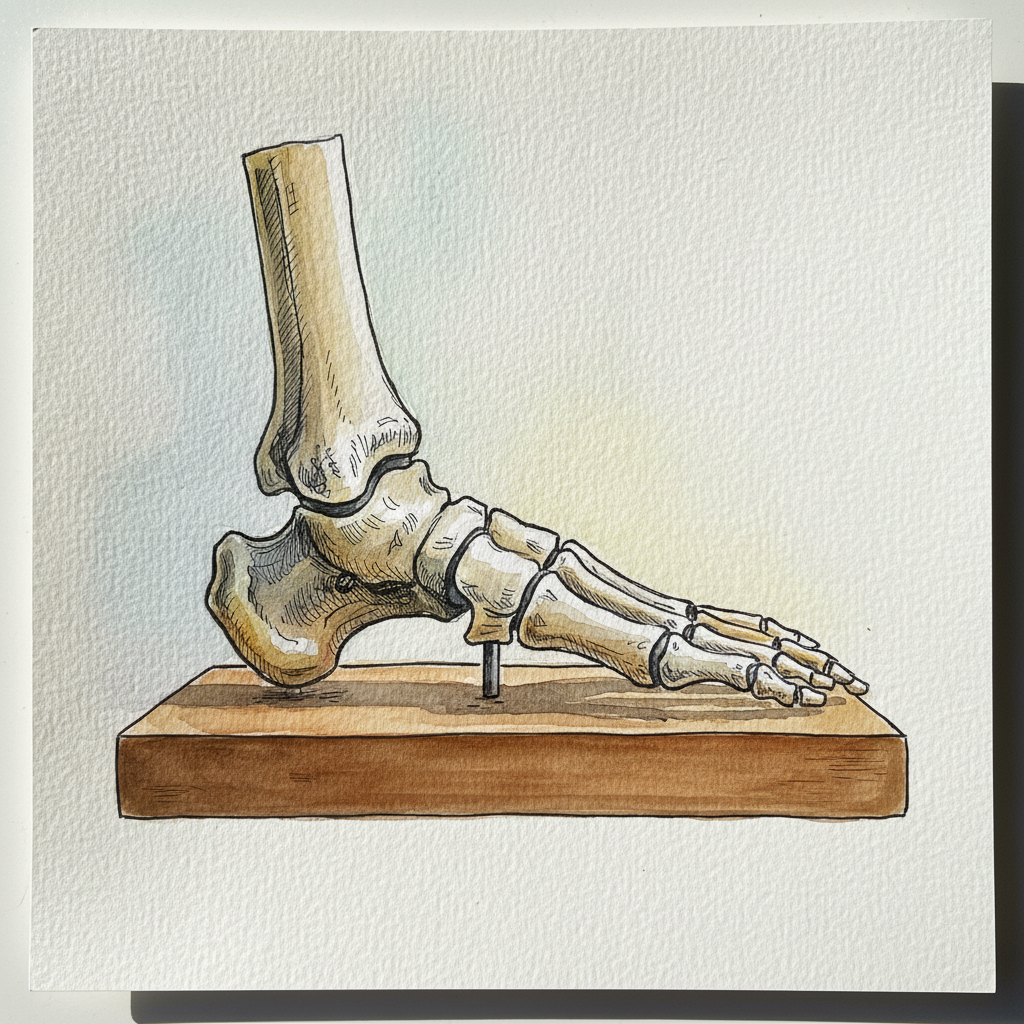
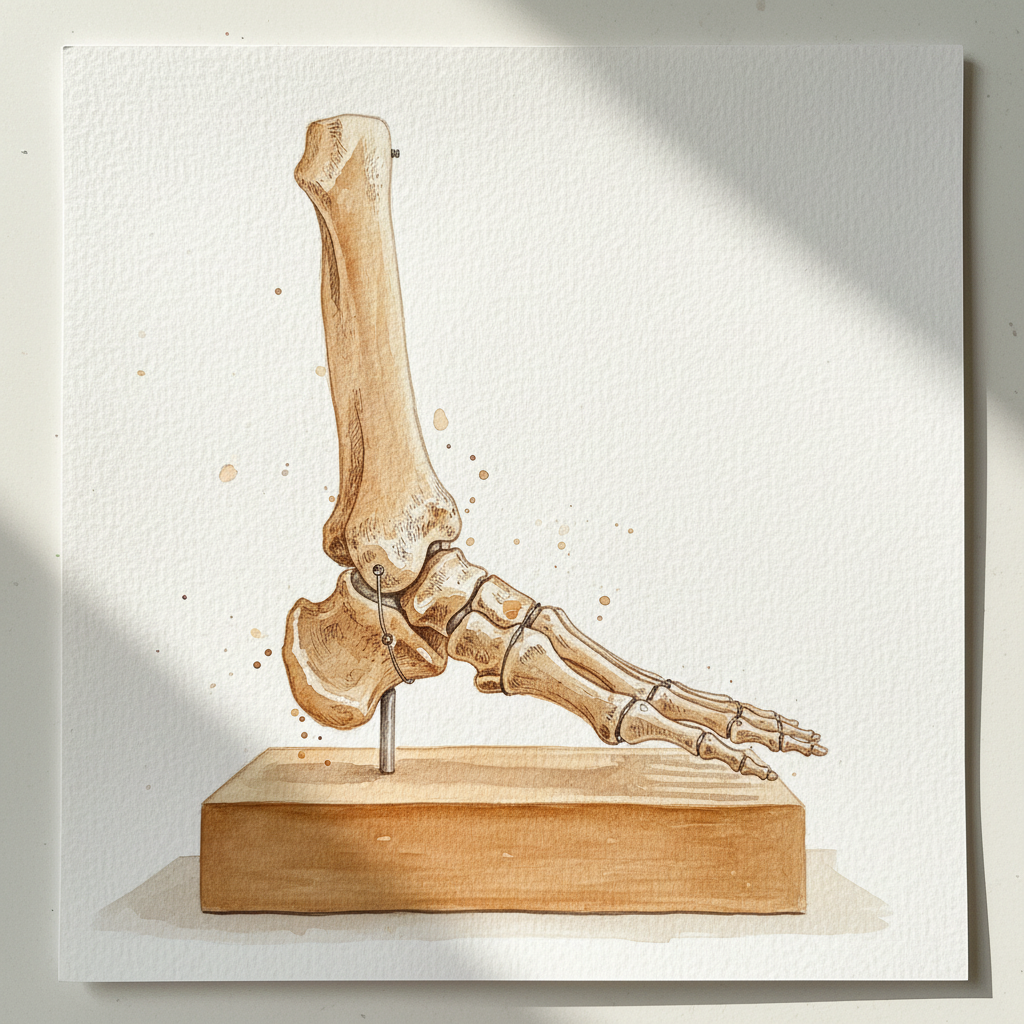
This anatomical foot provides an excellent opportunity to study how distinct line weights and layered washes work together to define complex organic forms within a clear structural framework. Emphasize the strong side lighting by using a robust, near-black pen for the pronounced shadow edges of the calcaneus and the articulation wires, ensuring a clear structural snap. Then, model the subtle curves and planes of the tarsals and phalanges with delicate, layered washes of a warm grey or sepia, allowing light and volume to emerge from the foundational ink. This approach highlights how ink can establish precise structure while watercolor builds form and atmosphere.
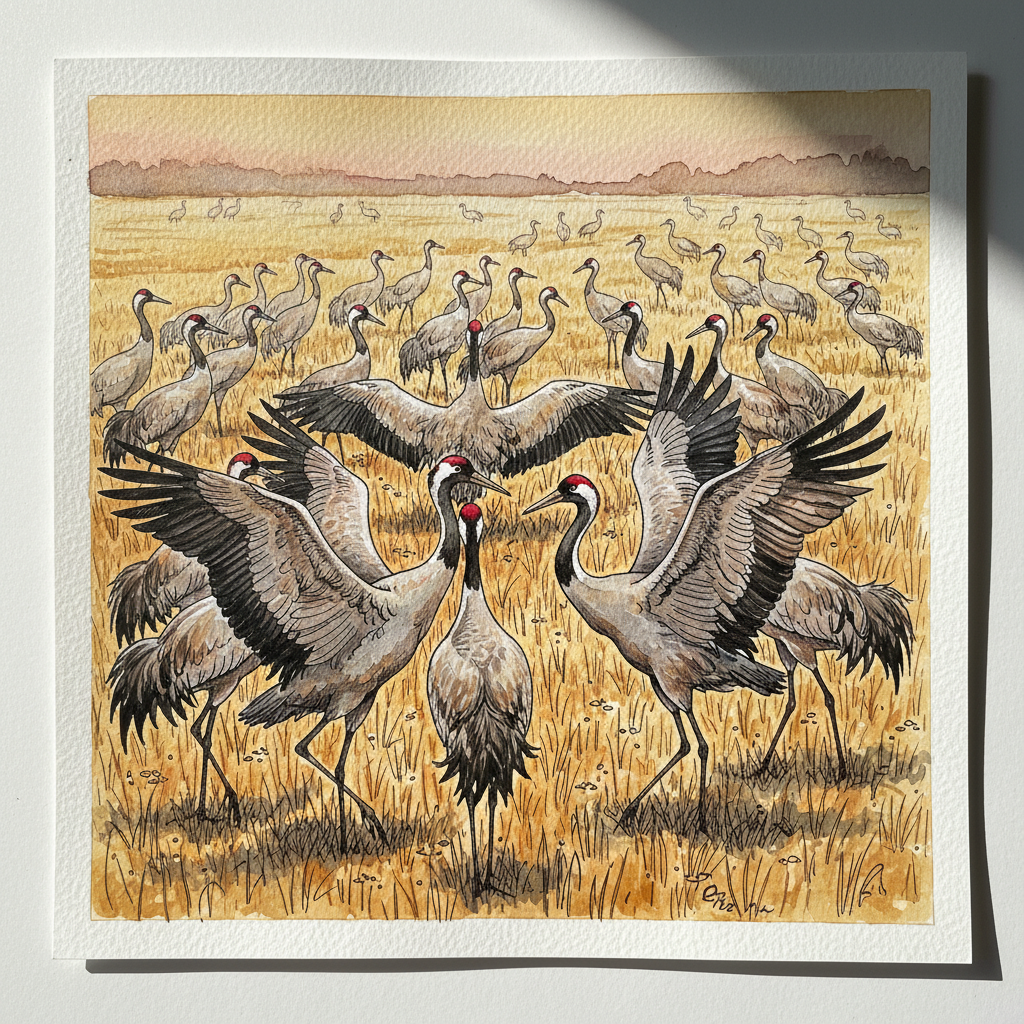
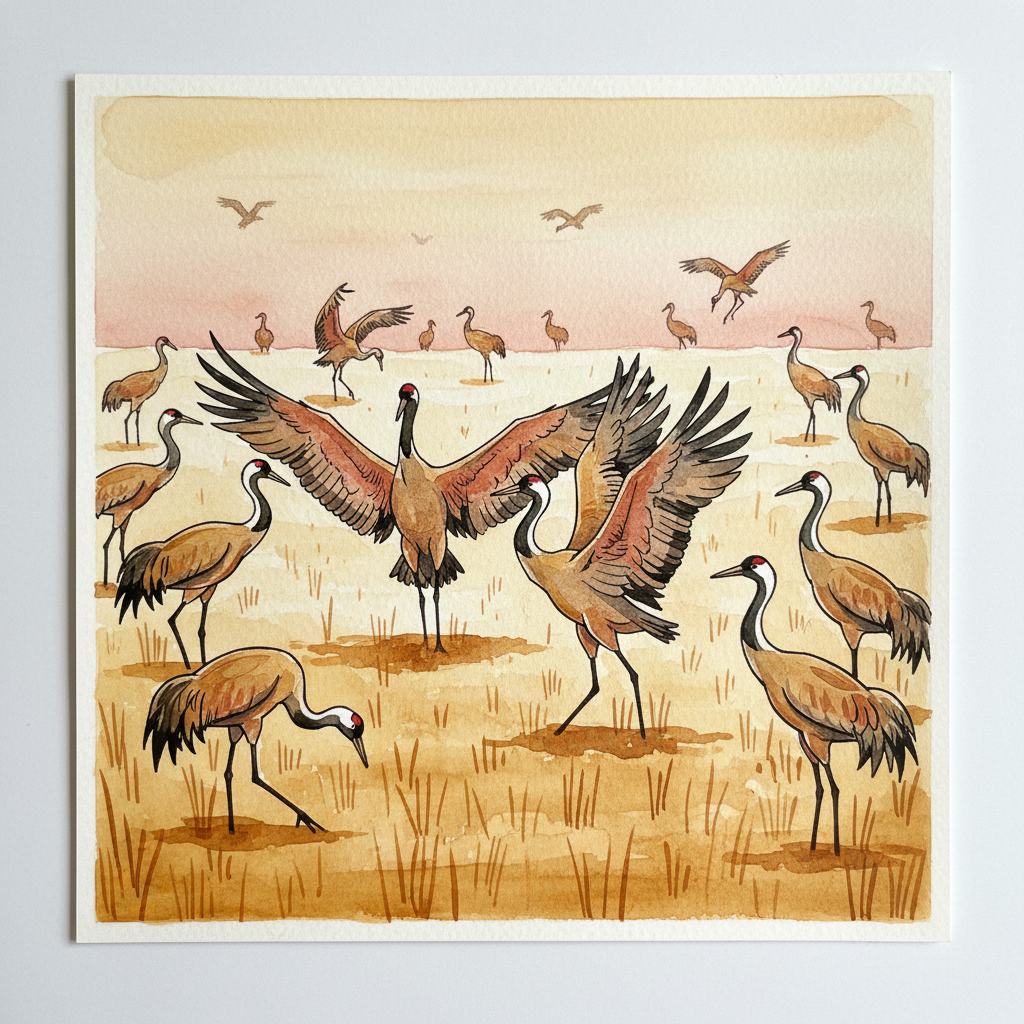
Piece 2 — Common crane
Pen + Watercolor · Loose pen and watercolor line-and-wash
Three takes
Focus for this piece
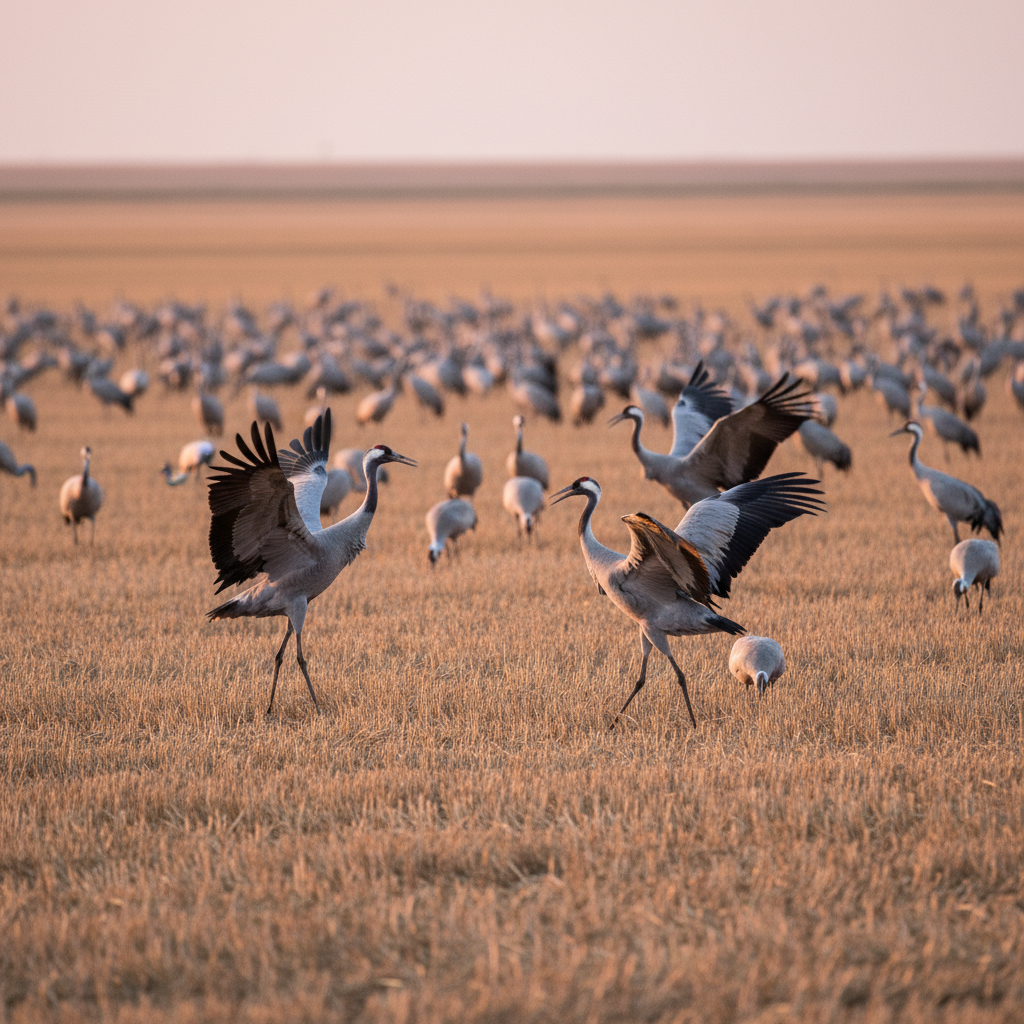
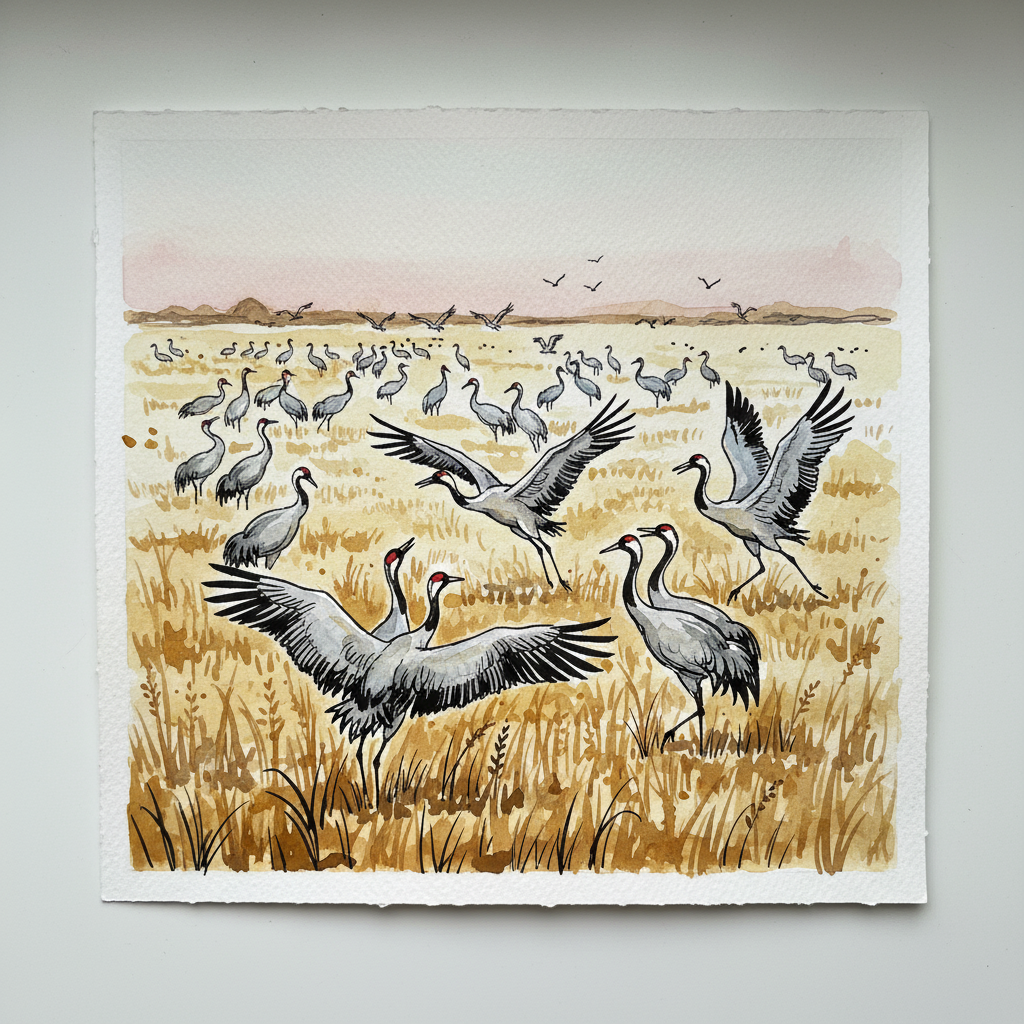
This piece is ideal for practicing the essential pen-and-watercolor balance between atmospheric washes and precise line work. Establish the soft, expansive dusk mood with broad, wet-on-wet washes of warm grays, pinks, and golds across the flock and field, letting colors mingle and create the impression of many birds. Then, strategically use finer, confident pen lines to define the forms of foreground cranes, reserving touches of strong red and black watercolor for their vivid crown patches and striking flight feathers to bring them forward.
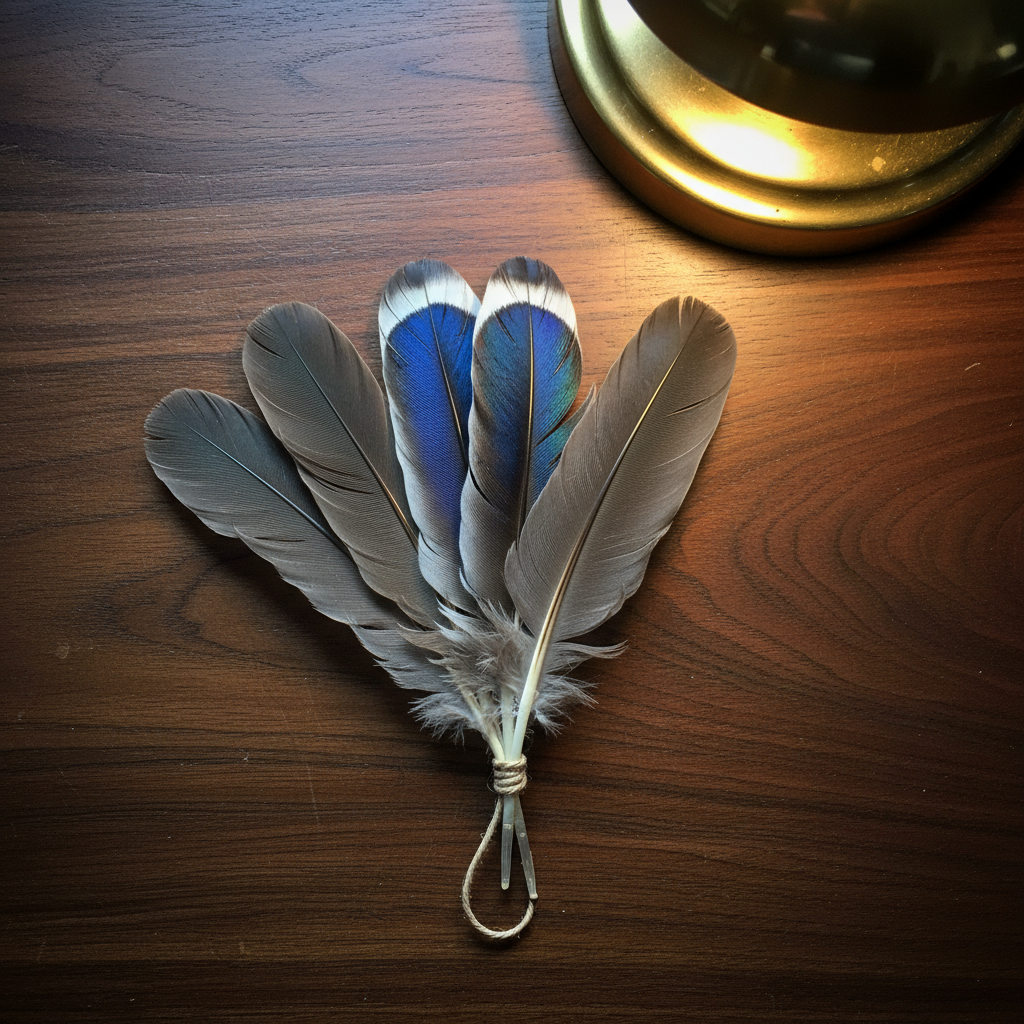
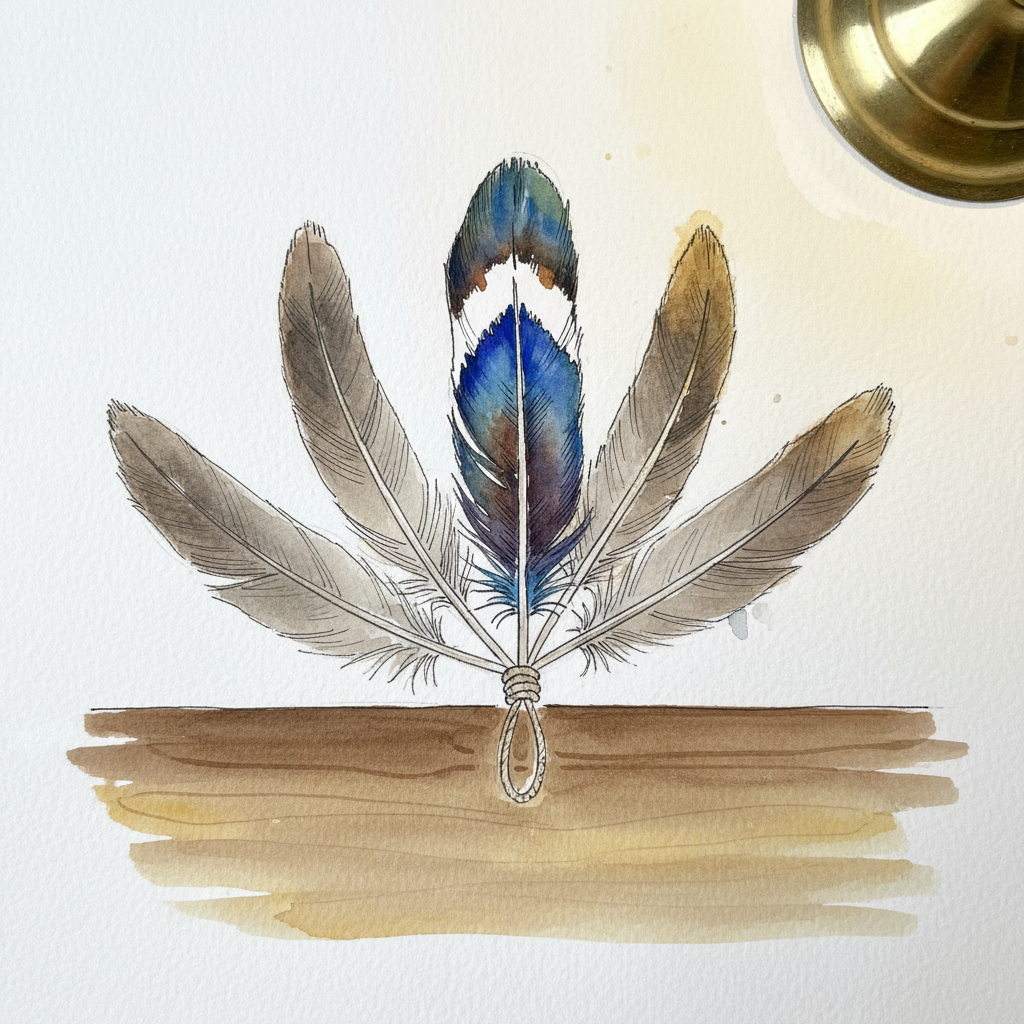
Piece 3 — Mallard wing-feathers fanned
Pen + Watercolor · Loose pen and watercolor line-and-wash
Three takes
Focus for this piece
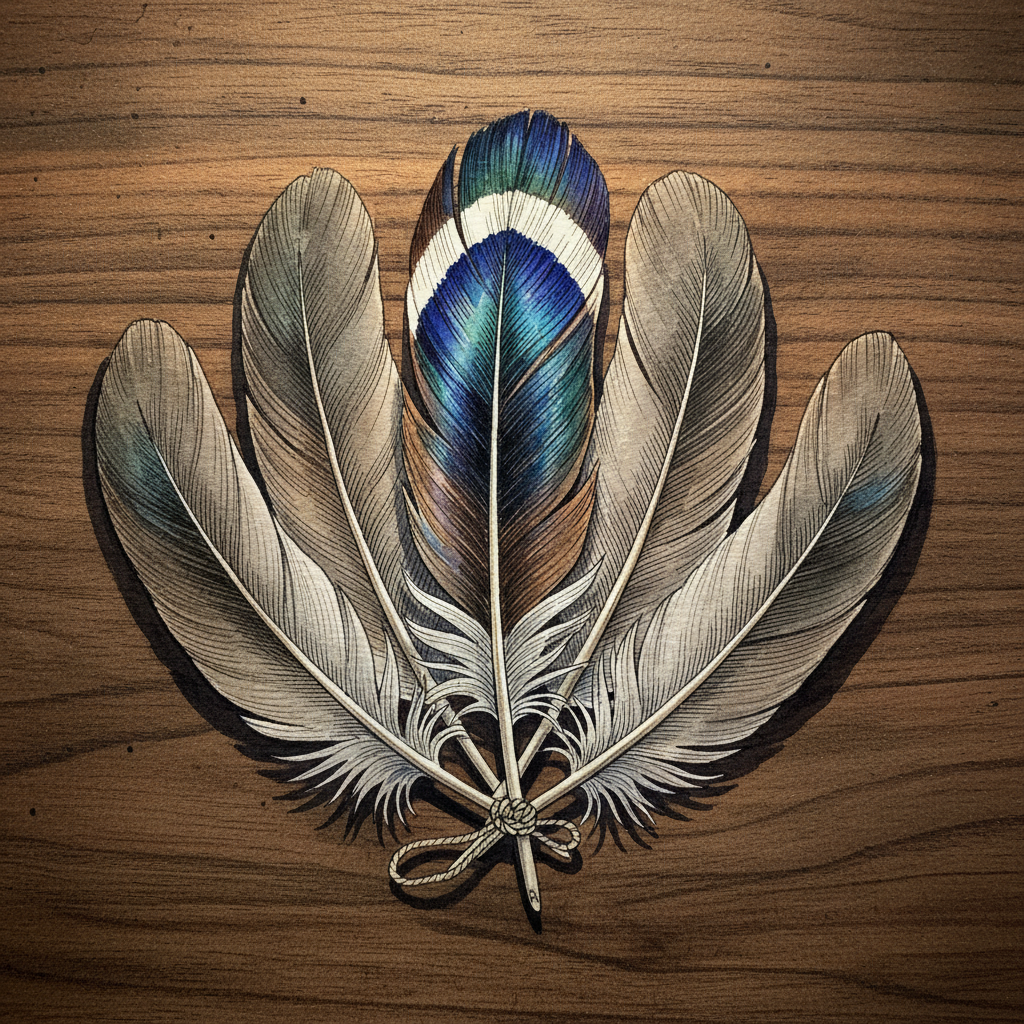
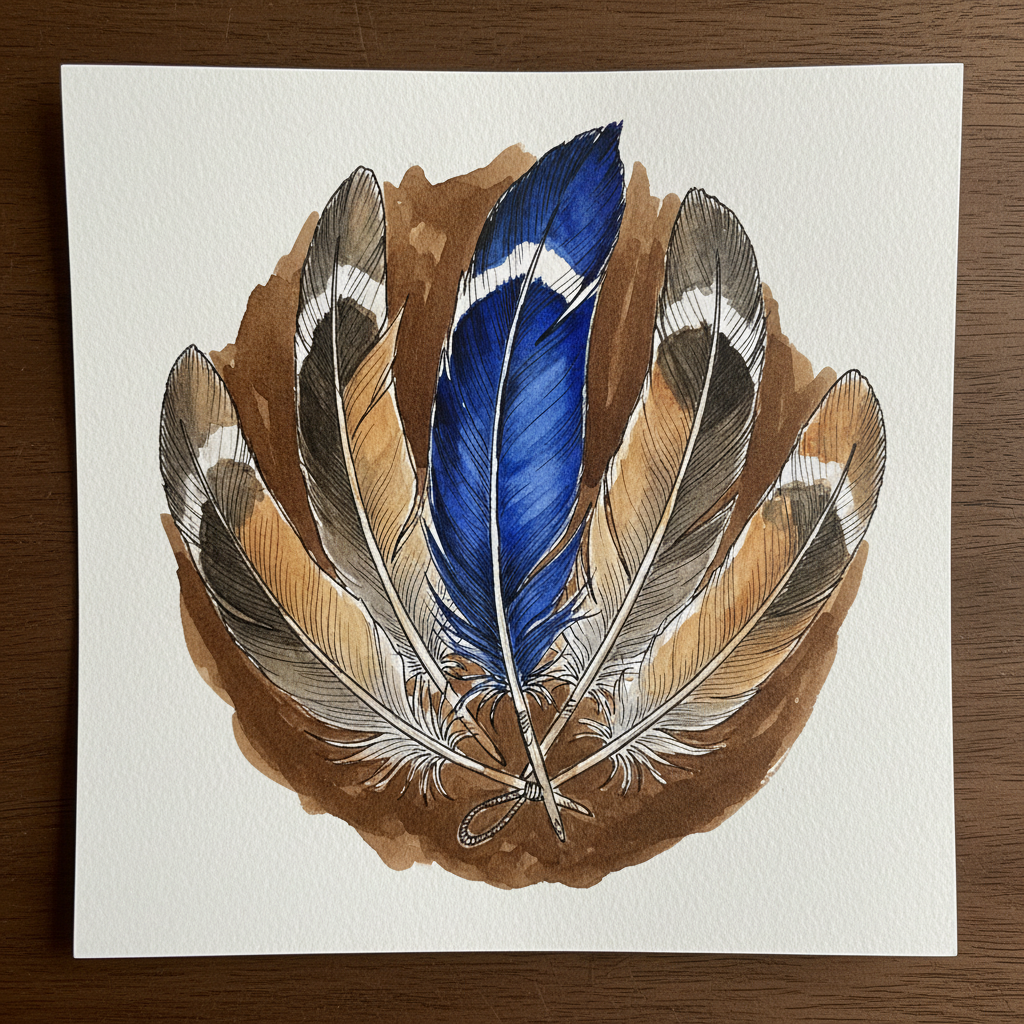
This piece offers a focused study on rendering iridescence and contrasting edge qualities. Build the shifting blue-violet and bronze of the speculum feathers using careful wet-on-dry glazing, reserving the sharp white bars through precise negative painting. Contrast these crisp details with softer, more dilute washes for the brown-grey outer feathers and the subtle texture of the walnut grain. Employ varied pen line weights to emphasize the distinct structure of the central feathers against the delicate linen thread.
Piece 4 — Devon Hill Farm Snowdrift
Pen + Watercolor · Loose pen and watercolor line-and-wash
Three takes
Focus for this piece
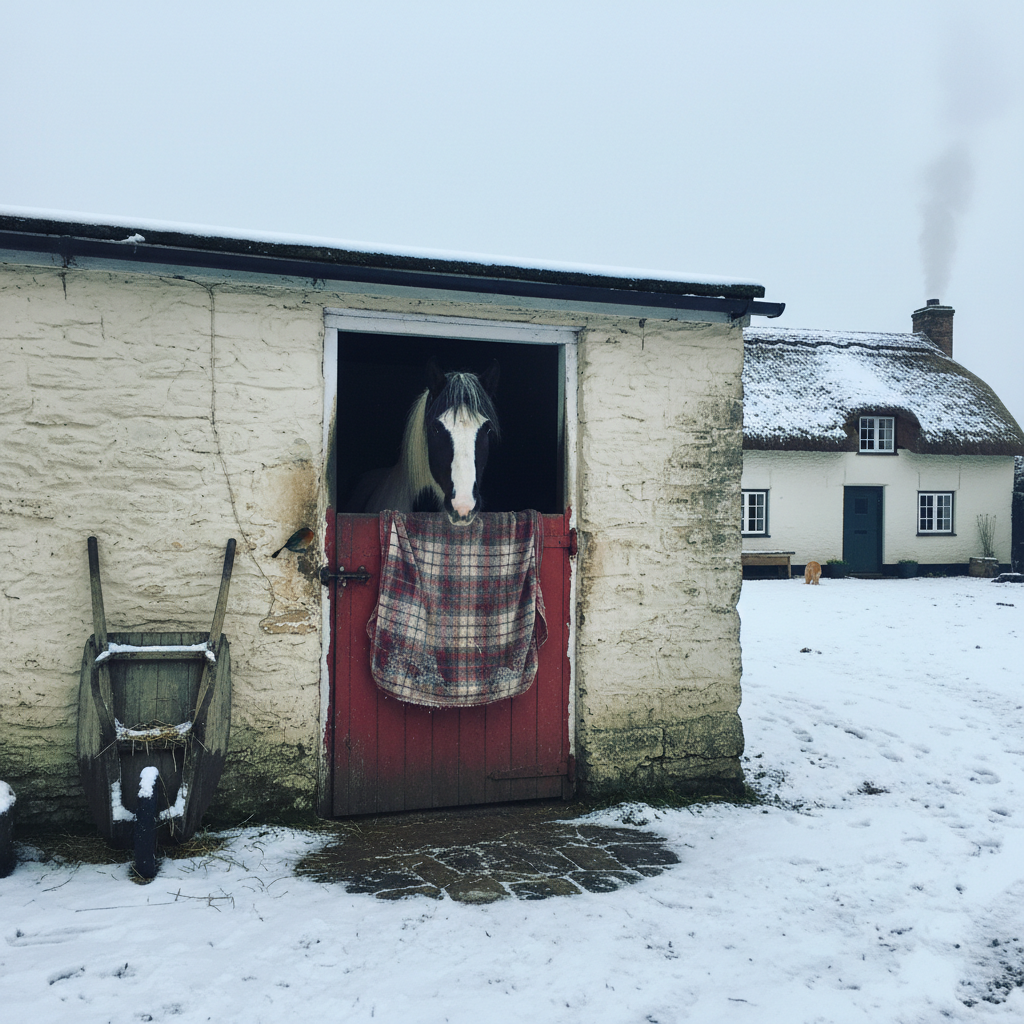
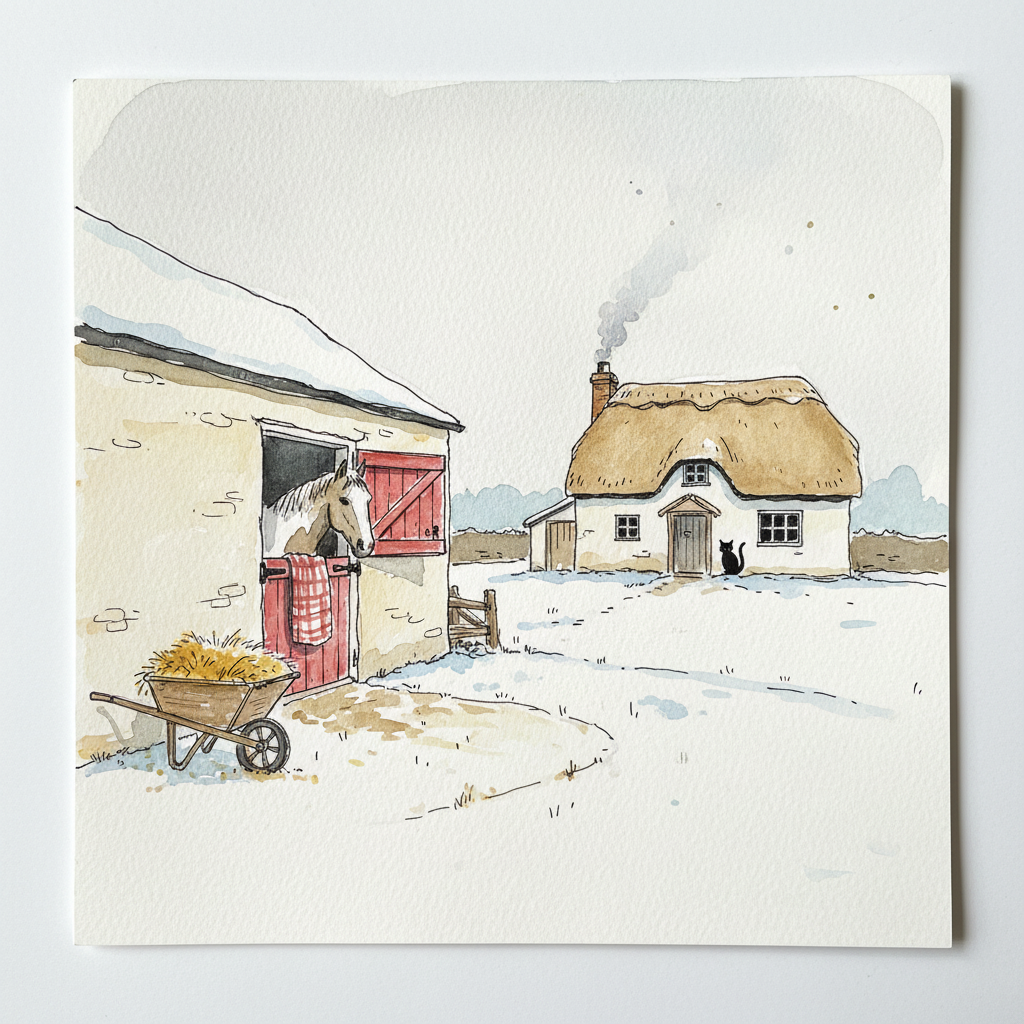
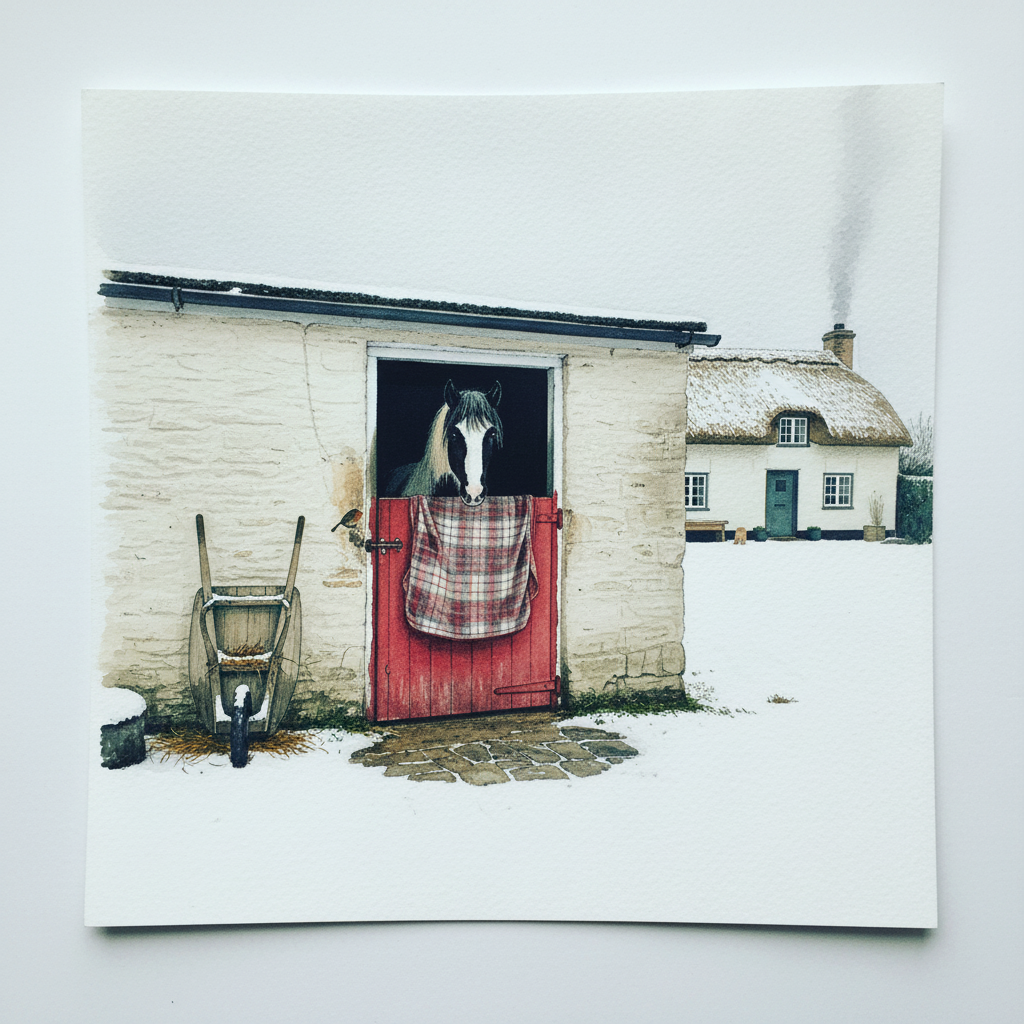
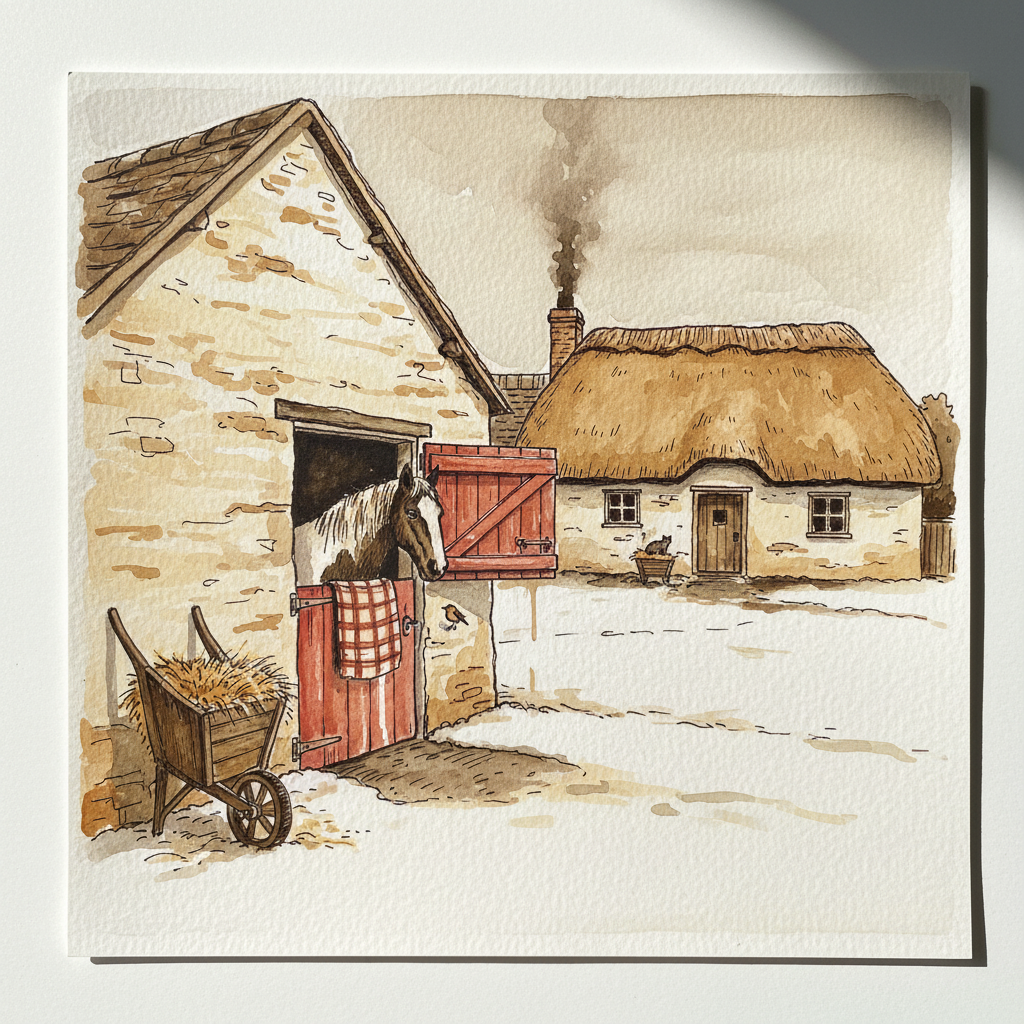
This Devon scene offers a focused study on preserving brilliant whites and defining form with minimal wash. Carefully map out the large areas of snow and limewashed walls, using only very dilute cool grays or blues to suggest subtle shadows and texture without losing the paper's luminosity. Contrast this delicate watercolor work with precise, varied pen lines—crisp for the barn-red door's edges and the robin, and softer for the hay and horse's fur—to add structure and focal points.
Piece 5 — Serengeti kopjes, Tanzania — Moru Kopjes at midday
Pen + Watercolor · Loose pen and watercolor line-and-wash

Three takes
Focus for this piece
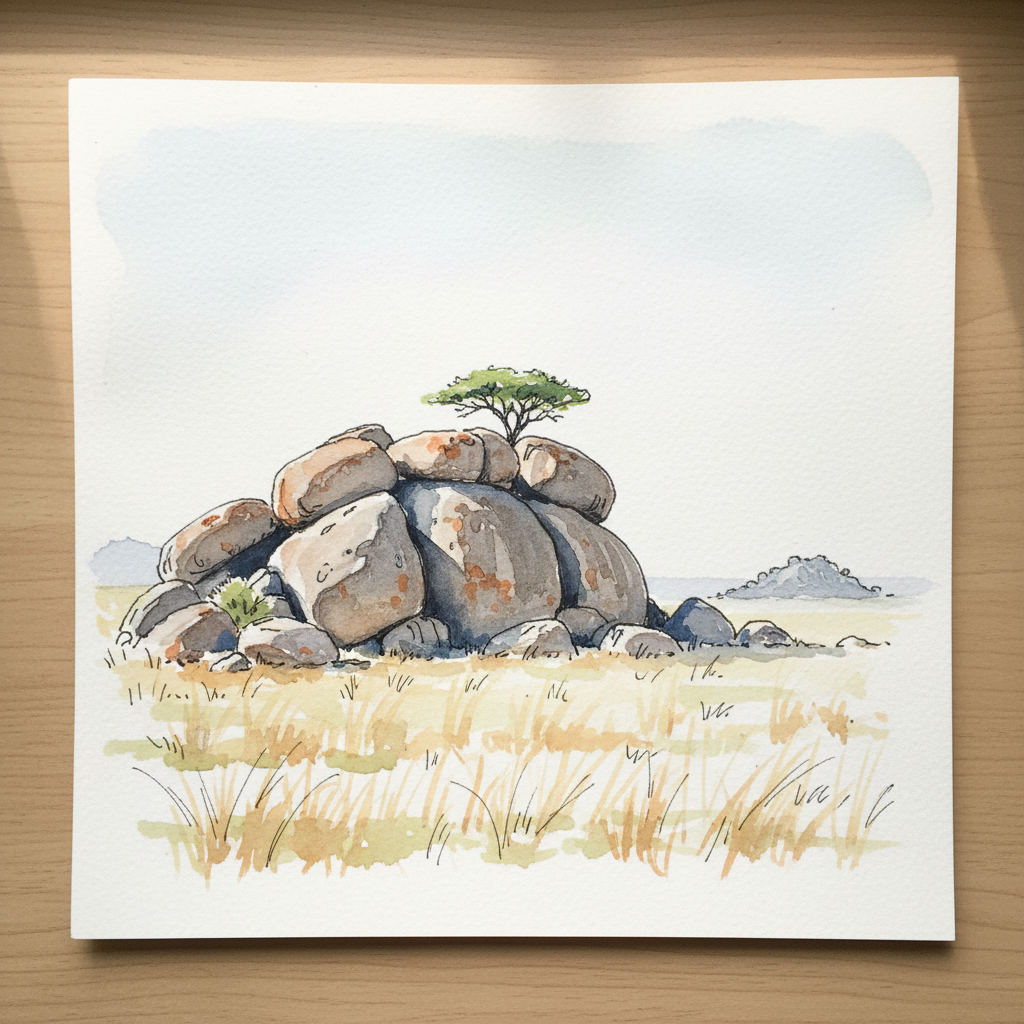
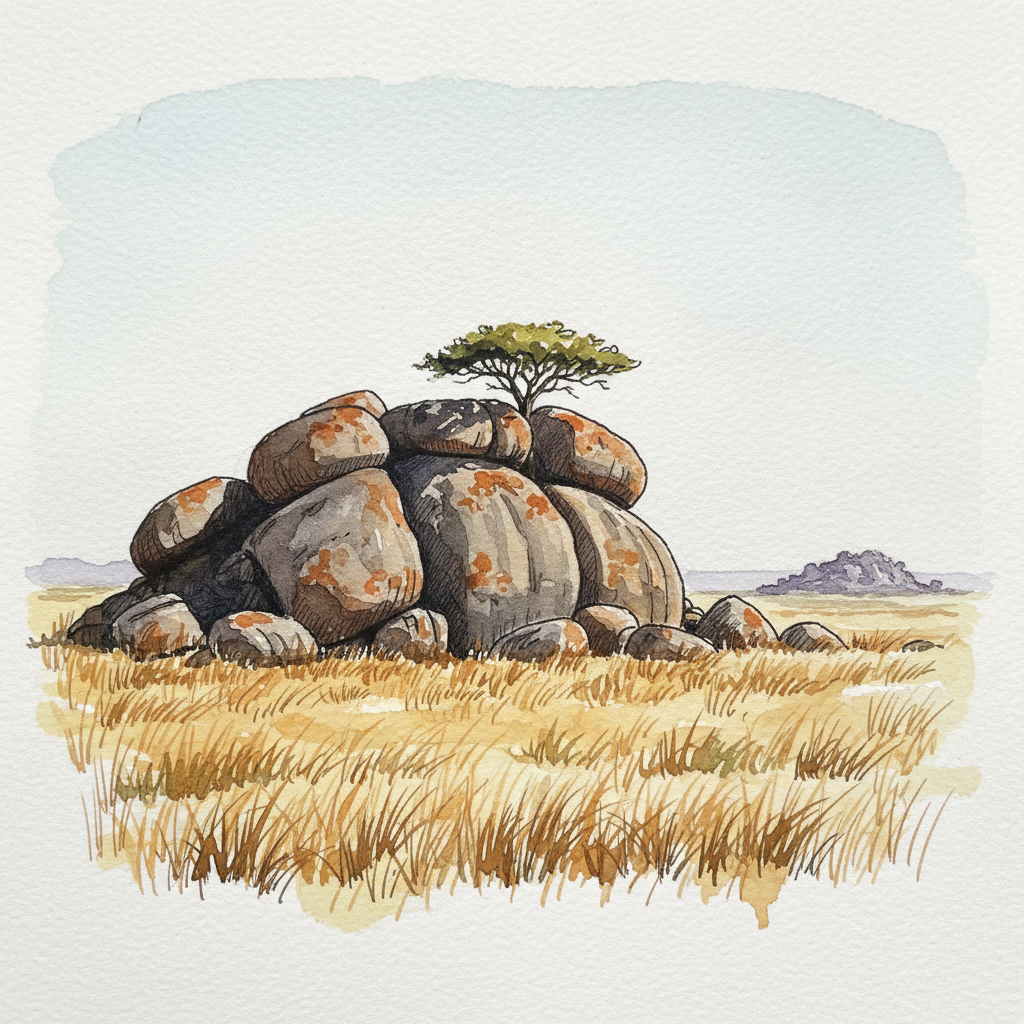
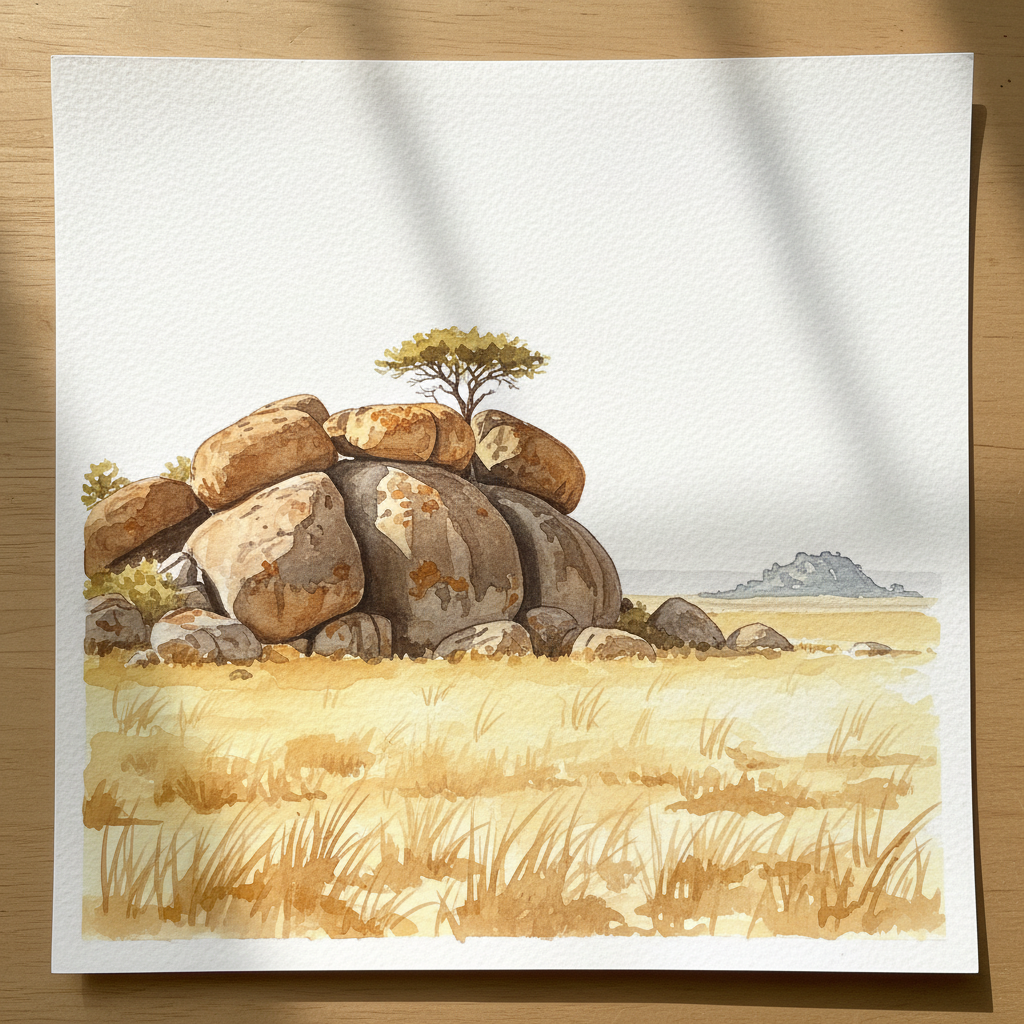
This piece offers a superb opportunity to study rendering the monumental, weathered granite forms of the kopjes under harsh midday light. Use varied, firm pen lines to define the stacked rounded shapes and introduce texture, then employ dry-brush watercolor techniques with a limited grey-orange palette to suggest lichen and rock surfaces. Focus on the strong value contrast between brightly lit planes and sharply defined, short shadows to convey the intense sun and heat.
Piece 6 — CITIC Tower (China Zun), Beijing, China
Pen + Watercolor · Loose pen and watercolor line-and-wash

Three takes
Focus for this piece
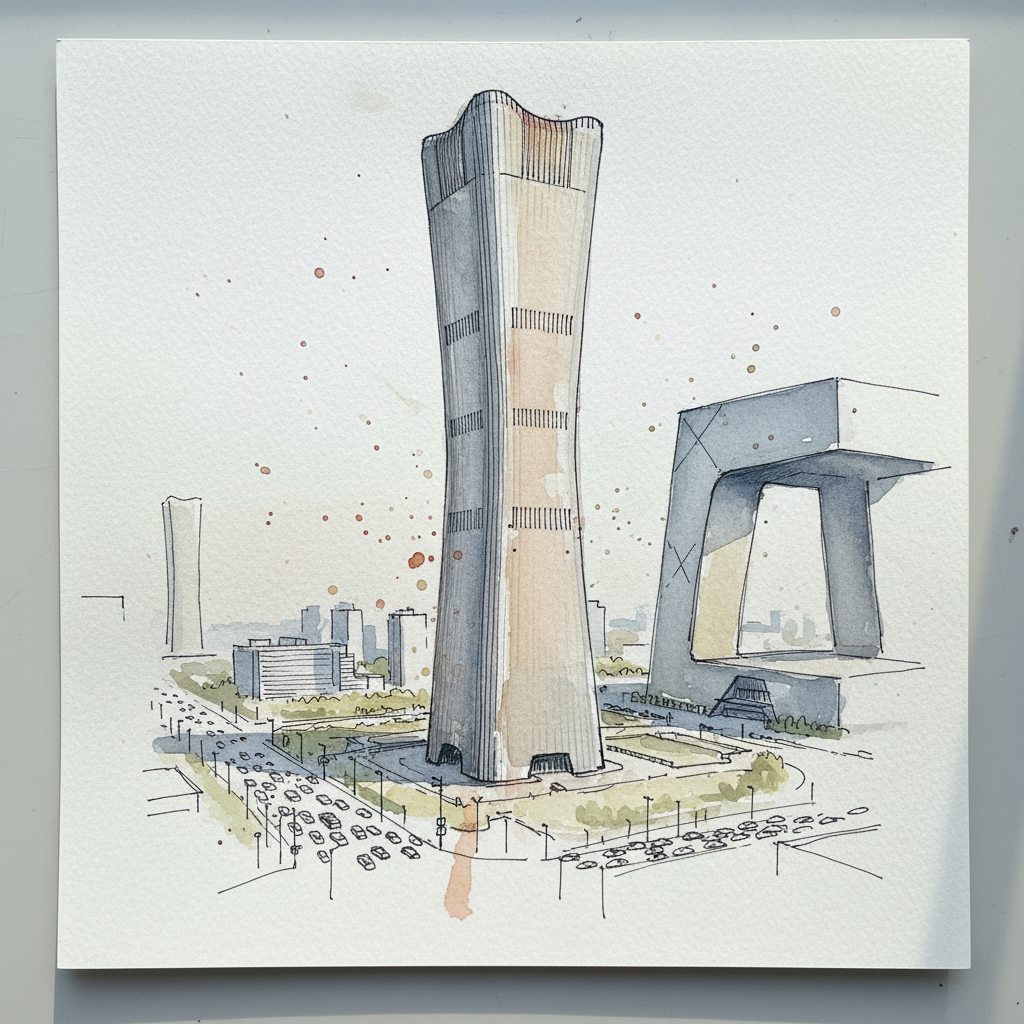
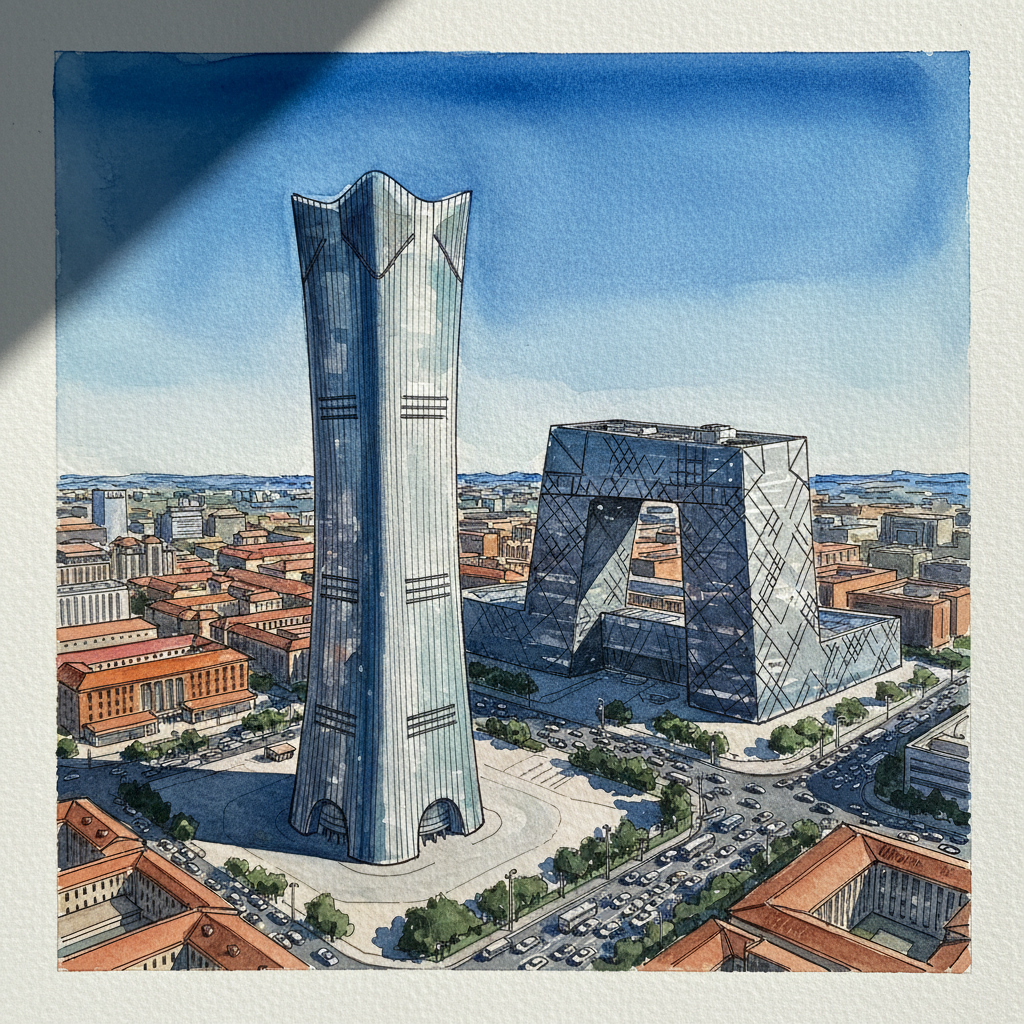
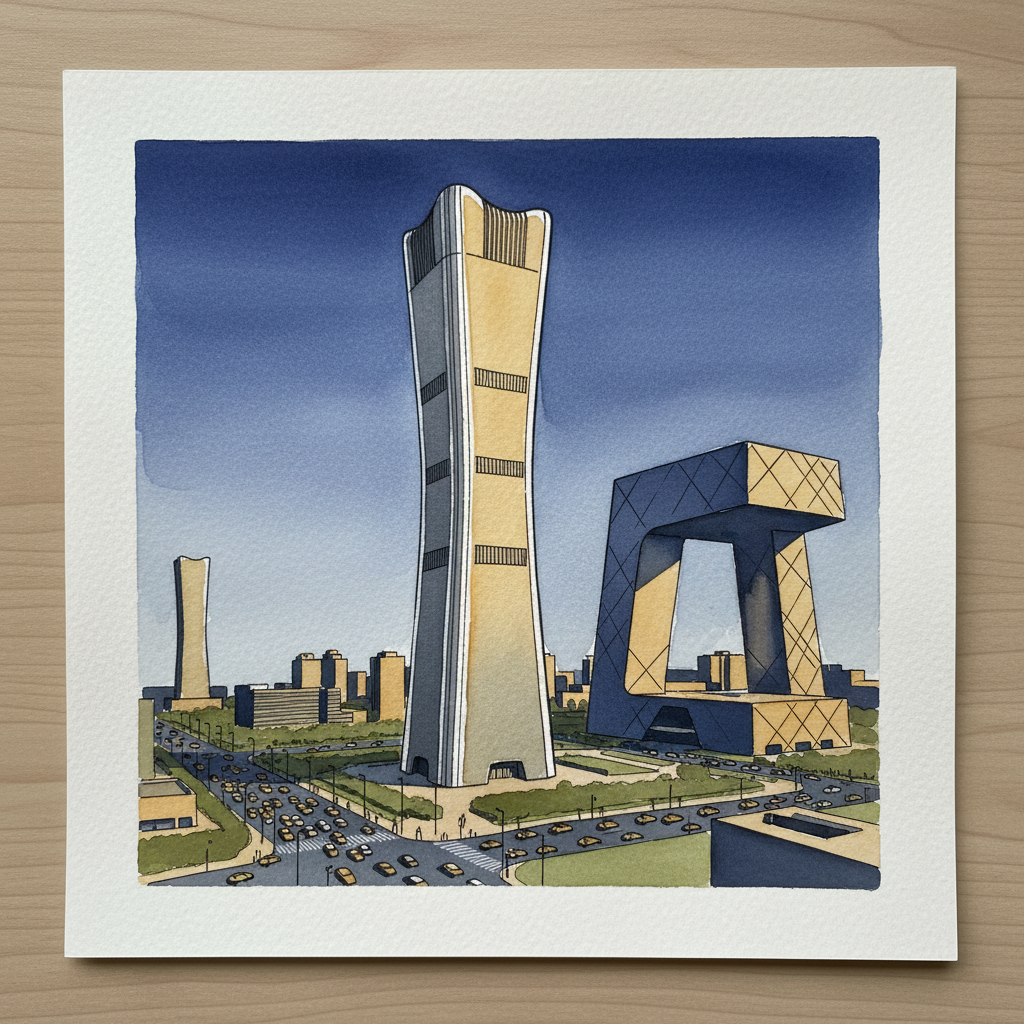
This piece offers a study in rendering complex architectural forms that defy typical taper. Use careful pen work and varied line weights to articulate the CITIC Tower's distinctive "zun" profile, letting the vertical mullions guide your eye along its subtle curves. Then, employ nuanced, gradated washes to capture the morning light on its unique waist and the dramatic curving shadow it casts, giving volumetric presence to your lines.
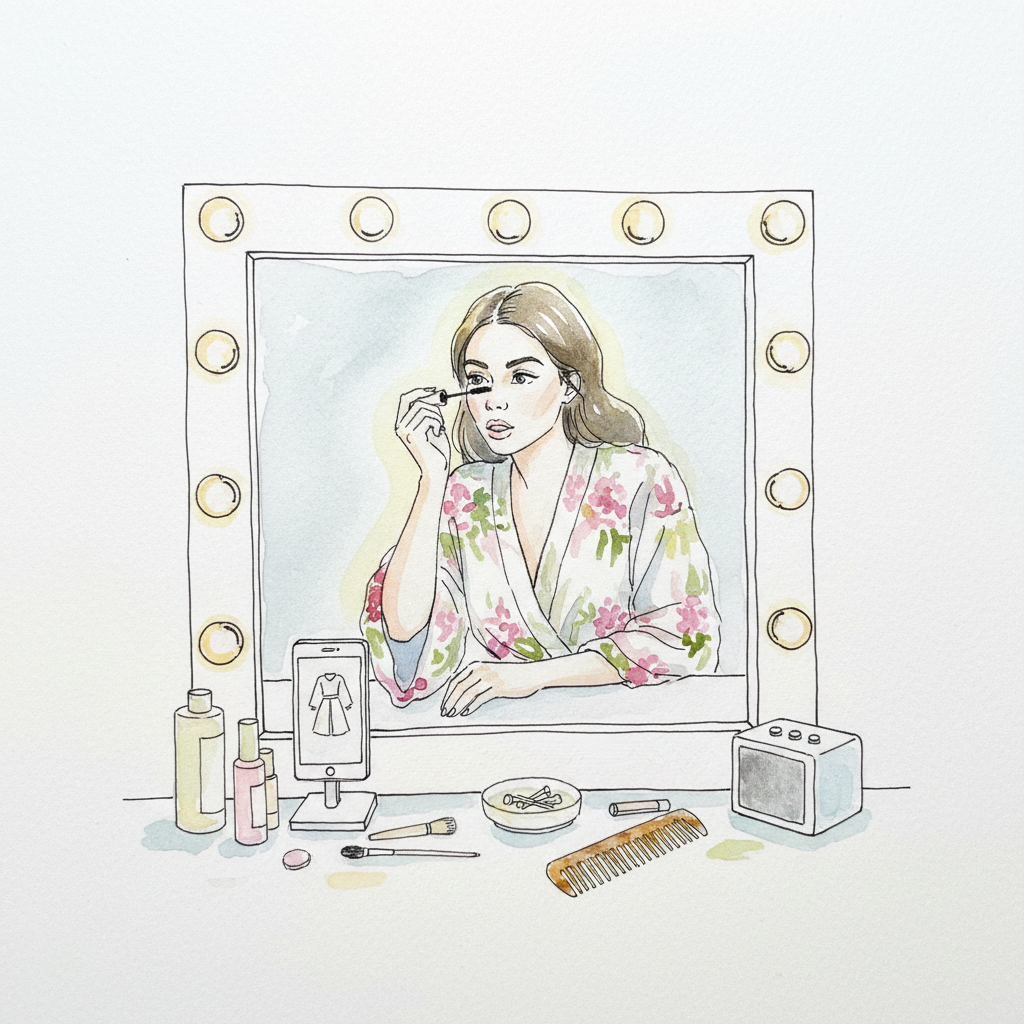
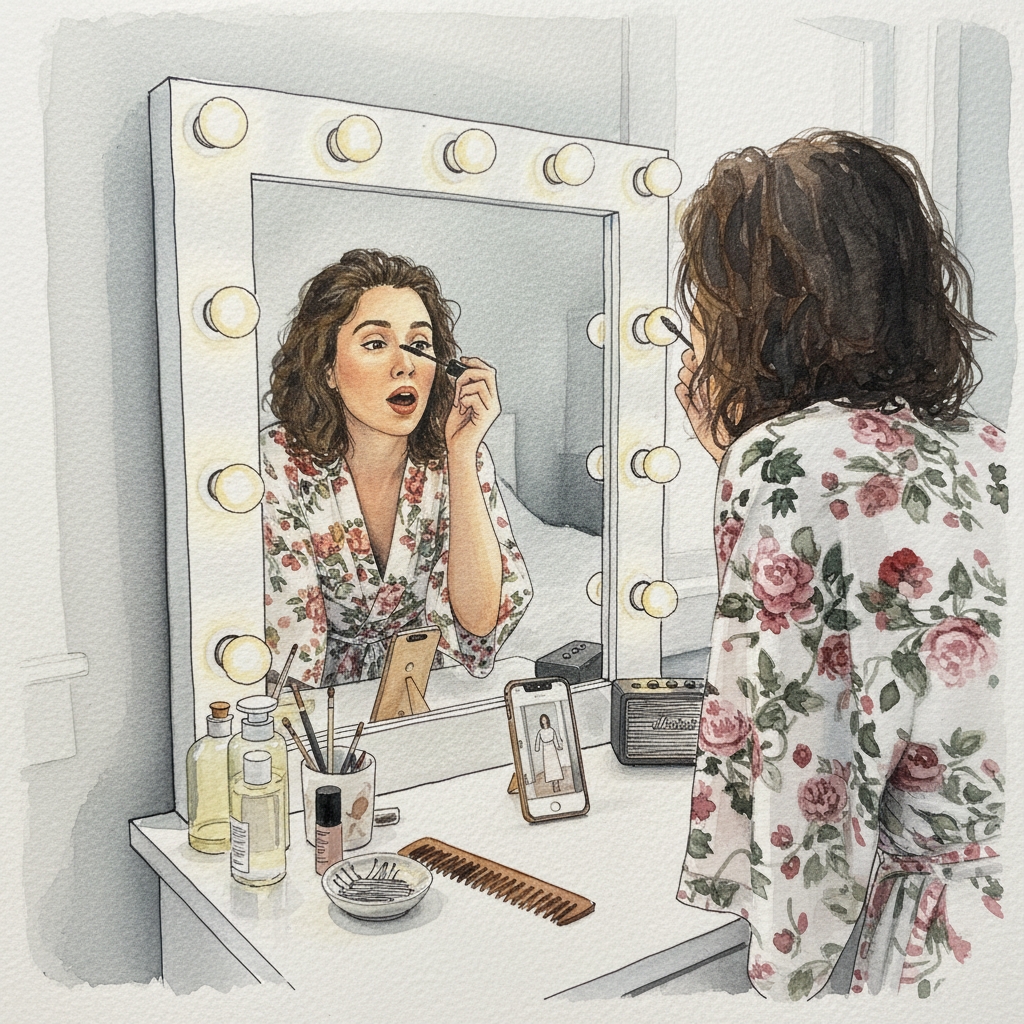
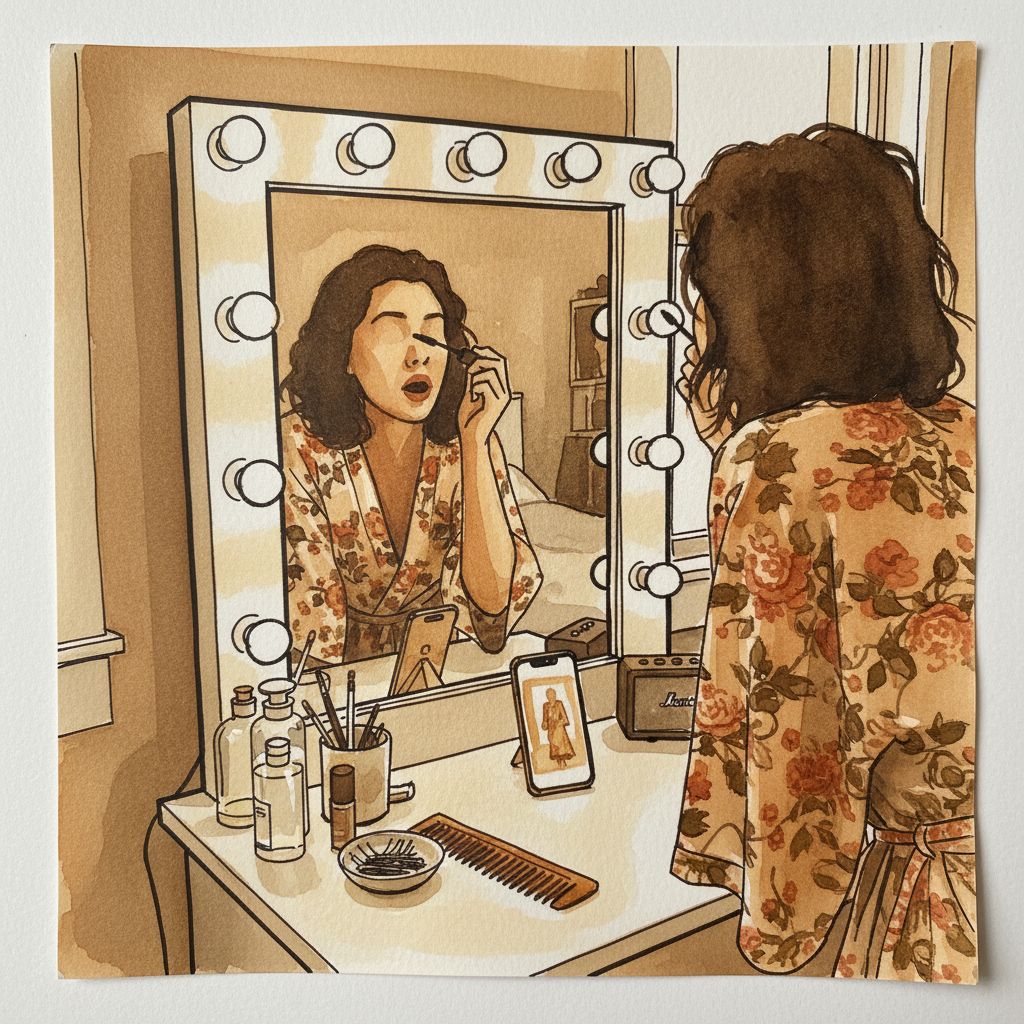
Piece 7 — Vanity mirror with bulbs
Pen + Watercolor · Loose pen and watercolor line-and-wash

Three takes
Focus for this piece
This piece is an ideal study for balancing precise ink lines with the atmospheric glow of watercolor, specifically in depicting luminous light sources. Focus on using varied line weights to define the crisp edges of the mirror and bulbs, while employing soft, wet-on-wet washes of transparent warm yellows and oranges to create their glowing halos against the dim bedroom. Pay close attention to reserving your brightest paper whites at the center of each bulb, allowing your washes to build luminosity around them. This contrast will give the impression of vibrant light emanating from the painting.
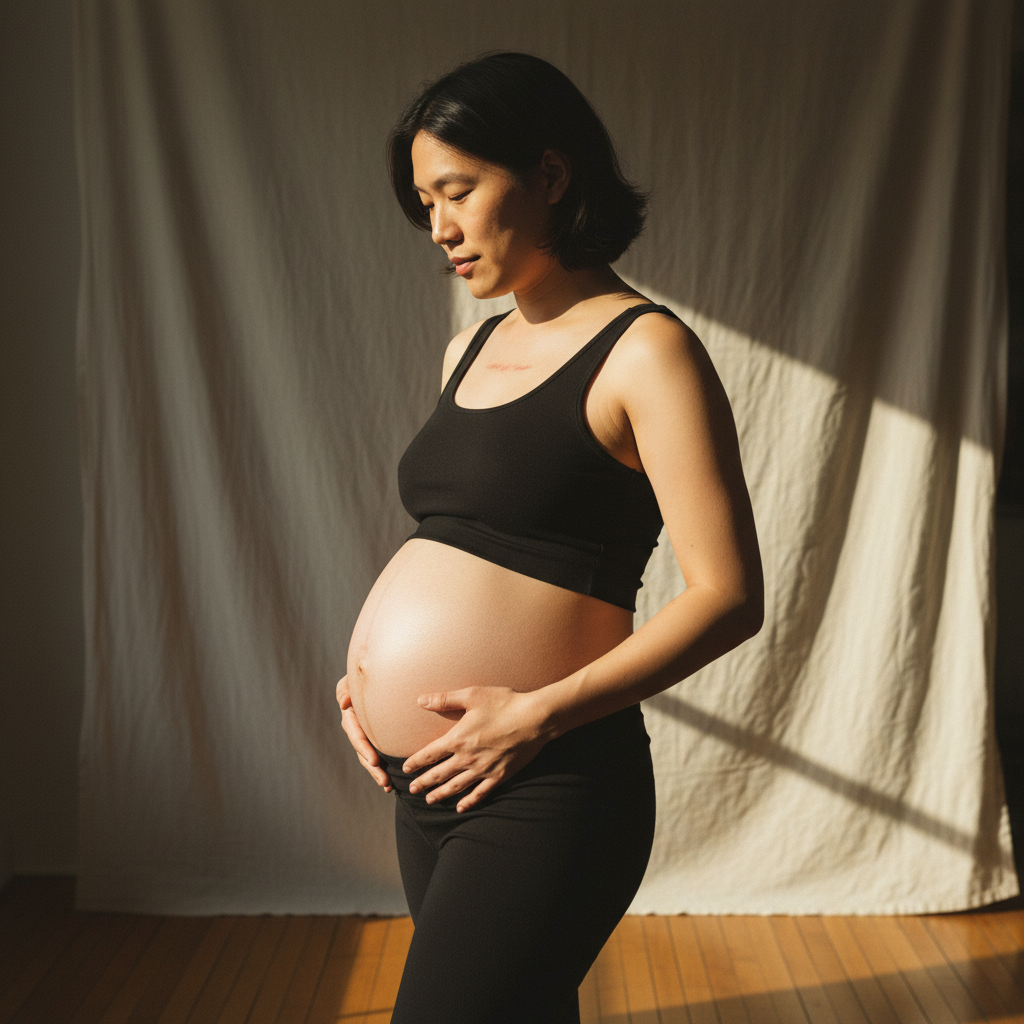
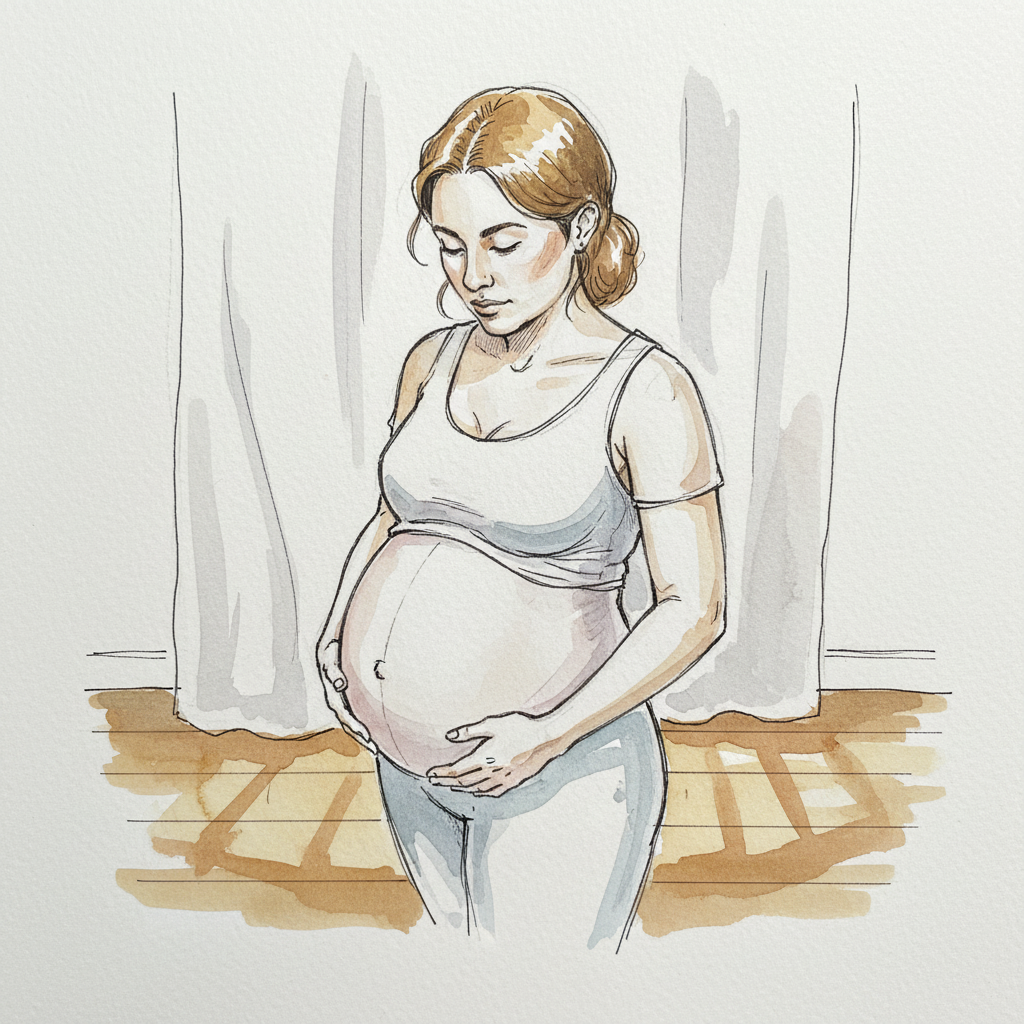
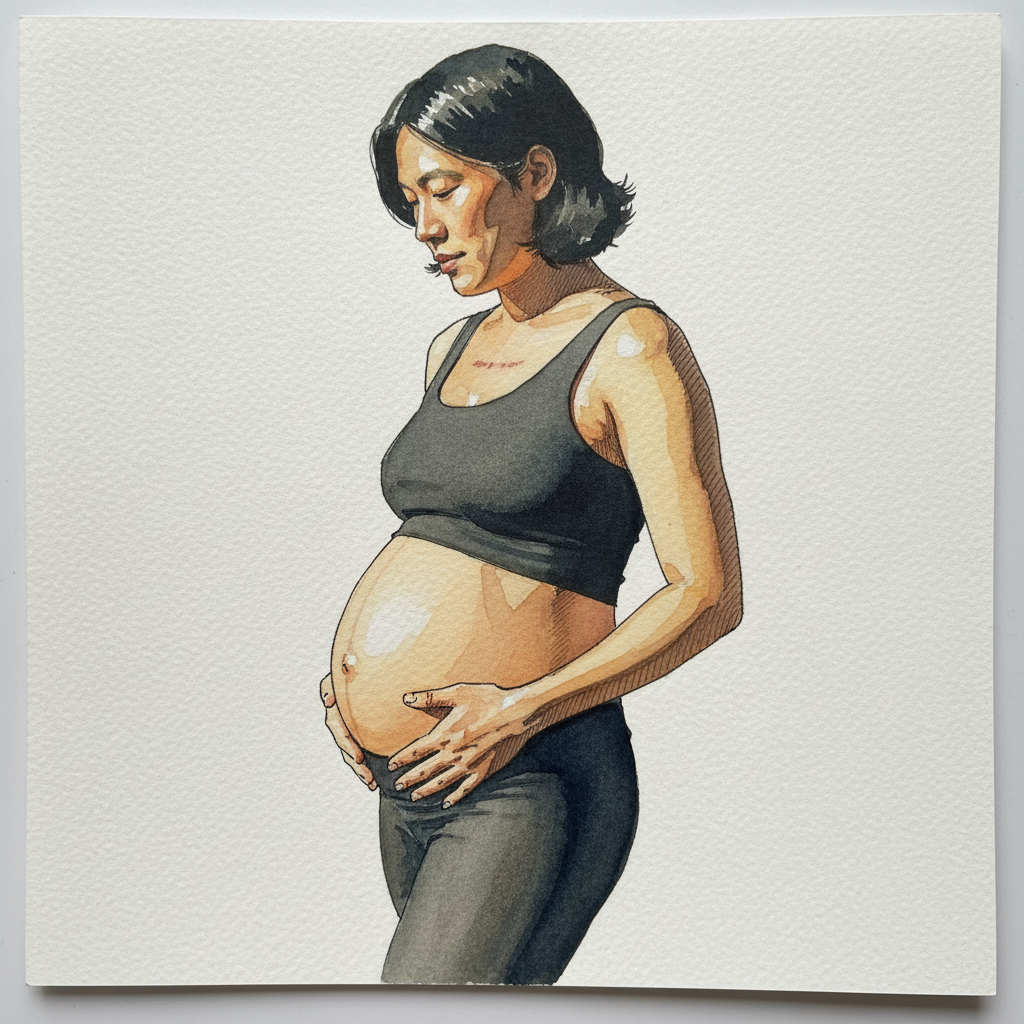
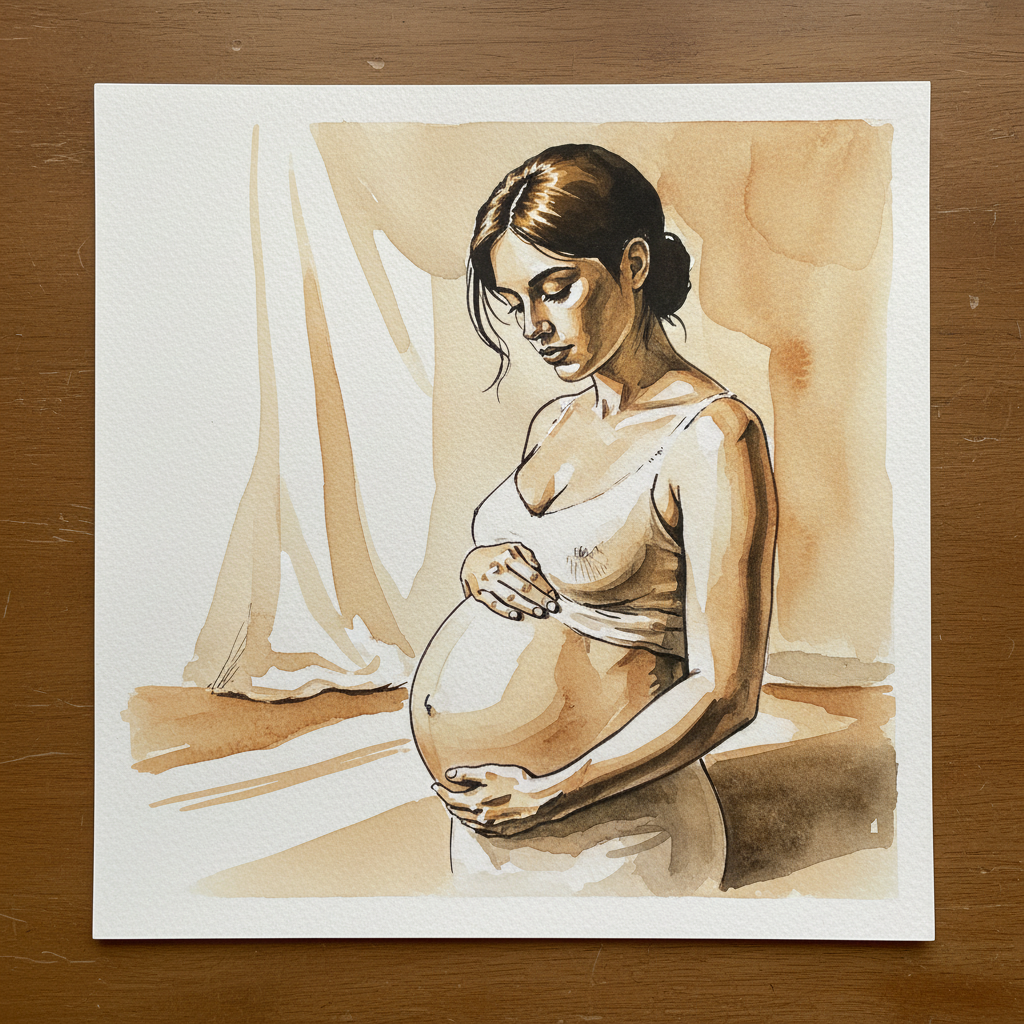
Piece 8 — Pregnant non-binary model, weight right, hands resting
Pen + Watercolor · Loose pen and watercolor line-and-wash
Three takes
Focus for this piece
This piece offers a compelling study in rendering the soft, volumetric forms of the human body, specifically the pregnant belly and the subtle contrapposto pose, through careful layering of graded washes. Focus on building luminous skin tones with a restricted, warm palette and gentle wet-on-wet transitions to capture the golden afternoon light. Employ delicate, varied line weights, using softer, broken lines where washes should dominate and subtly define form, especially around the belly and the gently spread fingers. This approach allows the watercolor to convey the quiet warmth and tender dimensionality of the subject.