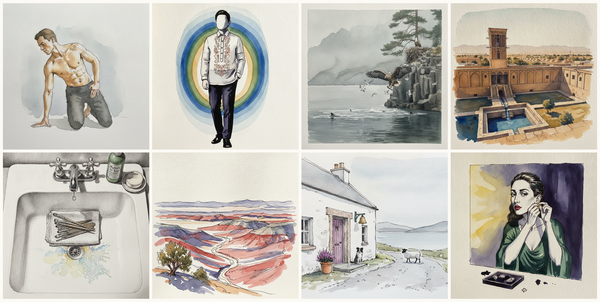
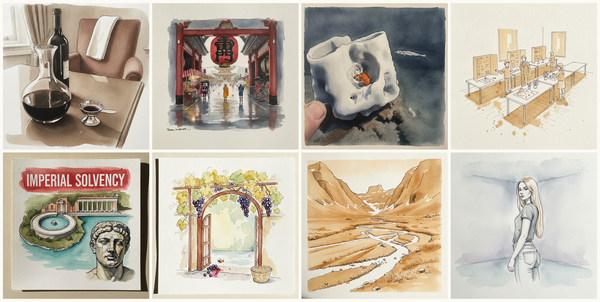
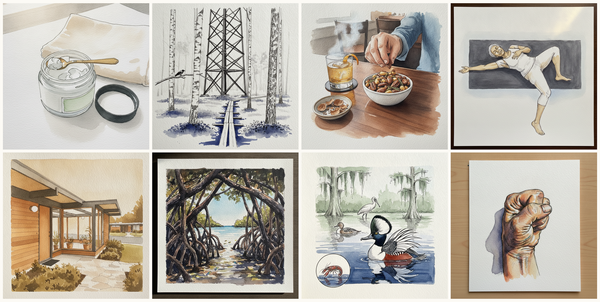
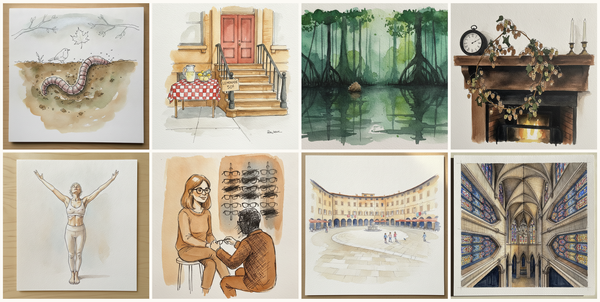
Pride Weekend, West Village, Fire-scarred grassland with regrowth, Kruger — central section after late winter burn, Peace Lily in White Ceramic Pot, Hogfish, and more — pen + watercolor for October 16, 2026
AI-generated daily art-practice references for pen and watercolor: Pride Weekend, West Village, Fire-scarred grassland with regrowth, Kruger — central section after late winter burn, Peace Lily in White Ceramic Pot, Hogfish, Tianjin Binhai Library, Tianjin, China, Person reading with dog on lap…
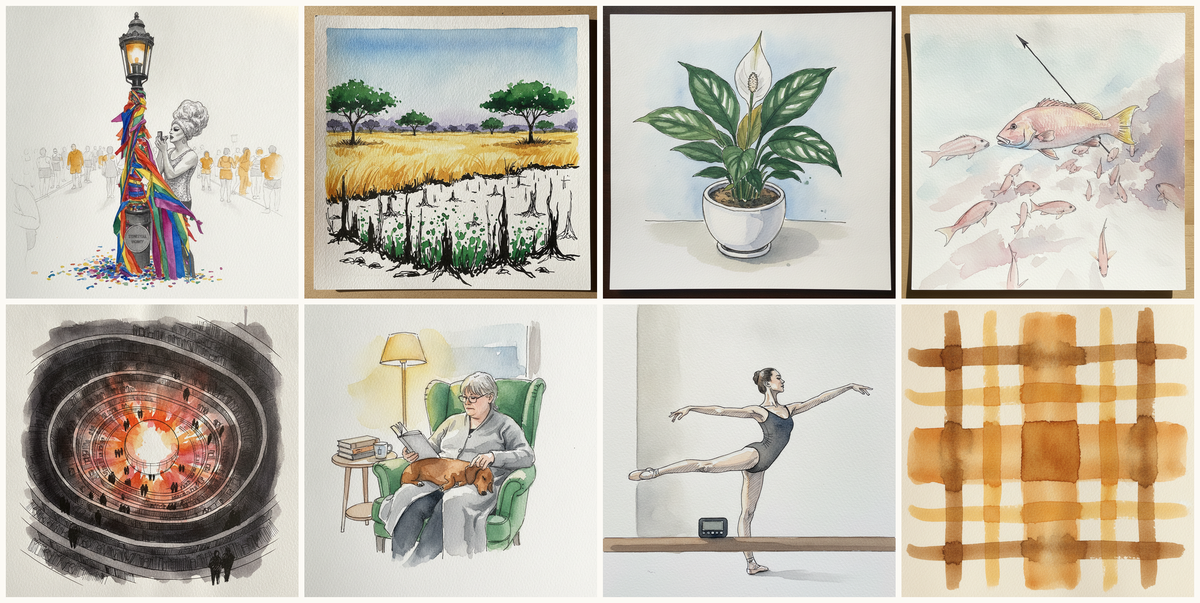
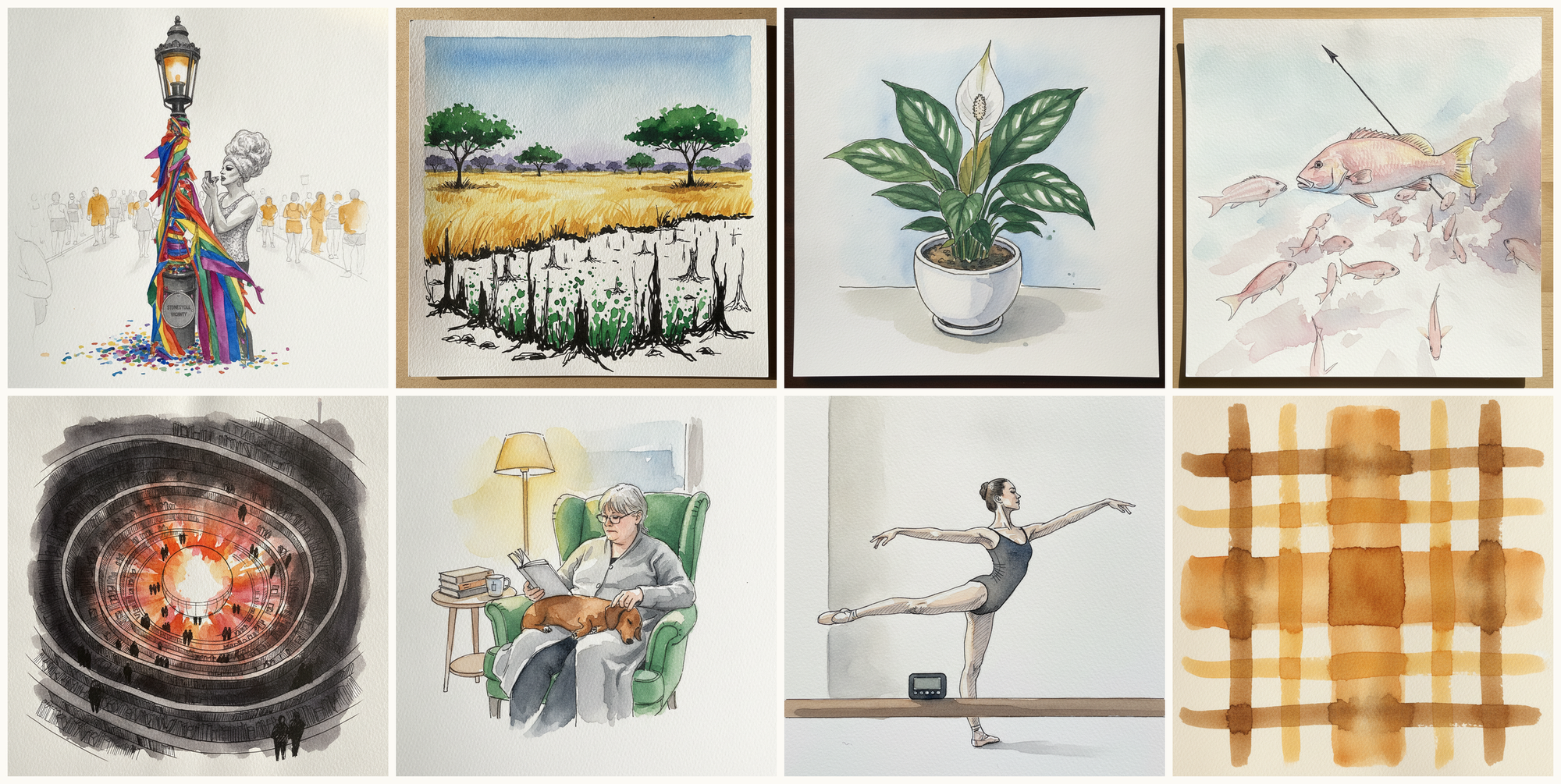
Today's 8 pen-and-watercolor pieces: Pride Weekend, West Village, Fire-scarred grassland with regrowth, Kruger — central section after late winter burn, Peace Lily in White Ceramic Pot, Hogfish, Tianjin Binhai Library, Tianjin, China, Person reading with dog on lap, Mid-Pirouette Arabesque, Gingham Check. Each piece comes with an AI-generated photoreal reference, three AI-generated example artworks in different treatments, and a short focus paragraph naming what to study in this one.
Why these references use AI
This daily series uses AI-generated images as practice prompts, not as finished artwork to copy. Each subject starts with a synthetic photoreal reference generated with Gemini/Nano Banana, then moves into three pen-and-watercolor interpretations of the same subject.
I use AI here because daily art practice needs variety and low friction. Real life can get repetitive, busy, or visually narrow. These generated reference sets make it easier to study bodies, buildings, animals, landscapes, objects, gestures, light, palettes, and compositions that might not show up in an ordinary day.
The goal is not to reproduce any image directly. Treat each set as a starting point for observation and study: choose what interests you, change the framing, simplify the subject, alter the palette, and make your own version.
Piece 1 — Pride Weekend, West Village
Pen + Watercolor · Loose pen and watercolor line-and-wash
Three takes
Focus for this piece
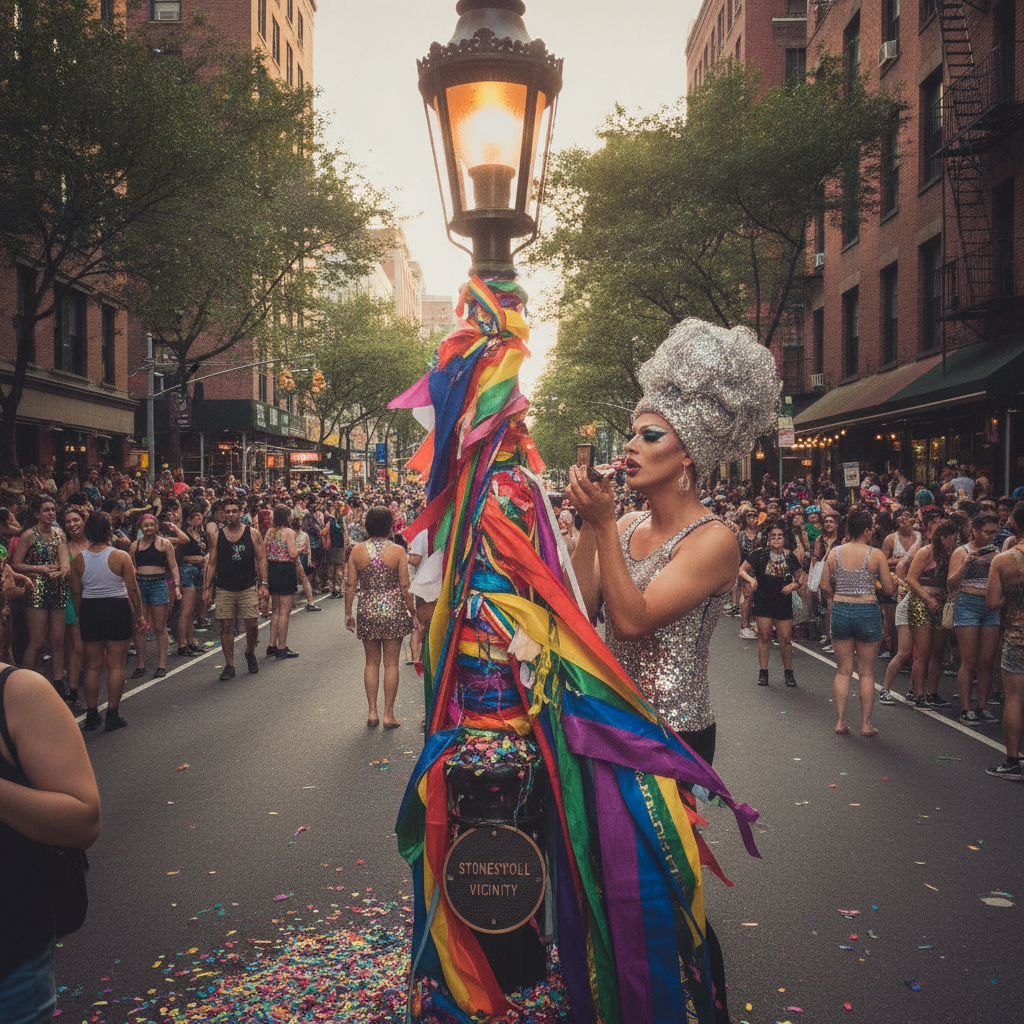
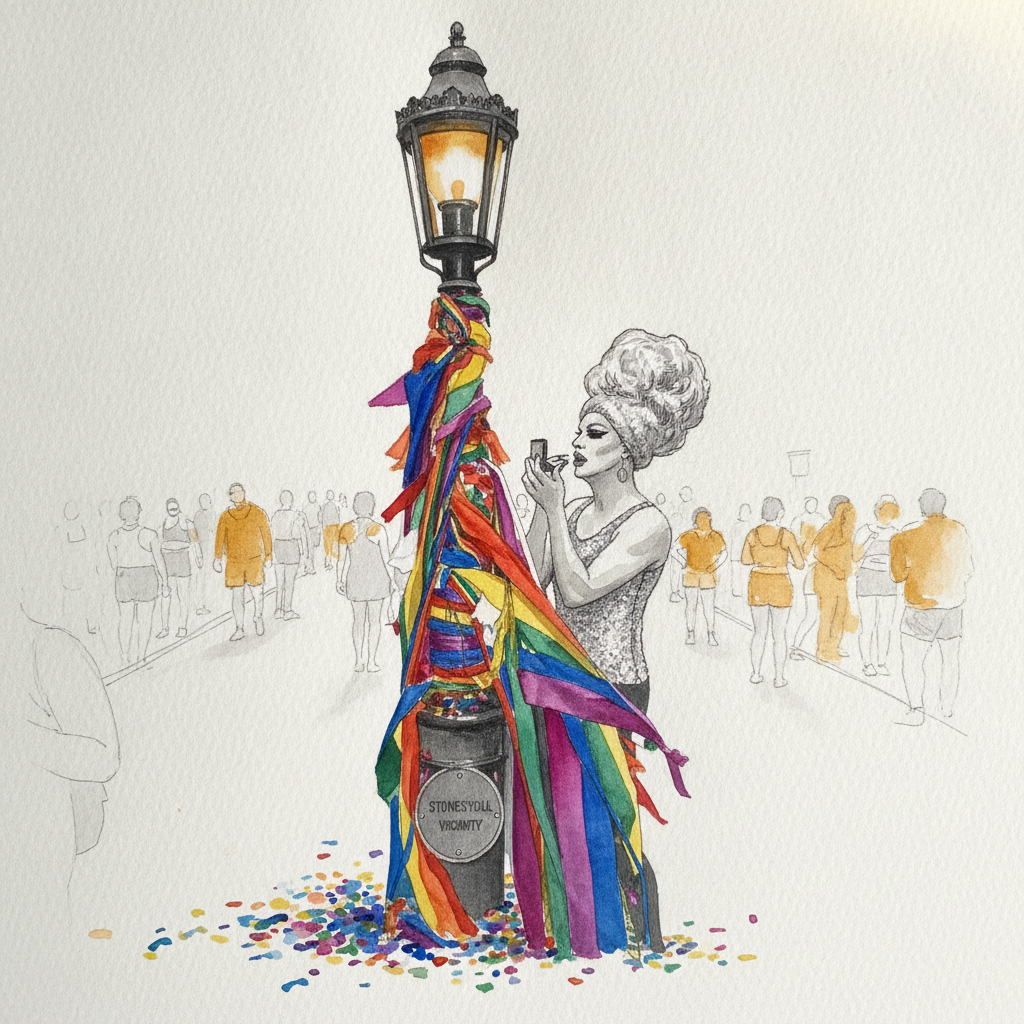
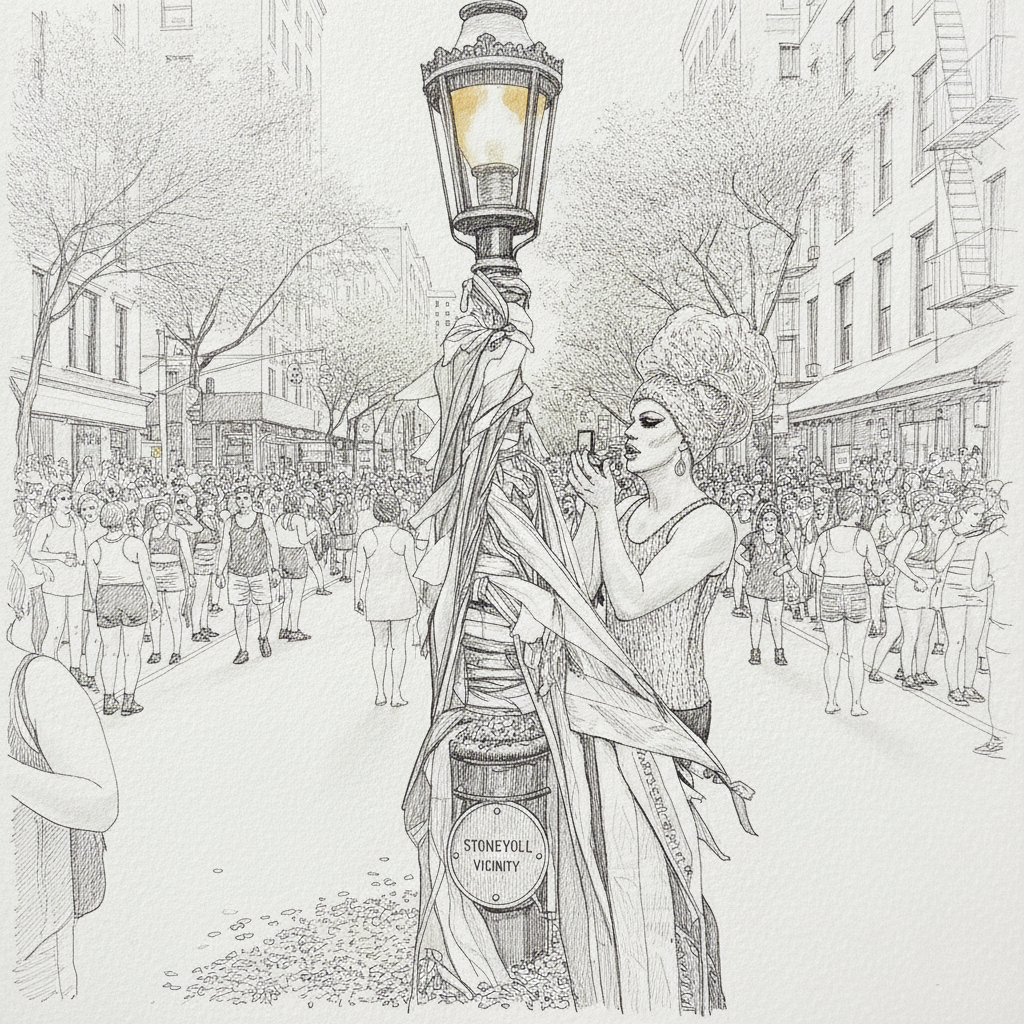
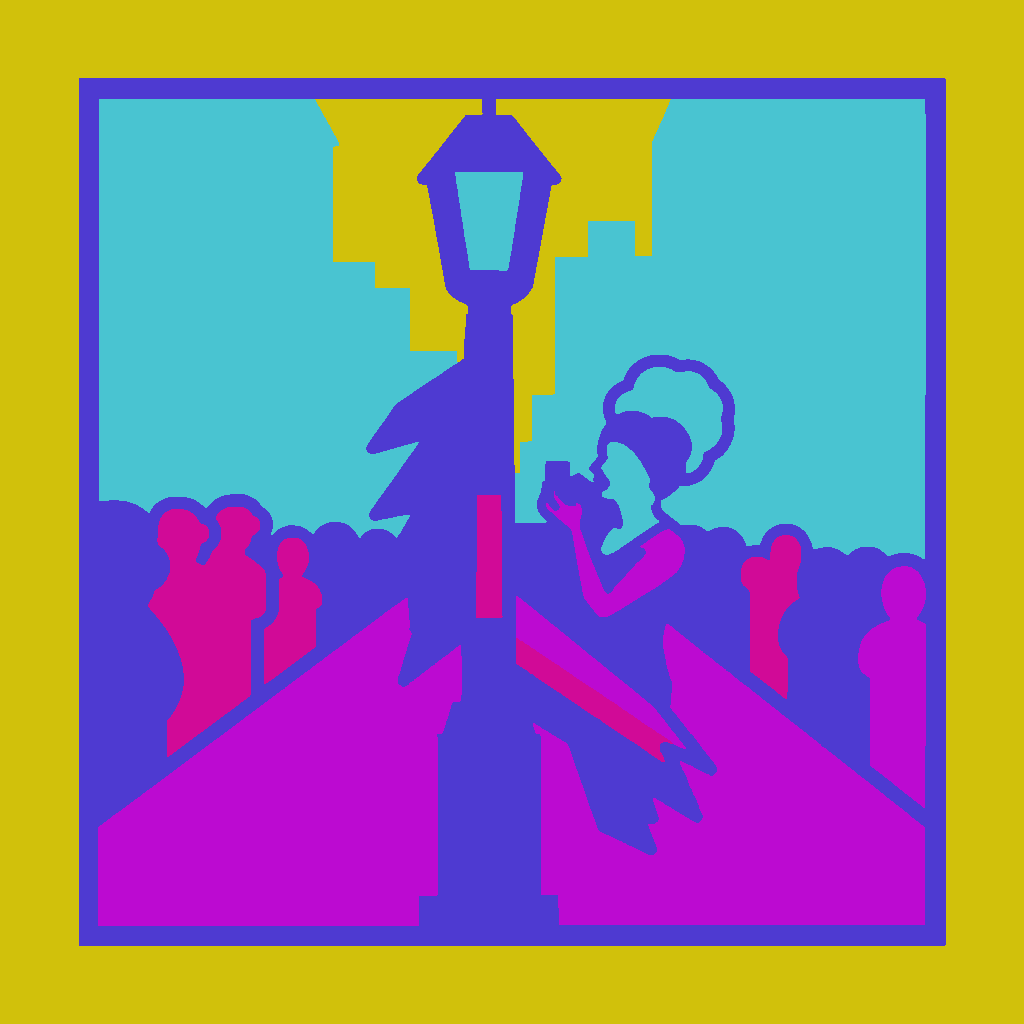
This vibrant scene provides an excellent study in layering and selective detail. Use expressive ink lines to define the crisp structure of the Bishop's crook and the drag queen's features, while allowing fluid watercolor washes to build the soft, translucent layers of rainbow bunting and streamers. Focus on how your washes can suggest the bustling, glittering crowds and confetti, reserving precise pen work to anchor the illuminated lantern and its subtle reflection.
Piece 2 — Fire-scarred grassland with regrowth, Kruger — central section after late winter burn
Pen + Watercolor · Loose pen and watercolor line-and-wash
Three takes

Focus for this piece
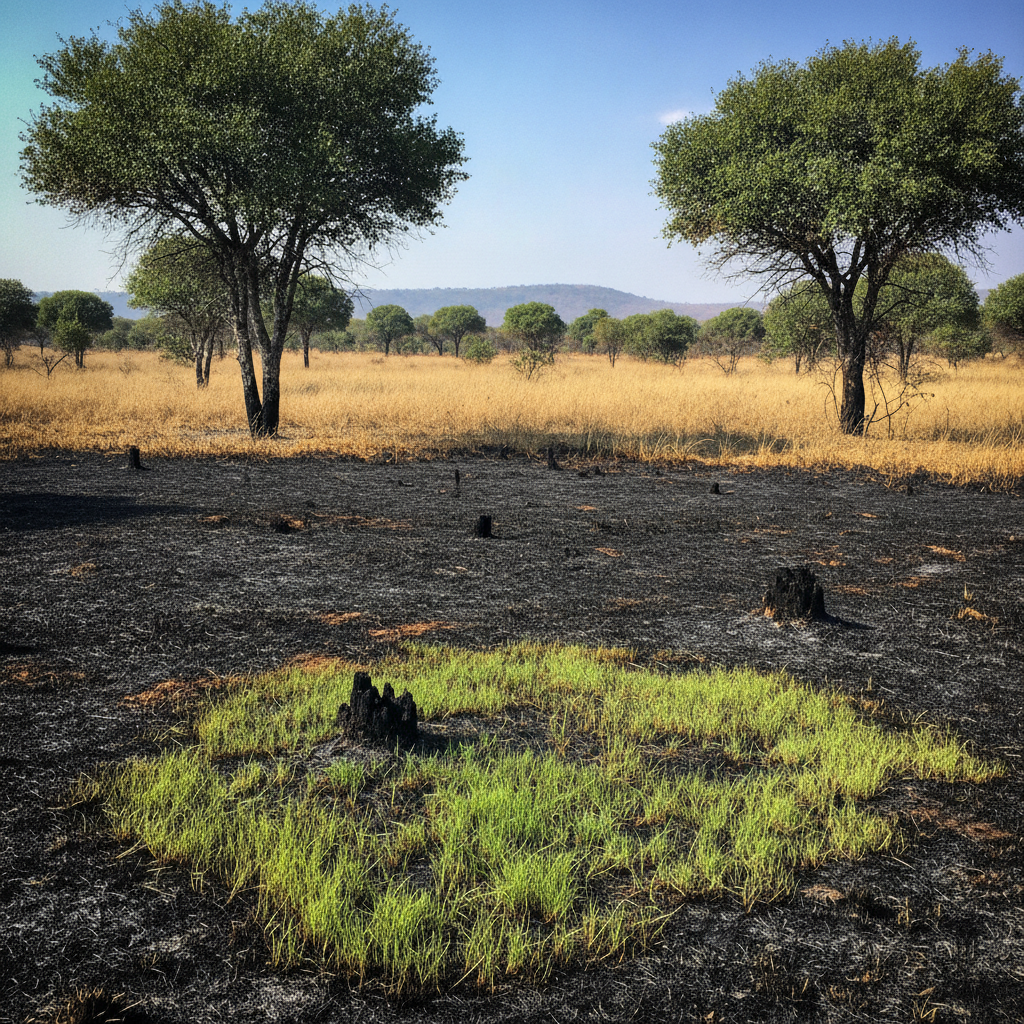
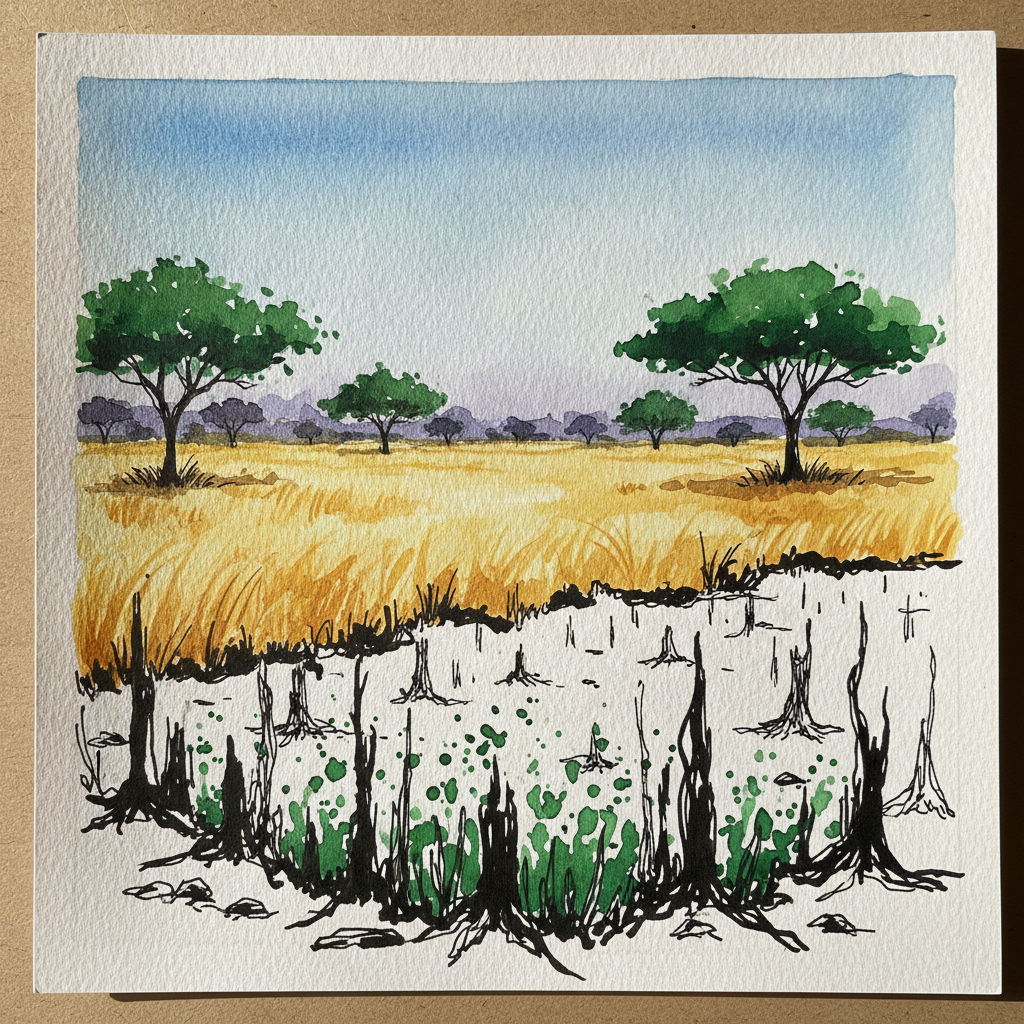
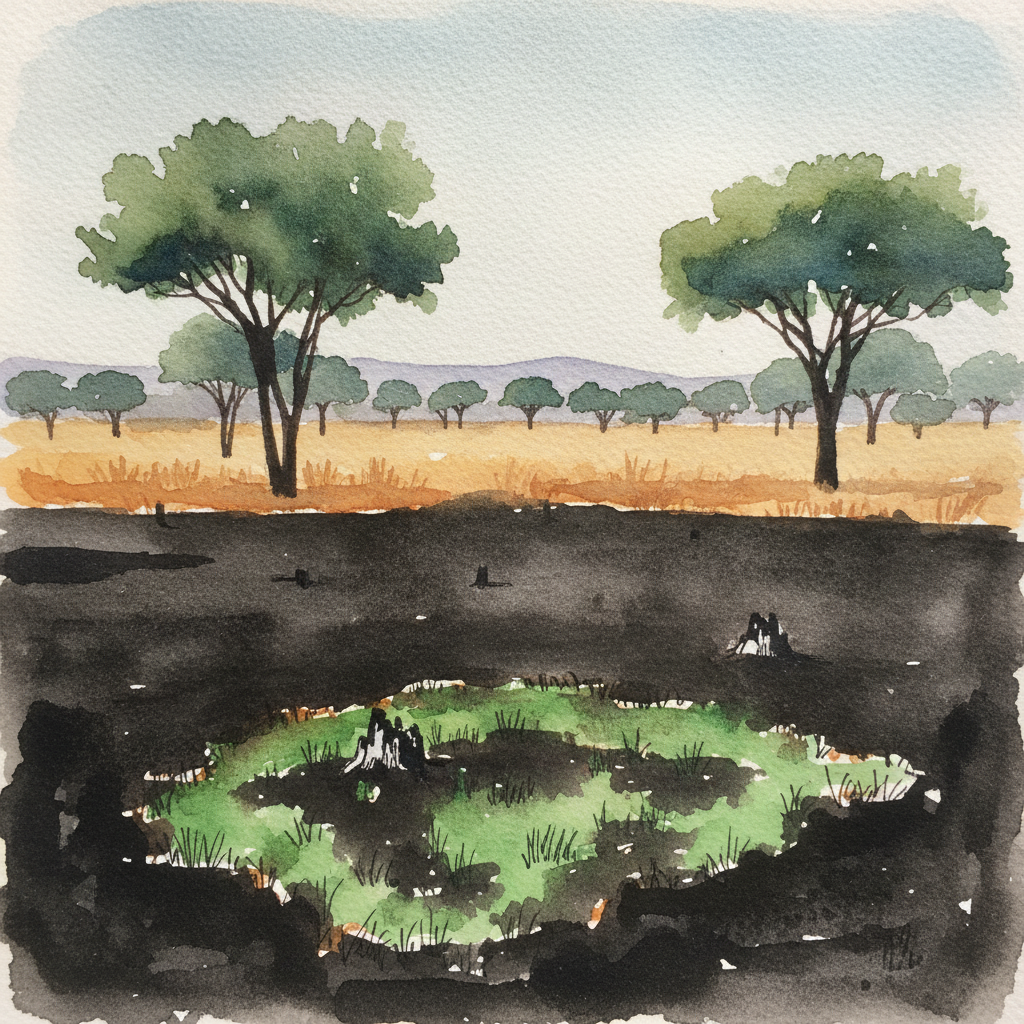
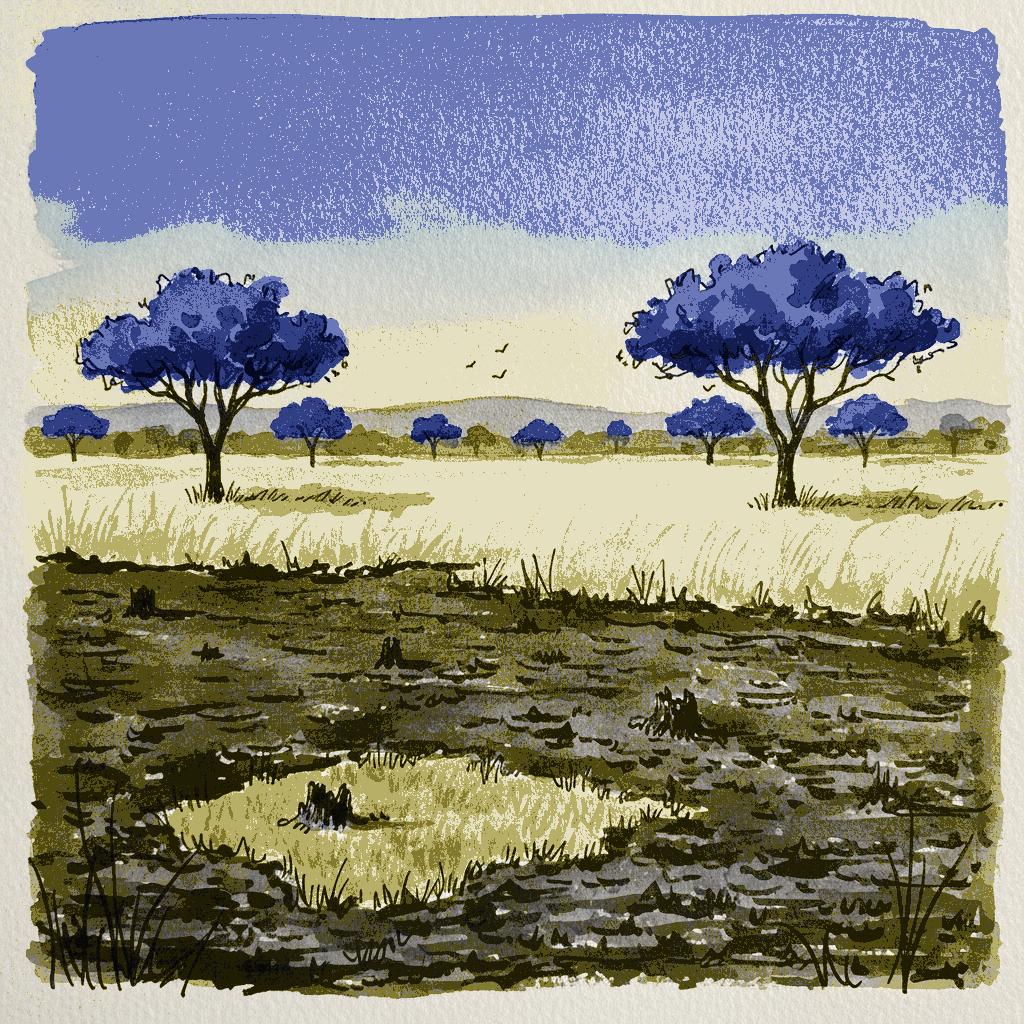
This piece is an excellent study in establishing dramatic depth through strong value contrast and varied pen-and-wash textures. Focus on rendering the deep, rich black of the charred foreground with layered washes, allowing them to dry completely before overlaying delicate, scratchy pen lines for the new green stubble and bold, crisp outlines for the small black stumps. The stark contrast with the luminous, lighter golden washes of the unburnt middle ground will emphasize the clear burn line and the resilience of the landscape.
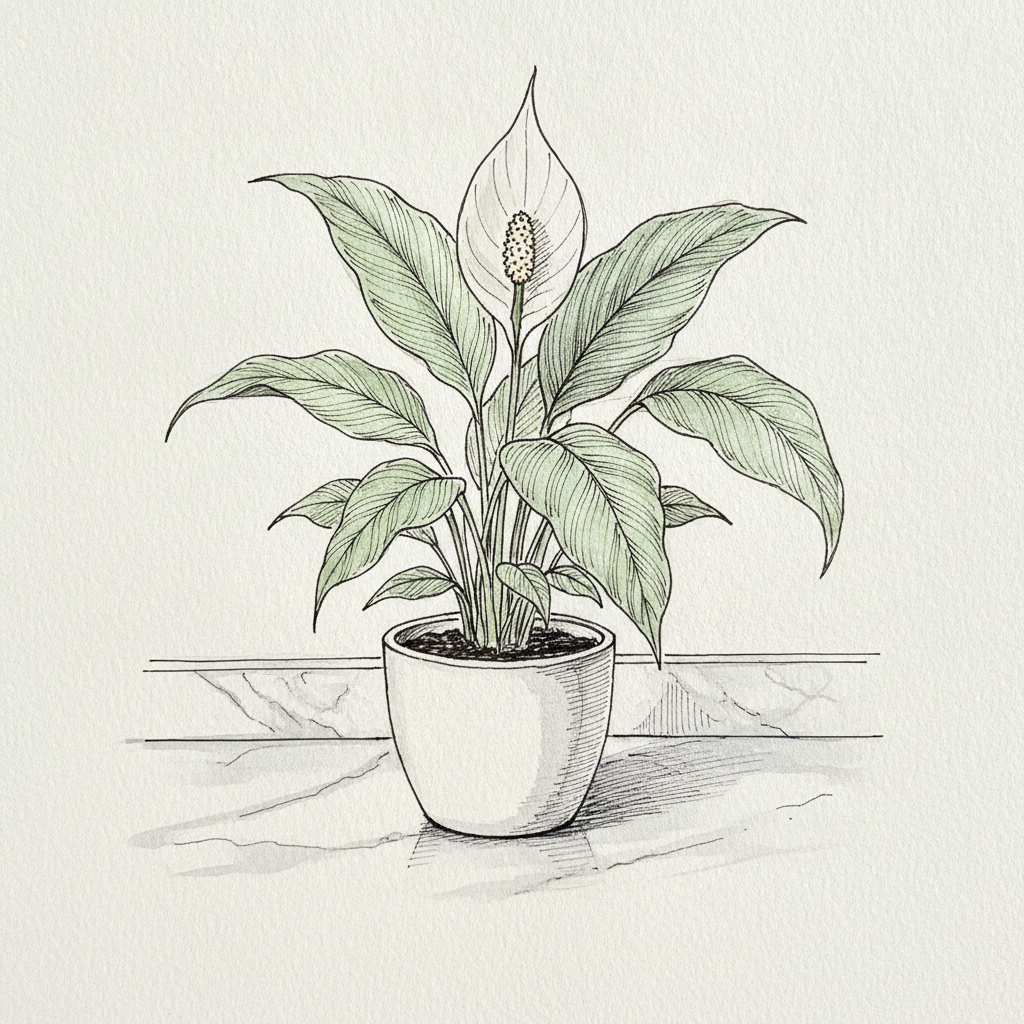
Piece 3 — Peace Lily in White Ceramic Pot
Pen + Watercolor · Loose pen and watercolor line-and-wash
Three takes

Focus for this piece
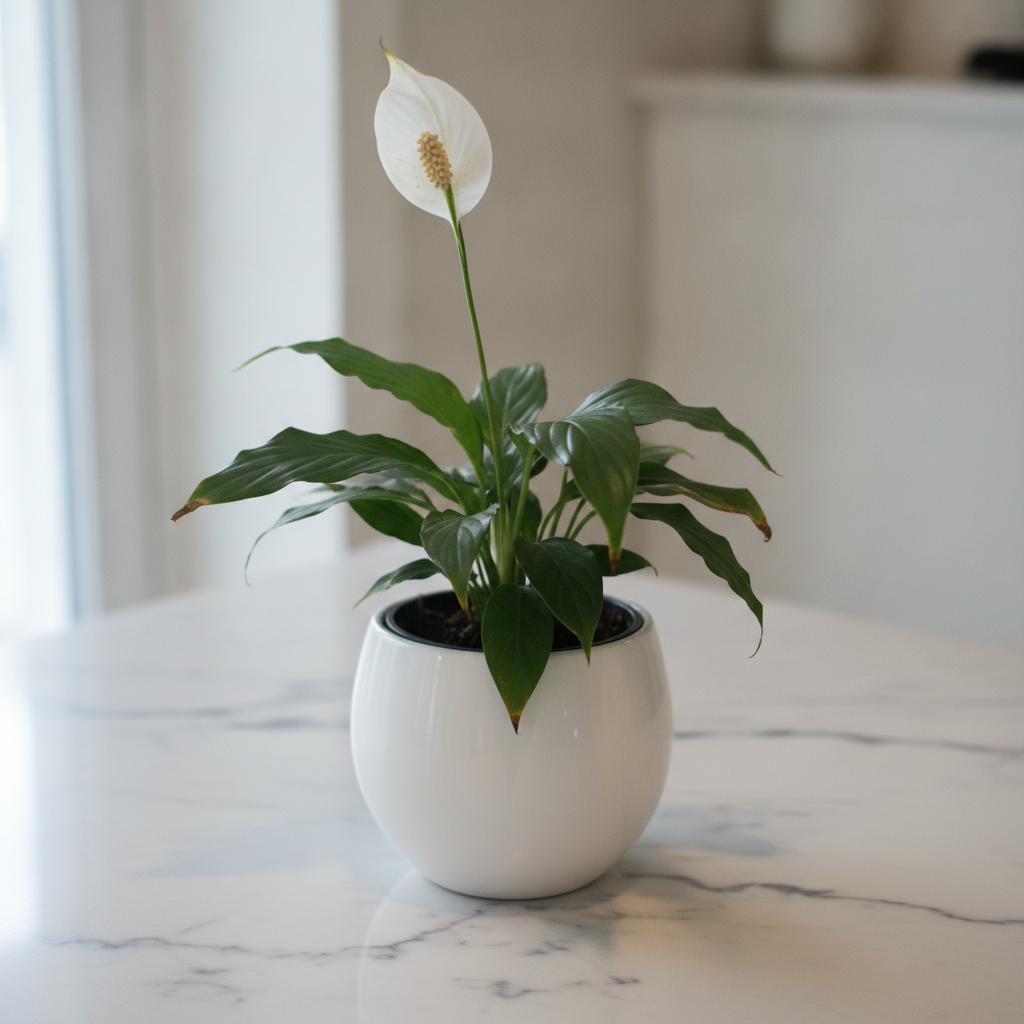
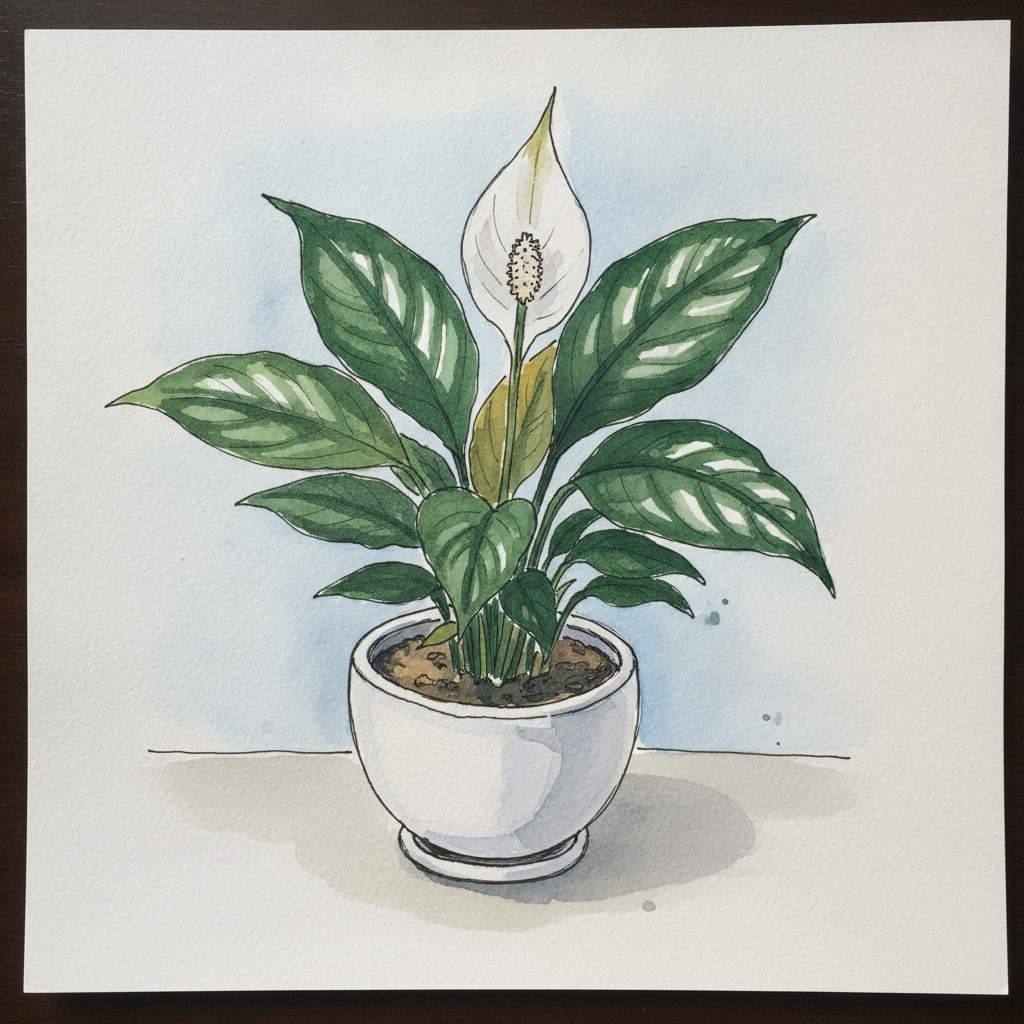
This piece offers a fantastic opportunity to practice **rendering "white" subjects** through subtle value shifts, rather than just leaving areas unpainted. Pay close attention to how the cool north light sculpts the white spathe and pot, using delicate cool grays or blues in your washes to suggest form and shadow. Vary your **line weights**; use finer, broken lines for the soft reflections and the marble veining, contrasting with slightly bolder lines to define the crisp edges of the pot and the more pronounced structure of the leaves. This interplay of light wash and deliberate line will articulate the different materials and depth.
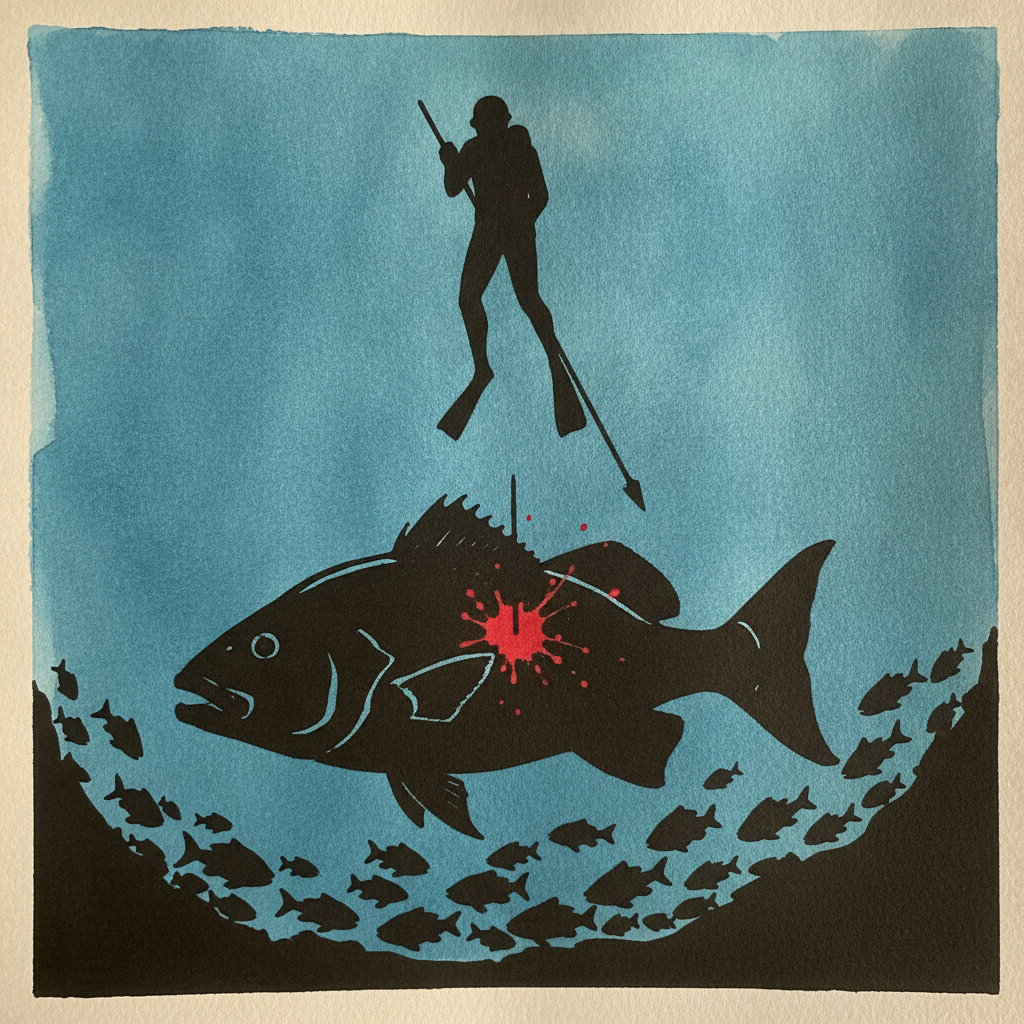
Piece 4 — Hogfish
Pen + Watercolor · Loose pen and watercolor line-and-wash
Three takes
Focus for this piece
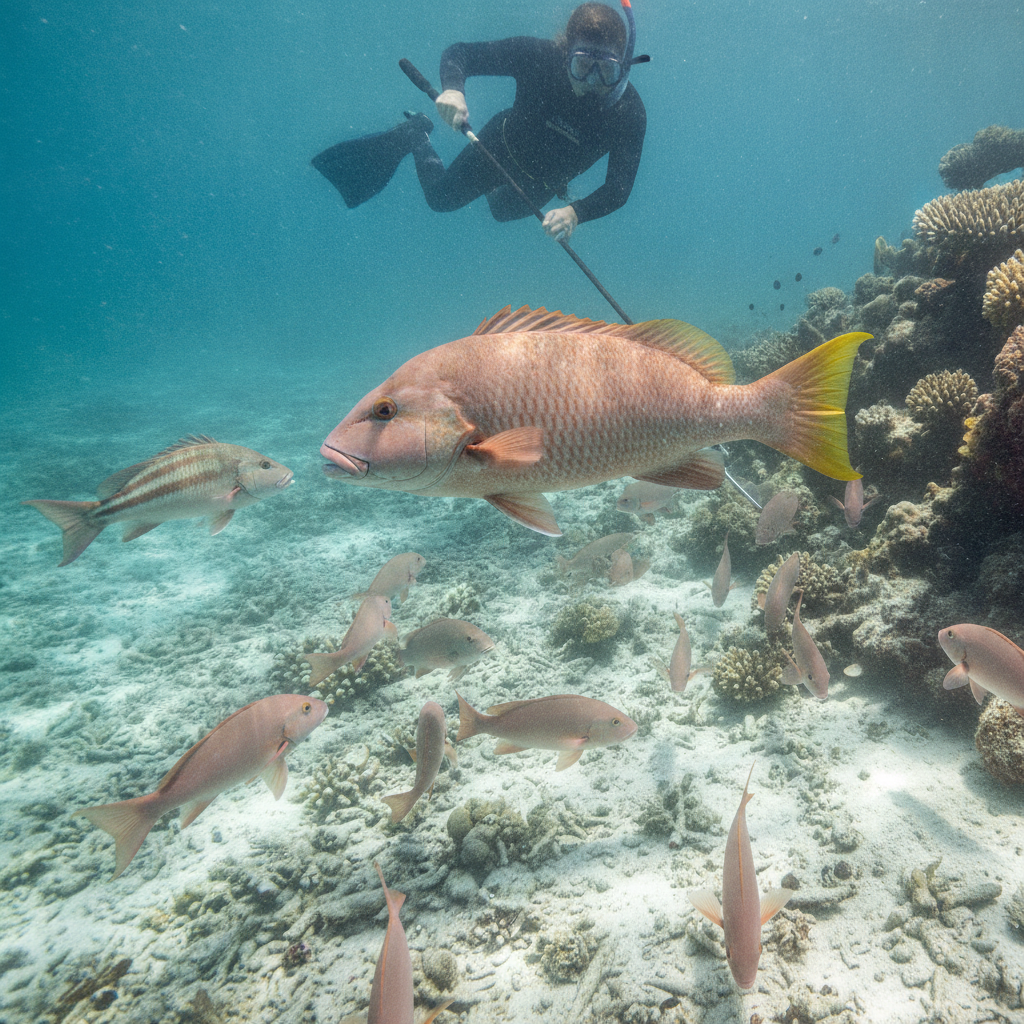
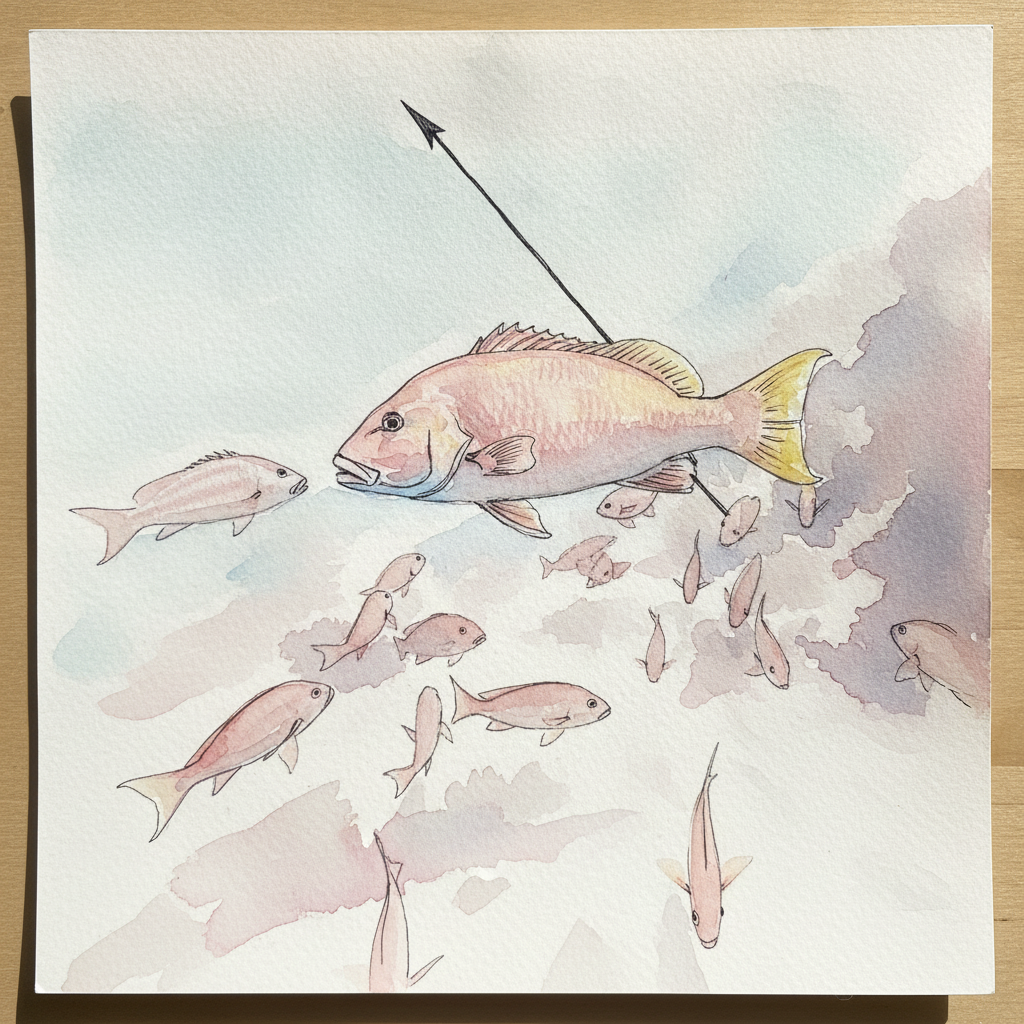
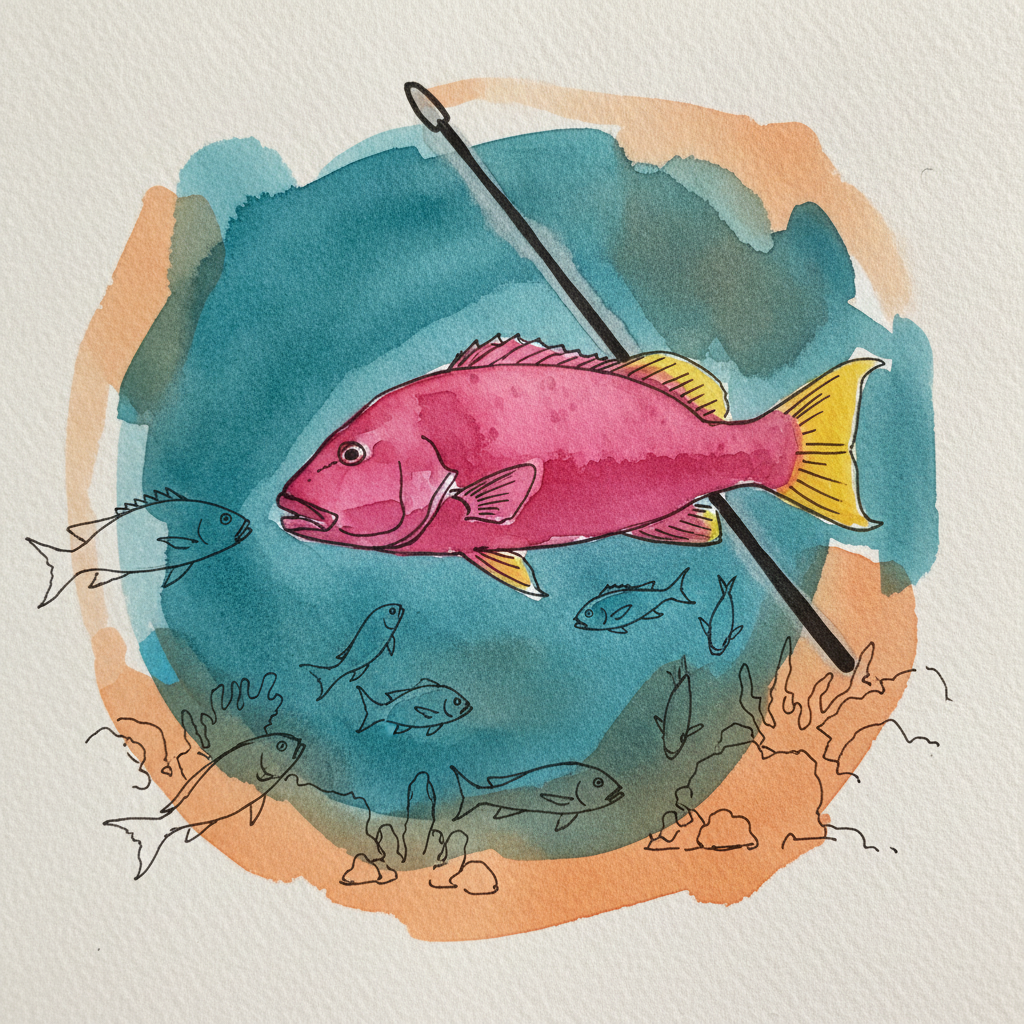
This hogfish scene is an excellent study in establishing **underwater depth and spatial relationships using varied line weights and atmospheric washes**. Use bold, continuous ink lines for the dominant male hogfish to define its form and bring it sharply into the foreground. Conversely, employ lighter, broken lines and minimal detail for the foraging females and the distant reef to recede into the background, blending them with soft, wet-on-wet washes that capture the diffused light and muted underwater colors. This contrast will emphasize the dramatic scale of the foreground fish and create a tangible sense of the reef's expanse.
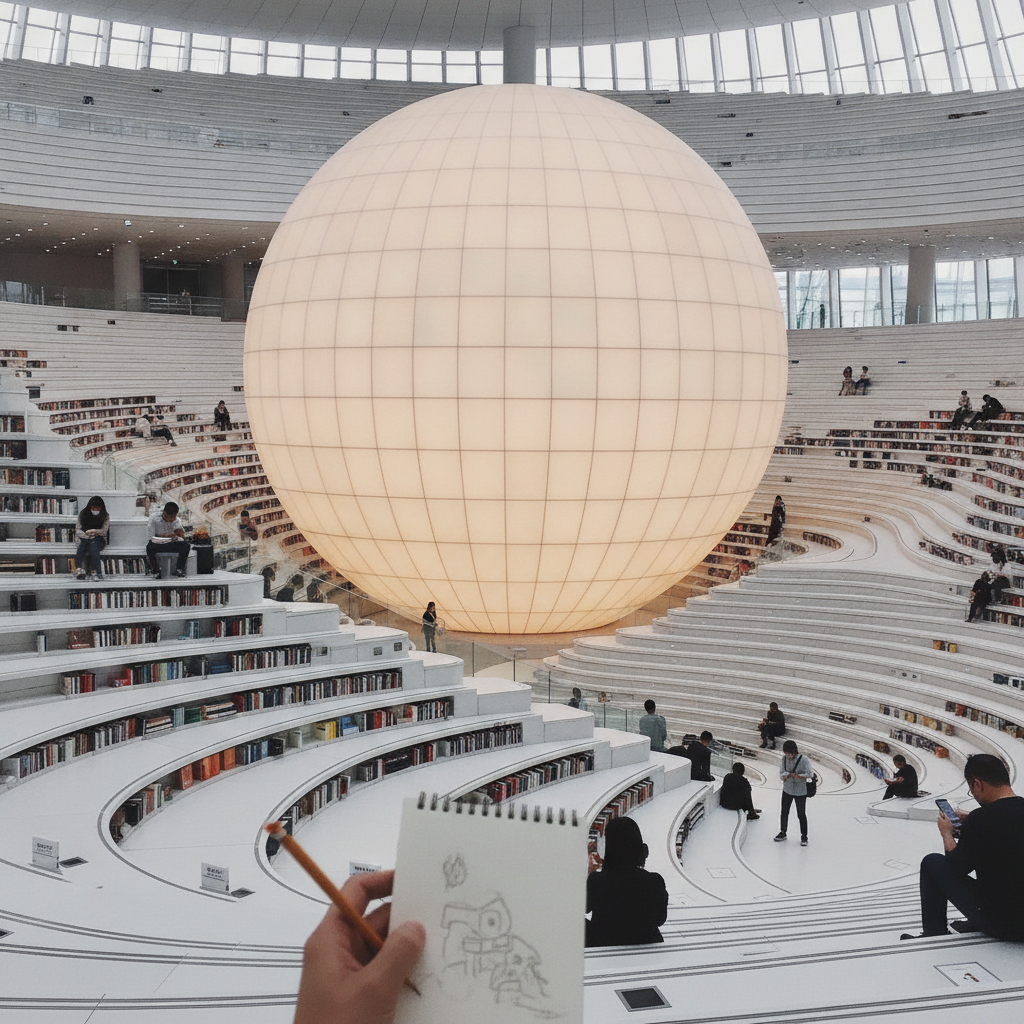
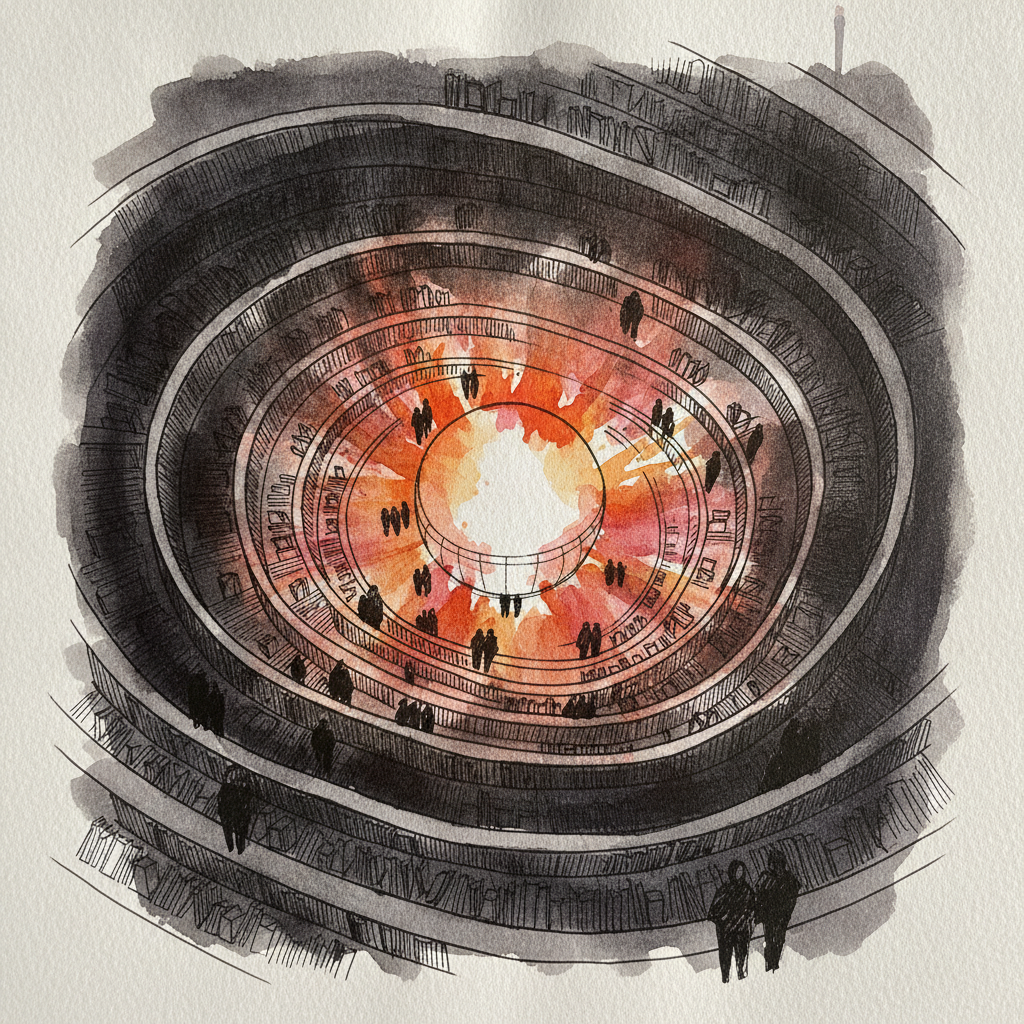
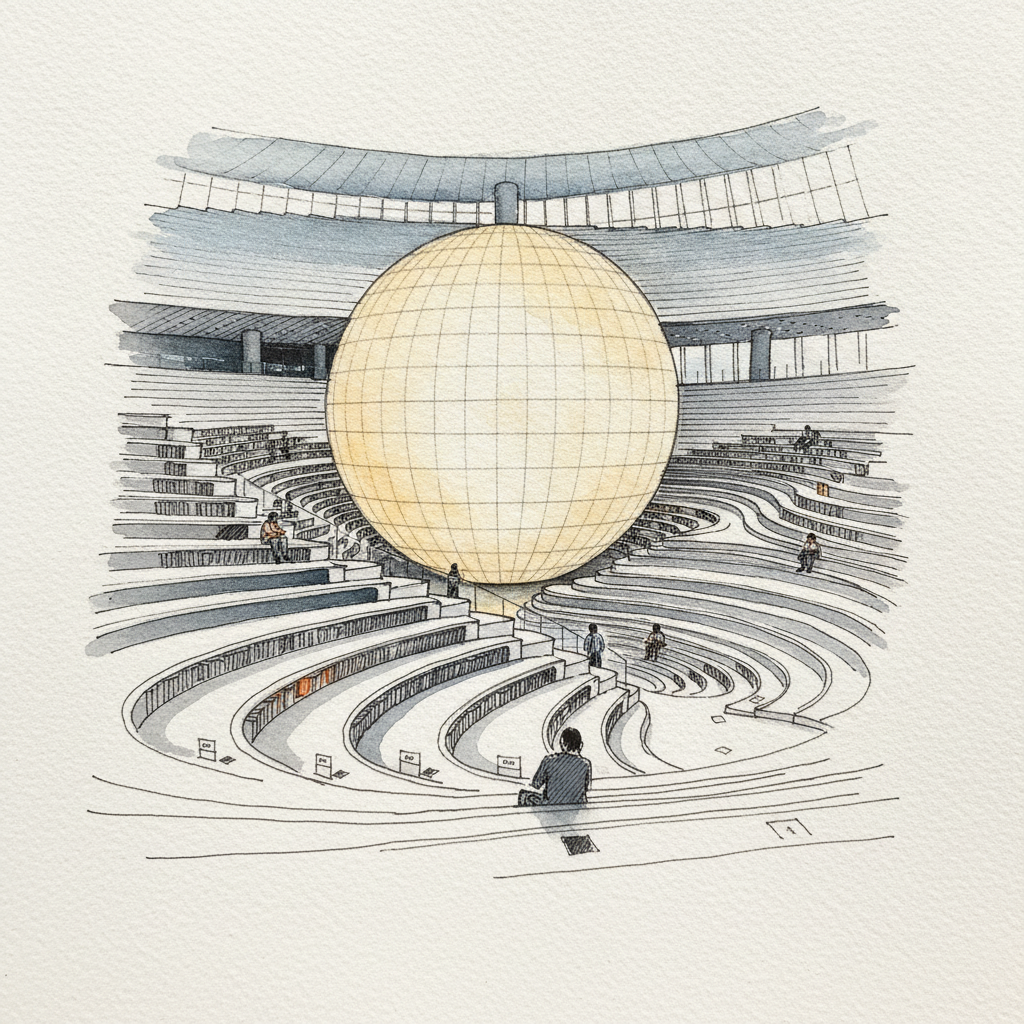
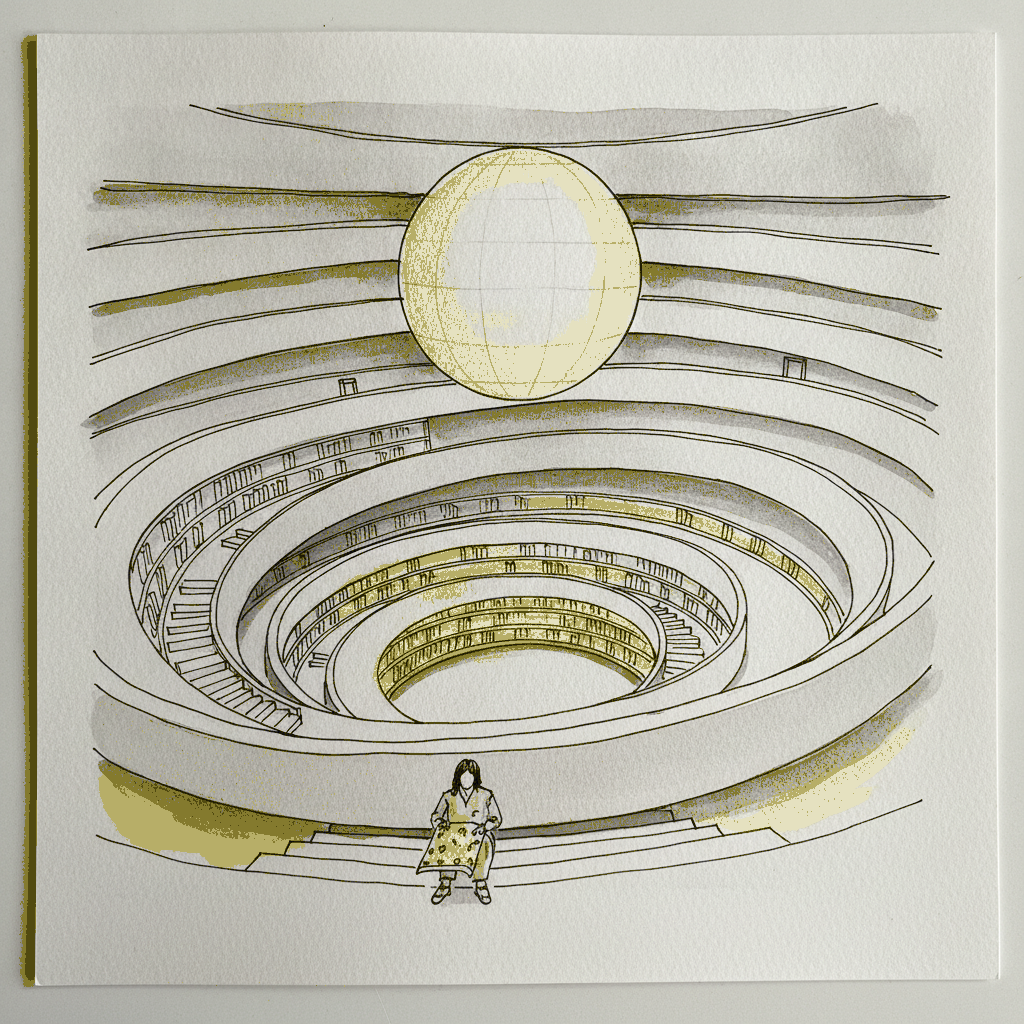
Piece 5 — Tianjin Binhai Library, Tianjin, China
Pen + Watercolor · Loose pen and watercolor line-and-wash
Three takes

Focus for this piece
This piece is an excellent study in rendering dramatic interior depth and complex curved forms. Pay close attention to how varying pen line weights, from bold in the foreground to fine in the distance, can define the intricate receding shelf architecture. Use light, cool-toned watercolor washes to model the white tiers and create atmospheric recession, letting a warm glow around the central "Eye" highlight the dramatic focal point.
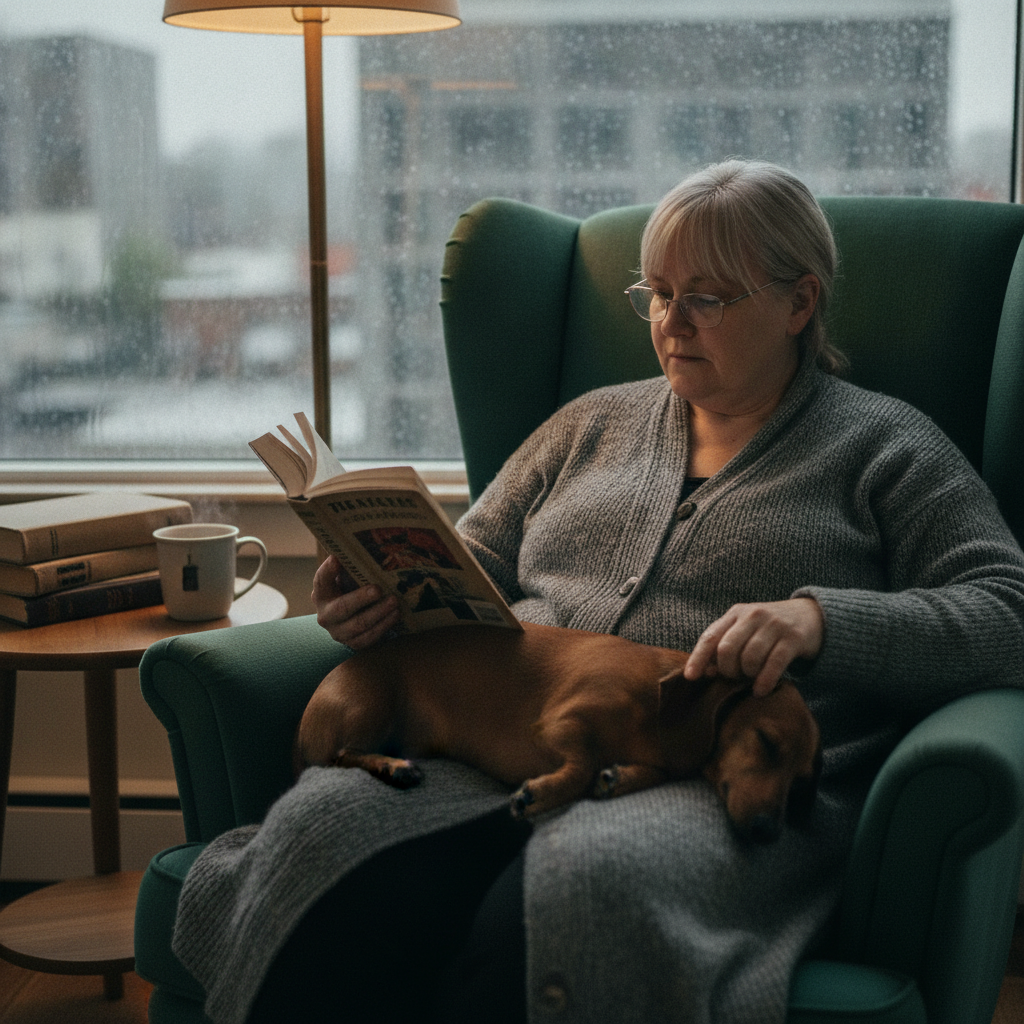
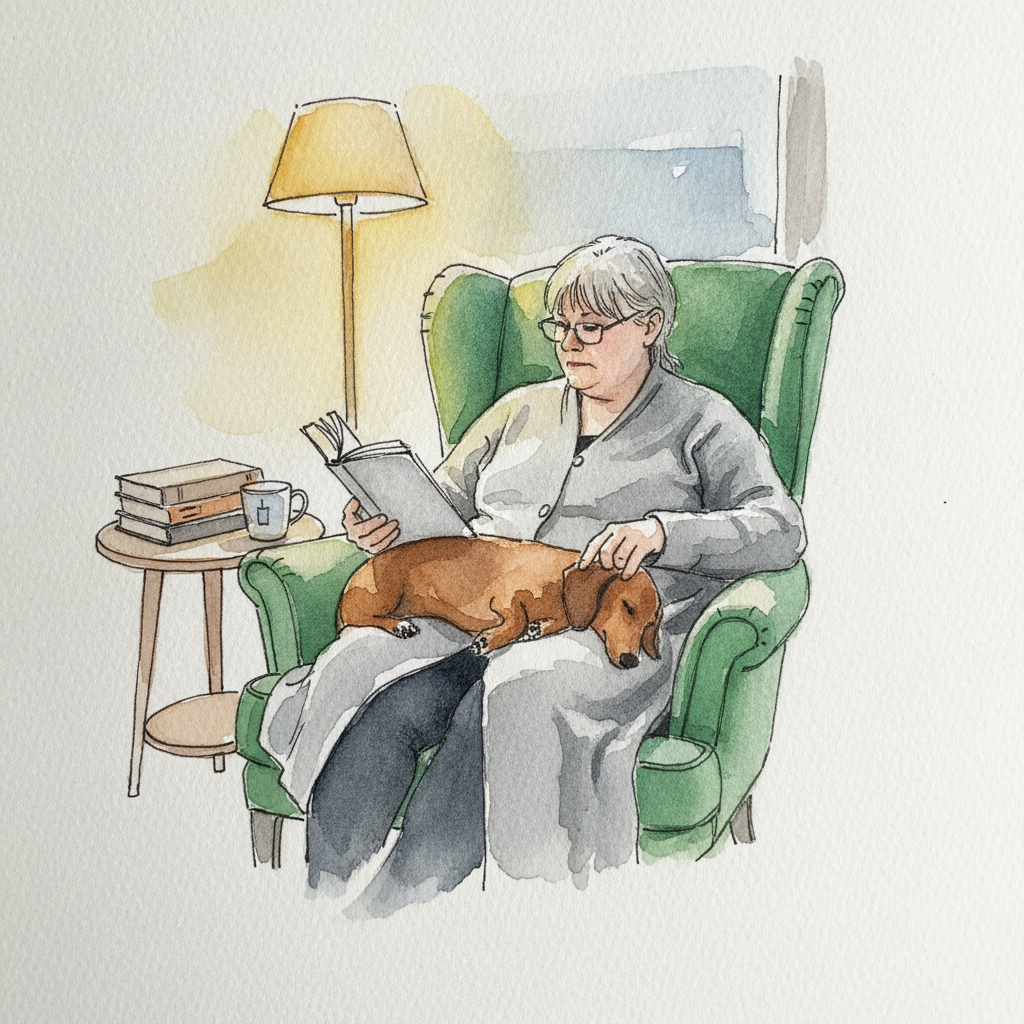
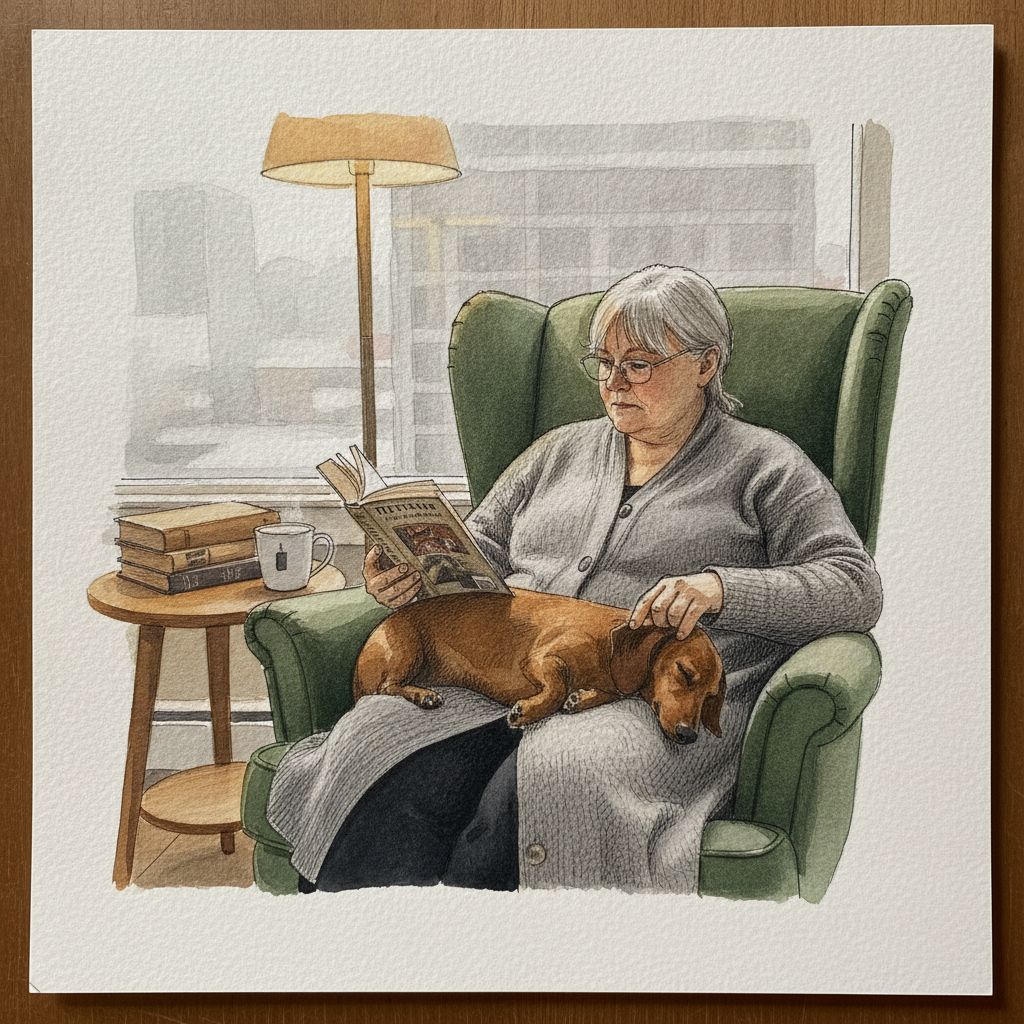
Piece 6 — Person reading with dog on lap
Pen + Watercolor · Loose pen and watercolor line-and-wash
Three takes
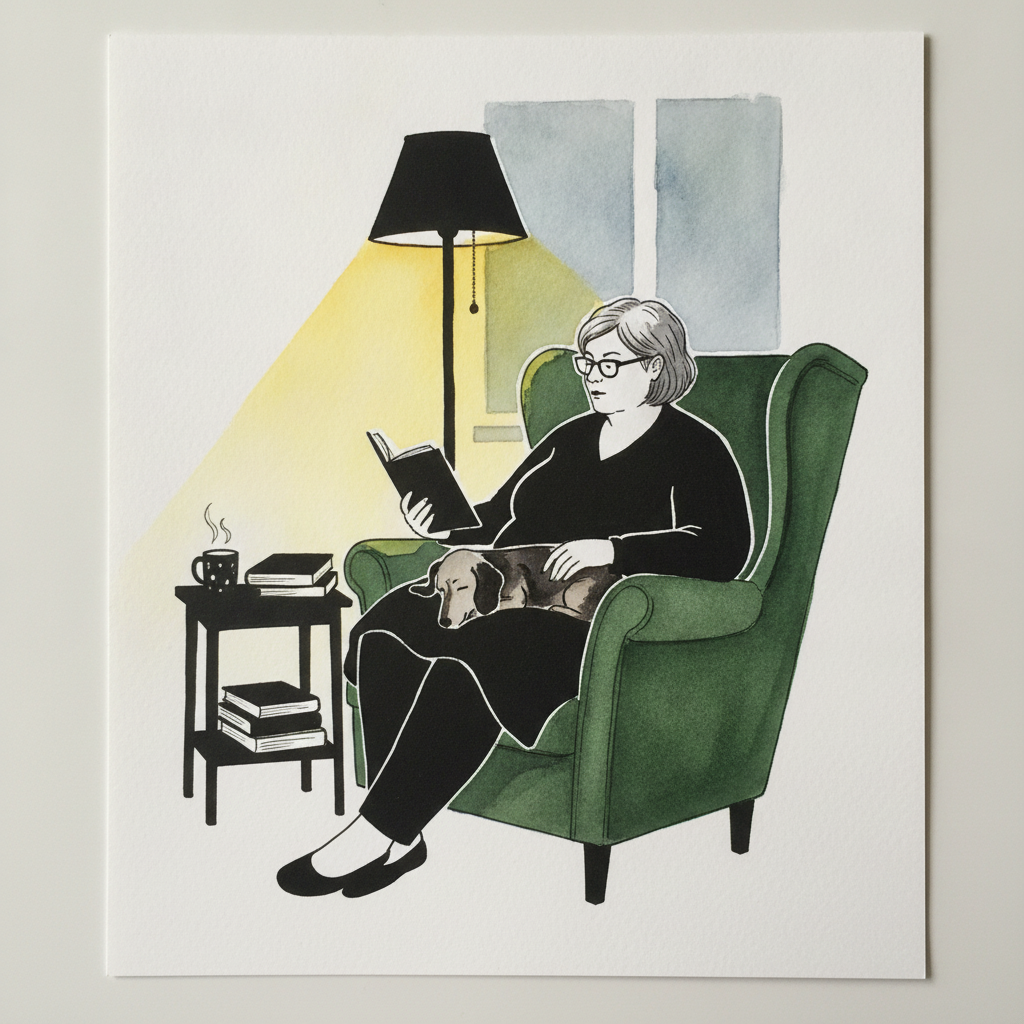
Focus for this piece
This piece offers an excellent study in contrasting soft, organic forms with sharp, geometric details using a hybrid approach. Use expressive, varied ink lines and wet-on-wet watercolor washes to build the comforting volume of the woman, dog, and armchair. Then, apply precise ink lines and drier, more controlled washes for crisp elements like the book, lamp, and mug, letting these hard edges create visual anchors within the cozy softness.
Piece 7 — Mid-Pirouette Arabesque
Pen + Watercolor · Loose pen and watercolor line-and-wash

Three takes
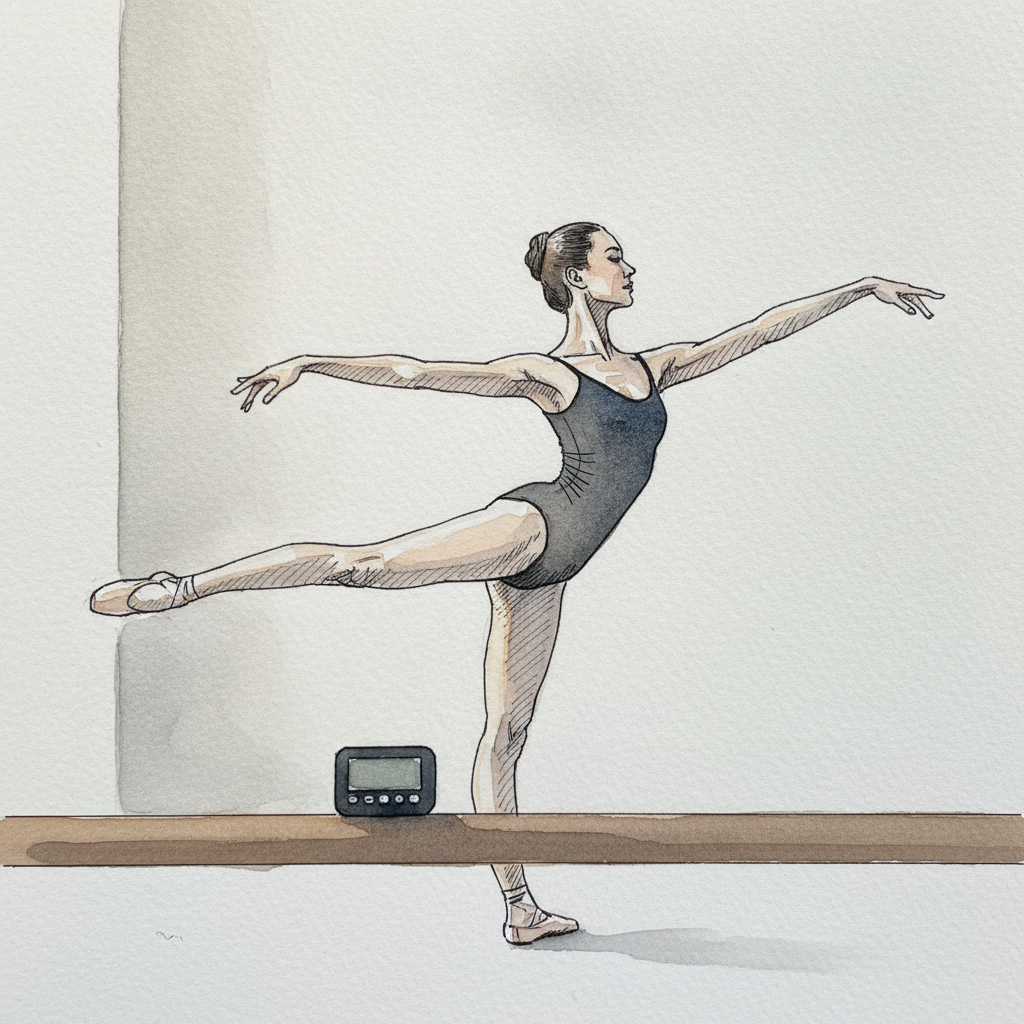
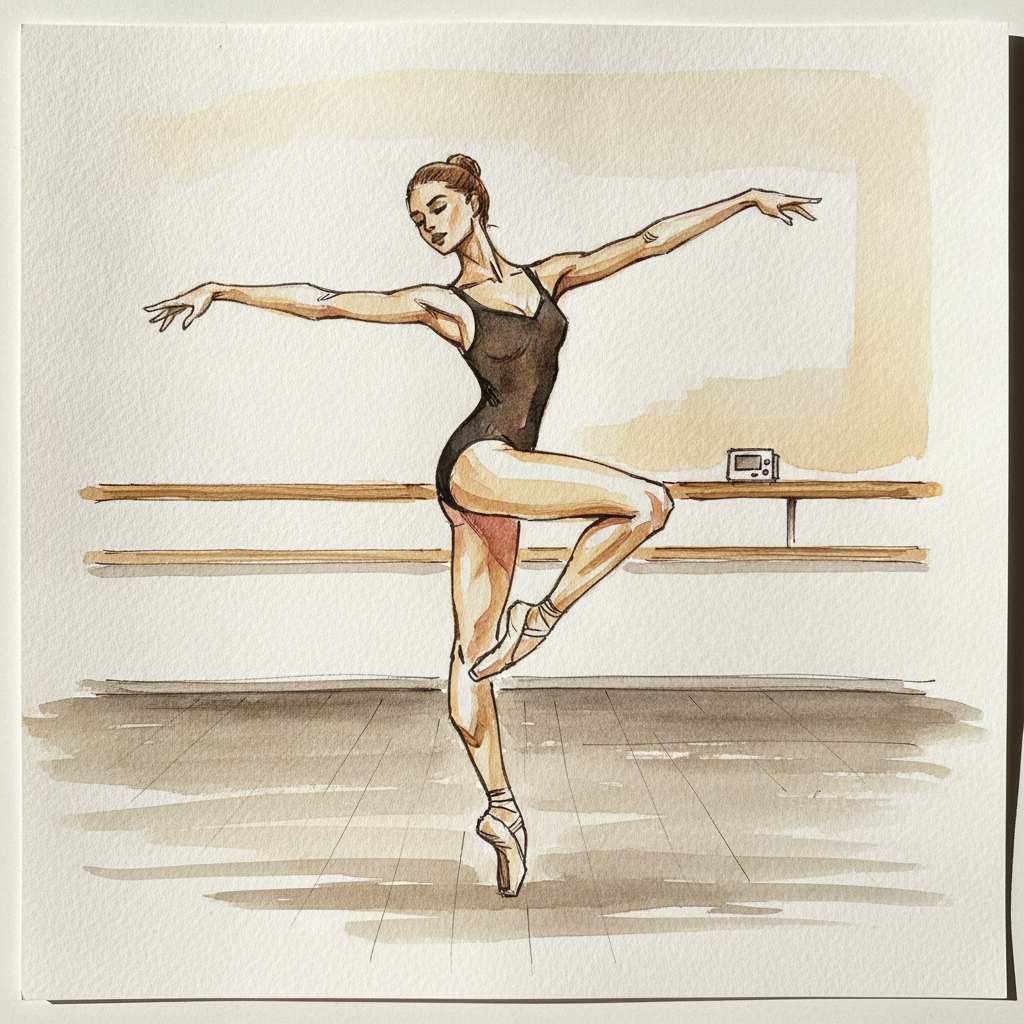
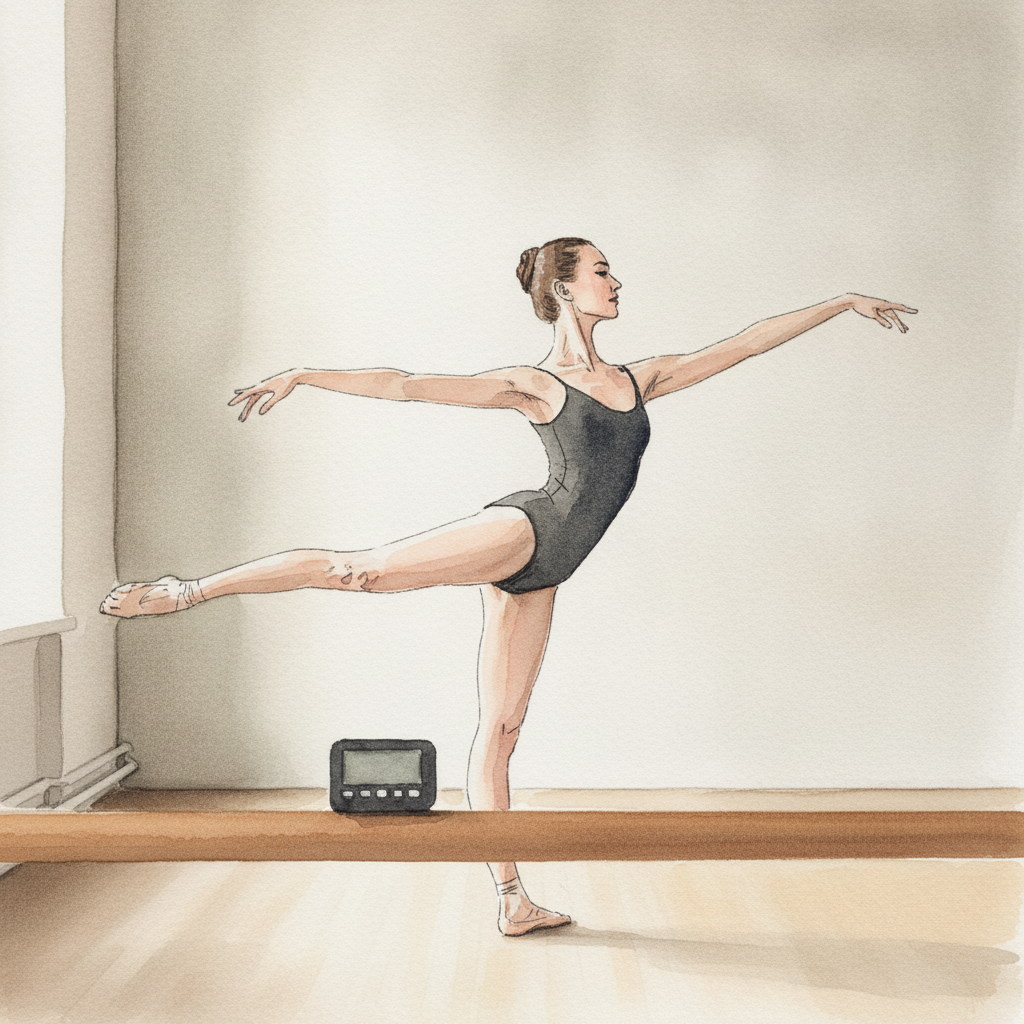
Focus for this piece
This piece is ideal for practicing how to capture a dynamic "line of action" with pen, focusing on the long horizontal sweep from the dancer's lifted toe to her forward fingertips. Use varied line weights—lighter and more fluid for the sweeping curves, slightly bolder to emphasize points of classical tension like the shoulder or hip. Then, apply soft, luminous washes of diluted skin tones to build the figure's volume without obscuring those defining lines. A single, consistent mid-value wash for the background will further push the clean silhouette forward.
Piece 8 — Gingham Check
Pen + Watercolor · Loose pen and watercolor line-and-wash
Three takes
Focus for this piece
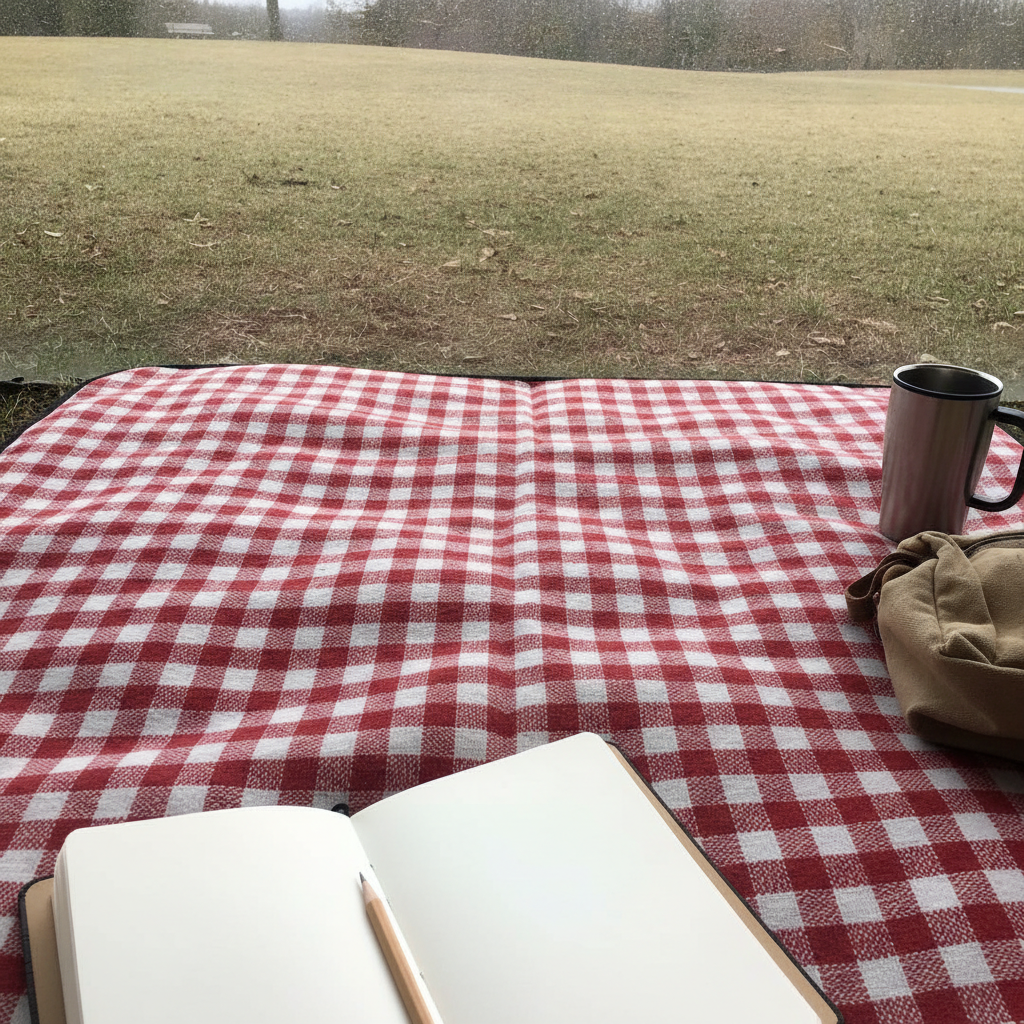
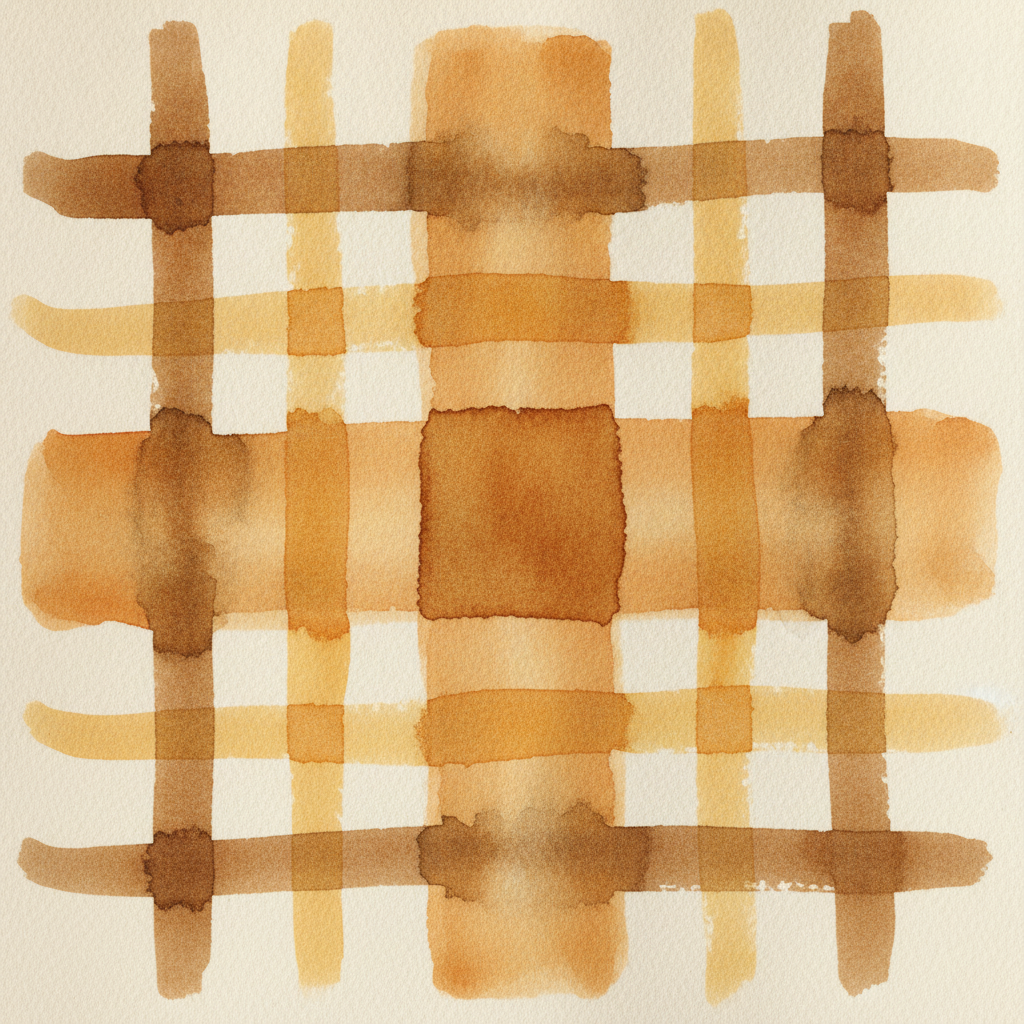
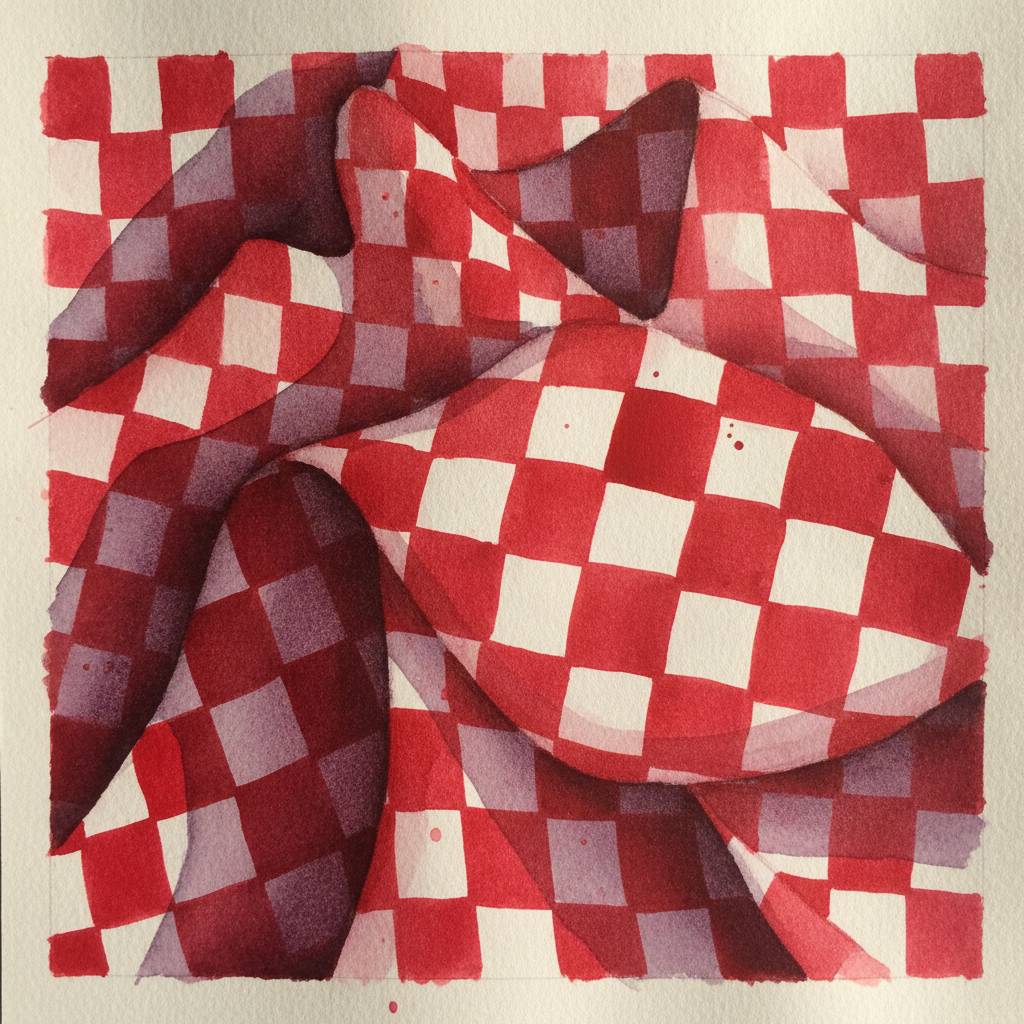
This study in gingham challenges you to create a clear, three-tone optical mix using only two "thread" colors with pen and watercolor. Use precise, consistent lines to define the grid, then focus on layering transparent washes of a single red pigment, allowing the white of the paper and varying dilutions to optically create the distinct deep red, pink, and white squares. Pay close attention to maintaining clean edges on your washes for the individual checks while allowing the watercolor to suggest the fabric's soft texture within those boundaries.