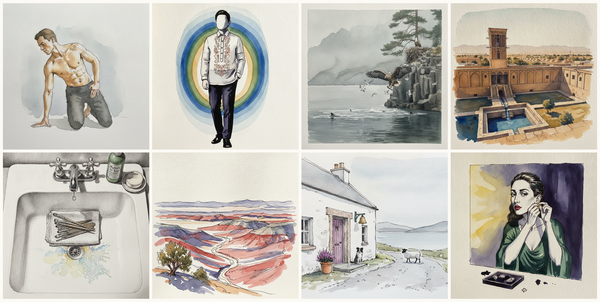
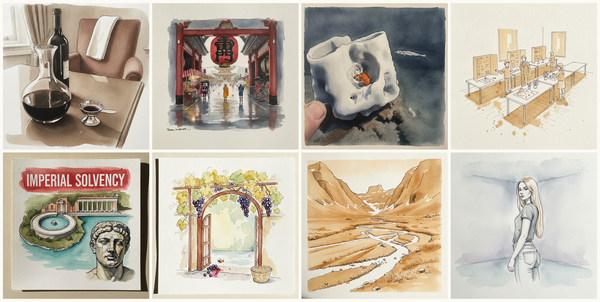
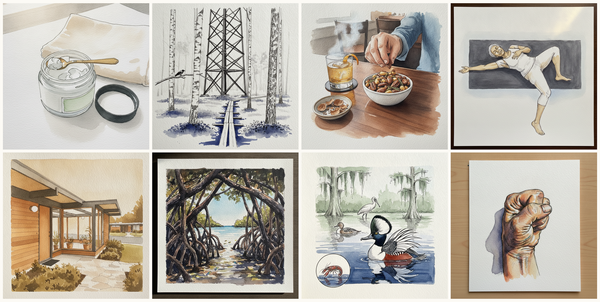
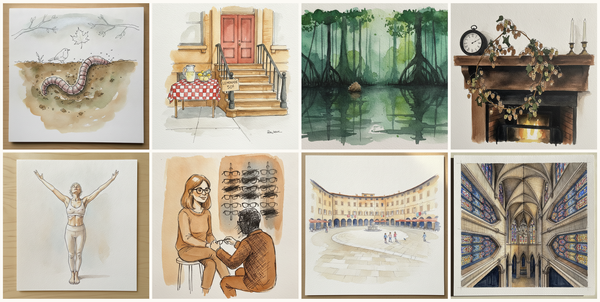
Reach across to grab opposite knee, elder at 71, Hourglass with red sand, Echeveria, Vumba Kuu Ruins, Kwale County, Kenya, and more — pen + watercolor for October 12, 2026
AI-generated daily art-practice references for pen and watercolor: Reach across to grab opposite knee, elder at 71, Hourglass with red sand, Echeveria, Vumba Kuu Ruins, Kwale County, Kenya, Teens awkward at school dance, Iceberg Alley Twillingate from coastal trail, Newfoundland, Trash Bag, Tied…
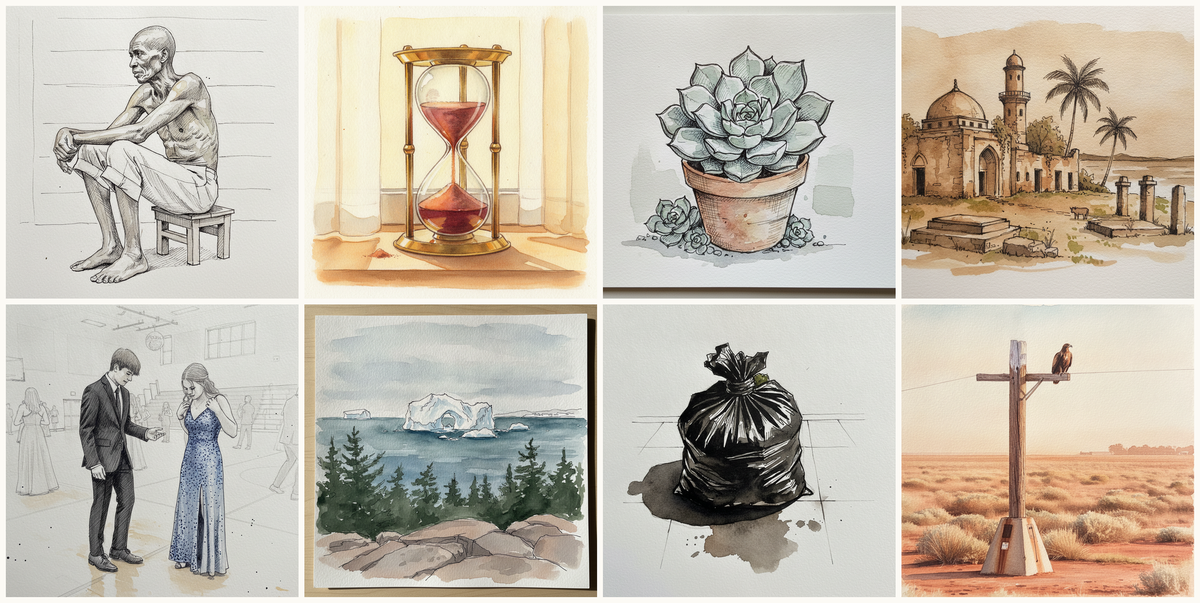
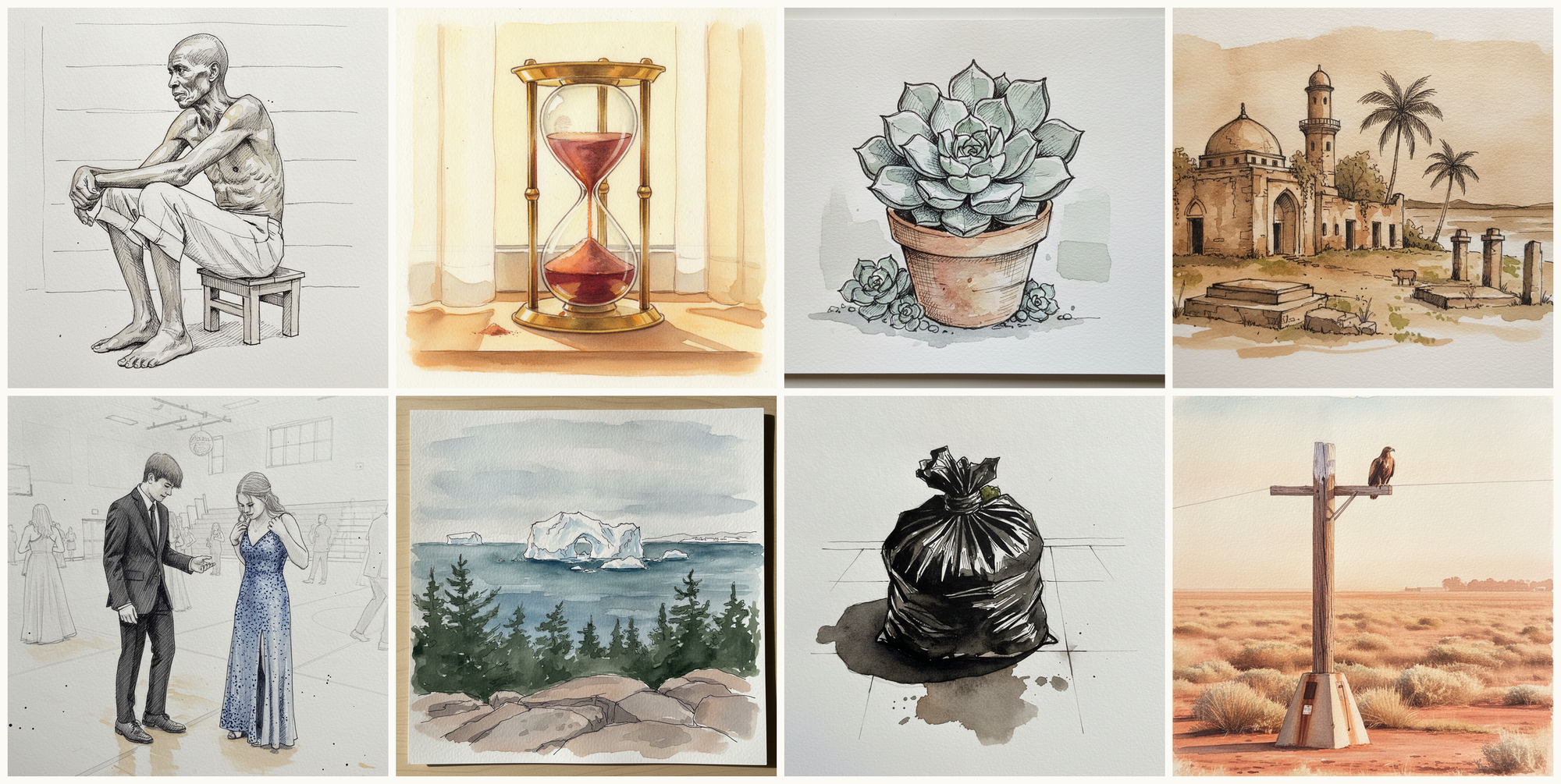
Today's 8 pen-and-watercolor pieces: Reach across to grab opposite knee, elder at 71, Hourglass with red sand, Echeveria, Vumba Kuu Ruins, Kwale County, Kenya, Teens awkward at school dance, Iceberg Alley Twillingate from coastal trail, Newfoundland, Trash Bag, Tied and Set, Australian Outback Pole. Each piece comes with an AI-generated photoreal reference, three AI-generated example artworks in different treatments, and a short focus paragraph naming what to study in this one.
Why these references use AI
This daily series uses AI-generated images as practice prompts, not as finished artwork to copy. Each subject starts with a synthetic photoreal reference generated with Gemini/Nano Banana, then moves into three pen-and-watercolor interpretations of the same subject.
I use AI here because daily art practice needs variety and low friction. Real life can get repetitive, busy, or visually narrow. These generated reference sets make it easier to study bodies, buildings, animals, landscapes, objects, gestures, light, palettes, and compositions that might not show up in an ordinary day.
The goal is not to reproduce any image directly. Treat each set as a starting point for observation and study: choose what interests you, change the framing, simplify the subject, alter the palette, and make your own version.
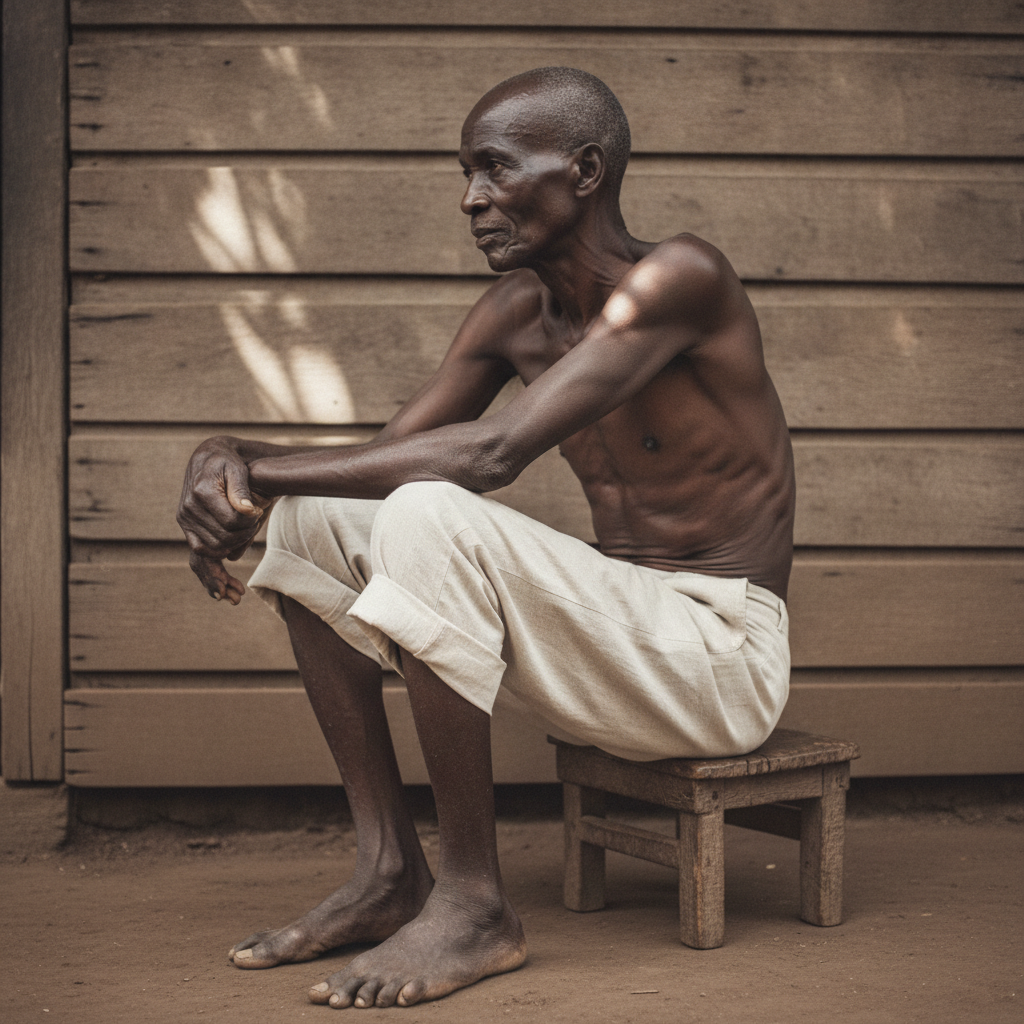
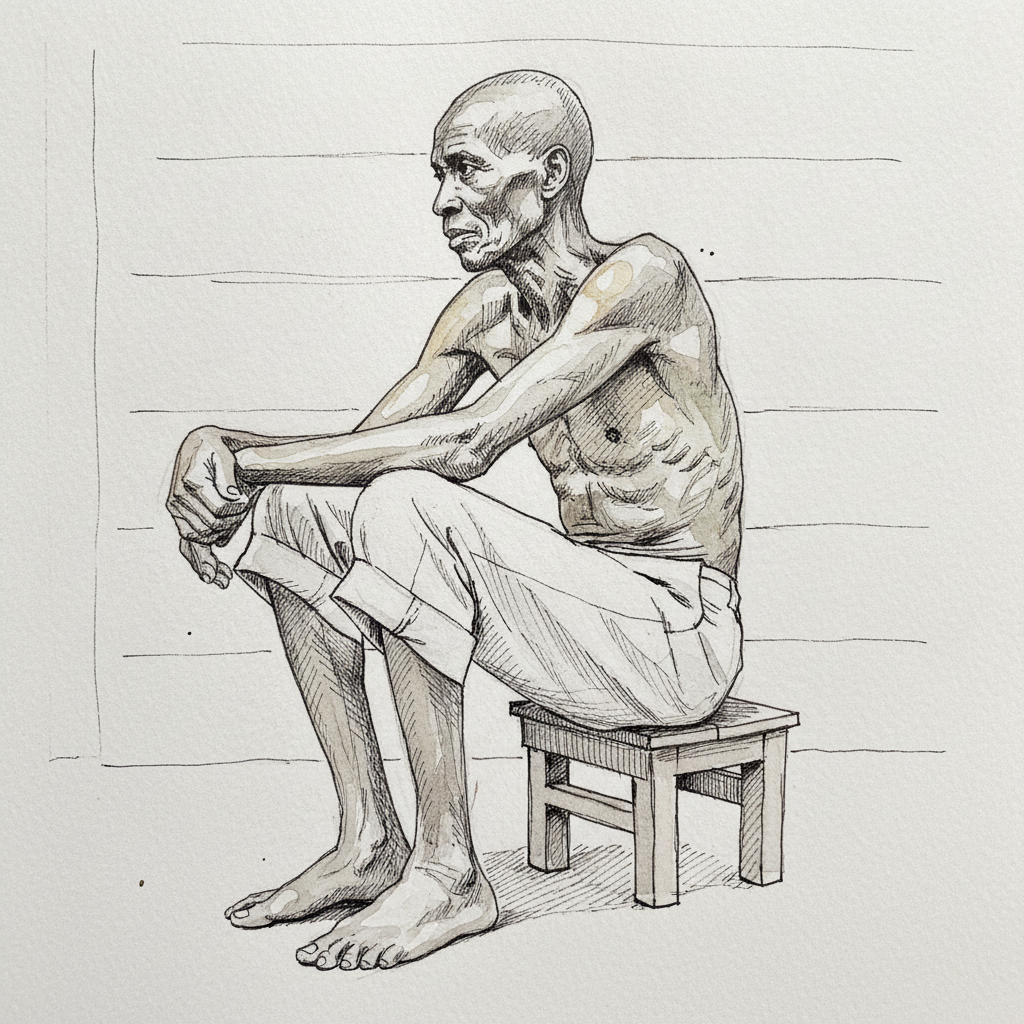
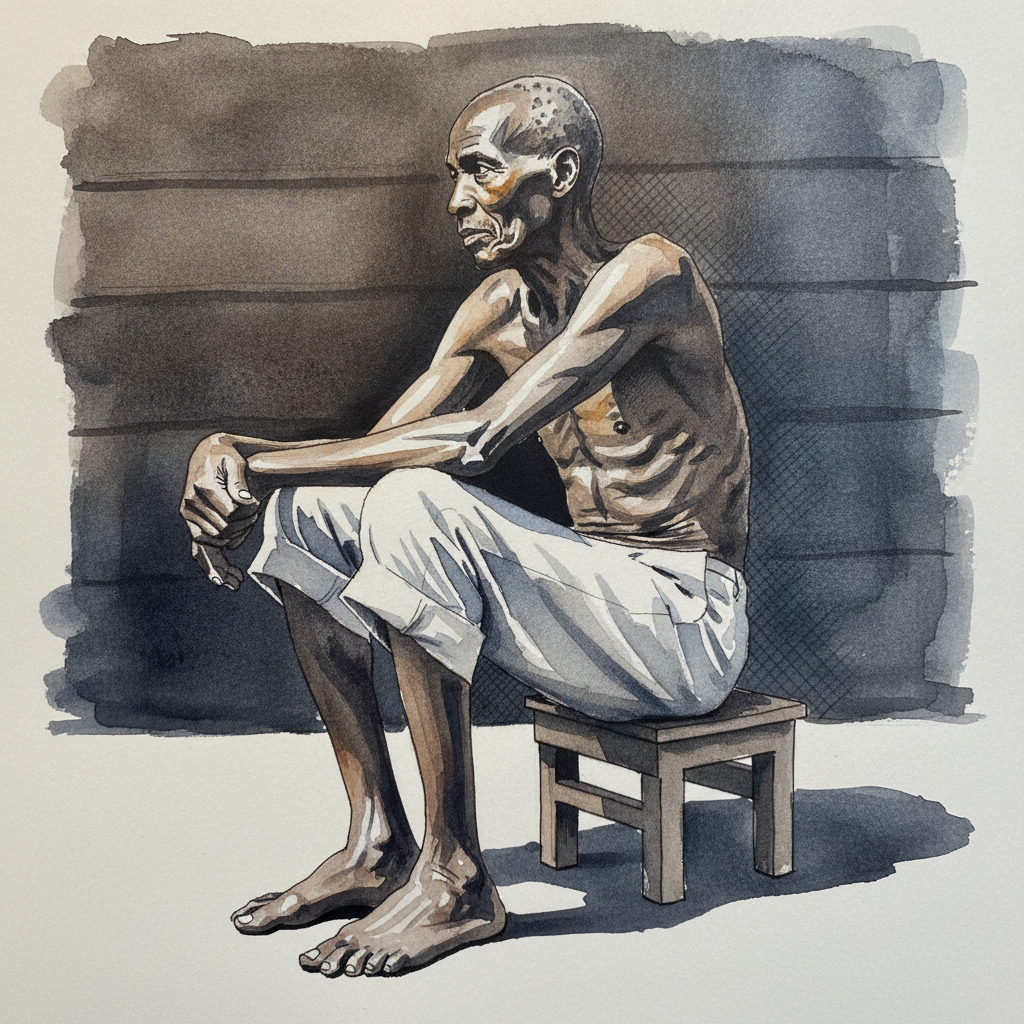
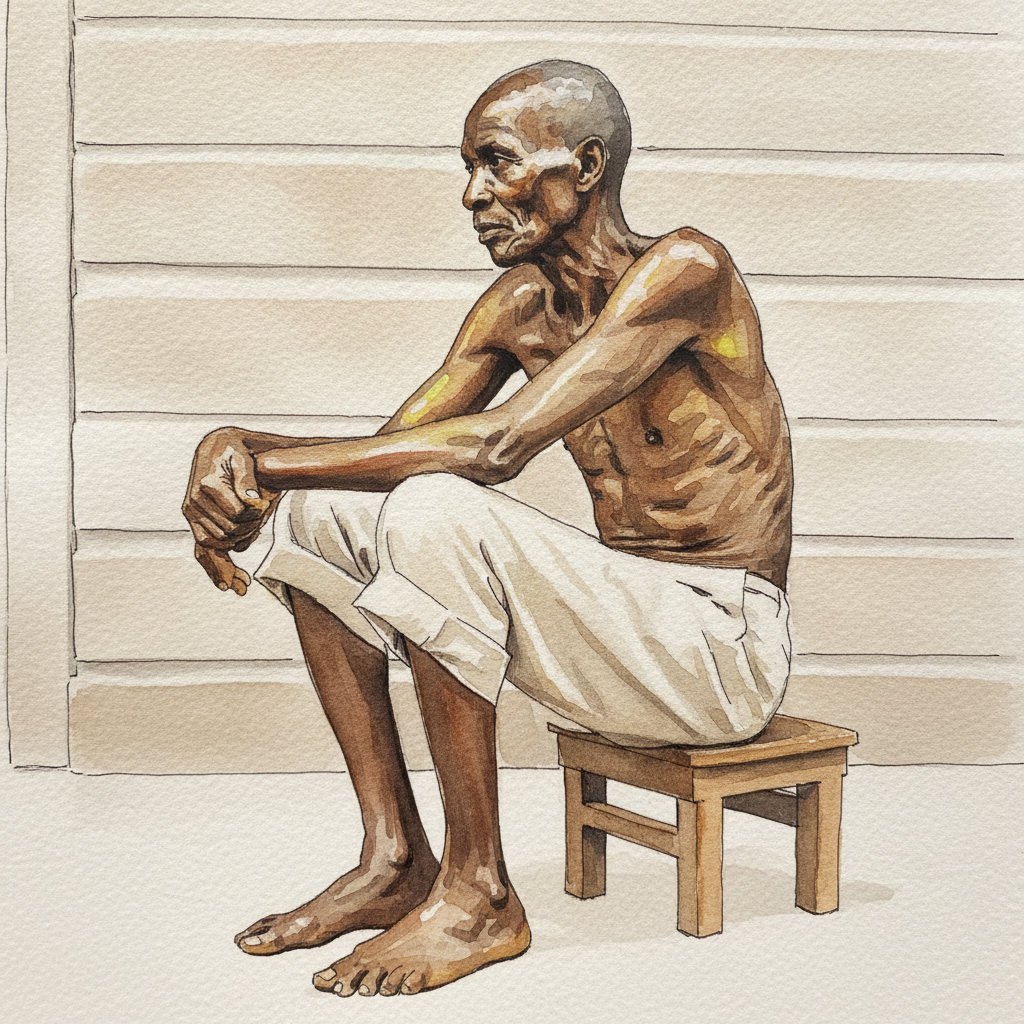
Piece 1 — Reach across to grab opposite knee, elder at 71
Pen + Watercolor · Loose pen and watercolor line-and-wash
Three takes
Focus for this piece
This piece is an excellent study for rendering a dynamic human figure and complex lighting. Focus on using varied pen line weights to articulate the tension in the knotted forearms and the subtle rotation of the torso, allowing lines to breathe in areas of relaxation. Complement this with layered, soft-edged watercolor washes to capture the mottled tree-shade, letting shapes dissolve slightly to enhance the atmospheric dappling without losing the underlying form.
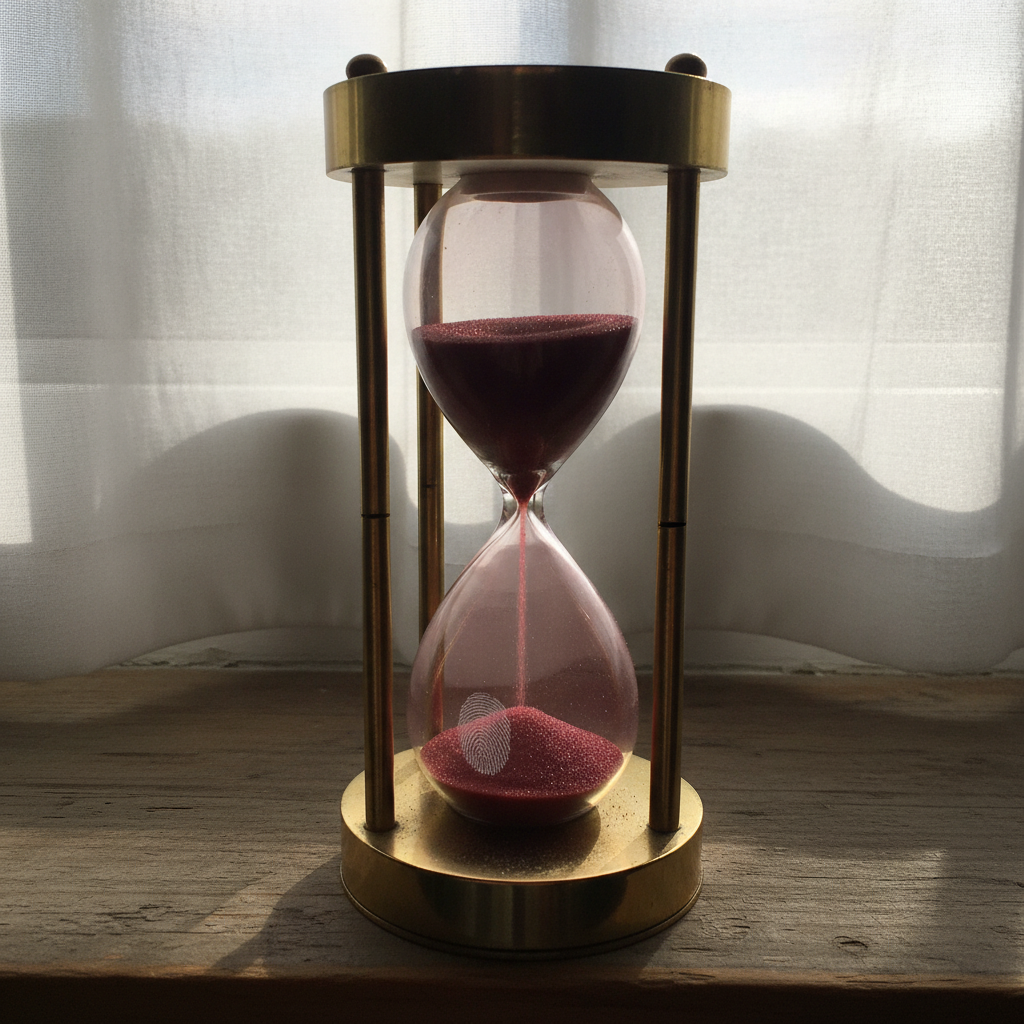
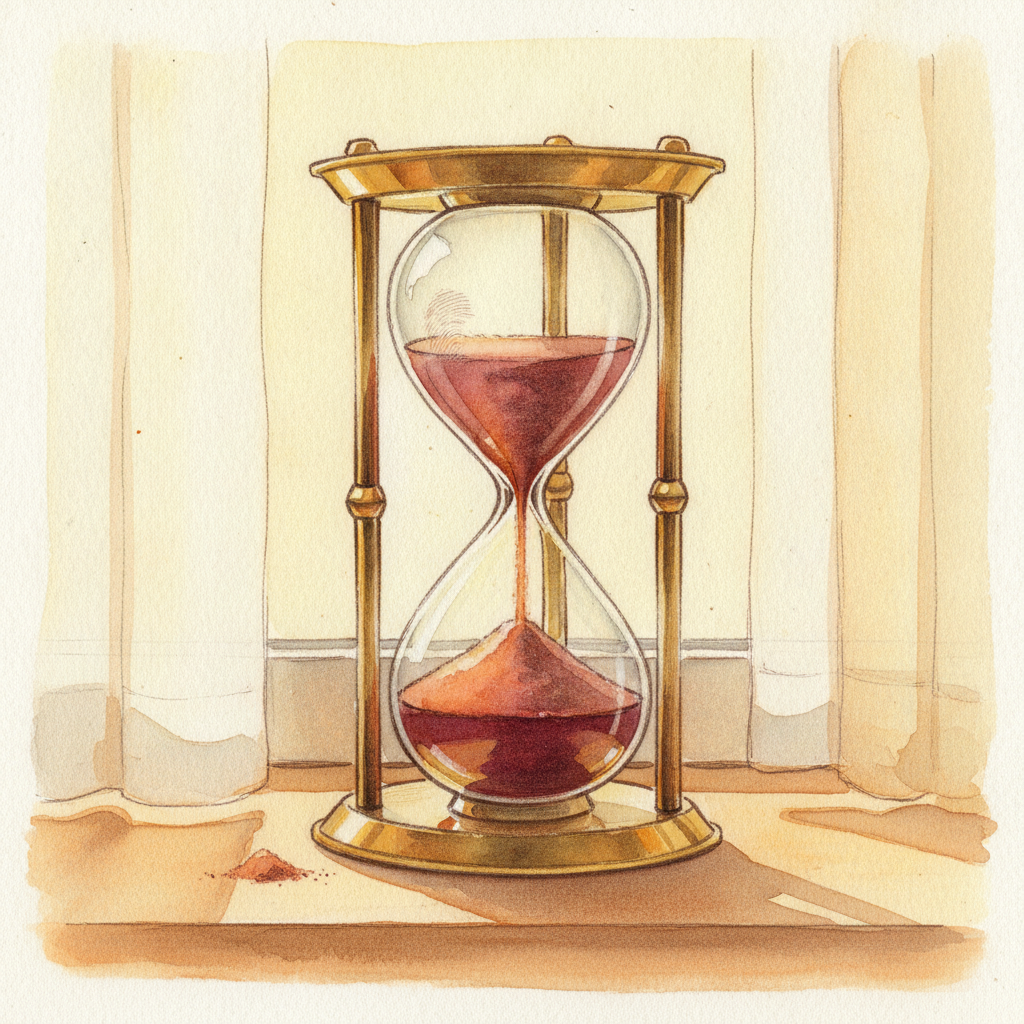
Piece 2 — Hourglass with red sand
Pen + Watercolor · Loose pen and watercolor line-and-wash
Three takes
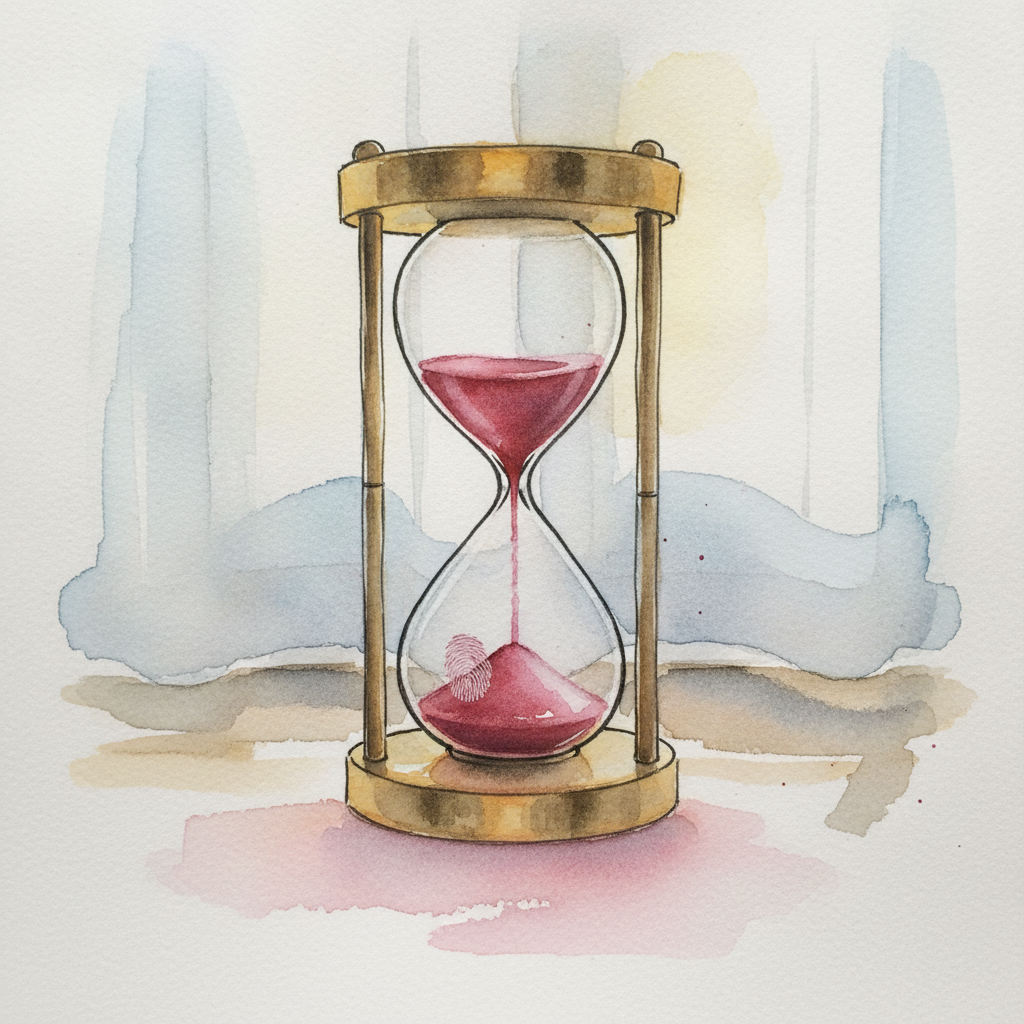
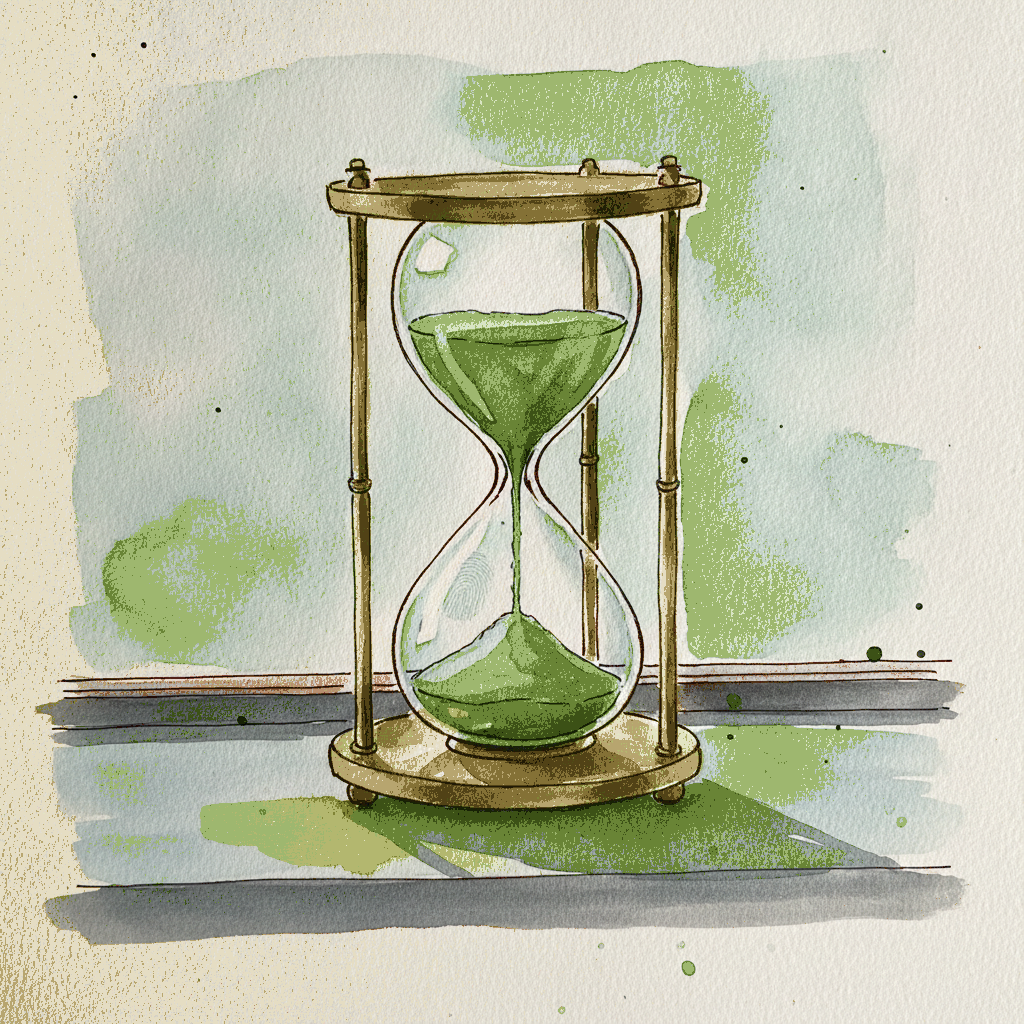

Focus for this piece
This piece offers a great study in combining precise ink linework with delicate, layered washes to convey extreme backlighting and material translucency. Use fine ink lines to establish the hourglass's symmetrical form and subtle details like the fingerprint or dust, then employ light, warm washes of crimson and pink for the glowing sand and sheer curtain. Vary your line weight to differentiate the solid brass from the fragile glass, letting the watercolor create the illusion of light passing through the subject.
Piece 3 — Echeveria
Pen + Watercolor · Loose pen and watercolor line-and-wash
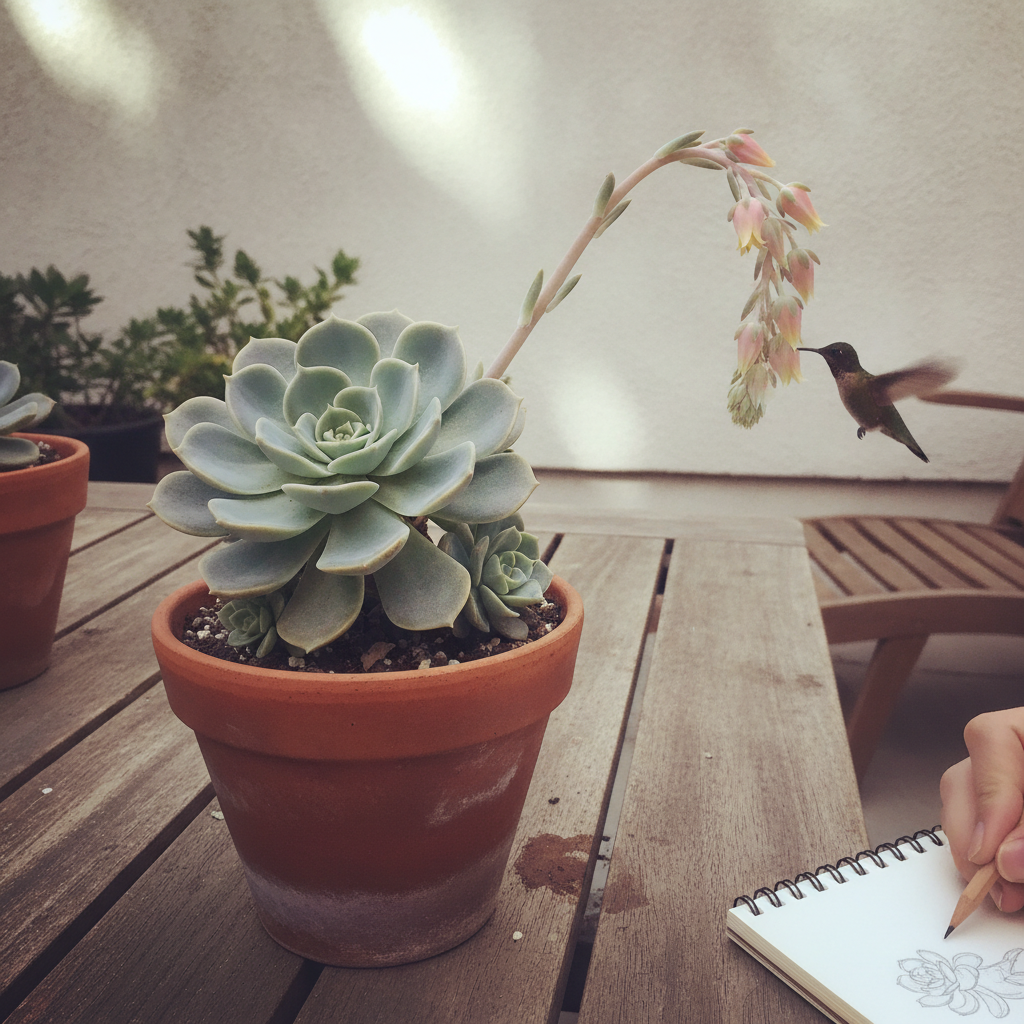
Three takes
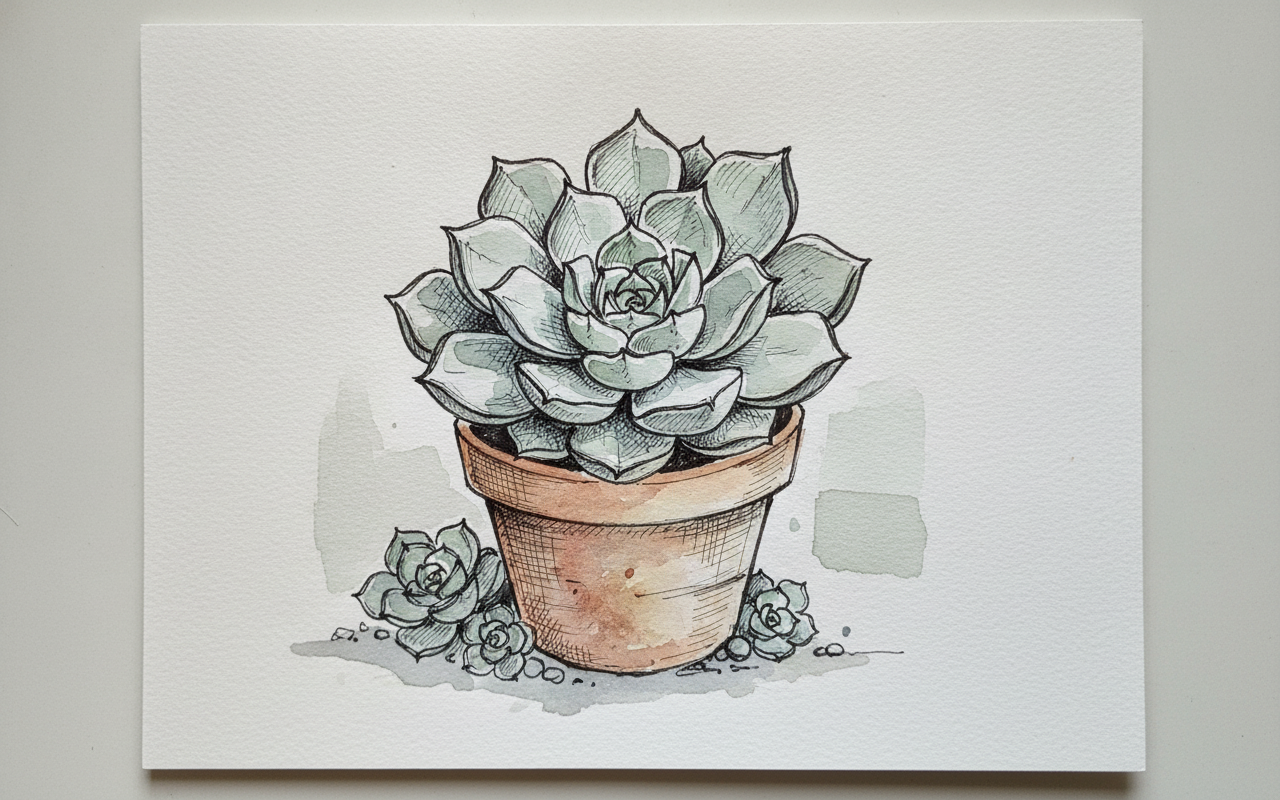

Focus for this piece
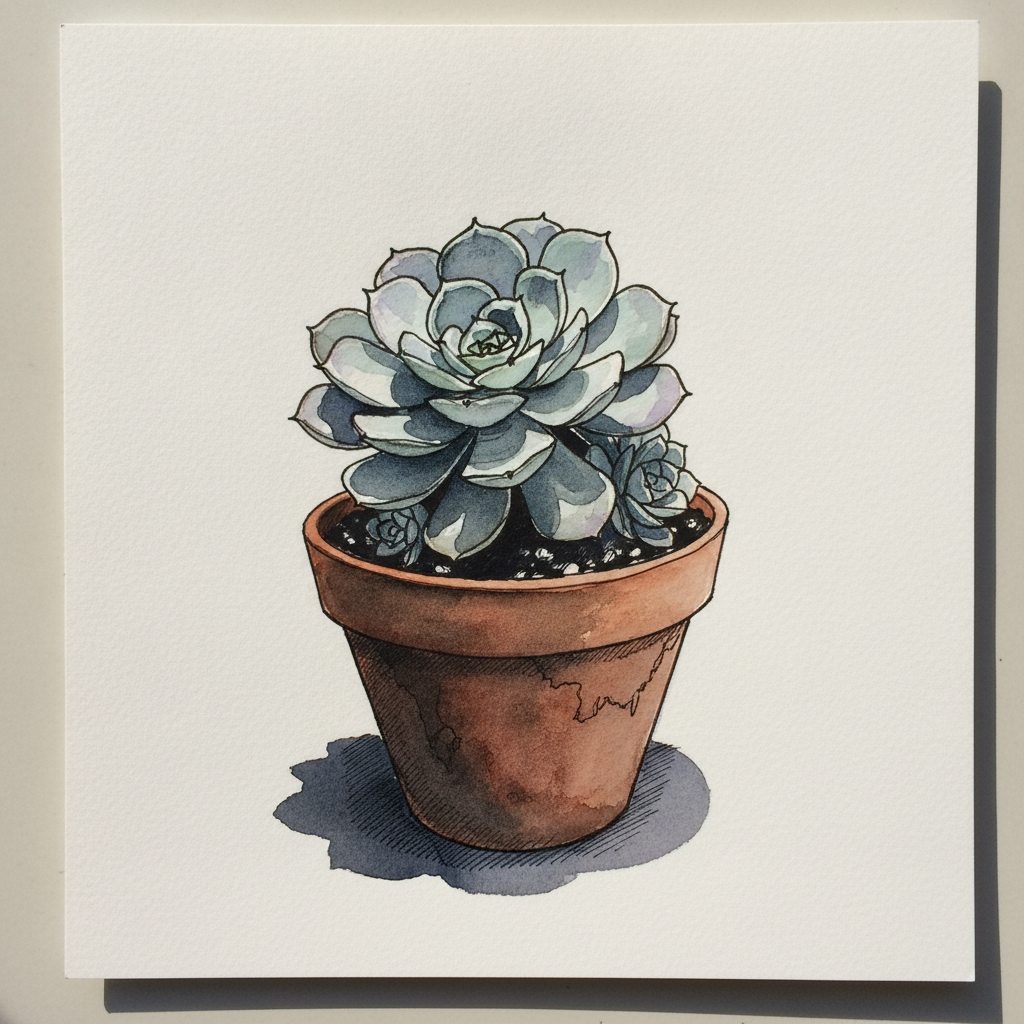
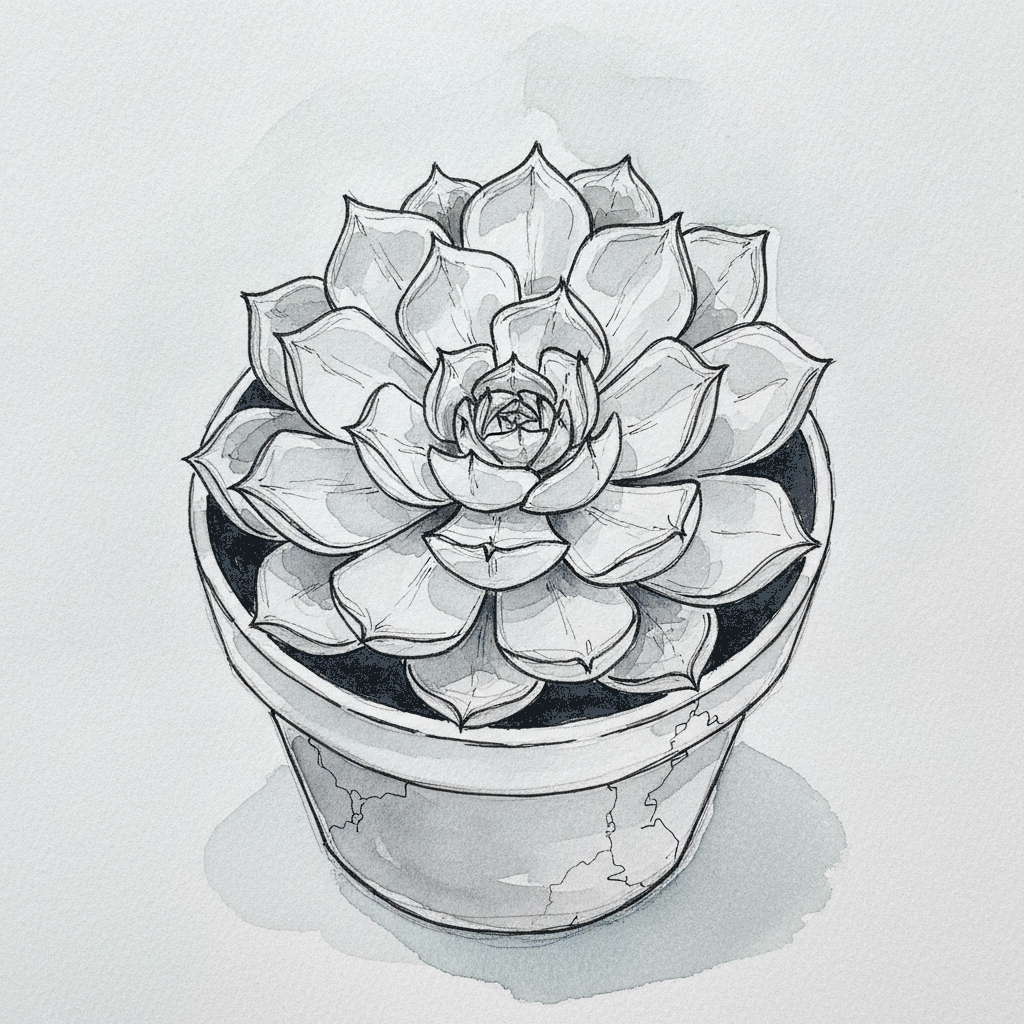
This piece offers an excellent study in rendering organic symmetry and texture contrast, specifically between the delicate plant and its sturdy container. Focus on using light, varied line weights for the overlapping *Echeveria* leaves, building their silver-blue volume with thin watercolor washes and soft edges. For the terracotta pot, employ bolder pen lines and drier, warmer washes to emphasize its rough texture, contrasting sharply with the plant's smooth forms and cool palette.
Piece 4 — Vumba Kuu Ruins, Kwale County, Kenya
Pen + Watercolor · Loose pen and watercolor line-and-wash
Three takes
Focus for this piece
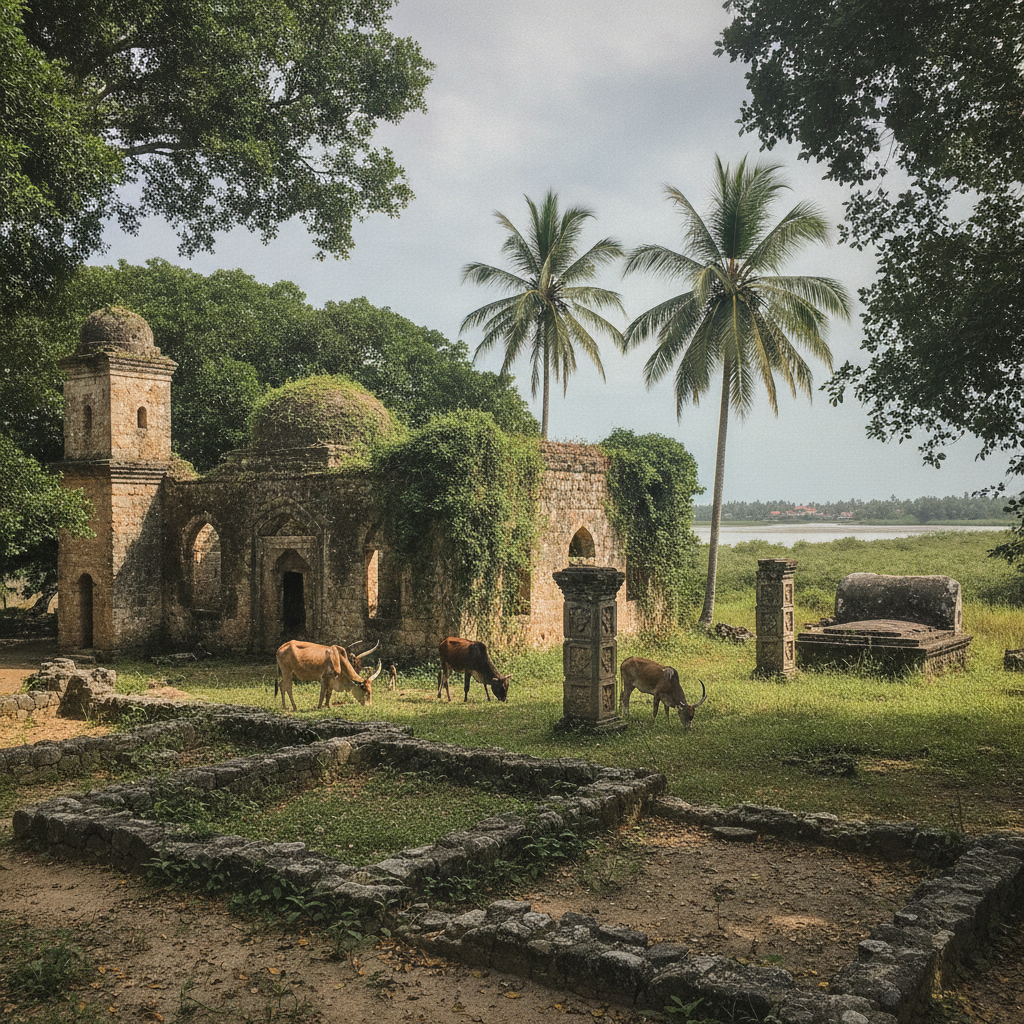
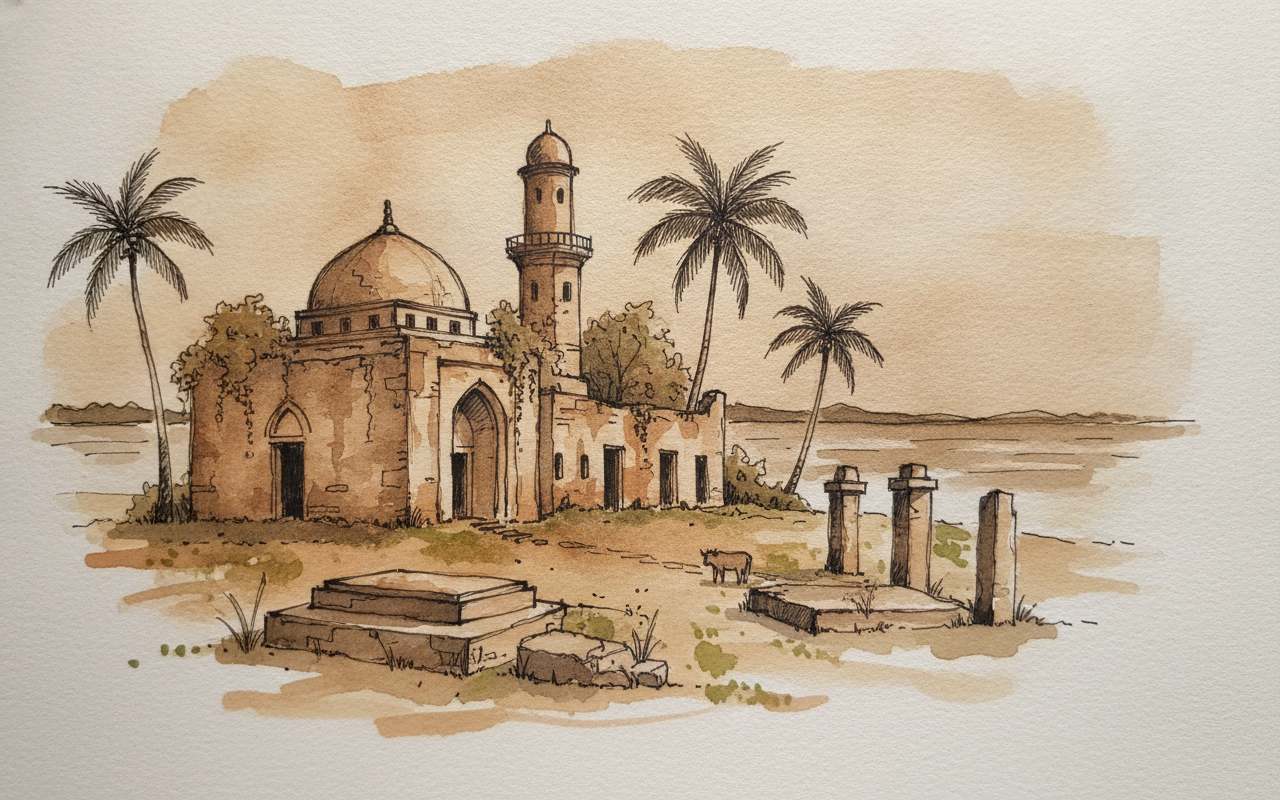
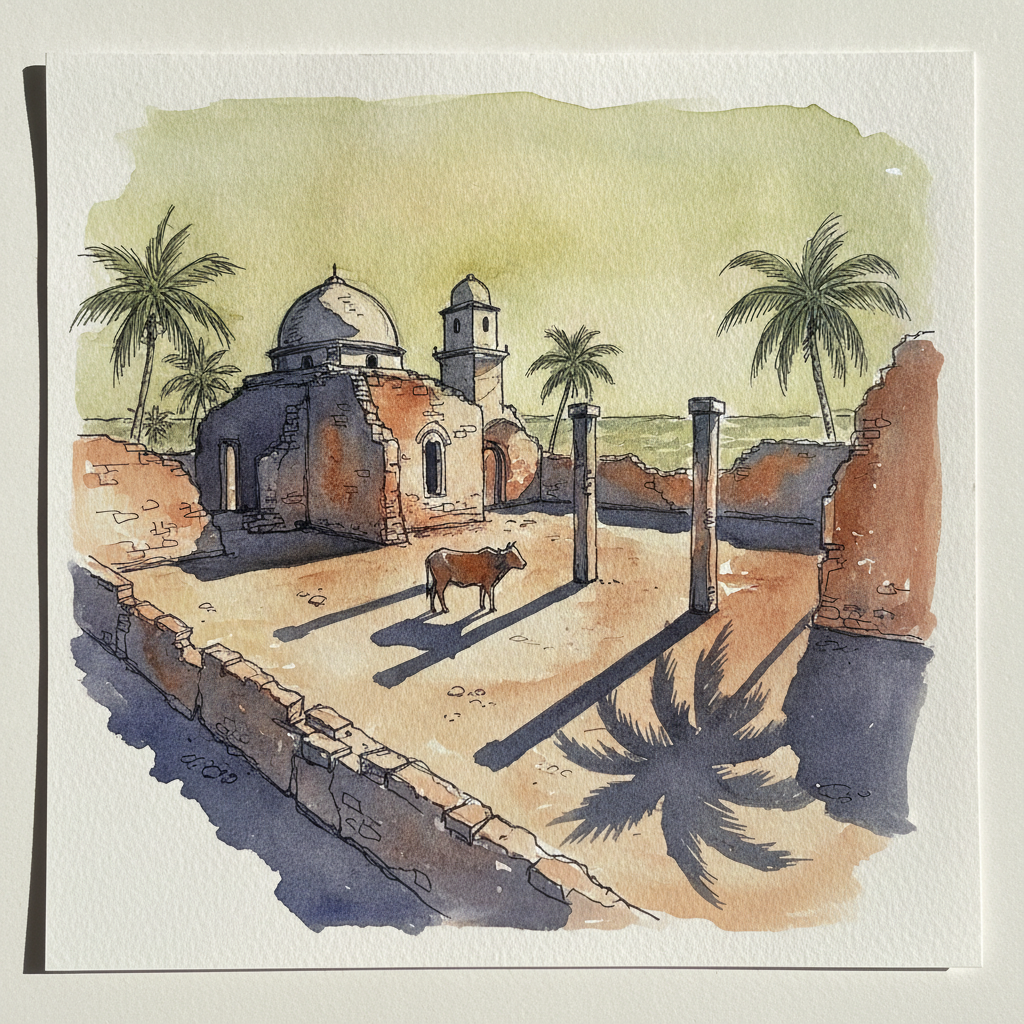
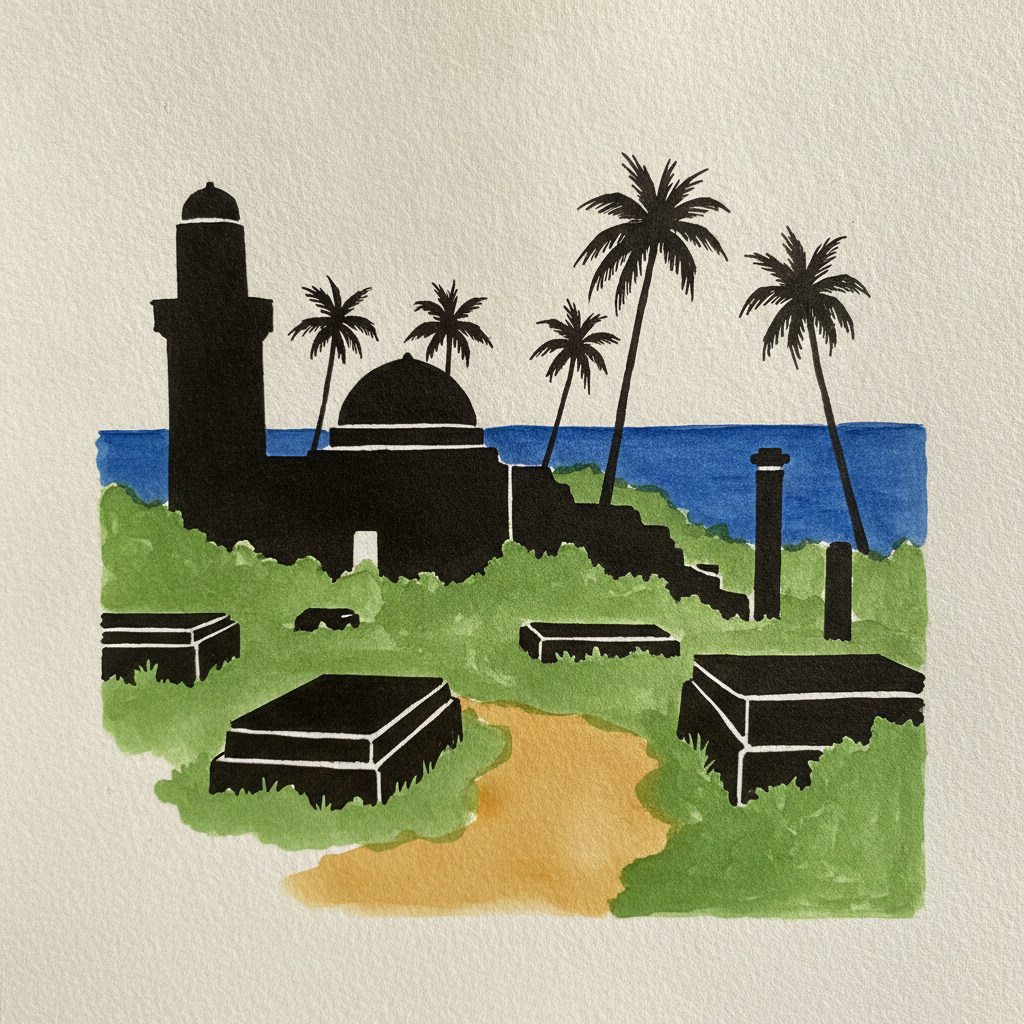
For Vumba Kuu, focus on the compelling contrast between the structured coral-rag ruins and the encroaching coastal forest. Establish the strength of the mosque's walls and pillar tombs with firm, varied ink lines, then soften your approach dramatically for the surrounding creepers and palms. Use expansive, wet washes and lighter, broken pen strokes to depict the organic forms that now reclaim these ancient structures, letting the watercolor's fluidity speak to nature's ongoing process. Pay particular attention to how a slightly warmer palette for the stone, contrasted with cooler greens, can enhance the sense of historical depth.
Piece 5 — Teens awkward at school dance
Pen + Watercolor · Loose pen and watercolor line-and-wash
Three takes

Focus for this piece
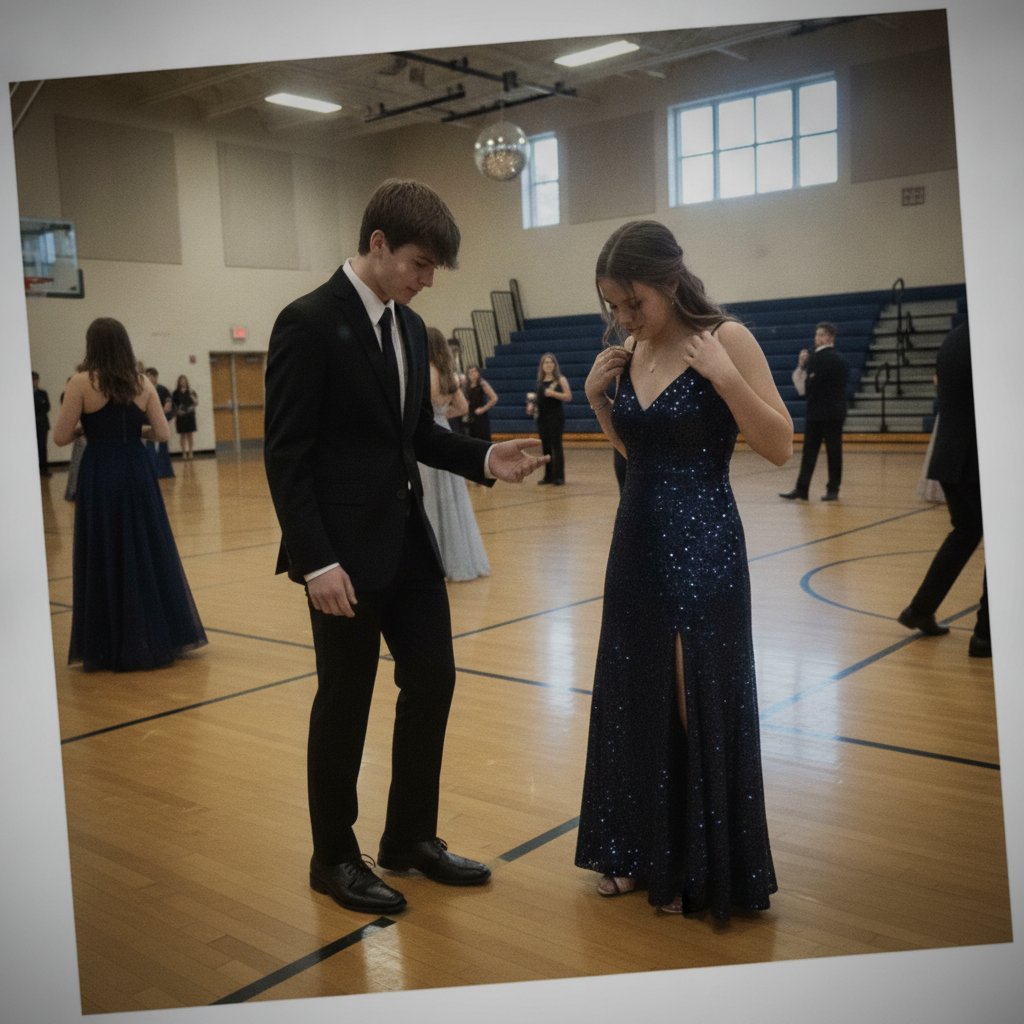
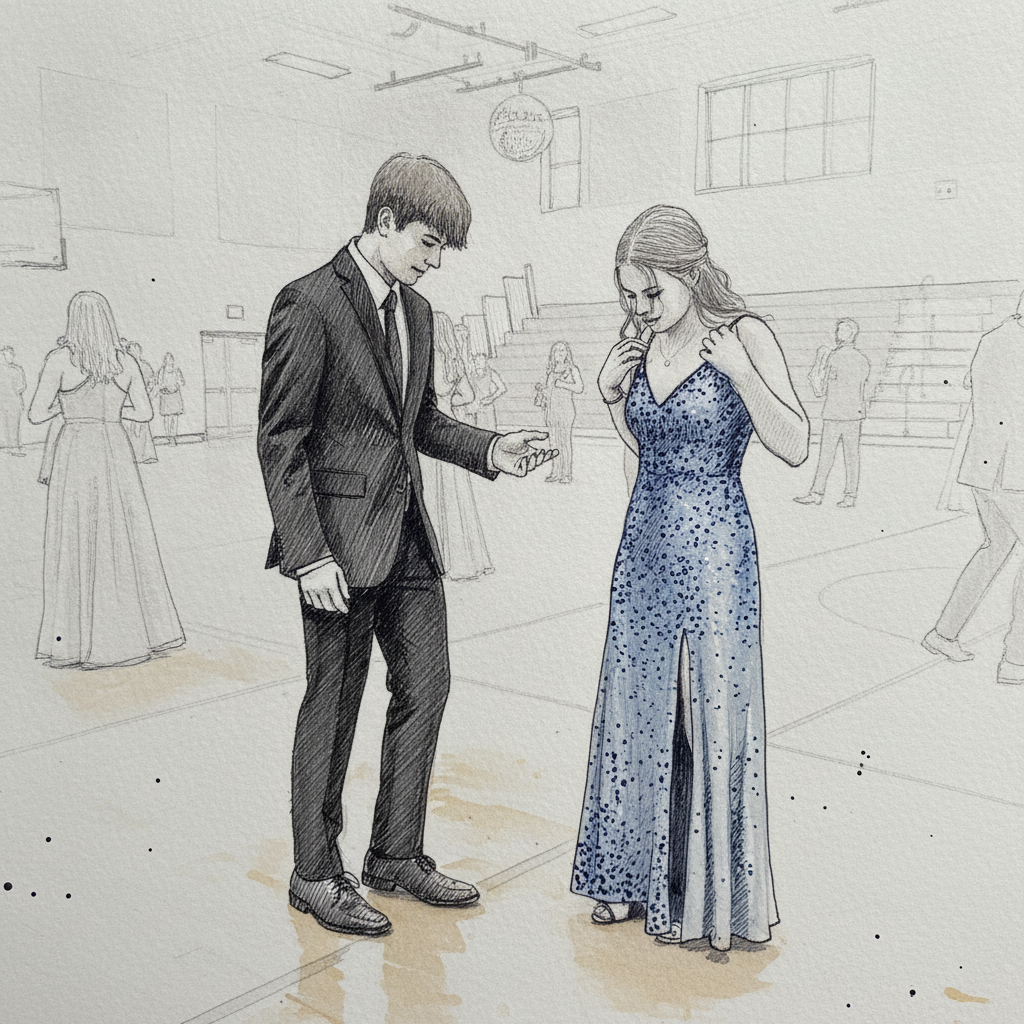
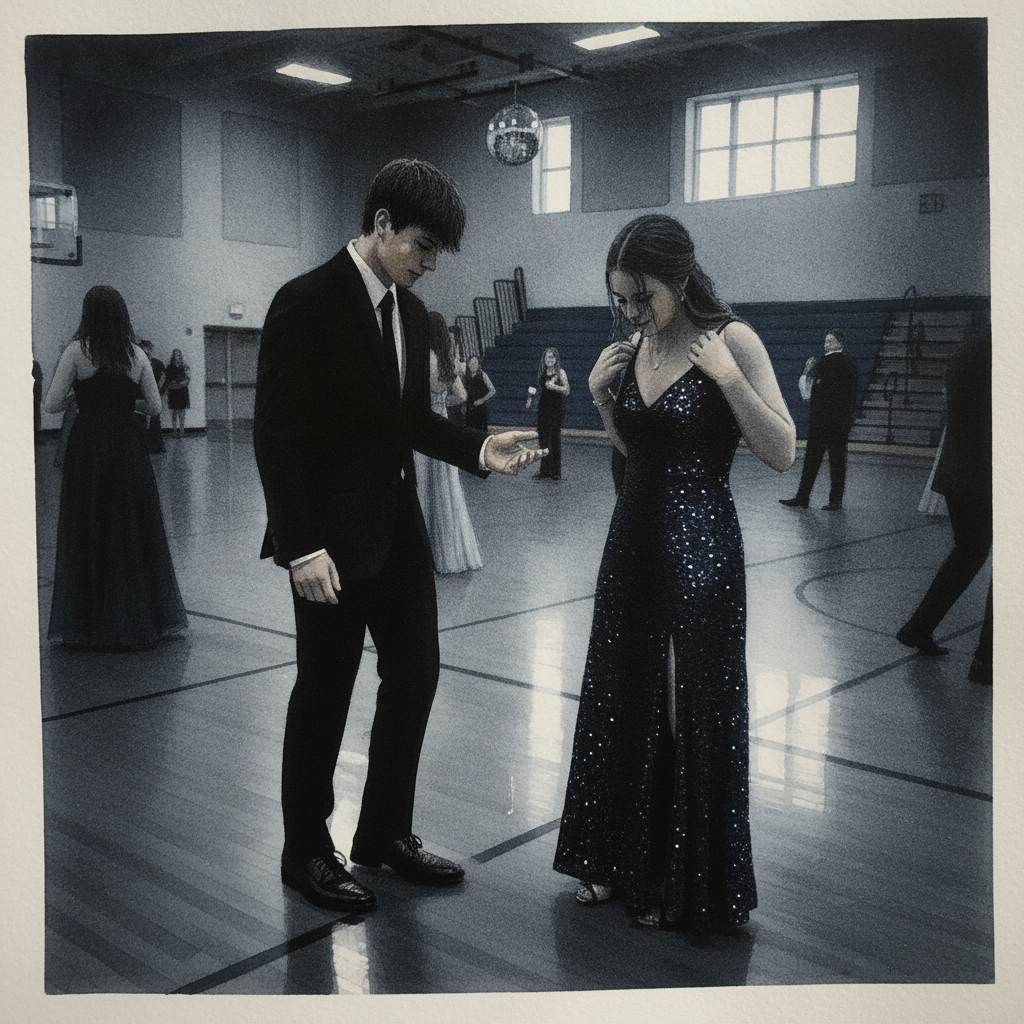
This piece is an excellent study in using negative space and deliberate line weight to communicate unspoken emotion. Notice how the three feet of gleaming floor between them, and the slight distance between their tentatively clasped hands, convey tension; use delicate, broken pen lines to articulate their fidgeting, hesitant postures. Contrast this with broader, wetter washes for the ambient light and disco ball reflections, allowing the soft color to imply the atmosphere without competing with the ink's emotional impact.
Piece 6 — Iceberg Alley Twillingate from coastal trail, Newfoundland
Pen + Watercolor · Loose pen and watercolor line-and-wash
Three takes
Focus for this piece
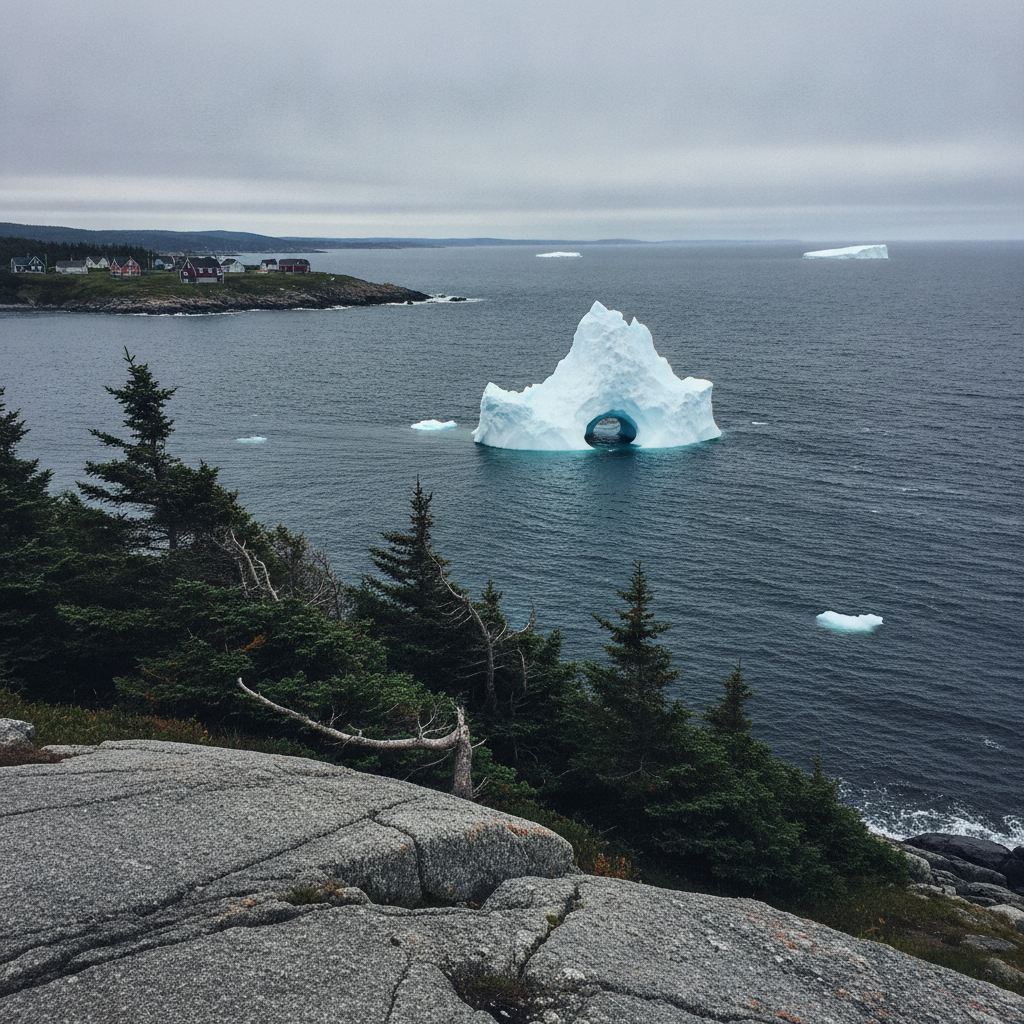
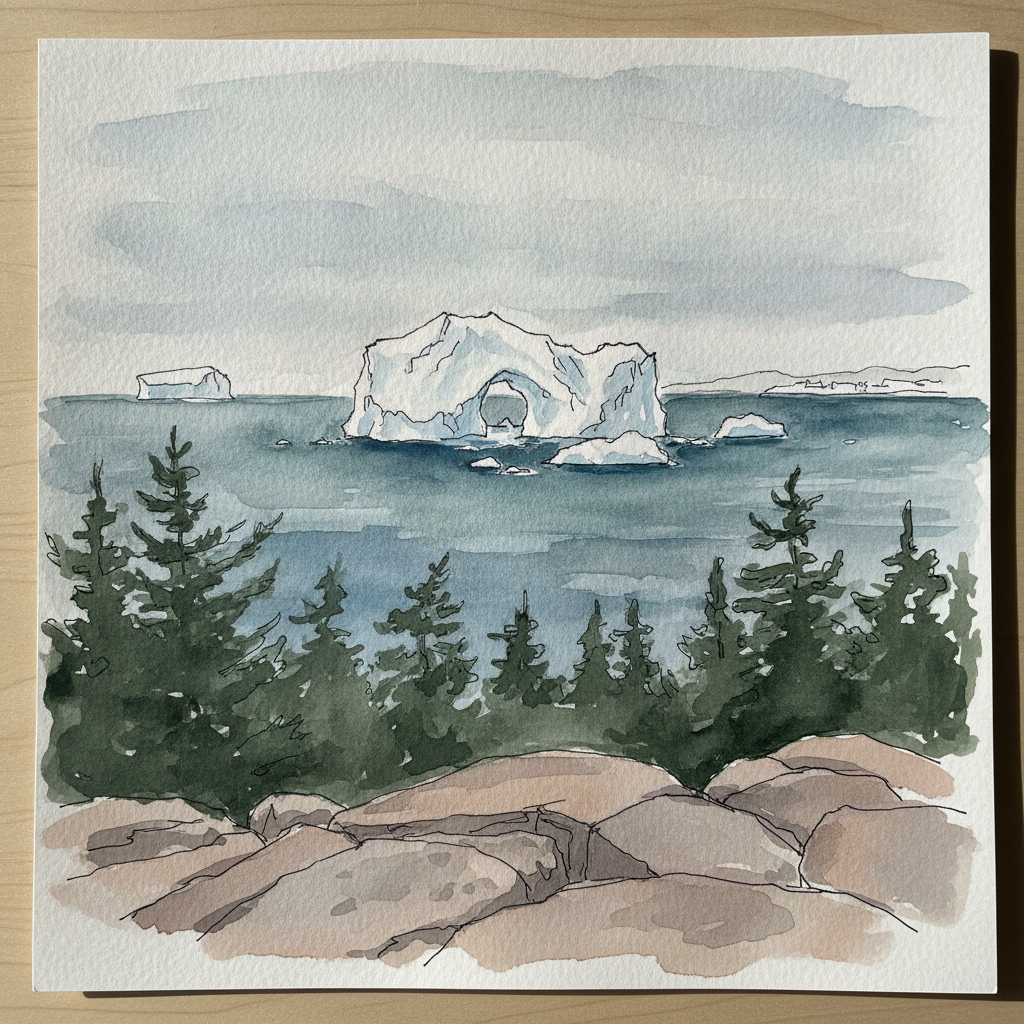
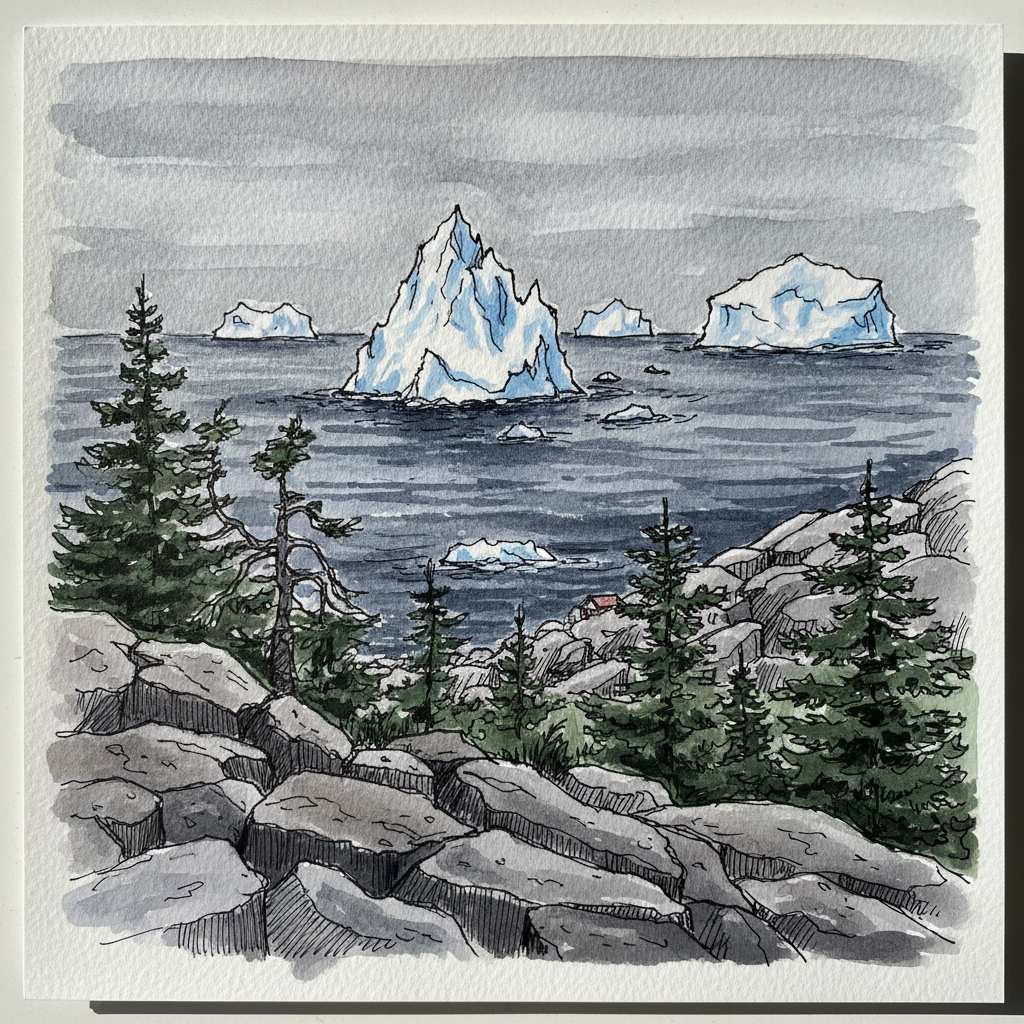
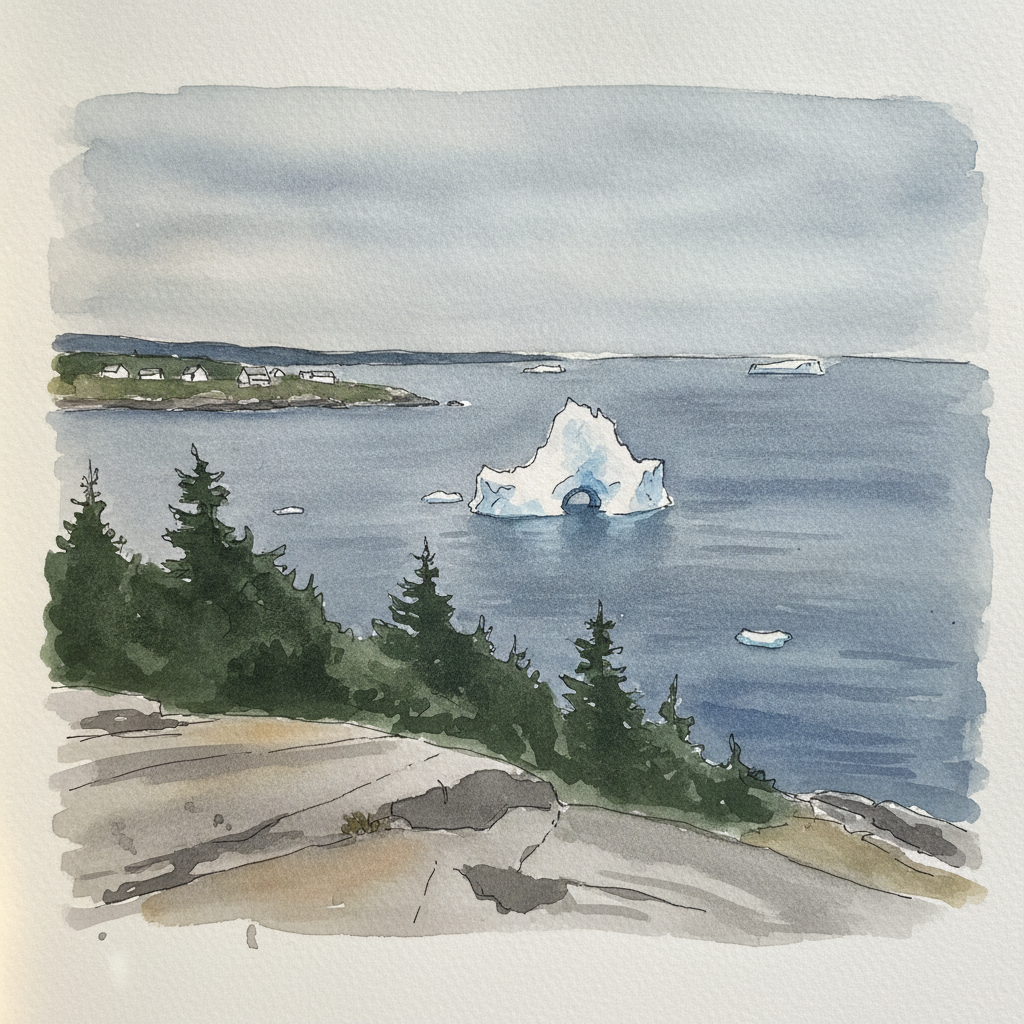
This piece offers an excellent opportunity to study atmospheric depth, particularly with the progression of bergs from foreground to background. Focus on using varied line weights—crisp, detailed lines for the nearest spire-and-arch berg and foreground spruce, softening to finer, lighter marks for the distant tabular slab and outport. Use subtle shifts in cool blues and grays in your washes to enhance the sense of recession. Additionally, experiment with preserving the brightest paper whites for the most luminous ice, contrasting it with textured granite and dark sea.
Piece 7 — Trash Bag, Tied and Set
Pen + Watercolor · Loose pen and watercolor line-and-wash

Three takes
Focus for this piece
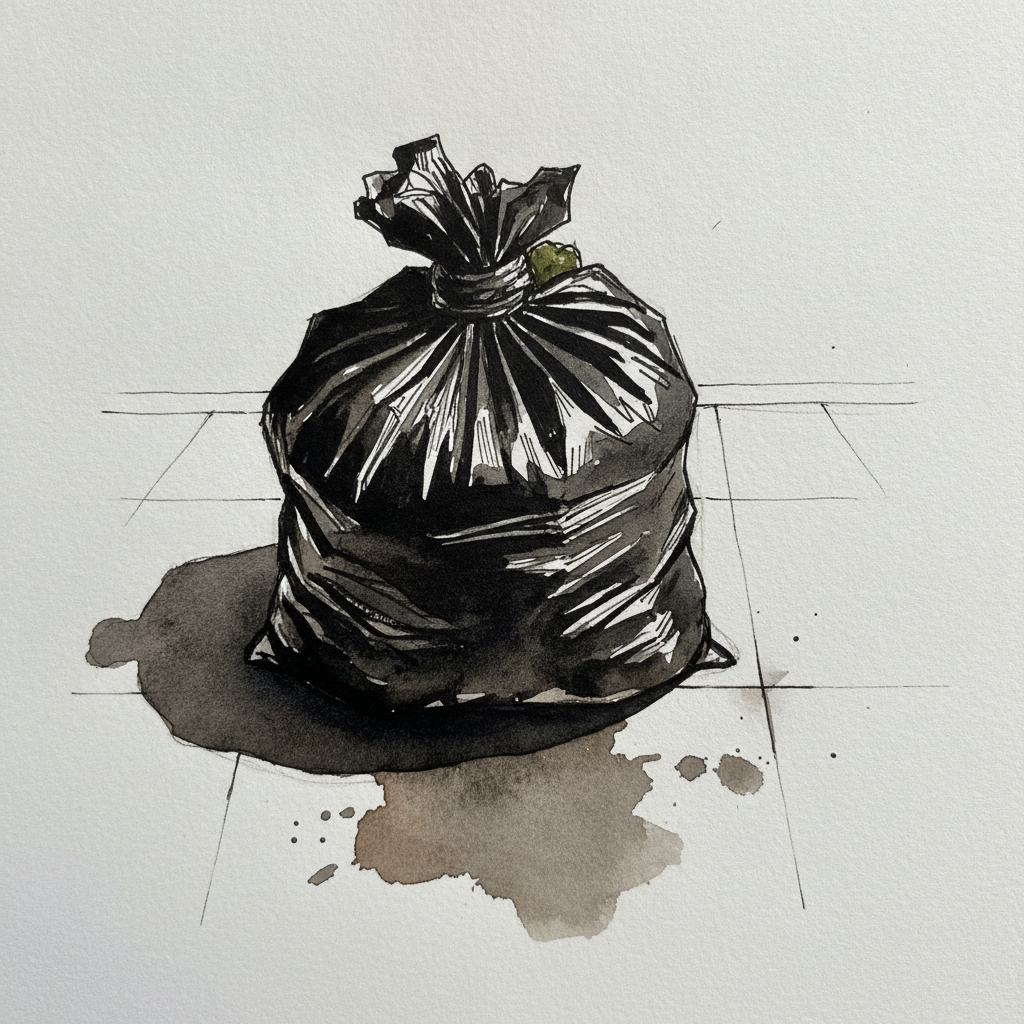
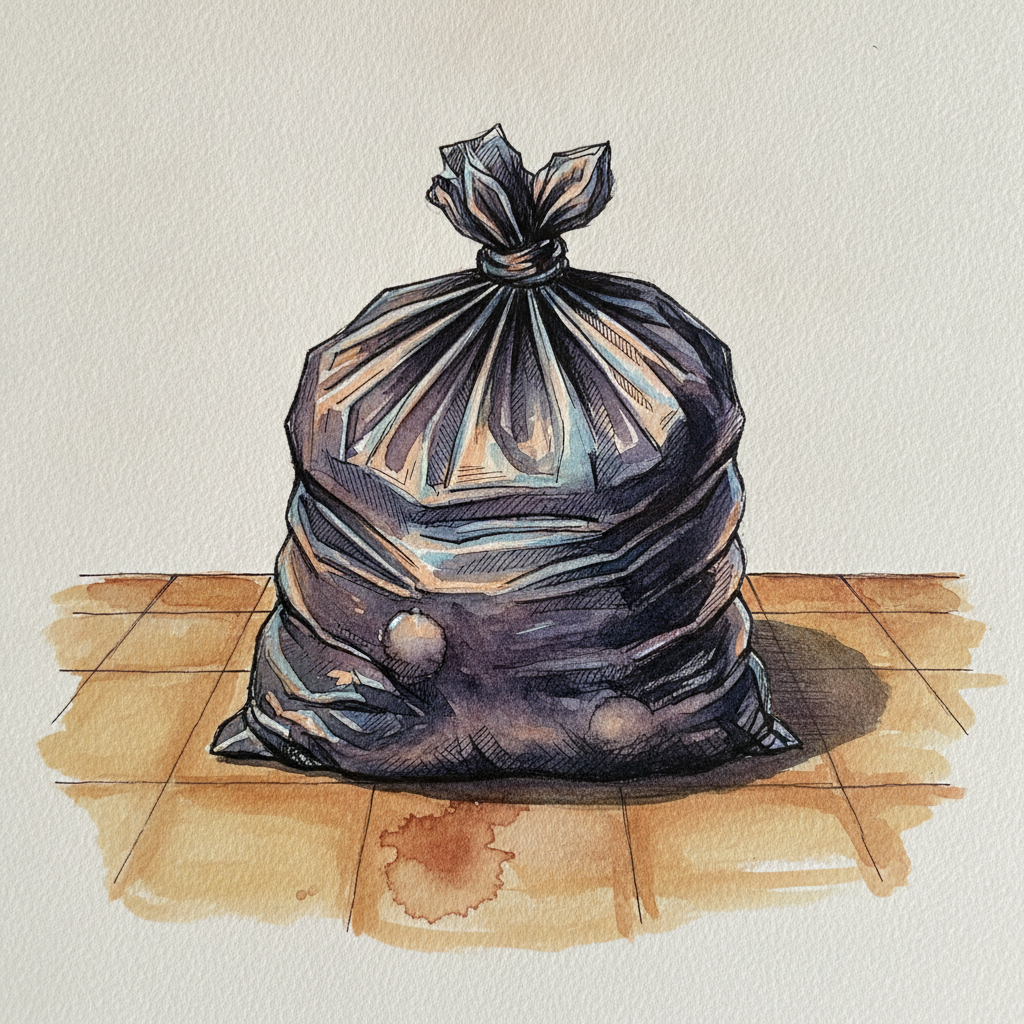
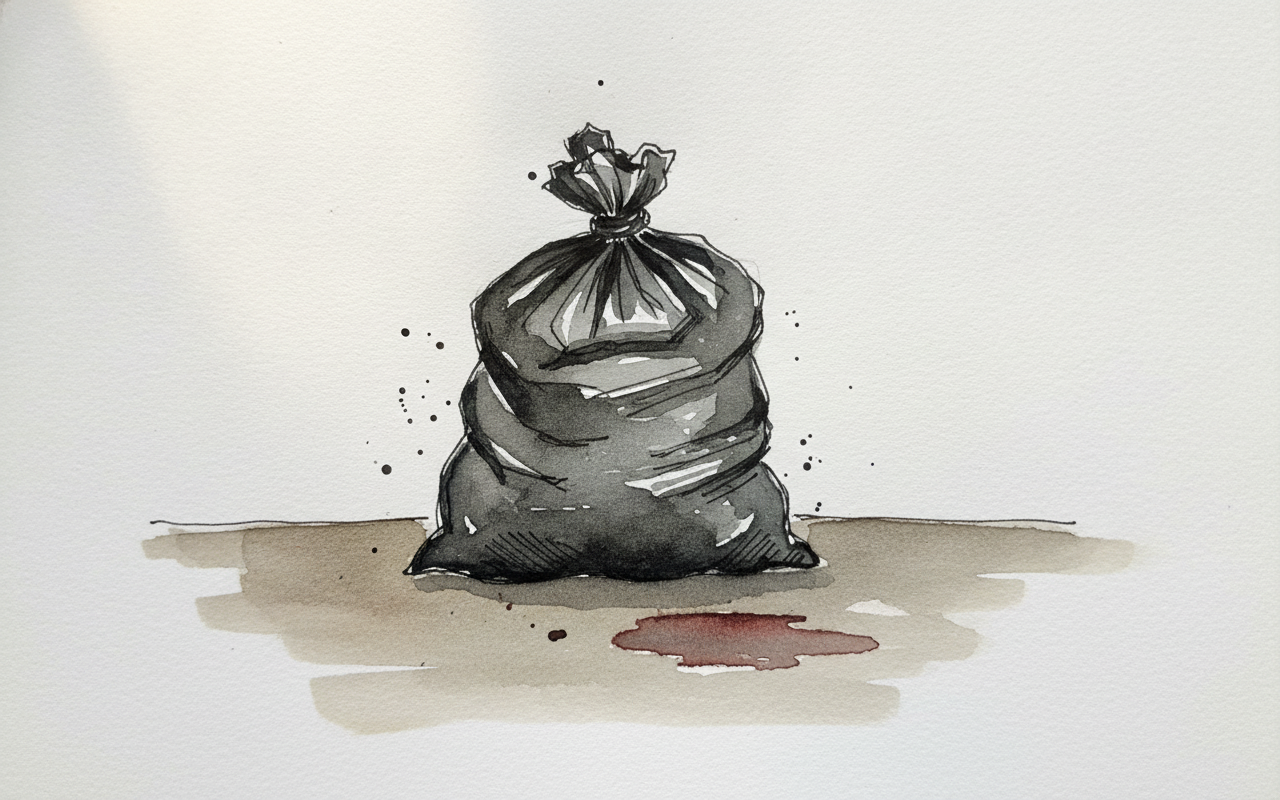
This piece offers a compelling study in depicting a dark, reflective, irregular form. Use varied line weights to describe the taut knot and the specific underlying shapes pressing against the plastic, then carefully build the bag's volume and shine by layering transparent washes of a limited, cool-toned palette. Ensure you preserve precise untouched areas of paper for the brightest highlights on the dark surface, achieving a sense of black and light without relying on opaque application. This exercise will hone your ability to articulate form on a challenging reflective object.
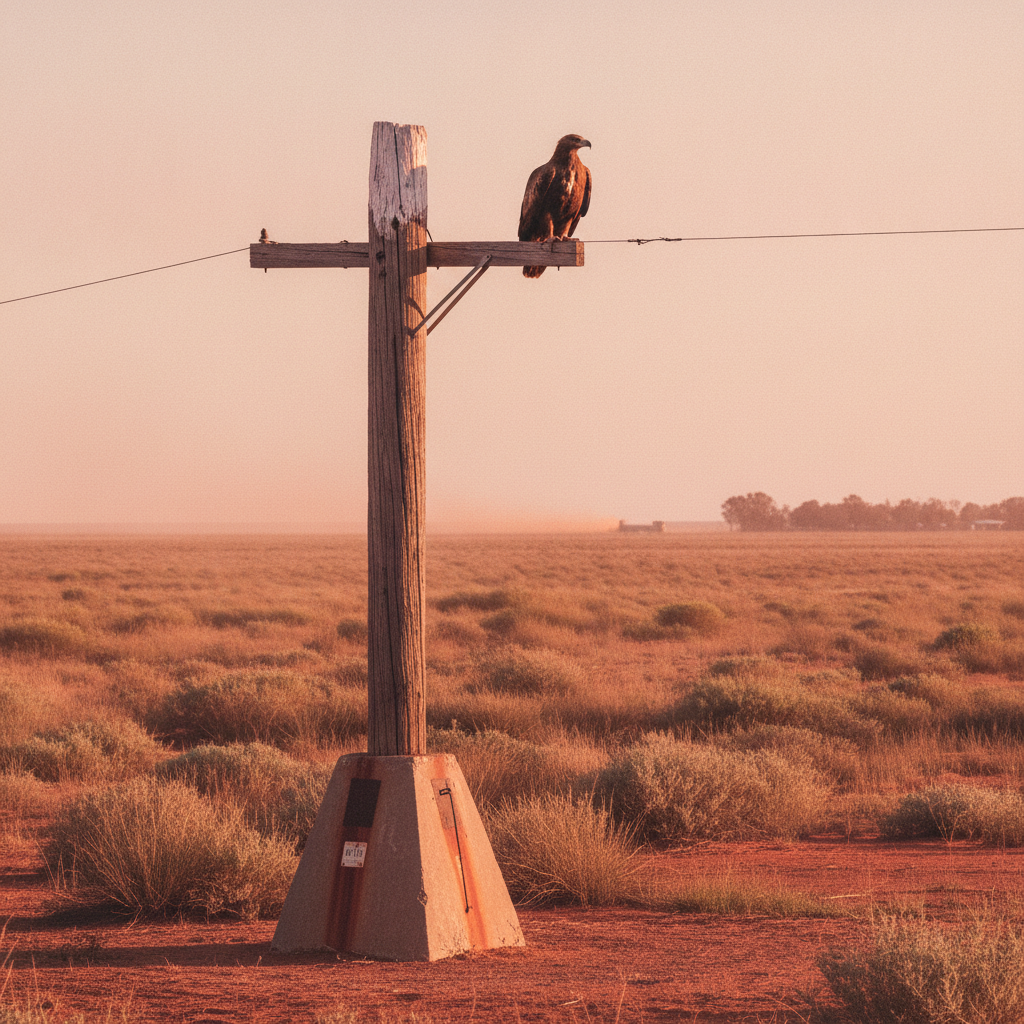
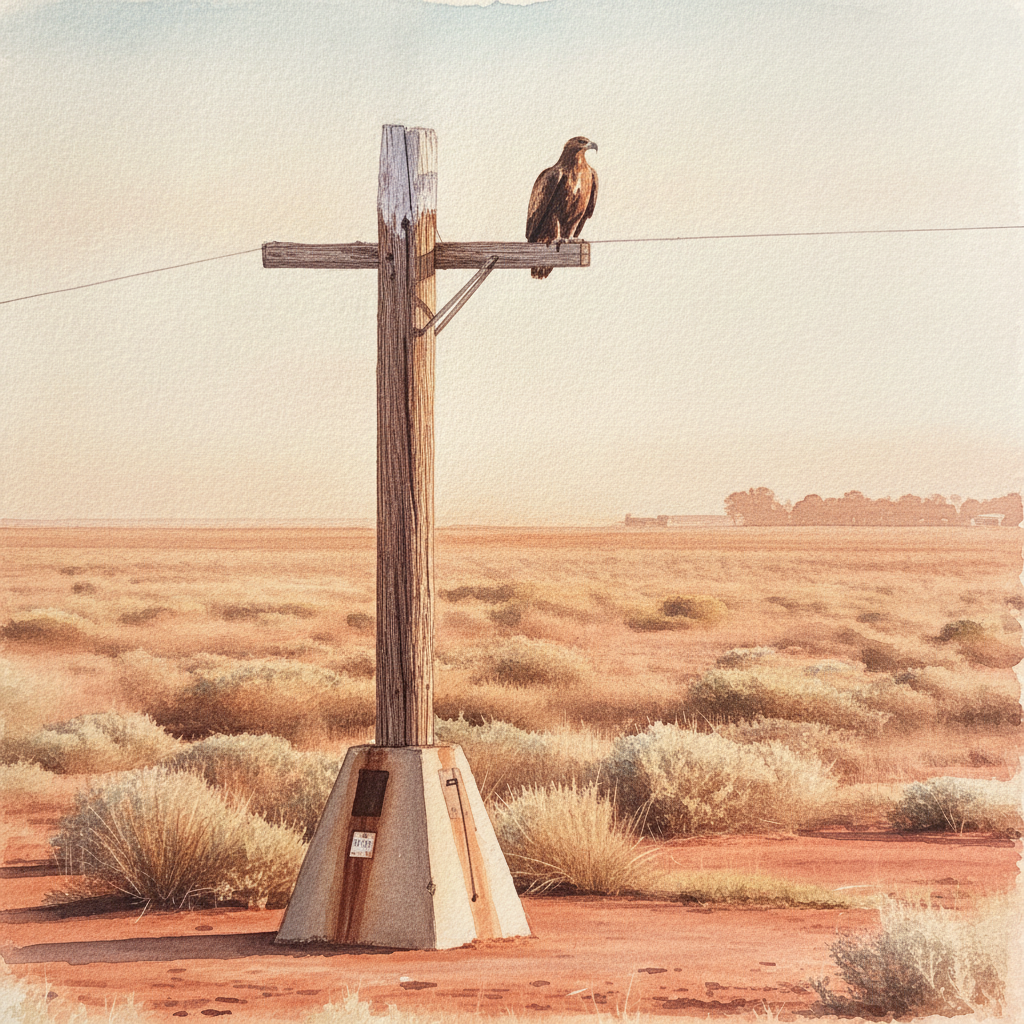
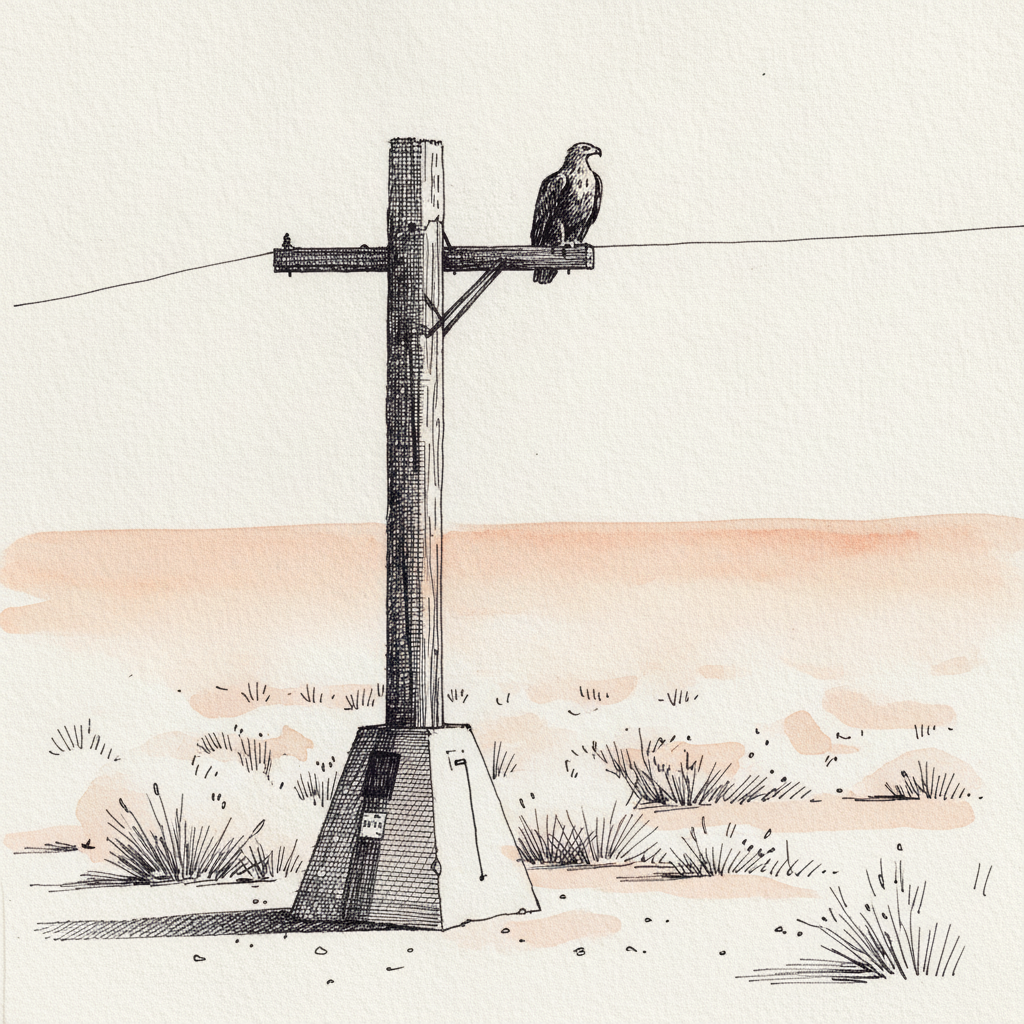
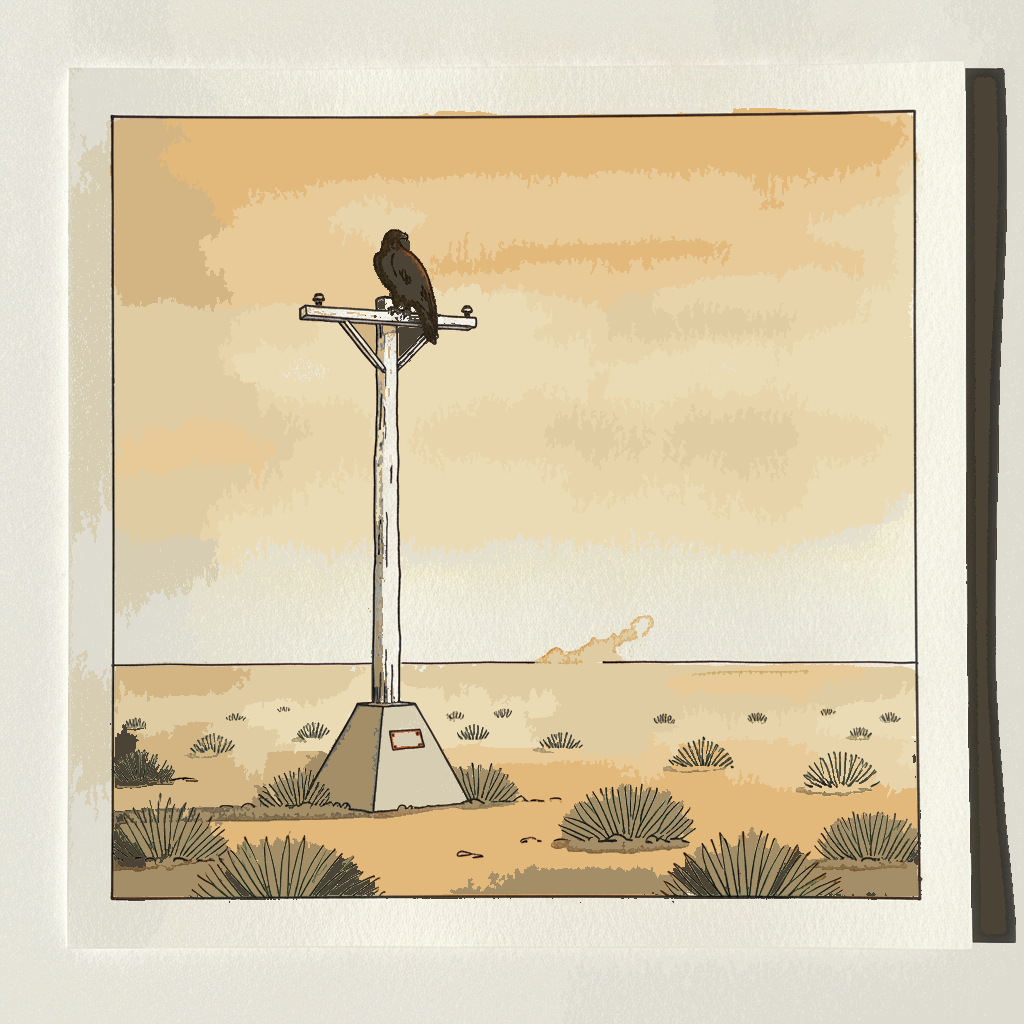
Piece 8 — Australian Outback Pole
Pen + Watercolor · Loose pen and watercolor line-and-wash
Three takes
Focus for this piece
This Outback pole is a superb exercise in combining strong compositional verticality with atmospheric warmth. Focus on rendering the cracked, silvered wood with varied pen lines—heavier at the base, finer for the fissures—to emphasize its texture and commanding presence. Use broad, warm washes of copper and rose to build the late-afternoon light and the impossibly flat horizon, allowing the watercolor to suggest the dusty, expansive atmosphere.