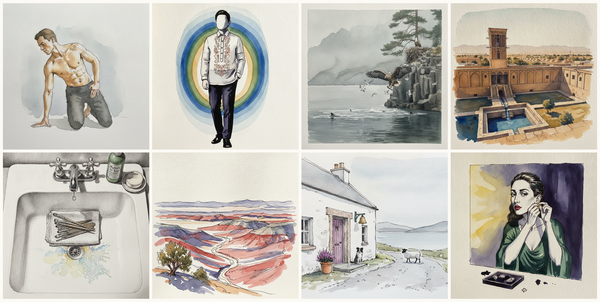
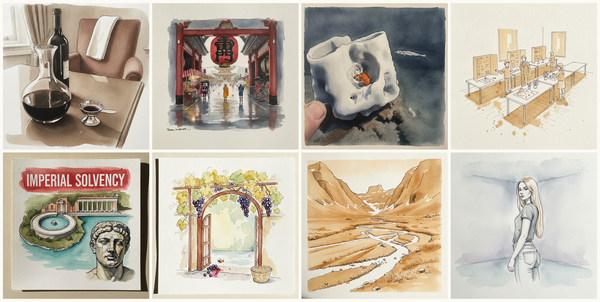
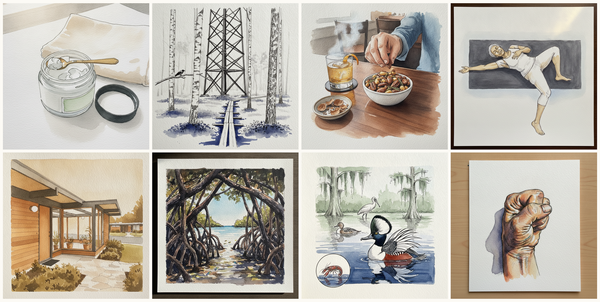
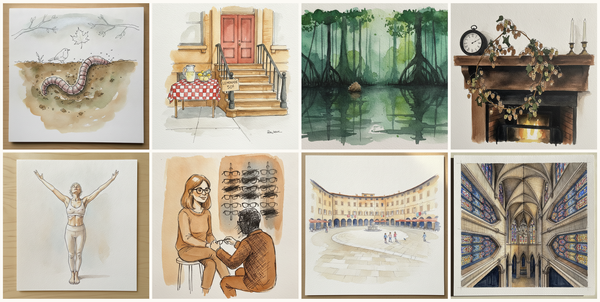
Lemon being zested, Trout Stream Casting, Knee-down push-up, descent, Cyclist Charging the Camera, and more — pen + watercolor for October 11, 2026
AI-generated daily art-practice references for pen and watercolor: Lemon being zested, Trout Stream Casting, Knee-down push-up, descent, Cyclist Charging the Camera, European hake, Tiny Turkish coffee cups with sugar cubes and dishes, Yakushima cedar forest, Japan, Gračanica Monastery, Kosovo.
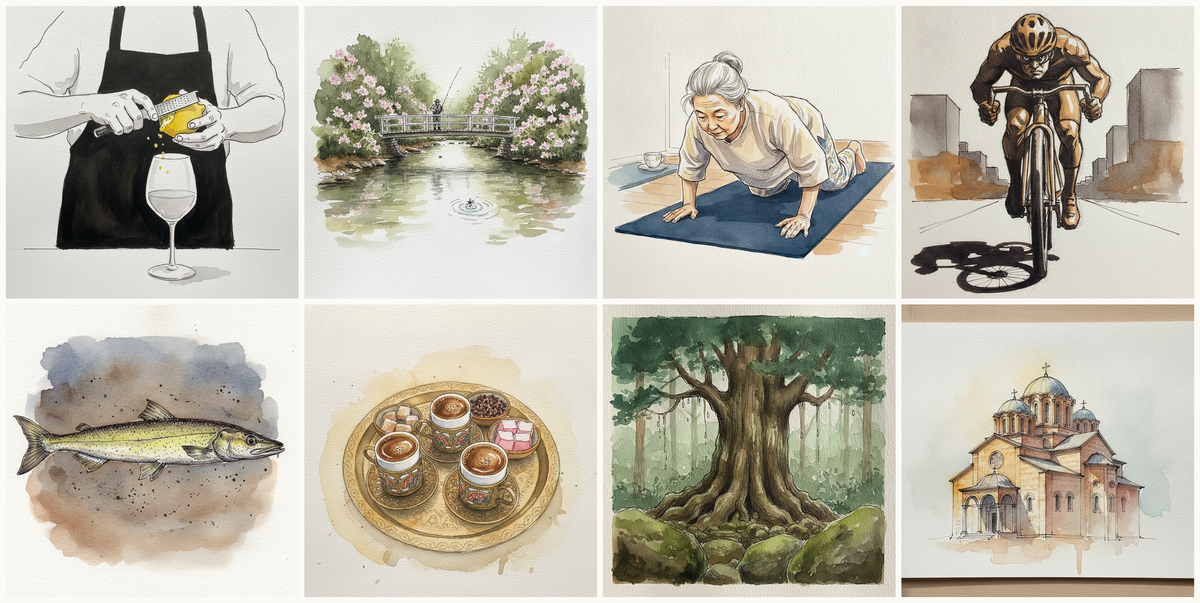
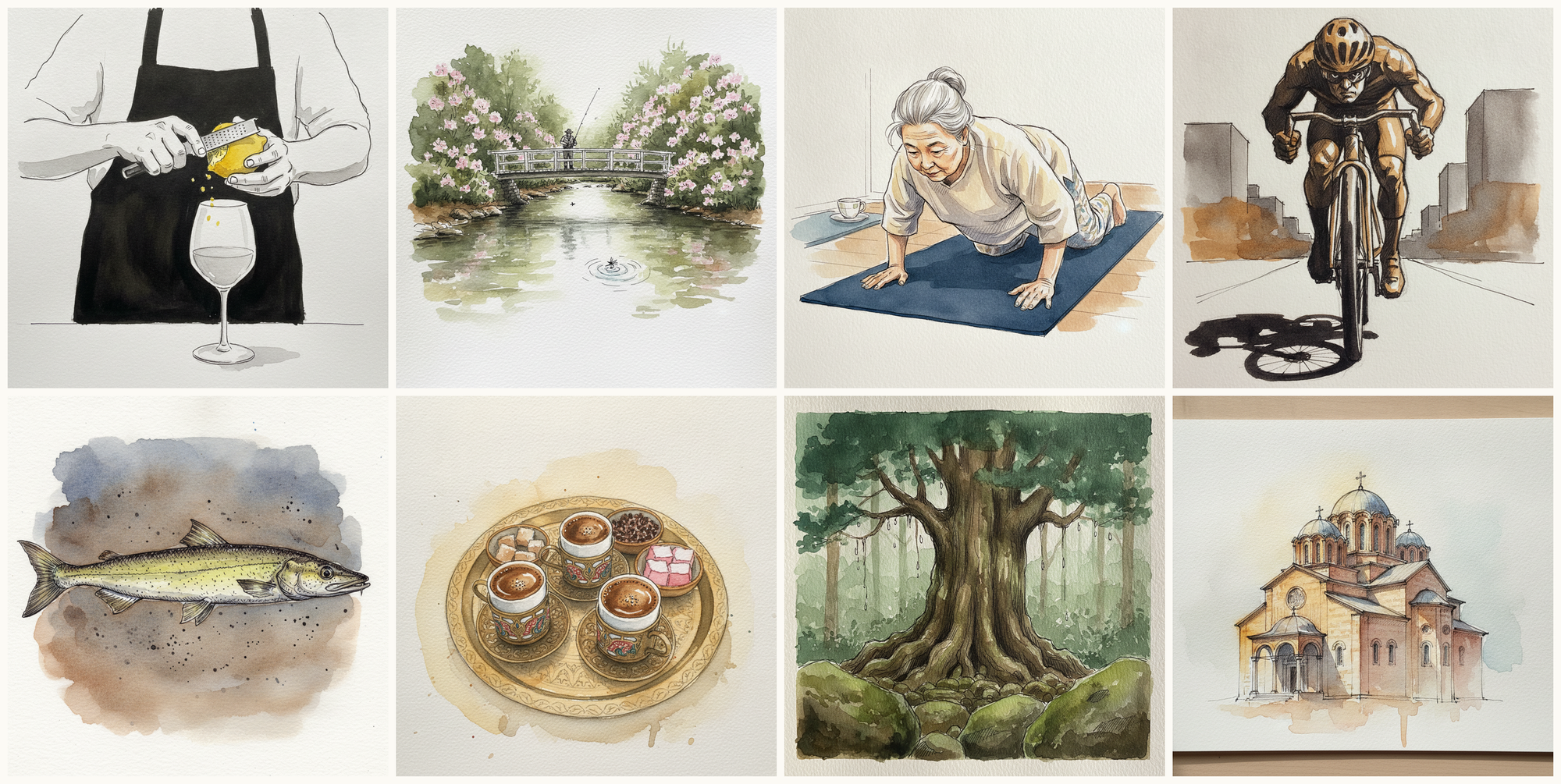
Today's 8 pen-and-watercolor pieces: Lemon being zested, Trout Stream Casting, Knee-down push-up, descent, Cyclist Charging the Camera, European hake, Tiny Turkish coffee cups with sugar cubes and dishes, Yakushima cedar forest, Japan, Gračanica Monastery, Kosovo. Each piece comes with an AI-generated photoreal reference, three AI-generated example artworks in different treatments, and a short focus paragraph naming what to study in this one.
Why these references use AI
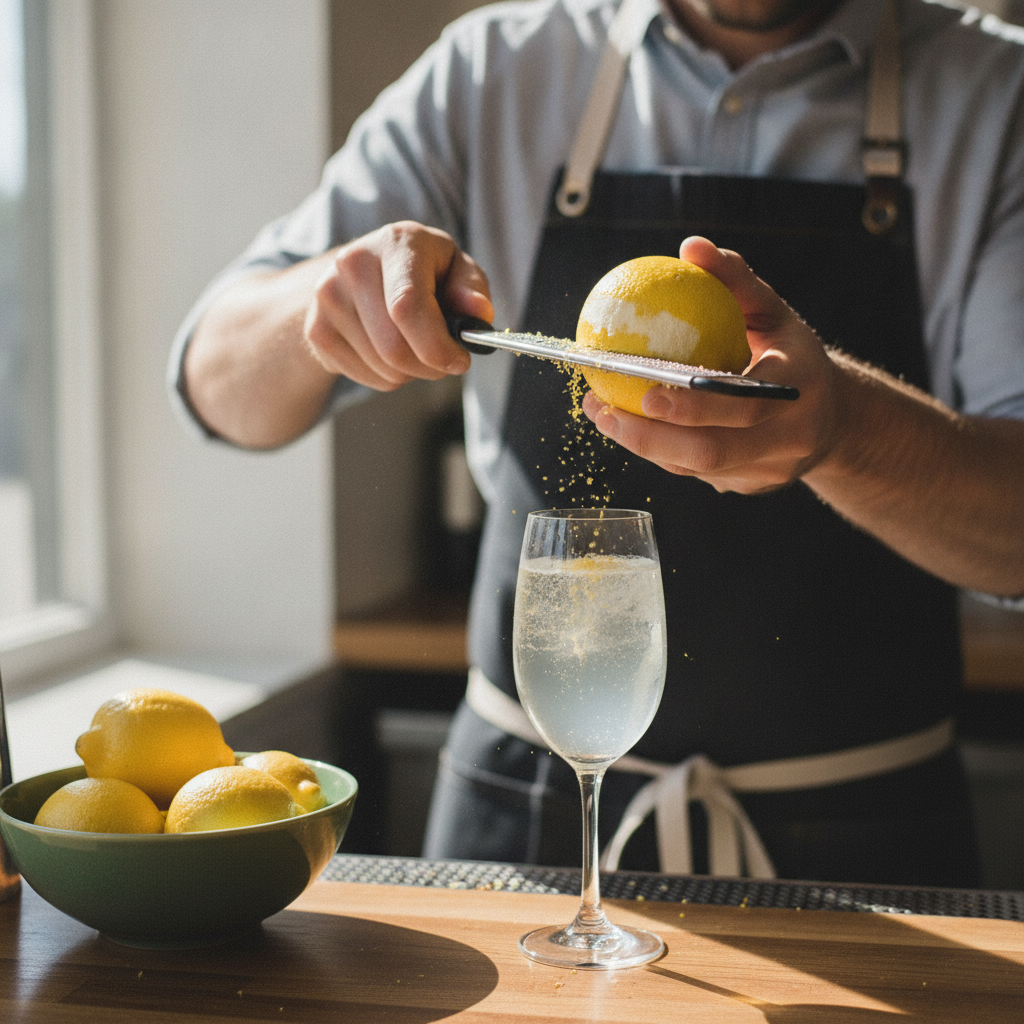
This daily series uses AI-generated images as practice prompts, not as finished artwork to copy. Each subject starts with a synthetic photoreal reference generated with Gemini/Nano Banana, then moves into three pen-and-watercolor interpretations of the same subject.
I use AI here because daily art practice needs variety and low friction. Real life can get repetitive, busy, or visually narrow. These generated reference sets make it easier to study bodies, buildings, animals, landscapes, objects, gestures, light, palettes, and compositions that might not show up in an ordinary day.
The goal is not to reproduce any image directly. Treat each set as a starting point for observation and study: choose what interests you, change the framing, simplify the subject, alter the palette, and make your own version.
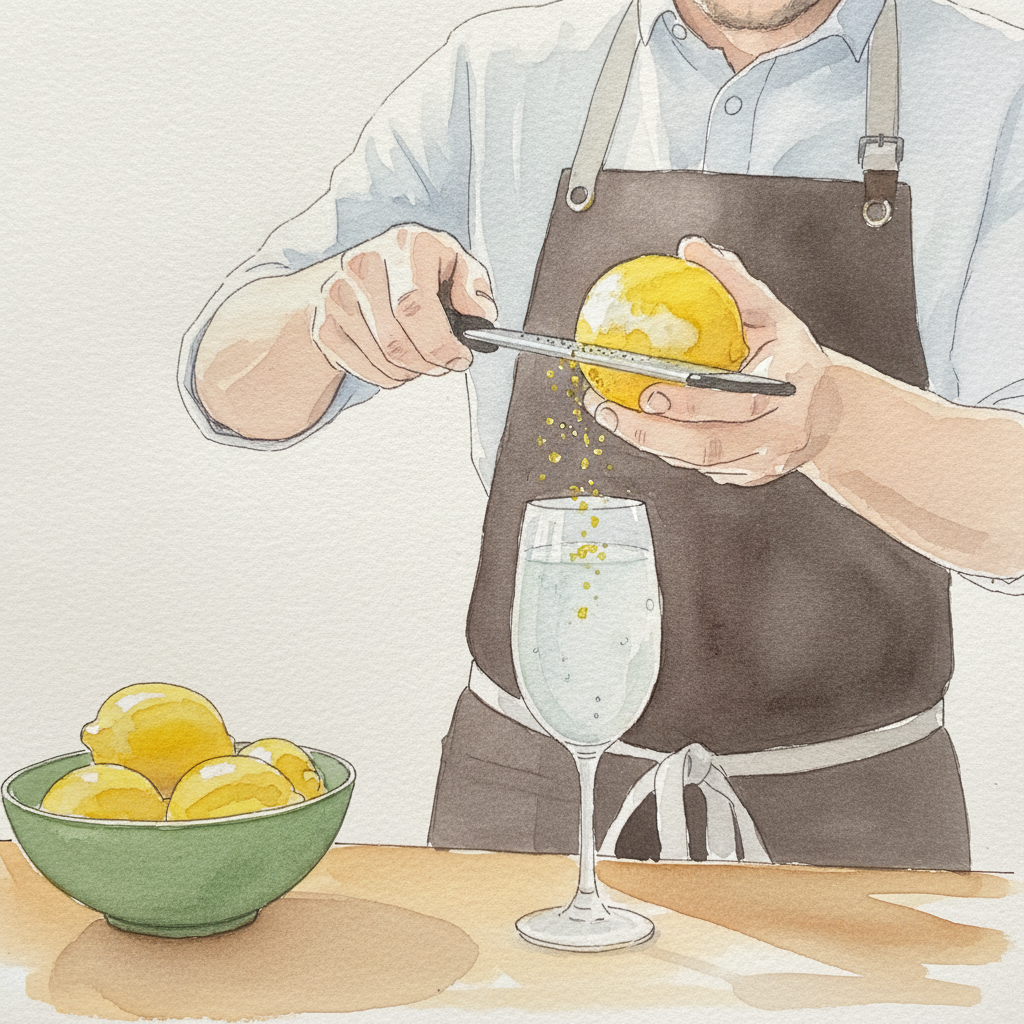
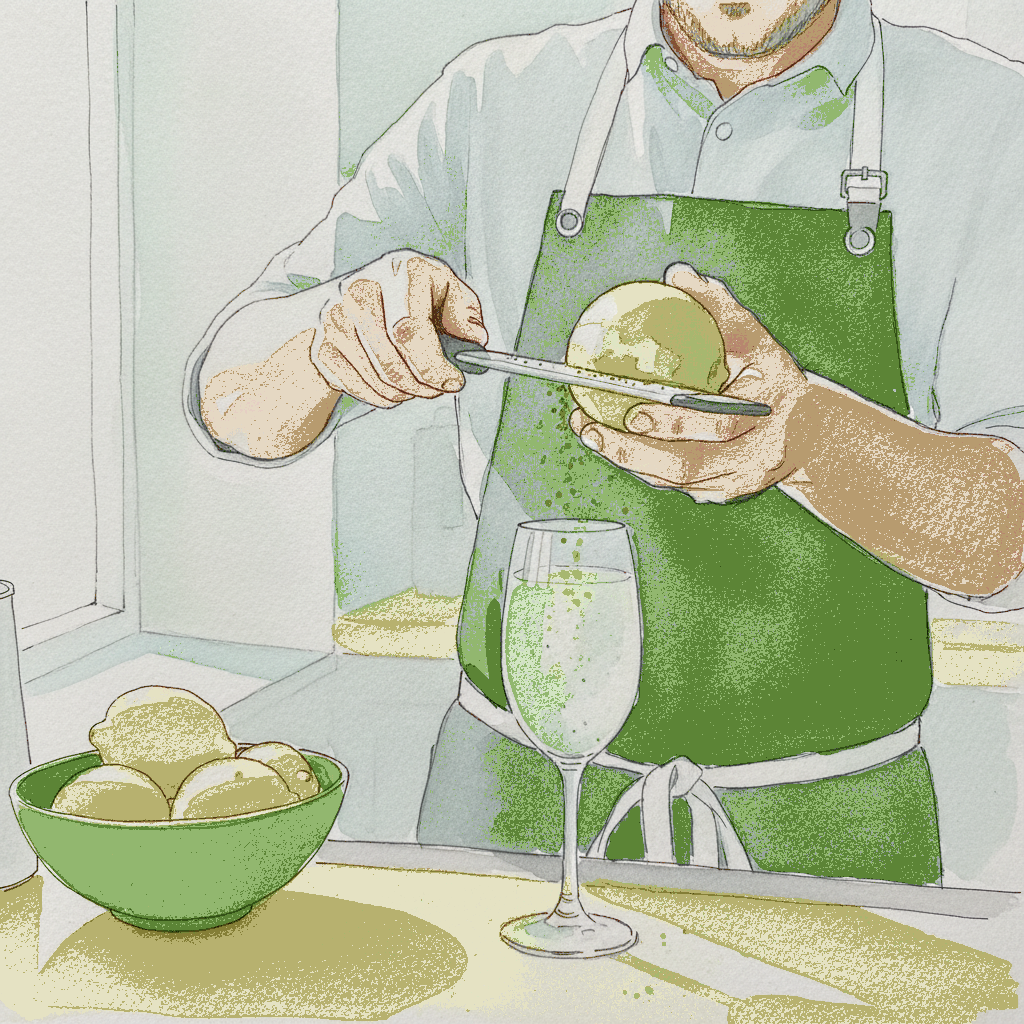
Piece 1 — Lemon being zested
Pen + Watercolor · Loose pen and watercolor line-and-wash
Three takes

Focus for this piece
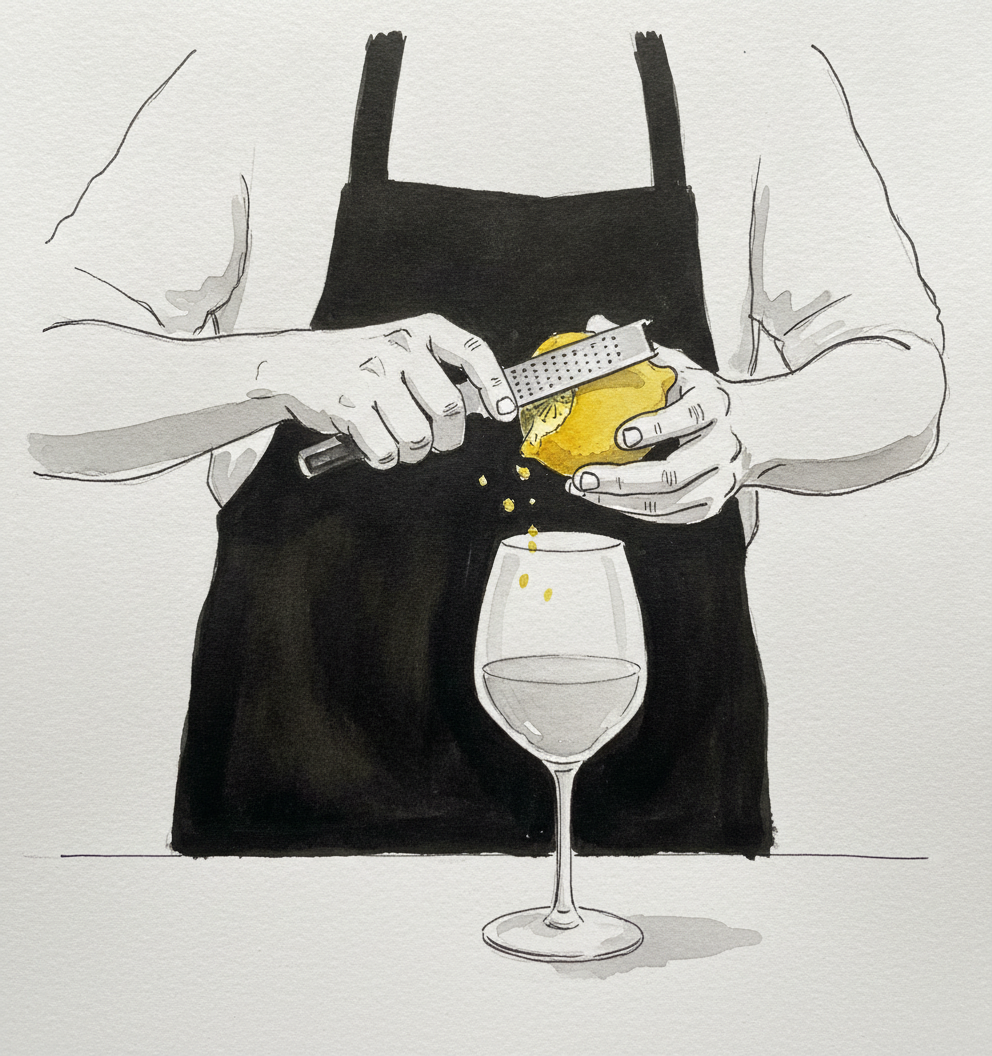
This piece is a fantastic study in articulating diverse textures and edges within a single composition. Focus on rendering the substantial forms of the lemon and the metallic microplane with confident contour lines and layered washes, contrasting this with the delicate, diffused quality of the drifting zest. For the French 75, explore wet-into-wet techniques to convey its effervescence and translucency, allowing line and wash to interact to define both form and atmosphere.
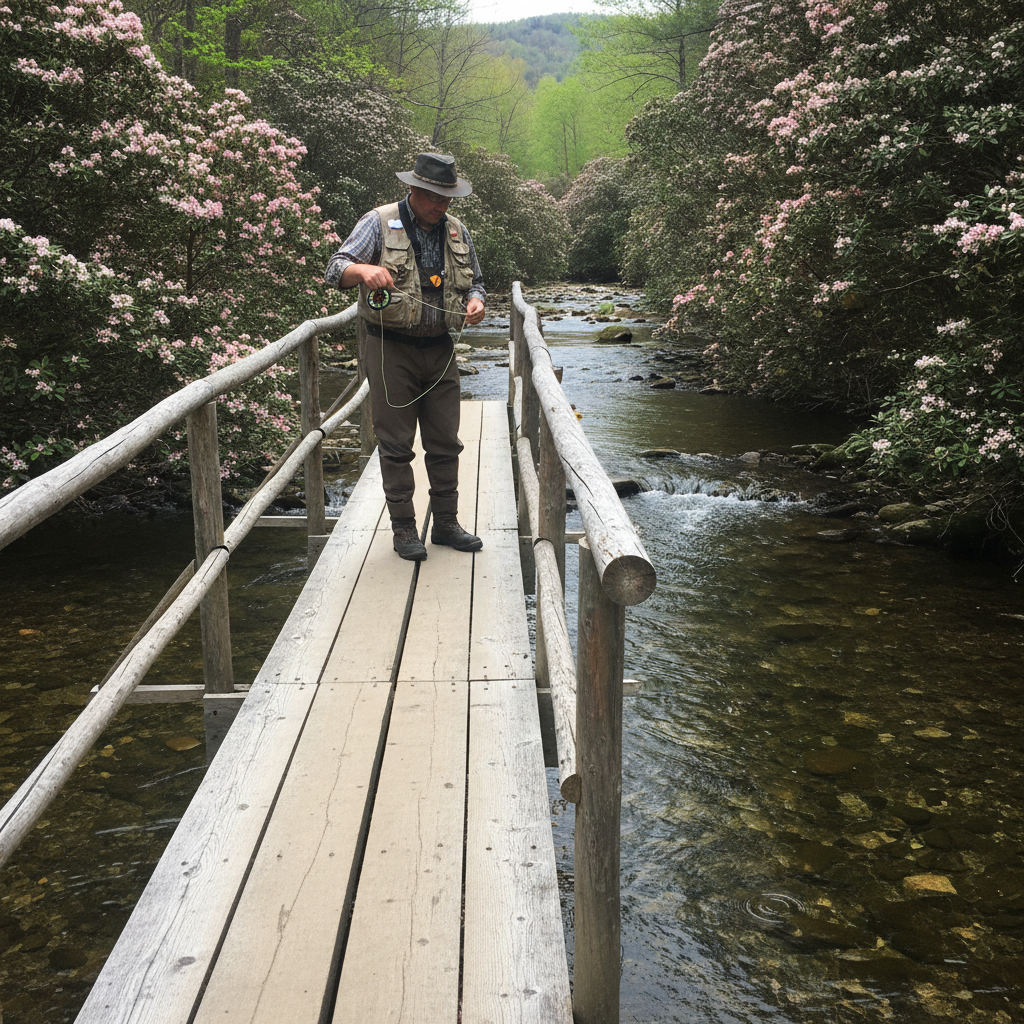
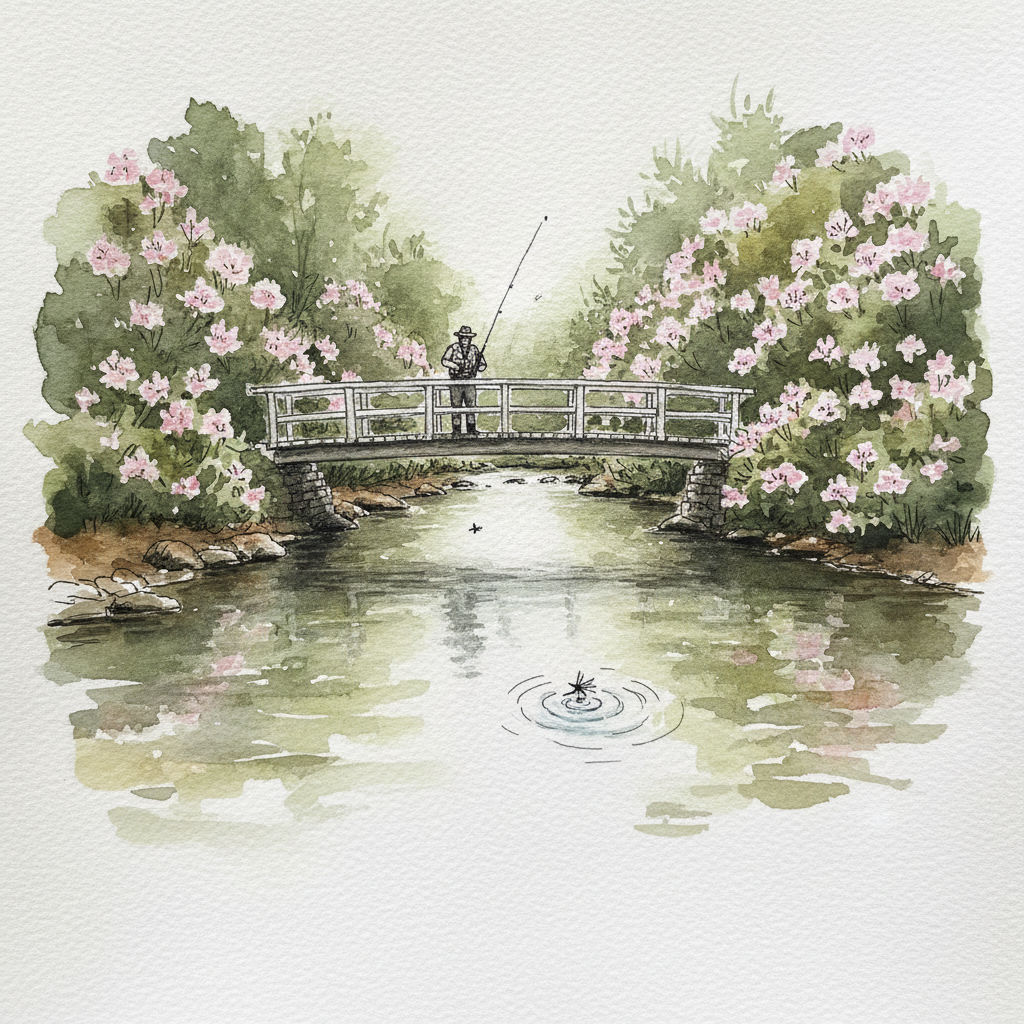
Piece 2 — Trout Stream Casting
Pen + Watercolor · Loose pen and watercolor line-and-wash
Three takes
Focus for this piece
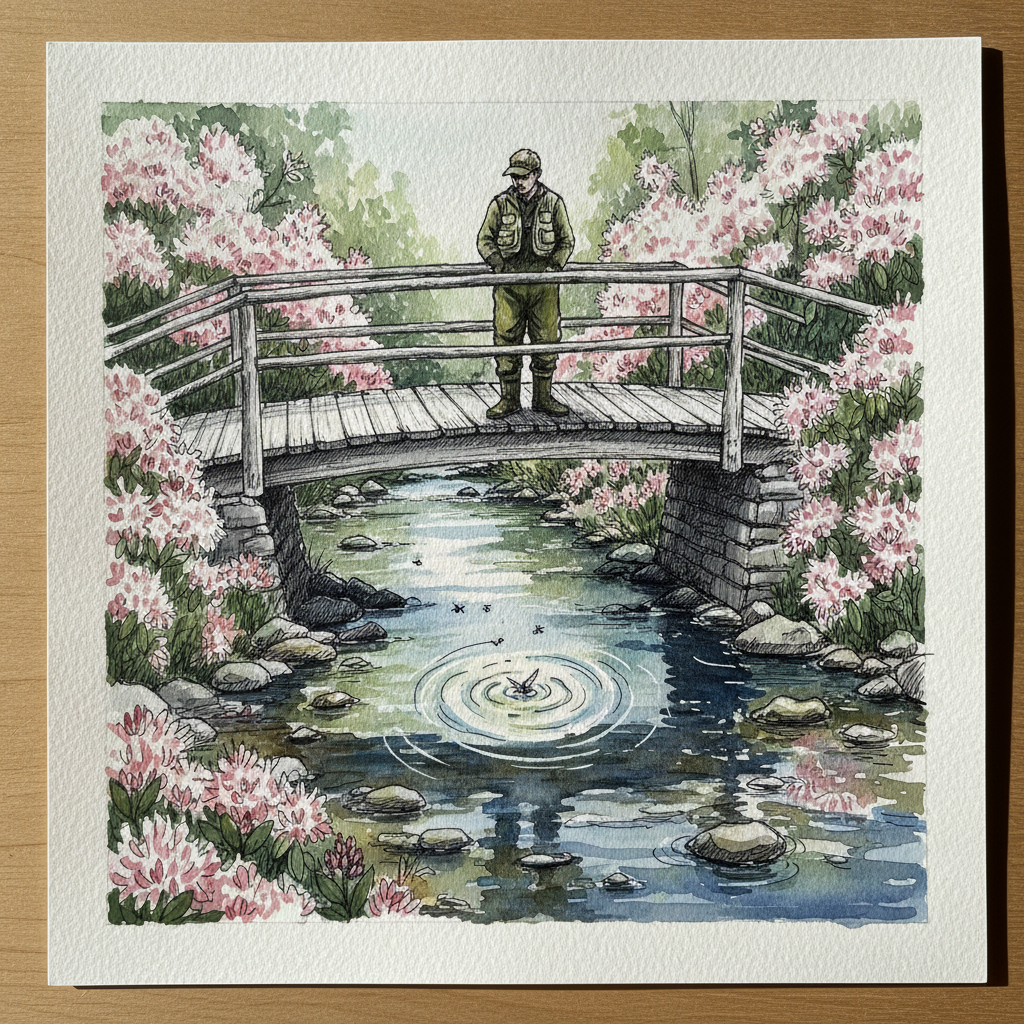
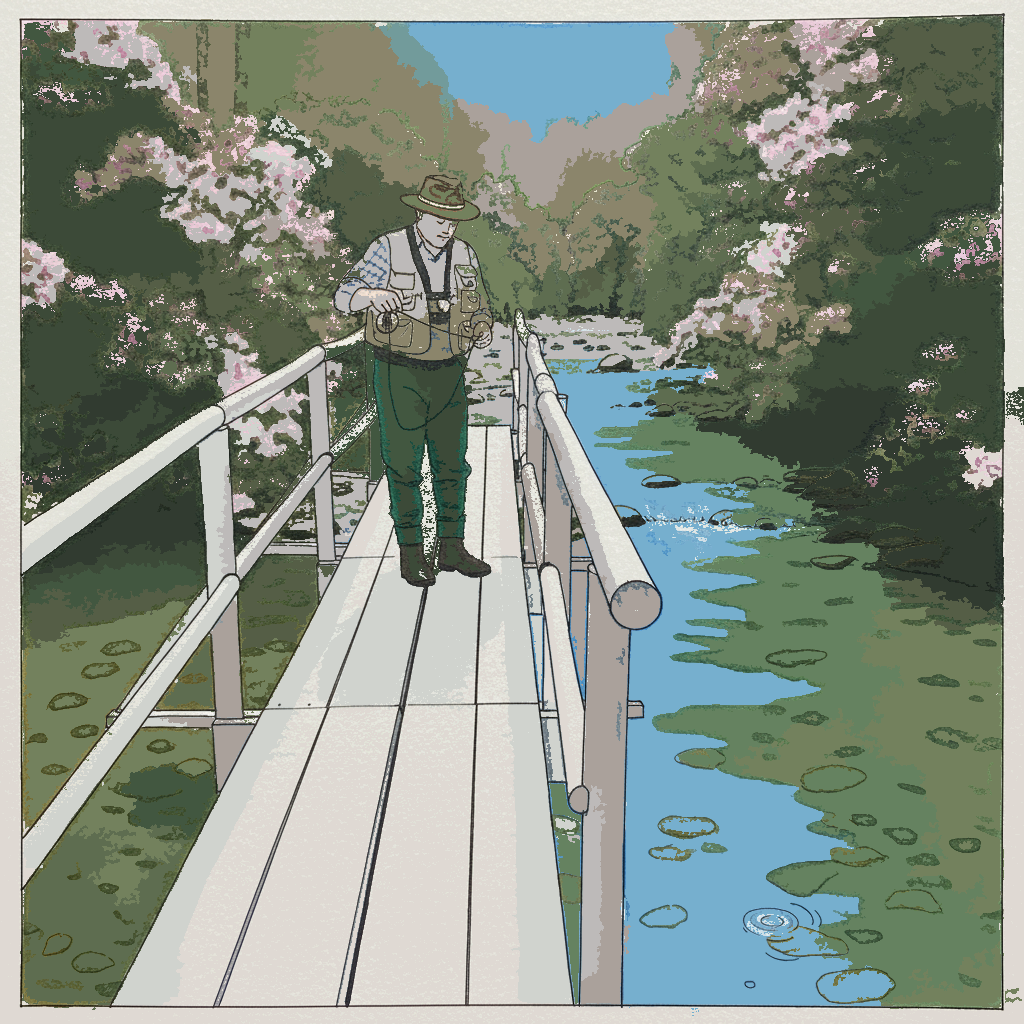
For this piece, focus on the interplay of line and wash to render contrasting textures and transparencies. Use varied pen weights and broken lines to define the silvered wood and peeled cedar of the bridge, while employing soft, wet-into-wet washes with olive and cool greys to convey the stream's clear, flowing water and the depth of the algae-slicked stones.
Piece 3 — Knee-down push-up, descent
Pen + Watercolor · Loose pen and watercolor line-and-wash
Three takes

Focus for this piece
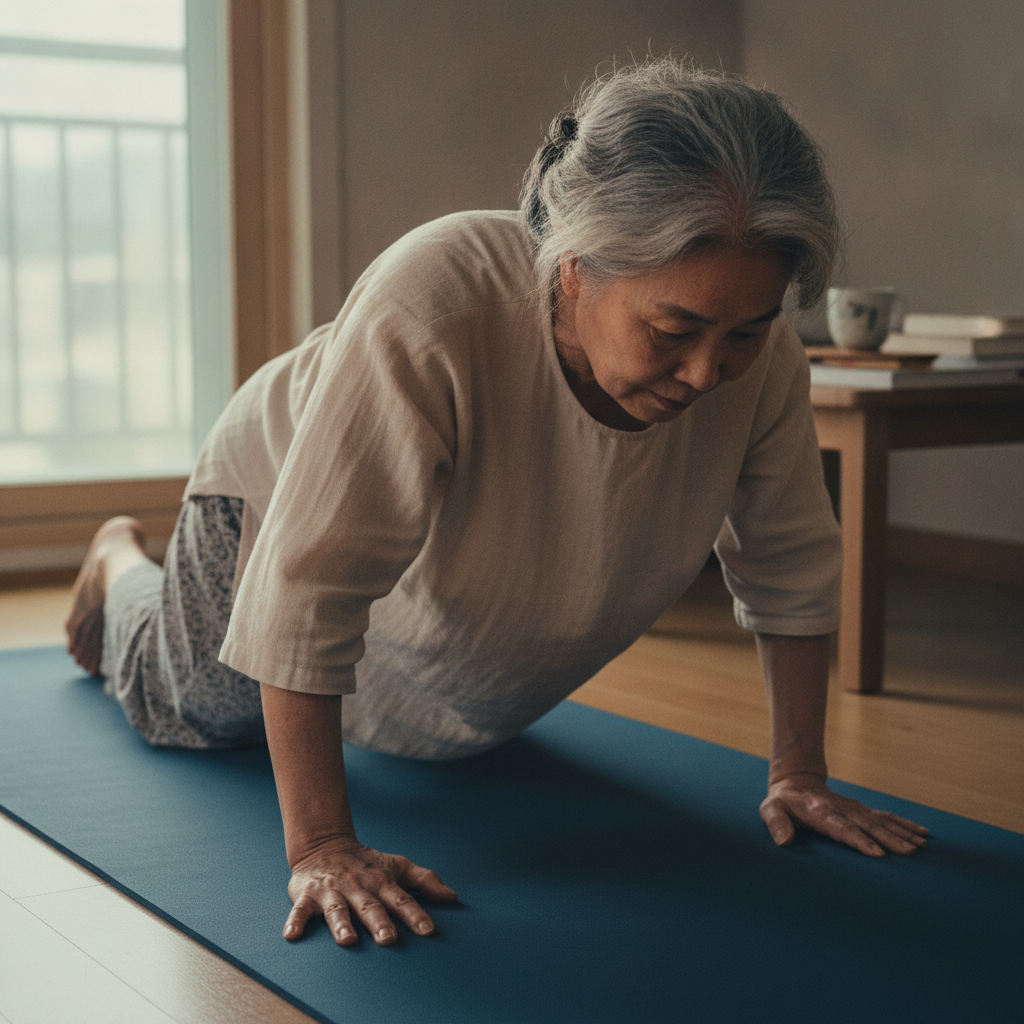
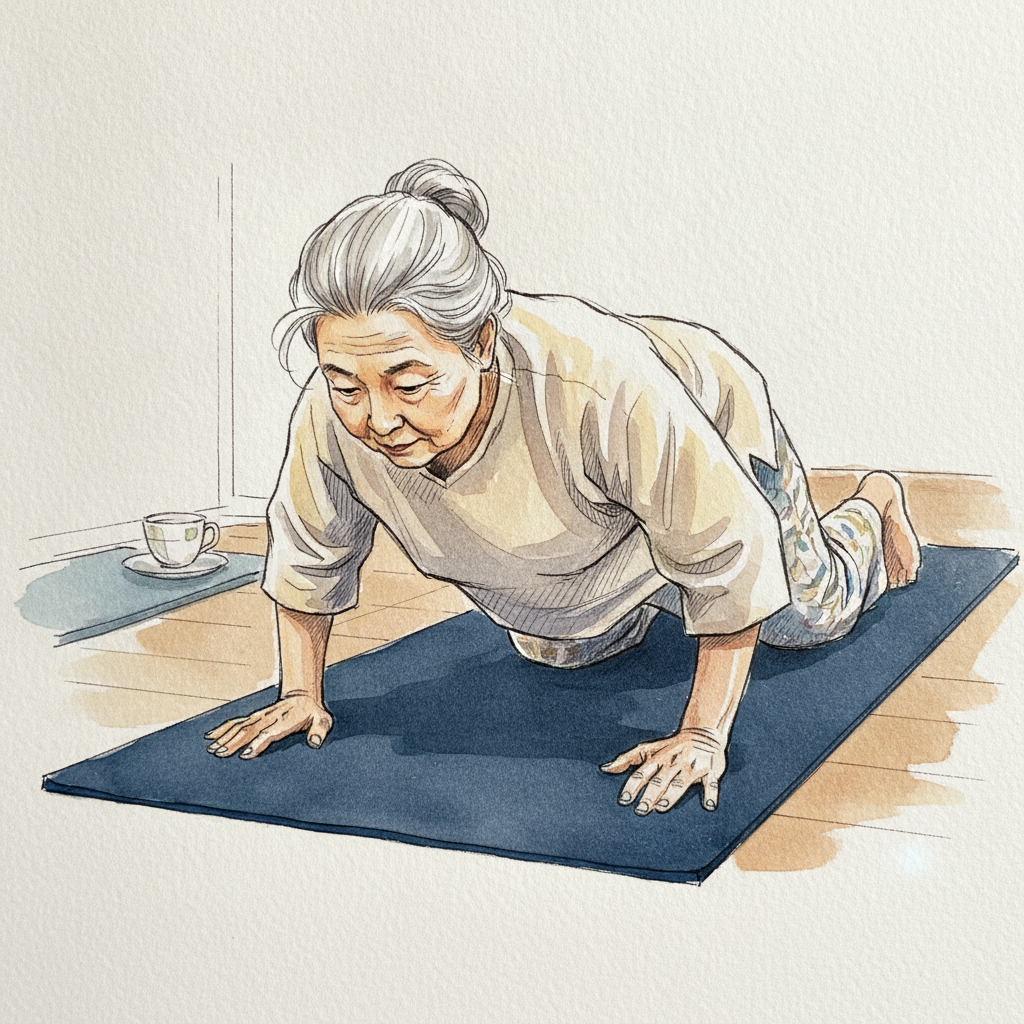
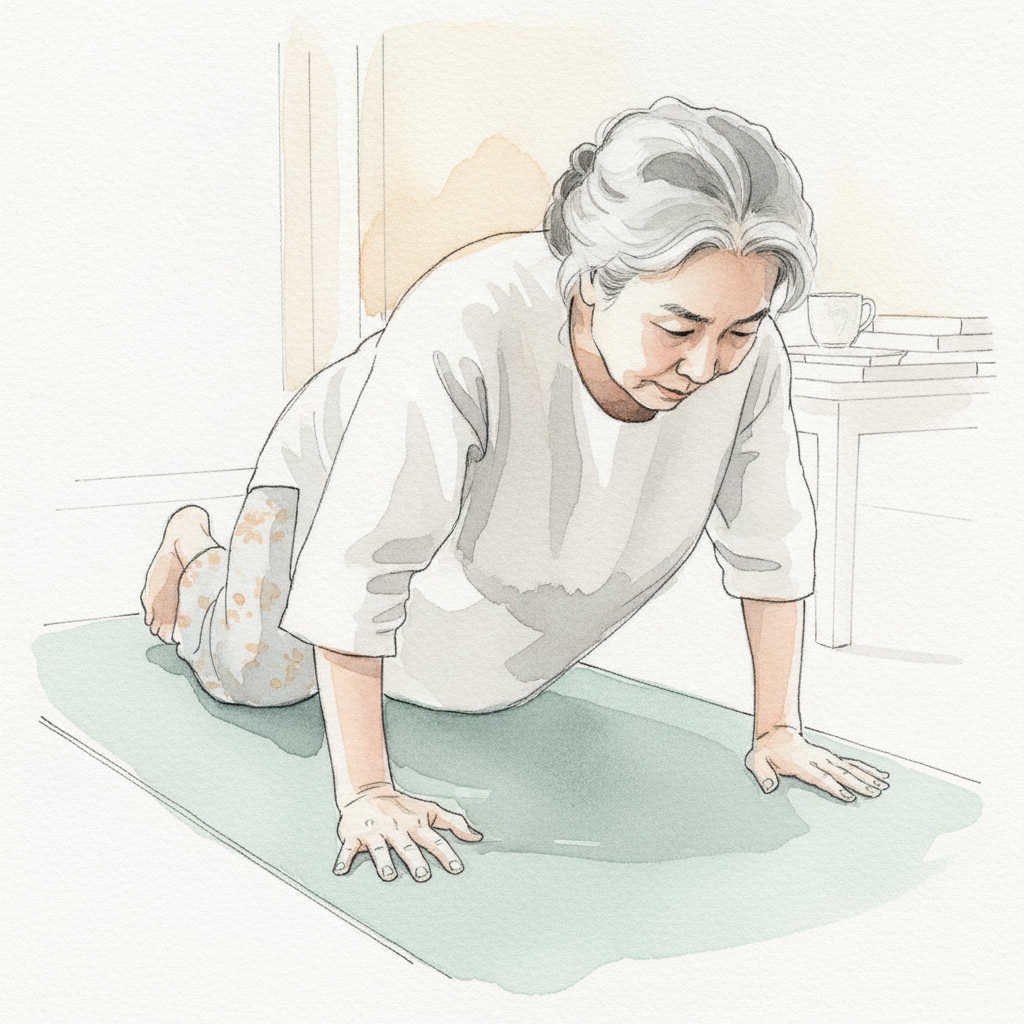
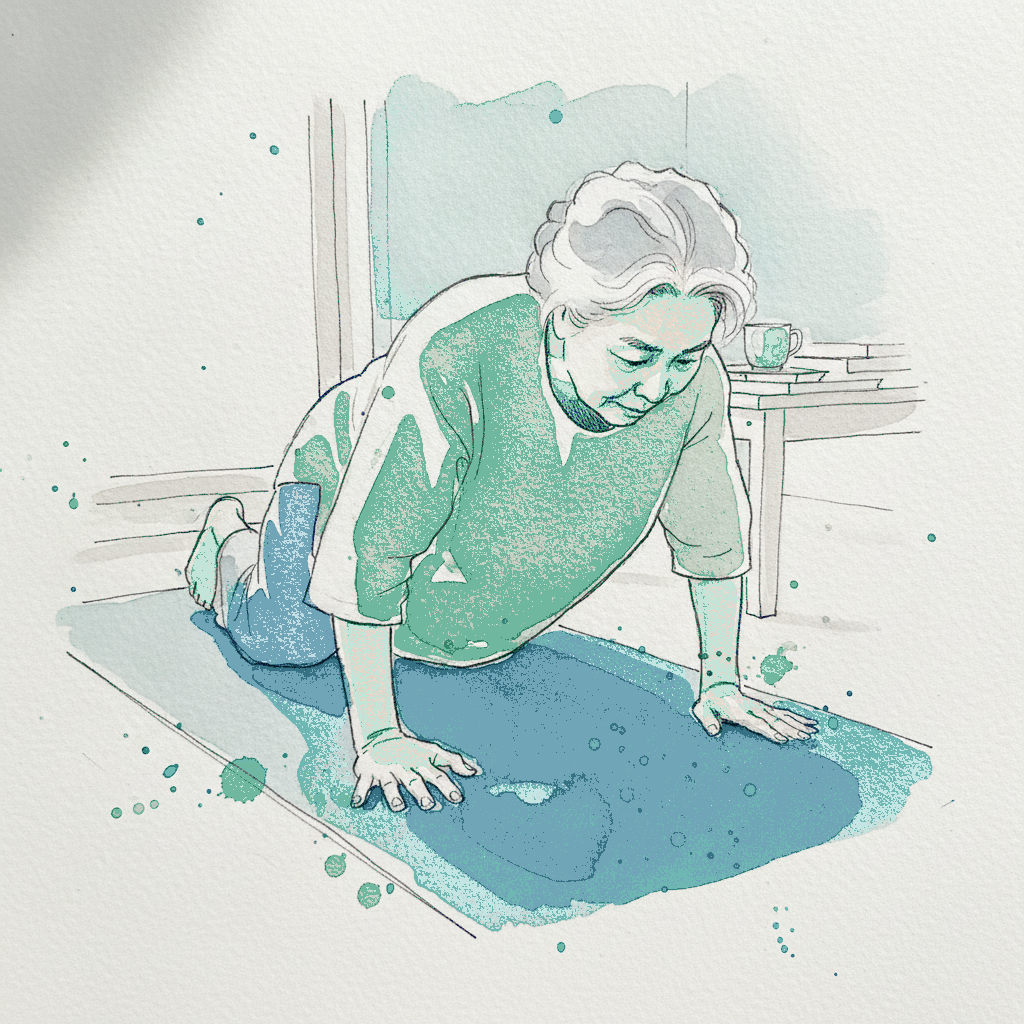
This piece offers a compelling study in contrasting textures and the subtle communication of movement. Use varied line weights to articulate the gentle tension and slowness of the figure's descent, reserving finer, broken lines for the soft fabric folds and silver hair. Build form and light with delicate, layered washes that enhance the figure's rounded contours, creating a soft contrast against the implied rigid plane of the yoga mat and the distant teacup.
Piece 4 — Cyclist Charging the Camera
Pen + Watercolor · Loose pen and watercolor line-and-wash
Three takes
Focus for this piece
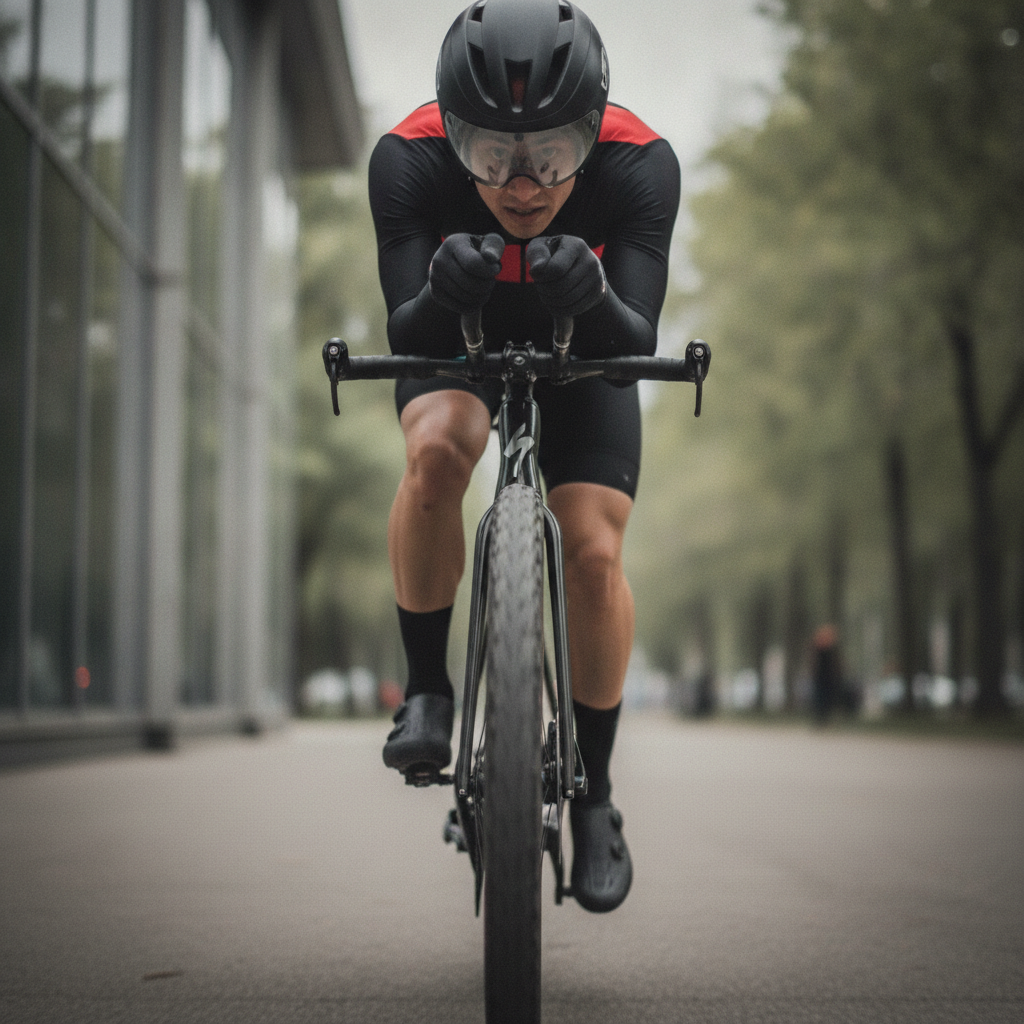
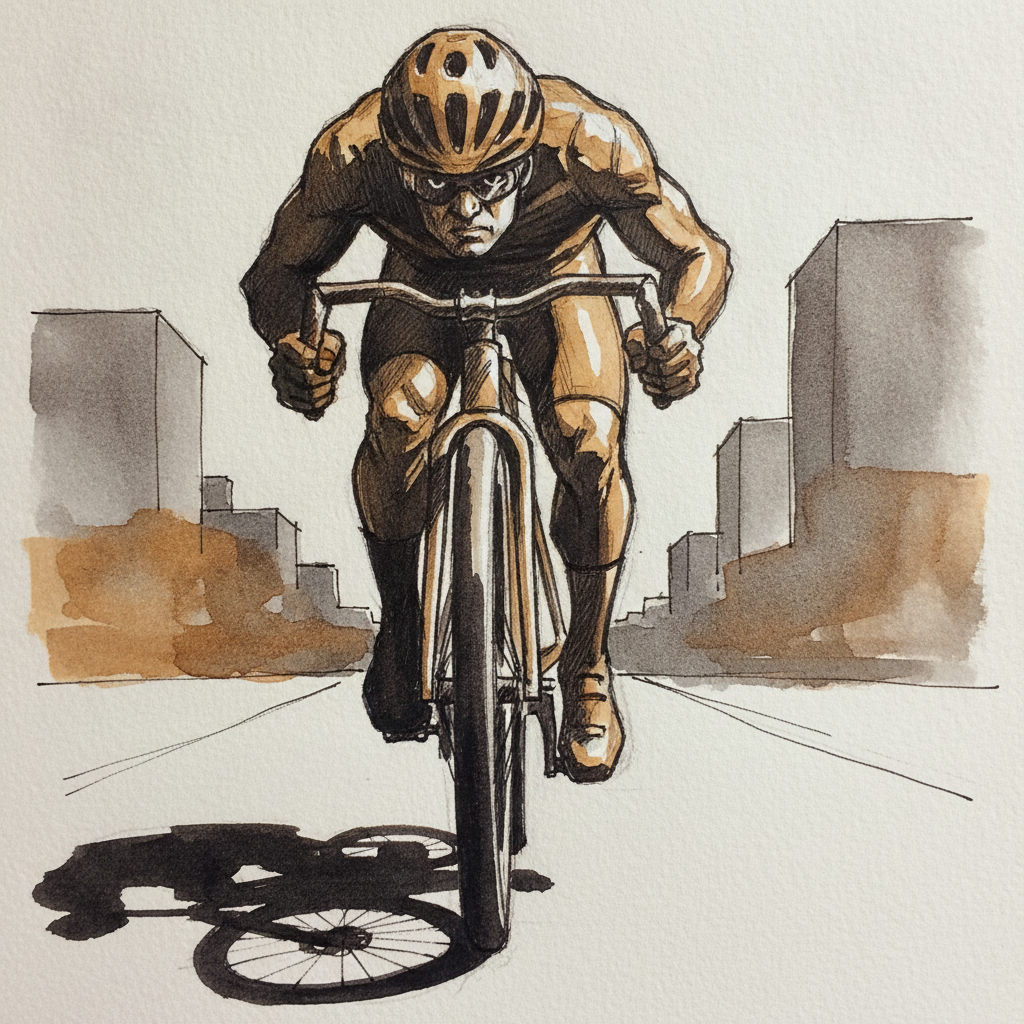
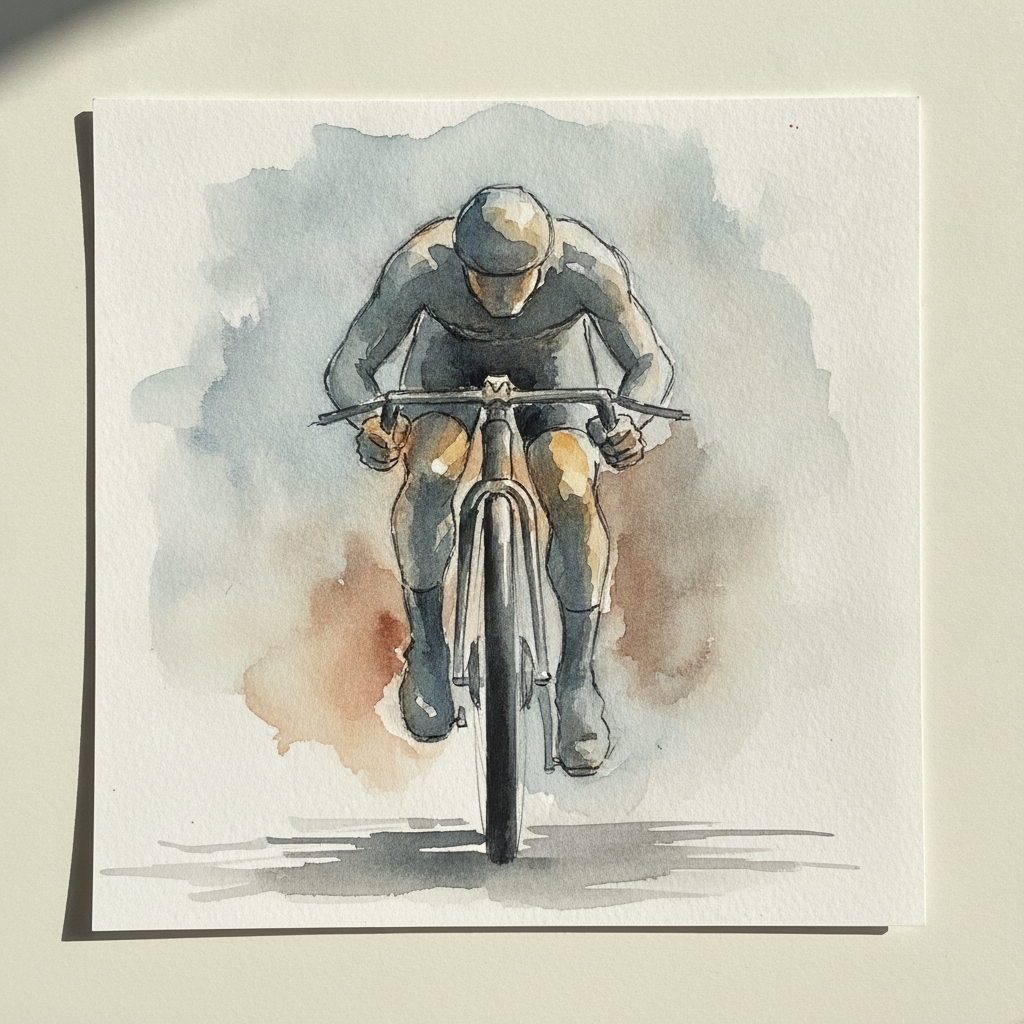
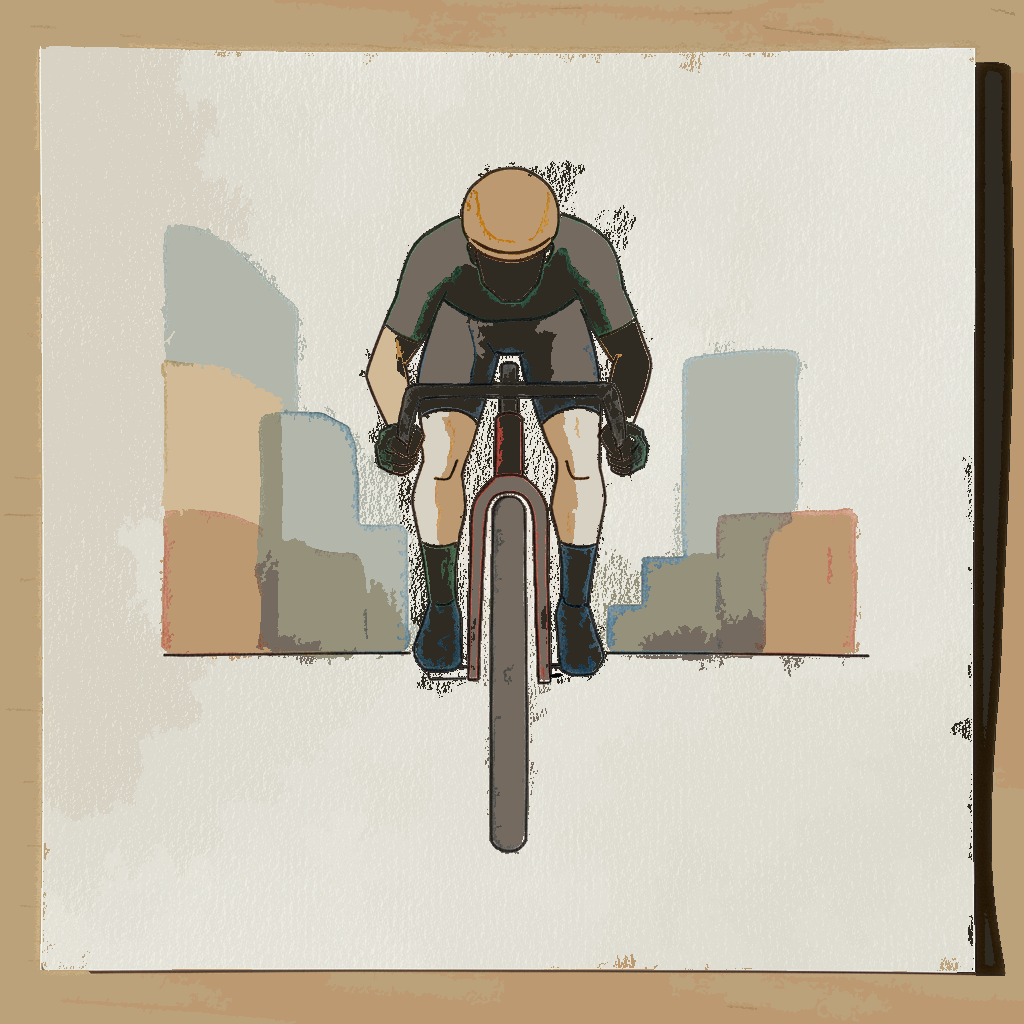
This dynamic piece is perfect for studying extreme foreshortening and how line weight conveys depth and speed. Emphasize the colossal front wheel and wide handlebars with bold, dark pen lines in the foreground, letting lines for the bike frame and compressed rider lighten and simplify as they recede. Use quick, directional watercolor washes to suggest motion blur around the wheels and background, reinforcing the aggressive forward charge.
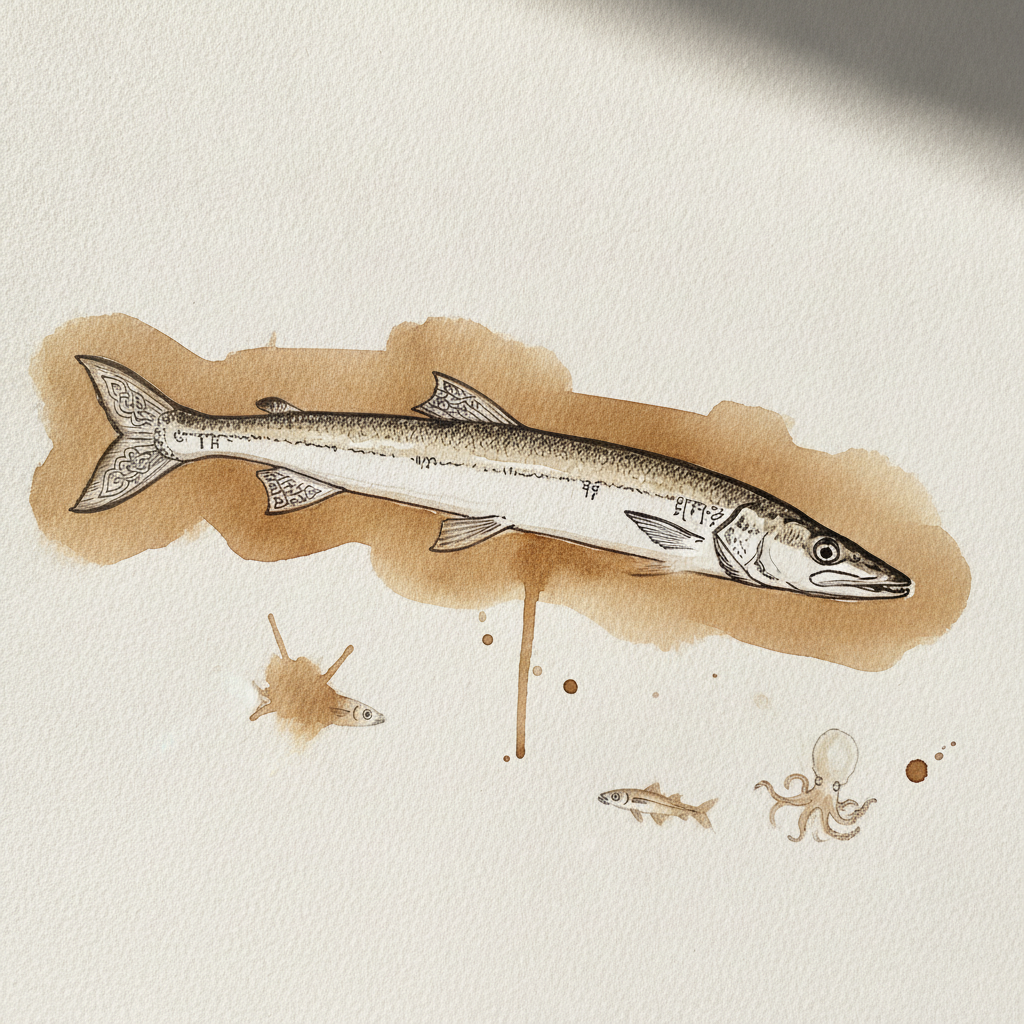
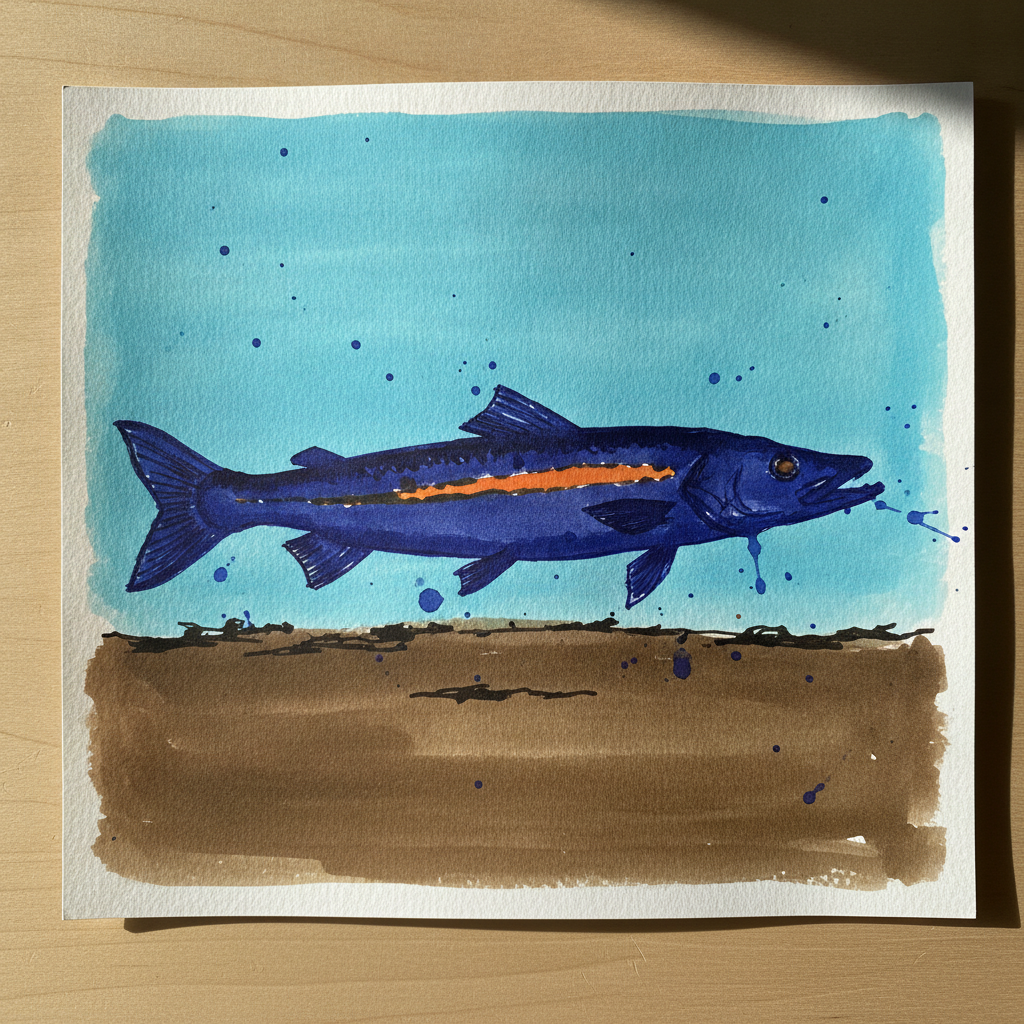
Piece 5 — European hake
Pen + Watercolor · Loose pen and watercolor line-and-wash
Three takes
Focus for this piece
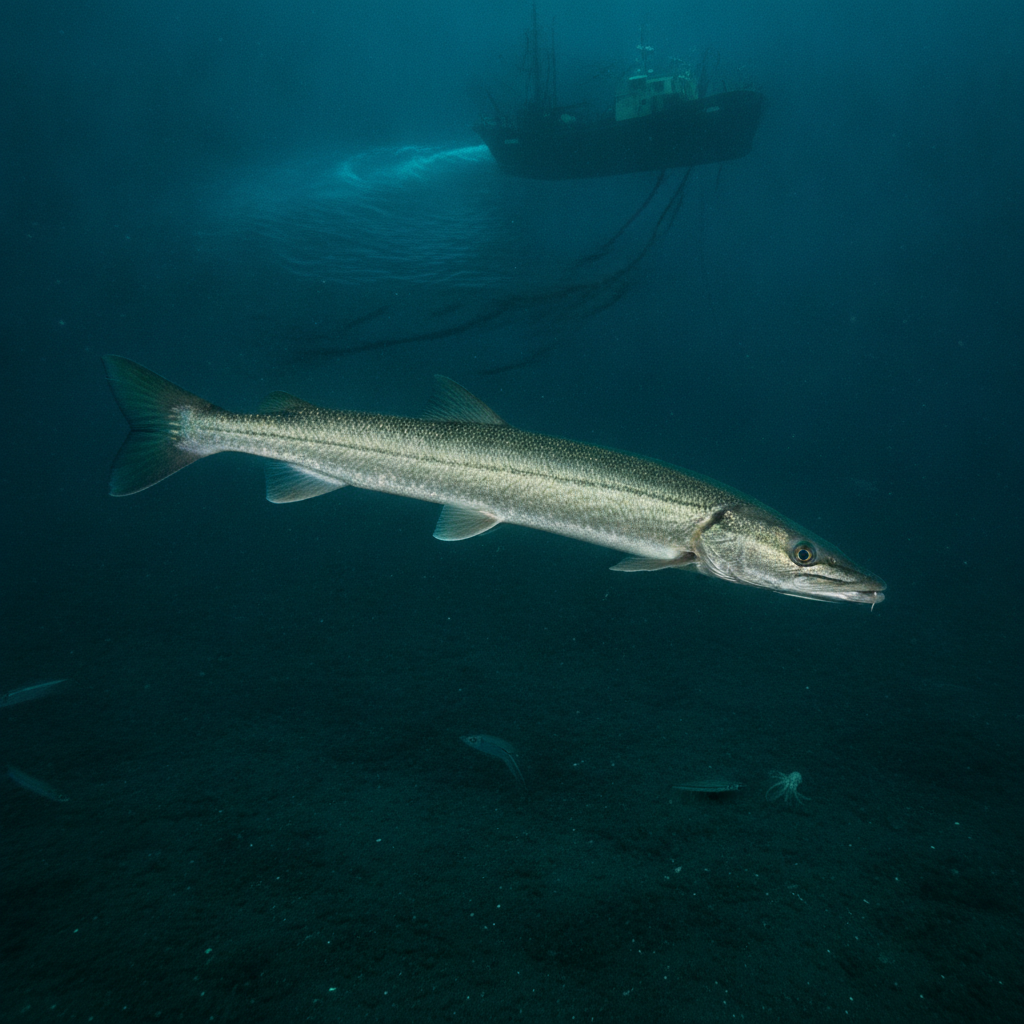
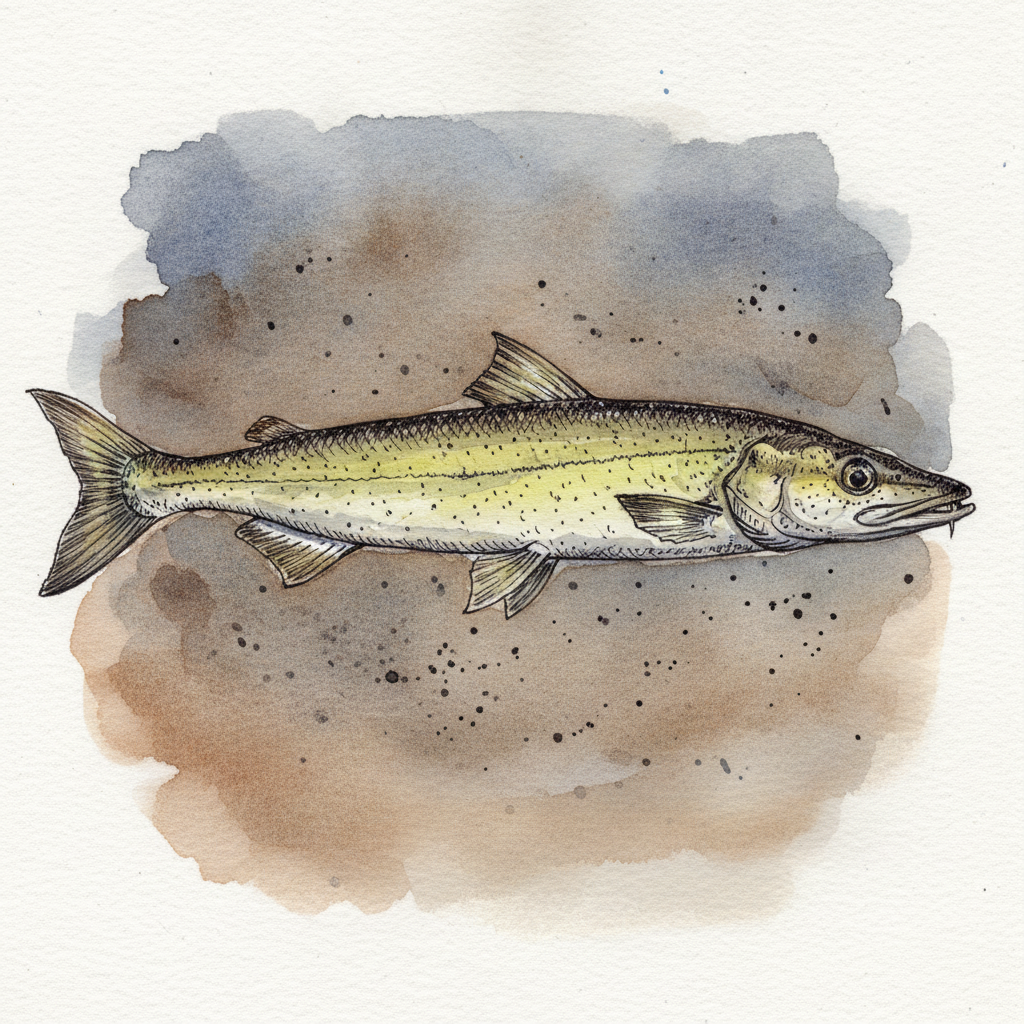
This piece offers a great opportunity to explore the interplay of soft washes and precise lines to depict a subject in a fluid environment. Begin with layered, cool wet-on-wet washes to establish the deep, muddy water and the hake's initial shape and volume. Then, use delicate, varied ink lines to define the sinuous body and highlight features like the sensitive lateral line, ensuring the line work complements the soft, atmospheric quality of the watercolor.
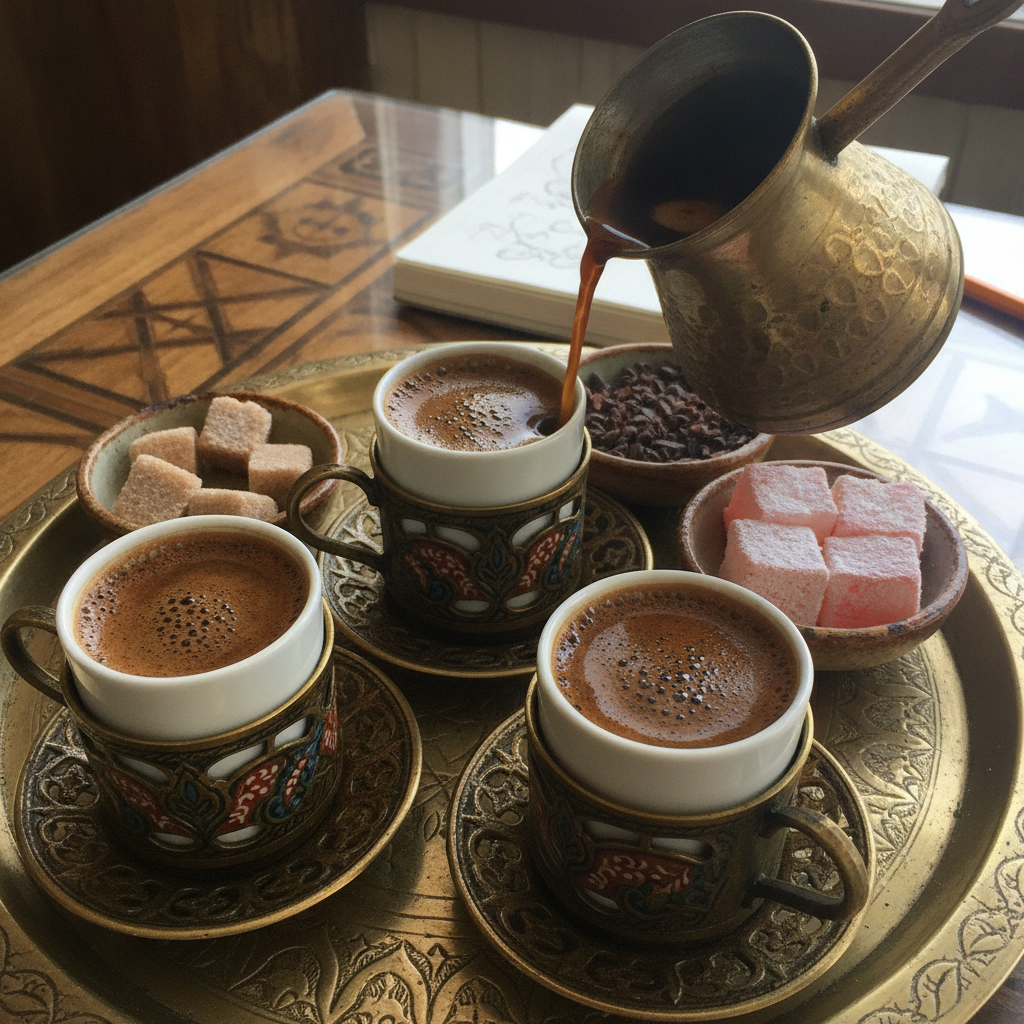
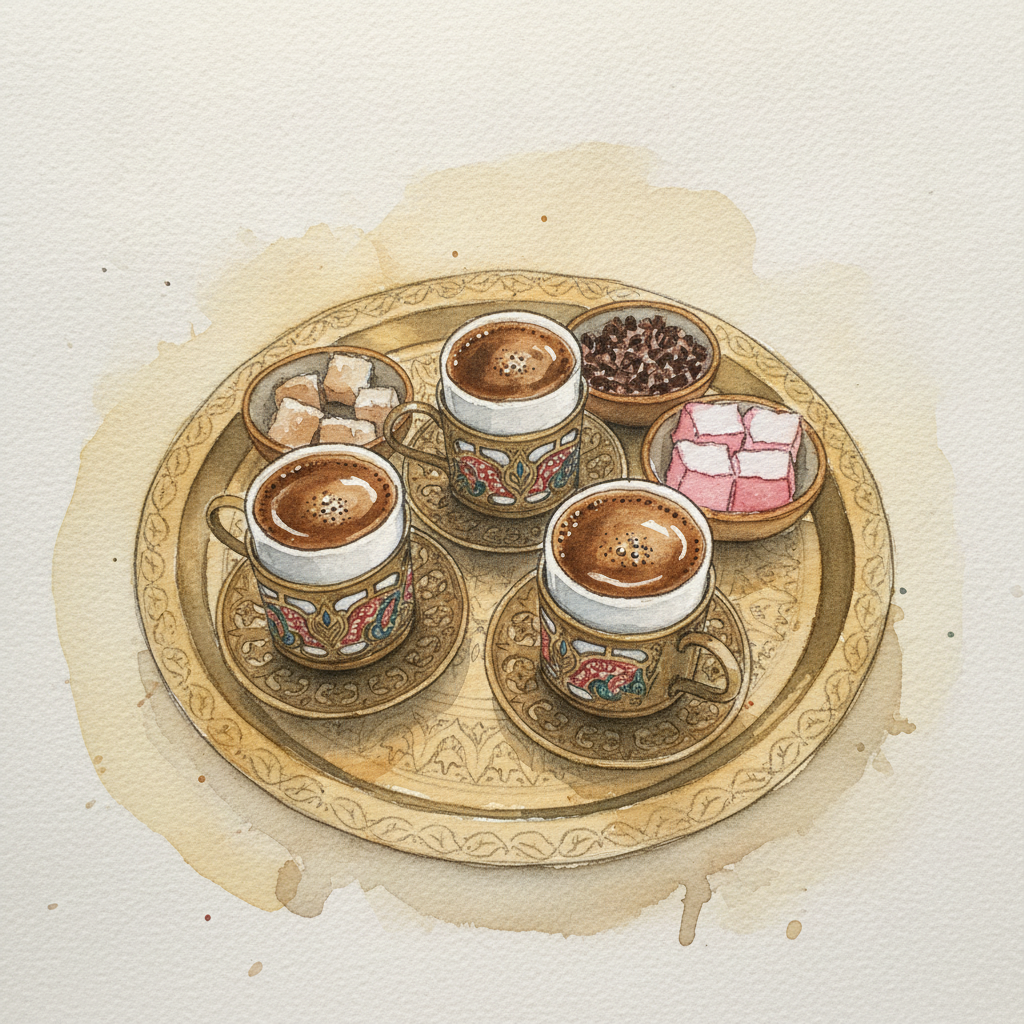
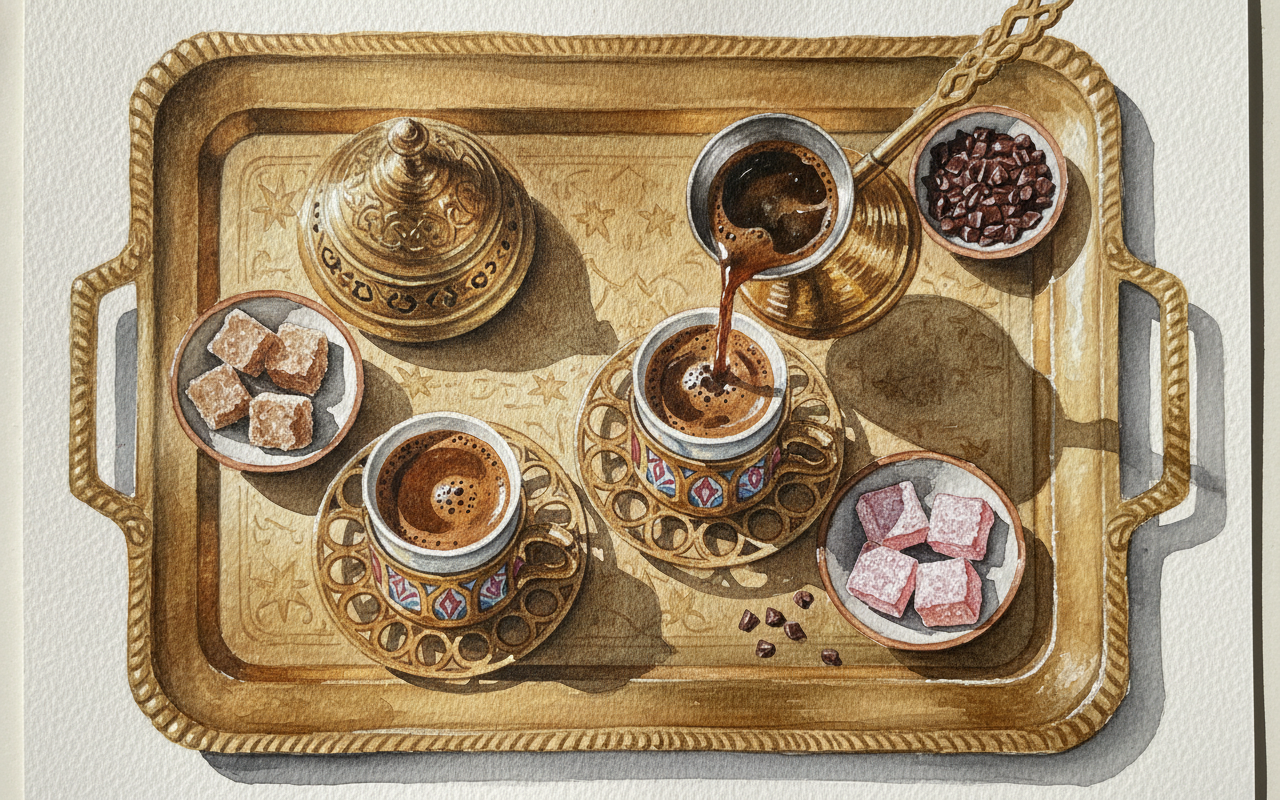
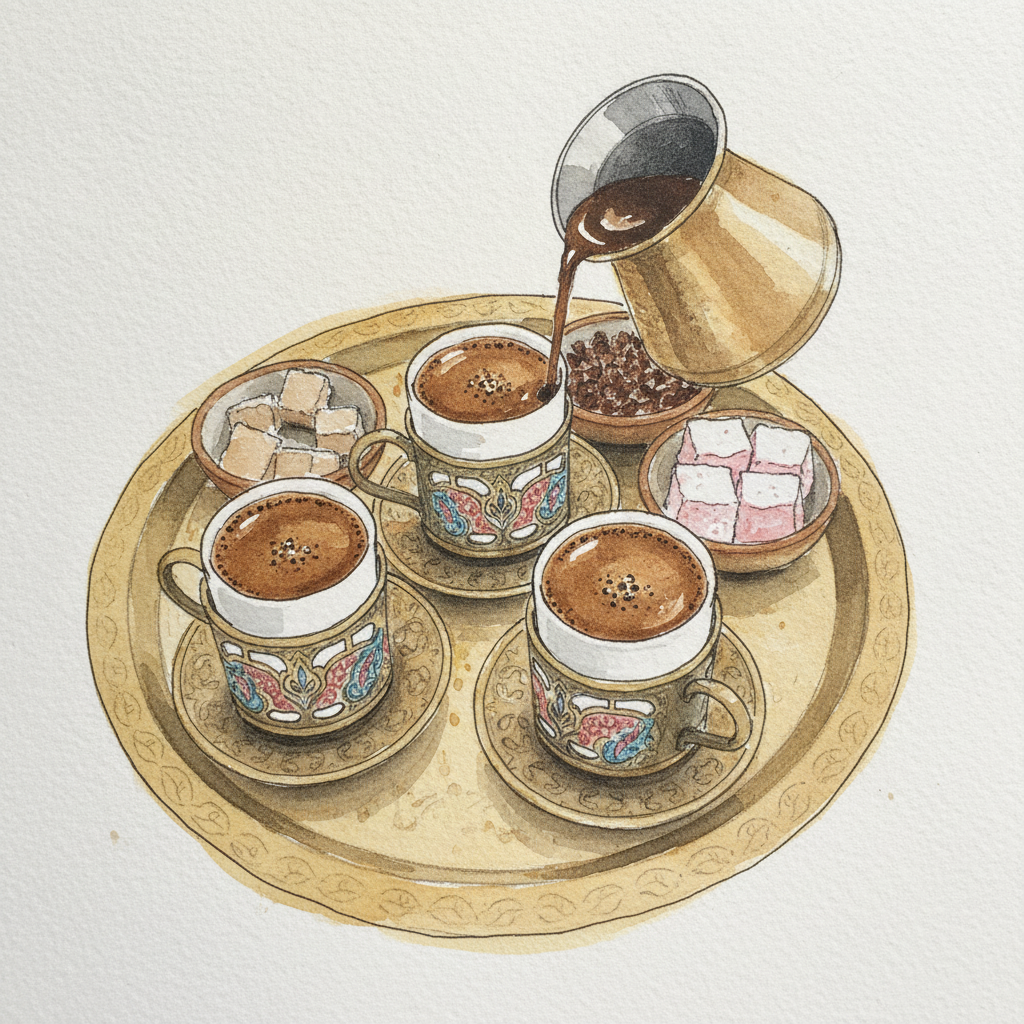
Piece 6 — Tiny Turkish coffee cups with sugar cubes and dishes
Pen + Watercolor · Loose pen and watercolor line-and-wash
Three takes
Focus for this piece
This study offers a fantastic opportunity to differentiate subtle textures and reflective surfaces. Focus on using varied line weights to define the crisp edges of the porcelain cups and sugar cubes, while employing delicate, broken lines and layered washes to capture the gleam of the engraved brass tray and zarf holders. Pay close attention to how light interacts with the diverse materials—from the powdery sugar to the smooth Turkish delight—using watercolor's fluidity to suggest volume and pen's precision for intricate details like the Ottoman motifs.
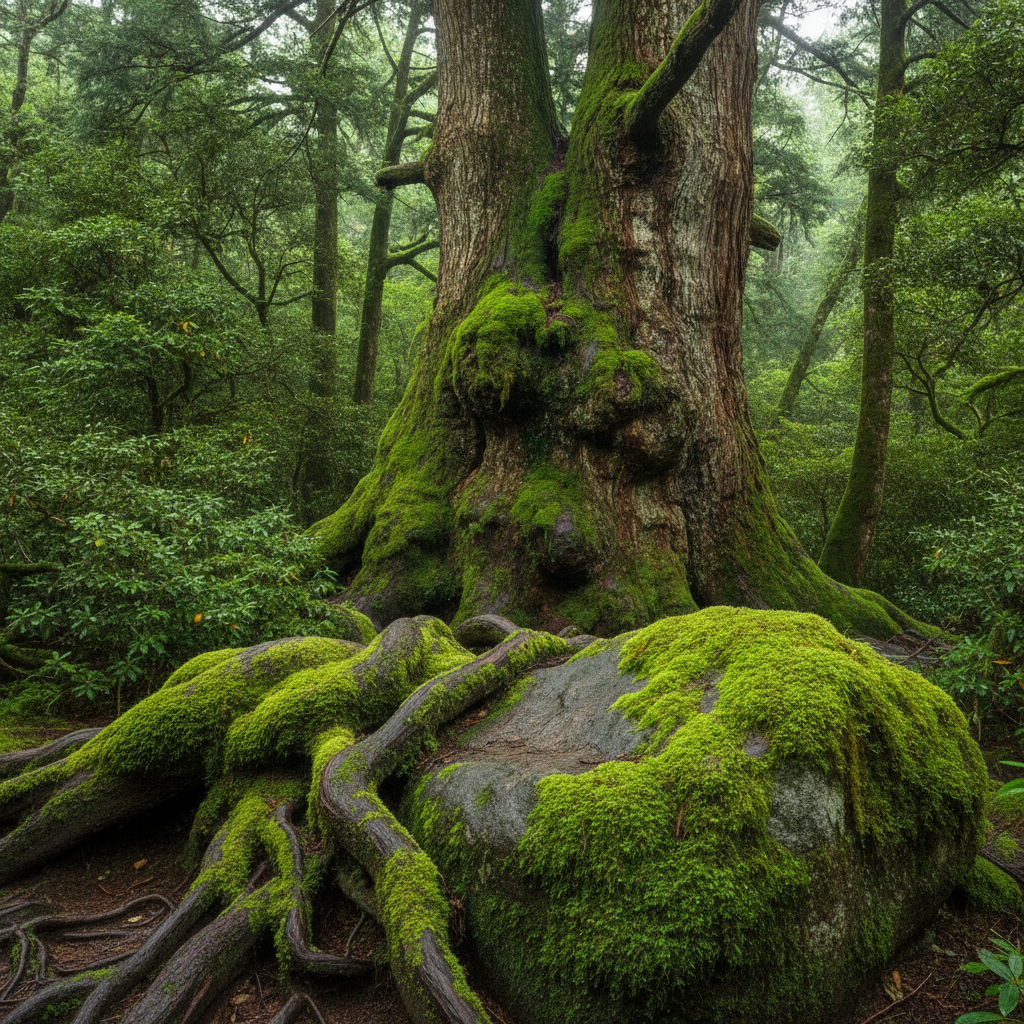
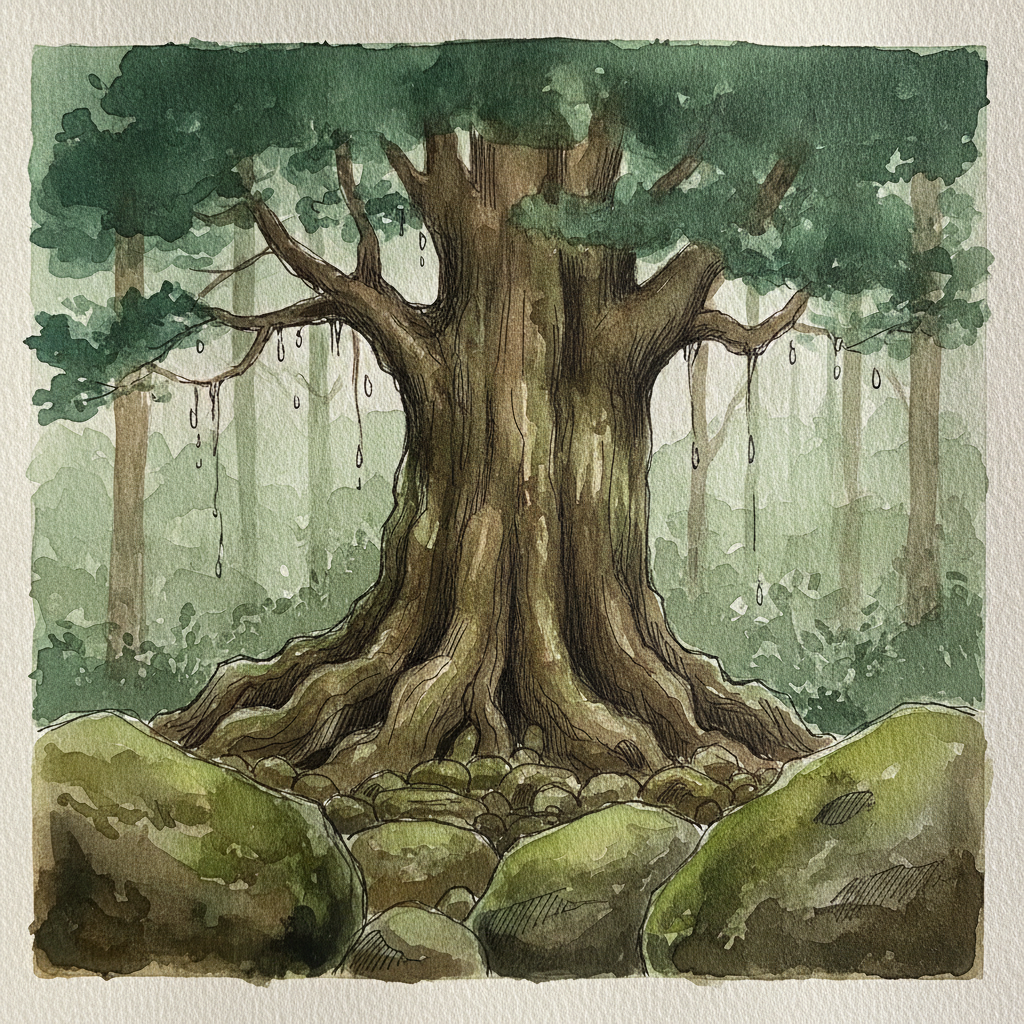
Piece 7 — Yakushima cedar forest, Japan
Pen + Watercolor · Loose pen and watercolor line-and-wash
Three takes

Focus for this piece
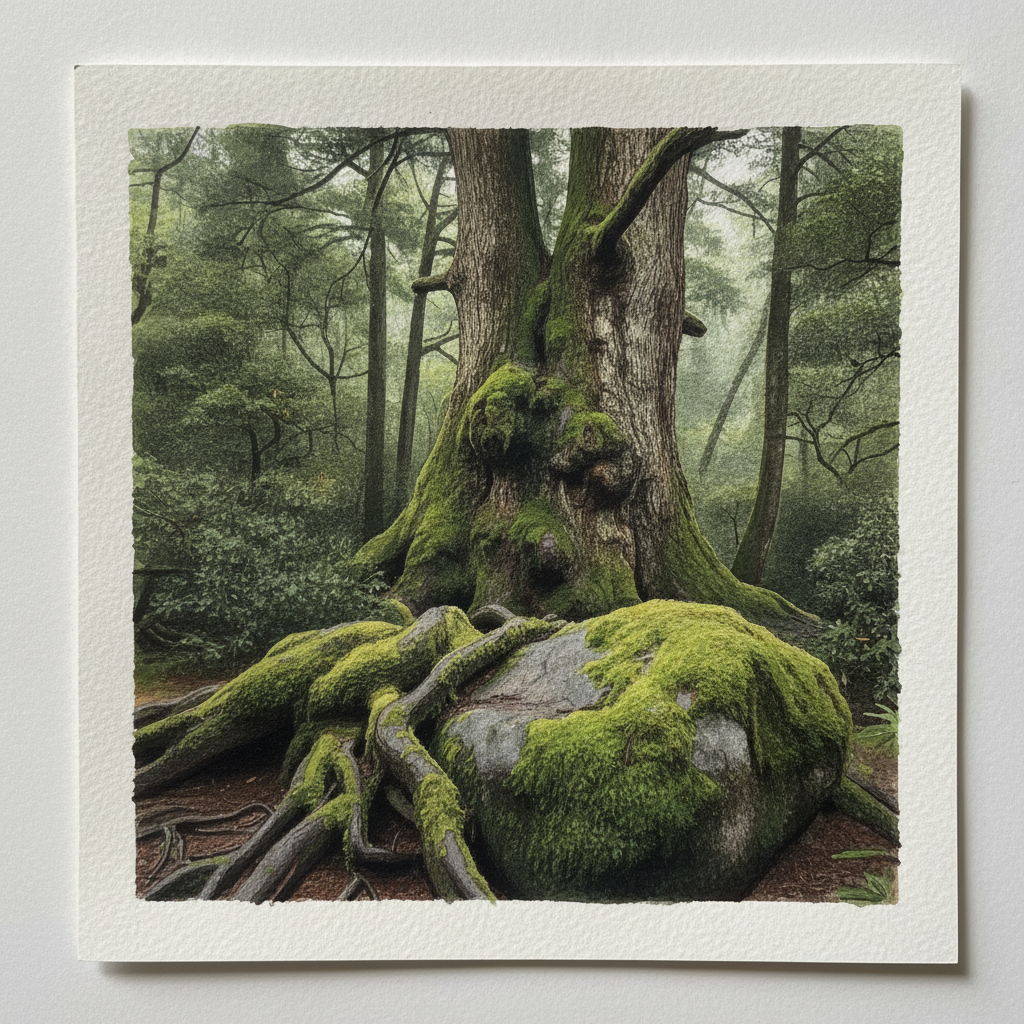
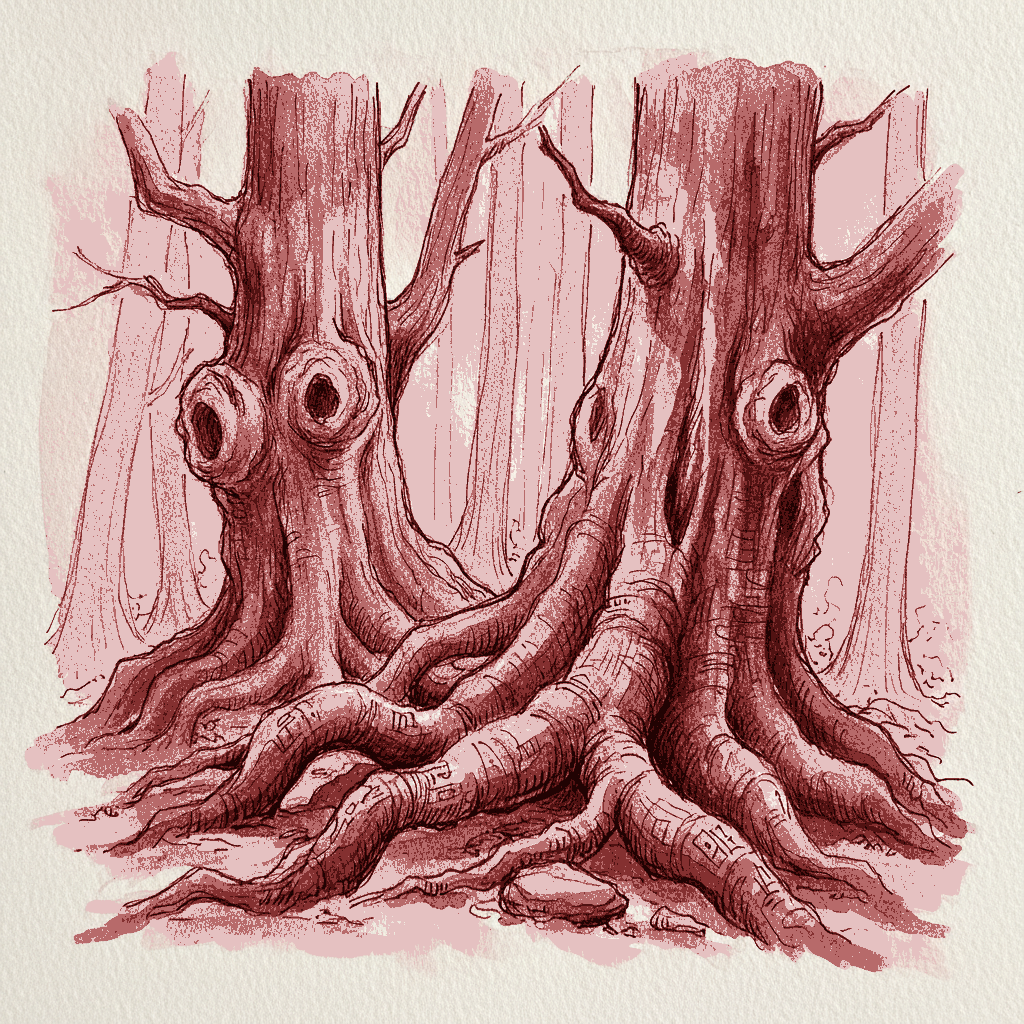
For this Yakushima forest, concentrate on using varied pen line weights and broken lines to depict the gnarly textures of ancient cedar bark and moss-covered roots, allowing the underlying forms to emerge. Counterbalance this detail with soft, layered wet-on-wet washes, focusing on a restricted "underwater green" palette to build the ambient light and pervasive moisture in the mid- and background. Pay particular attention to how the ink outlines can suggest, rather than explicitly define, the organic shapes, letting the watercolor create the soft edges of the moss and distant foliage.
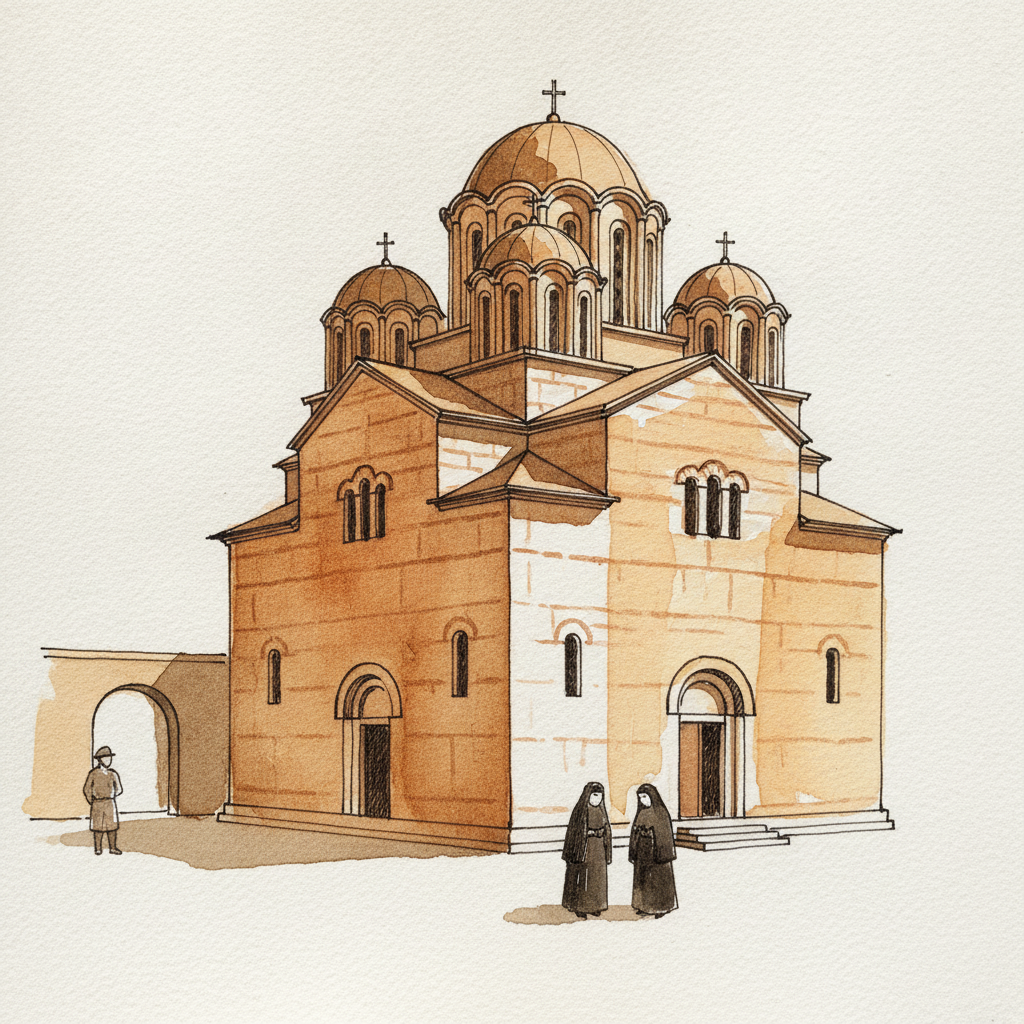
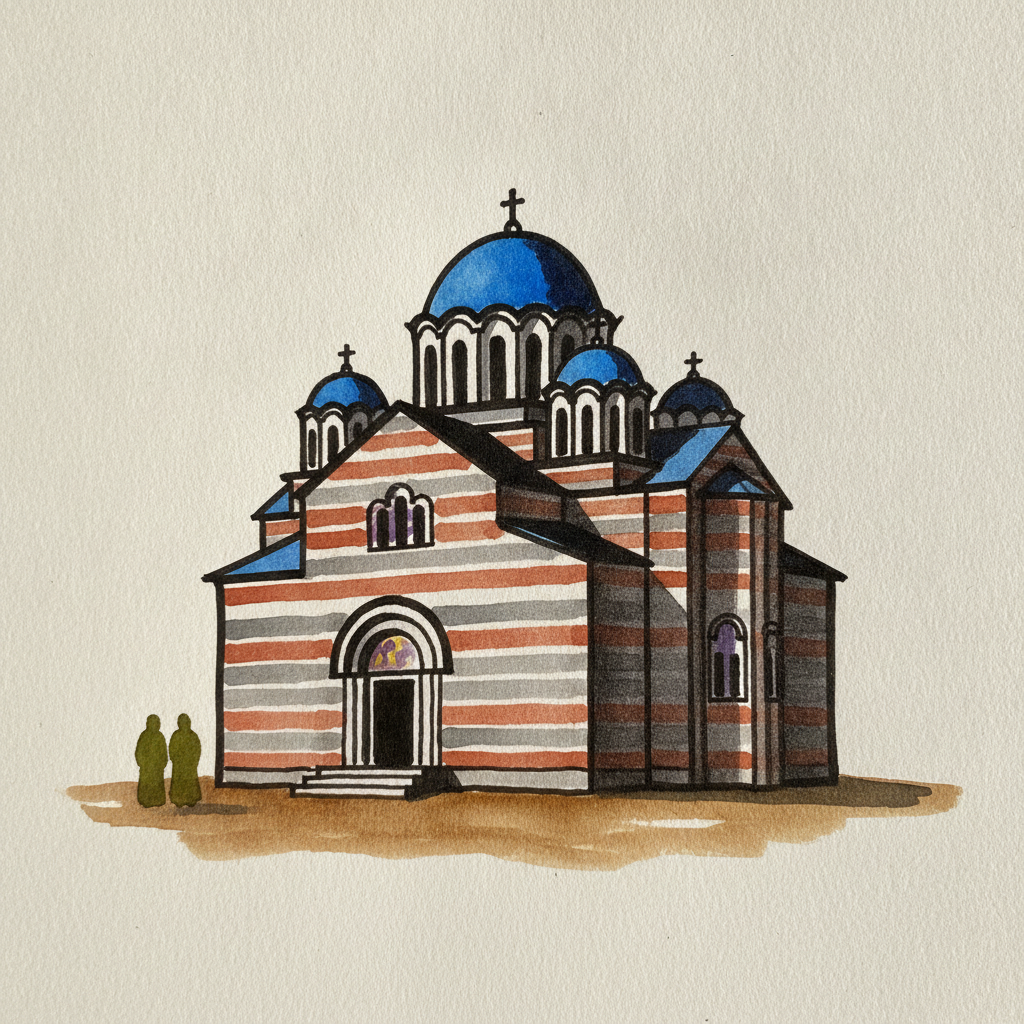
Piece 8 — Gračanica Monastery, Kosovo
Pen + Watercolor · Loose pen and watercolor line-and-wash
Three takes
Focus for this piece
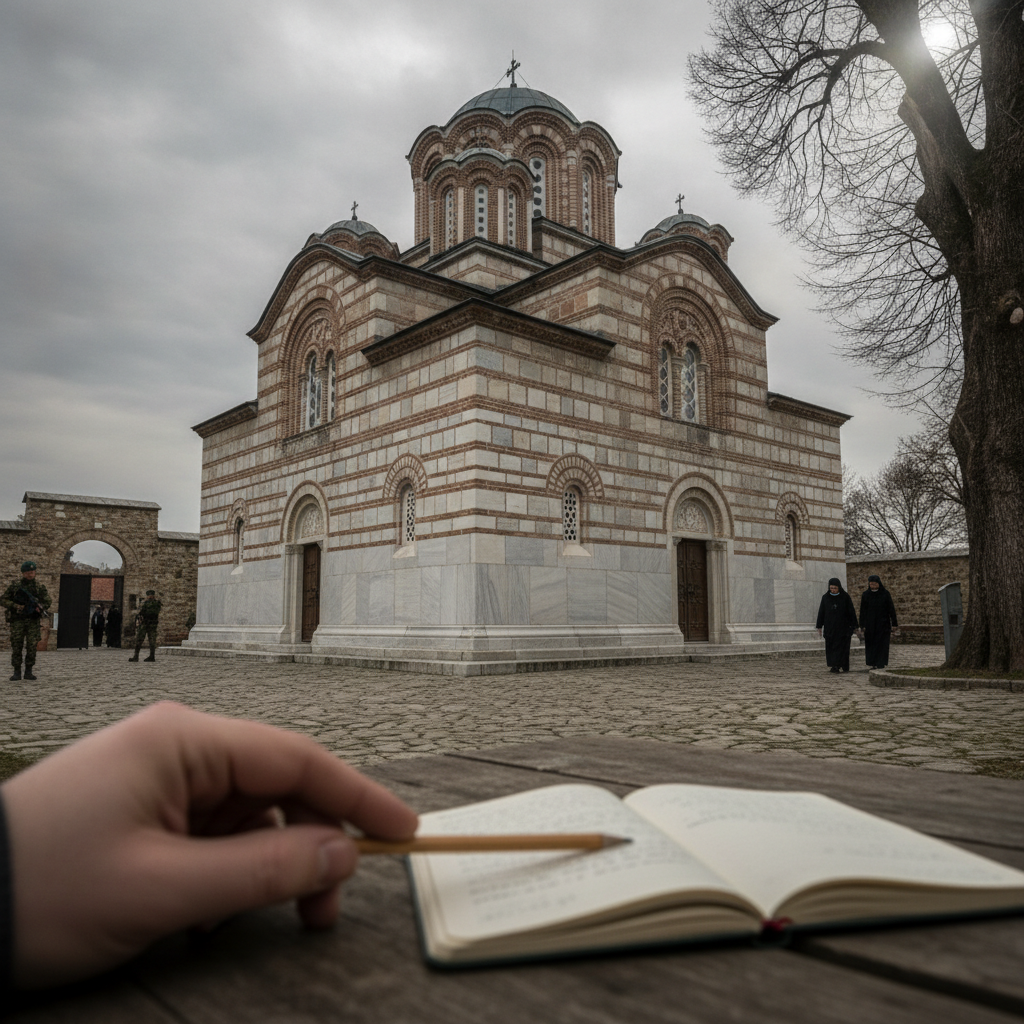
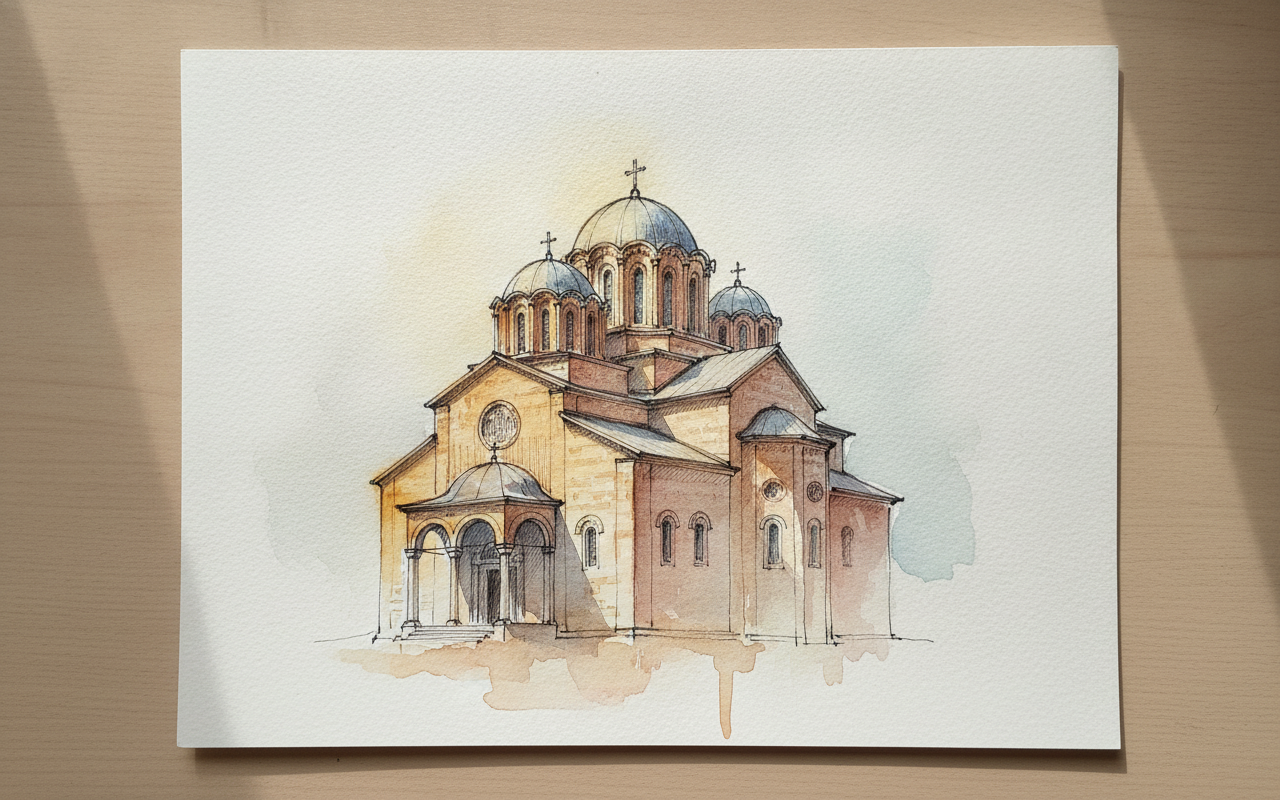
Your focus for Gračanica Monastery is capturing its "stone crystal" geometry and tiered structure. Use precise pen lines, varying their weight to define the stacked cubes and domes, emphasizing the interplay of light and shadow on each facet. Apply controlled, flat washes with a restrained palette of cool greys and warm ochres to distinguish sunlit planes from those in shadow, letting the paint establish volume. Finally, suggest the alternating brick and stone texture with light, broken pen strokes and subtle, damp washes, rather than attempting full replication.