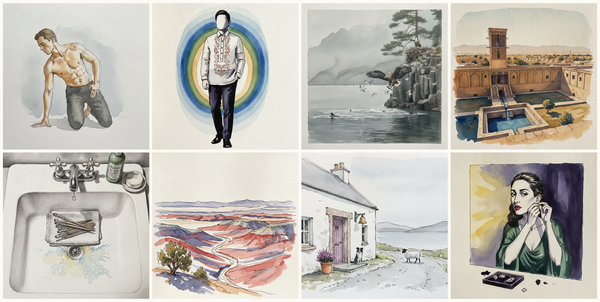
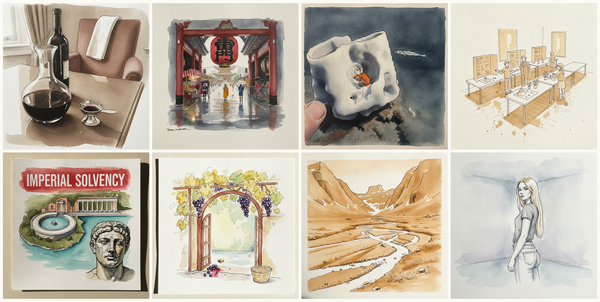
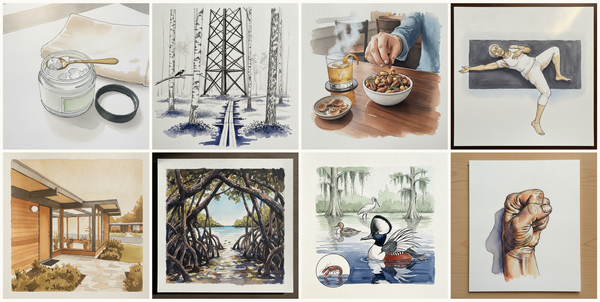
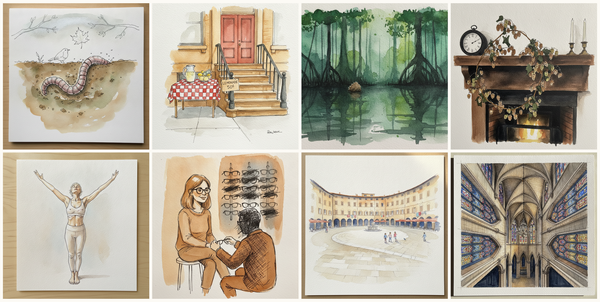
St. Kilda Sea Stacks, Bucket with Soapy Water, Burmese Seat, Hands on Floor Behind, Erasmus Bridge, Rotterdam, Netherlands, and more — pen + watercolor for July 22, 2026
AI-generated daily art-practice references for pen and watercolor: St. Kilda Sea Stacks, Bucket with Soapy Water, Burmese Seat, Hands on Floor Behind, Erasmus Bridge, Rotterdam, Netherlands, Pen shell, Rameshwaram gopuram in evening monsoon light, Toddler in a Tupperware drawer, Black Truffle on…
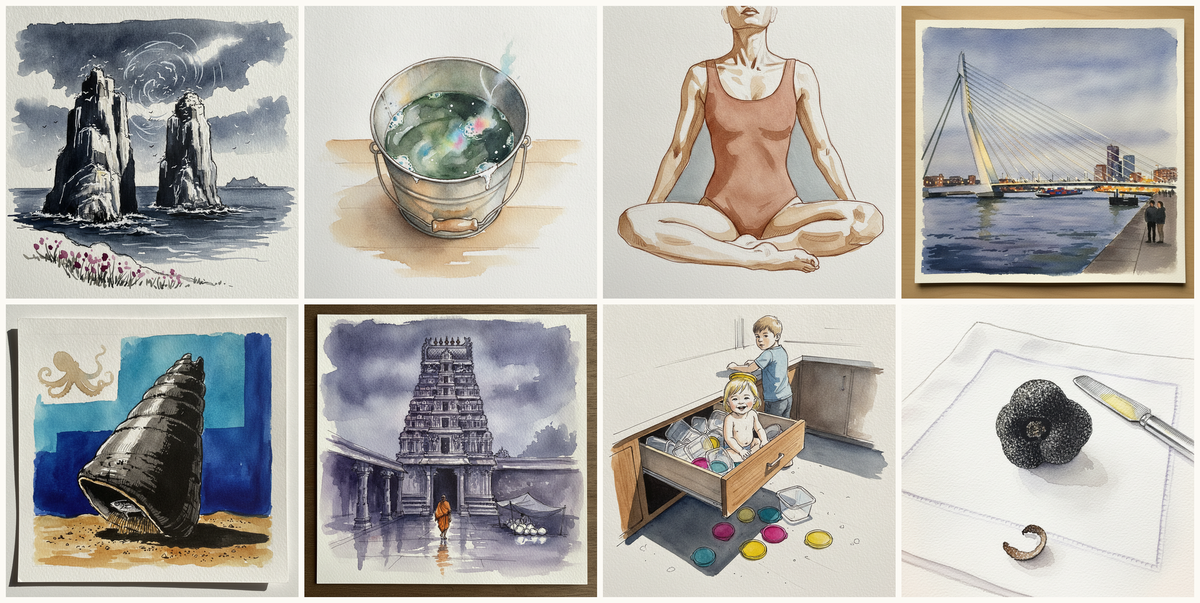
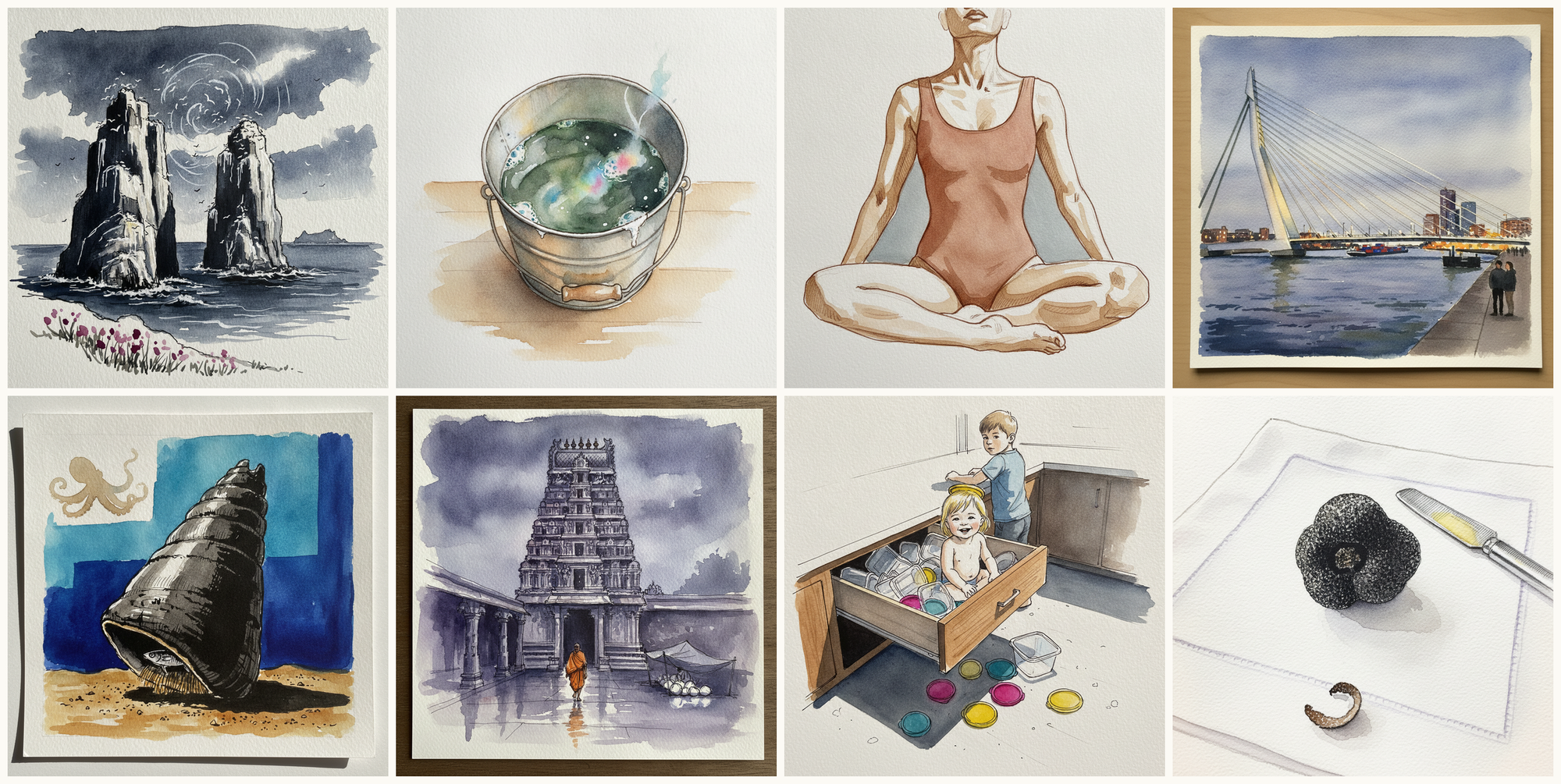
Today's 8 pen-and-watercolor pieces: St. Kilda Sea Stacks, Bucket with Soapy Water, Burmese Seat, Hands on Floor Behind, Erasmus Bridge, Rotterdam, Netherlands, Pen shell, Rameshwaram gopuram in evening monsoon light, Toddler in a Tupperware drawer, Black Truffle on White Napkin. Each piece comes with an AI-generated photoreal reference, three AI-generated example artworks in different treatments, and a short focus paragraph naming what to study in this one.
Why these references use AI
This daily series uses AI-generated images as practice prompts, not as finished artwork to copy. Each subject starts with a synthetic photoreal reference generated with Gemini/Nano Banana, then moves into three pen-and-watercolor interpretations of the same subject.
I use AI here because daily art practice needs variety and low friction. Real life can get repetitive, busy, or visually narrow. These generated reference sets make it easier to study bodies, buildings, animals, landscapes, objects, gestures, light, palettes, and compositions that might not show up in an ordinary day.
The goal is not to reproduce any image directly. Treat each set as a starting point for observation and study: choose what interests you, change the framing, simplify the subject, alter the palette, and make your own version.
Piece 1 — St. Kilda Sea Stacks
Pen + Watercolor · Loose pen and watercolor line-and-wash
Three takes

Focus for this piece
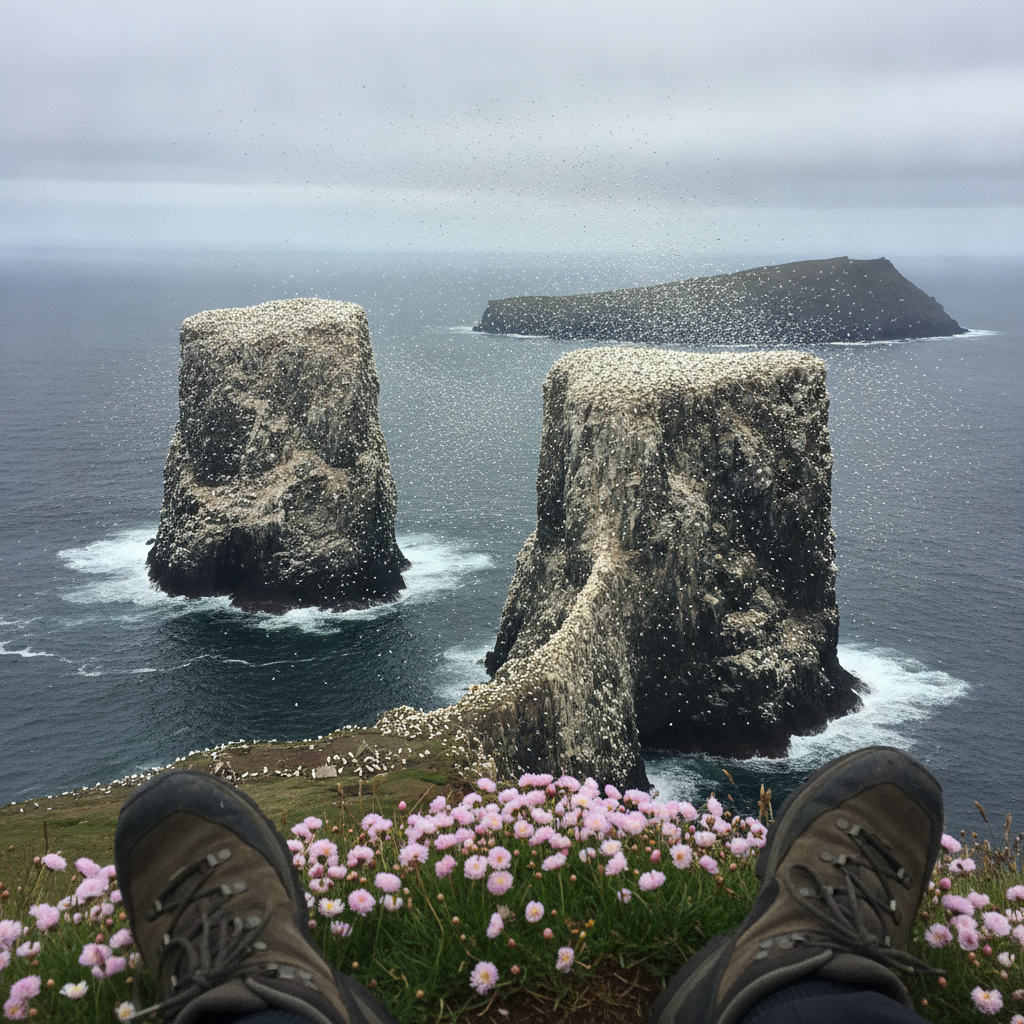
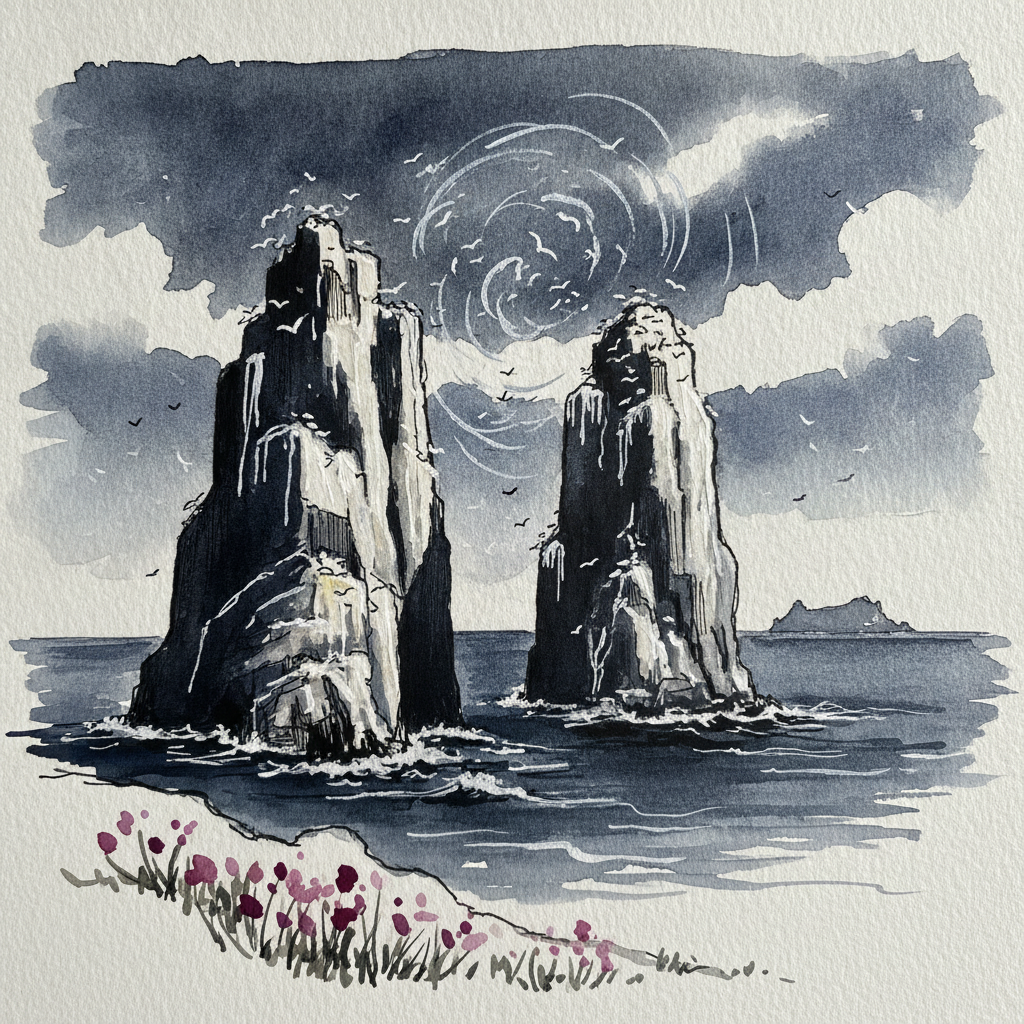
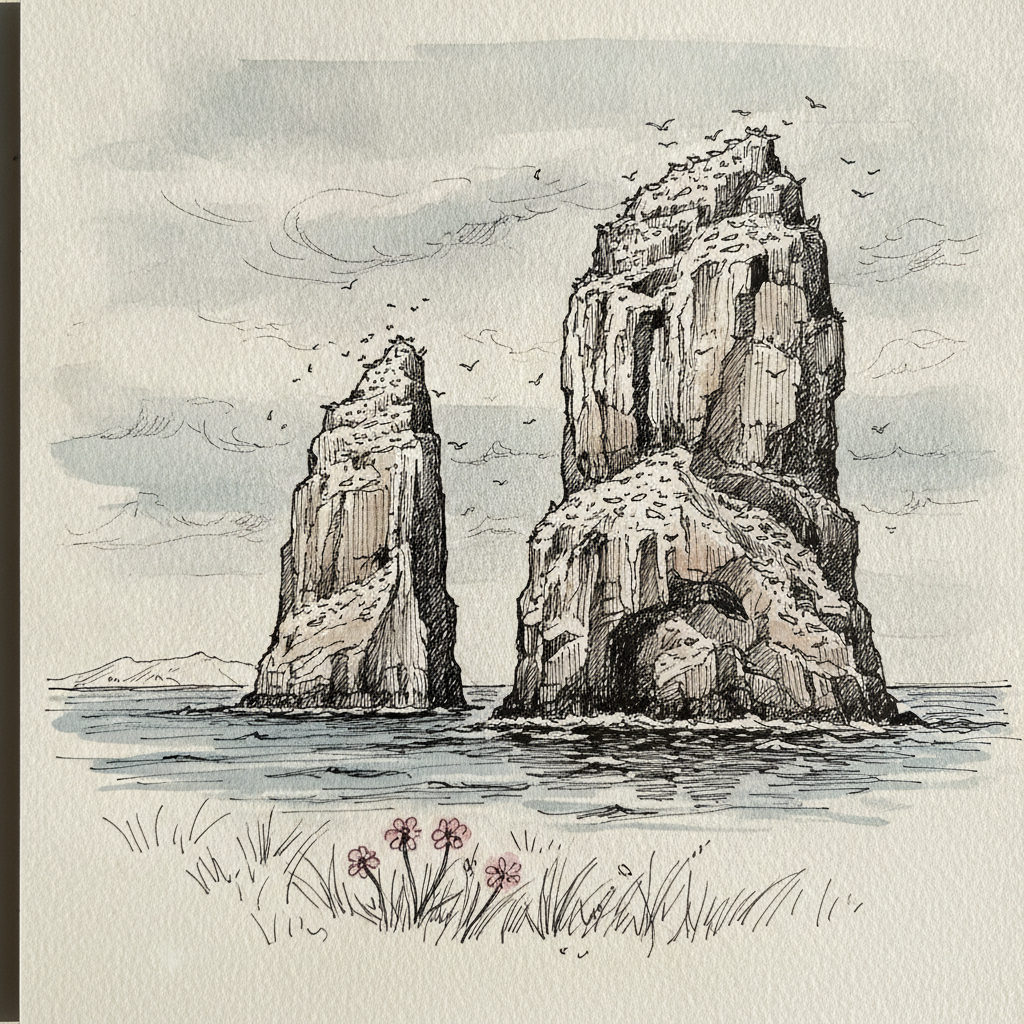
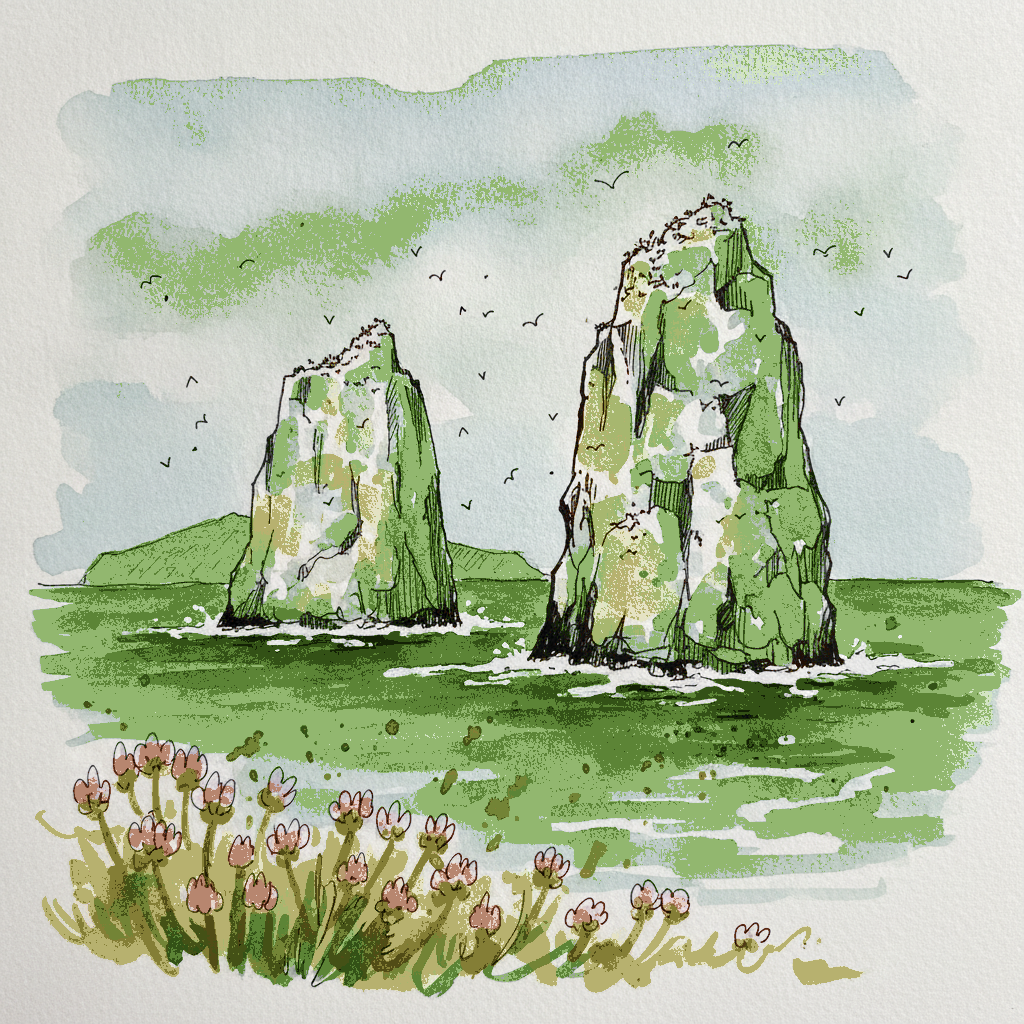
This study is excellent for capturing an overcast, luminous atmosphere using a restricted, cool palette and subtle value shifts. Practice contrasting the monumental vertical forms of the stacks, rendered with strong, continuous pen lines, against the delicate suggestion of detail in the swirling gannets and distant village using light, broken lines and quick, dabbing watercolor strokes. Use wet-on-wet washes for the expansive sea and sky to emphasize the vast scale, grounding the composition with foreground sea pinks.
Piece 2 — Bucket with Soapy Water
Pen + Watercolor · Loose pen and watercolor line-and-wash
Three takes
Focus for this piece
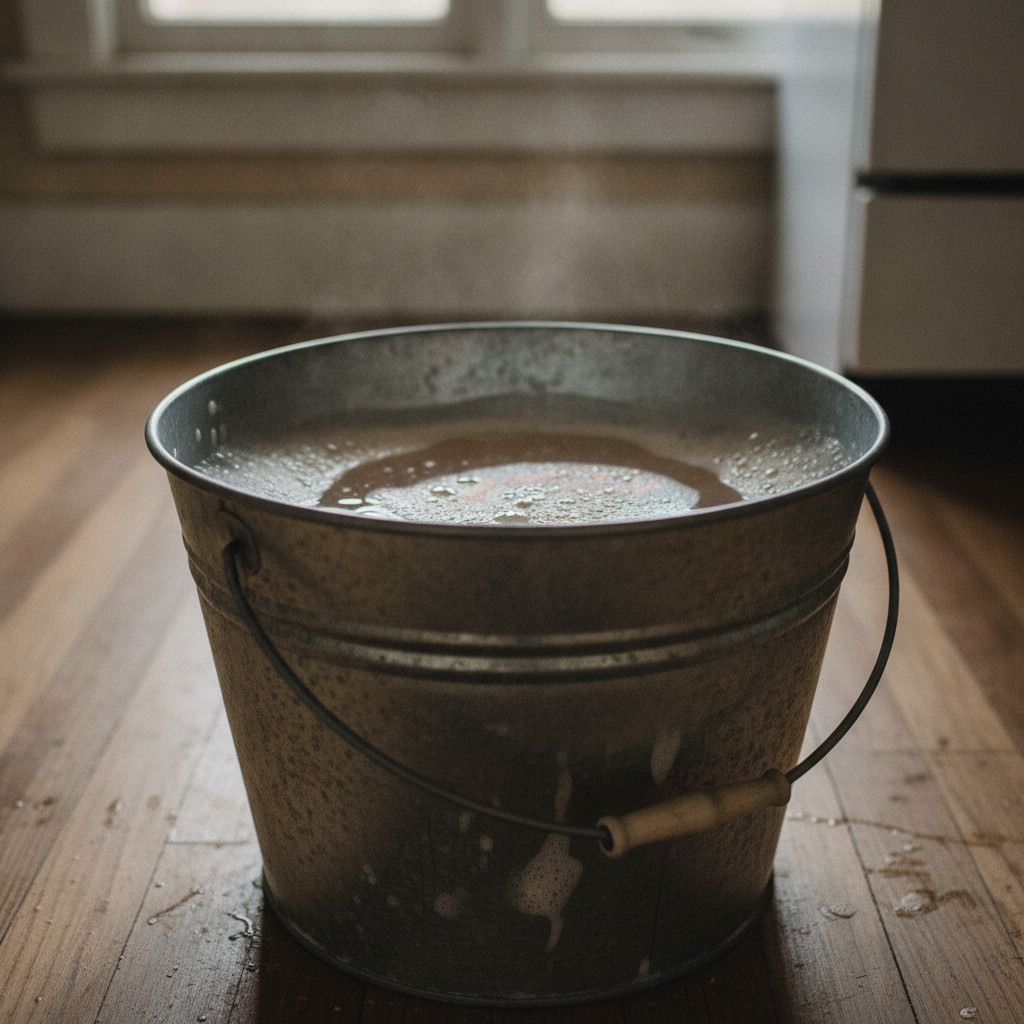
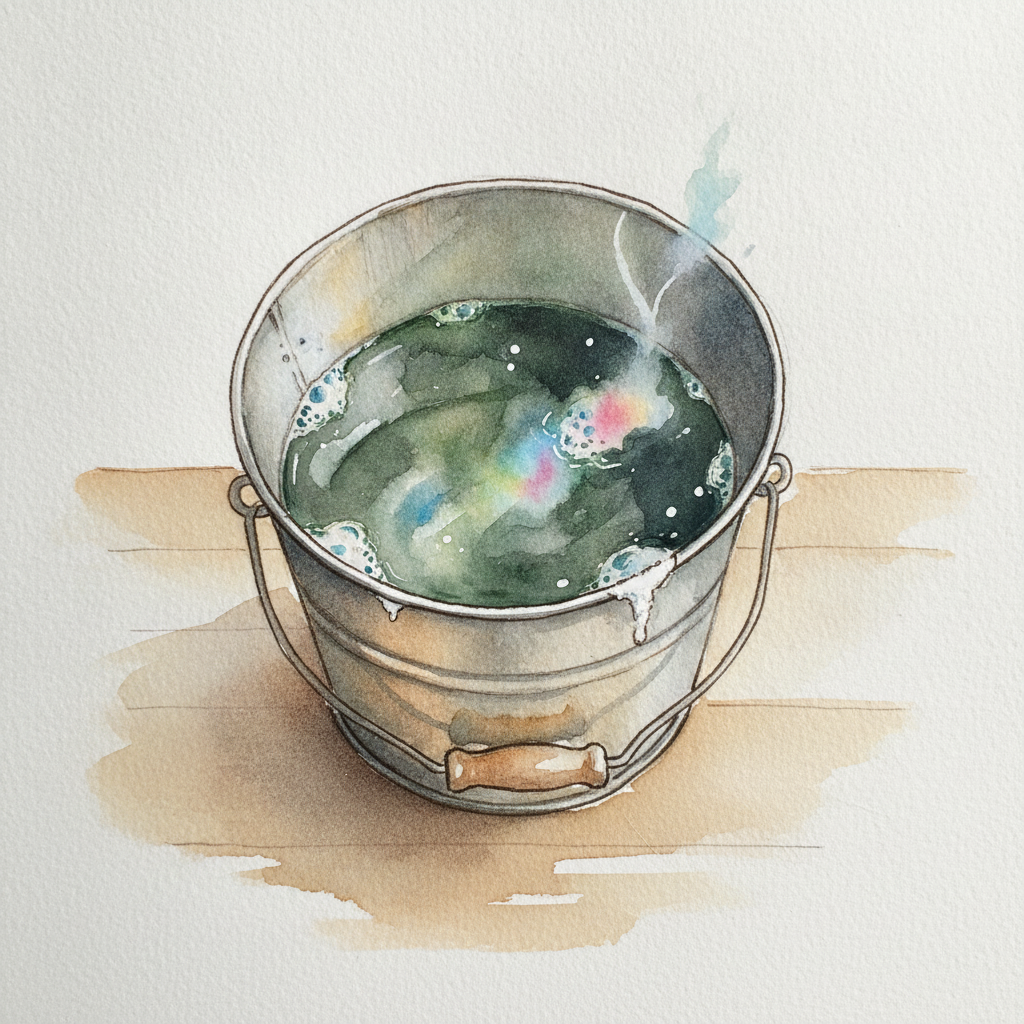
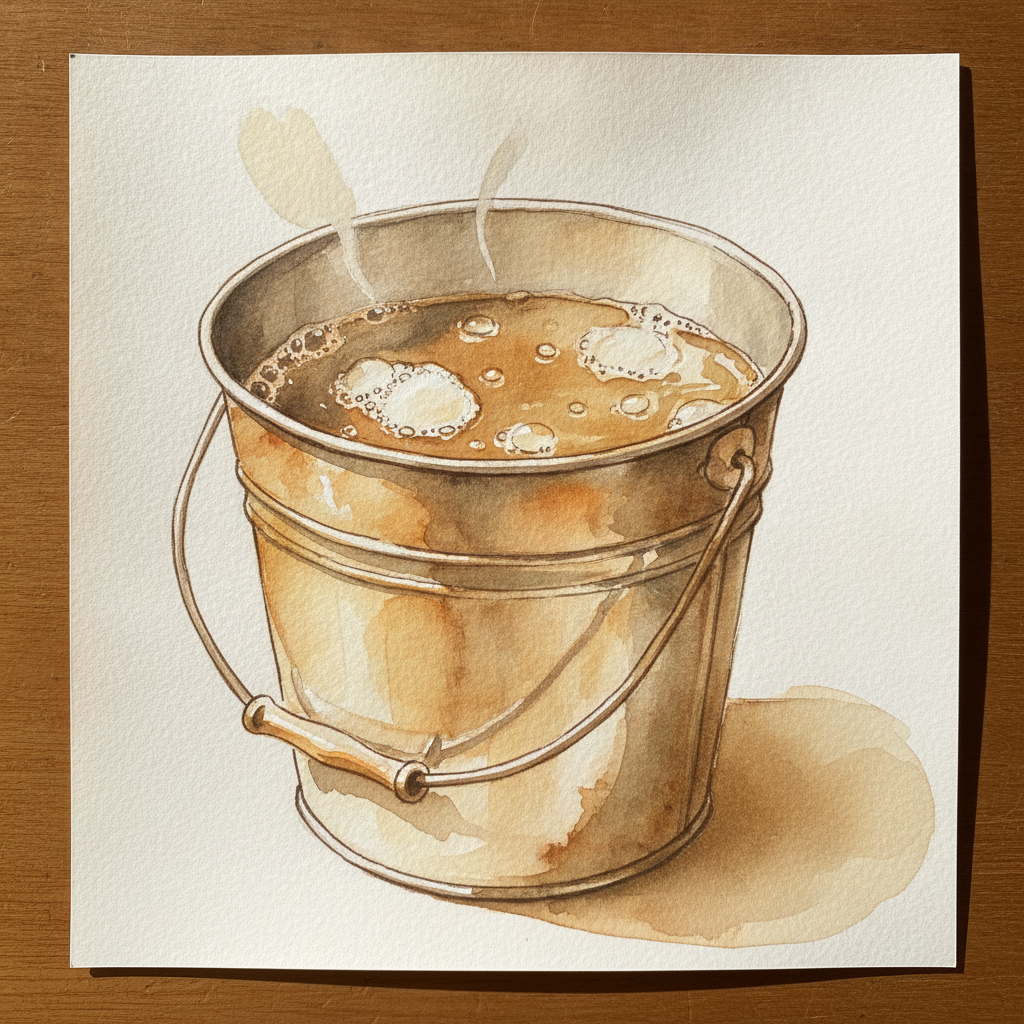
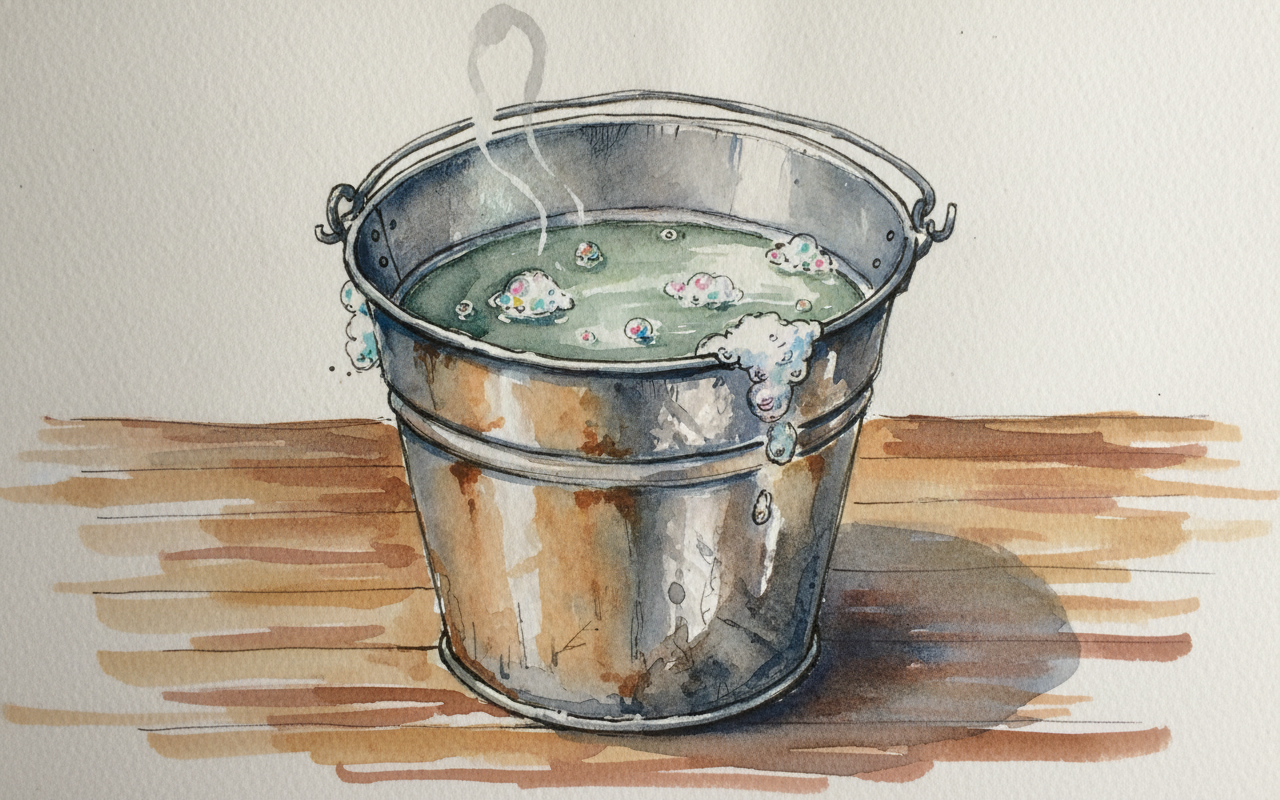
This piece offers an excellent study in rendering contrasting textures and reflective surfaces. Pay close attention to accurately constructing the bucket's cylindrical form with precise ellipses, then vary your pen lines: firm and confident for the metal's structure and dents, and light or absent for the soft water, steam, and bubbles. For the watercolor, use wet-on-wet washes to create the murky water and steam's softness, while carefully layering vibrant, pure hues for the iridescent highlights on the bubbles, letting these small, intense color moments stand out against more subdued values on the metal. This contrast between solid form and ephemeral atmosphere is key to the subject's charm.
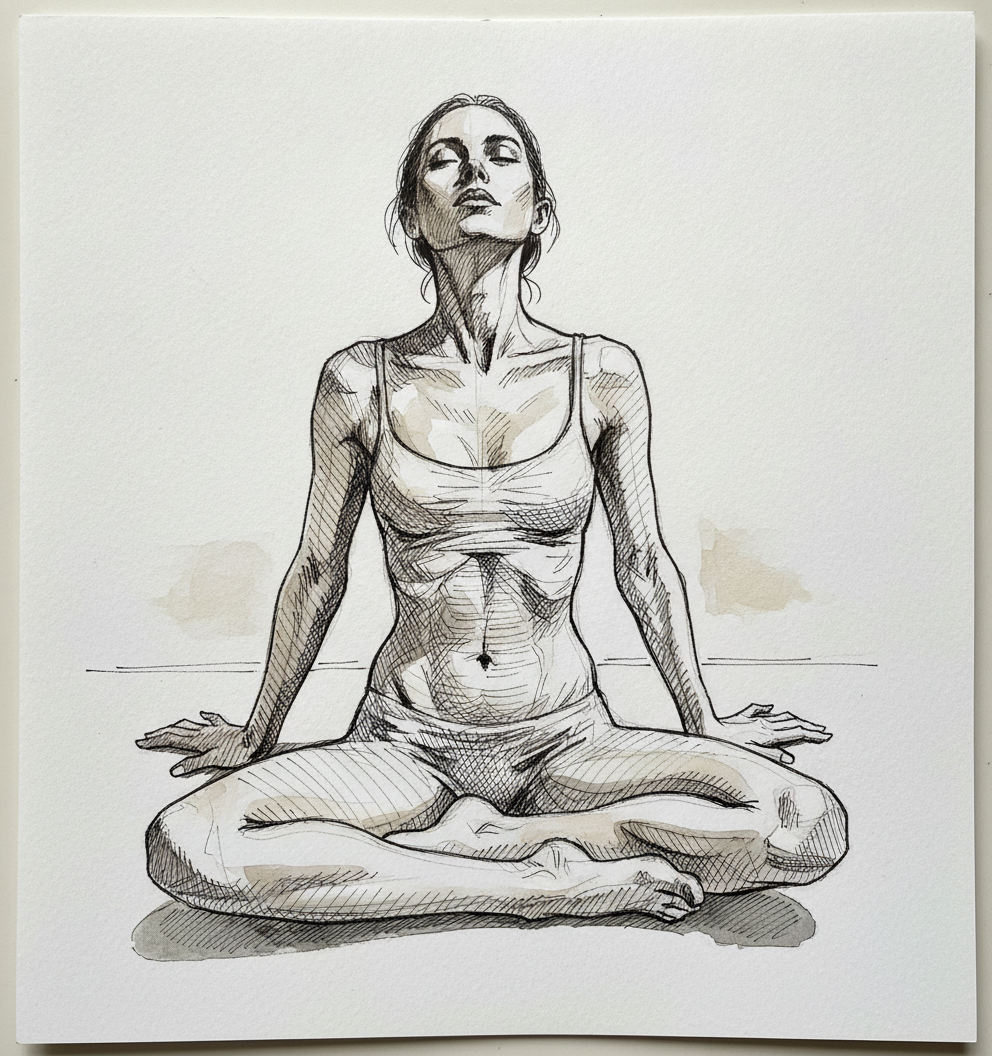
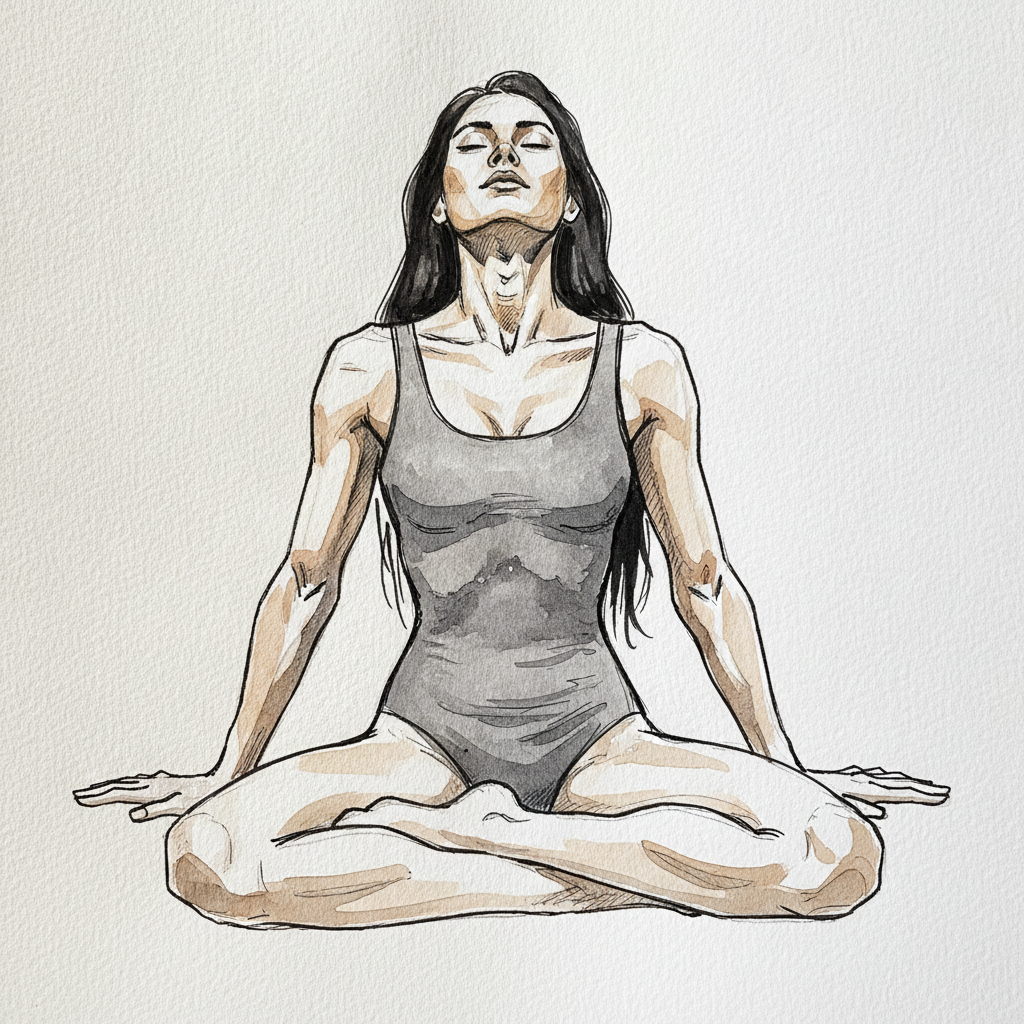
Piece 3 — Burmese Seat, Hands on Floor Behind
Pen + Watercolor · Loose pen and watercolor line-and-wash
Three takes
Focus for this piece
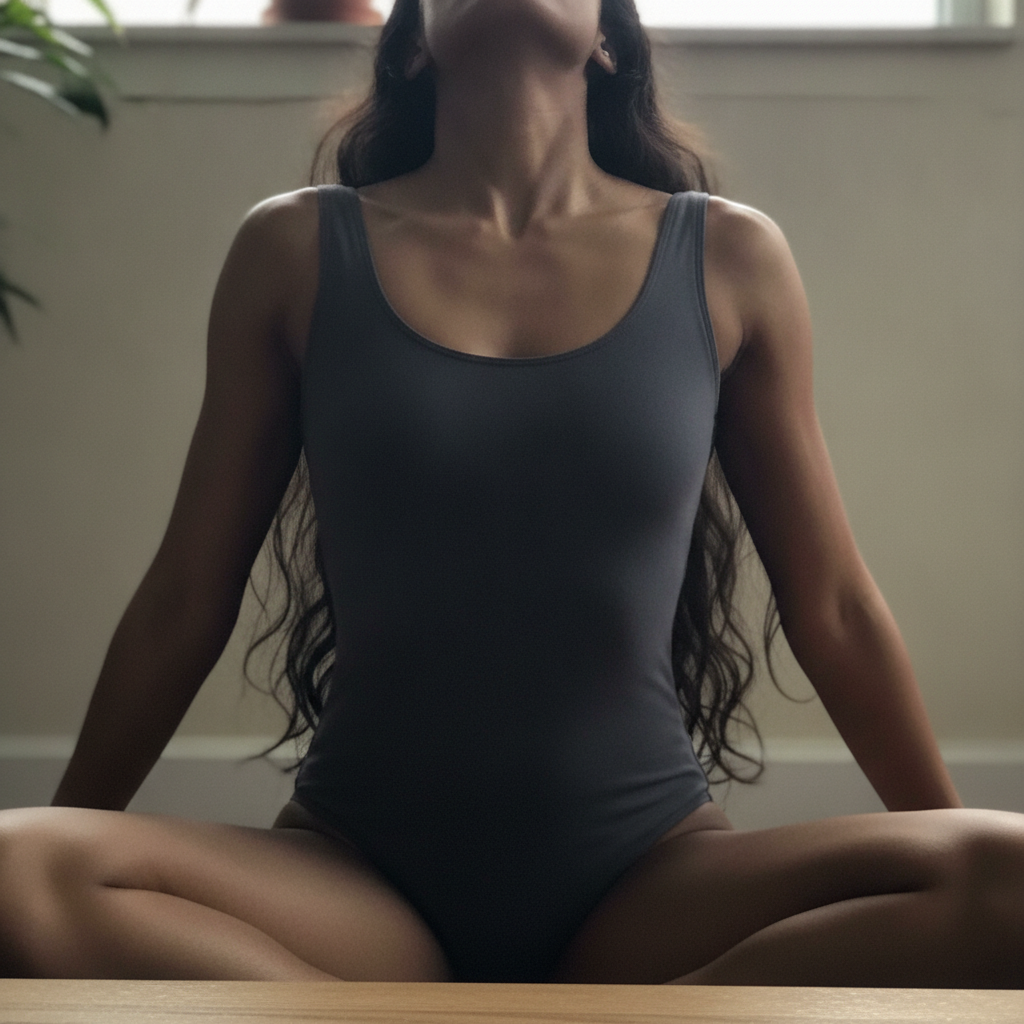
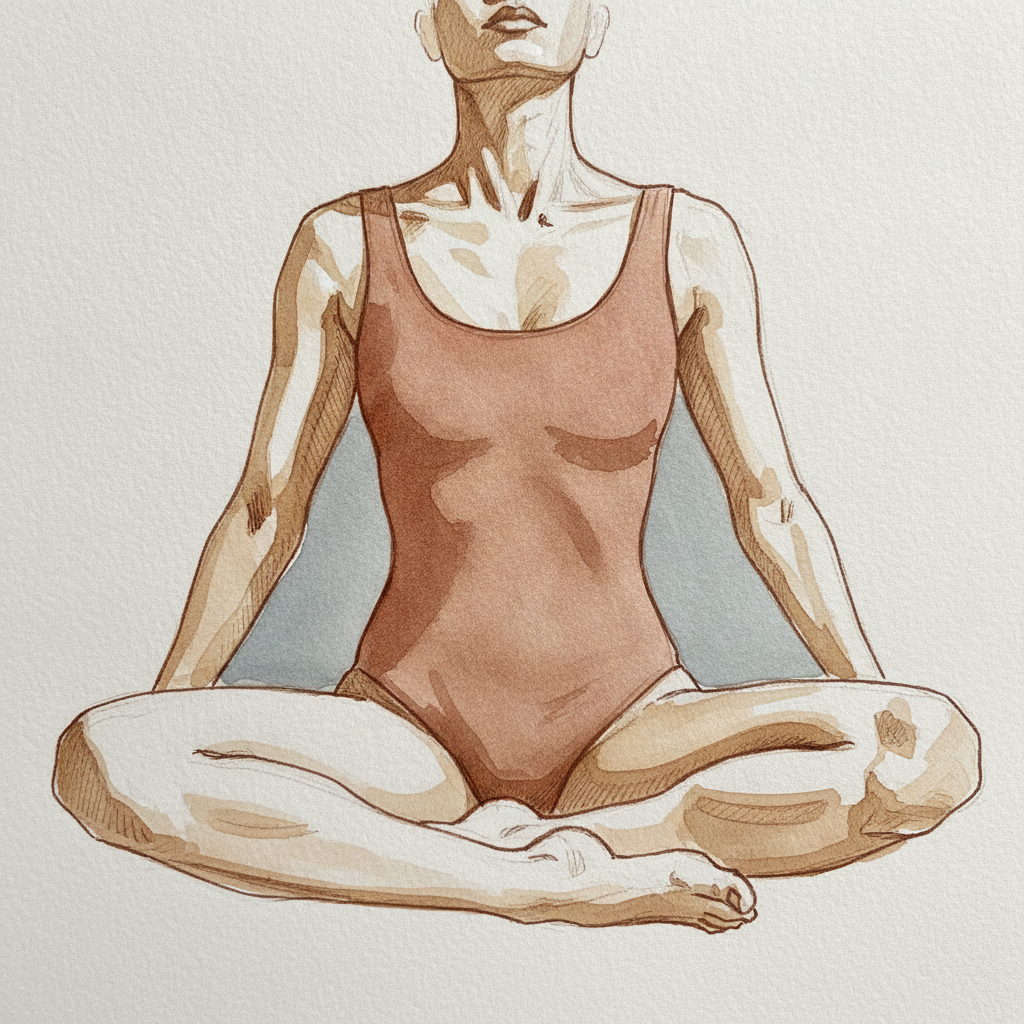
This piece is ideal for practicing how strong overhead light defines sharp anatomical edges and dramatic volumetric shifts. Focus on using varied, confident line weights in waterproof ink to articulate the precise contours of the clavicles, jawline, and hands. Complement these lines with carefully applied, transparent washes to sculpt the deep hollows of the throat and the shadowed planes, allowing the watercolor to enhance the ink's structural clarity without overpowering it.
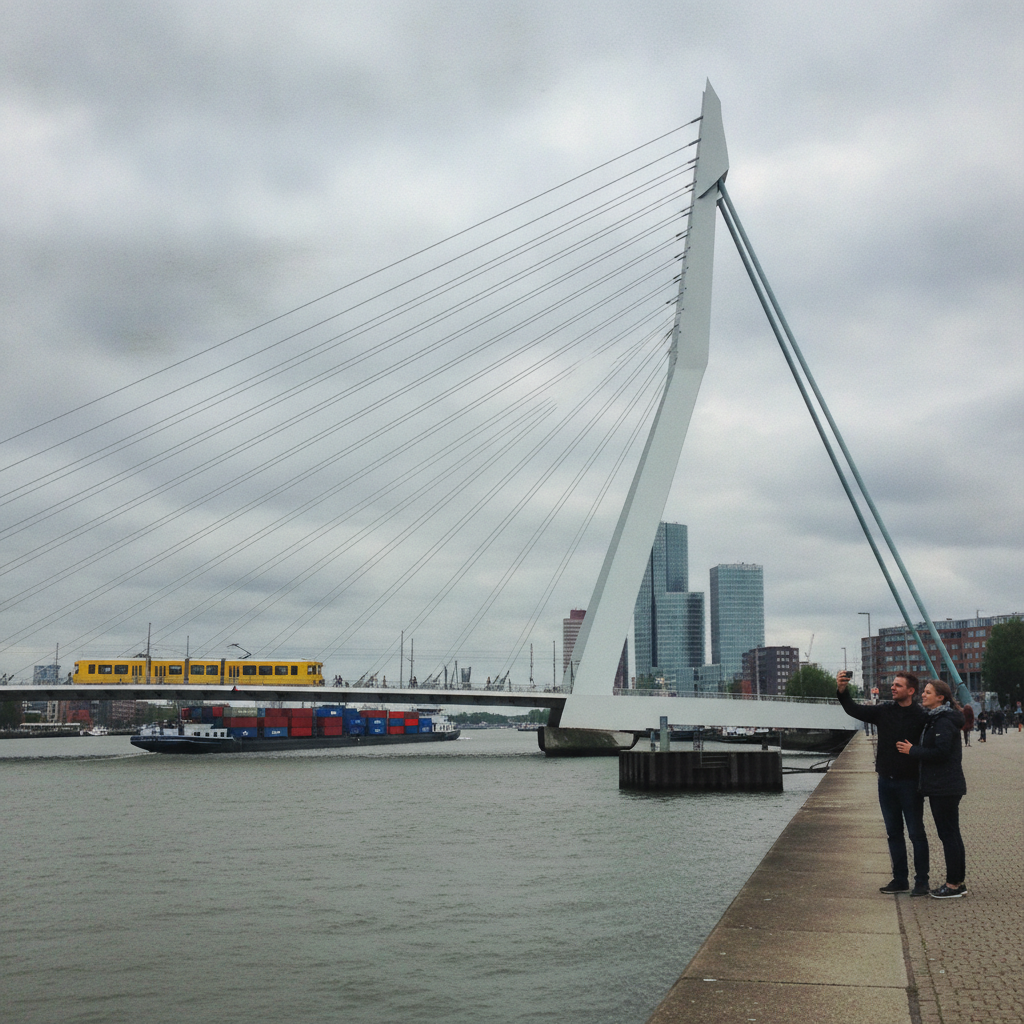
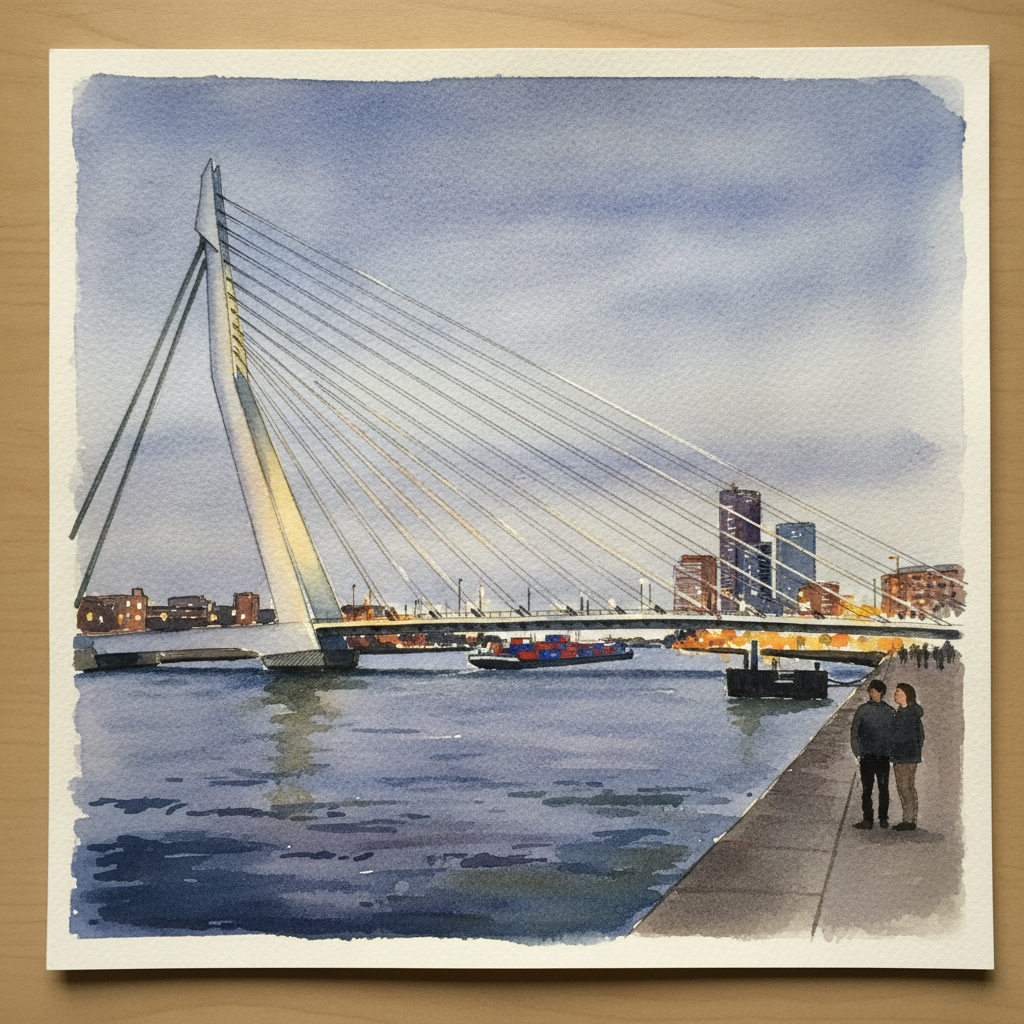
Piece 4 — Erasmus Bridge, Rotterdam, Netherlands
Pen + Watercolor · Loose pen and watercolor line-and-wash
Three takes

Focus for this piece
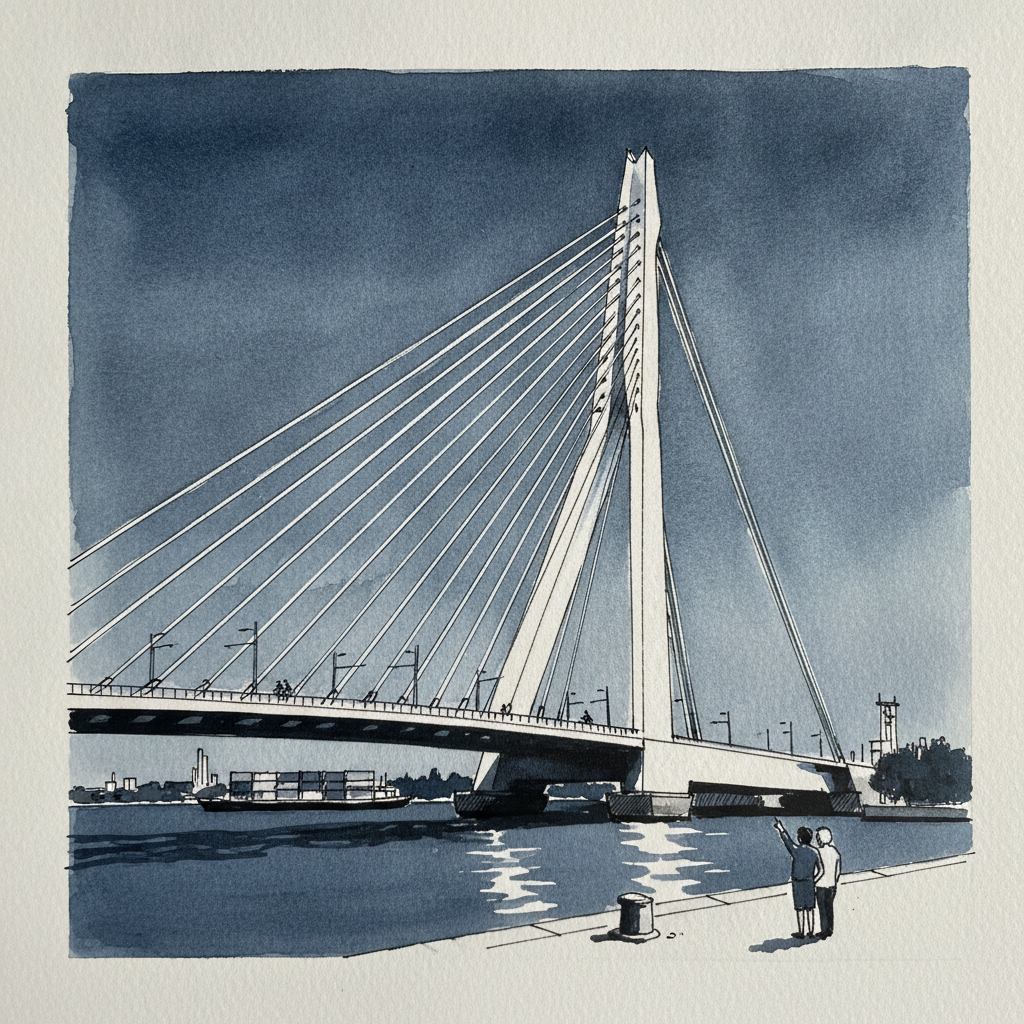
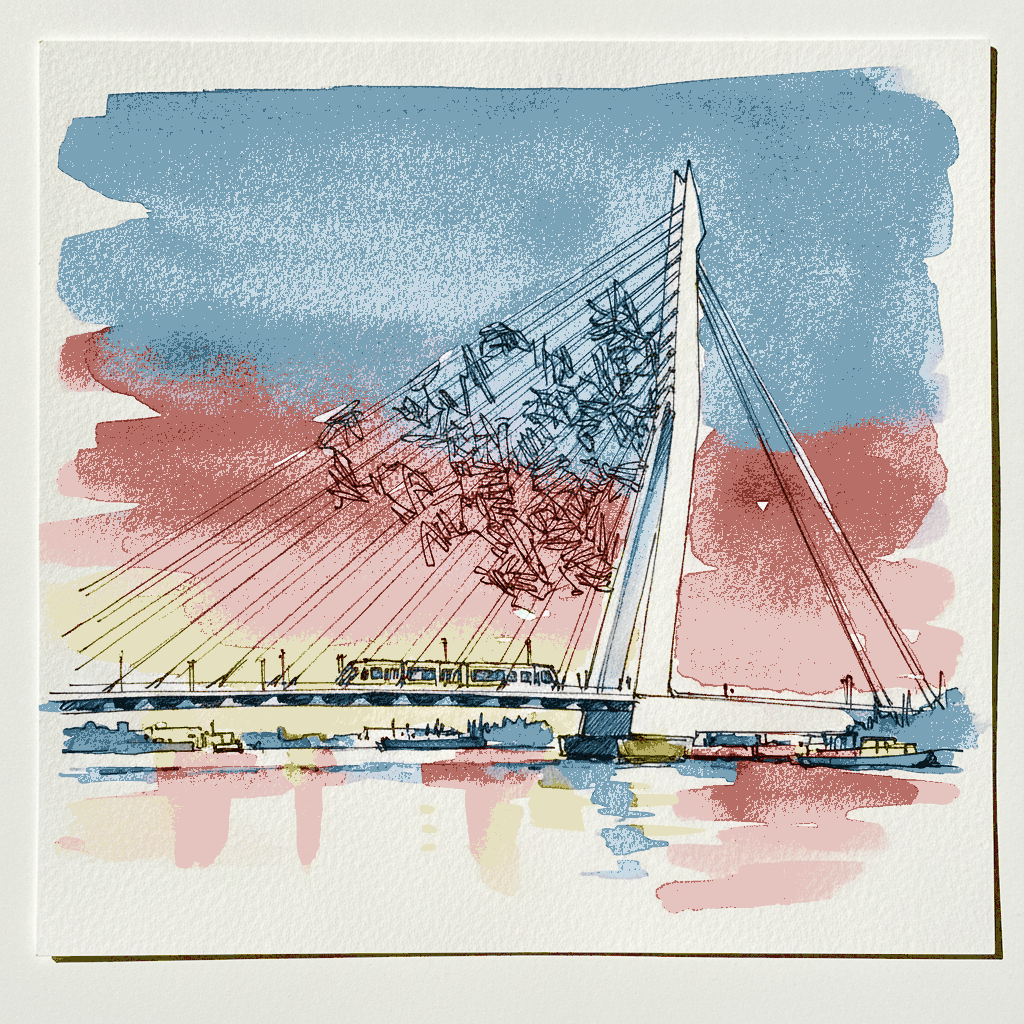
The Erasmus Bridge's iconic "Swan" pylon offers an excellent study in conveying elegant asymmetry and structural tension. Focus on using varied pen line weights to define the pylon's solid, curved form against the taut, delicate lines of its cables. Complement this with soft, contrasting washes to render the bridge's white presence and emphasize its luminosity within an atmospheric backdrop or water reflections.
Piece 5 — Pen shell
Pen + Watercolor · Loose pen and watercolor line-and-wash
Three takes
Focus for this piece
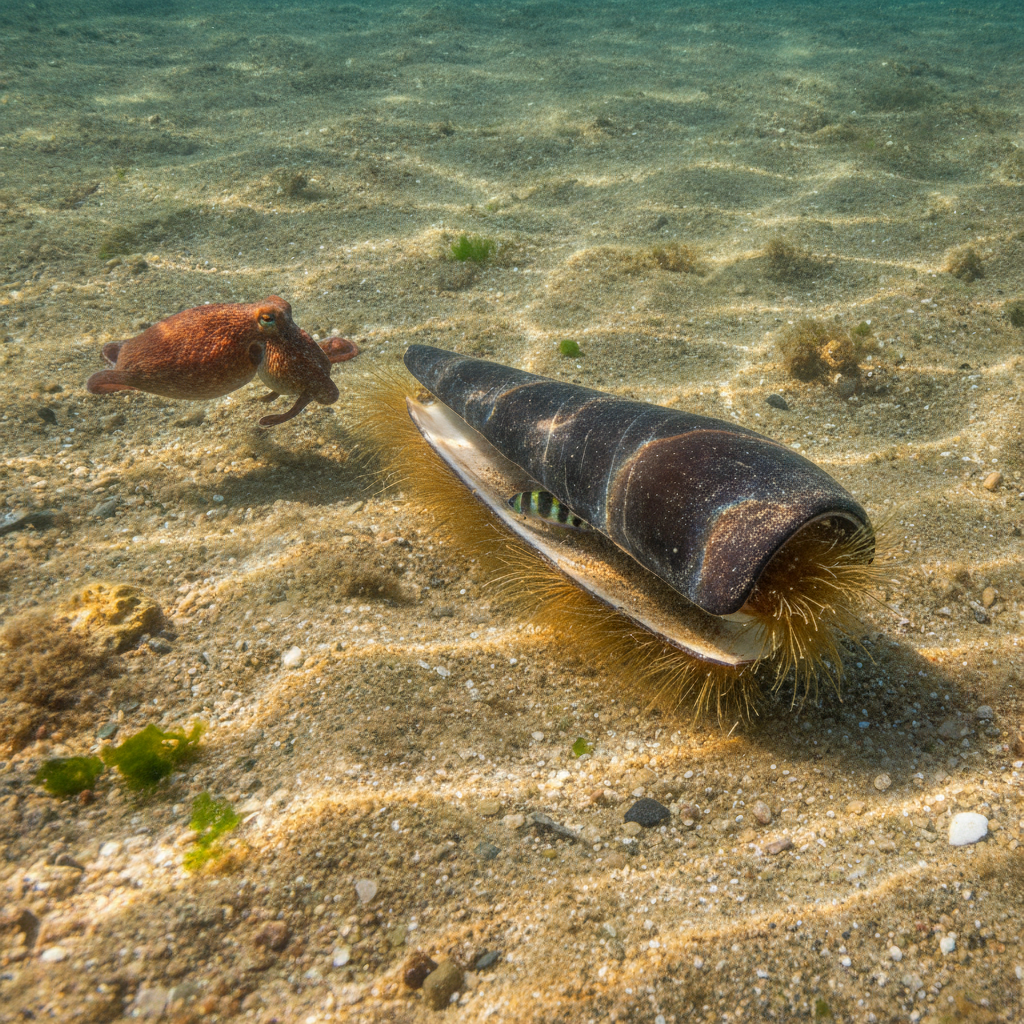
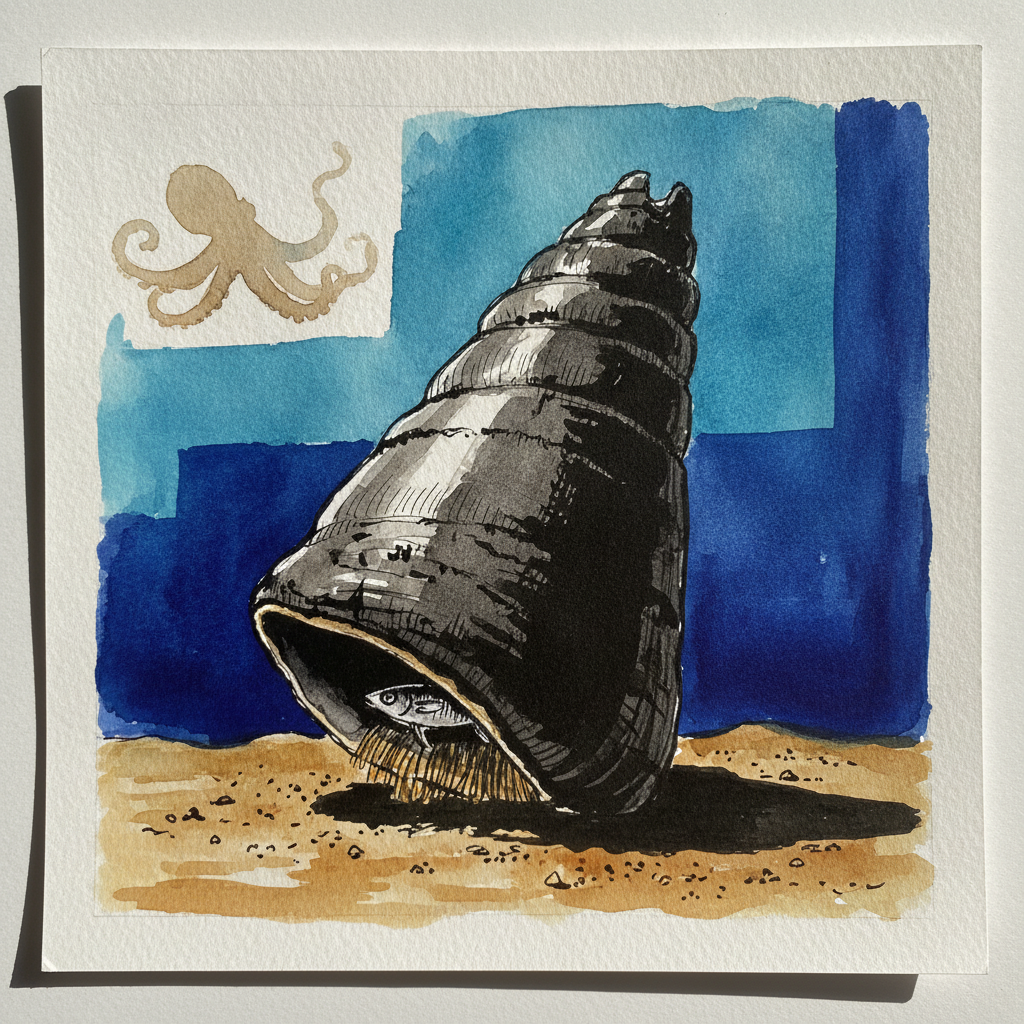
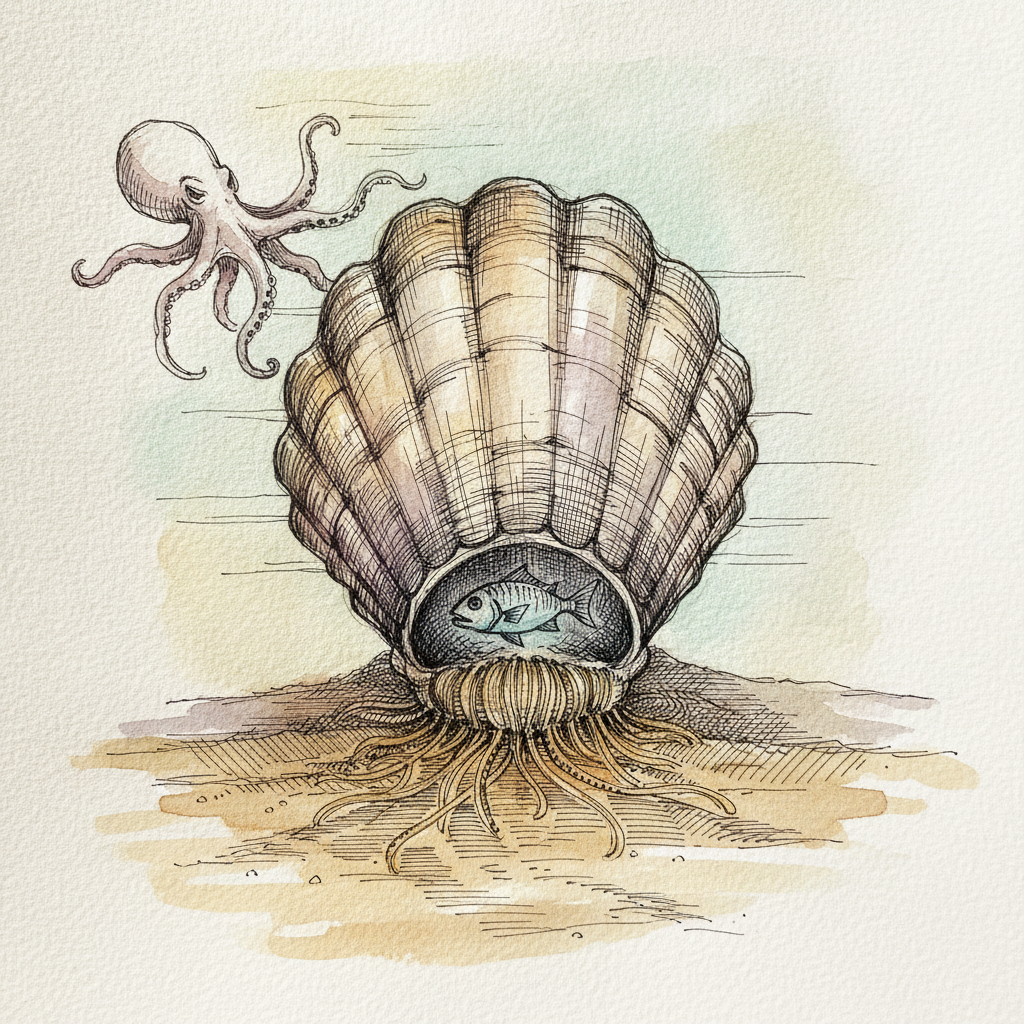
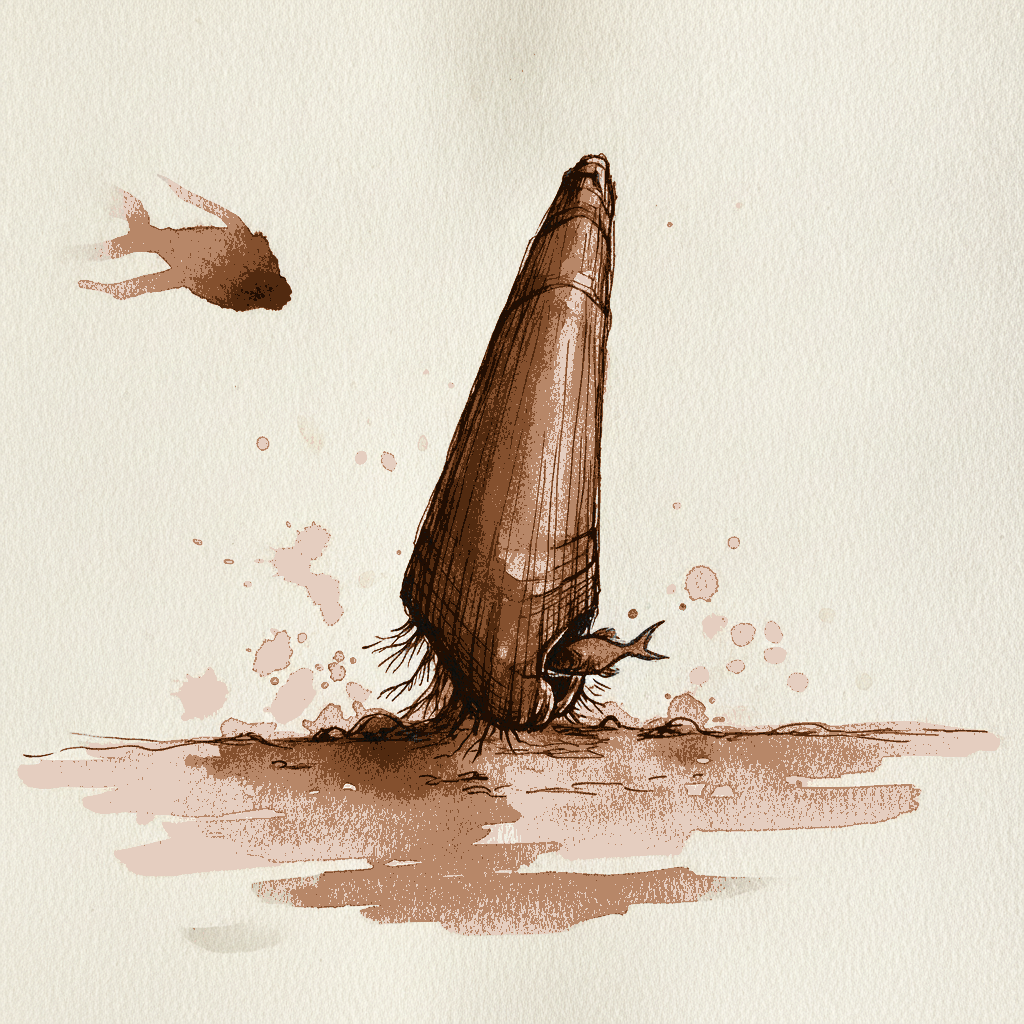
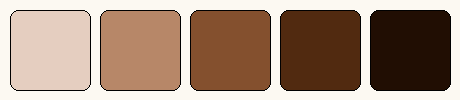
Today's pen shell offers an excellent study in defining a strong focal point through varied line weights and controlled washes. Use crisp, decisive lines to capture the shell's vertical form and byssal threads, allowing its texture to stand out against soft, expansive wet-into-wet washes that suggest the sandy seabed. Integrate the small fish and passing octopus with lighter, more suggestive lines to maintain the shell as the primary visual anchor.
Piece 6 — Rameshwaram gopuram in evening monsoon light
Pen + Watercolor · Loose pen and watercolor line-and-wash
Three takes
Focus for this piece
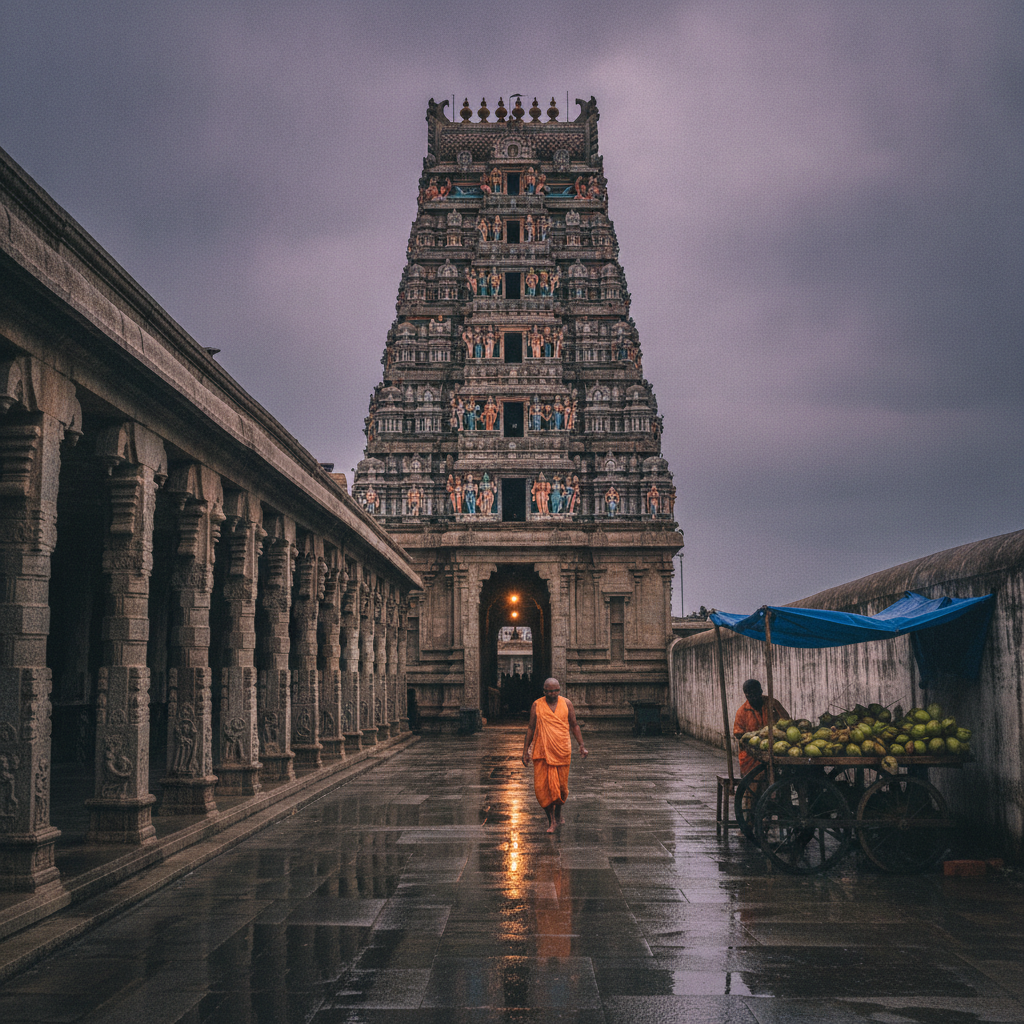
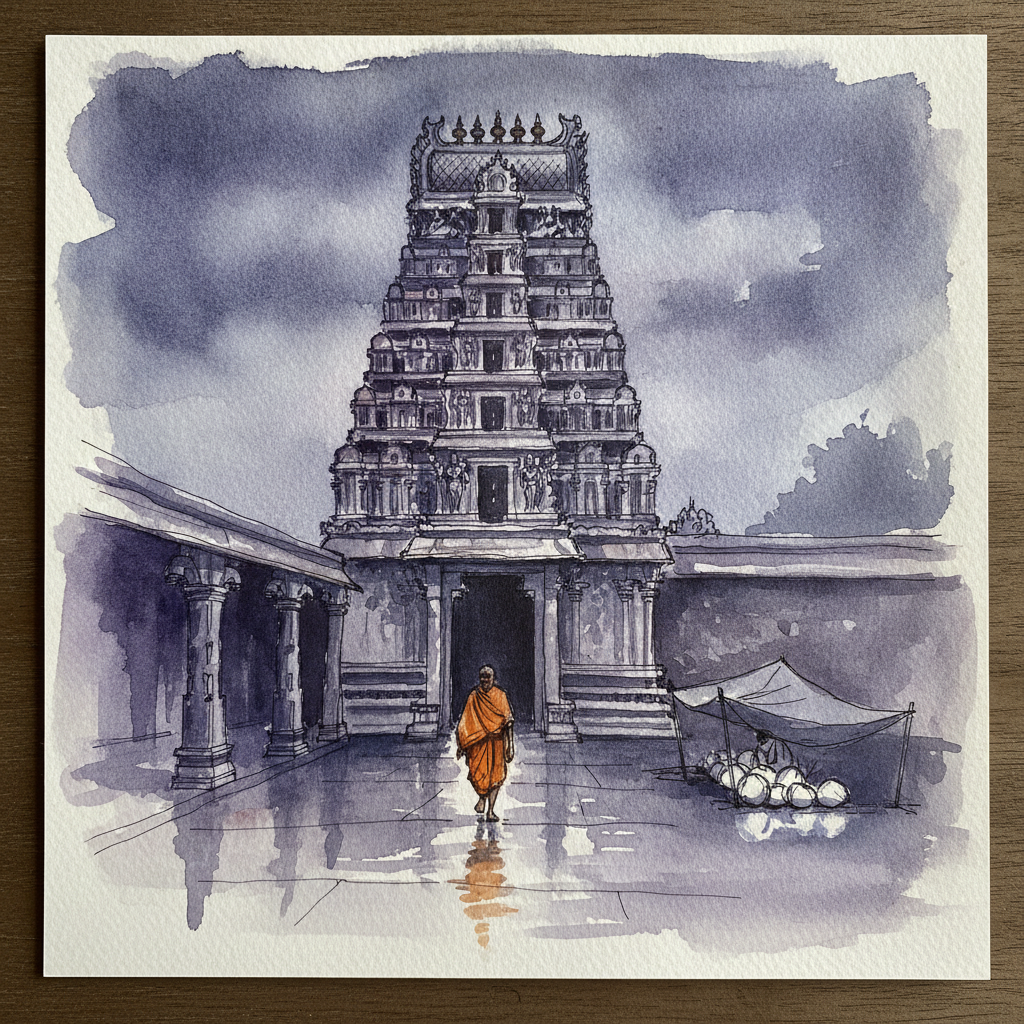
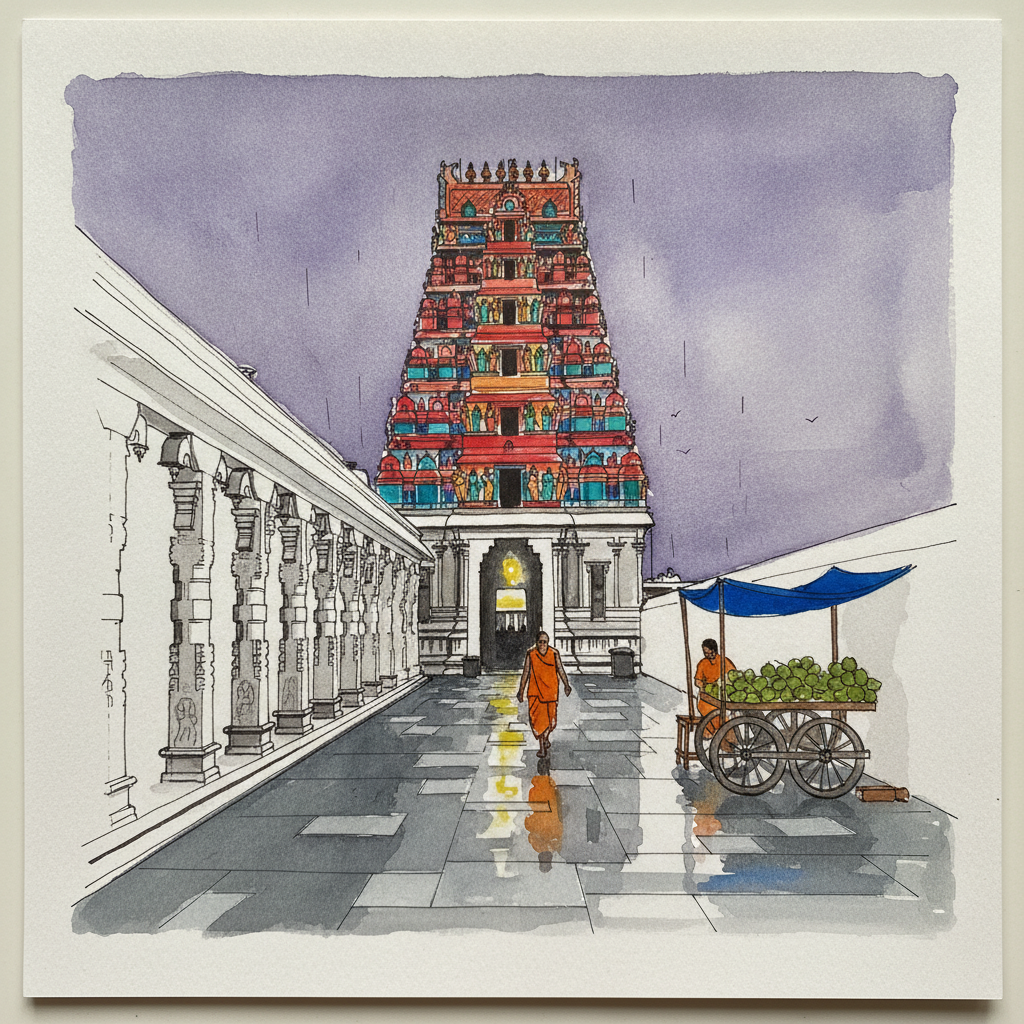
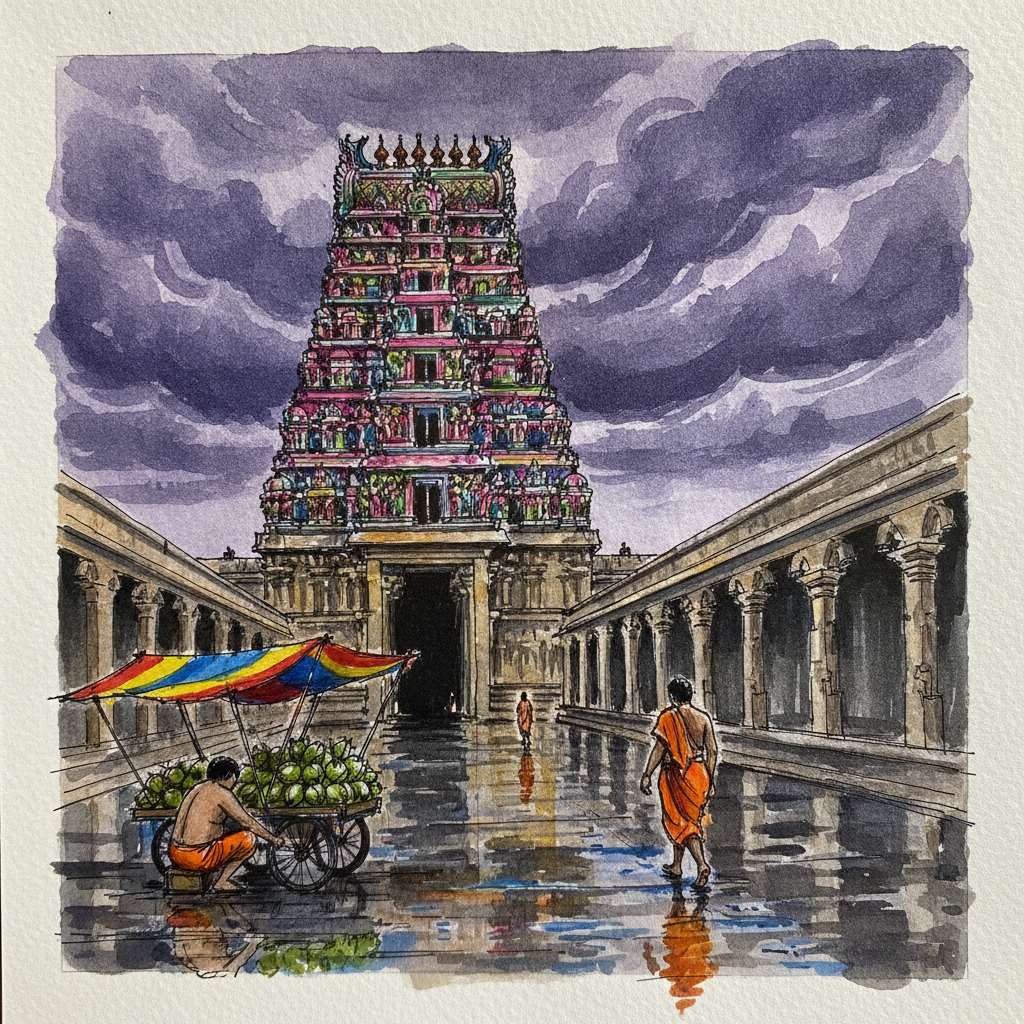
This piece offers a superb study in integrating precise architectural line work with fluid, atmospheric washes to convey mood and wetness. Focus on using varied ink line weights to define the gopuram's intricate details and the receding pillars, reserving your lighter lines for distant elements. Then, employ expansive wet-on-wet washes for the bruised monsoon sky and the mirrored temple floor, letting the watercolors capture the soft, reflective quality of the rain-soaked surfaces. Pay attention to how these two approaches—crisp ink and diffused color—can together articulate both solid structure and ephemeral atmosphere.
Piece 7 — Toddler in a Tupperware drawer
Pen + Watercolor · Loose pen and watercolor line-and-wash
Three takes

Focus for this piece
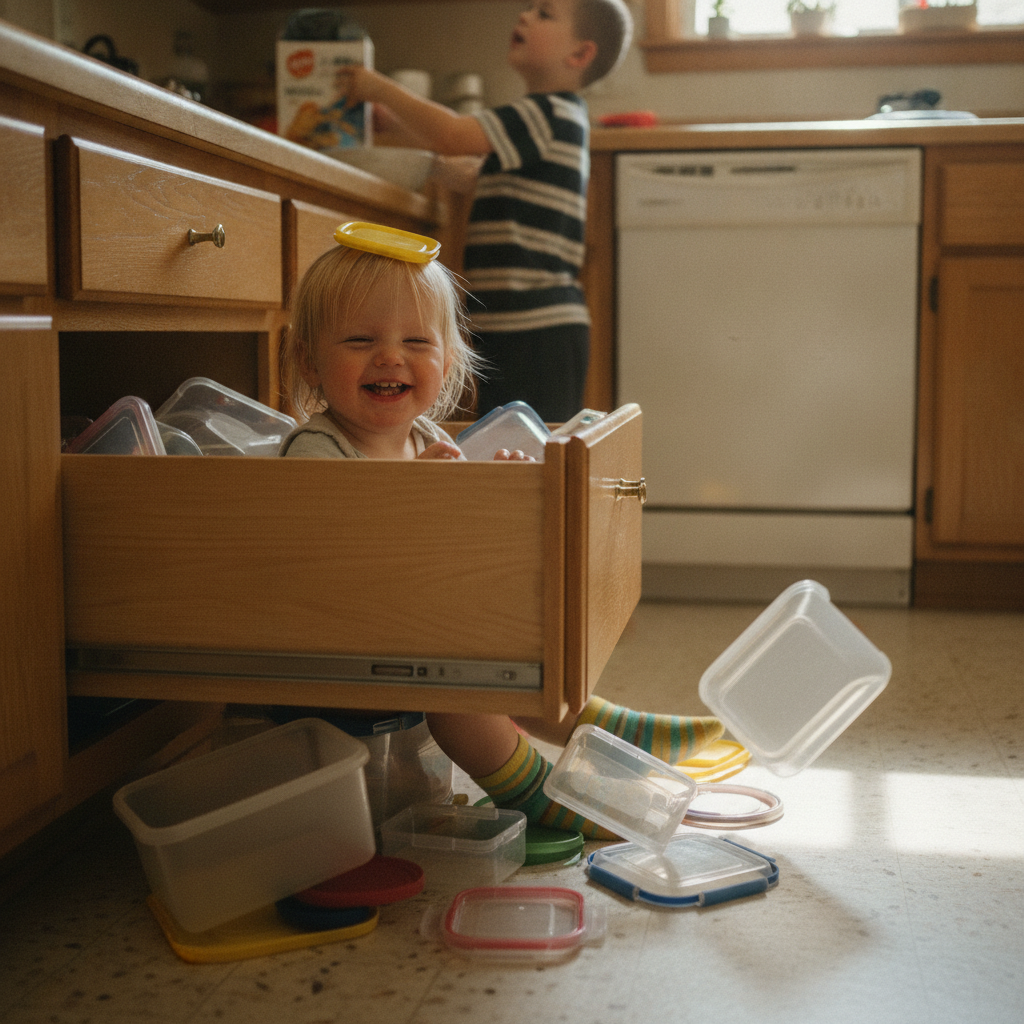
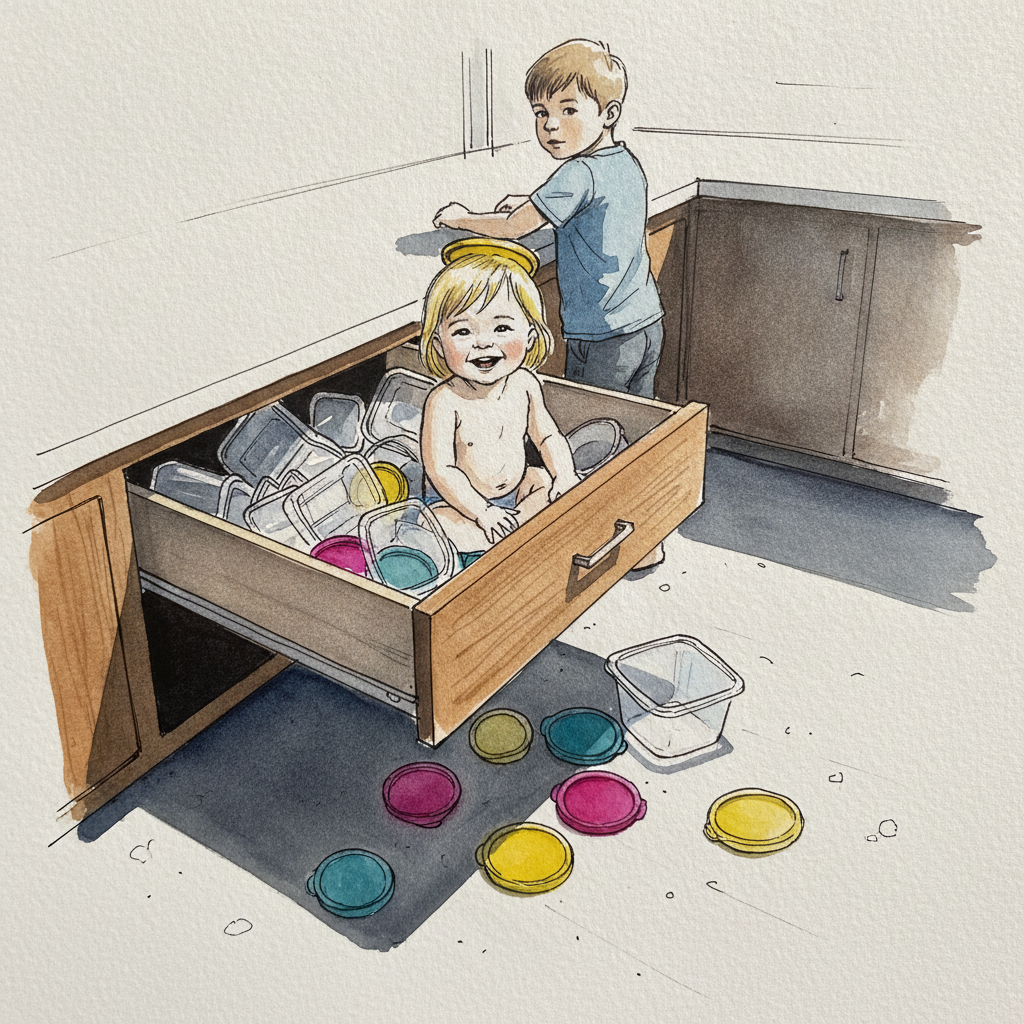
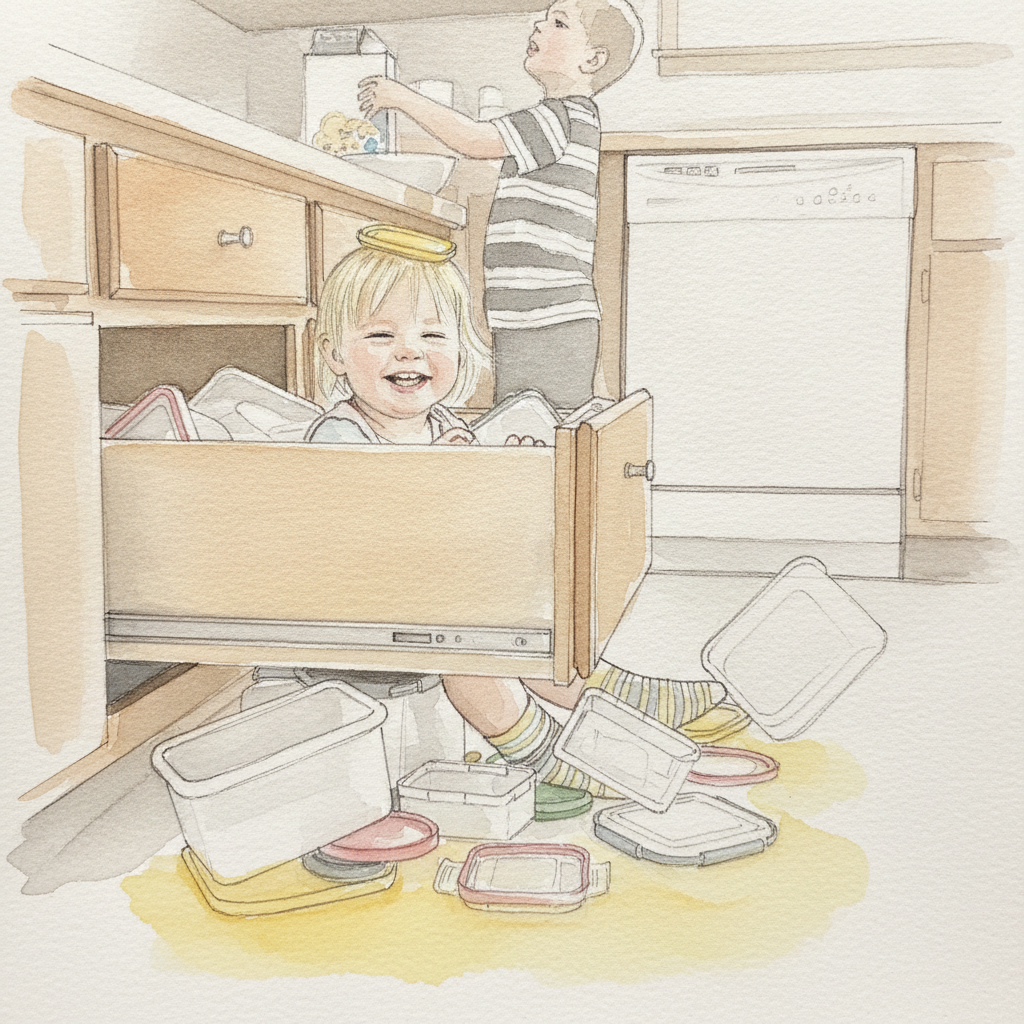
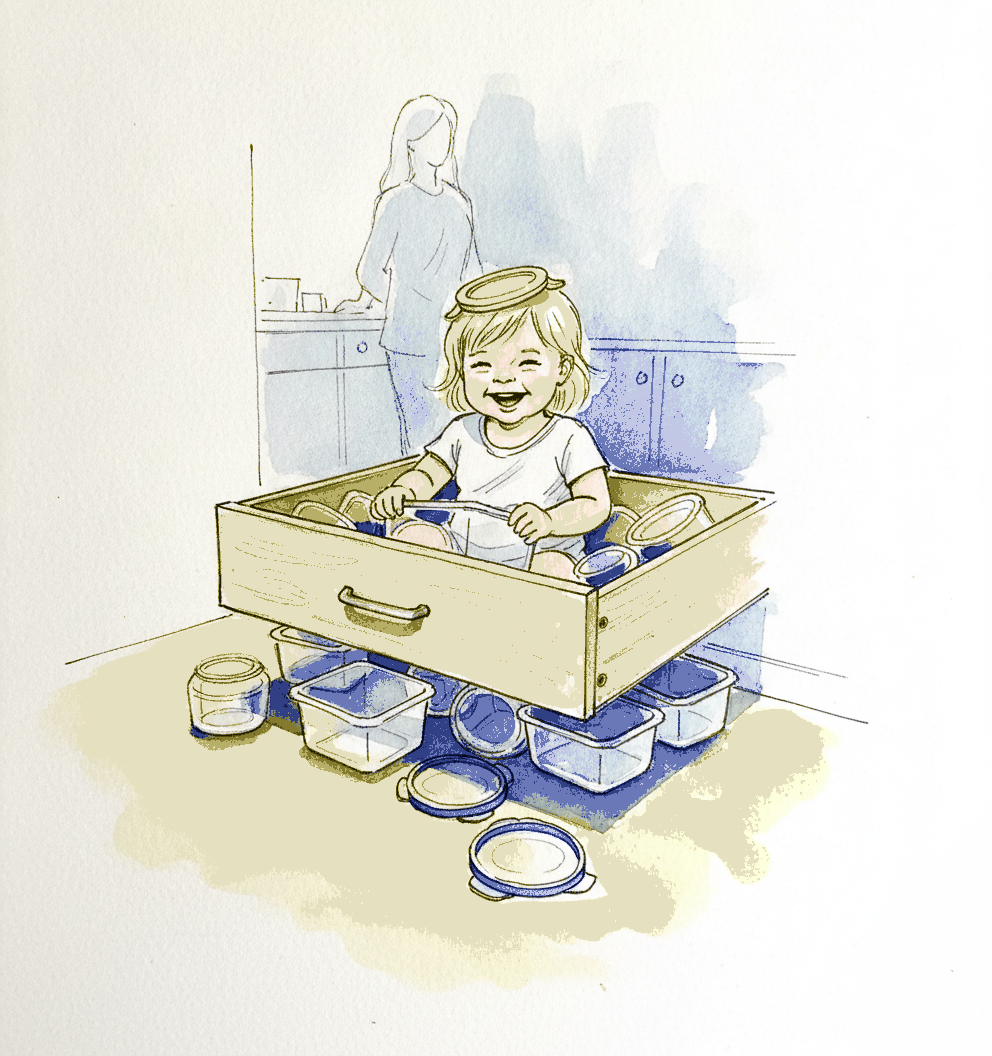
This piece offers a fantastic study in contrasting soft organic forms with crisp geometric shapes using varied line weights. Use lighter, broken lines to suggest the toddler's wispy hair and playful expression, while applying firmer, more continuous lines to define the hard edges of the Tupperware and the wooden drawer frame. Then, let warm, fluid washes establish the strong afternoon light pooling across the floor, helping to model the volume of the plastic containers while adding a glow to the toddler's form.
Piece 8 — Black Truffle on White Napkin
Pen + Watercolor · Loose pen and watercolor line-and-wash
Three takes
Focus for this piece
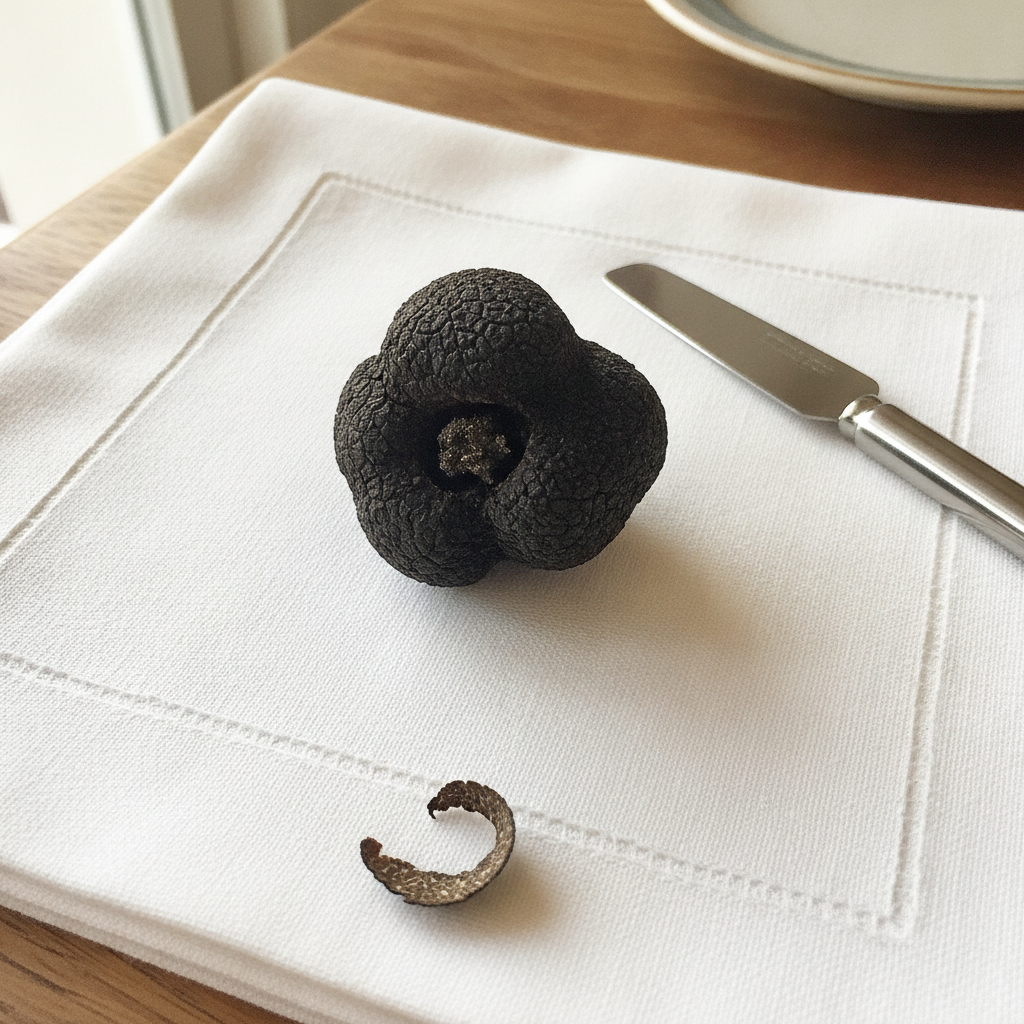
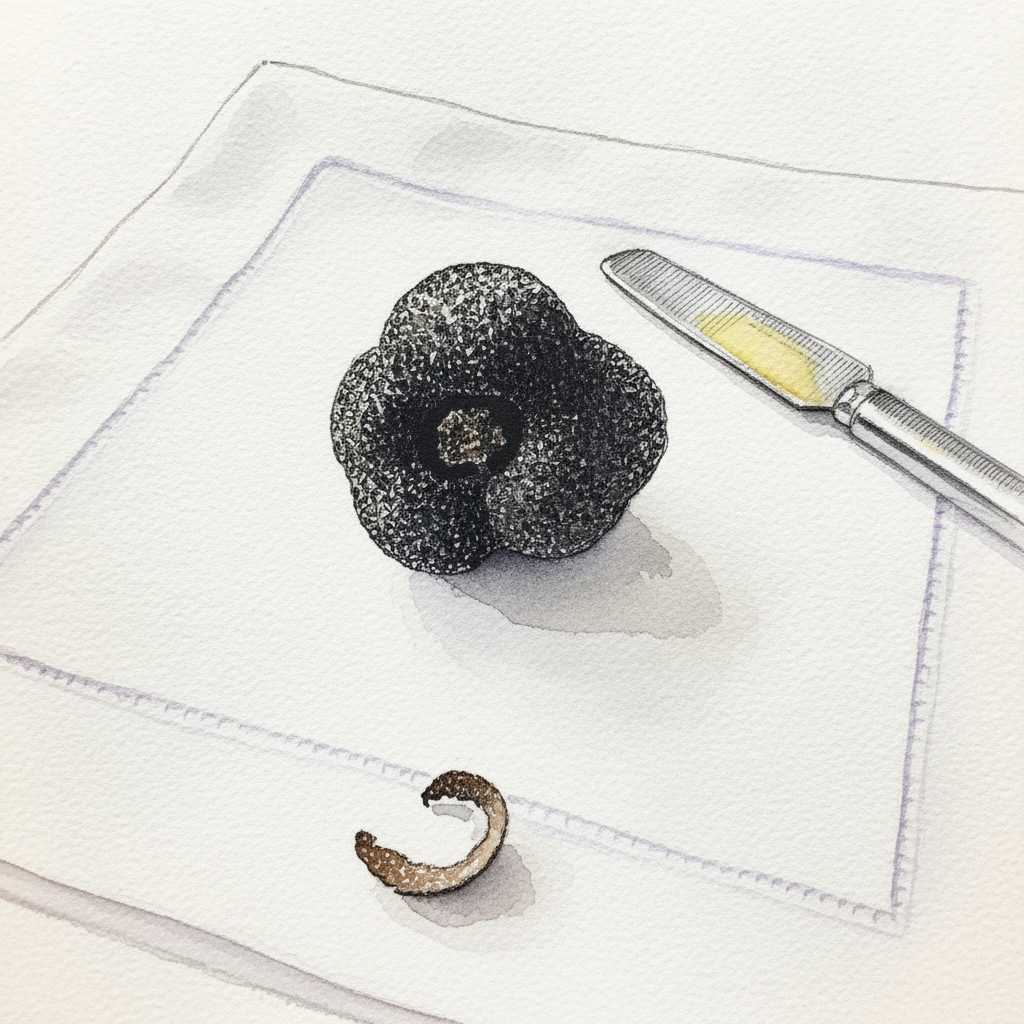
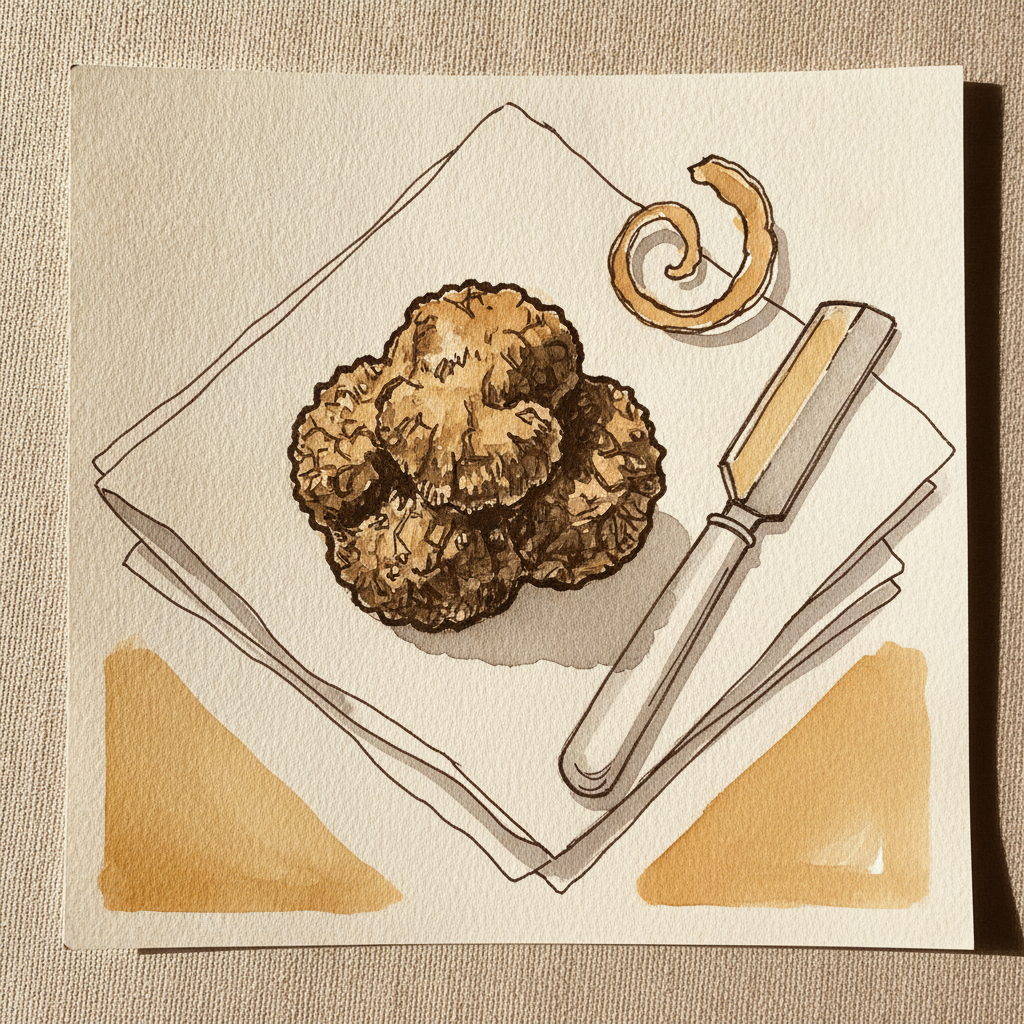
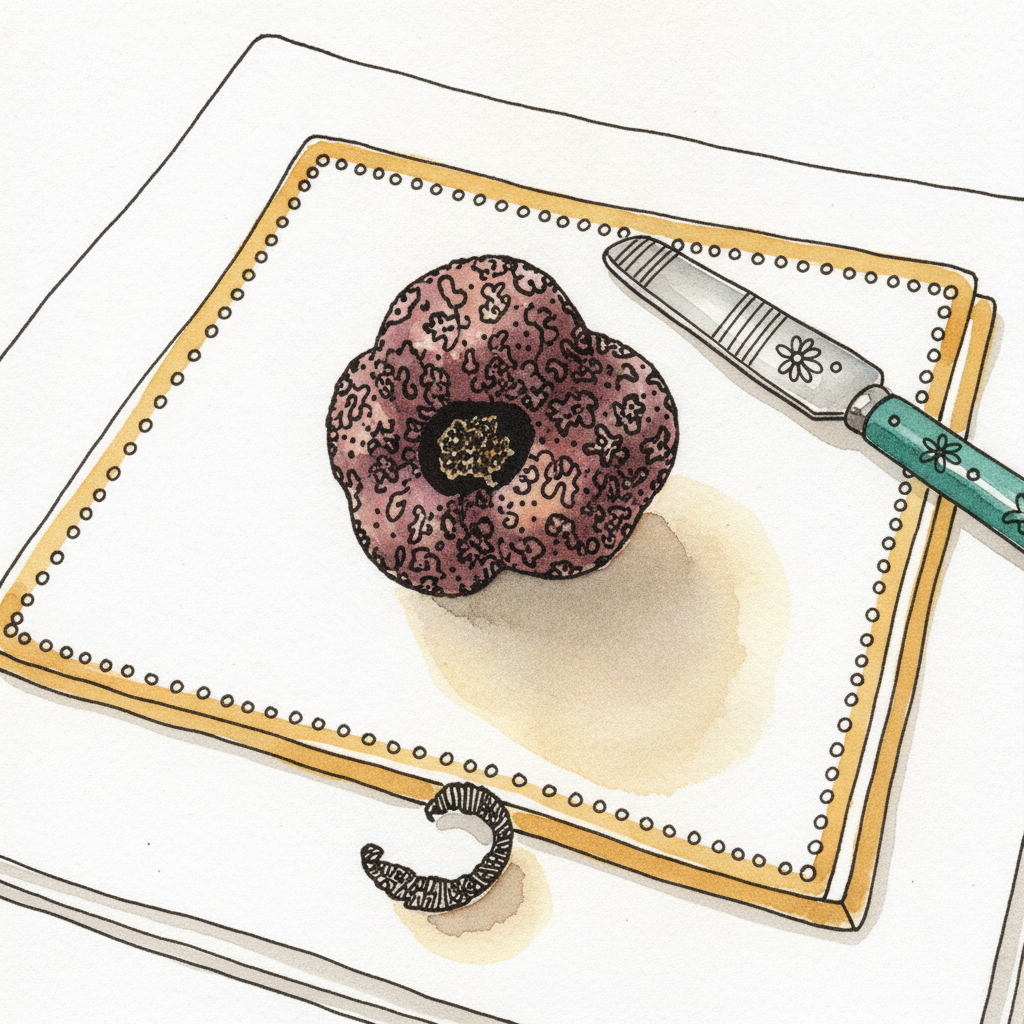
Today's subject is an excellent study in rendering extreme value contrast and tactile texture. Use a combination of dense, varied ink lines and rich, multi-layered washes to build the truffle's deeply textured, dark form, allowing light to catch its pyramid warts. In contrast, employ minimal linework and extremely diluted cool washes for the crisp folds of the white napkin, carefully preserving the paper's luminosity. This contrast in approach will define the truffle's strong silhouette and the subtle planes of the linen.