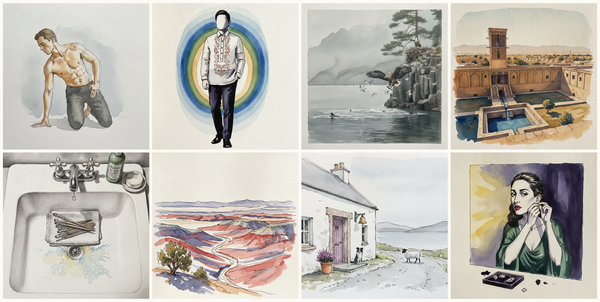
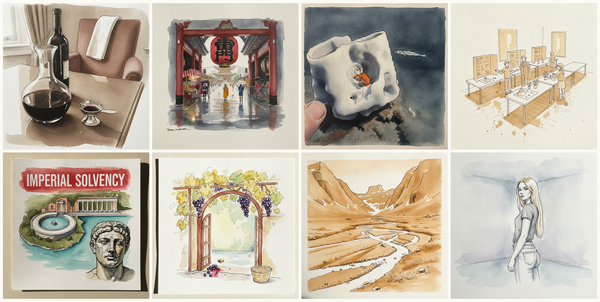
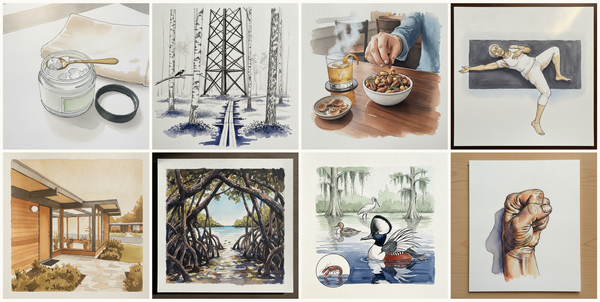
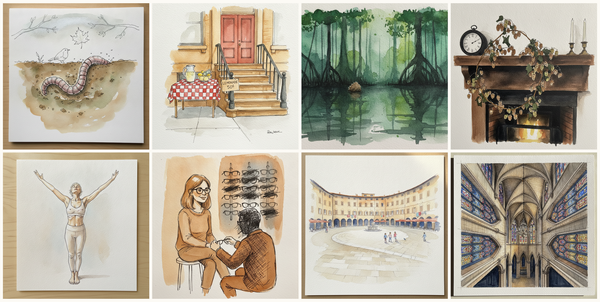
Pennsylvania — Bartram's Bridge in Fog, Non-binary model, early 30s, Latinx, athletic build, shoulder against brick wall, Marble Arch headland, Donegal, October, Person reading to fall asleep, and more — pen + watercolor for July 19, 2026
AI-generated daily art-practice references for pen and watercolor: Pennsylvania — Bartram's Bridge in Fog, Non-binary model, early 30s, Latinx, athletic build, shoulder against brick wall, Marble Arch headland, Donegal, October, Person reading to fall asleep, Candlelit dressing table, Greater sca…
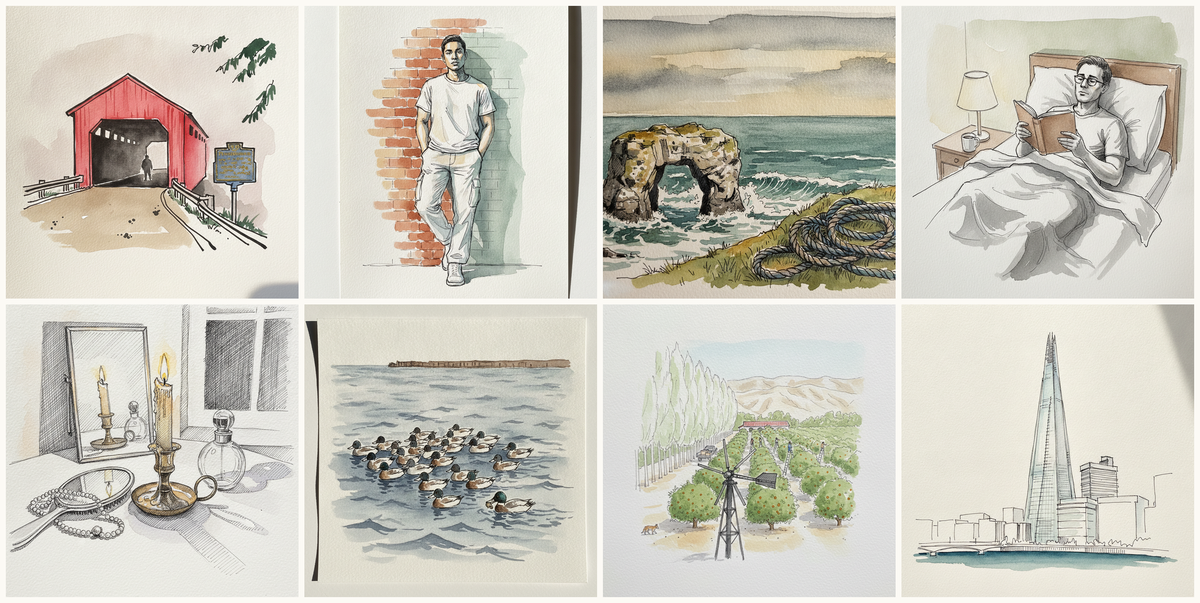
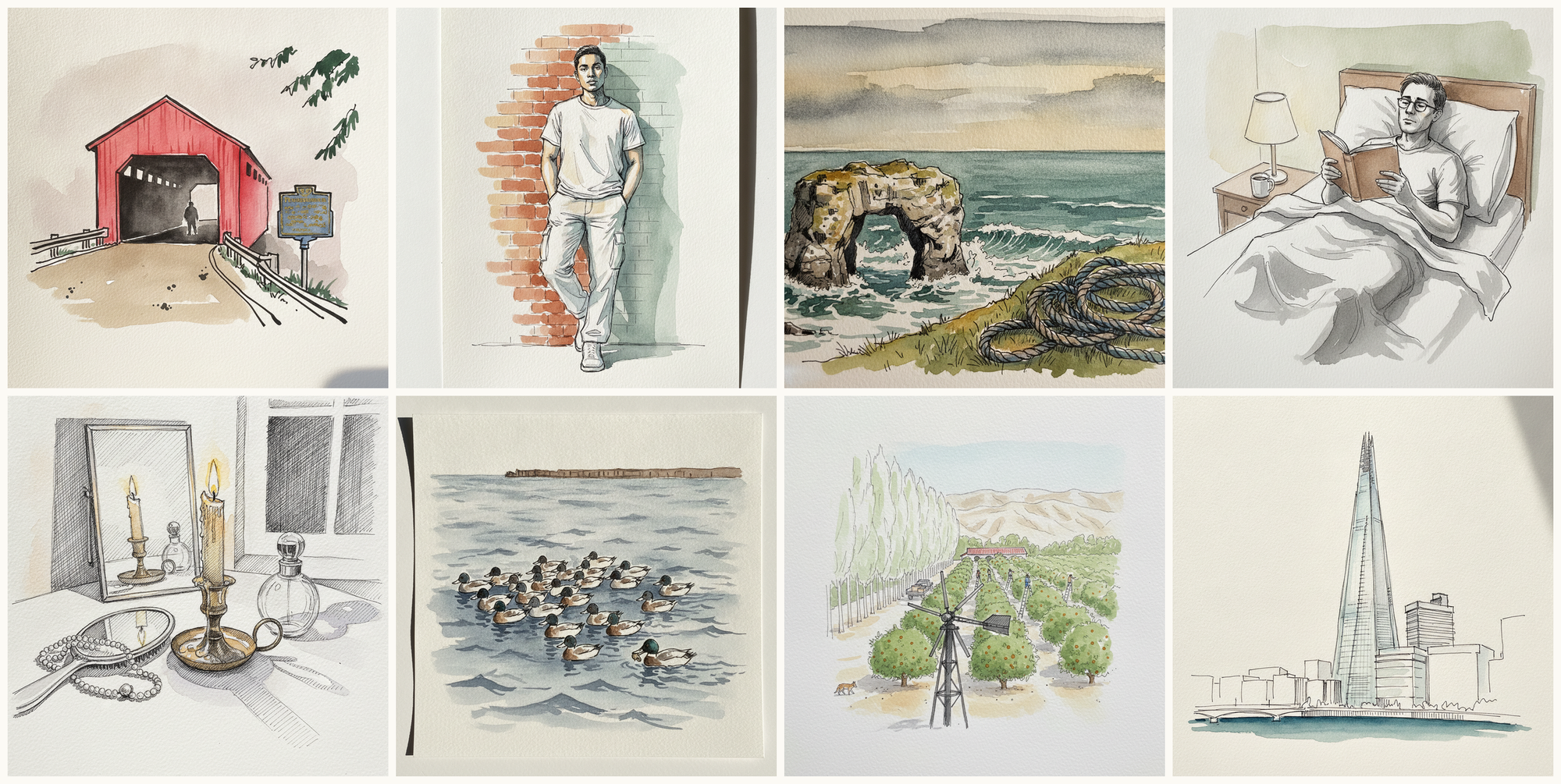
Today's 8 pen-and-watercolor pieces: Pennsylvania — Bartram's Bridge in Fog, Non-binary model, early 30s, Latinx, athletic build, shoulder against brick wall, Marble Arch headland, Donegal, October, Person reading to fall asleep, Candlelit dressing table, Greater scaup, Santa Paula citrus, California, USA, The Shard, Southwark, London, UK. Each piece comes with an AI-generated photoreal reference, three AI-generated example artworks in different treatments, and a short focus paragraph naming what to study in this one.
Why these references use AI
This daily series uses AI-generated images as practice prompts, not as finished artwork to copy. Each subject starts with a synthetic photoreal reference generated with Gemini/Nano Banana, then moves into three pen-and-watercolor interpretations of the same subject.
I use AI here because daily art practice needs variety and low friction. Real life can get repetitive, busy, or visually narrow. These generated reference sets make it easier to study bodies, buildings, animals, landscapes, objects, gestures, light, palettes, and compositions that might not show up in an ordinary day.
The goal is not to reproduce any image directly. Treat each set as a starting point for observation and study: choose what interests you, change the framing, simplify the subject, alter the palette, and make your own version.
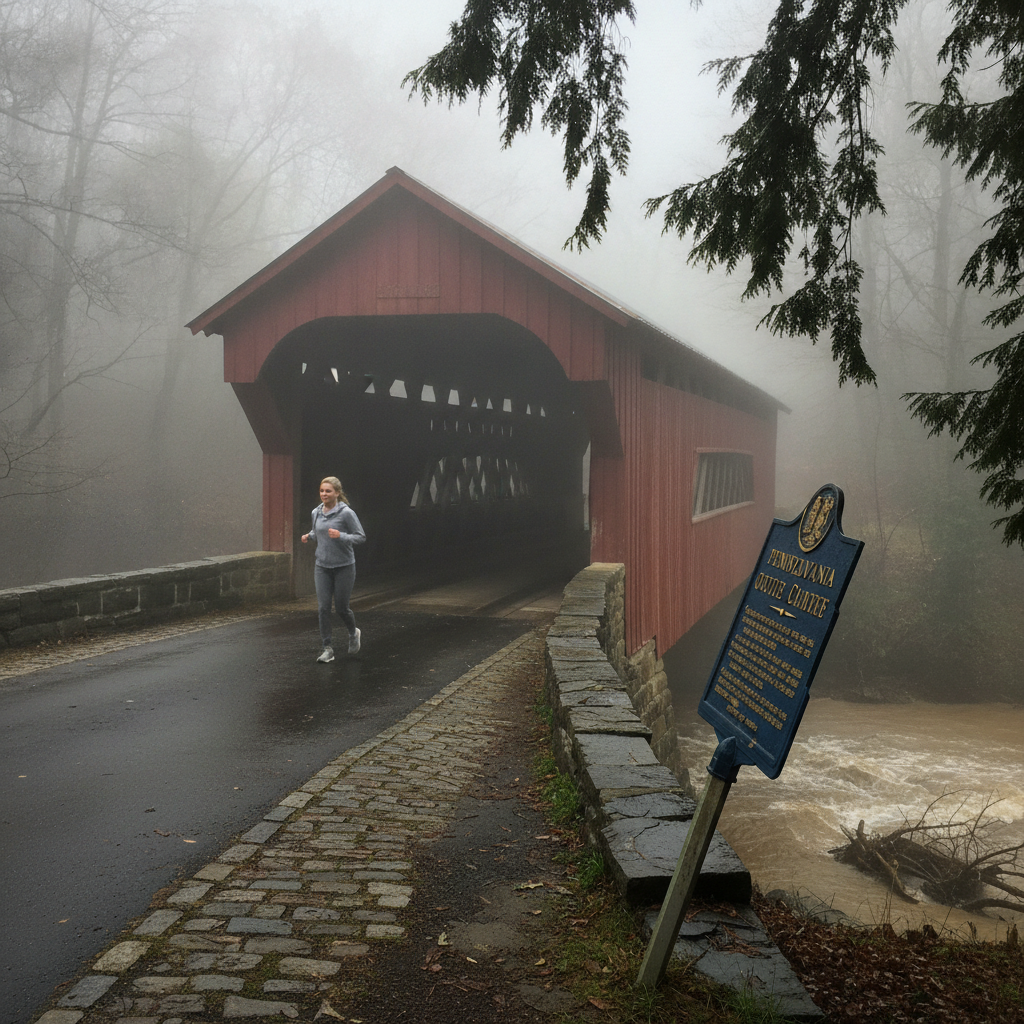
Piece 1 — Pennsylvania — Bartram's Bridge in Fog
Pen + Watercolor · Loose pen and watercolor line-and-wash
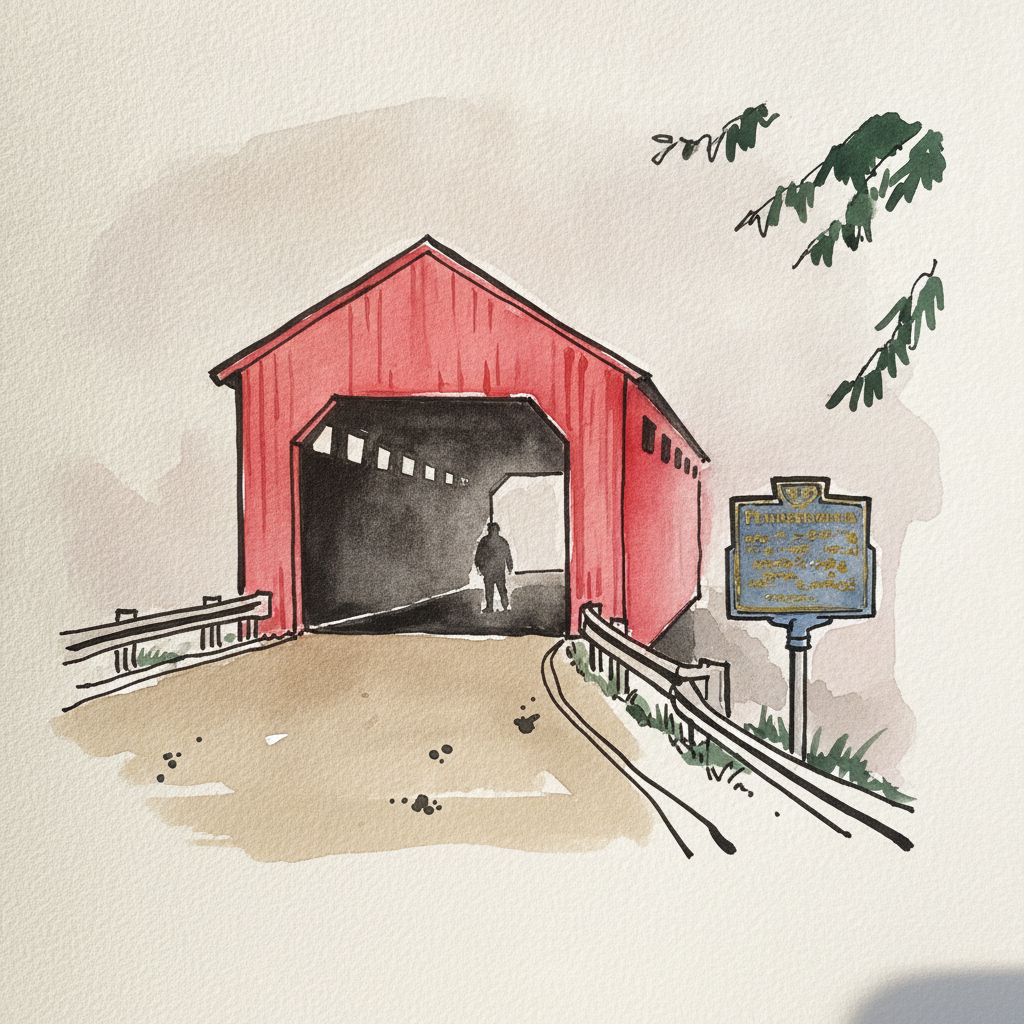
Three takes
Focus for this piece
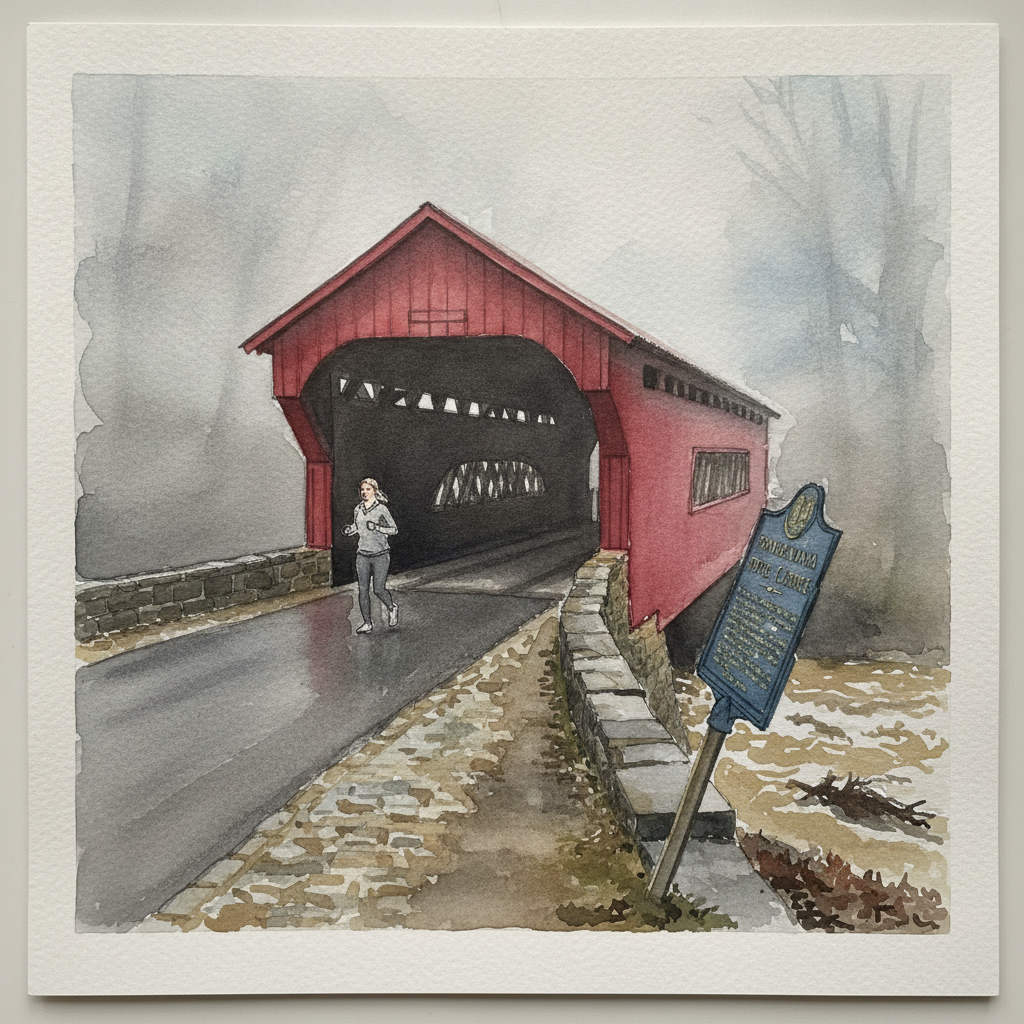
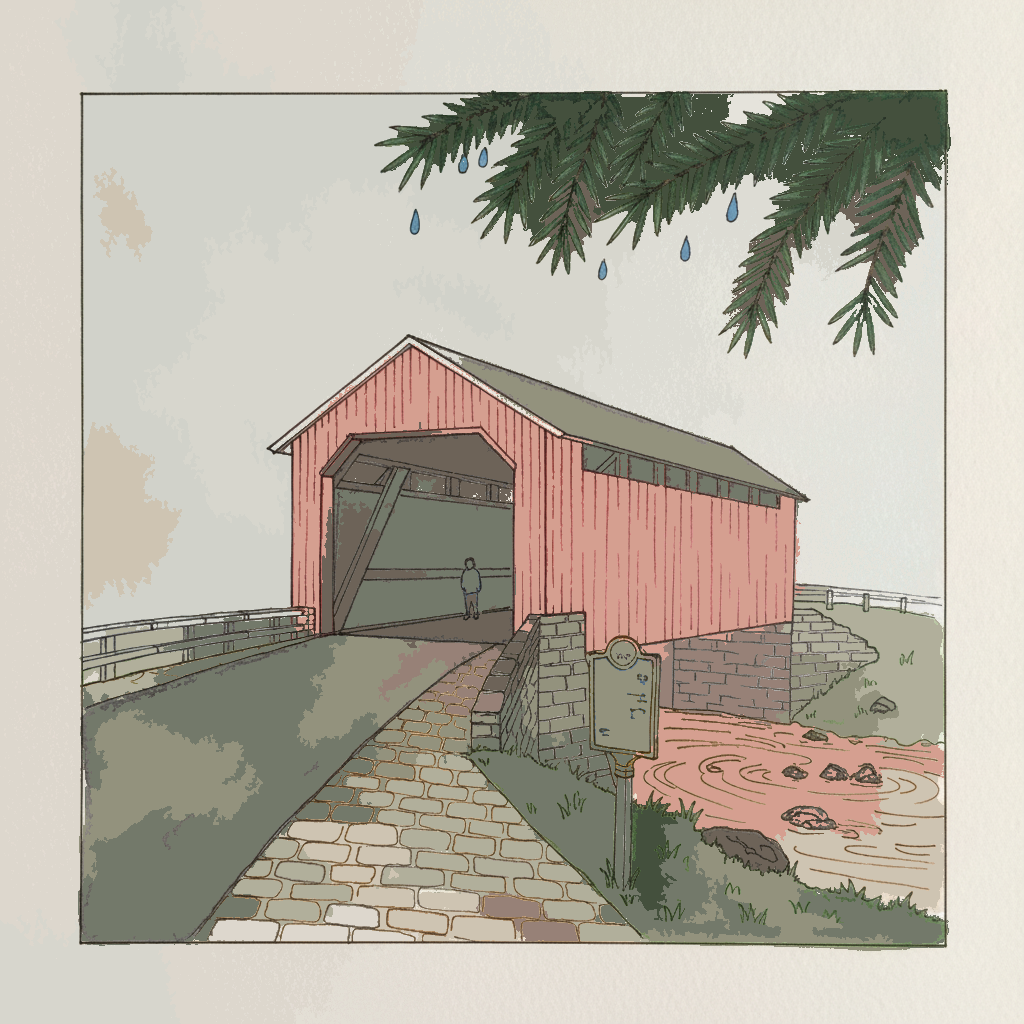
This piece offers an excellent study in creating atmospheric depth by transitioning from soft, wet-into-wet watercolor washes to gradually sharper pen lines. Use a limited, muted palette for the fog, allowing the bridge's reddish-pink form to emerge with softly diffused edges that sharpen as it approaches the viewer. Practice varying your line weight, applying lighter, broken lines where the bridge fades into the mist, and reserving your darkest, most continuous lines for the foreground details like the wet asphalt and cobblestone.
Piece 2 — Non-binary model, early 30s, Latinx, athletic build, shoulder against brick wall
Pen + Watercolor · Loose pen and watercolor line-and-wash

Three takes
Focus for this piece
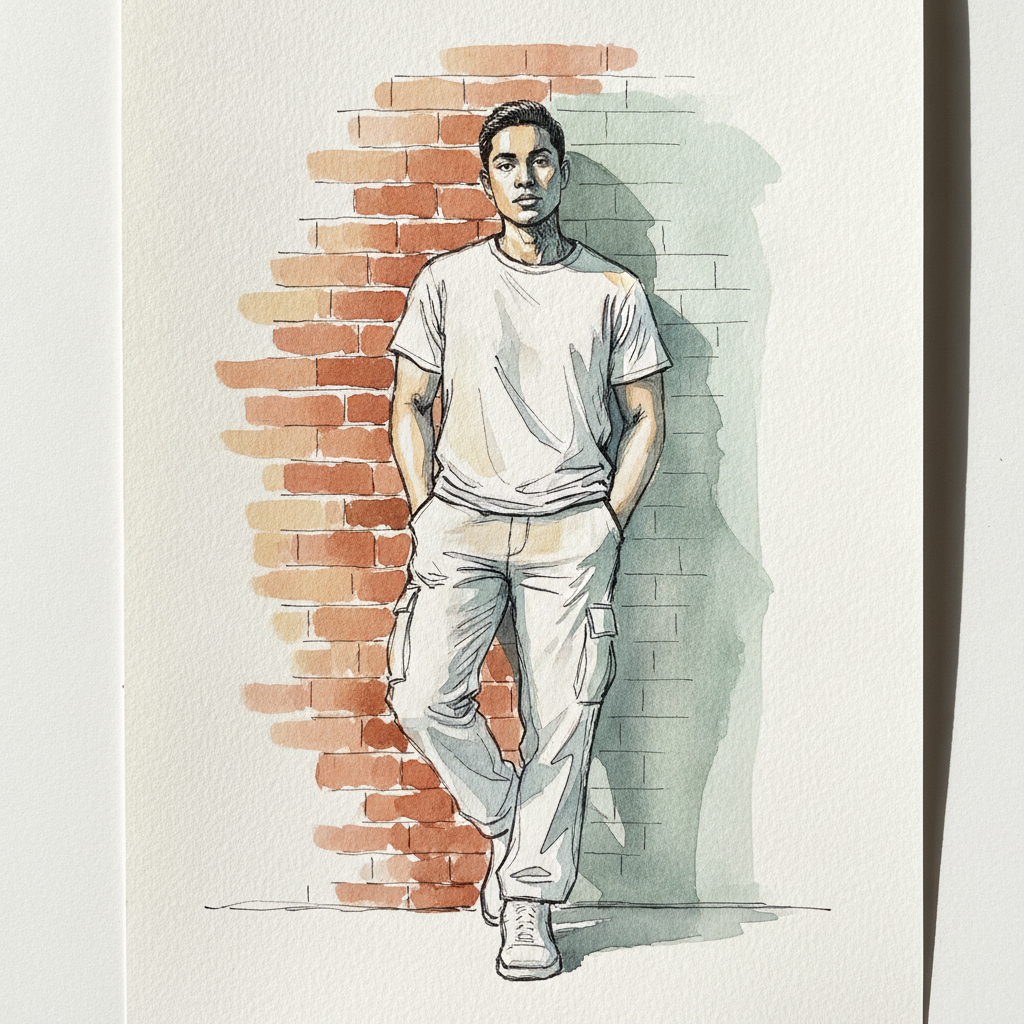
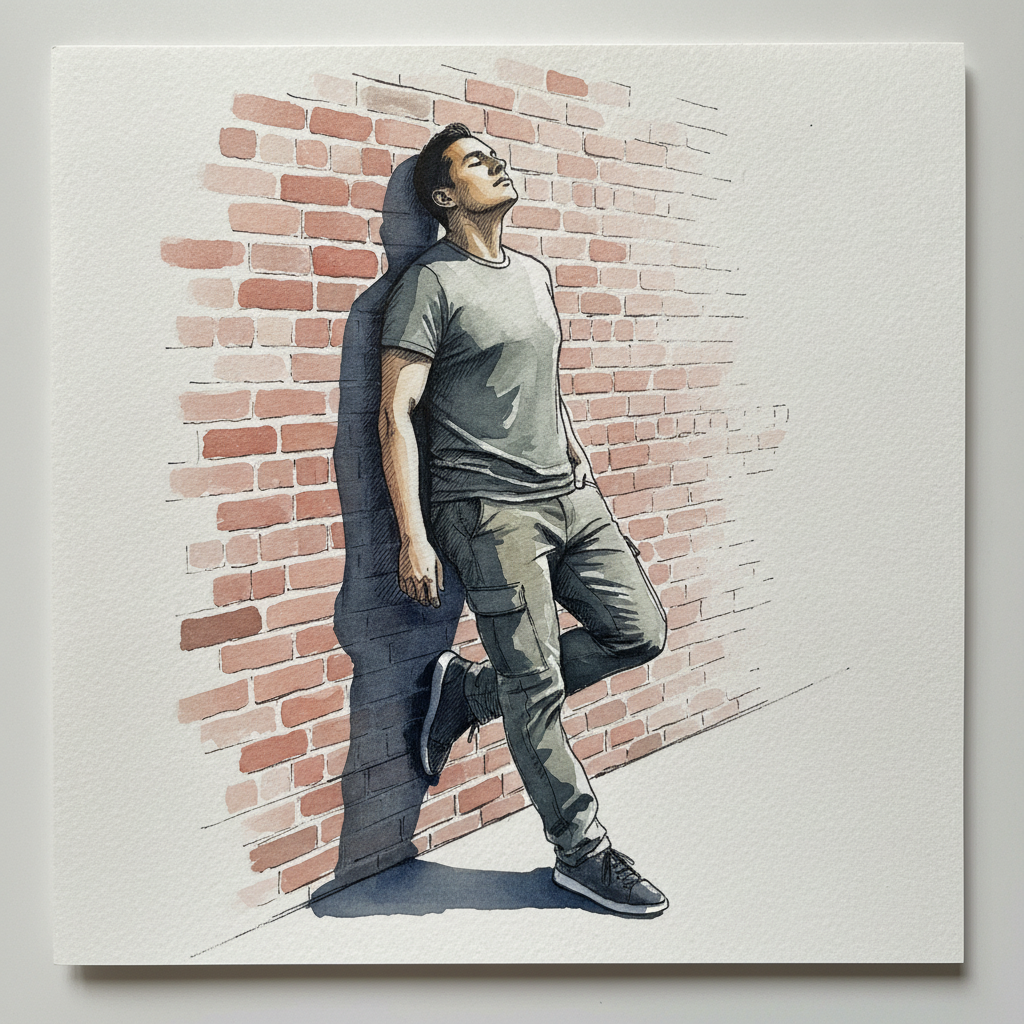
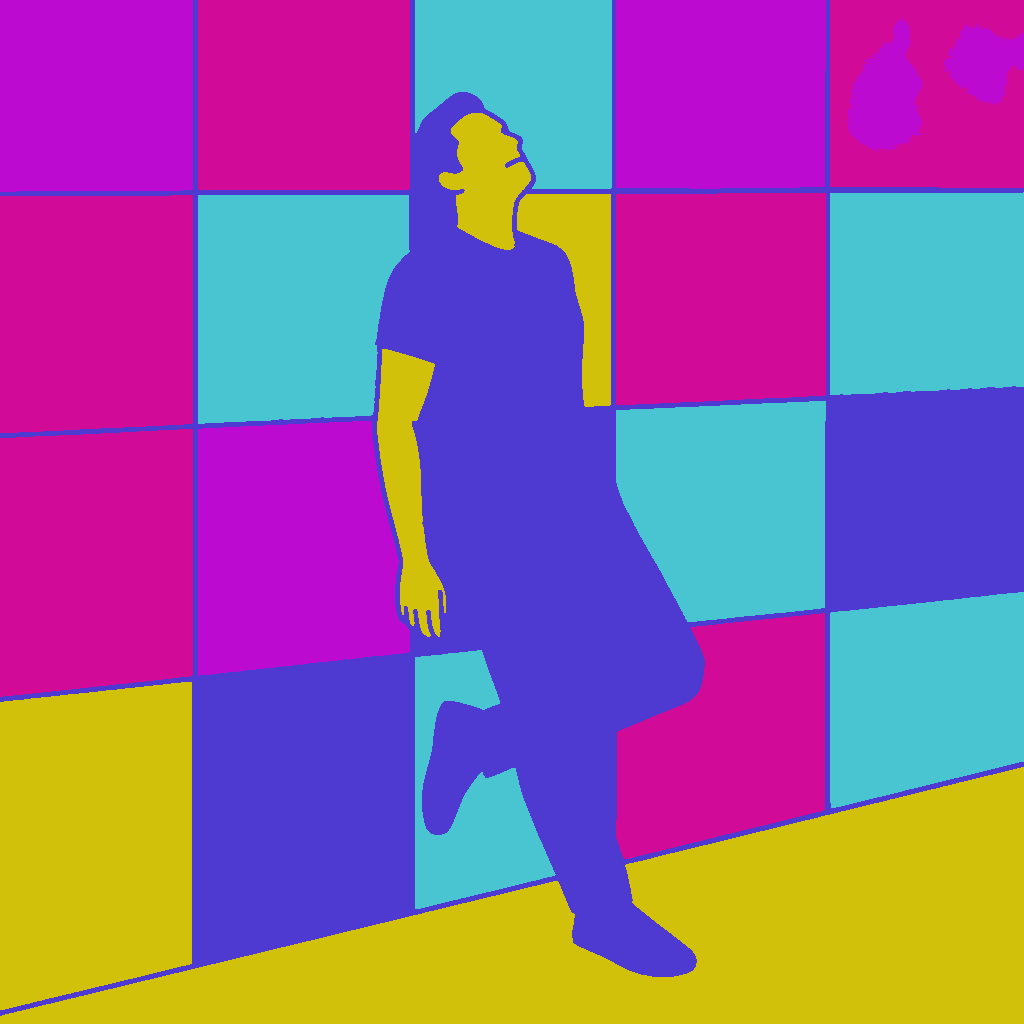
This piece offers an excellent opportunity to study how line weight and wash temperature define form and light. Focus on using a precise, fine pen line to emphasize the crisp rim light along the model's right contour and to delineate the three anchoring contact points with the brick wall. Then, build the cool, deep reflected shade on the wall-facing side with layered washes, allowing the watercolor to create volume and atmosphere around your decisive ink lines.
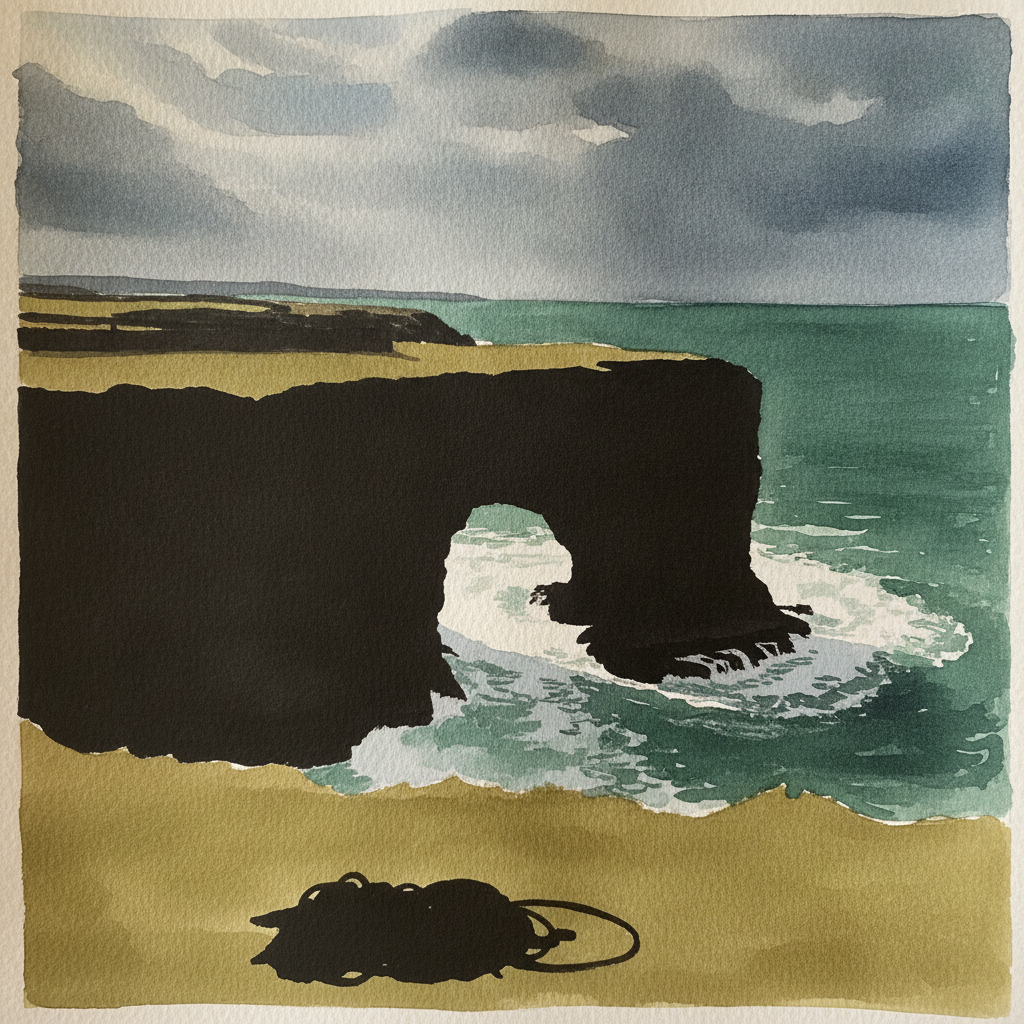
Piece 3 — Marble Arch headland, Donegal, October
Pen + Watercolor · Loose pen and watercolor line-and-wash
Three takes
Focus for this piece
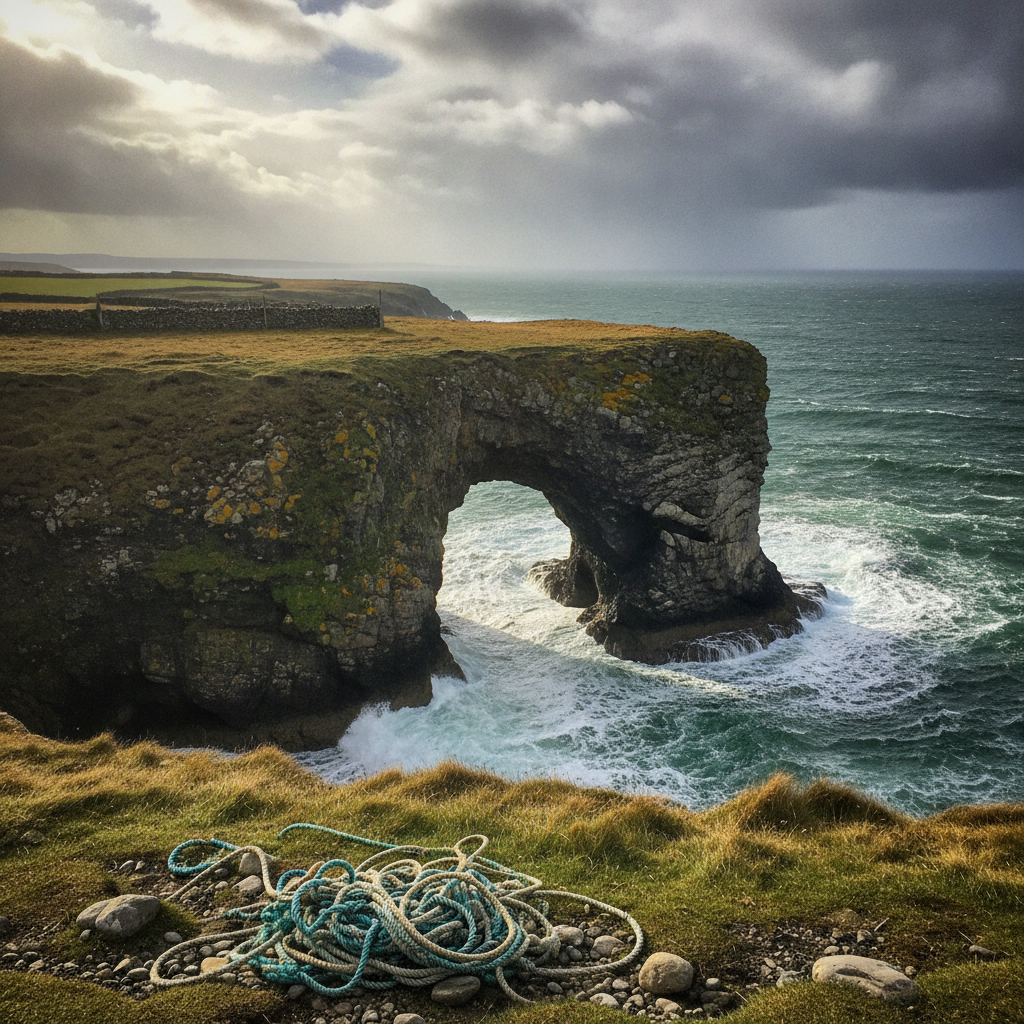
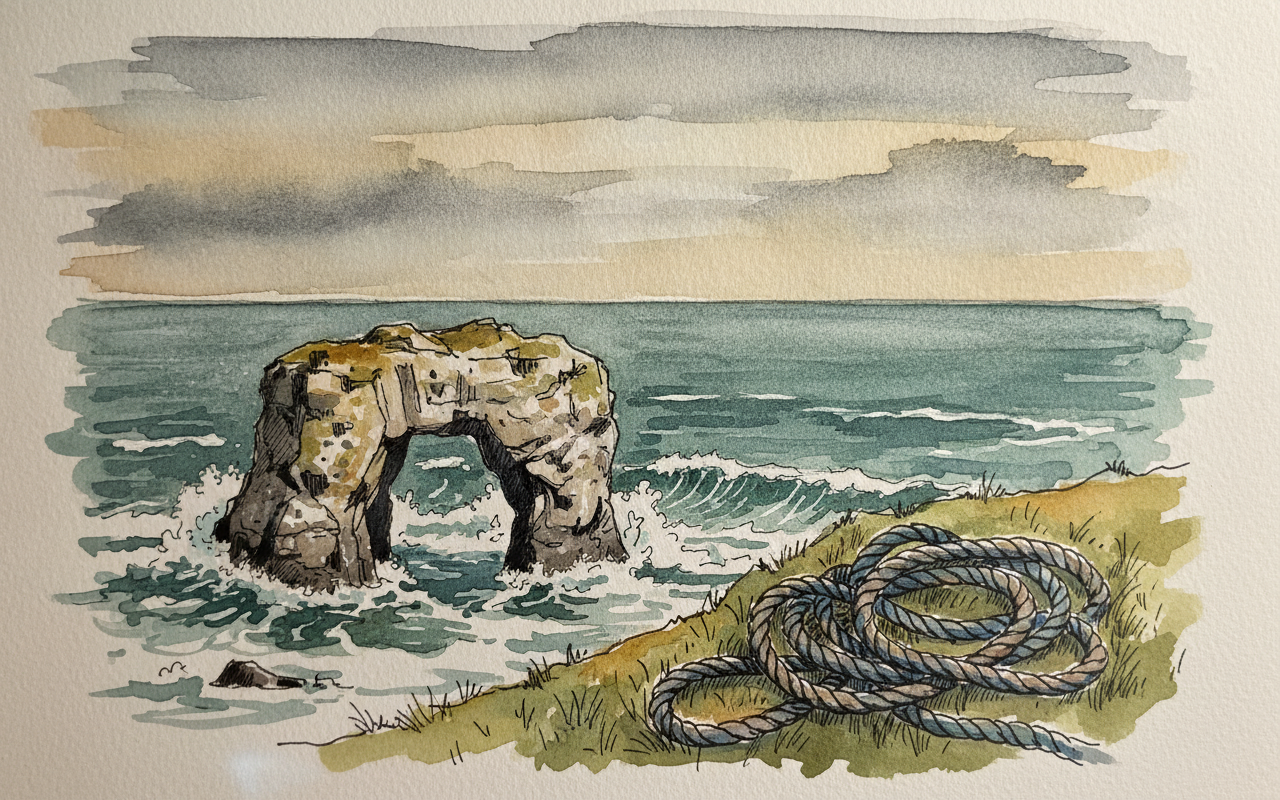
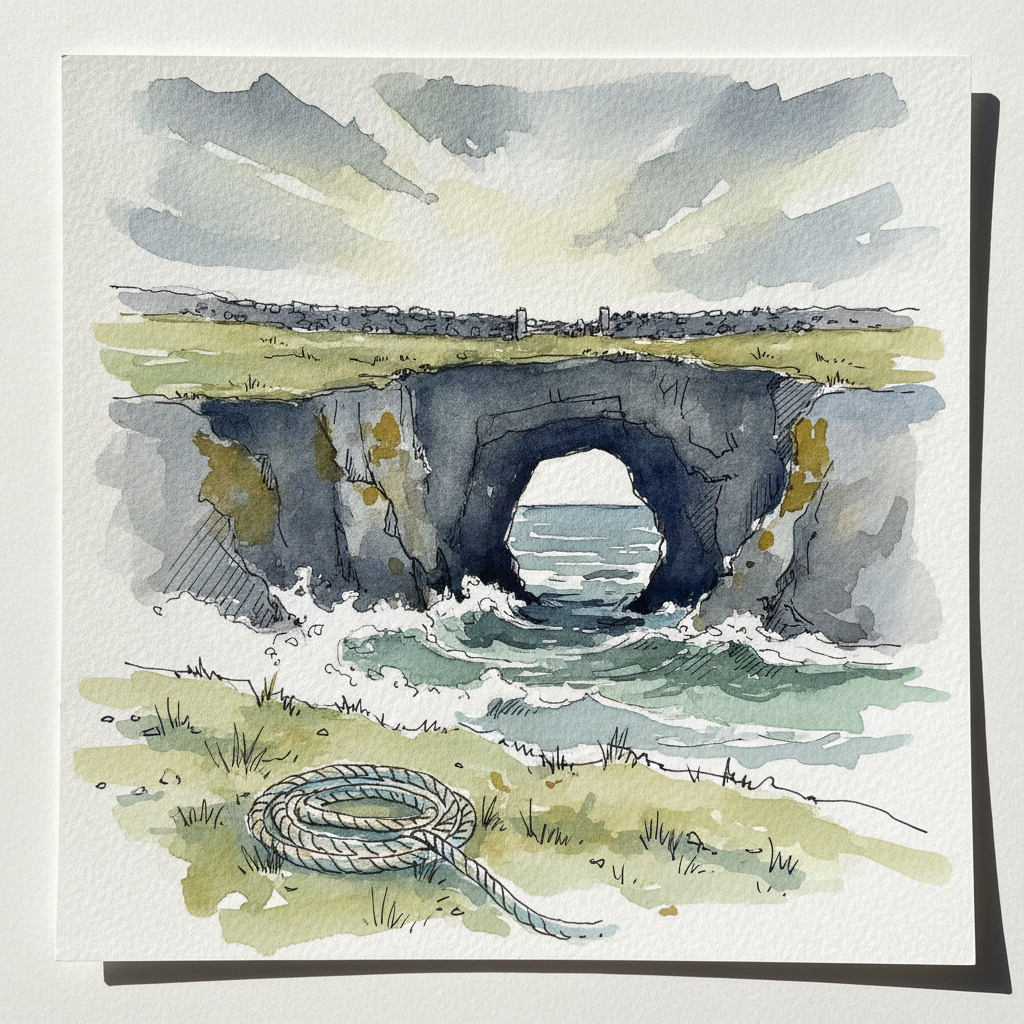
This piece offers a superb opportunity to practice differentiating textures and conveying dynamic movement through the interplay of ink and wash. Use varied pen line weights and densities – from firm, continuous lines for the foreground rope and stone wall, to broken, feathery strokes for the cliff's lichen and grass – to define form and detail. Then, employ fluid wet-into-wet watercolor washes for the restless Atlantic and the shifting sky, letting the pigment capture the dramatic changes in light and sea color, from gunmetal to jade. This will help you balance ink's precision with watercolor's atmospheric power.
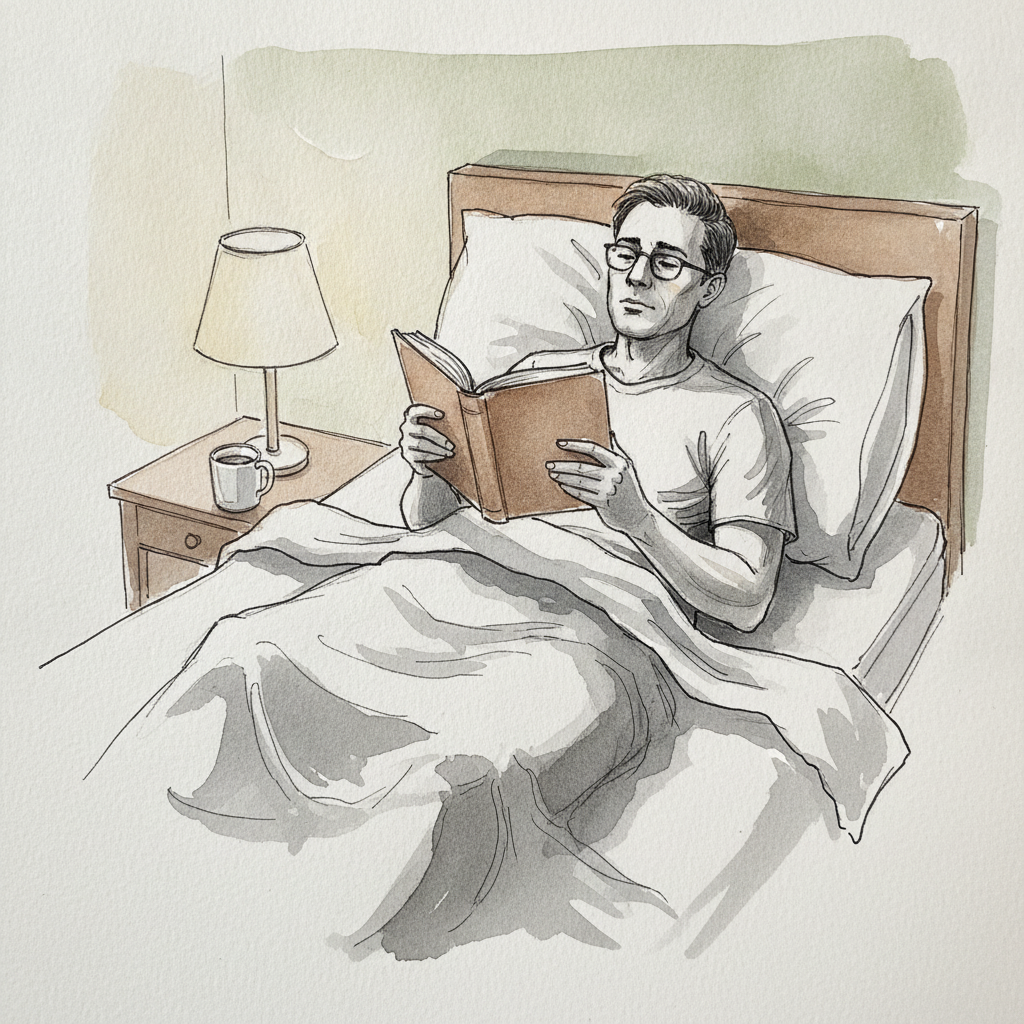
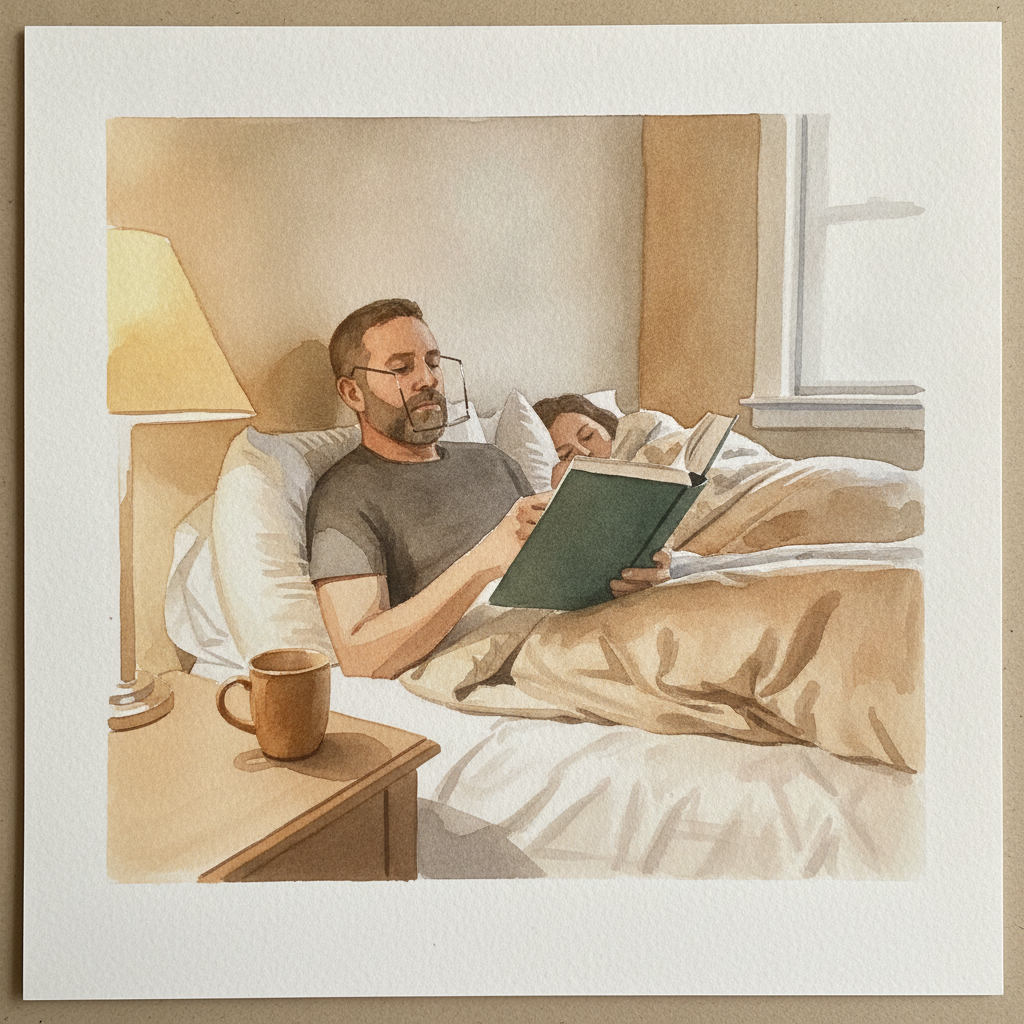
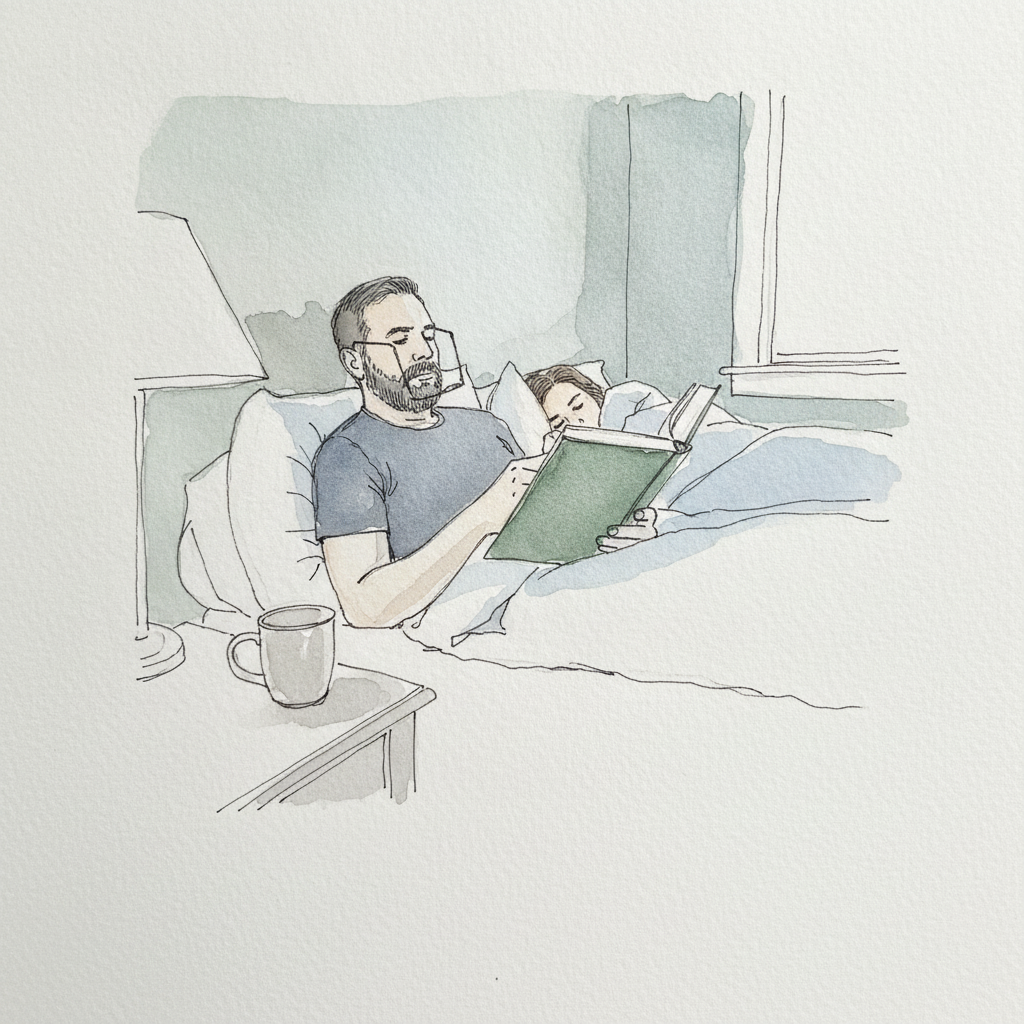
Piece 4 — Person reading to fall asleep
Pen + Watercolor · Loose pen and watercolor line-and-wash

Three takes
Focus for this piece
This piece offers an excellent study in rendering atmospheric light and shadow, using a limited palette to convey a deep, sleepy interior illuminated by a single lamp. Focus on building volume in the dimness with soft, layered washes, letting the watercolor suggest the form of the pillows and sleeping wife with minimal line work. Contrast these areas with selective, crisper pen lines to define focal points like the man's glasses, the book's hard edges, and the small details of the mug and lamp. Pay close attention to how the light source creates a glow and how values transition softly into shadow, allowing ink to add definition only where clarity is essential.
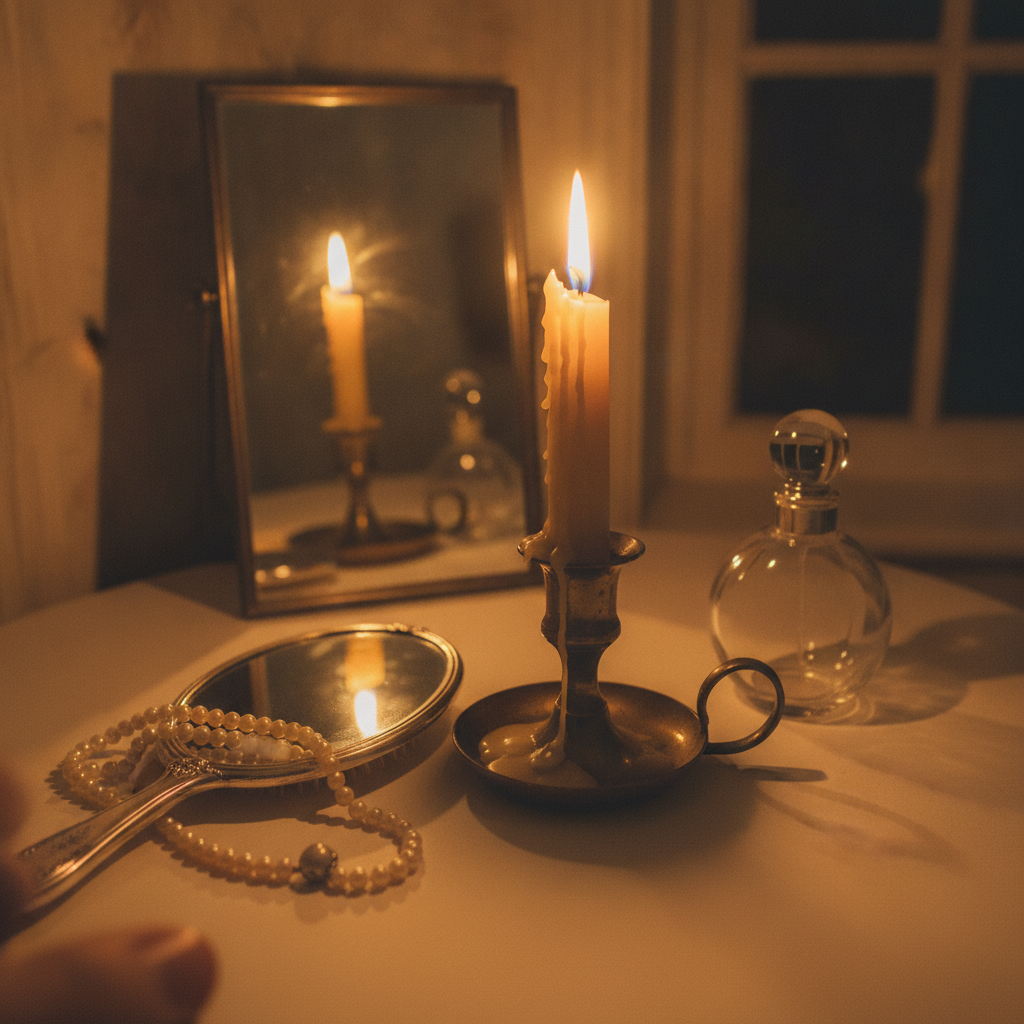
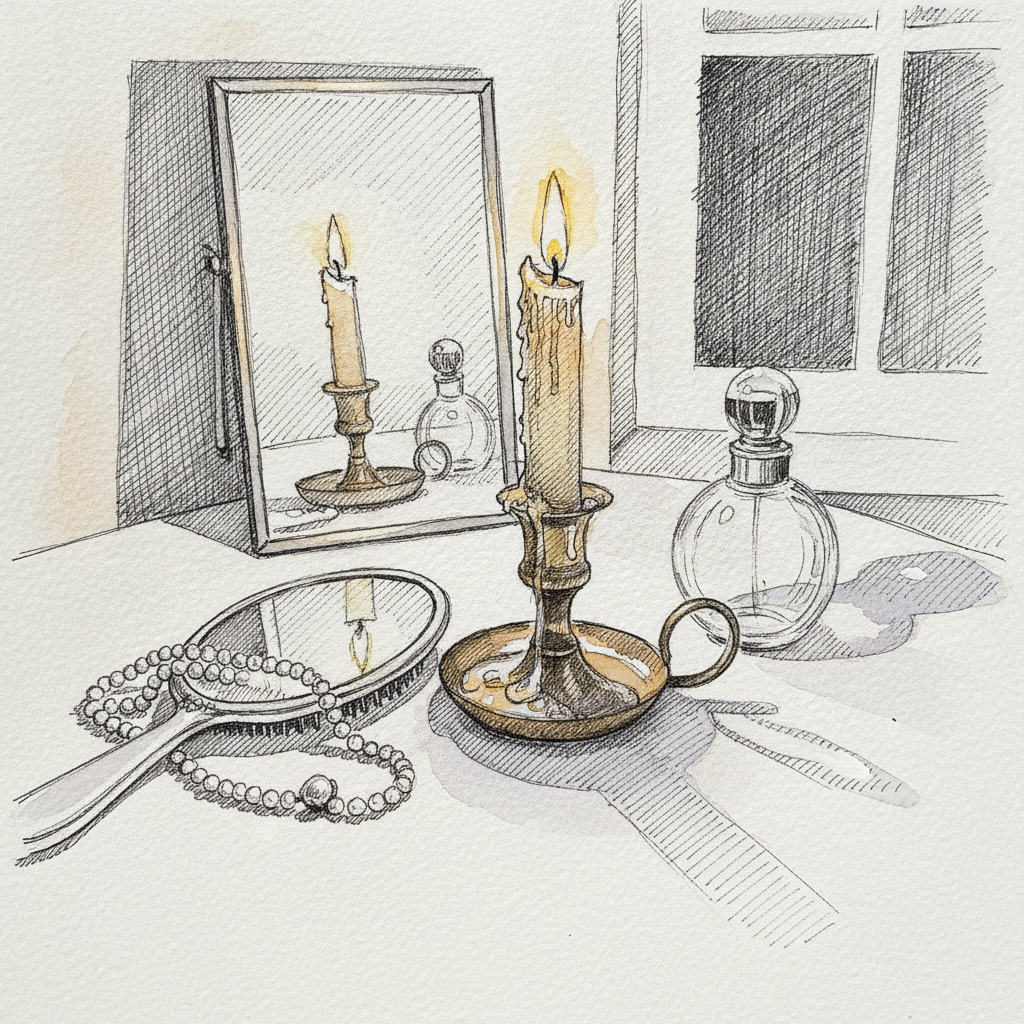
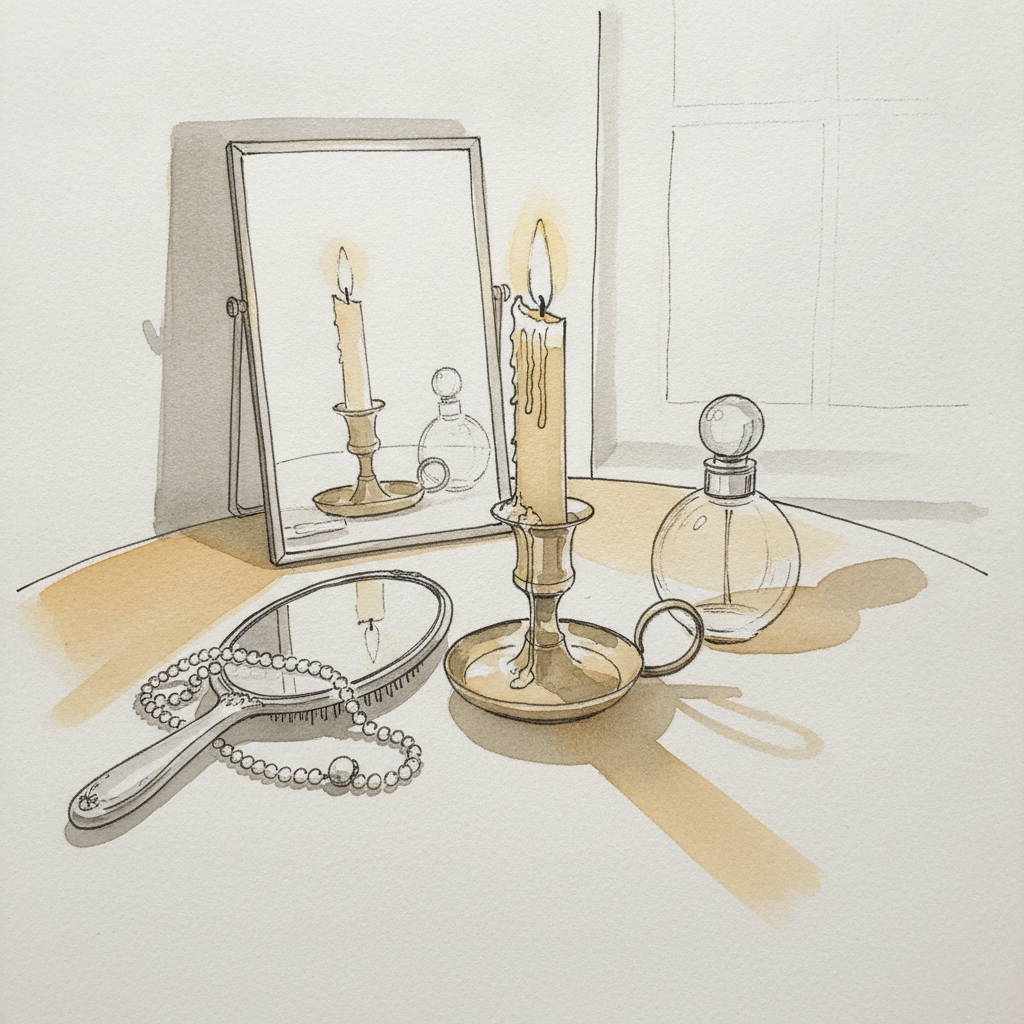
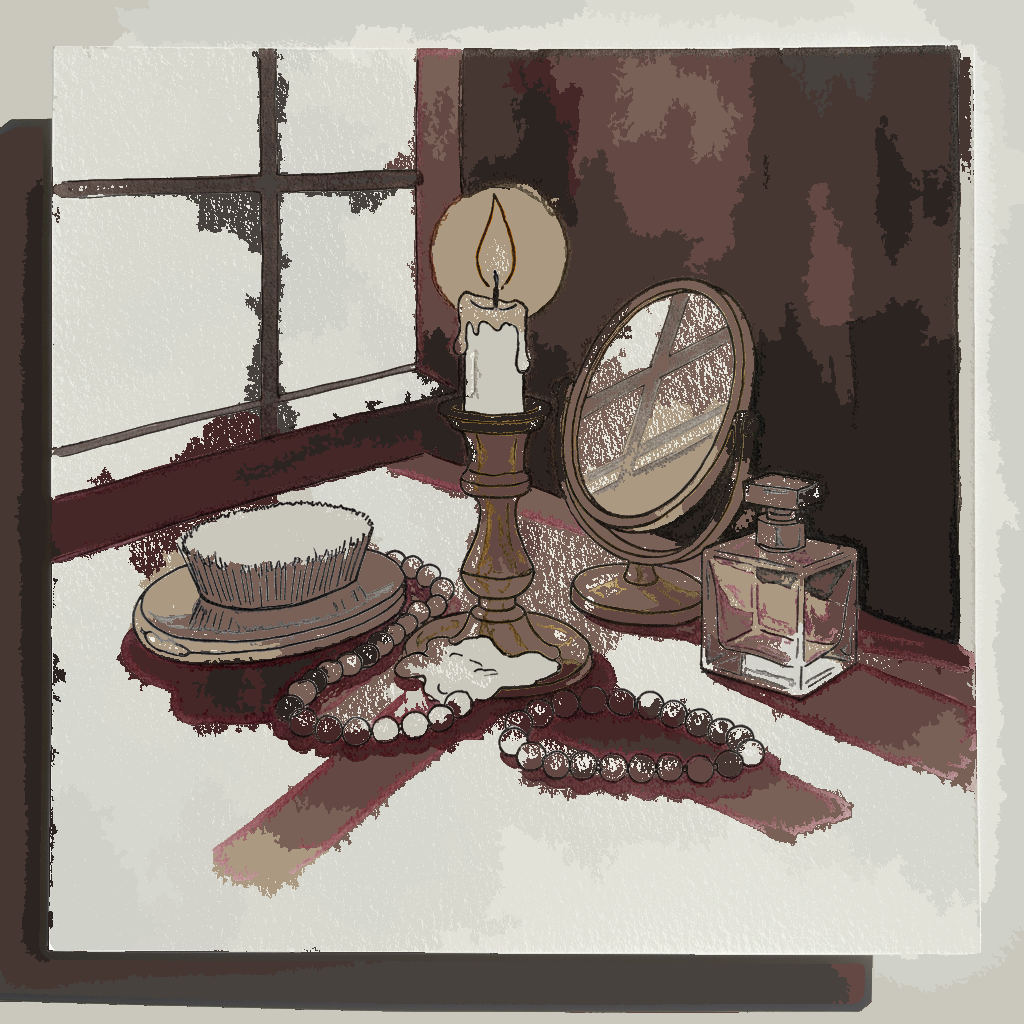
Piece 5 — Candlelit dressing table
Pen + Watercolor · Loose pen and watercolor line-and-wash
Three takes
Focus for this piece
This piece is ideal for studying dramatic value shifts and edge control using both media. Define the candle, brush, and bottle with varying pen line weight, reserving your sharpest, darkest lines for the small, tight points of reflected light on the silver and glass. Then, using a restricted warm palette, practice creating soft, wet-into-wet washes for the long, warm-edged shadows, letting them bleed gently into cooler ambient tones to establish the candlelit atmosphere. Pay close attention to the mirror's reflection of the doubled flame, employing a distinct, concentrated yellow wash.
Piece 6 — Greater scaup
Pen + Watercolor · Loose pen and watercolor line-and-wash
Three takes

Focus for this piece
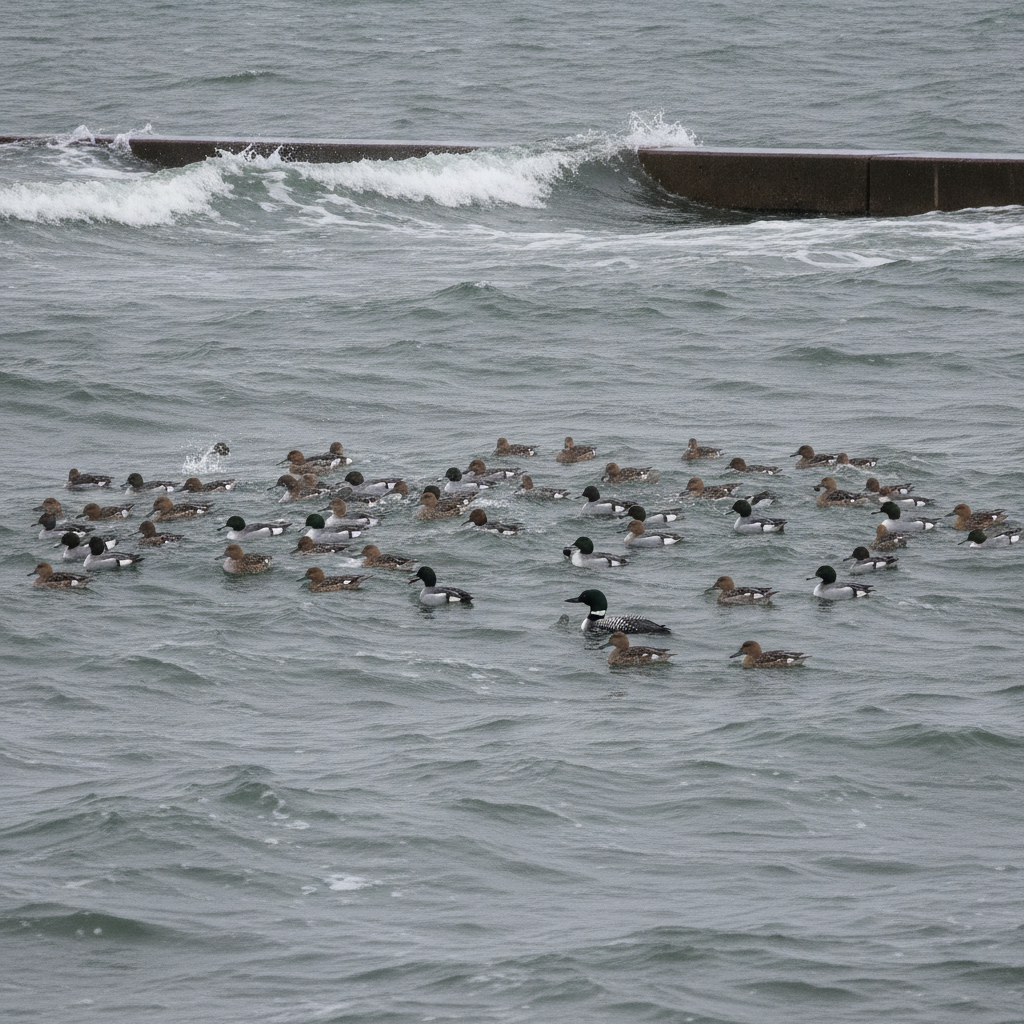
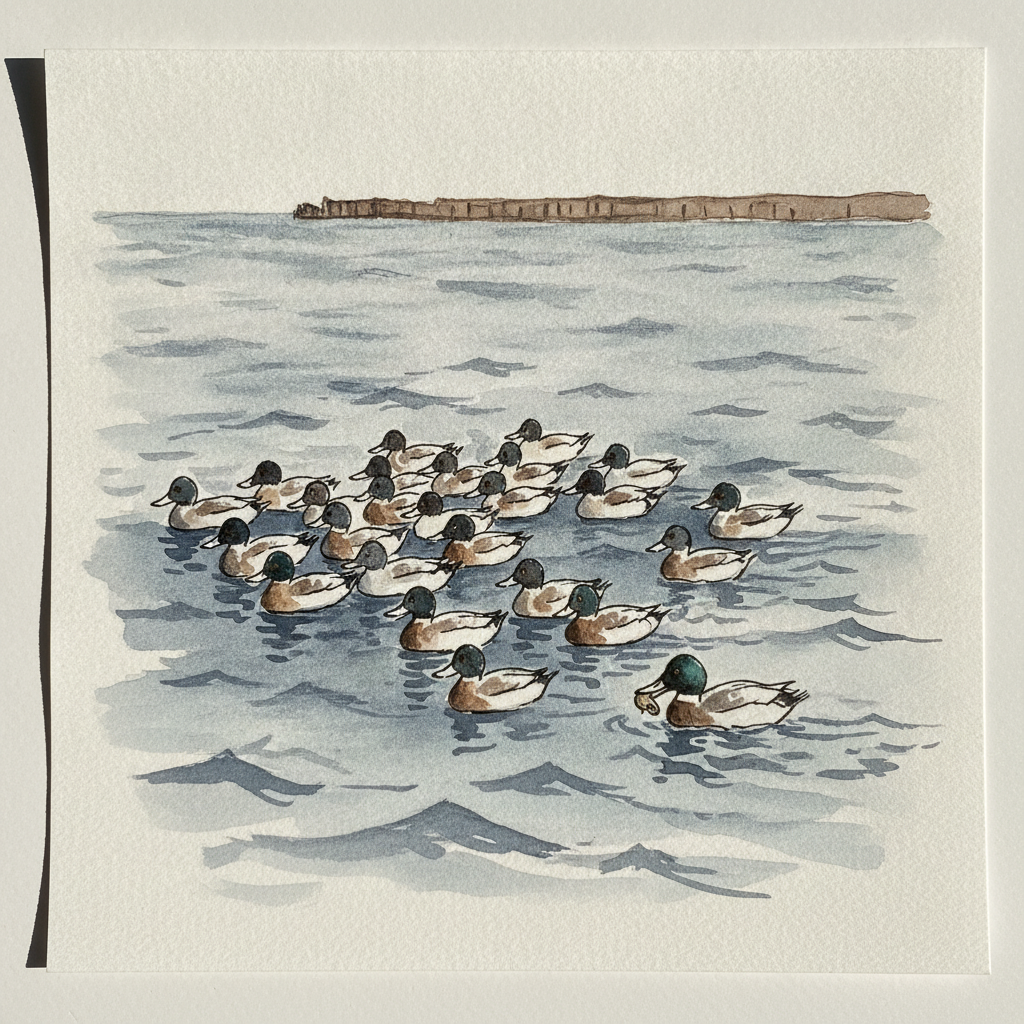
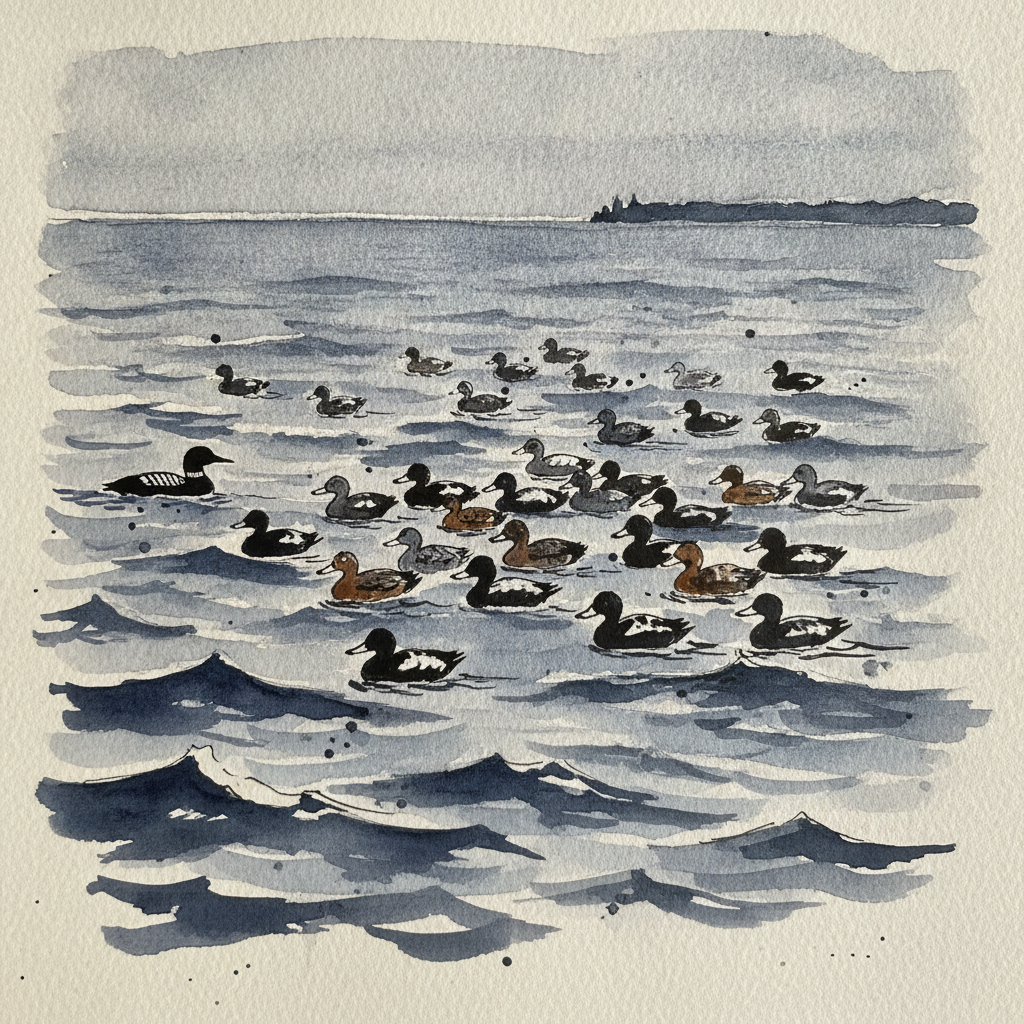
This study is ideal for mastering how to suggest a large group of similar subjects without rendering every detail. Concentrate on defining the collective "raft" of scaup with varied, loose elliptical pen lines, using a limited palette of cool grays and warm browns in fluid washes to convey the rough water and subtle avian forms. Let thicker lines or a slightly darker wash on a few foreground birds provide depth and a point of visual interest amidst the repeating shapes.
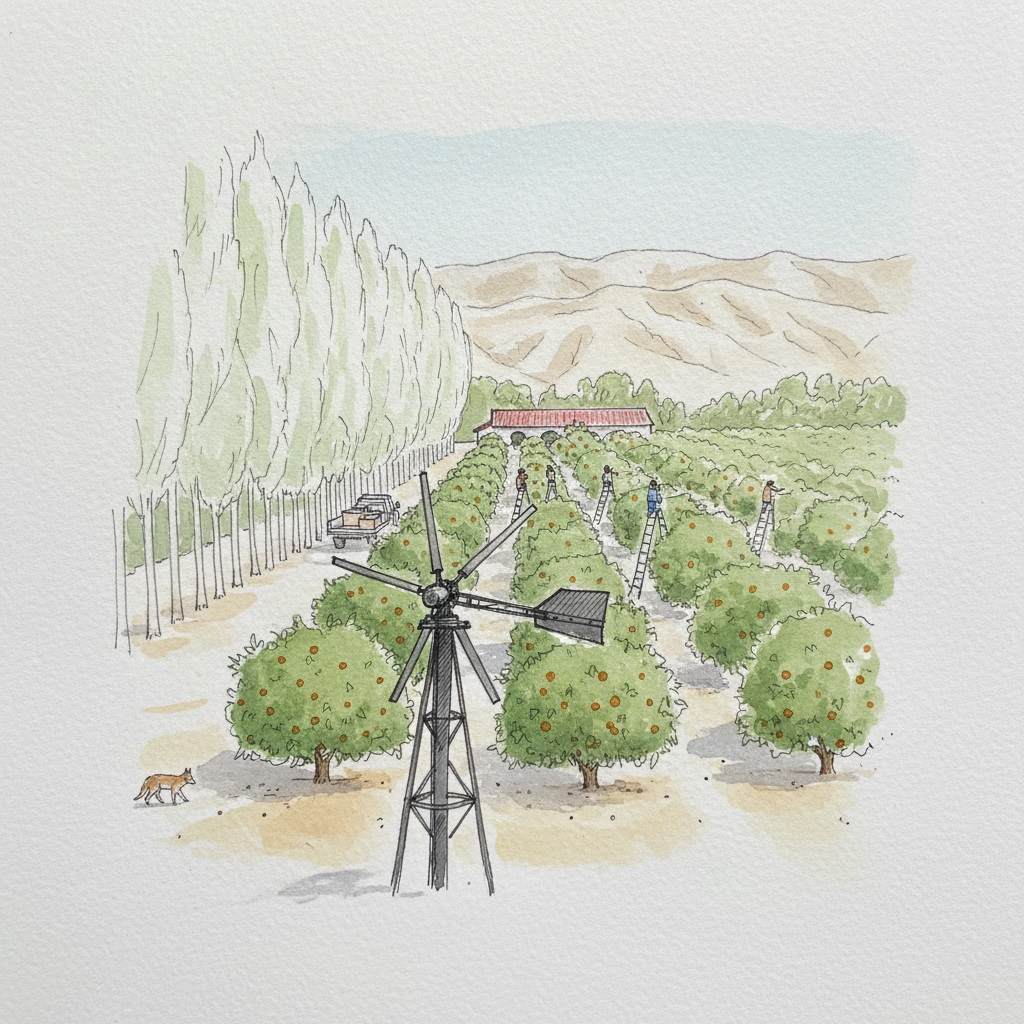
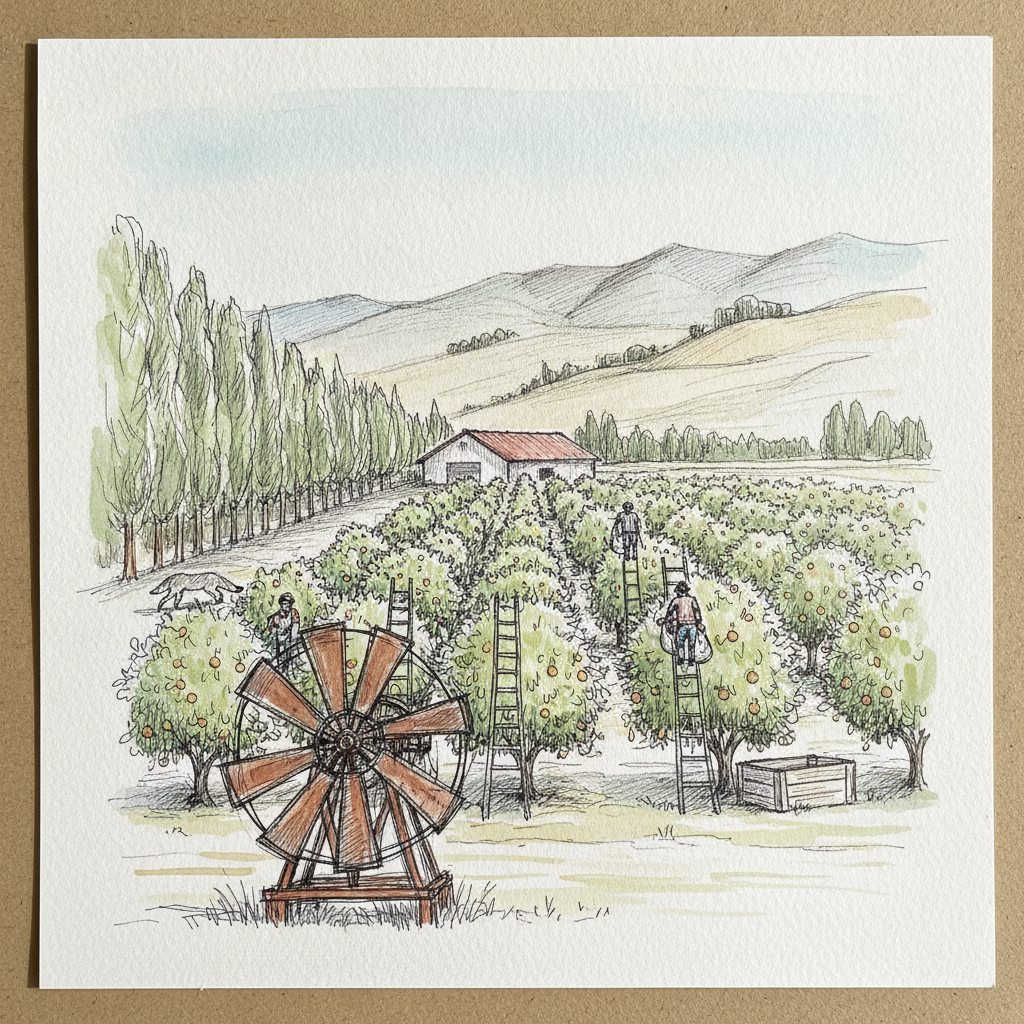
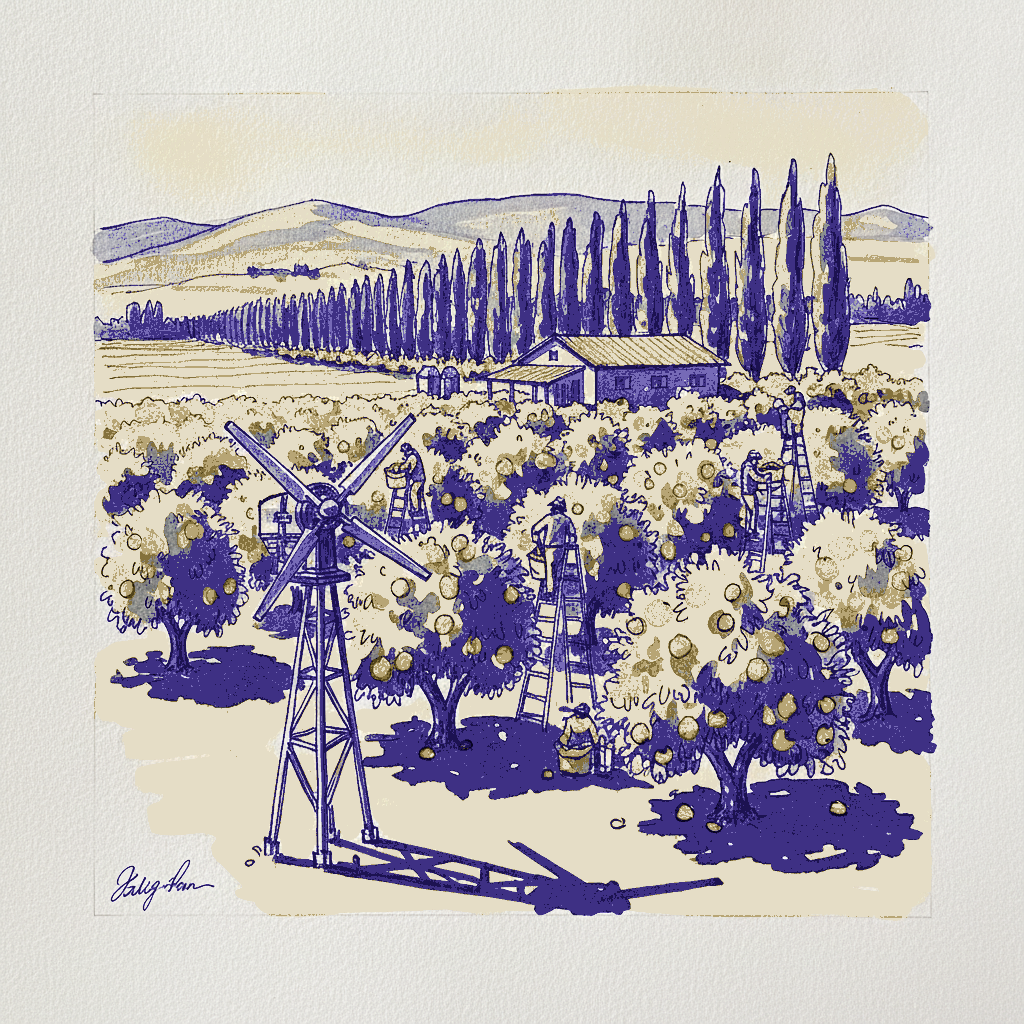
Piece 7 — Santa Paula citrus, California, USA
Pen + Watercolor · Loose pen and watercolor line-and-wash
Three takes

Focus for this piece
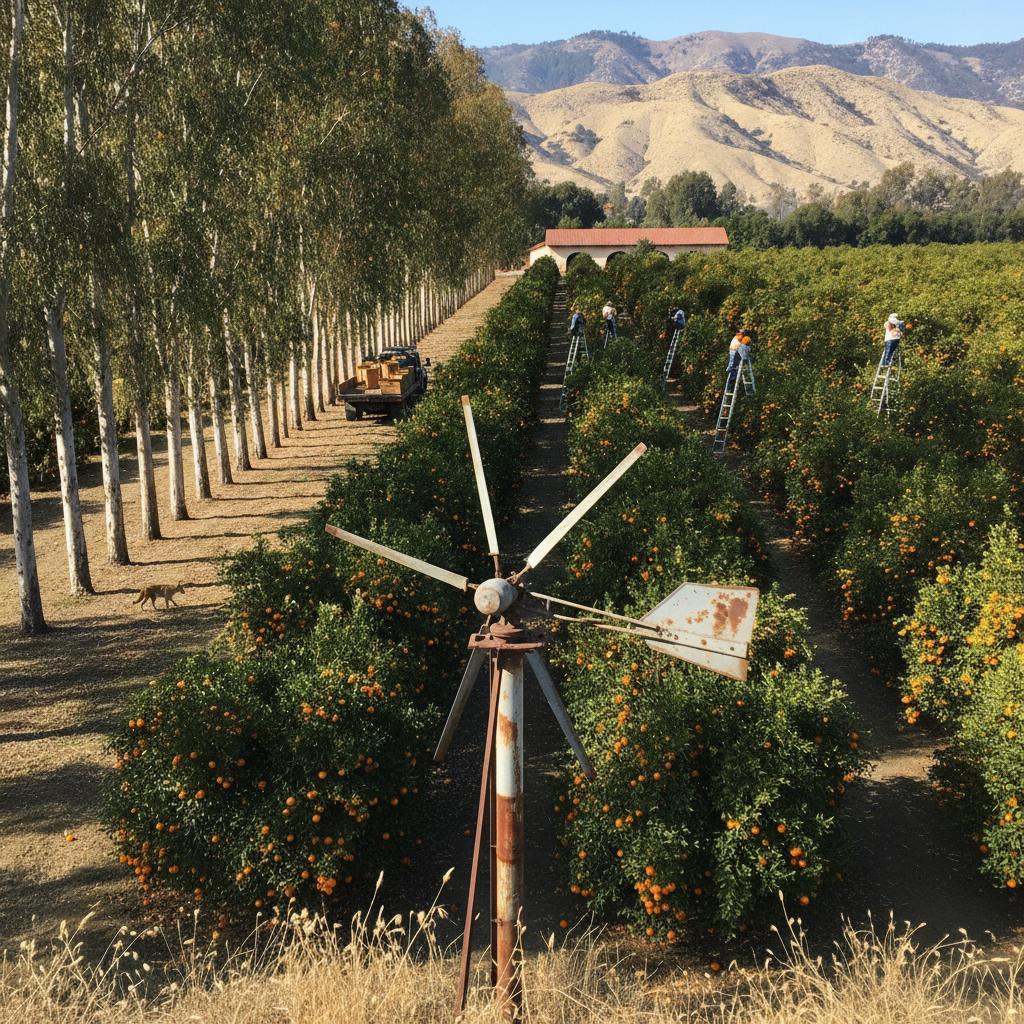
This piece offers a fantastic opportunity to practice defining three distinct planes of depth, using varied line weight and controlled washes. Emphasize the strong linear perspective of the orange groves and the monumental foreground wind machine with confident, detailed pen lines, letting these details become progressively looser and less defined toward the distant, pale ochre foothills. Use crisp washes to create strong value contrasts for the sunlit ripe fruit and red tile roof, while allowing the background to recede with softer, desaturated color applications to capture the clear morning light. Pay attention to how the sharp edges of shadows define form in the foreground elements.
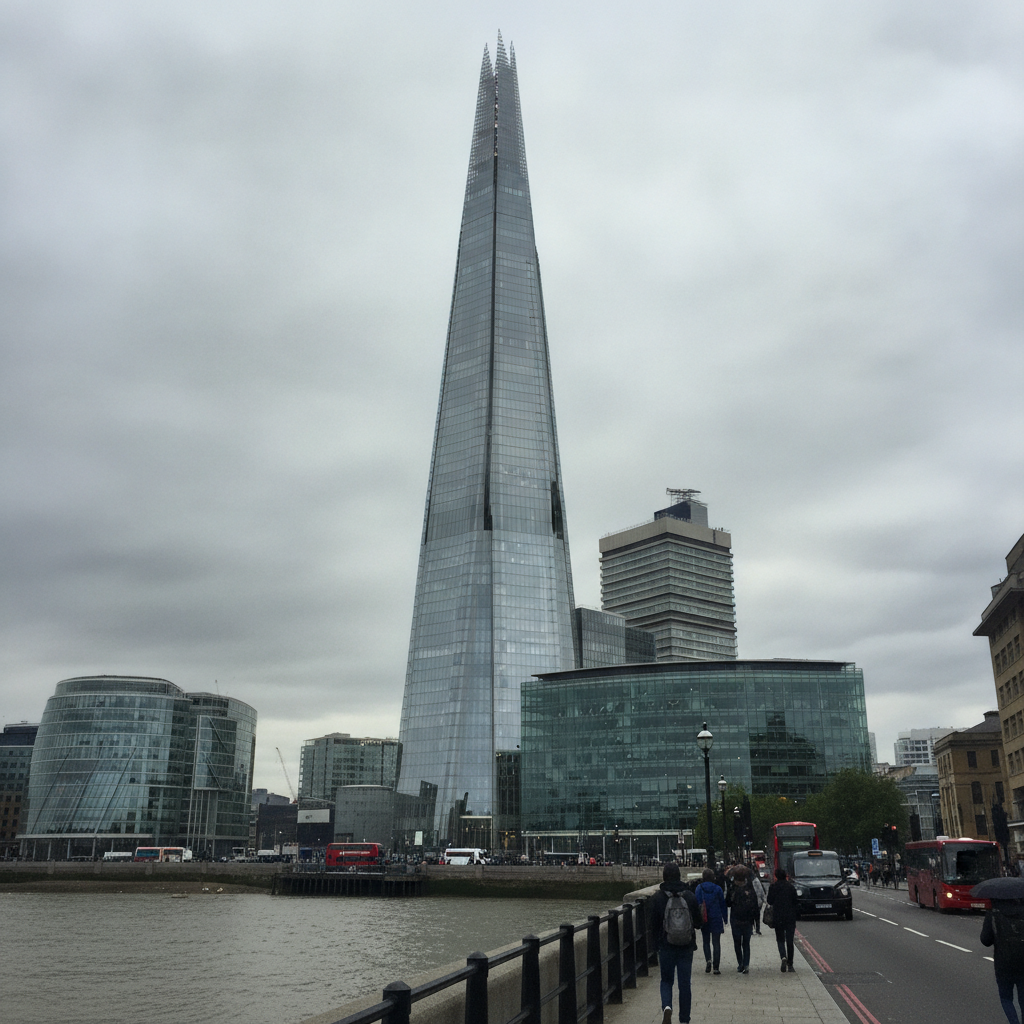
Piece 8 — The Shard, Southwark, London, UK
Pen + Watercolor · Loose pen and watercolor line-and-wash
Three takes
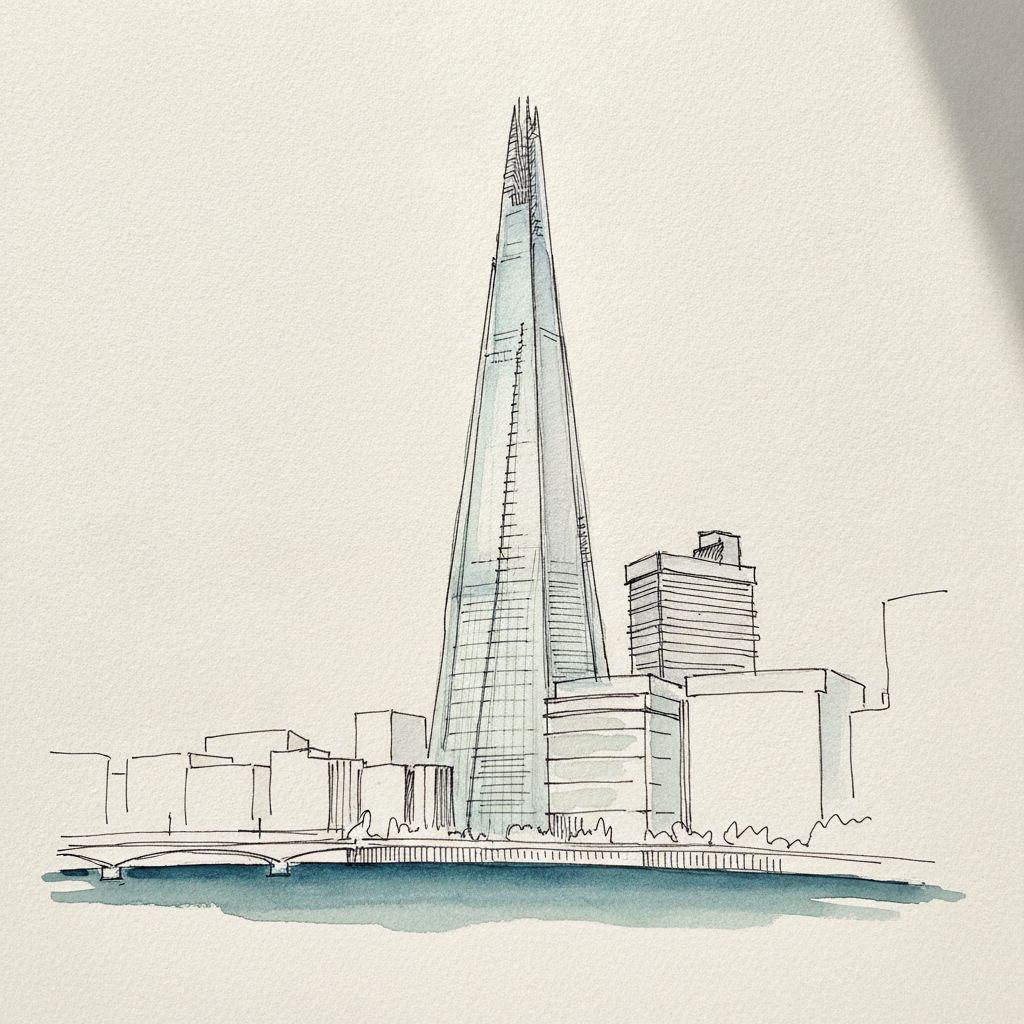
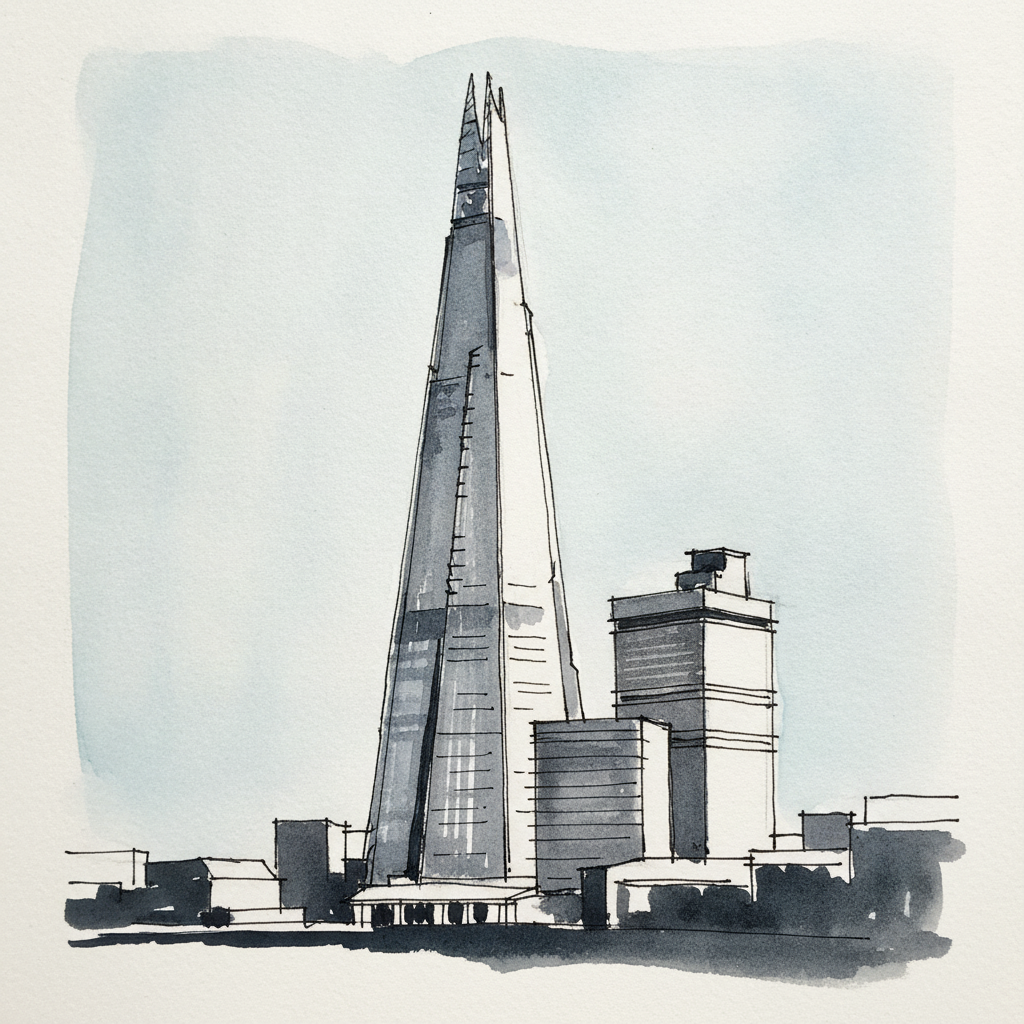
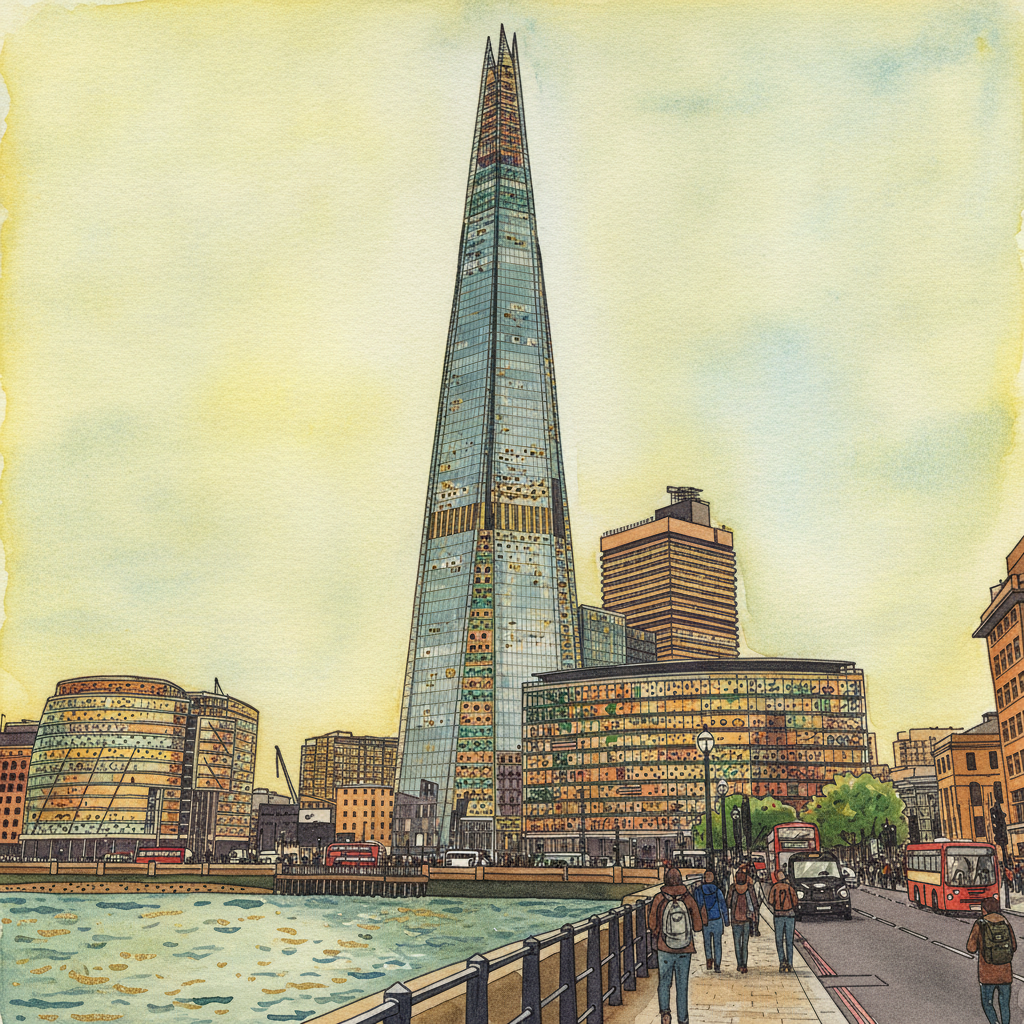
Focus for this piece
This piece is ideal for studying how to convey precise architectural form and reflective surfaces. Use varying line weights with waterproof ink to define the dynamic, inclined façades and the jagged, open crown, emphasizing the building's distinctive silhouette. Then, employ very thin, cool-toned glazes, built up wet-on-dry, to create subtle shifts in value and color that suggest the glass reflections without obscuring your crisp underlying ink drawing. This contrast will highlight both the Shard's sharp geometry and its ethereal, sky-reflecting quality.