Arabic Tughra Sultan, Old man in wheelchair, Buenos Aires Plaza, Tango Dusk, Daikon and lotus root on a wooden plank, and more — pen + watercolor for July 17, 2026
AI-generated daily art-practice references for pen and watercolor: Arabic Tughra Sultan, Old man in wheelchair, Buenos Aires Plaza, Tango Dusk, Daikon and lotus root on a wooden plank, Butterfly weed, Cetinje polje basin in winter, Montenegro, Woman, late 30s, Black, tall full curvy build, hip le…
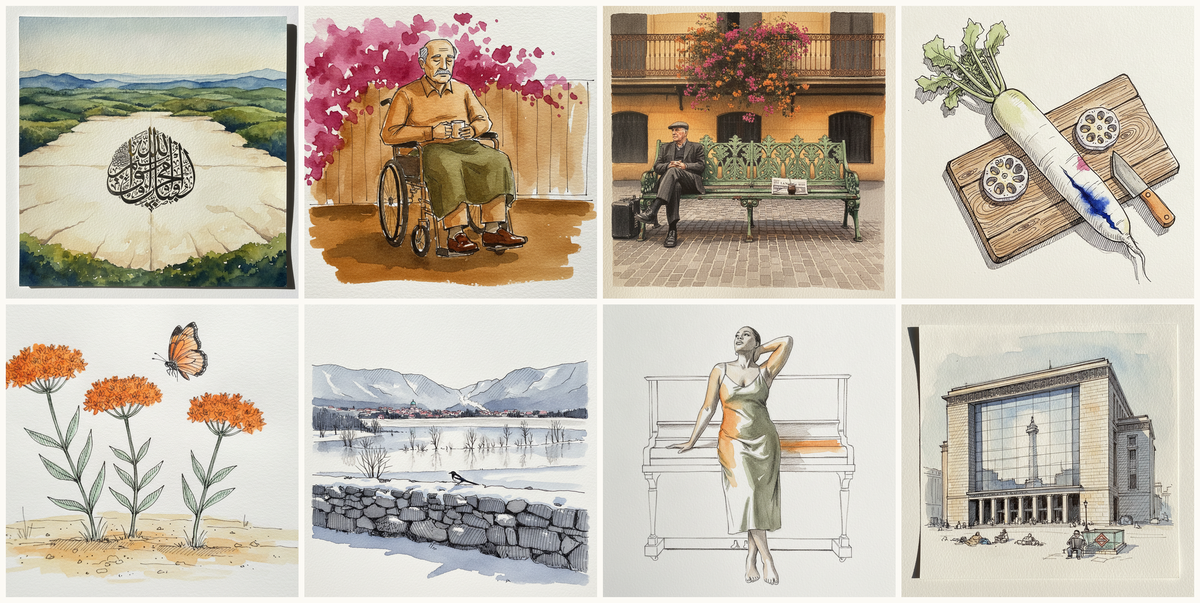
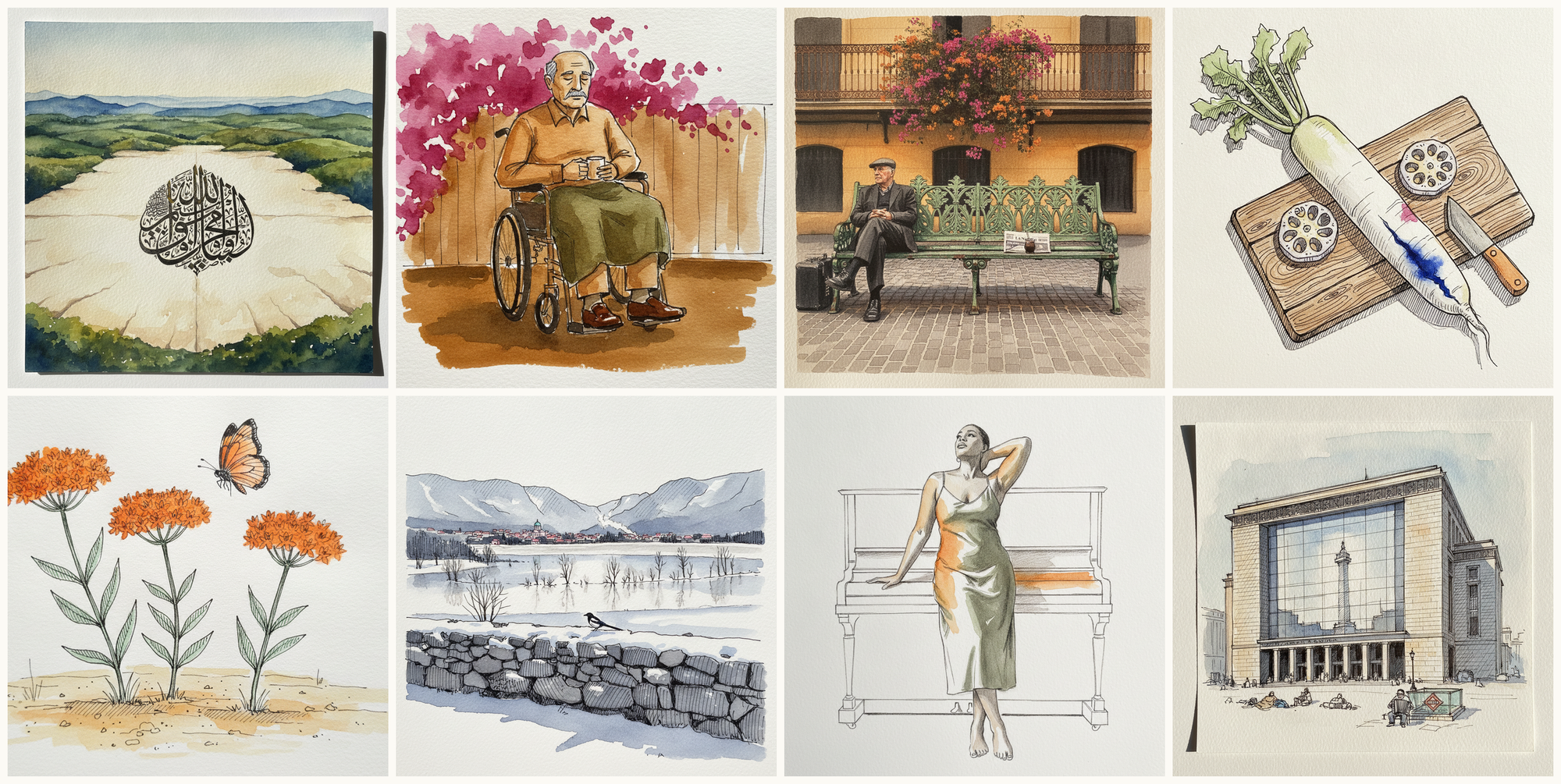
Today's 8 pen-and-watercolor pieces: Arabic Tughra Sultan, Old man in wheelchair, Buenos Aires Plaza, Tango Dusk, Daikon and lotus root on a wooden plank, Butterfly weed, Cetinje polje basin in winter, Montenegro, Woman, late 30s, Black, tall full curvy build, hip leaning against a piano, Opéra Bastille, Paris, France. Each piece comes with an AI-generated photoreal reference, three AI-generated example artworks in different treatments, and a short focus paragraph naming what to study in this one.
Why these references use AI
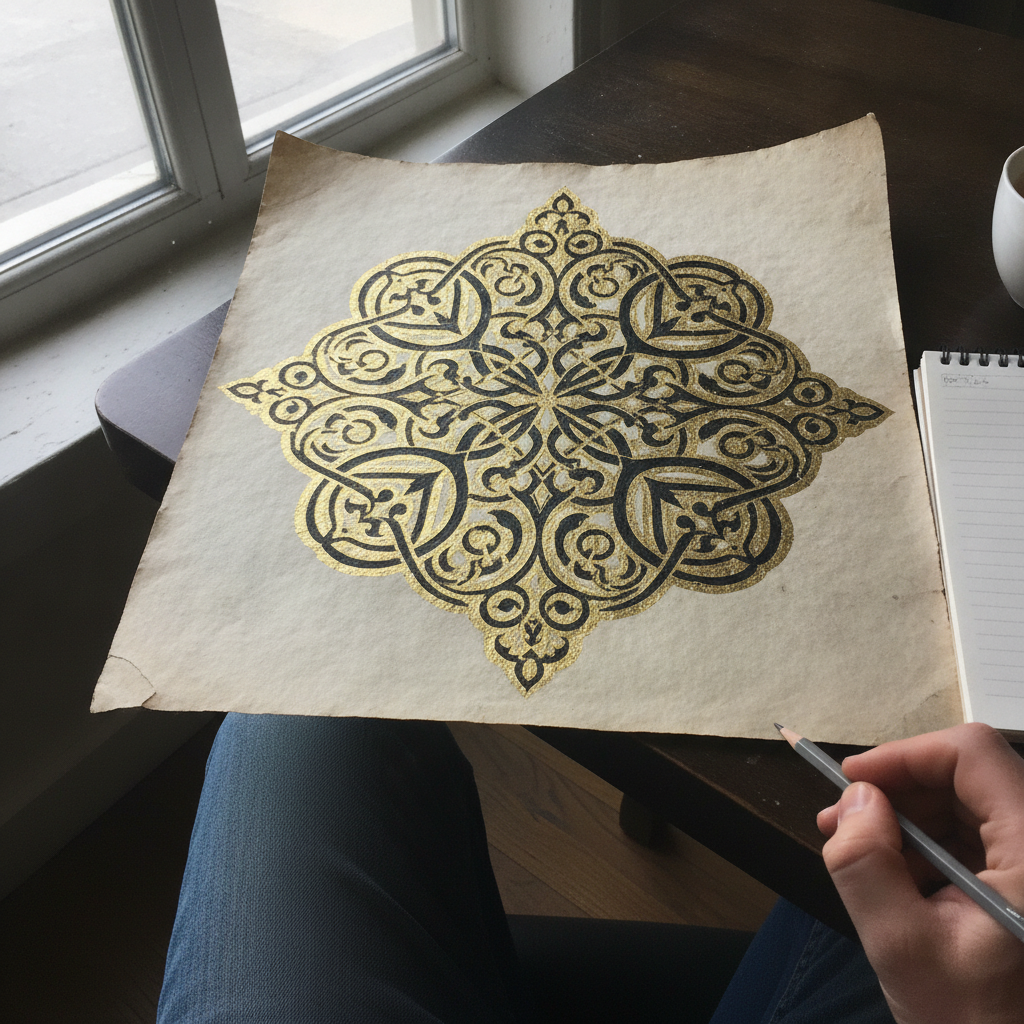
This daily series uses AI-generated images as practice prompts, not as finished artwork to copy. Each subject starts with a synthetic photoreal reference generated with Gemini/Nano Banana, then moves into three pen-and-watercolor interpretations of the same subject.
I use AI here because daily art practice needs variety and low friction. Real life can get repetitive, busy, or visually narrow. These generated reference sets make it easier to study bodies, buildings, animals, landscapes, objects, gestures, light, palettes, and compositions that might not show up in an ordinary day.
The goal is not to reproduce any image directly. Treat each set as a starting point for observation and study: choose what interests you, change the framing, simplify the subject, alter the palette, and make your own version.
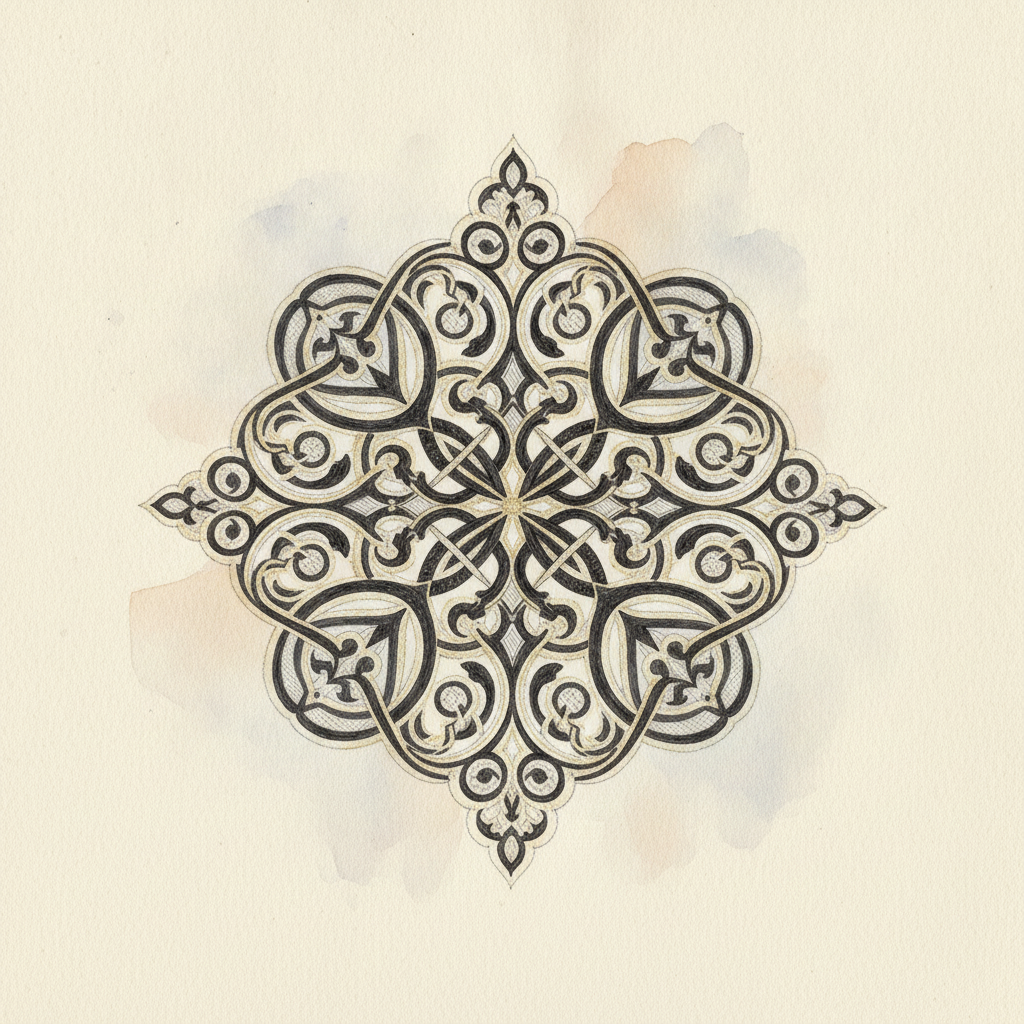
Piece 1 — Arabic Tughra Sultan
Pen + Watercolor · Loose pen and watercolor line-and-wash
Three takes

Focus for this piece
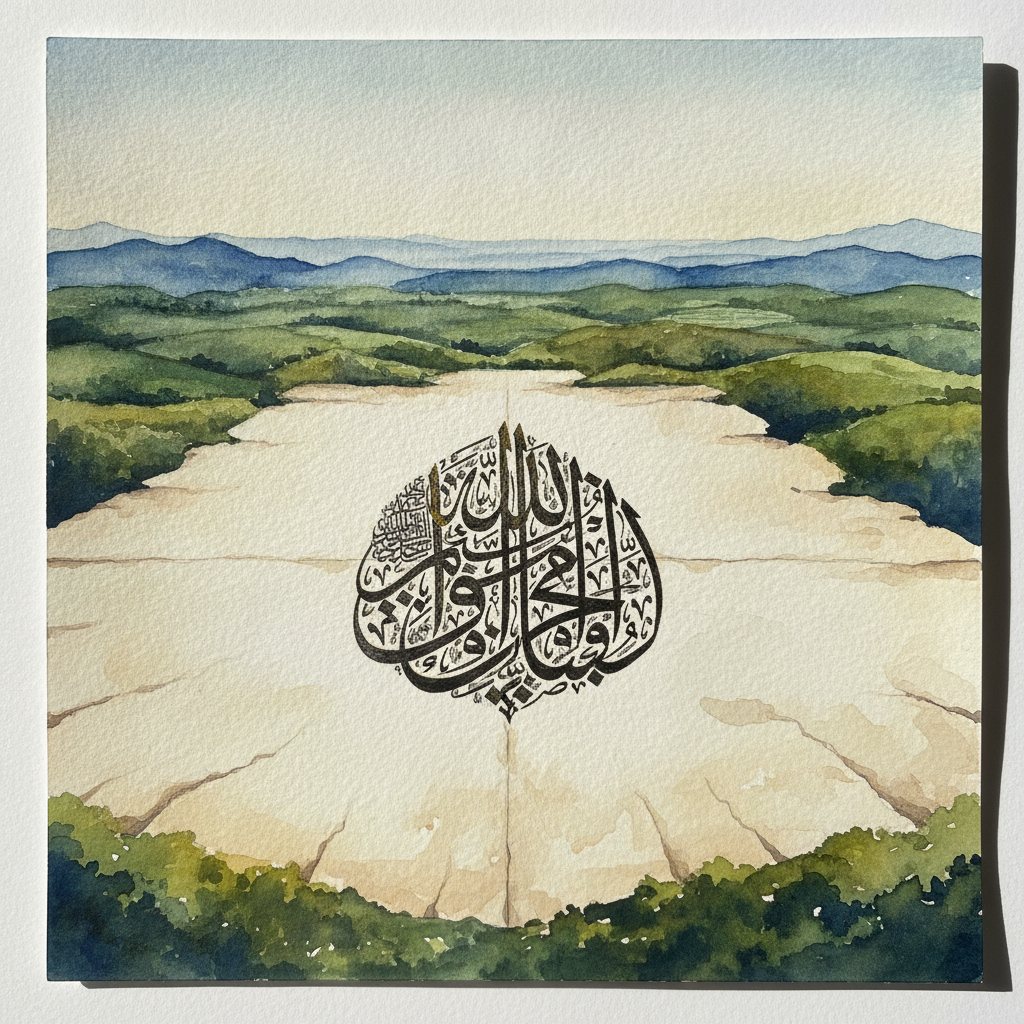
Today's Tughra offers a focused study in achieving intricate detail and depth using varied ink line weights, especially to convey the dense interweaving of the calligraphic elements. Practice your control with a fine-tipped pen to maintain sharp curves and precise negative spaces within the symmetric design. When applying the "gold illumination," utilize a warm, limited watercolor palette like raw sienna or quinacridone gold, building subtle luminosity with controlled wet-on-dry washes that respect the crisp ink boundaries.
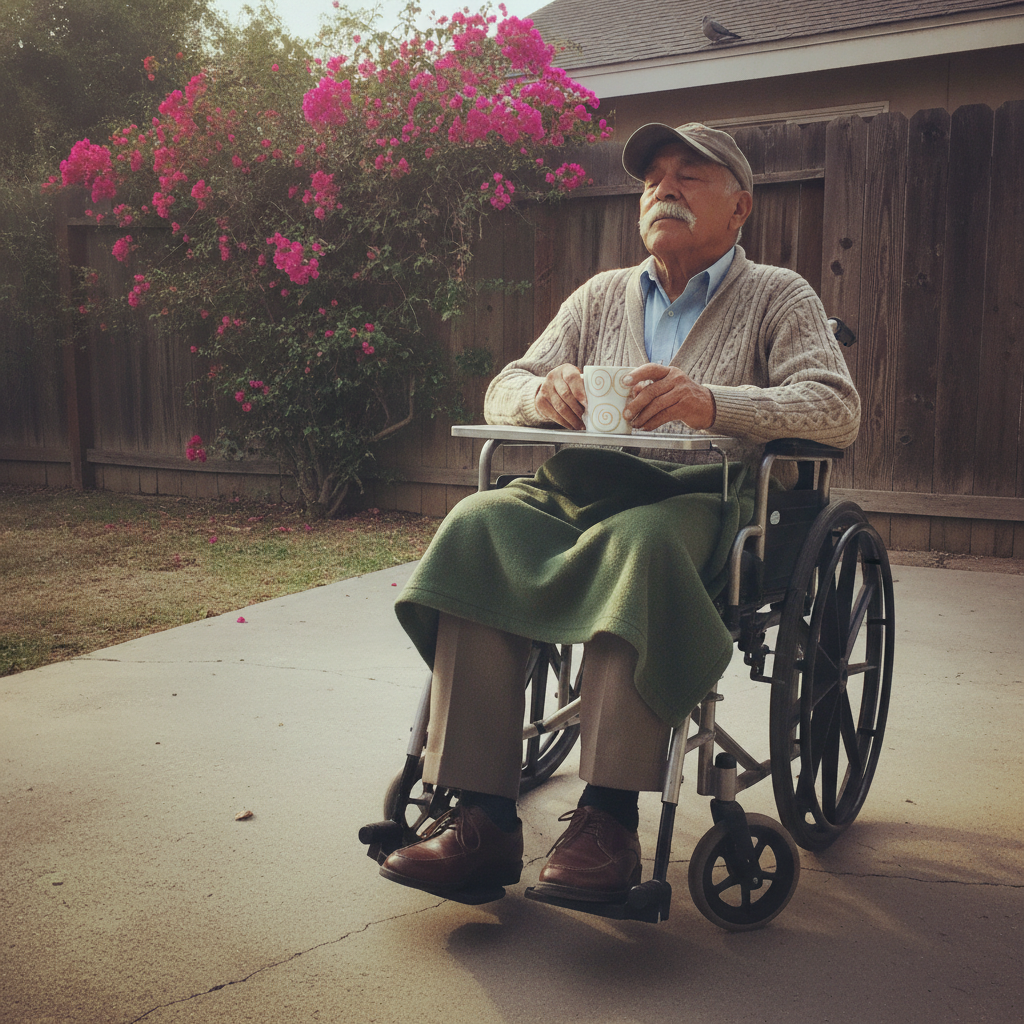
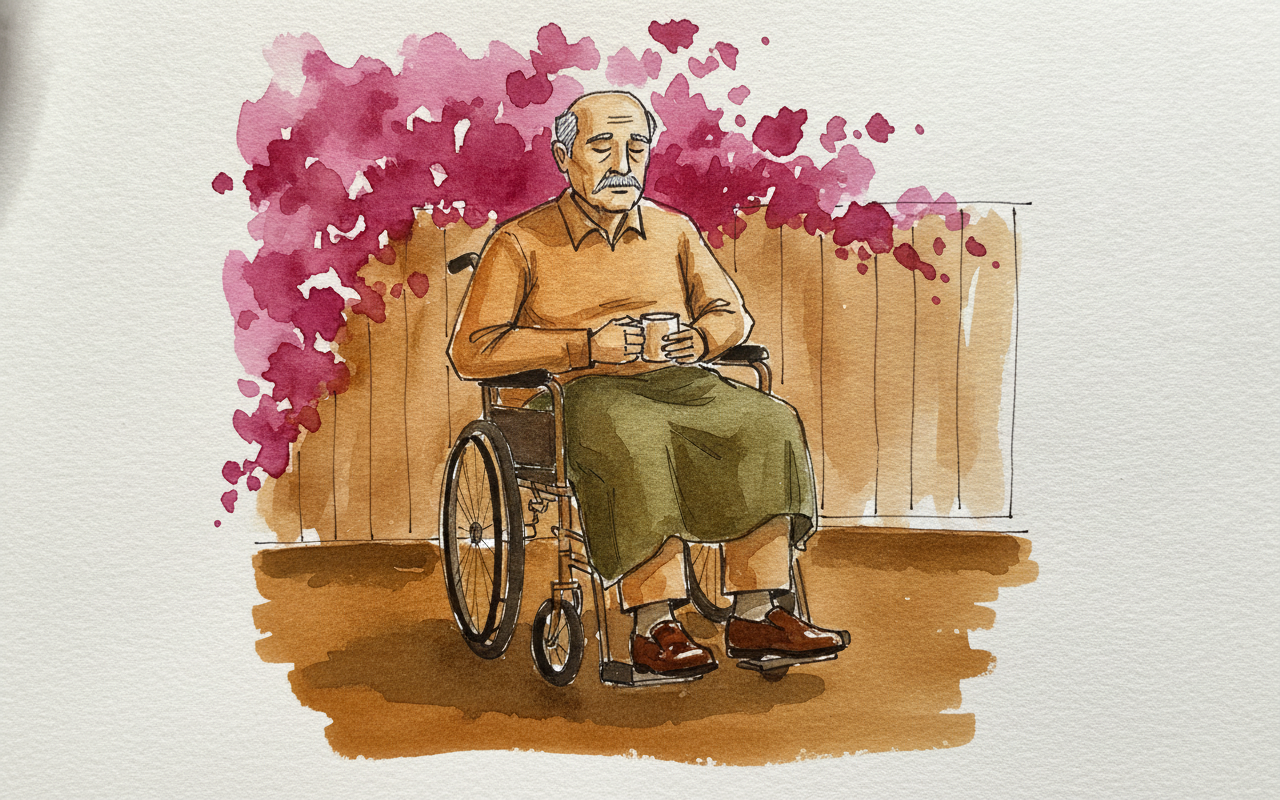
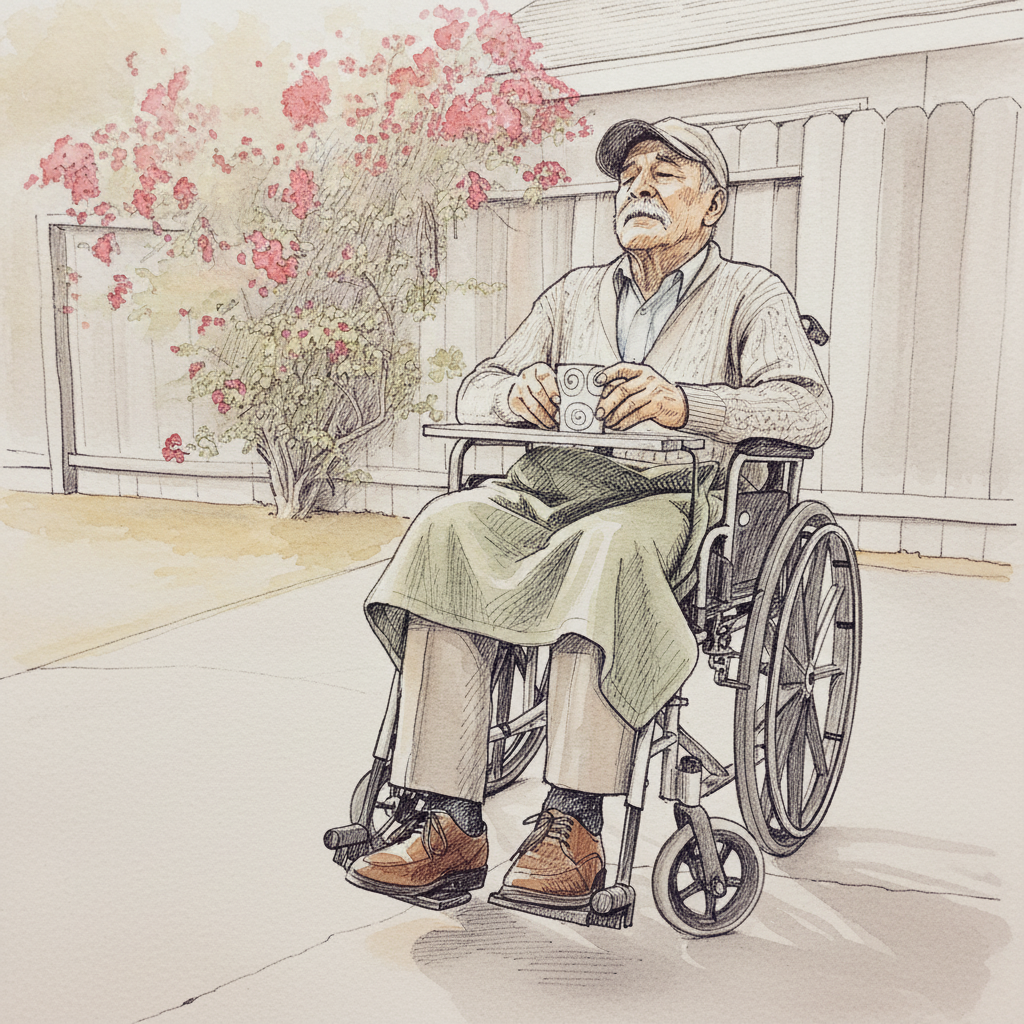
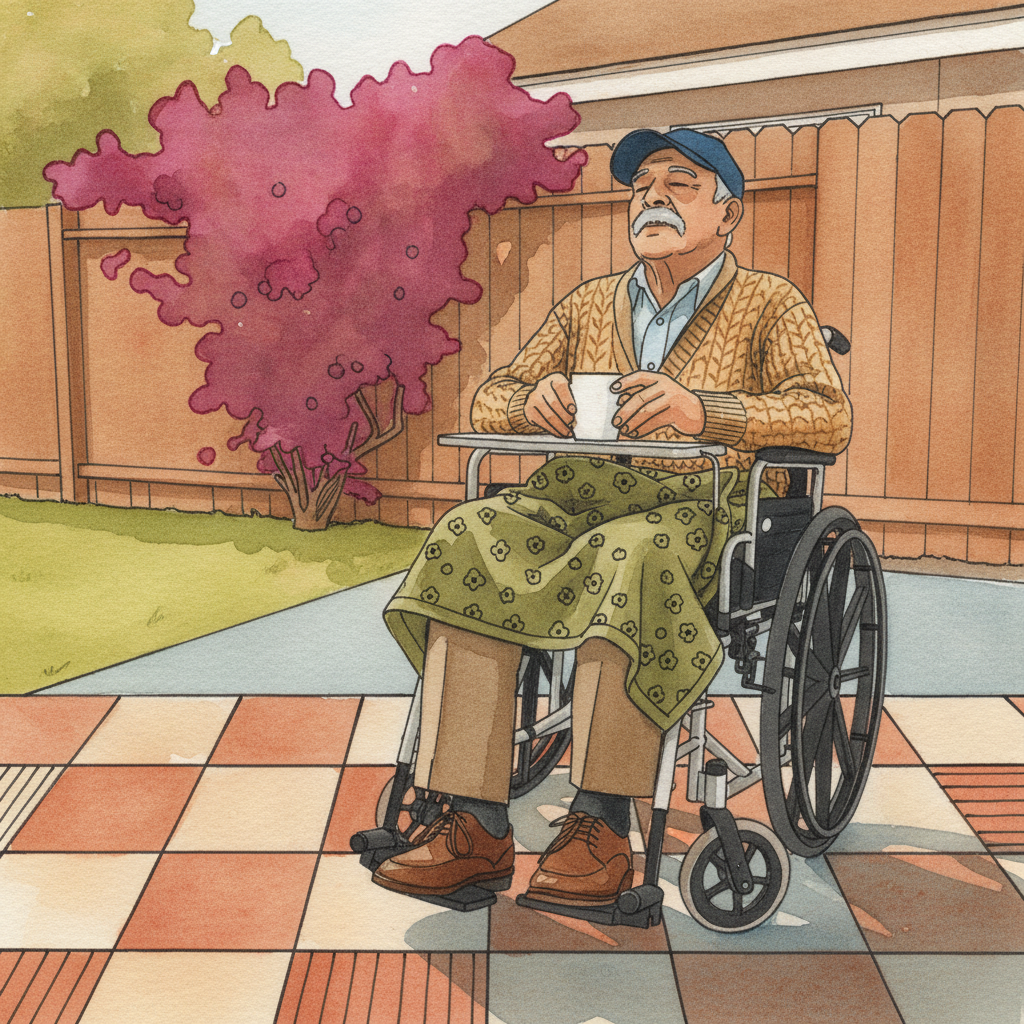
Piece 2 — Old man in wheelchair
Pen + Watercolor · Loose pen and watercolor line-and-wash
Three takes
Focus for this piece
This piece is ideal for practicing defining form through varied line weight and strategic wash placement under strong directional light. Use finer, broken pen lines on sunlit edges of the veteran's face and blanket, reserving heavier, continuous strokes for shadowed planes to sculpt the broad shapes of the figure and wheelchair. Then, build atmospheric volume with wet-on-wet washes using a limited palette of warm ochres and burnt sienna to convey the afternoon sun and the radiating warmth of the concrete.
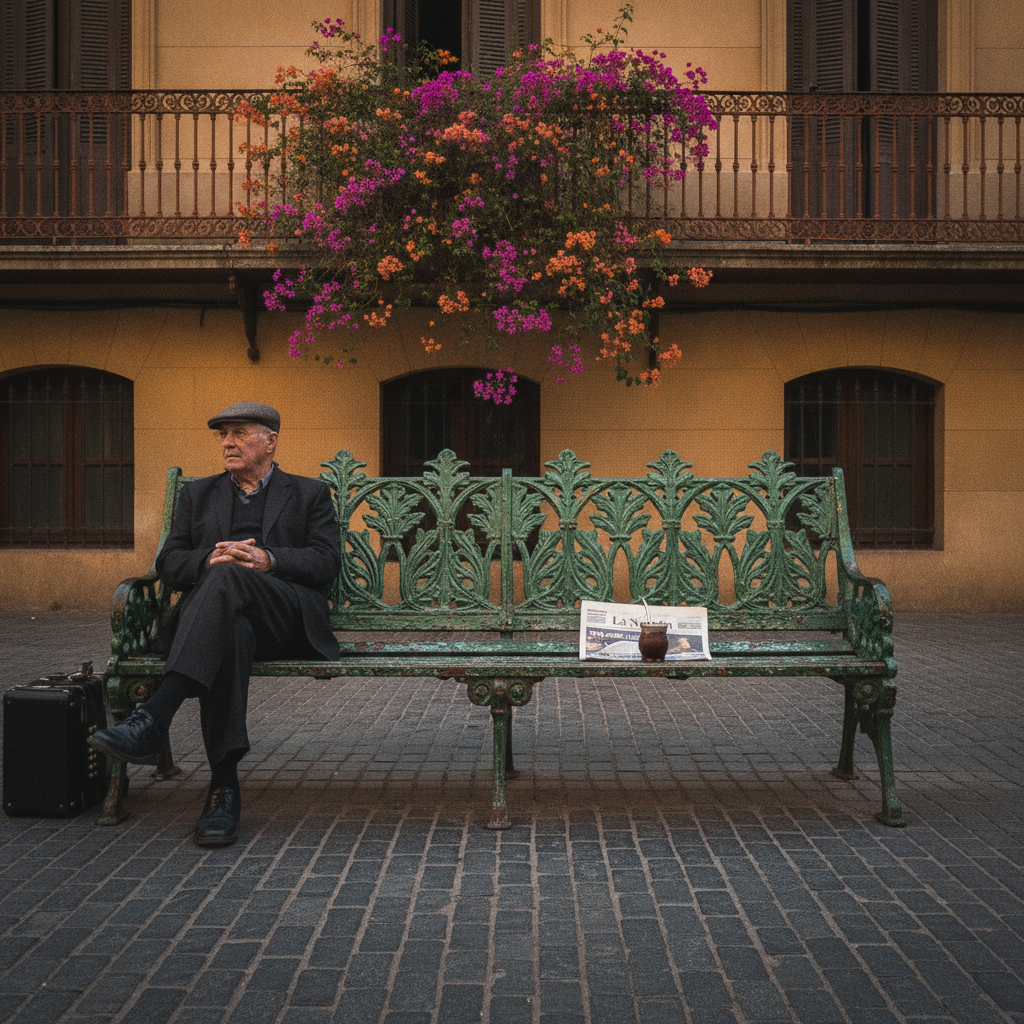
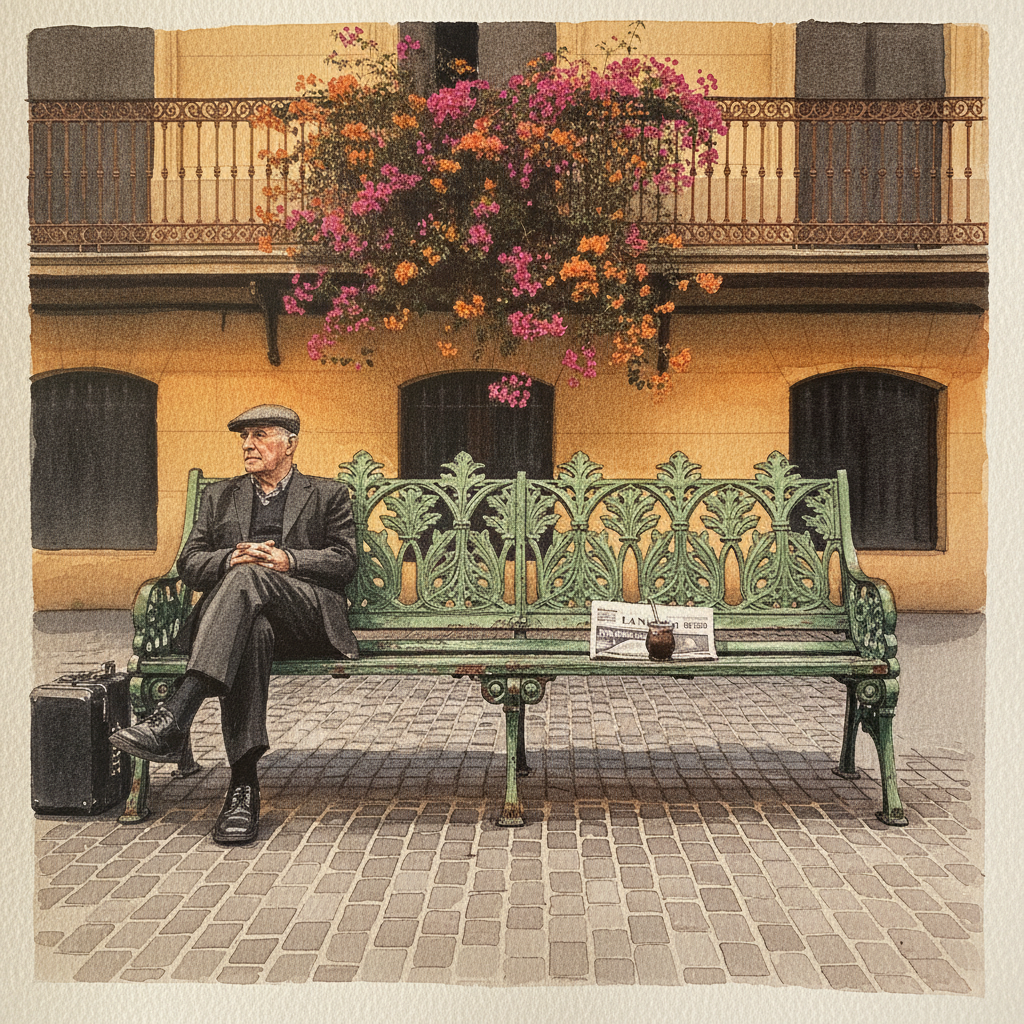
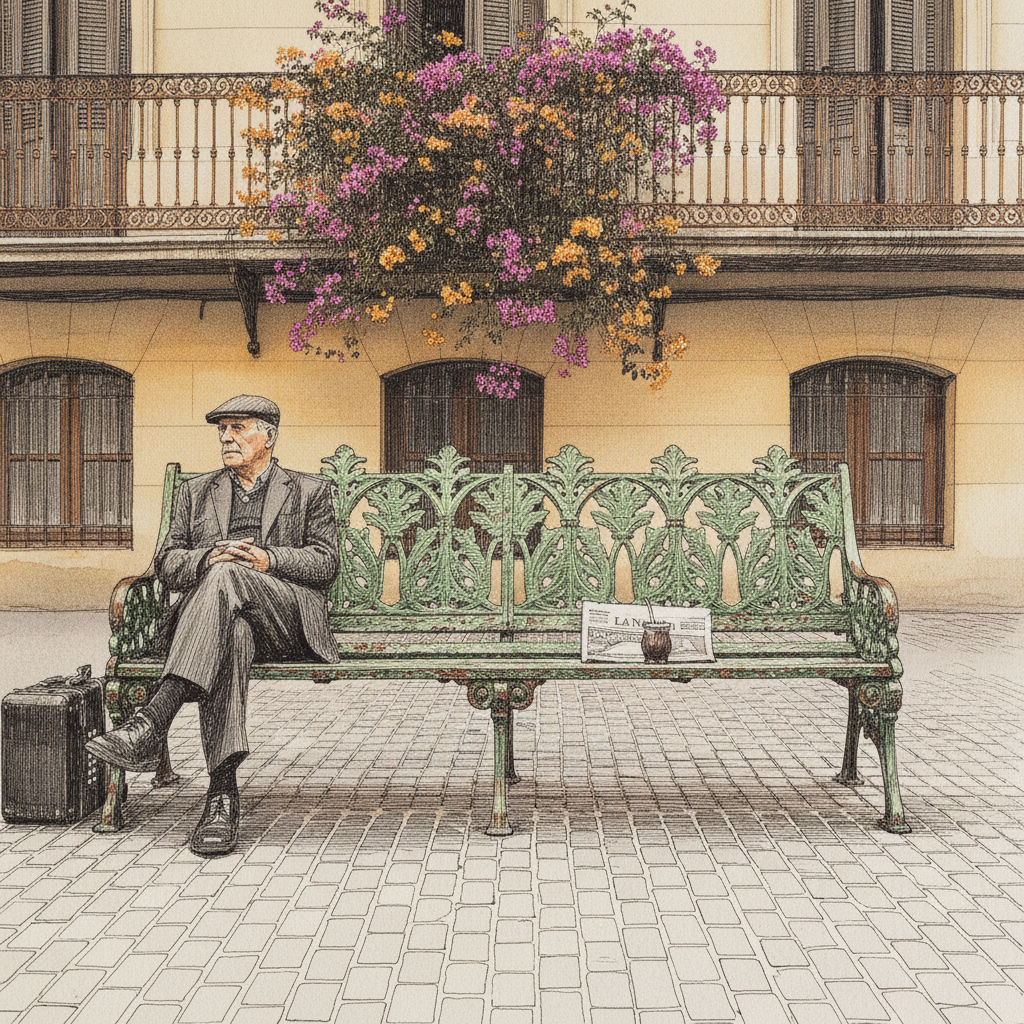
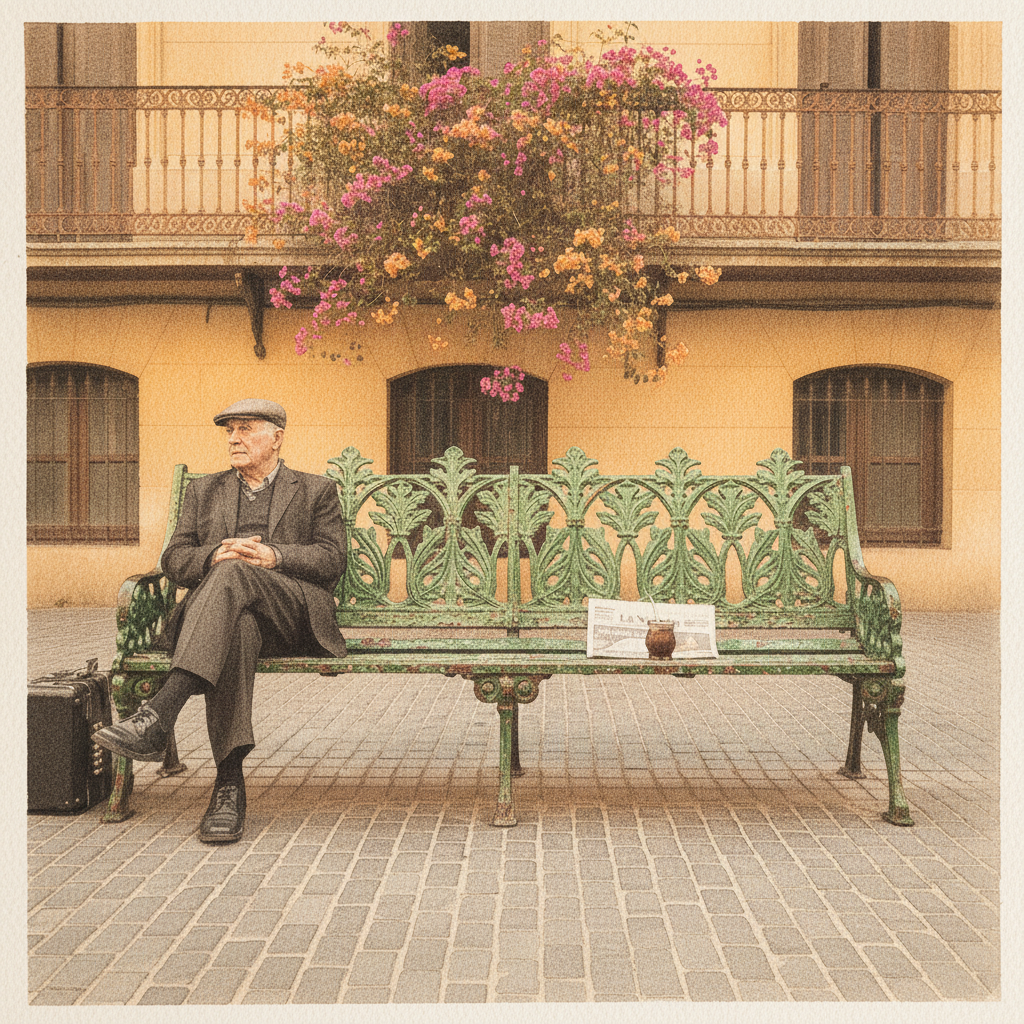
Piece 3 — Buenos Aires Plaza, Tango Dusk
Pen + Watercolor · Loose pen and watercolor line-and-wash
Three takes
Focus for this piece
For this piece, focus on using varied pen line weights to differentiate between the delicate curves of the wrought-iron acanthus leaves and the chipped texture of the bench's paint. Practice building the worn cobblestone effect by laying warm, broken washes first, allowing them to dry with natural variations before defining select edges with short, intermittent pen lines. Emphasize the warm dusk light across the ochre walls by working wet-on-wet with amber washes, letting their soft edges contrast with the sharper details of the balcony's bougainvillea.
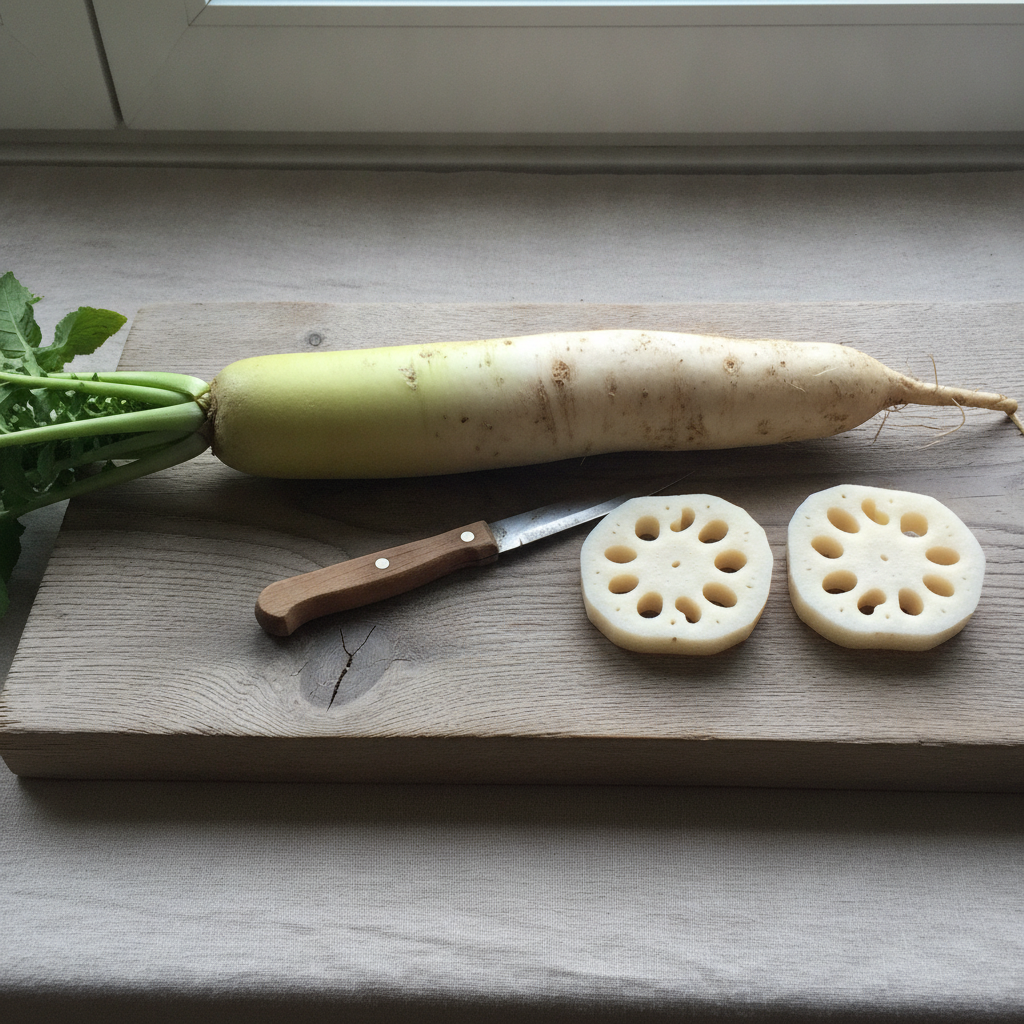
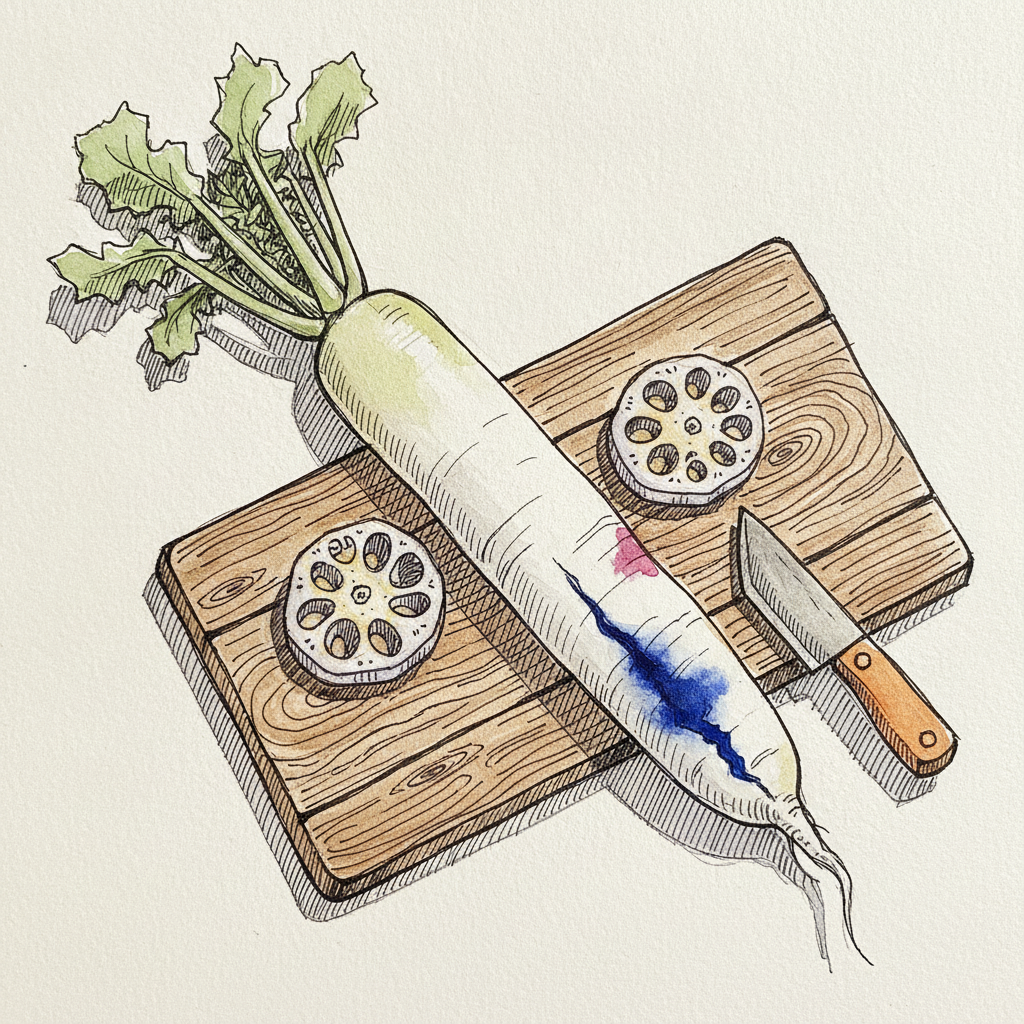
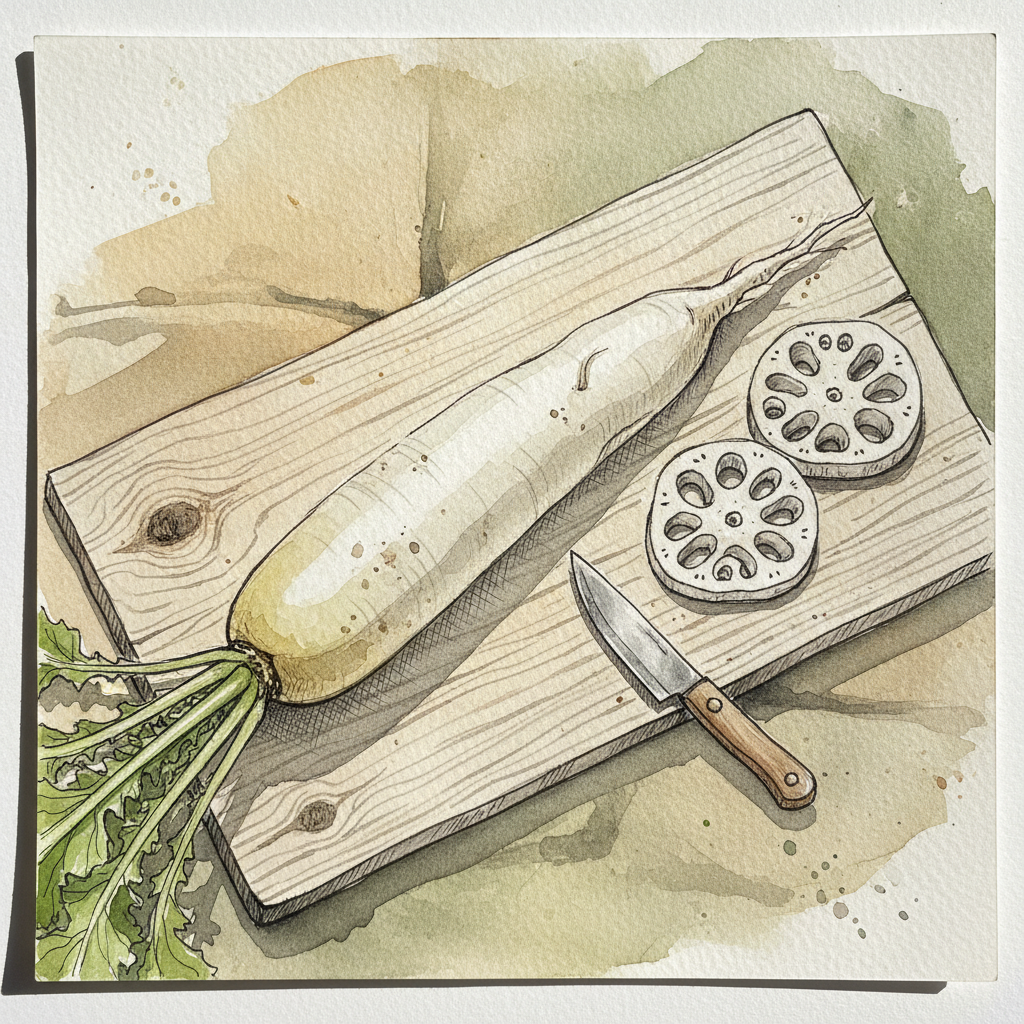
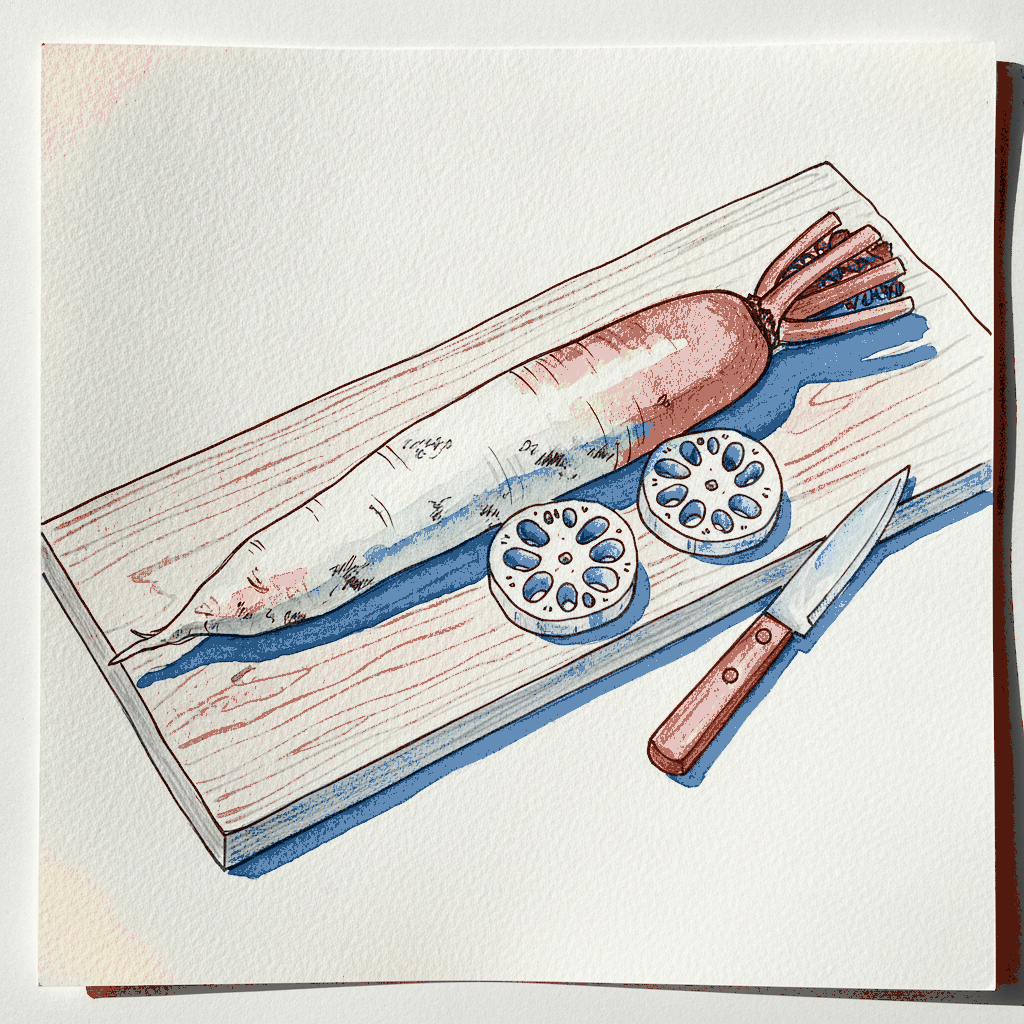
Piece 4 — Daikon and lotus root on a wooden plank
Pen + Watercolor · Loose pen and watercolor line-and-wash
Three takes

Focus for this piece
This composition, with its architectural feel, is an ideal study in defining form through the interplay of geometric and organic shapes. Pay close attention to varying your line work: use crisp, uniform lines for the lotus root's precise internal pattern and the plank's straight edges, then transition to more fluid, modulated lines to describe the daikon's organic contours and textured skin. Support these distinct forms with subtle, cool-toned washes that build volume without overwhelming the delicate pen work, particularly on the pale surfaces.
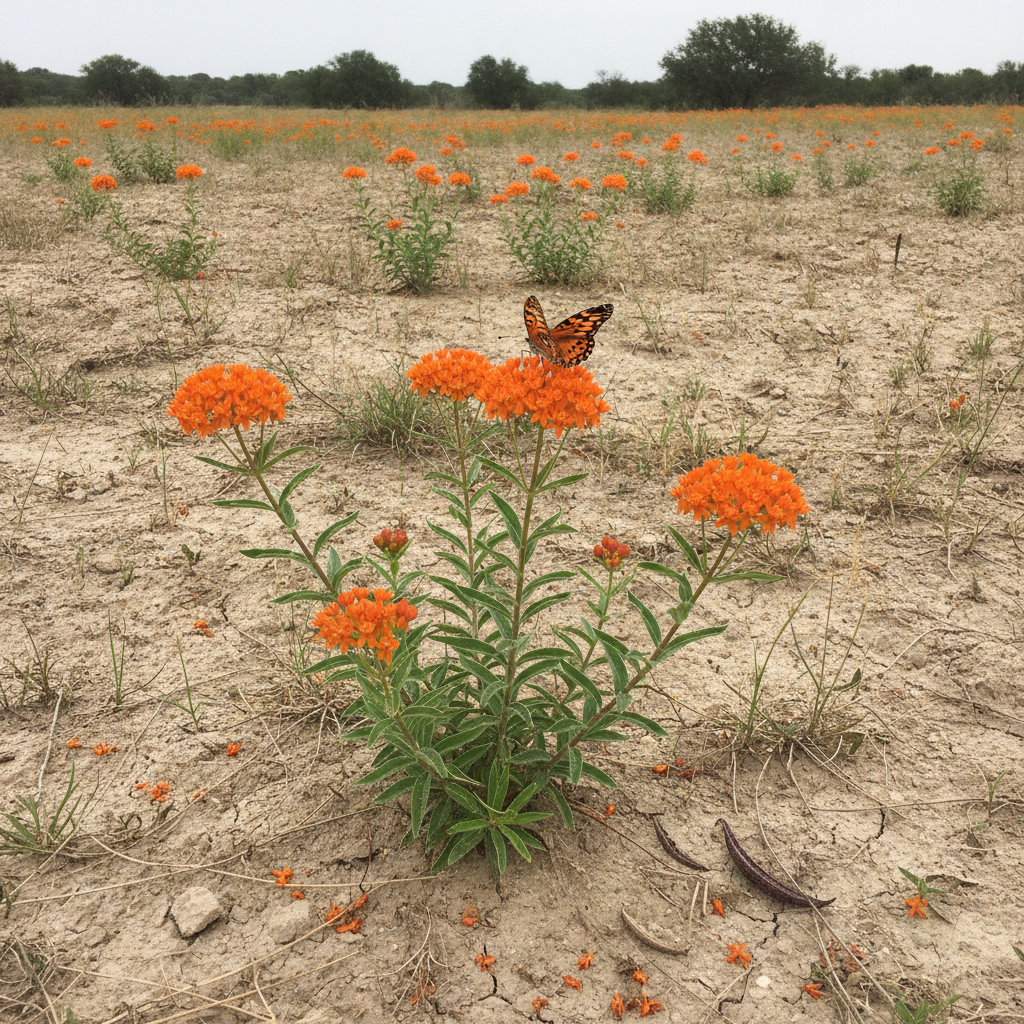
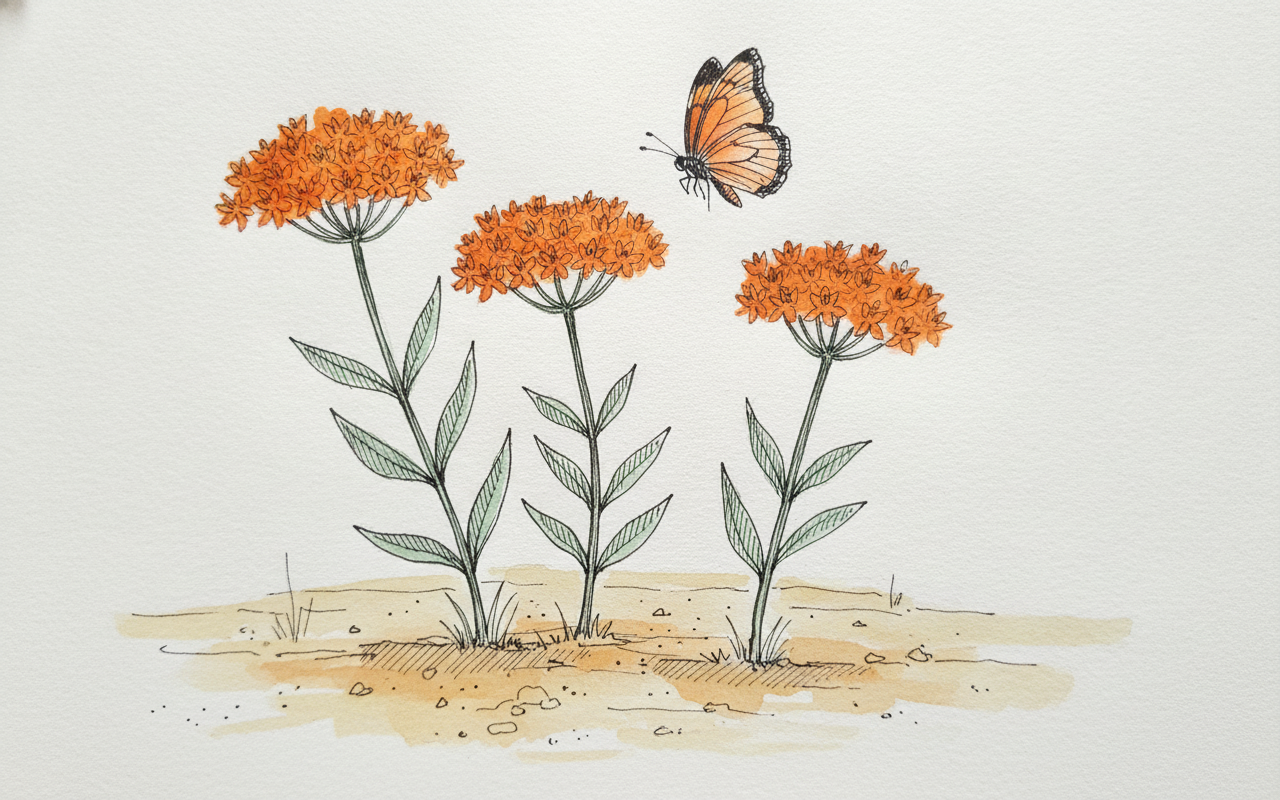
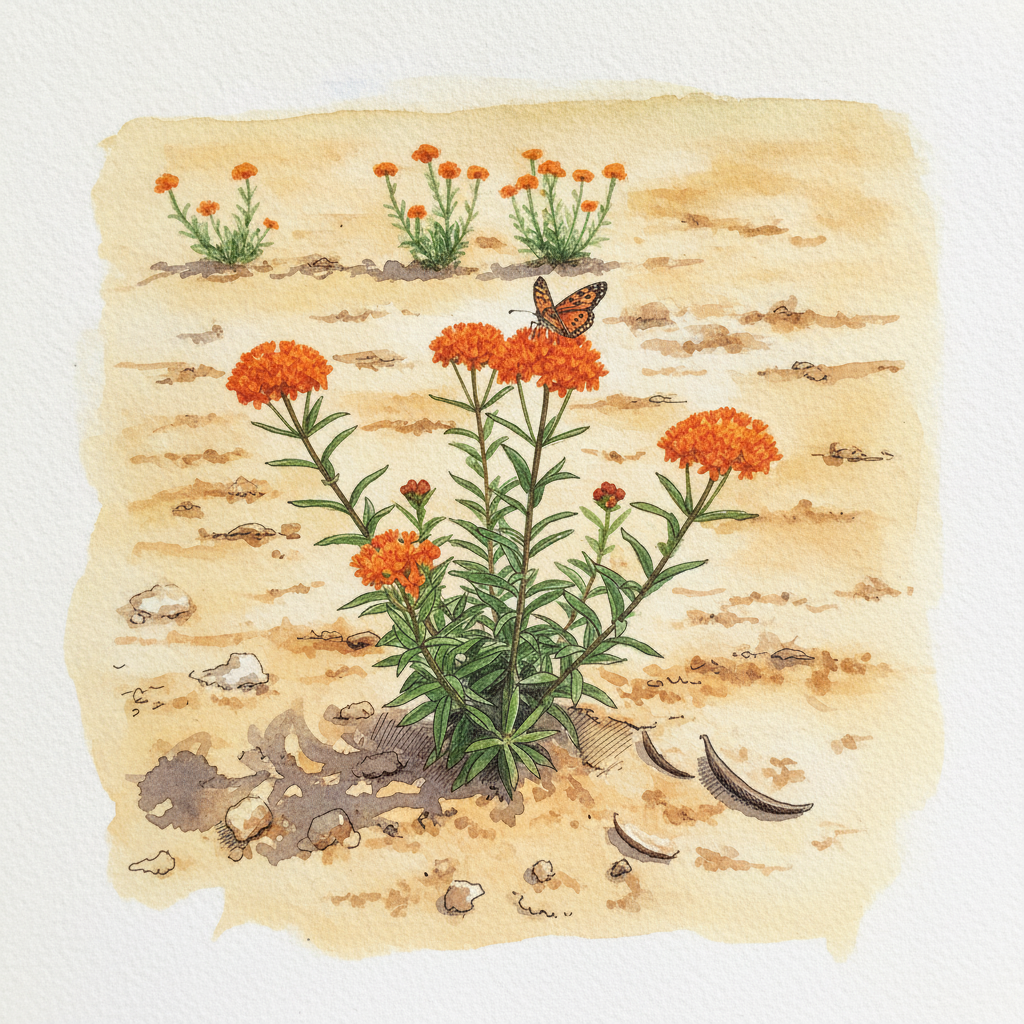
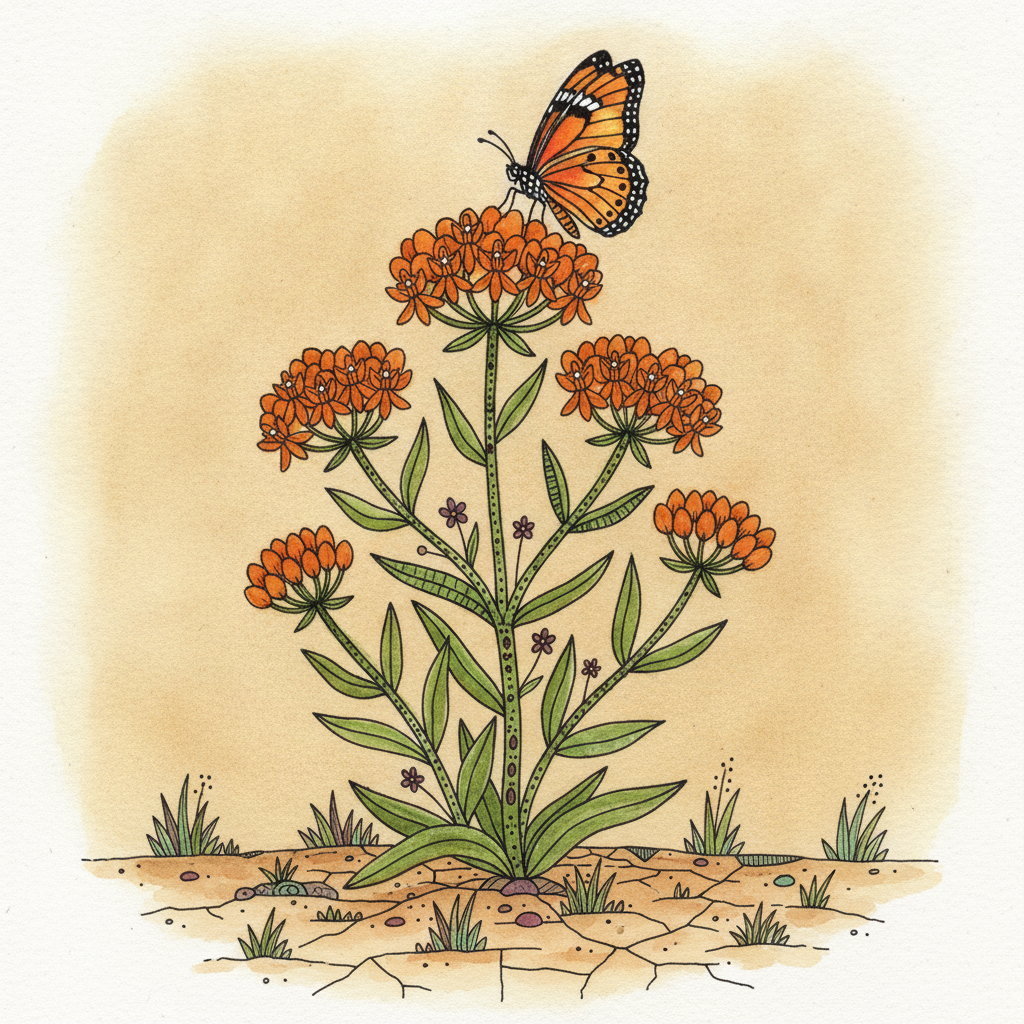
Piece 5 — Butterfly weed
Pen + Watercolor · Loose pen and watercolor line-and-wash
Three takes
Focus for this piece
Today's piece offers a chance to master the interplay of defined ink lines and fluid washes to create both structure and vibrant atmosphere. Use varying pen line weights to crisply delineate the narrow leaves and the delicate butterfly, setting them against the looser, more suggestive forms of the flower clusters. For the bright orange blooms, practice building luminous volume with wet-on-wet washes, letting the color bleed and soften around your initial ink framework. Focus on making the orange hues truly pop against a subtly toned, receding background.
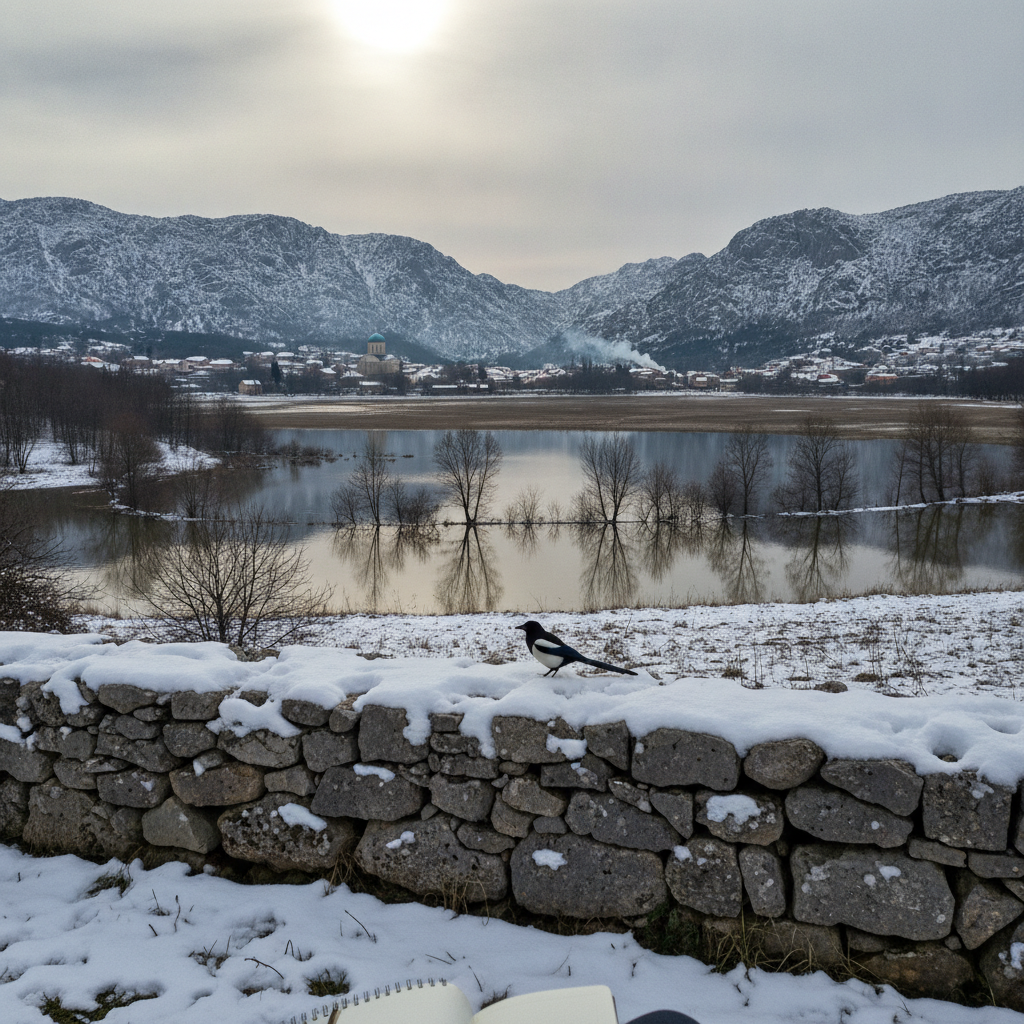
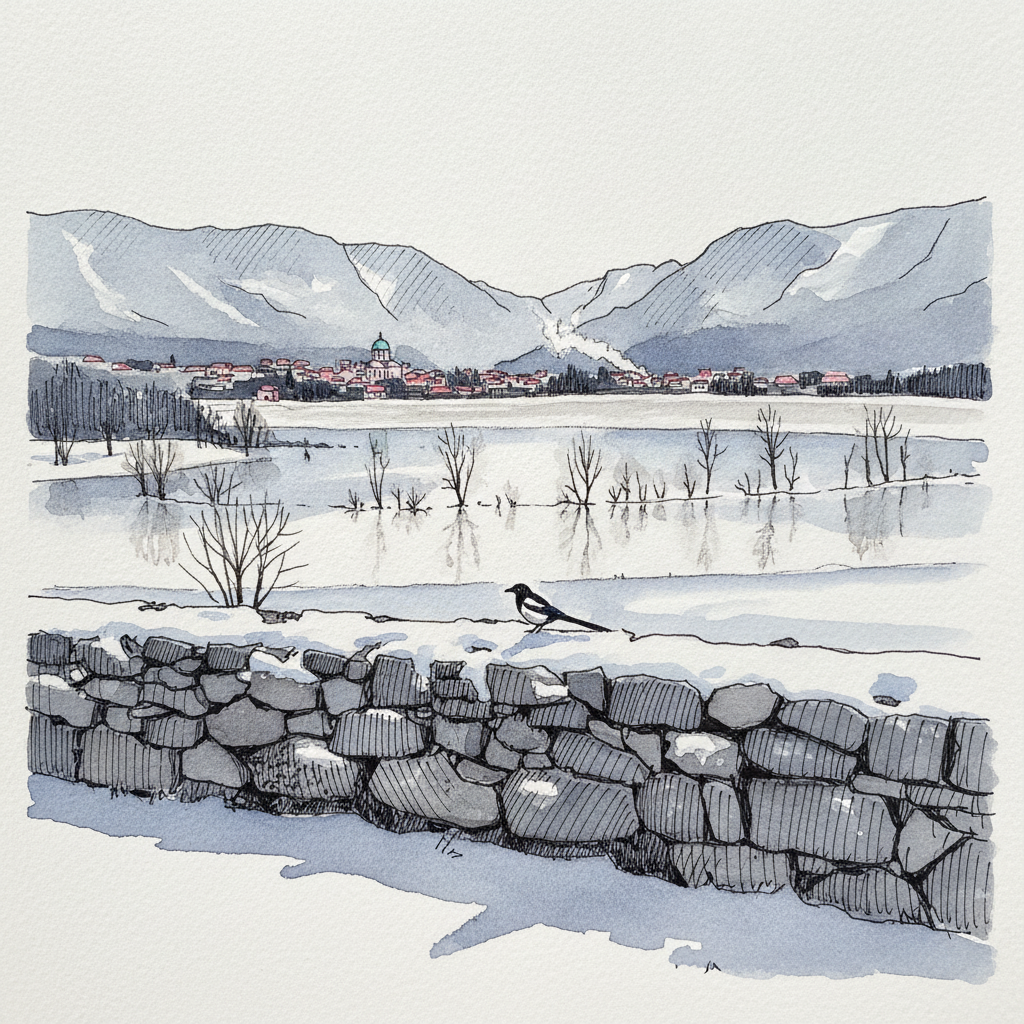
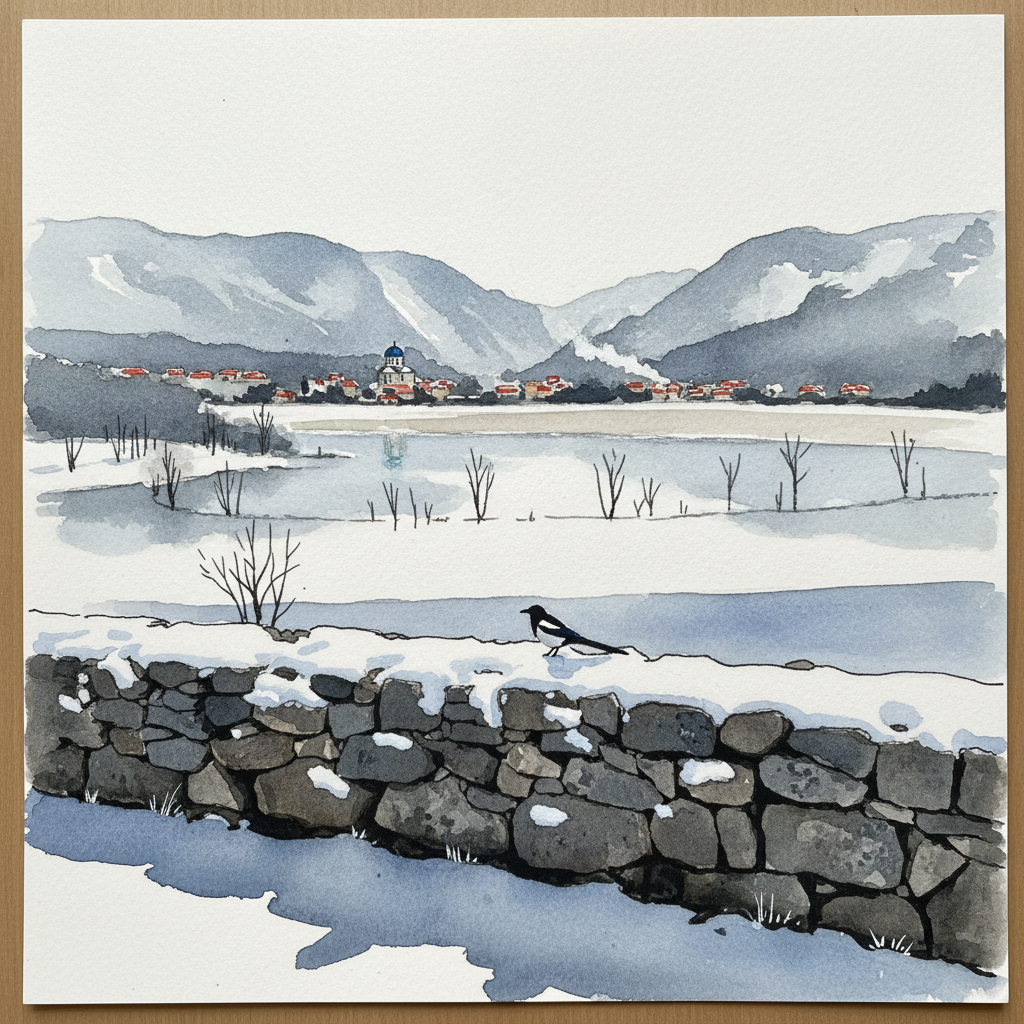
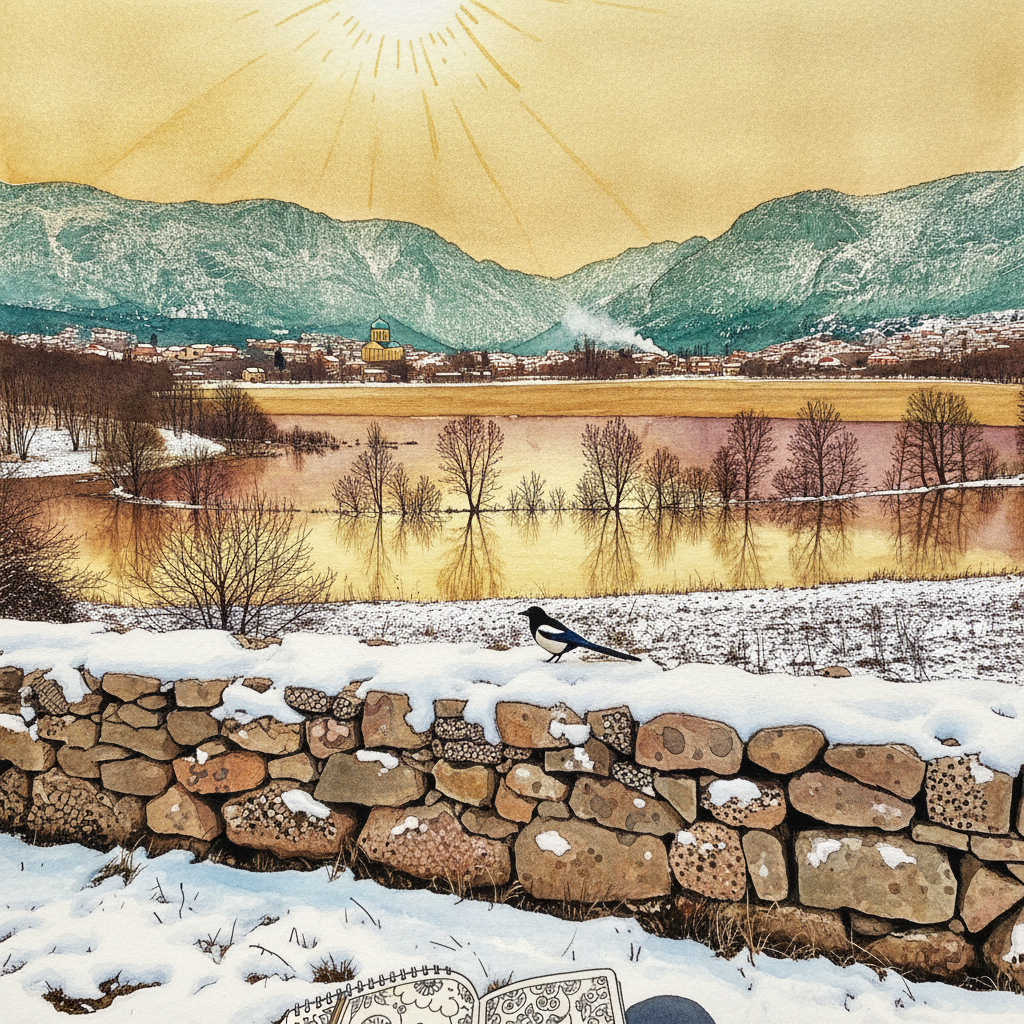
Piece 6 — Cetinje polje basin in winter, Montenegro
Pen + Watercolor · Loose pen and watercolor line-and-wash
Three takes
Focus for this piece
This piece offers an excellent study in establishing deep spatial recession across a broad landscape, leveraging both line and wash. Use varied line weights to articulate the rough textures of the foreground stone wall, then transition to lighter, more atmospheric lines for the distant bare trees and karst ridges. Focus your wash work on capturing the reflective quality of the temporary lake with soft, wet-into-wet passages, employing a cool, muted winter palette that allows the bright red roofs and the magpie’s sharp contrast to truly pop.
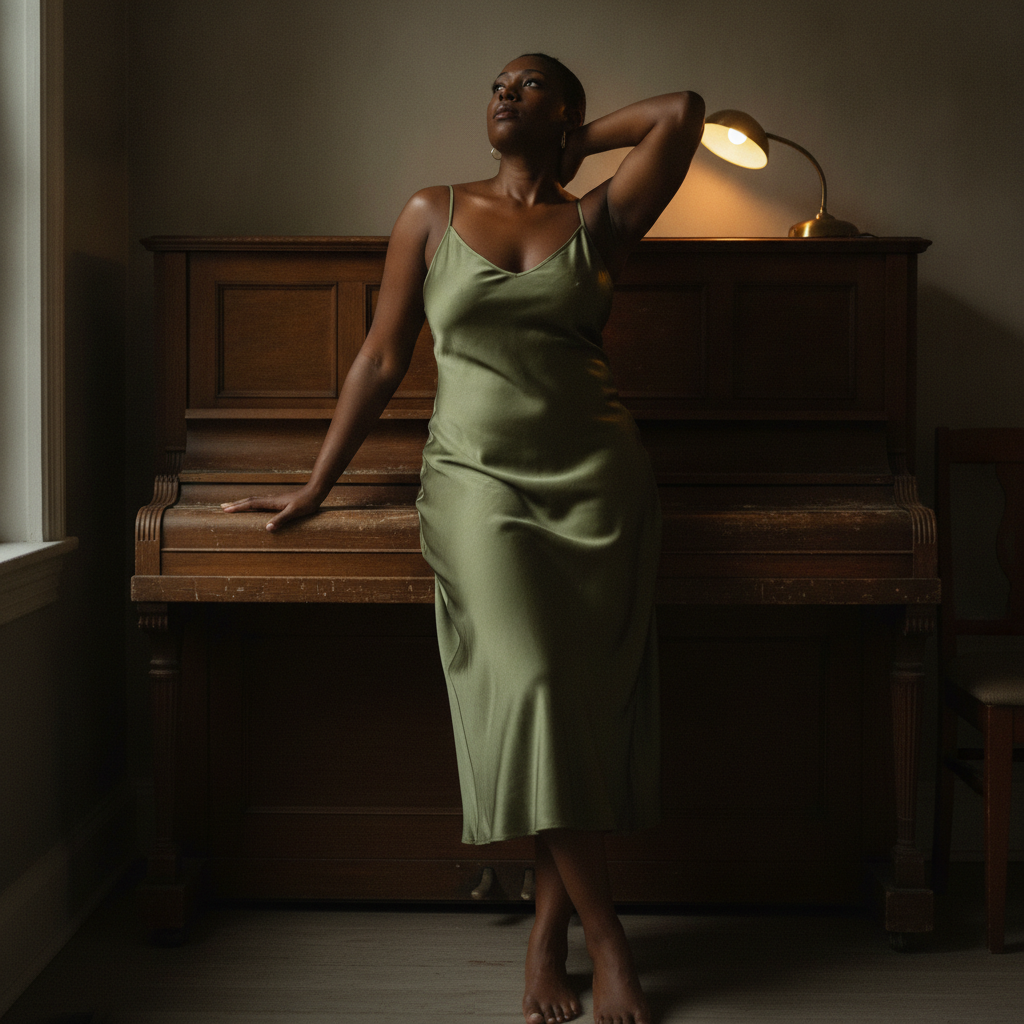
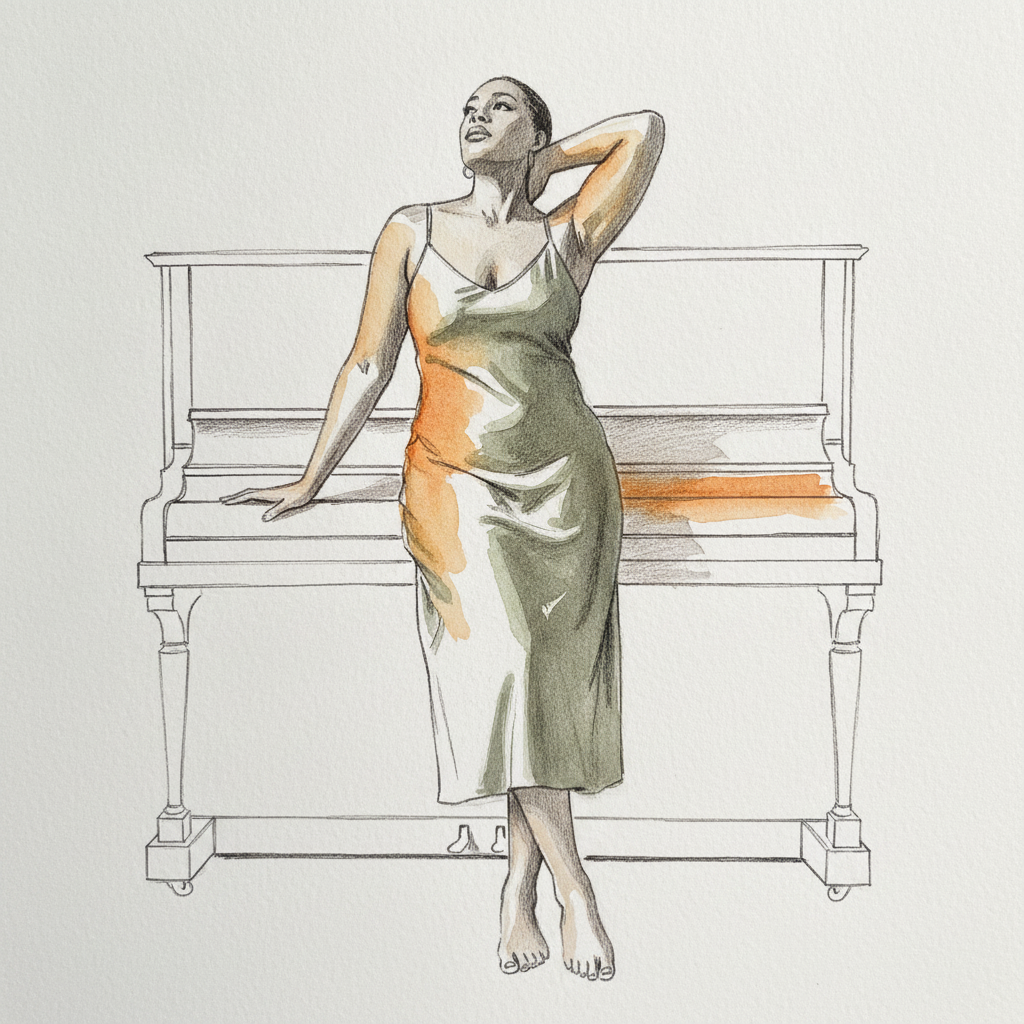
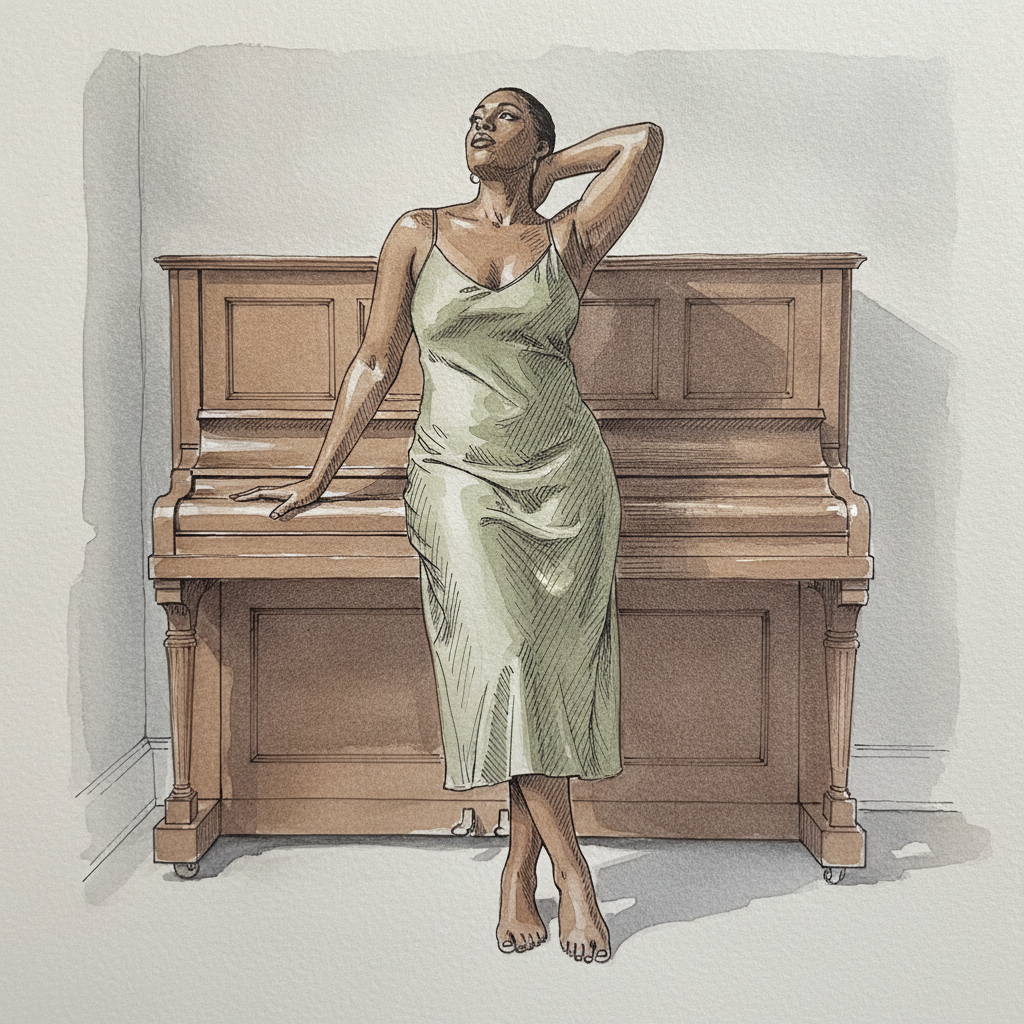
Piece 7 — Woman, late 30s, Black, tall full curvy build, hip leaning against a piano
Pen + Watercolor · Loose pen and watercolor line-and-wash
Three takes
Focus for this piece
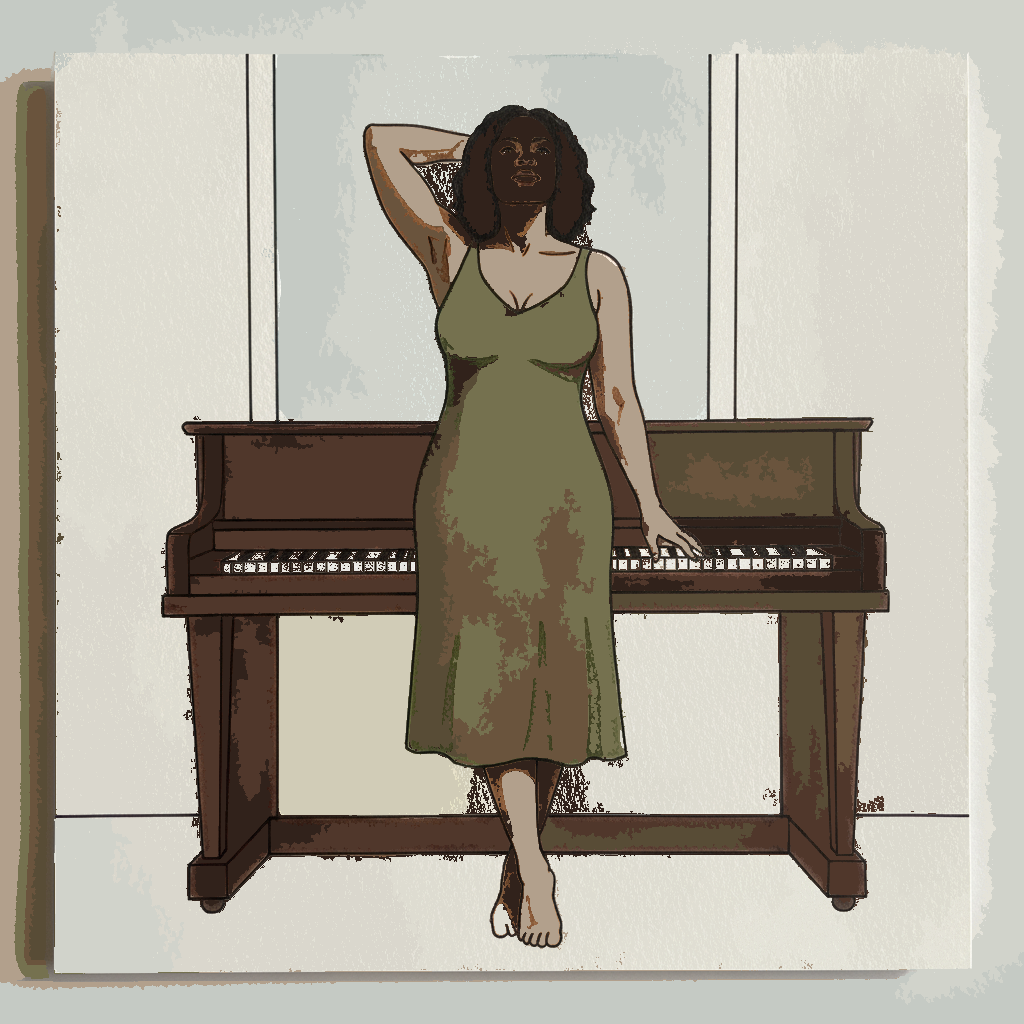
For this piece, focus on using gestural pen lines to capture the relaxed, curving posture of the figure, contrasting it with the strong planar forms of the piano. Employ rich, layered washes to build the full volume of the body and the slip dress, paying close attention to how the warm, directional uplighting sculpts the underside of the lifted arm. This will highlight the interplay between precise line work and atmospheric color modeling.
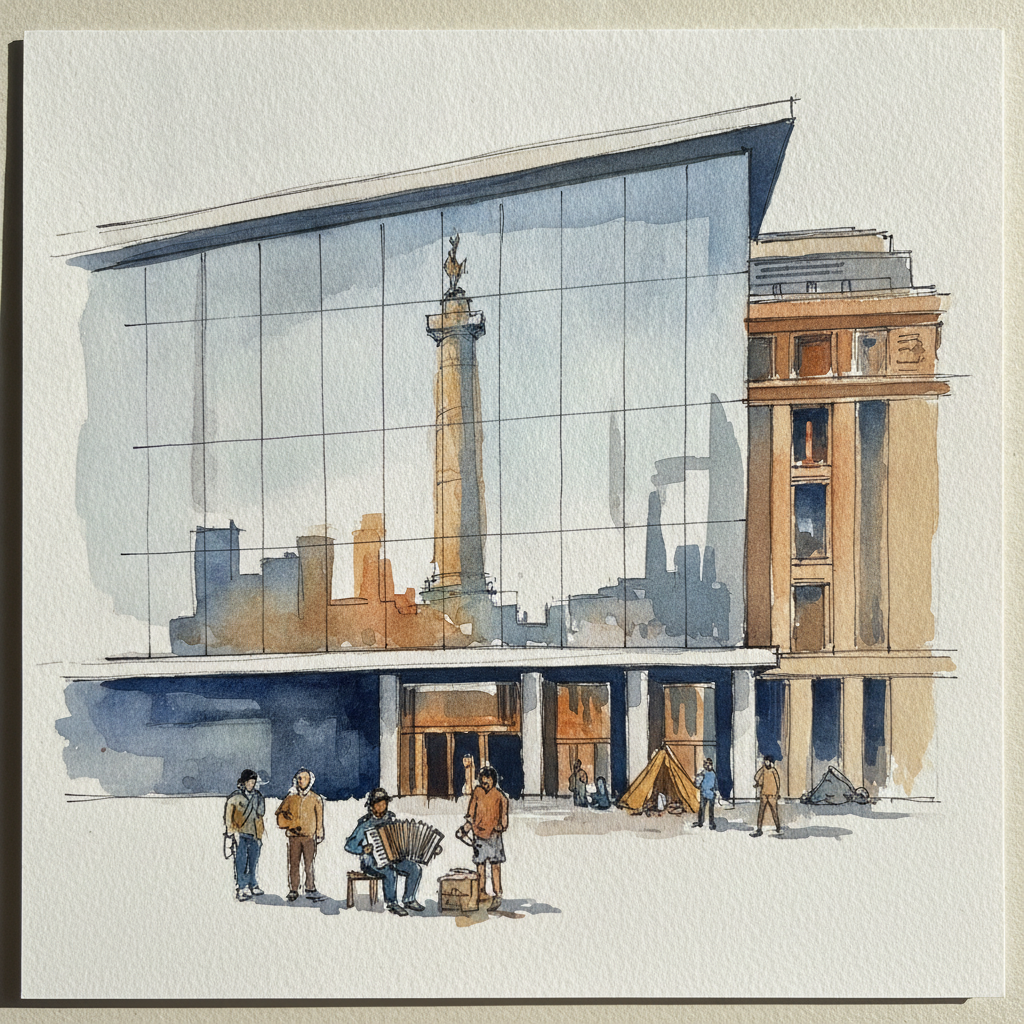
Piece 8 — Opéra Bastille, Paris, France
Pen + Watercolor · Loose pen and watercolor line-and-wash
Three takes
Focus for this piece
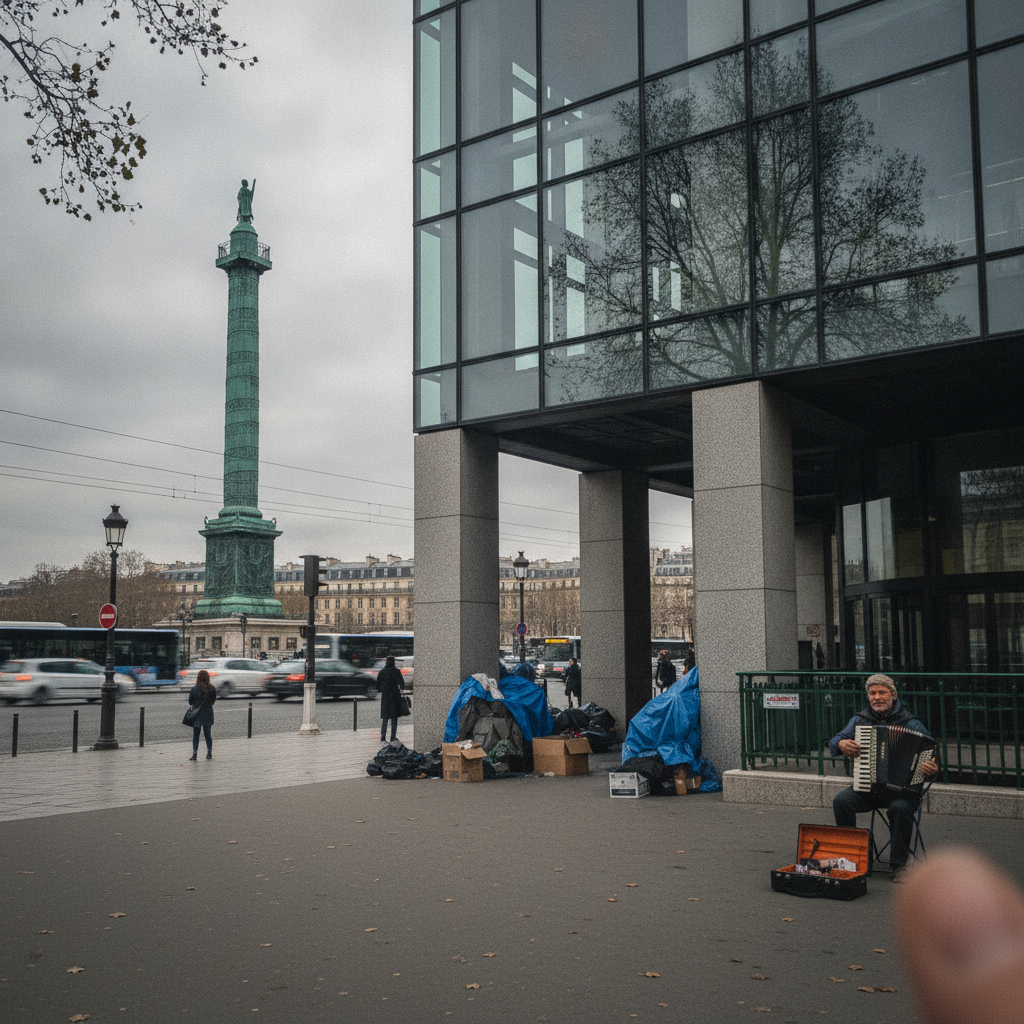
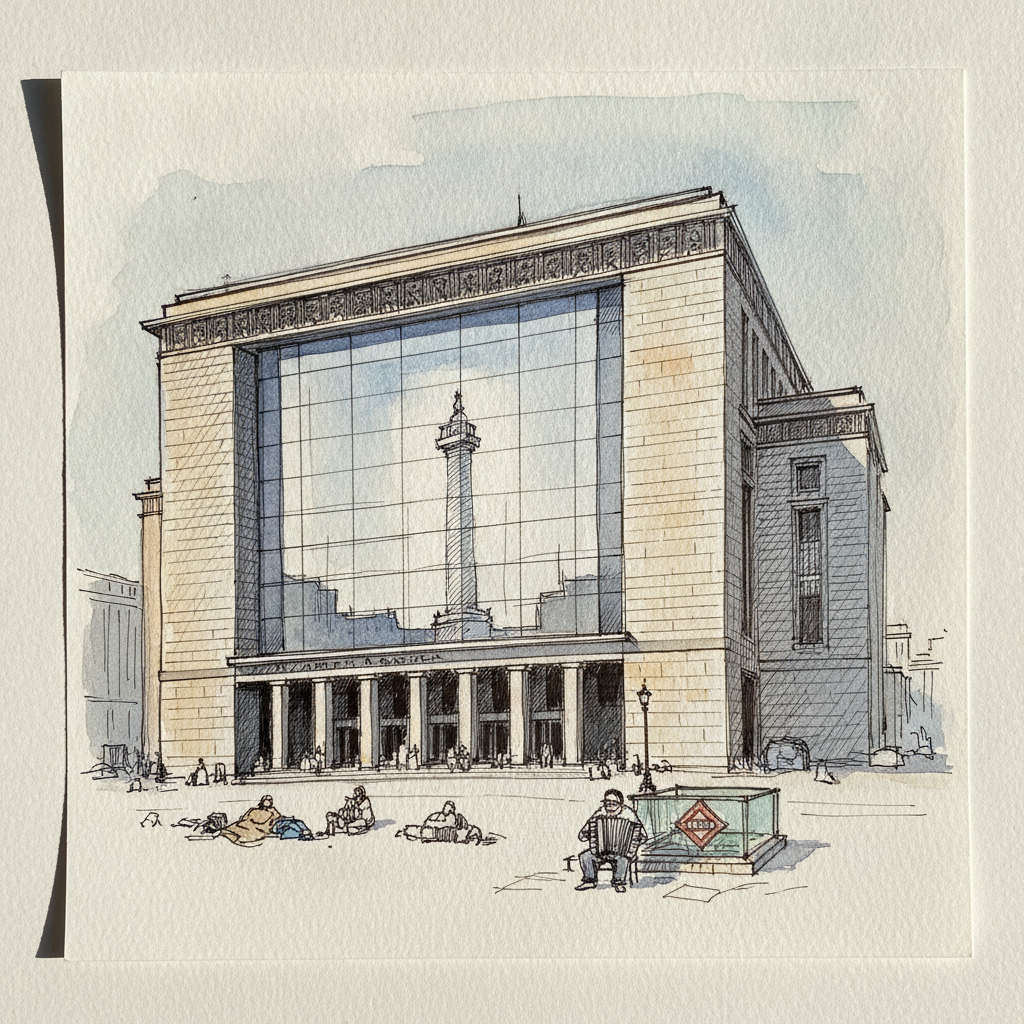
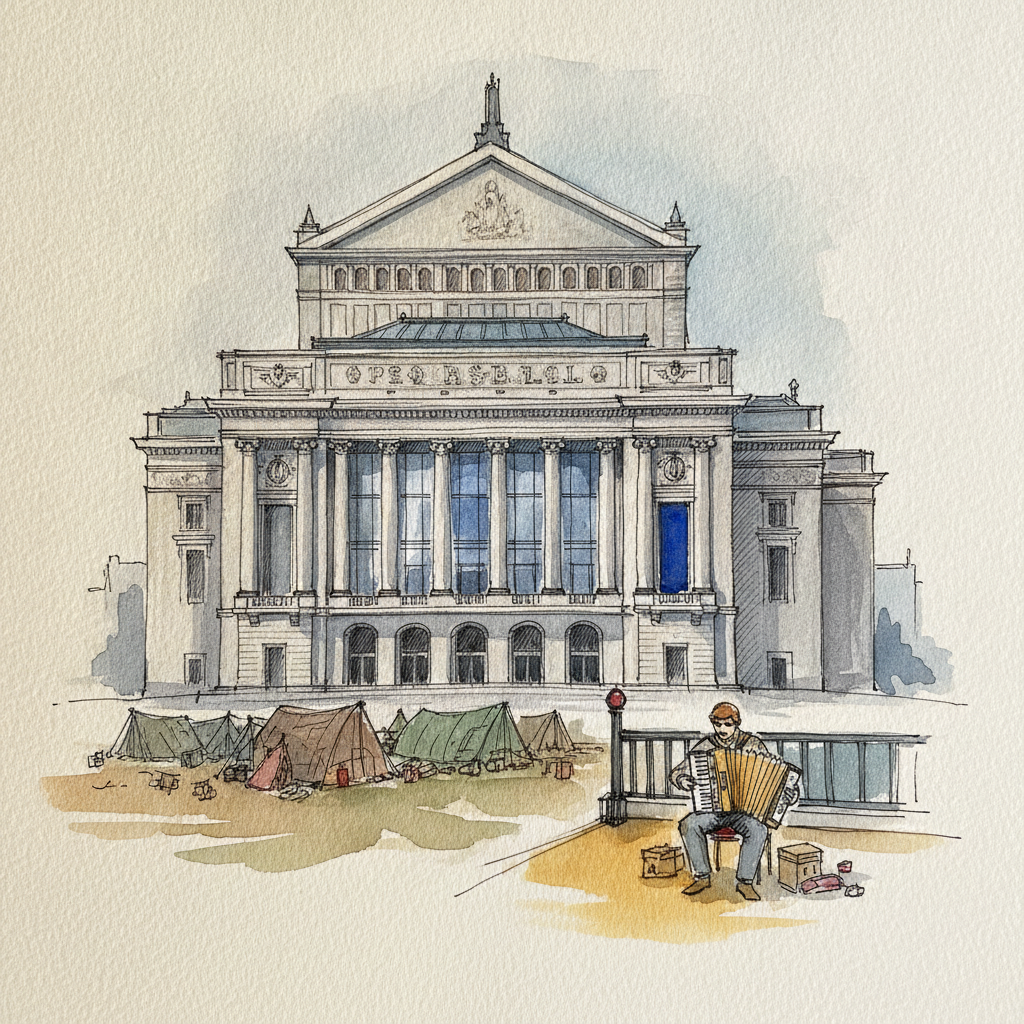
This piece offers a superb opportunity to practice rendering architectural reflections, focusing on the Opéra Bastille's expansive silvered curtain wall. Use varied, precise line weights to establish the building's stark geometric structure, contrasting them with soft, layered washes in a limited cool palette of grays and blues to depict the subtle forms and values of the reflected July Column. Pay close attention to how the crisp inked lines define the planes while the washes create depth, light, and the illusion of reflective glass.