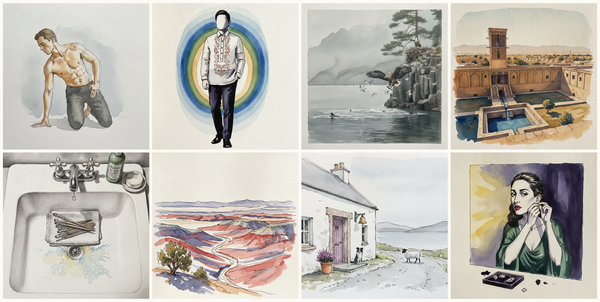
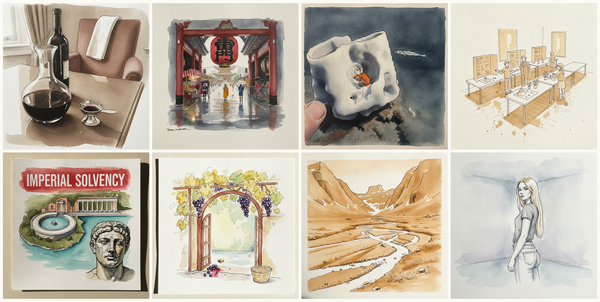
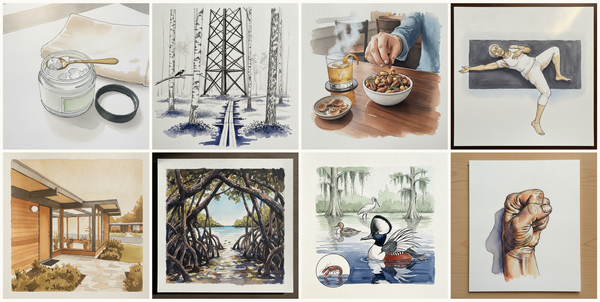
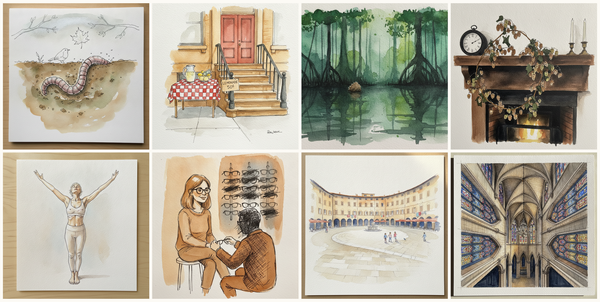
Moroccan riad lounge with low seating, Quilt folded at foot of bed, Discobolus, female elder model, gallery setting, Mount Logan from the Hubbard Glacier, and more — pen + watercolor for June 27, 2026
AI-generated daily art-practice references for pen and watercolor: Moroccan riad lounge with low seating, Quilt folded at foot of bed, Discobolus, female elder model, gallery setting, Mount Logan from the Hubbard Glacier, Antique shop display window, Phaeno Science Centre, Wolfsburg, Germany, Jap…
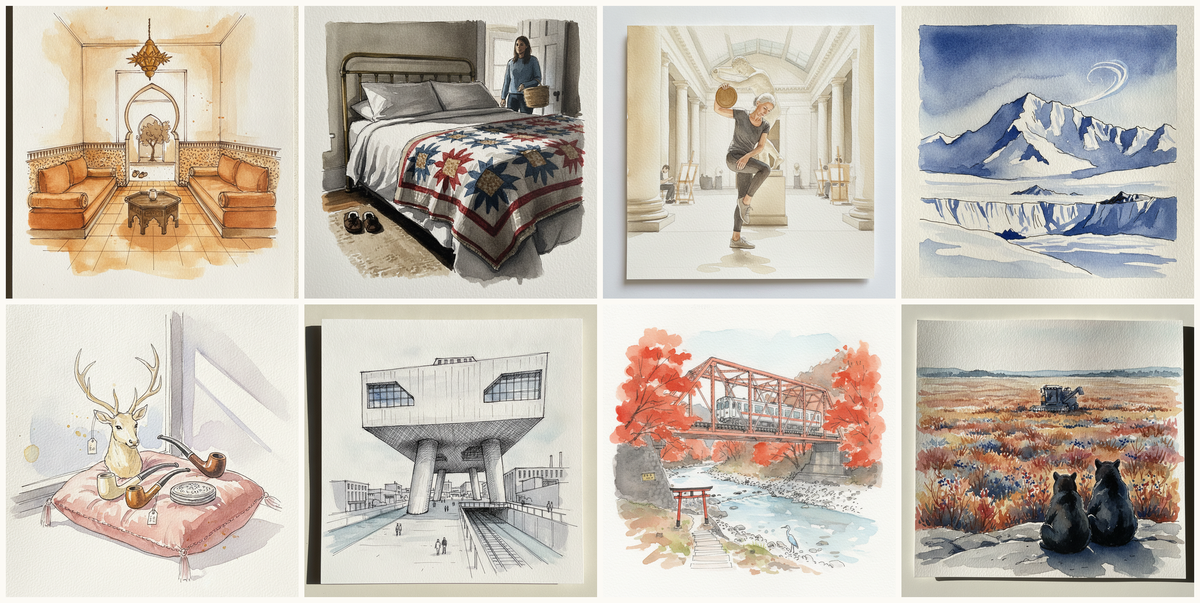
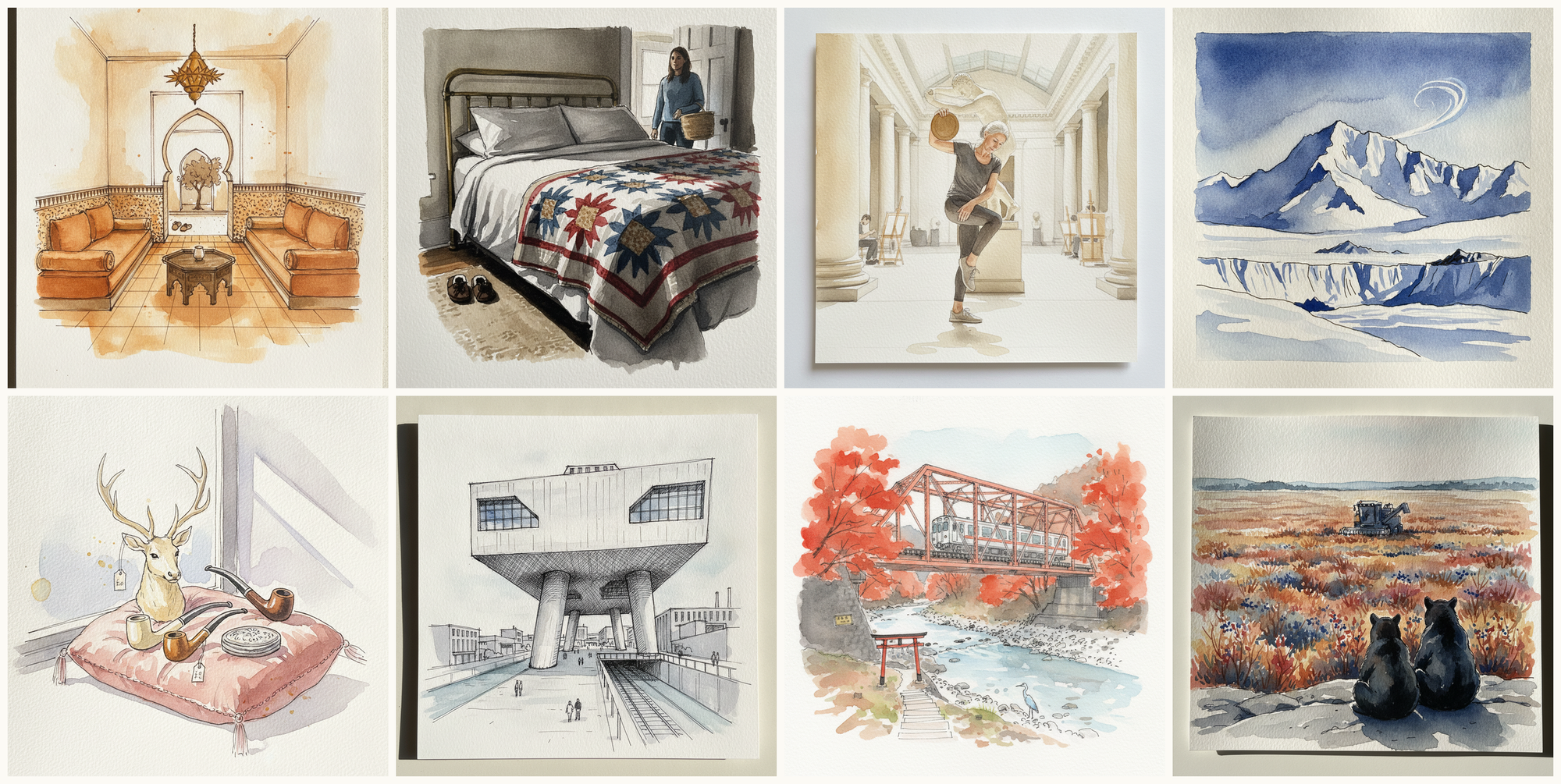
Today's 8 pen-and-watercolor pieces: Moroccan riad lounge with low seating, Quilt folded at foot of bed, Discobolus, female elder model, gallery setting, Mount Logan from the Hubbard Glacier, Antique shop display window, Phaeno Science Centre, Wolfsburg, Germany, Japanese Pre-War Truss, Honshu, Lowbush blueberry. Each piece comes with an AI-generated photoreal reference, three AI-generated example artworks in different treatments, and a short focus paragraph naming what to study in this one.
Why these references use AI
This daily series uses AI-generated images as practice prompts, not as finished artwork to copy. Each subject starts with a synthetic photoreal reference generated with Gemini/Nano Banana, then moves into three pen-and-watercolor interpretations of the same subject.
I use AI here because daily art practice needs variety and low friction. Real life can get repetitive, busy, or visually narrow. These generated reference sets make it easier to study bodies, buildings, animals, landscapes, objects, gestures, light, palettes, and compositions that might not show up in an ordinary day.
The goal is not to reproduce any image directly. Treat each set as a starting point for observation and study: choose what interests you, change the framing, simplify the subject, alter the palette, and make your own version.
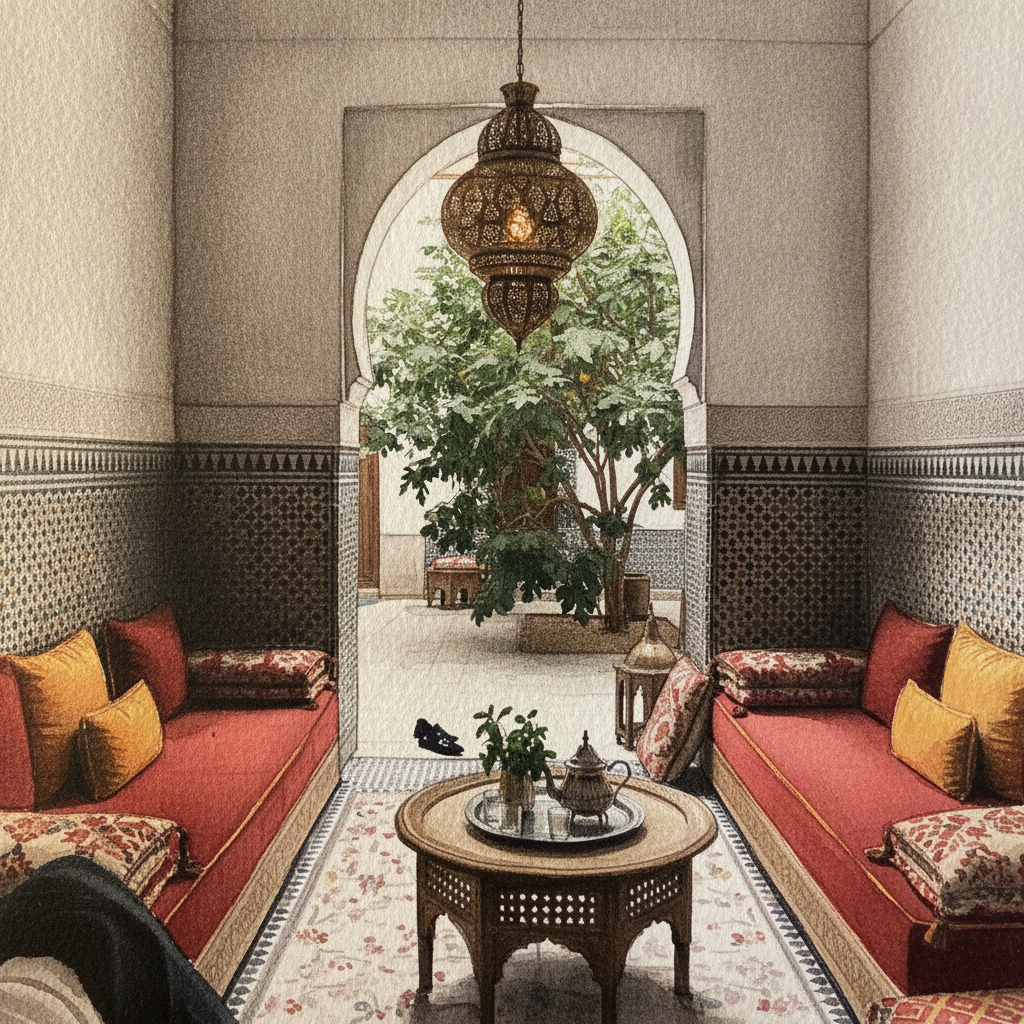
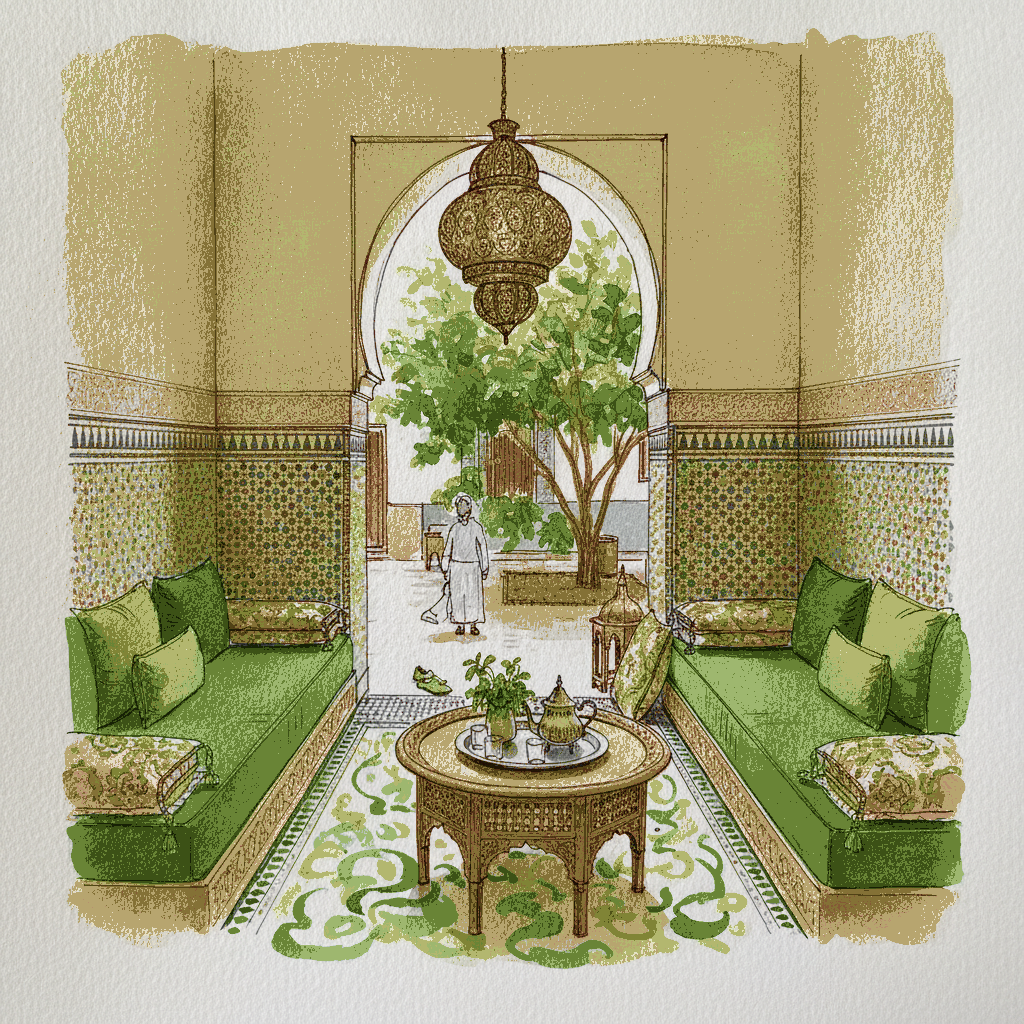
Piece 1 — Moroccan riad lounge with low seating
Pen + Watercolor · Loose pen and watercolor line-and-wash
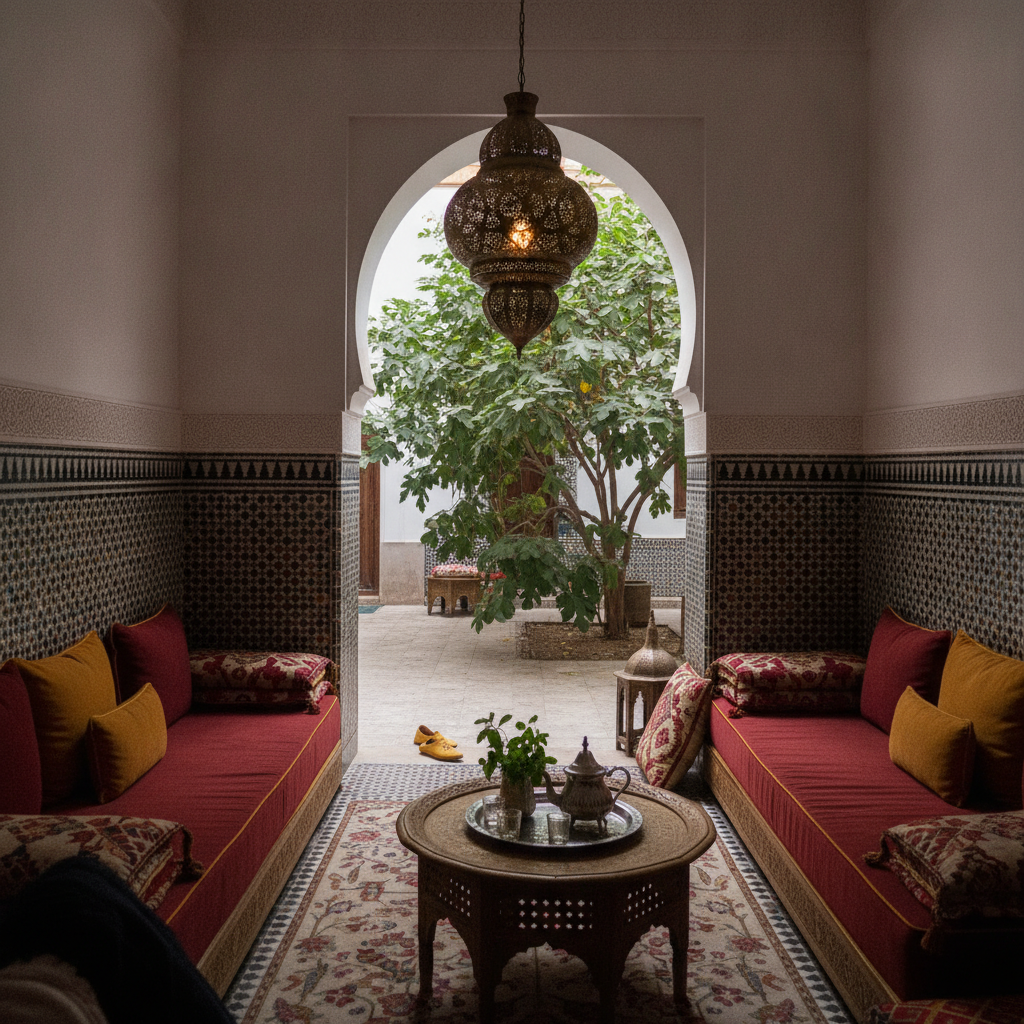
Three takes
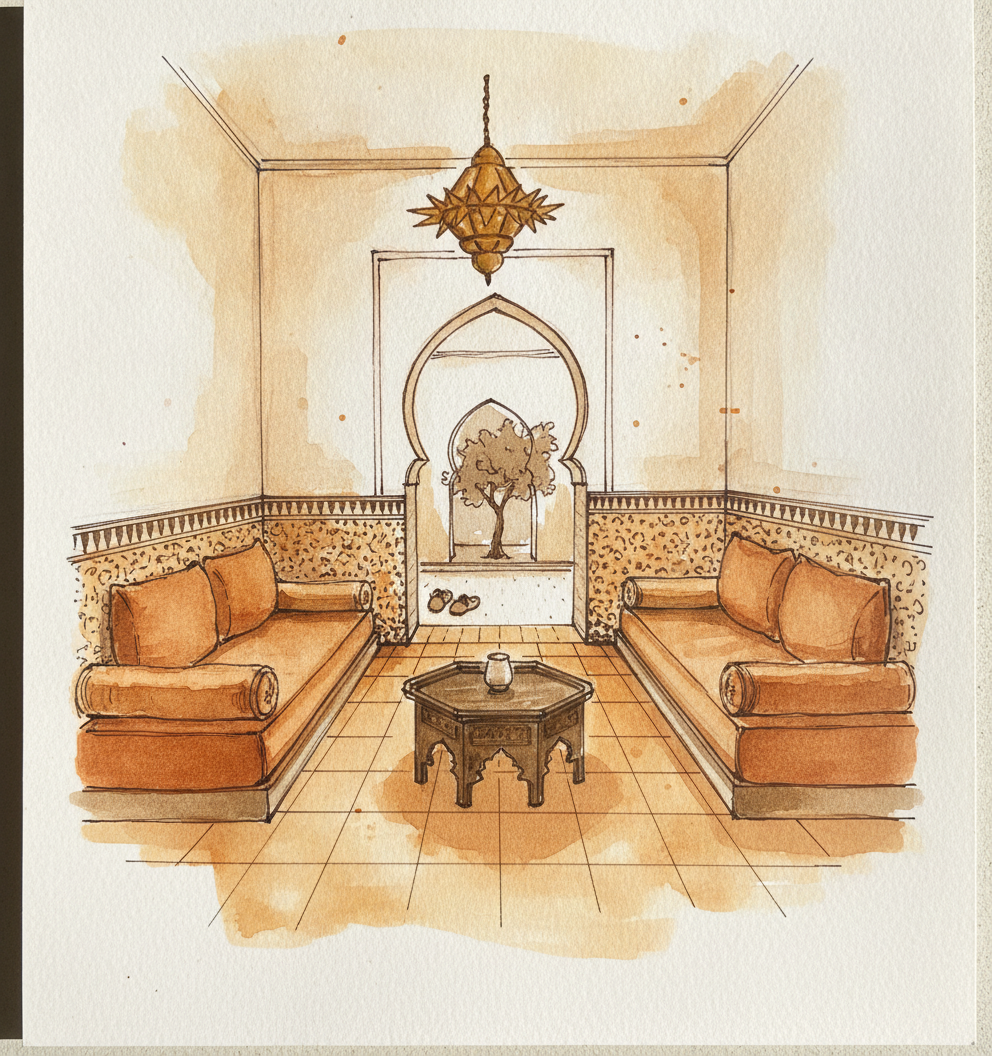

Focus for this piece
This piece offers a rich study in balancing detailed line work with atmospheric washes. Focus on how varying line weights can articulate the crisp patterns of zellige tile and carved wood, while a lighter hand defines the soft textures of cushions and banquettes. Use successive, transparent watercolor washes to build the warm, filtered light spilling from the courtyard doorway, allowing it to unify the scene without obscuring the delicate ink lines.
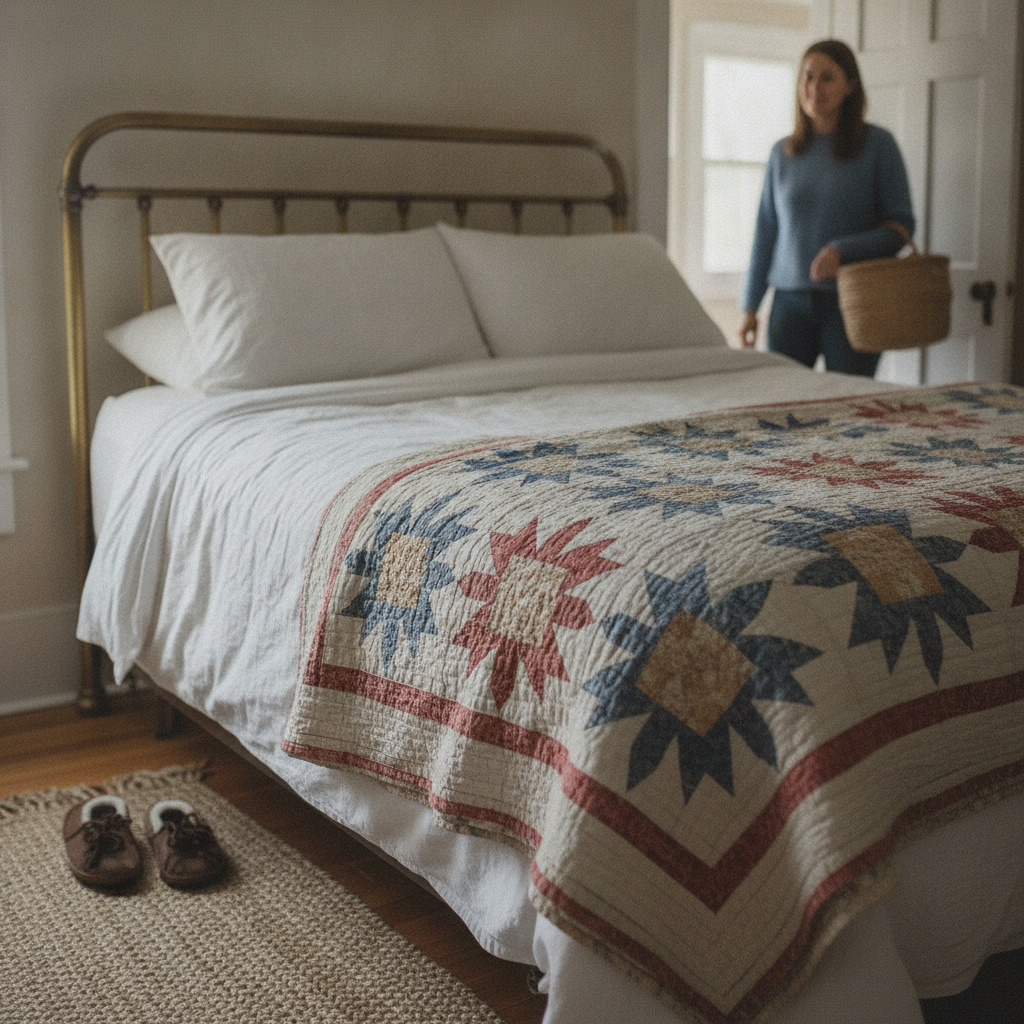
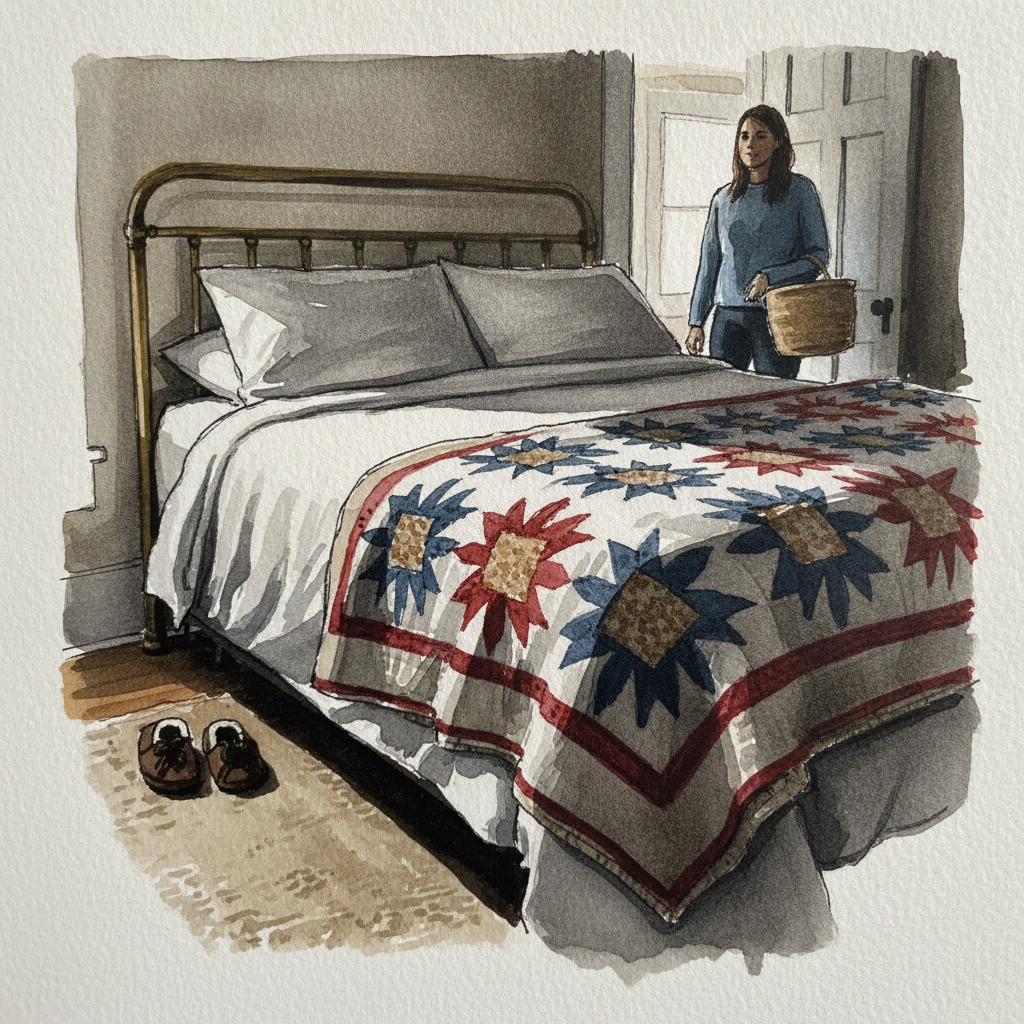
Piece 2 — Quilt folded at foot of bed
Pen + Watercolor · Loose pen and watercolor line-and-wash
Three takes
Focus for this piece
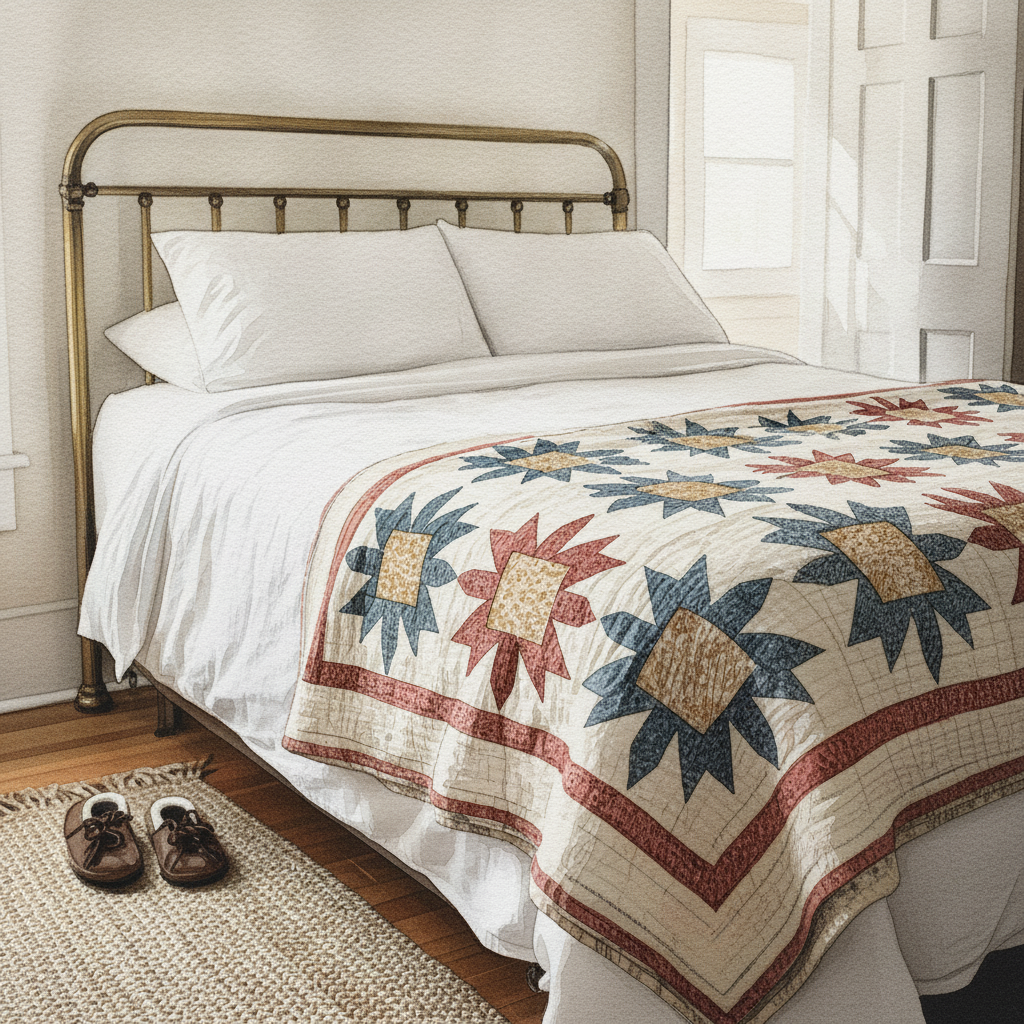
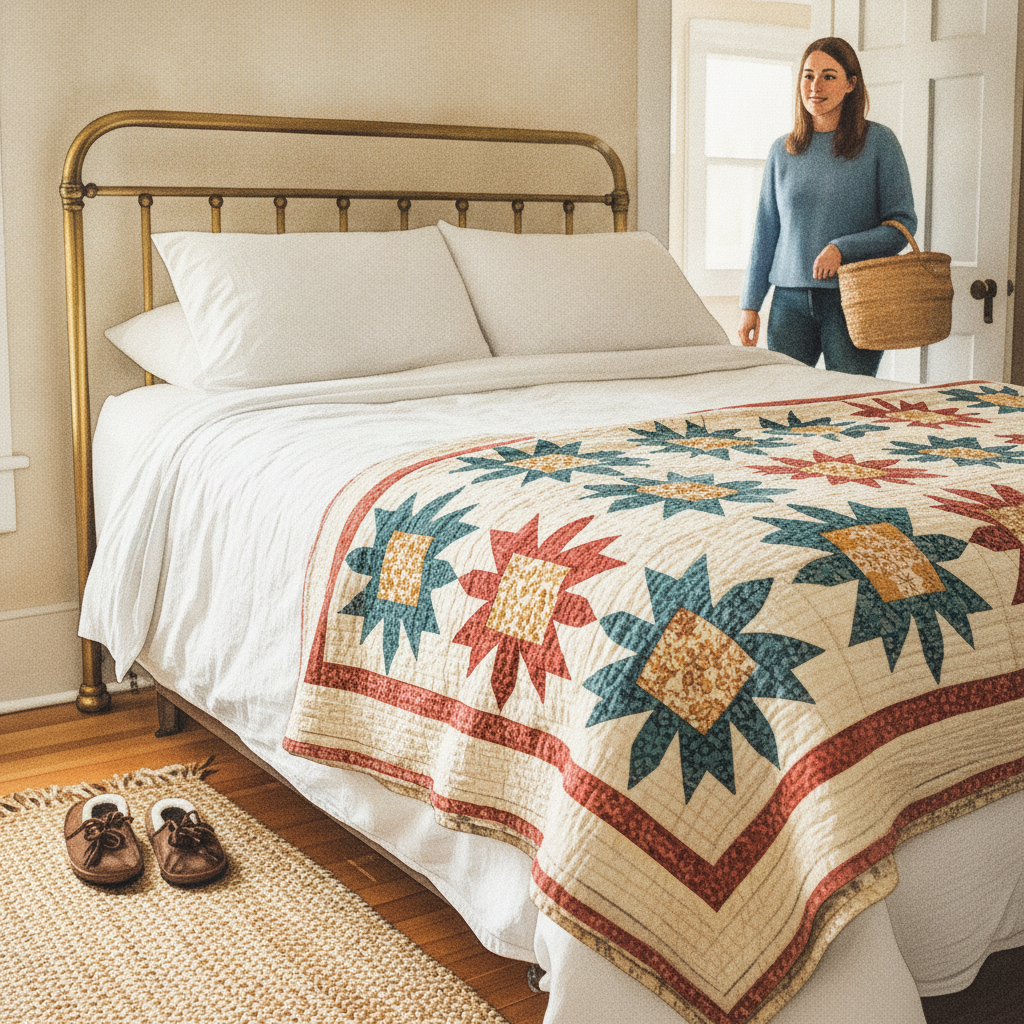
This piece offers a focused study on rendering varied fabric textures and soft volumetric forms under direct light. Use a deliberate range of line weights to differentiate the crisp edges of the white duvet from the aged, puckered softness of the quilt's star patterns. Employ a limited palette of faded reds, blues, and yellows, letting your washes build form and suggest the gentle undulations of the folded fabric. Focus on how a strong light source reveals texture and creates deep shadows, using minimal pen lines to define the quilt blocks and relying on watercolor to model their subtle curves.
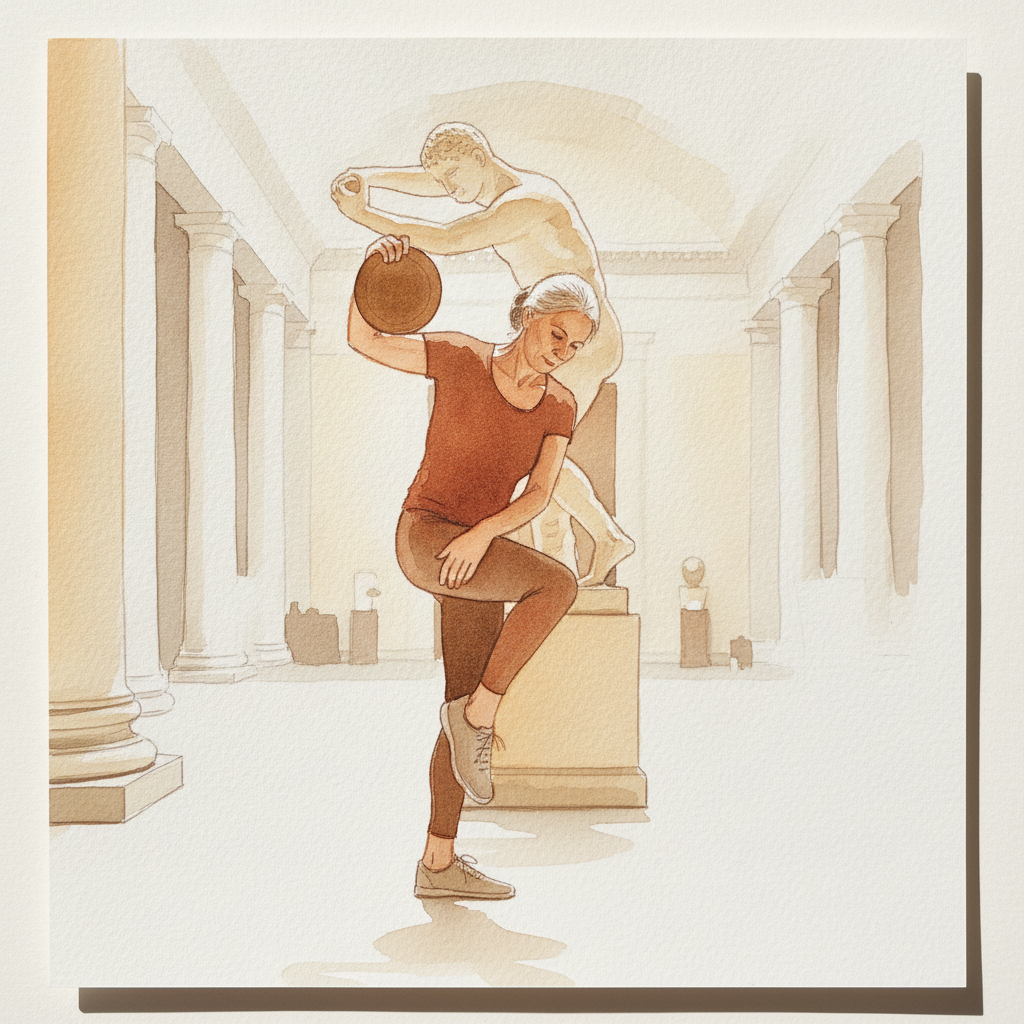
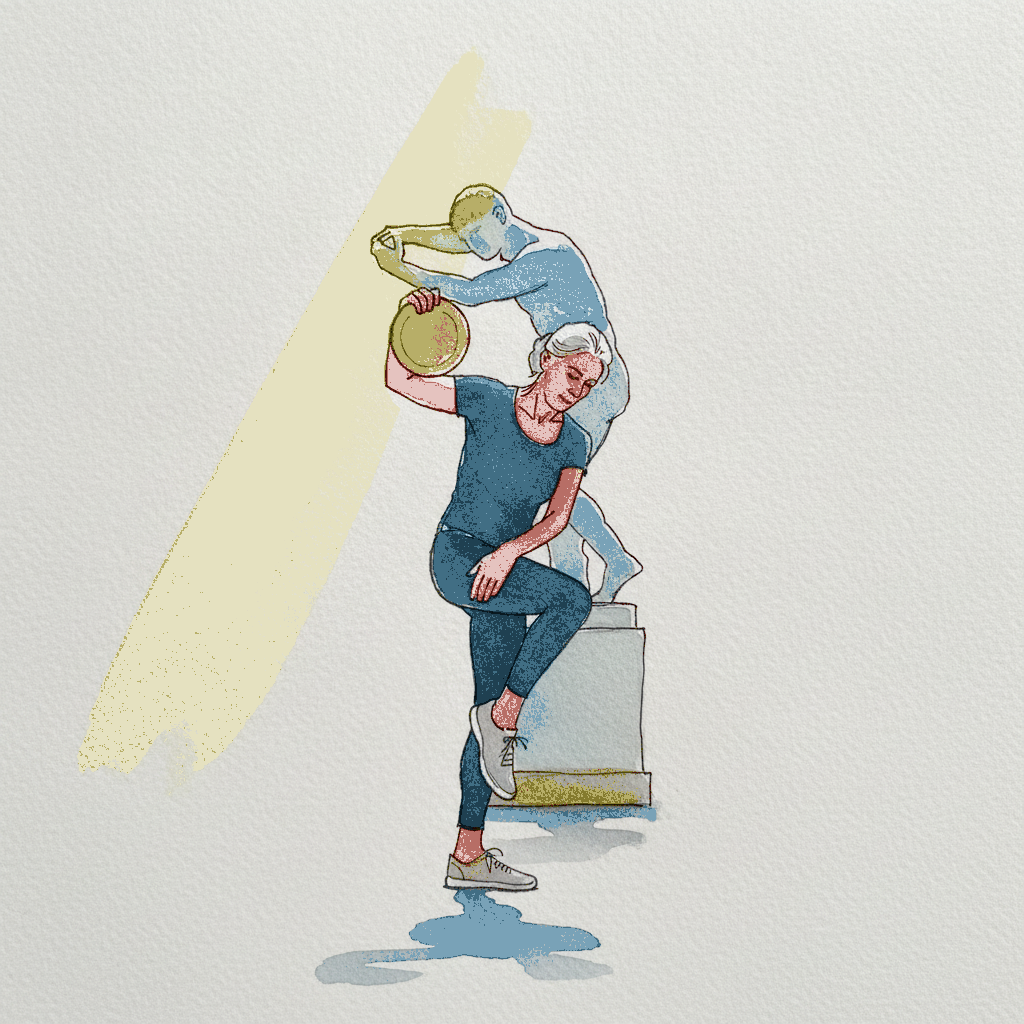
Piece 3 — Discobolus, female elder model, gallery setting
Pen + Watercolor · Loose pen and watercolor line-and-wash
Three takes

Focus for this piece
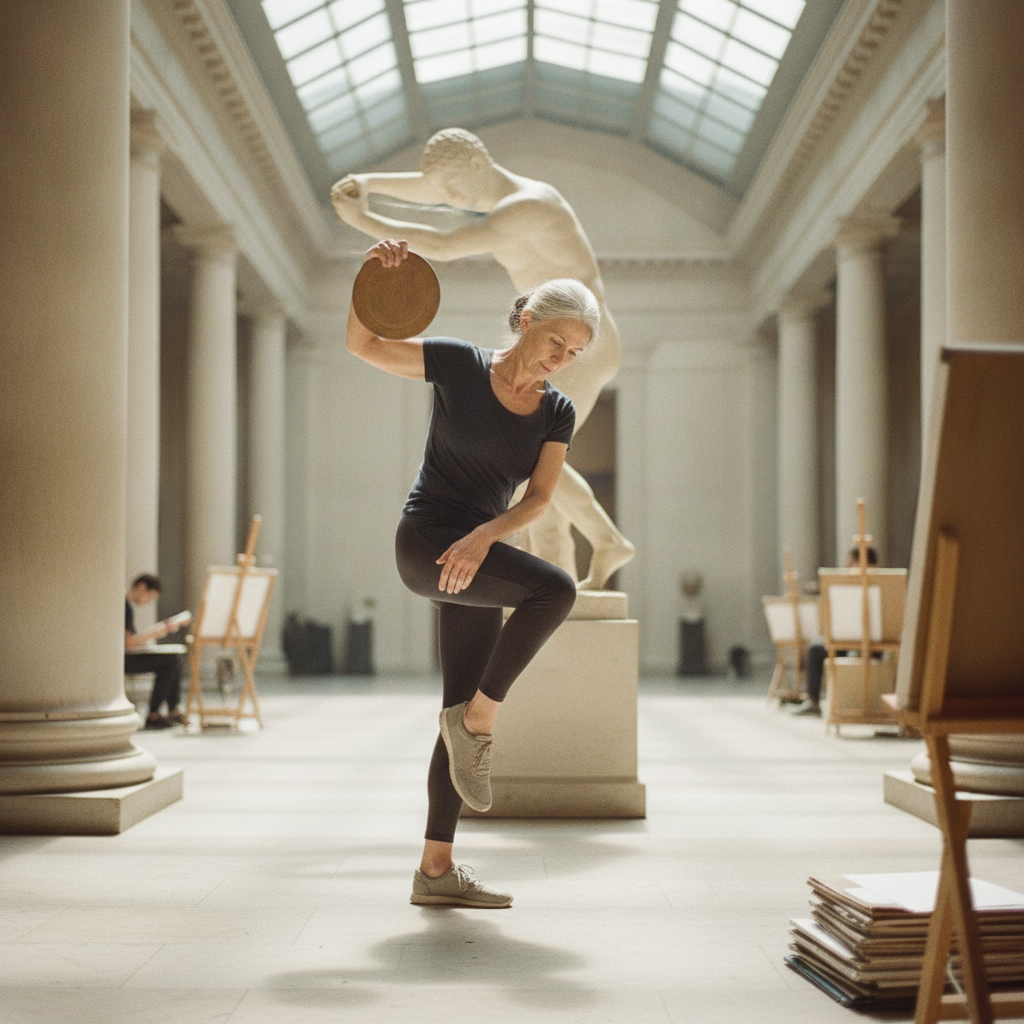
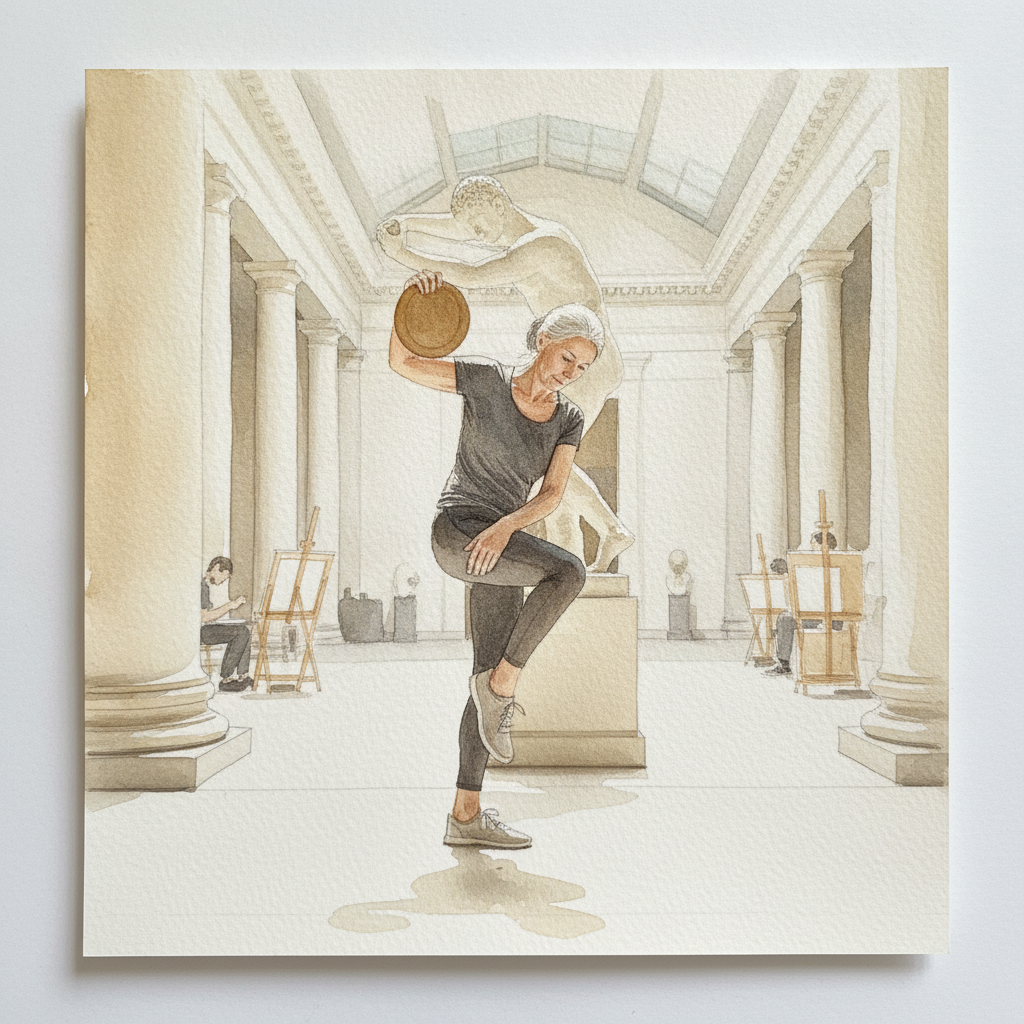
This piece is a prime study in capturing dynamic human gesture and form, specifically emphasizing the graceful articulation of an elder model's body. Use a combination of flowing contour lines and strategic internal lines to convey the Discobolus pose's coiled energy, then build volume with luminous, layered washes that respond to the dramatic overhead skylight. Focus on how varying line weight can differentiate the living figure from the static marble, reinforcing key value transitions and the distinct texture of skin versus stone.
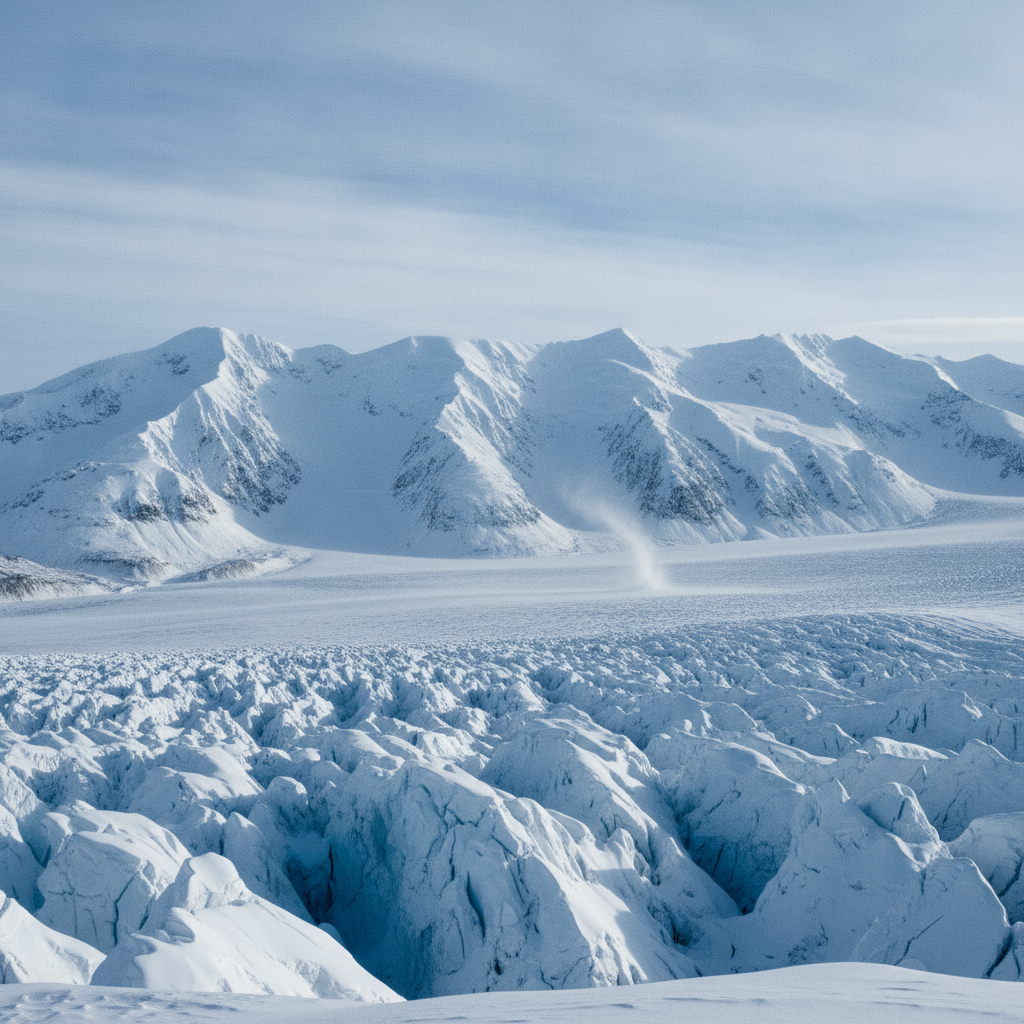
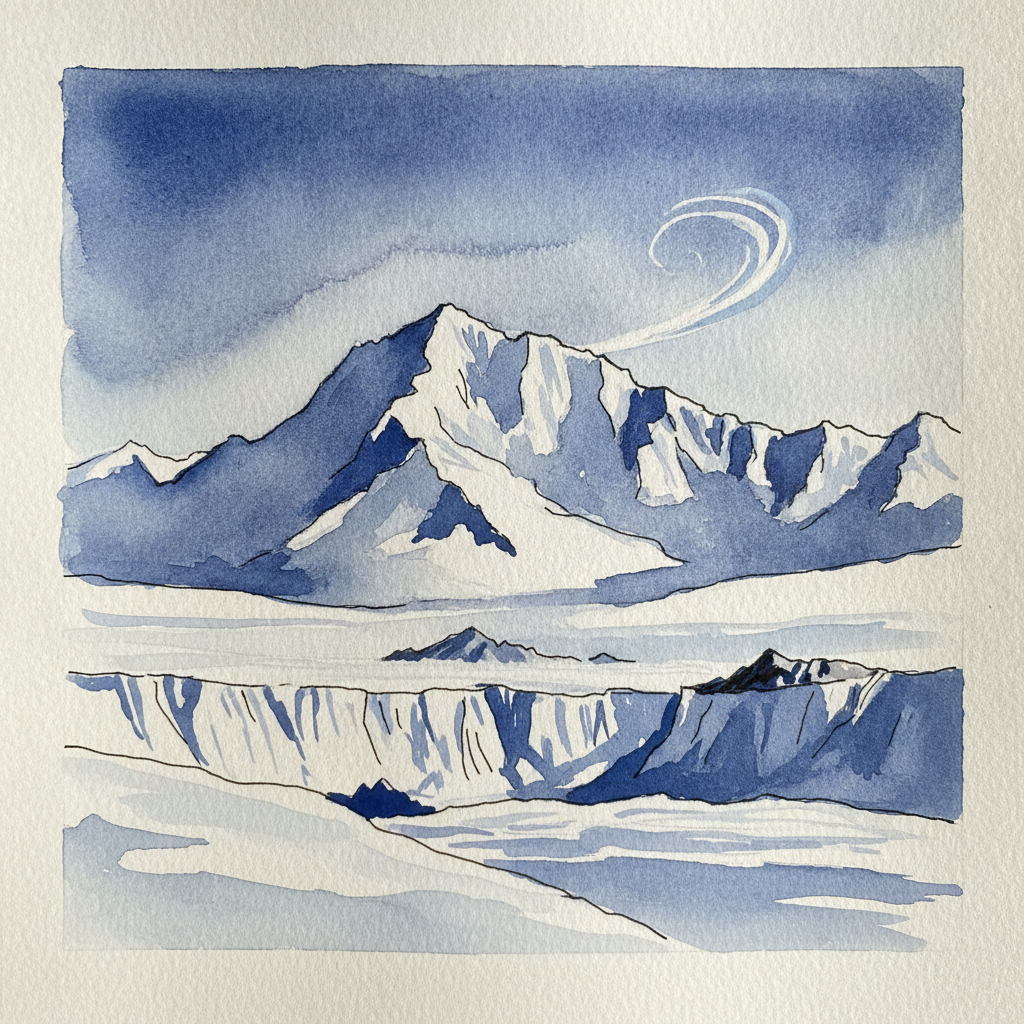
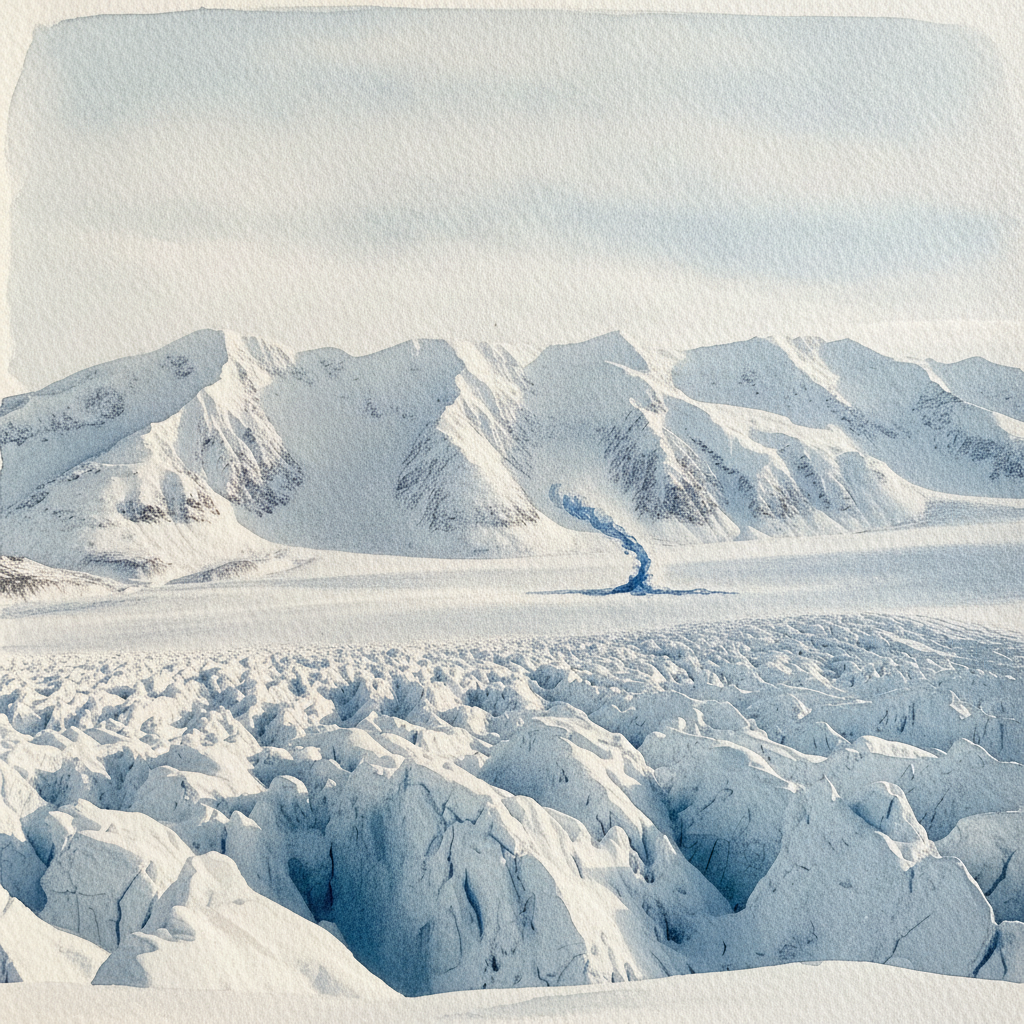
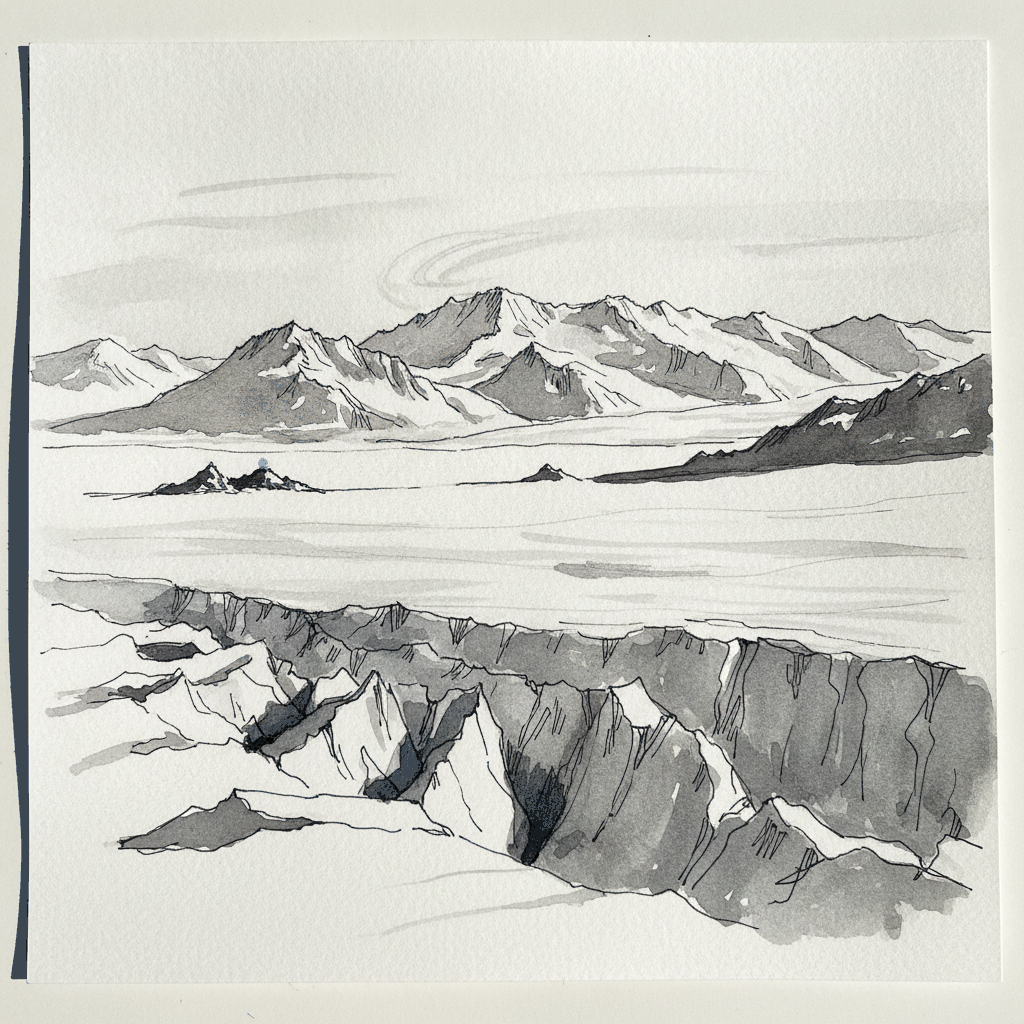
Piece 4 — Mount Logan from the Hubbard Glacier
Pen + Watercolor · Loose pen and watercolor line-and-wash
Three takes

Focus for this piece
This piece is ideal for exploring how a restricted cool palette can convey immense scale and cold atmosphere. Focus on using varied line weights—from sharp, dark marks defining foreground icefall crevasses to sparse, pale suggestions for the distant massif—to create compelling depth. Practice building form in the snow and ice entirely through delicate cool washes, letting subtle blues and purples sculpt the landscape where the light itself is flat. This will challenge you to allow watercolor to carry the primary responsibility for value and atmosphere.
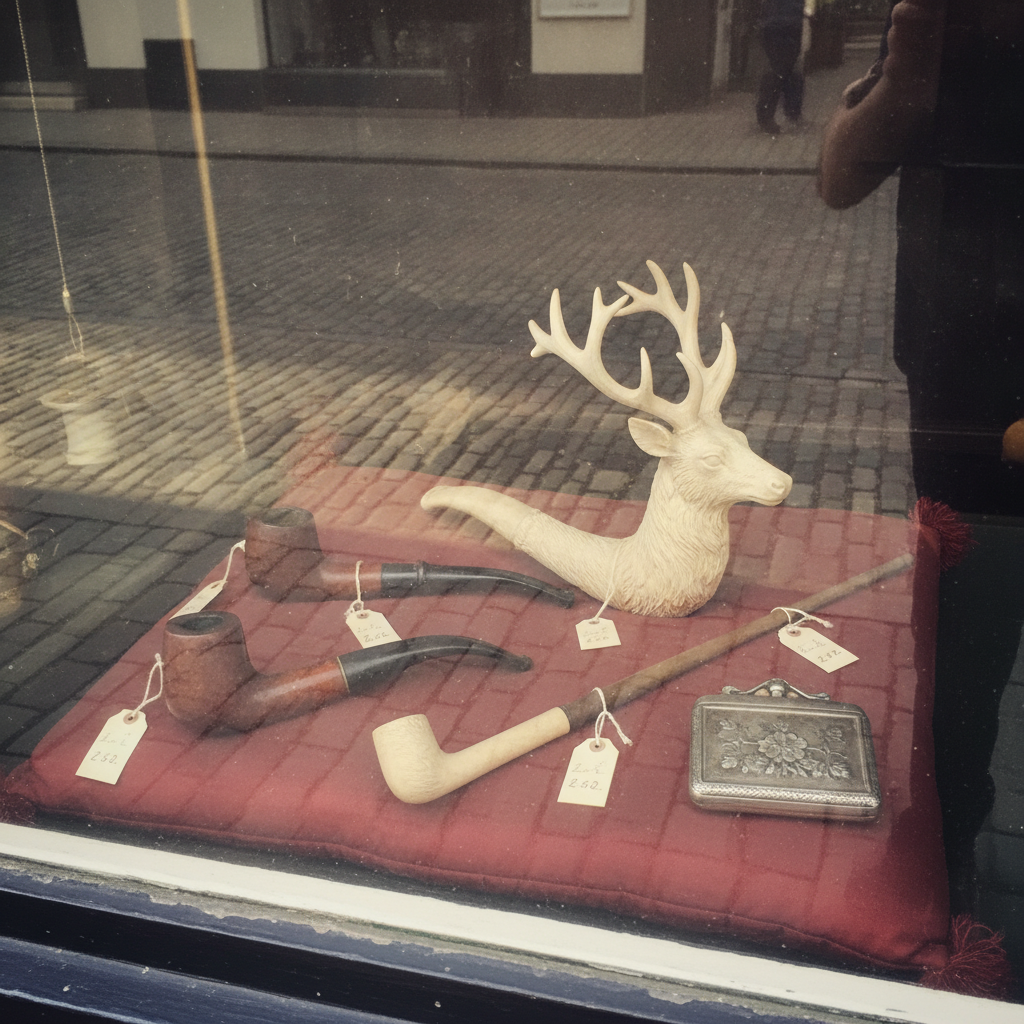
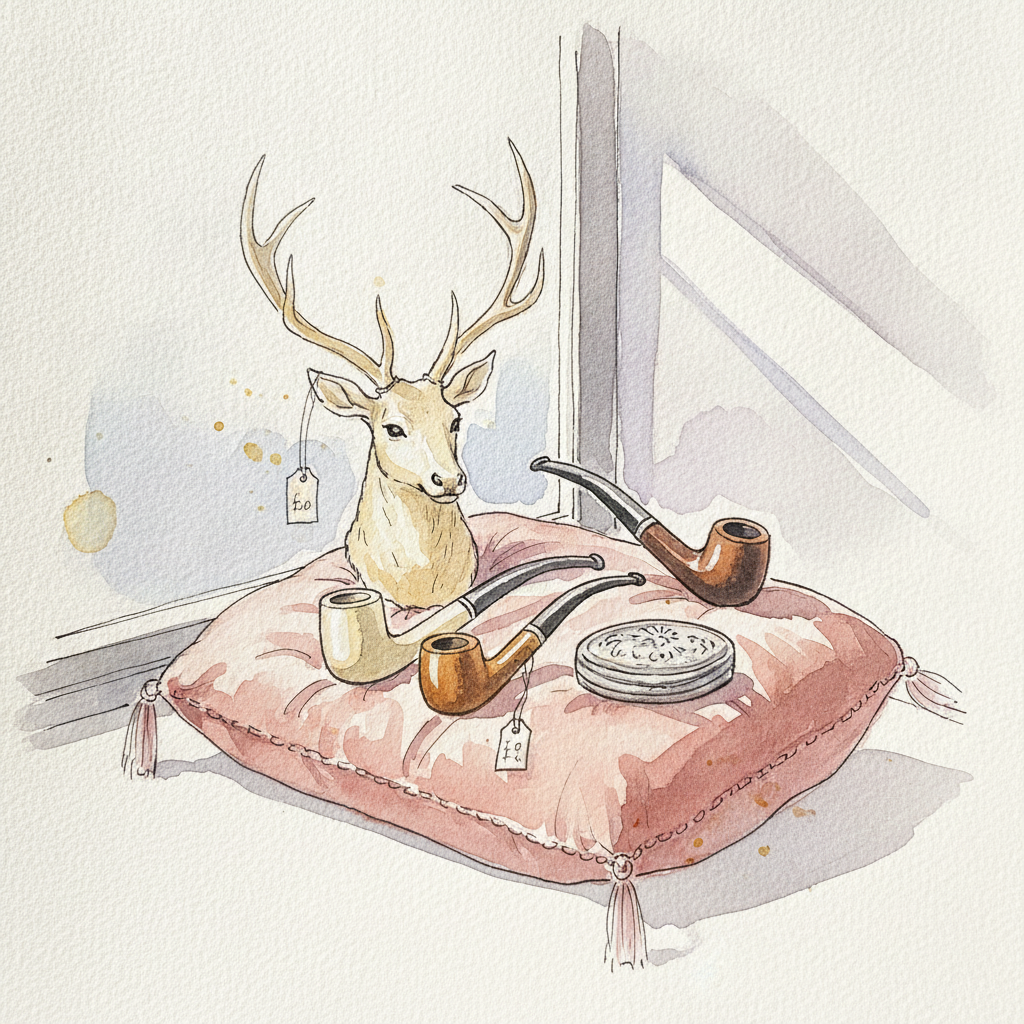
Piece 5 — Antique shop display window
Pen + Watercolor · Loose pen and watercolor line-and-wash
Three takes
Focus for this piece
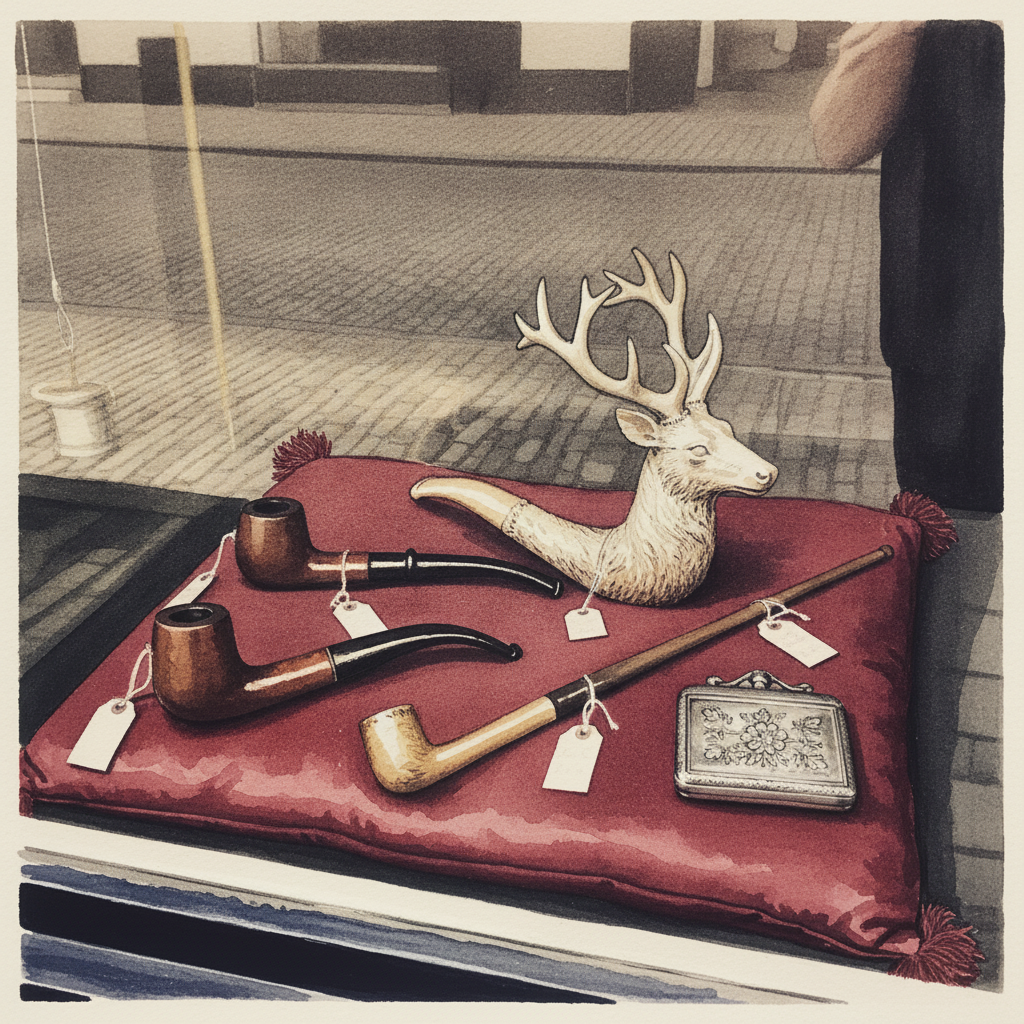
This piece offers an excellent study in rendering transparency and the illusion of depth, specifically how to suggest the "ghost of street reflection" on the glass without obscuring the detailed objects behind it. Focus on layering very dilute, cool washes for the reflections first, allowing them to dry before building up the warmer, richer hues of the interior. Use crisp, varied line weights for the objects and their handwritten tags, letting them punch through or sit behind the soft atmospheric reflections to define their presence. This approach helps differentiate the solid forms from the fleeting, indistinct quality of the street scene.
Piece 6 — Phaeno Science Centre, Wolfsburg, Germany
Pen + Watercolor · Loose pen and watercolor line-and-wash
Three takes
Focus for this piece
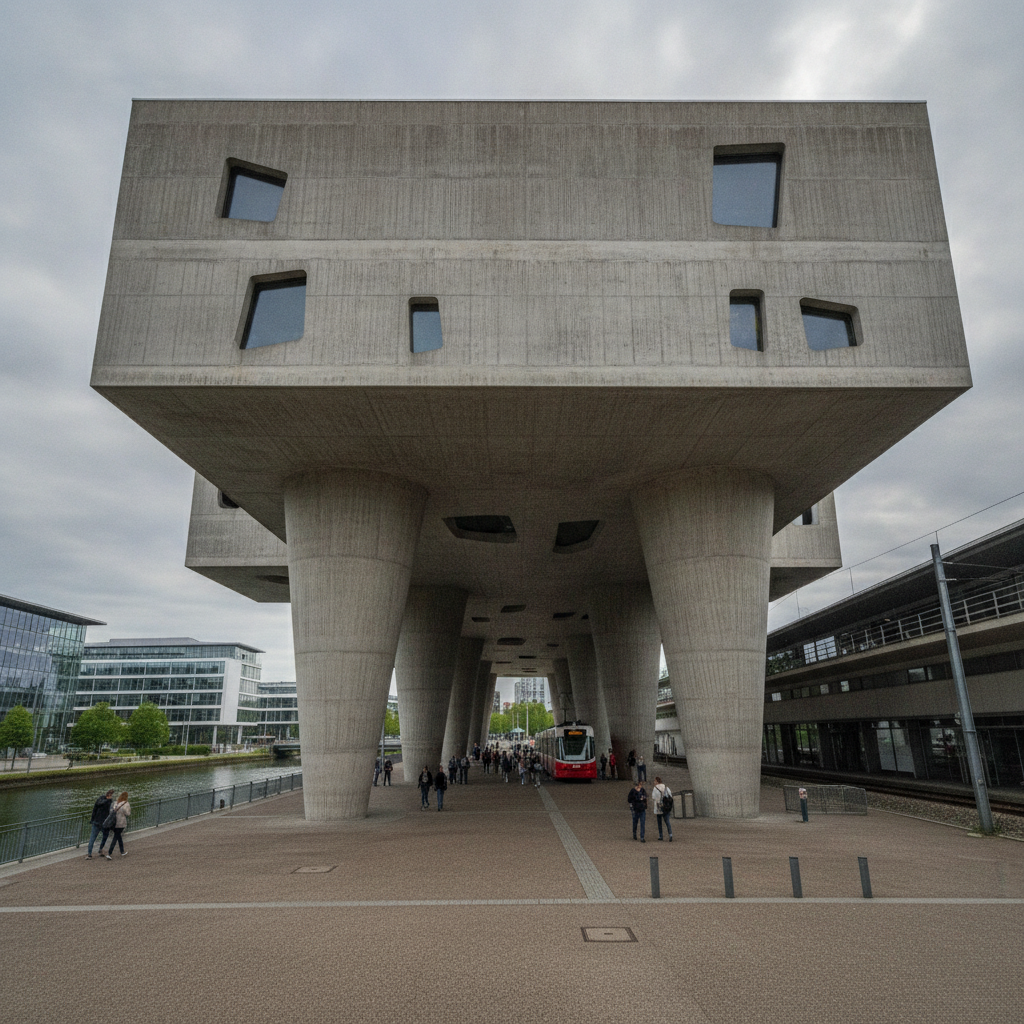
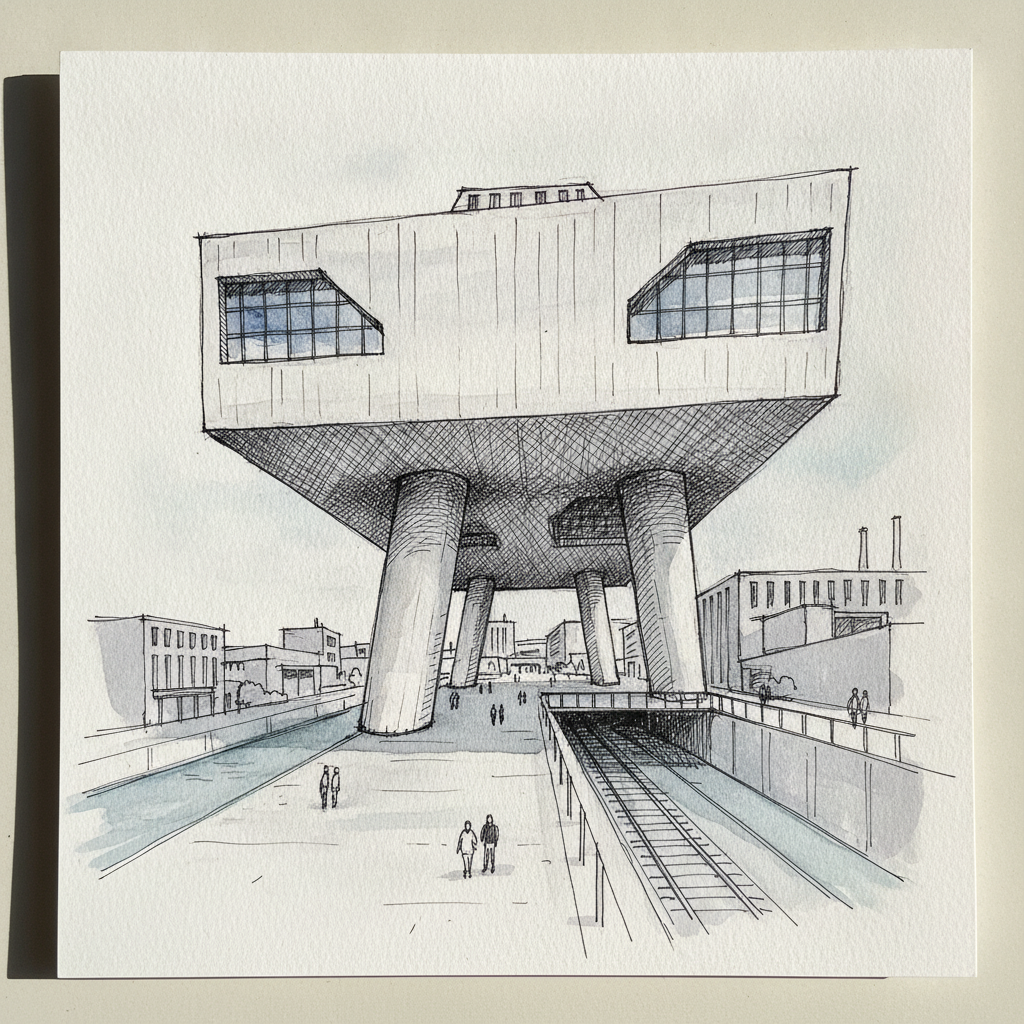
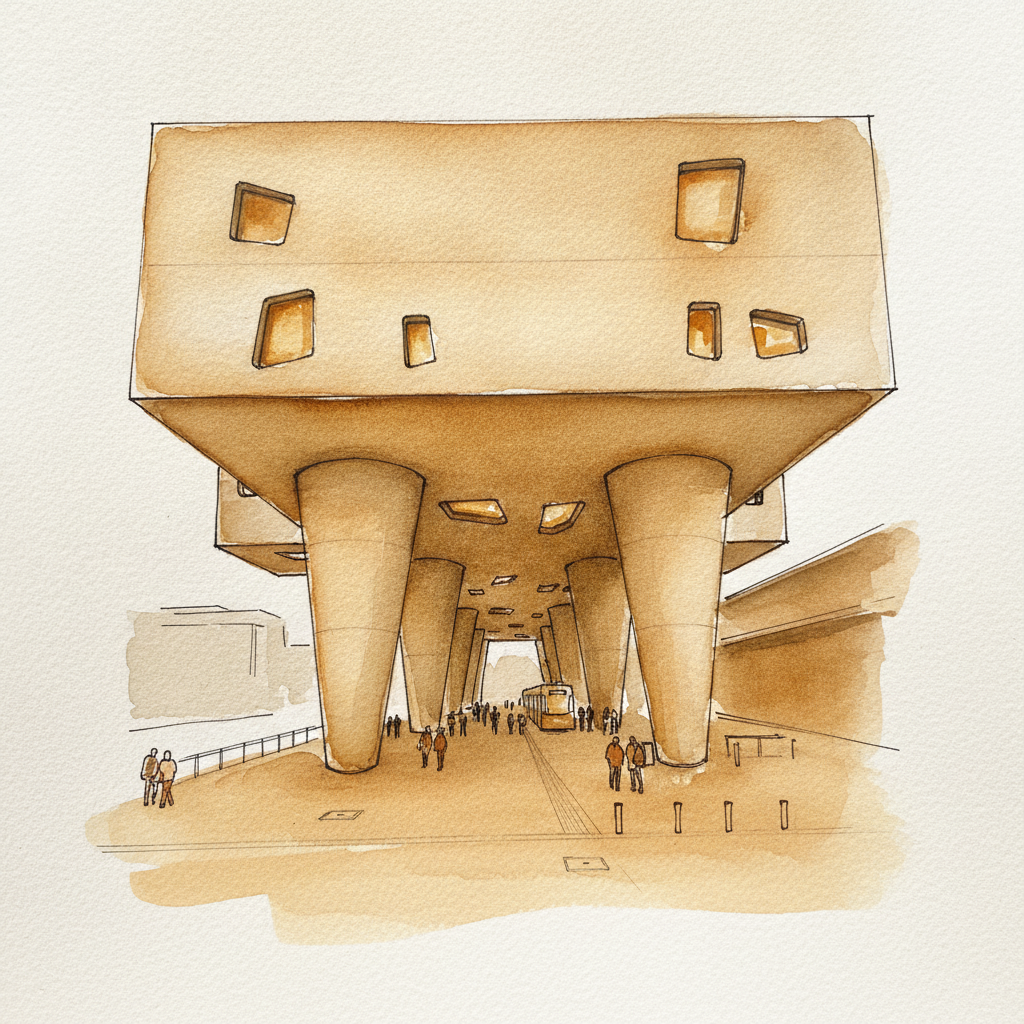
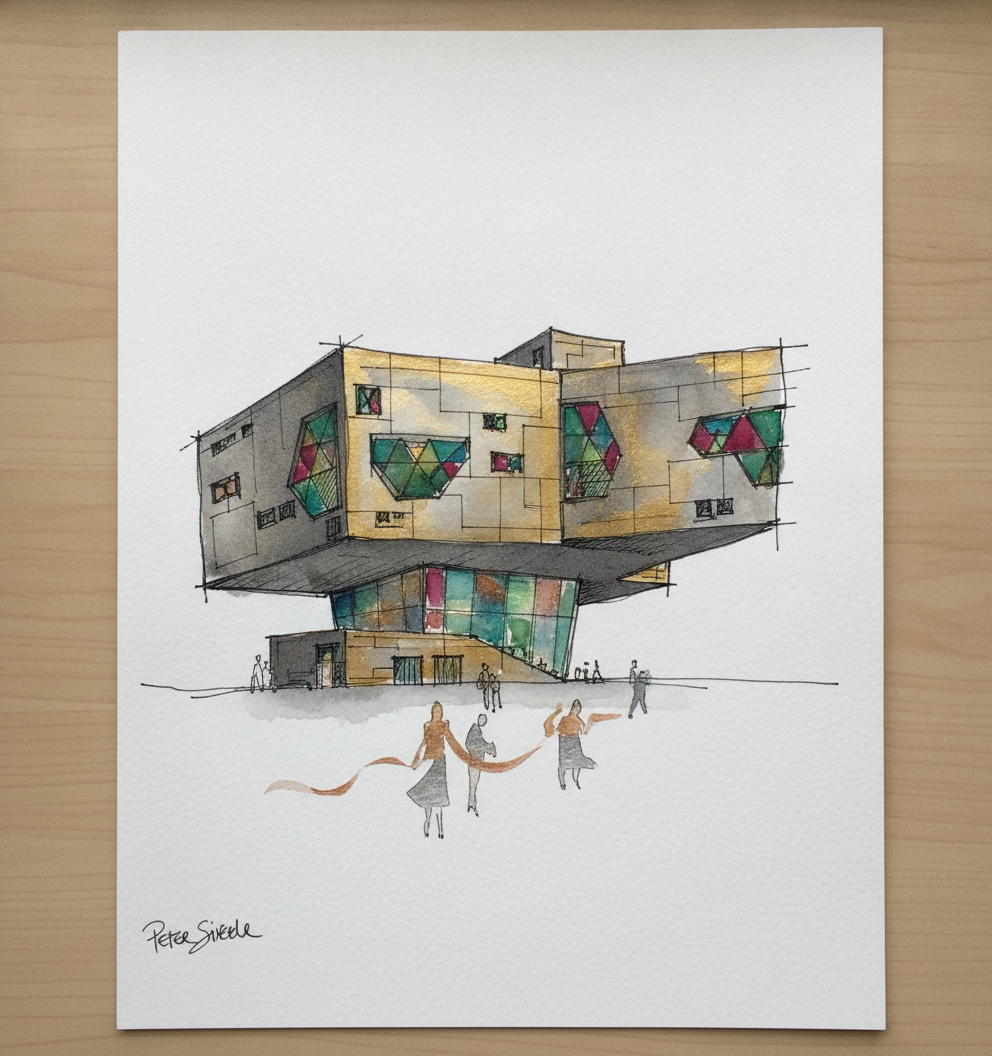
This study of the Phaeno Science Centre challenges you to translate its complex, angular concrete forms into a dynamic composition. Focus on using varied pen line weights to define the distinct edges of the massive cones and irregular polygonal windows, then build volumetric texture with a limited cool gray watercolor palette. Apply controlled wet-on-dry washes to ensure the ink anchors the sharp architectural forms while the wash creates depth and the concrete's imposing presence.
Piece 7 — Japanese Pre-War Truss, Honshu
Pen + Watercolor · Loose pen and watercolor line-and-wash
Three takes

Focus for this piece
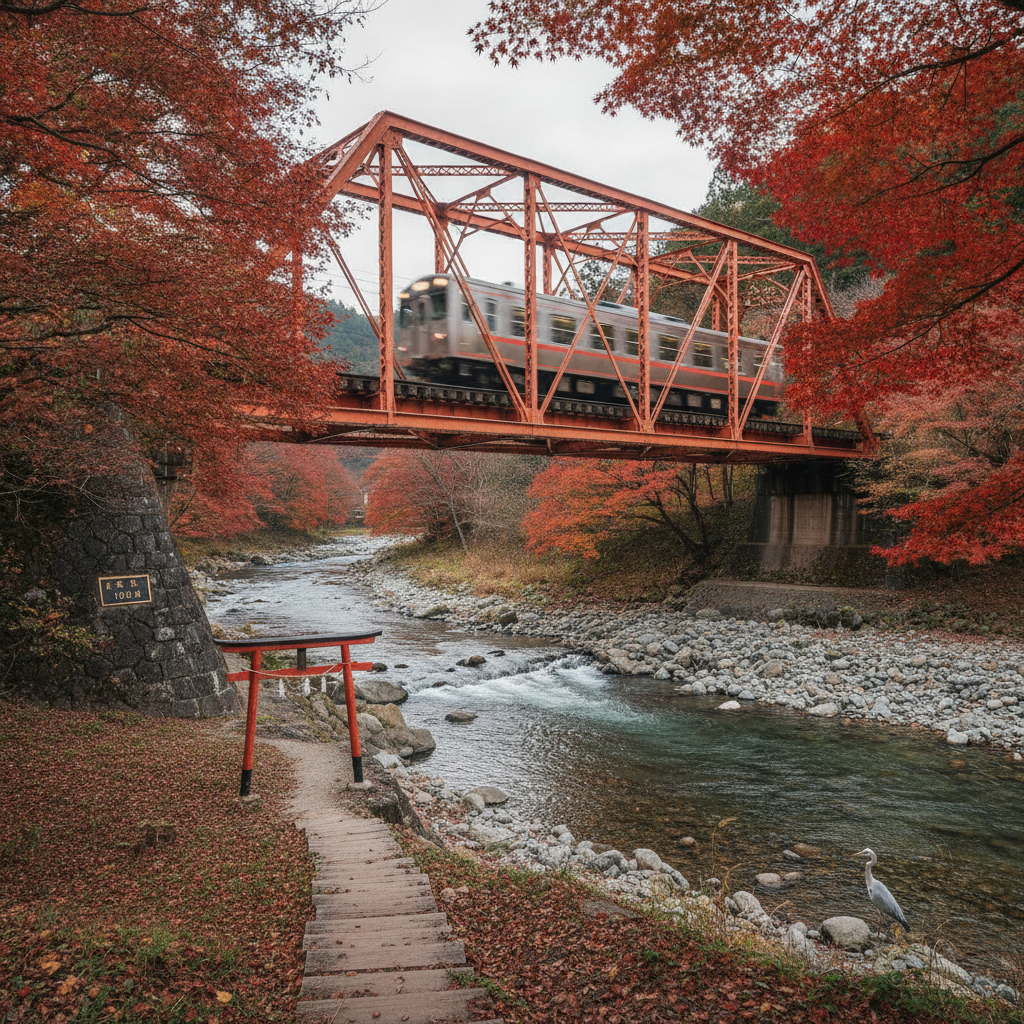
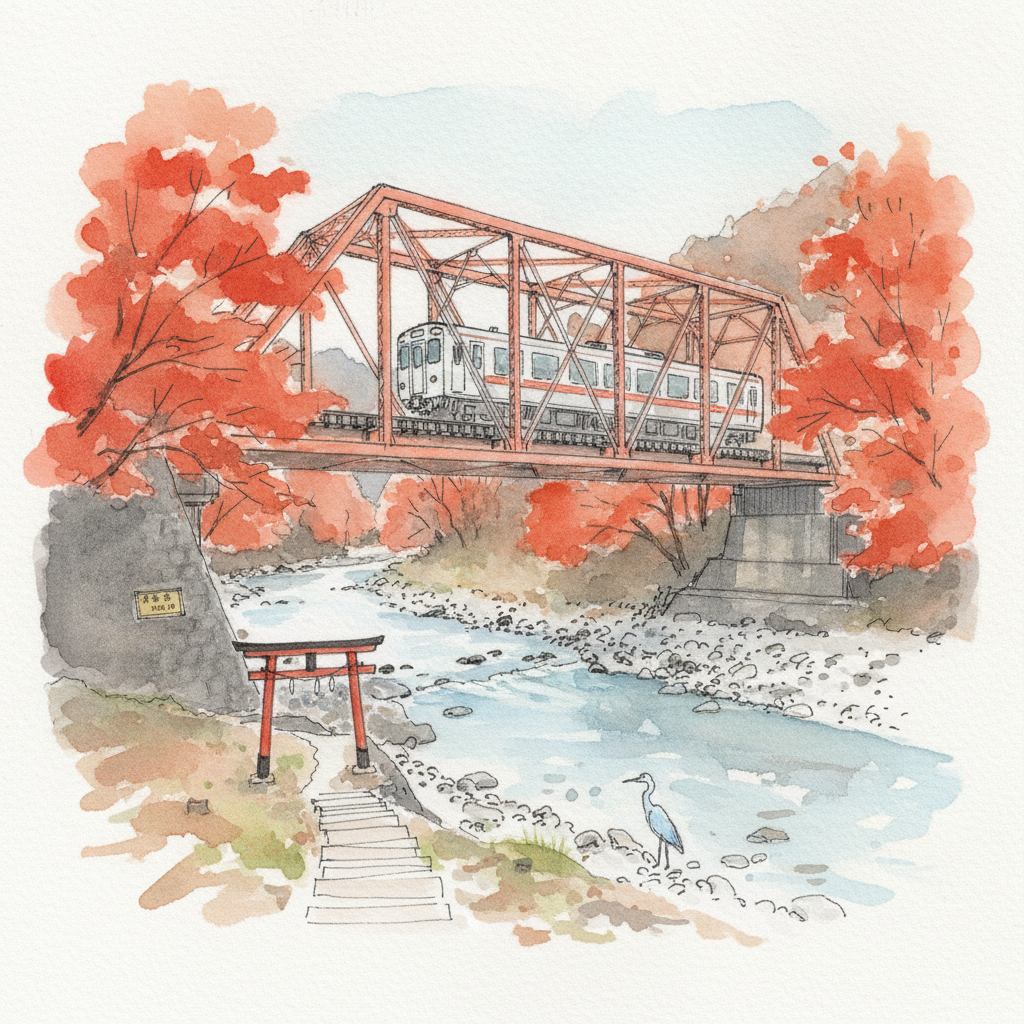
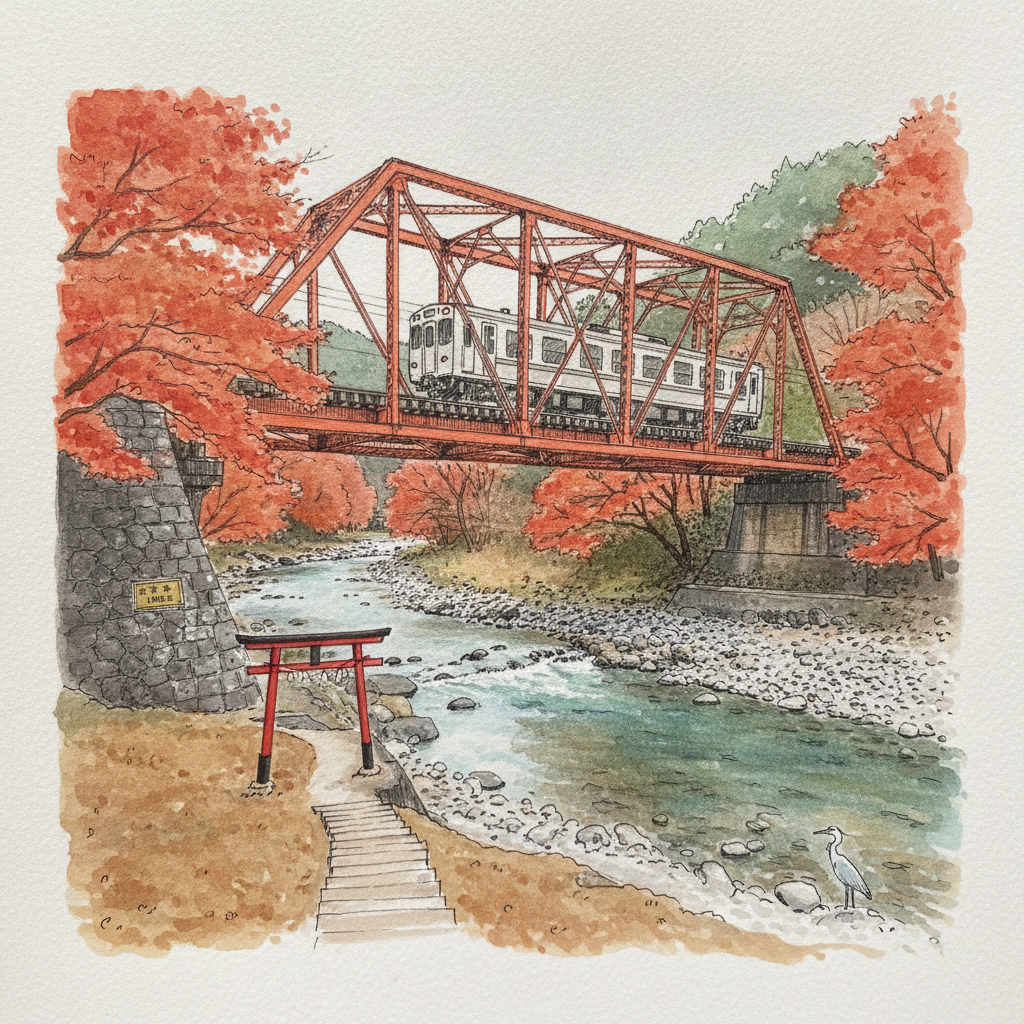
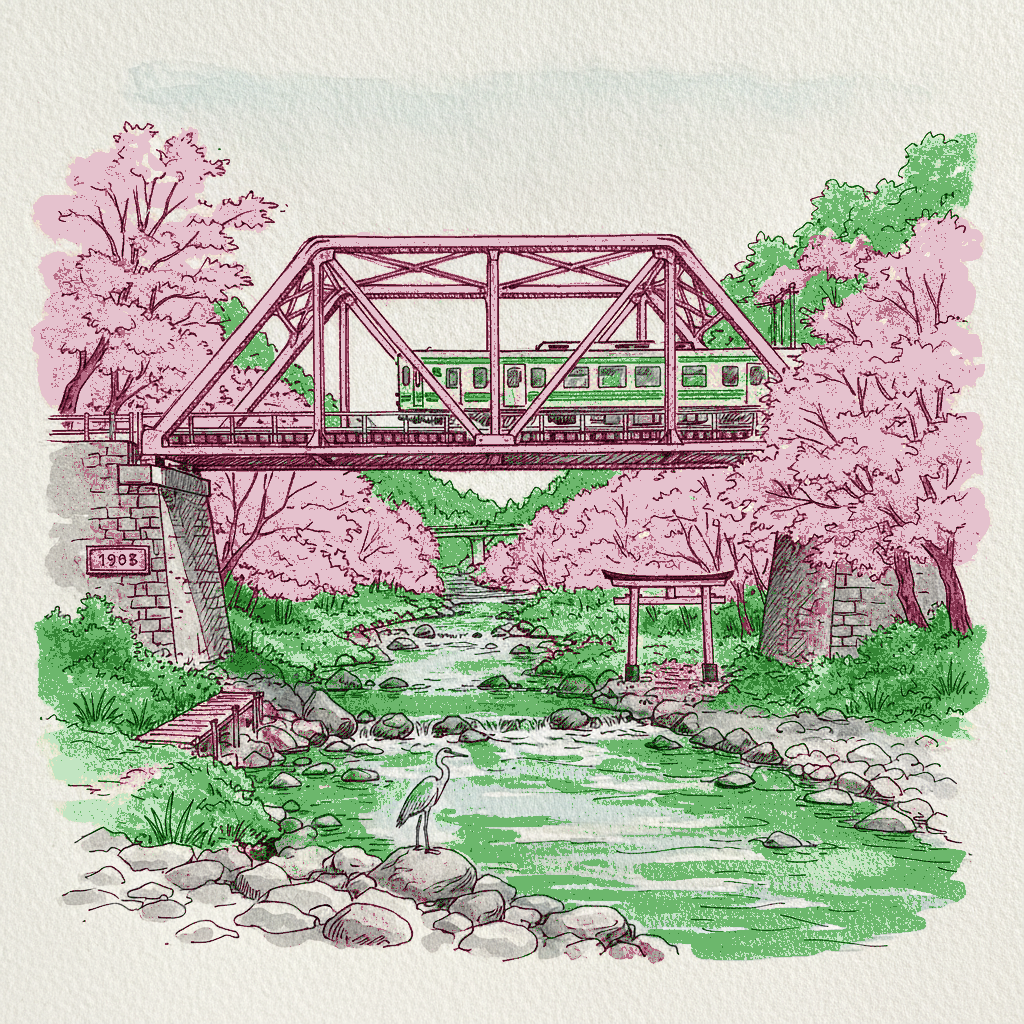
This piece offers an excellent study in defining varied textures and forms using a range of line weights and wash approaches. Concentrate on articulating the truss's delicate lacing with fine, consistent lines, letting them contrast with bolder, more irregular strokes for the wooden footpath and the soft, textured washes suggesting the autumn maple foliage and rough river stones.
Piece 8 — Lowbush blueberry
Pen + Watercolor · Loose pen and watercolor line-and-wash
Three takes

Focus for this piece
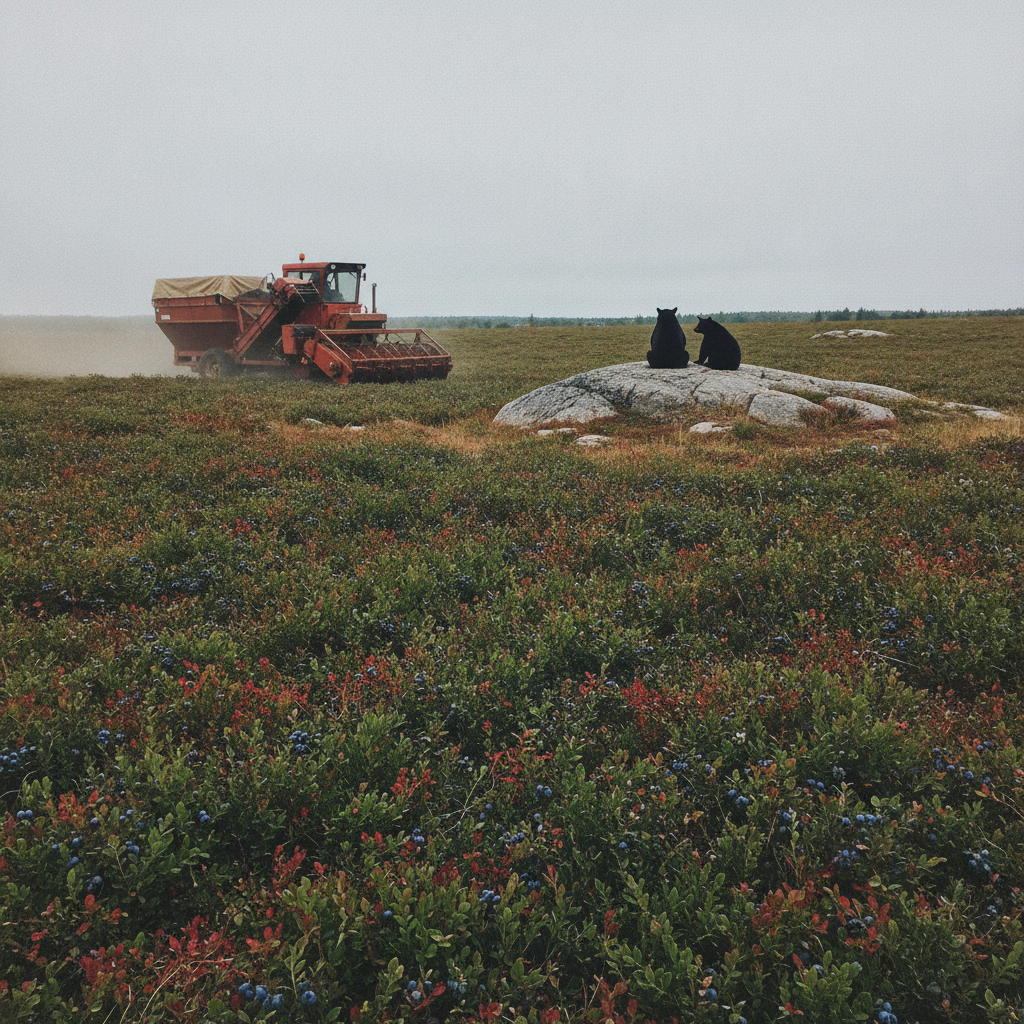
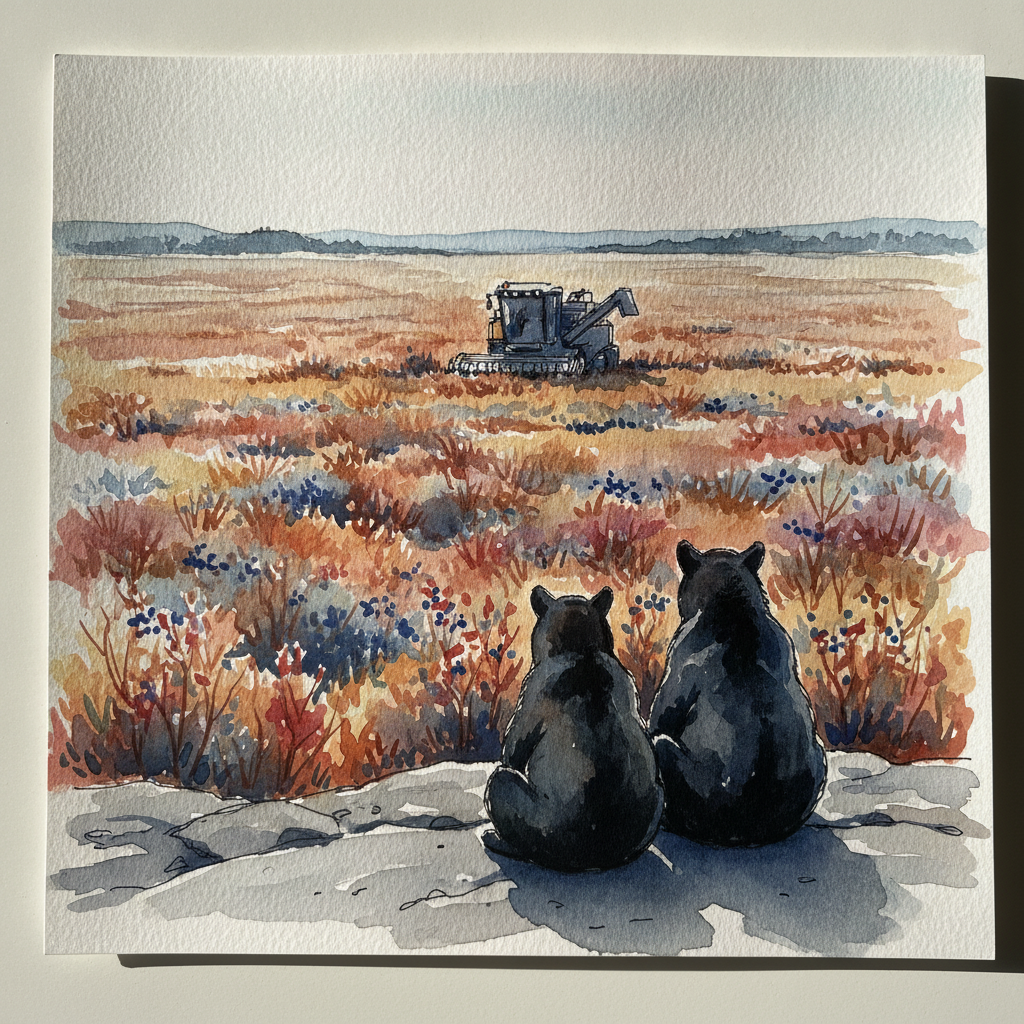
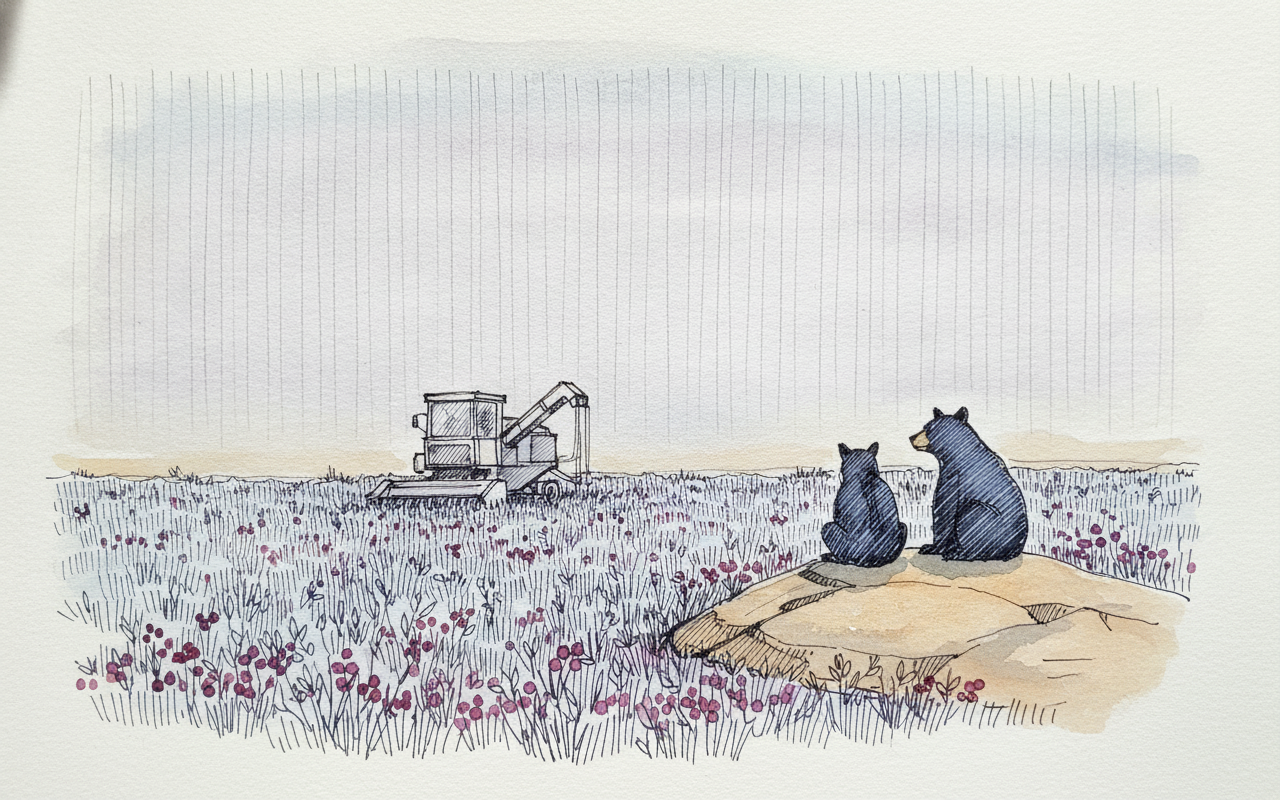
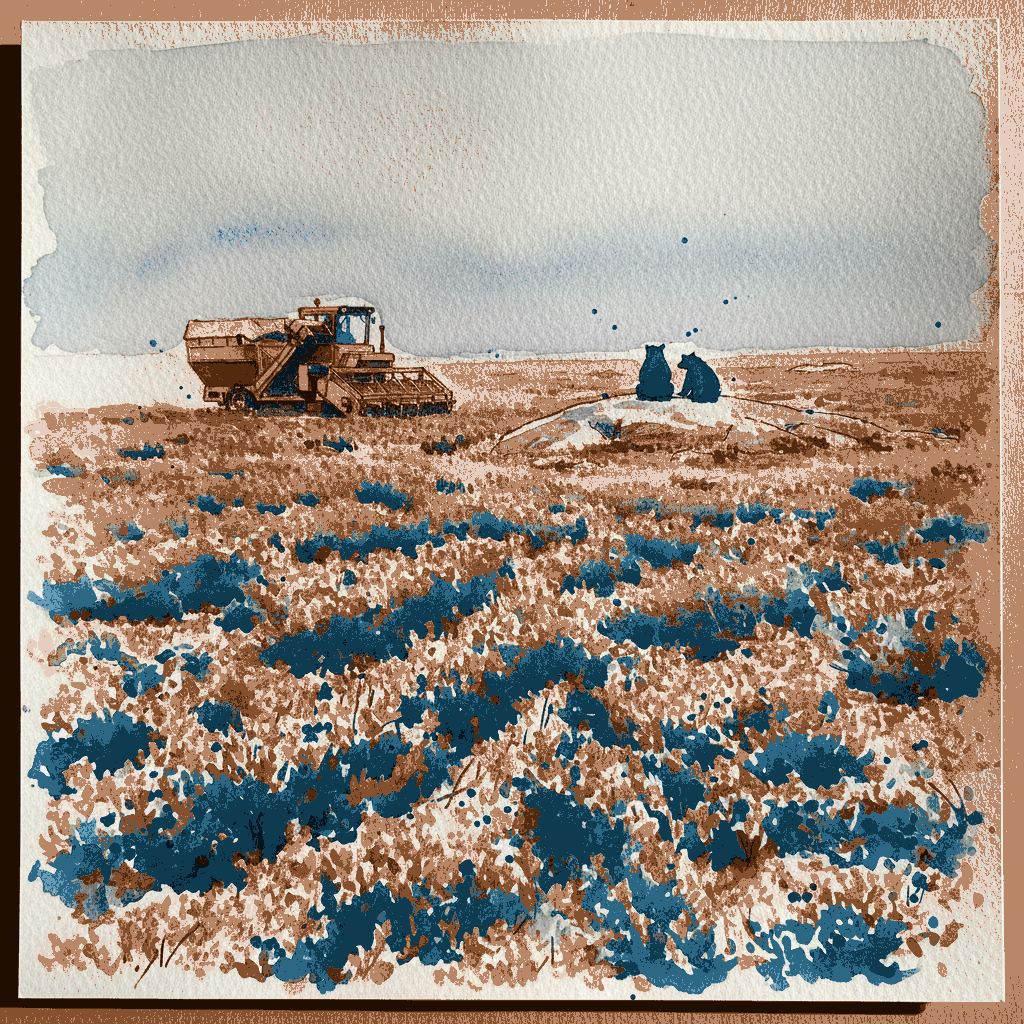
This piece is an excellent exercise in using pen and wash to define scale and texture across a vast landscape. Establish the distant horizon with soft, muted washes and minimal line, then gradually introduce richer, more saturated color for the foreground's dense blueberry bushes. Use a heavier, varied line weight for the structured forms of the mechanical harvester and the craggy granite outcrop, allowing these detailed elements to contrast sharply with the soft, expansive background. This approach emphasizes both the vastness of the barren and the immediate, tactile details within it.