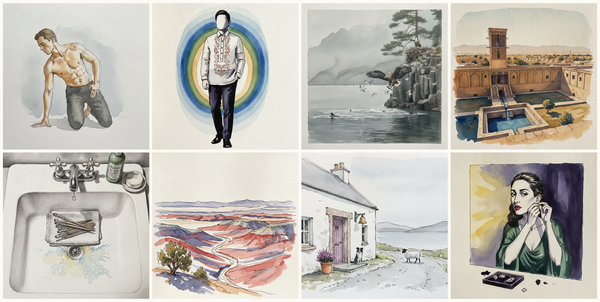
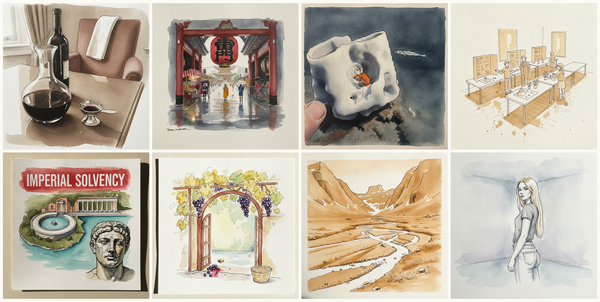
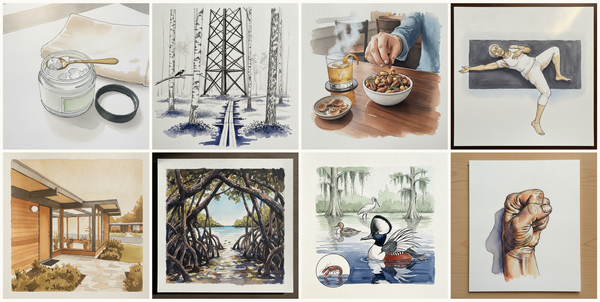
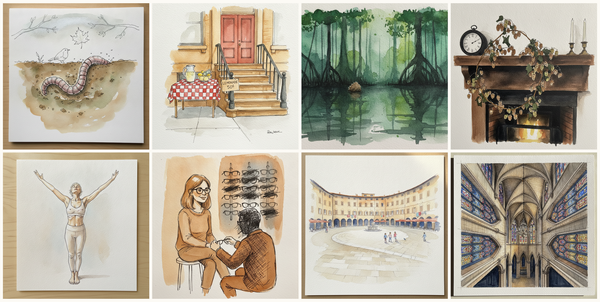
The gopuram at Chidambaram in afternoon storm, Alpine newt, Epiphyte Garden Crown, Costa Rica, Candle molds on a cooling rack, and more — pen + watercolor for June 18, 2026
AI-generated daily art-practice references for pen and watercolor: The gopuram at Chidambaram in afternoon storm, Alpine newt, Epiphyte Garden Crown, Costa Rica, Candle molds on a cooling rack, First arabesque, dramatic side-spotlight, Front Écorché Standing Contrapposto, Castillo de Frías, Frías…
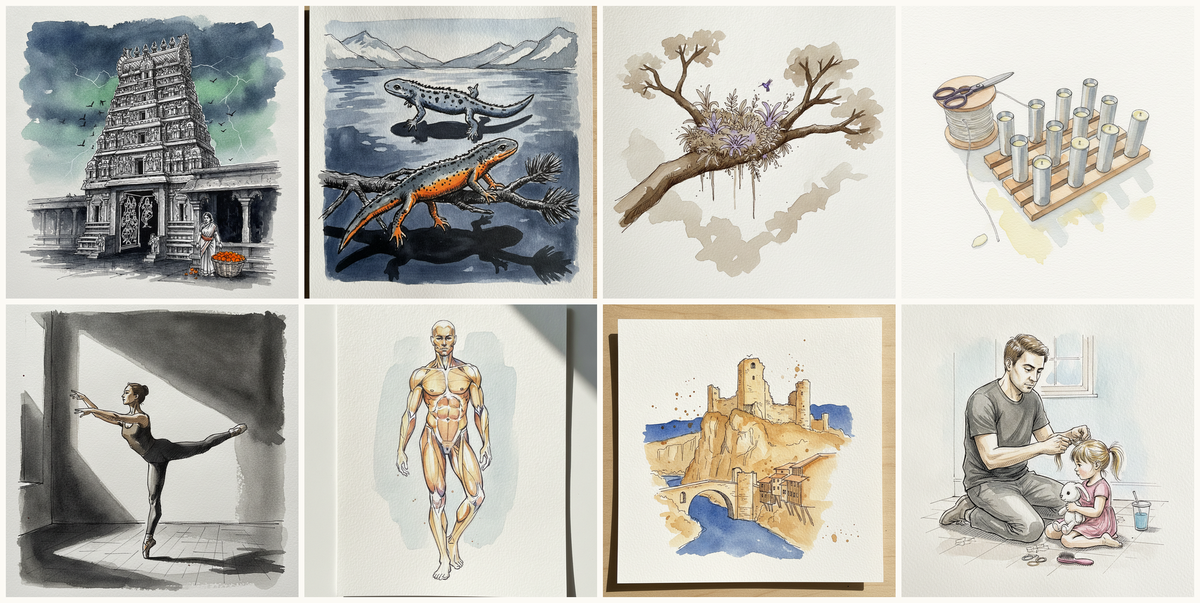
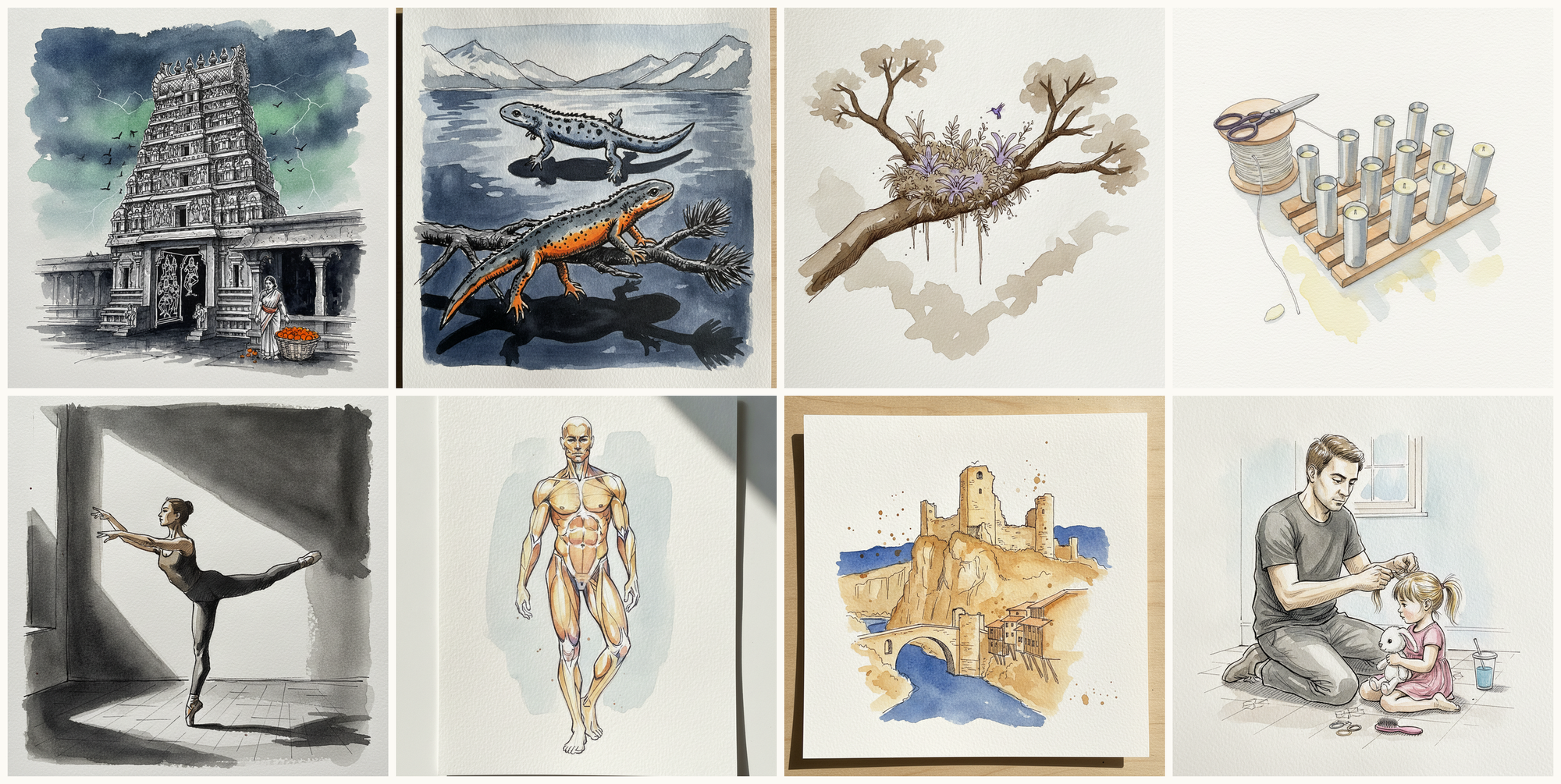
Today's 8 pen-and-watercolor pieces: The gopuram at Chidambaram in afternoon storm, Alpine newt, Epiphyte Garden Crown, Costa Rica, Candle molds on a cooling rack, First arabesque, dramatic side-spotlight, Front Écorché Standing Contrapposto, Castillo de Frías, Frías, Spain, Dad putting kid's hair in pigtails. Each piece comes with an AI-generated photoreal reference, three AI-generated example artworks in different treatments, and a short focus paragraph naming what to study in this one.
Why these references use AI
This daily series uses AI-generated images as practice prompts, not as finished artwork to copy. Each subject starts with a synthetic photoreal reference generated with Gemini/Nano Banana, then moves into three pen-and-watercolor interpretations of the same subject.
I use AI here because daily art practice needs variety and low friction. Real life can get repetitive, busy, or visually narrow. These generated reference sets make it easier to study bodies, buildings, animals, landscapes, objects, gestures, light, palettes, and compositions that might not show up in an ordinary day.
The goal is not to reproduce any image directly. Treat each set as a starting point for observation and study: choose what interests you, change the framing, simplify the subject, alter the palette, and make your own version.
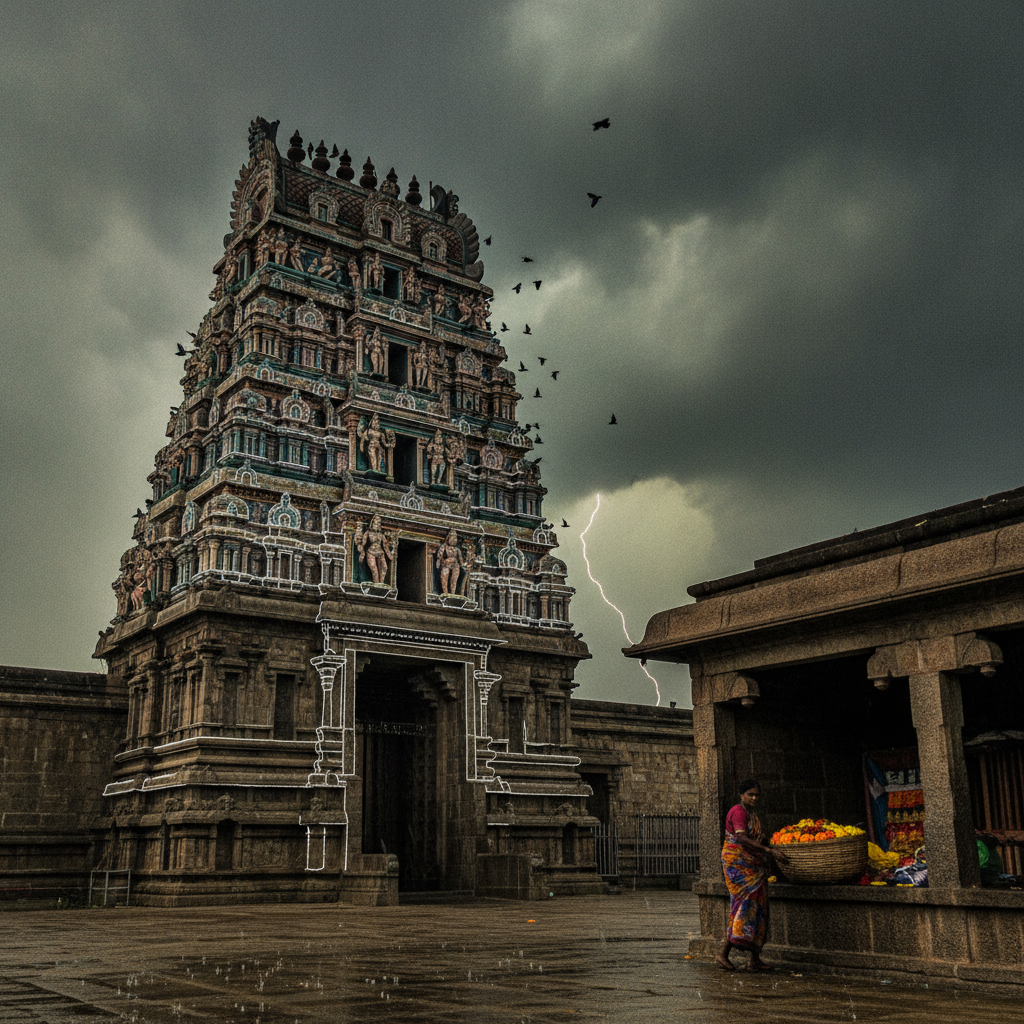
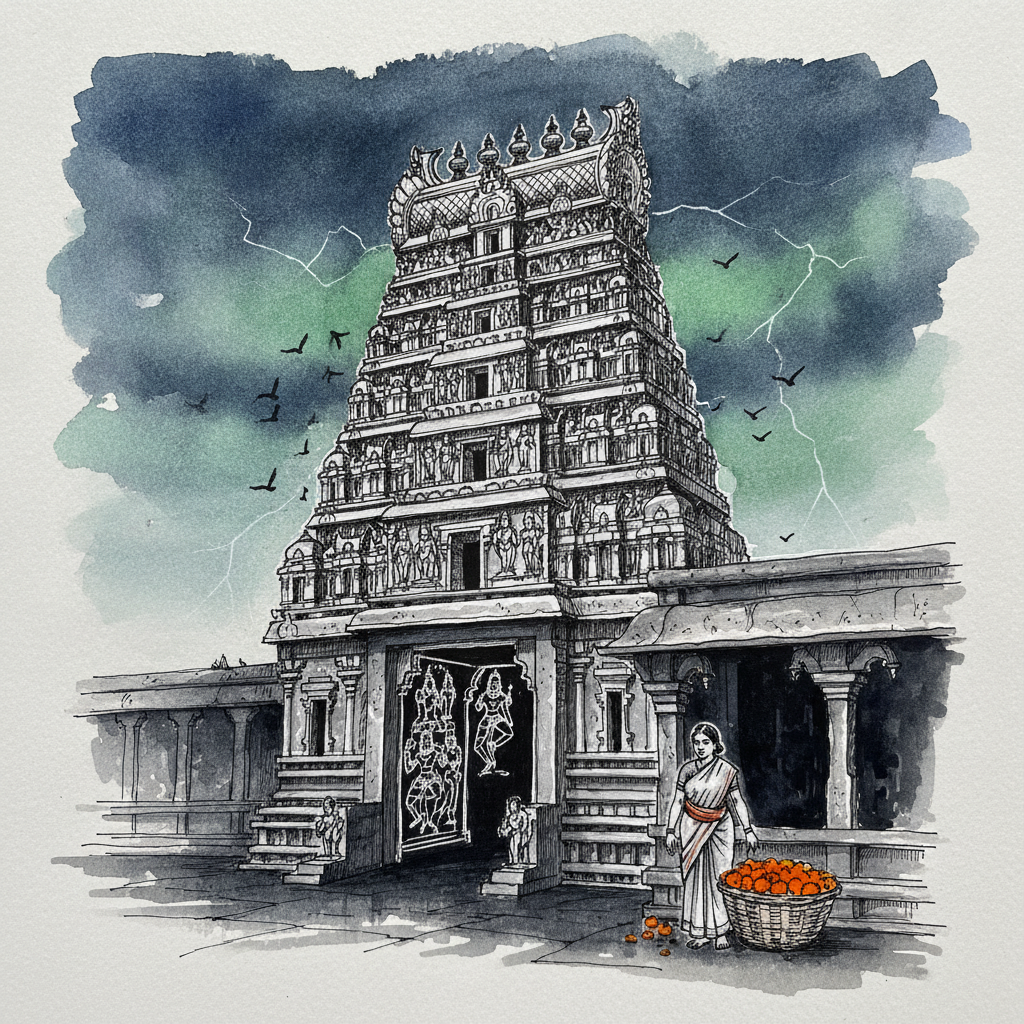
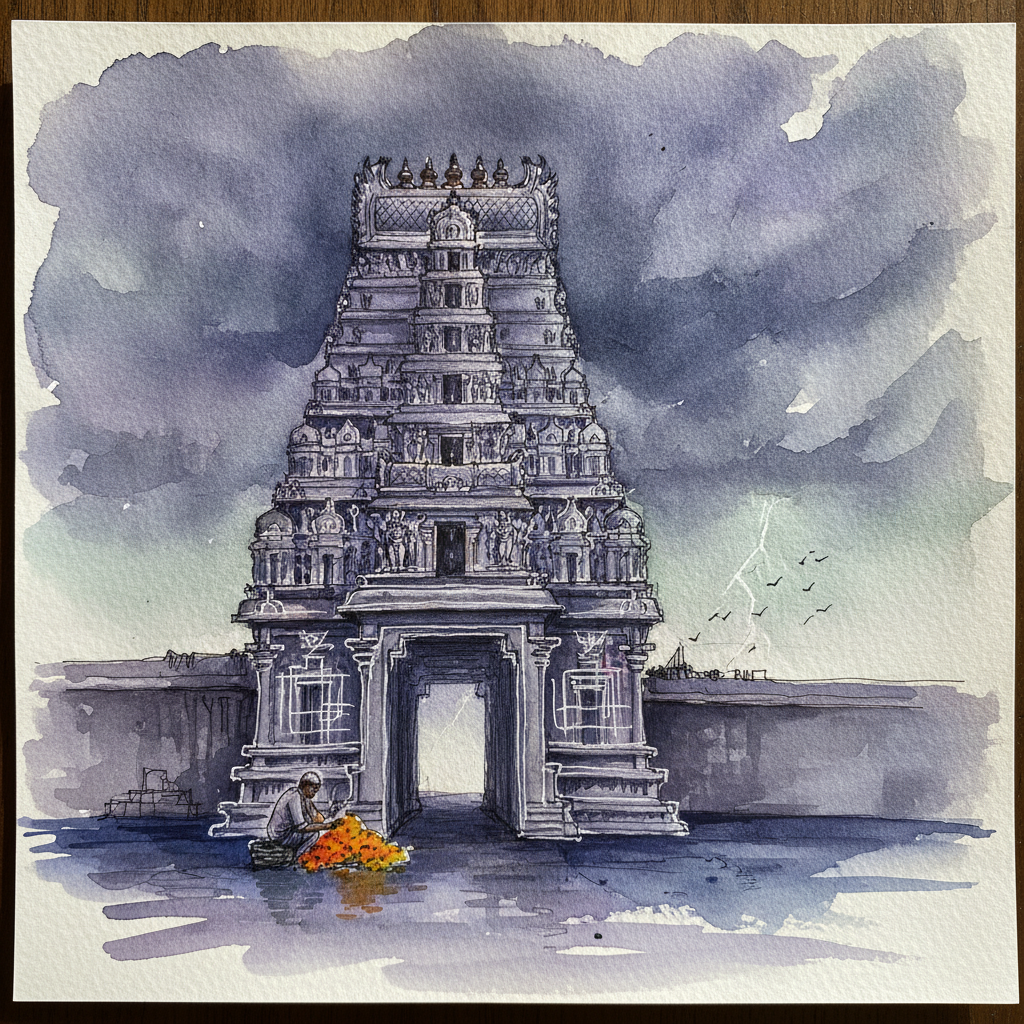
Piece 1 — The gopuram at Chidambaram in afternoon storm
Pen + Watercolor · Loose pen and watercolor line-and-wash
Three takes
Focus for this piece
For this piece, focus on the interplay between precise architectural lines and expansive atmospheric washes. Use varied pen weights to render the gopuram's intricate sculptural details, letting them provide structure against deep, wet-on-wet washes that convey the menacing thunderheads. Carefully select a constrained palette to evoke the strange green pre-storm light, allowing its luminosity to emerge from the dramatic dark sky. This exercise emphasizes using the unyielding quality of ink to hold form amidst the expressive, fluid nature of storm-laden watercolor.
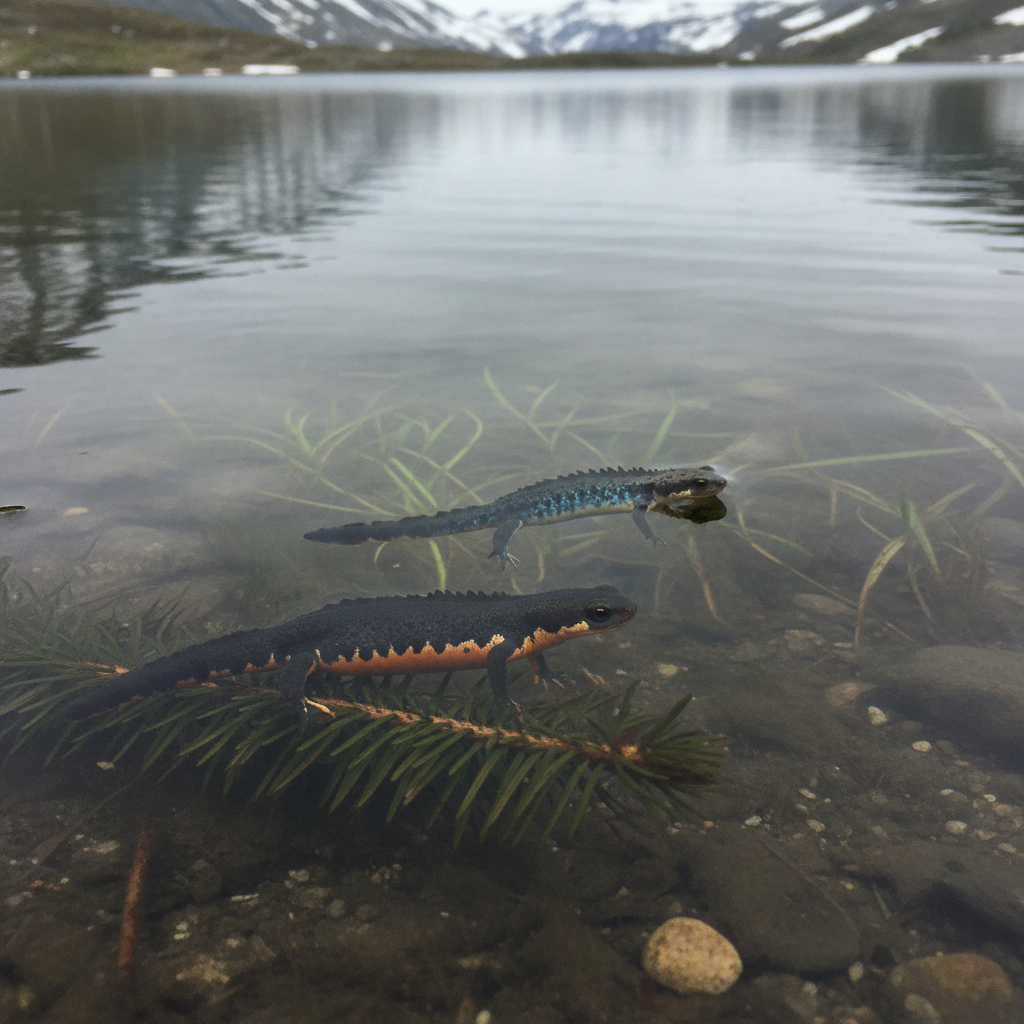
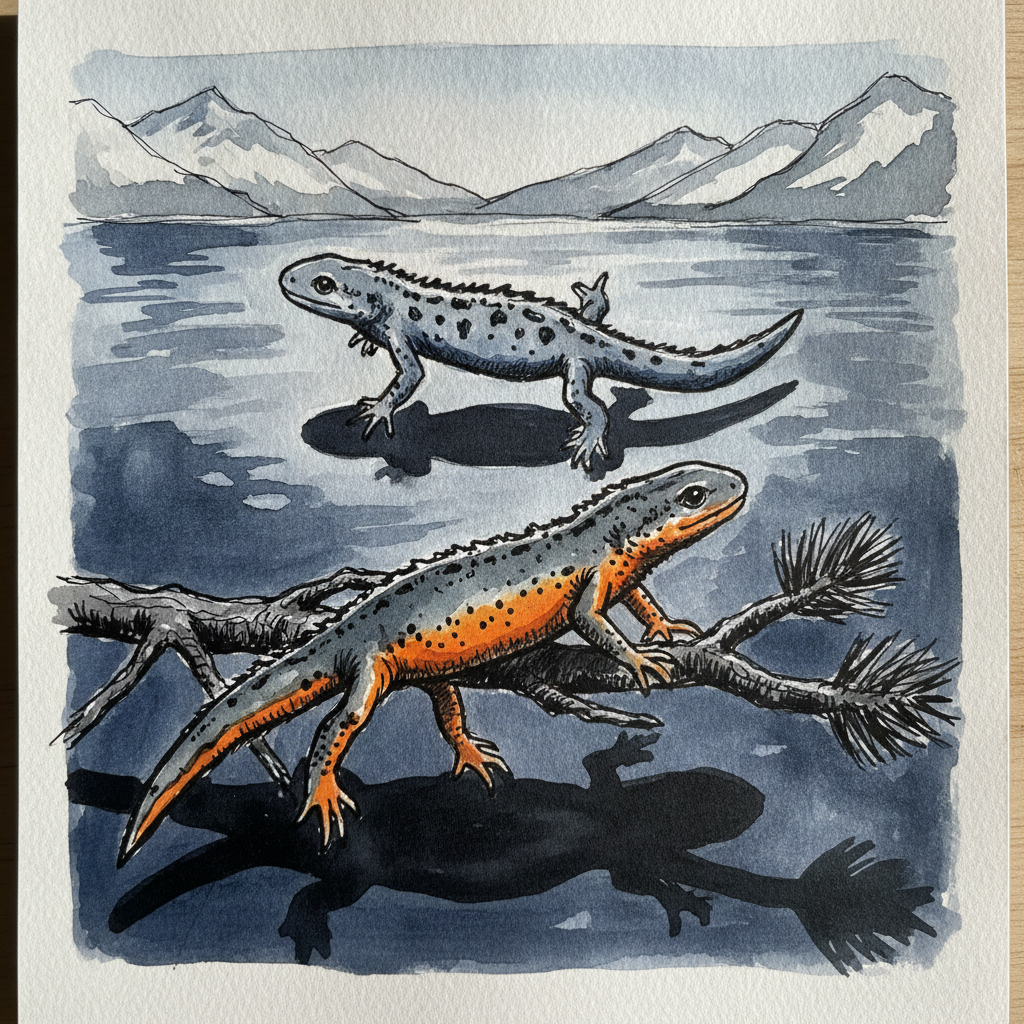
Piece 2 — Alpine newt
Pen + Watercolor · Loose pen and watercolor line-and-wash
Three takes
Focus for this piece
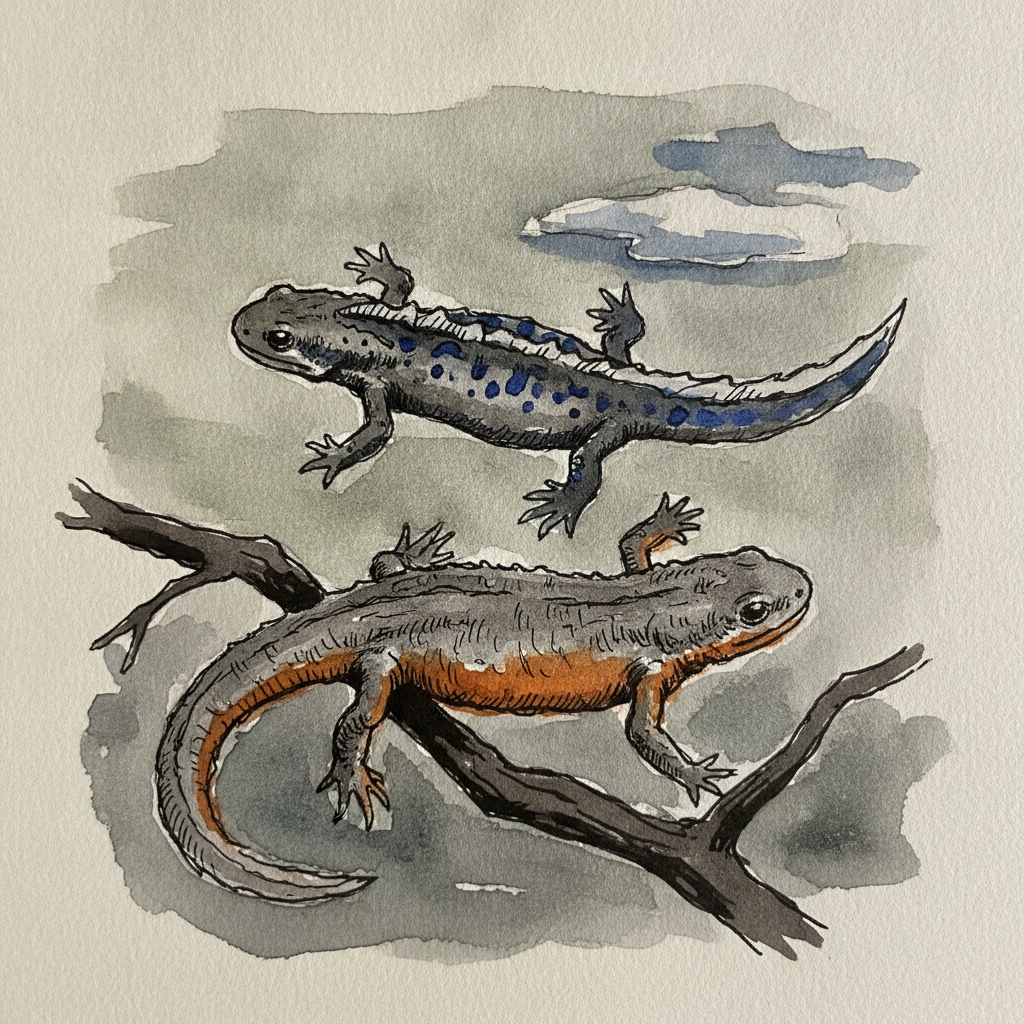
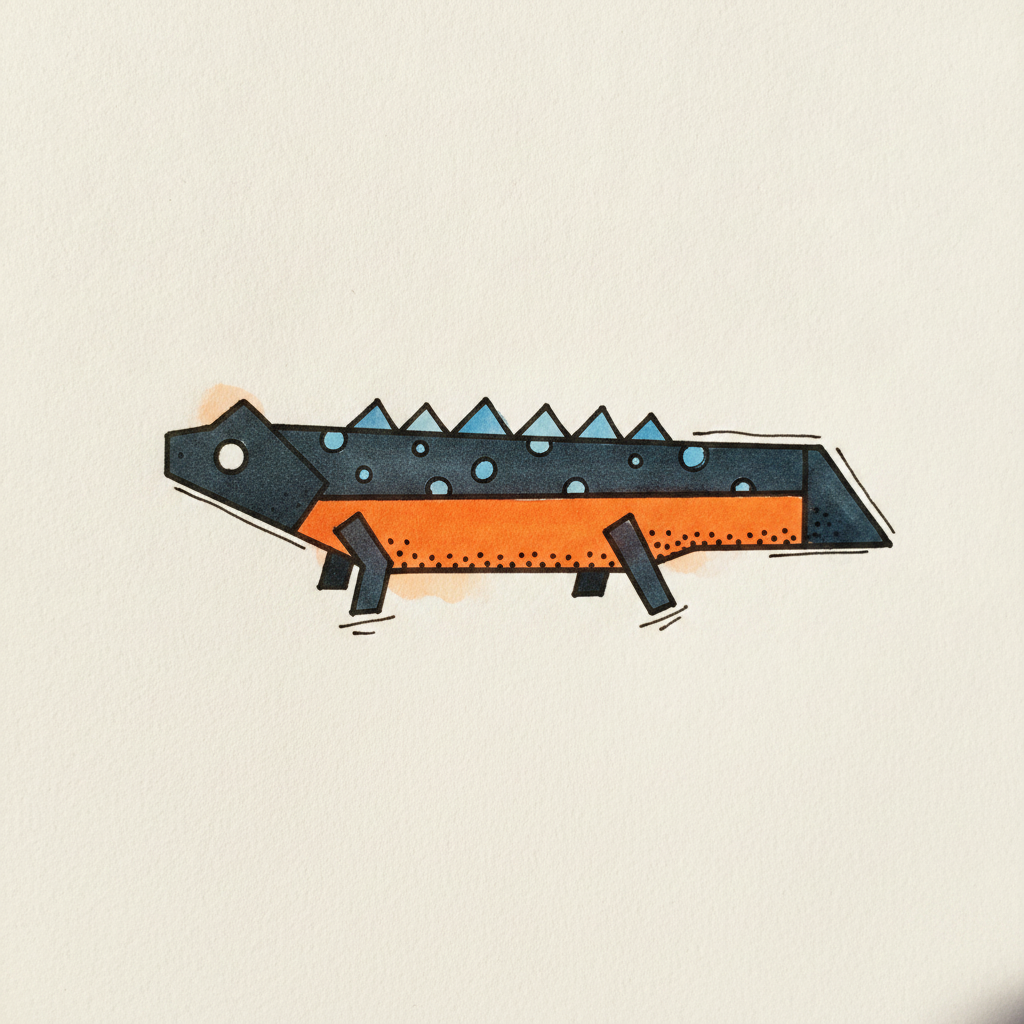
This piece offers a great study in managing high-contrast color, particularly the newt's vibrant orange belly against its muted gray, and how that interacts with the cool, deep tones of the submerged environment. Focus on building rich color for the newt with careful layering, reserving the pale areas for delicate dots, while rendering the surrounding water with controlled wet-on-wet washes to achieve transparency and depth. Experiment with varied line weights to distinguish the newts' smooth forms and intricate markings from the branch's rough texture.
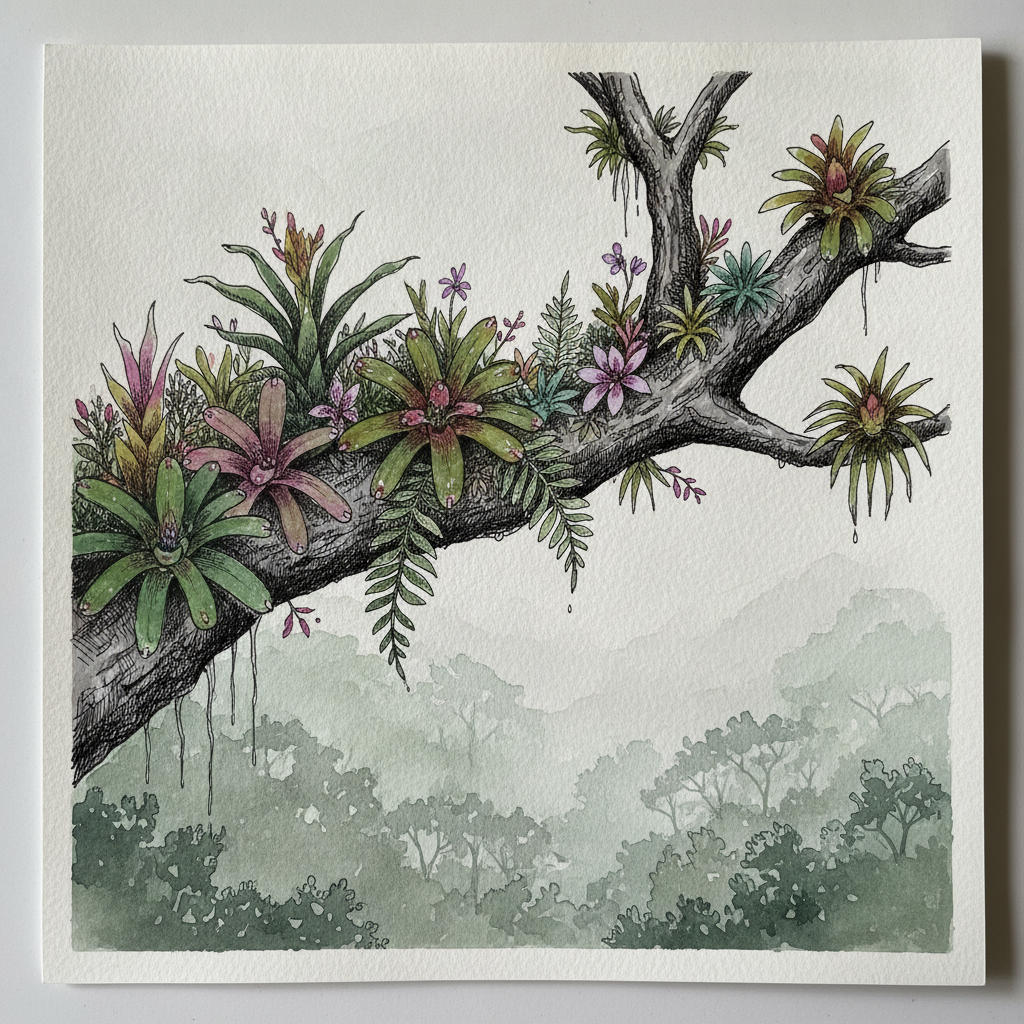
Piece 3 — Epiphyte Garden Crown, Costa Rica
Pen + Watercolor · Loose pen and watercolor line-and-wash
Three takes
Focus for this piece
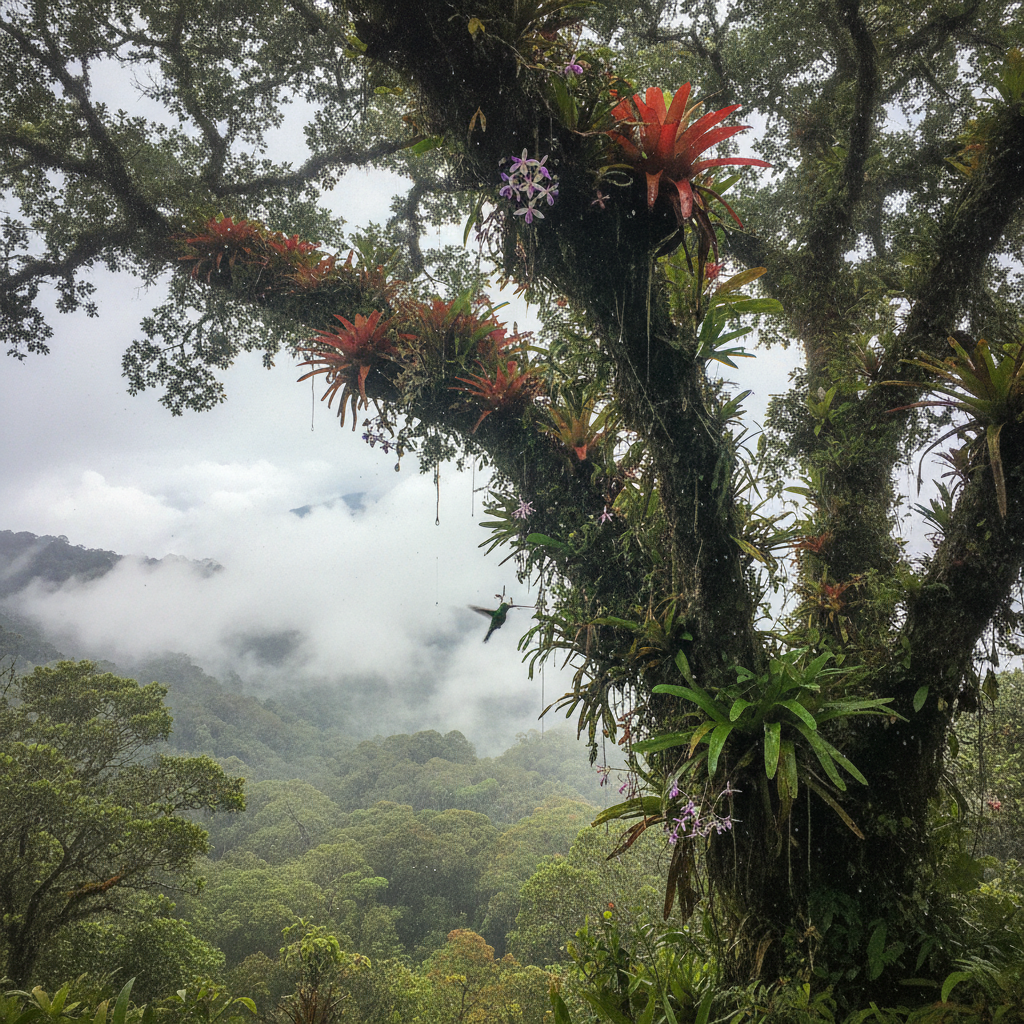
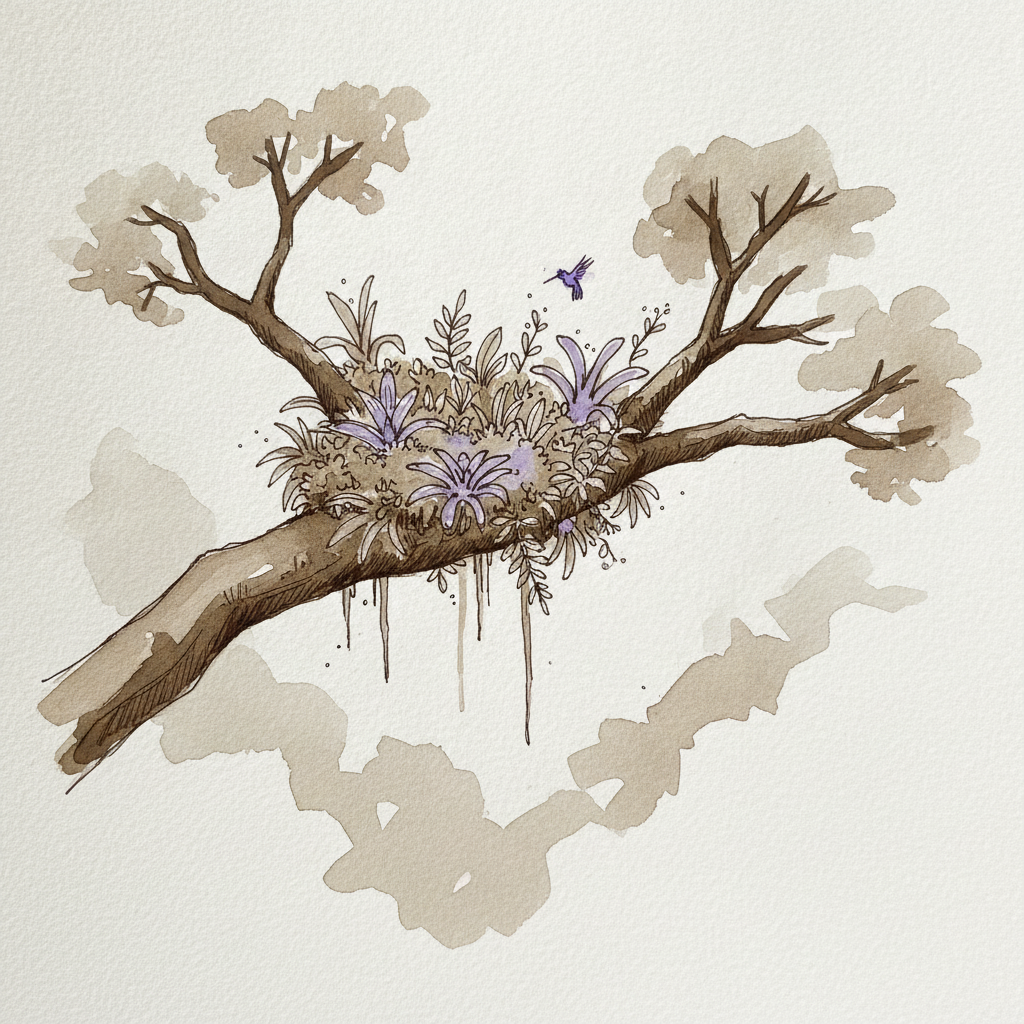
This piece presents an excellent opportunity to master atmospheric perspective by contrasting rich foreground detail with expansive, soft backgrounds. Use a range of pen weights—from crisp, fine lines for individual orchid petals and bromeliad forms to looser, textural marks for the main tree trunk—to articulate the epiphyte garden's density. Then, shift to broad, wet-on-wet washes of muted blues and grays for the mist-filled valleys and distant cloud banks, employing minimal, almost ghosted pen strokes to suggest far-off canopy without competing with the foreground. This practice will build your skill in transitioning from intricate near-focus to atmospheric distance.
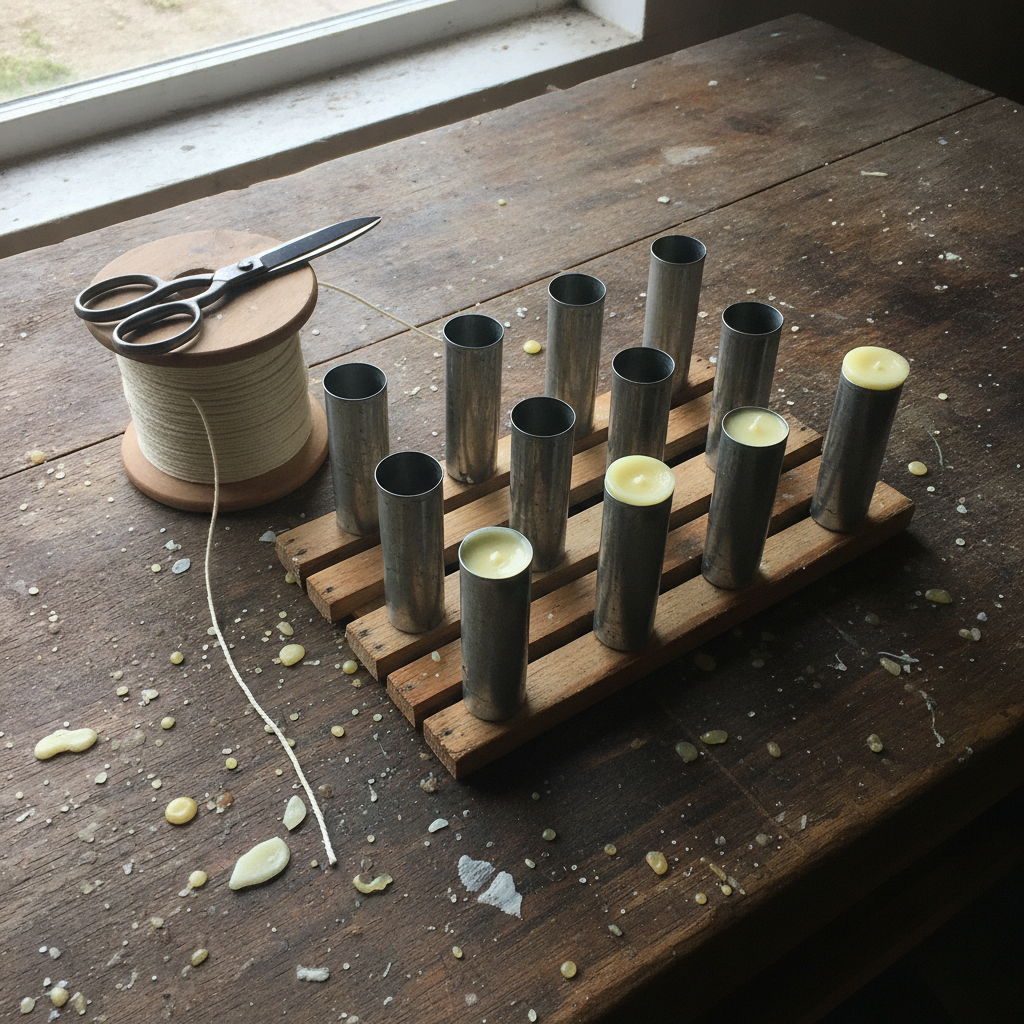
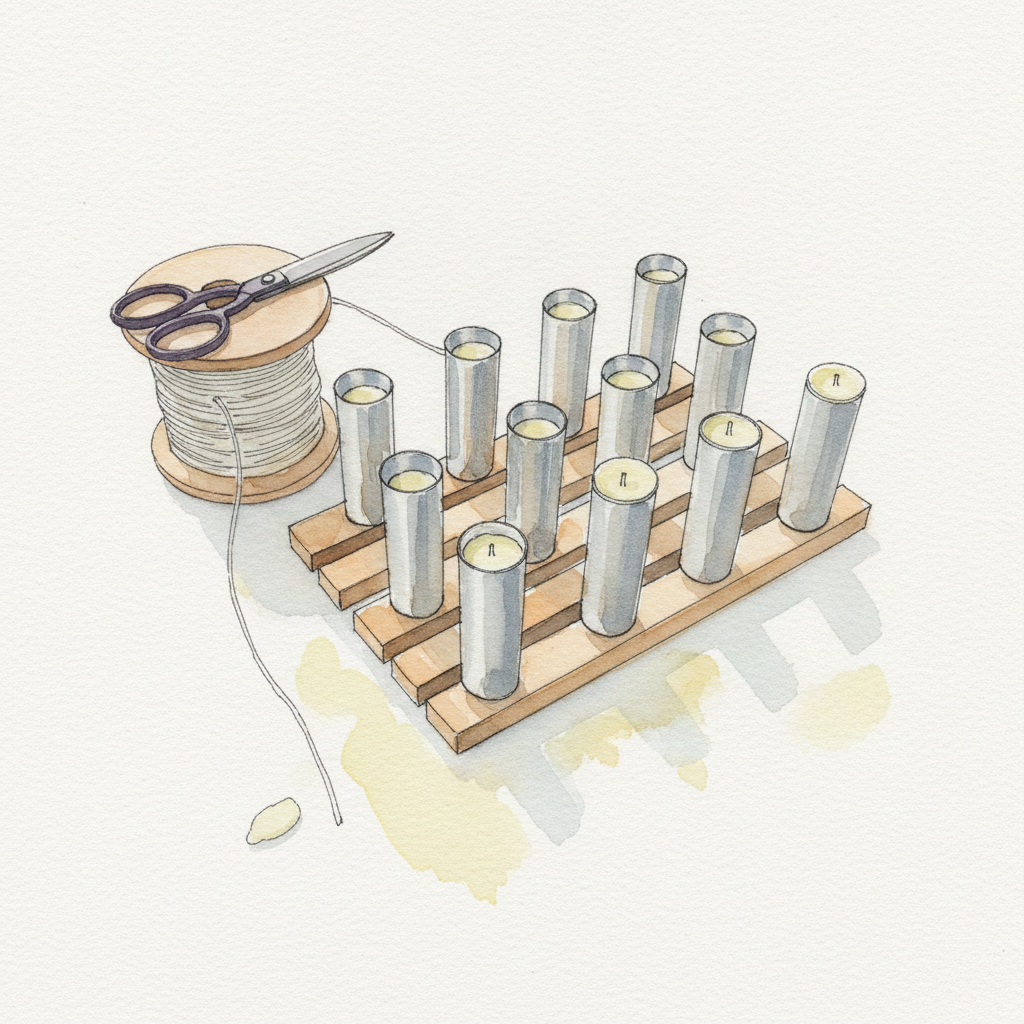
Piece 4 — Candle molds on a cooling rack
Pen + Watercolor · Loose pen and watercolor line-and-wash
Three takes
Focus for this piece
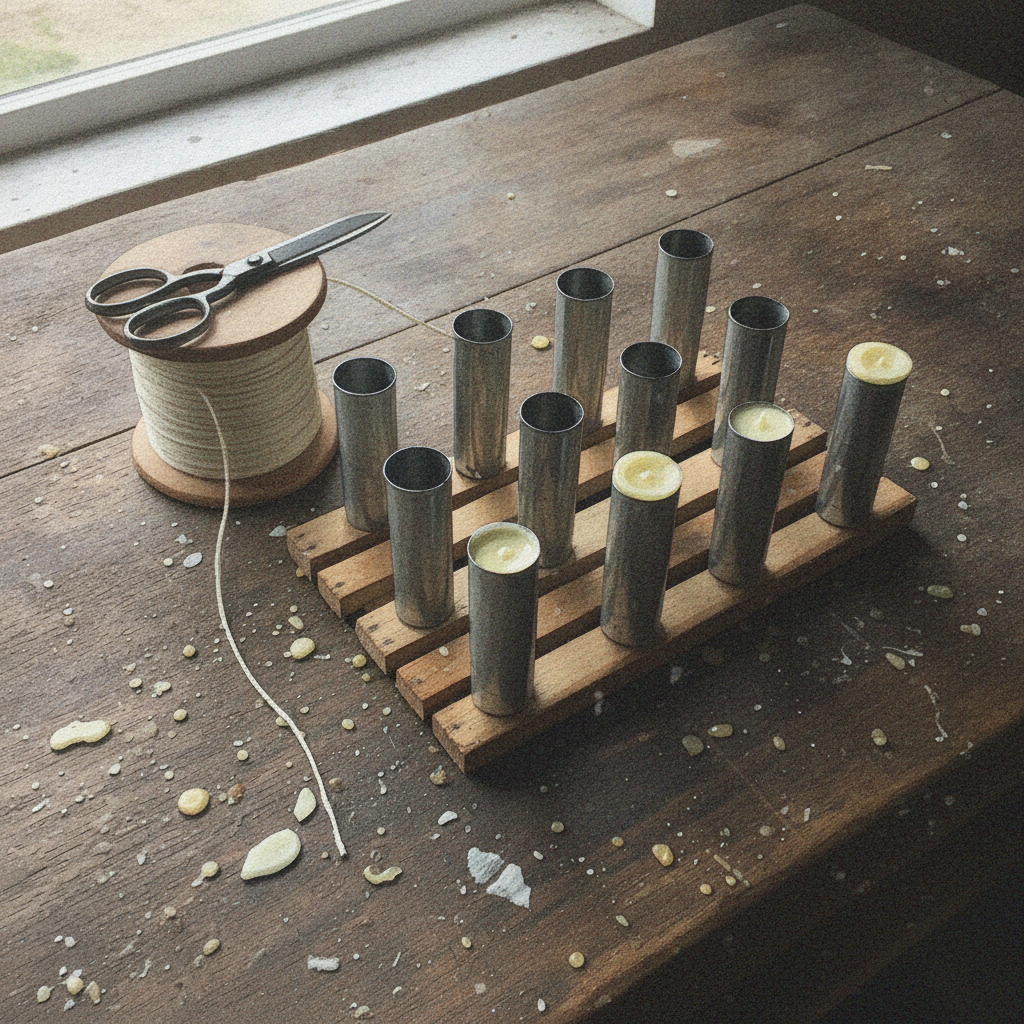
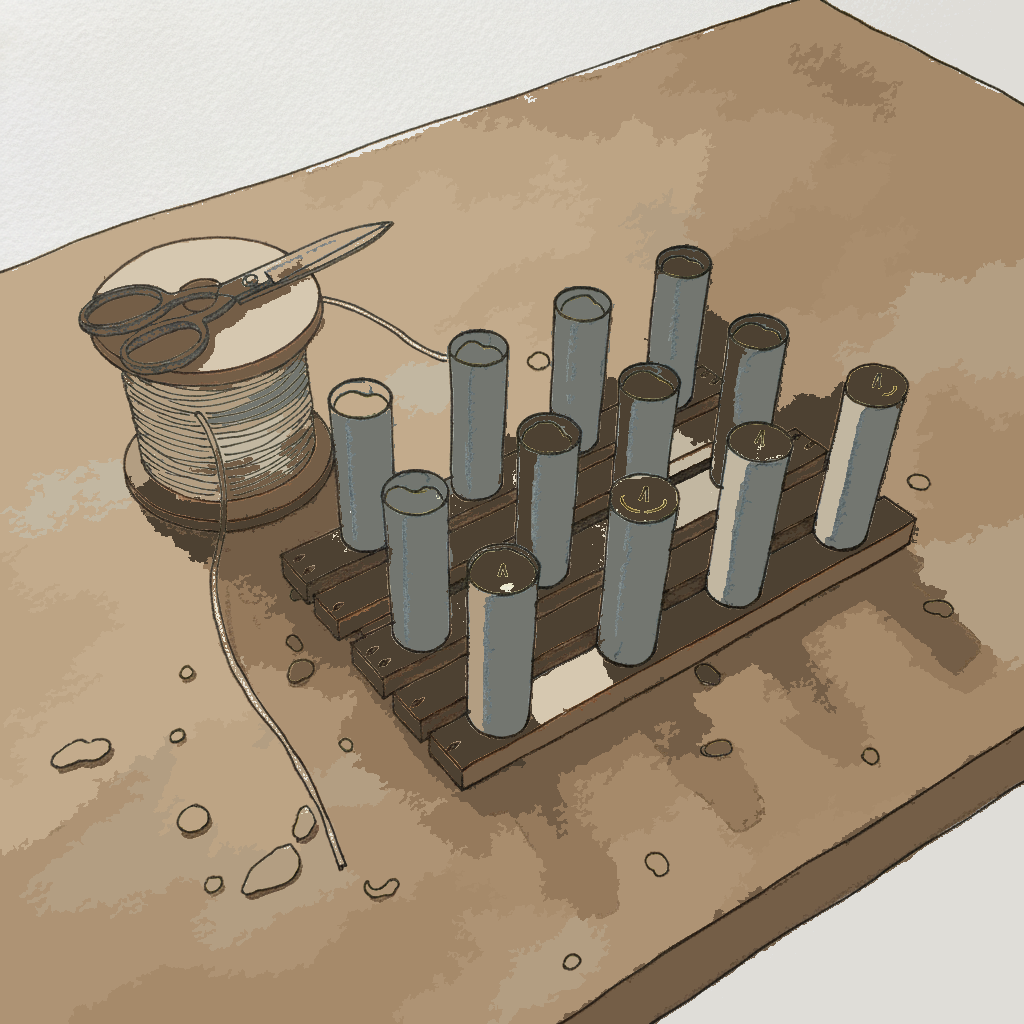
This piece offers an excellent study in rendering cylindrical forms and managing visual repetition without monotony. Use varied line weights to define the numerous long molds and the geometric rack, reserving sharper, precise lines for the scissors to create a focal point. Focus your watercolor on building subtle textures and volume using a restrained palette of creamy yellows, warm grays, and whites to differentiate the beeswax, reflective tin, and dripped wax puddles. Pay particular attention to how light creates convex domes on the filled molds and gentle curves on the empty ones.
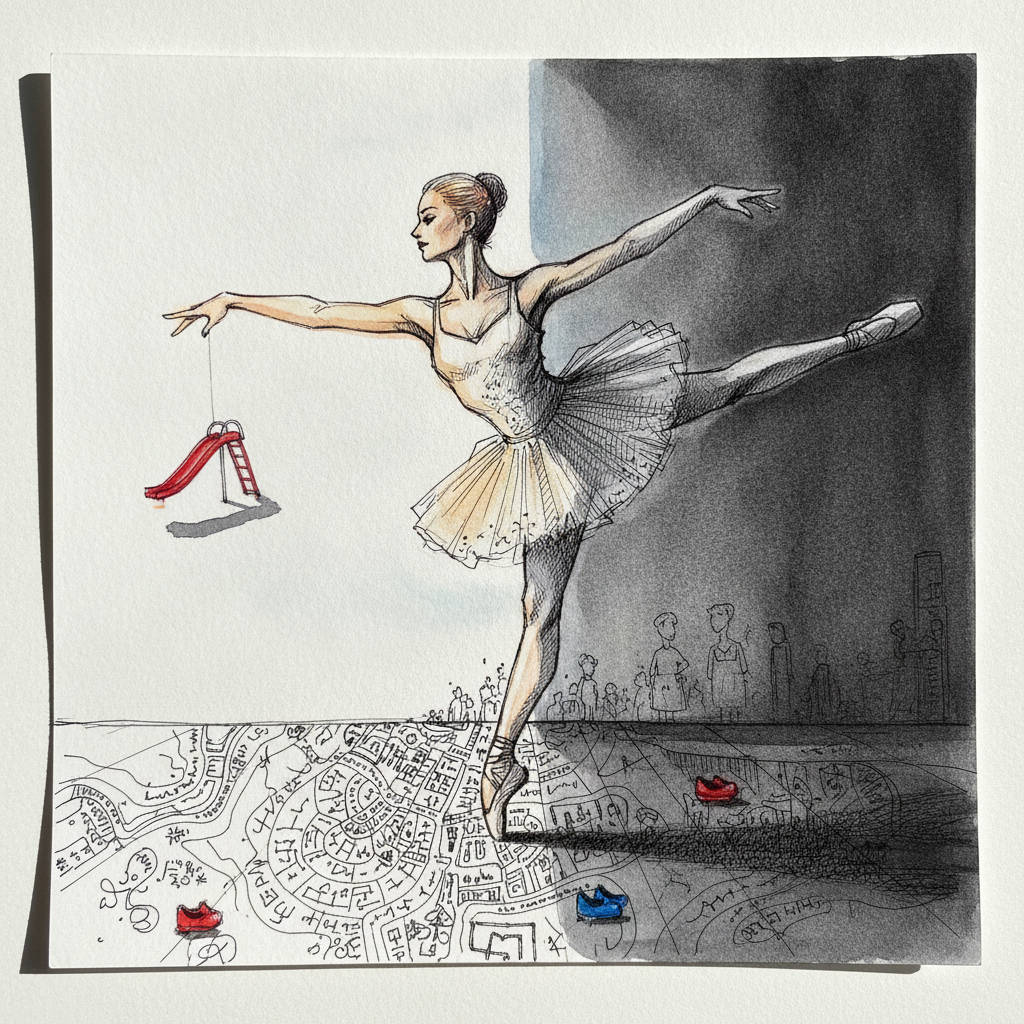
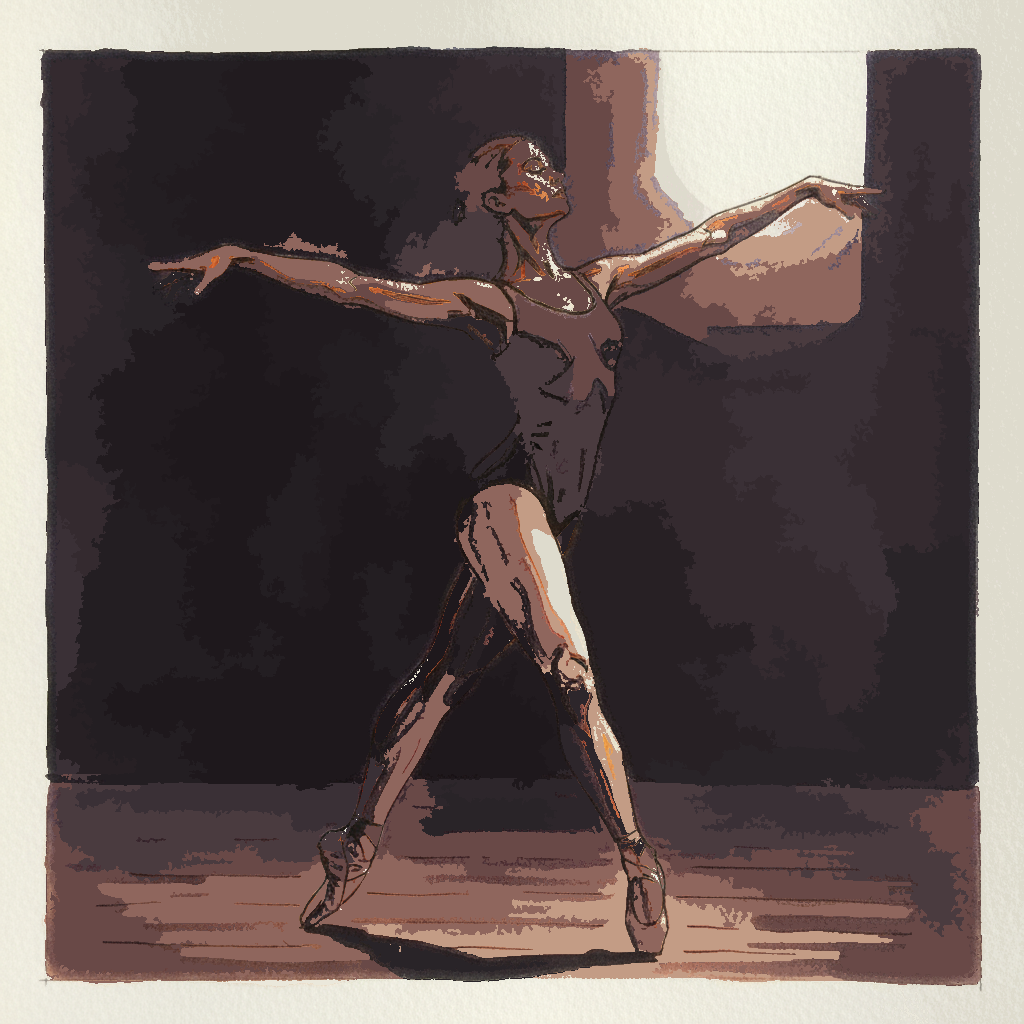
Piece 5 — First arabesque, dramatic side-spotlight
Pen + Watercolor · Loose pen and watercolor line-and-wash
Three takes
Focus for this piece
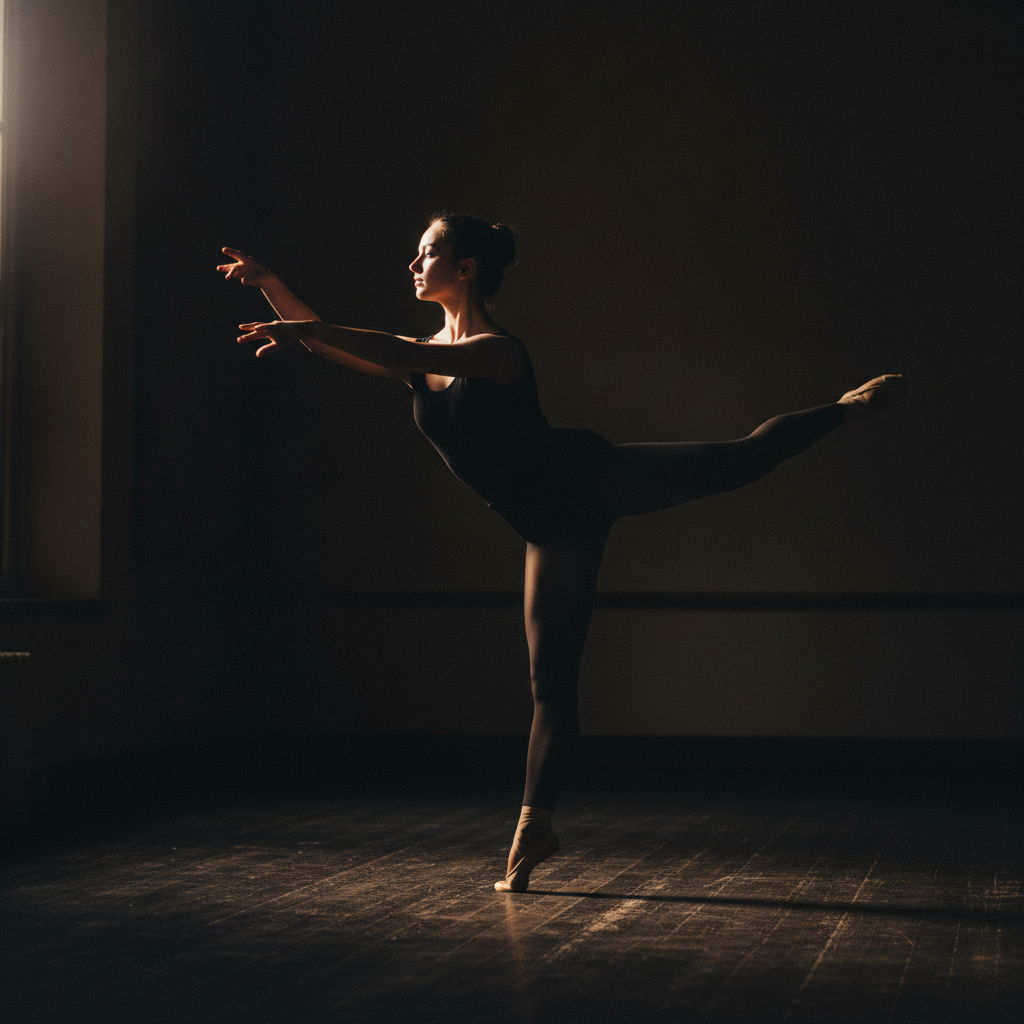
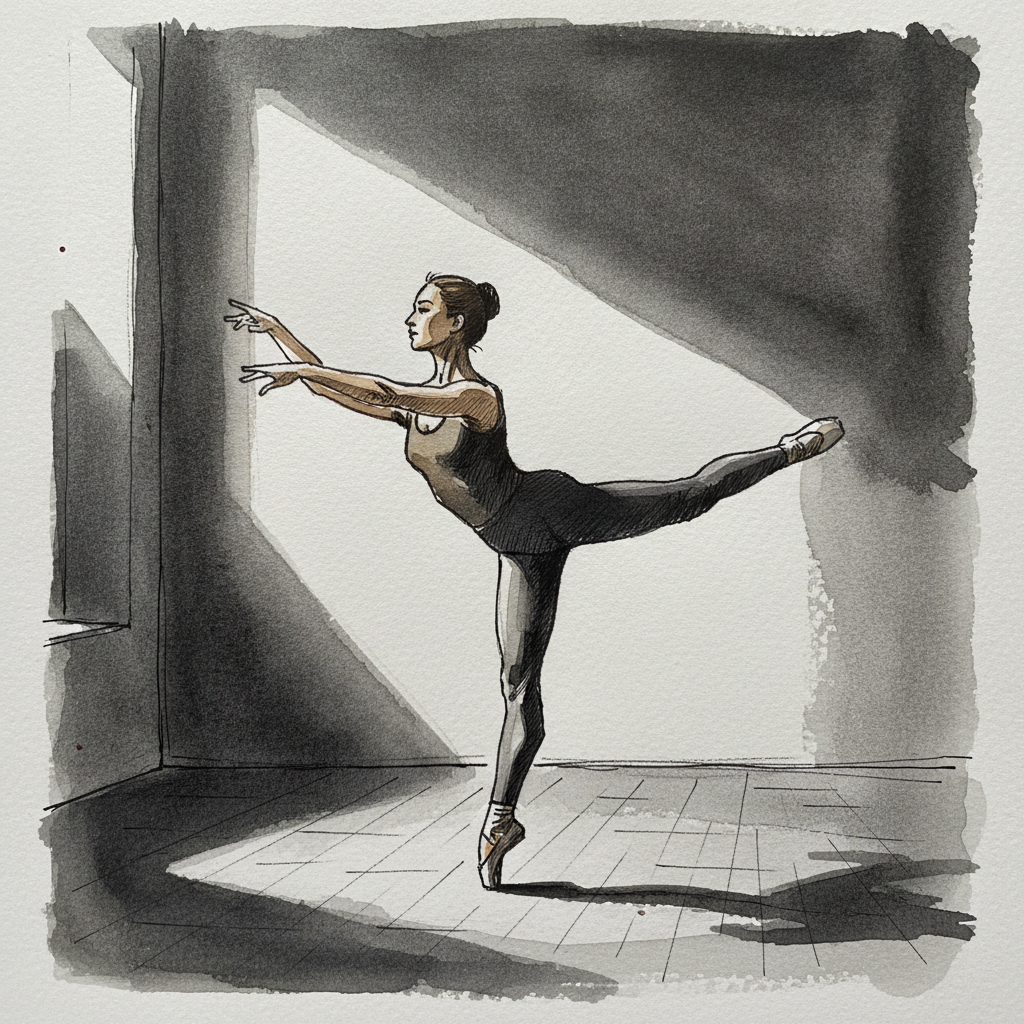
This piece is an excellent study in using dramatic side-lighting to sculpt a figure through high-contrast value. Focus on applying rich, nearly opaque darks with watercolor for the deep shadow areas and luminous, warm washes for the glowing lit side, allowing these broad value shapes to define the dancer's form. Reserve precise, varied line weights with waterproof ink to articulate the sharp boundaries where light dramatically meets shadow, and for picking out essential details within the bright highlights. This interplay allows the ink to provide crisp structure where needed, while the watercolor builds volume and atmosphere.
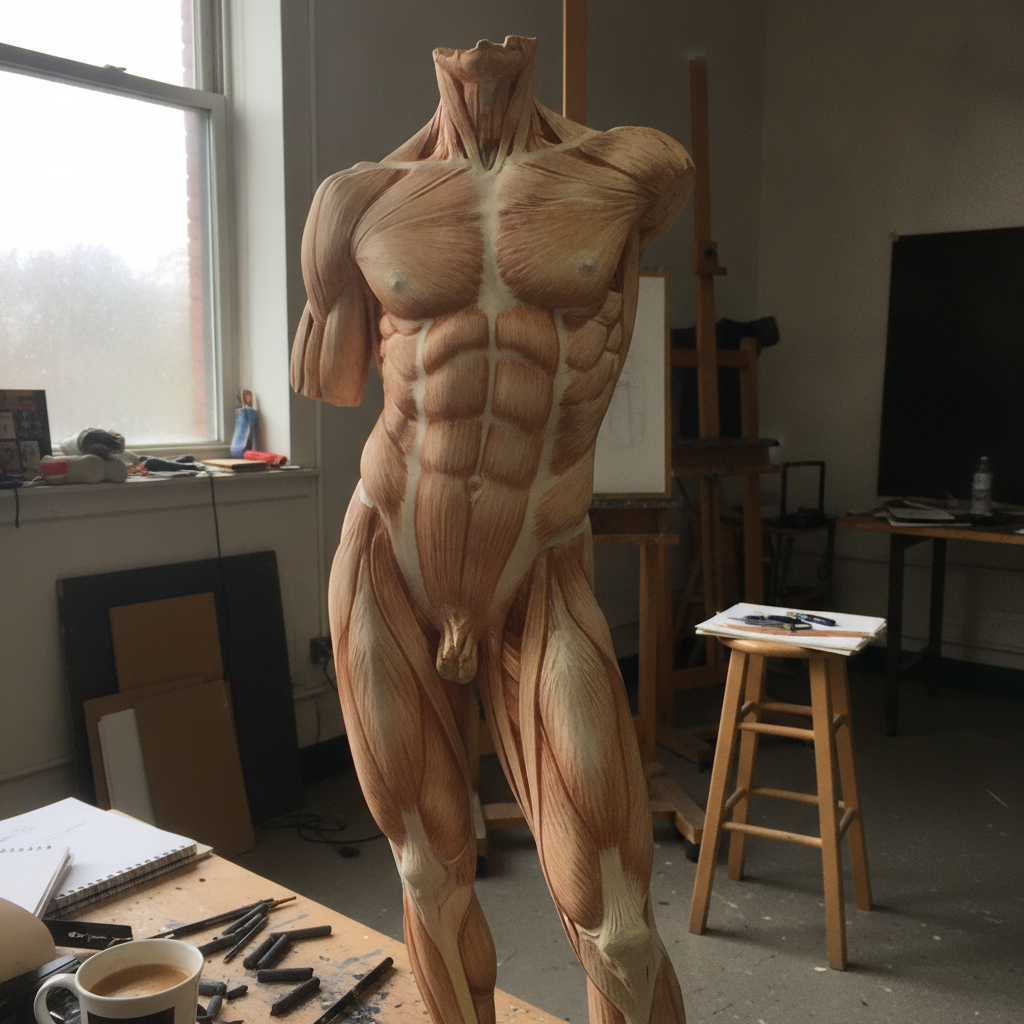
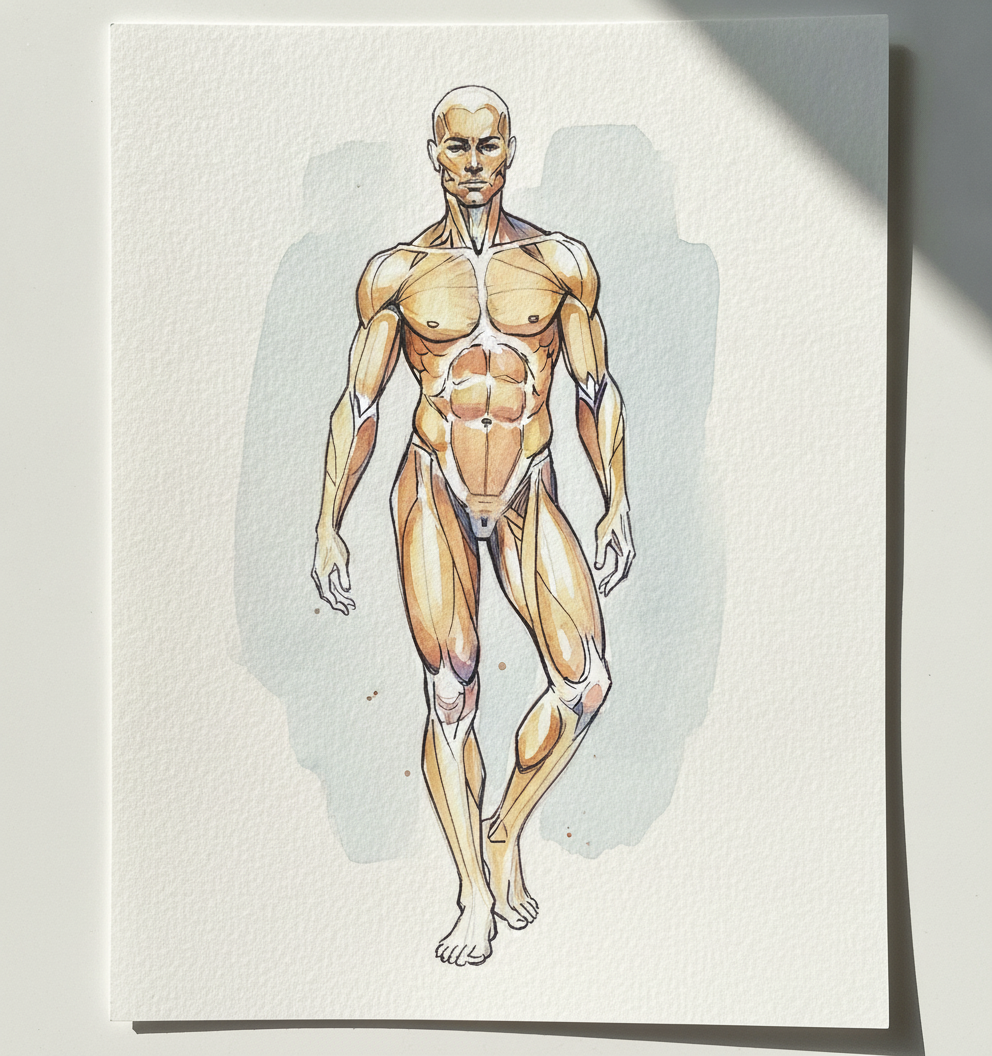
Piece 6 — Front Écorché Standing Contrapposto
Pen + Watercolor · Loose pen and watercolor line-and-wash
Three takes
Focus for this piece
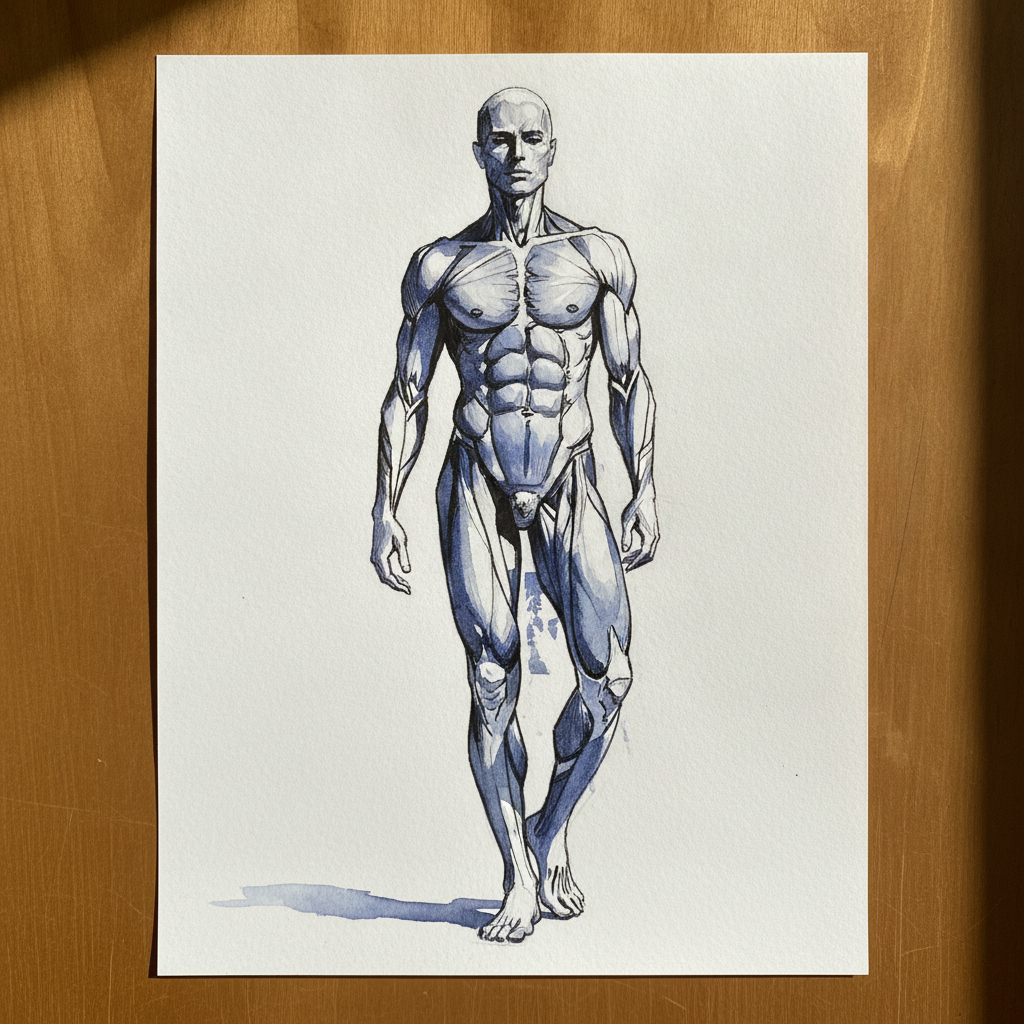
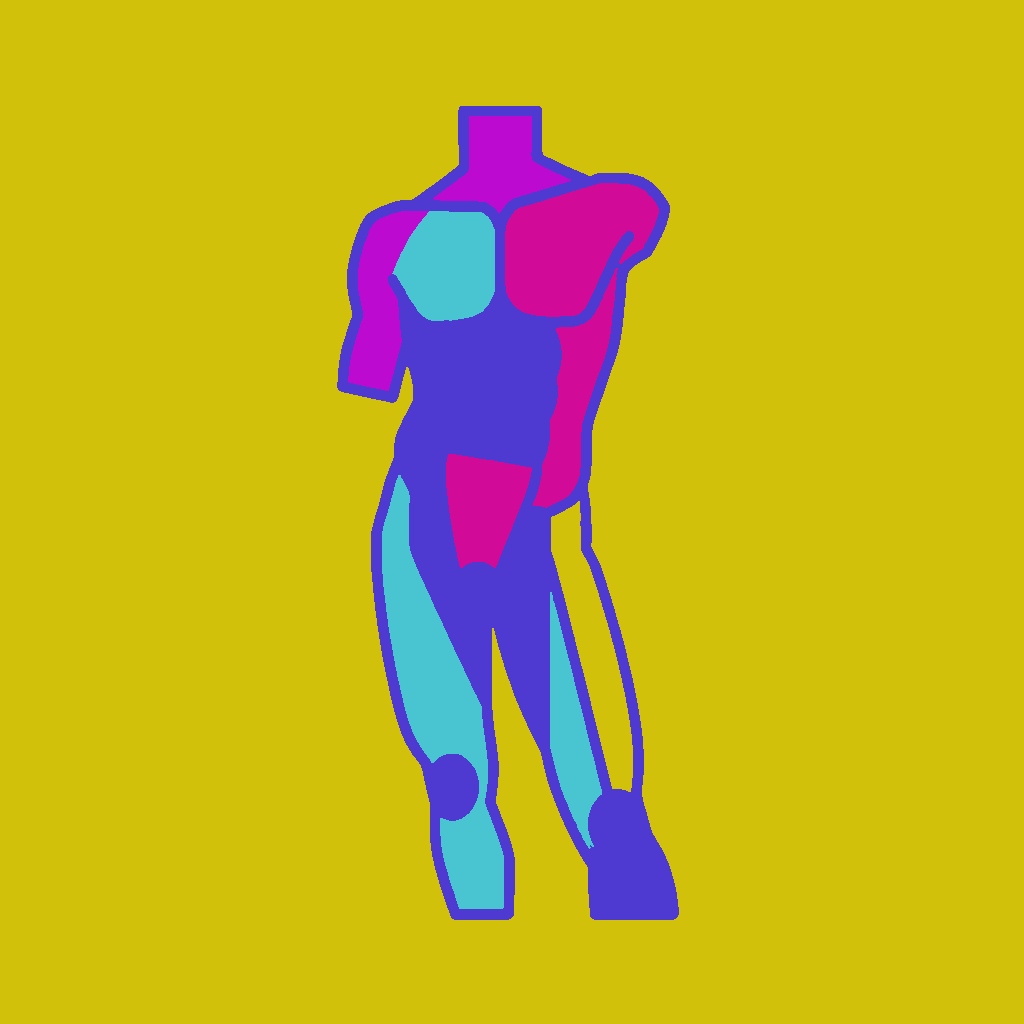
This écorché in contrapposto offers a strong study in defining anatomical volume through line and wash. Practice varying line weight to articulate the hard edges of tendons, like the sartorius crossing the thigh, versus the softer transitions of muscle bellies. Use nuanced, layered washes to build the S-curve’s sculptural form, leveraging the raking light to define planes with subtle value shifts from a restrained, earth-toned palette.
Piece 7 — Castillo de Frías, Frías, Spain
Pen + Watercolor · Loose pen and watercolor line-and-wash
Three takes
Focus for this piece
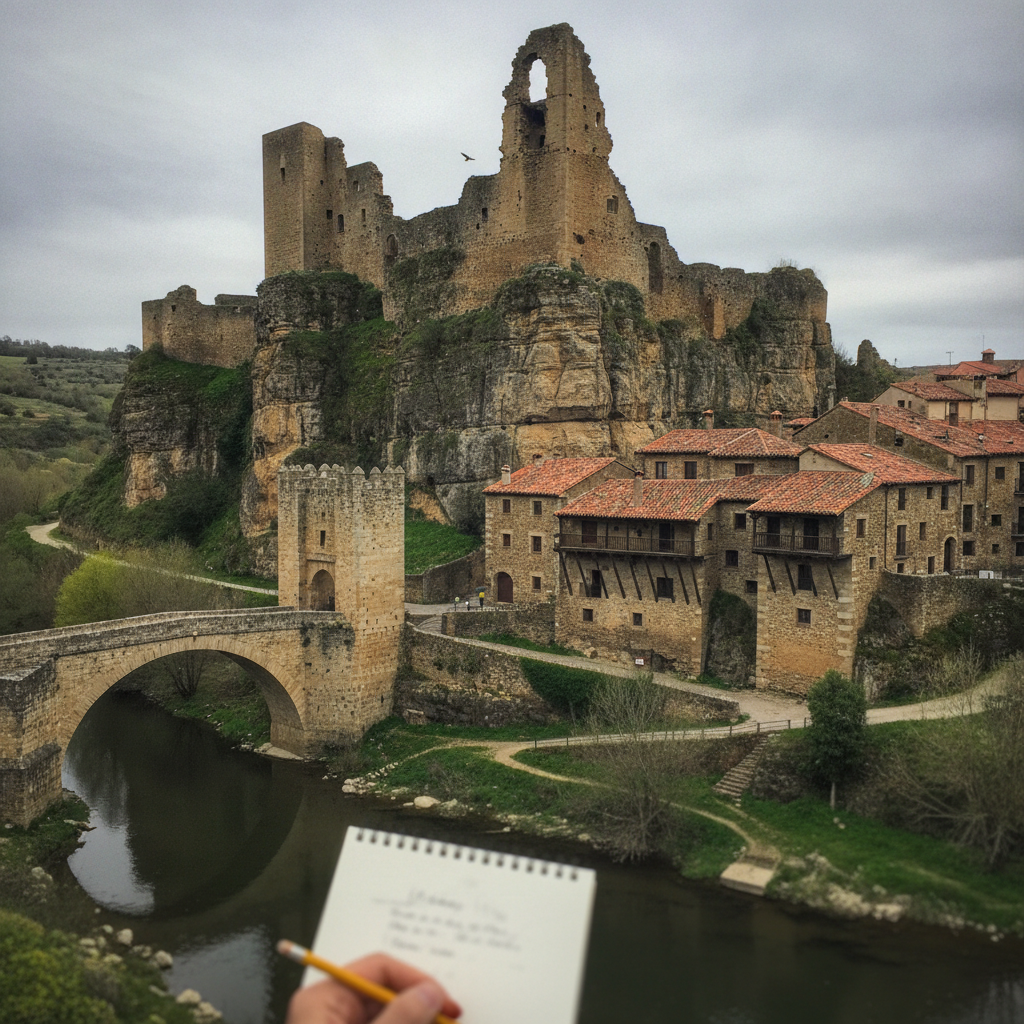
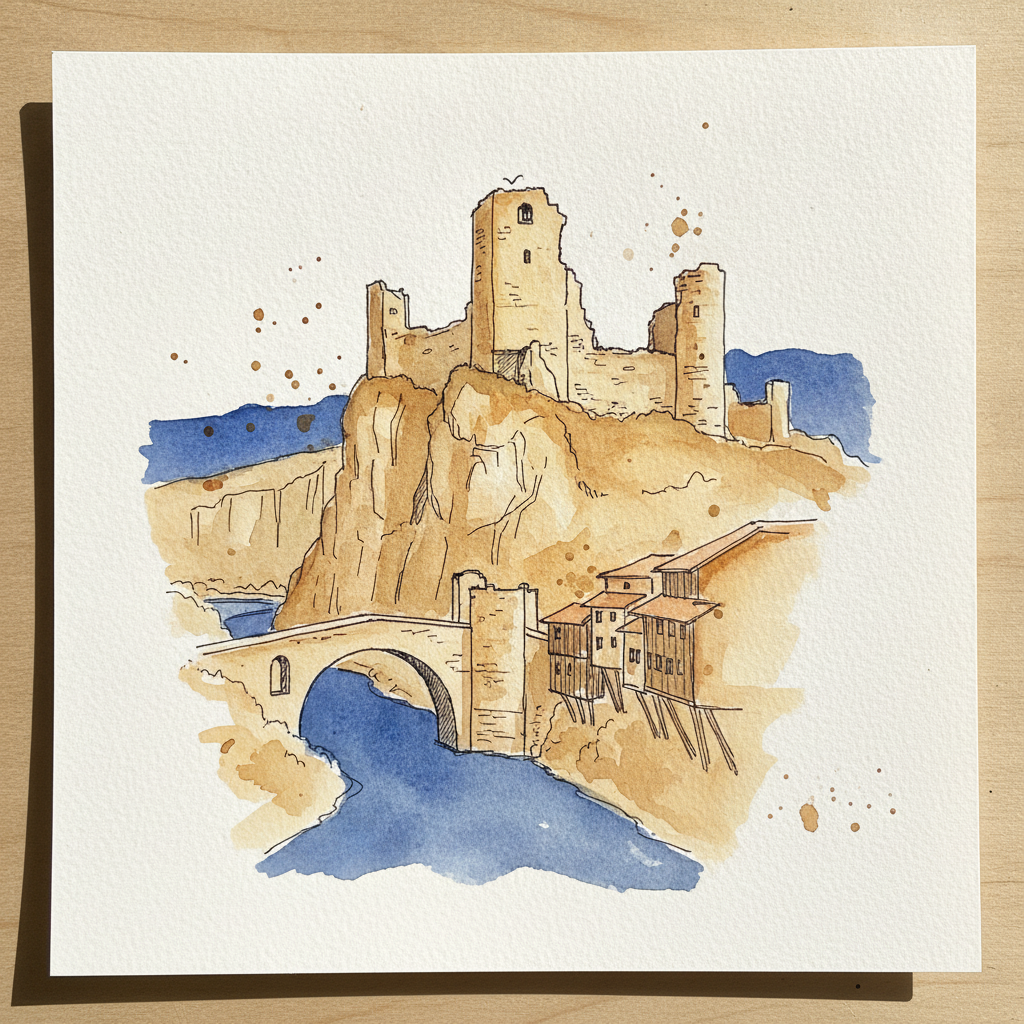
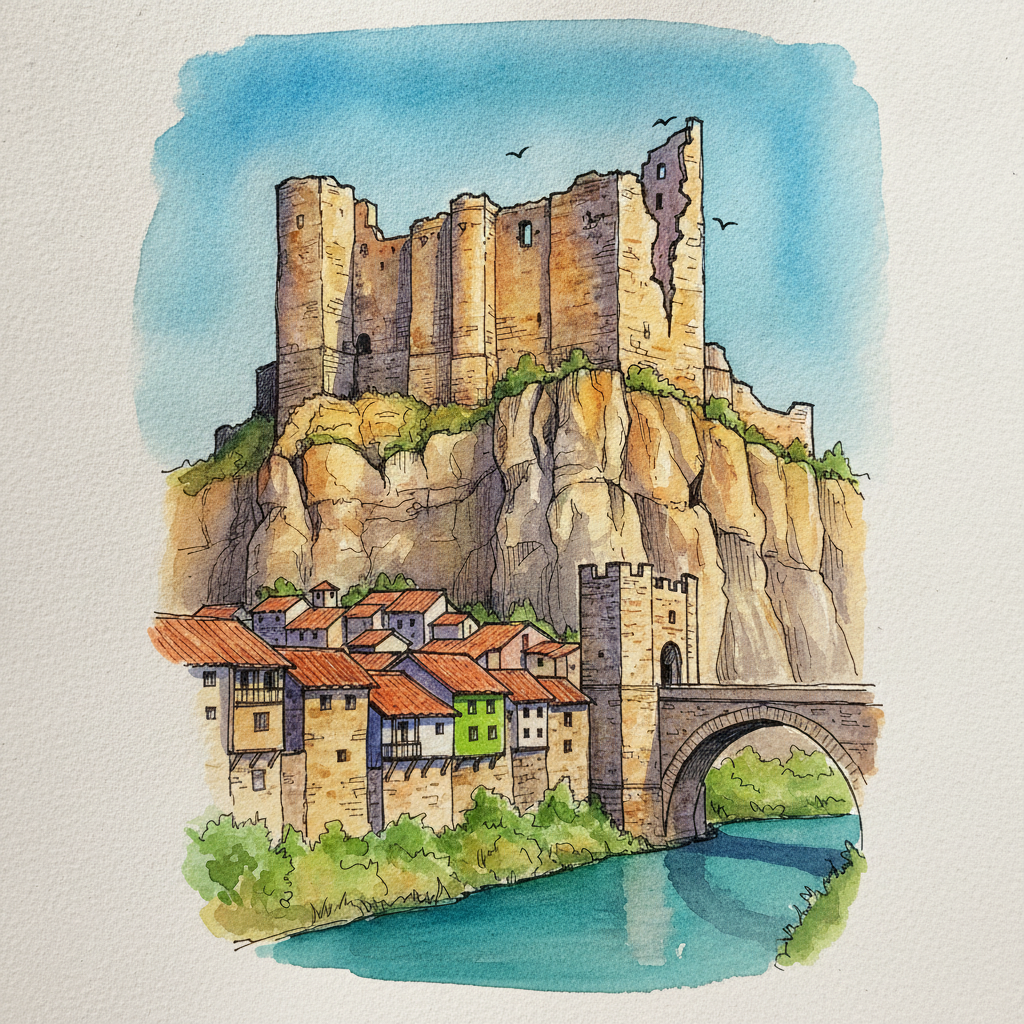
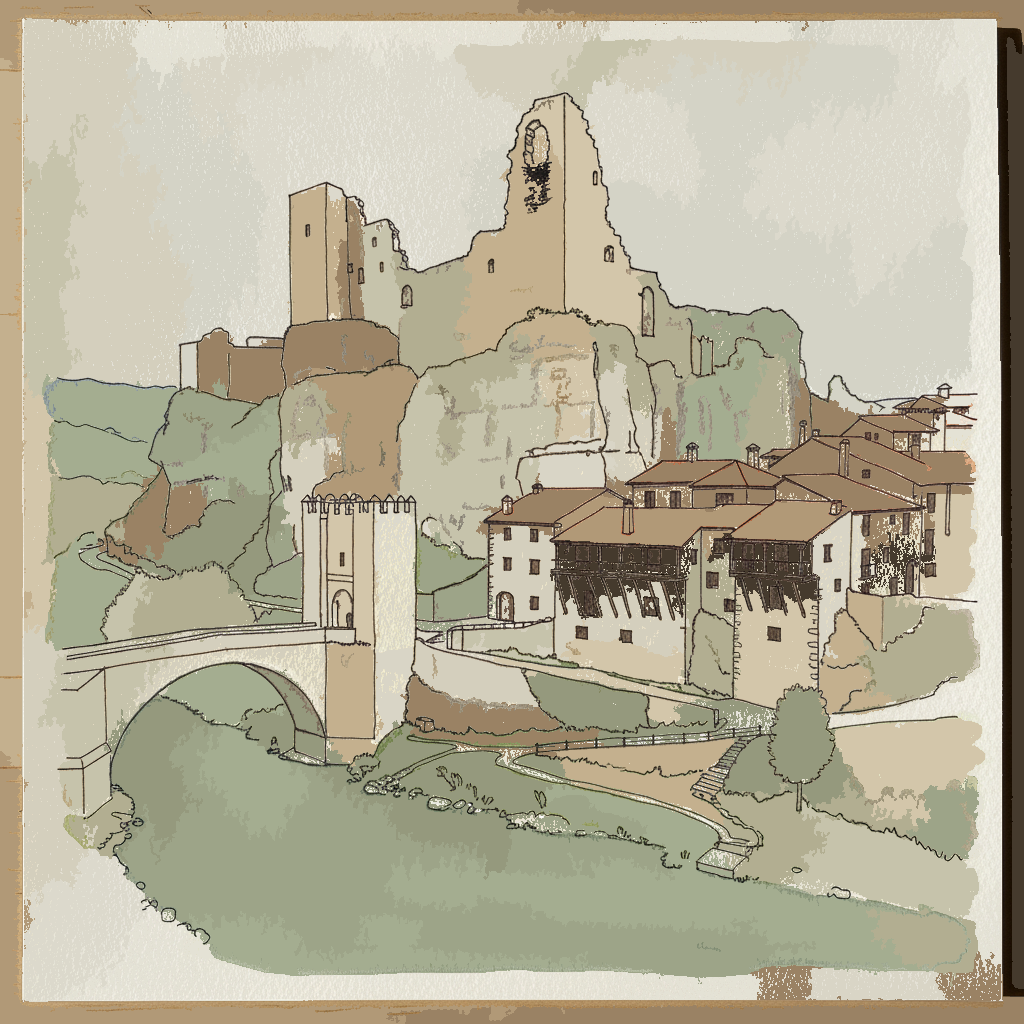
This piece offers an excellent study in integrating architectural mass with natural forms, specifically how the Castillo de Frías seems to rise directly from its sheer rock outcrop. Pay close attention to varying your pen lines—using broken or softer strokes for the rock face and subtly firmer ones for the castle's masonry—while allowing your washes to blend the two seamlessly. This approach emphasizes the castle as a vertical extension of the stone itself, creating a cohesive, monumental feel rather than two distinct elements. Consider a limited, earthy palette to further unify the rock and stone surfaces.
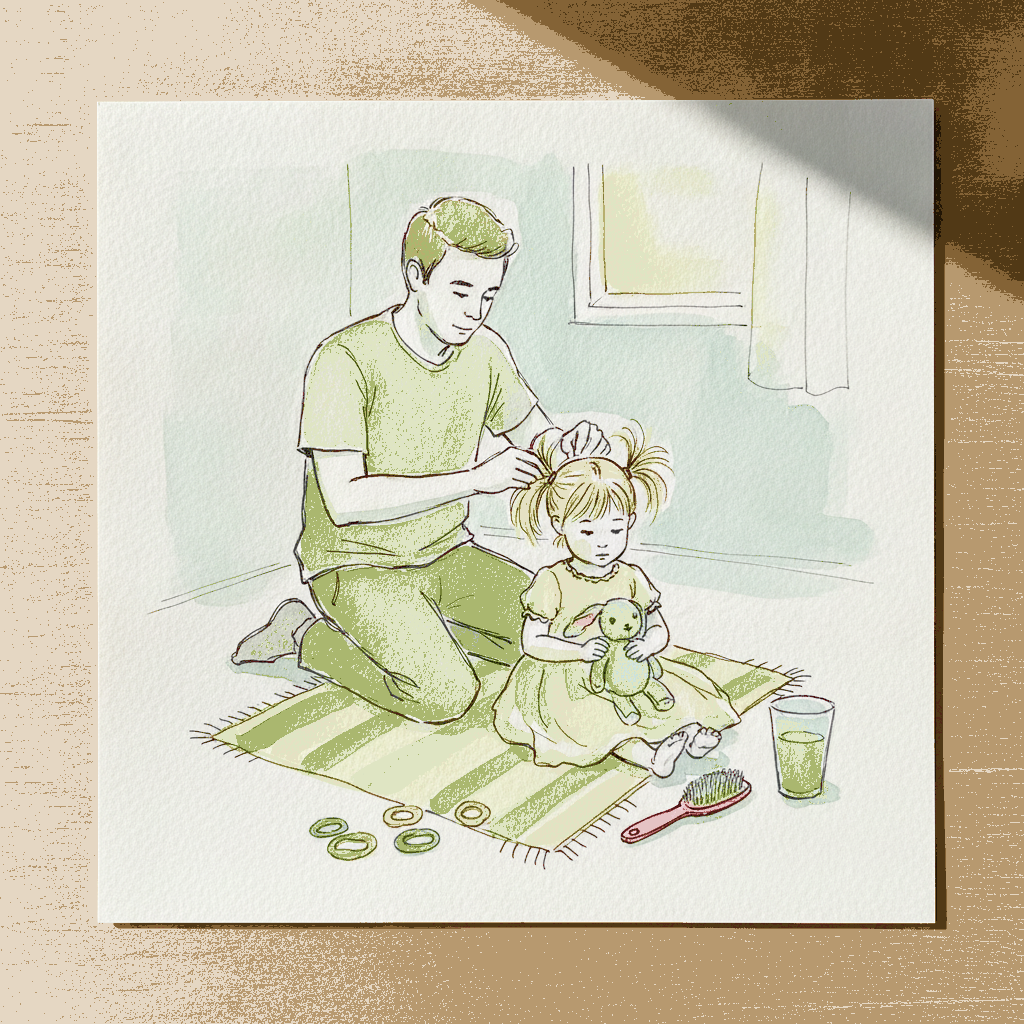
Piece 8 — Dad putting kid's hair in pigtails
Pen + Watercolor · Loose pen and watercolor line-and-wash

Three takes

Focus for this piece
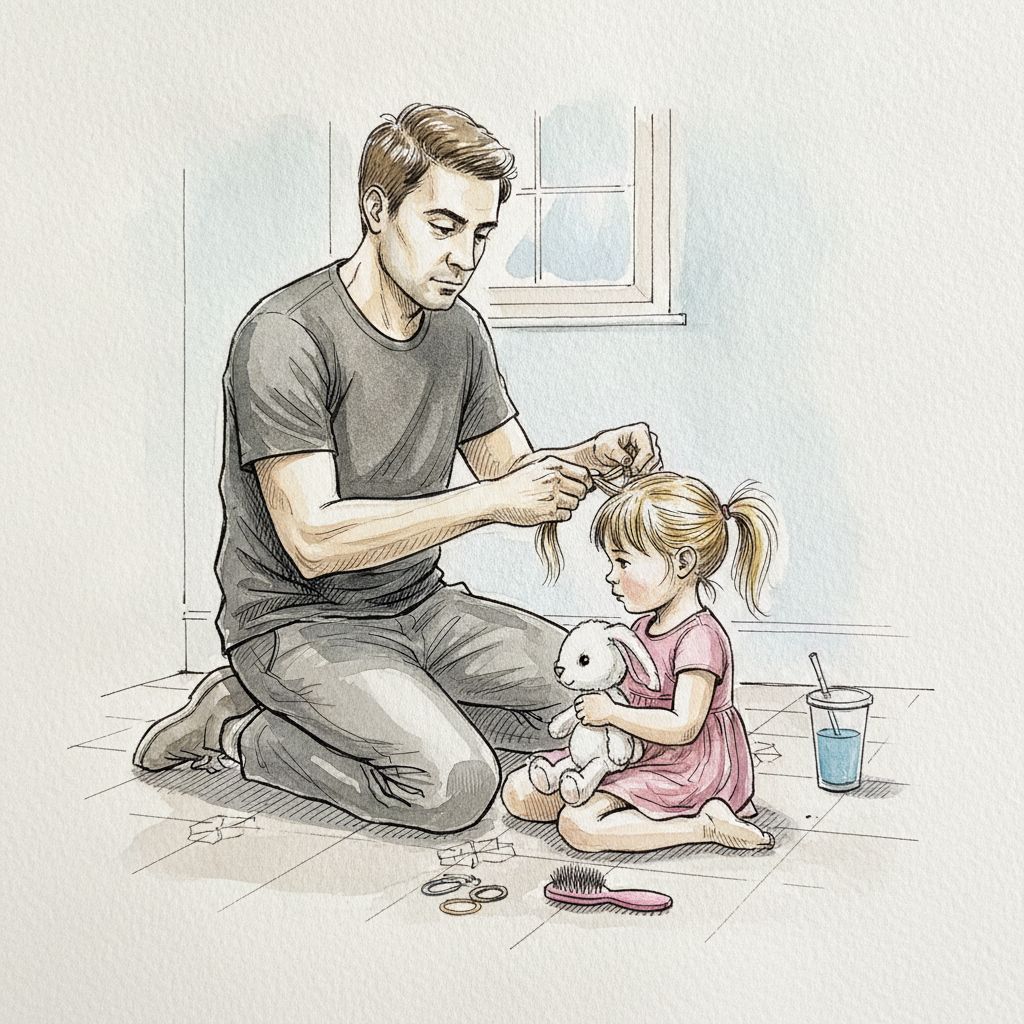
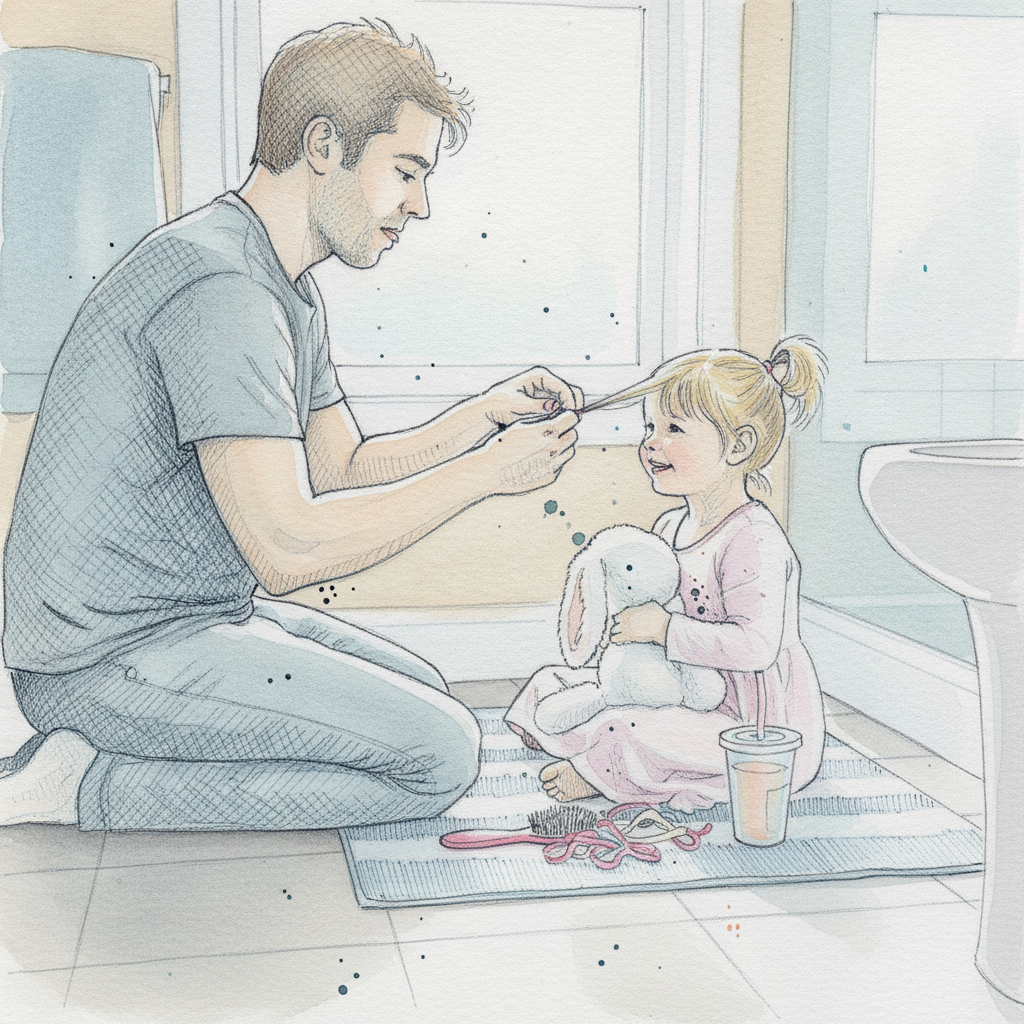
This piece offers an excellent study in conveying a tender moment through the thoughtful interplay of line and wash. Focus on using varied pen weights—firm for the father's large hands and the structural elements of the bathroom, but delicate and broken for the daughter's fine hair, nightgown, and the soft stuffed bunny. Follow this with luminous, layered washes to sculpt the gentle forms and capture the "bright morning sun," allowing color to define volume and atmosphere where the lines are lighter. Pay close attention to how your wash layers build softness and warmth, creating a narrative of care rather than just an outline.