Job interview at table, Skateboard ollie, board attached, peak, New Hampshire orchard winter skeleton, USA, Alcazaba, Granada, Spain, and more — pen + watercolor for September 10, 2026
AI-generated daily art-practice references for pen and watercolor: Job interview at table, Skateboard ollie, board attached, peak, New Hampshire orchard winter skeleton, USA, Alcazaba, Granada, Spain, Marseille from the Notre-Dame de la Garde Hill, American witch hazel, Texas Pasture Pole, Late a…
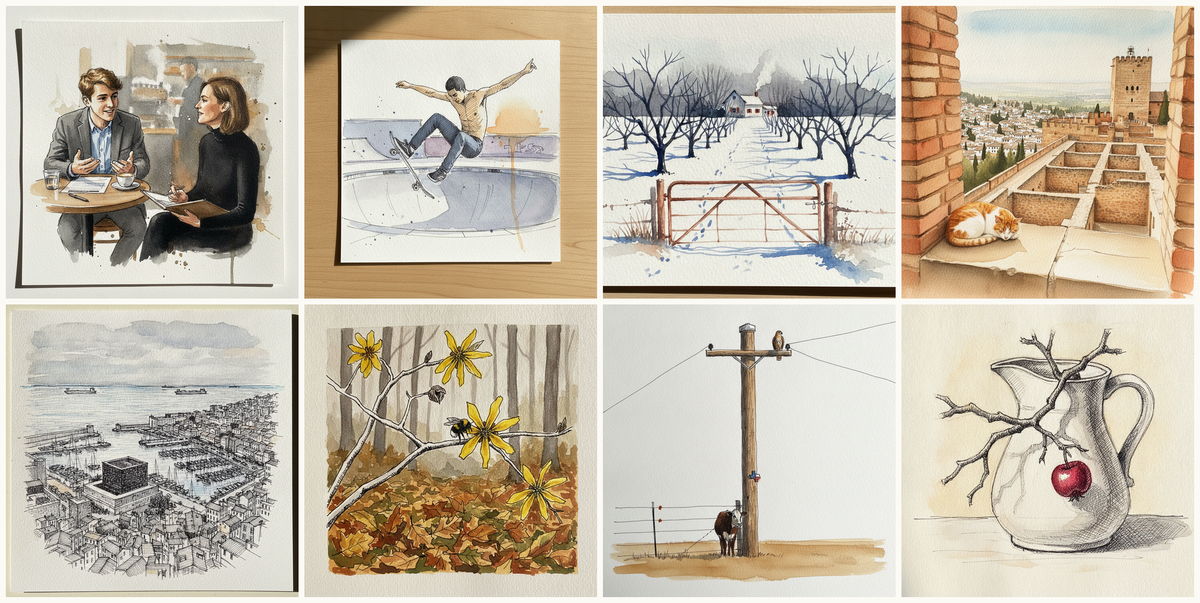
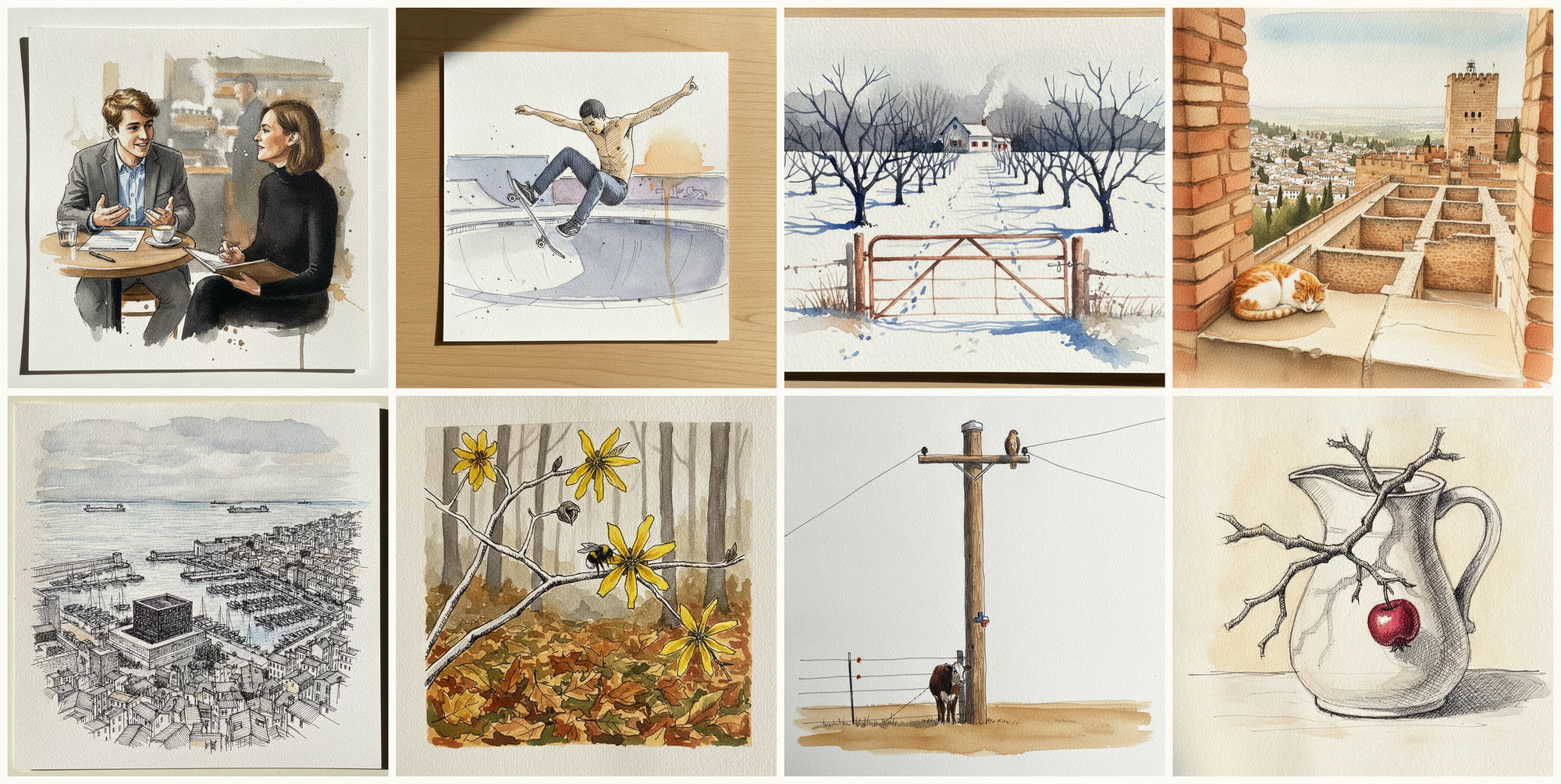
Today's 8 pen-and-watercolor pieces: Job interview at table, Skateboard ollie, board attached, peak, New Hampshire orchard winter skeleton, USA, Alcazaba, Granada, Spain, Marseille from the Notre-Dame de la Garde Hill, American witch hazel, Texas Pasture Pole, Late autumn branch with single clinging berry. Each piece comes with an AI-generated photoreal reference, three AI-generated example artworks in different treatments, and a short focus paragraph naming what to study in this one.
Why these references use AI
This daily series uses AI-generated images as practice prompts, not as finished artwork to copy. Each subject starts with a synthetic photoreal reference generated with Gemini/Nano Banana, then moves into three pen-and-watercolor interpretations of the same subject.
I use AI here because daily art practice needs variety and low friction. Real life can get repetitive, busy, or visually narrow. These generated reference sets make it easier to study bodies, buildings, animals, landscapes, objects, gestures, light, palettes, and compositions that might not show up in an ordinary day.
The goal is not to reproduce any image directly. Treat each set as a starting point for observation and study: choose what interests you, change the framing, simplify the subject, alter the palette, and make your own version.
Piece 1 — Job interview at table
Pen + Watercolor · Loose pen and watercolor line-and-wash

Three takes
Focus for this piece
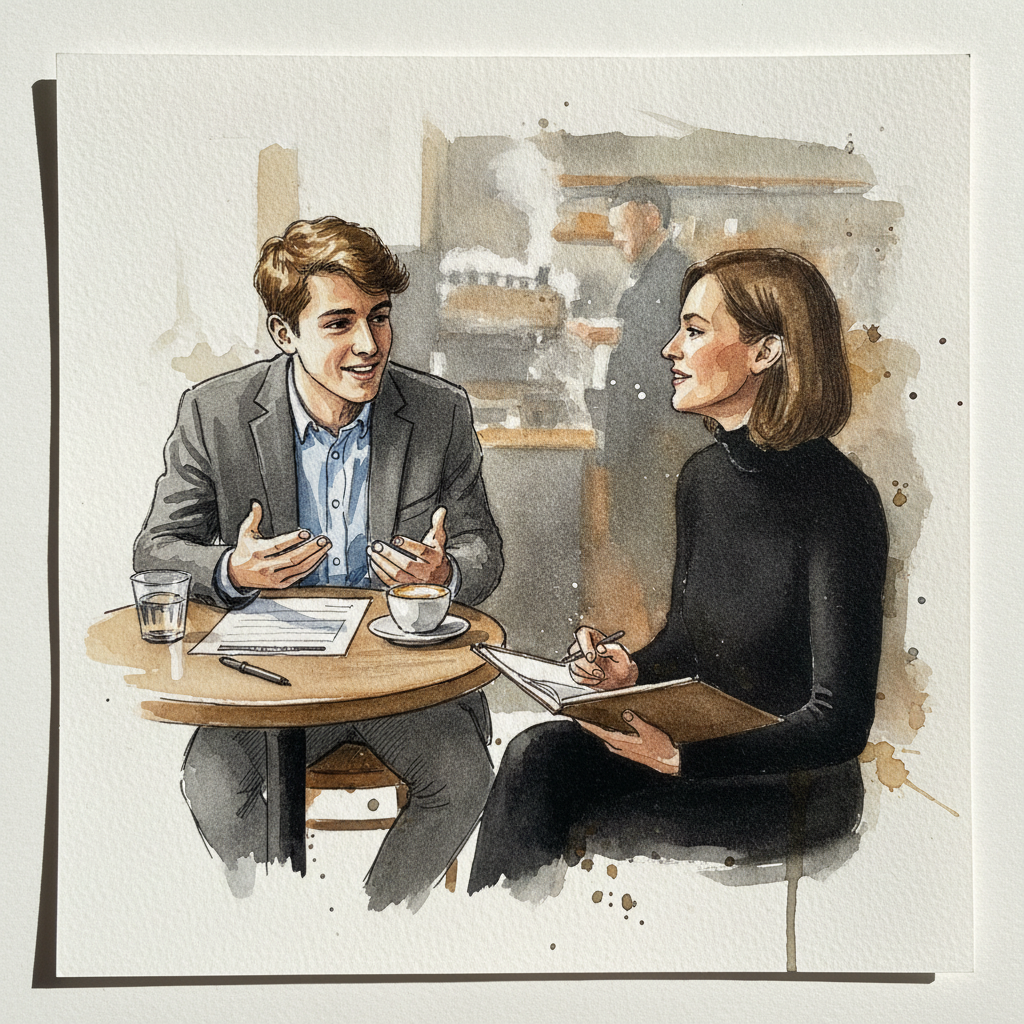
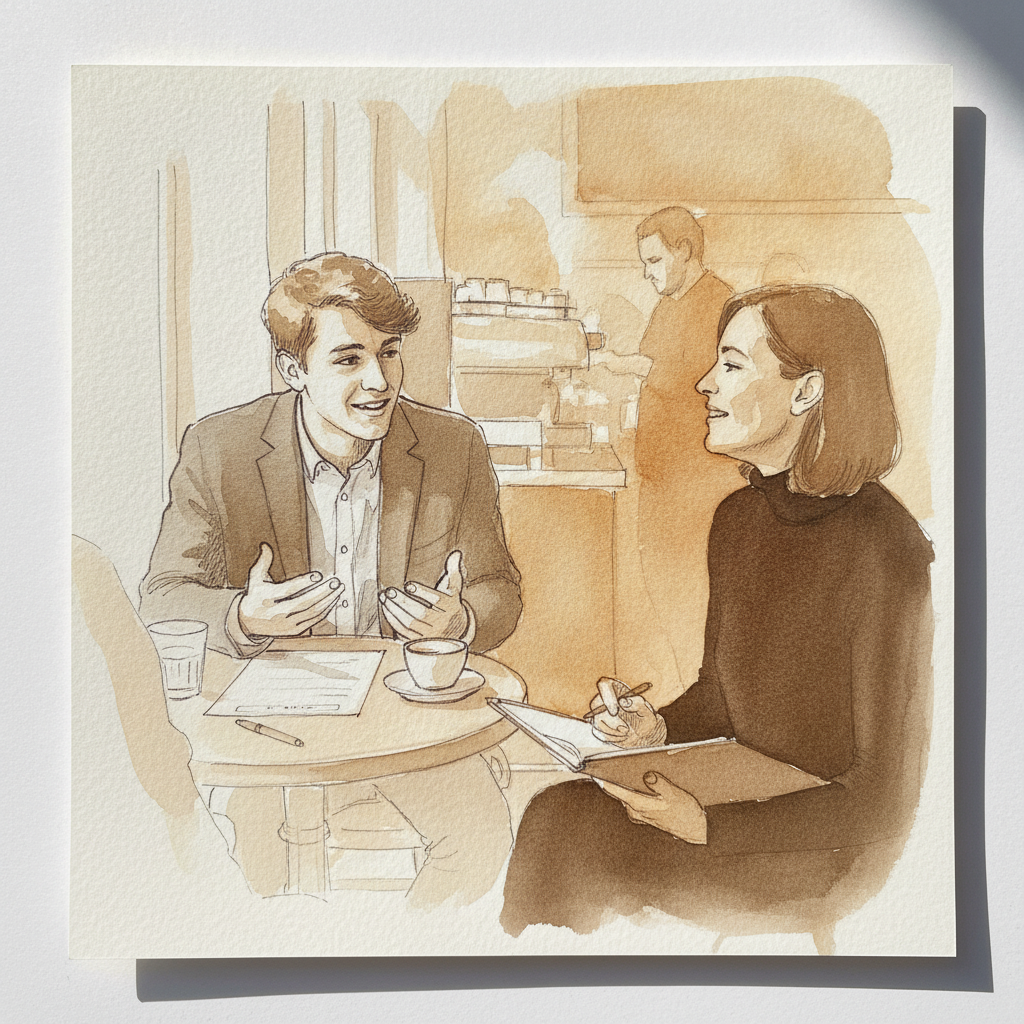
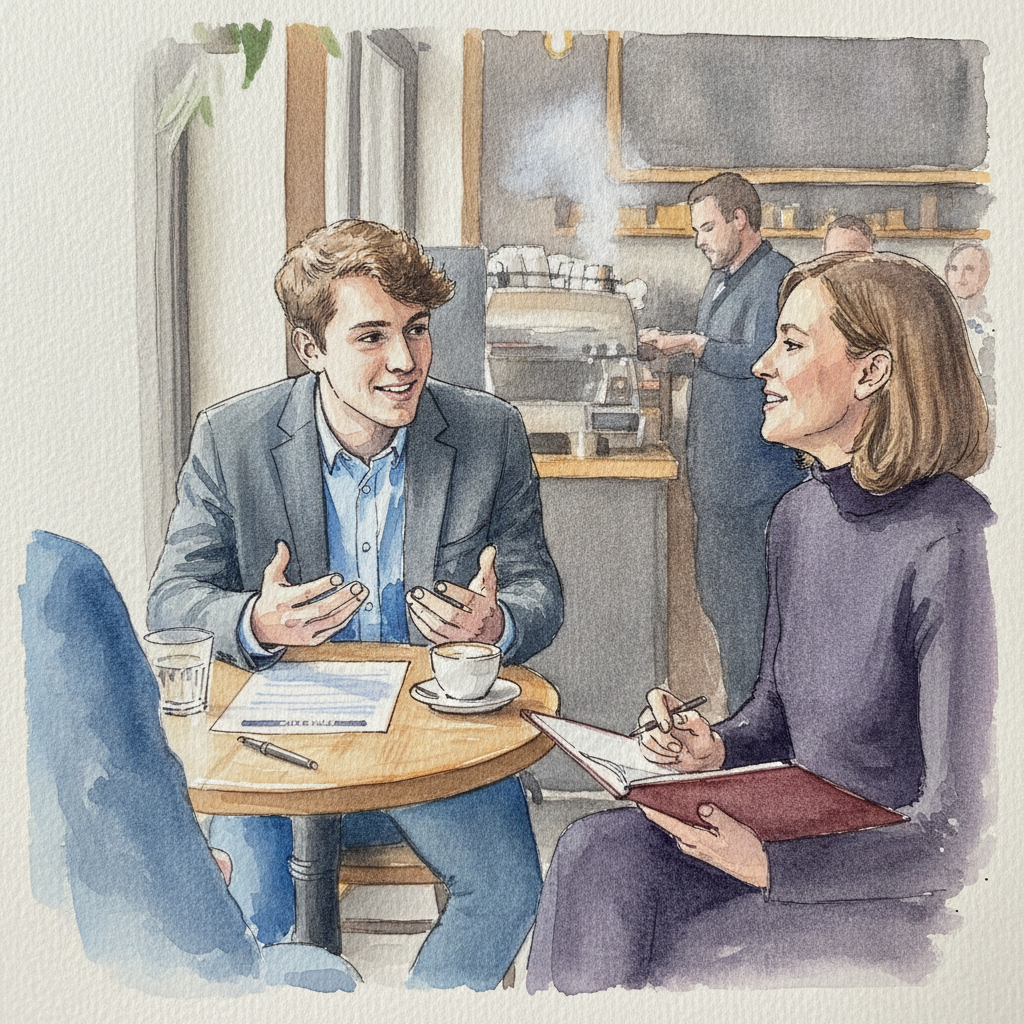
For this piece, focus on establishing a clear visual hierarchy by varying your pen line weights: use strong, confident lines for the two figures and the immediate table details, then switch to lighter, broken lines for the cafe background. This provides structure, which you will then soften and unify with watercolor by applying focused, layered washes to model the figures and specific objects. Concurrently, let expansive, dilute washes suggest the cafe's atmosphere and distant elements, allowing them to recede and create depth. This interplay of crisp ink detail and soft, atmospheric washes will bring the focused interaction to life.
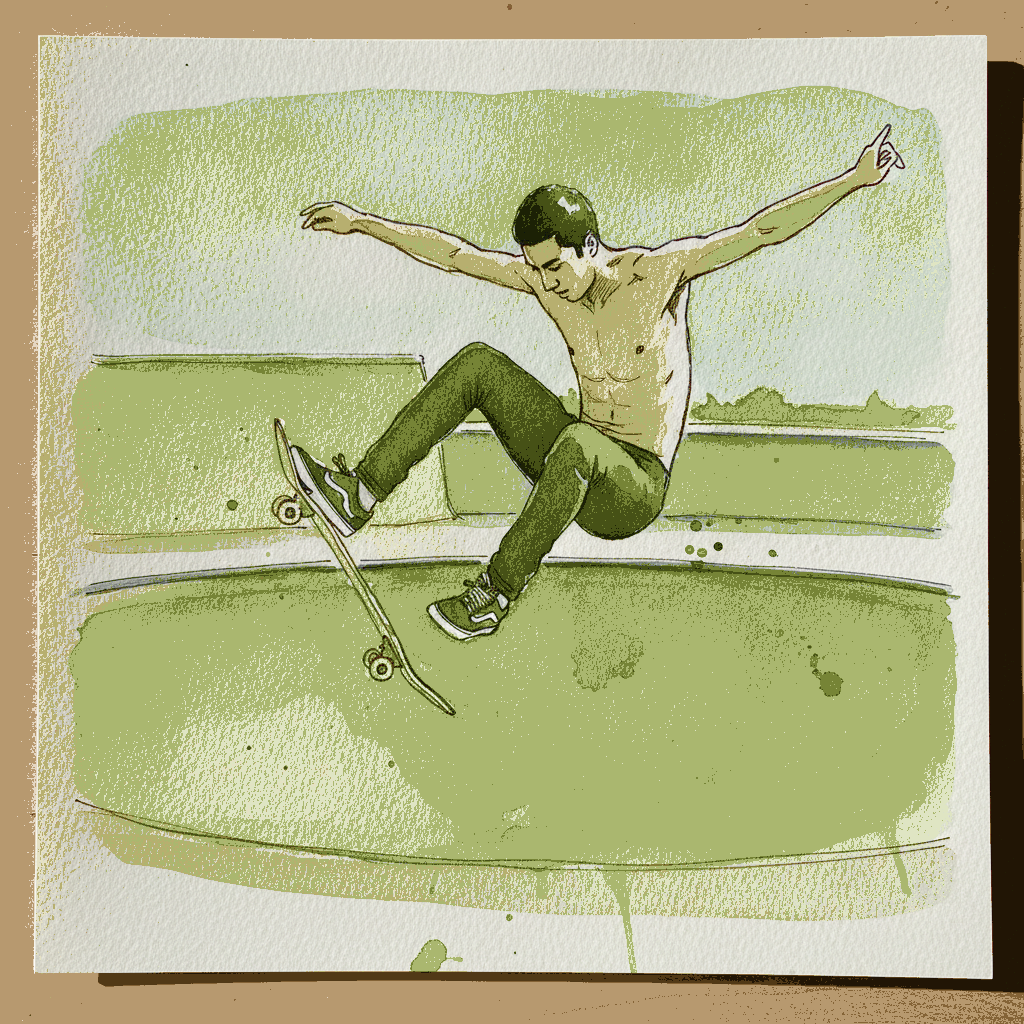
Piece 2 — Skateboard ollie, board attached, peak
Pen + Watercolor · Loose pen and watercolor line-and-wash
Three takes

Focus for this piece
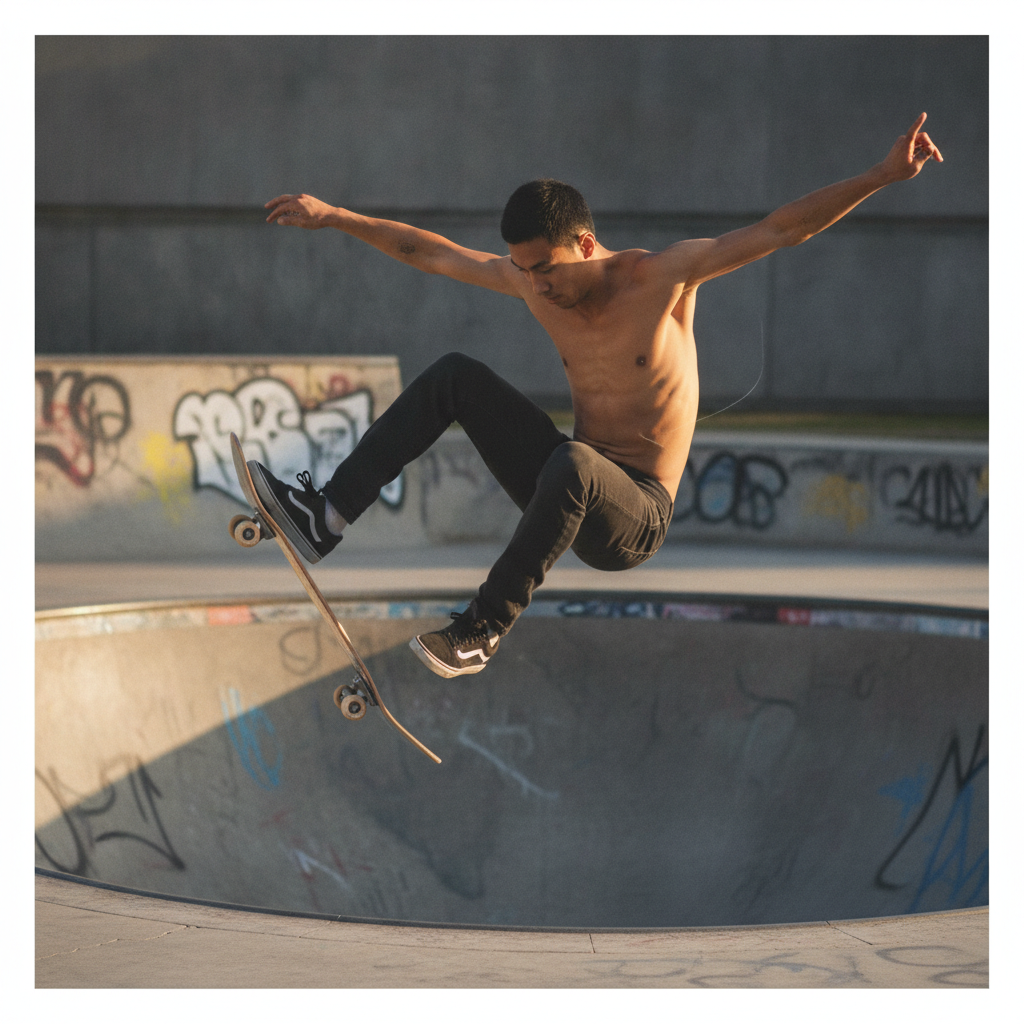
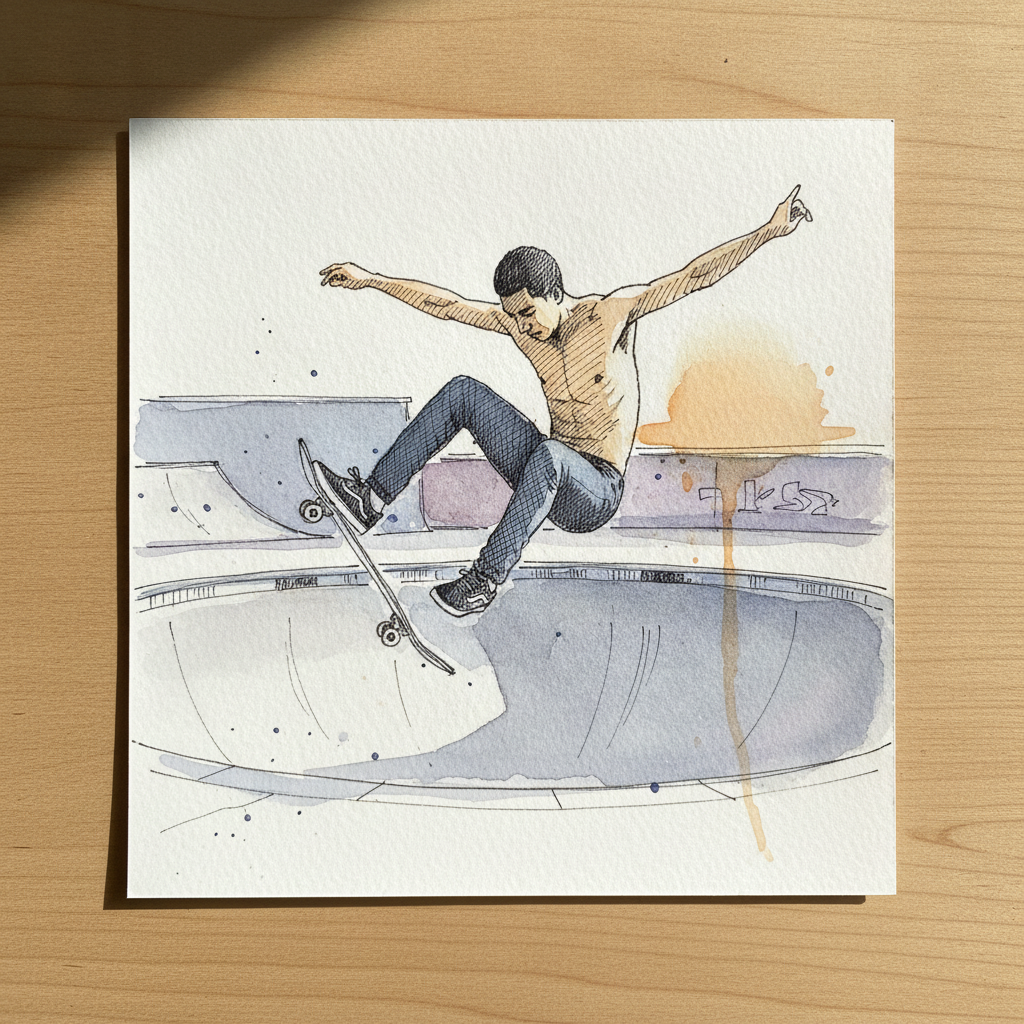
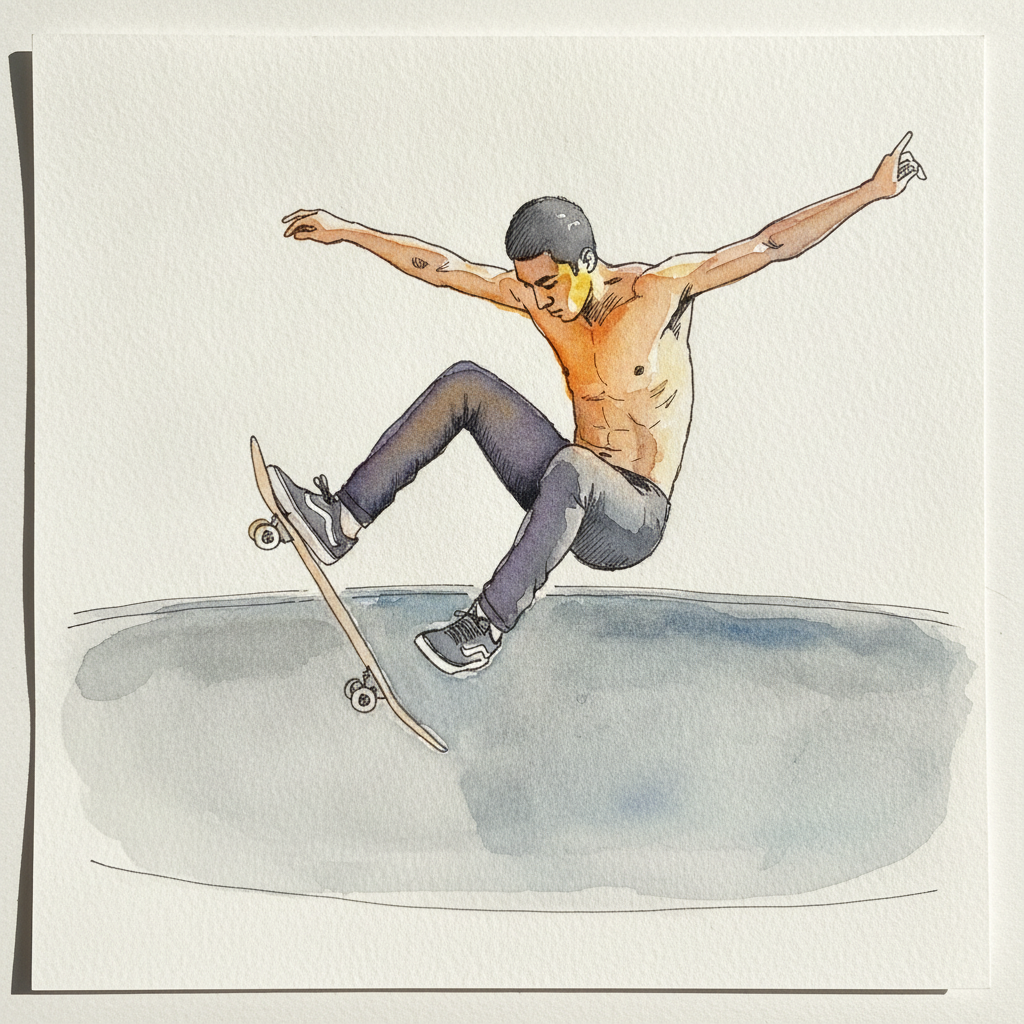
For this piece, focus on rendering the dynamic *flow* of the ollie through judicious line work. Use varied pen pressure to create a "sensory line" that traces the energy from the trailing fingertip, through the compact spine, to the forward leveling foot. Complement this with selective warm washes that sculpt the figure, allowing the golden hour light to dramatically define the bent knees, deltoid, and cheek. This balance of expressive line and atmospheric light will capture the peak of the action.
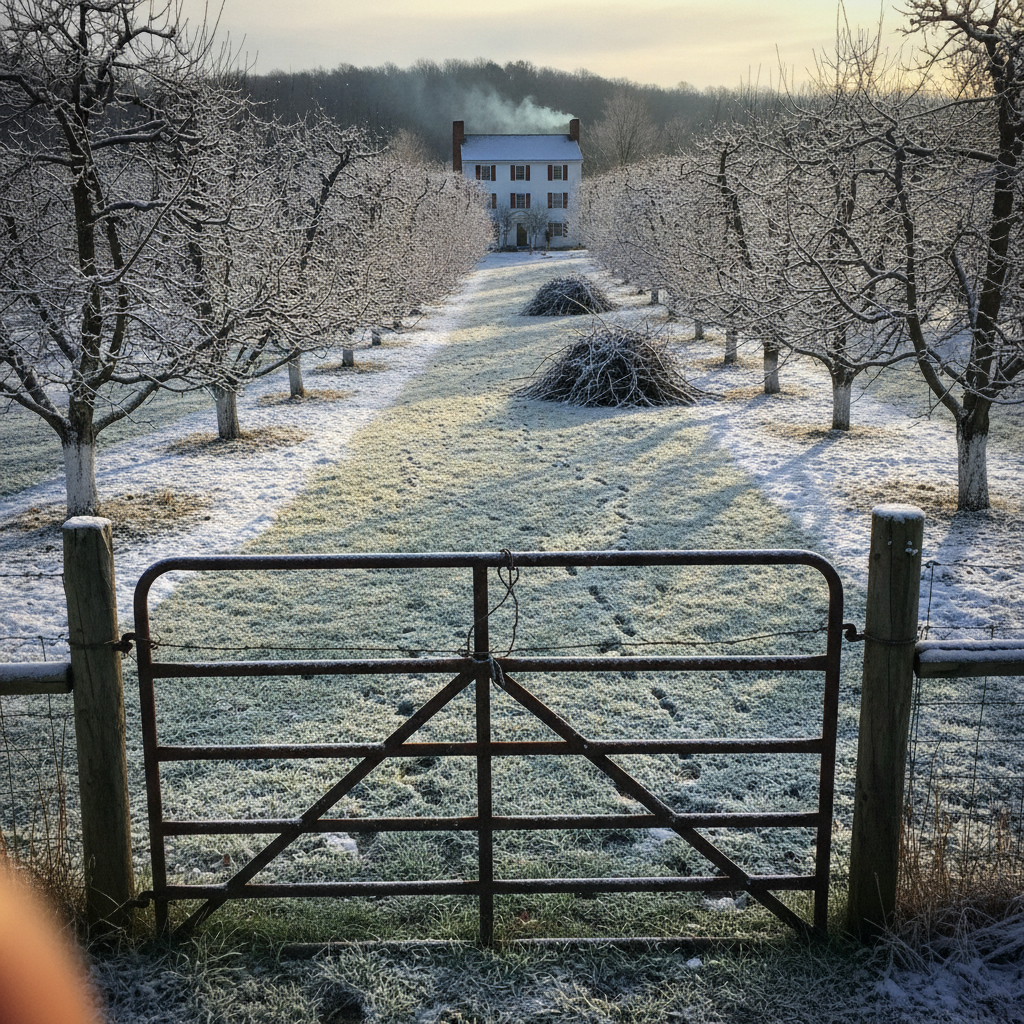
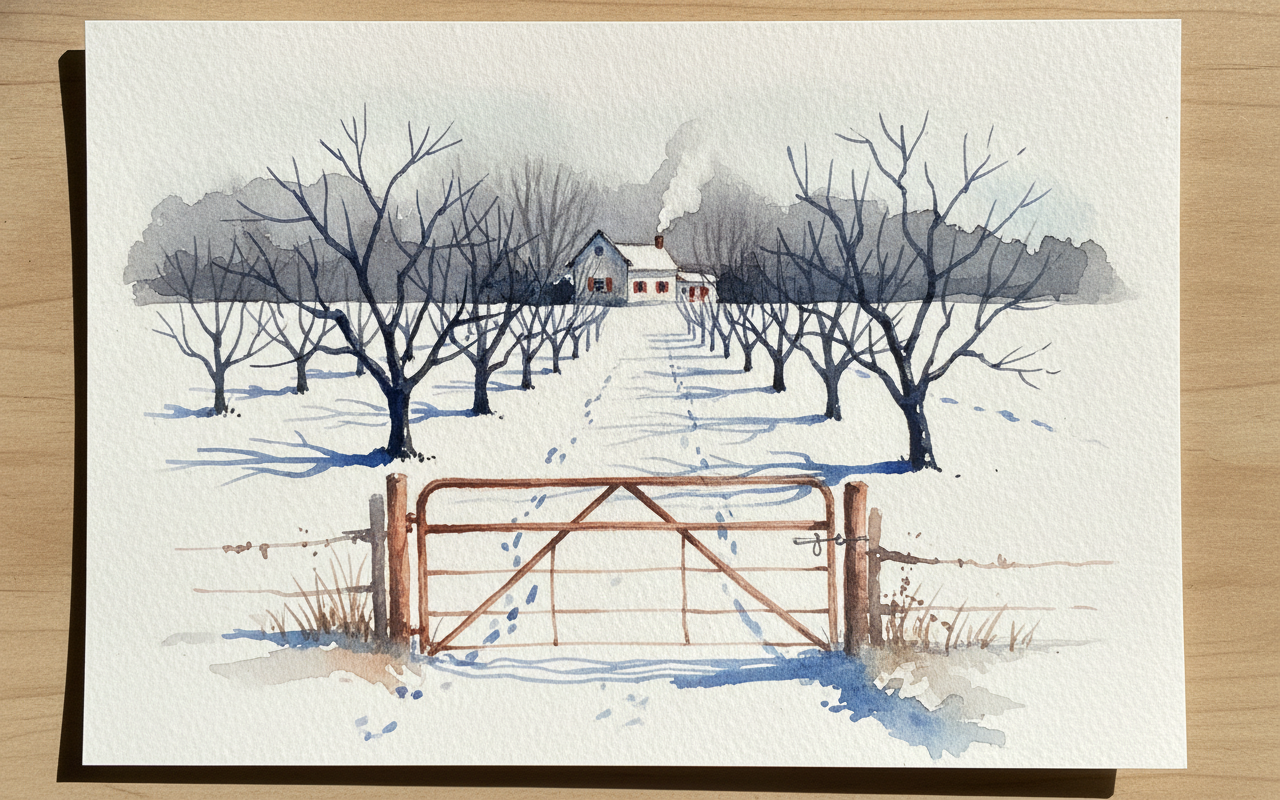
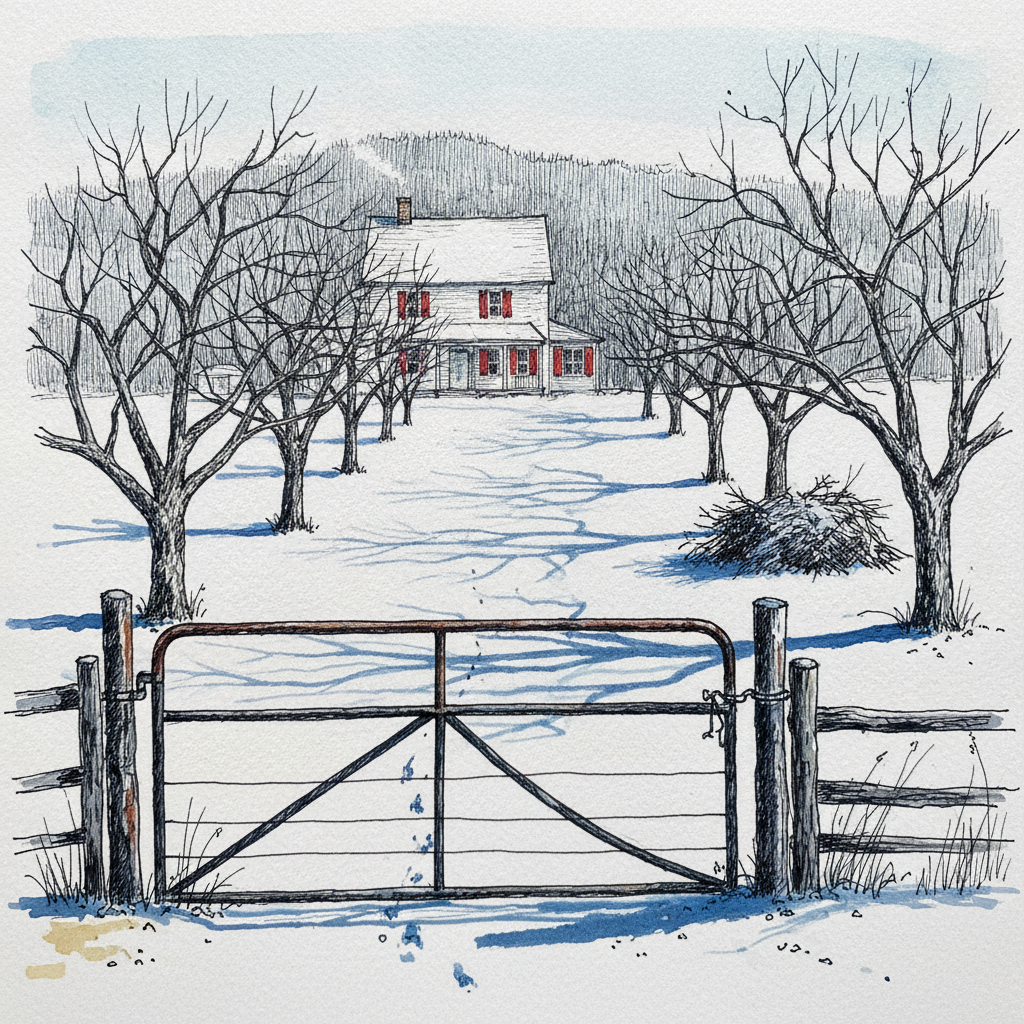
Piece 3 — New Hampshire orchard winter skeleton, USA
Pen + Watercolor · Loose pen and watercolor line-and-wash
Three takes
Focus for this piece
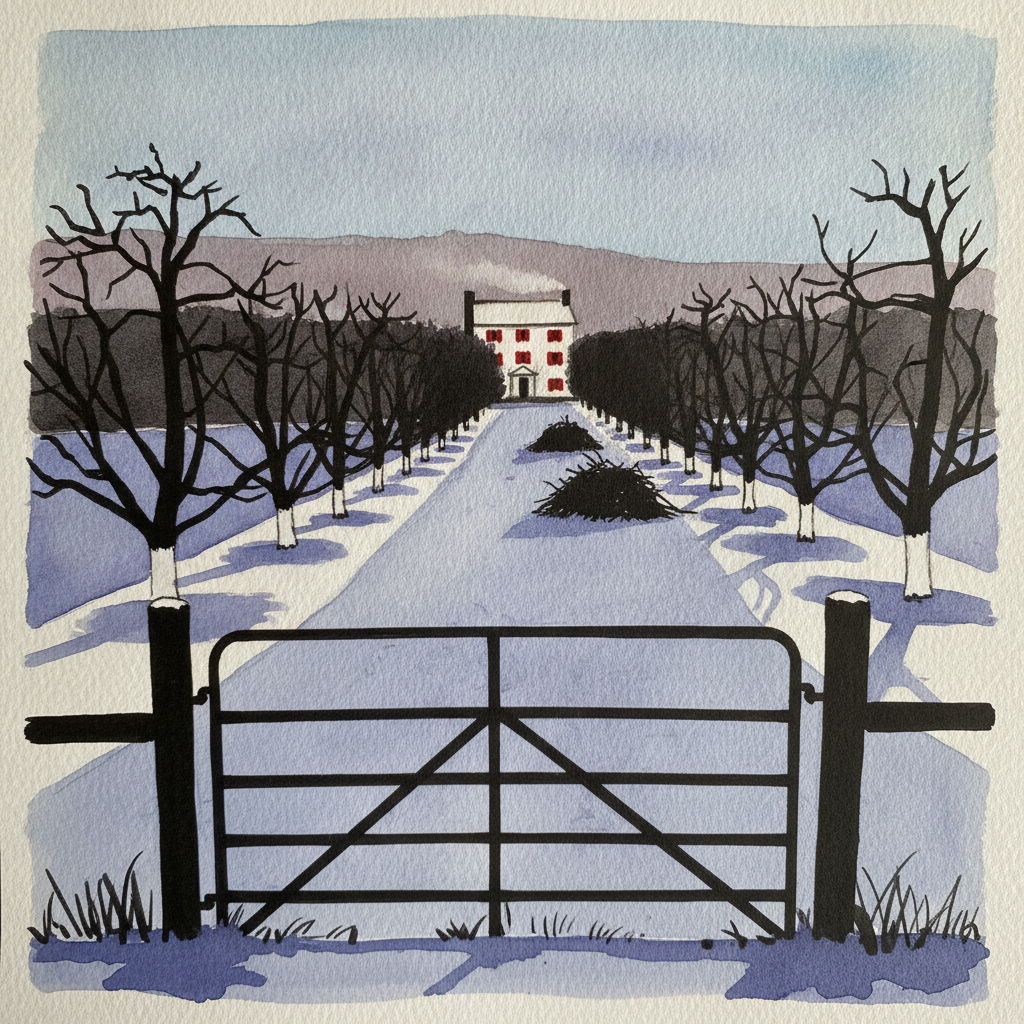
This piece is an excellent study for rendering depth through varied line weight and expressive calligraphic ink work for the orchard's "skeletal" trees. Focus on allowing the intricate dark lines of the foreground gate and middle-ground branches to stand in sharp contrast against the snow. For the expansive white ground, capture the low afternoon sun by using carefully placed, diluted washes of cool blue to define the long shadows and create dimension.
Piece 4 — Alcazaba, Granada, Spain
Pen + Watercolor · Loose pen and watercolor line-and-wash
Three takes

Focus for this piece
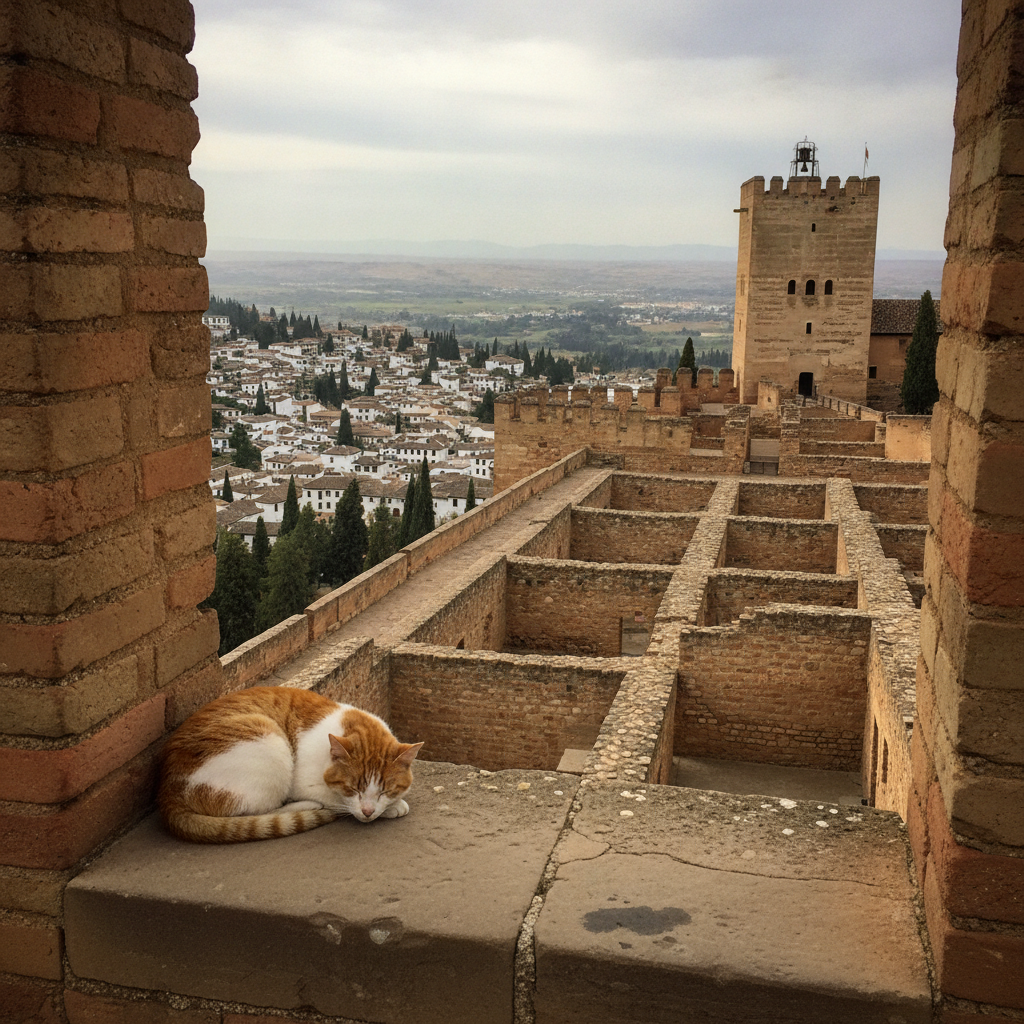
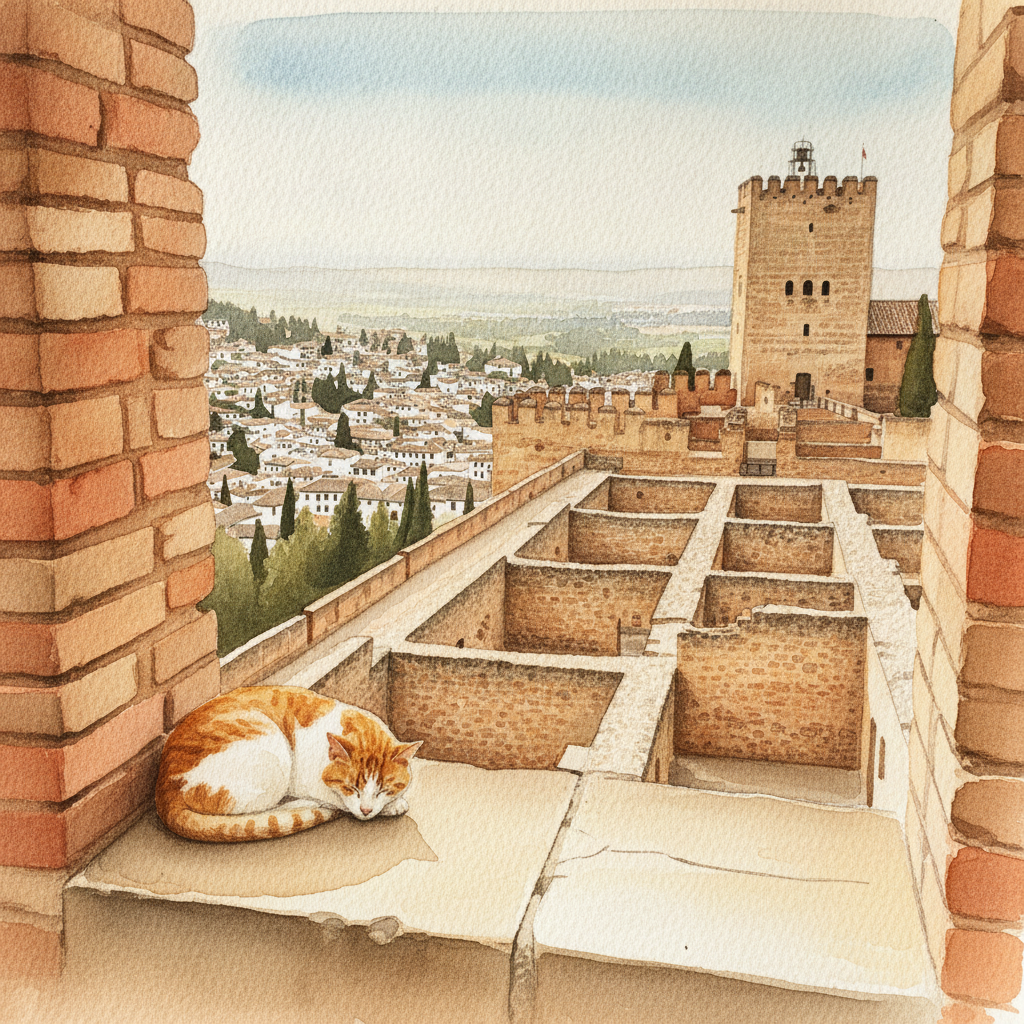
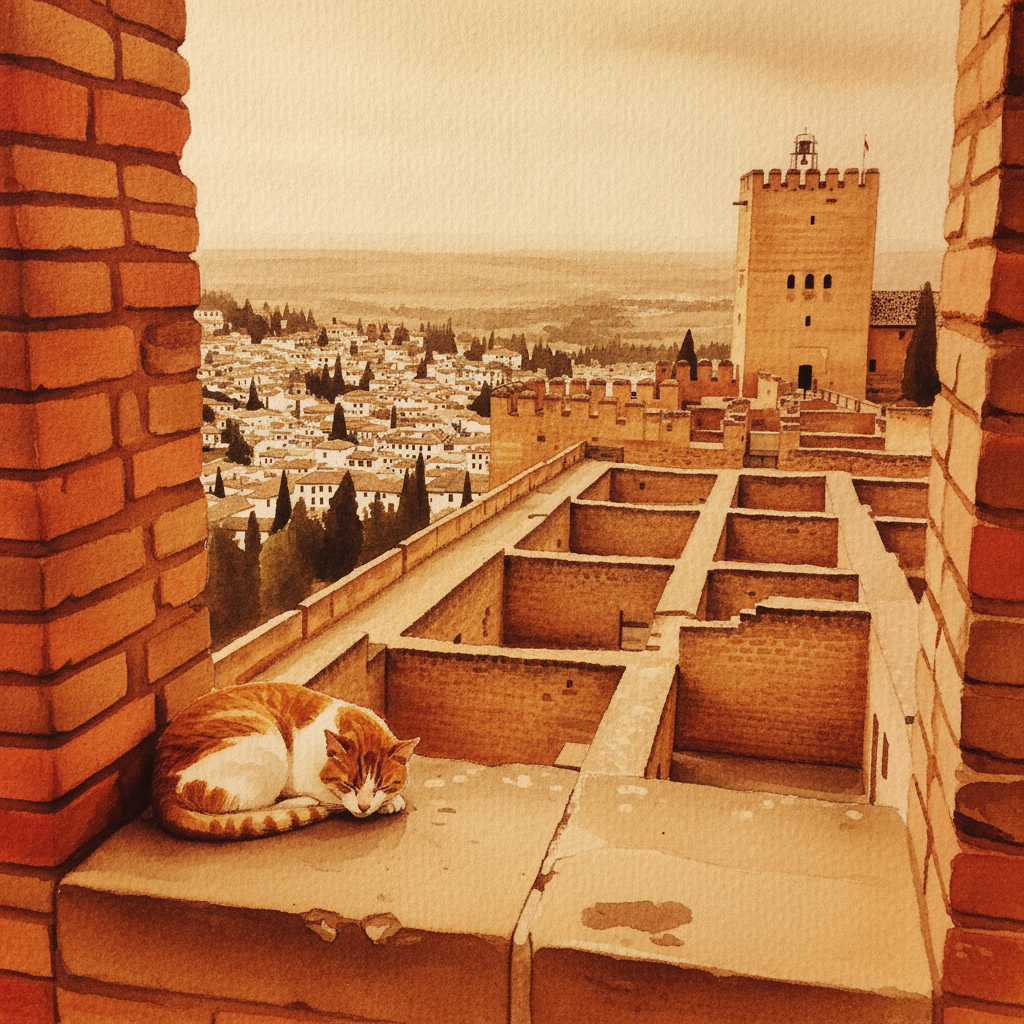
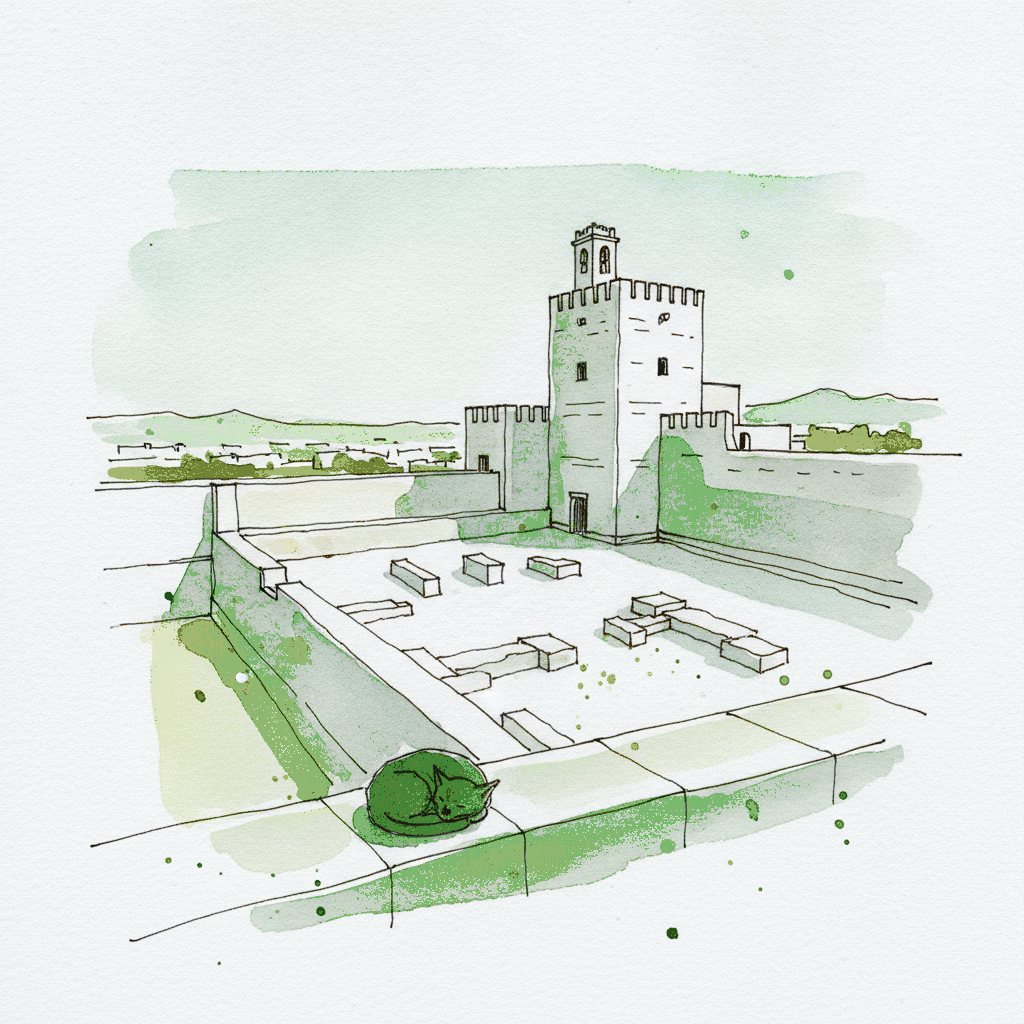
This piece offers an excellent opportunity to study how varied ink line weights can define robust architectural forms and create depth. Use strong, decisive lines for the main red sandstone walls and the prominent square keep of the Torre de la Vela, contrasting them with lighter, broken lines for the subtle barracks foundations and distant city elements. Then, apply warm, granulating washes, perhaps with a wet-on-dry technique for the textured stone, to evoke the "warm stones" and infuse the scene with Mediterranean light and atmosphere. Pay attention to how the watercolor softens the ink's precision while enhancing its structural impact.
Piece 5 — Marseille from the Notre-Dame de la Garde Hill
Pen + Watercolor · Loose pen and watercolor line-and-wash
Three takes

Focus for this piece
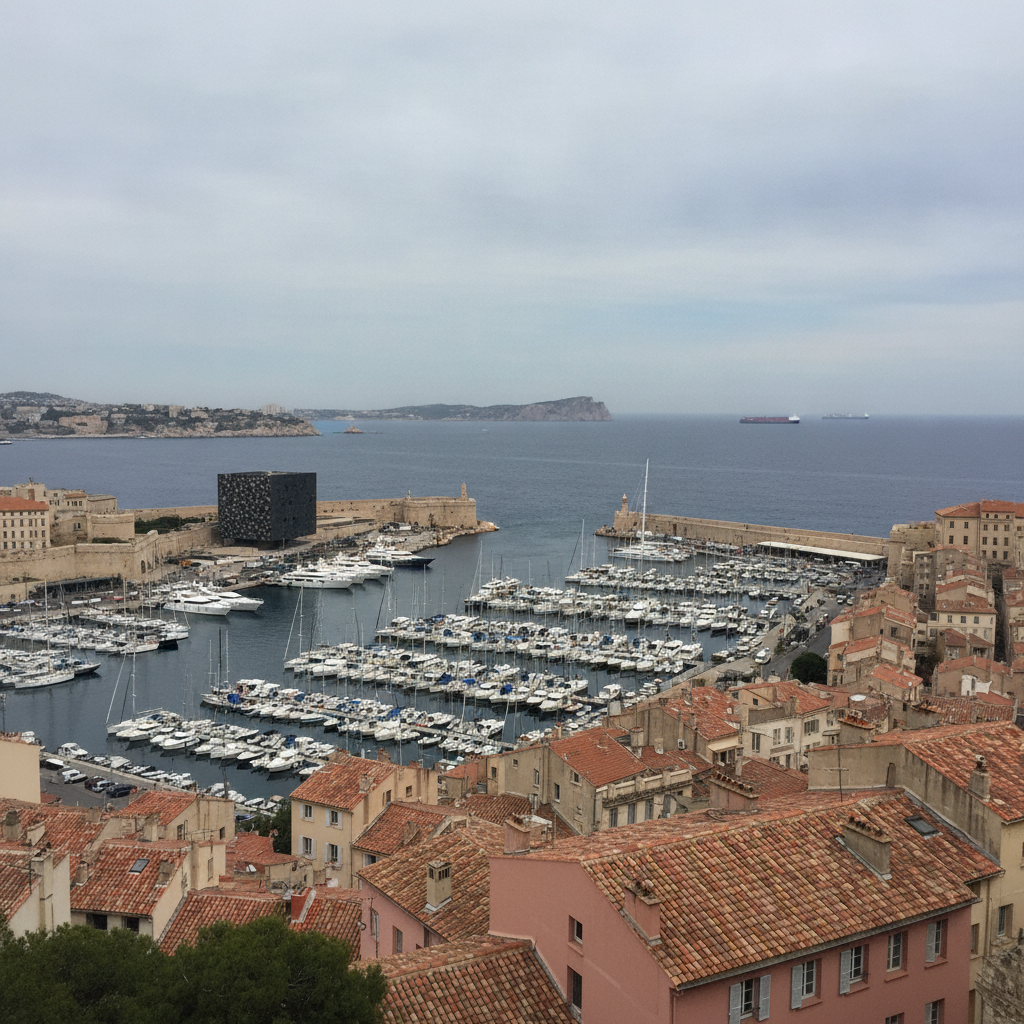
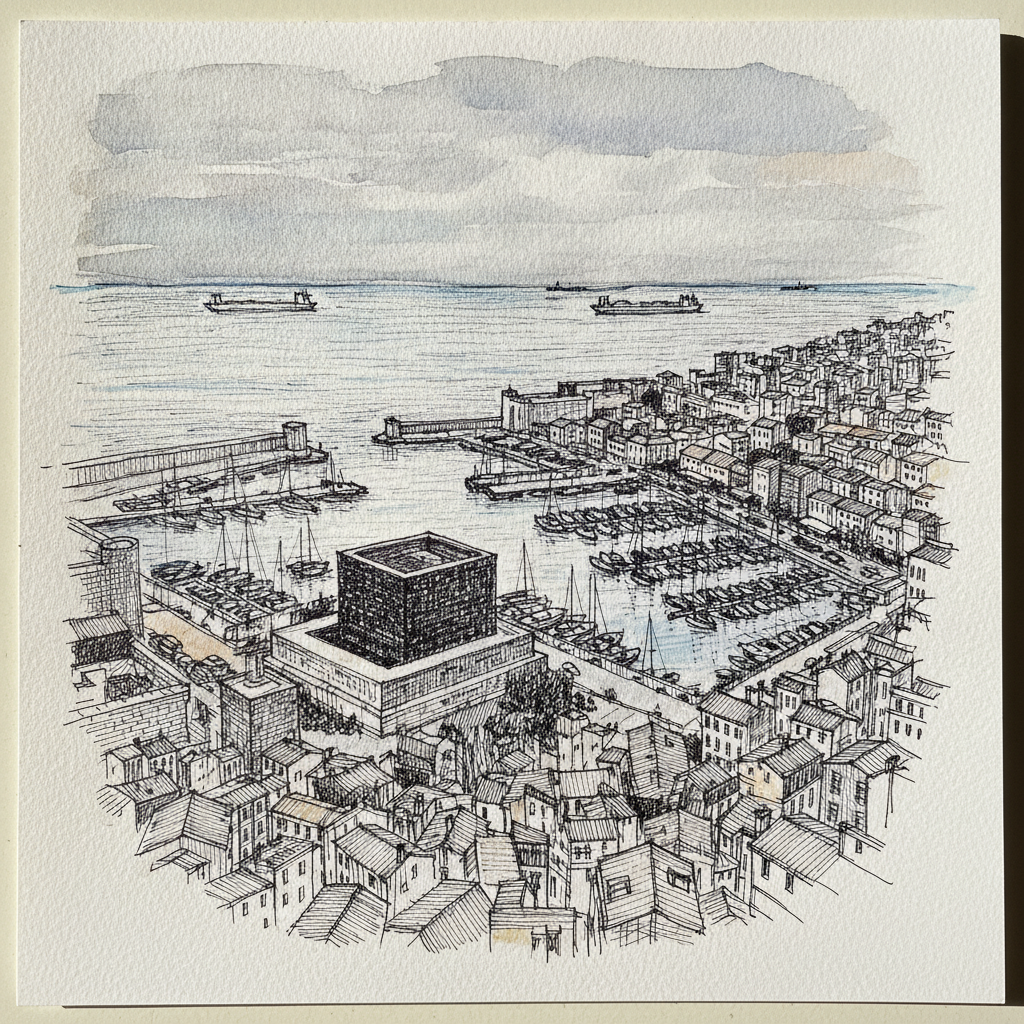
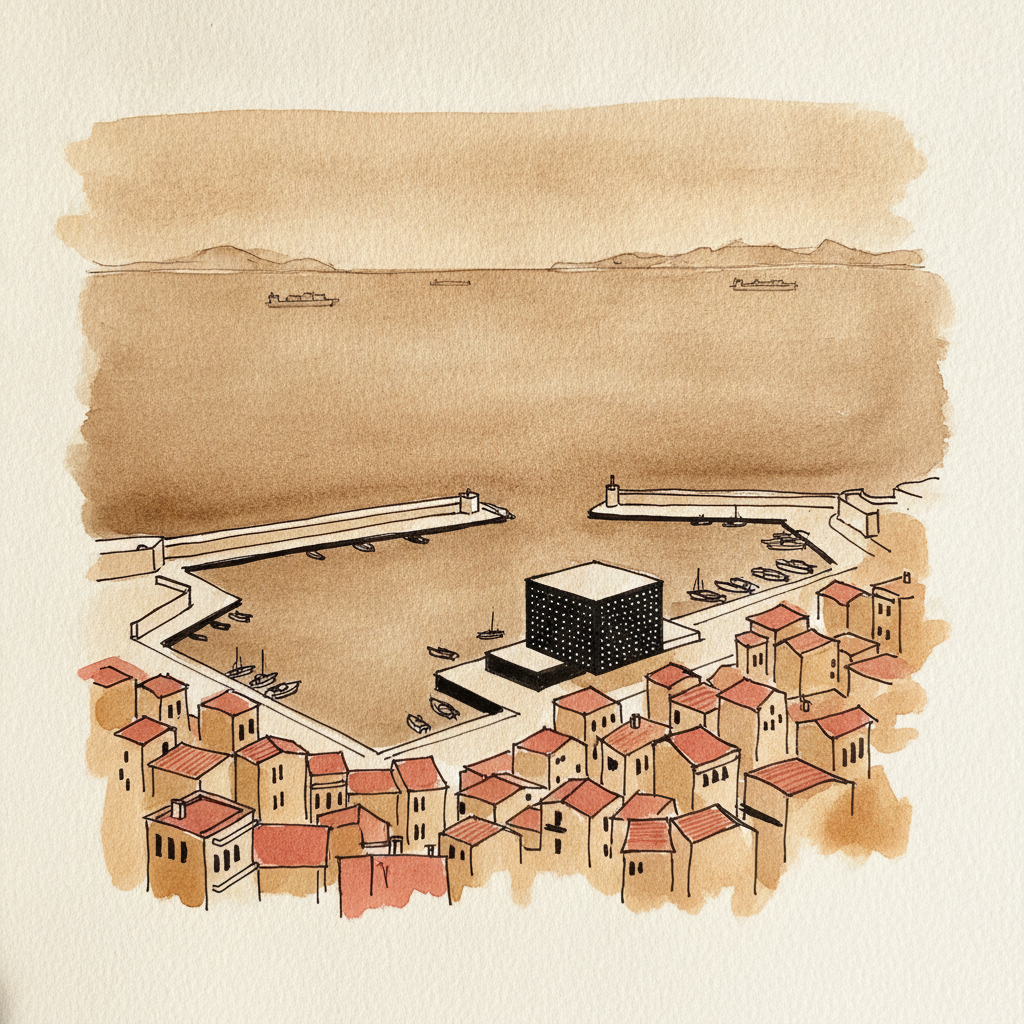
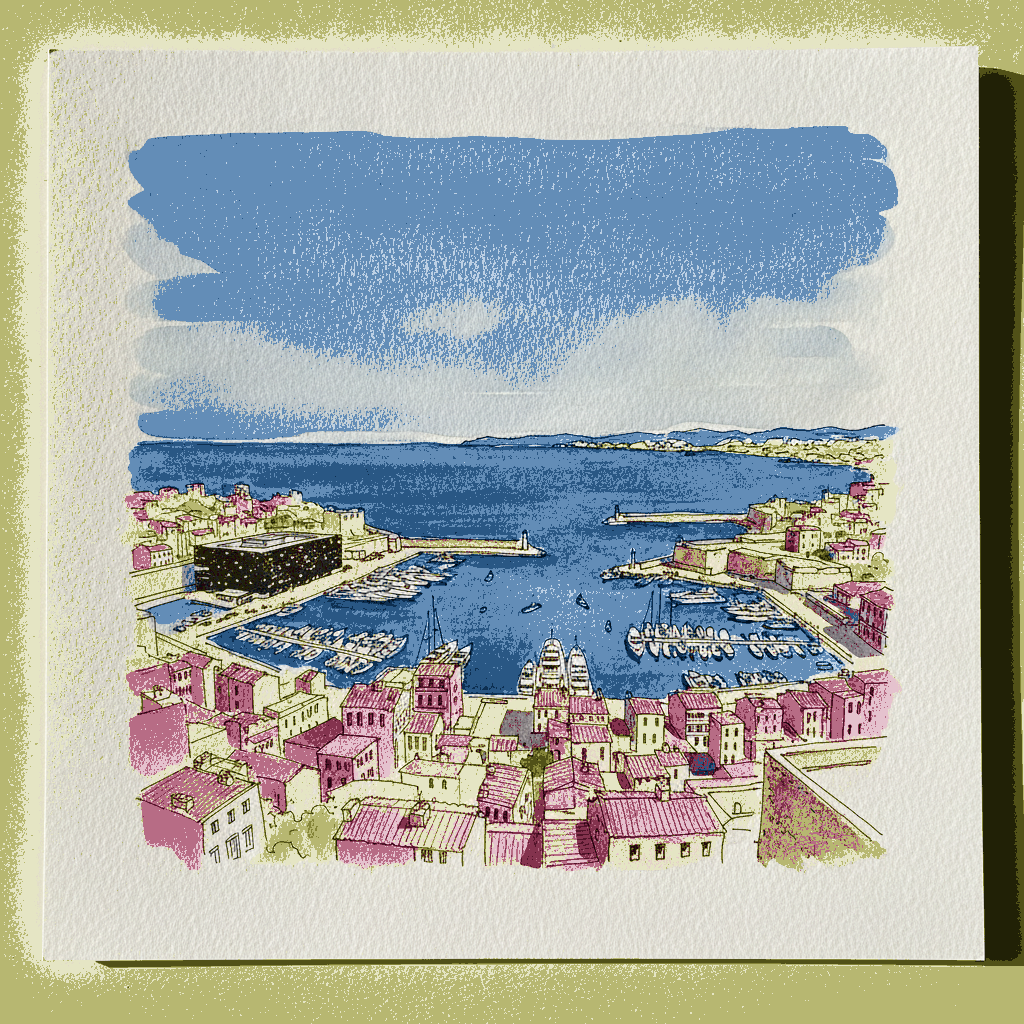
This piece offers a fantastic opportunity to practice defining varied geometric forms, from the sharp rectangular harbor to the distinctive cube of the Mucem museum, using a confident, varied line weight. Pay close attention to how warmer washes for the Panier roofs can suggest texture and form, while cooler, lighter washes define the distant Mediterranean and container ships, effectively creating atmospheric perspective. Allow the strong ink lines to anchor the foreground details, gradually softening both line and wash as the scene recedes towards the horizon.
Piece 6 — American witch hazel
Pen + Watercolor · Loose pen and watercolor line-and-wash
Three takes

Focus for this piece
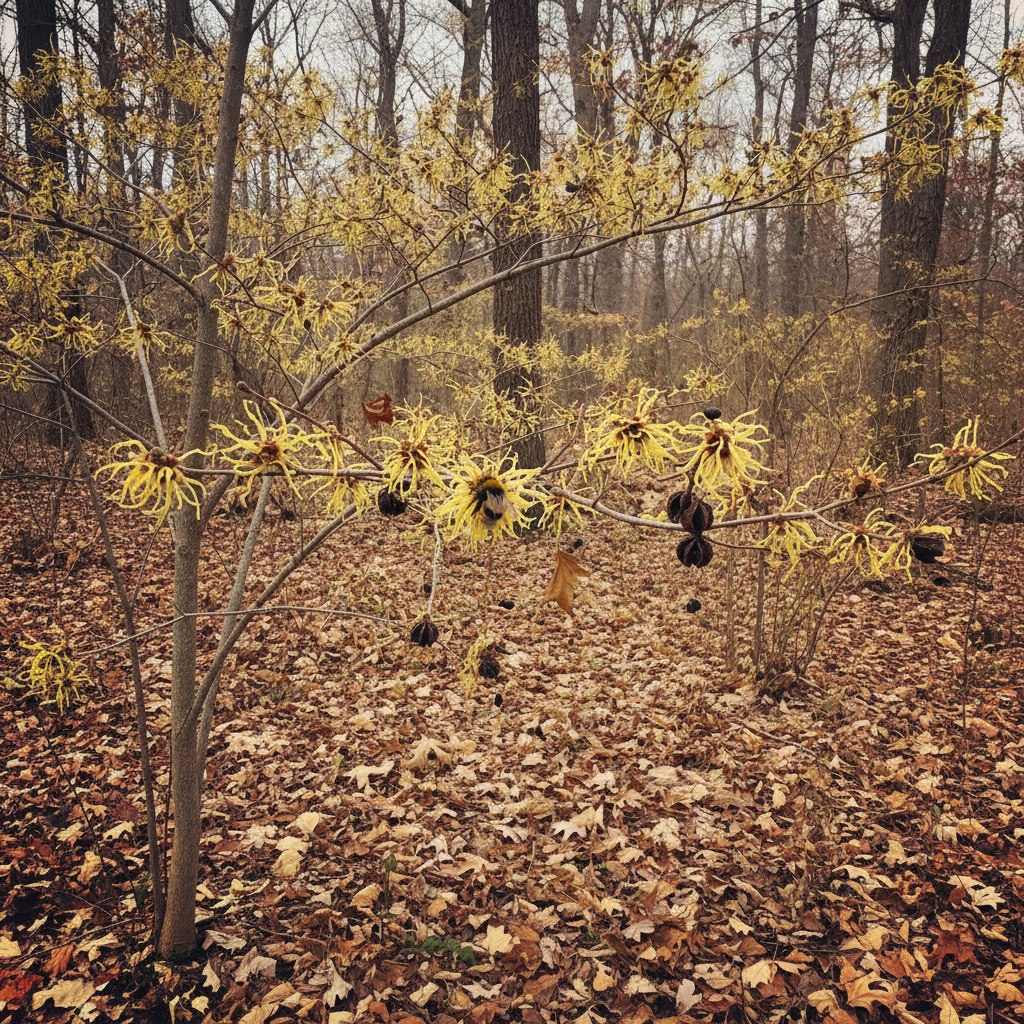
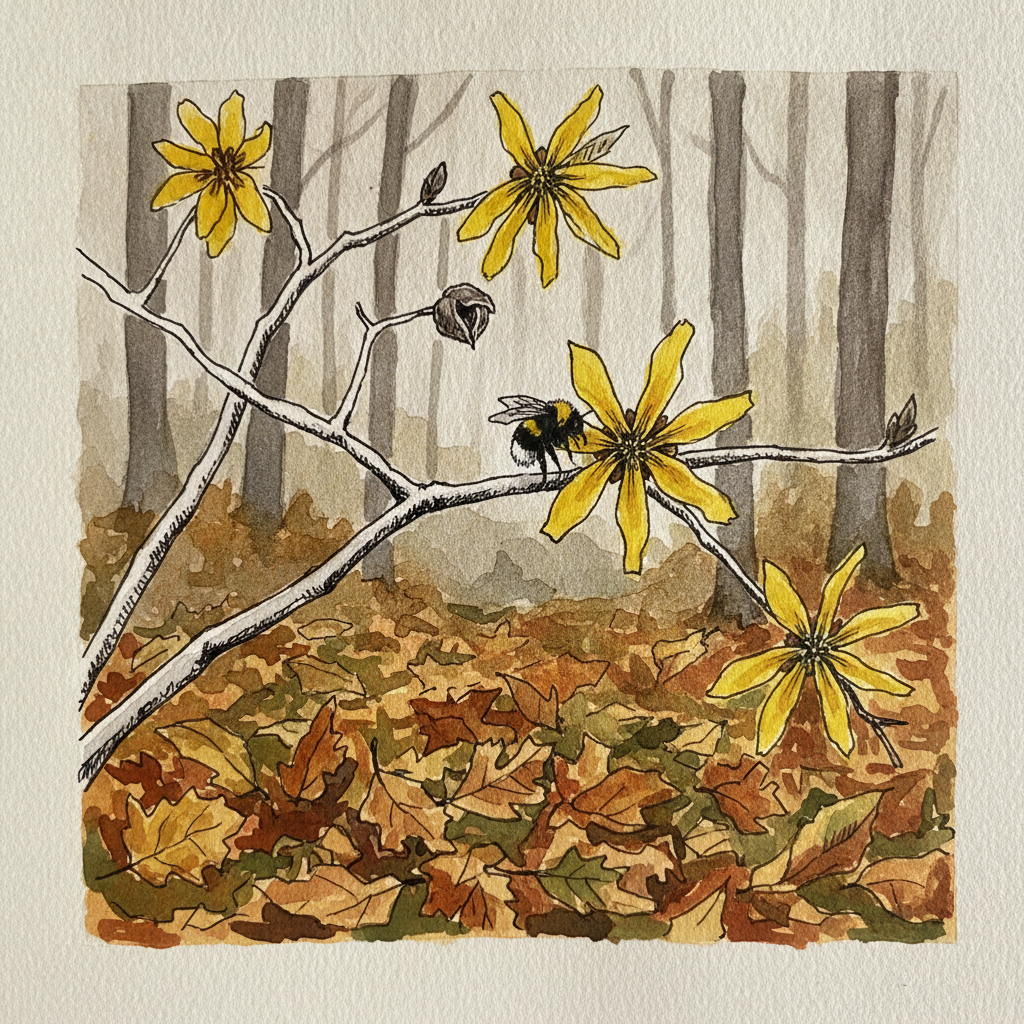
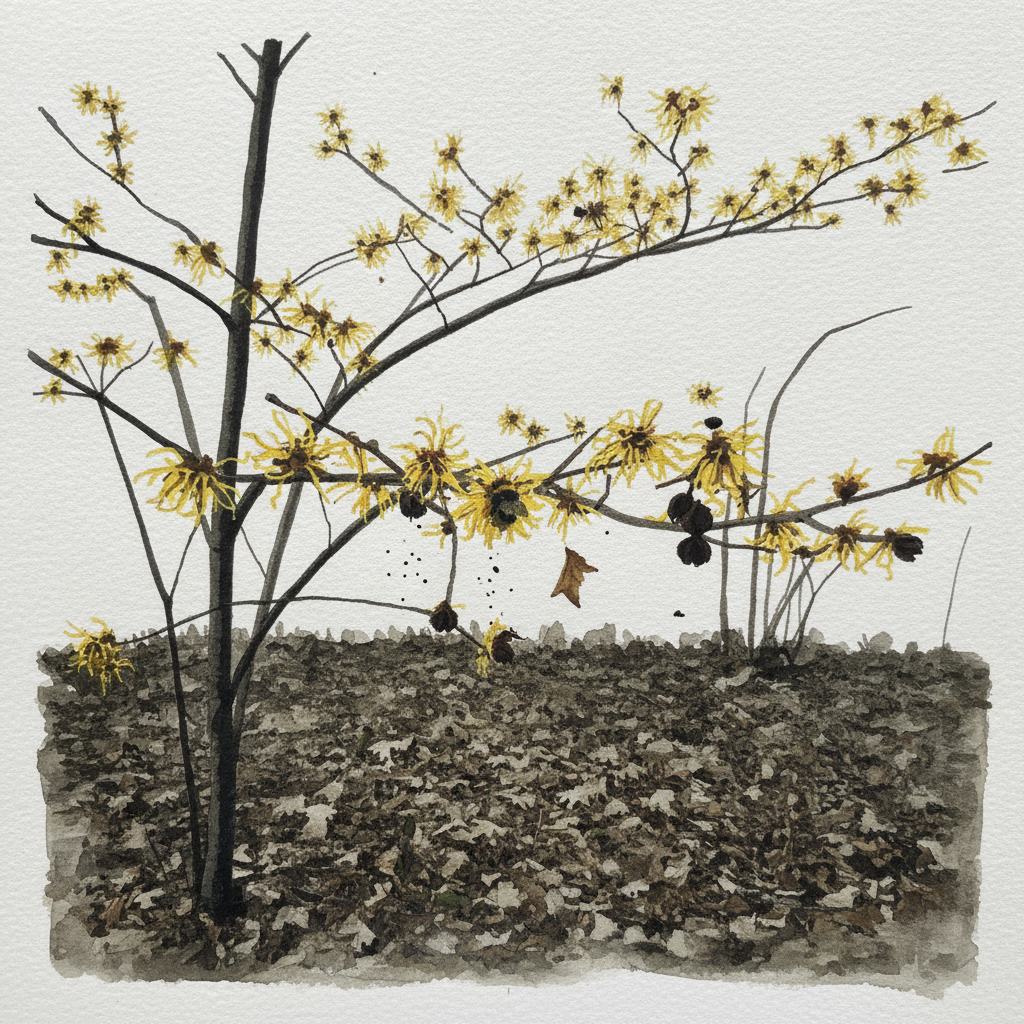
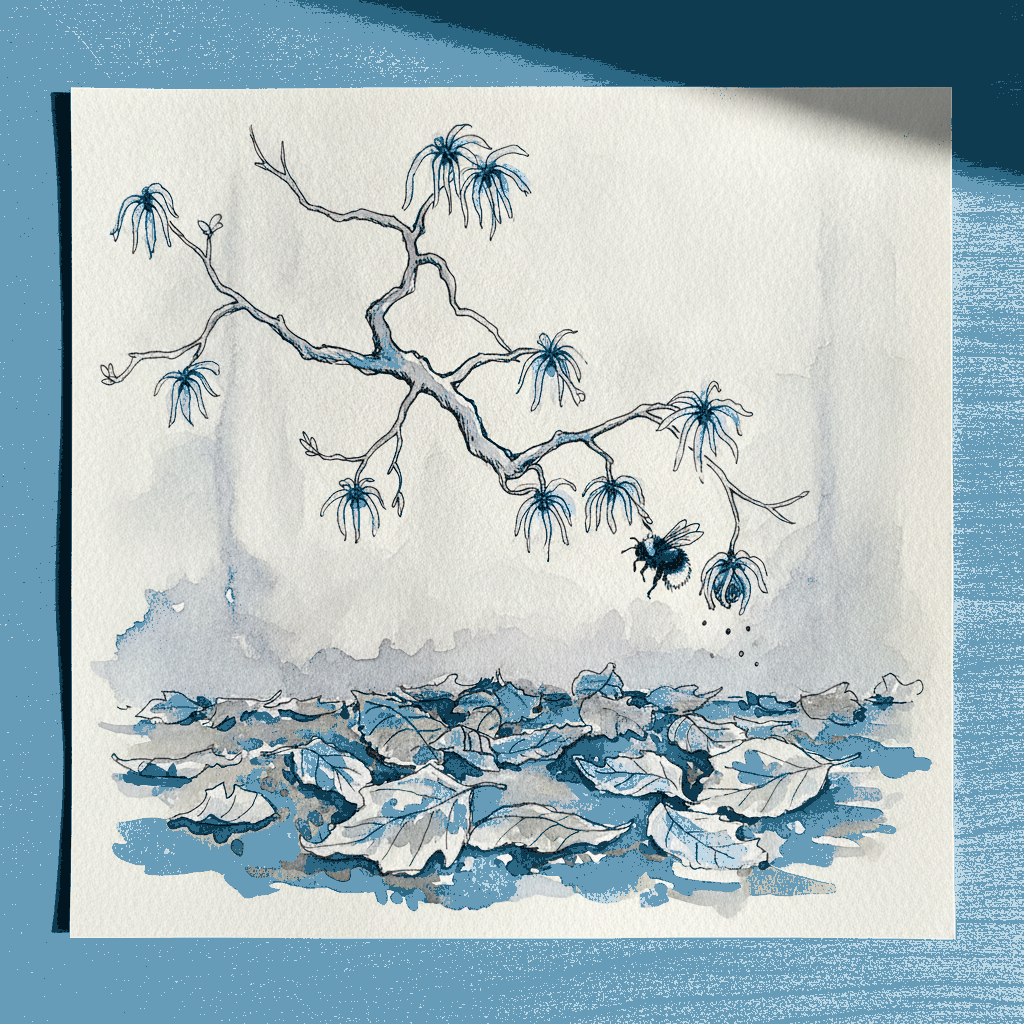
This piece offers a compelling study in contrasting precise line work with suggestive watercolor washes to capture the delicate witch hazel against its autumnal woodlot. Use fine, varied line weights to define the intricate structure of the bare branches and the unique ribbon-like petals, letting these lines provide the essential form. Then, employ soft, layered washes of muted yellow, warm browns, and subtle greys to create depth and texture for the smooth bark and the thick fallen leaves on the forest floor, allowing the watercolor to suggest atmosphere without over-defining every detail. Focus on how your ink provides decision while your watercolor creates volume and mood.
Piece 7 — Texas Pasture Pole
Pen + Watercolor · Loose pen and watercolor line-and-wash
Three takes
Focus for this piece
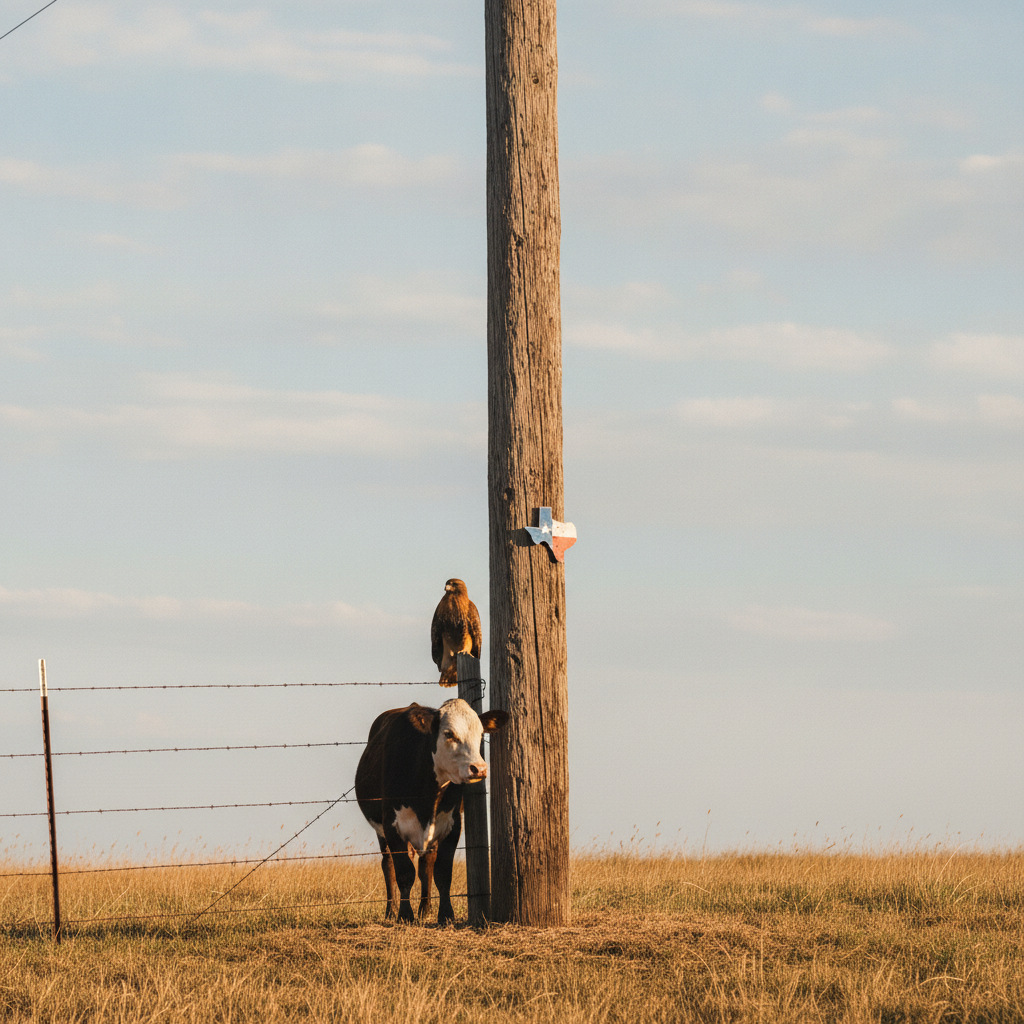
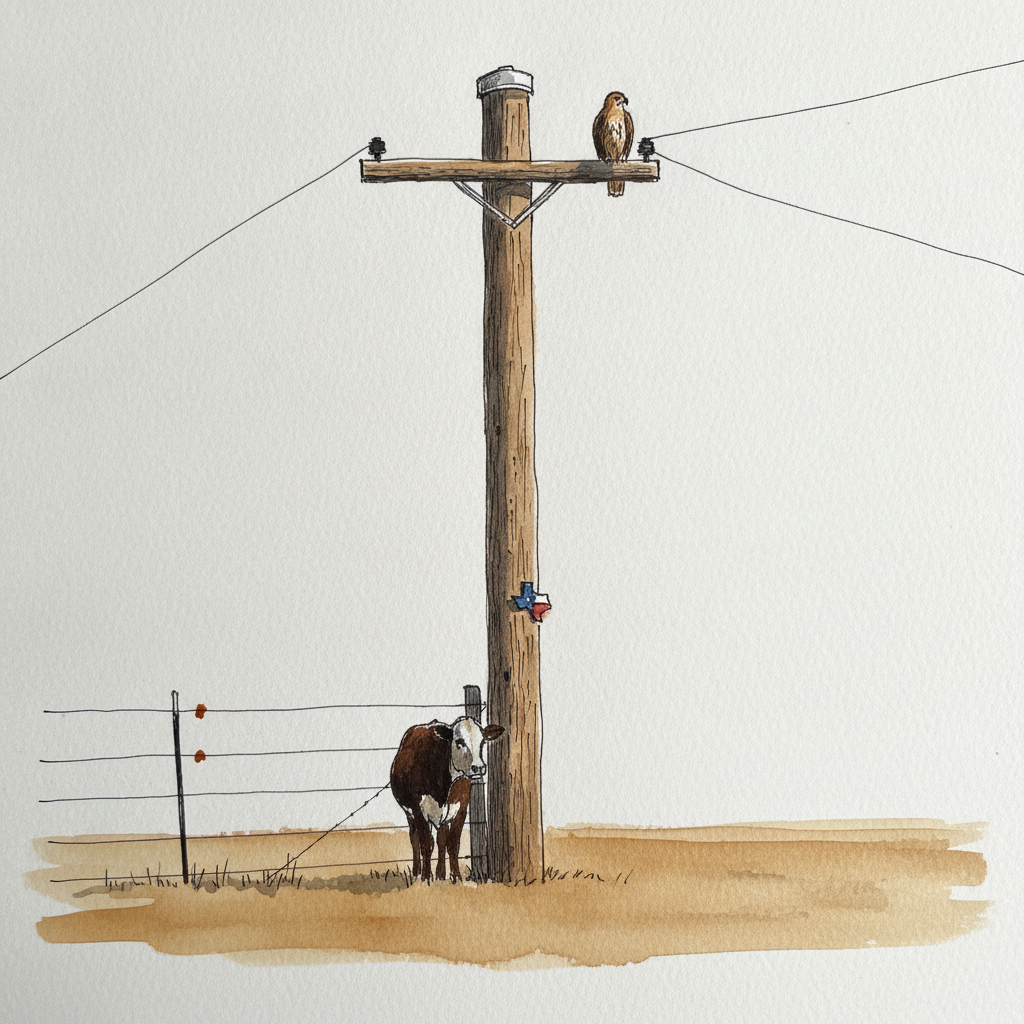
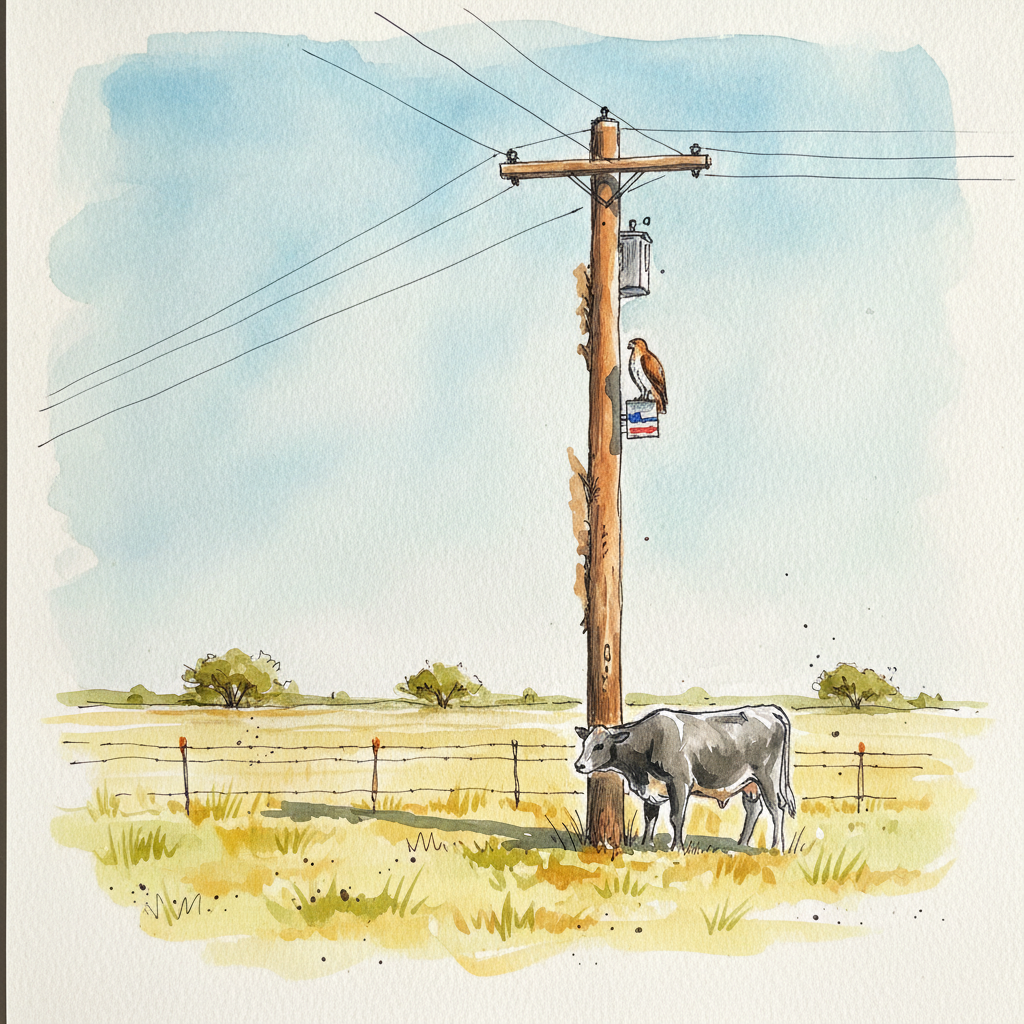
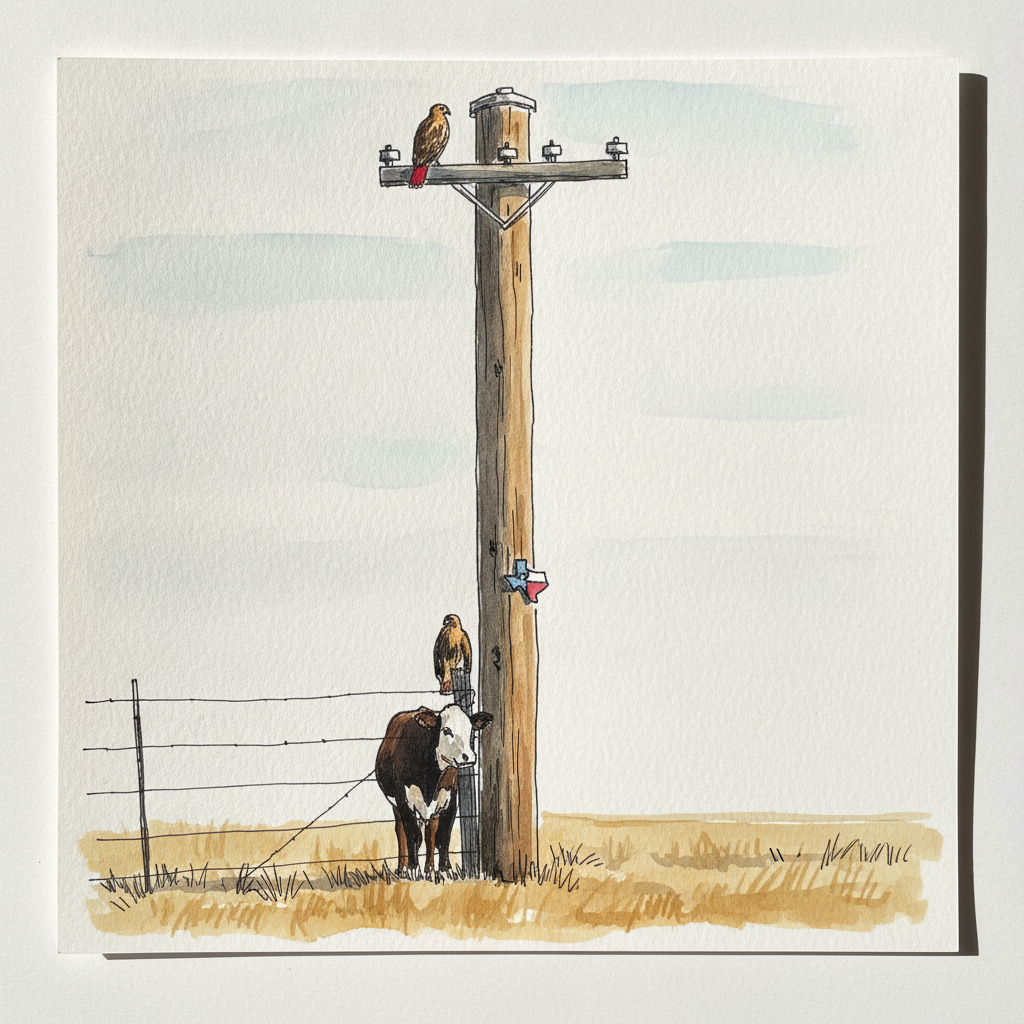
Today's piece is an excellent study in rendering **contrasting textures** through the interplay of varied line weights and controlled watercolor washes. Focus on using strong, broken lines and subtle dry-brush applications to articulate the sun-checked scales of the pole, while employing finer, more consistent lines to define the taut wires and the precise form of the gleaming transformer cap. Practice softening warm washes into the rusted U-staples and allowing looser, more atmospheric washes to suggest the sun-baked Bermuda grass. This will help you define distinct surfaces while maintaining a cohesive, atmospheric feel under the honey-warm light.
Piece 8 — Late autumn branch with single clinging berry
Pen + Watercolor · Loose pen and watercolor line-and-wash
Three takes

Focus for this piece
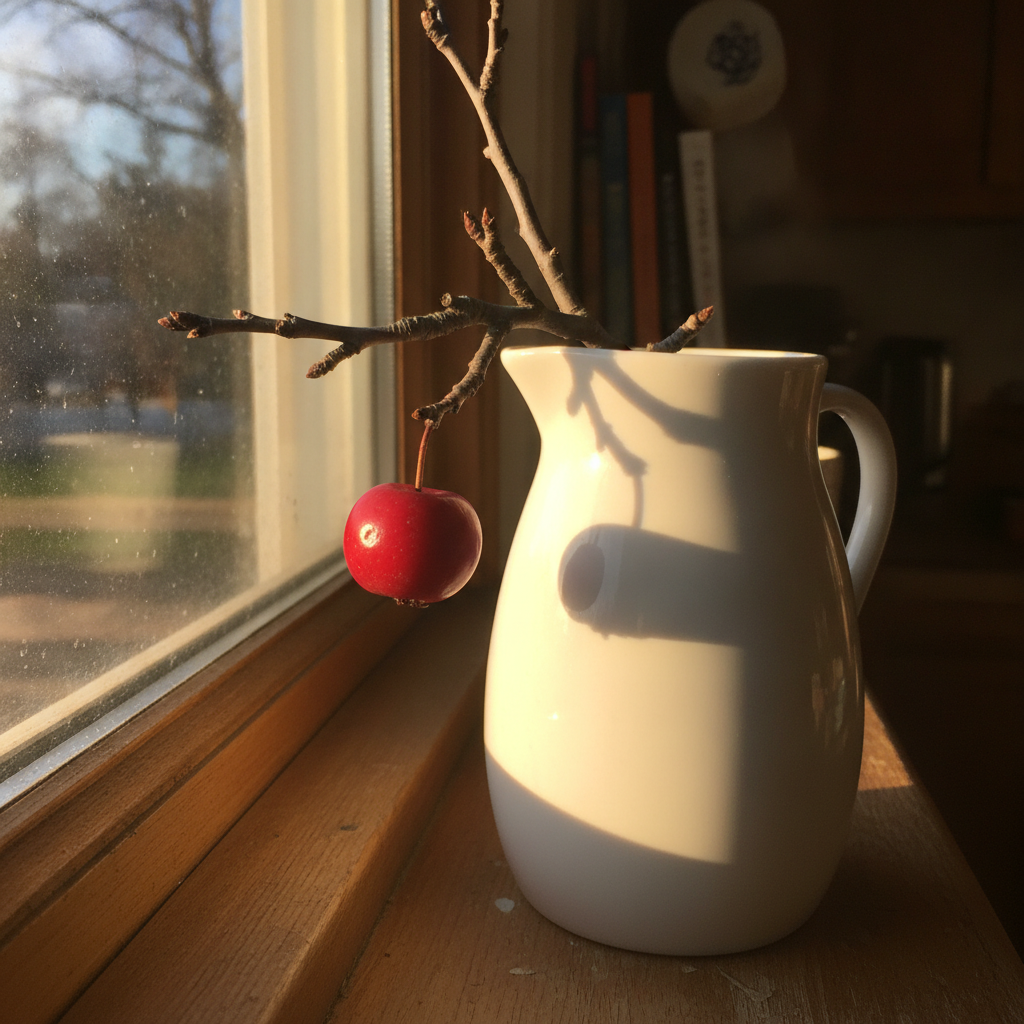
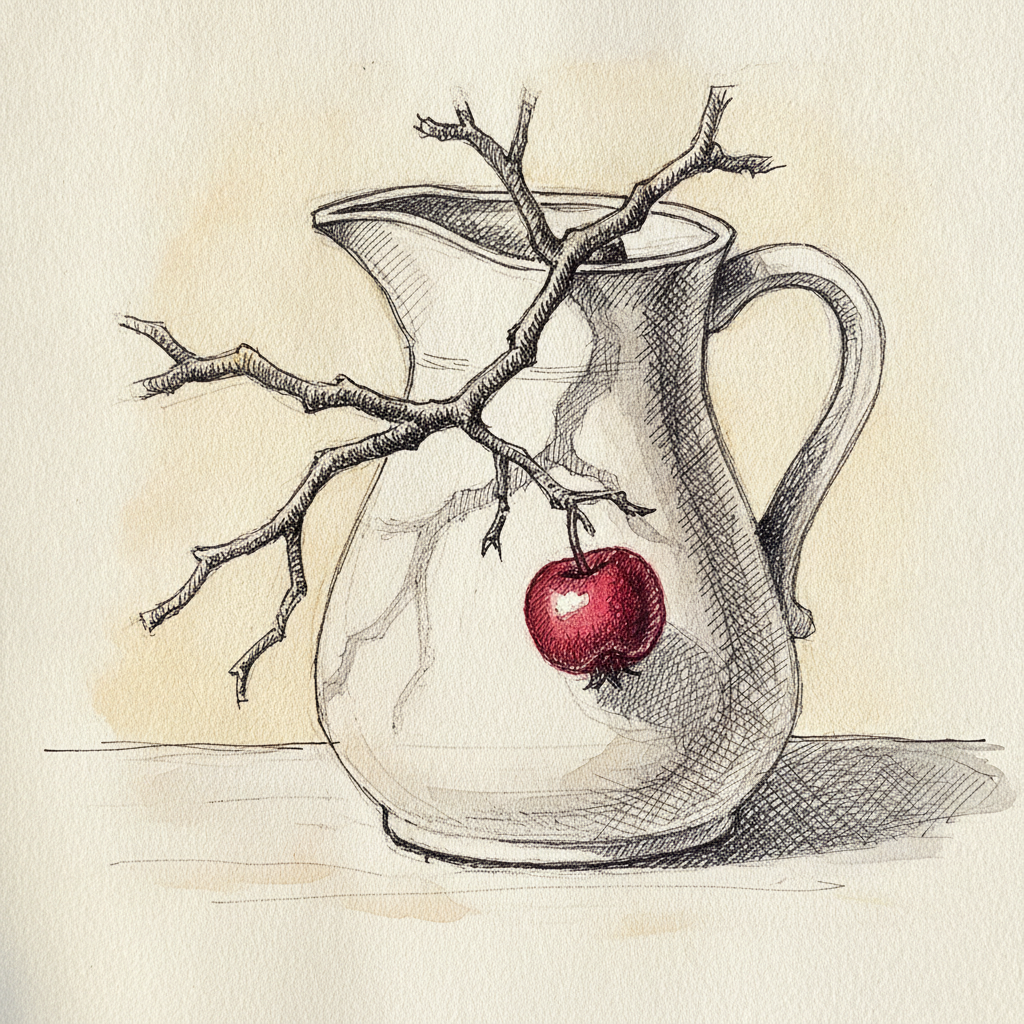
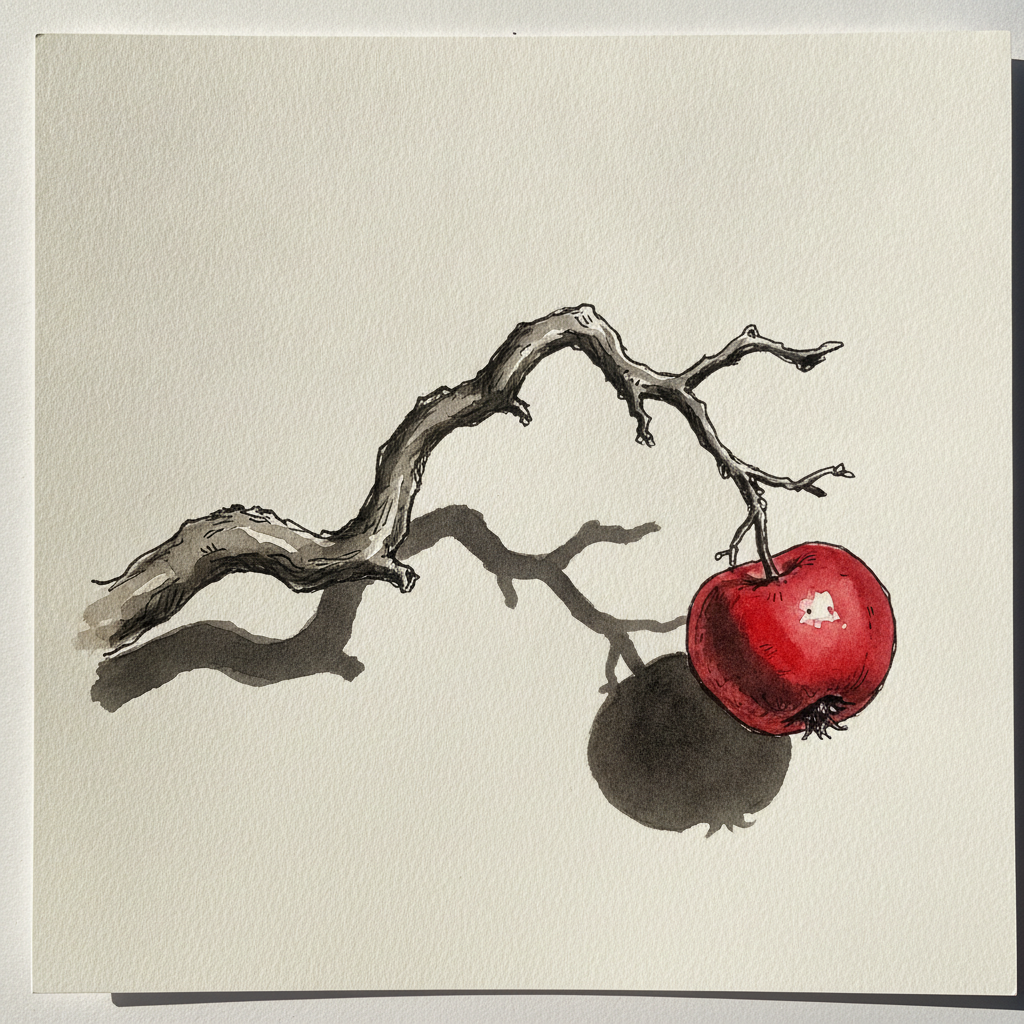
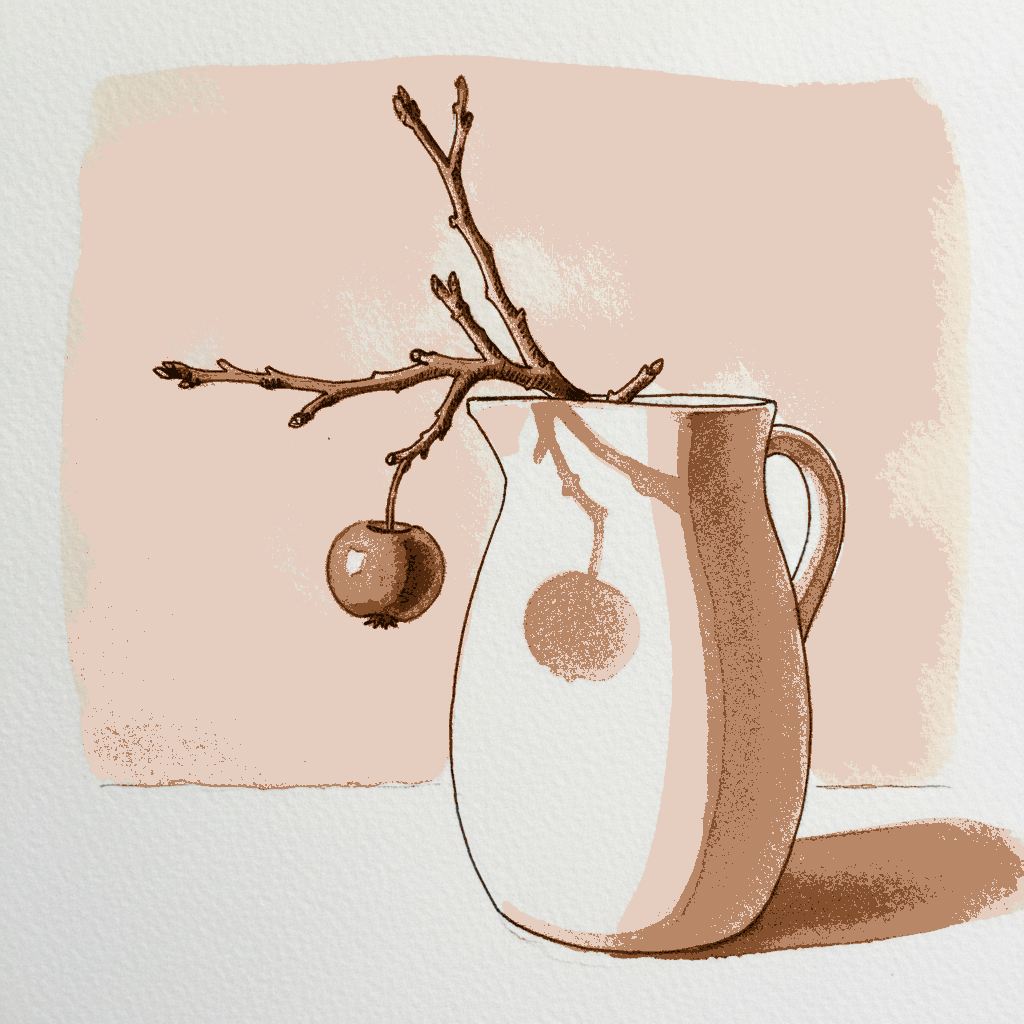
This piece offers a compelling study in capturing the interplay of texture and light using carefully chosen pen lines and washes. Focus on distinguishing the gnarled, textured bark of the bare branch with varying, organic line weights and broken pen strokes, contrasting it sharply with the clean, smooth contours of the white pitcher. Pay particular attention to the bright red crabapple as your single vibrant color accent, using a rich, focused wash to make it pop against the muted palette of greys and browns. Finally, use crisp pen lines and a precise, light wash to define the sharp graphic shadow cast across the pitcher, emphasizing the low, slanting light.