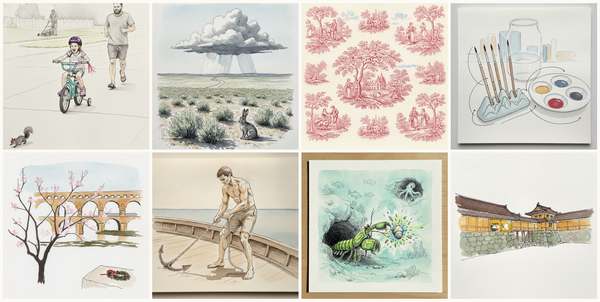
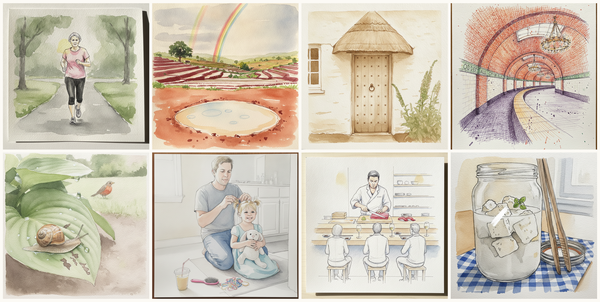
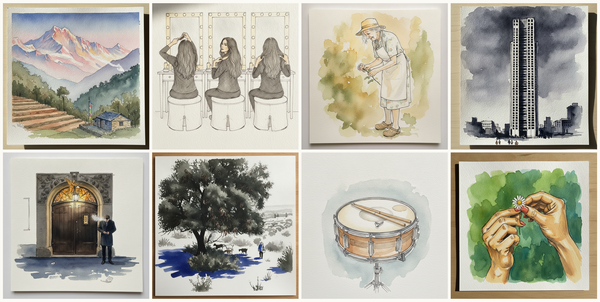
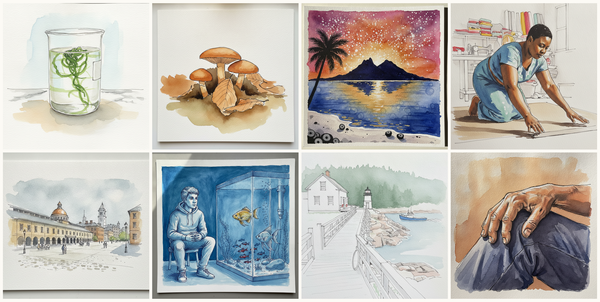
Woman, 40s, white, mature athletic build, both hands behind back on a barre, Black Hills foothills grasslands — Custer County, South Dakota, Lightning whelk, sinistral spiral, Cedar of Lebanon, and more — pen + watercolor for October 6, 2026
AI-generated daily art-practice references for pen and watercolor: Woman, 40s, white, mature athletic build, both hands behind back on a barre, Black Hills foothills grasslands — Custer County, South Dakota, Lightning whelk, sinistral spiral, Cedar of Lebanon, Riomaggiore, Cinque Terre, Liguria…
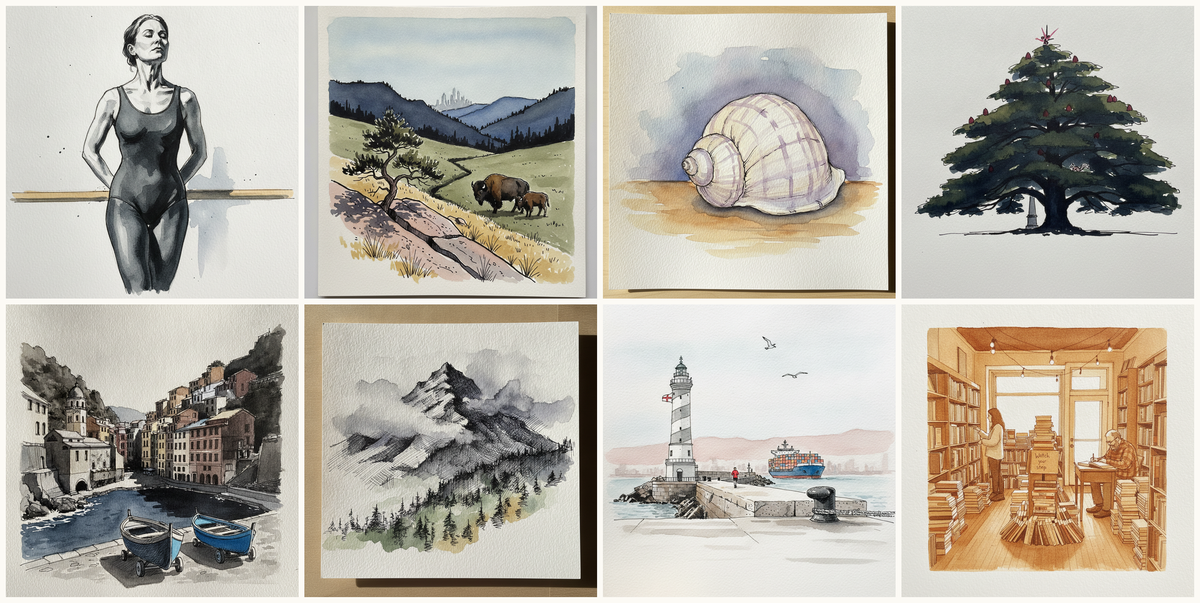
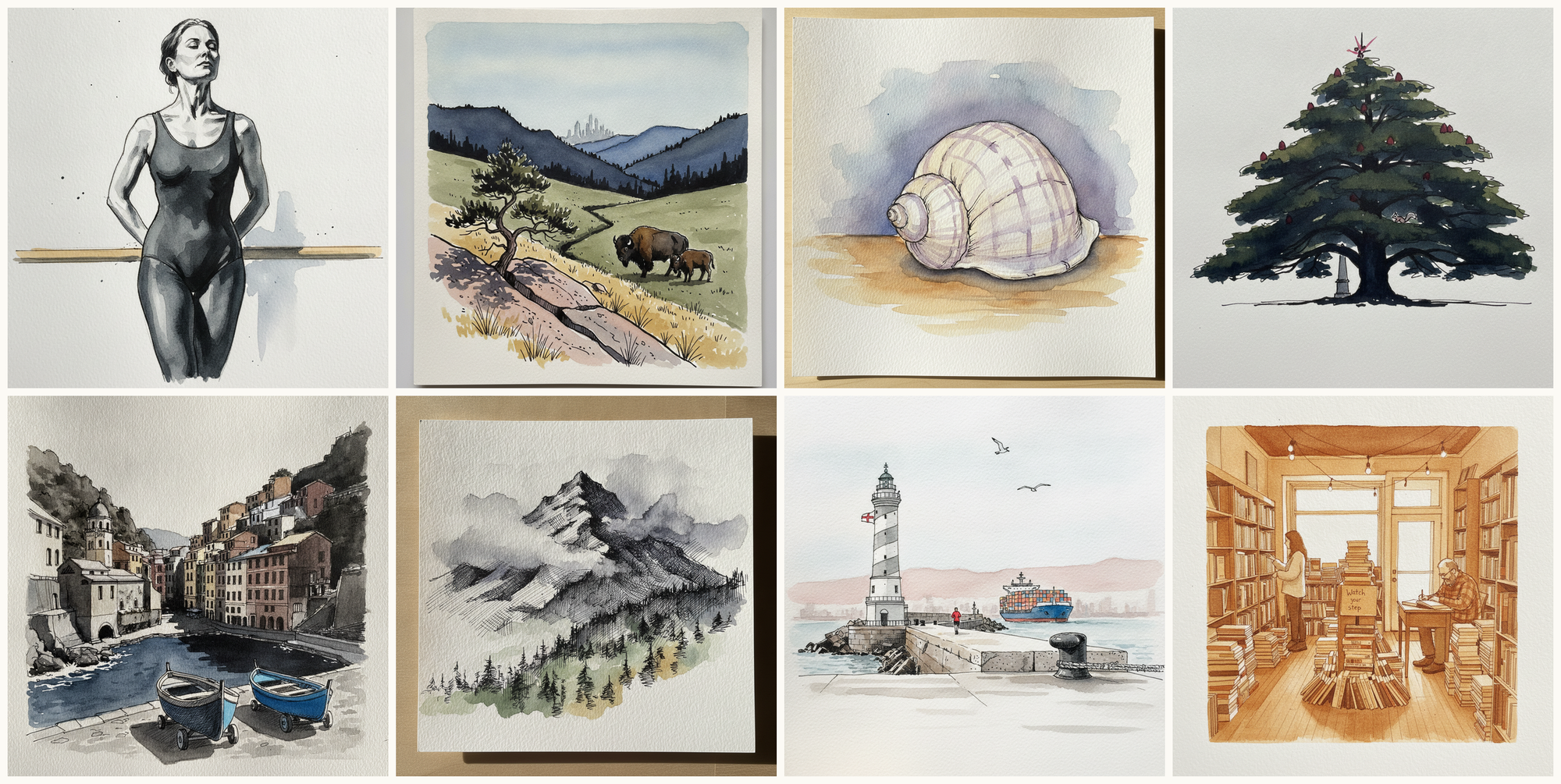
Today's 8 pen-and-watercolor pieces: Woman, 40s, white, mature athletic build, both hands behind back on a barre, Black Hills foothills grasslands — Custer County, South Dakota, Lightning whelk, sinistral spiral, Cedar of Lebanon, Riomaggiore, Cinque Terre, Liguria, Italy, Mountain Fog Lifting, The Lighthouse Mole at Genova, Used bookstore with stacks. Each piece comes with an AI-generated photoreal reference, three AI-generated example artworks in different treatments, and a short focus paragraph naming what to study in this one.
Why these references use AI
This daily series uses AI-generated images as practice prompts, not as finished artwork to copy. Each subject starts with a synthetic photoreal reference generated with Gemini/Nano Banana, then moves into three pen-and-watercolor interpretations of the same subject.
I use AI here because daily art practice needs variety and low friction. Real life can get repetitive, busy, or visually narrow. These generated reference sets make it easier to study bodies, buildings, animals, landscapes, objects, gestures, light, palettes, and compositions that might not show up in an ordinary day.
The goal is not to reproduce any image directly. Treat each set as a starting point for observation and study: choose what interests you, change the framing, simplify the subject, alter the palette, and make your own version.
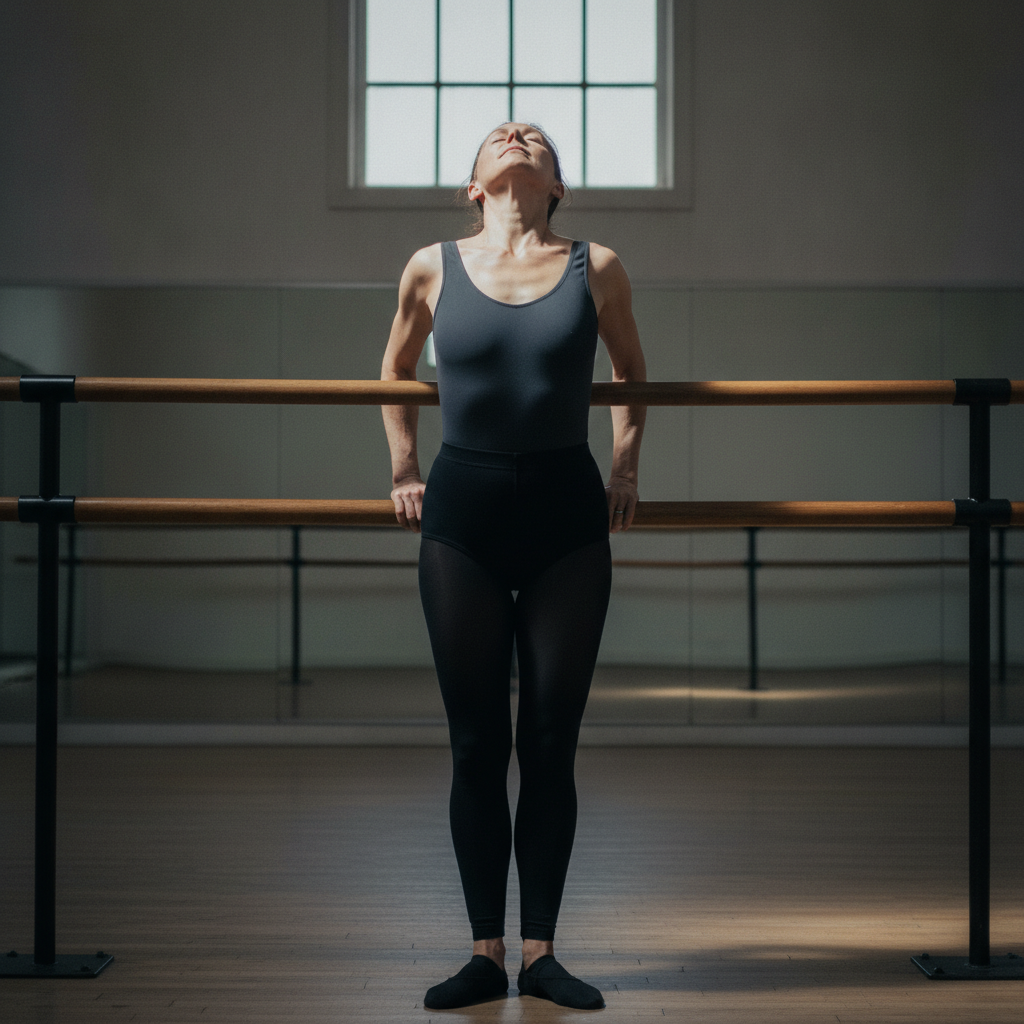
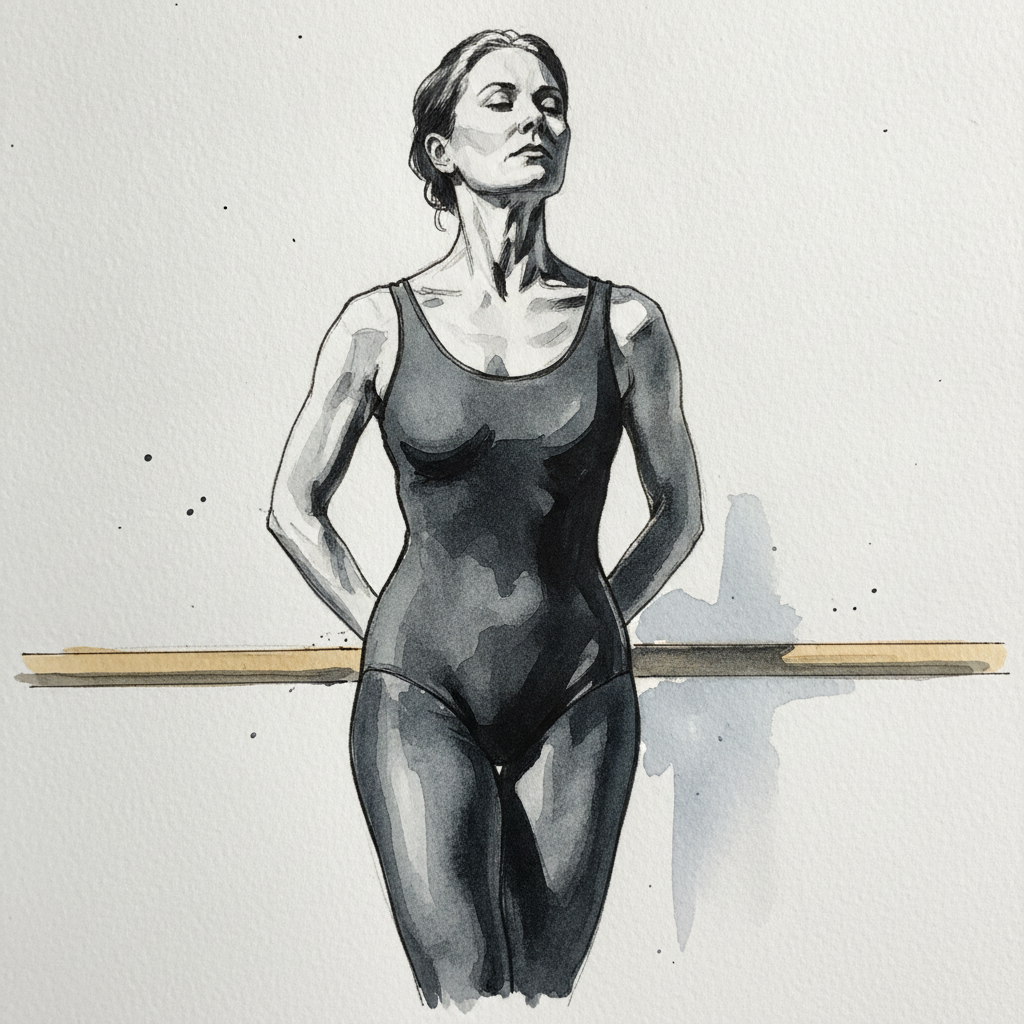
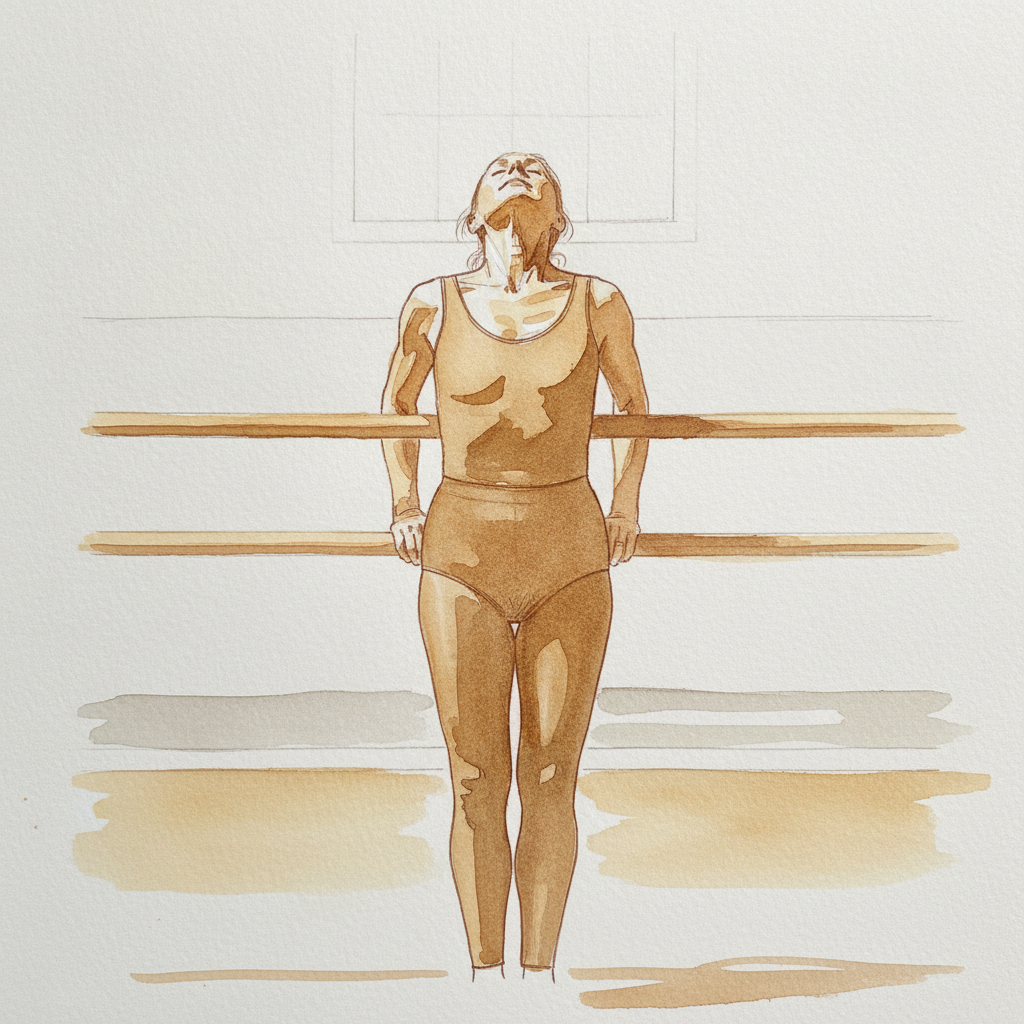
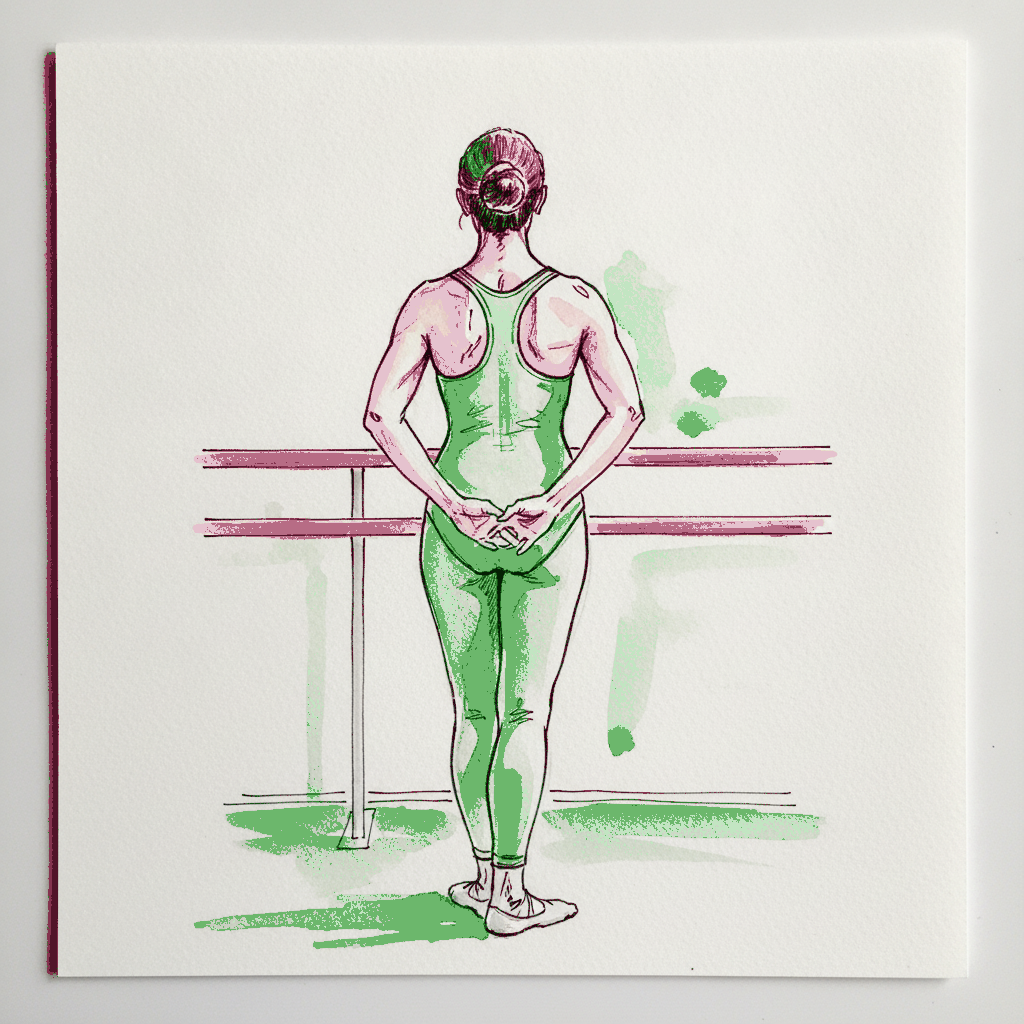
Piece 1 — Woman, 40s, white, mature athletic build, both hands behind back on a barre
Pen + Watercolor · Loose pen and watercolor line-and-wash
Three takes

Focus for this piece
This piece is excellent for exploring how strong directional light defines sculptural form on the human figure. Use varied pen line weights to emphasize the bright planes of the lifted chest and throat, reserving heavier, continuous lines for the deeper contours of the body and the hands gripping the barre. With watercolor, practice building the cool, deep shadows beneath the chin and where the shoulder blades draw together, allowing the sun-raked highlights on the skin to remain largely unpainted or very transparent.
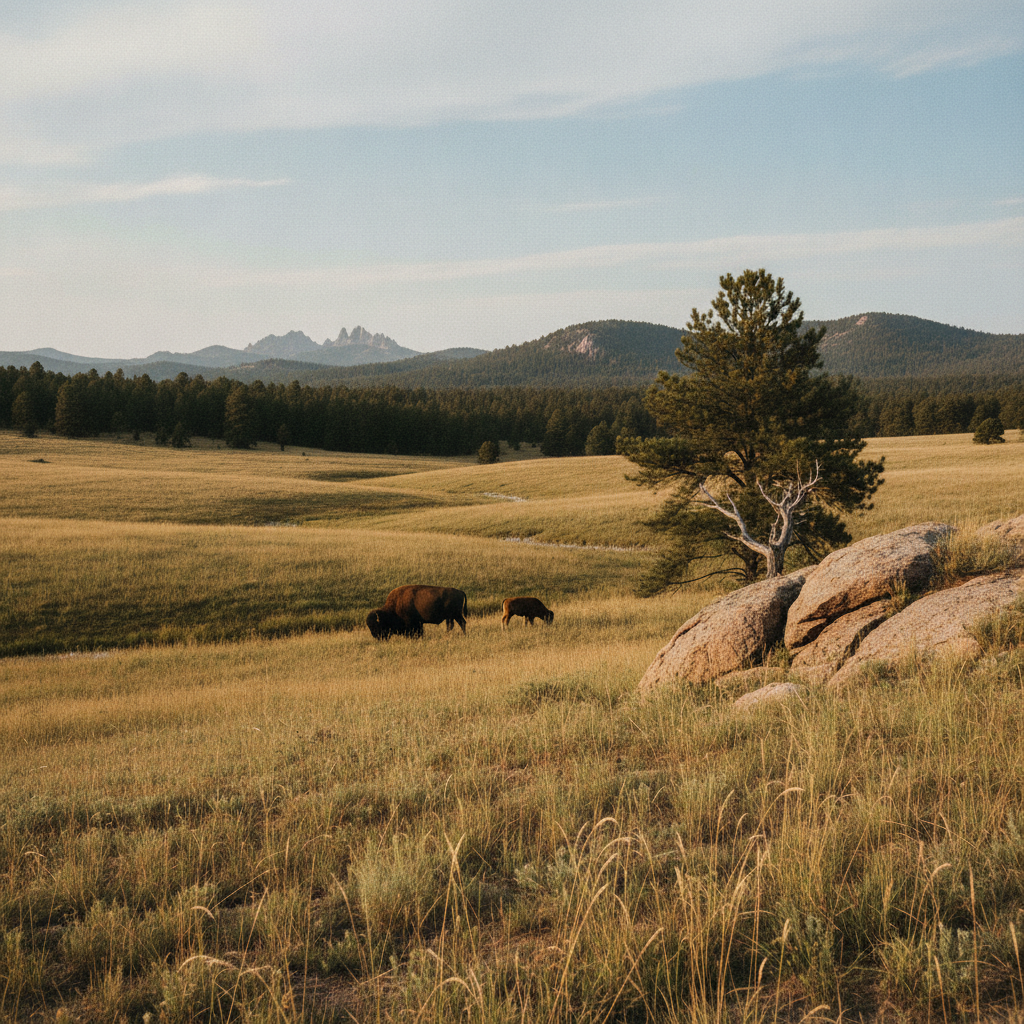
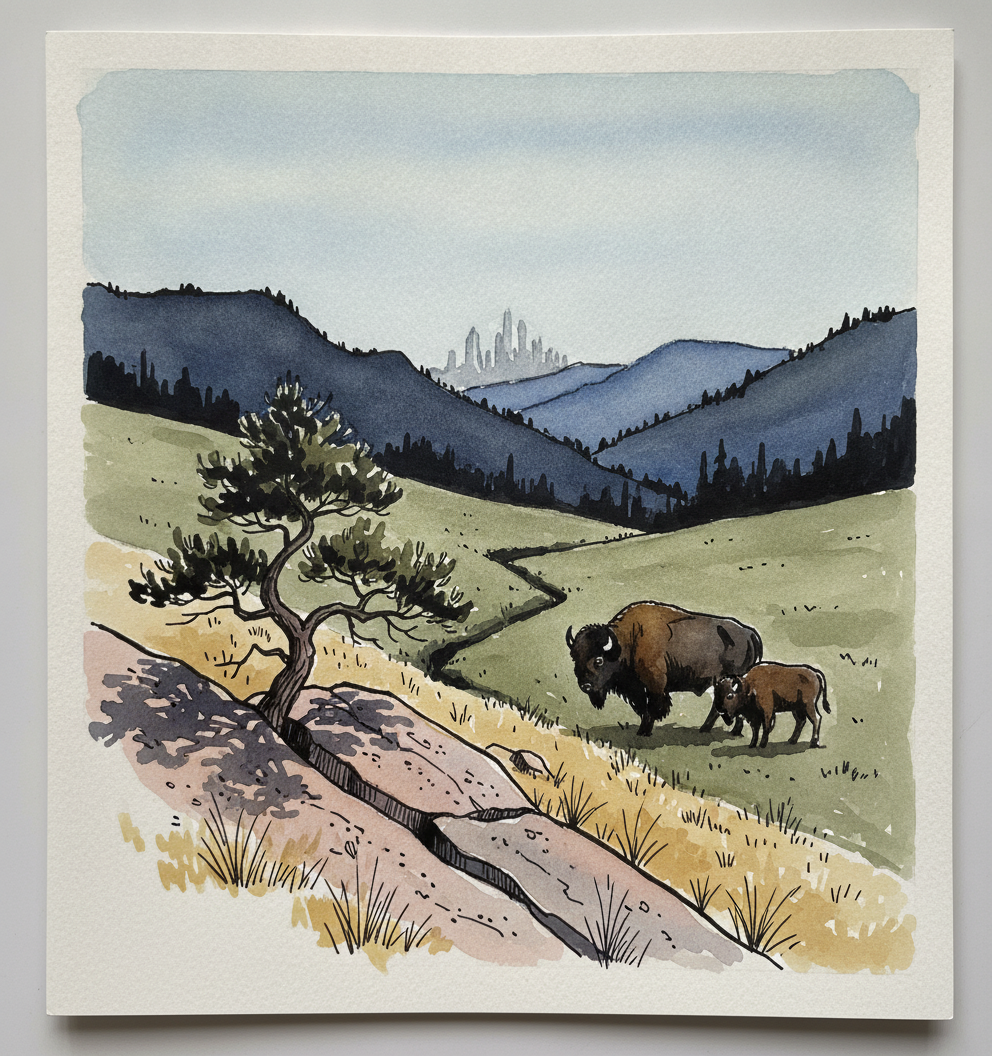
Piece 2 — Black Hills foothills grasslands — Custer County, South Dakota
Pen + Watercolor · Loose pen and watercolor line-and-wash
Three takes
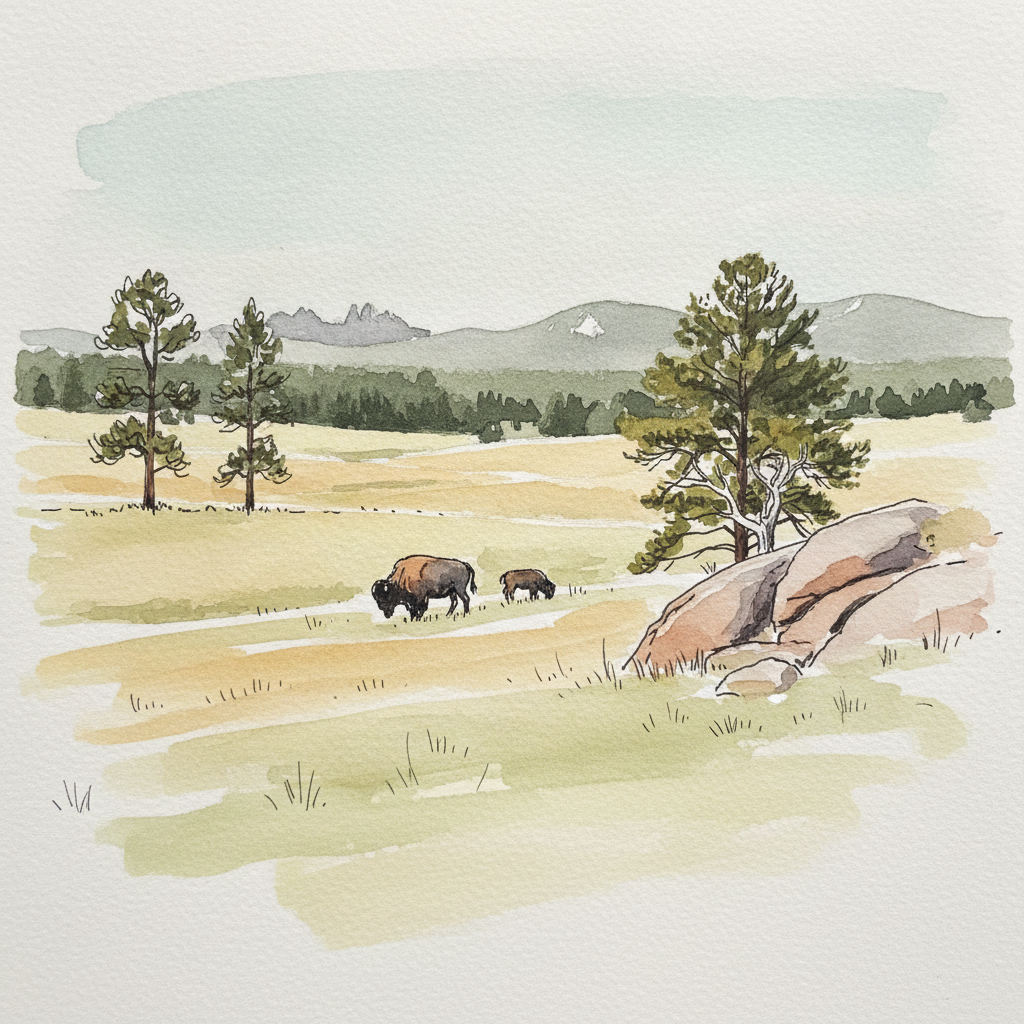
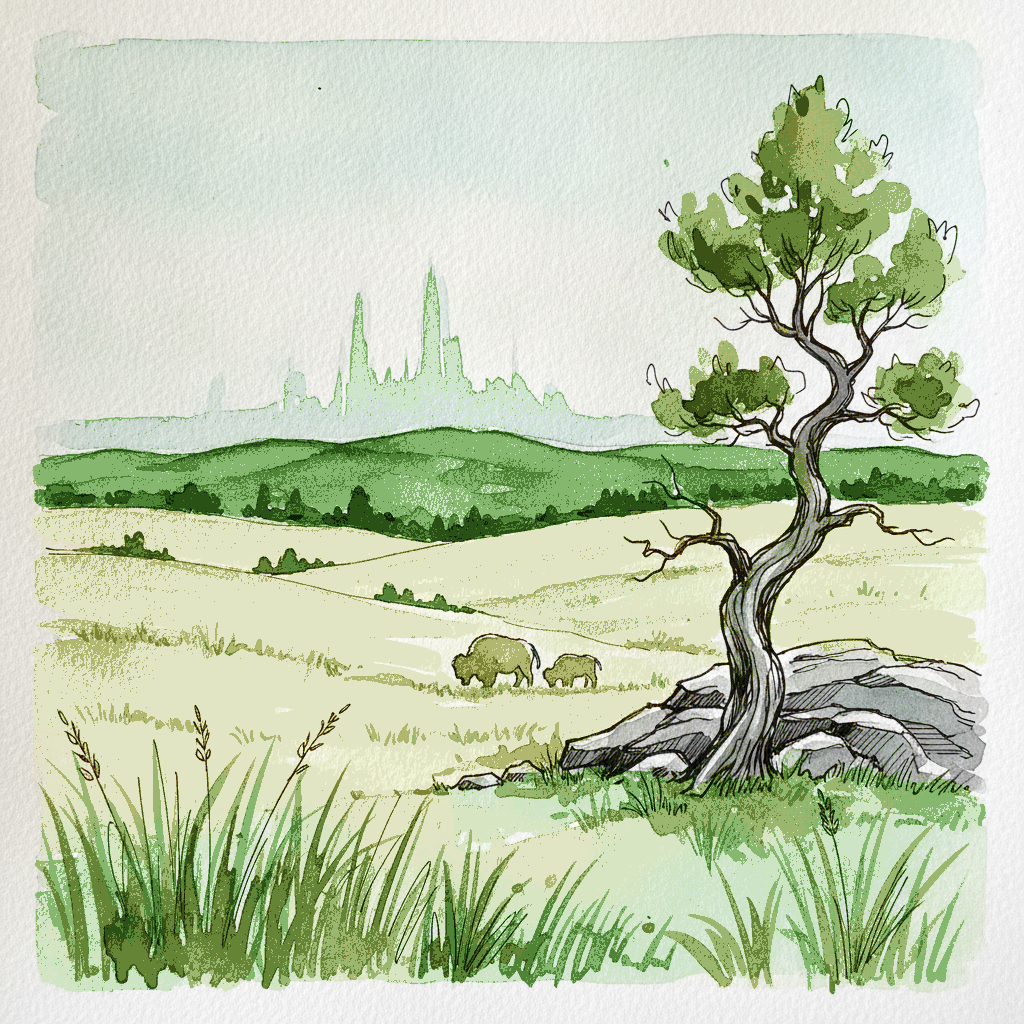

Focus for this piece
This Black Hills scene offers a fantastic opportunity to study atmospheric perspective and the distinct roles of pen and wash in building depth and texture. Use crisp, detailed pen lines for the foreground elements like the bluestem and twisted ponderosa, allowing layered washes to establish their local colors and shadows. As you recede into the sweeping grassland and distant pine ridges, progressively lighten and simplify your ink work, letting soft, expansive washes define the broad shapes and muted values for a true sense of distance and scale.
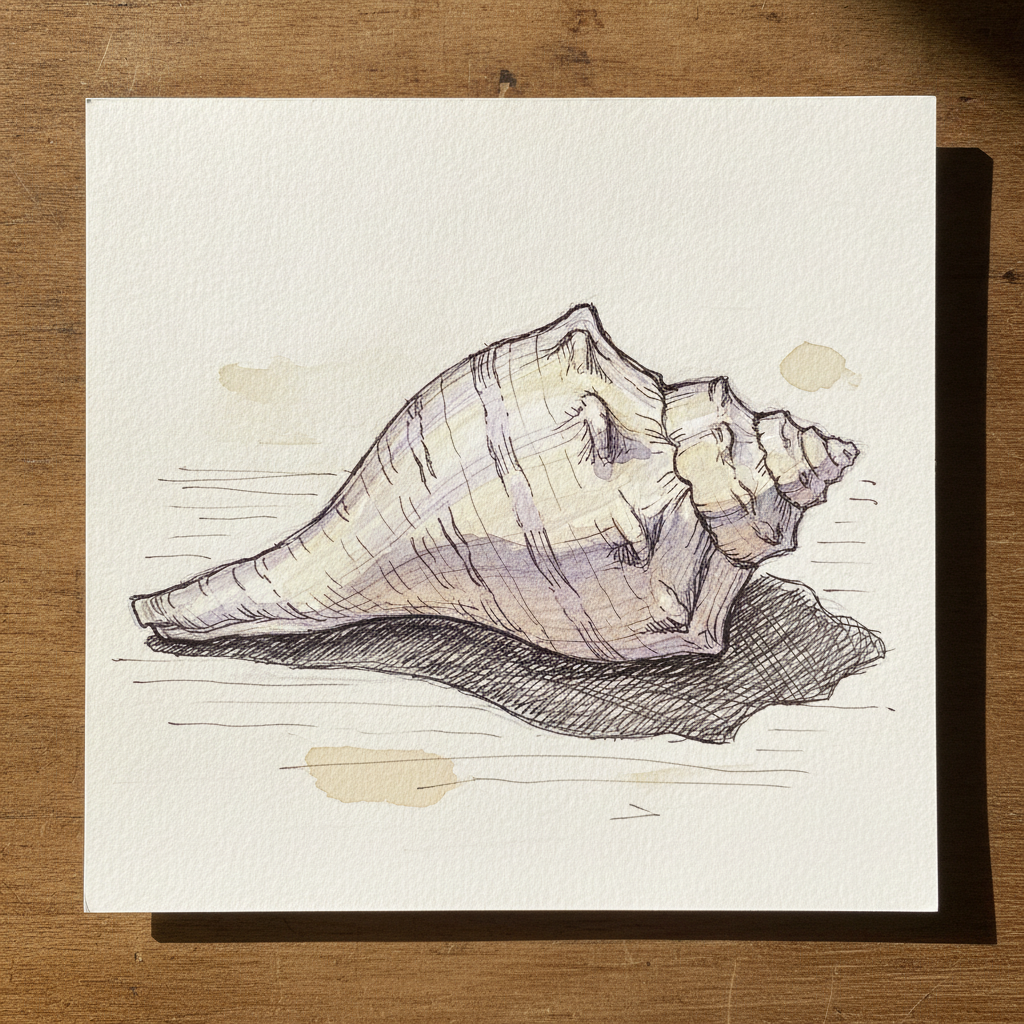
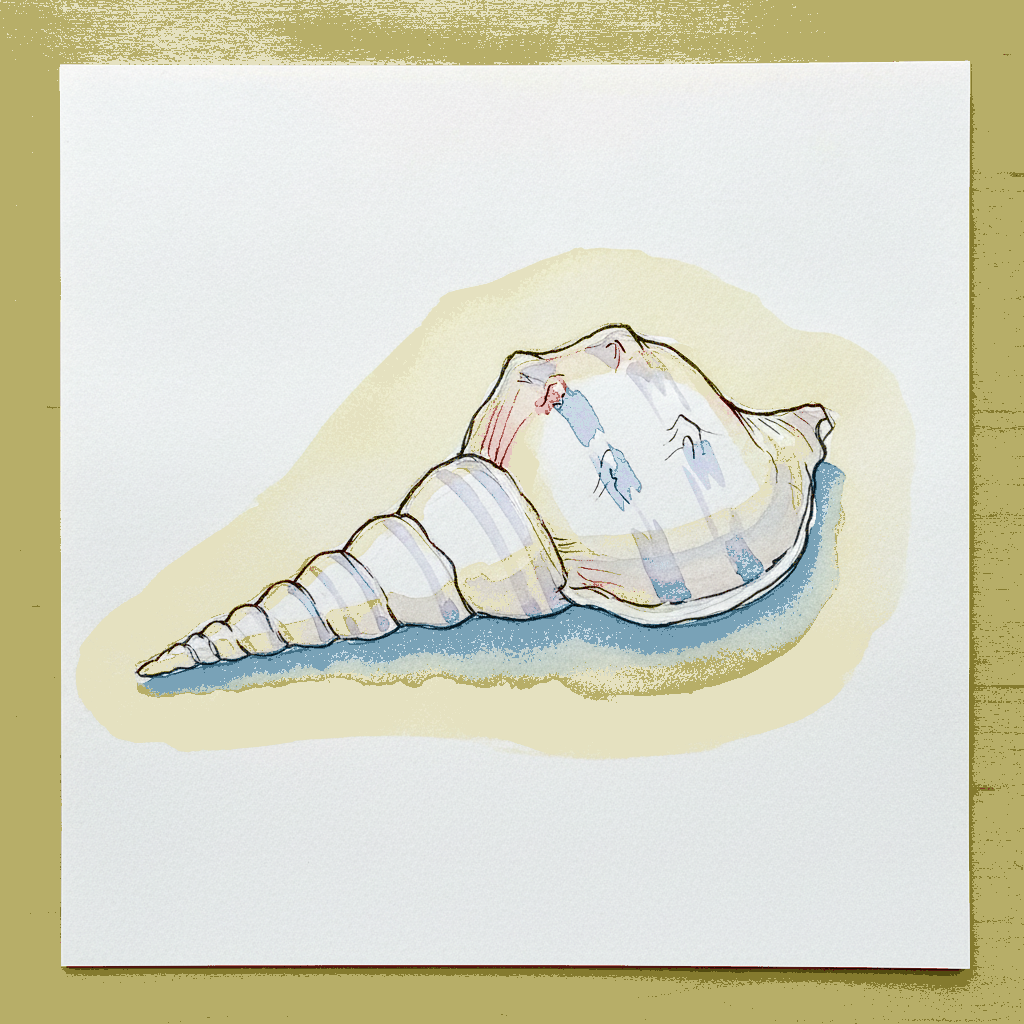
Piece 3 — Lightning whelk, sinistral spiral
Pen + Watercolor · Loose pen and watercolor line-and-wash
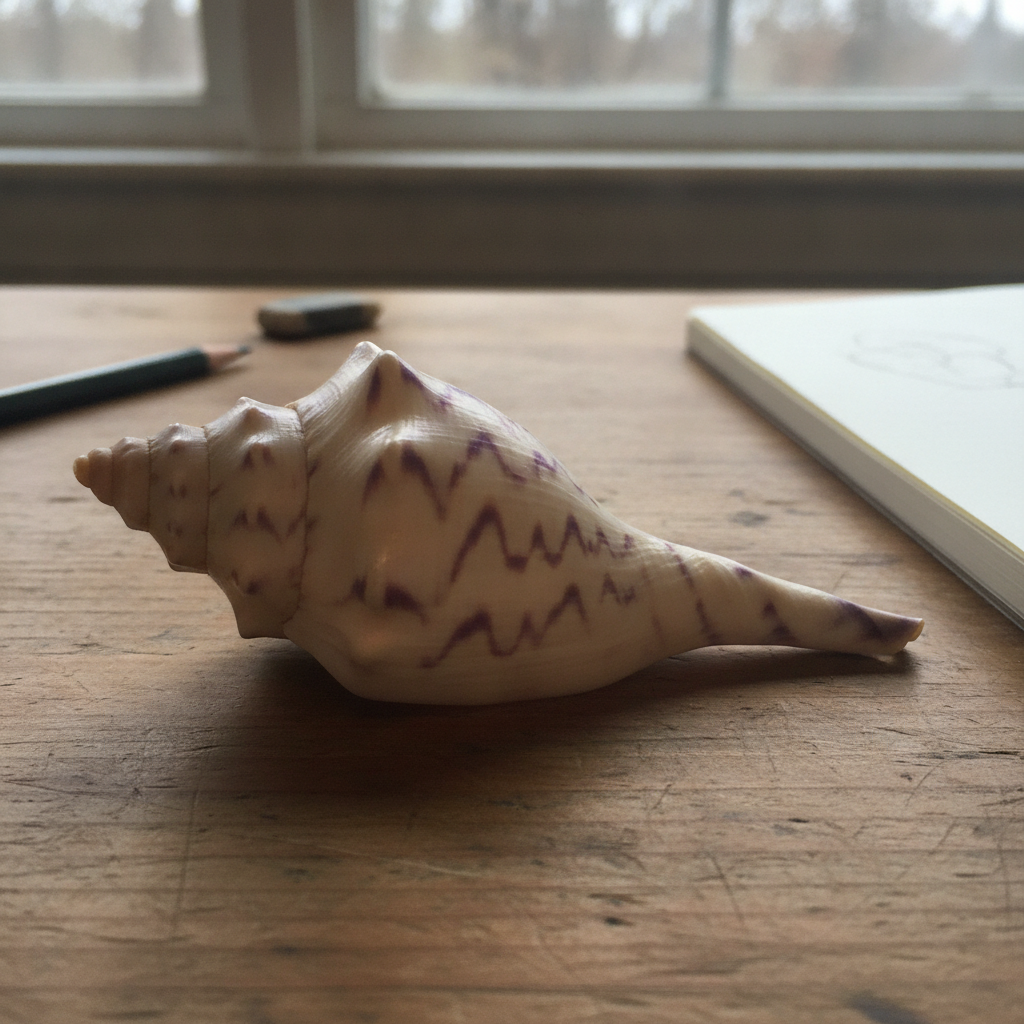
Three takes
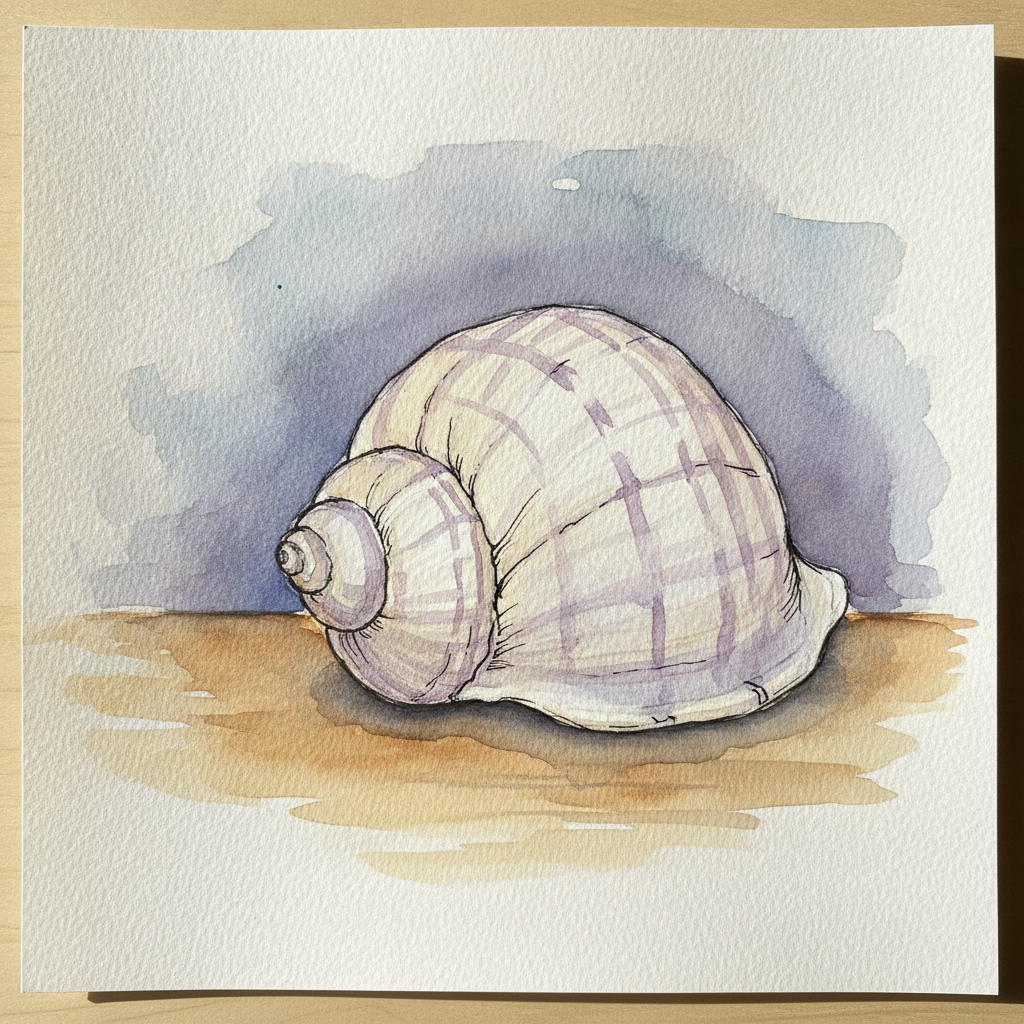

Focus for this piece
This piece offers an excellent study in rendering form through the distortion of a repeating pattern. Carefully observe and use varying pen line weight to illustrate how the zigzag stripes warp around the sinistral spiral of the whelk. Then, apply light, layered washes of pale violet and cream, focusing on how the transparency of watercolor can subtly build volume under the flat cool light without relying on strong value shifts. Pay attention to the soft, diffused edge of the shadow where the shell meets the table, letting the table grain show through.
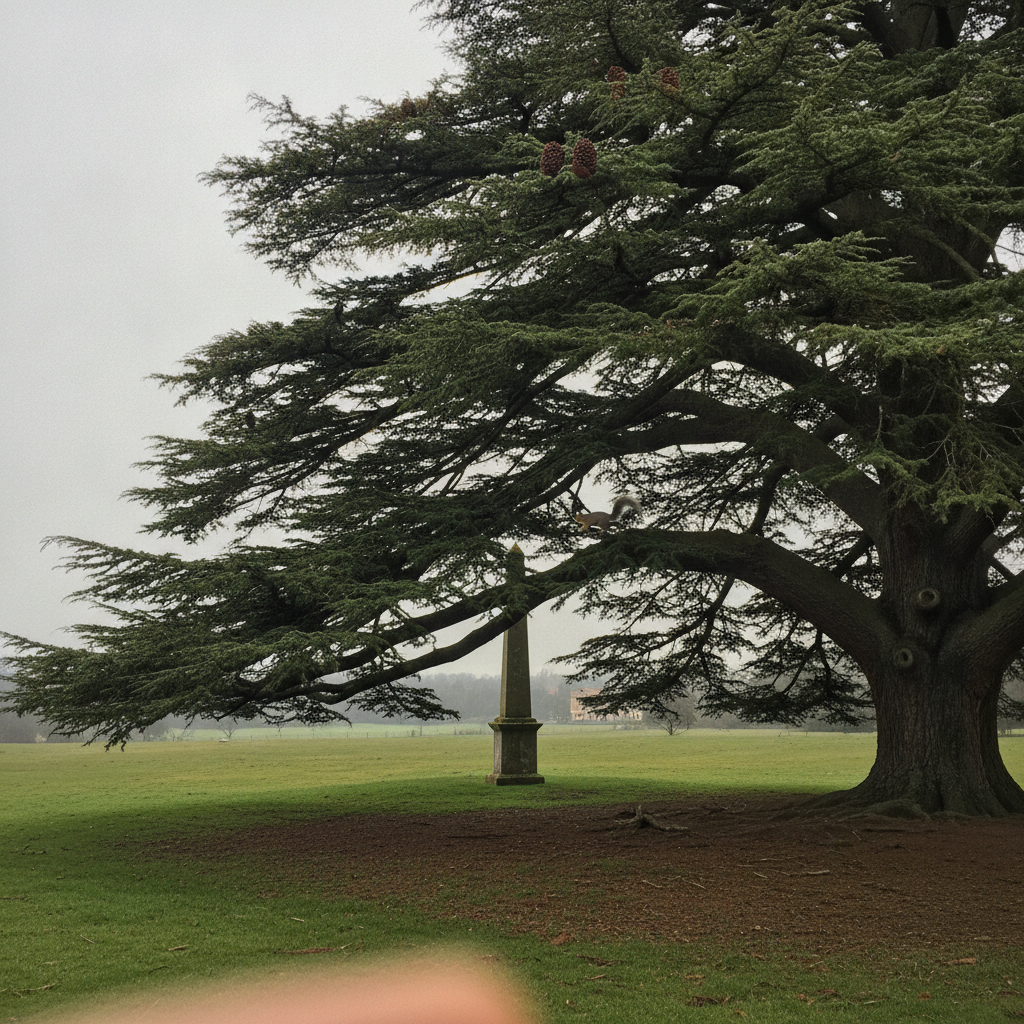
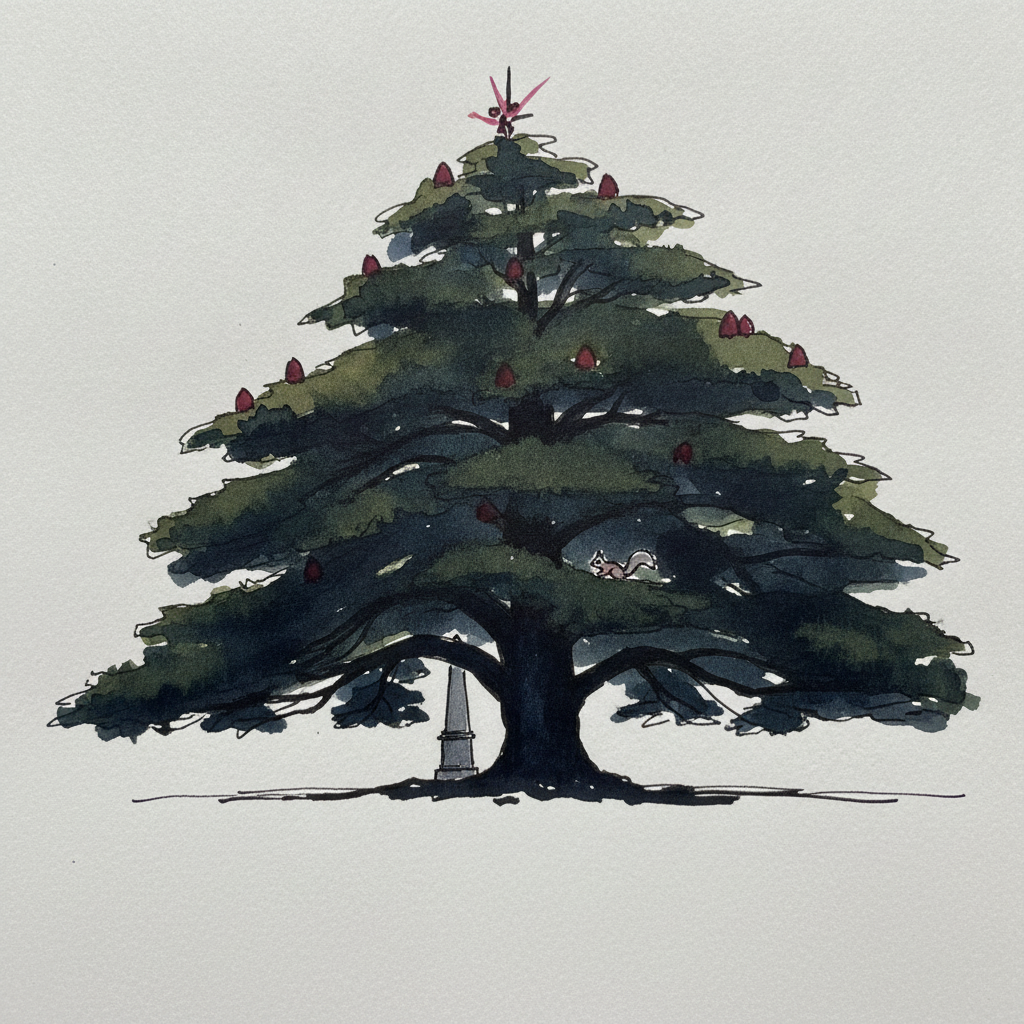
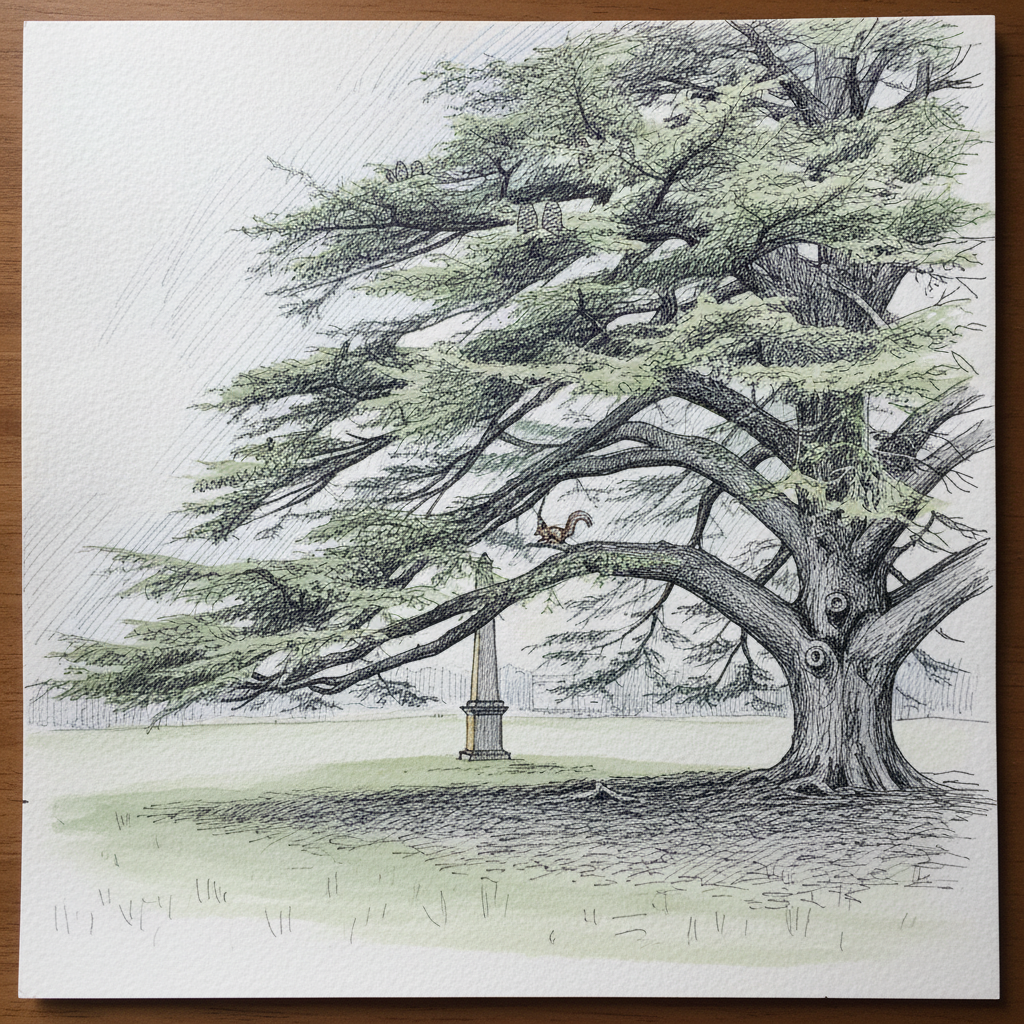
Piece 4 — Cedar of Lebanon
Pen + Watercolor · Loose pen and watercolor line-and-wash
Three takes

Focus for this piece
This majestic Cedar of Lebanon is an excellent subject for studying how to depict the immense volume and layered structure of a large tree's dense foliage. Begin by establishing the broad, horizontal planes of the branches with loose, varied green and brown washes, letting the wet-on-wet technique suggest depth and density. Then, use a combination of confident, structural pen lines for the main limbs and softer, broken, or stippled marks to build the texture of the dark needle clusters, allowing the watercolor to provide the mass and the pen to define the intricate edges. Remember to consider the contrasting geometric shape of the obelisk below as a foil to the tree's organic form.
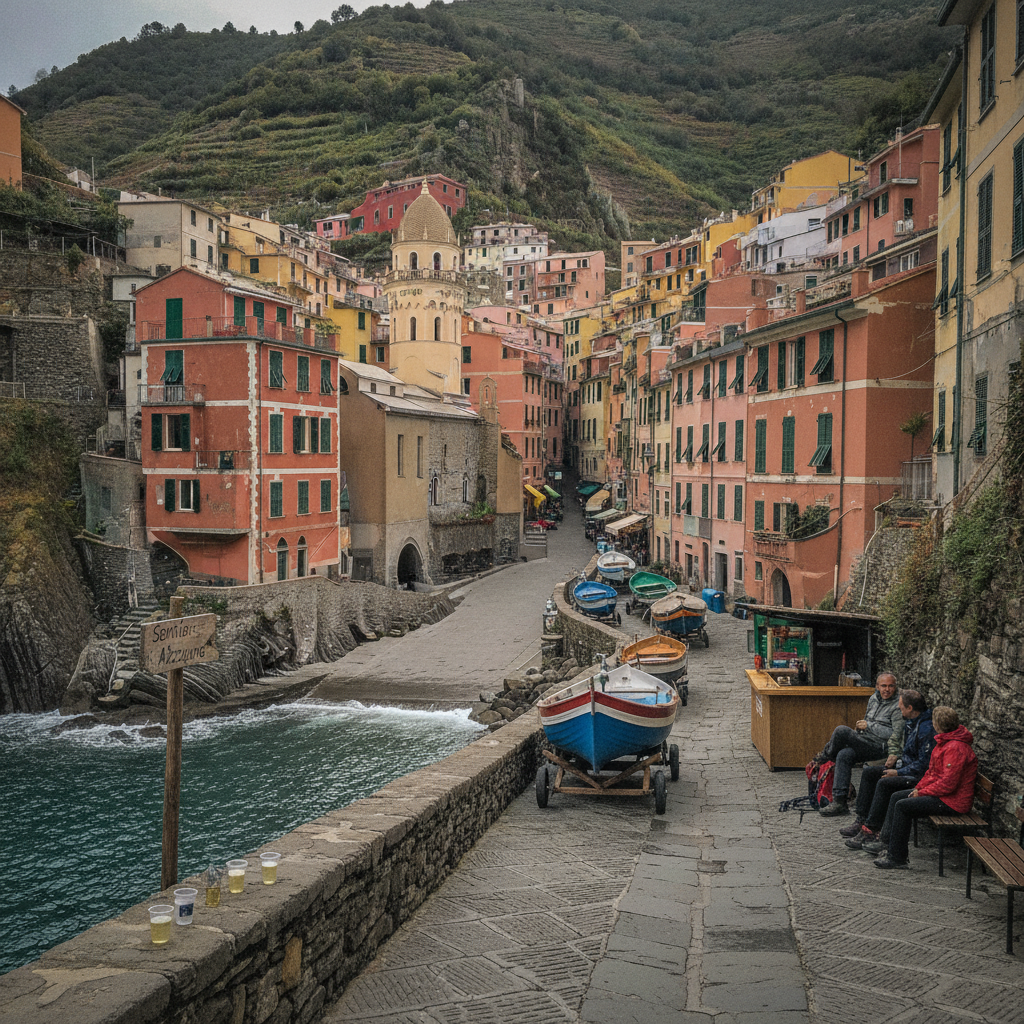
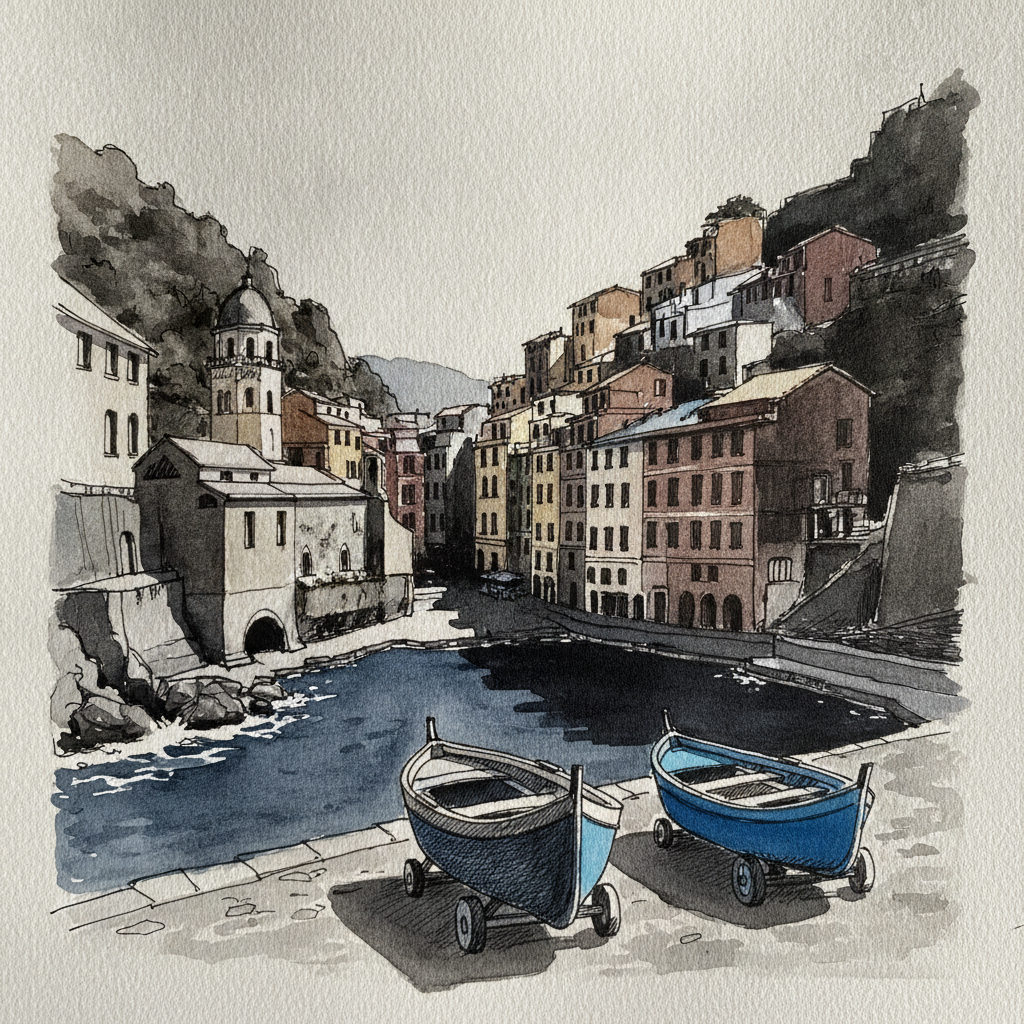
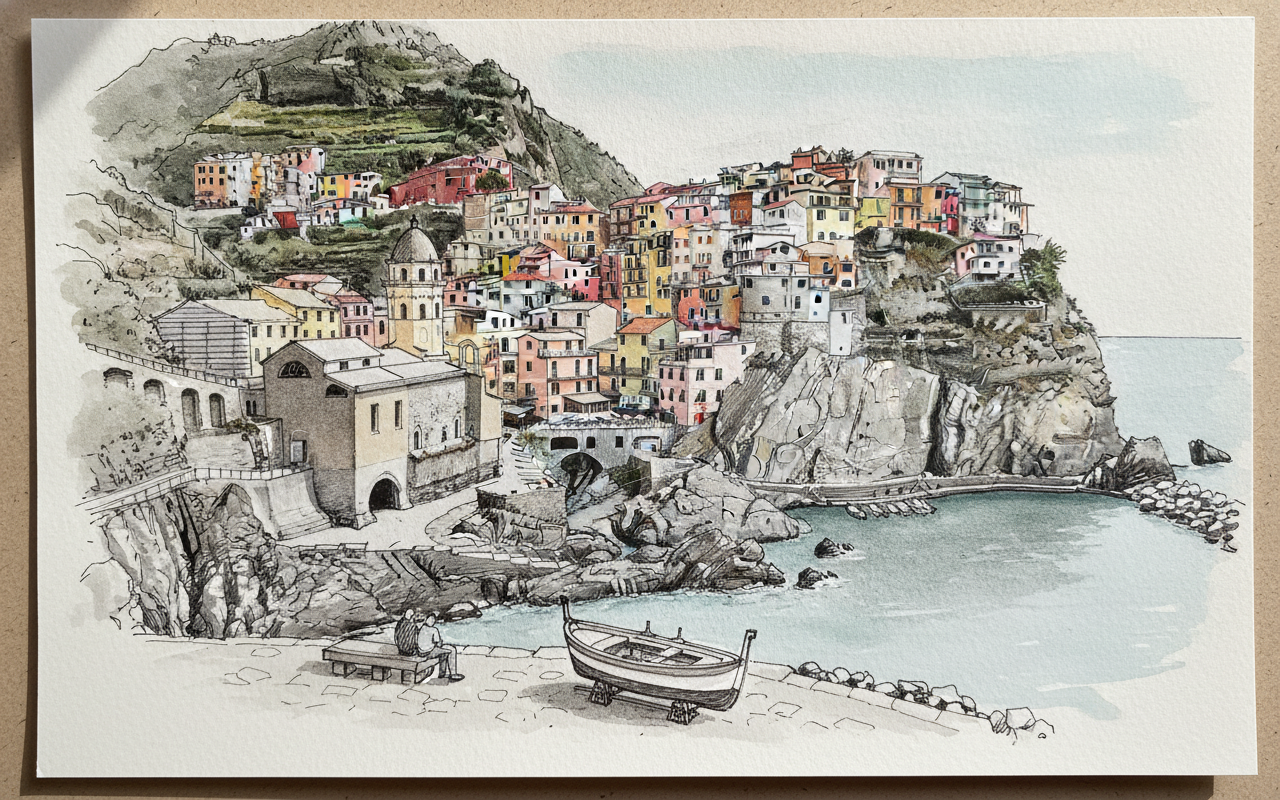
Piece 5 — Riomaggiore, Cinque Terre, Liguria, Italy
Pen + Watercolor · Loose pen and watercolor line-and-wash
Three takes

Focus for this piece
For Riomaggiore, this piece offers a fantastic study in establishing depth through architectural repetition and varied line weights. Use a precise pen line to delineate the stacked, rectangular facades, gradually lightening your touch and line weight as structures recede into the narrow ravine. Then, leverage atmospheric washes in cooler tones within those deep shadows to enhance the sense of enclosure and distance, allowing the watercolor to soften the ink's precision.
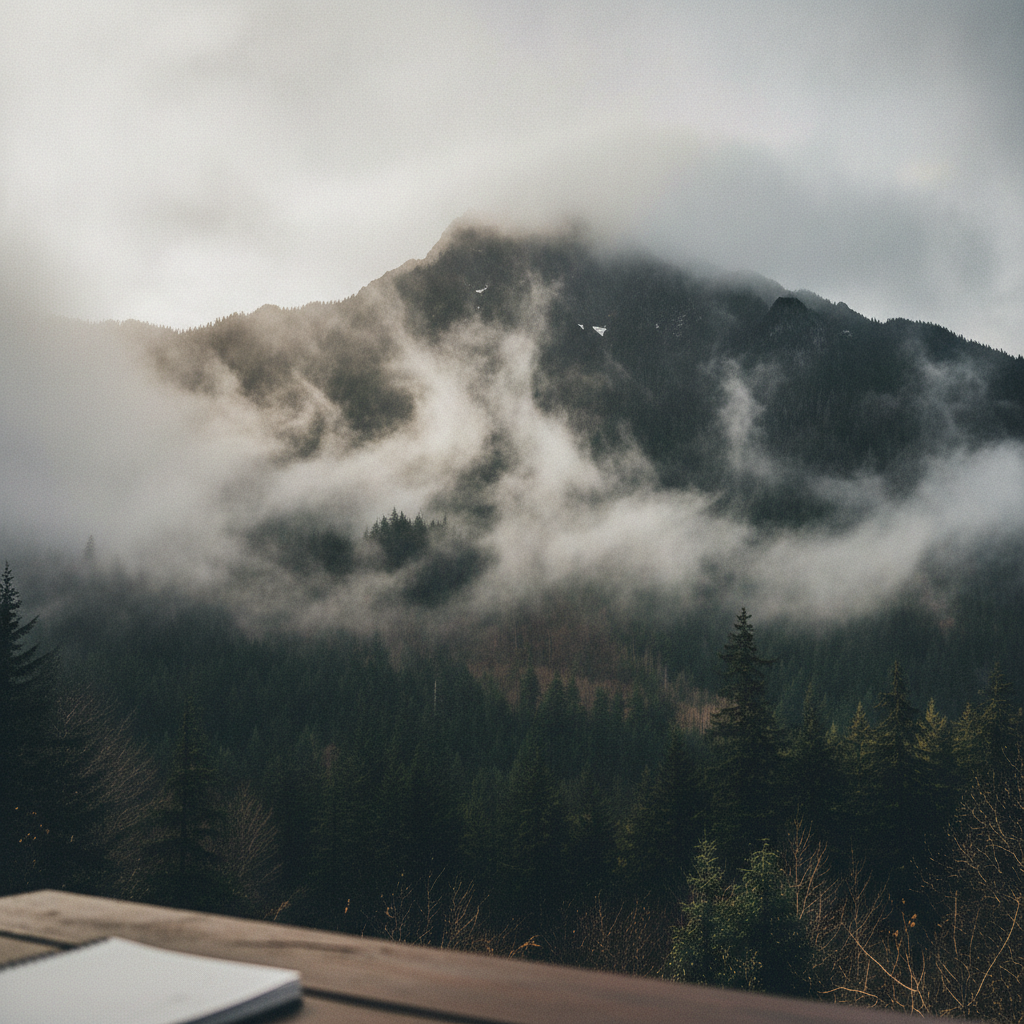
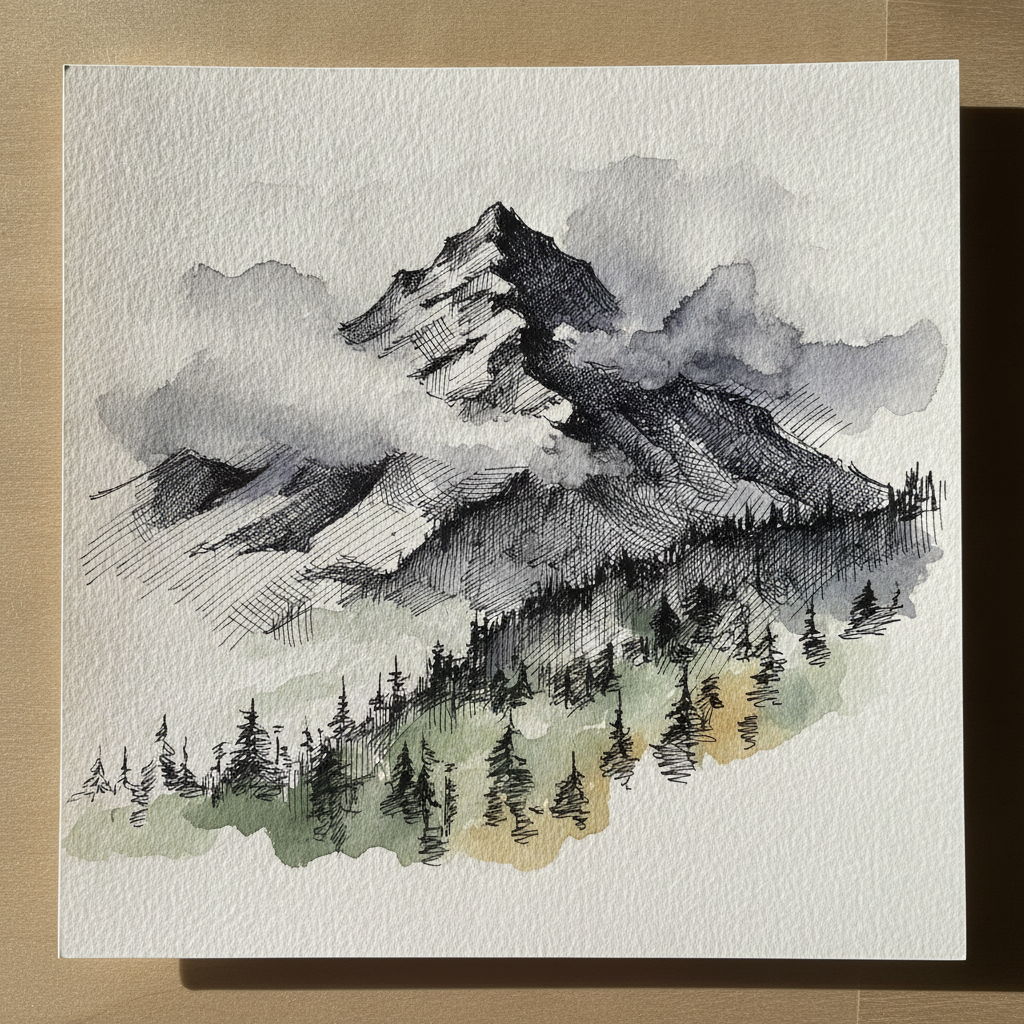
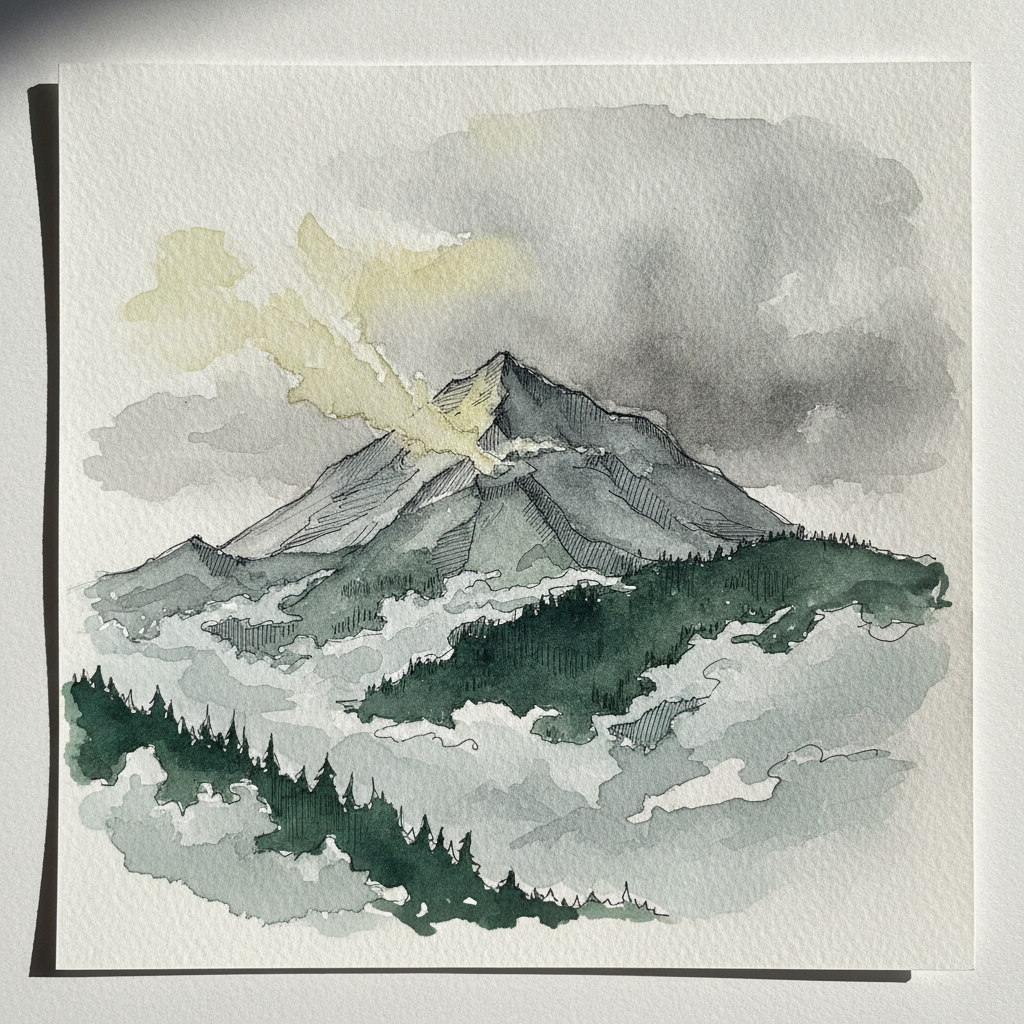
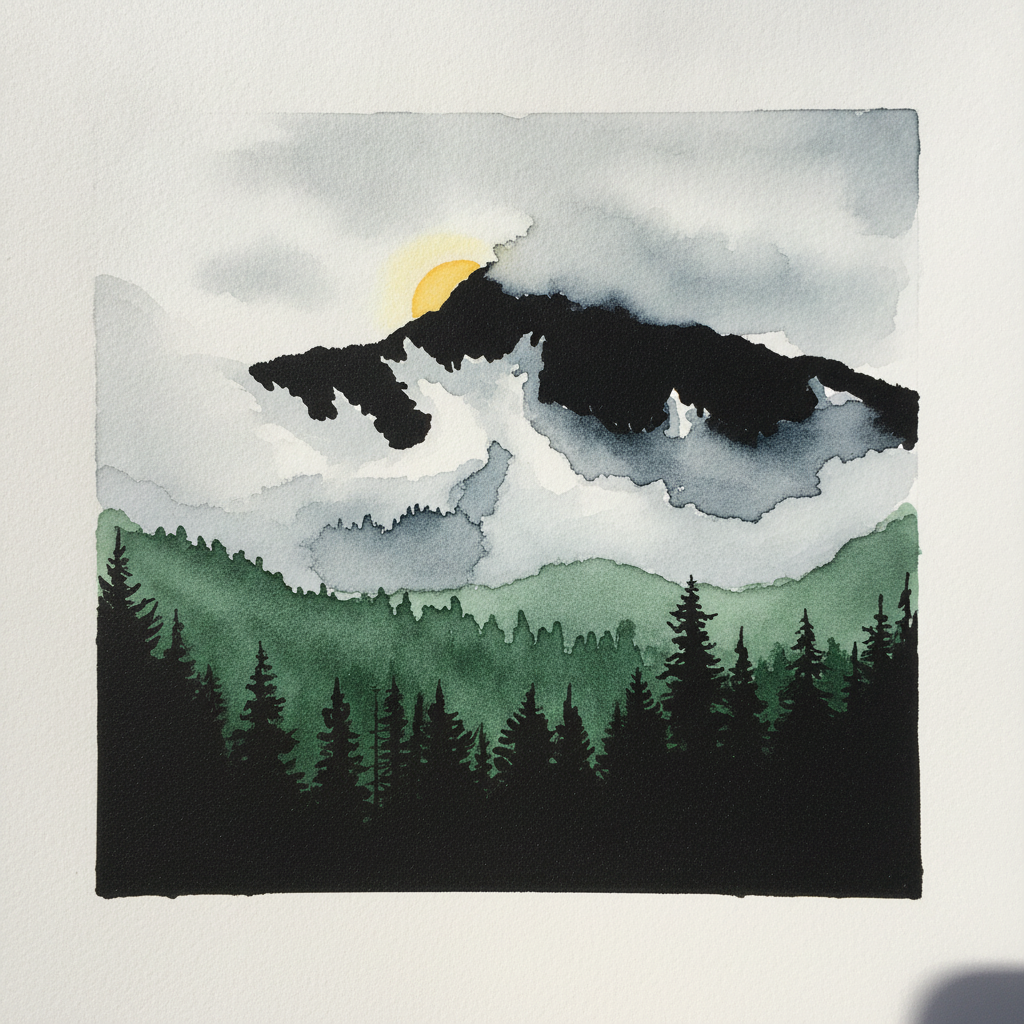
Piece 6 — Mountain Fog Lifting
Pen + Watercolor · Loose pen and watercolor line-and-wash
Three takes
Focus for this piece
This piece is an excellent study in creating atmosphere through **controlled value shifts** and **edge management**. Focus on achieving soft, diffused edges with wet-on-wet washes for the lifting fog, allowing these transparent layers to *partially obscure* your initial ink lines where the mist is thickest. Contrast this fluidity with crisper, more deliberate ink lines and darker, richer washes to define the distinct shapes and textures of the forest patches revealed beneath. The interplay between obscured and clarified forms will capture the dynamic essence of the clearing mountain.
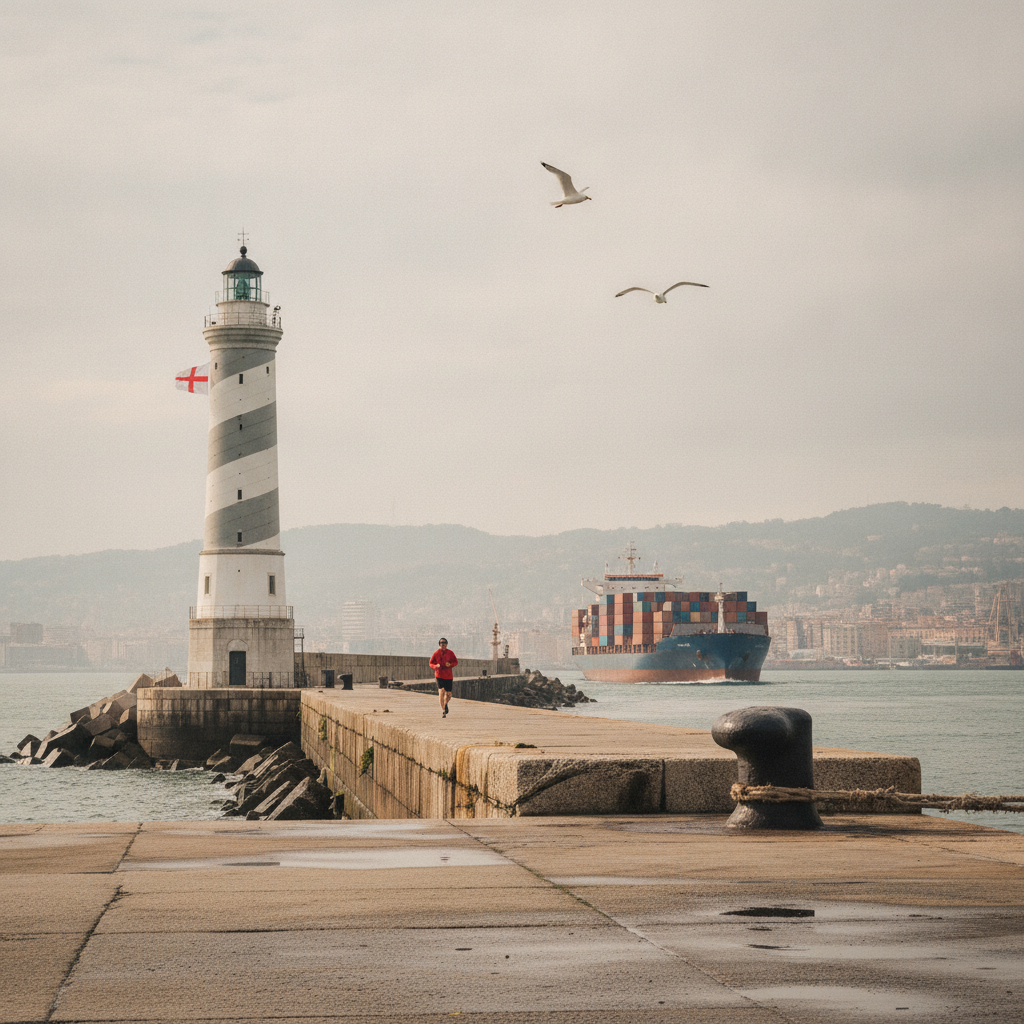
Piece 7 — The Lighthouse Mole at Genova
Pen + Watercolor · Loose pen and watercolor line-and-wash
Three takes

Focus for this piece
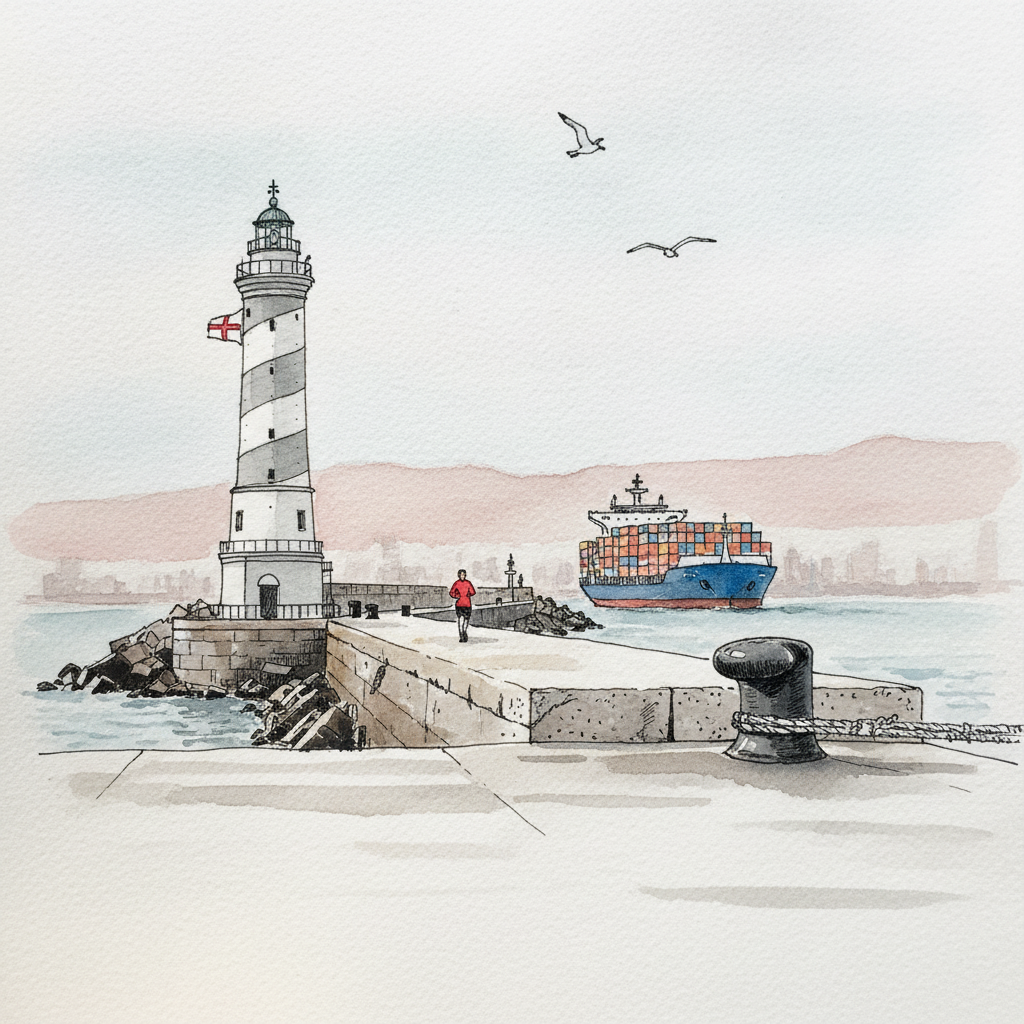
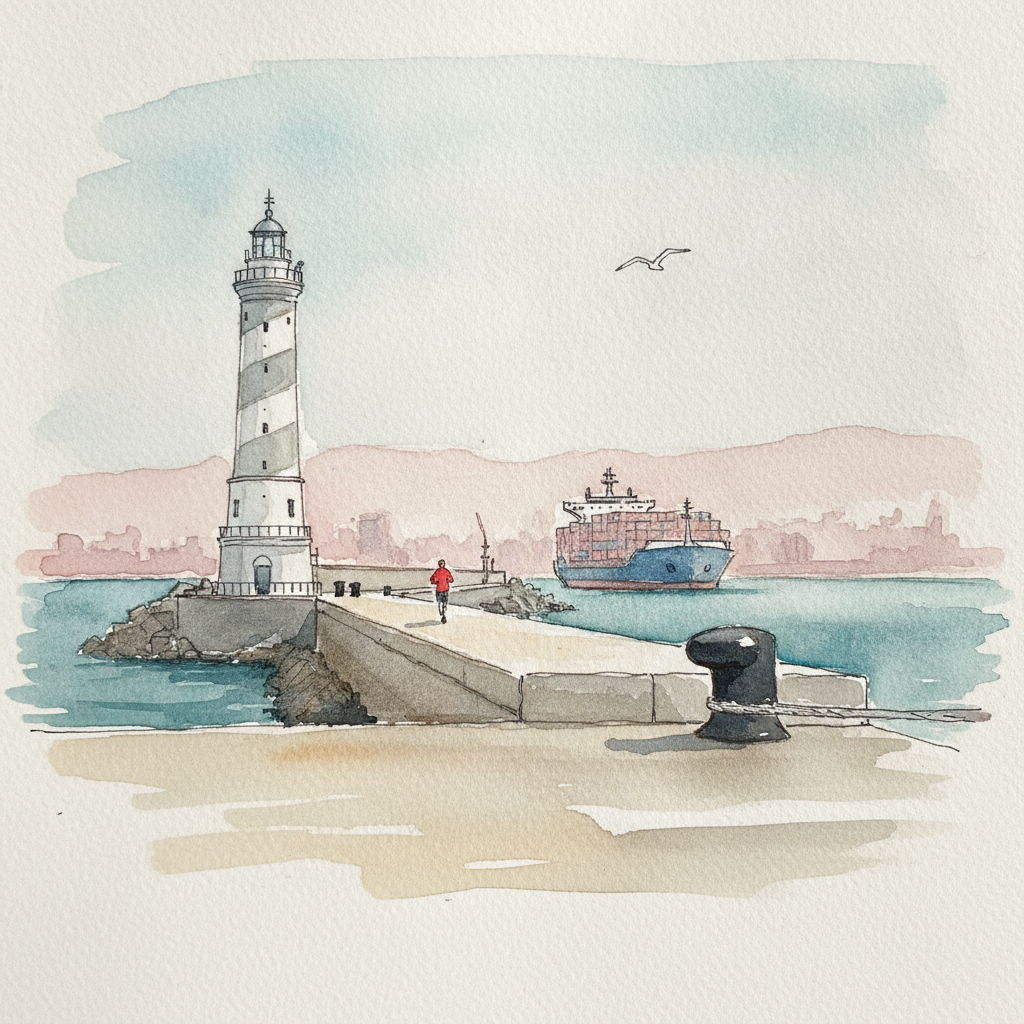
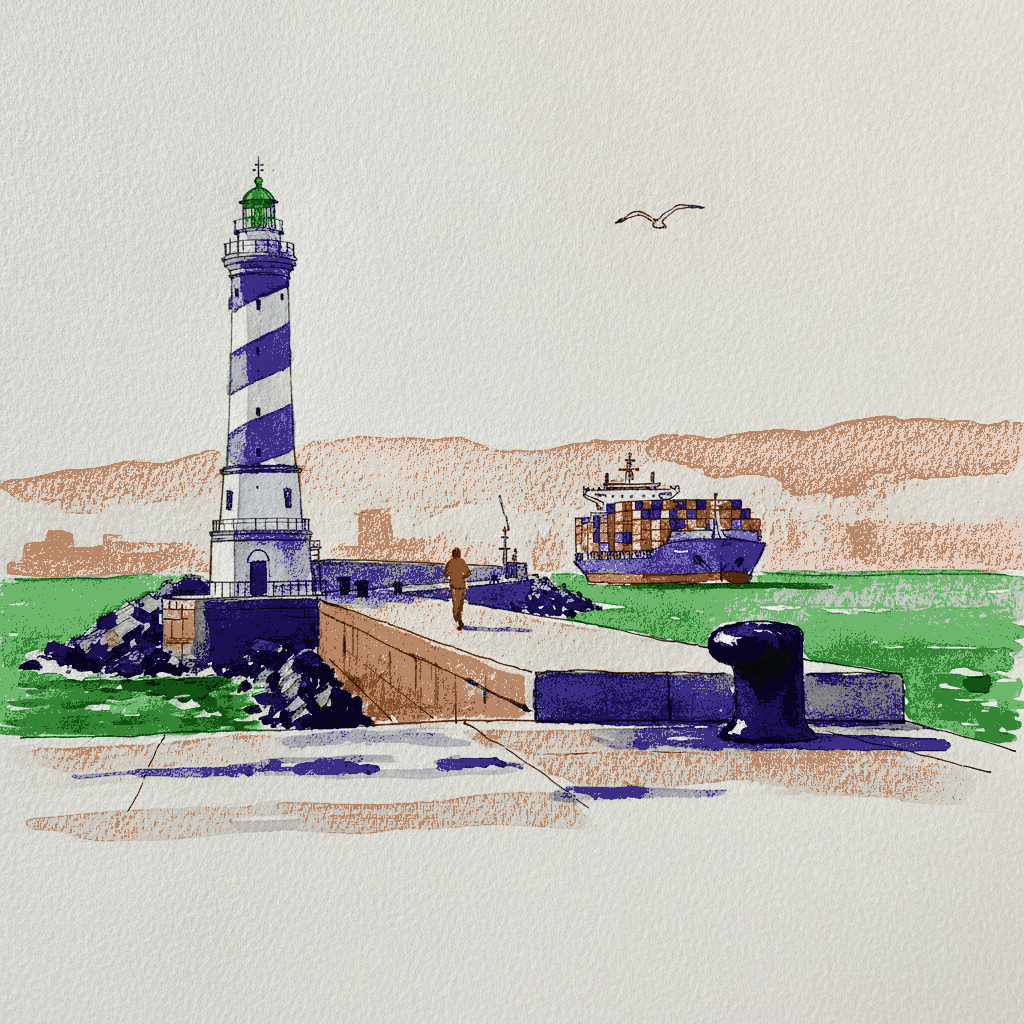
This piece offers a great opportunity to explore depth, contrasting the strong linear perspective of the vast mole leading to the lighthouse with the soft atmospheric perspective of the distant Apennine hills. Focus your pen work on rendering the rough, sea-encrusted texture of the mole with varied, broken lines, while using clean horizontal strokes for the lighthouse stripes. For the watercolor, practice building up textural washes for the concrete, graduating to lighter, warmer washes to suggest the "dust-pink" hills receding into the distance.
Piece 8 — Used bookstore with stacks
Pen + Watercolor · Loose pen and watercolor line-and-wash

Three takes
Focus for this piece
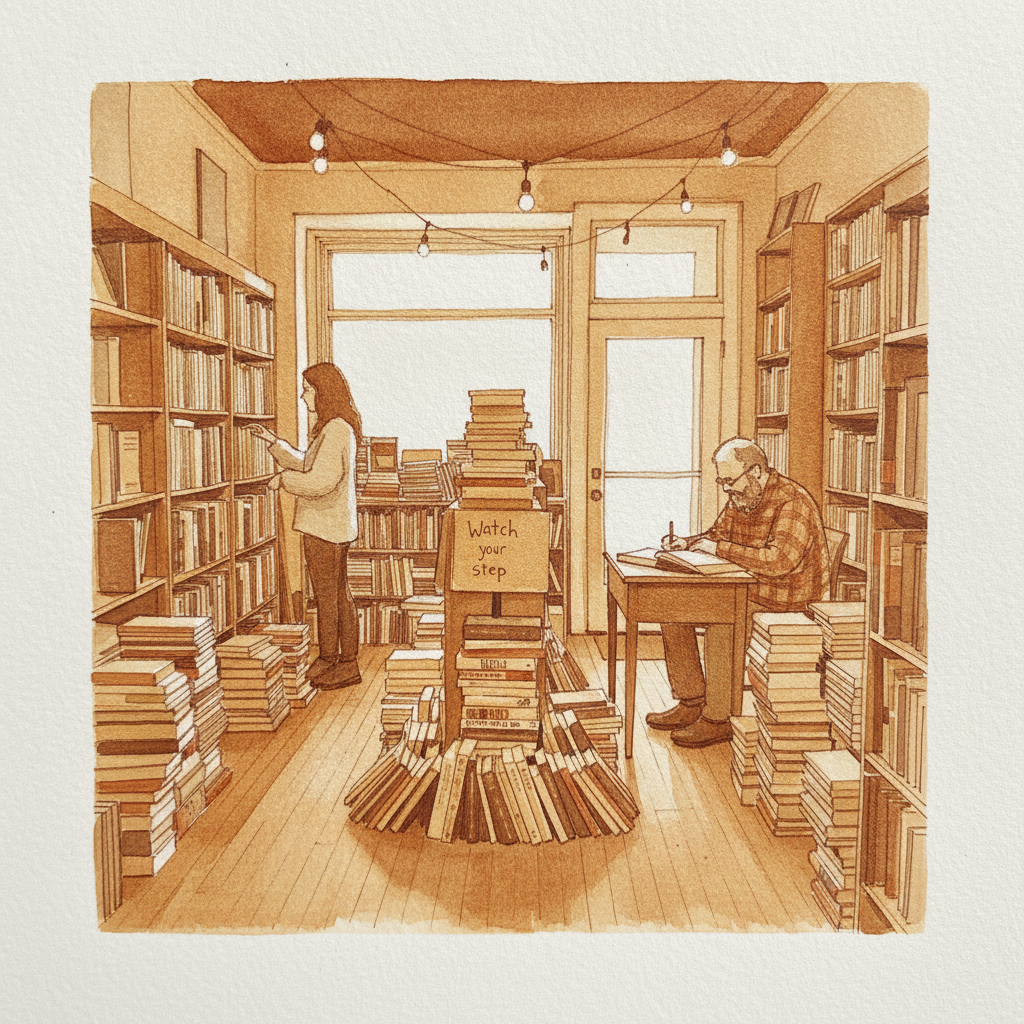
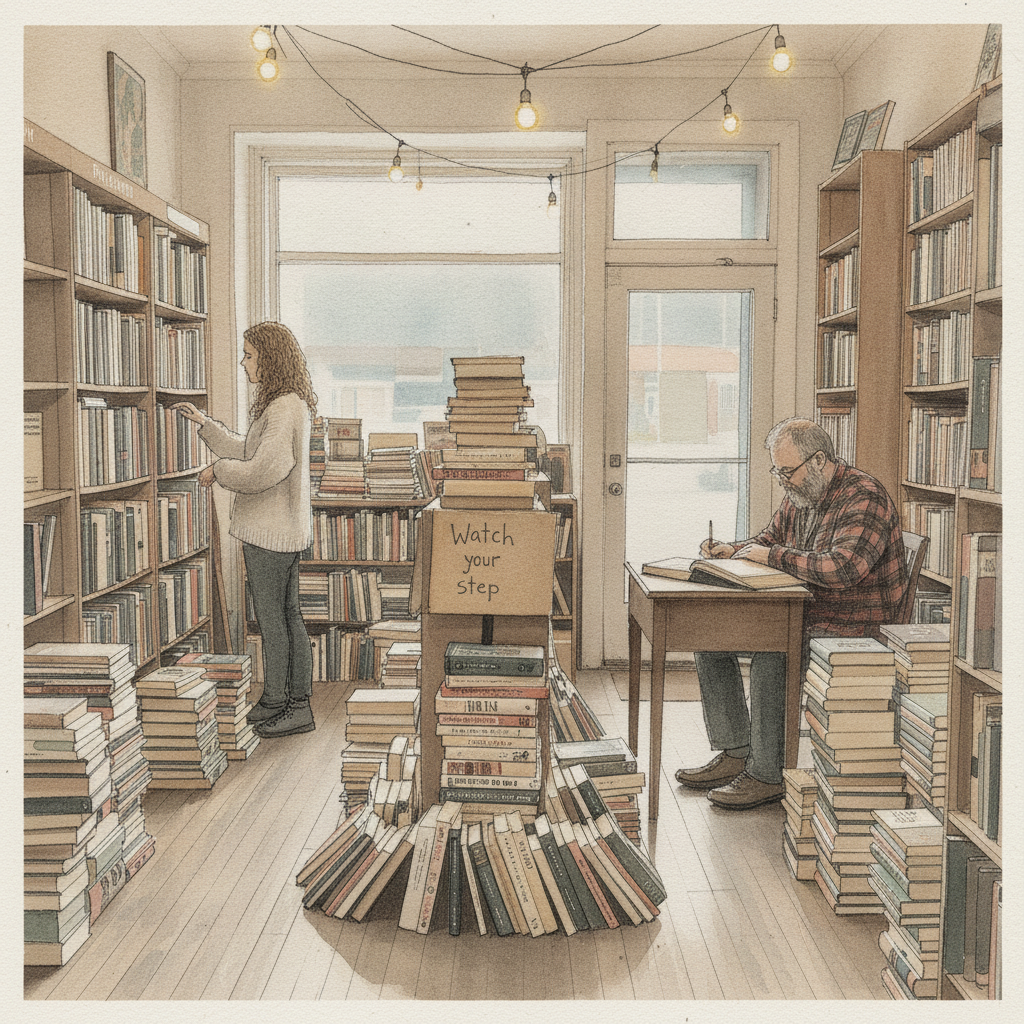
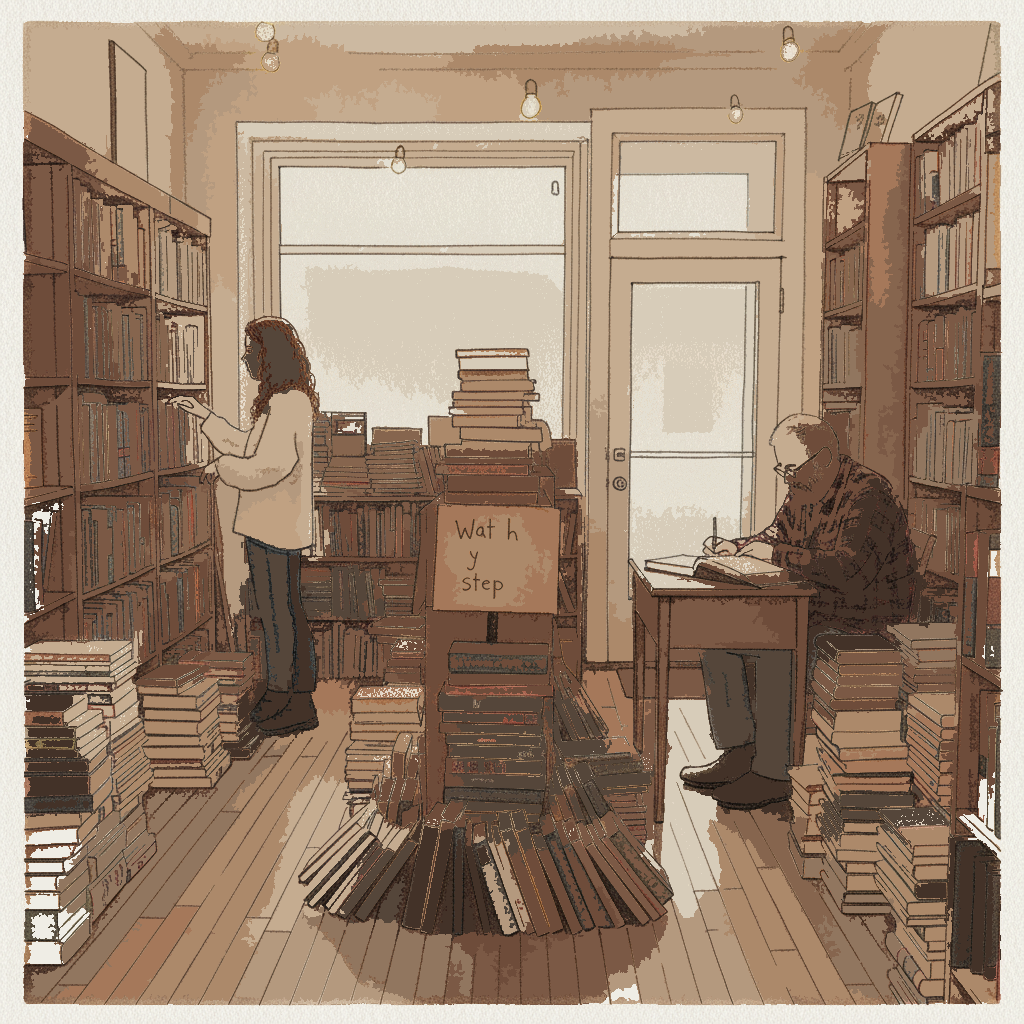
This piece is ideal for studying how to create depth and manage visual information in a highly cluttered interior. Use varied pen line weights, with bolder, more detailed strokes for foreground elements like the "Watch your step" sign or the man's desk, and lighter, implied lines for the receding stacks. Complement this with a constrained, earthy watercolor palette, applying softer, desaturated washes for background book spines to enhance atmospheric perspective without overwhelming the detailed foreground.