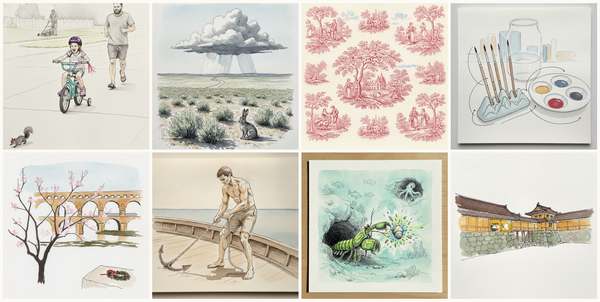
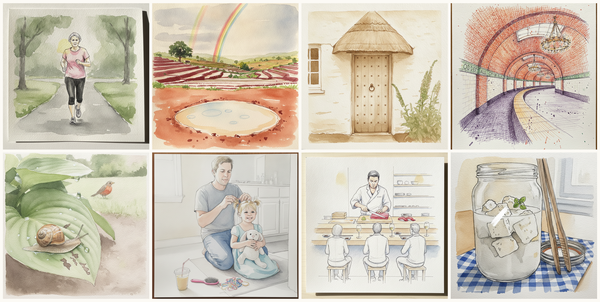
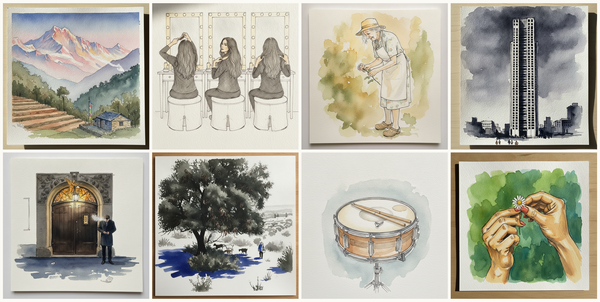
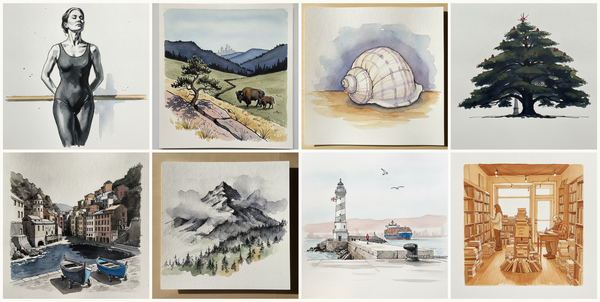
California poppy, Warrior II, Pacific Islander man, 49, Hornbeam arch with shears resting on gravel, Silk handkerchief on a polished table, and more — pen + watercolor for August 19, 2026
AI-generated daily art-practice references for pen and watercolor: California poppy, Warrior II, Pacific Islander man, 49, Hornbeam arch with shears resting on gravel, Silk handkerchief on a polished table, Ajloun Castle (Qalaat ar-Rabad), Ajloun, Jordan, Butternut, acorn, and delicata on a harve…
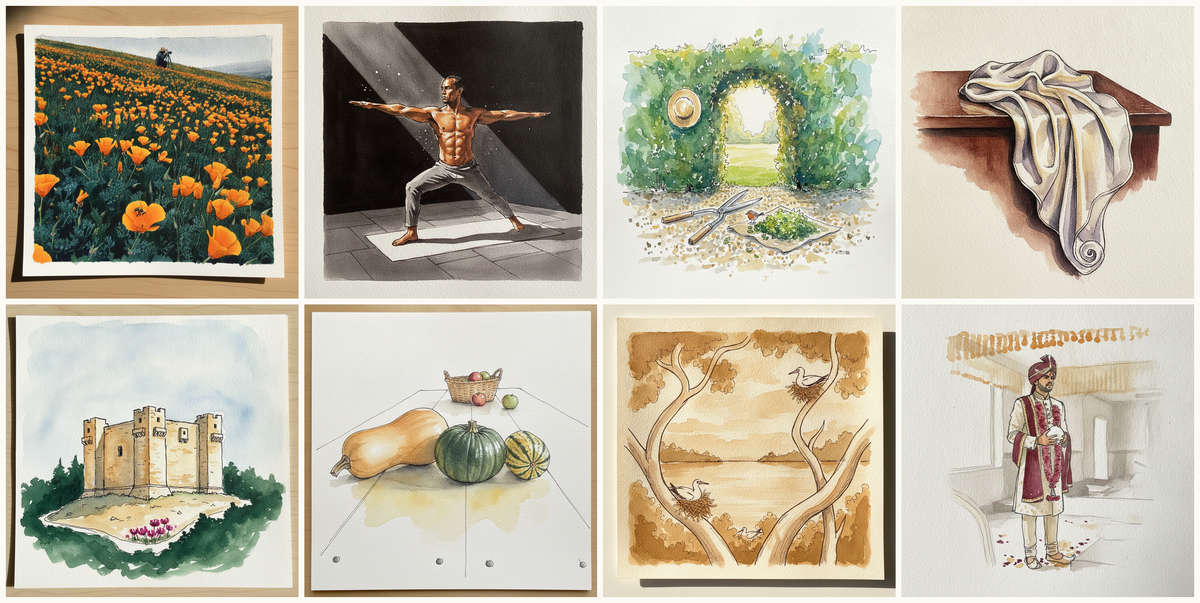
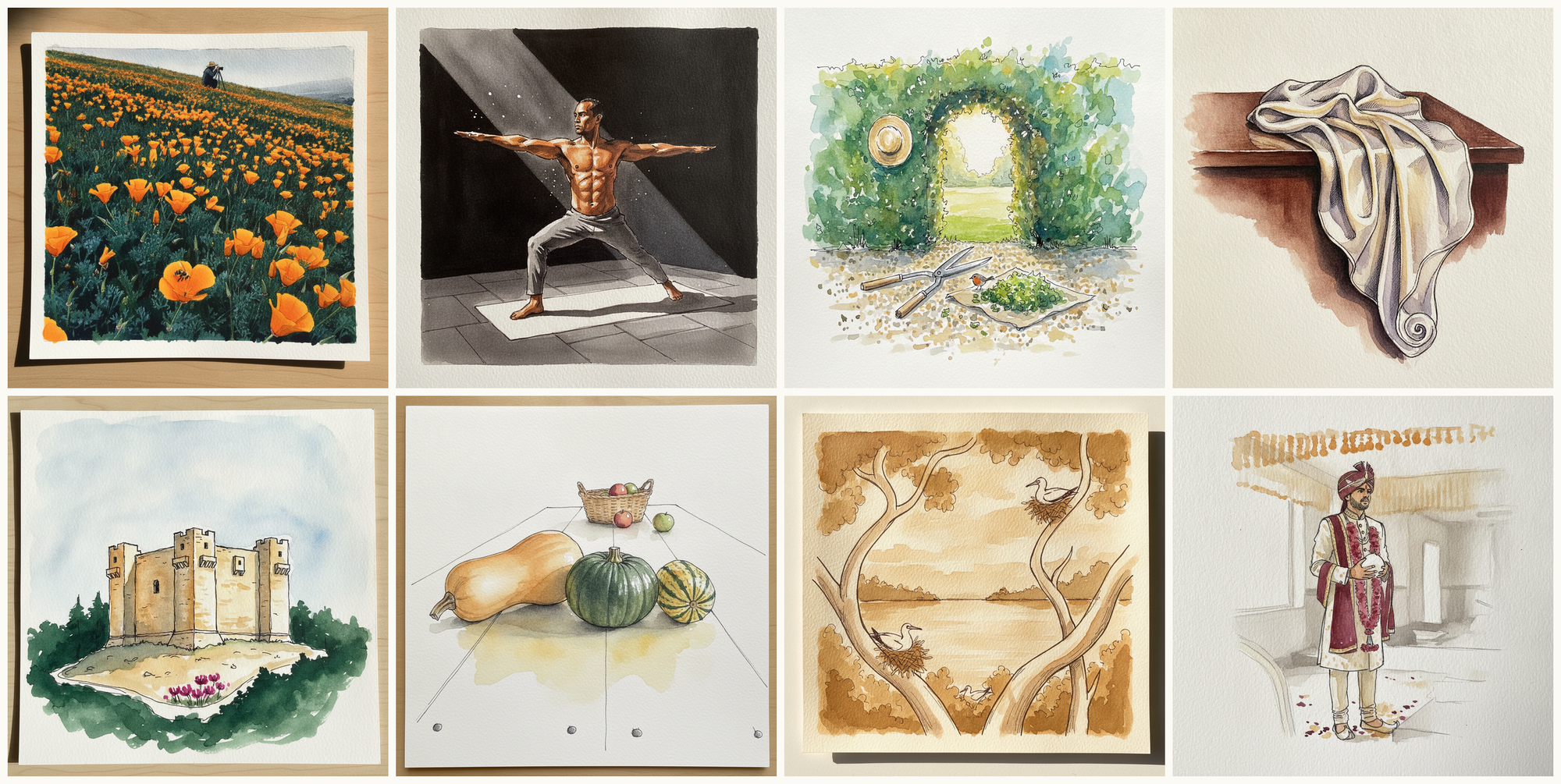
Today's 8 pen-and-watercolor pieces: California poppy, Warrior II, Pacific Islander man, 49, Hornbeam arch with shears resting on gravel, Silk handkerchief on a polished table, Ajloun Castle (Qalaat ar-Rabad), Ajloun, Jordan, Butternut, acorn, and delicata on a harvest table, Palmyra red-footed booby colony in Pisonia, Indian groom in sherwani. Each piece comes with an AI-generated photoreal reference, three AI-generated example artworks in different treatments, and a short focus paragraph naming what to study in this one.
Why these references use AI
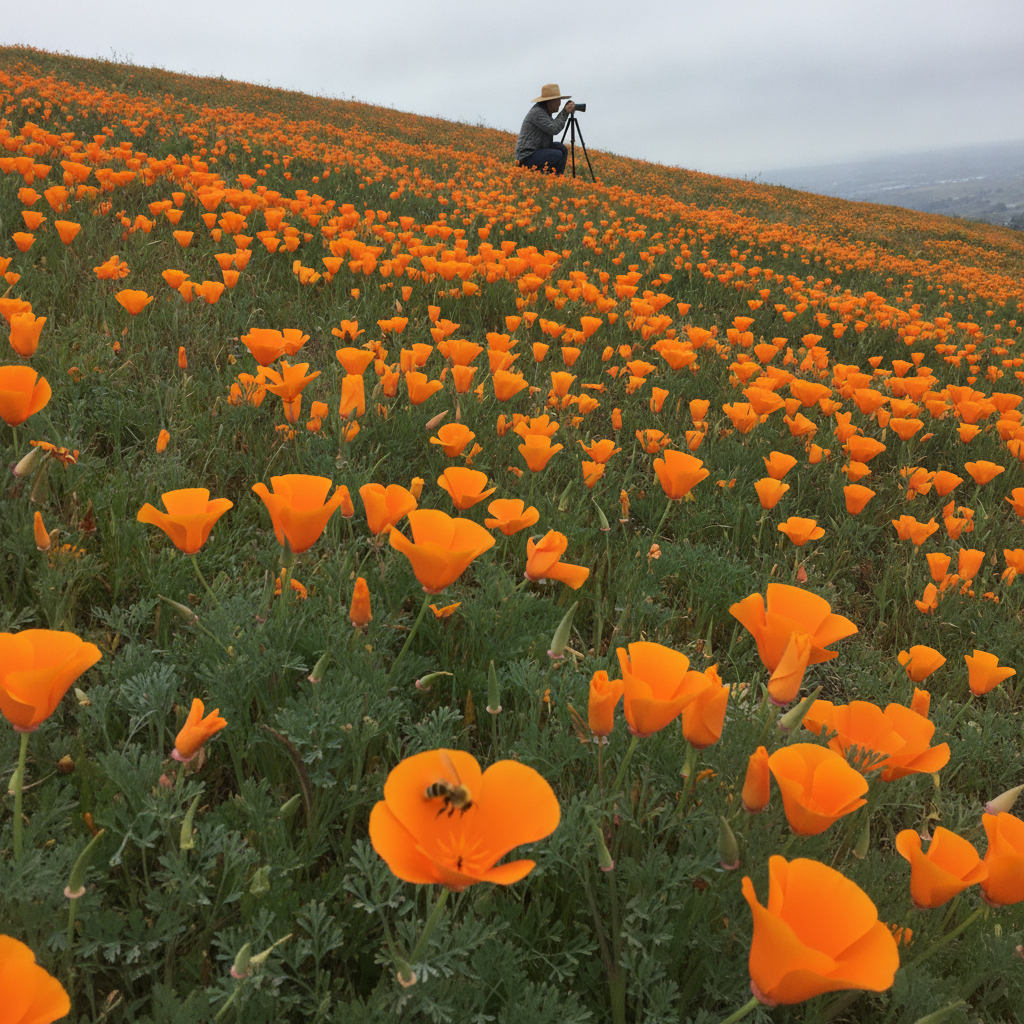
This daily series uses AI-generated images as practice prompts, not as finished artwork to copy. Each subject starts with a synthetic photoreal reference generated with Gemini/Nano Banana, then moves into three pen-and-watercolor interpretations of the same subject.
I use AI here because daily art practice needs variety and low friction. Real life can get repetitive, busy, or visually narrow. These generated reference sets make it easier to study bodies, buildings, animals, landscapes, objects, gestures, light, palettes, and compositions that might not show up in an ordinary day.
The goal is not to reproduce any image directly. Treat each set as a starting point for observation and study: choose what interests you, change the framing, simplify the subject, alter the palette, and make your own version.
Piece 1 — California poppy
Pen + Watercolor · Loose pen and watercolor line-and-wash
Three takes

Focus for this piece
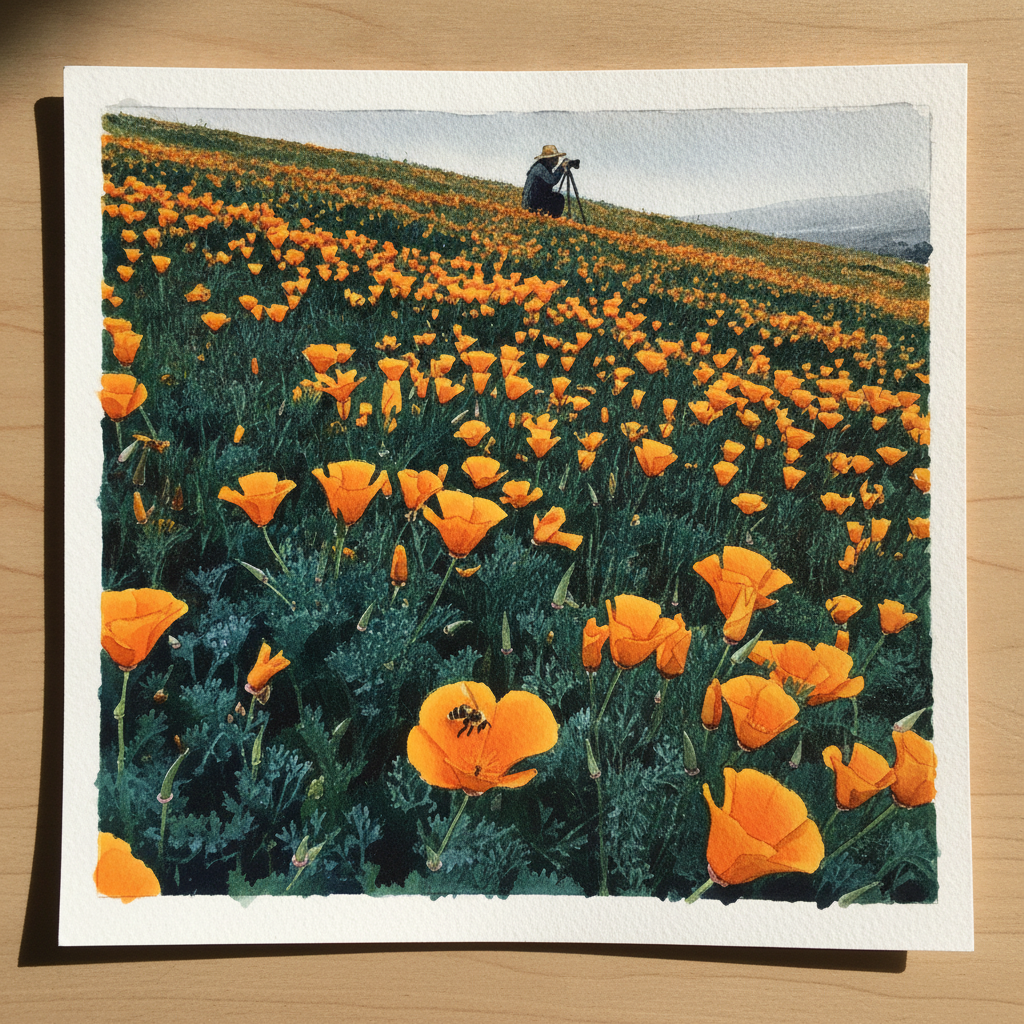
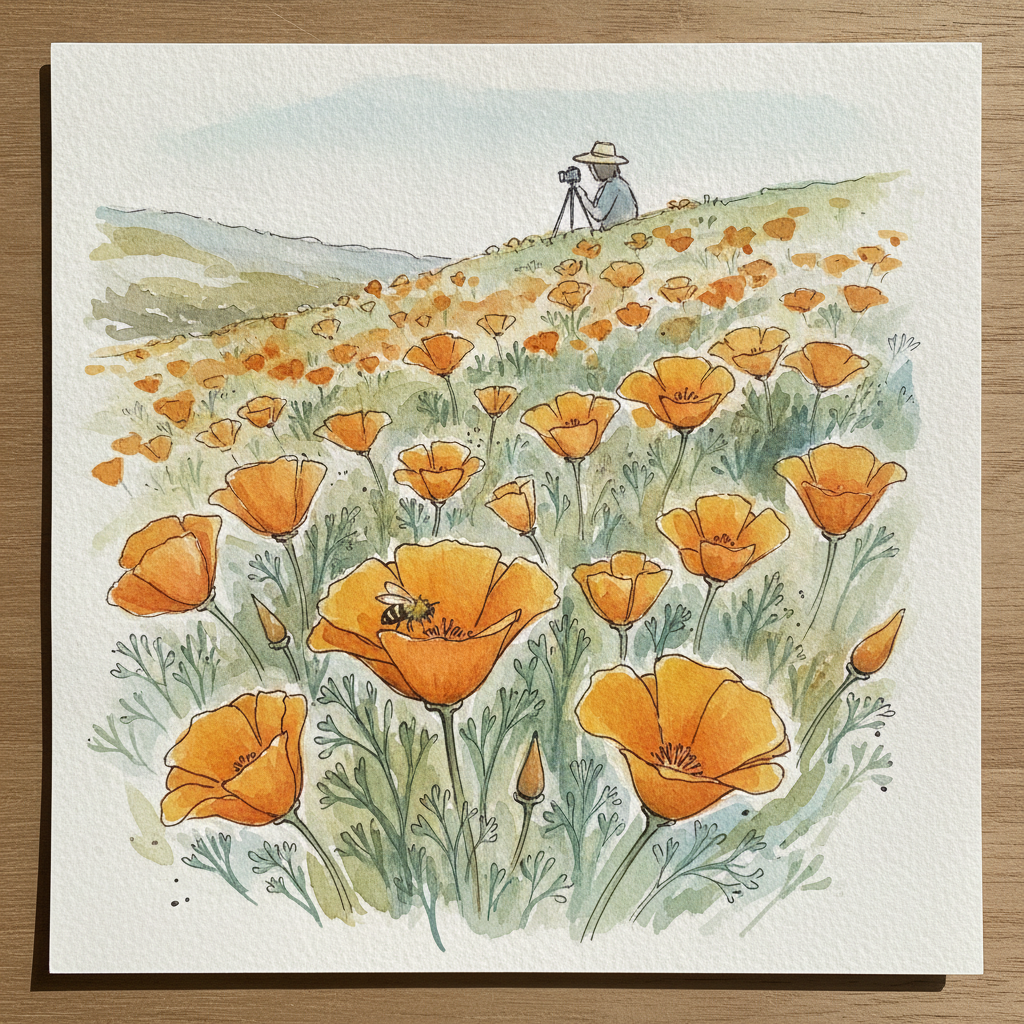
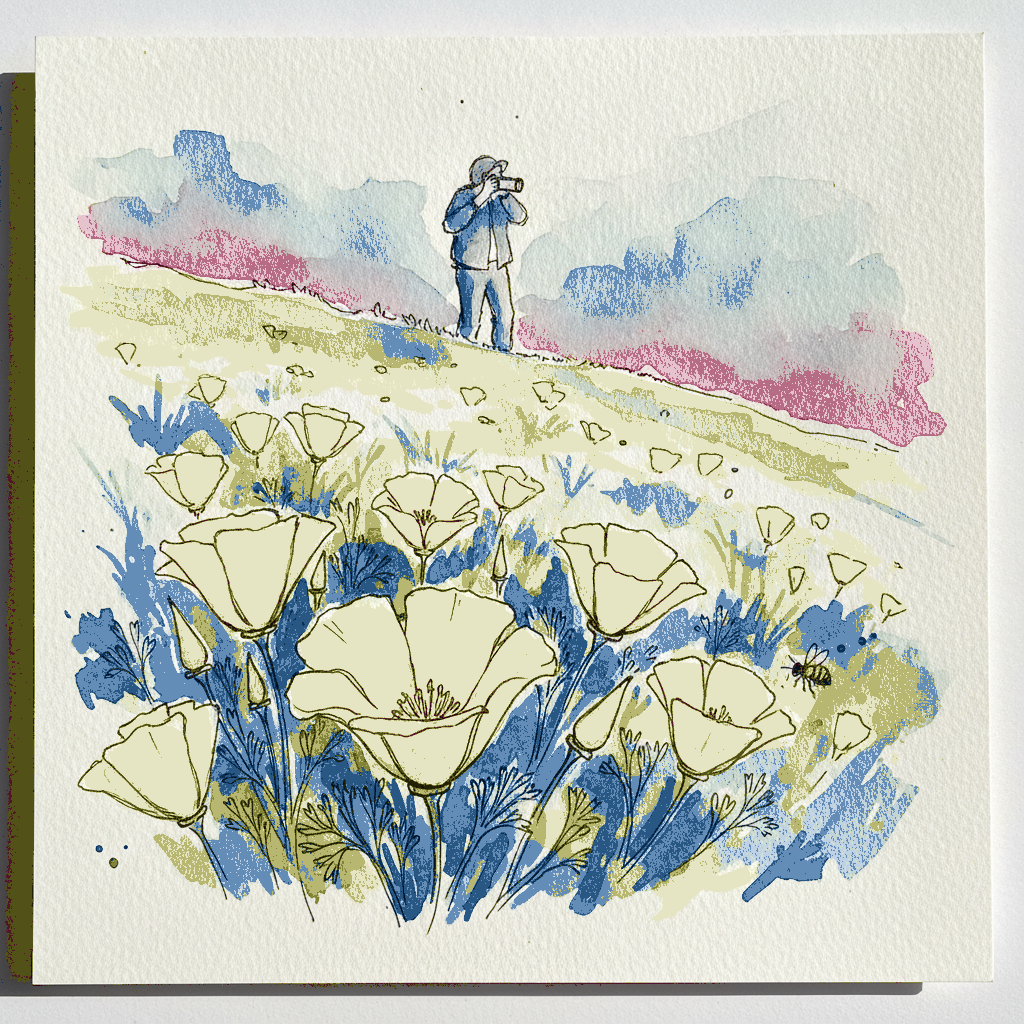
Today's piece is excellent for studying how to depict a vibrant, abundant field of color using the strengths of both media. Begin by laying down broad, wet-on-wet washes to capture the 'brilliant orange' slopes, allowing the watercolor to create soft, atmospheric masses. Then, use restrained pen lines primarily for the distinct 'cup-shaped' poppies in the foreground, letting minimal definition imply a multitude while a sharp contrast between line and wash suggests depth.
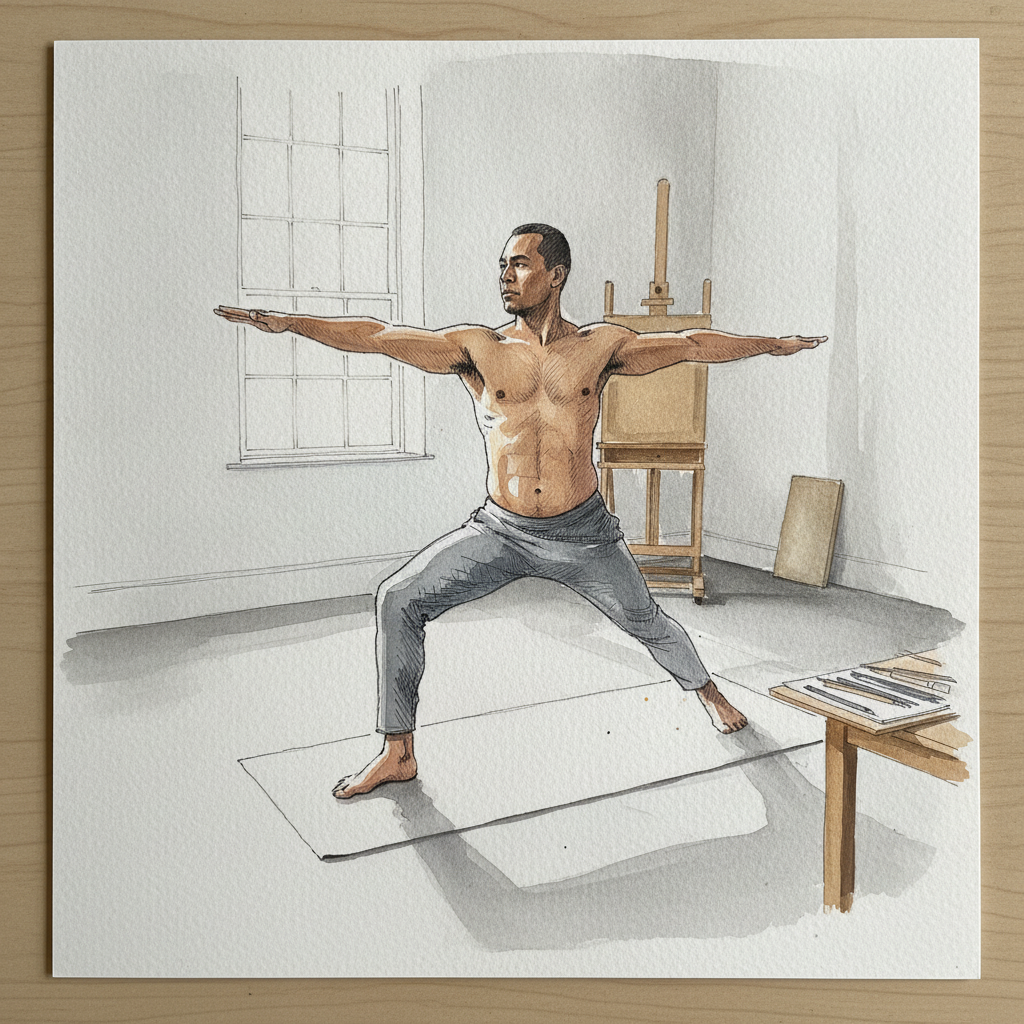
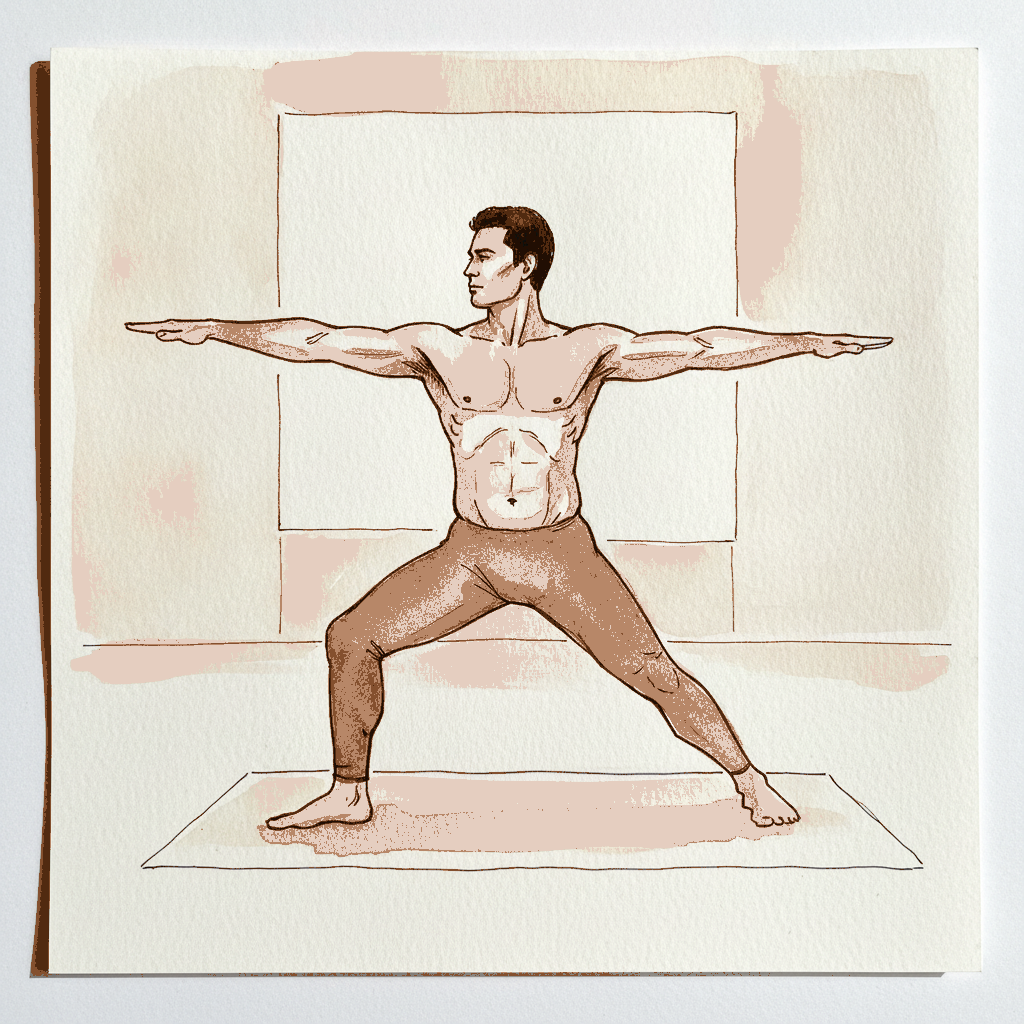
Piece 2 — Warrior II, Pacific Islander man, 49
Pen + Watercolor · Loose pen and watercolor line-and-wash
Three takes

Focus for this piece
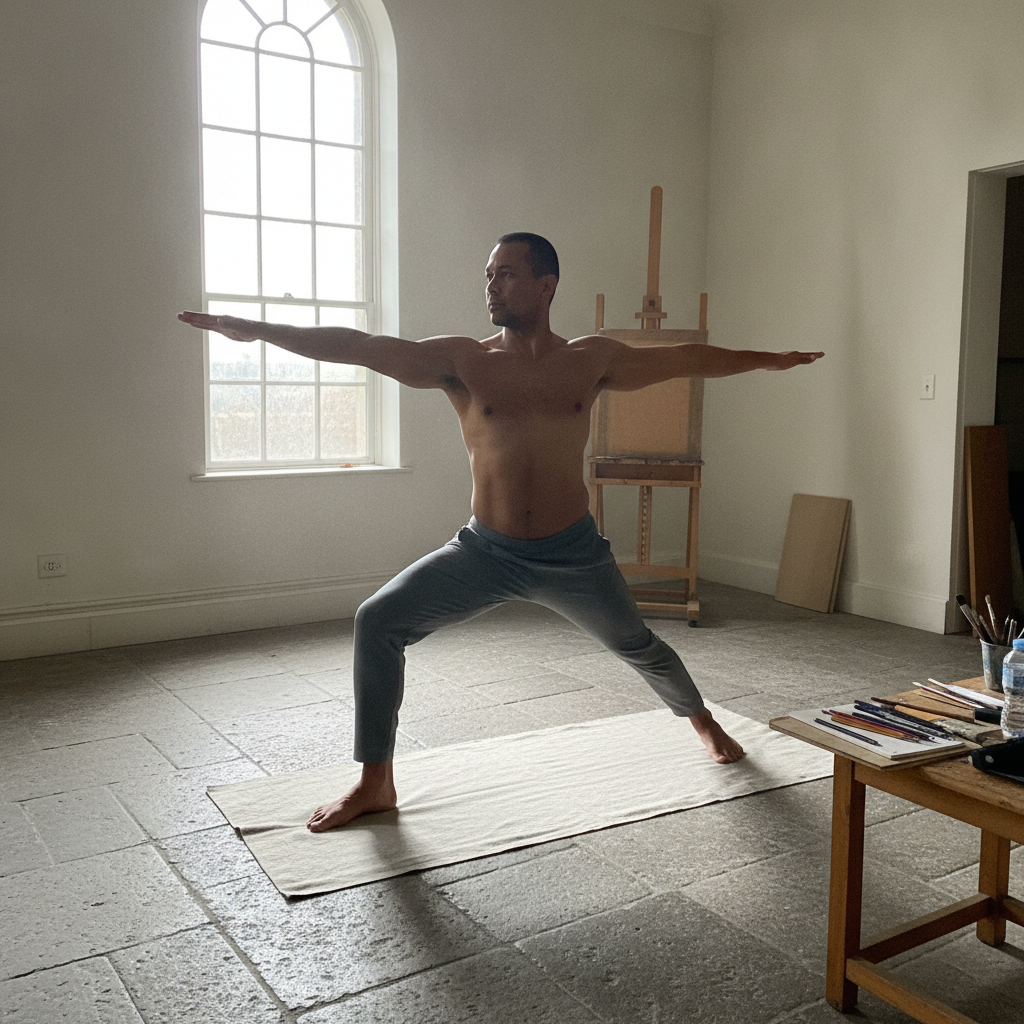
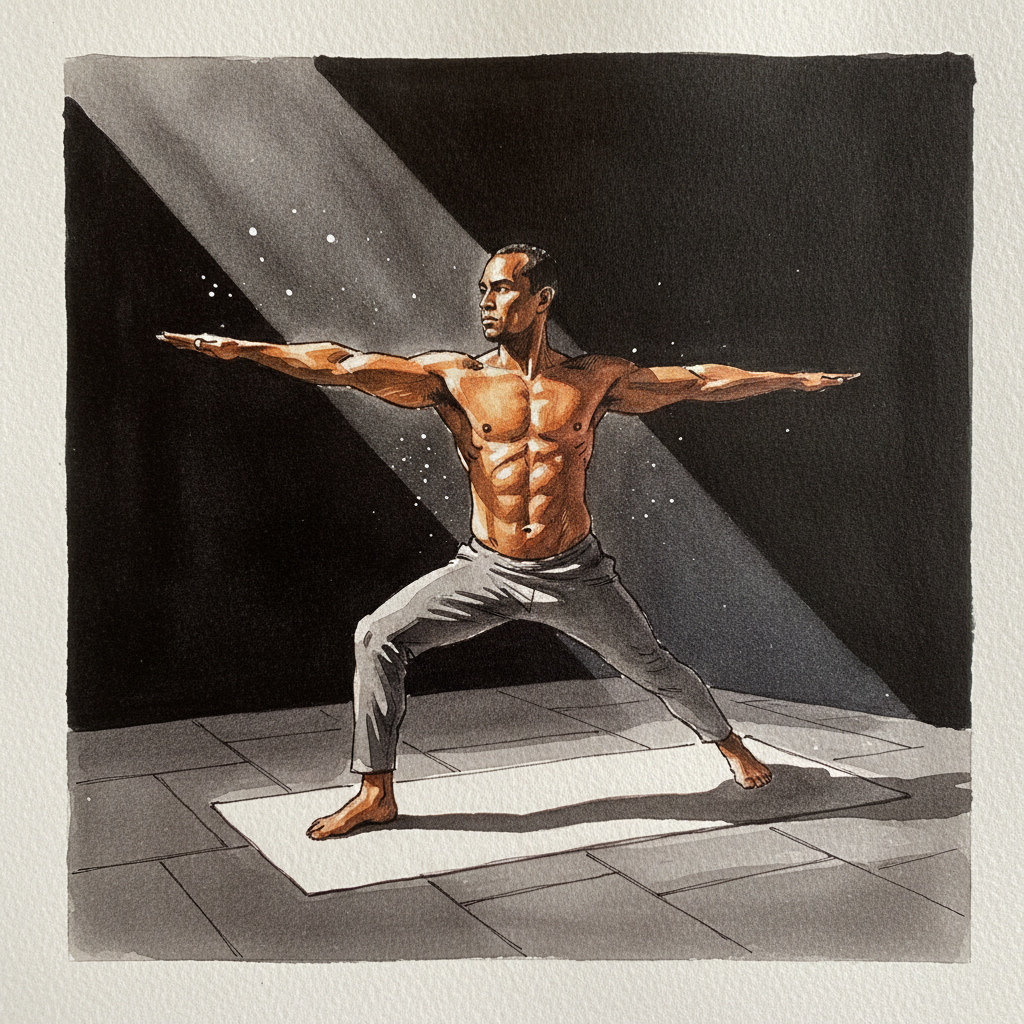
This piece offers an excellent opportunity to explore how specific line weight choices can powerfully define a strong figure in action, while nuanced washes create atmospheric depth. Focus on using a confident, heavier line for the crossing axes of the arms and the long back leg, anchoring the pose's dynamic structure. Then, employ soft, graded washes for the raking light and suspended dust, allowing the background to recede gently and highlight the figure's form without losing its ethereal quality.
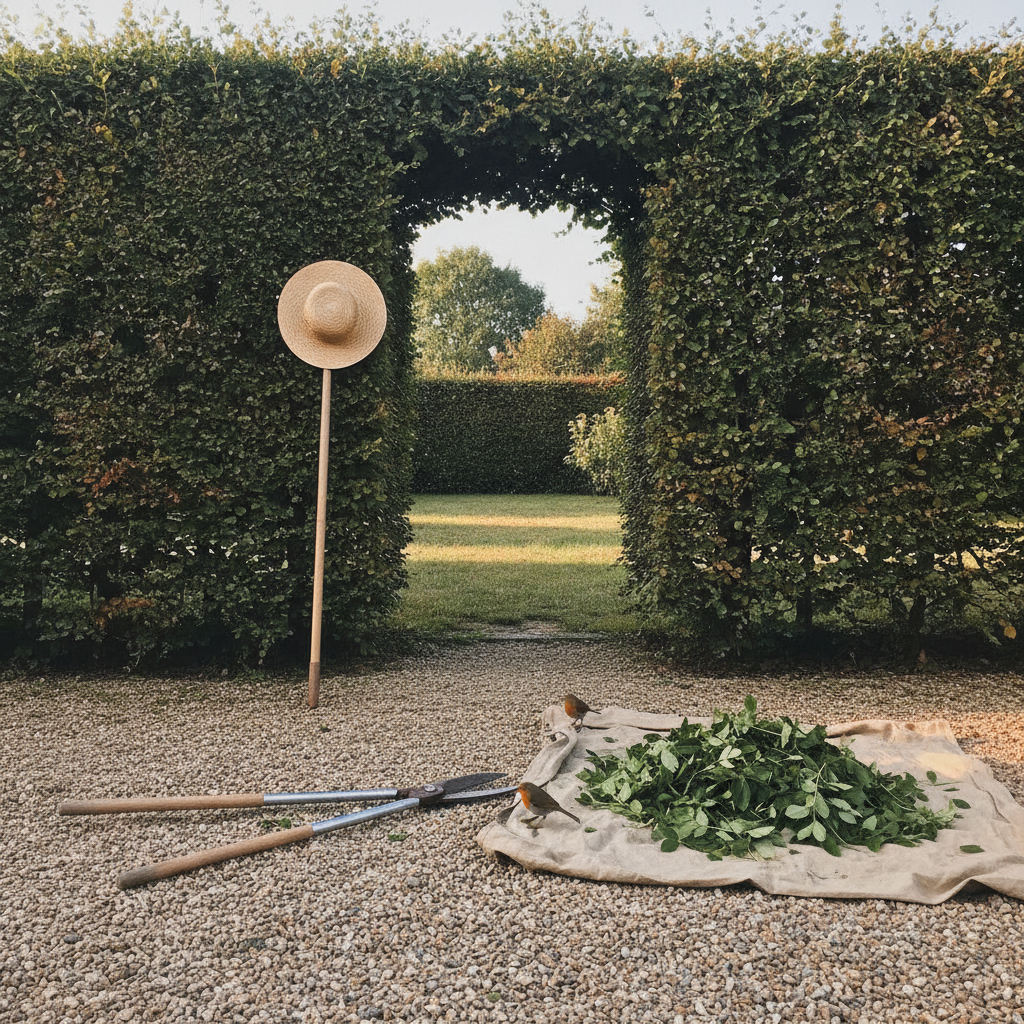
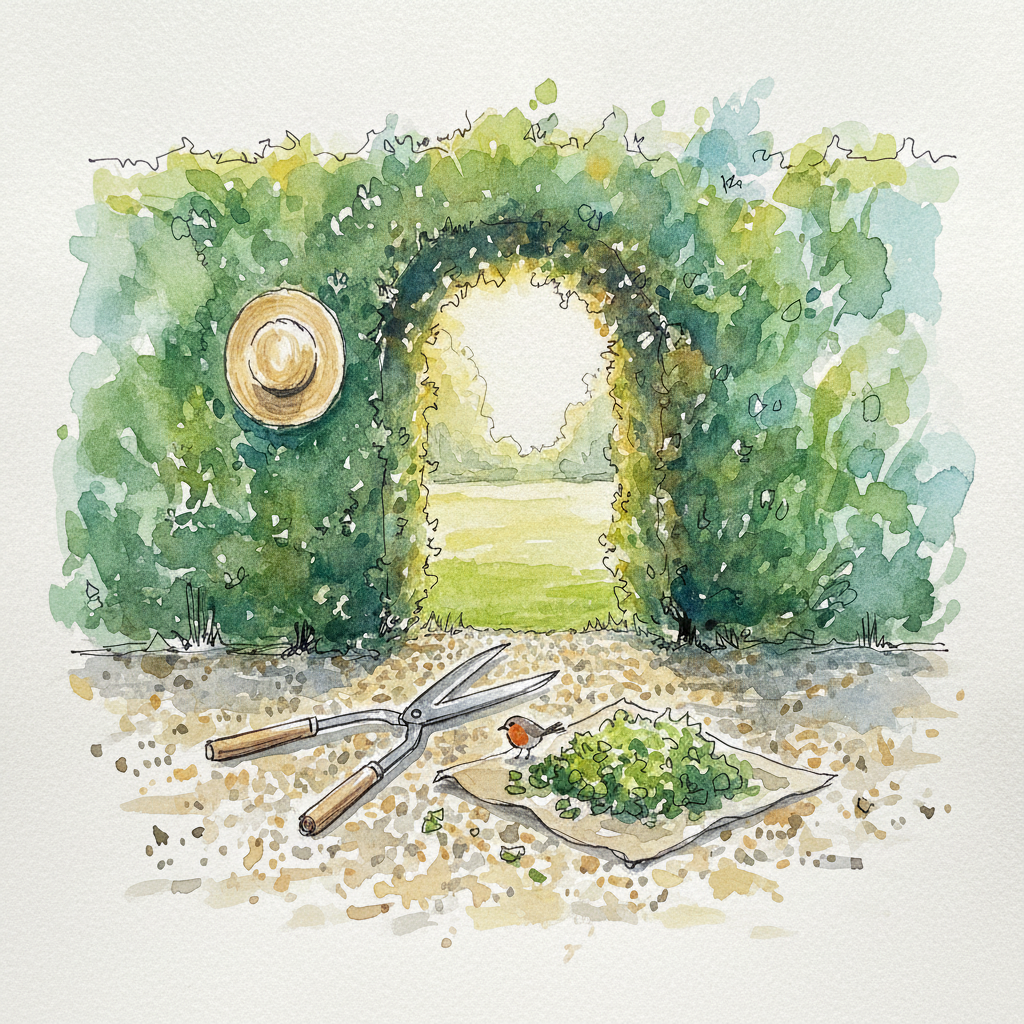
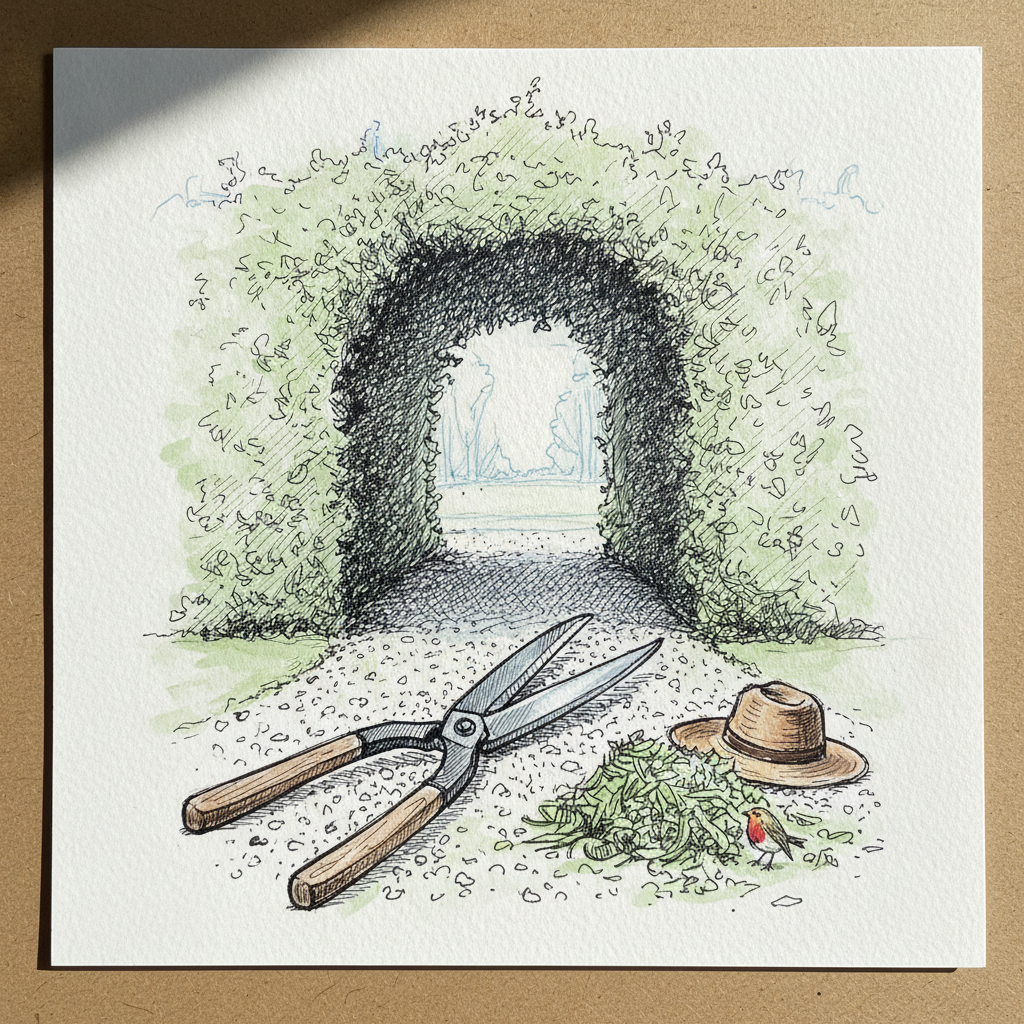
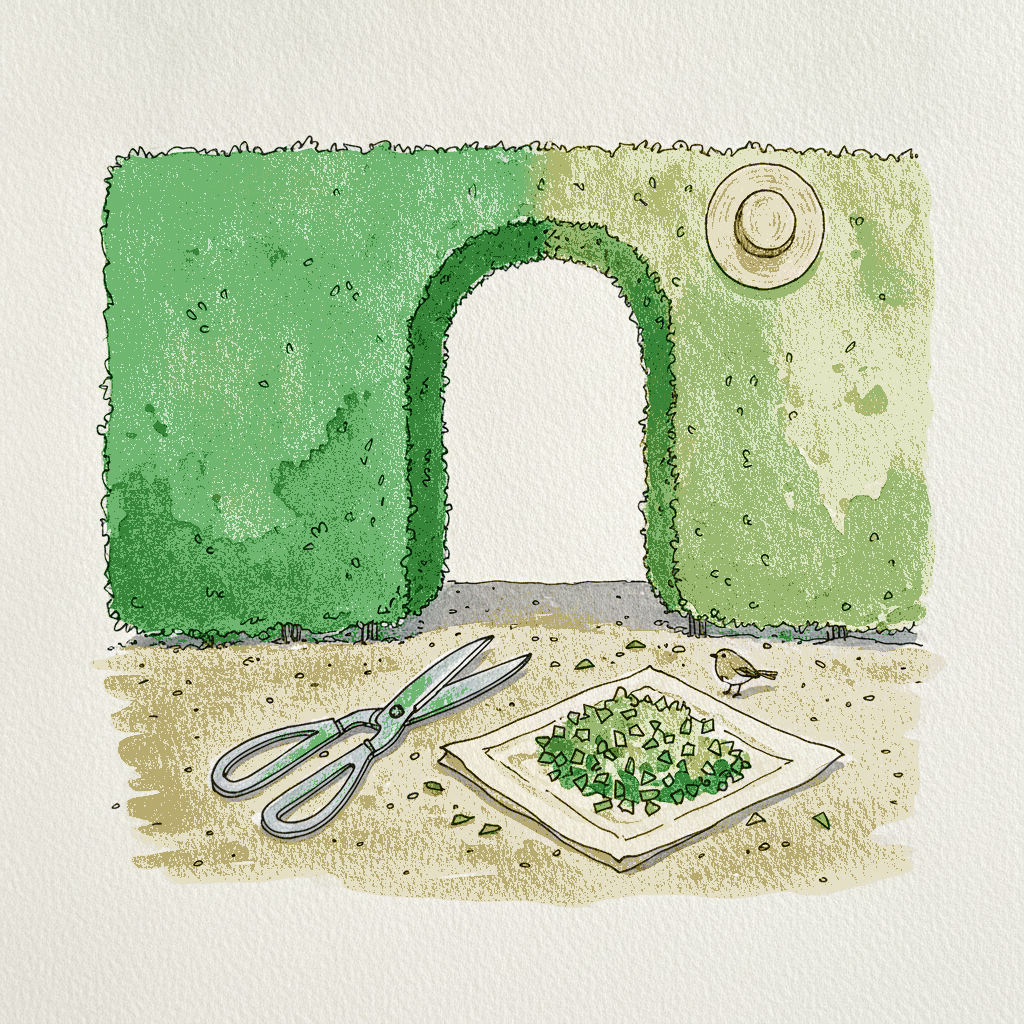
Piece 3 — Hornbeam arch with shears resting on gravel
Pen + Watercolor · Loose pen and watercolor line-and-wash
Three takes

Focus for this piece
This piece is an excellent study in rendering diverse textures and light using varied line weights and controlled washes. Use crisp, deliberate pen lines for the sharp edge of the clipped hornbeam, contrasting with lighter, broken strokes to suggest the shaggy growth and the rough texture of the gravel. Complement these with warm, transparent watercolor washes, focusing on soft wet-on-wet blending for foliage and strong value shifts to capture the warm, mid-afternoon light and cast shadows.
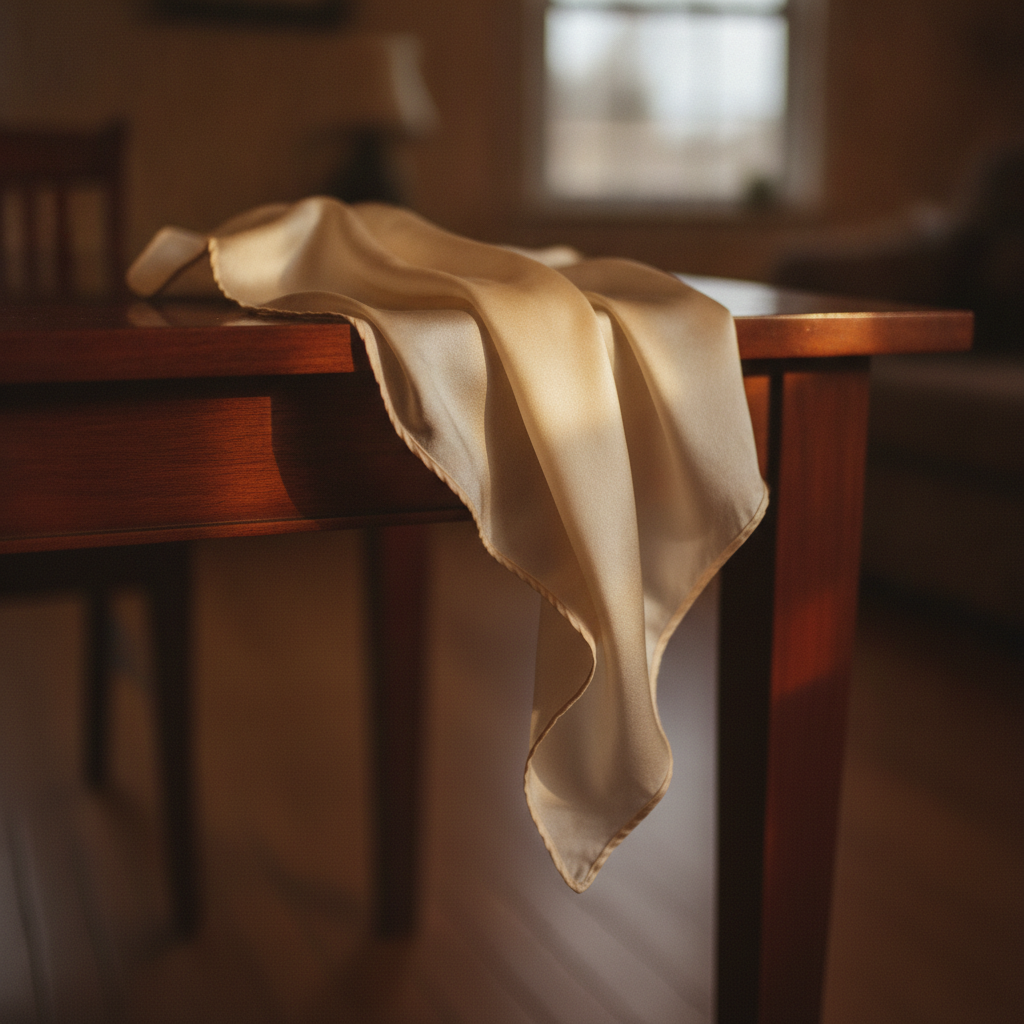
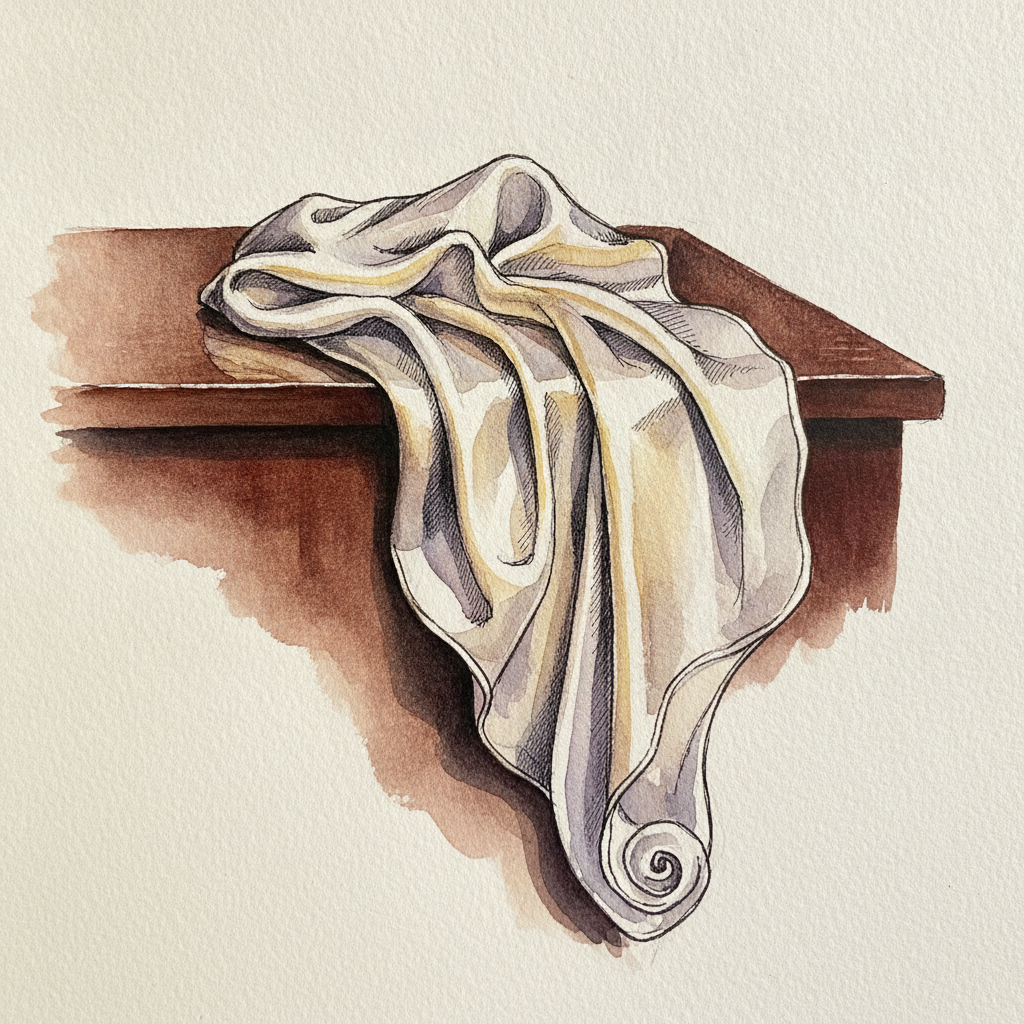
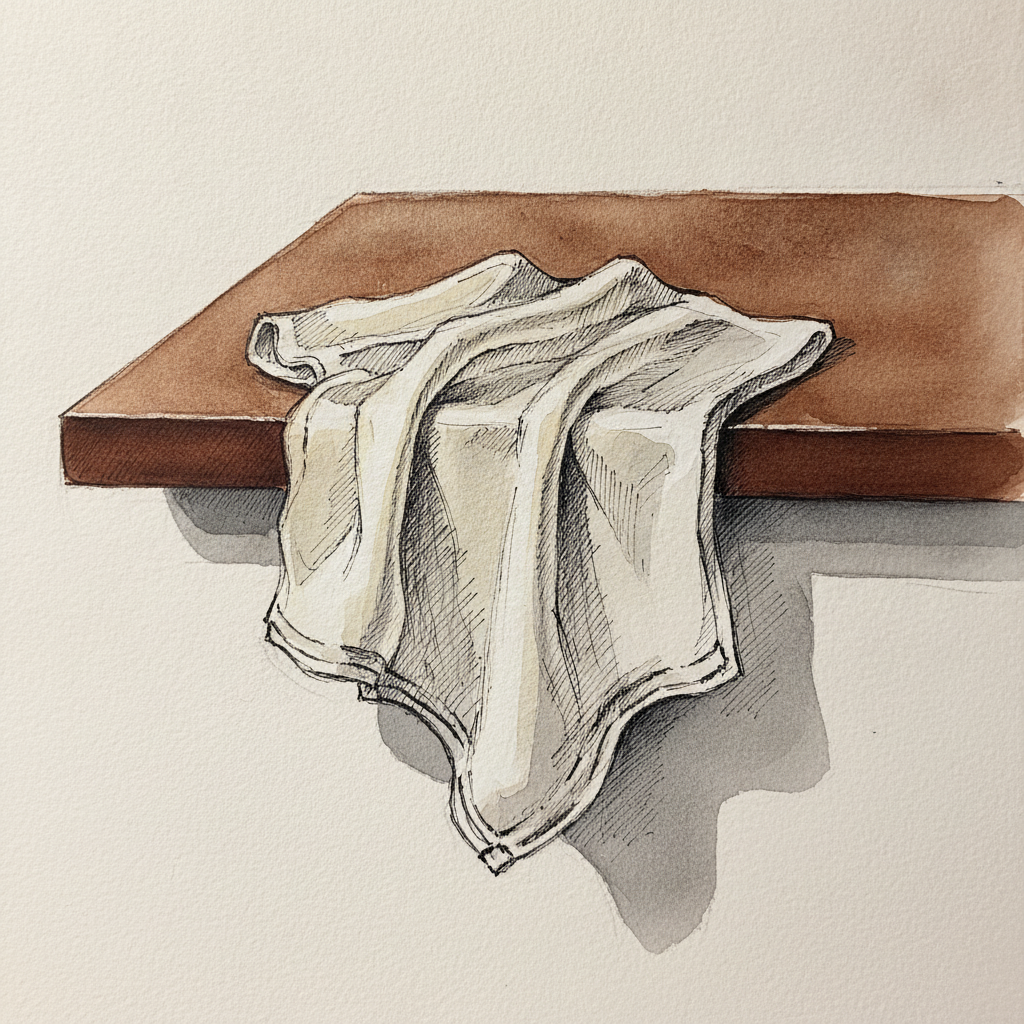
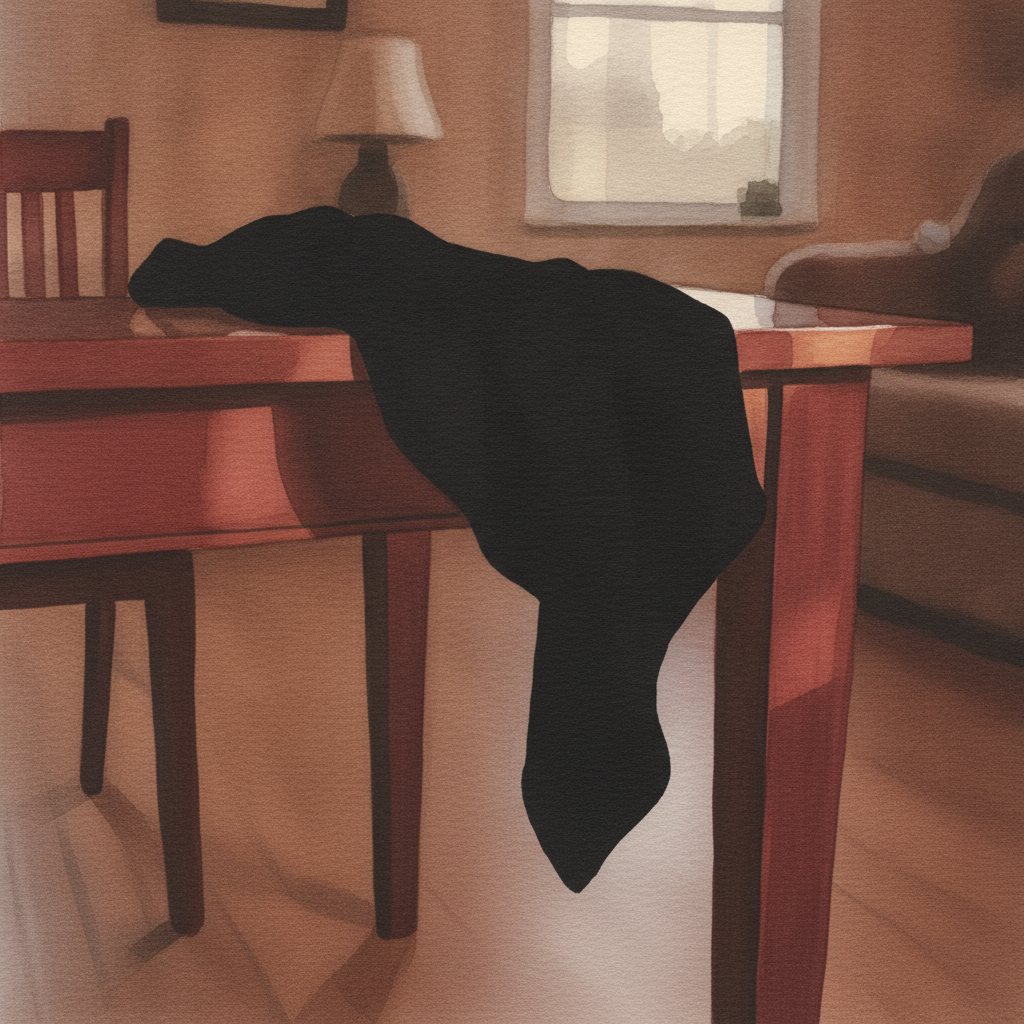
Piece 4 — Silk handkerchief on a polished table
Pen + Watercolor · Loose pen and watercolor line-and-wash
Three takes
Focus for this piece
This piece offers an excellent study in depicting diverse textures and light. Focus on defining the soft, flowing folds of the silk with delicate, varied pen lines, reserving white for the distinct long highlight bands along its surface and hem. For the polished table's reflection, use soft, wet-in-wet washes to capture the blurred forms of the handkerchief's underside, deliberately minimizing ink lines here to maintain its elusive quality. Build the rich mahogany surface using controlled glazes, allowing its warmth to contrast with the cooler undertones of the reflected fabric.
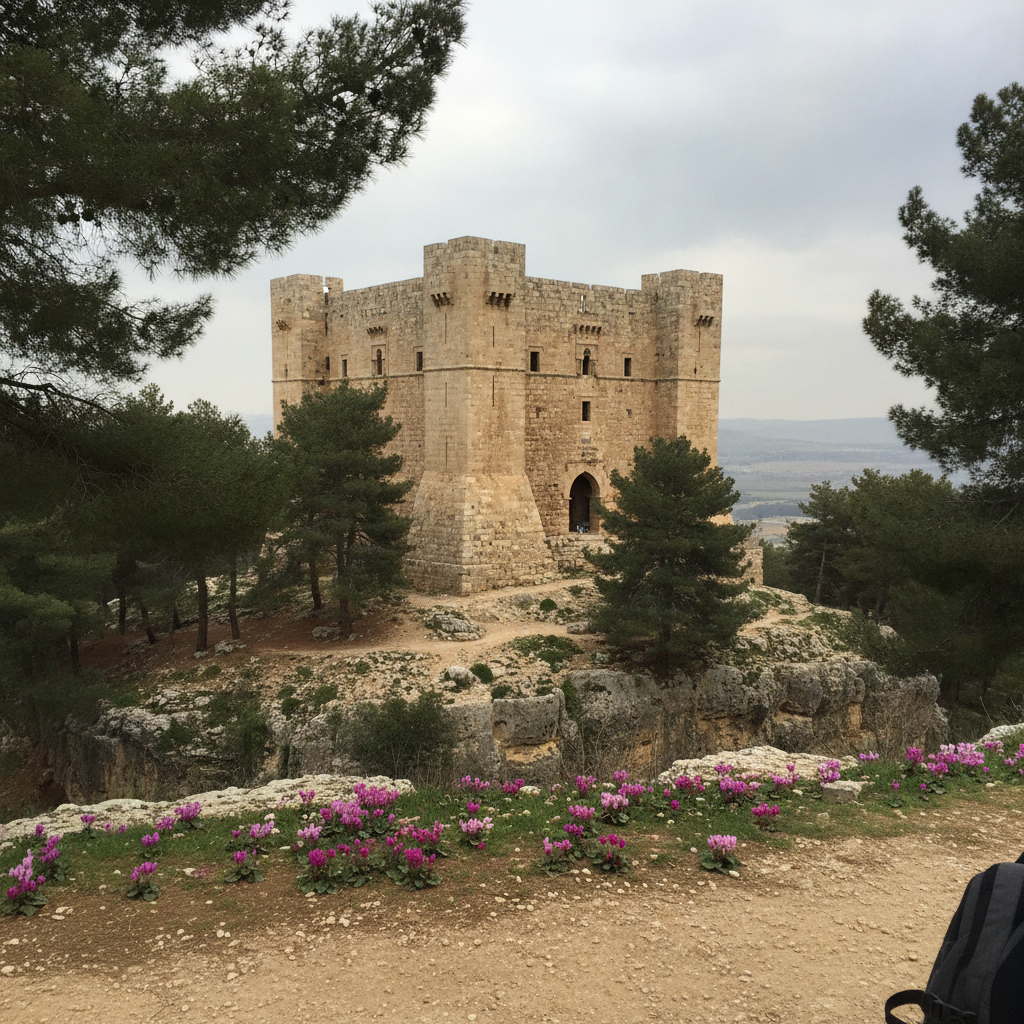
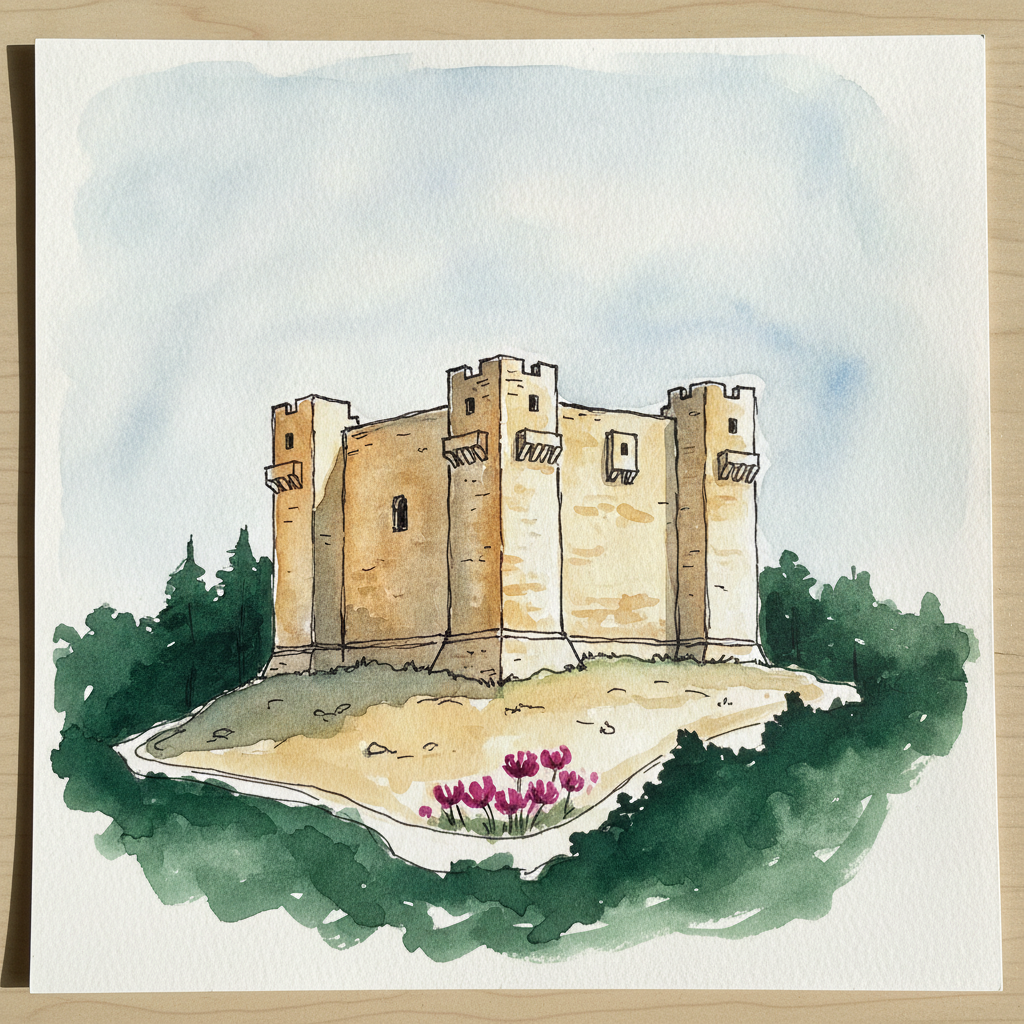
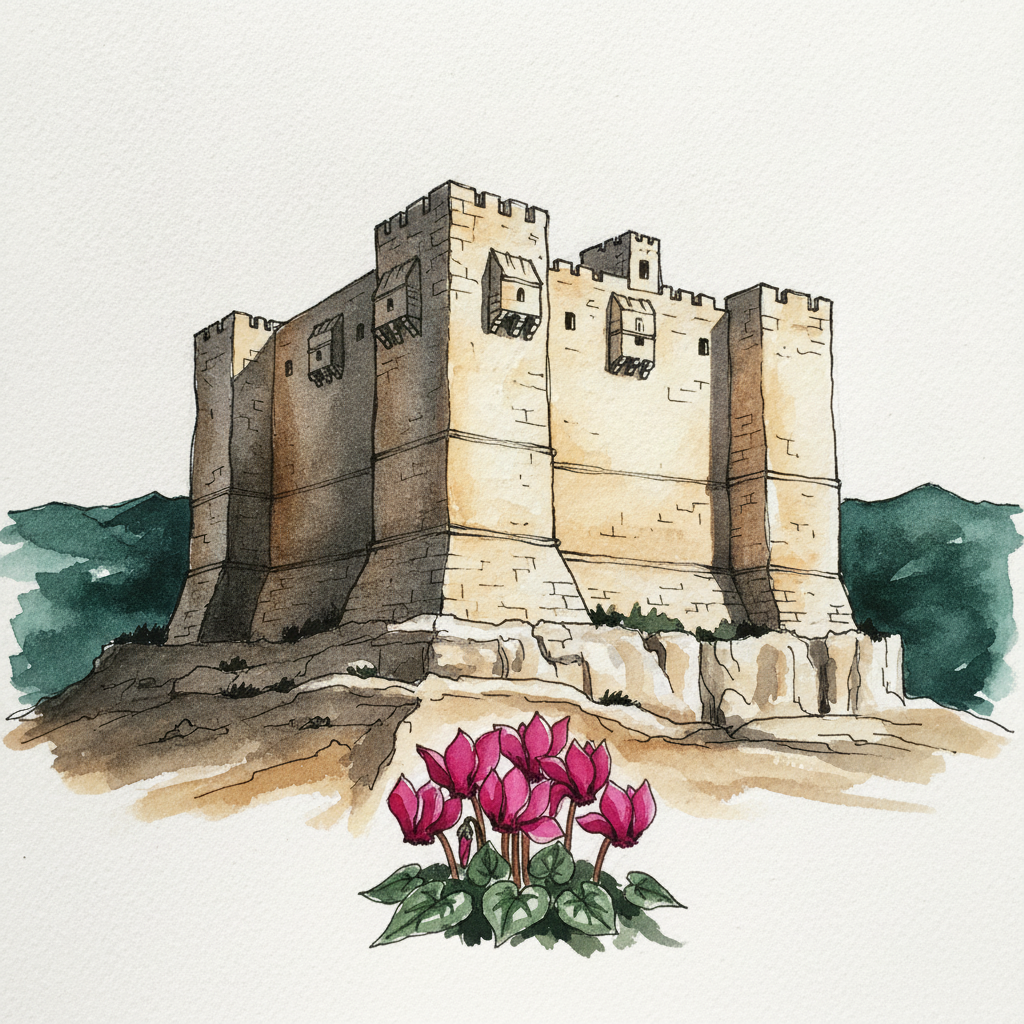
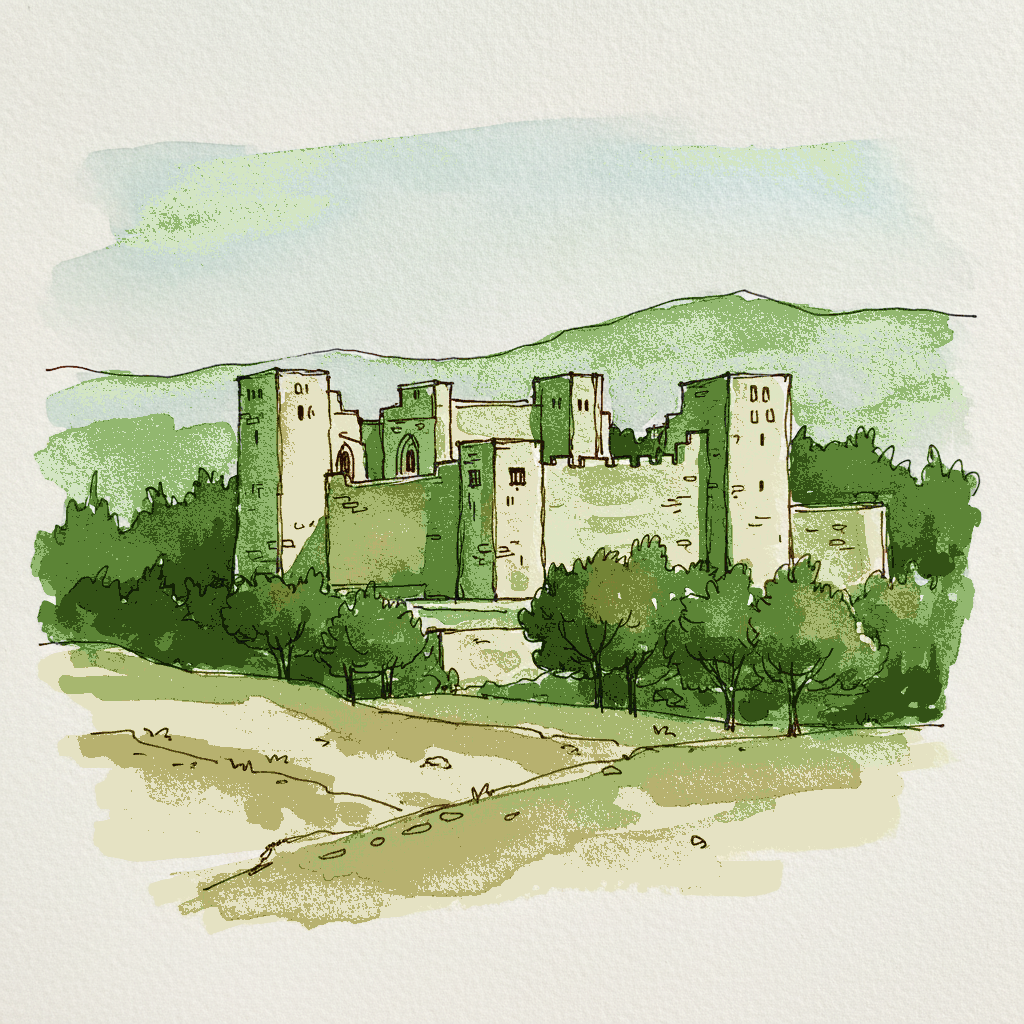
Piece 5 — Ajloun Castle (Qalaat ar-Rabad), Ajloun, Jordan
Pen + Watercolor · Loose pen and watercolor line-and-wash
Three takes

Focus for this piece
For Ajloun Castle, focus on capturing the dramatic interplay between rigid, geometric architecture and the soft, organic forms of the natural landscape. Use varied pen line weights to define the castle's strong square plan and towers, reserving lighter, broken lines for distant hills or trees. Then, employ broad, wet-into-wet washes to create the dark, atmospheric volume of the pine-covered hilltop, contrasting sharply with the drier, pale washes defining the fortress's sunlit limestone. This piece offers an excellent opportunity to emphasize how ink provides structure while watercolor establishes mood and value.
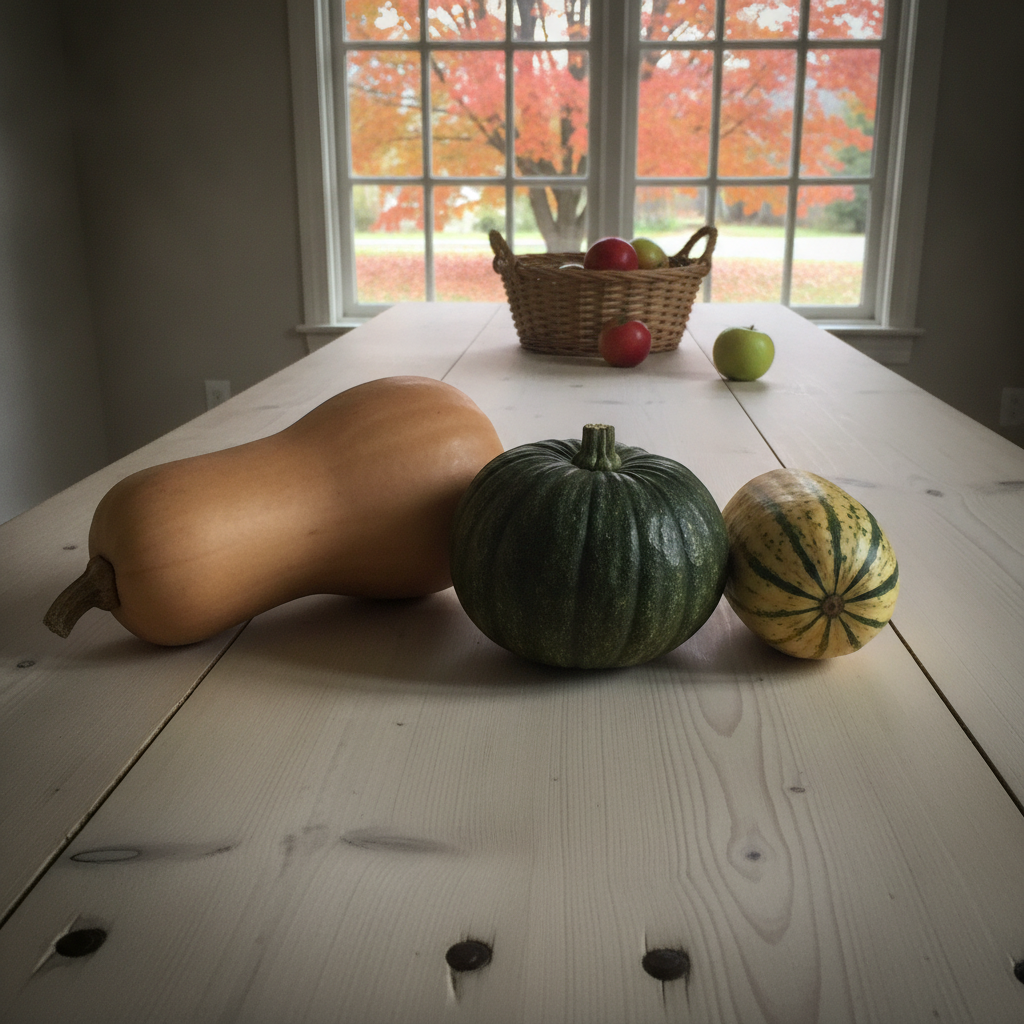
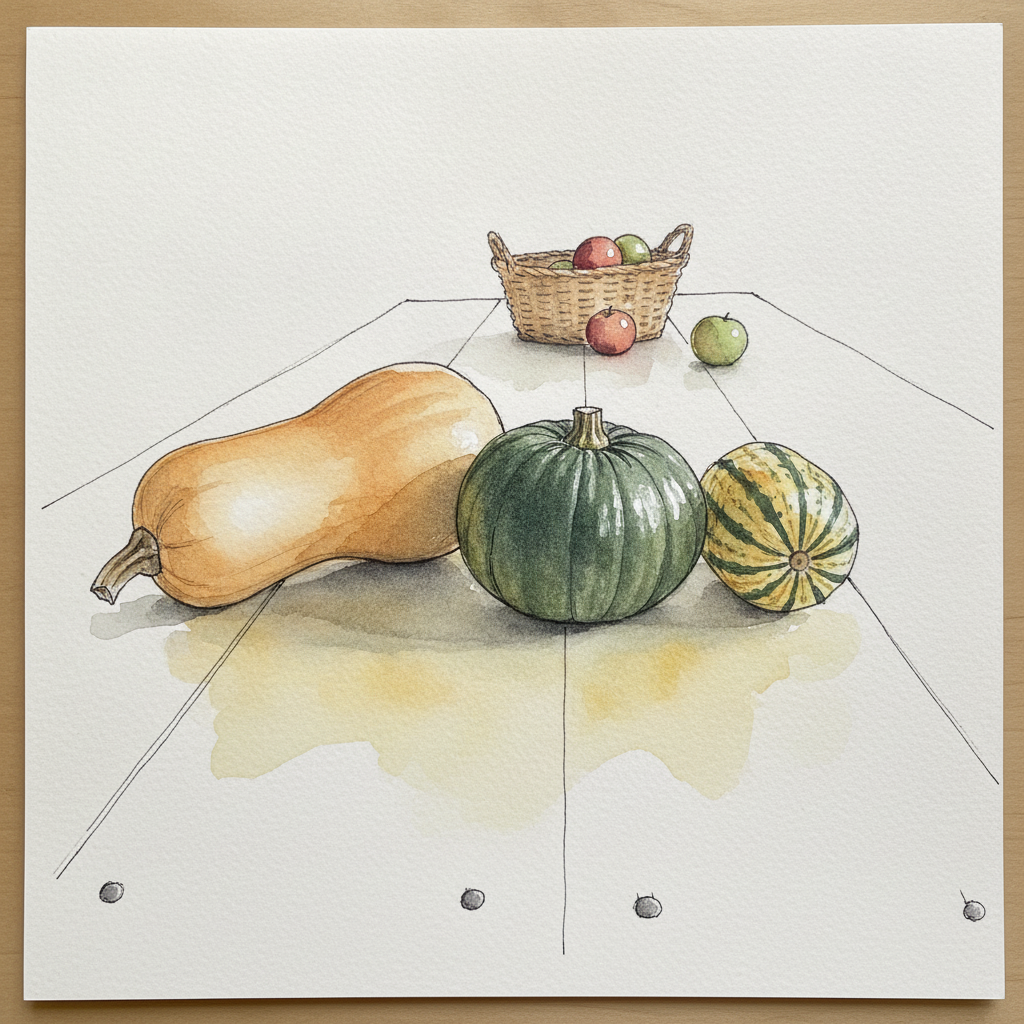
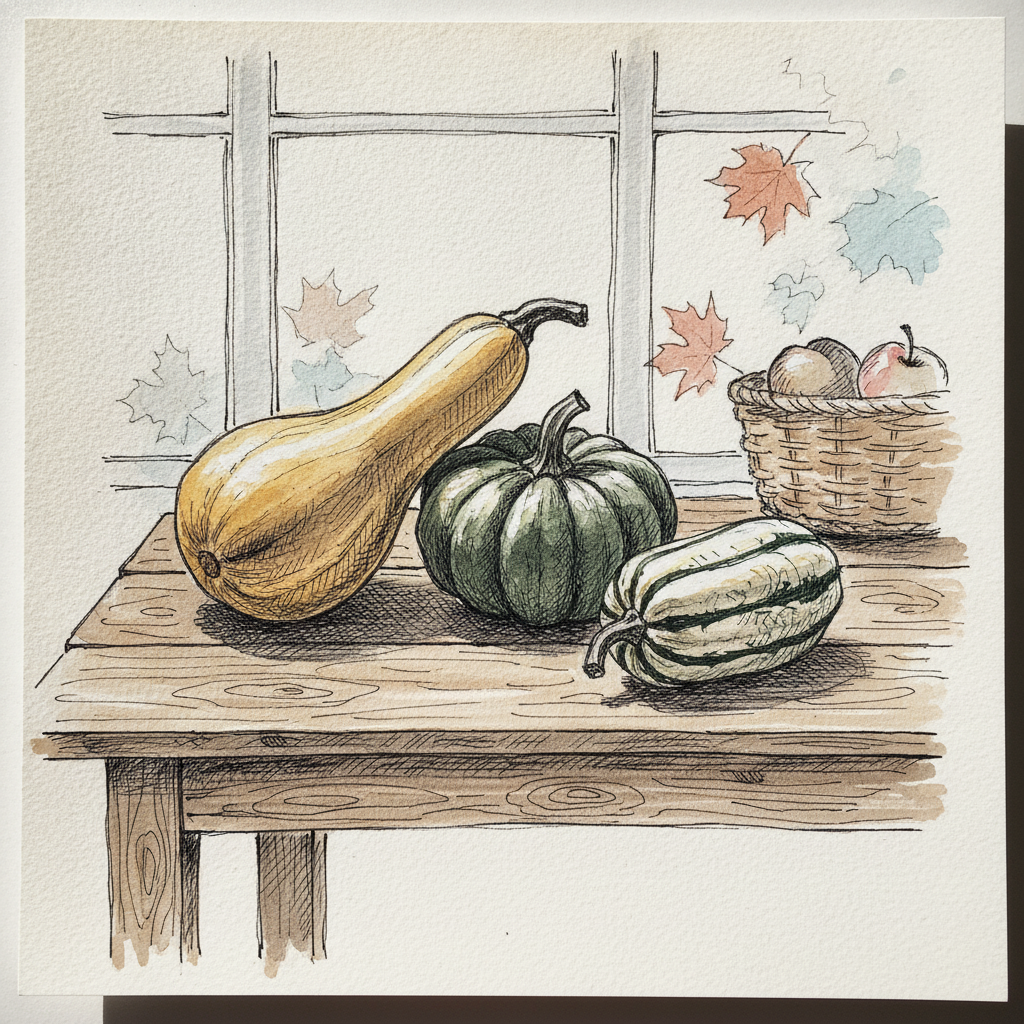
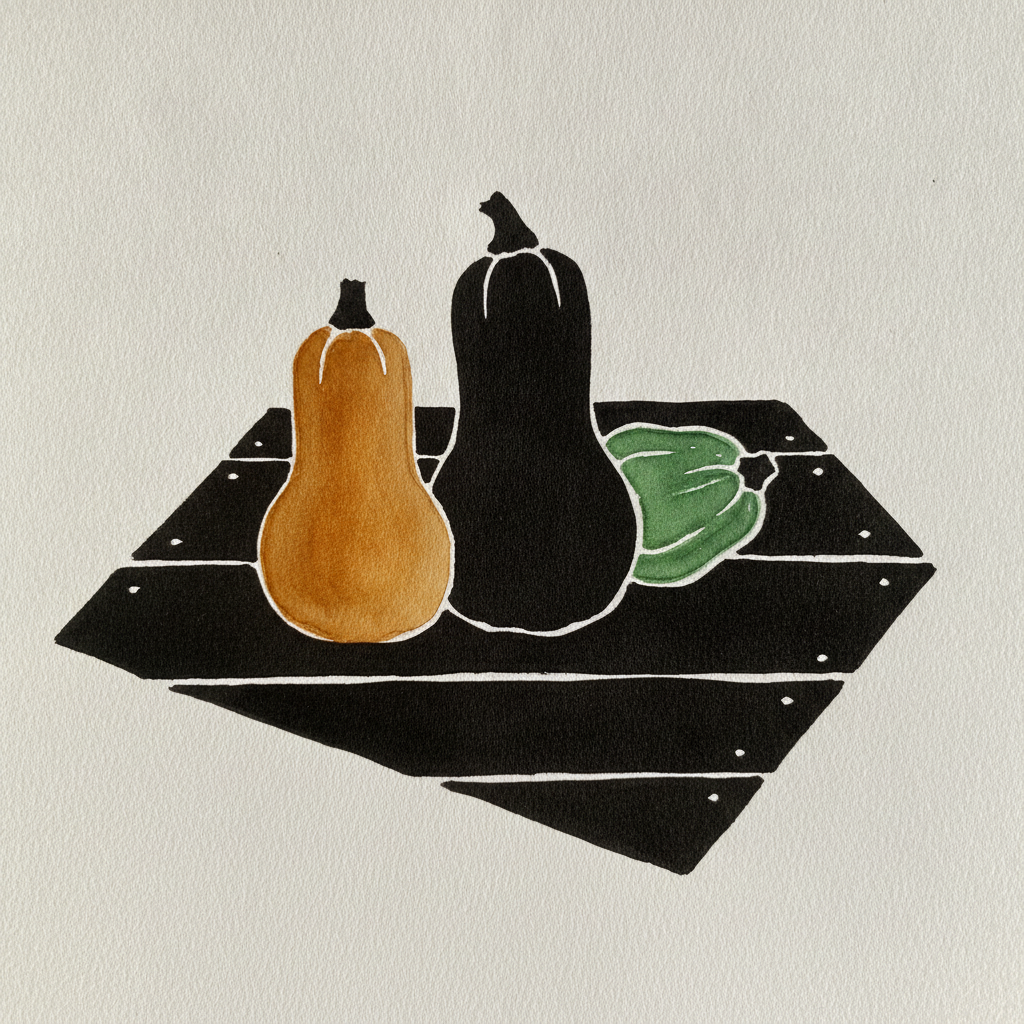
Piece 6 — Butternut, acorn, and delicata on a harvest table
Pen + Watercolor · Loose pen and watercolor line-and-wash
Three takes
Focus for this piece
This piece is ideal for practicing how varied line weights can articulate distinct organic forms like the butternut's curve and the acorn's ribs. Focus on using soft, layered washes to capture the 'dull bloom' on the squash skins, contrasting them with drier brushstrokes that suggest the scrubbed texture of the pine table. Pay attention to how the cool light shapes these forms, allowing your pen lines to provide structure while the watercolor builds atmosphere.
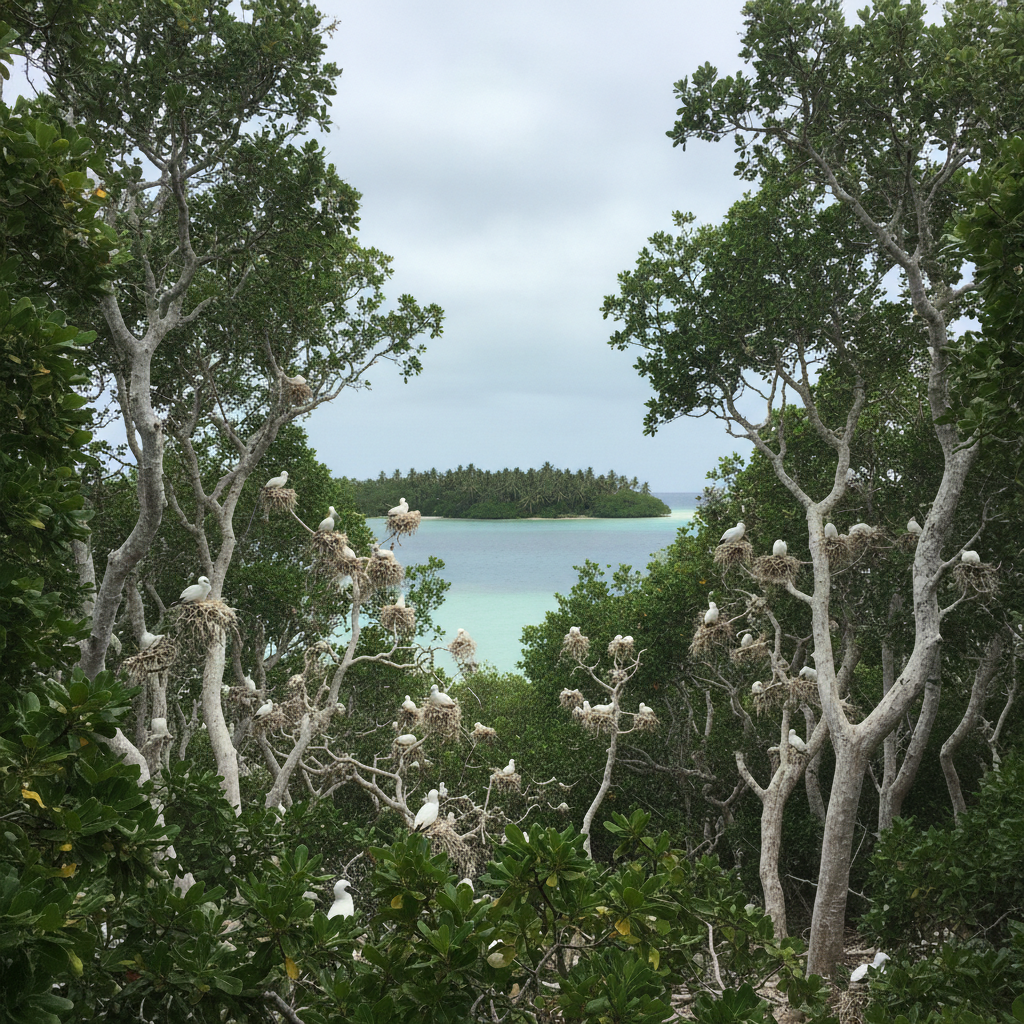
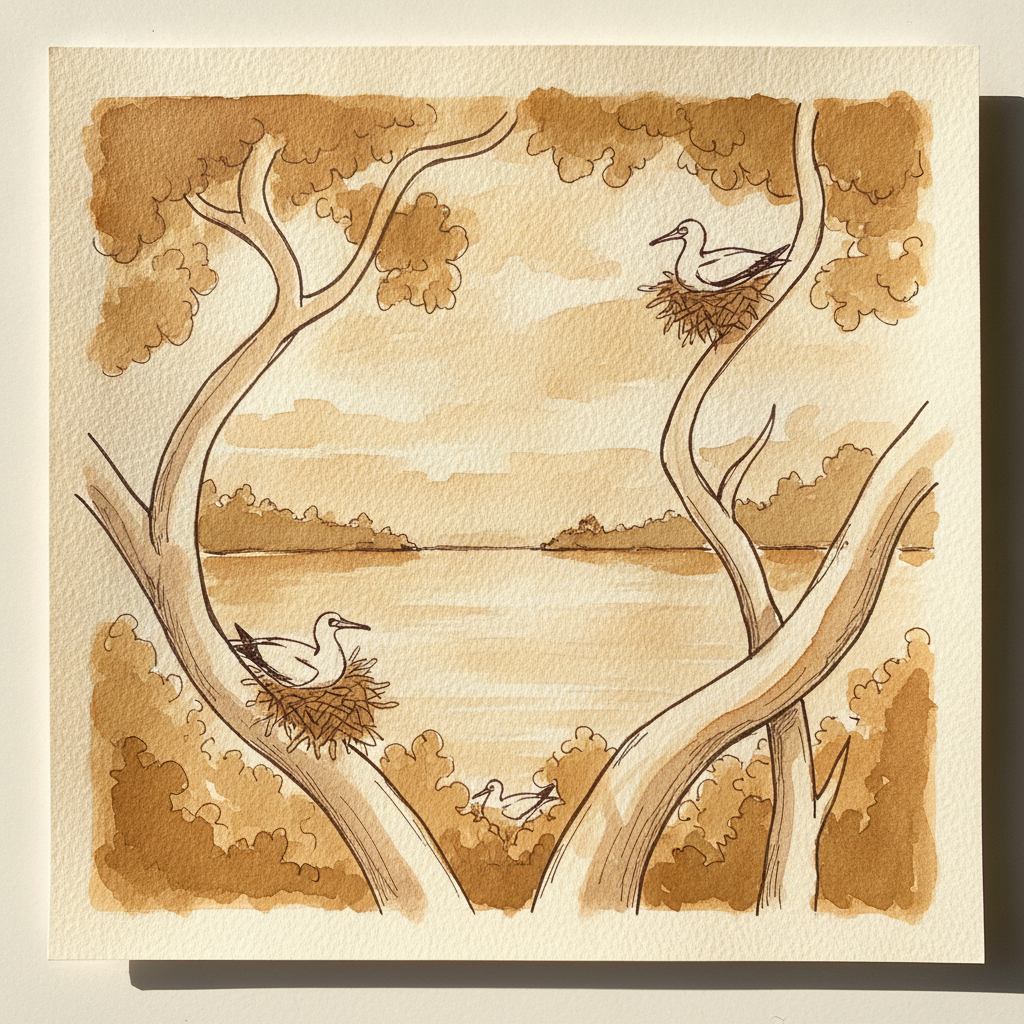
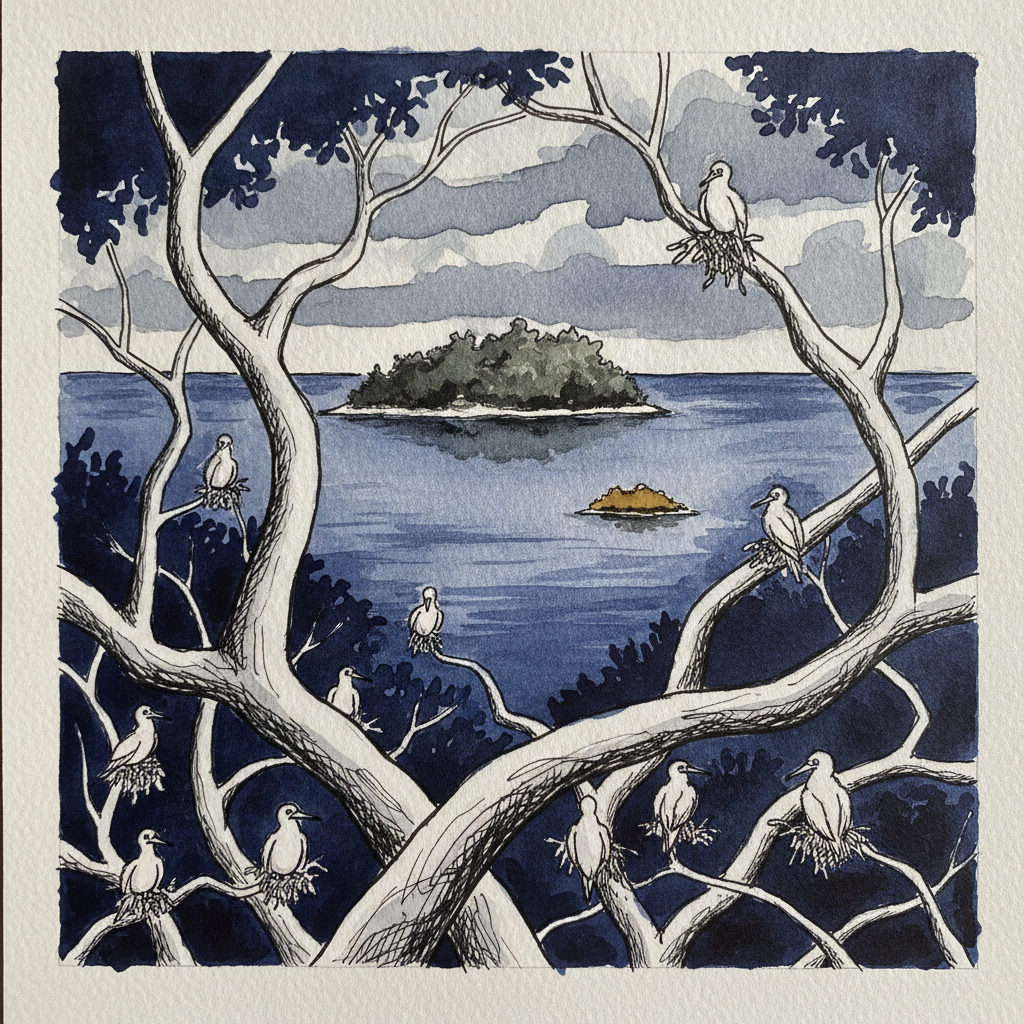
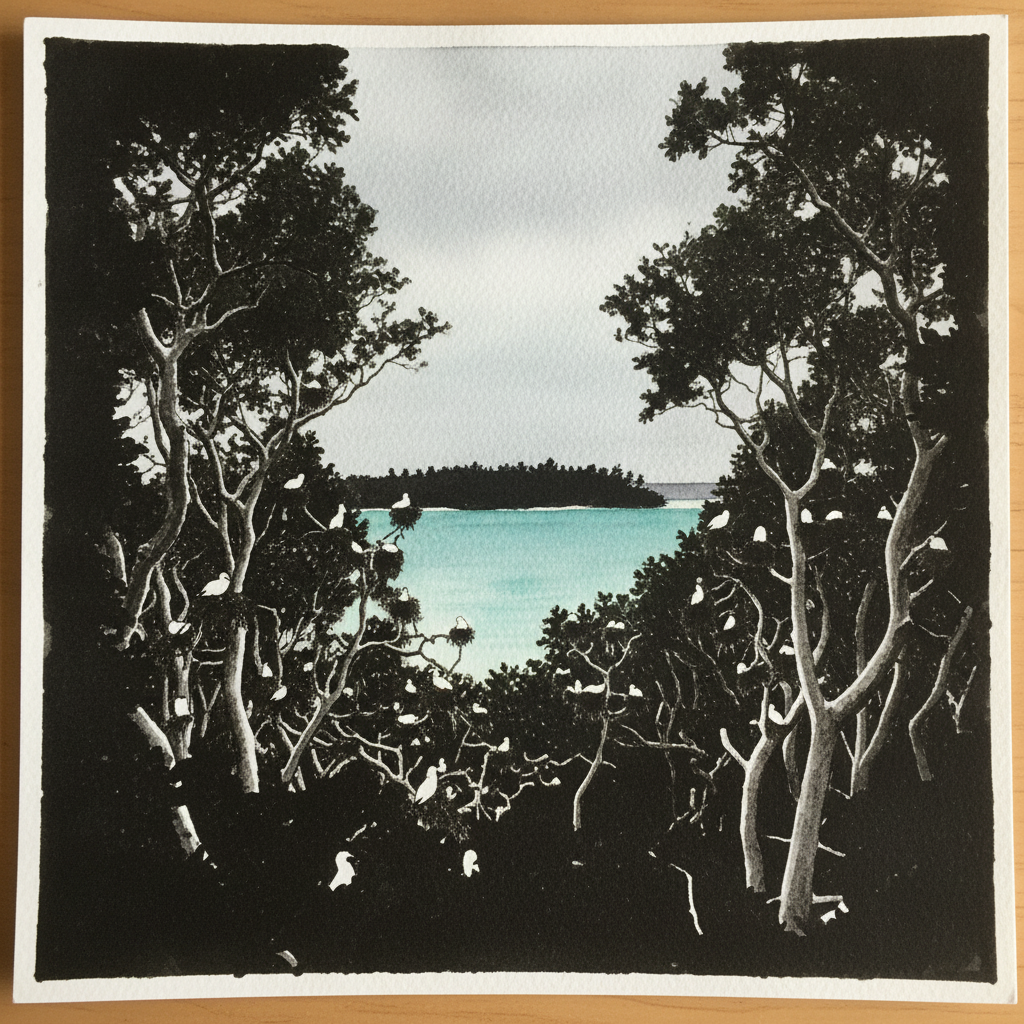
Piece 7 — Palmyra red-footed booby colony in Pisonia
Pen + Watercolor · Loose pen and watercolor line-and-wash
Three takes
Focus for this piece
This study offers an excellent opportunity to explore rendering dense, organic texture while maintaining visual interest. Focus on how varied wash consistency—from broad, soft background greens to more textured, drier foreground foliage—interacts with deliberate shifts in pen line weight and density to define depth within the Pisonia canopy. Challenge yourself to strategically preserve the bright white of the booby chicks, allowing them to provide a focal contrast against the lush greens.
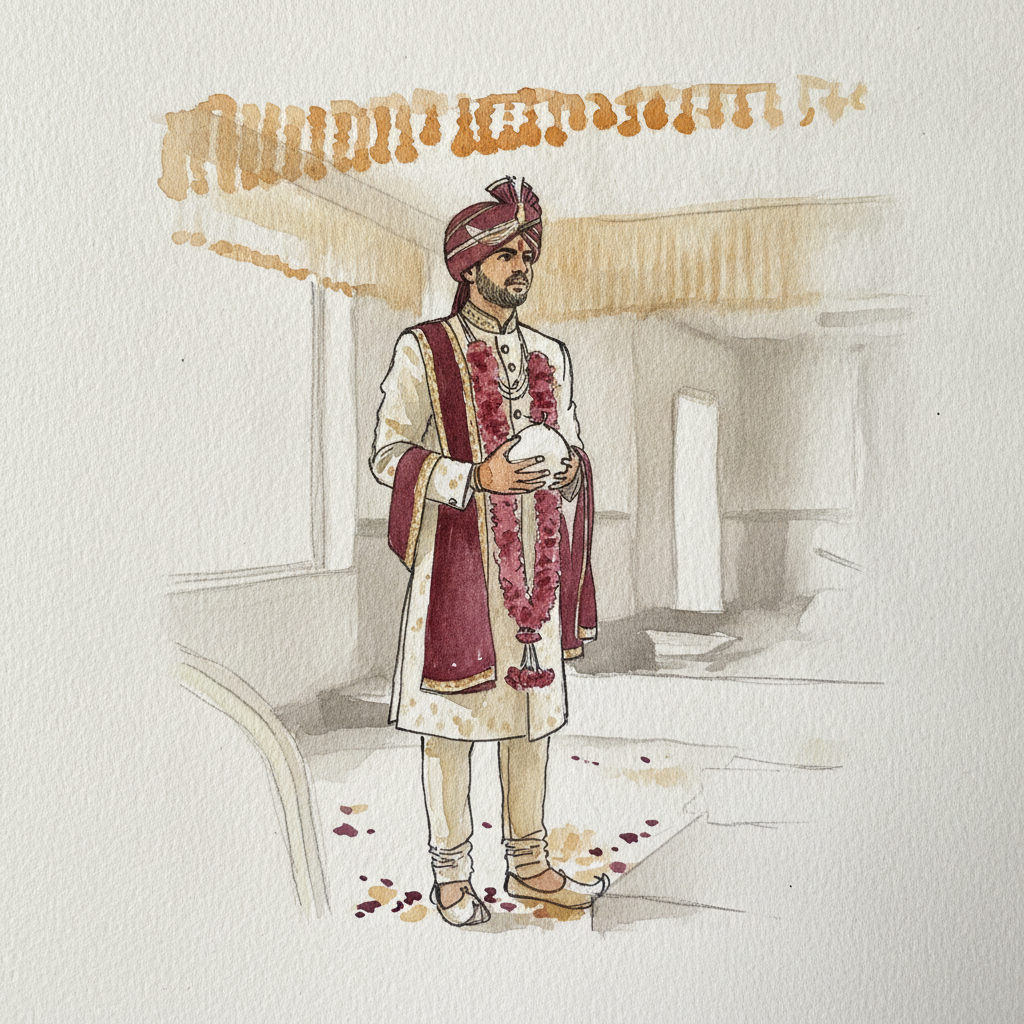
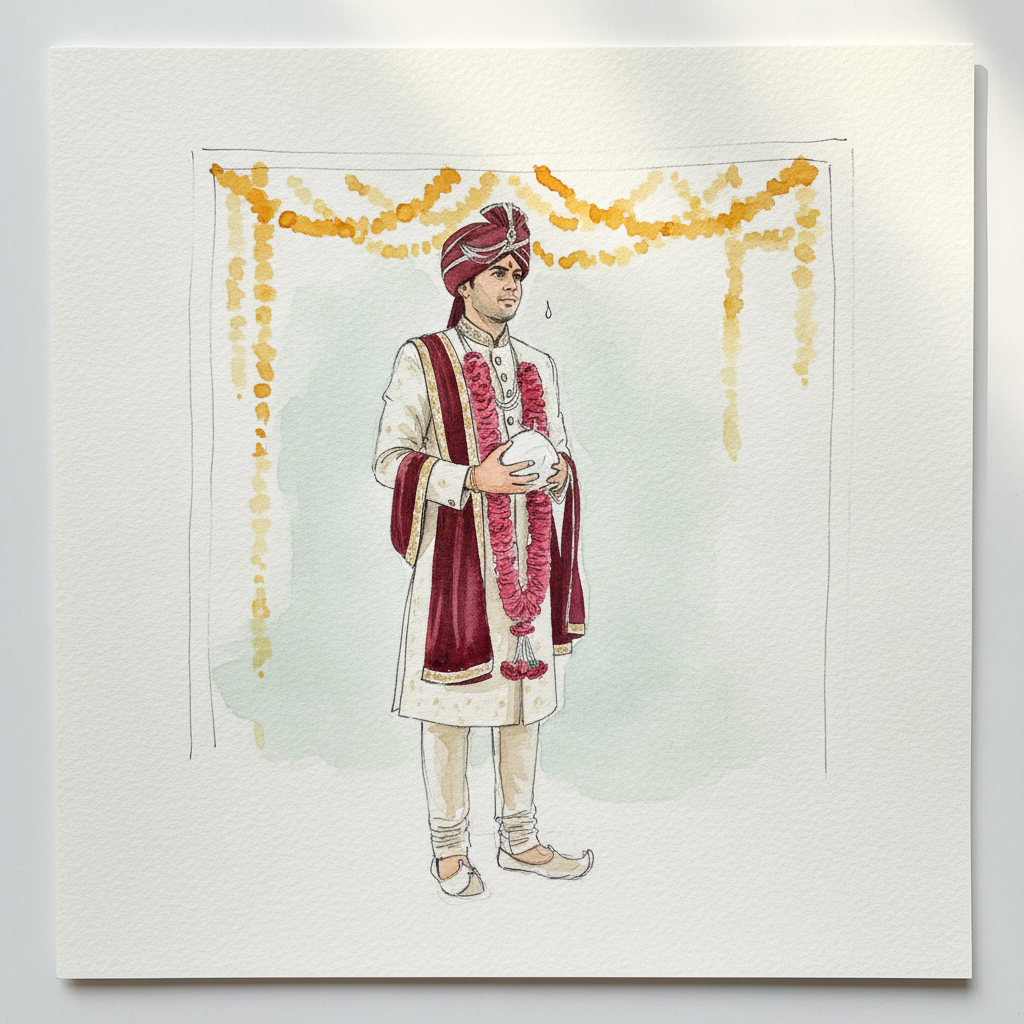
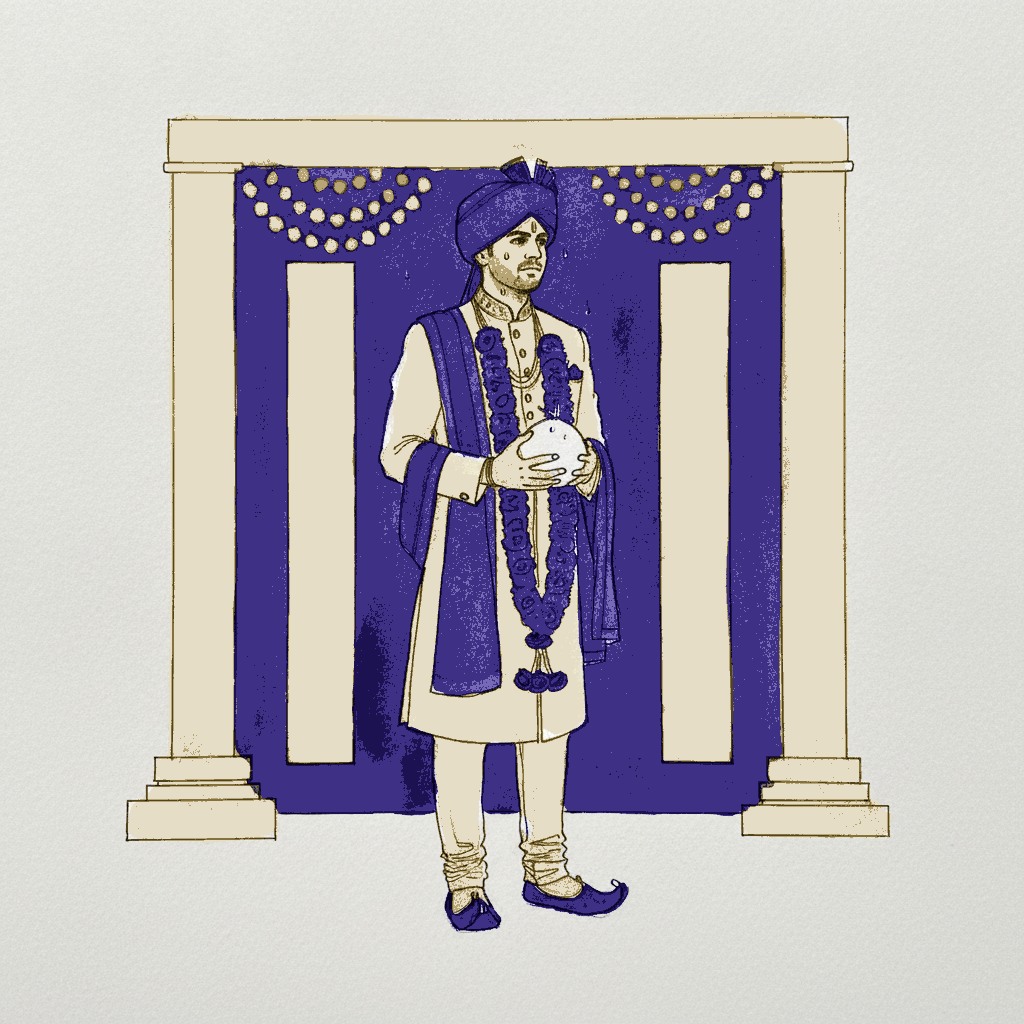
Piece 8 — Indian groom in sherwani
Pen + Watercolor · Loose pen and watercolor line-and-wash

Three takes

Focus for this piece
This piece offers a compelling study in rendering diverse textures through specific interactions of line and wash. Pay close attention to how you vary ink line weight and continuity to define the intricate gold embroidery versus the smooth flow of silk, or the soft fluff of marigolds. Then, employ distinct watercolor approaches—from precise, luminous washes for the fabric's sheen to atmospheric layering for the garland—to enhance these textural contrasts. Your goal is to use both media to give each element its unique tactile quality.