Neue Pinakothek, Munich, Germany, Salar de Atacama lithium evaporation ponds, Chile, Caribbean spiny lobster, Old leather gloves, hung on nail, and more — pen + watercolor for August 8, 2026
AI-generated daily art-practice references for pen and watercolor: Neue Pinakothek, Munich, Germany, Salar de Atacama lithium evaporation ponds, Chile, Caribbean spiny lobster, Old leather gloves, hung on nail, Tap dancer with shoes flashing, Tokyo Ameya-Yokochō under the tracks, Porte Dauphine É…
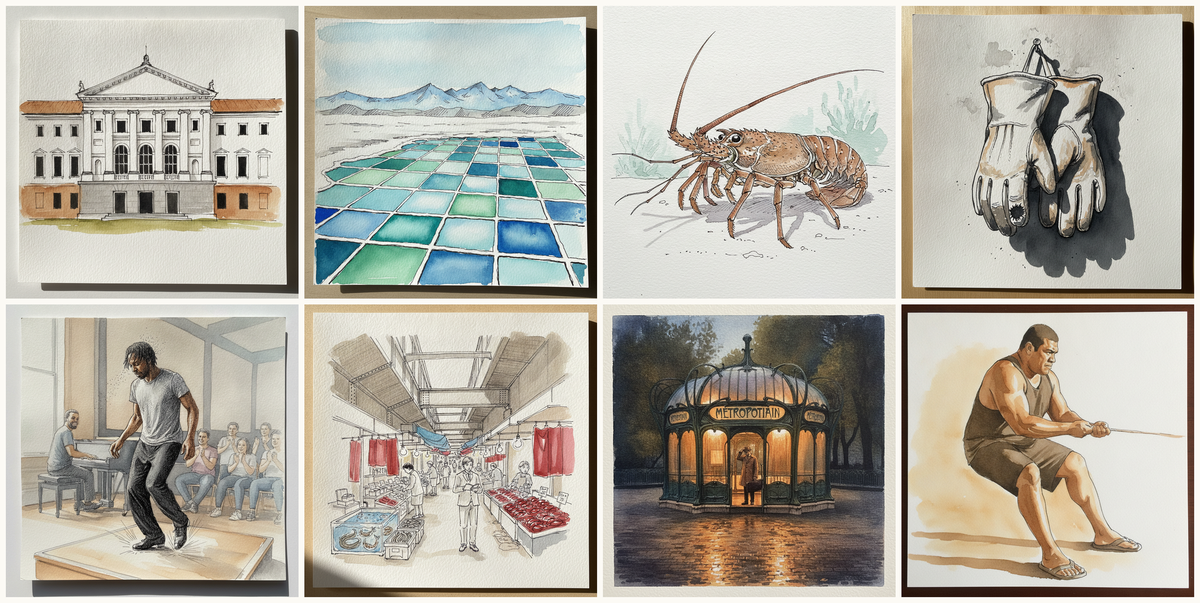
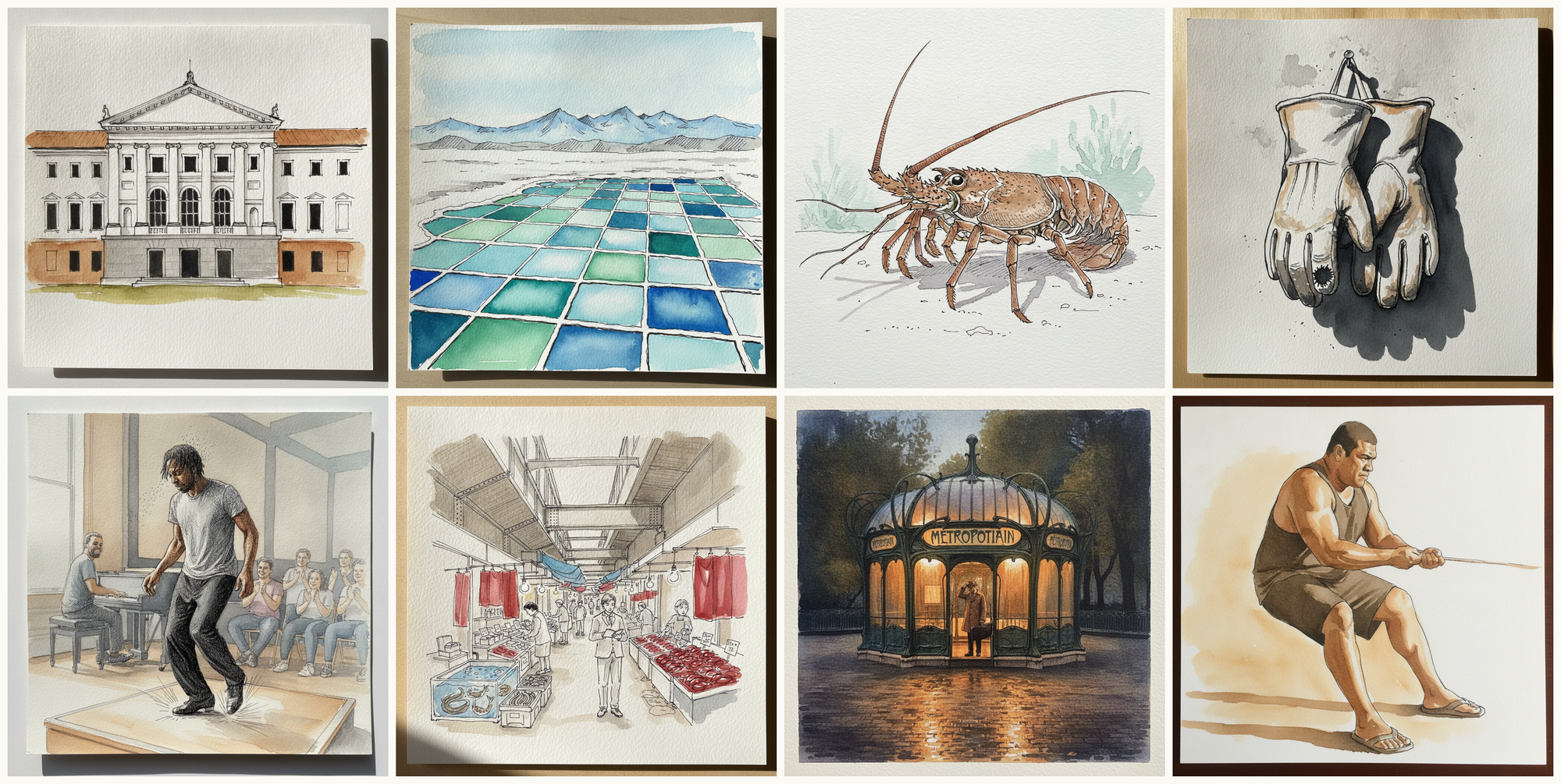
Today's 8 pen-and-watercolor pieces: Neue Pinakothek, Munich, Germany, Salar de Atacama lithium evaporation ponds, Chile, Caribbean spiny lobster, Old leather gloves, hung on nail, Tap dancer with shoes flashing, Tokyo Ameya-Yokochō under the tracks, Porte Dauphine Édicule, Tug-of-War Anchor. Each piece comes with an AI-generated photoreal reference, three AI-generated example artworks in different treatments, and a short focus paragraph naming what to study in this one.
Why these references use AI
This daily series uses AI-generated images as practice prompts, not as finished artwork to copy. Each subject starts with a synthetic photoreal reference generated with Gemini/Nano Banana, then moves into three pen-and-watercolor interpretations of the same subject.
I use AI here because daily art practice needs variety and low friction. Real life can get repetitive, busy, or visually narrow. These generated reference sets make it easier to study bodies, buildings, animals, landscapes, objects, gestures, light, palettes, and compositions that might not show up in an ordinary day.
The goal is not to reproduce any image directly. Treat each set as a starting point for observation and study: choose what interests you, change the framing, simplify the subject, alter the palette, and make your own version.
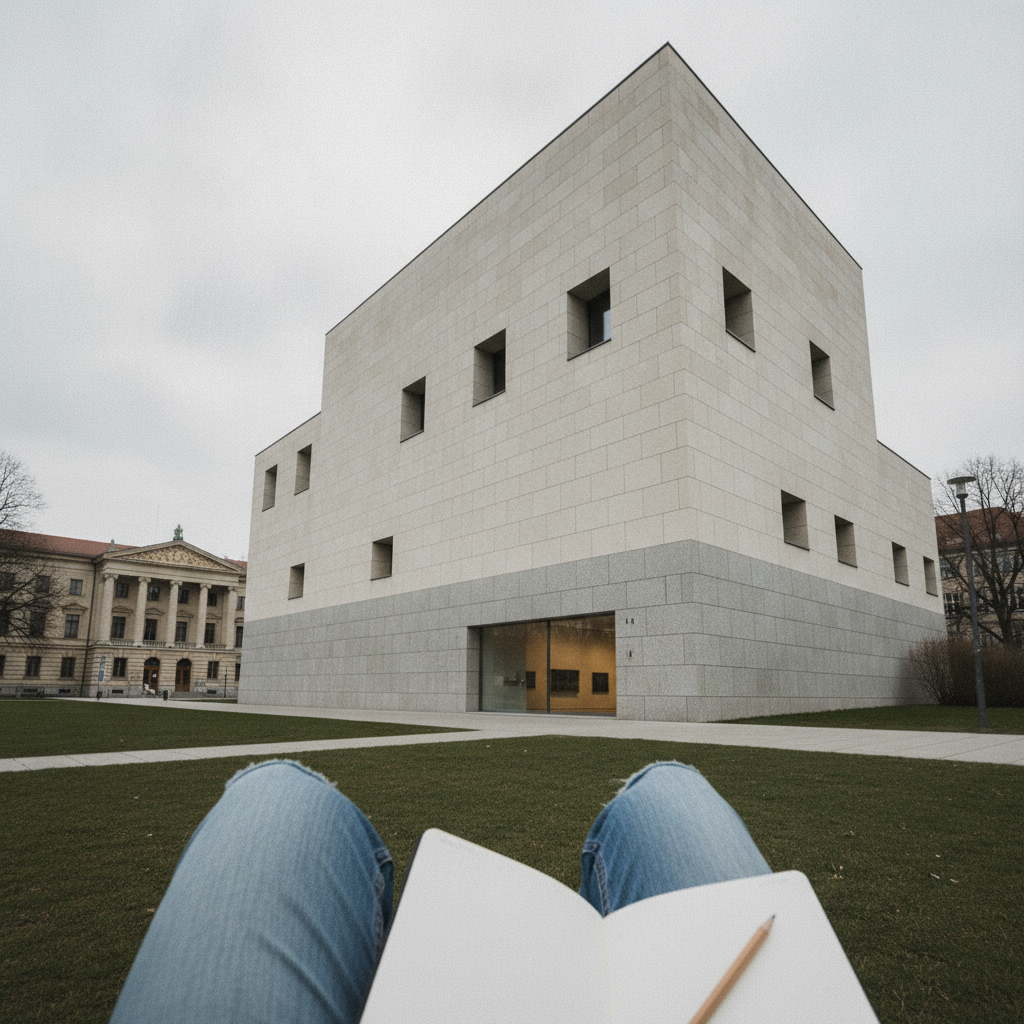
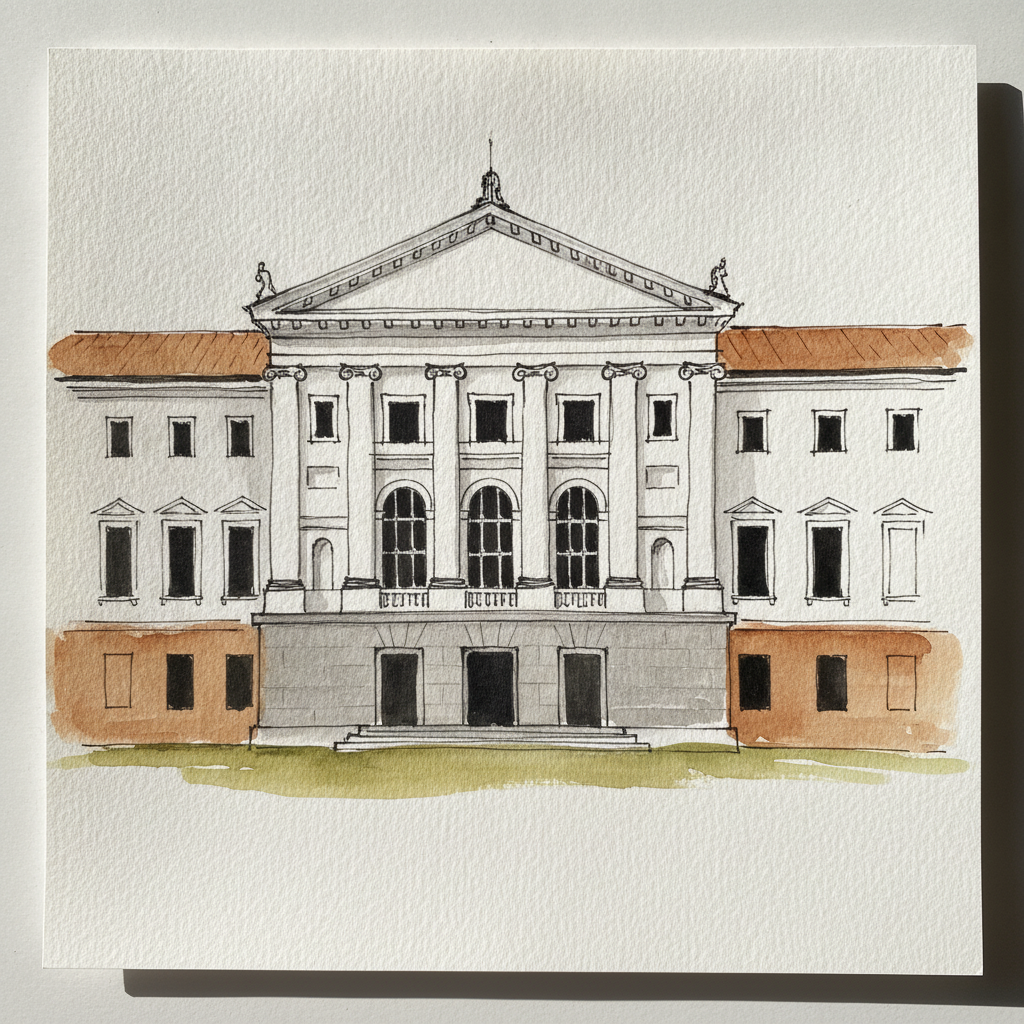
Piece 1 — Neue Pinakothek, Munich, Germany
Pen + Watercolor · Loose pen and watercolor line-and-wash
Three takes
Focus for this piece
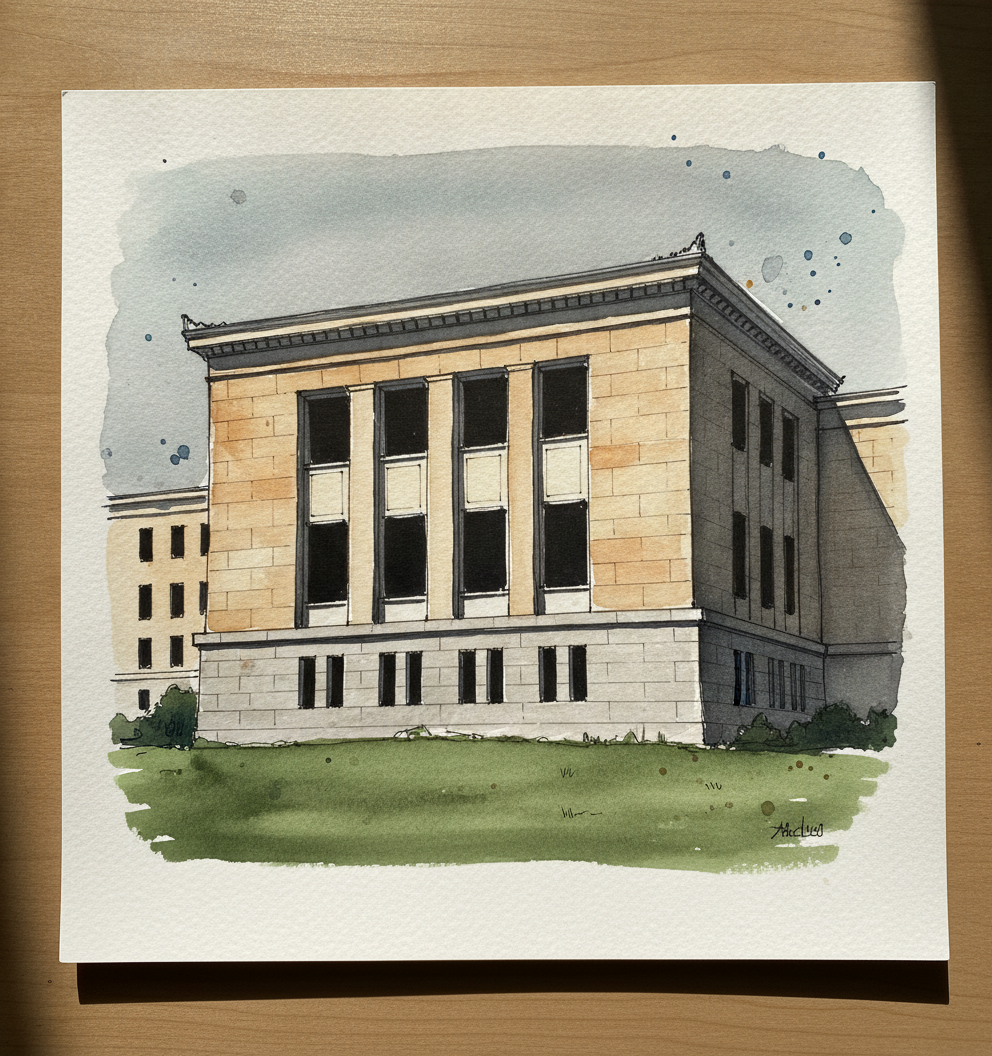
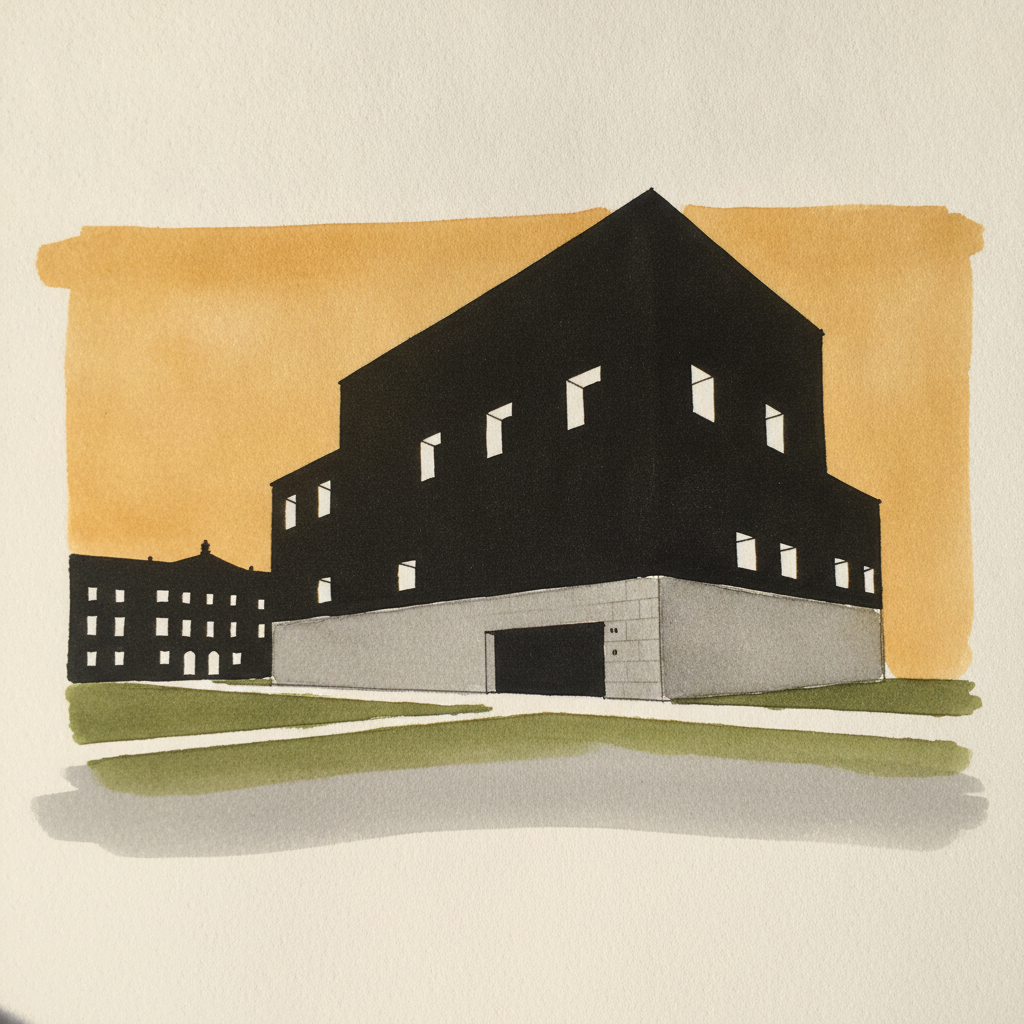
For this piece, focus on capturing the Neue Pinakothek's robust geometry and material texture. Use firm, confident ink lines to define the sharp angles and the distinctive slope of the main façade, paying close attention to how deep window reveals create strong shadow shapes. Then, employ a restrained palette of warm grays and muted yellows, layering your washes to convey the subtle variations and solid mass of the travertine and granite.
Piece 2 — Salar de Atacama lithium evaporation ponds, Chile
Pen + Watercolor · Loose pen and watercolor line-and-wash
Three takes
Focus for this piece
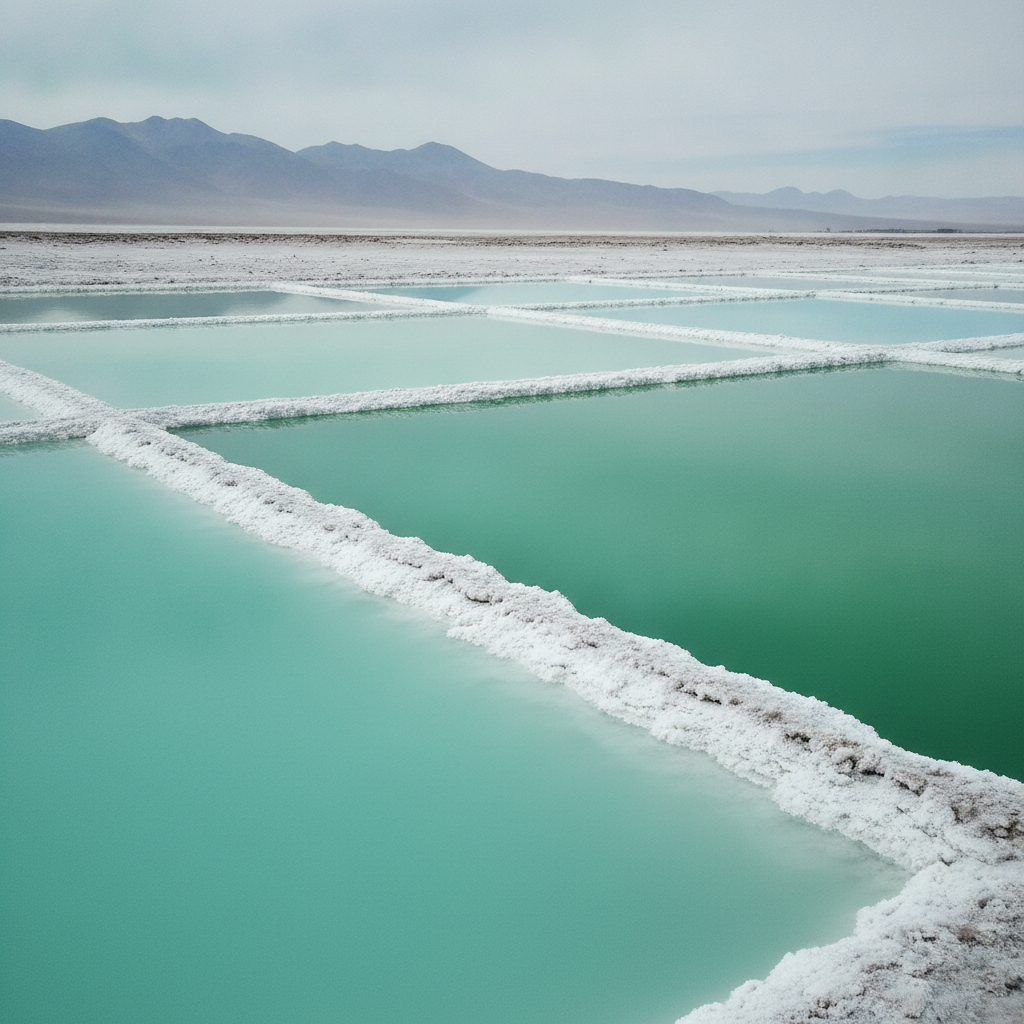
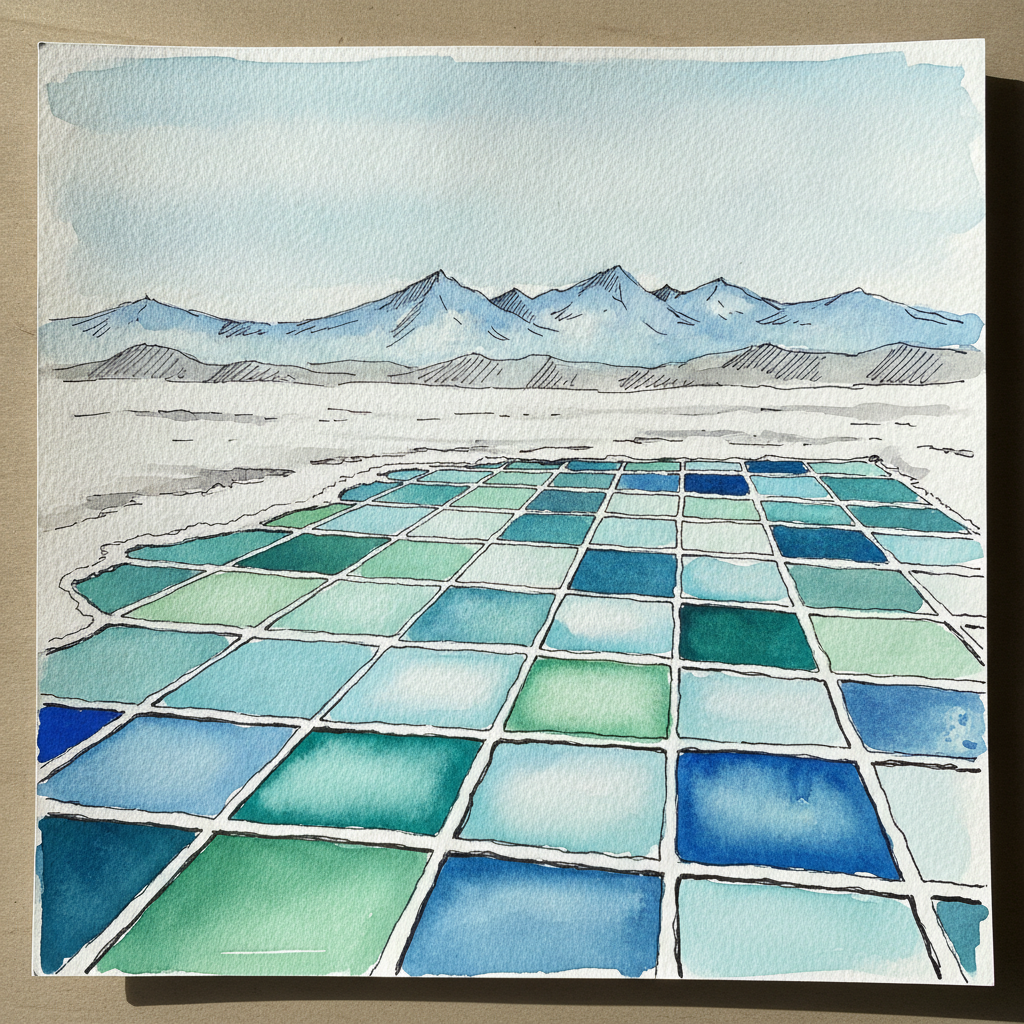
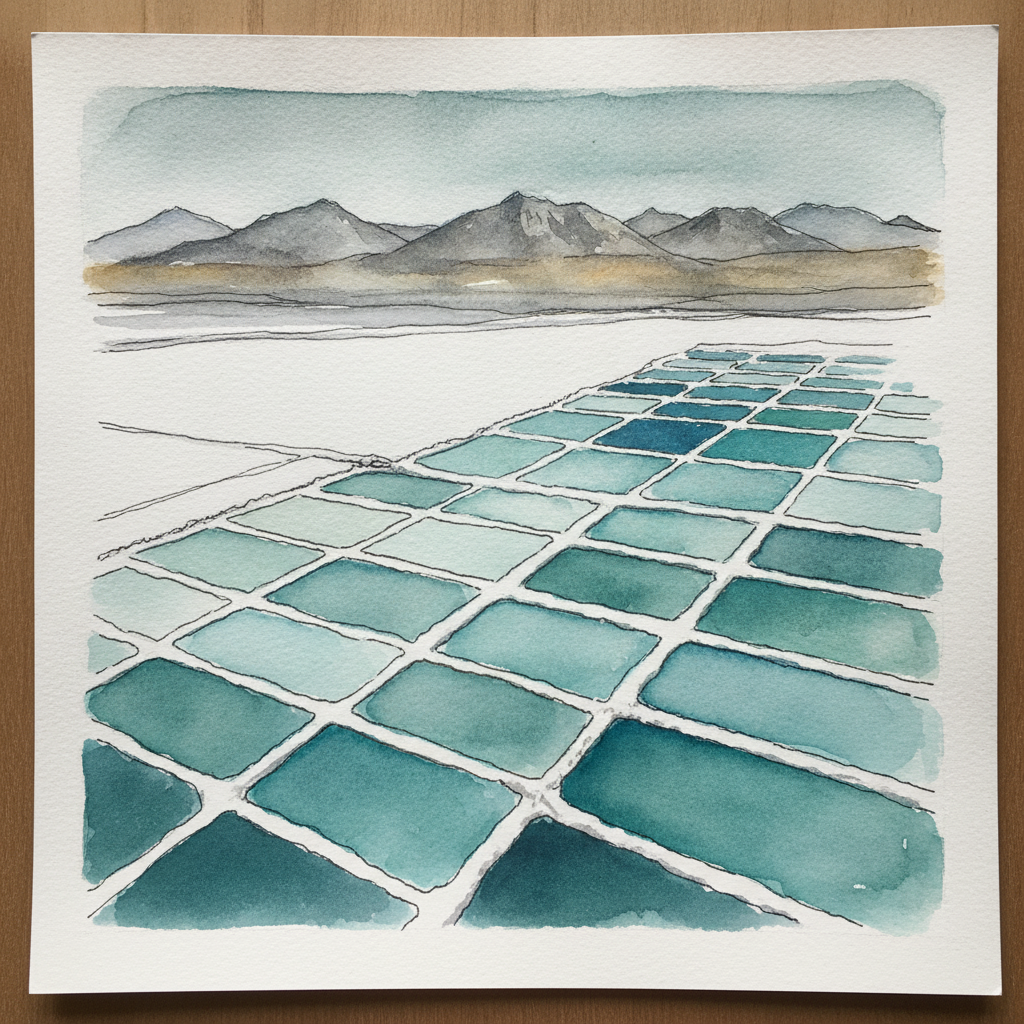
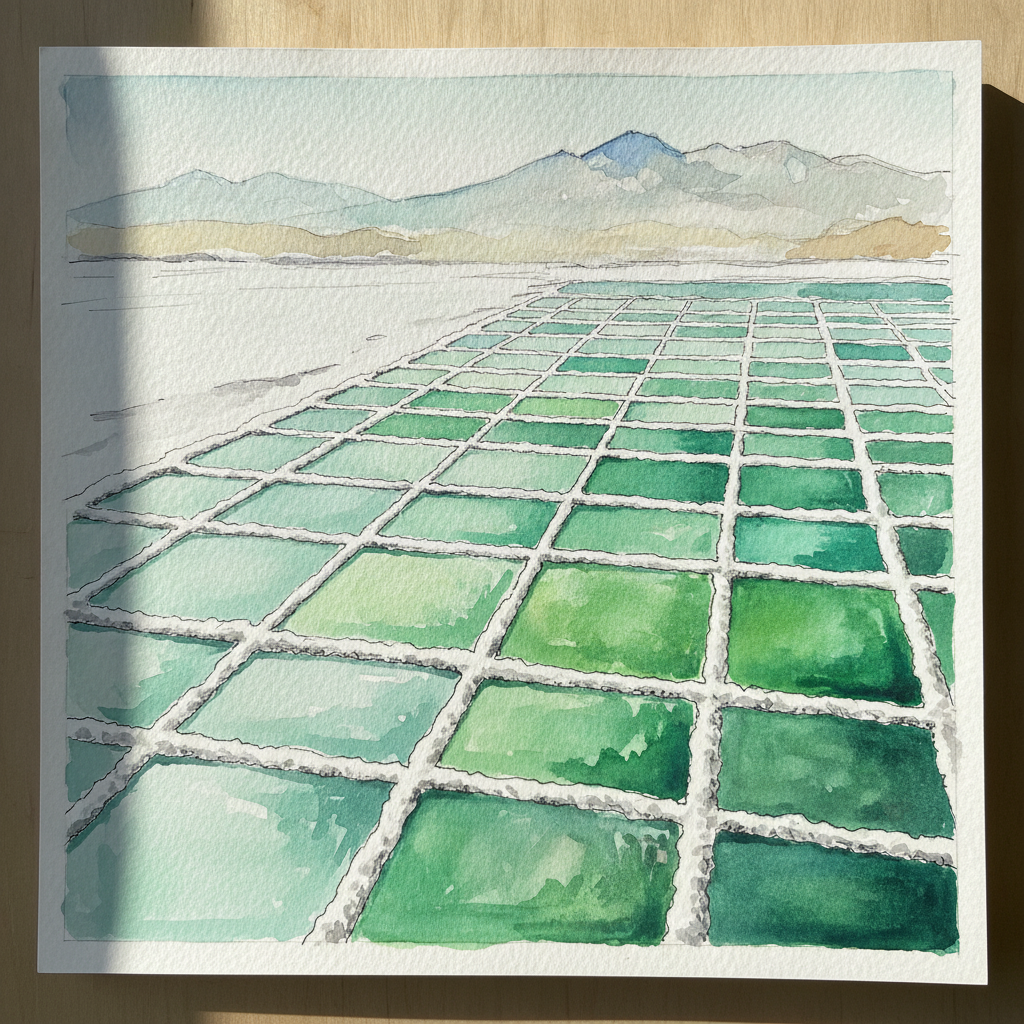
Today's subject is ideal for practicing the power of waterproof ink to define precise geometric shapes, particularly the rectangular pond boundaries and crisp white salt berms. Focus on applying clean, even washes within these inked areas, carefully mixing a range of blues and greens from a limited palette to capture the varied pond colors. Observe how aerial perspective simplifies distant elements; use lighter, less detailed ink work and softer washes for the background salt plain to contrast with the foreground's sharp definition.
Piece 3 — Caribbean spiny lobster
Pen + Watercolor · Loose pen and watercolor line-and-wash
Three takes

Focus for this piece
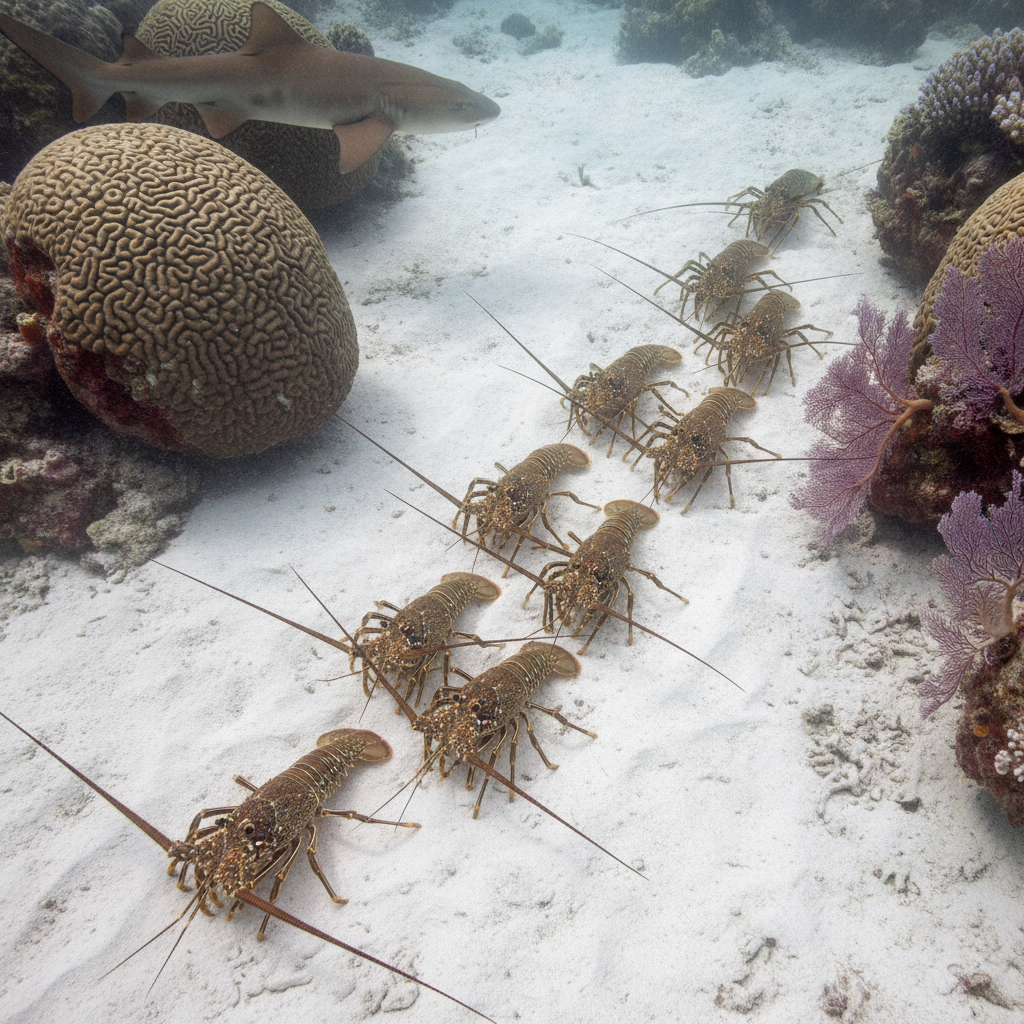
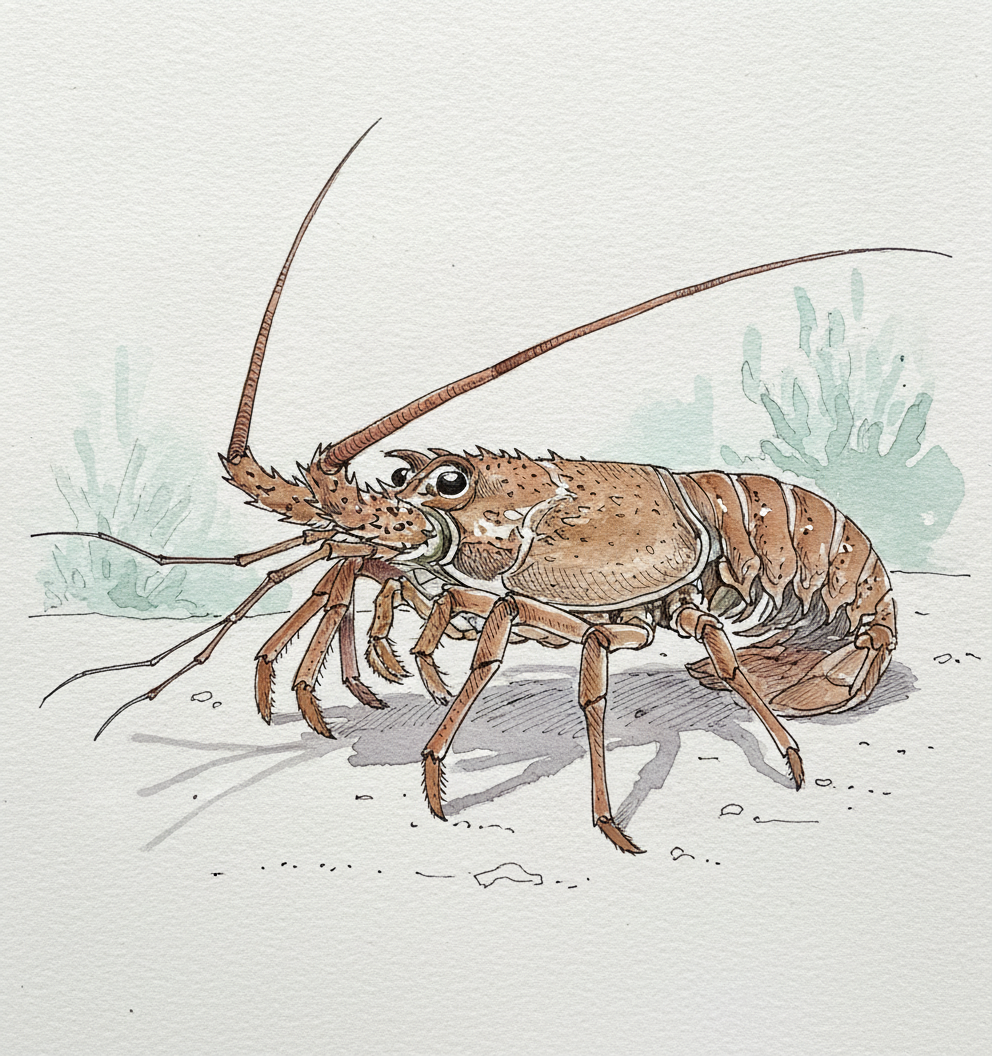
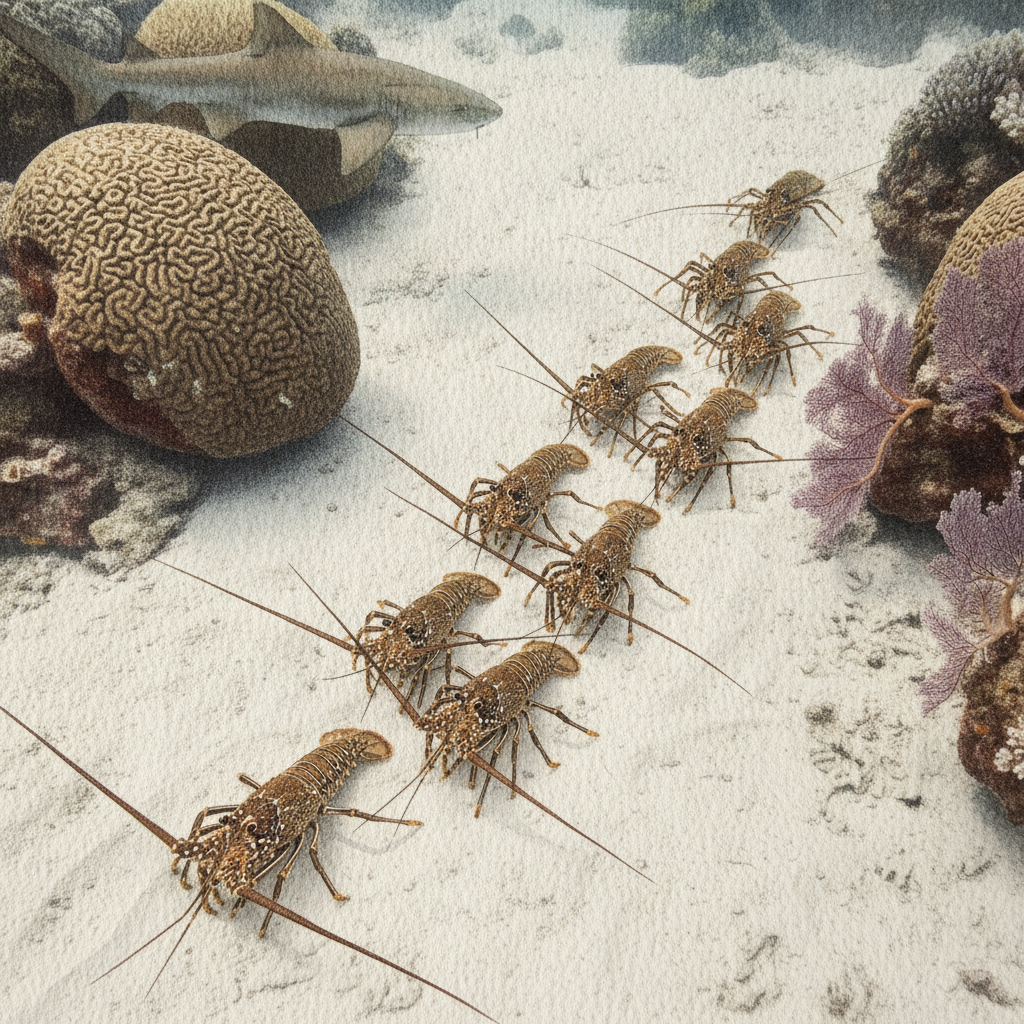
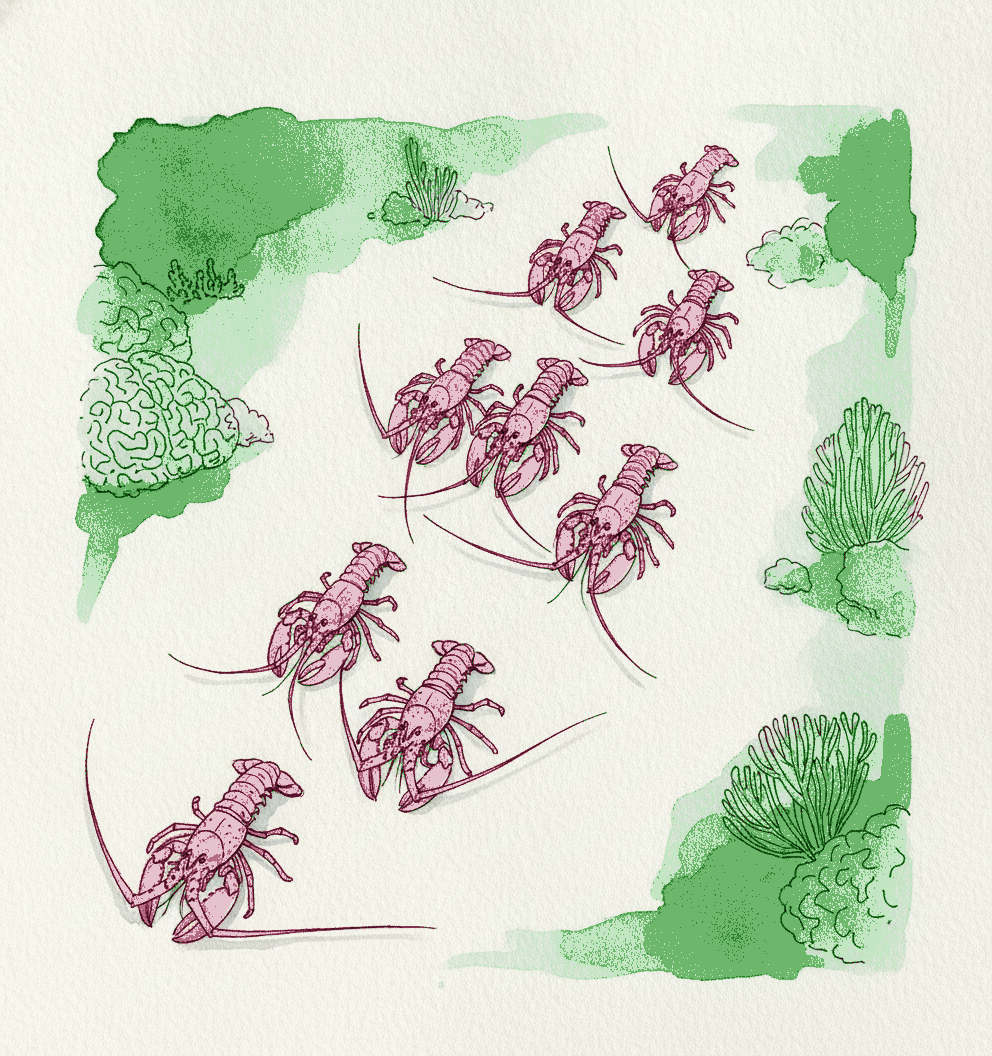
This piece offers an excellent study in creating a dynamic sense of depth and movement through repeated forms. Concentrate on using varied pen line weights – bolder for the foreground lobsters and progressively finer for those receding – to establish their marching chain. Complement this with broad, wet-on-wet washes for the sandy seafloor and water, letting warm bronze tones of the lobsters glow against cooler blues and greens of the reef.
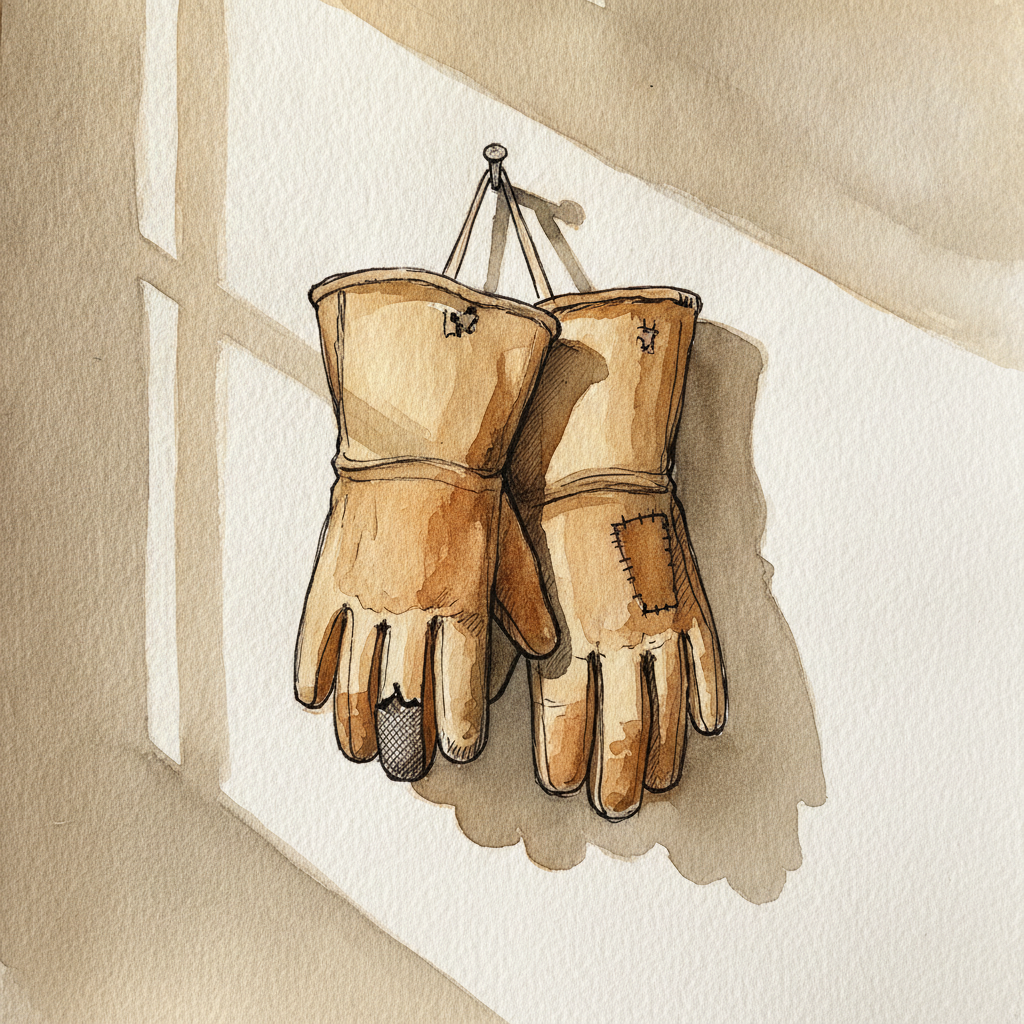
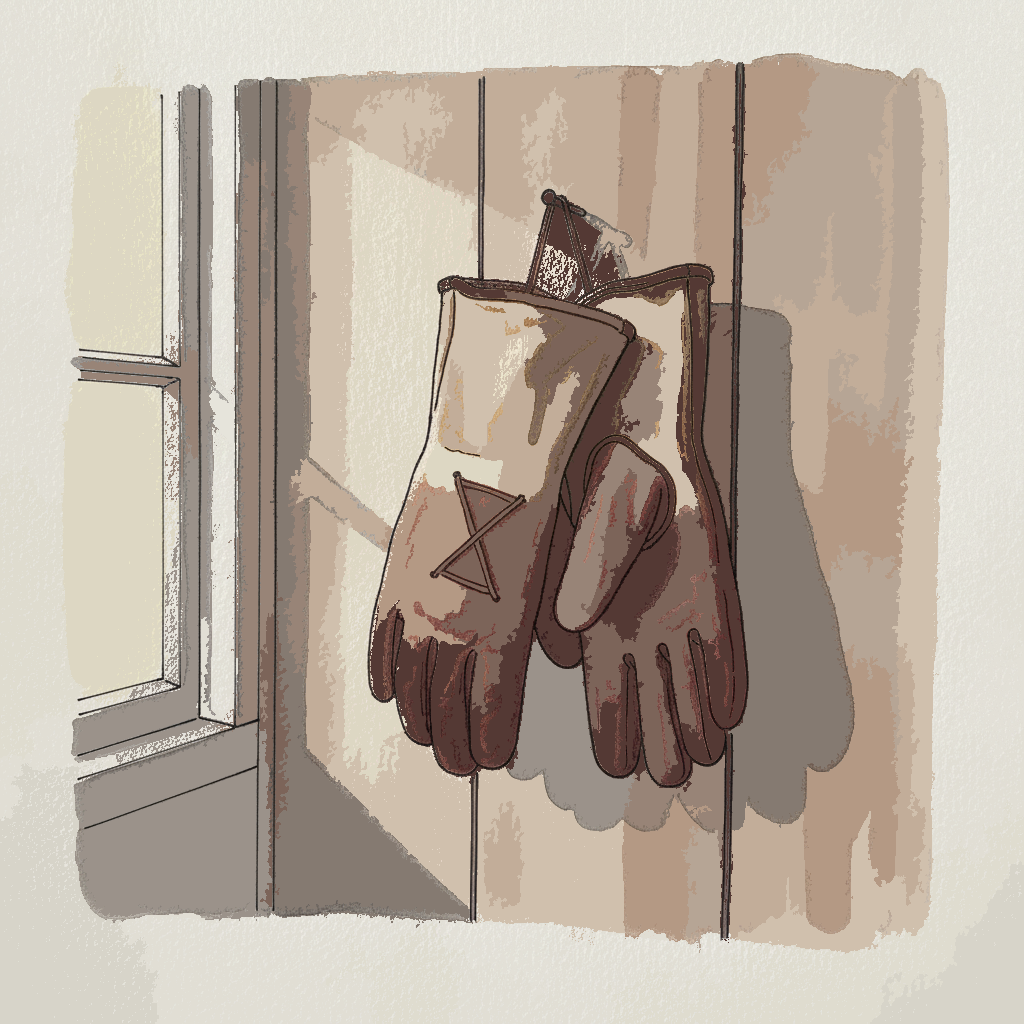
Piece 4 — Old leather gloves, hung on nail
Pen + Watercolor · Loose pen and watercolor line-and-wash
Three takes
Focus for this piece
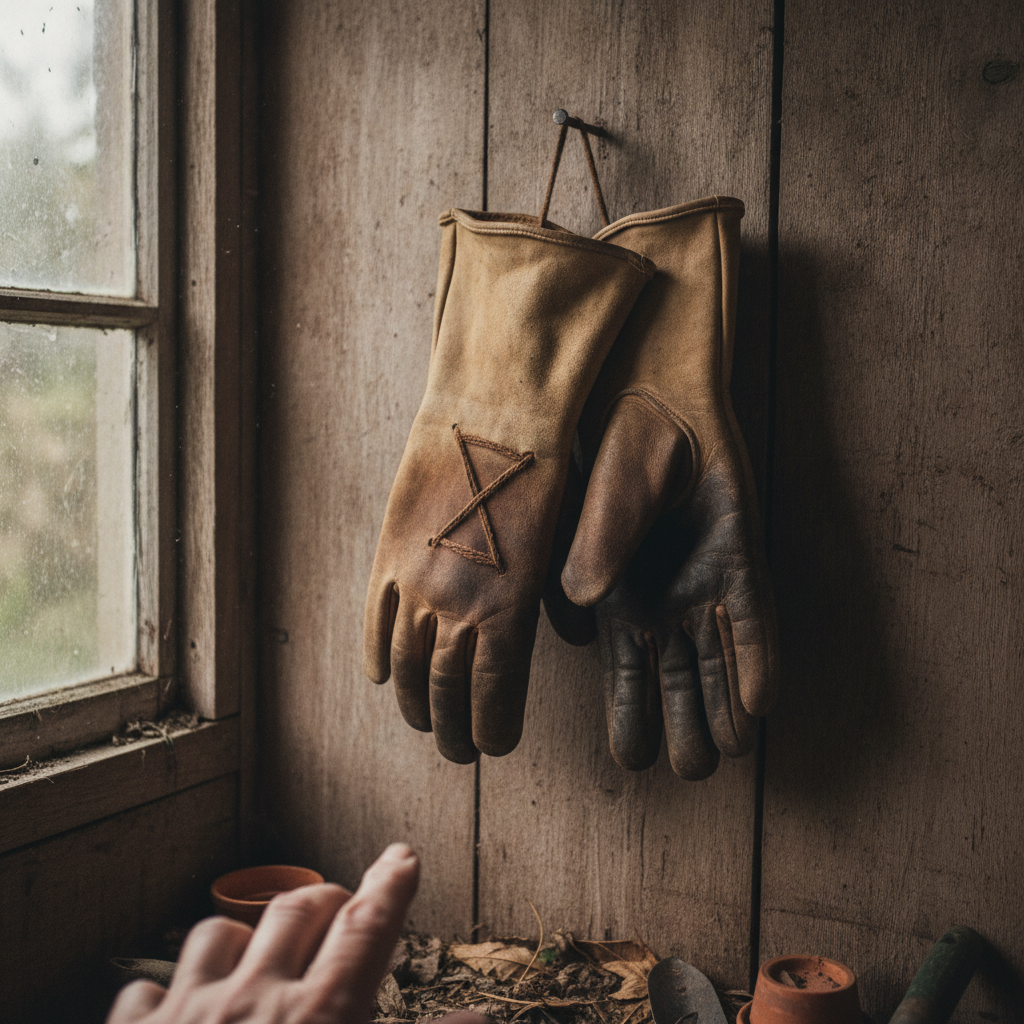
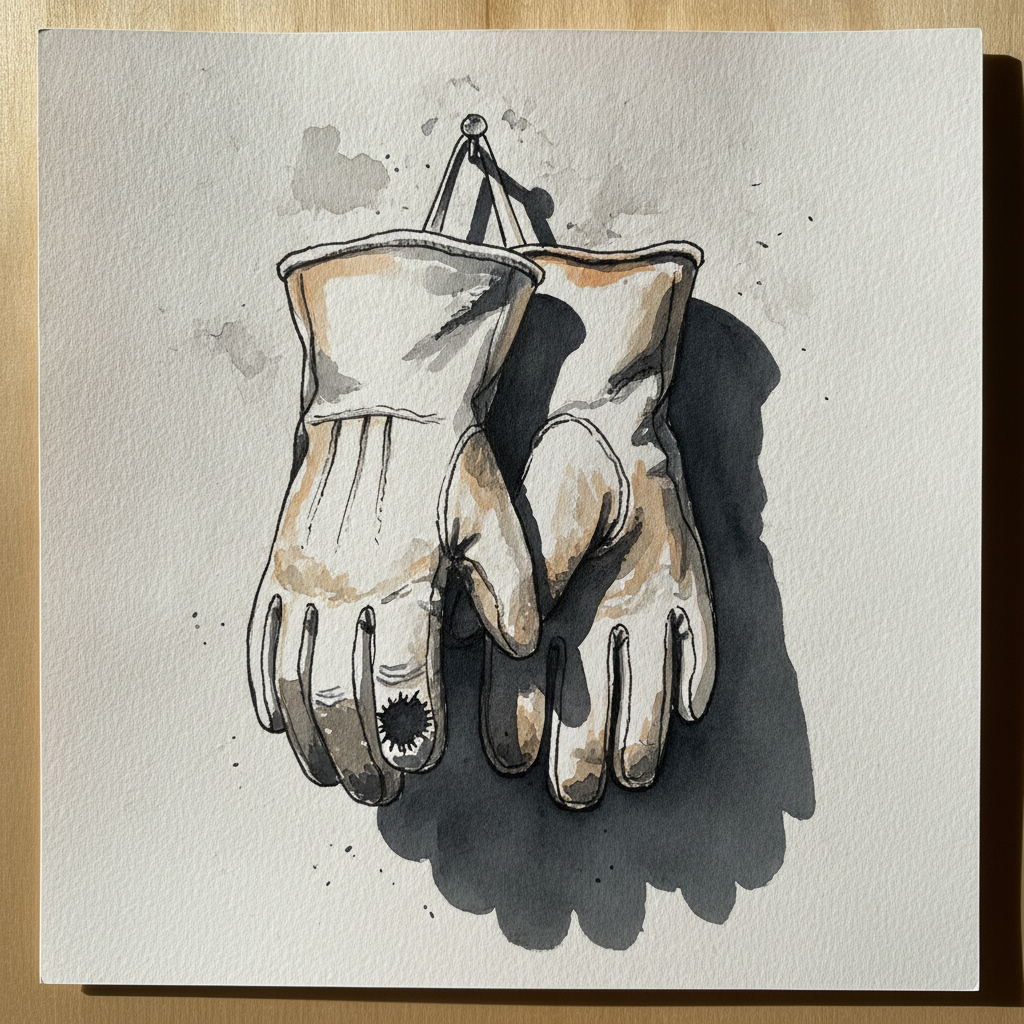
This piece offers an excellent study in rendering volumetric form and texture under directional light. Use varied pen line weights—thicker where shadows meet form, lighter for delicate edges and the resewn thread—to define the contours of the curled fingers and slack cuffs. Then, apply layered, transparent washes of a limited palette (think sepia, burnt sienna, and raw sienna) to build deep shadows and subtle color shifts that sculpt the leather and convey its worn character.
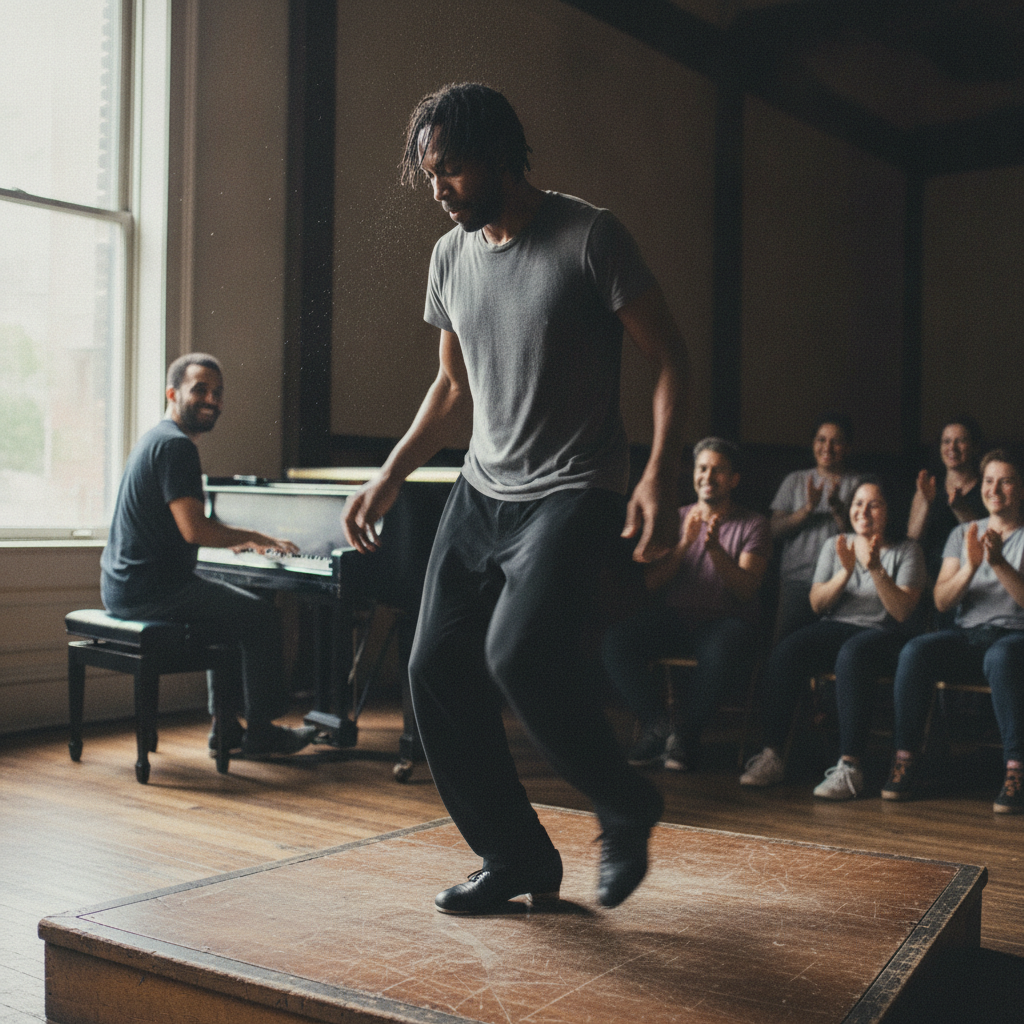
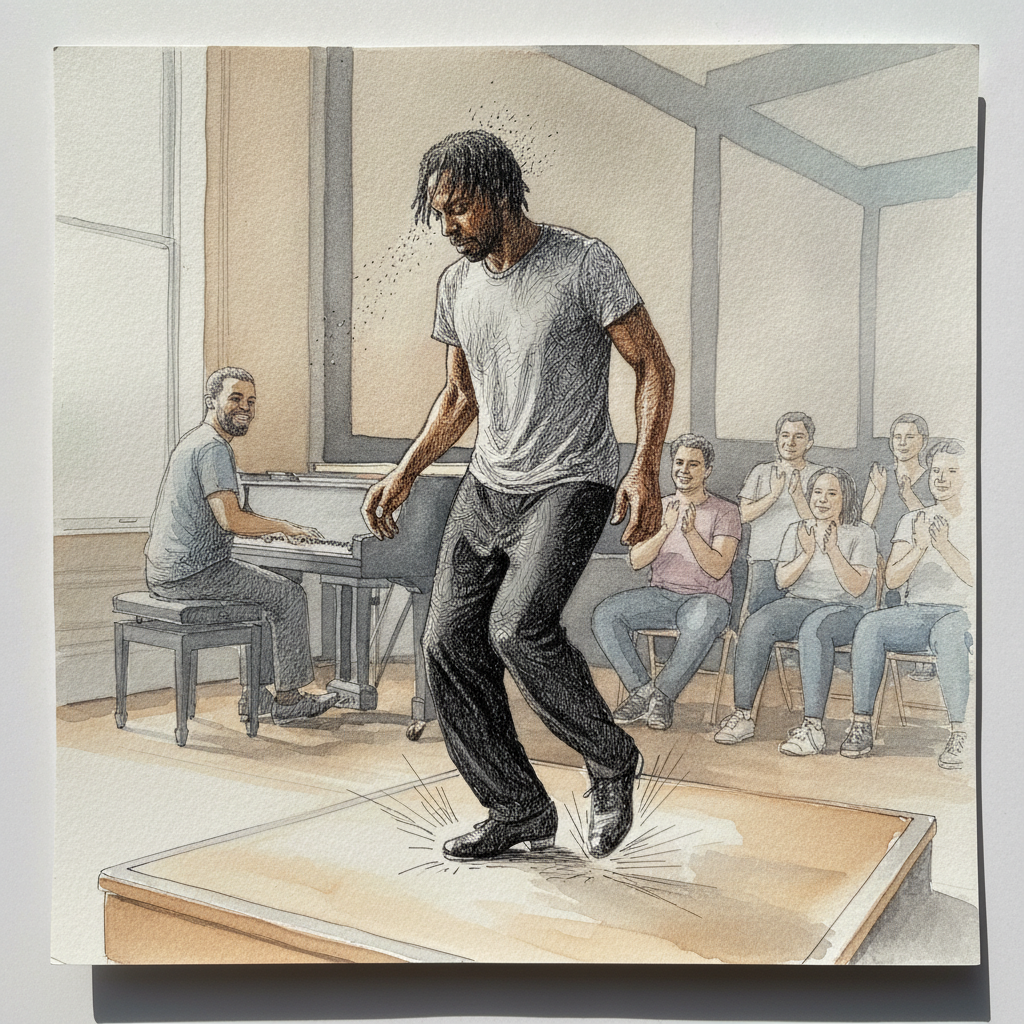
Piece 5 — Tap dancer with shoes flashing
Pen + Watercolor · Loose pen and watercolor line-and-wash
Three takes

Focus for this piece
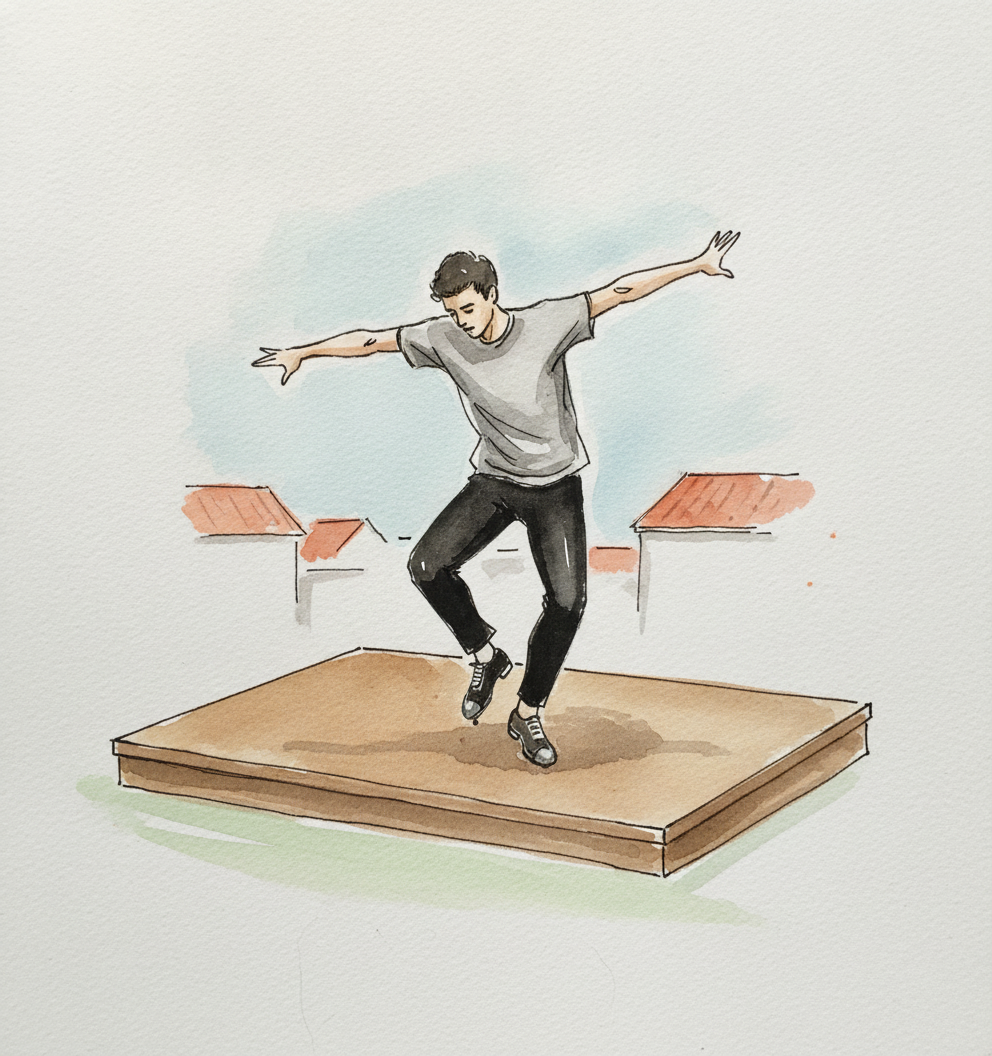
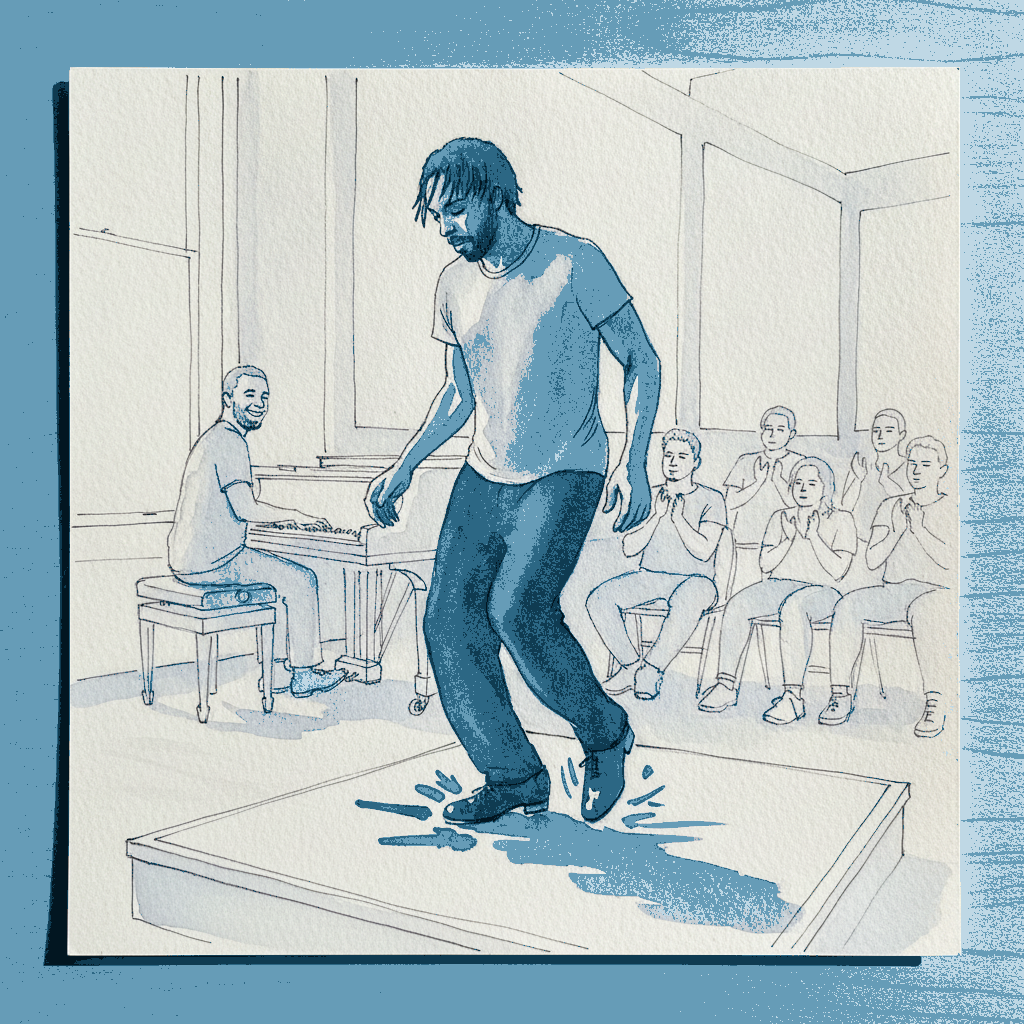
Today, focus on capturing the energy of motion and dramatic lighting. Emphasize the flashing shoes and spray of sweat by using bold, varied line weights for the dancer’s core structure and the taps, paired with lively wet-on-wet washes that suggest the fluidity of movement. Use a restrained palette to heighten the contrast, allowing the vibrant highlights on the dancer's feet and hair to truly pop against the more subdued background.
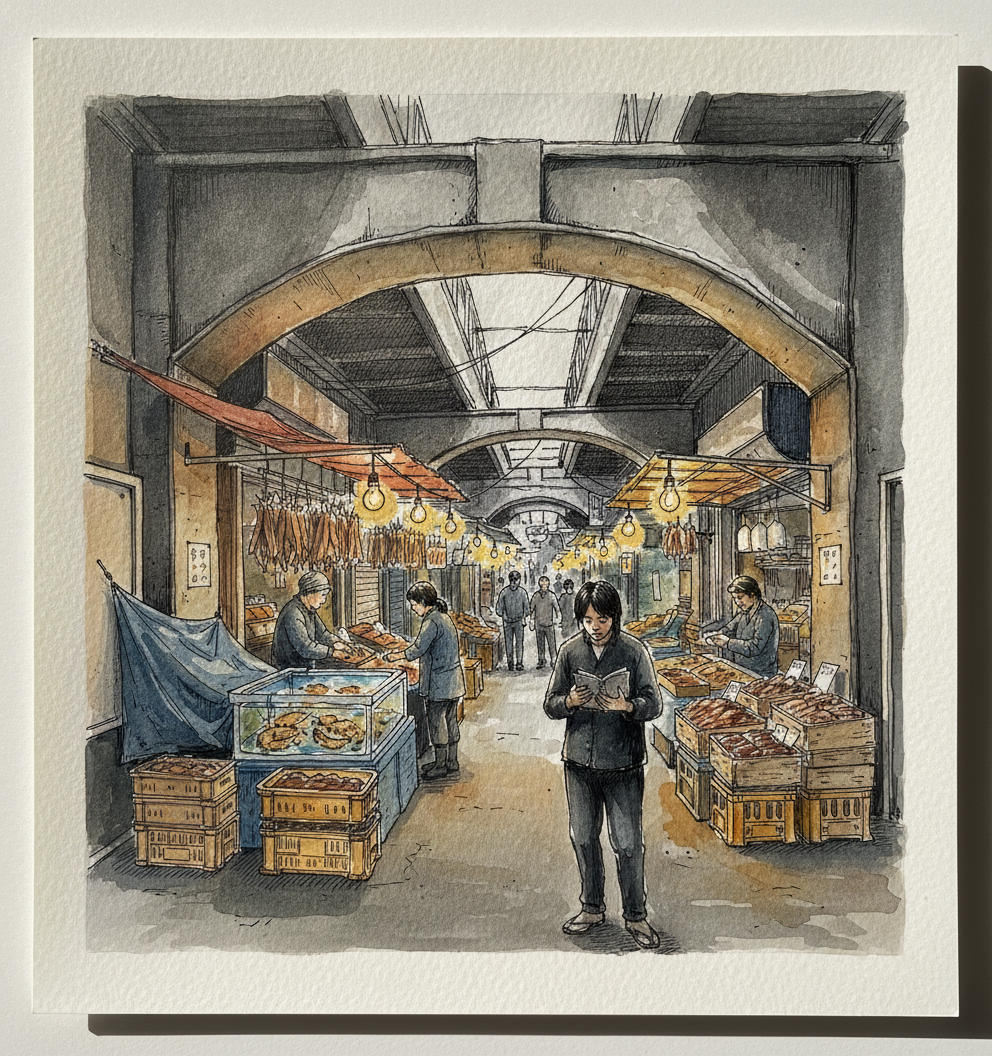
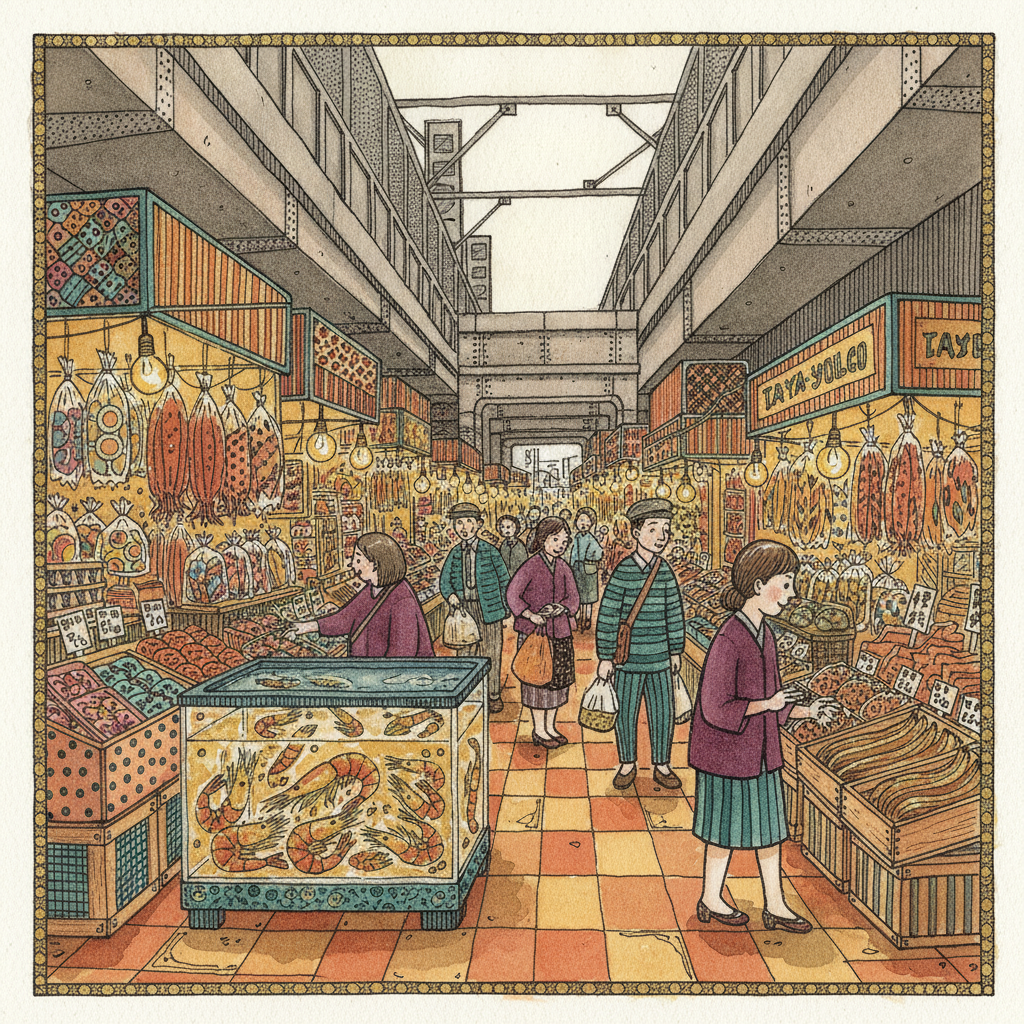
Piece 6 — Tokyo Ameya-Yokochō under the tracks
Pen + Watercolor · Loose pen and watercolor line-and-wash
Three takes
Focus for this piece
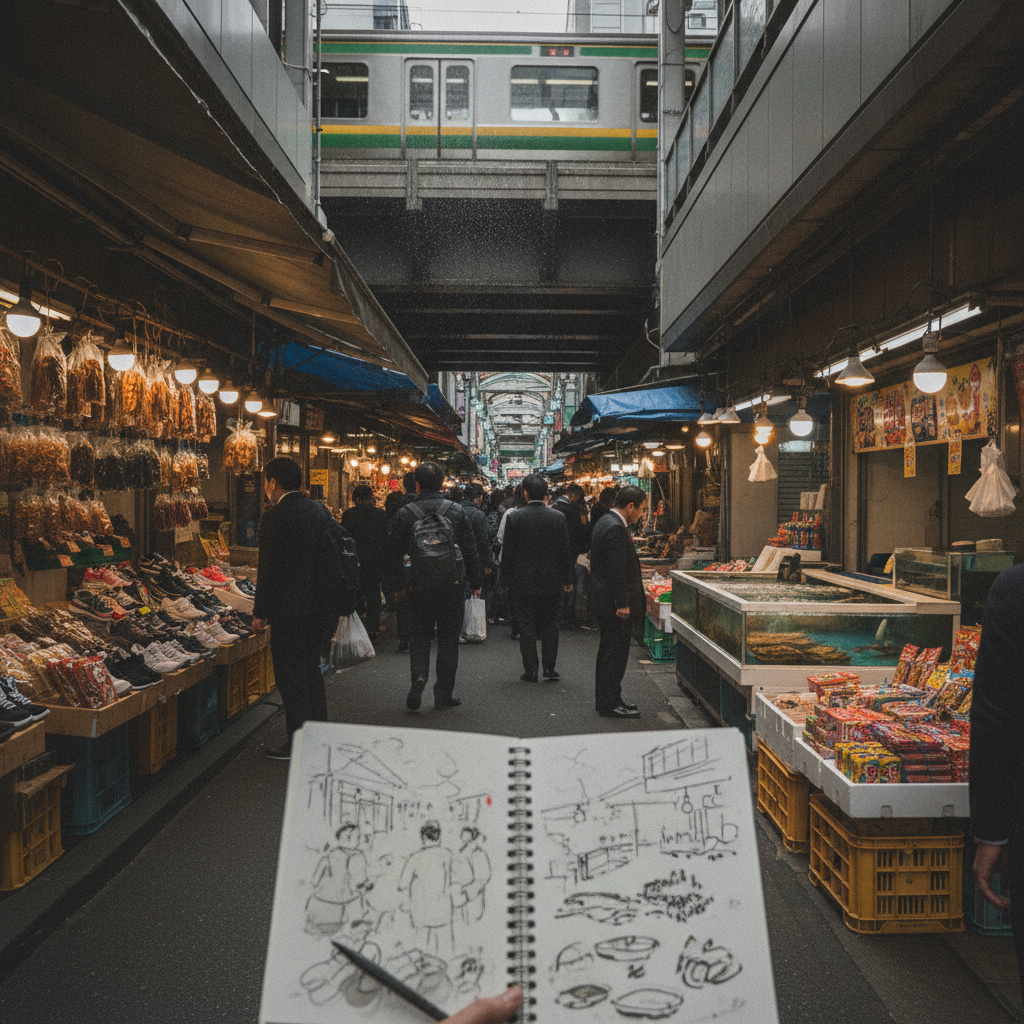
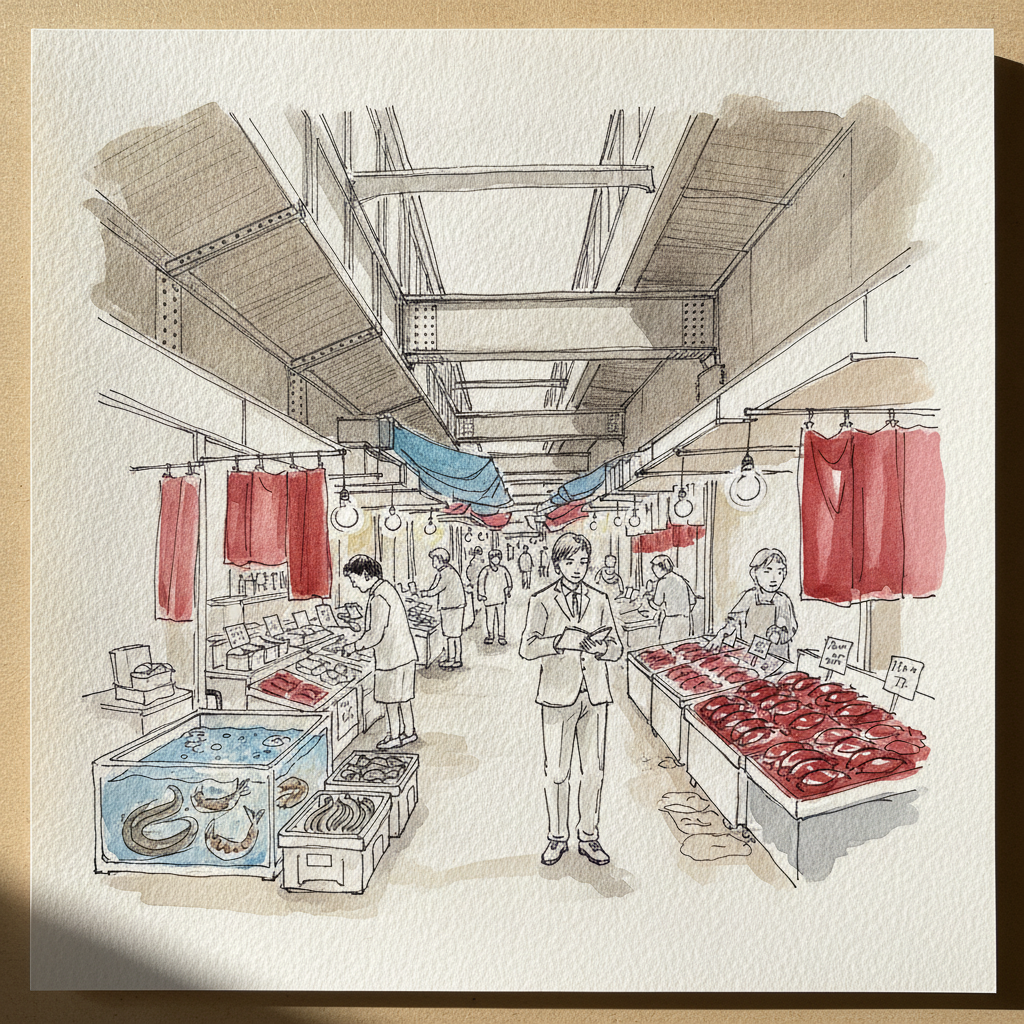
This dynamic scene is perfect for exploring the fundamental interplay of ink and wash for structure and atmosphere. Use firm, varied pen lines to define the architectural elements like the viaduct and foreground vendor stalls, providing clear anchors in the complex composition. Then, employ expressive wet-on-wet washes with a muted, warm-grey palette to convey the dusty ambient light and implied movement of the bustling crowd, allowing the watercolor to soften edges and suggest deep space.
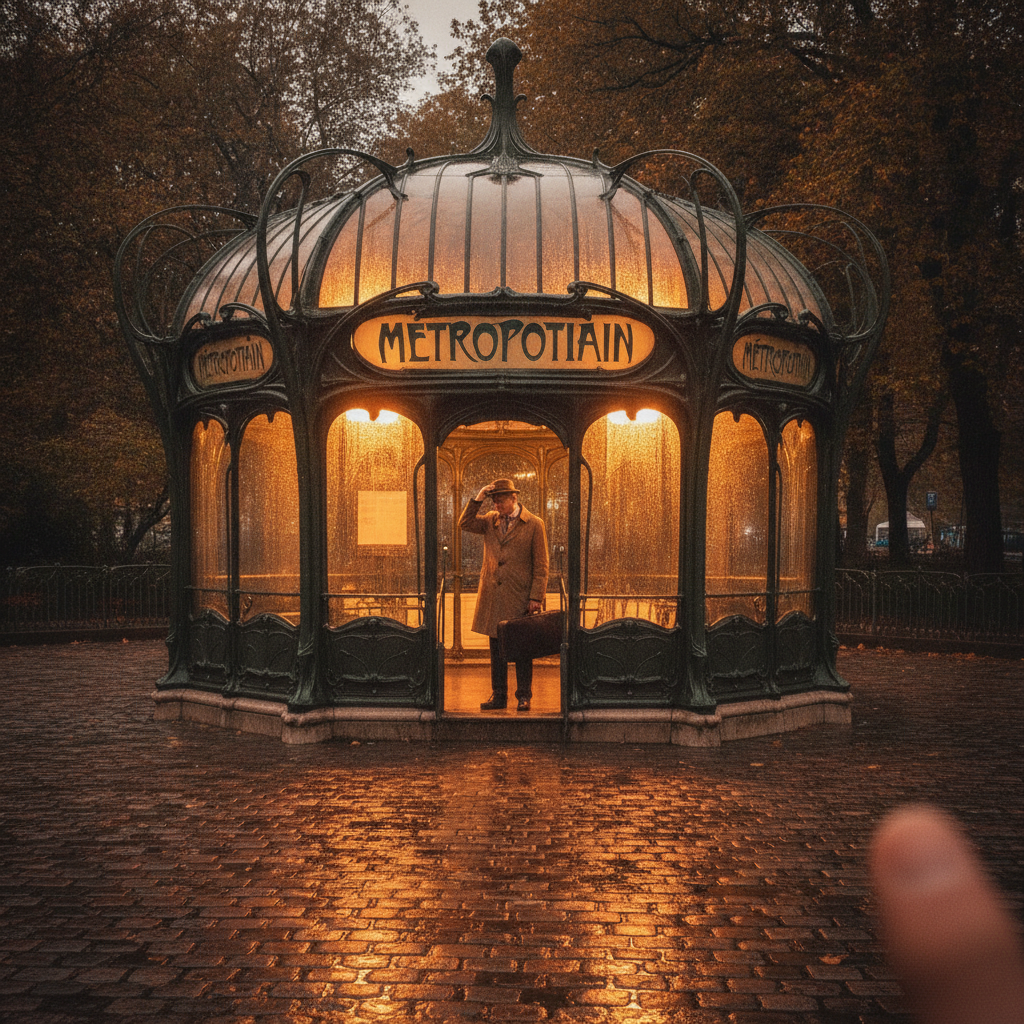
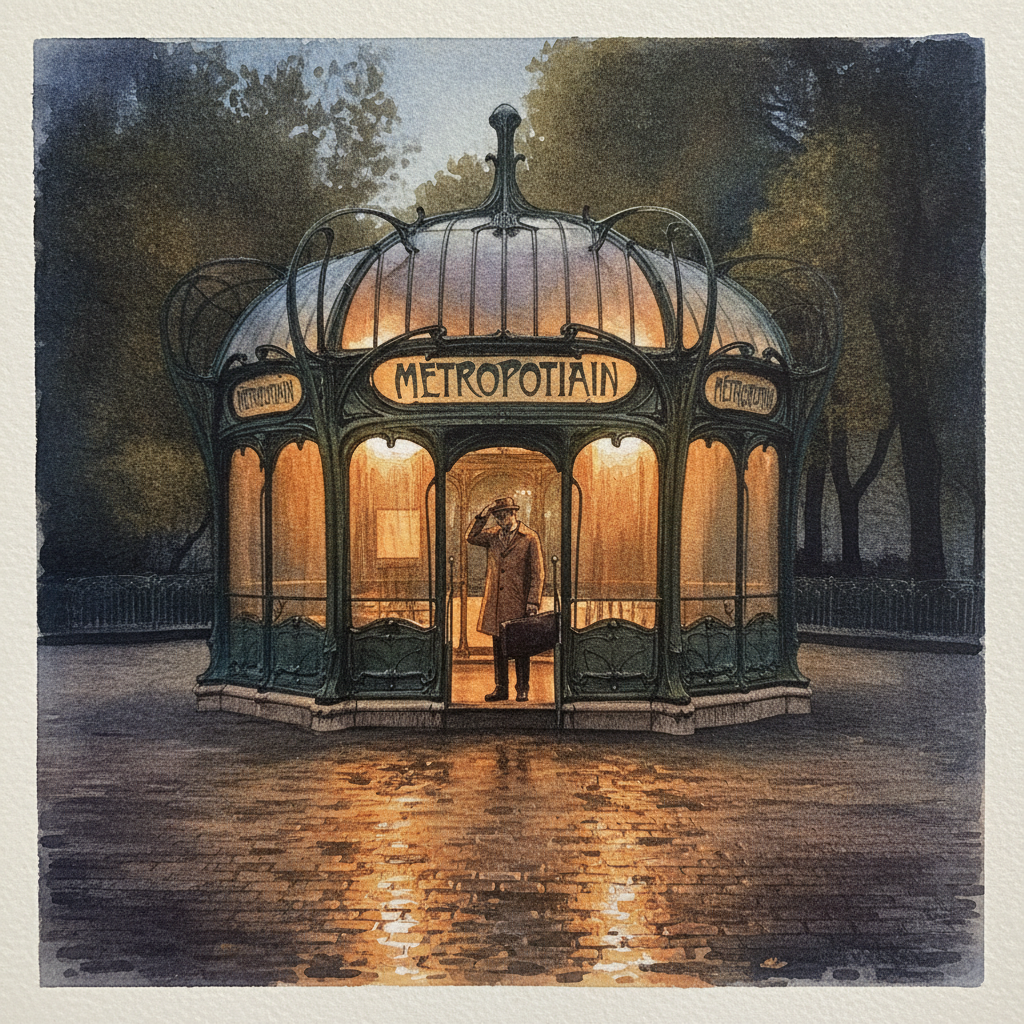
Piece 7 — Porte Dauphine Édicule
Pen + Watercolor · Loose pen and watercolor line-and-wash
Three takes

Focus for this piece
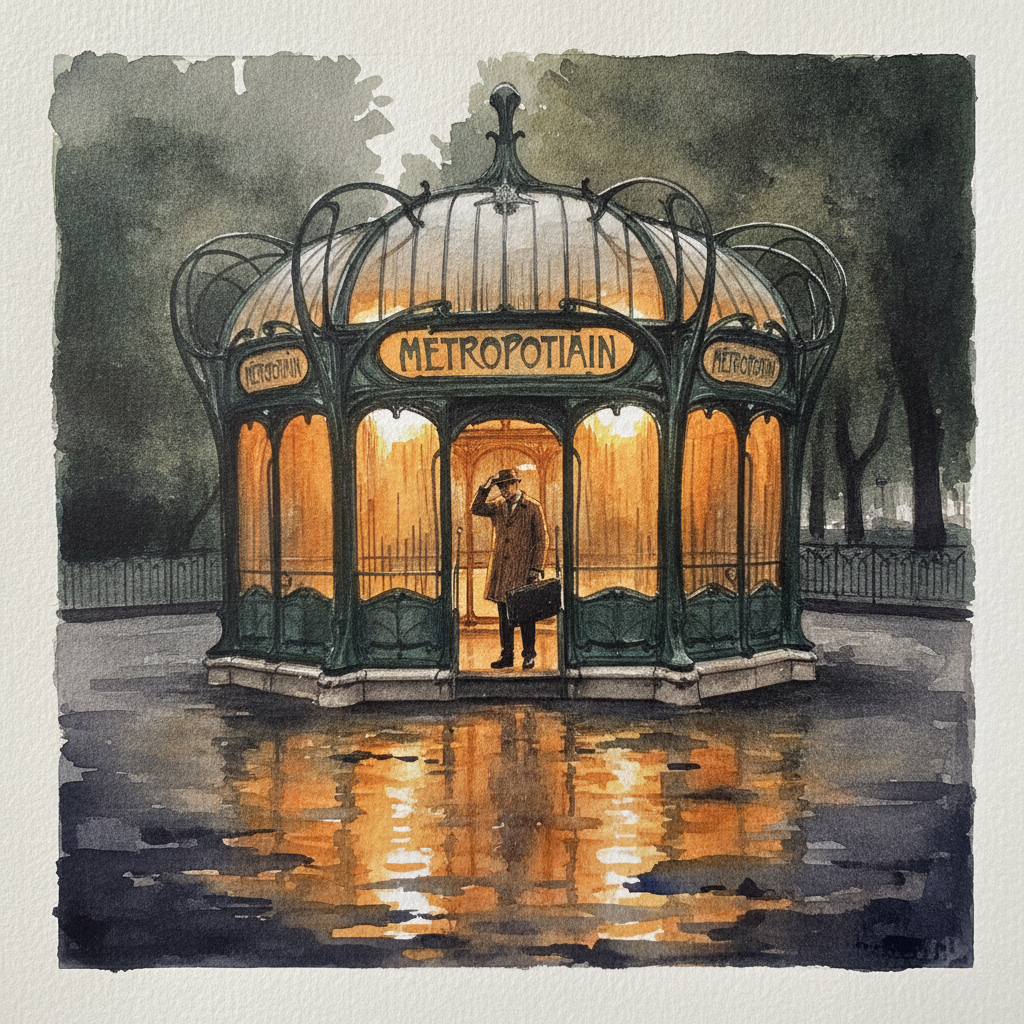
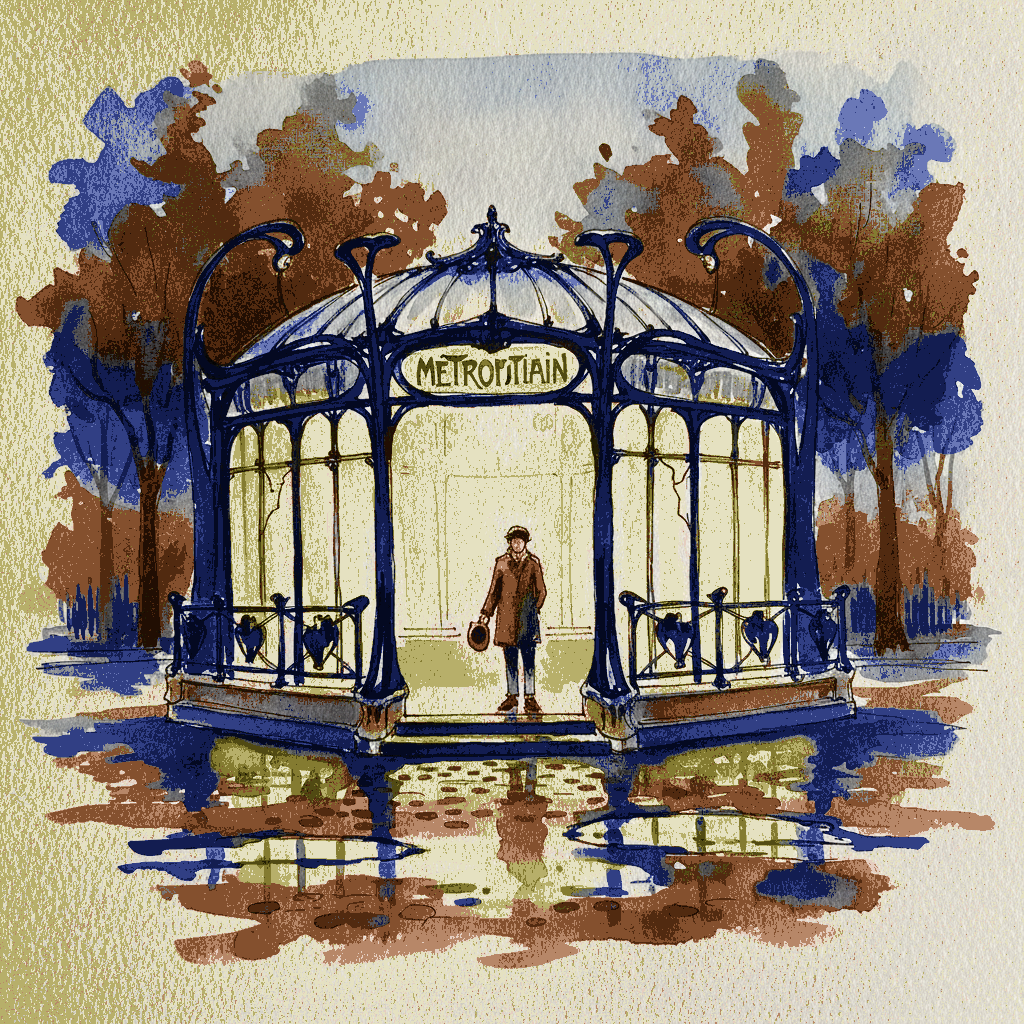
This piece offers an excellent study in rendering transparency, reflections, and a warm internal glow. Focus on establishing the édicule's elegant, organic curves—from the "dragonfly wing" roof to the "METROPOLITAIN" lettering—with fluid, varied ink lines. Then, use layered warm amber and soft grey watercolor washes to suggest the luminous glass panes, the rain on their surface, and the reflective, wet cobbles. Pay close attention to how wet-on-wet washes can create the soft atmosphere of the damp Bois de Boulogne contrasting with the crisp ink structure.
Piece 8 — Tug-of-War Anchor
Pen + Watercolor · Loose pen and watercolor line-and-wash
Three takes

Focus for this piece
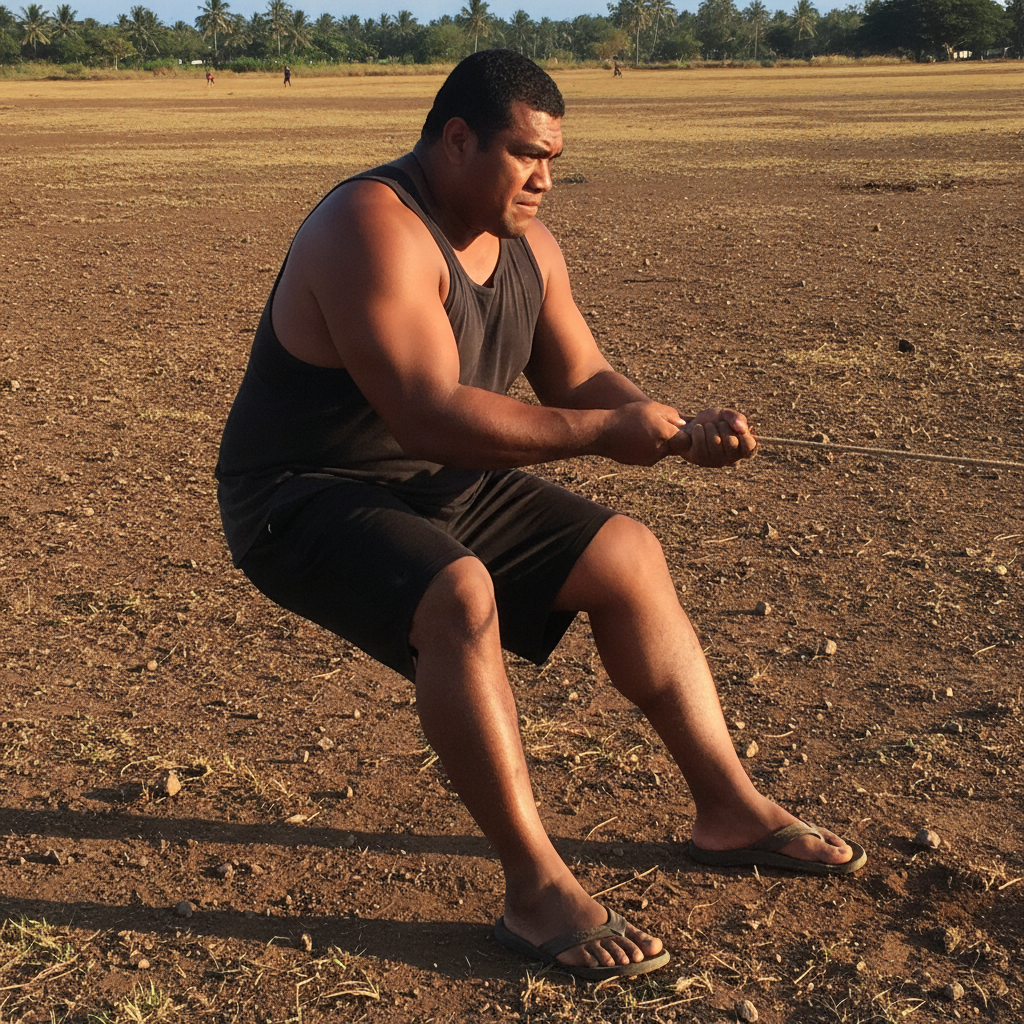
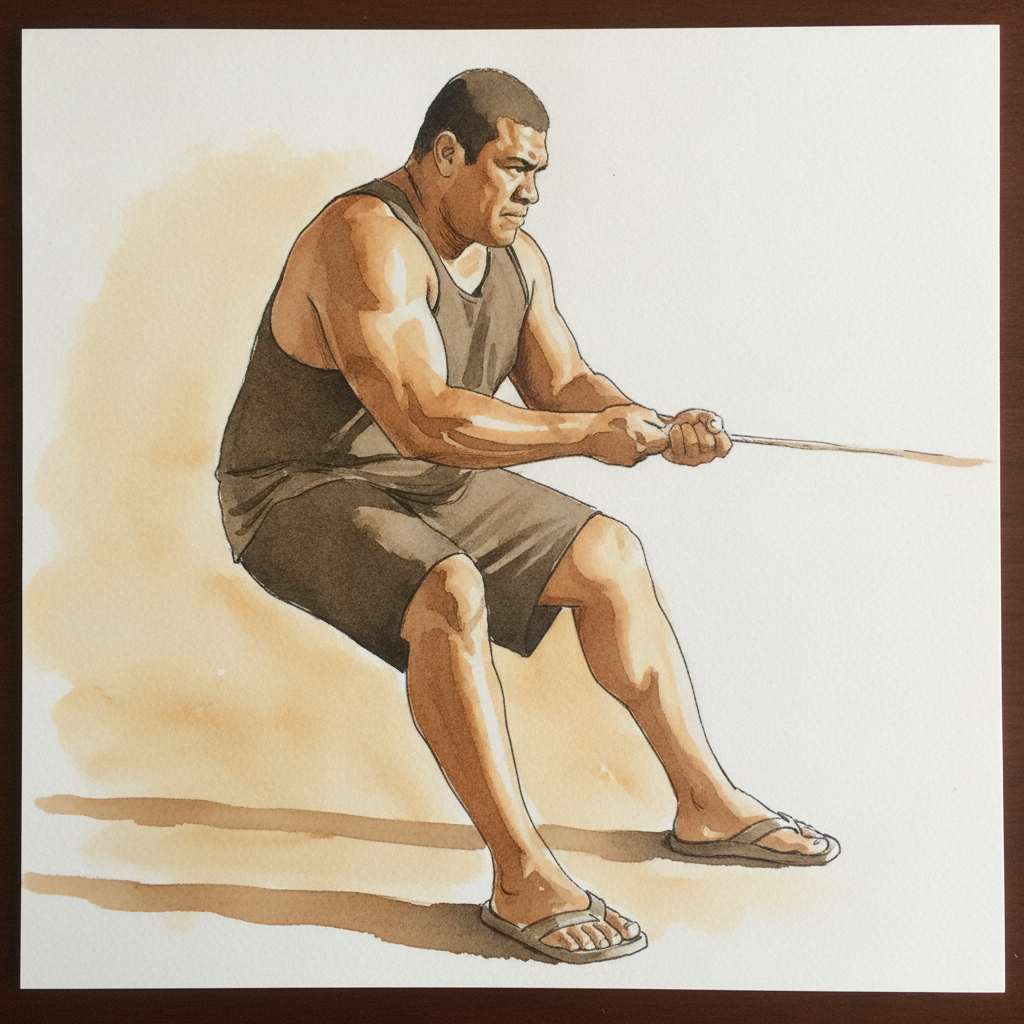
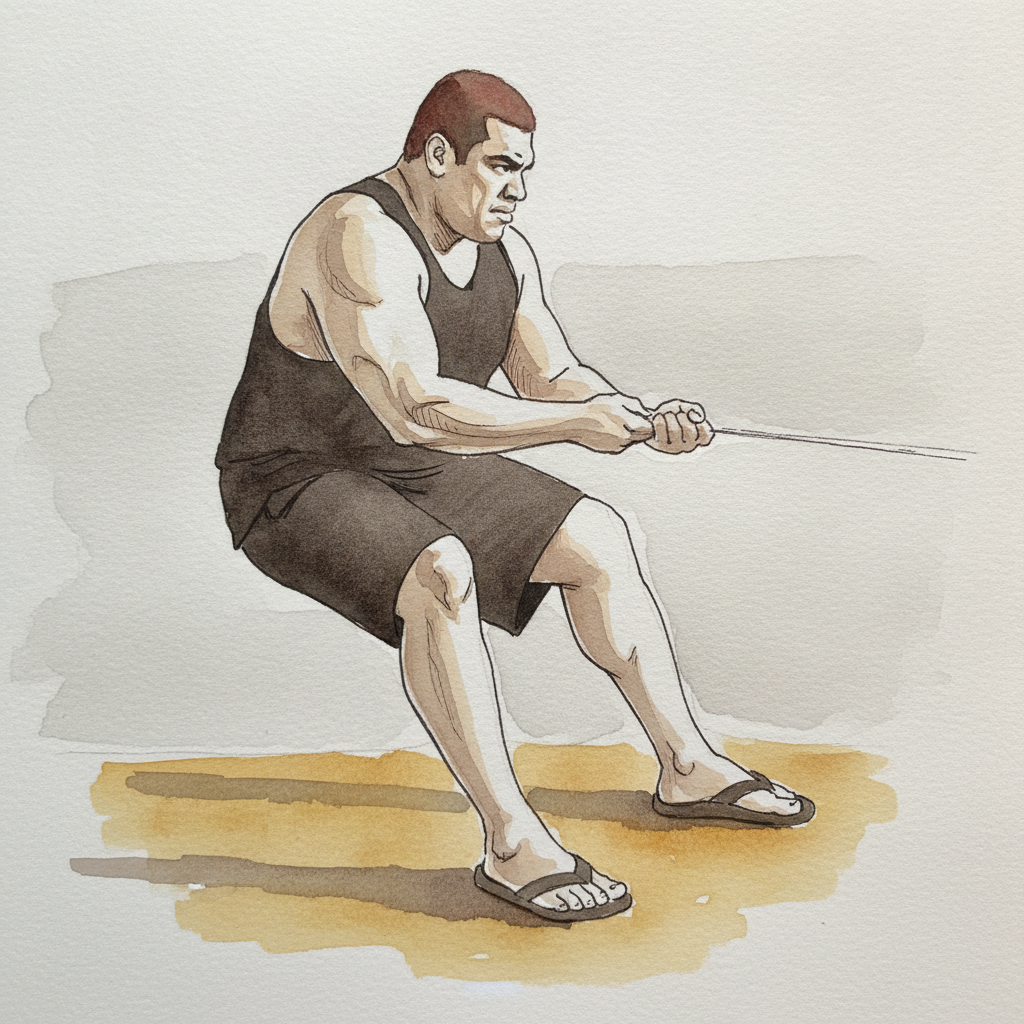
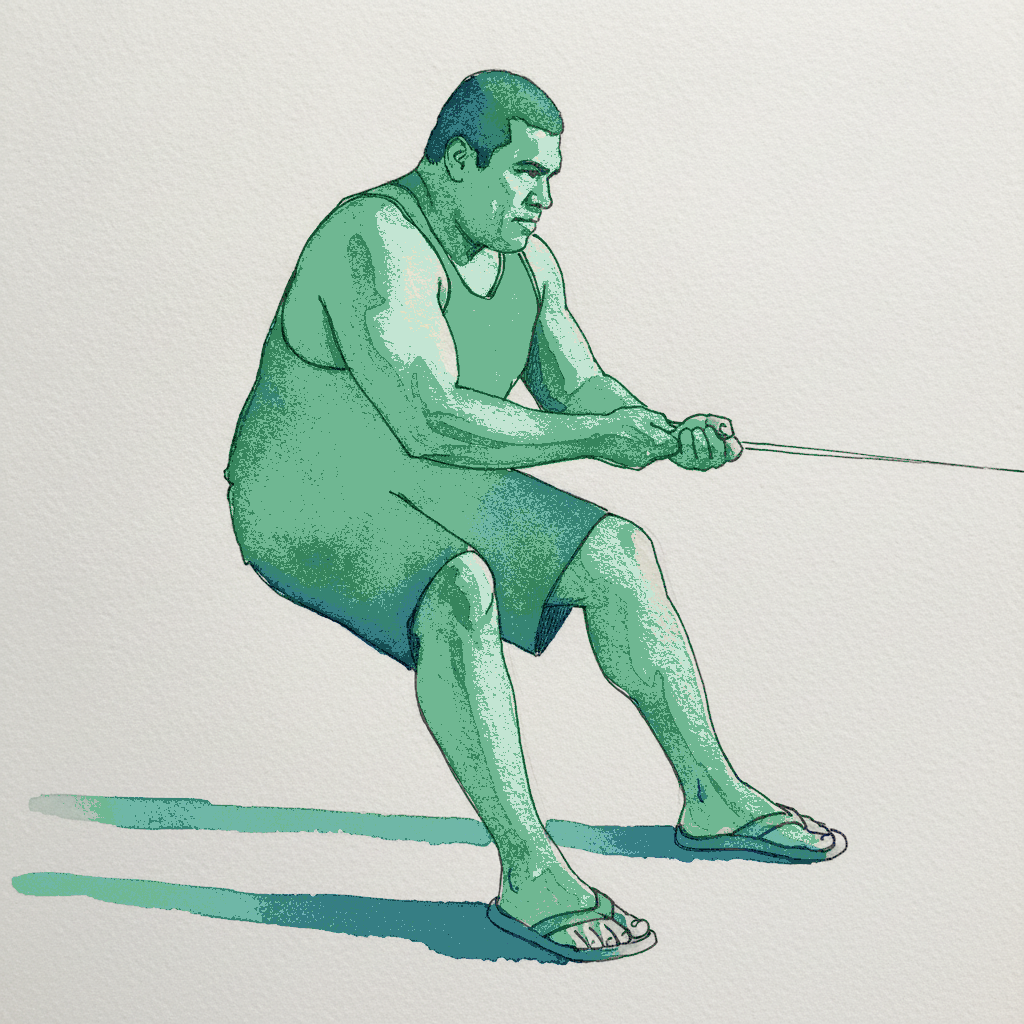
This piece offers an excellent study in how varied line weights and layered washes collaborate to convey powerful human anatomy and dynamic tension. Focus on using strong, confident lines to define the primary contours and highlight muscle groups like the cabled calves and bunched rhomboids. Then, build volume and depth on the broad form using successive, controlled washes that respond to the raking light, letting the ink lines anchor the structure and guide the eye along the figure's implied line of force.