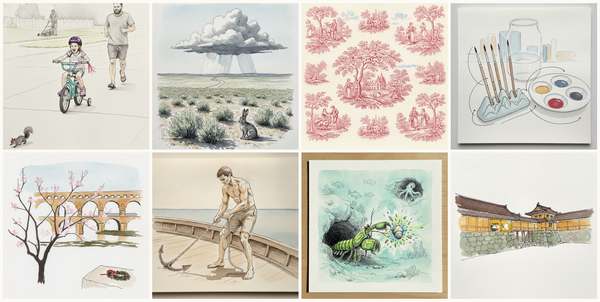
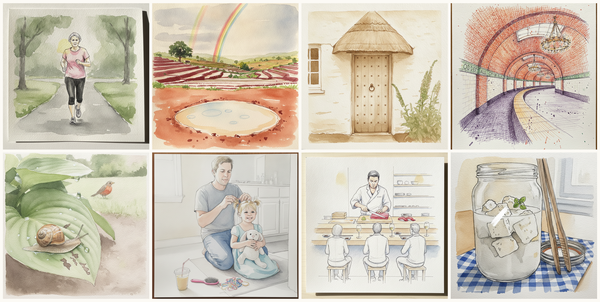
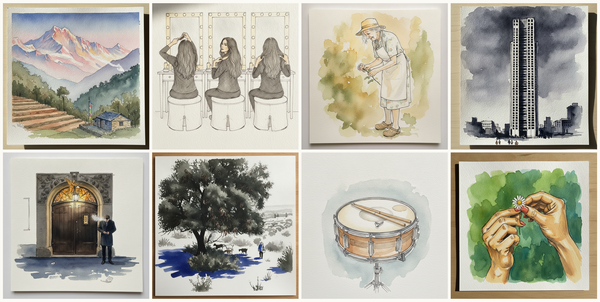
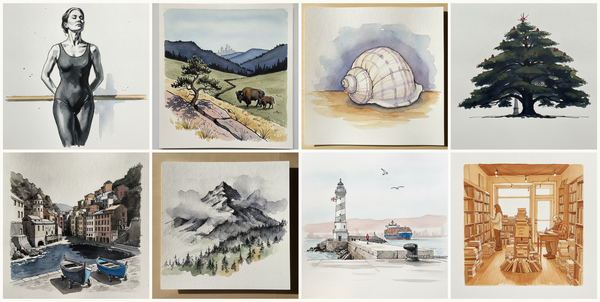
Cape Kiwanda, Pacific City, Oregon, School shop bench at lesson's end, Reaching across to opposite knee, seated twist at 56, New Zealand Beech with Tree Fern, South Island, and more — pen + watercolor for July 26, 2026
AI-generated daily art-practice references for pen and watercolor: Cape Kiwanda, Pacific City, Oregon, School shop bench at lesson's end, Reaching across to opposite knee, seated twist at 56, New Zealand Beech with Tree Fern, South Island, Banded sand goby, Marrakech Medina from Above the Koutoub…
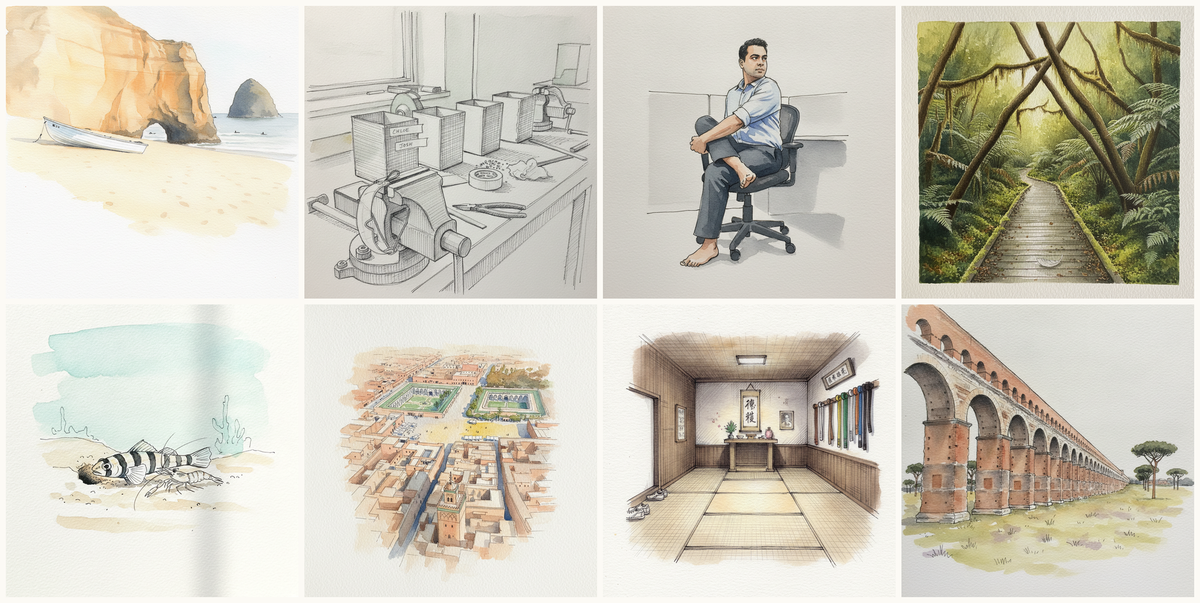
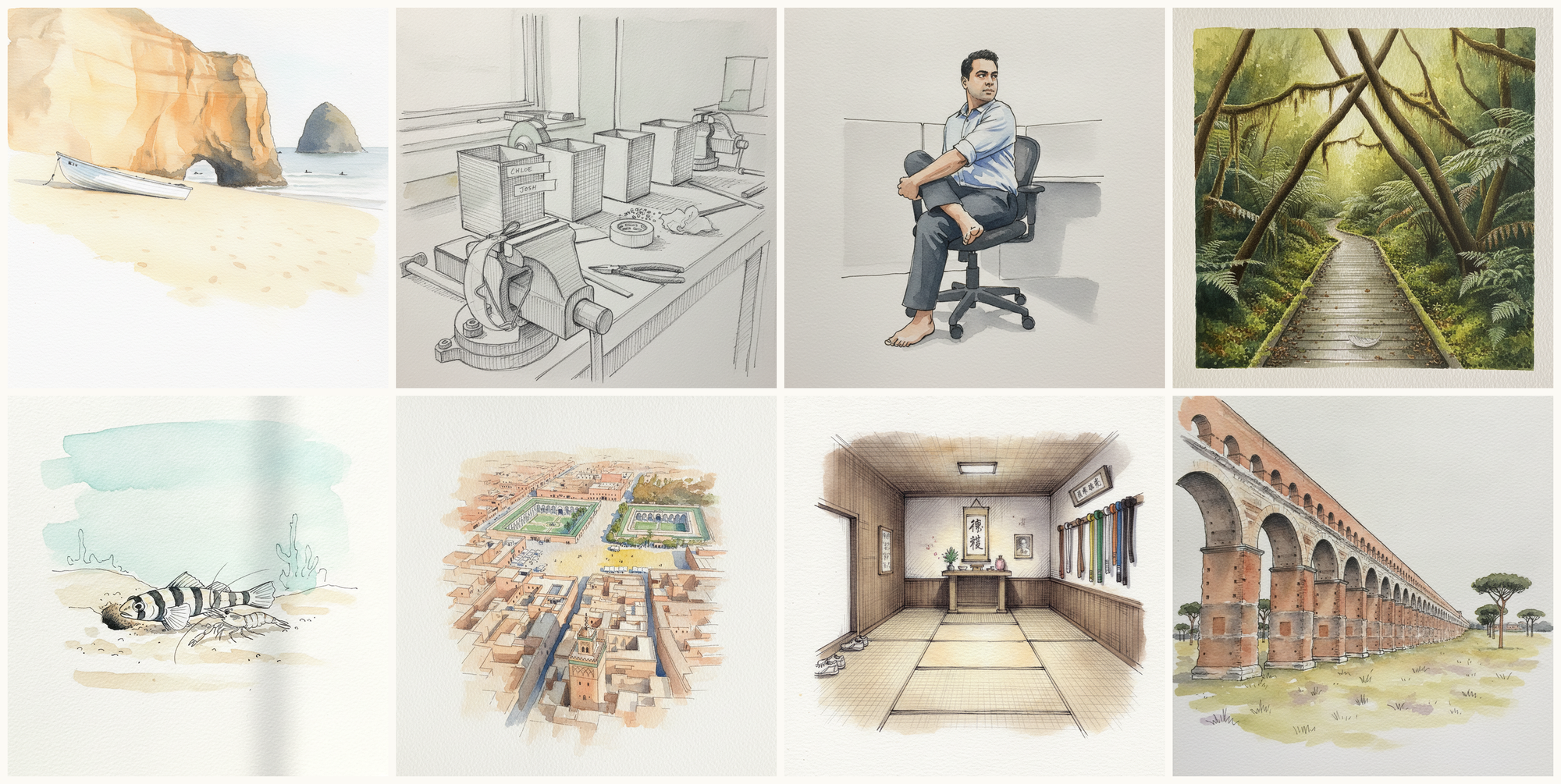
Today's 8 pen-and-watercolor pieces: Cape Kiwanda, Pacific City, Oregon, School shop bench at lesson's end, Reaching across to opposite knee, seated twist at 56, New Zealand Beech with Tree Fern, South Island, Banded sand goby, Marrakech Medina from Above the Koutoubia, Martial arts dojo, Aqua Claudia, Roman Campagna, Italy. Each piece comes with an AI-generated photoreal reference, three AI-generated example artworks in different treatments, and a short focus paragraph naming what to study in this one.
Why these references use AI
This daily series uses AI-generated images as practice prompts, not as finished artwork to copy. Each subject starts with a synthetic photoreal reference generated with Gemini/Nano Banana, then moves into three pen-and-watercolor interpretations of the same subject.
I use AI here because daily art practice needs variety and low friction. Real life can get repetitive, busy, or visually narrow. These generated reference sets make it easier to study bodies, buildings, animals, landscapes, objects, gestures, light, palettes, and compositions that might not show up in an ordinary day.
The goal is not to reproduce any image directly. Treat each set as a starting point for observation and study: choose what interests you, change the framing, simplify the subject, alter the palette, and make your own version.
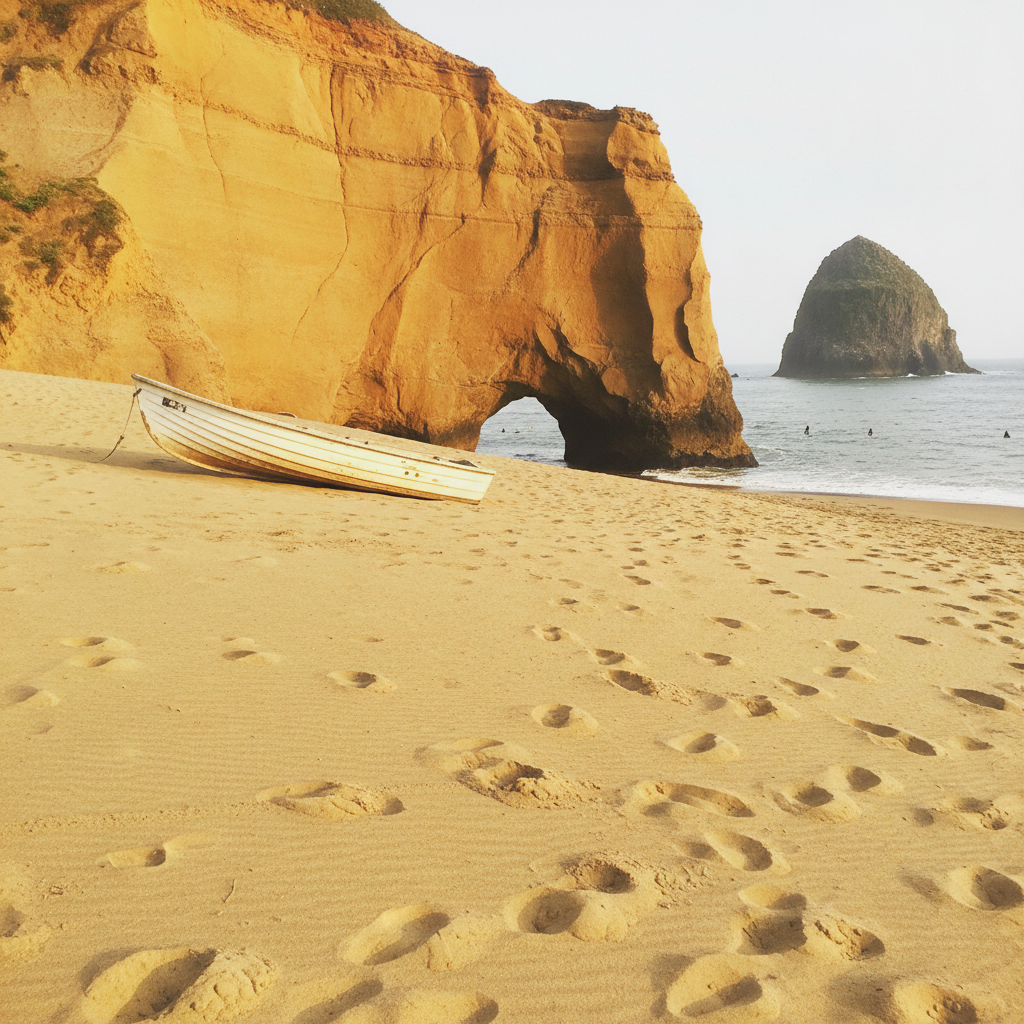
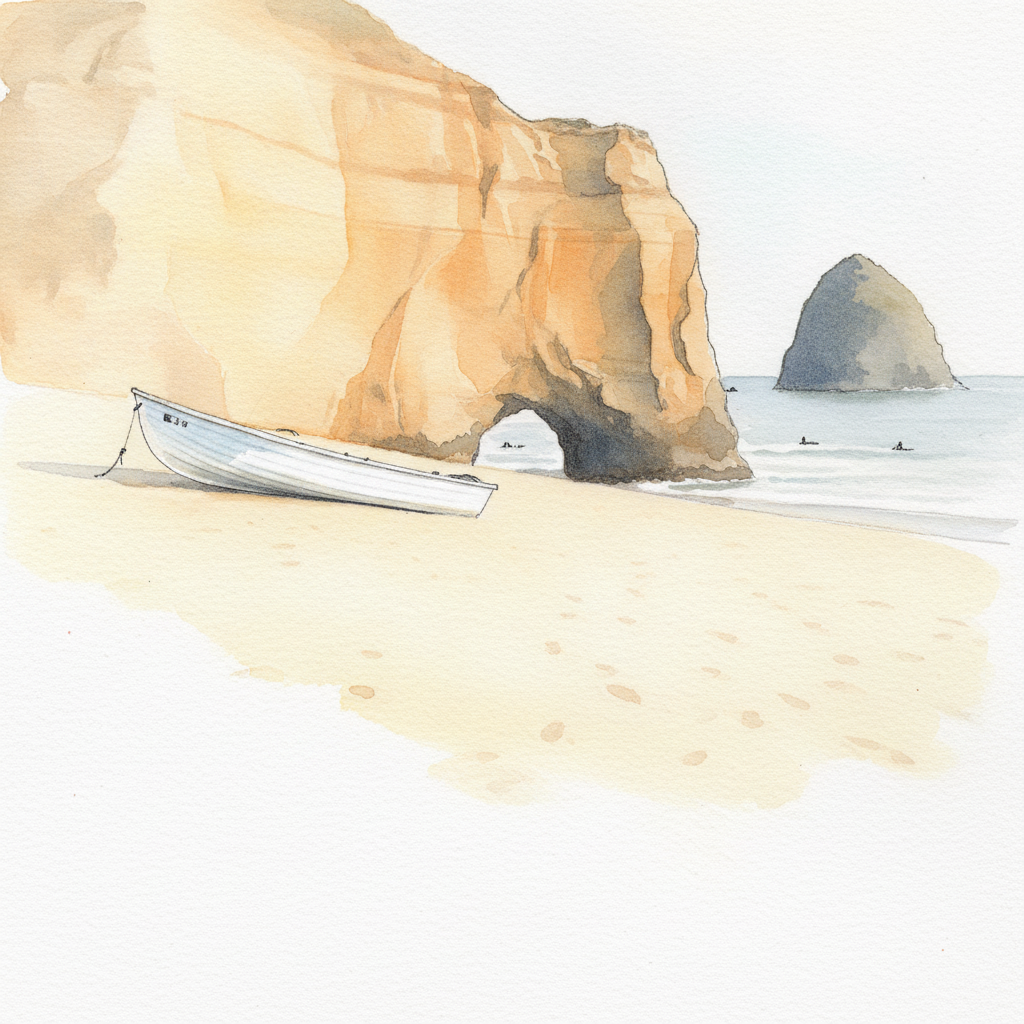
Piece 1 — Cape Kiwanda, Pacific City, Oregon
Pen + Watercolor · Loose pen and watercolor line-and-wash
Three takes

Focus for this piece
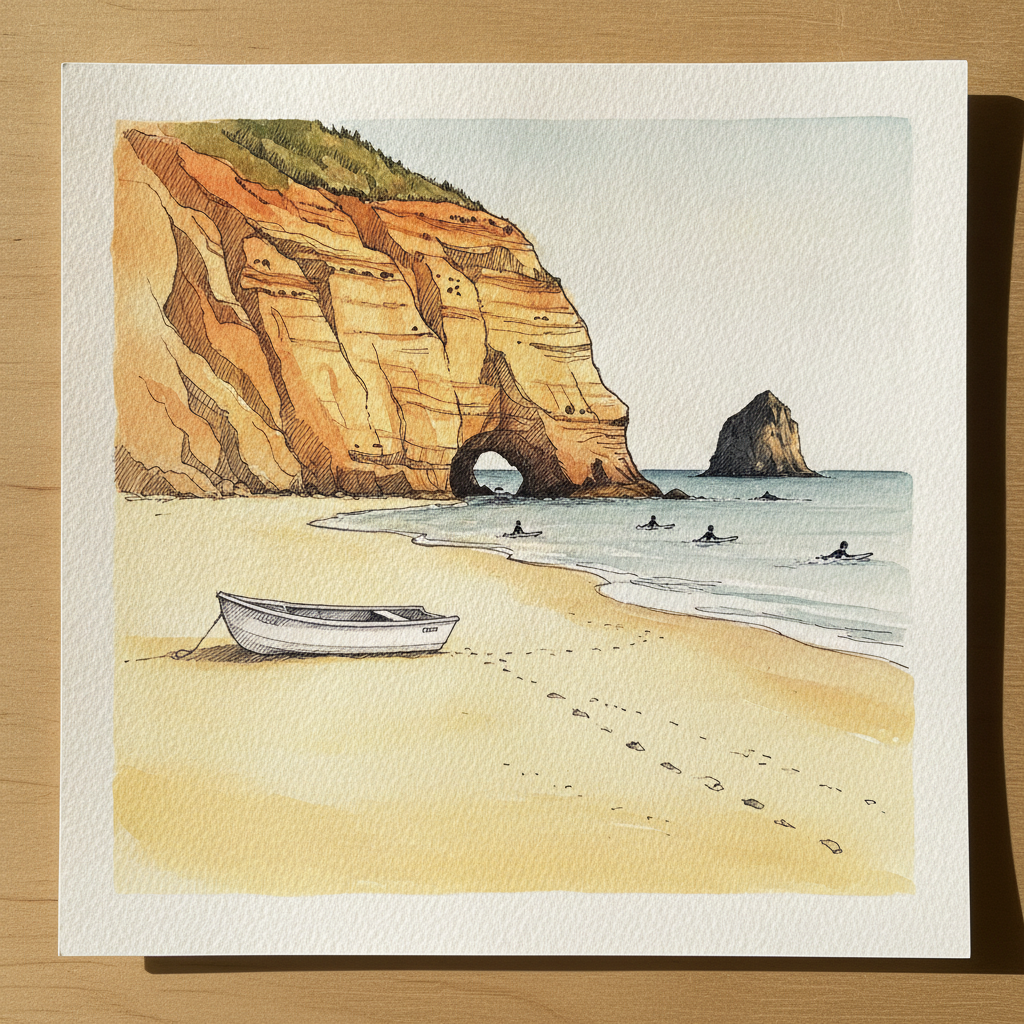
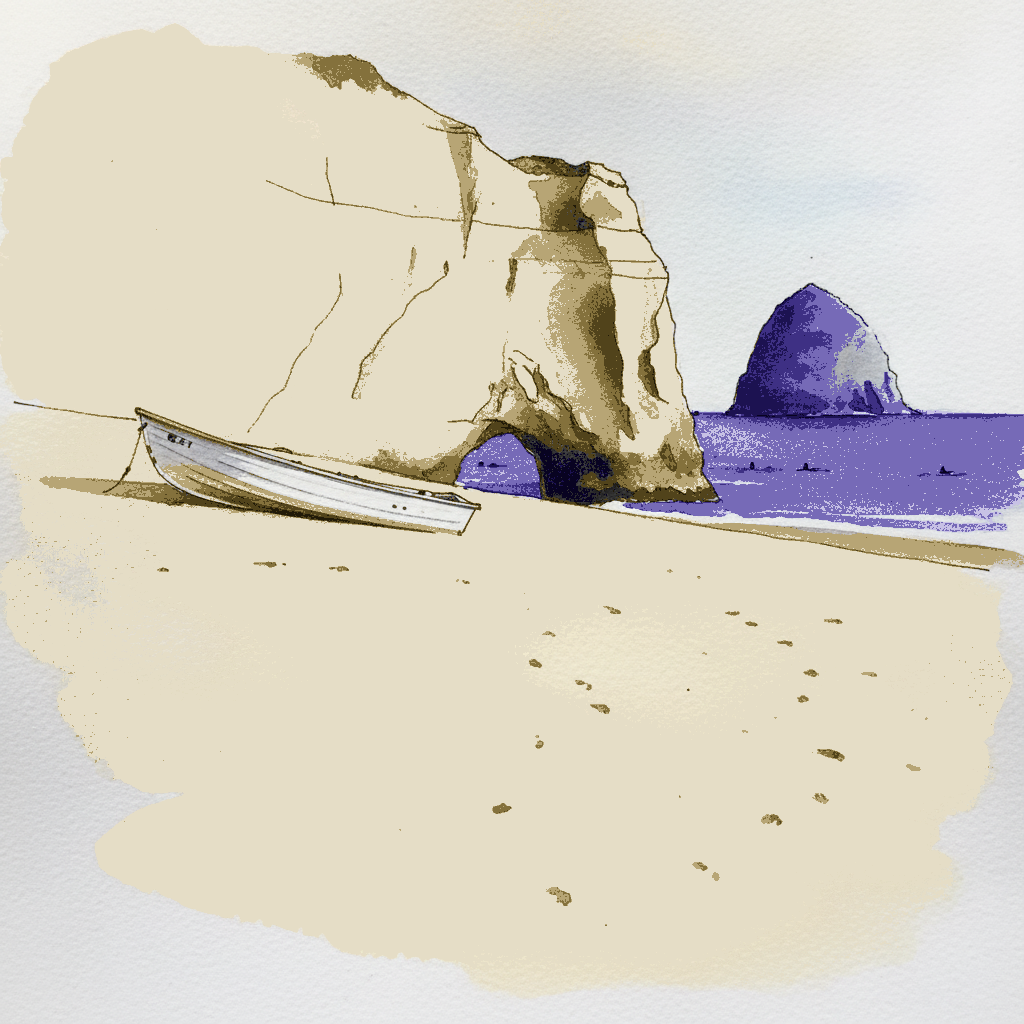
This piece is an excellent study in using intense side light to reveal geological form and texture. Concentrate on defining the Cape's "ribboned shadow" striations with varied pen line weights, then layering warm ochre and orange washes to build the glowing, volumetric light that carves those surfaces. Note how the flat, dark shape of Haystack Rock creates a stark value contrast against the detailed, intricate sandstone in the middle ground, pushing the sense of depth.
Piece 2 — School shop bench at lesson's end
Pen + Watercolor · Loose pen and watercolor line-and-wash
Three takes

Focus for this piece
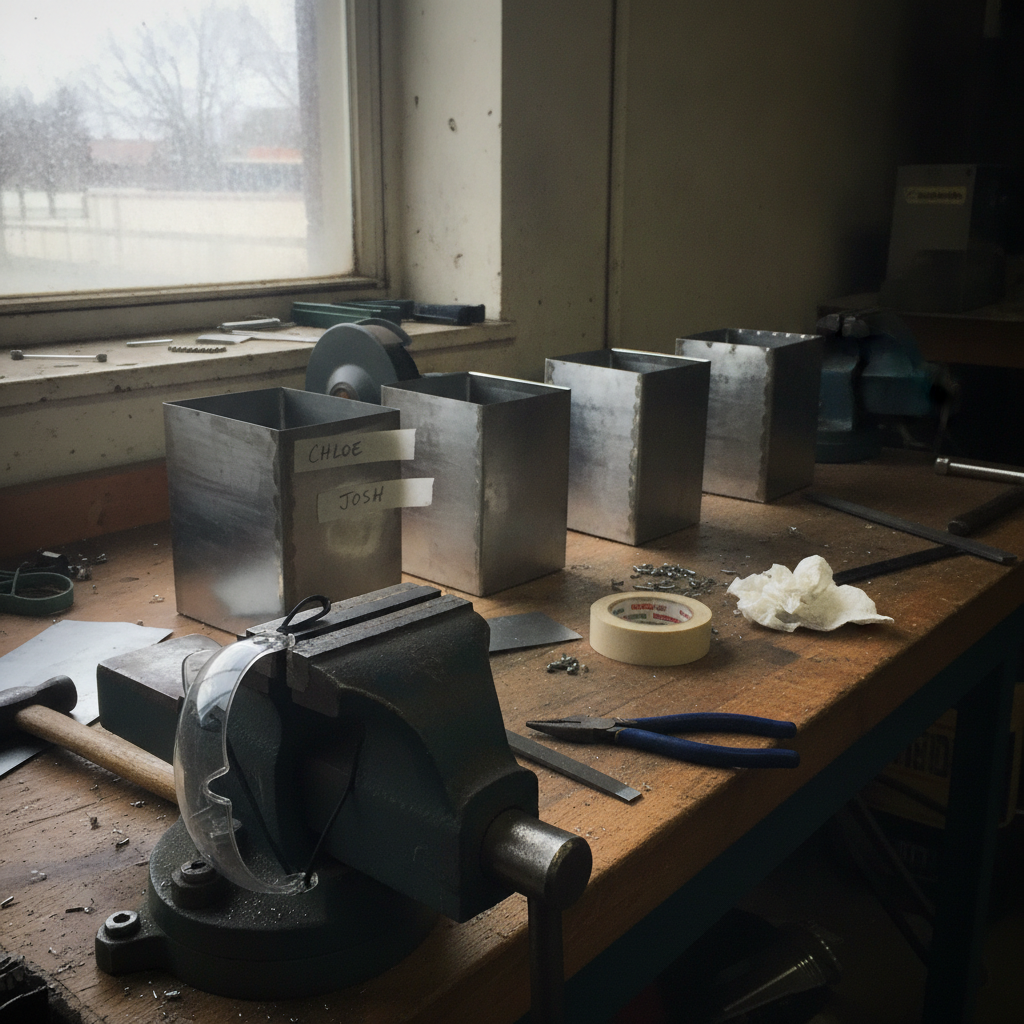
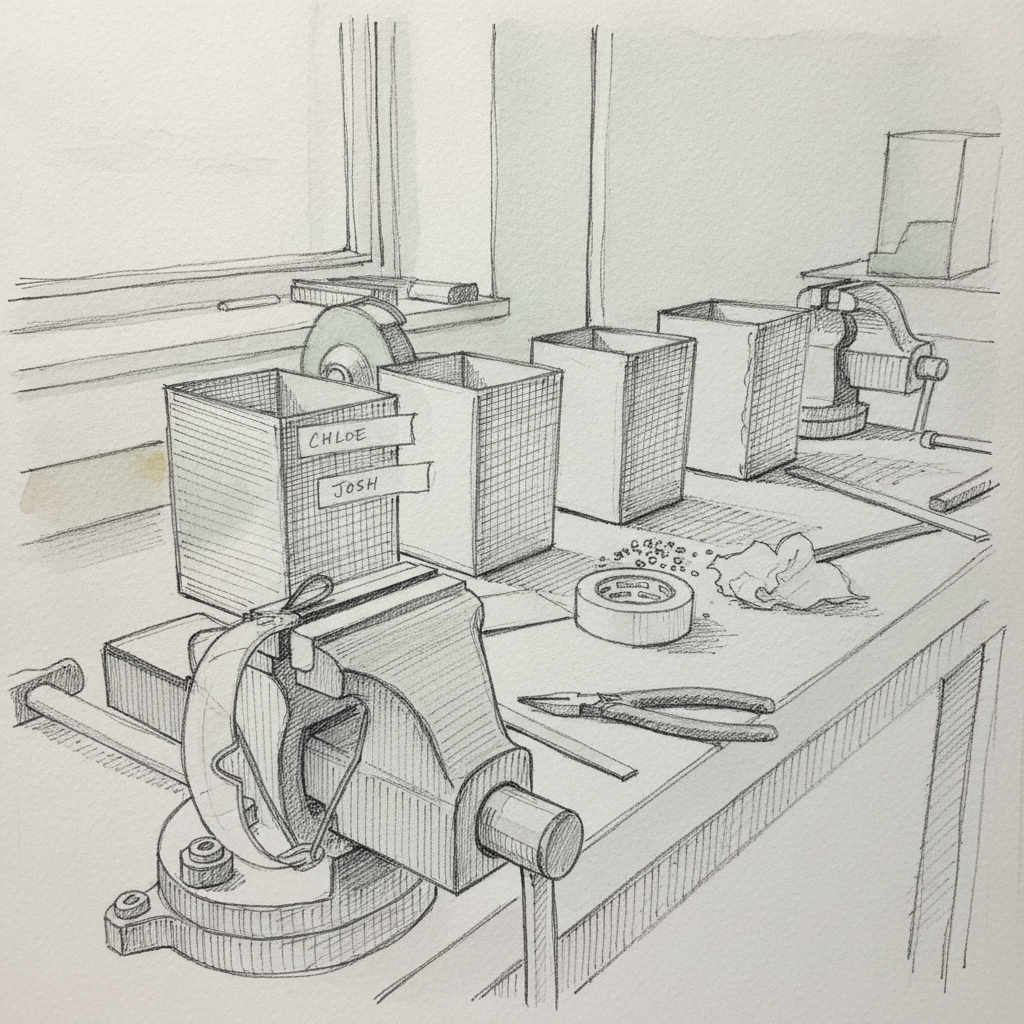
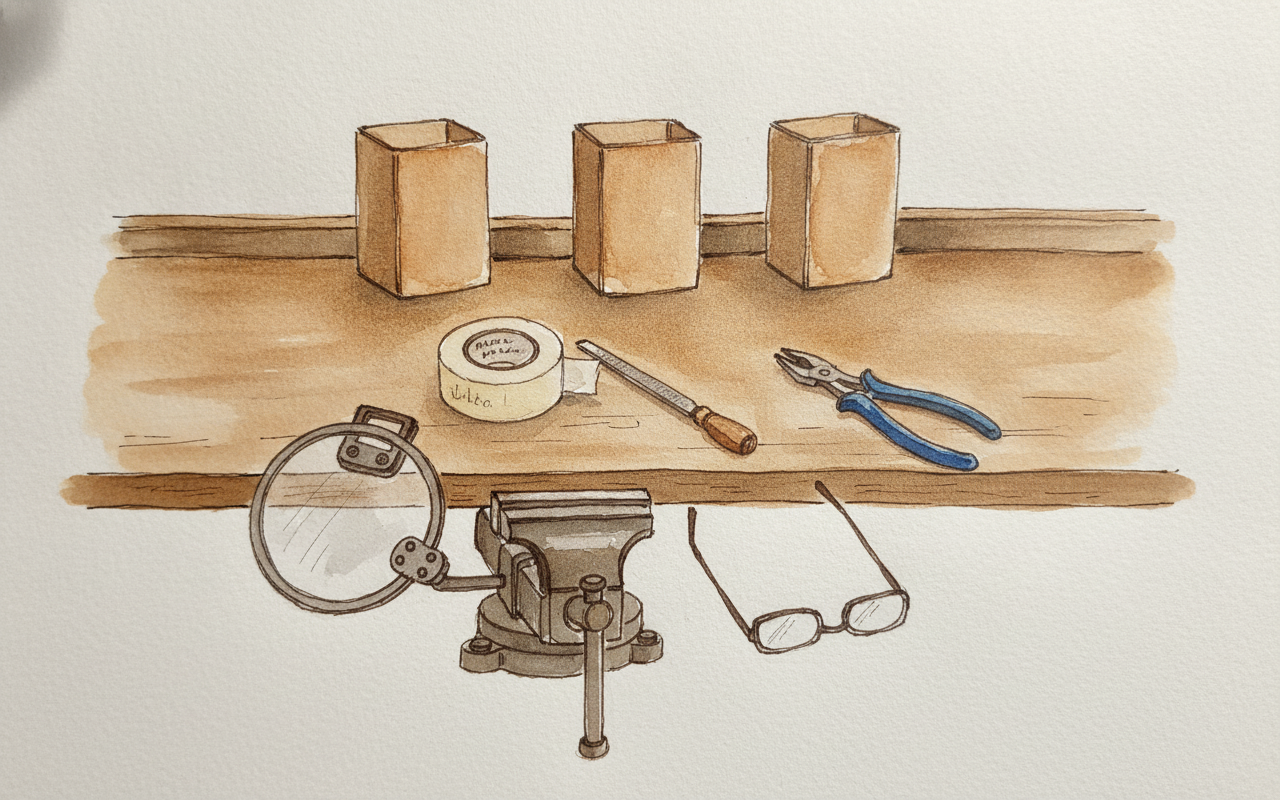
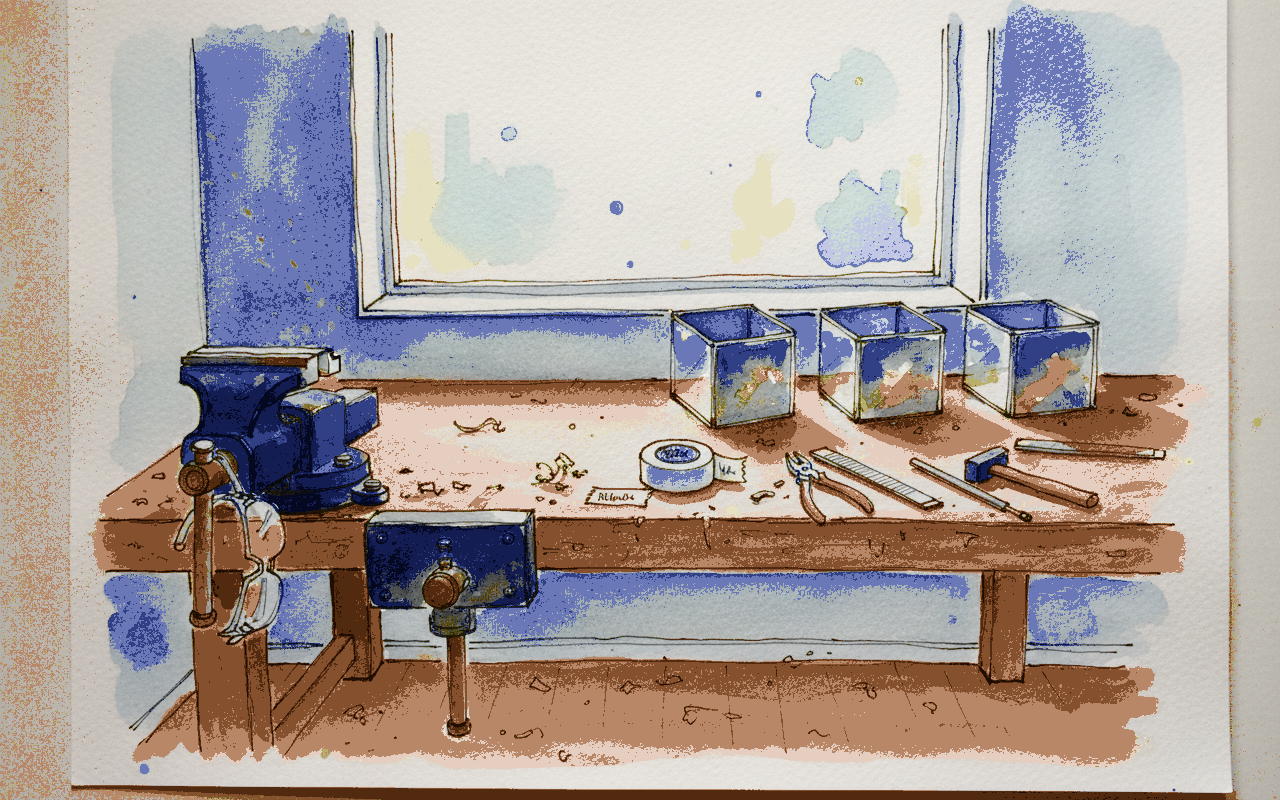
This piece is an excellent study in using varied line weight and selective detail to organize a complex, cluttered scene. Use crisp, heavier lines to establish the angular forms of the bench and key tools, letting lighter, broken lines merely suggest the background and smaller details. Focus your watercolor washes on establishing the overall muted, industrial light and hinting at the metallic textures, allowing the ink to define the precise forms and disarray. This approach helps create depth and guides the eye through the scattered objects without over-rendering every element.
Piece 3 — Reaching across to opposite knee, seated twist at 56
Pen + Watercolor · Loose pen and watercolor line-and-wash
Three takes
Focus for this piece
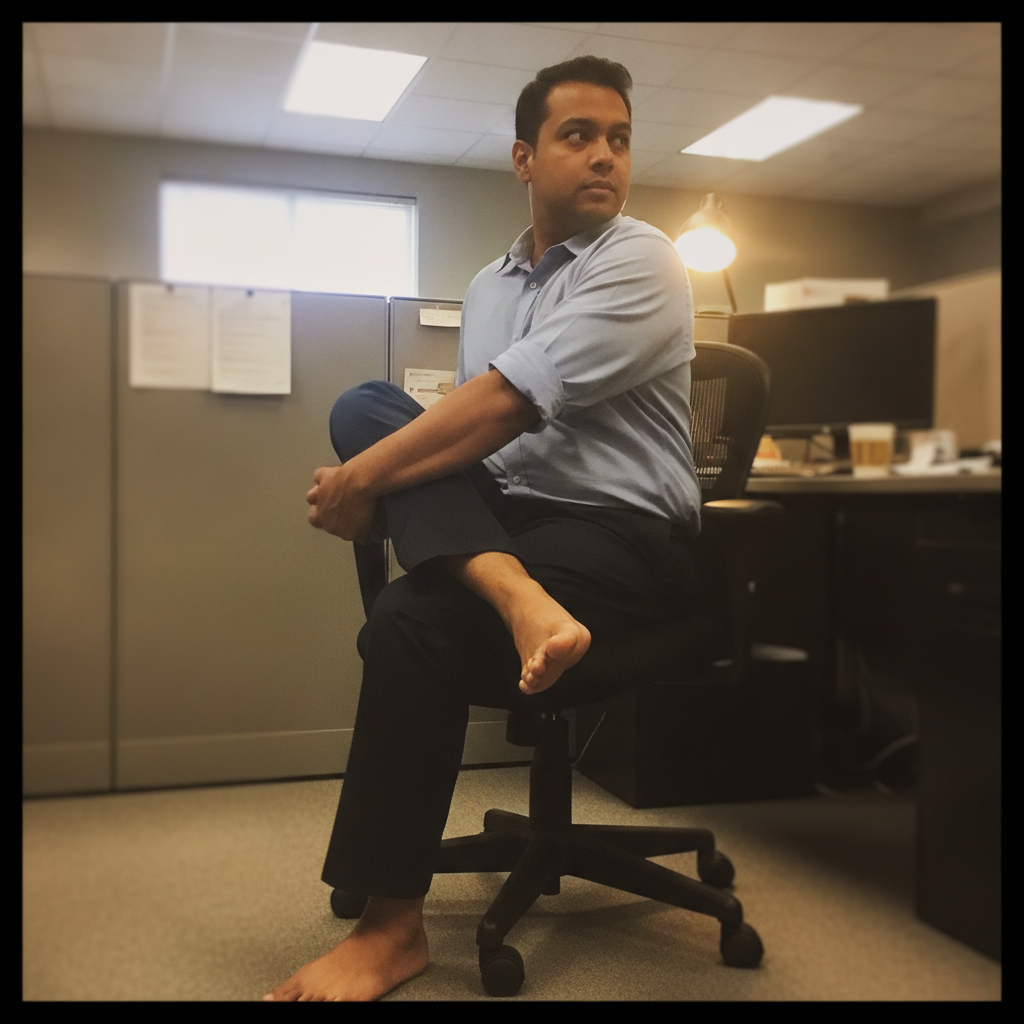
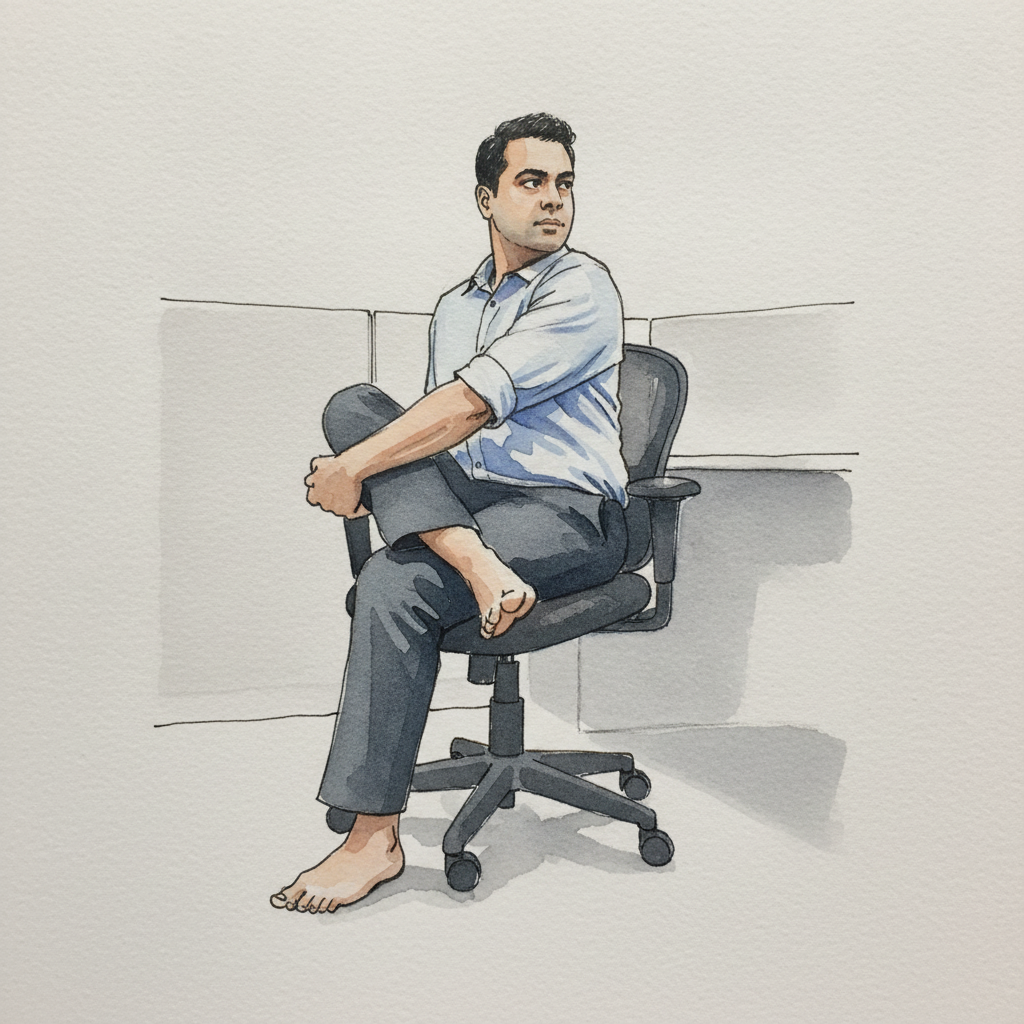
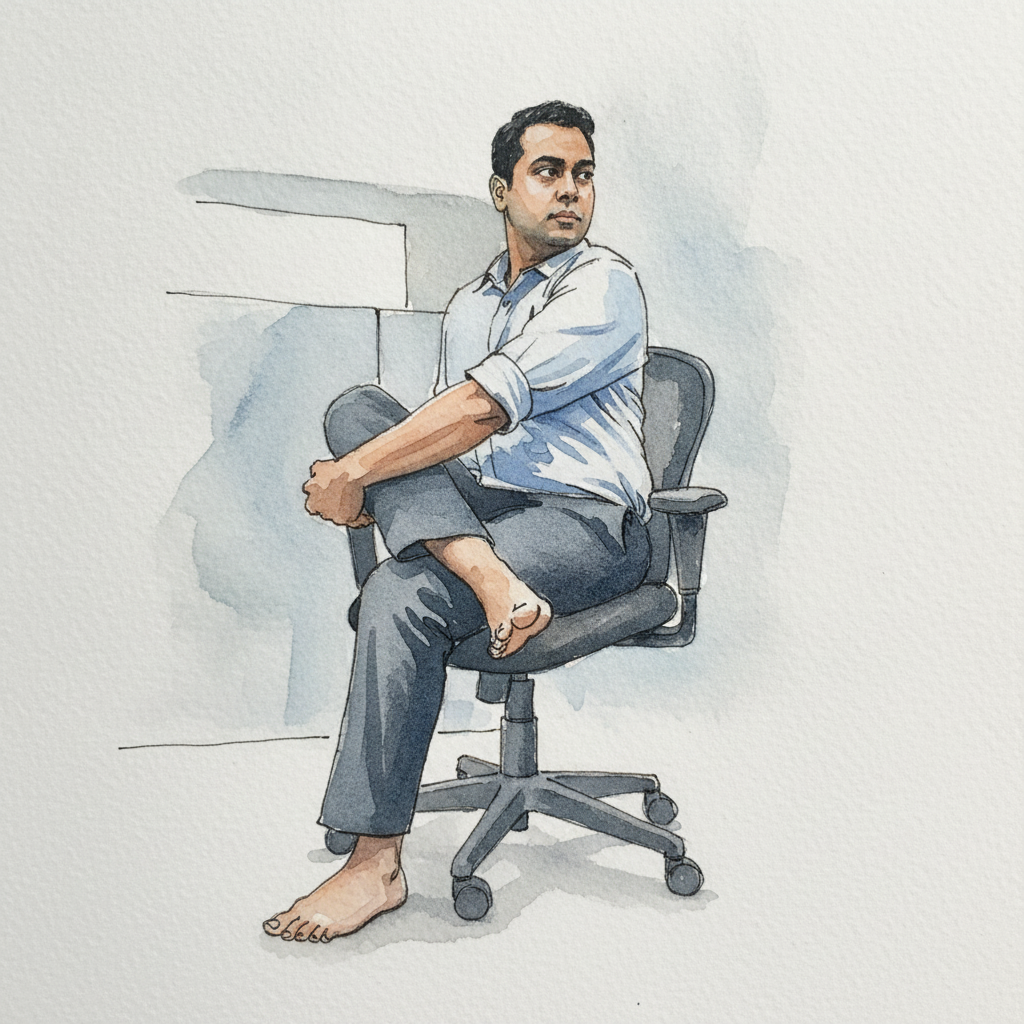
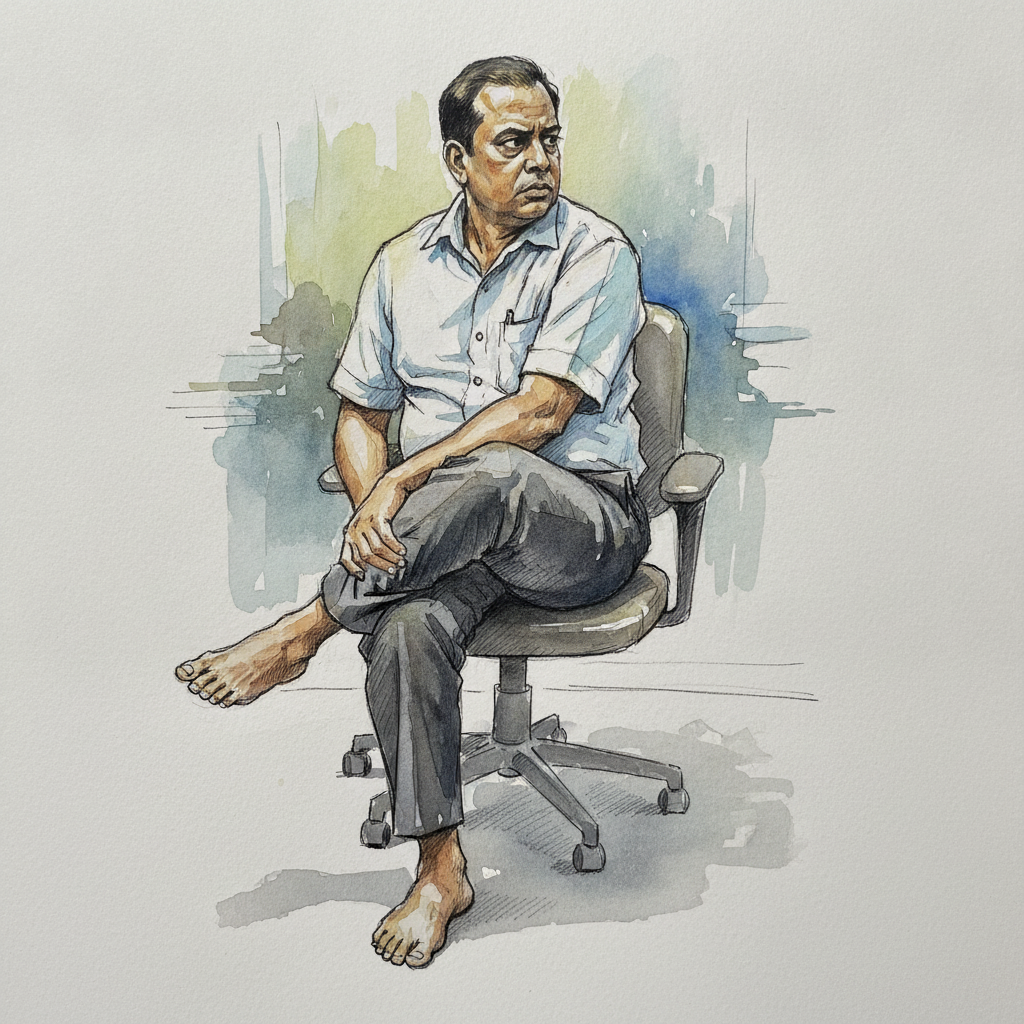
Today's piece is a great opportunity to explore conveying dynamic anatomical twist and contrasting forms. Use varied line weights to emphasize the corkscrewing motion from the planted feet up through the spine, with heavier, more continuous lines for the strong forearms and broken, lighter lines for the softer, paunchy middle. Apply washes with soft, wet-into-wet edges in the torso's mid-section to suggest its pliable form, reserving more defined, layered washes to sculpt the tensed muscles of the arms and shoulders gripping the knee and chair. Pay attention to how the warm desk lamp light interacts with the cooler overhead fluorescents, using subtle temperature shifts in your washes to model the form.
Piece 4 — New Zealand Beech with Tree Fern, South Island
Pen + Watercolor · Loose pen and watercolor line-and-wash
Three takes
Focus for this piece
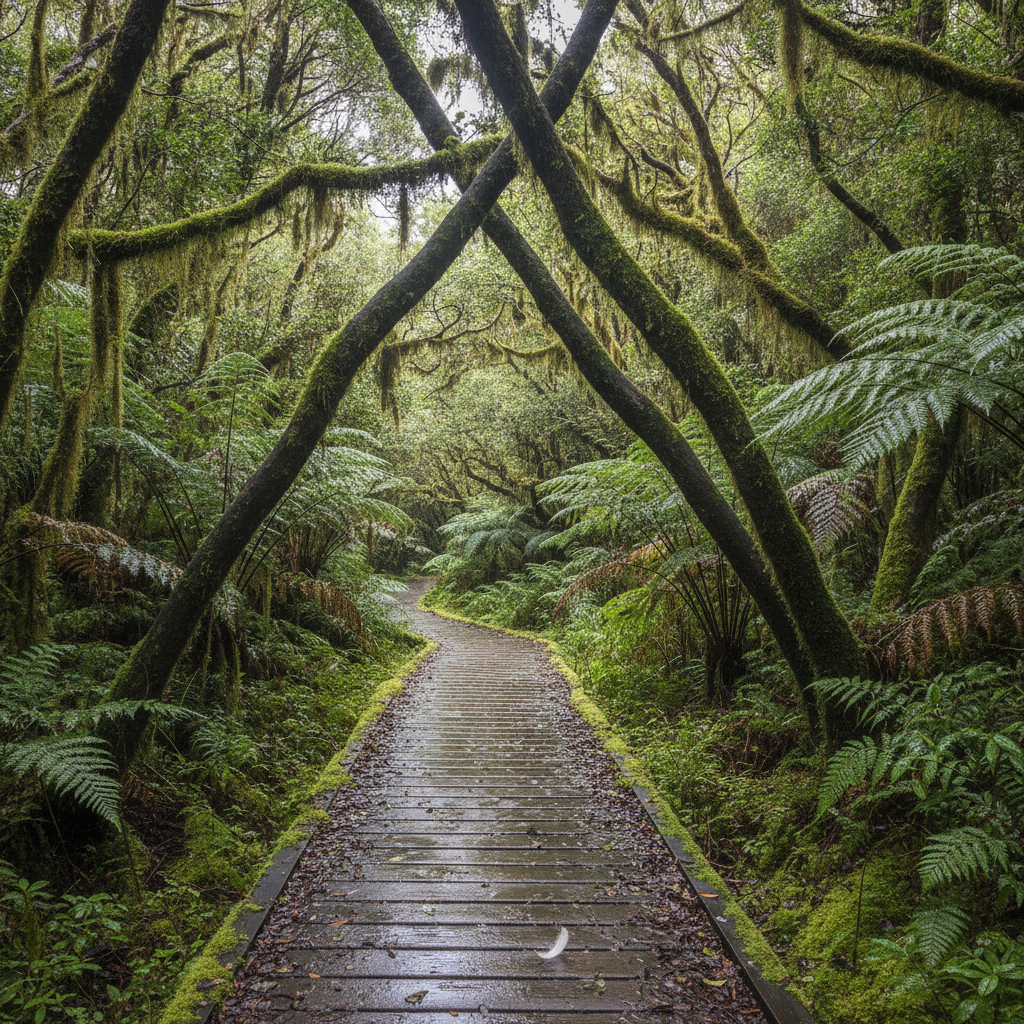
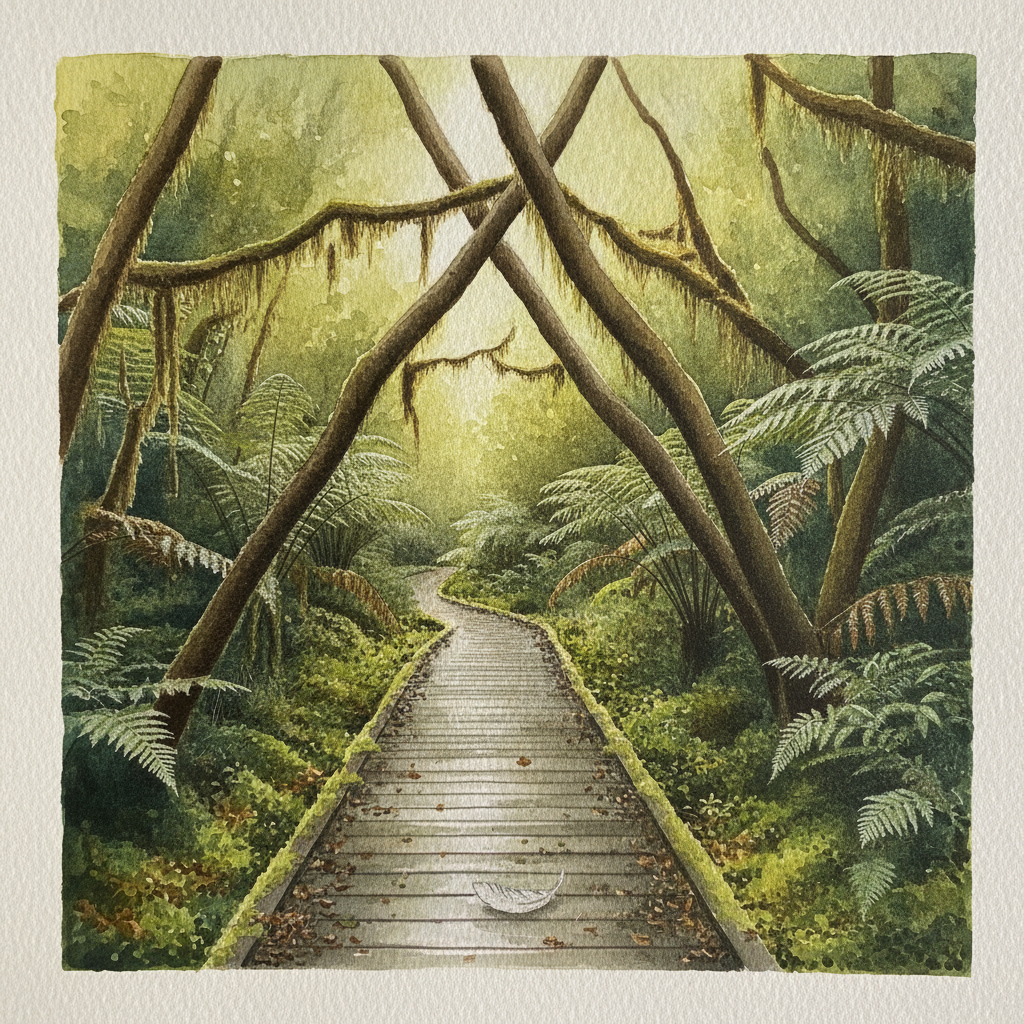
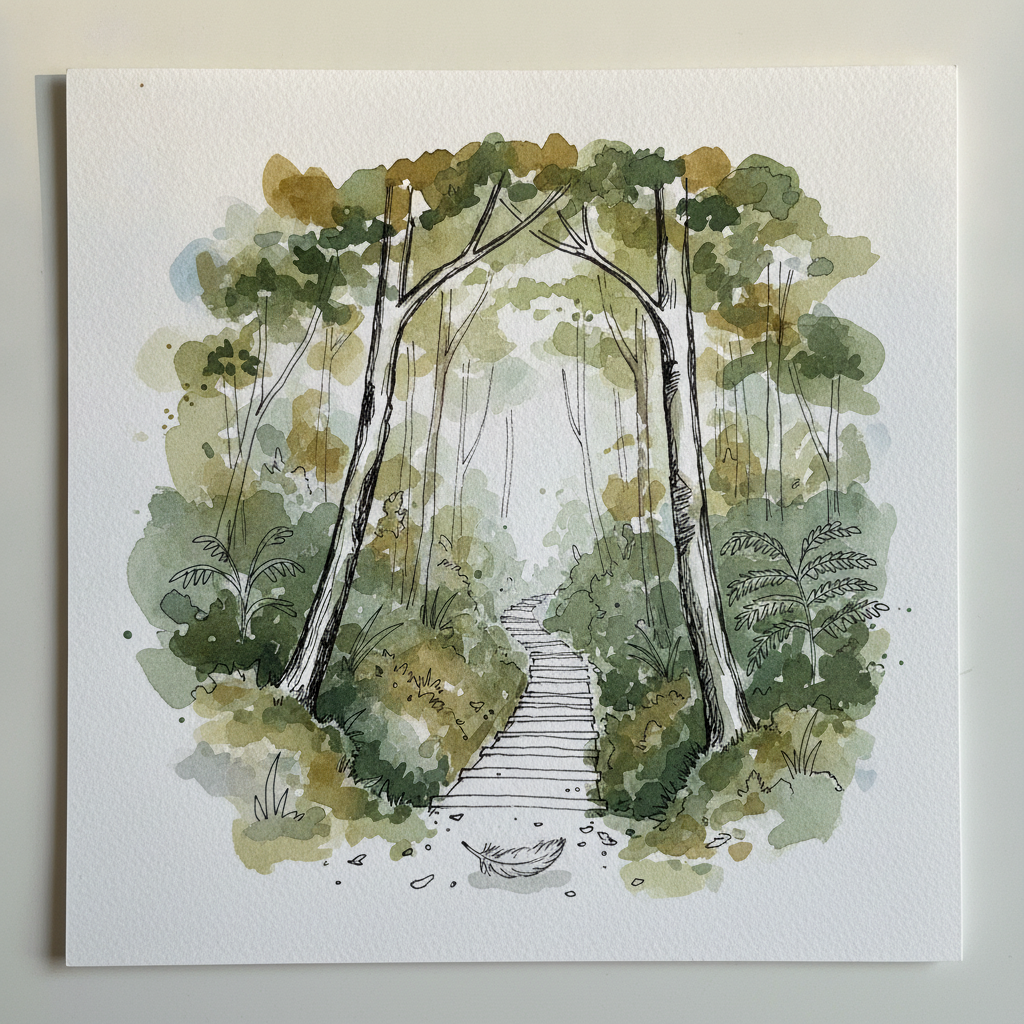
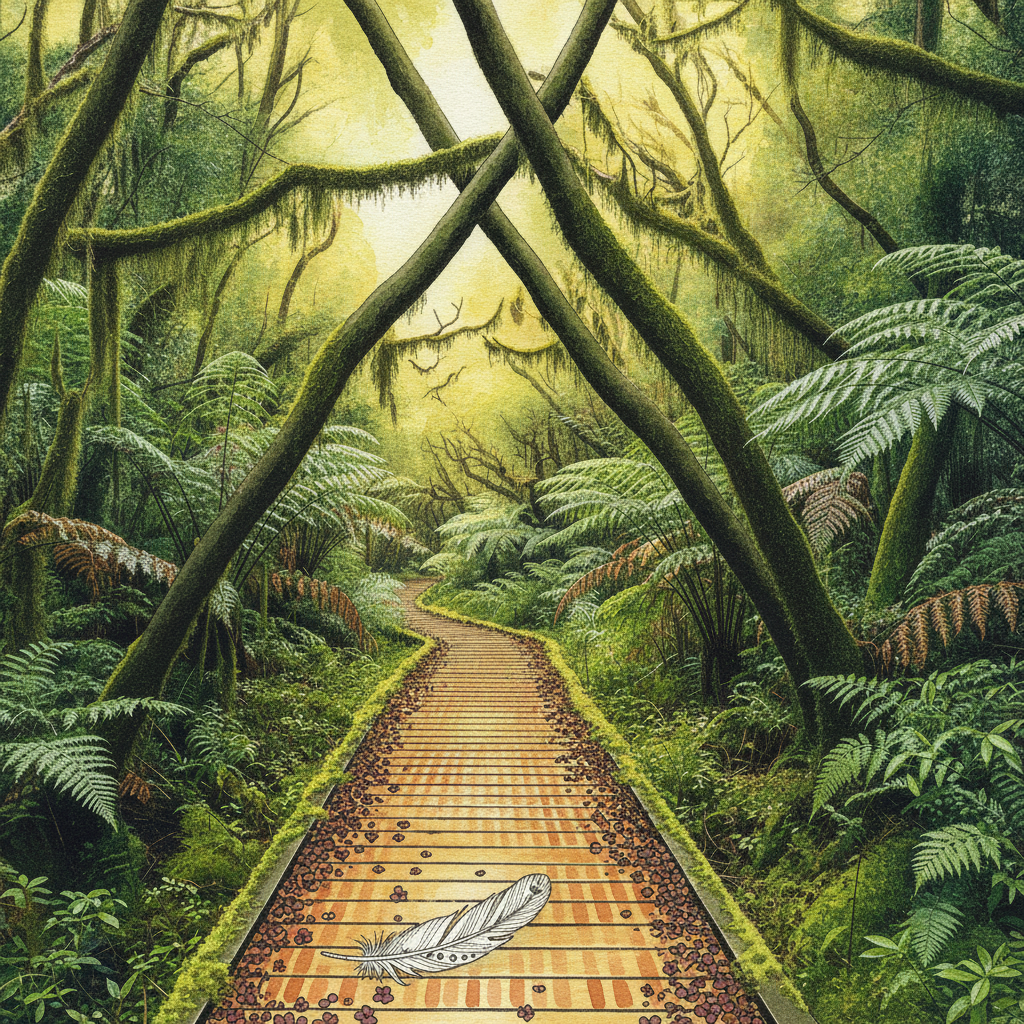
This piece offers a superb opportunity to study how interlocking organic shapes can create a strong sense of depth and enclosure. Notice how the leaning beech trunks and arching fern fronds naturally form a tunnel, and use varied pen weights to define these foreground elements with crispness. Then, layer soft, wet-on-wet washes of green and gold to build atmospheric depth, allowing colors to blend and bleed gently to suggest filtered light and the dense, mossy environment.
Piece 5 — Banded sand goby
Pen + Watercolor · Loose pen and watercolor line-and-wash
Three takes

Focus for this piece
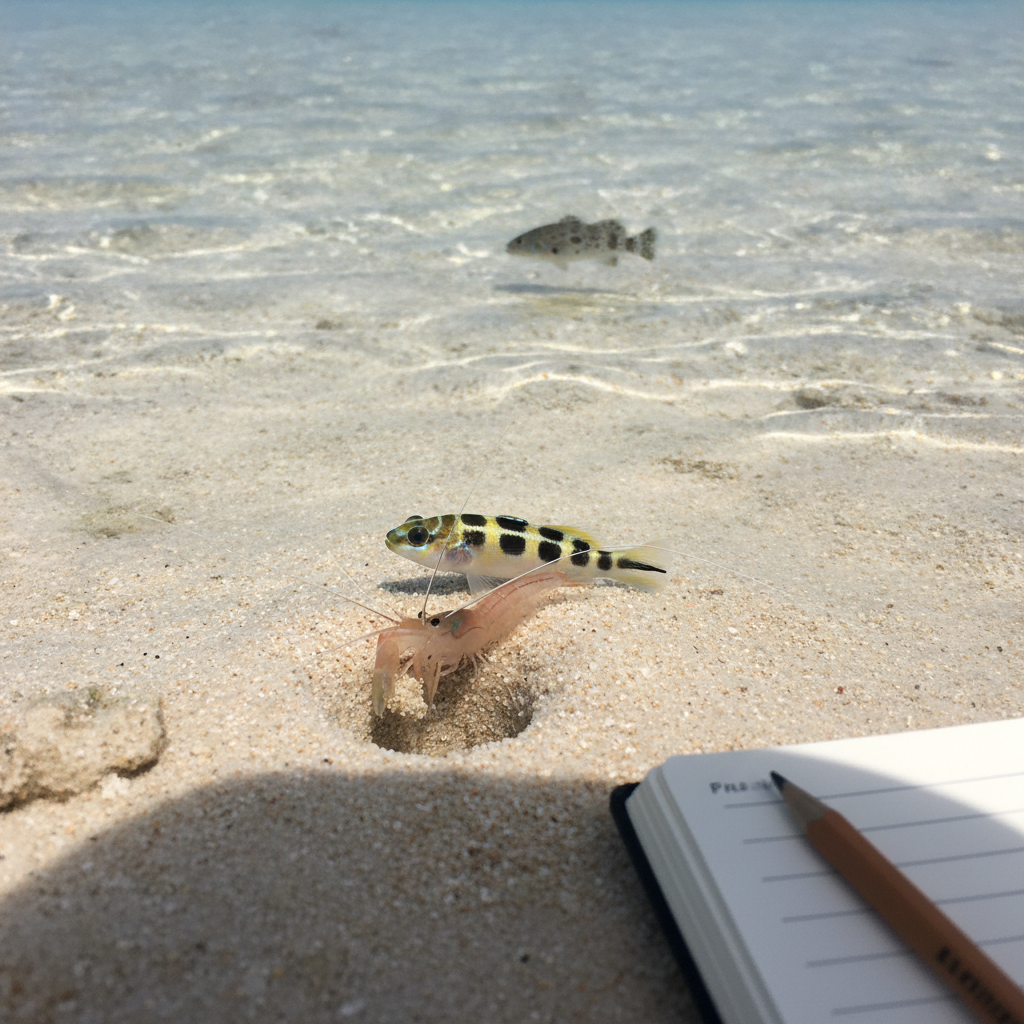
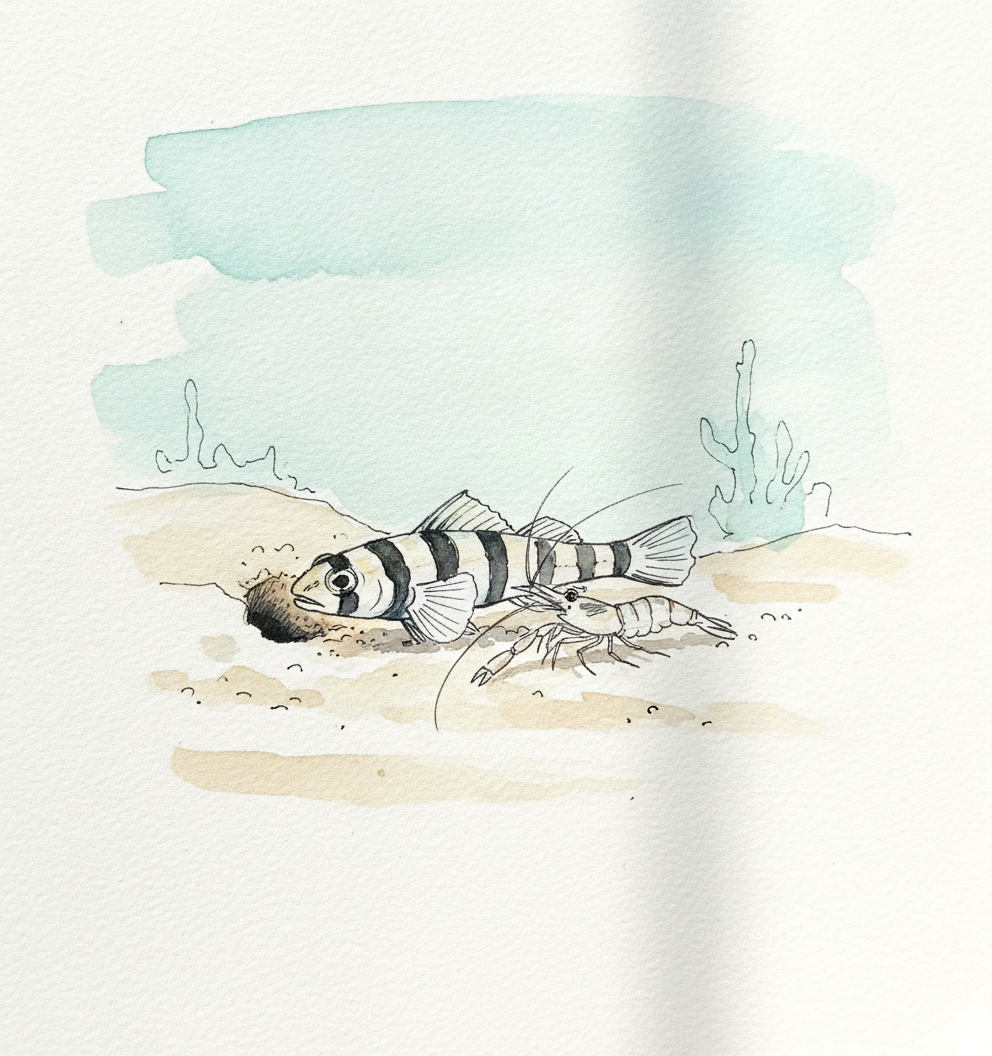
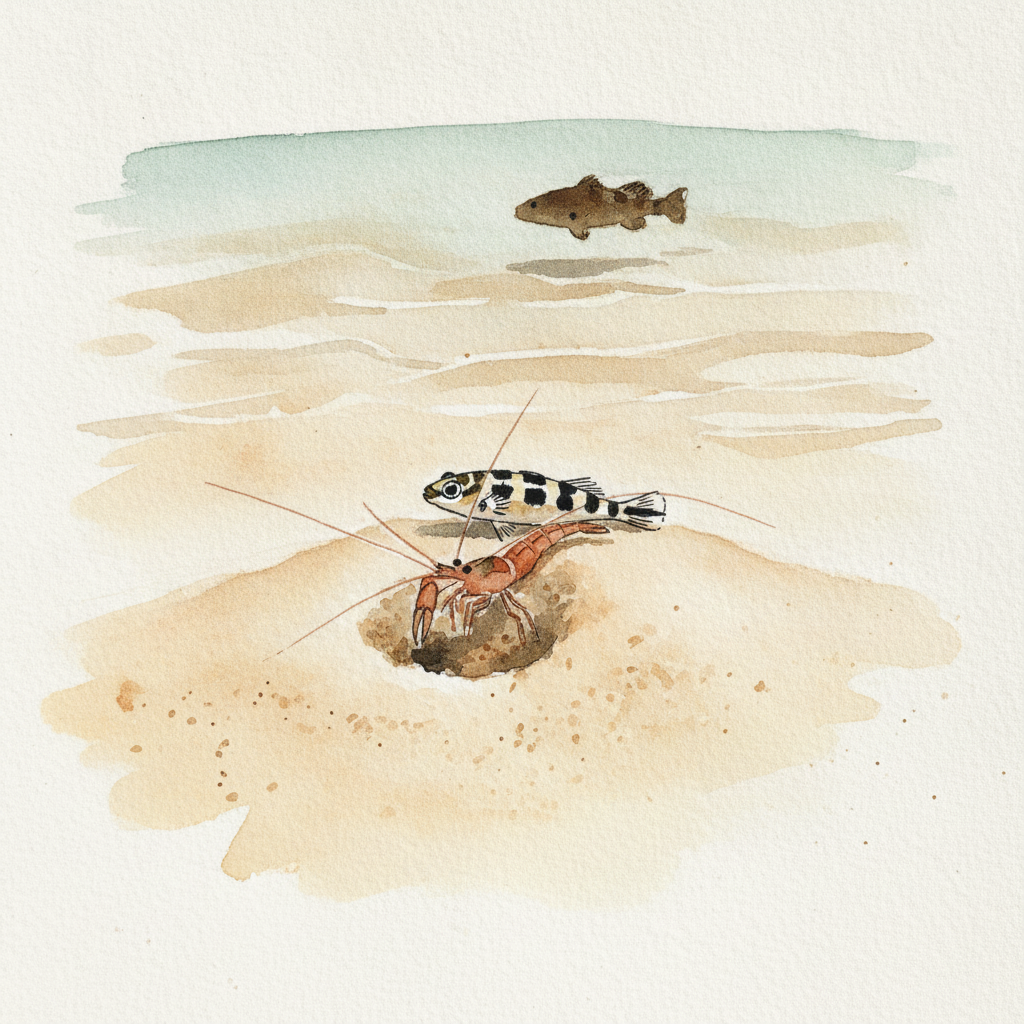
This piece offers an excellent study in contrasting delicate detail with soft atmospheric washes. Use precise, varied pen lines to capture the goby's distinct bands and the fine antennae of the shrimp, allowing these sharp elements to emerge from looser watercolor applications. Pay particular attention to how a dry-brush texture with a very light cool grey can suggest the sandy burrow entrance, while wet-on-wet washes define the subtle, luminous quality of the shallow water around the fish. This interplay of crisp line and fluid color will define the creature and its ephemeral habitat.
Piece 6 — Marrakech Medina from Above the Koutoubia
Pen + Watercolor · Loose pen and watercolor line-and-wash
Three takes
Focus for this piece
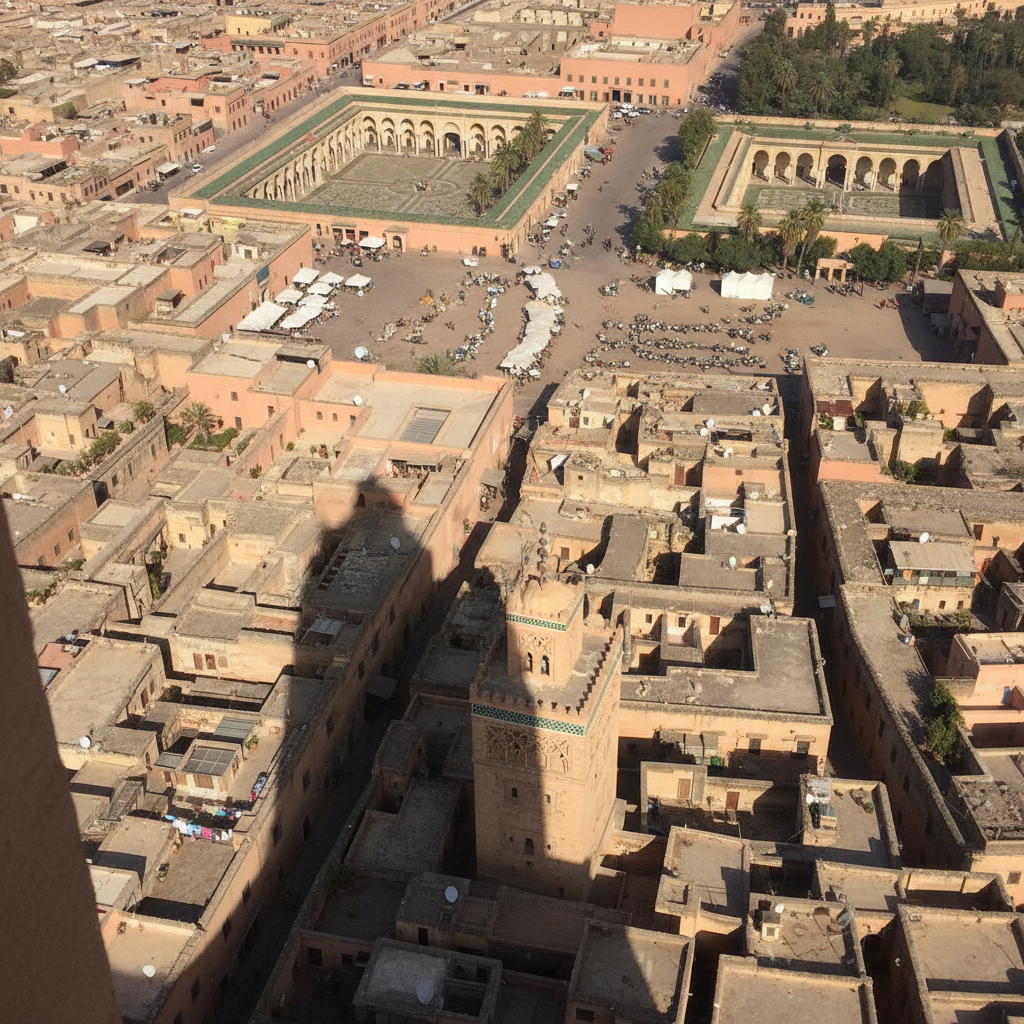
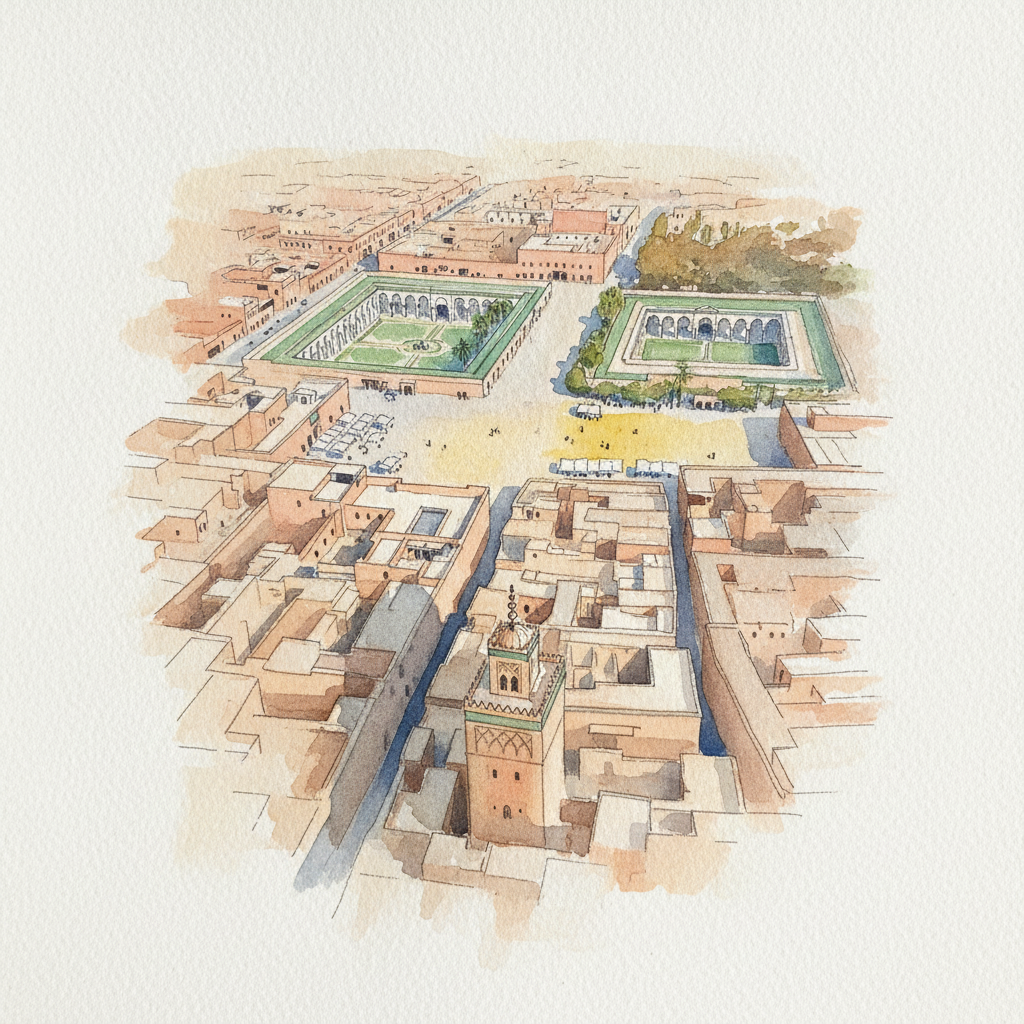
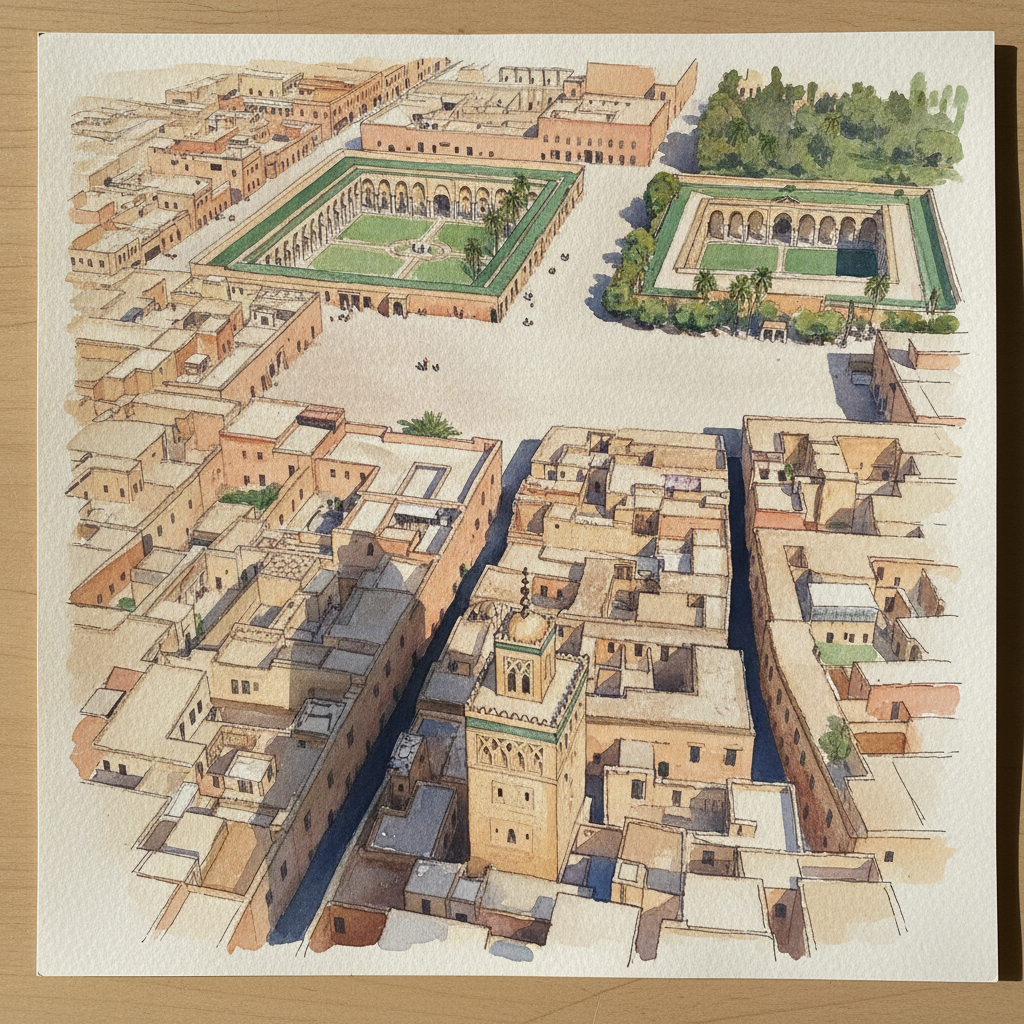
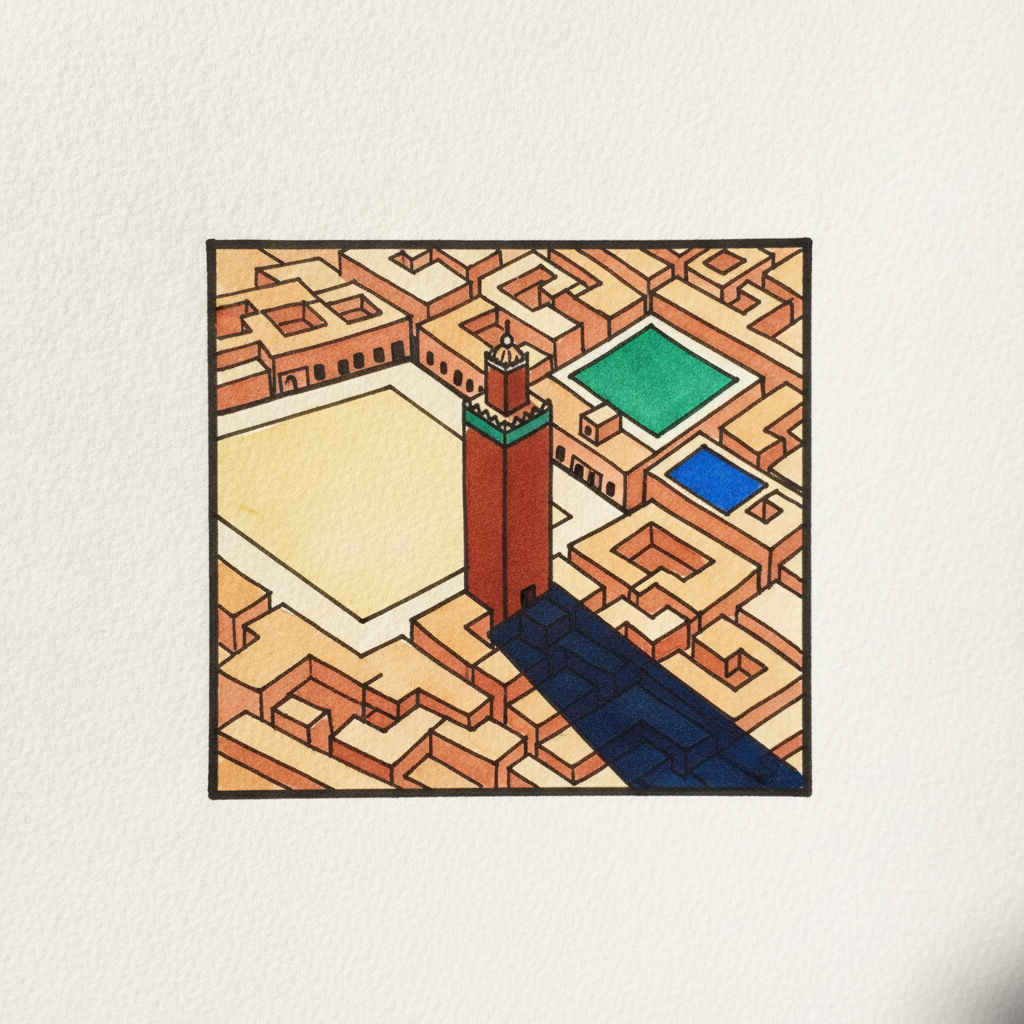
Today's piece is a great exercise in simplifying complex architectural forms, using varied line weights to differentiate the expansive, loosely-sketched medina maze from the crisper details of the Koutoubia minaret and palace courtyards. Focus on establishing the overall beige warmth of the roofs with broad, wet-in-wet washes before laying down clearer, darker washes for the minaret's sharp shadow and the distinct green-and-tile rectangles. This interplay of atmospheric washes and precise linework will effectively define depth and structure.
Piece 7 — Martial arts dojo
Pen + Watercolor · Loose pen and watercolor line-and-wash
Three takes
Focus for this piece
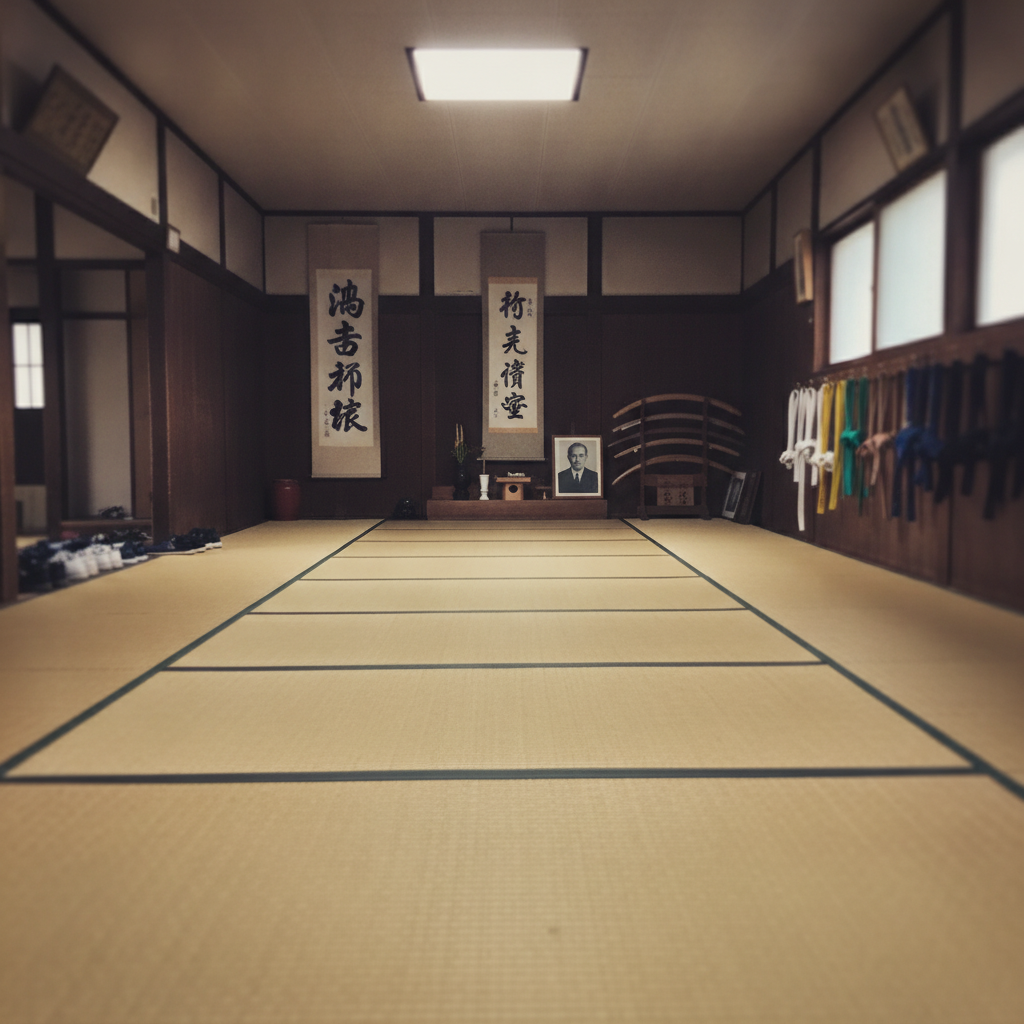
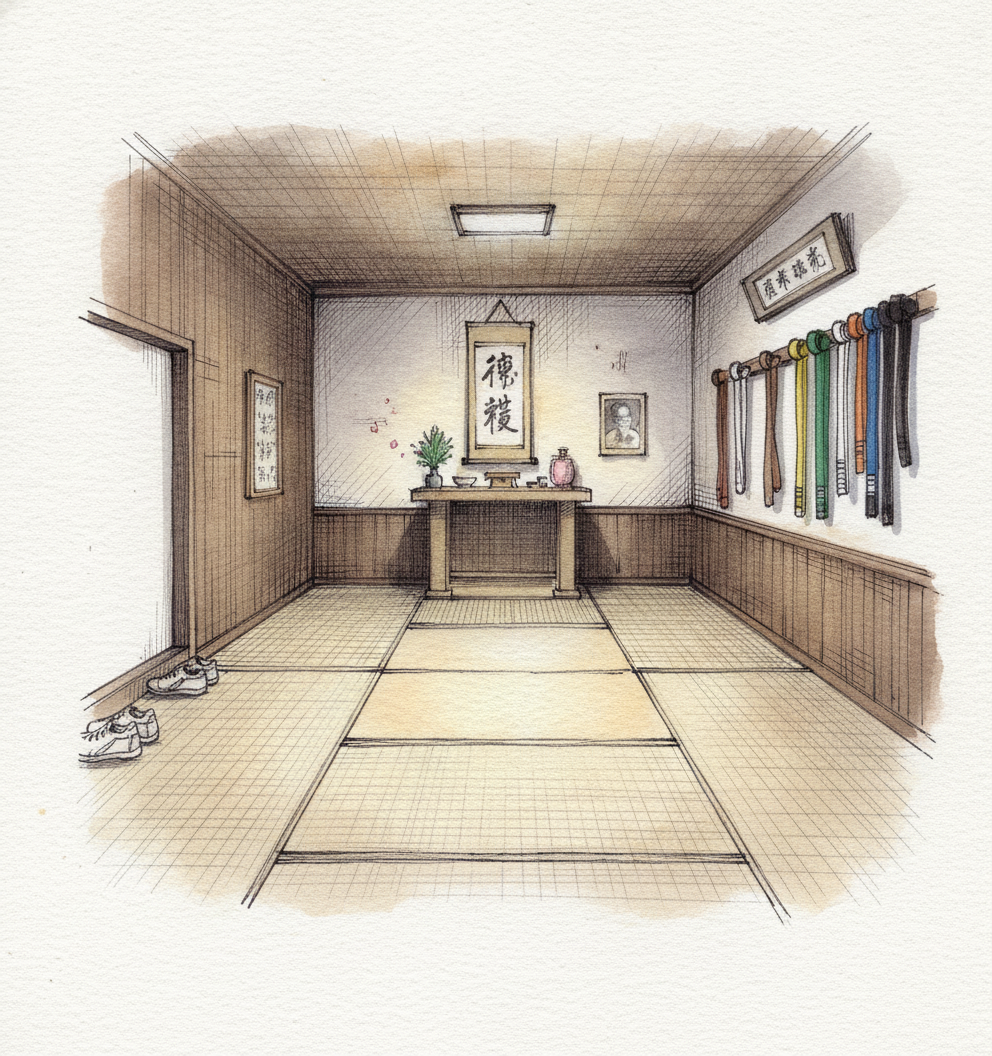
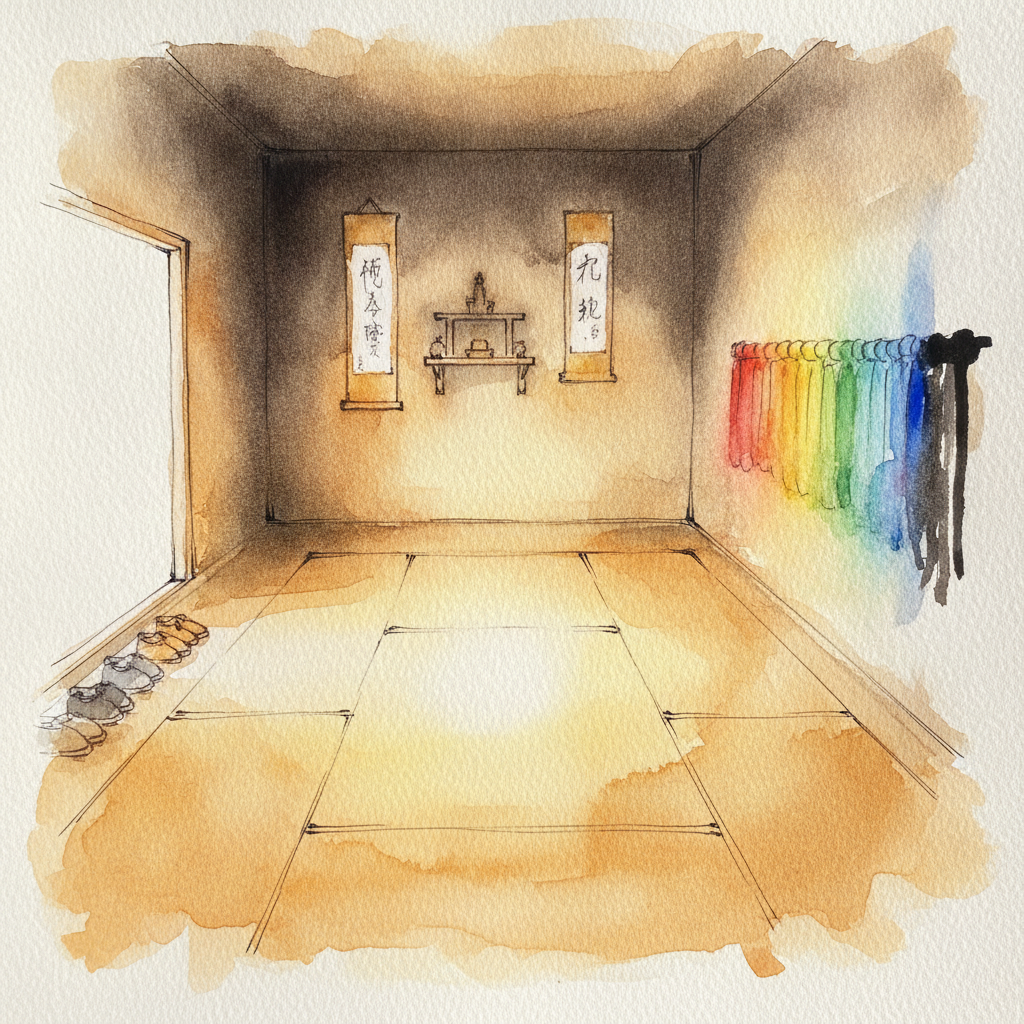
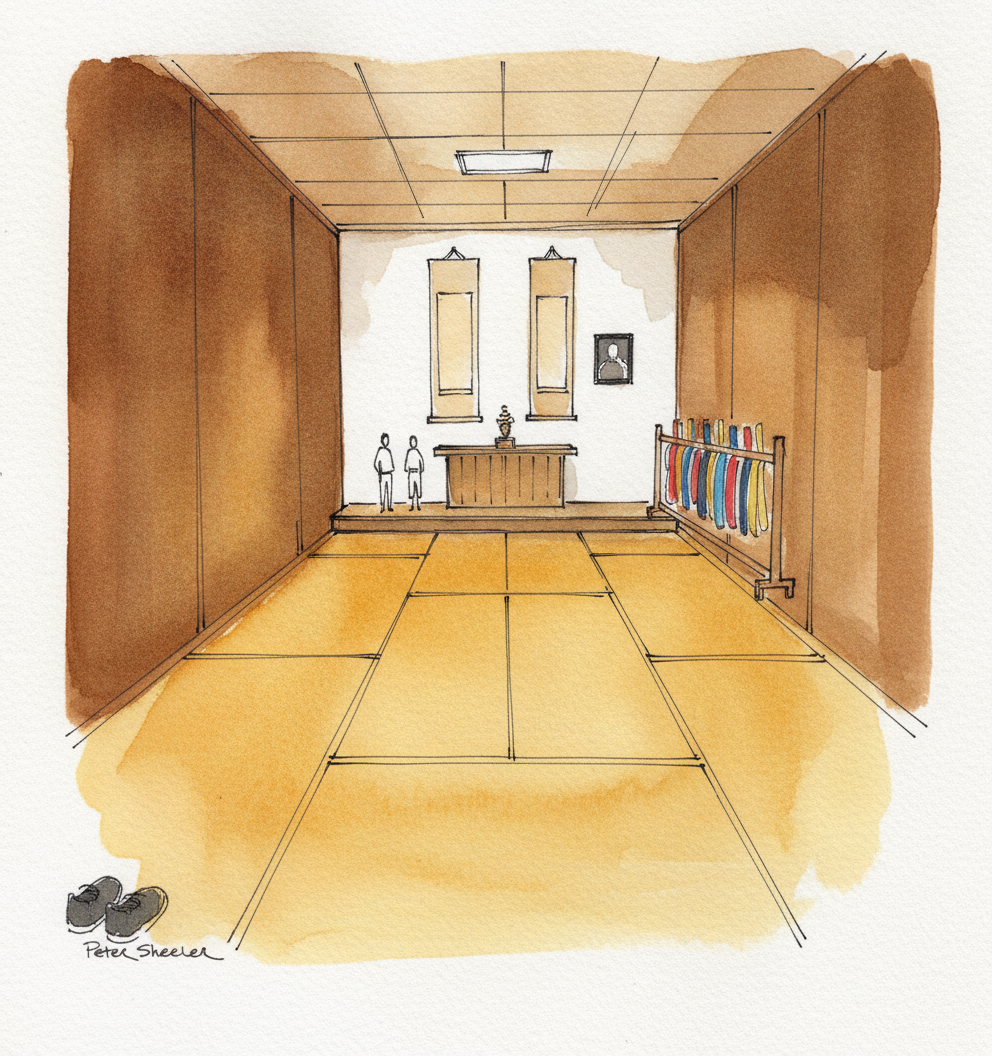
This dojo piece is a superb exercise in establishing mood through light and soft edges. Focus on painting the central illuminated tatami mat using a large round brush and generous wet-into-wet washes, allowing these warm tones to gently diffuse into the darker wood paneling. Employ a restricted palette of warm ochres, deep browns, and subtle grays to build the quiet, reflective atmosphere. Reserve sharp, fine-line pen work for the detailed calligraphy scroll and the precise grid of the tatami mats.
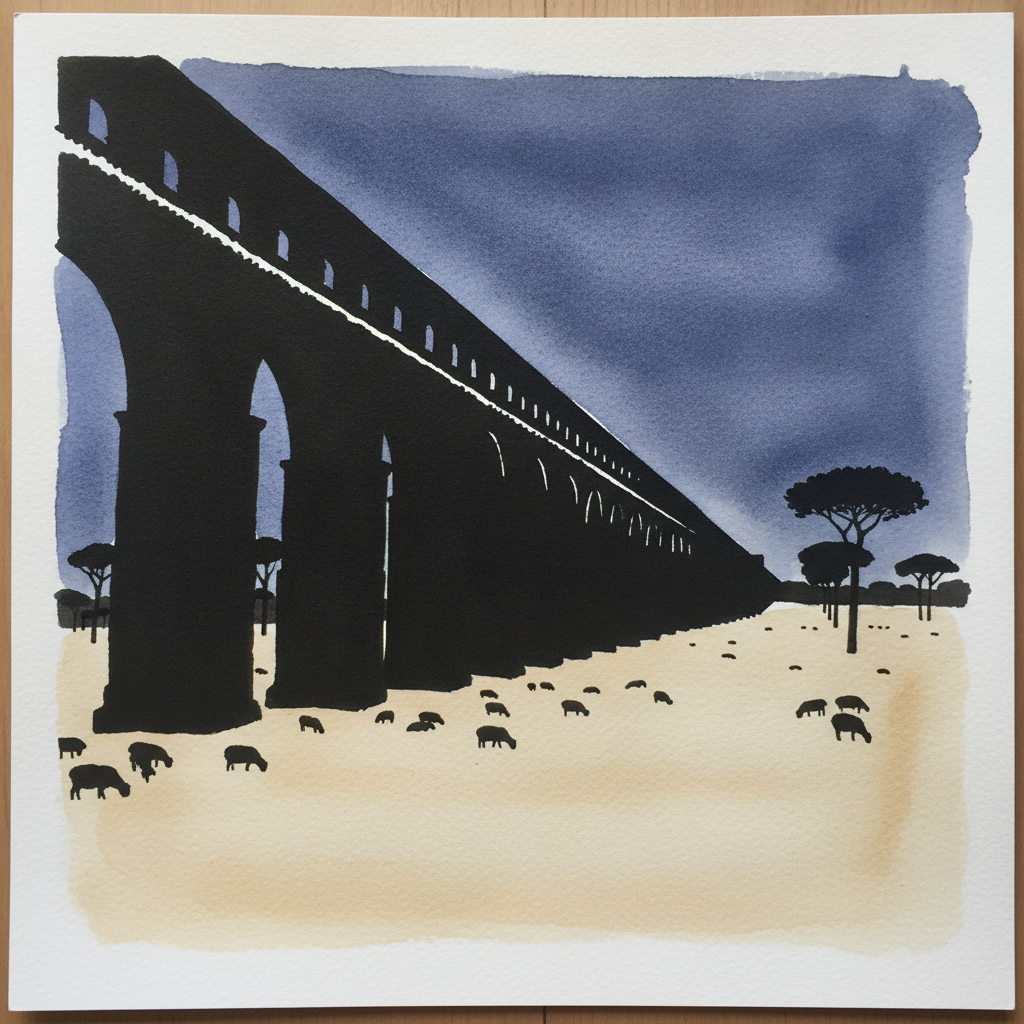
Piece 8 — Aqua Claudia, Roman Campagna, Italy
Pen + Watercolor · Loose pen and watercolor line-and-wash
Three takes
Focus for this piece
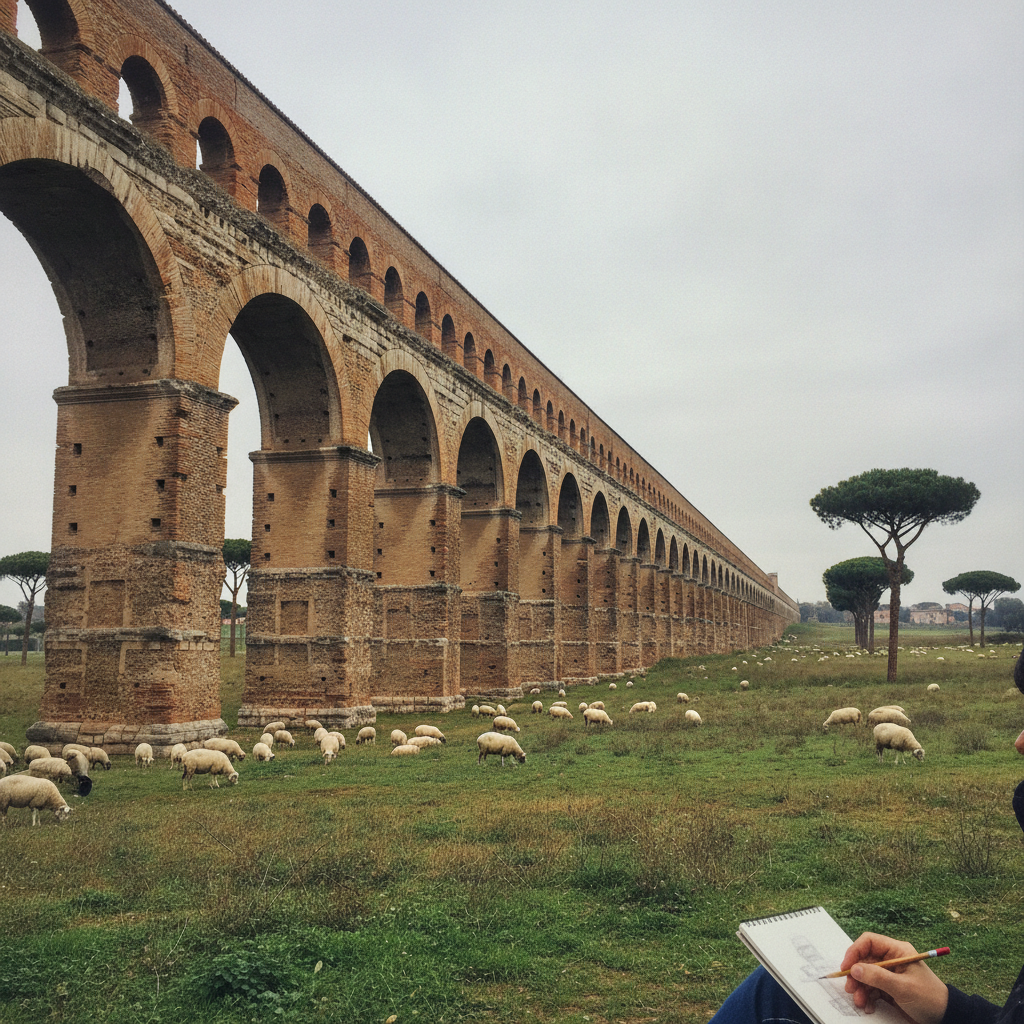
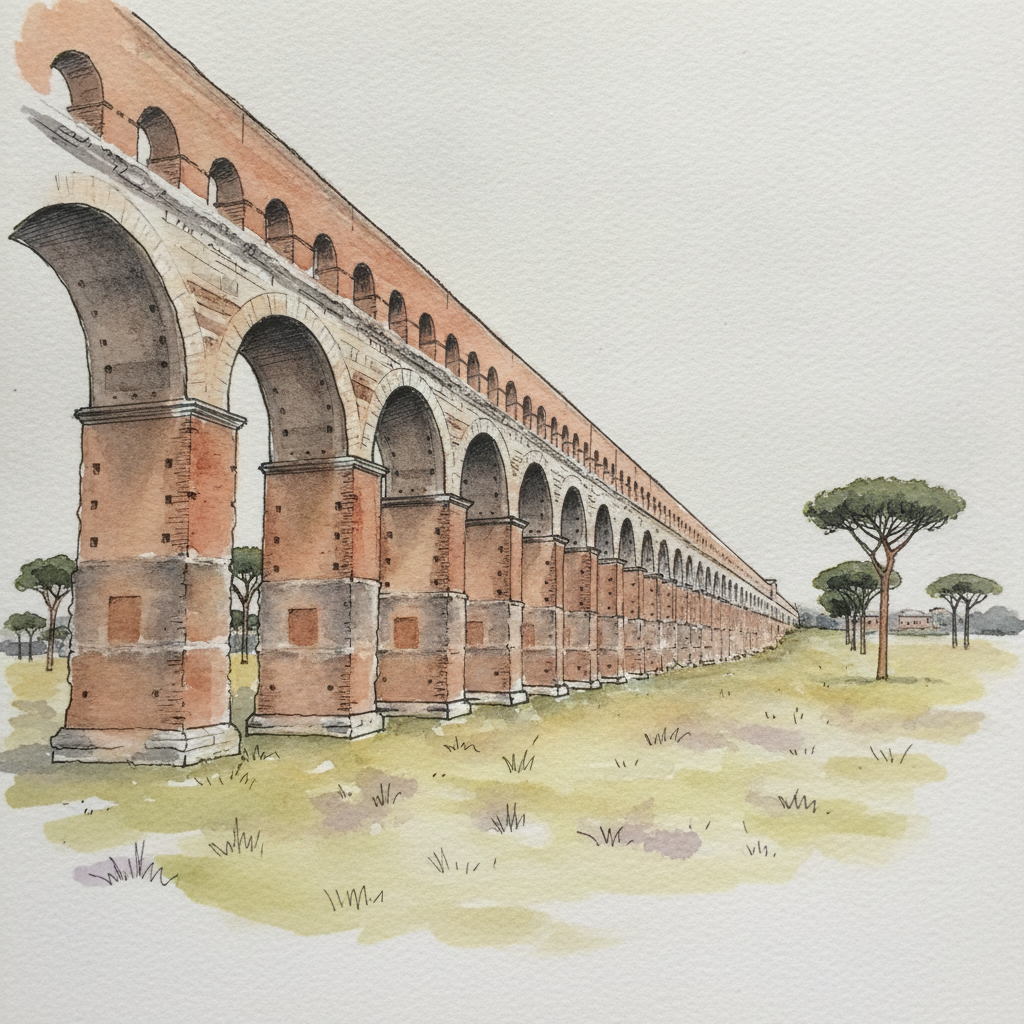
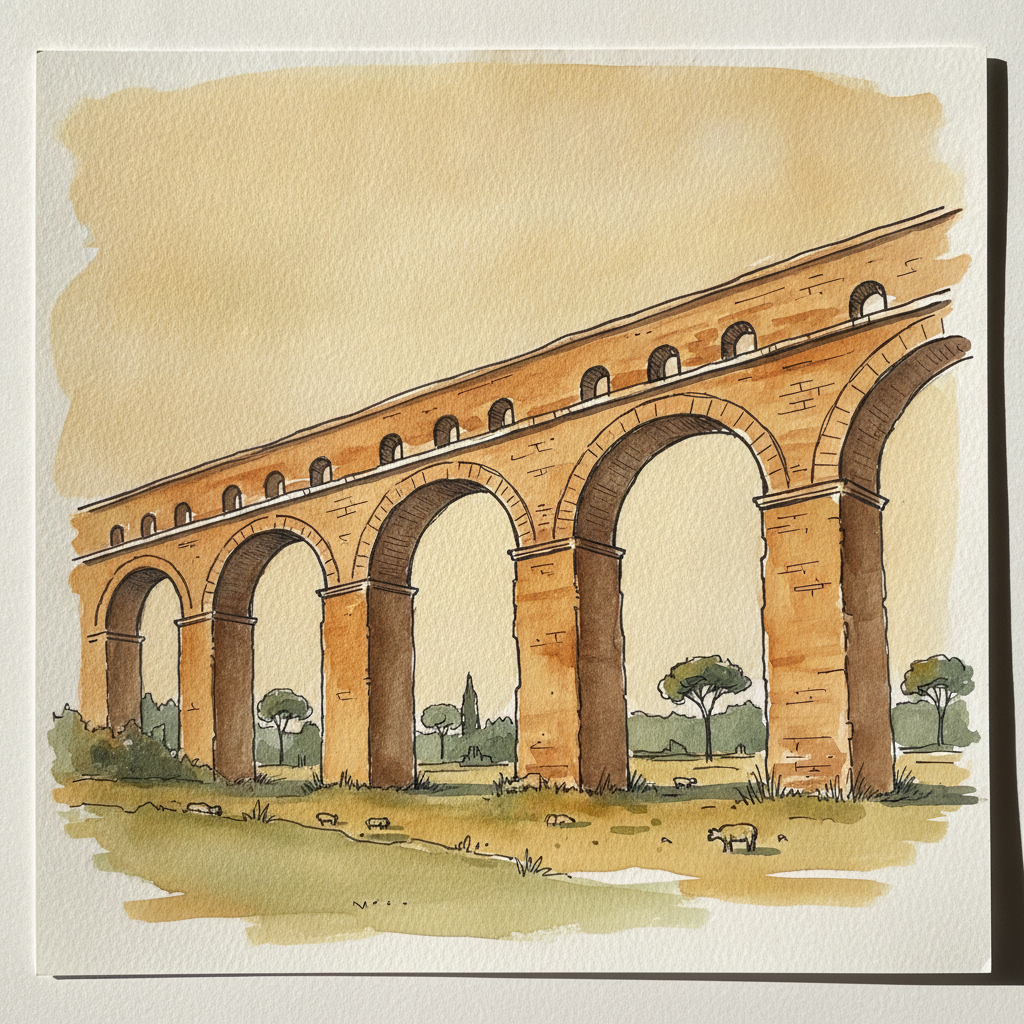
This piece offers a compelling study in contrasting hard architectural precision with the soft, expansive qualities of a natural landscape. Use varied line weights to define the repetitive geometric arches and the distinct brickwork, allowing the pen to establish the aqueduct's monumental structure and its double-channel detail. Complement this with broad, atmospheric watercolor washes for the fields and distant umbrella pines, letting them recede softly to emphasize the vast Campagna and the aqueduct's impressive scale.